
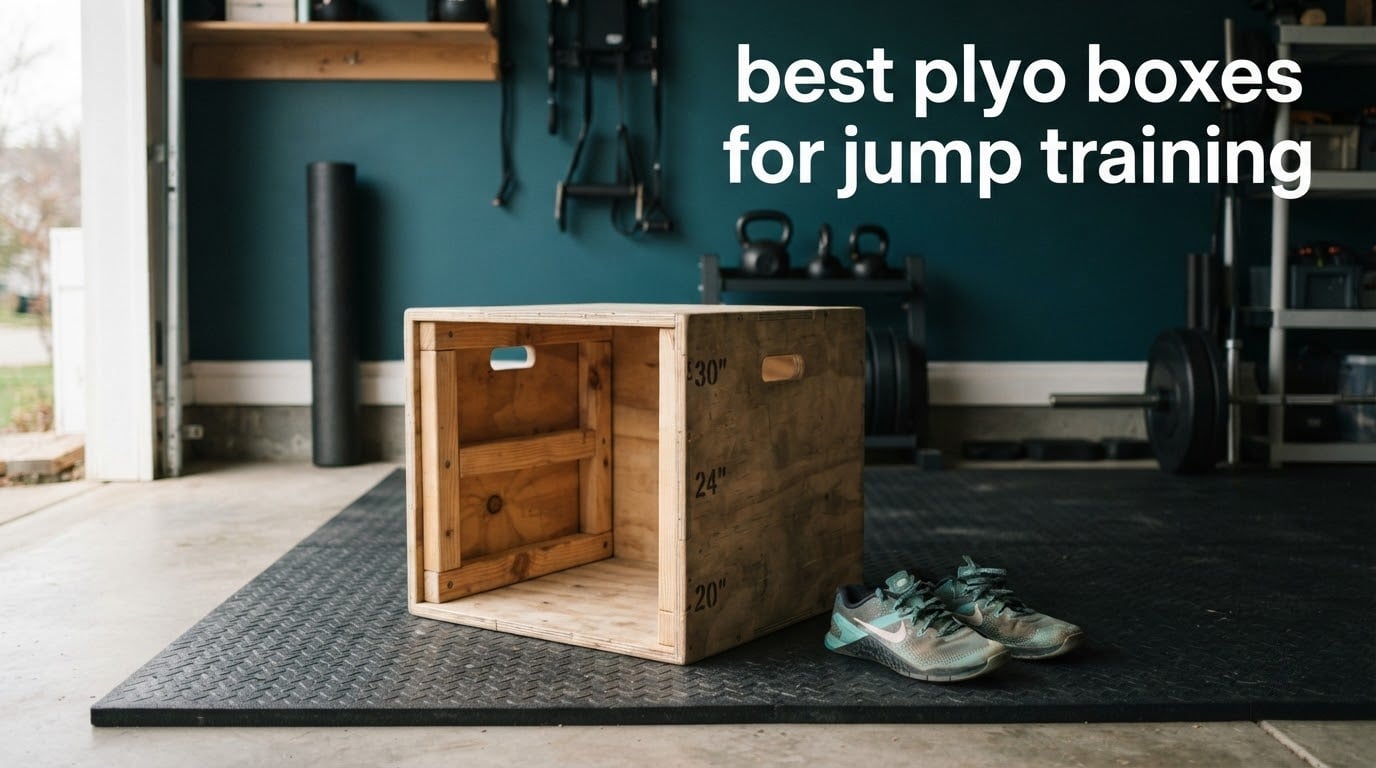
Quick answer: the Yes4All 3-in-1 Wooden Plyo Box is the best plyo box for jump training for most home gyms, because three usable heights and a 450 lb rating come in one 27 lb package. Start at the 12 inch setting, and only move up once your landings are quiet and square.
A plyo box is the cheapest way to add real explosive work to a home setup that already has a barbell. One platform covers box jumps, weighted step-ups, box squats, Bulgarian split squats, decline push-ups and dips, so it keeps earning its floor space long after the jump training block ends. The problem is that most boxes are sold with three height settings and a single vague capacity number, and that is not enough information to choose with.
We compared ten plyo boxes across wood, foam and steel builds, weighing height range, footprint, load rating, grip and the small construction details that decide whether a box is still stable after two years of daily use. Because Pwice covers hockey and skating as well as general fitness, we also paid attention to how each box handles unilateral and lateral work, which is where most ice athletes get their power. If you want the wider take on this category, our general plyo box roundup covers the same ground from a different angle.
Table of Contents
Top 3 Plyo Boxes for Jump Training in 2026

Yes4All 3-in-1 Wooden Plyo Box
- Three heights at 12/14/16 inch
- 450 lb capacity
- Sanded edges and carry handles
- Puzzle-joint assembly

Yes4All 3-in-1 Foam Jump Box
- 20/24/30 inch heights
- High-density foam core
- Anti-slip vinyl cover
- Only 15.6 lb to move

Rage Fitness Steel Plyo Box
- Pre-assembled 12 inch height
- 560 lb capacity
- Rubber top and base
- Stackable steel frame
Best Plyo Boxes for Jump Training (October 2026)
Every box below clears at least 350 lb and offers more than one usable height, except the single-height steel model, which is designed to stack instead. Read the table for the quick shape of the category, then jump to the full review for the box that matches your floor and your training level.
| Product | Specifications | Action |
|---|---|---|
| Yes4All 3-in-1 Wooden Plyo Box |
|
Check Latest Price |
| Yes4All 3-in-1 Foam Jump Box |
|
Check Latest Price |
| Rage Fitness Steel Plyo Box |
|
Check Latest Price |
 Yes4All Soft-Padded Plyo Box Yes4All Soft-Padded Plyo Box |
|
Check Latest Price |
 GoSports Launch Box GoSports Launch Box |
|
Check Latest Price |
 REP Plyometric Wood Jump Box REP Plyometric Wood Jump Box |
|
Check Latest Price |
 Epic Fitness 3-in-1 Foam Box Epic Fitness 3-in-1 Foam Box |
|
Check Latest Price |
 Fitvids Non-Slip Wooden Plyo Box Fitvids Non-Slip Wooden Plyo Box |
|
Check Latest Price |
 Synergee 3-in-1 Wood Plyo Box Synergee 3-in-1 Wood Plyo Box |
|
Check Latest Price |
 VEVOR 3-Piece Steel Plyo Box Set VEVOR 3-Piece Steel Plyo Box Set |
|
Check Latest Price |
1. Yes4All 3-in-1 Wooden Plyo Box: the best plyo box for jump training overall
Yes4All 3-in-1 Wooden Plyo Box for Home Gym
Wood
12/14/16 in heights
450 lb capacity
27 lb
20 x 18 in footprint
Pros
- Three height settings in one box
- 450 lb plywood rating holds up under loaded step-ups
- Sanded edges and wide built-in carry handles
- All hardware and instructions included
- 6529 reviews at 4.6 stars
Cons
- Hard wood surface is unkind to shins on a missed landing
- Indoor use only
- One of the heavier wood options here at 27 lb
This is the box I keep coming back to. The 20 x 18 inch footprint feels right in a corner of a garage or a spare room, and the three settings at 12, 14 and 16 inch mean you can run a genuine progression without buying a second platform. It is the highest-reviewed plyo box in our group at 6529 ratings, and that volume of long-term use is the most useful signal here.
The build is plywood assembled with pre-drilled holes and puzzle joints, so the whole thing goes together with the included hardware and no cutting. Buyers repeatedly mention the sanded edges and the wide built-in handles, and both matter more than they sound: a box you can grip and carry through a doorway gets used far more than one you have to drag.
Where it earns its place is under load. A 450 lb rating means a loaded step-up with a pair of dumbbells, or a barbell box squat, is a realistic use rather than a stunt. The same platform handles decline push-ups, split squats and push-ups, which is how one box earns back its footprint several times over.
Which of the three heights should you program first
Start on the 12 inch side. It is low enough that a miss costs you a step down rather than a bad landing, and high enough to train the same stretch-shortening pattern you will use at 16 inch. Progress to 14 inch once your landings are quiet, then treat 16 inch as your working height for jumps and your bench height for pressing.
The numbers matter more than they look. A 20 x 18 inch top gives both feet room to land together and still leaves enough deck to step up onto, which is where a lot of 16 inch wood boxes start to feel cramped.

What to know before you commit to a wood box
Wood is hard. On a missed jump, the shin hits a sanded but unforgiving edge, and forum users have reported injuries that took months to settle after a single miss. If you are new to jumping, training in a group, or coaching juniors, read our soft plyo box guide before committing to plywood.
The 27 lb weight is another honest trade-off. It is not a one-hand carry in the same way the foam boxes are, and on smooth hardwood you will want a mat under it. Set it up once and move it rarely, and that stops being a problem.
2. Yes4All 3-in-1 Foam Plyometric Box: the safest surface for beginners
Yes4All 3-in-1 Foam Plyometric Jump Box, Dark Green, 30 x 24 x 20 Inches
Foam
15.6 lb
20/24/30 in heights
High-density PE foam
Anti-slip vinyl cover
Pros
- Soft high-density PE foam protects shins and knees
- Three sides give 20/24/30 inch heights
- Anti-slip vinyl cover wipes clean
- Light enough to reposition solo
Cons
- Can creep on slick floors
- Flexes if you land near the edge
- Softer landing than a rigid wood or steel platform
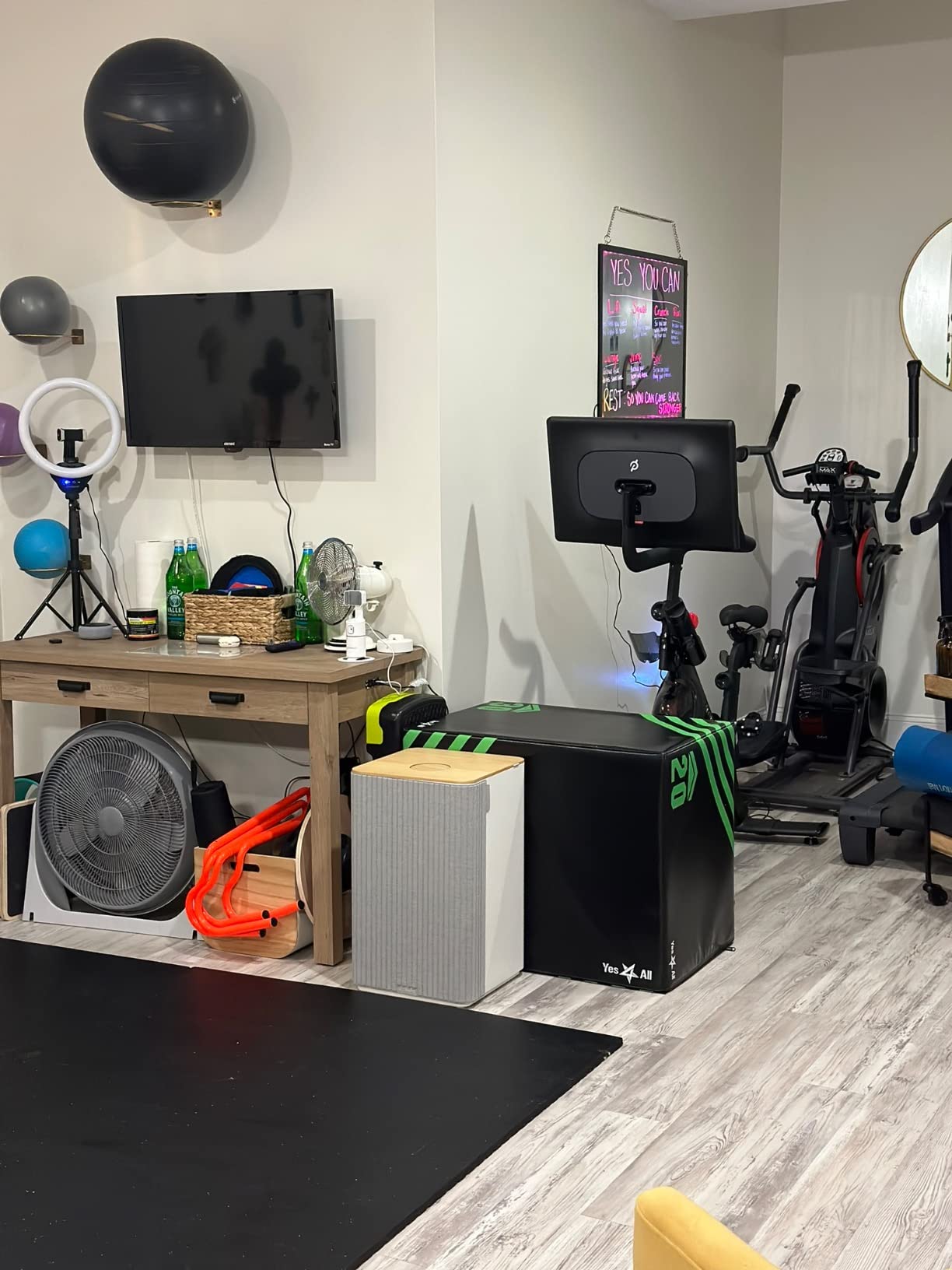
If your concern is not performance but confidence, foam removes the ceiling. A high-density PE core with a vinyl cover takes the sting out of a missed landing in a way no wood or steel box can, and that single fact changes how hard people will train. Group classes, beginners and anyone returning from a leg injury tend to end up here.
The height range is the real story though. At 20, 24 and 30 inch, this is one of the taller foam boxes in the category, which means you can progress to genuine high-intensity work without buying a wooden box first.
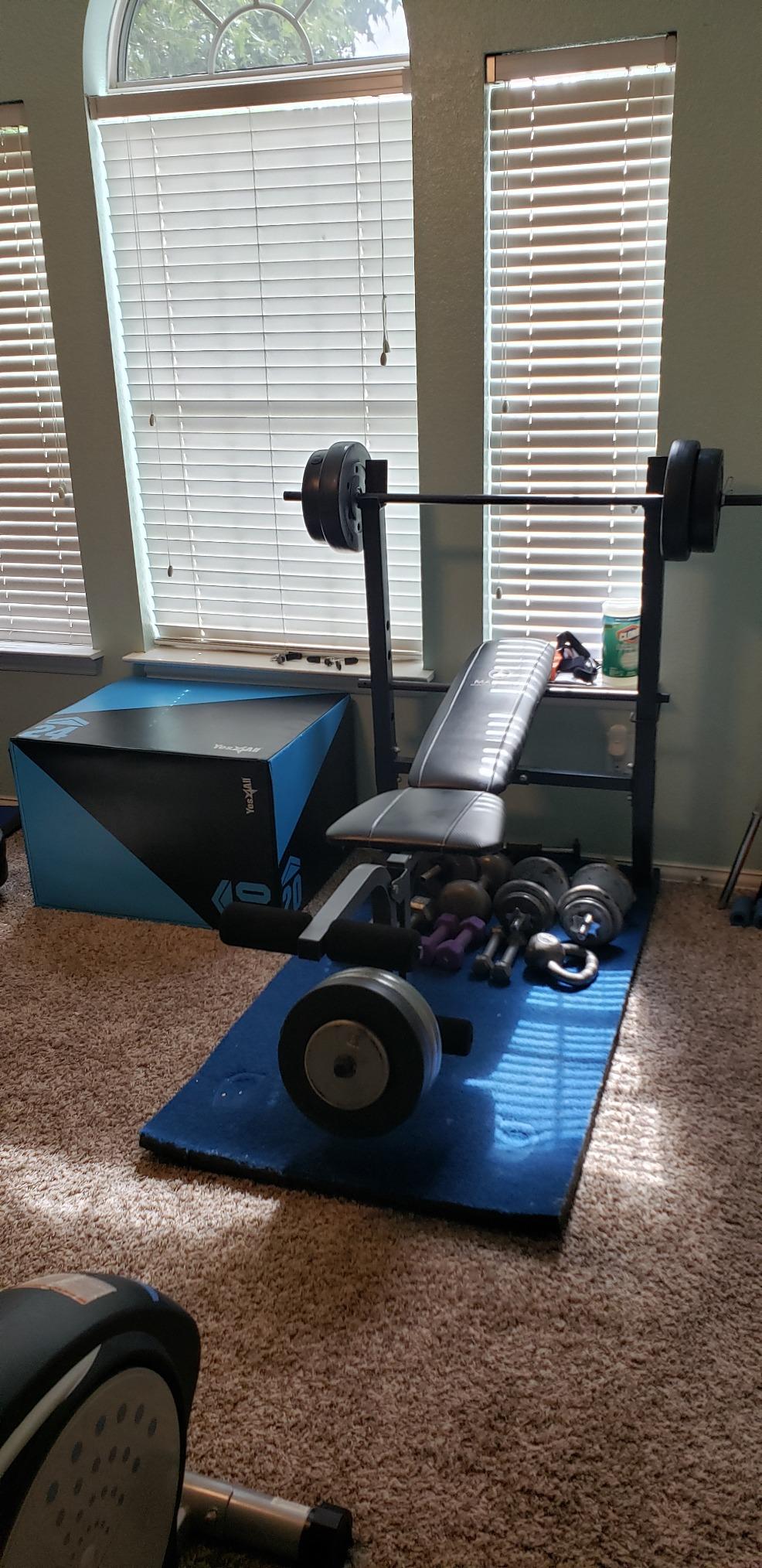
At 15.6 lb it is the easiest box here to move, which matters in a small space. Multiple owners report a year or more of two to three uses per week with no seam or zipper failure, so the cover holds up better than the reputation for foam products suggests.
How to keep a foam box from sliding
Placement discipline is the whole trick. Land squarely in the middle of the platform and the box stays where you put it. Land off-centre and the core flexes, and on a hard smooth floor the whole thing can creep. Put a rubber mat underneath, keep the surface dry, and set the box before your set rather than chasing it mid-circuit.
There is a second consequence of the soft core. Because it compresses, the deck feels less precise under a maximal two-foot landing, so foam rewards technique more than wood does. That is a feature for a beginner and a limitation for an athlete chasing peak power output.
Where a soft box is the wrong tool
Foam compresses over years, and the 30 inch side is a large volume of material with more surface area to age. If your priority is a specific, repeatable height for testing, a rigid frame holds its dimension far longer. A single buyer of a comparable foam box reported using it as a stable seat, which tells you the load path is solid even when the surface is not.
Foam also has no resale or hand-me-down appeal the way a plywood box does. It is a training tool for a specific person at a specific stage, which is exactly what many beginners need and exactly what a shared family gym does not.
3. Rage Fitness Steel Plyo Box: the highest-rated build we tested
Rage Fitness 12 inch Steel Plyo Box, Anti-Slip Pre-Assembled, Jump Training
Steel and rubber
Single 12 in height
560 lb capacity
12 lb
12.5 in top face
Pros
- Highest rating here at 4.8 stars
- Arrives fully assembled
- 560 lb welded steel rating
- Rubber top and base resist slip and tipping
- Boxes stack for compact storage
Cons
- One height only at 12 inch
- Small 12.5 inch top face limits jump clearance
- Base logo plate detaches with use
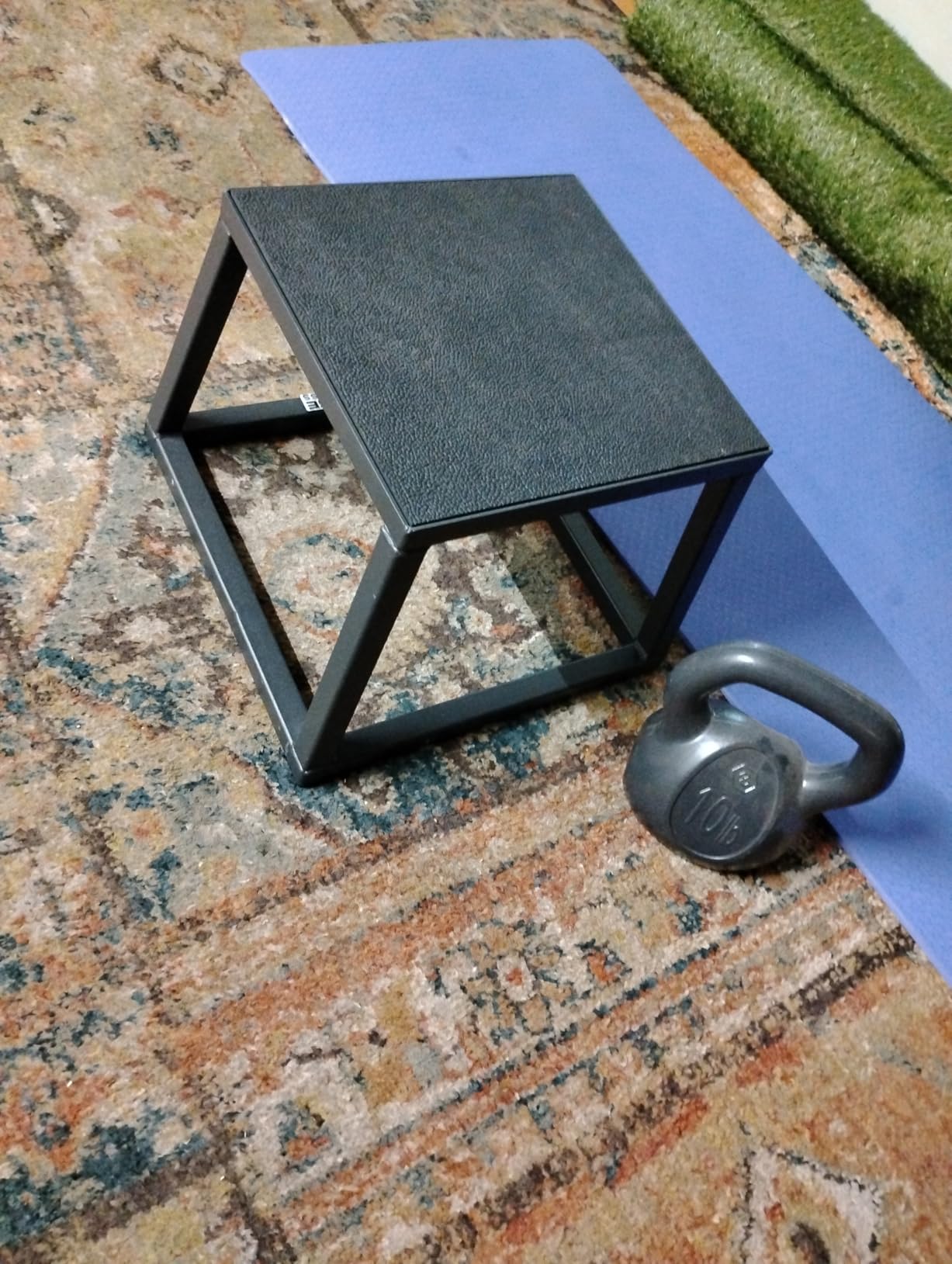
This is the strongest consensus in the group. At 4.8 stars across 1648 ratings it holds the highest average rating of any box we looked at, and the reason is simple: a heavy gauge tubular steel frame with rubber on the top and bottom barely moves. Owners in both commercial gyms and home setups describe the same thing, that it just sits there while you work.
The 560 lb capacity is the highest rating in this roundup, and it holds up under the loaded work people actually put on it. Physiotherapy users and step-up regulars treat it as a general raised platform, which is a good sign for a box that was designed for jumping.
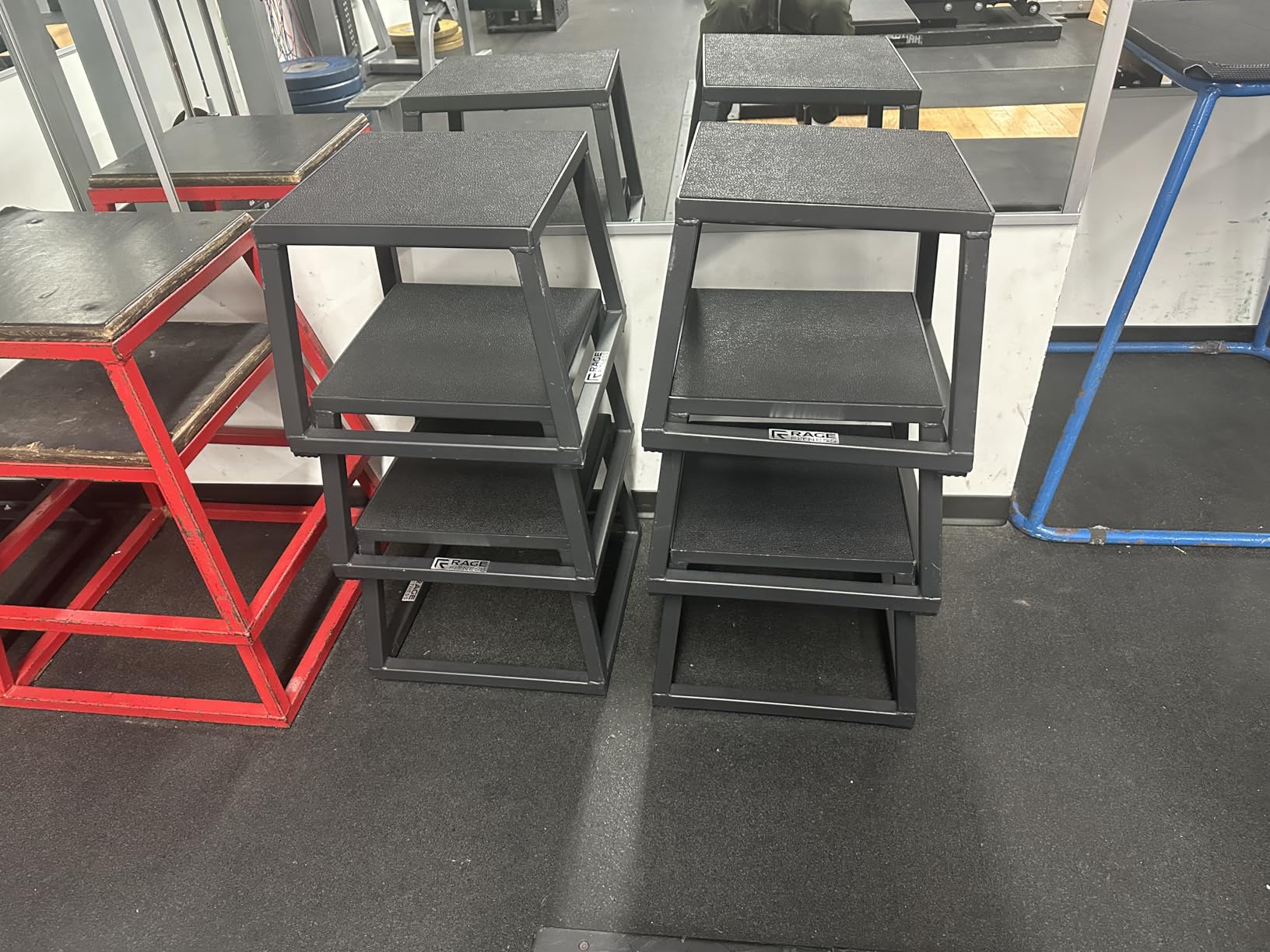
It also arrives assembled. No drill, no puzzle joints, no forty minutes of carpentry on a Sunday, and for a buyer who just wants a stable platform that week, that matters more than any spec line. The boxes stack cleanly, so a coach can store three of them in the footprint of one.
How to use a single-height box in a jump session
At 12 inch, this is a low-to-moderate plyometric height, which makes it ideal for rep work, step-ups, dips and calf raises rather than maximal box jumps. Use it for volume and landing-mechanics practice, where many clean reps beat three exhausting ones, and treat the higher intensity to a taller box.
The small 12.5 x 12.5 inch top face is the part to plan around. Both feet fit, but there is little margin for error, so line the box up square to your run-up and approach on the same diagonal every rep. Treat it like a squat stance you have to commit to.
What limits this box for jump training specifically
One height is one height. You cannot progress a jump from 12 to 18 inch with this box, so a training block that needs a real progression means buying something else. For a coach running groups, that is a dealbreaker; for one athlete with a barbell and a squat rack, it is not.
Two smaller things to note. The decorative logo plate on the base is held on lightly and detaches with use, which is cosmetic but annoying. And at 12 lb, this is light for a steel box, so on a very smooth floor it can move more than a heavier frame would, even with rubber underneath.
4. Yes4All Soft-Padded Plyo Box with Wooden Core: the best small-space pick
Yes4All 3-in-1 Soft-Padded Plyo Box with Wooden Core, Non-Slip Multi-Use Cushioned Plyometric Jump Box with Vinyl Cover for Jumping, Conditioning, Strength Training, Black
Wood core with EVA foam
12/14/16 in
450 lb capacity
13.2 lb
16 x 14 in footprint
Pros
- Rigid wooden core with foam cushioning
- Small footprint for tight rooms
- Waterproof non-slip PVC surface
- 450 lb rating at only 13.2 lb
Cons
- 16 x 14 inch top is small for repeated jumps
- Highest setting feels slightly wobbly
- Not padded enough to lie on for hip thrusts
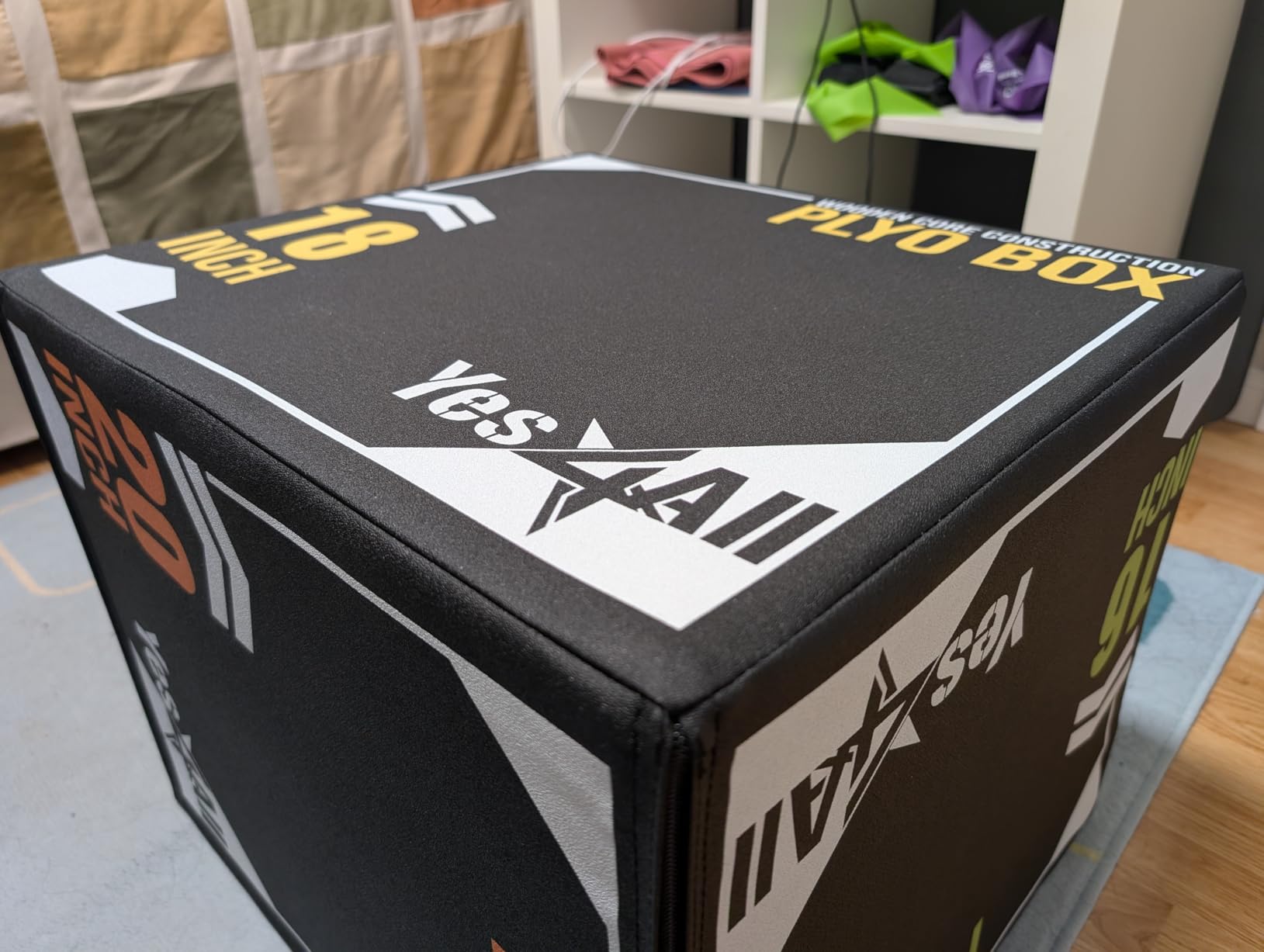
This is the compromise that works best for apartment and basement training. A wooden core gives you the rigid, predictable platform that foam cannot, and an EVA foam layer under a vinyl cover softens the landing just enough to take the edge off a shin. Three layers, three heights, 450 lb rated, and it weighs 13.2 lb.
The sales data backs it up. It ranks fourth in Jumping Trainers, which puts it ahead of most of the wooden boxes here, and at 1199 ratings it holds 4.6 stars with a very consistent owner profile: people who wanted something sturdy but less dangerous than bare plywood.
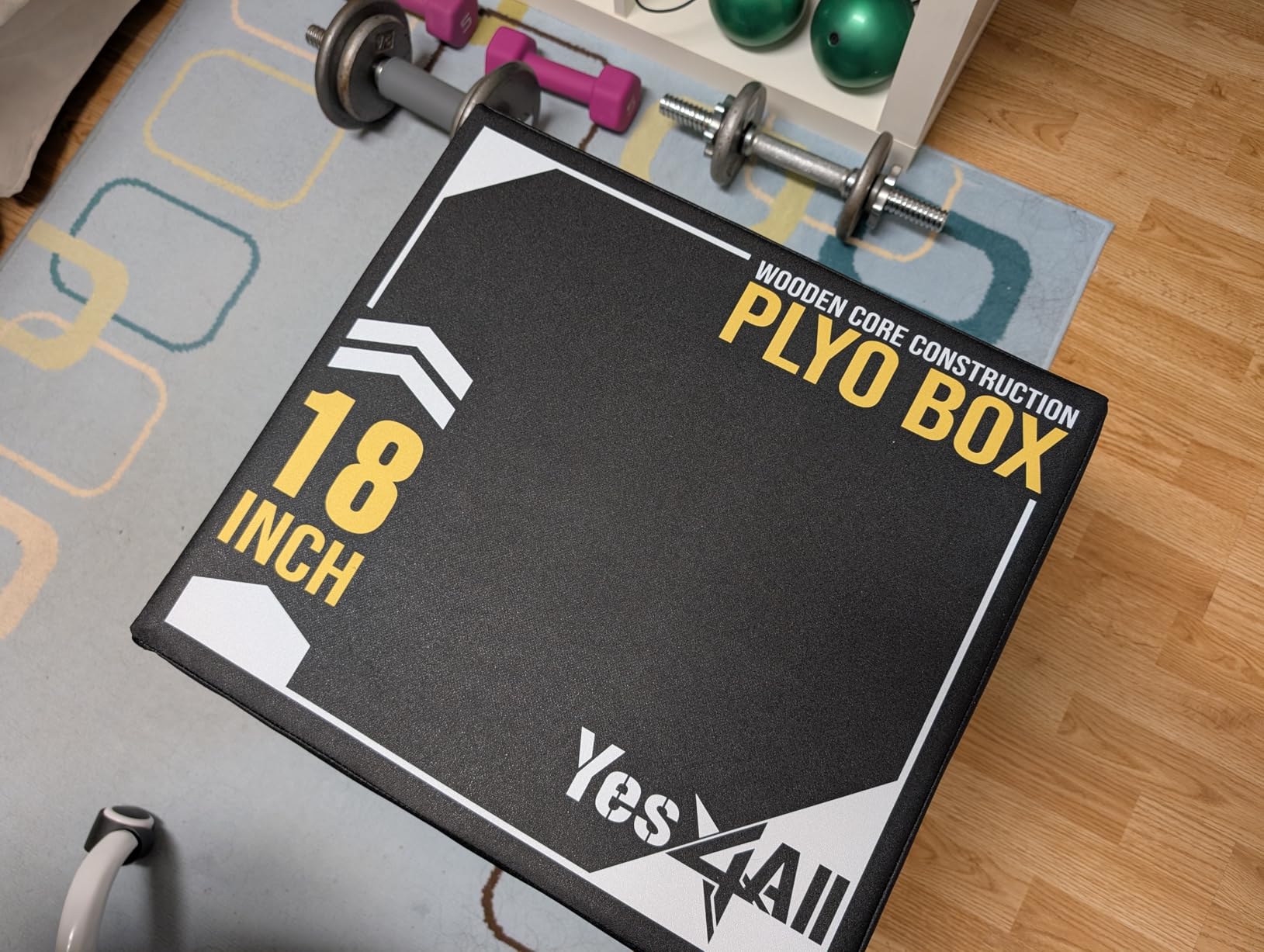
One owner loads it onto a belt-squat platform well past its stated rating, which is not advice we would repeat, but it does show the internal structure is not decorative. Reviewers also use it for kids’ training, hip thrusts and box squats, so it works as a general platform rather than a jump-only tool.
When a 16 x 14 inch top is enough
That footprint is fine for step-ups, box squats, dips and decline work, and it is tight for repeated two-foot jumps. If your programme is mostly strength and single-leg work, the small deck costs you nothing and saves you real floor space in a room where every metre counts.
Check the floor before you commit. Owners report the best grip on hard flat surfaces and noticeably less on carpet, where the vinyl can ride over the pile. If your gym is carpeted, a foam box with a taller stance is the safer pairing.
What to watch on the highest setting
At the tallest of its three positions, reviewers report a little movement in the deck. It is not a structural complaint, more a reminder to land centred. Anyone chasing maximal height should know that the firmest feel comes from the lower two settings.
It is also not a pad. People try hip thrusts and seated work on it and find the foam layer too thin for a bone-on-plywood sit, so budget a folded towel if floor exercises are part of your plan.
5. GoSports Launch Box: the best plyo box for taller athletes
GoSports Fitness Launch Box 3-in-1 Adjustable Height Wood Plyo Jump Box for Exercises of All Skill Levels
Wood
16/20/24 in marked heights
Three sizes
Internal brace
Handles
Pros
- Marked at 16/20/24 inch
- higher than most 3-in-1 wood boxes
- Puzzle design with internal brace
- Heights marked on each side
- Hardware and drill bit included
Cons
- Needs a drill to assemble
- Only six months of manufacturer warranty
- Wood surface is hard on shins
Most 3-in-1 wood boxes on the market top out at 16 to 20 inch. This one is marked at 16, 20 and 24 inch, and that extra four inches matters for a taller athlete or a more advanced jumper who has already outgrown a 16 inch ceiling. It is a genuinely different height band, not a variation on the same three numbers.
Construction is the other argument. It uses a puzzle box design with an internal brace, and the full kit includes a drill bit, an Allen key and all the screws. The brace is what keeps the panels from bowing over years of loading, and the height numbers printed on each face make circuit transitions quick.

At 1107 ratings and 4.6 stars, with 81 percent five-star, the feedback is steady rather than ecstatic. Buyers single out portability, edge finishing and the fact that nothing is missing from the box, which is more than can be said for plenty of flat-pack gym equipment.
Why assembly time is the thing to plan around
You need a drill. The screws number in the dozens and the box only becomes rigid once the puzzle panels are fully drawn together, so budget an evening rather than treating it as a fifteen-minute job. Under-torquing it is the most common assembly mistake and the most common cause of a deck that feels springy later.
It also comes in Small, Standard and XL footprints, so the height is not the only variable. If you are tall and training in a small room, check the outer dimensions before ordering, because the Standard version is a genuinely large object.

What the short warranty means for you
P&P Imports warrants this box for six months. That is the shortest coverage in this roundup and it is worth knowing before a build goes wrong, because a cracked panel or a stripped brace is a straightforward parts problem only if the parts exist.
Beyond warranty, the practical question is whether the brace holds. Owners report the box still working after extended use, so the design seems fine; the risk is on your side of the purchase. If long-term support matters to you, a box with a one or two year warranty is the safer route.
6. REP Plyometric Wood Jump Box: the best build quality
REP Plyometric Wood Jump Box | Strength Training | 16/14/12 Wooden Step Platforms | Gym & Sports Workouts | Fitness, Exercise, Physical Therapy Equipment | Pro Conditioning Tool
Wood
3/4 in CNC plywood
Small at 12/14/16 in
400 lb capacity
16 lb
Pros
- 3/4 inch CNC-cut interlocking plywood
- Numbered height markings on each face
- Sanded handle cutouts
- Internal support structure included
Cons
- Supplied screws sit proud and can mark floors
- Internal braces held with finishing nails can flex
- About 30 minutes to assemble
REP is the reference point other wooden plyo boxes get measured against, and after using it the reason is obvious: this is CNC-cut 3/4 inch plywood with interlocking panels, pilot holes and laser-etched markings. Nothing is hand-fitted. The fit is the same on every unit, which is precisely what a puzzle-style box needs in order to stay rigid.
At 4.7 stars across 1057 ratings, it sits just behind the Rage steel box on rating and behind two of the wood boxes on review volume, and owners still describe it holding up through years of daily use with little more than shoe prints to show. The small configuration is rated to 400 lb and weighs 16 lb, which keeps the box light enough to move without feeling flimsy on landing.
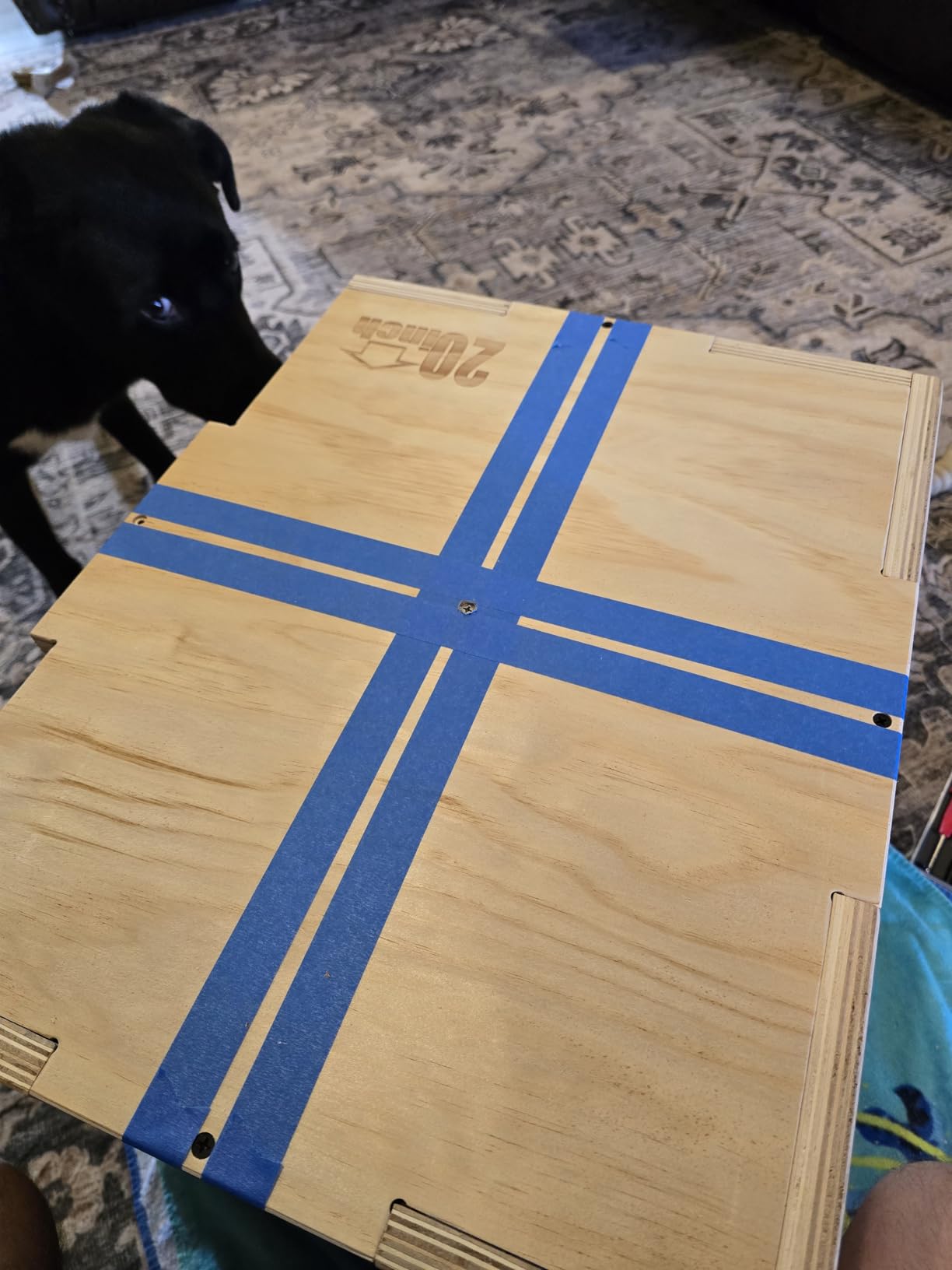
The height numbers printed on each face are a small touch that saves real time in a circuit. When your box jumps are followed immediately by step-ups, a glance is faster than measuring, and that is the difference between a tight interval and a coaching stopwatch.
The two modifications worth making on day one
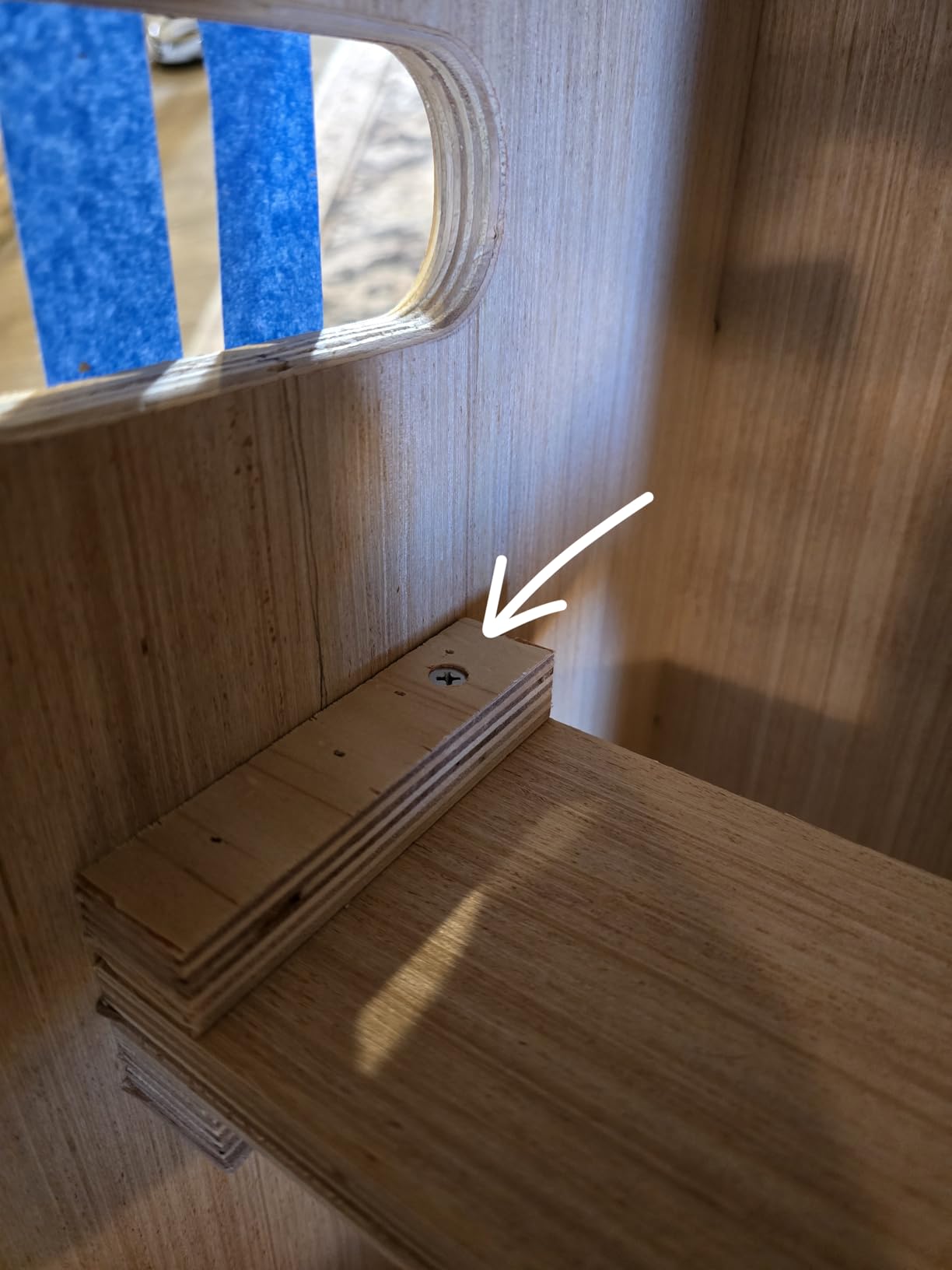
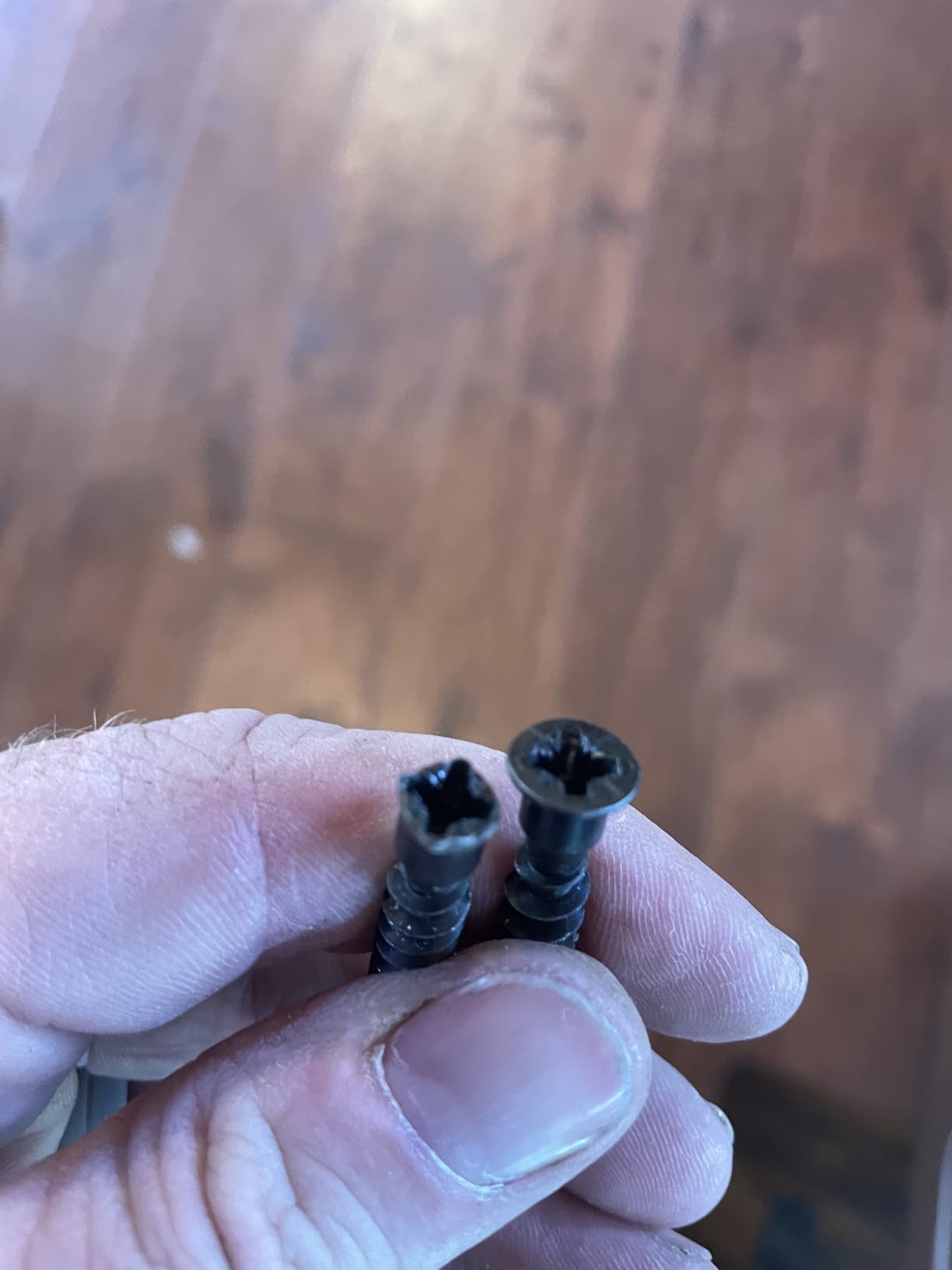
Countersink the supplied drywall screws. If they stand proud of the surface they will scratch a hardwood floor or a rubber mat, and a ten-minute job with a countersink bit removes the issue permanently. Then add screws to the internal braces, which ship held by finishing nails and can develop flex over years.
Neither change is a defect complaint, and most owners do one or both. Together they are about an hour of work that turns a good box into one you can leave in a room with a nice floor without thinking about it. Budget roughly 30 minutes for the base assembly on a single person.
Which size configuration to order
The small is 12, 14 and 16 inch at 400 lb. Medium reaches 20 inch, large reaches 30 inch, and a combo option exists for multi-athlete rooms. Most home buyers should start small, because the jump height that matters is the one you can land on cleanly, and beginners should be at the bottom of that range anyway.
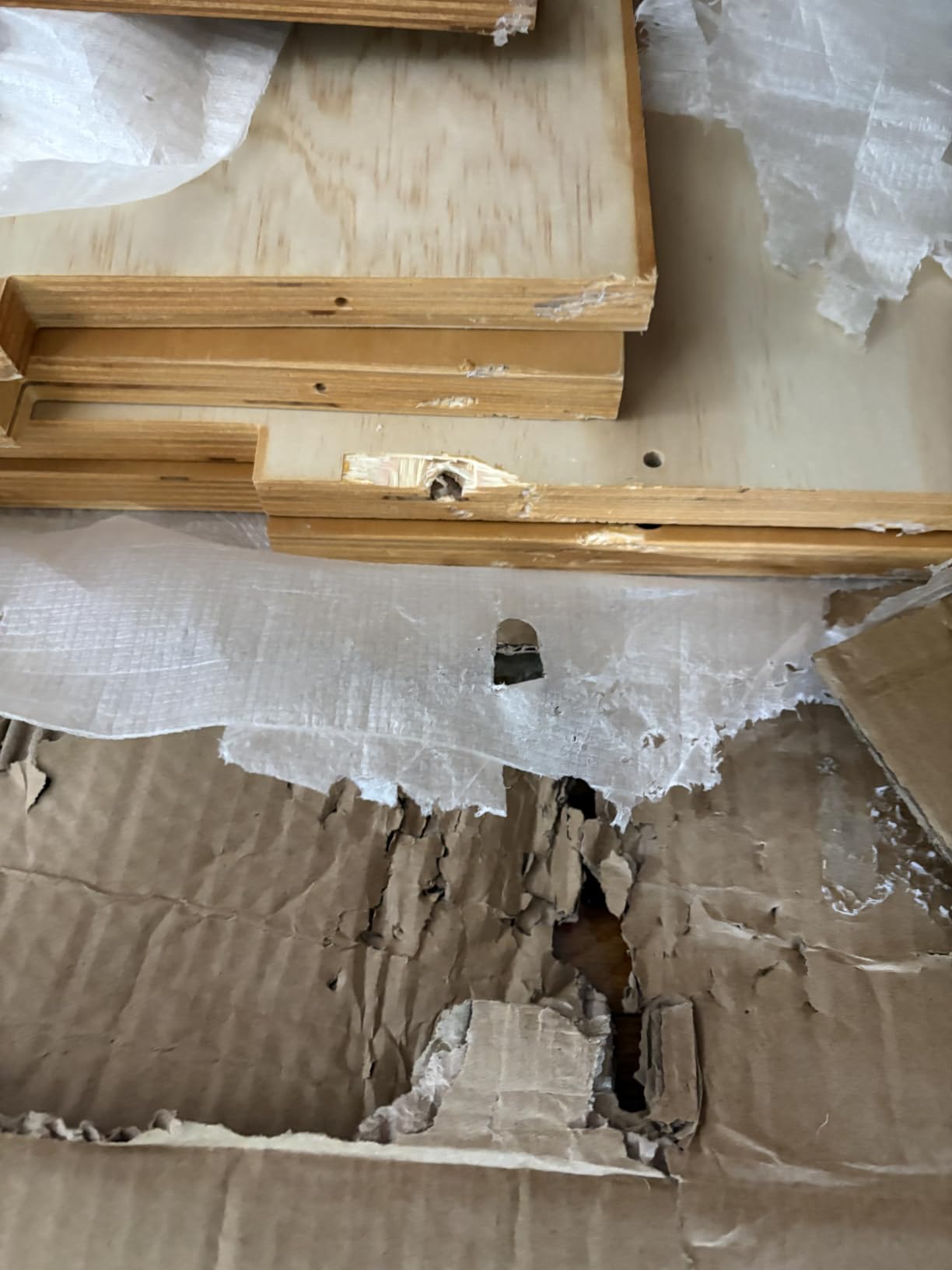
Two cautions from the build. The corners and edges are not well protected in the shipping packaging, so inspect the box before assembling it. And if you care about finish carpentry, you will want a clamp and a square rather than a freehand assembly.
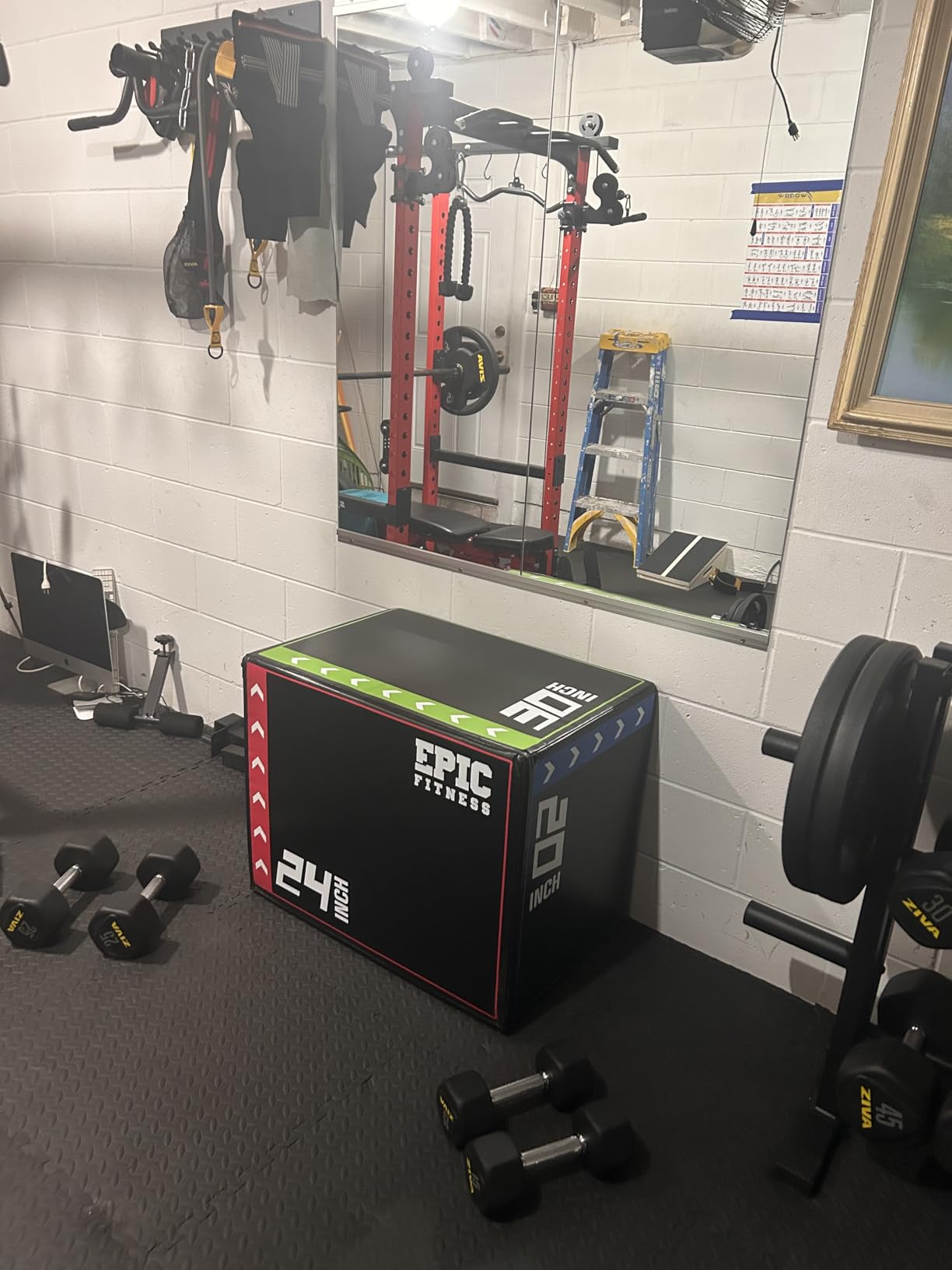
7. Epic Fitness 3-in-1 Foam Box: the best soft box for high-intensity jumps
Epic Fitness 3-in-1 Foam Plyometric Jump Box – High-Density EPE Foam Core – Non-Slip & Easy-to-Clean PVC Leather Cover – Box Height: 20″, 24″, 30″ – For HIIT, MMA, Crossfit, Exercise, Fitness Training
Foam
20/24/30 in heights
EPE foam core
16 lb
24 x 20 in footprint
Pros
- EPE foam core absorbs impact on shins and knees
- Reaches 30 inch for advanced jump training
- Three difficulty stages from beginner to advanced
- Wipe-clean faux leather cover
Cons
- Ratings trail the group at 4.5 stars
- Soft surface compresses near the edge
- Hand wash care only
The pitch here is confidence, and for HIIT, MMA and CrossFit-style work that is not a soft framing. A high-density EPE foam core removes the psychological barrier of a hard edge, and the marketing is blunt about it: fewer worries about banging your shins or knees. People who hate hitting wood boxes train noticeably harder here.
Three stages at 20, 24 and 30 inch cover a real progression, and at 16 lb the box is still easy to walk across a room. The faux leather cover wipes clean, which matters when the same box is used for a sweaty conditioning circuit five days a week.
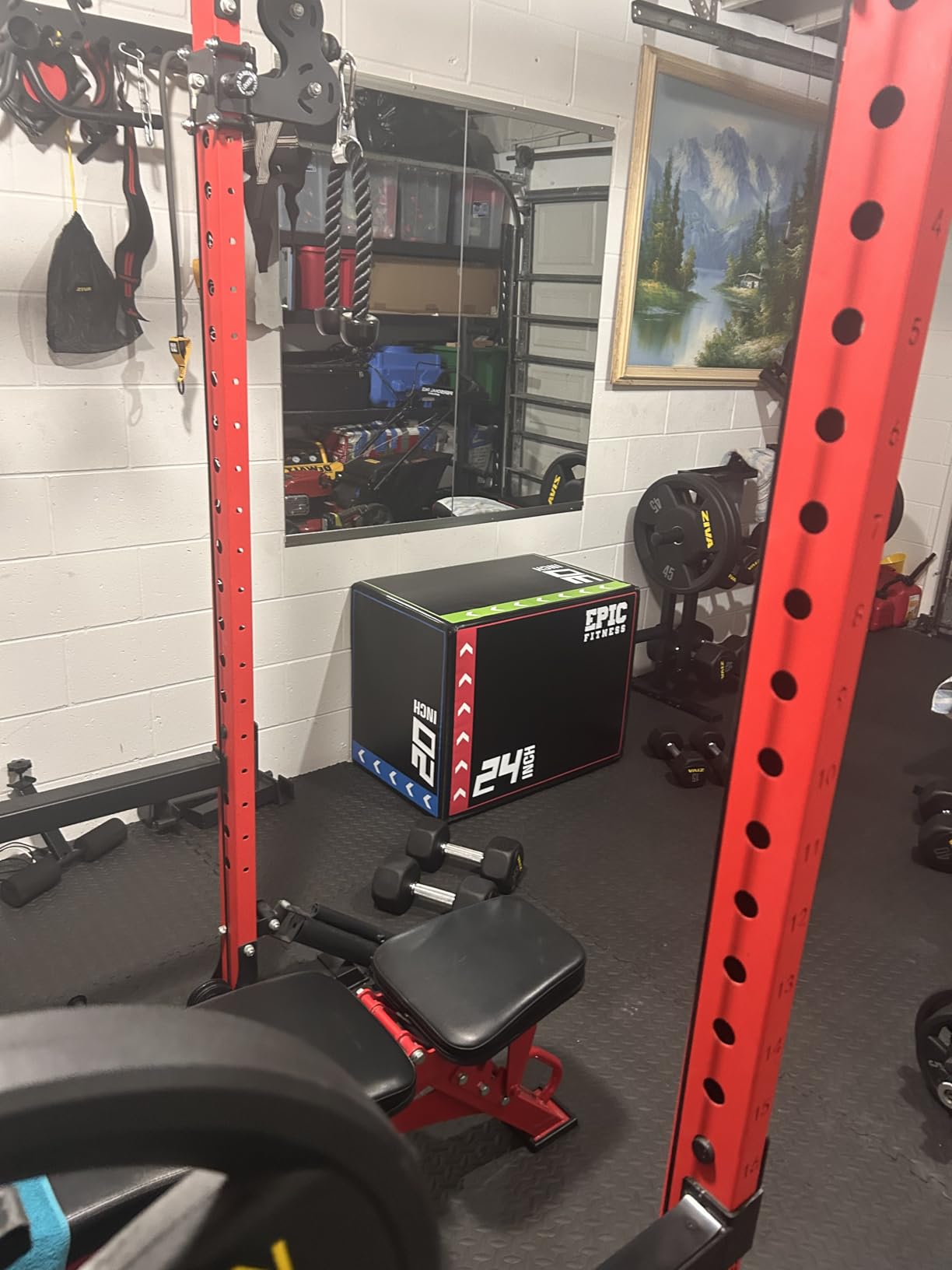
It scores 4.5 across 993 ratings with 78 percent five-star, which puts it slightly below the wooden boxes on consistency. The gap is not about the concept, which works, but about execution detail: a compressible deck is inherently less precise, and some owners notice that at the highest setting.
How to land well on a compressible surface
A foam deck gives underfoot, so your depth perception is slightly off compared with plywood or steel. Commit to the centre of the top face and bring both feet down together, then absorb by bending the knees and hips rather than by stiffening the ankle. The material is doing some of the work for you, so your technique has to do the rest.
Near the edges it gets worse, because the sidewall is unsupported. Treat the usable landing zone as smaller than the printed dimensions, and step off rather than sliding off, which is also better for the vinyl cover over time.
What to weigh before choosing foam again
Compression is the long game issue. Foam loses its rebound and its shape with use, particularly at a 30 inch height where there is a lot of material stacked up. If you are buying for a decade of daily use rather than a year of serious training, a wood or steel box ages better.
Care instructions are also worth a glance: hand wash only. That is manageable with a damp cloth after a session, but it rules out the hose-down approach some people take to foam boxes. Rated for both home and commercial use, which is unusual for a foam product at this level.
8. Fitvids Non-Slip Wooden Plyo Box: the best first box for a beginner
Fitvids 16 x 14 x 12 Non-Slip Wooden Plyo Box Jump Exercise Platform, Black
Wood
12/14/16 in heights
450 lb capacity
Three sizes
Two-year warranty
Pros
- Two-year manufacturer warranty
- Assembly takes about 10 minutes
- 450 lb capacity on quality plywood
- Anti-slip surface
- Three size options
Cons
- Lowest rating here at 4.4 stars
- Small 16 x 14 inch base footprint
- Hard wood finish on the edges
For someone buying their first plyo box, the practical case is straightforward: 450 lb capacity, three heights, a slip-free top, and a build that takes about ten minutes. The two-year manufacturer warranty is the longest in this roundup, which is a genuine advantage on a purchase you are already uncertain about.
It comes in three sizes, each with three height options, so you can match the footprint to your room rather than settling for whatever the standard version is. Reviewers consistently mention the anti-slip top and how quickly it goes together, and those are the two things a first-time buyer actually notices on day one.
At 4.4 stars across 978 ratings, it does draw the most mixed feedback in the group, with 6 percent one-star ratings. The complaints cluster around the smaller sizes and the hard finish on the wood, not around the design itself. Check the dimensions carefully, because the base size is a 16 x 14 inch footprint.
What to verify before you order
Pick the size that matches how you will use it. The smallest configuration is a step-up and strength platform; the larger ones give you a proper landing area for jumps. Buyers who misjudge this are the source of most of the one-star feedback, so spend the two minutes on the dimension chart first.
On the finish, a hard wood edge is a hard wood edge. If shin safety is your main worry, either sand the edges yourself with a corner roundover, or spend the money on a foam box instead. The anti-slip top does nothing for that particular problem.
When a cheaper box is the smarter buy
It is a sensible first buy, and first boxes have a role. If you are starting a home gym, training alone, and building a jumping habit rather than chasing a specific tested result, this one does the job with a two-year warranty behind it.
Where it stops being the right choice is shared equipment. A family gym or a coaching space needs a box that survives being moved, dropped and loaded by several people a day, and the mixed one-star feedback suggests some of these boxes struggle with that. For that use case, step up to a heavier wood or steel build.
9. Synergee 3-in-1 Wood Plyo Box: the best for agility and multi-movement work
Synergee 3 in 1 Wood Plyo Box – Size 20/18/16
Wood
20/18/16 in heights
450 lb capacity
3/4 in plywood
26.8 lb
Pros
- 3/4 inch plywood with inner supports
- Heights switch with a single flip
- Inner supports and hardware included
- Also offered in a 24/20/16 configuration
Cons
- Assembly required out of the box
- Two-hand move at 26.8 lb
- Heaviest wood option in this roundup
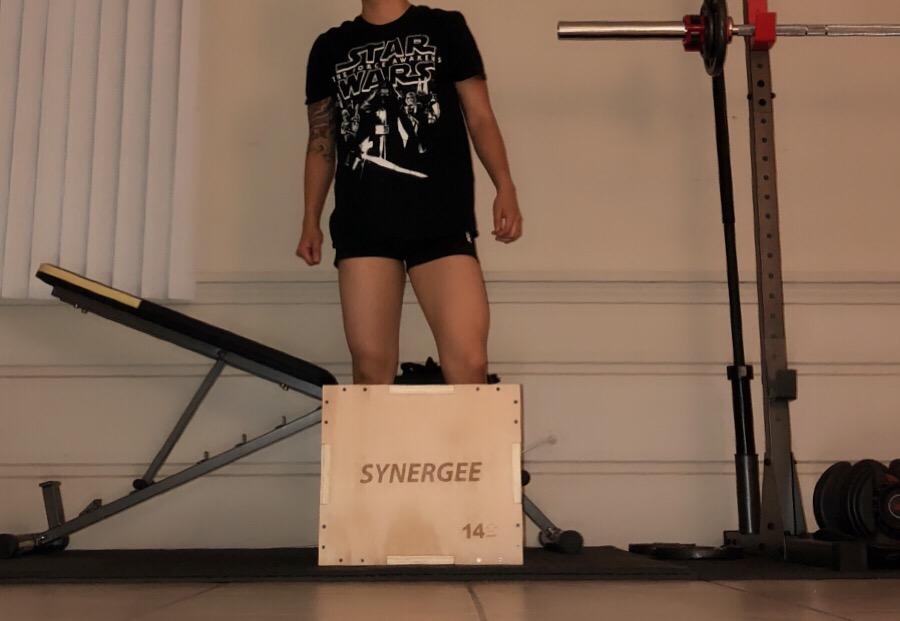
Skating and agility work is about changing direction quickly, and this box is built for that. A single flip moves you between 20, 18 and 16 inch, which is fast enough to keep a circuit running without a long reset. The 3/4 inch plywood and included inner supports are rated to 450 lb, so it holds up under loaded step-ups as well as jumps.
At 4.5 stars from 764 ratings, owners consistently value the 3/4 inch plywood with included inner supports, the 450 lb rating, and the single-flip height change that makes circuit work fast. The most common reservation is that assembly is required, so buyers should budget time to put it together. A second variant in 24/20/16 lets taller athletes step up.
For hockey and skating development, the lateral uses are the reason to buy this one. Split squats, around-the-box planks, lateral step-overs and depth drops all work on a stable platform with a 20 x 18 inch top, and the plyometric work transfers directly to acceleration and edge control.
How to use it for lateral and unilateral power
Set the box to 16 inch and treat it as a hurdle for lateral step-overs, not as a jump target. The lower setting makes the movement about hip stability and foot placement rather than height, which is what a skater needs. Progress to 20 inch for depth drops once the sideways control is solid.
For unilateral loading, the 450 lb rating means you can hold a dumbbell at your chest and step up without worrying about the frame. That is the version of the exercise that builds the single-leg strength most relevant to skating stride, and it is why we lean wood over foam for it.
What to plan for on delivery day
Assembly is required and not included as a finished product. Inner supports, screws and pre-drilled holes come in the box, so it is a build rather than a hunt for parts, but plan on a real work session. Draw the panels fully together before you tighten anything, or the deck will feel springy under load.
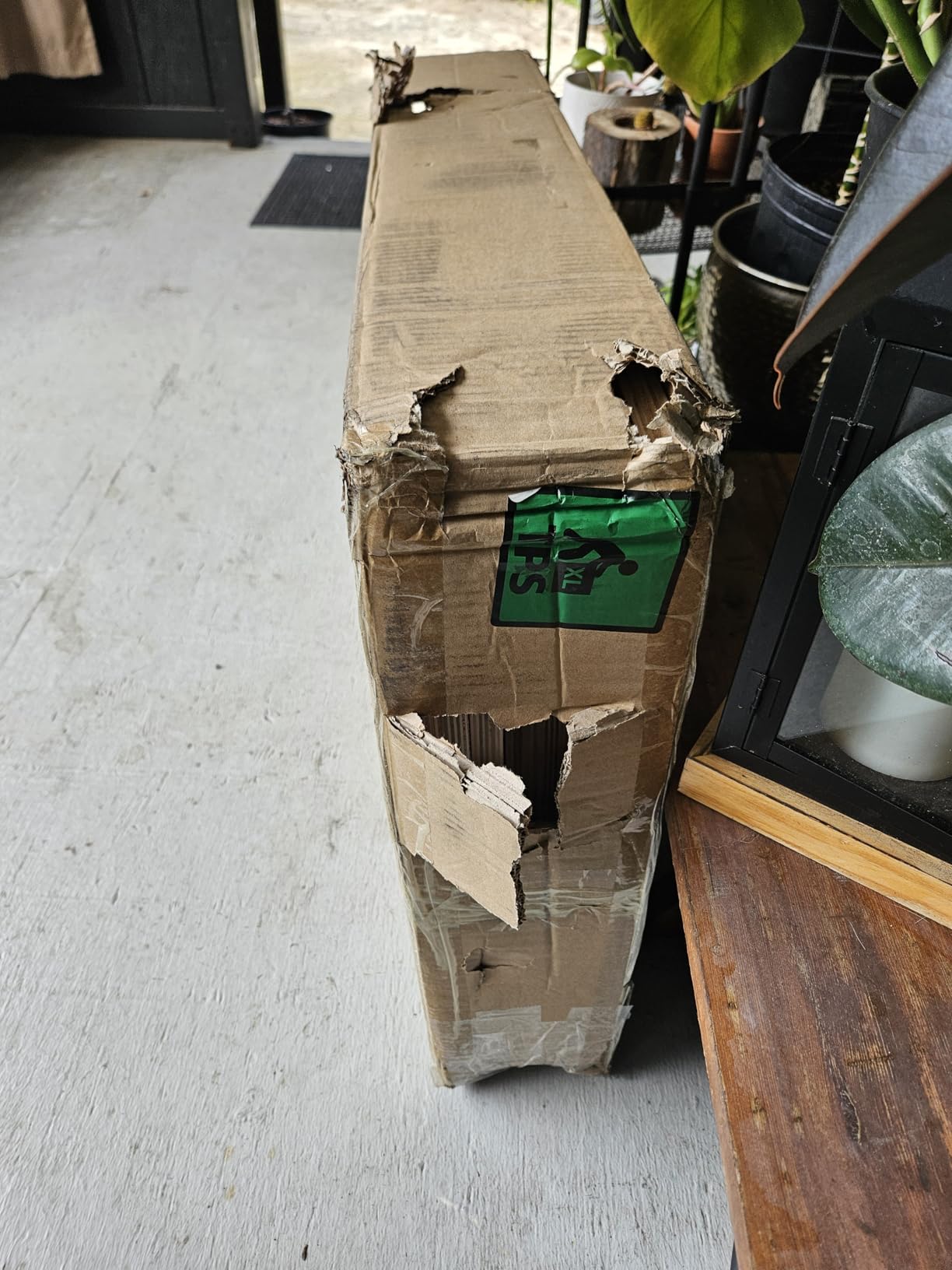
At 26.8 lb this is the heaviest wooden box in the group, and that cuts both ways. Nothing shifts it, which is good for stability on a hard floor, but it is a two-person move through a doorway. Choose a permanent spot before you assemble it.
10. VEVOR 3-Piece Steel Plyo Box Set: the best for multi-athlete training
VEVOR Plyometric Jump Boxes, 12/18/24 Inch Plyo Box, Platform and Jumping Agility Box, Anti-Slip Fitness Exercise Step Up Box Set for Home Gym Training, Conditioning Strength Training, Black
Steel set
12/18/24 in three boxes
500 lb capacity
39.7 lb total
Pros
- Three heights in one purchase
- 500 lb welded powder-coated capacity
- Textured silicone top plus rubber foot pads
- Mass keeps boxes planted during jumps
- Stackable or disassemblable
Cons
- Bolt-together assembly some owners found tricky
- Heaviest set here at 39.7 lb
- Stick-on foot pads wear first
This is a different proposition from a 3-in-1 box. Instead of flipping one platform between three heights, you get three separate steel boxes at 12, 18 and 24 inch, so a coach can set a group up with everyone at the right level and nobody waits for a rotation. That is the argument for a set over a single multi-height box.
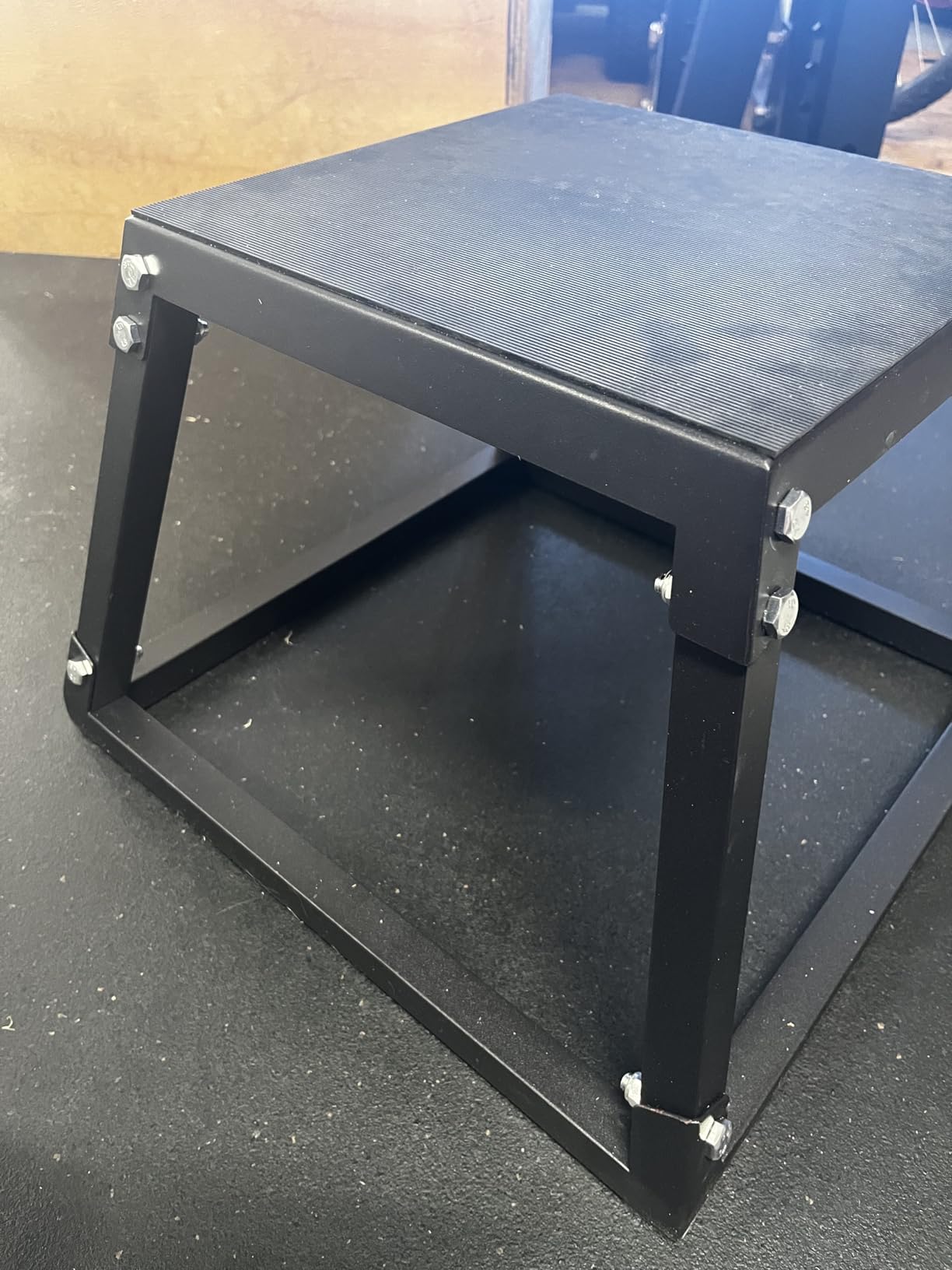
The construction is welded alloy steel with a powder-coated finish for corrosion resistance, rated to 500 lb, on a trapezoidal frame that resists tipping under hard landings. The textured silicone top and four rubber foot pads grip at both ends, which is exactly the pairing you want on a smooth gym floor.
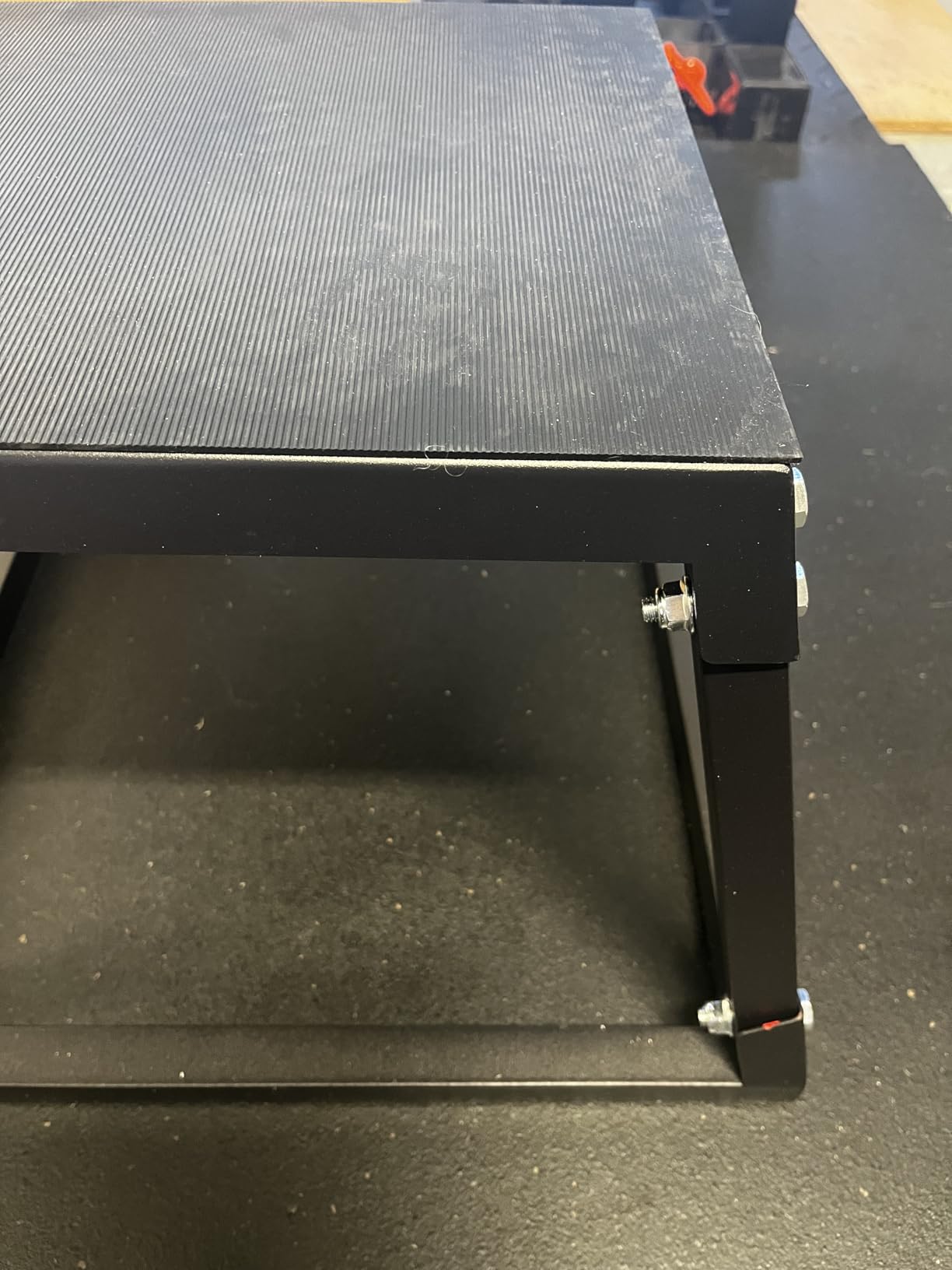
It scores 4.5 across 715 ratings with 77 percent five-star. Buyers mention most often that the mass keeps the boxes planted during jumps without repositioning, and one owner with balance issues uses the 12 inch box as a sturdier seat than any stool they own, which is a decent stability testimonial.
When a three-box set beats a three-in-one box
Group work and family training. With three platforms on the floor you can run stations, pair a tall box for jumps with a low one for step-ups, and remove the flip from the middle of a conditioning circuit. The trade is floor space and the fact that the three boxes take noticeably longer to move.
For a single athlete, a 3-in-1 box is more efficient. You only ever need one height at a time, so the extra two are just storage. The 12, 18 and 24 inch spread here is also a real progression, which makes the set attractive for anyone working through a structured plyometric block.
What to check after assembly
Assembly is the recurring friction point. The boxes bolt together and several owners needed a second pass at the instructions, so allow time and check every corner is fully tightened before you jump on them. A loose bolt under a hard landing is a much bigger problem than a loose bolt on a bench.
Inspect the stick-on foot pads early, because they are the first wear point and the only part of the build that is not welded steel. They are also easy to replace. At 39.7 lb for the full set, pick your storage corner before the boxes are built.
How to Choose a Plyo Box: Material, Height and Load
Three decisions decide almost everything: what it is made of, how tall it goes, and how much load it is rated for. Get those right and the rest is preference. Spend your attention there rather than on brand names or marketing language about explosive power.
Foam, wood or steel: which material should you buy
Choose foam if the biggest barrier to your training is fear of hitting a hard edge. Choose wood if you want a rigid platform for strength work, loaded step-ups and precise height changes, and you are confident landing on it. Choose steel if you need a fixed, extremely stable platform, a very high load rating, or boxes that stack away between sessions.
Wood is the middle ground and the most common answer, because it balances price, rigidity and weight. A 450 lb rated plywood box handles a dumbbell step-up or a barbell box squat without complaint, and 3/4 inch plywood is the standard for good reason. Our general buying guide has a fuller breakdown if you are still weighing it.
What box height do you actually need
As a working rule, start at roughly 60 percent of your maximum jump height and treat 80 percent as the practical ceiling for hard training. Most beginners land between 12 and 16 inch, intermediate athletes work at 20 to 24 inch, and 24 to 30 inch is advanced territory that should come with a coach or a track background.
Here is the important part that removes most purchase anxiety: box height matters far less than most buyers think, up to a fairly high percentage of your max. What changes with height is the landing commitment, not the power you produce. If you are the kind of jumper who is timid on a 24 inch box, a 20 inch box is a better training tool than a taller one you refuse to attack.
Our ceiling in a home setup is 24 inch, and above that you need to check your ceiling clearance before you buy. A 24 inch box under a low garage ceiling leaves little room to reach full extension on top of it, which changes the movement entirely.
Weight capacity is not the weight of the box
These are two completely different numbers and buyers confuse them constantly. The capacity is the load the box will take, which is what matters for box squats and loaded step-ups. The weight of the box is what you have to carry, which is what matters for storage and for moving it between exercises.
A useful pairing is high capacity and low self-weight. The padded box in this roundup is rated to 450 lb while weighing 13.2 lb, and the foam box reaches 350 lb at 15.6 lb. Heavier wood builds feel stable but resist moving, while light foam boxes are easy to reposition and slightly less planted.
What actually drives the price
Material is the biggest lever. Steel frames cost more because of the welded tubing and the powder coating, and multi-box sets cost more simply because there are more of them. Foam pricing tracks foam density, and a dense core costs more per unit volume than a low-density one.
Beyond that, plywood thickness is the second lever. 3/4 inch is the standard for a reason: thinner panels flex under a loaded step-up, and thicker ones add weight you do not need for jump work. Build quality shows up in CNC-cut interlocking panels, pre-drilled pilot holes and sanded edges, and in a warranty that runs longer than a few months.
If you build your own, use at least 3/4 inch plywood
This is the most common question we see from home gym builders, and the answer is consistent: 3/4 inch plywood is the minimum worth building with, and it is the thickness the good commercial wood boxes use. Thinner sheet is fine for step-up platforms and saves nothing once you add internal supports.
The details that matter more than people expect are internal braces, fully drawn puzzle joints, and screws countersunk below the surface. Home gym builders ask these questions because they can see the flaws in cheaper boxes, and they are right to care. Our off-ice training guide covers the complementary side of jump development.
Training on a Plyo Box: Technique, Flooring and Programming
Owning the right box is the easy part. Most disappointing plyometric programmes come down to flooring, foot placement or doing too many high-intensity jumps in one session, all of which are fixable before you spend another dollar on equipment.
Floor surfaces and stopping the box from sliding
Sliding is the most common complaint about wooden boxes, and it is a floor problem more than a box problem. On carpet, a woven top and a rigid base rarely move. On sealed hardwood or tile, put down a rubber mat or a rug with a rubber backing under the box before you jump, and keep the landing area dry.
Lightweight boxes need more attention than heavy ones. A 12 lb steel box can skate on a hard floor, while a 26.8 lb wooden box barely shifts, so the fix for a light box is a mat rather than a heavier model. On smooth floors, test with a hard step-up and a shove before you commit to a jump set.
Shin safety and when to stop a set
Two risks matter with plyo boxes: shin contact on a miss, and landing with a knee that caves inward. The second is the one that ends careers. Cue the landing with a word, film a set from the front if you can, and stop the set the moment the knees start travelling inward rather than finishing the rep count.
Stop the set when jump height visibly drops, when your landing gets louder, or when you cannot control the descent. Fatigue shows up in the landing before it shows up in the jump, and the box is the wrong place to discover you have run out of quality reps. Owners of wooden boxes who have had shin trouble are usually the ones who kept going on tired legs.
Exercises beyond box jumps
Box jumps are the headline, but the platform earns its space through everything else. Weighted step-ups build single-leg strength that transfers directly to skating and sprinting. Box squats with a barbell train the squat pattern to depth. Bulgarian split squats on the long side work the rear leg and hip mobility. Depth jumps off the front develop reactive strength, though they belong in a trained programme. Decline push-ups and box dips use the box as an adjustable bench and dip station, and lateral step-overs train hip stability for agility. Calf raises and around-the-box planks fill out the edges of a circuit, and a step-up with a loaded pin turns the box into a unilateral strength tool rather than a plyometric one.
That list is the real reason home gym builders often own two boxes. Reddit users describe adding a second wooden box specifically to unlock seal rows, belt squats, incline bench and seated press work, which is a versatility pattern rather than a jump-training one.
How to program box jumps in a week
Do two to four sets of three to five reps, and treat every rep as maximal. Quality beats volume here, because a box jump set with tired landings teaches the wrong pattern and adds injury risk without adding power.
Rest two to three minutes between sets and keep box jumps away from the end of a session when you are freshest. Two sessions a week is plenty for most people, with at least 48 hours between them, and the box works just as well on non-jump days as a step-up or box squat platform.
Frequently Asked Questions
What is the best box for jumping at the gym?
For most home gyms, a 3-in-1 wooden plyo box is the best balance of rigidity, price and height range. Pick a box rated to at least 350 lb with three height settings, and start on the lowest one. Foam boxes are the safer choice for beginners, and steel is the most stable for loaded work.
What size plyometric jump box do I need?
Start at about 60 percent of your maximum jump height and treat 80 percent as the ceiling for hard training. Most beginners work at 12 to 16 inch, intermediate athletes at 20 to 24 inch, and advanced jumpers at 24 to 30 inch. Height changes landing commitment far more than it changes power output.
Is a foam or wood plyo box better?
Foam is better if you are new to jumping, training in a group or coaching juniors, because the soft core removes the risk of shin scrapes on a miss. Wood is better for strength work, loaded step-ups and box squats, because a rigid deck stays precise under weight and lasts longer. Most home gym owners end up with wood.
Do plyometrics actually help you jump higher?
Yes, when programmed correctly. Plyometrics train the stretch-shortening cycle, teaching muscles to produce force faster, and box jumps cut peak impact force compared with a flat-ground countermovement jump. The gains come from consistent quality reps and adequate recovery, not from doing more high-intensity jumps in a single session.
What are some good plyometric jump box exercises?
Beyond box jumps, the most useful moves are weighted step-ups, box squats, Bulgarian split squats, depth jumps, decline push-ups, box dips, lateral step-overs and calf raises. Together they cover strength, unilateral power, upper body and agility, which is why one box often replaces several single-purpose pieces of equipment.
Why are plyometric boxes so expensive?
Price tracks material first: welded steel frames cost more than plywood, and plywood costs more than foam. Plywood thickness is the second driver, with 3/4 inch the standard for good boxes. Sets of multiple steel boxes cost more simply because you are buying more than one platform, and the premium buys stability and load rating rather than extra jump height.
Our Verdict on the Best Plyo Boxes for Jump Training in 2026
The Yes4All 3-in-1 Wooden Plyo Box is the best plyo box for jump training overall, because three heights, a 450 lb rating and a 20 x 18 inch footprint cover almost every home gym need. If you are new to jumping or training a group, take the Yes4All foam box instead and buy the shin protection with the money you save on a second platform later.
For ice athletes specifically, our hockey plyo box guide goes deeper into the height and surface choices that build lateral and unilateral power on the ice. Whichever route you take, set the box on a rubber mat, start at your 60 percent height, and land quietly.