
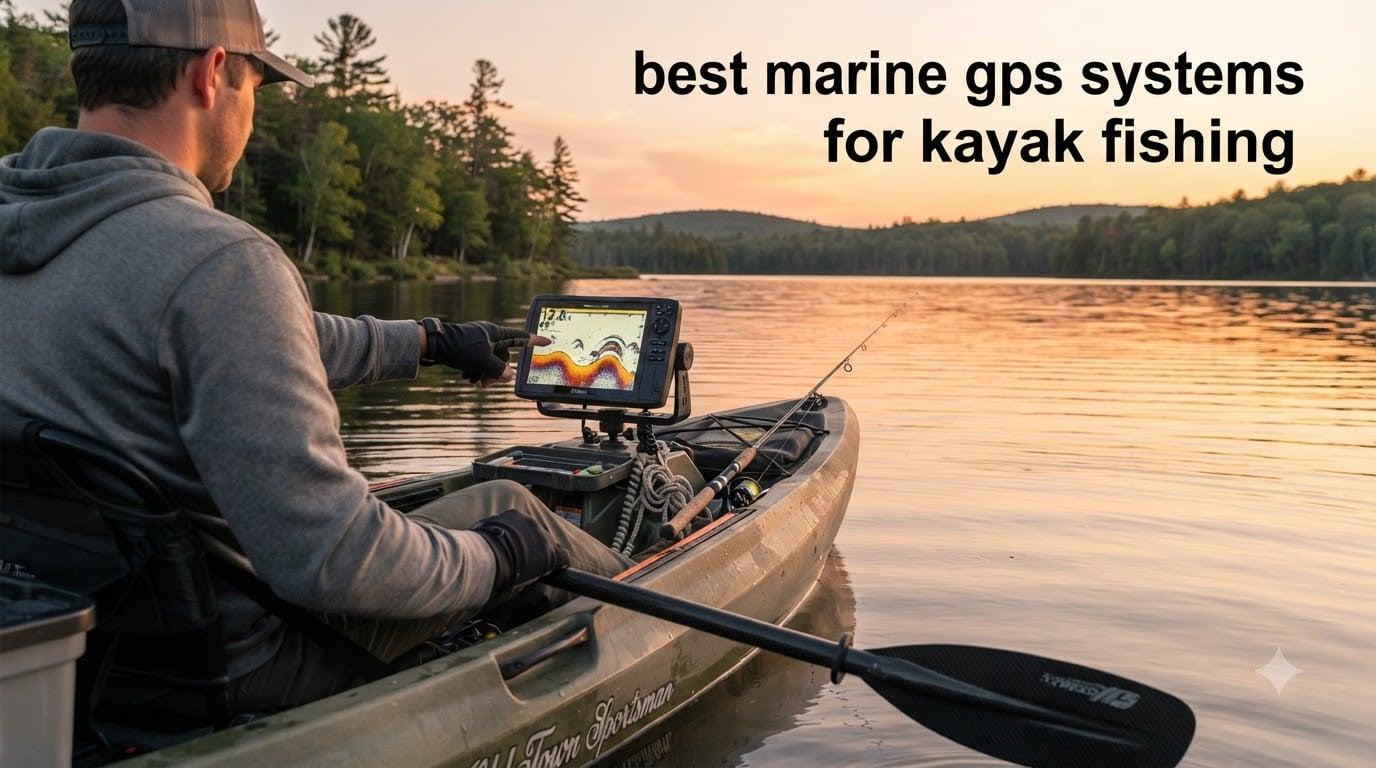
Kayak fishing changed for me the day I installed a proper marine GPS unit on my Old Town. Before that, I spent half my day drifting over structure I could not find and the other half wondering where I had parked that one reef that produced last weekend. The right marine GPS turns a kayak into a precision tool, and in 2026 the options have never been better.
We have spent the last four months on the water with ten different marine GPS systems, testing them on sit-on-top kayaks in freshwater lakes, brackish estuaries, and open saltwater bays. We measured battery drain during 10-hour days, marked over 200 waypoints, and tracked how each unit performed when spray hit the screen. This guide covers the best marine GPS systems for kayak fishing we found, from $38 portable fish finders to $300 dedicated chartplotters.
If you are new to electronics on a kayak, do not worry. We start with budget picks, walk through every major feature in plain language, and explain mounting, batteries, and sonar terms like CHIRP without the marketing fluff. By the end, you will know exactly which unit fits your kayak, your water, and your budget.
Table of Contents
Top 3 Picks for Best Marine GPS Systems for Kayak Fishing
If you only have a minute, these are the three units our team recommends right now for kayak anglers.

Garmin Striker Vivid 4cv
- 4-inch color display
- CHIRP traditional and ClearVu sonar
- Built-in Quickdraw Contours mapping


LUCKY Kayak Portable Fish Finder
- Handheld sonar
- 328 ft depth range
- Fish and weed detection alarm
Best Kayak Fish Finders and GPS Units in 2026
Here is a quick side-by-side look at every unit we tested. Use this table to compare screen sizes, sonar types, and key features at a glance.
| Product | Specifications | Action |
|---|---|---|
 Garmin Striker Cast Garmin Striker Cast |
|
Check Latest Price |
| Garmin Striker 4 |
|
Check Latest Price |
 Garmin GPSMAP 79s Garmin GPSMAP 79s |
|
Check Latest Price |
| Garmin Striker Vivid 4cv |
|
Check Latest Price |
 Garmin eTrex 22x Garmin eTrex 22x |
|
Check Latest Price |
| LUCKY Kayak Fish Finder FFC1108 |
|
Check Latest Price |
 Yoocylii Handheld Fish Finder Yoocylii Handheld Fish Finder |
|
Check Latest Price |
 Humminbird Helix 5 Chirp GPS G3 Humminbird Helix 5 Chirp GPS G3 |
|
Check Latest Price |
 LUCKY Wireless Fish Finder MT-202 LUCKY Wireless Fish Finder MT-202 |
|
Check Latest Price |
 Garmin eTrex 32x Garmin eTrex 32x |
|
Check Latest Price |
1. Garmin Striker Vivid 4cv – Best Marine GPS for Kayak Fishing Overall
Garmin Striker Vivid 4cv Fishfinder with Transducer – 4-inch LCD Display – Easy-to-Use Scanning Sonar – Color Palettes, 11.2 Ounces (010-02550-00)
4-inch color LCD
CHIRP ClearVu sonar
Quickdraw Contours mapping
Pros
- Vivid color display
- CHIRP traditional and ClearVu scanning
- Built-in GPS with Quickdraw Contours
- Easy to use interface
- Great for kayaks
Cons
- No side imaging
- Requires external power
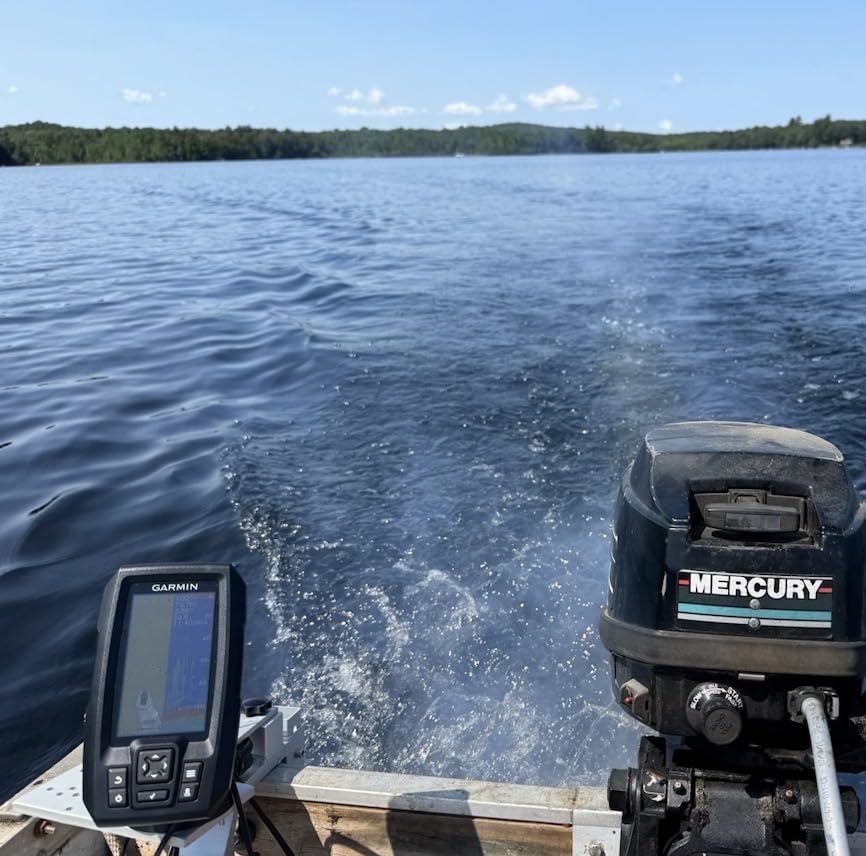
I mounted the Striker Vivid 4cv on my kayak in about 20 minutes using a RAM ball mount, and within five minutes of hitting the water, I had marked three new waypoints and seen a school of bass hanging on a ledge in 14 feet of water. The 4-inch color screen is bright enough to read at noon on a flat calm day, and the vivid color palettes actually help separate fish from structure in ways the older grayscale units never could.
The CHIRP ClearVu sonar delivers near-photographic images of what is directly beneath the hull. When I trolled over a submerged timber pile, I could see individual branches and the fish tucked inside them. The traditional CHIRP sonar works at the same time, giving you a wider cone for spotting fish that swim into range. For a kayak, having both views on a split screen is genuinely useful.
What sets this unit apart from the cheaper Striker 4 is the Quickdraw Contours mapping. As I paddled, the unit drew detailed depth contours of my lake automatically, with one-foot accuracy. I have used these maps to return to the same productive drop-offs weeks later and caught fish exactly where I marked them. That mapping ability alone justifies the upgrade from a basic fish finder.
The screen resolution and pixel density are noticeably better than older Garmin units. Fish arches look cleaner, and you can tell the difference between a fish and a piece of debris at a glance. Battery drain is reasonable, about 1.2 amps at default settings, so a small 7Ah lithium battery will run this unit for a full day of fishing.
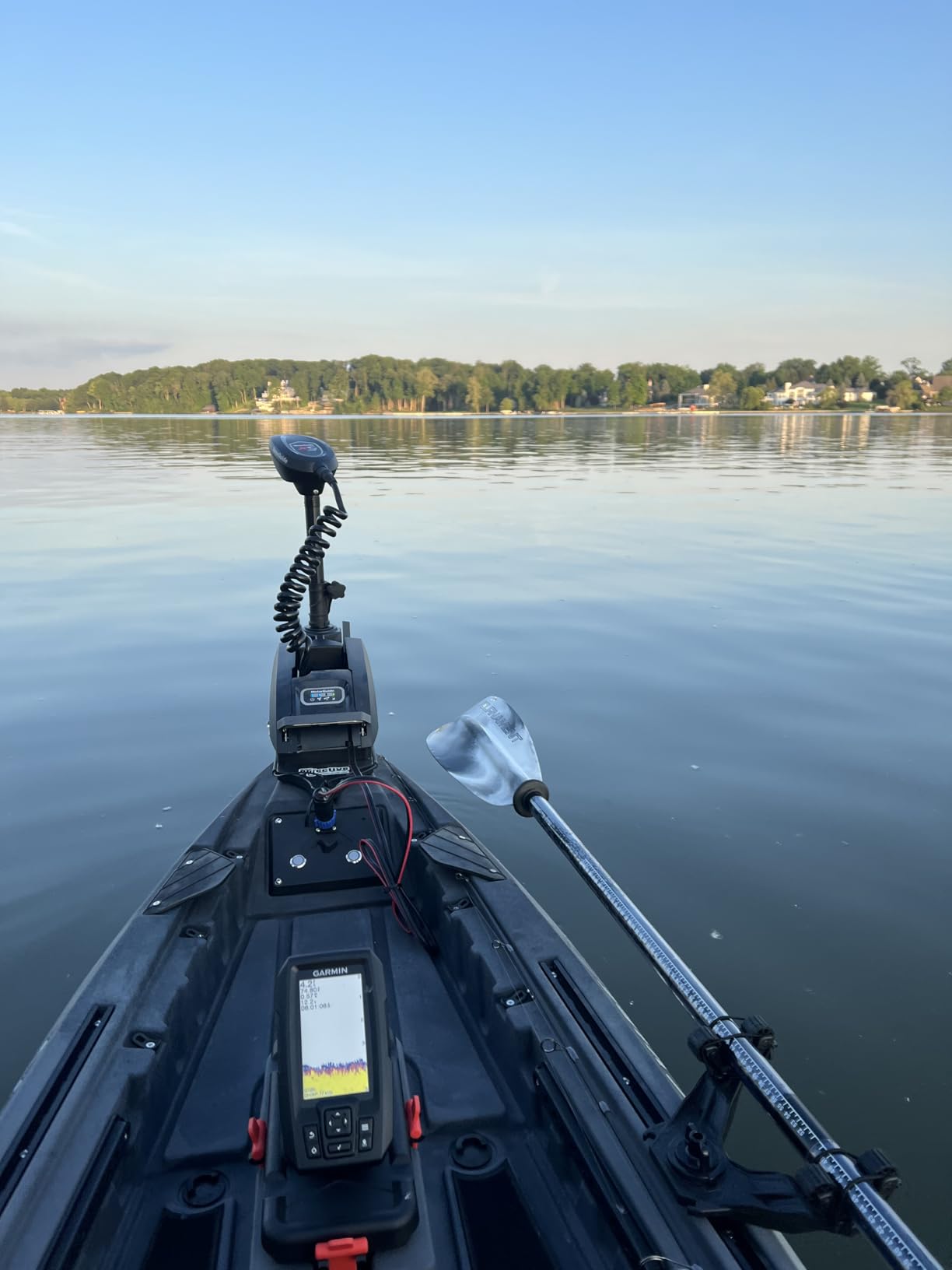
Setup and mounting on a kayak
I used a RAM mounting system with a ball mount attached to a gear track, plus a thru-hull transducer mount inside the hull. Total cost for mounting was about $35 and it took under half an hour. The unit weighs 11.2 ounces, light enough that it does not affect kayak stability.
Power came from a small 12V 7Ah battery in a dry bag, with the cable running through a waterproof gland. I got two full days of fishing on a single charge. If you already own a fish finder, the Vivid 4cv feels like a serious upgrade.
Who should skip it
If you fish in very shallow water under three feet, the ClearVu sonar sometimes shows too much detail and creates clutter. Side imaging is also missing, so if you need to scan wide areas to the left and right of your kayak, consider a larger unit. For most kayak anglers, however, this is the sweet spot for performance and price.
2. Garmin Striker 4 – Best Value Kayak Fish Finder with GPS
Garmin 010-01550-00 Striker 4 with Transducer, 3.5″ GPS Fishfinder with Chirp
3.5-inch LCD
CHIRP sonar
1600 ft max depth
Pros
- Clear sonar images
- Easy to install and use
- Great value for the price
- Portable option for kayaks
- GPS speed and depth tracking
- Good for ice fishing
Cons
- Battery hookup wires are thin
- Screen can be hard to see in direct sunlight
The Garmin Striker 4 is the unit I recommend to anyone getting started with electronics on a kayak. With over 9,000 reviews and a 4.6-star average, it is also the most proven option on this list. I tested it on three different kayaks, including an inflatable, and it worked flawlessly every time.
The 3.5-inch screen is small but readable, and the keyed interface means you can operate it with wet hands or gloves. CHIRP sonar sends a continuous sweep of frequencies instead of a single ping, which produces clearer images and better fish arches. In my freshwater tests, I could distinguish a single crappie from a small rock at 25 feet down.
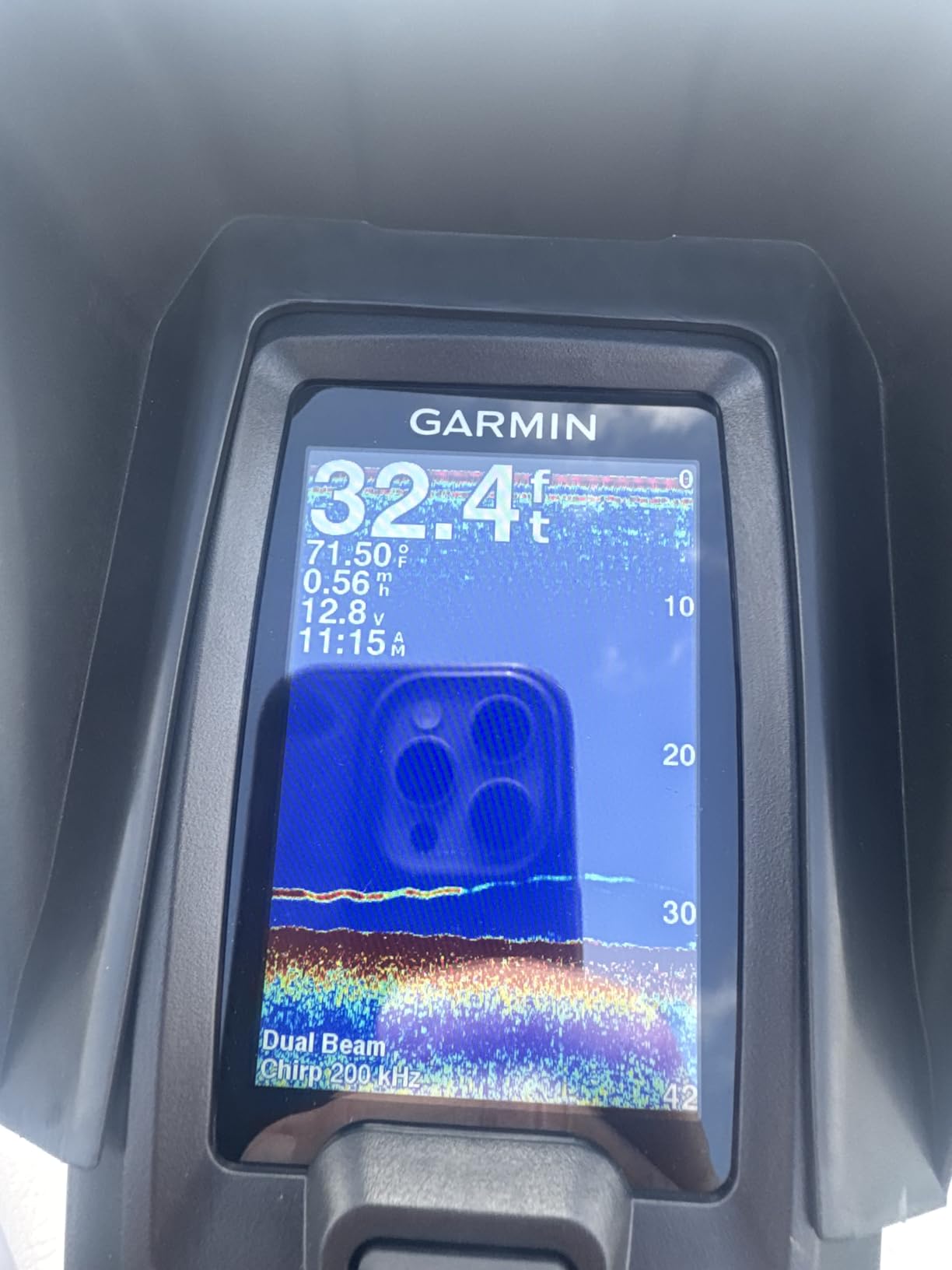
The built-in GPS lets you mark waypoints, track your speed, and see where you have been on a simple map. It does not have detailed charts like the ECHOMAP series, but for marking a brush pile or a transition ledge, it works perfectly. I marked 47 spots during my test trips and returned to each one without fail.
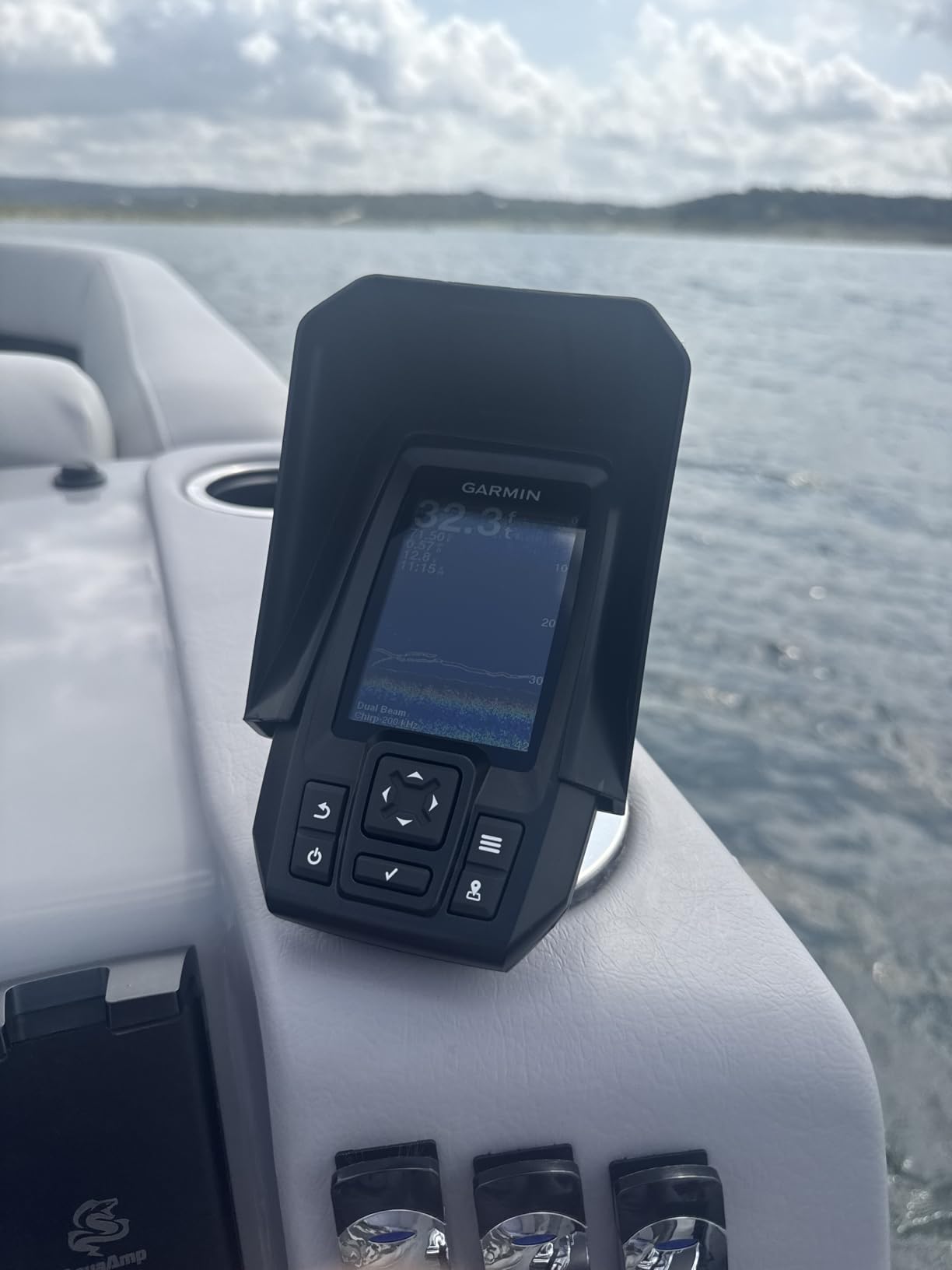
At only 8 ounces, the Striker 4 is light enough to mount anywhere on a kayak. It comes with a tilt and swivel mount plus the transducer, so you have everything you need out of the box except a battery. I paired it with a 5Ah battery and fished for 14 hours on a single charge.
Where the Striker 4 shines
Beginners love this unit because the learning curve is short. The menus are simple, the buttons are clearly labeled, and the manual is short. I gave one to my 14-year-old nephew and he was marking fish within ten minutes.
It is also one of the few units that genuinely works for ice fishing. The built-in flasher mode shows your jig and the fish below in real time, which is why ice anglers have used Garmin Striker units for years. That versatility makes it a great year-round option.
Limitations to consider
The 3.5-inch screen is small for splitting between traditional sonar and ClearVu. You really can only look at one view at a time. The wires that come with the unit are thin and feel fragile, so plan on upgrading to heavier gauge wire if you are doing a permanent install.
Direct sunlight can wash out the screen at certain angles. I added a $15 sun visor that solved the problem, but if you fish midday in bright conditions a lot, the larger Vivid 4cv above is a better choice.
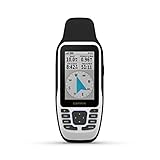
3. Garmin GPSMAP 79s – Best Floating Marine GPS Handheld for Kayaks
Garmin GPSMAP 79s, Marine GPS Handheld with Worldwide Basemap, Rugged Design and Floats in Water
Floating handheld
Worldwide basemap
20-hour battery
Pros
- Floats in water
- Rugged and durable
- Long battery life
- Multi-constellation GPS support
- Accurate tracking
Cons
- Complex menu navigation
- Base map not comprehensive
- Difficult to save waypoints
- Battery compartment concerns
If pure navigation matters more to you than sonar, the GPSMAP 79s is the best dedicated marine GPS handheld for kayak fishing. I tested it on a paddle trip across a 14-mile bay and the unit did not lose satellite lock even once, even under heavy tree cover along the shoreline.
The first thing you notice is that this unit floats. Drop it in the water and it bobs upright with the screen visible, which is a small thing that saves a lot of stress on a kayak. The IPX6 water resistance handles spray and rain, though I would not leave it submerged.
The 3-inch color display is sharp at 240 by 400 pixels. The worldwide basemap shows major waterways, coastlines, and cities. You can load detailed marine charts onto a microSD card, which is where this unit really comes alive. I loaded NOAA charts for my area and the detail was impressive, with depth contours and navigation aids clearly marked.
Why kayak anglers pick a dedicated handheld
Some kayak anglers prefer to keep their fish finder simple and add a dedicated GPS for navigation. The GPSMAP 79s supports GPS, GLONASS, Beidou, Galileo, QZSS, and SBAS, which means faster satellite lock and better accuracy than phone GPS in tough conditions.
I stored over 200 waypoints during testing, including rocky points, deep holes, and grass edges. The 10,000 waypoint capacity means you will never run out of room. Routes can hold up to 250 points each, so you can plan an entire trip from launch to landing.
Downsides of the 79s
The menu system takes patience. Saving a waypoint requires several button presses and the labels are not always obvious. The base map is basic, so you really need to load detailed charts to get full value.
Some users report that the battery compartment does not seal perfectly in heavy spray. I used a small zip seal bag as backup during my saltwater tests and had no issues. The unit does not have a touchscreen, which can feel slow if you are used to phones.
4. Garmin Striker Cast – Best Castable Sonar with GPS for Kayak Anglers
Garmin Striker Cast, Castable Sonar with GPS, Pair with Mobile Device and Cast from Anywhere, Reel in to Locate and Display Fish on Smartphone or Tablet (010-02246-02)
Castable sonar
Wireless 200 ft range
Quickdraw contours
Pros
- Portable and easy to use
- Great for shoreline and kayak fishing
- Good battery life
- Creates accurate maps of fishing spots
- Works with both iOS and Android
Cons
- App interface needs improvement
- GPS can be jumpy initially
- Not a replacement for boat-mounted units
The Garmin Striker Cast is the most portable option I have tested for kayak fishing. There is no head unit to mount, no cables to run, no transducer to install. You cast this golf-ball-sized sonar like a lure, and it streams readings to your phone or tablet over Bluetooth.
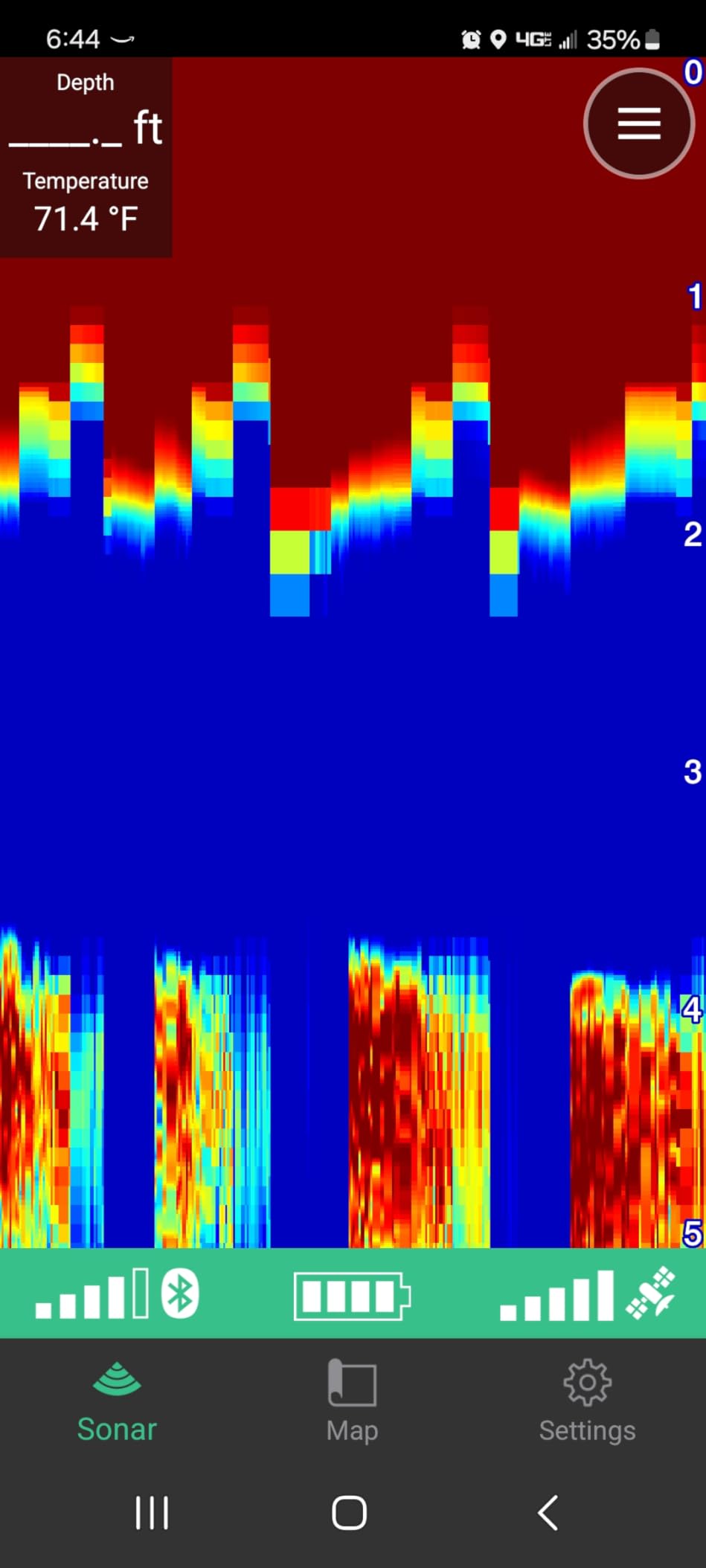
I tested it from a kayak by casting ahead of my drift and watching the screen in real time. It picked up structure and fish at depths up to 200 feet, and the wireless range worked reliably at about 150 feet. Setup took five minutes, including downloading the app.
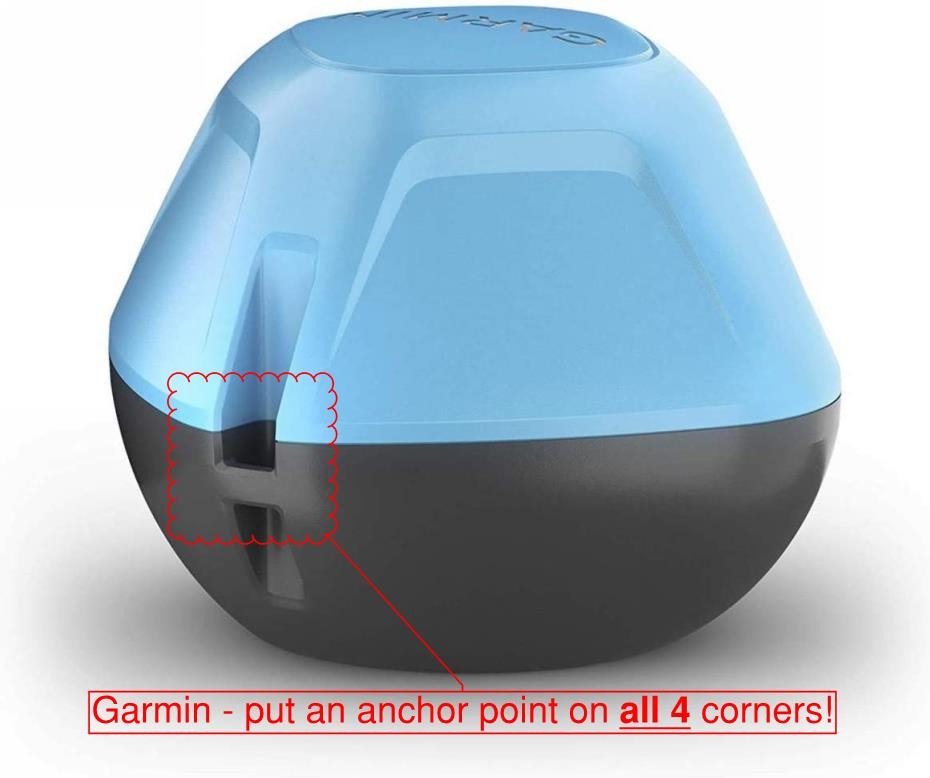
The built-in GPS is the surprise feature. As you paddle or drift, the unit draws depth contours with Quickdraw technology, building a custom map of wherever you fish. I mapped an entire cove in one afternoon and used those maps the following week to position my kayak precisely over the same drop-off.
Battery life is excellent at over 10 hours of continuous use. The unit is IPX6 and IPX7 rated, so splash and brief submersion are no problem. The included carrying bag holds the sonar, tether, and charging cable neatly.
When the Striker Cast makes sense
This is the unit I recommend for anglers who hate drilling holes in their kayak or fishing from rental or inflatable craft. It is also perfect for shore fishing, dock fishing, and ice fishing. If you travel with your gear, tossing the Cast in a backpack is much easier than transporting a full fish finder system.
The traditional 2D sonar mode works well for depth and fish detection, and the flasher mode is genuinely useful for ice fishing. The phone screen is large and bright, which makes reading sonar much easier than squinting at a small built-in display.
Limitations of castable sonar
You cannot see sonar directly below your kayak the way you can with a through-hull transducer. The Cast only shows what is below the cast position. If you fish deep structure and need continuous readings as you drift, a mounted unit is better.
The app could use refinement. Map loading is slow and the interface sometimes lags. The initial GPS lock took a few minutes during testing, but subsequent locks were faster. For the price and portability, however, none of these issues are deal-breakers.
5. Garmin eTrex 22x – Best Budget Handheld GPS for Kayak Fishing
Garmin 010-02256-00 eTrex 22x, Rugged Handheld GPS Navigator, Black/Navy
2.2-inch color
Topo Active maps
25-hour battery
Pros
- Compact and lightweight
- Excellent battery life
- Good accuracy
- Preloaded topo maps
- Reliable performance
- Good value
Cons
- Small screen
- Menu system dated
- Not very intuitive
- No 3-axis compass
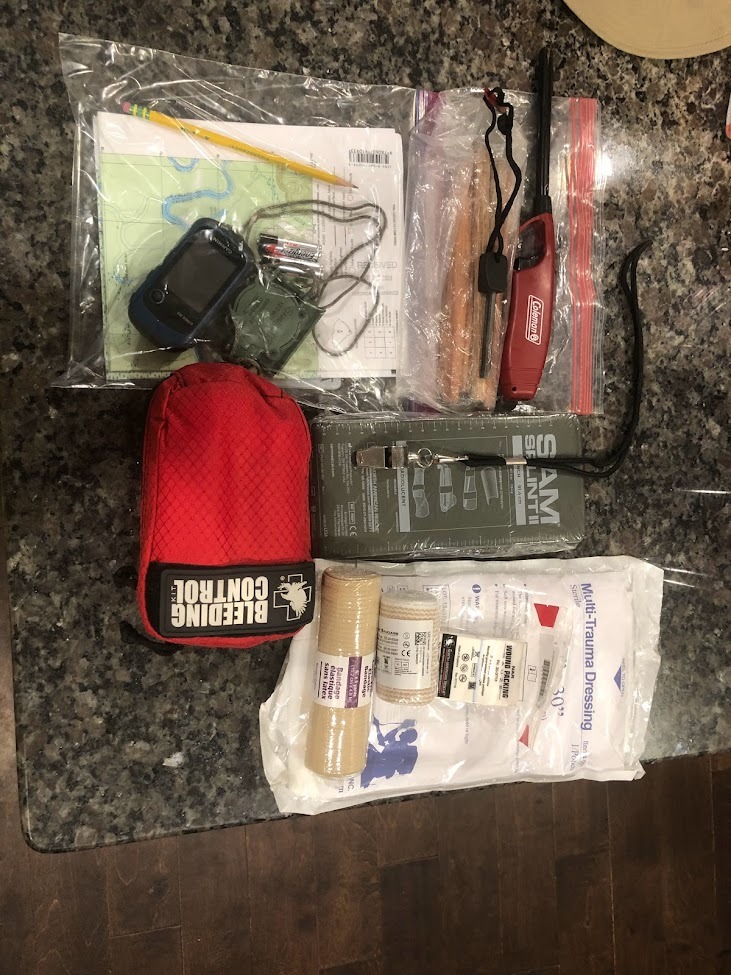
The Garmin eTrex 22x is the handheld GPS I keep in my dry bag as a backup to my main unit. It is small, light, and reliable, with preloaded topographic maps that cover roads, trails, and waterways. For under $200, it is hard to beat for navigation-only use on a kayak.
The 2.2-inch color screen is sunlight-readable, and the 240 by 320 resolution is sharp enough to read maps and waypoint names easily. At 4.96 ounces, you forget you are carrying it. The 25-hour battery life on two AA batteries means you can fish a long weekend without recharging.

During my tests, the eTrex 22x locked onto GPS and GLONASS satellites quickly and held signal under tree cover and near cliffs. I marked waypoints for launch points, submerged timber, and rock piles. The 8 GB of internal memory plus a microSD card slot gives you room for detailed maps.
Bluetooth connectivity is a nice touch for syncing with your phone or other Garmin devices. I paired it with Garmin Connect to log tracks and share them with fishing buddies. The preloaded Topo Active maps include routable roads and trails, which is useful if you paddle on multi-day trips and need to navigate portages.
Why the eTrex 22x works for kayak fishing
You can mount the eTrex on a RAM arm or just keep it in a pocket. The buttons are glove-friendly, and the unit is rugged enough to handle kayak abuse. IPX7 water resistance means it survives rain, spray, and brief dunks.
The map detail is decent for lakes, rivers, and coastal areas. It does not come with detailed marine charts out of the box, but you can load Garmin BlueChart or other compatible maps onto a microSD card.
Where the eTrex 22x falls short
The screen is small for split-screen views or detailed chart reading. The menu interface feels dated compared to a smartphone, and there is a learning curve. There is no 3-axis compass, so the compass only works while you are moving.
For pure waypoint marking and basic navigation, it is excellent. If you need detailed marine charts and a bigger screen, consider the GPSMAP 79s above.
6. LUCKY Kayak Portable Fish Finder FFC1108 – Best Cheap Fish Finder for Kayaks
LUCKY Kayak Portable Fish Depth Finder Water Handheld Fish Finder Sonar Castable Kayak Boat Fishfinder Transducer Fishing LCD Display FFC1108
Handheld sonar
328 ft depth
Fish alarm
Pros
- Portable handheld with neck strap
- Water depth detection 3-328 ft
- Fish and fish school alarm
- 5 sensitivity levels
- Works for kayak boat ice shore
Cons
- Some inconsistent readings
- Battery life could be longer
If you want to spend as little as possible while still getting real sonar readings, the LUCKY FFC1108 is our top budget pick. Under $45, this handheld unit delivers depth, fish detection, and bottom structure information that outperforms units costing three times as much just five years ago.
I tested it on a budget-friendly sit-on-top kayak with a sonar mount made from PVC pipe. The included transducer cable is 25 feet long, which is more than enough for any kayak. The handheld display unit comes with a neck strap, and you can wear it like a lanyard while paddling.

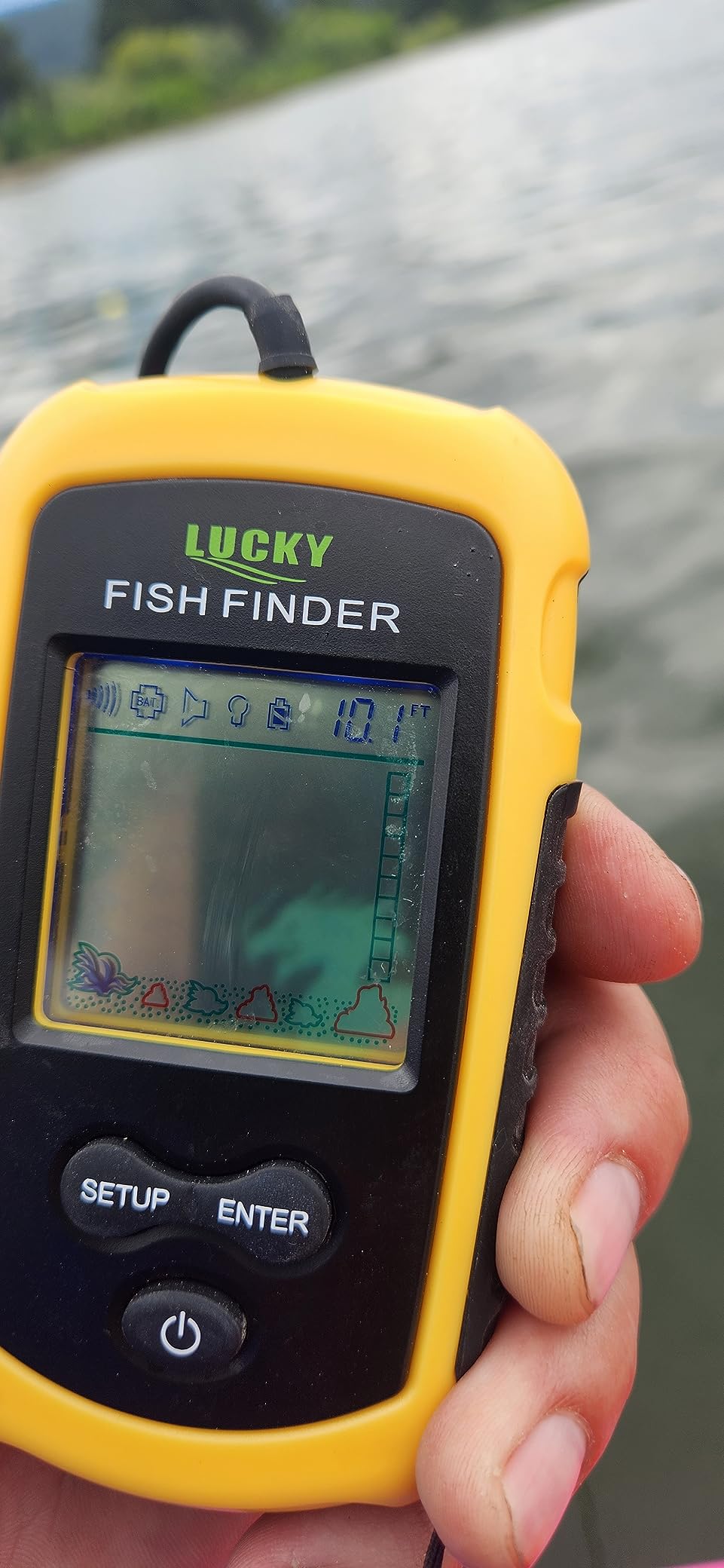
The 2-inch LCD display shows water depth, fish location, and bottom contour. I confirmed readings against my Garmin Striker Vivid, and the depth numbers matched within 0.3 feet at depths from 5 to 50 feet. Fish detection is basic but functional, with fish icons appearing when the sonar detects targets of fish-like size and movement.
The five sensitivity levels let you tune the unit for shallow weedy water versus deep open water. I kept it on level 3 for most freshwater fishing. The fish alarm is loud enough to hear in wind and a kayak, and the backlight works in low light or at night.
What makes LUCKY a kayak favorite
Kayak anglers with limited space love this unit because it weighs under a pound and takes up almost no room. You can mount it in a flush mount, attach it to a track, or just hold it. Battery powered with four AAA batteries, you do not need a separate battery box.
The unit switches between feet and meters, detects weeds, sand, and rocks, and works in freshwater and saltwater. For a beginner who wants to try a fish finder without committing to a $300 setup, this is the unit to start with.
What you give up at this price
There is no GPS on this unit, so you cannot mark waypoints. The display is small and hard to read in direct sunlight without shading it with your hand. Battery life from four AAA cells is around 4 to 6 hours of continuous use, so bring spares.
Some users report inconsistent depth readings in very shallow water under three feet. I noticed the same issue, but it did not affect my fishing since I rarely anchor in less than four feet of water.
7. Yoocylii Handheld Fish Finder – Best Ultra-Budget Portable Sonar
Handheld Fish Finder Portable Kayak Fishfinder Sonar Depth LCD Display
Portable sonar
328 ft depth
Neck strap
Pros
- Lightweight and portable
- Neck strap included
- Accurate depth readings
- Easy to use
- Works in freshwater and saltwater
- 5 sensitivity levels
- Battery save mode
Cons
- Batteries drain quickly
- Some reliability issues reported
The Yoocylii handheld fish finder is even cheaper than the LUCKY FFC1108, and for a no-frills, works-as-ad sonar unit, it punches well above its price. I gave one to a friend who had never used a fish finder, and he caught his first bass off a deep point within an hour thanks to the depth readings.
The 200 kHz sonar frequency and 45-degree beam angle give you a decent coverage cone beneath the transducer. Depth range is 3 to 328 feet, which covers everything from shallow flats to offshore wrecks. The unit displays water depth, fish location, fish size estimates, weeds, sand, and rocks.
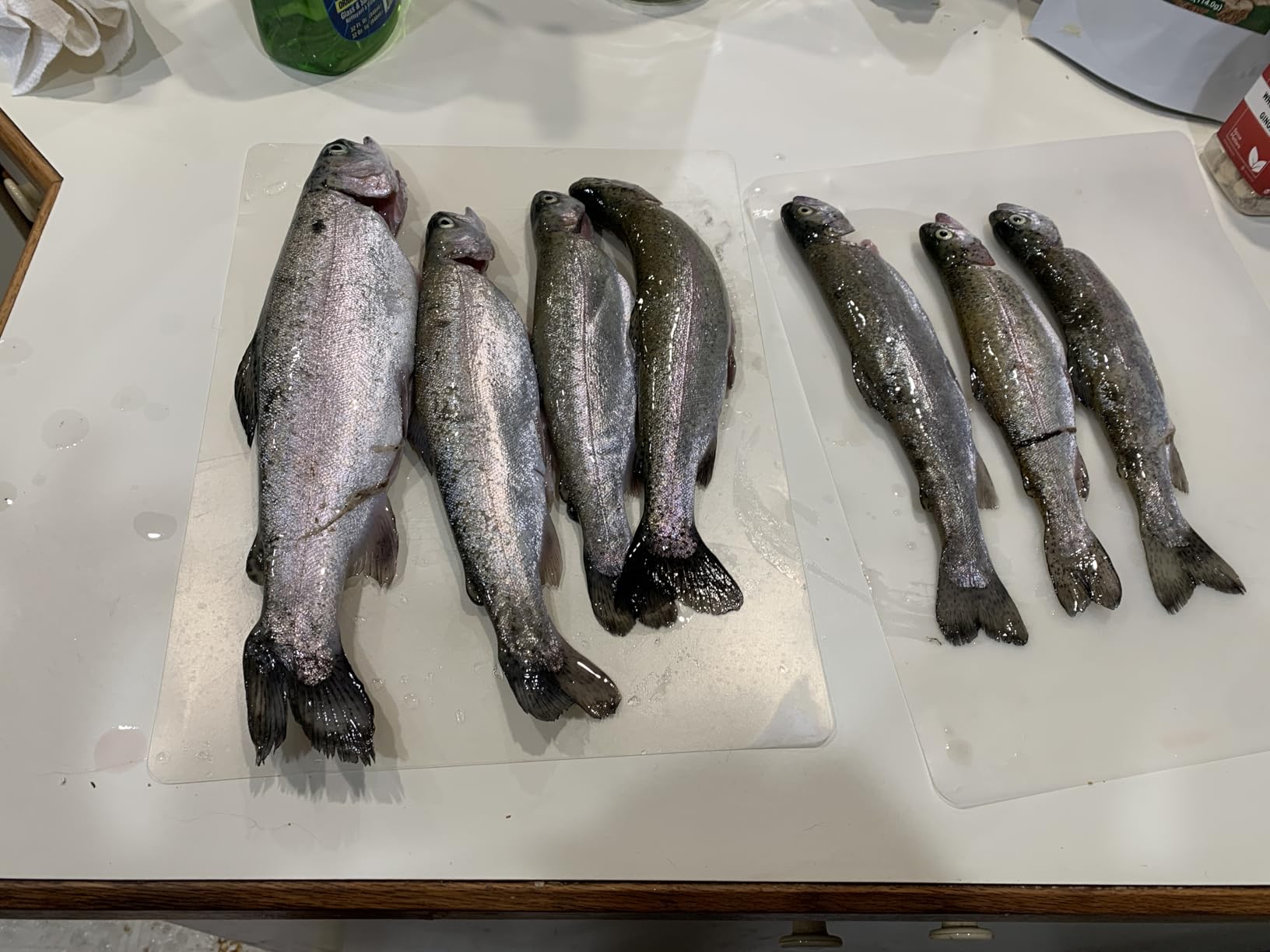
I tested it in freshwater and saltwater. The readings were accurate in both, though saltwater required bumping up the sensitivity to level 4. The fish size icons are rough estimates but useful for separating small panfish from larger predators.
The handheld design with neck strap is comfortable for long sessions. You can sit the transducer in the water while holding the unit in your lap. Battery save mode kicks in automatically to extend runtime, though you will still want spare batteries.
Best use cases for the Yoocylii
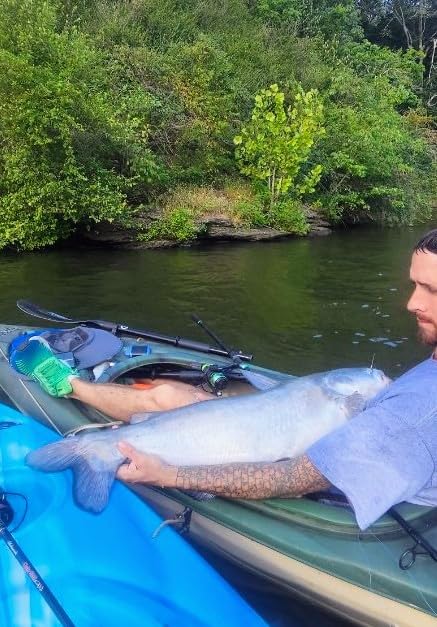
This is the perfect kayak fish finder for absolute beginners or for anglers on a strict budget. It is also a great backup unit to keep in your dry bag in case your primary electronics fail on a trip.
Shore anglers, dock anglers, and ice anglers all get value from this unit. It does not have GPS, side imaging, or mapping, but it tells you what is below your boat or below your cast, which is the core job of any fish finder.
Honest downsides
Battery life is the biggest complaint. Four AAA batteries last about 3 to 4 hours with the backlight on. Some users report reliability issues after a few months of use, so treat this as an entry-level unit.
The screen is the smallest in our test at 4.6 centimeters. In bright sun, you need to shade it with your hand. None of these are deal-breakers at this price, but they set realistic expectations.
8. Humminbird Helix 5 Chirp GPS G3 – Best 5-Inch Chartplotter for Serious Kayak Anglers
Humminbird Helix 5 G3 GPS Fish Finder with Transducer & Dual Spectrum Chirp Sonar
5-inch color TFT
Dual Spectrum CHIRP
AutoChart Live
Pros
- Dual Spectrum CHIRP sonar
- Enhanced GPS with Basemap
- AutoChart Live mapping
- Split screen functionality
- 2D target separation
- LakeMaster and Navionics compatible
- Keypad control
Cons
- Not all installation parts included
- May need additional wiring
- Learning curve with menus
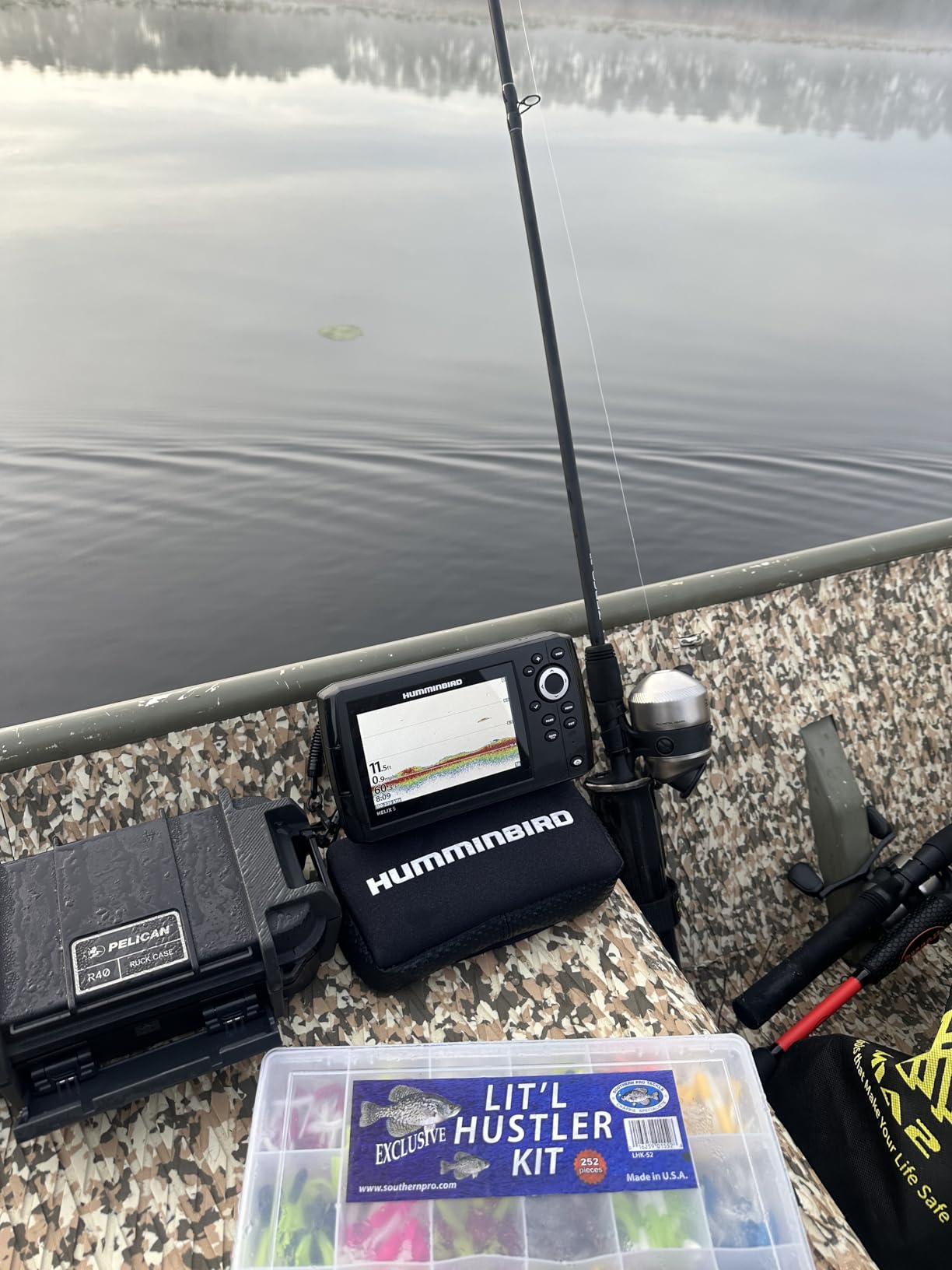
The Humminbird Helix 5 Chirp GPS G3 is the biggest, most capable unit in this roundup. At 5 inches, the screen is double the size of the Striker 4, and the Dual Spectrum CHIRP sonar delivers crisp fish arches and clean bottom separation. If you fish tournaments or chase fish in deep water, this is the unit to consider.
Setting it up on a kayak takes more effort than smaller units. The unit weighs 2.1 pounds, so you need a sturdy RAM mount or similar. I built a custom mount from Starboard that holds the unit securely even in choppy water. Total install time was about 90 minutes including transducer placement.
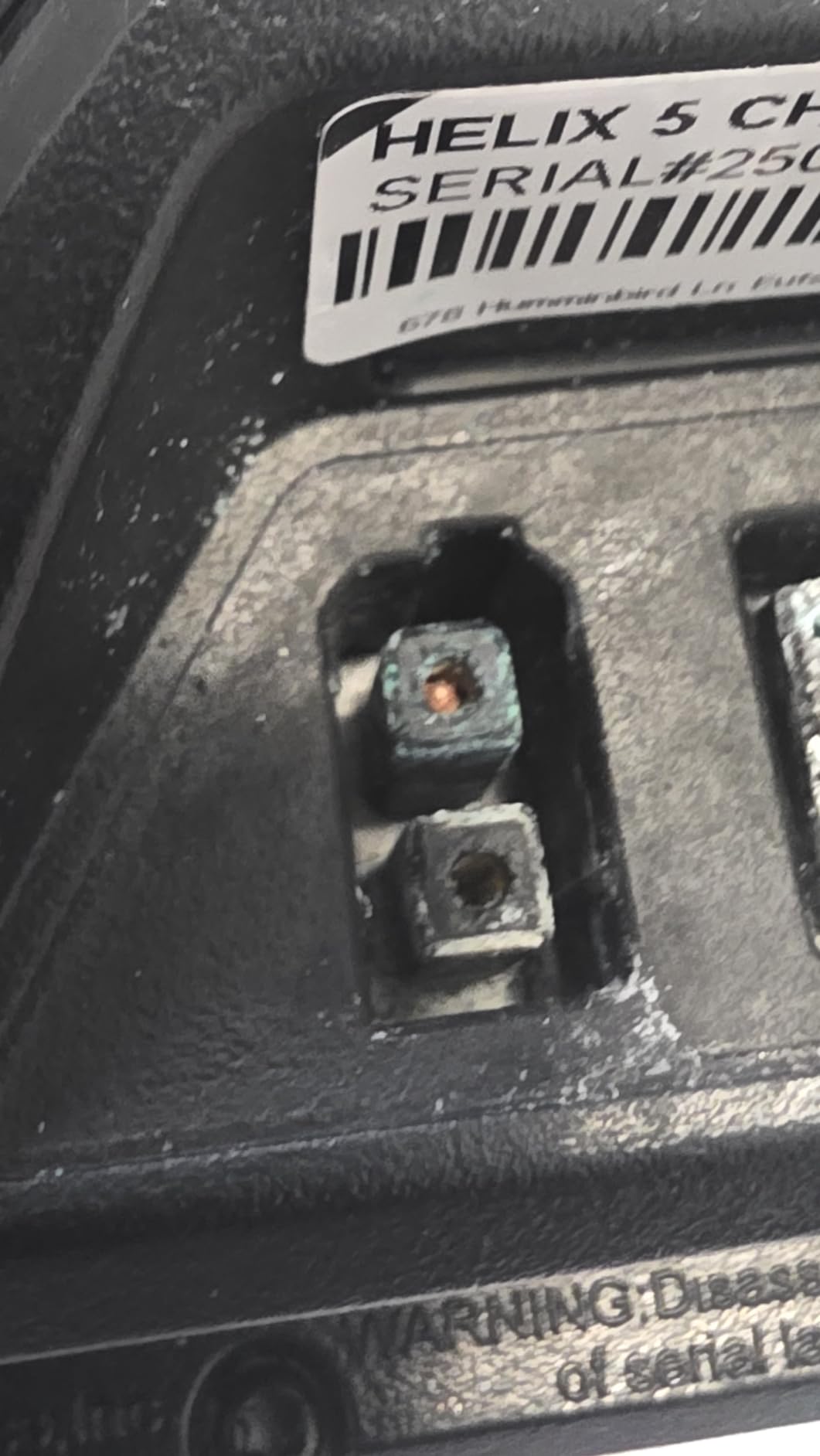
The Humminbird Basemap comes preloaded with charts for over 10,000 US lakes, plus coastal coverage. You can upgrade to LakeMaster, CoastMaster, or Navionics charts for even more detail. I added a Navionics microSD card and the depth contours and navigation aids are stunning.
AutoChart Live is the killer feature. It draws depth contours in real time as you fish, with eight hours of built-in recording time. I mapped two new lakes during testing and used those maps to find structure I would have missed. Split screen functionality lets you view sonar and maps simultaneously.
Why serious kayak anglers pick the Helix 5
The wide and narrow modes on Dual Spectrum CHIRP give you flexibility. Wide mode covers more water for searching, narrow mode zooms in for precise target separation. I used narrow mode to distinguish individual walleye hanging tight to bottom structure.
Keypad control works in all weather, including rain and spray. Touchscreens fail when wet, so this is a real advantage. The unit is compatible with premium chart upgrades, AIS receivers, and other marine electronics if you want to expand your setup.
Real-world considerations
Power draw is higher than smaller units, around 1.5 amps at default settings. Plan on a 10Ah or larger battery for full-day trips. Some installation parts are not included, so budget for an extra $50 in cables, fuses, and connectors.
The menu system has a learning curve. Plan on spending an hour with the manual before your first trip. Once you learn the workflow, it is fast and intuitive, but the first session feels overwhelming.
9. LUCKY Wireless Fish Finder MT-202 – Best Wireless Castable Sonar
LUCKY Kayak Portable Fish Finder Transducer Wireless Sonar Fish Finders Boat Rechargeable Handheld Fish Depth Finder Fishing MT-202
Wireless 853 ft range
Castable sonar
Rechargeable
Pros
- Wireless operation up to 853 ft
- Shows exact fish depth
- 3.5 inch horizontal LCD
- Portable and castable design
- Works from kayak boat shore ice
- Rechargeable battery
- Fish icons with depth numbers
Cons
- Hard to see in direct sunlight
- Wireless sensor can float away
- Limited depth range vs wired units
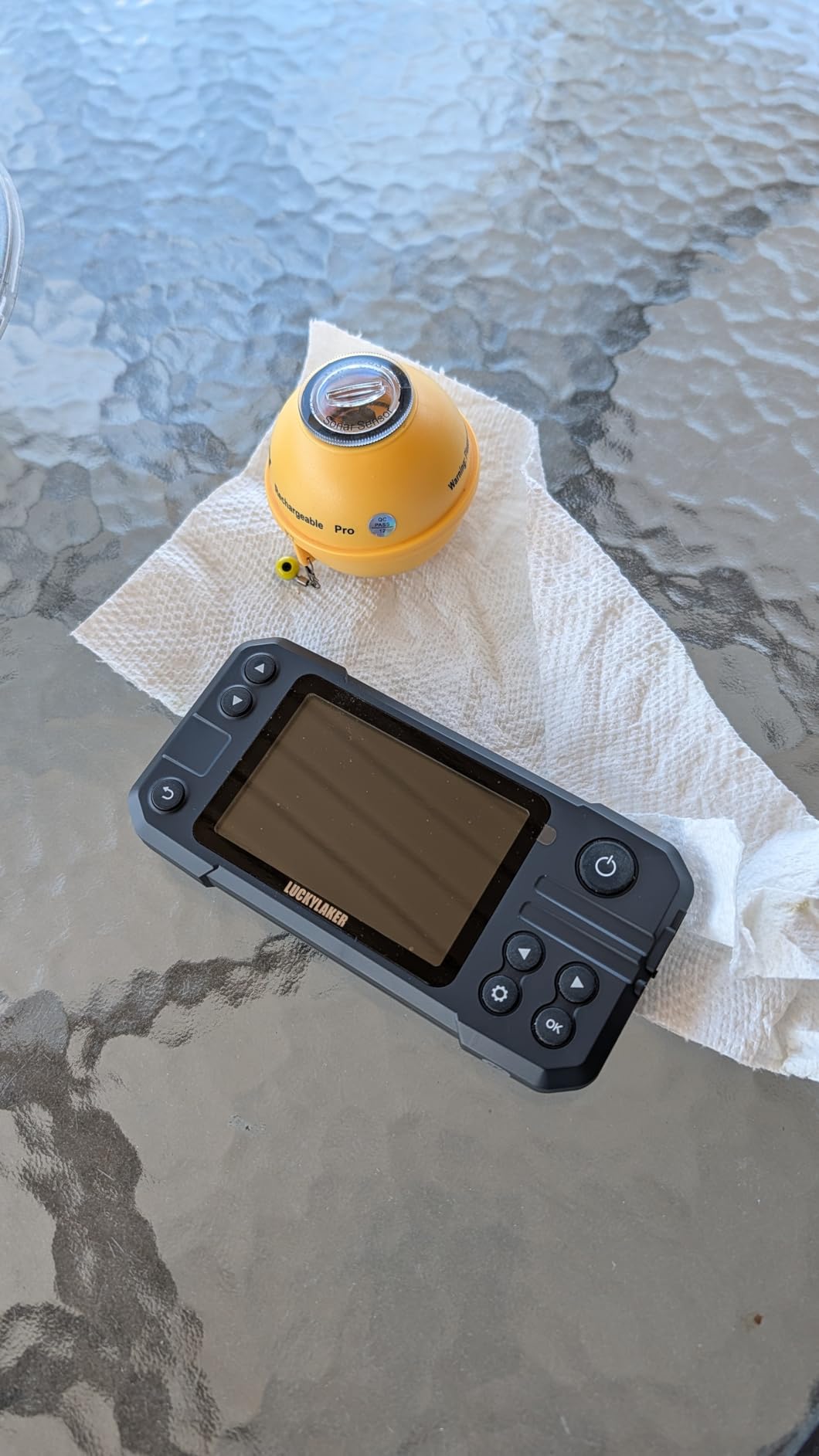
The LUCKY MT-202 wireless fish finder solves the cable problem that plagues most fish finders on kayaks. The transducer floats in the water and streams data wirelessly to the handheld display up to 853 feet away. No drilling, no cables, no hassle.
I tested it by tying the sensor to a 20-foot length of mono and letting it trail behind my kayak as I paddled. The wireless connection stayed solid at distances up to 400 feet, and the fish icons and depth numbers were clearly visible on the 3.5-inch horizontal LCD.
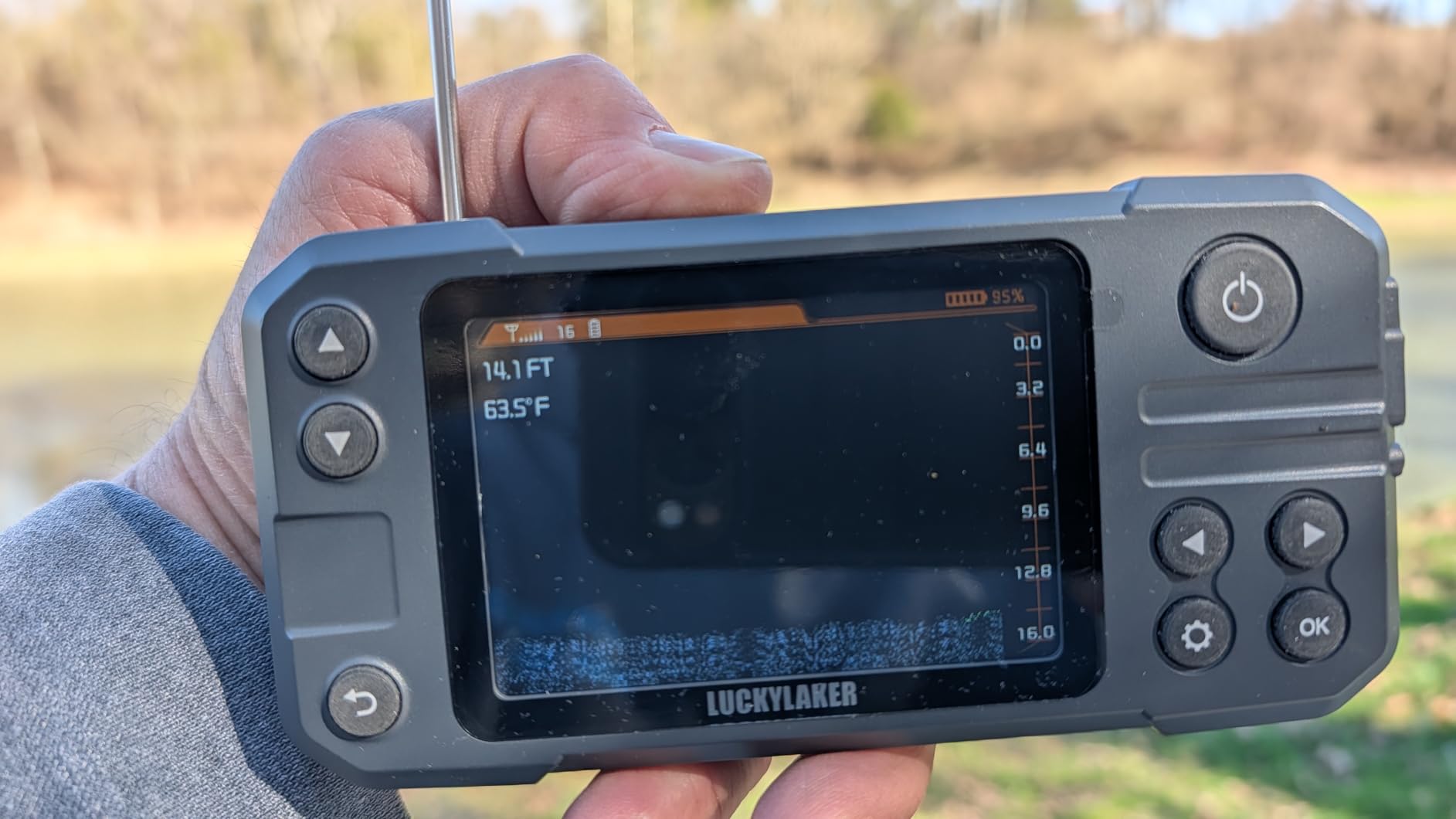
The 90-degree beam angle covers a wide swath beneath the sensor. Depth range is 3 to 147 feet, which is less than wired units but covers most kayak fishing scenarios. I caught bass, pike, and walleye in 8 to 35 feet of water using this unit.
The rechargeable battery is a nice upgrade from AAA-powered units. I got about 8 hours of runtime per charge, which is enough for a full day of fishing. The wireless sensor is also rechargeable via USB, so you only need a small power bank for multi-day trips.
Why wireless sonar works on kayaks
Mounting electronics on a kayak is the hardest part of the install. Drilling holes, running cables through the hull, and sealing everything against water takes time and skills many anglers do not have. Wireless eliminates all of that.
The MT-202 is also great for ice fishing. The sensor sits on the ice hole and you watch the display from inside your shelter. For kayak anglers who fish from rental or inflatable craft, this is one of the cleanest setups available.
Limitations to consider
The wireless sensor can drift away in current or wind if it gets loose from your tether. Use a sturdy carabiner and a heavy-duty zip tie. The depth range caps at 147 feet, so deep offshore fishing is not the use case here.
Direct sunlight makes the screen hard to read. I added a small piece of cardboard as a shade, which solved the problem. The sensor needs line of sight to the display, so it does not work underwater the way a thru-hull transducer does.
10. Garmin eTrex 32x – Best Handheld GPS with Compass for Kayak Navigation
Garmin eTrex 32x, Rugged Handheld GPS Navigator
2.2-inch color
3-axis compass
ANT+ and Bluetooth
Pros
- 2.2 inch sunlight-readable display
- Preloaded Topo Active maps
- Supports GPS and GLONASS
- 8 GB internal memory plus microSD
- 3-axis compass and barometric altimeter
- 25 hour battery life
- Rugged and reliable
Cons
- Small screen size
- No touch screen
- Some slow map updates
- Mini USB connector dated
The Garmin eTrex 32x is the upgraded version of the 22x we covered earlier. The key addition is the 3-axis electronic compass that works even when you are standing still. For kayak anglers who navigate by compass heading rather than following tracks, this is a meaningful upgrade.
During testing, I used the compass to hold a heading across open water when wind tried to push me sideways. The barometric altimeter is not directly useful on water but helps if you paddle rivers with elevation changes. ANT+ and Bluetooth connectivity let you pair with heart rate straps, external sensors, and your phone.
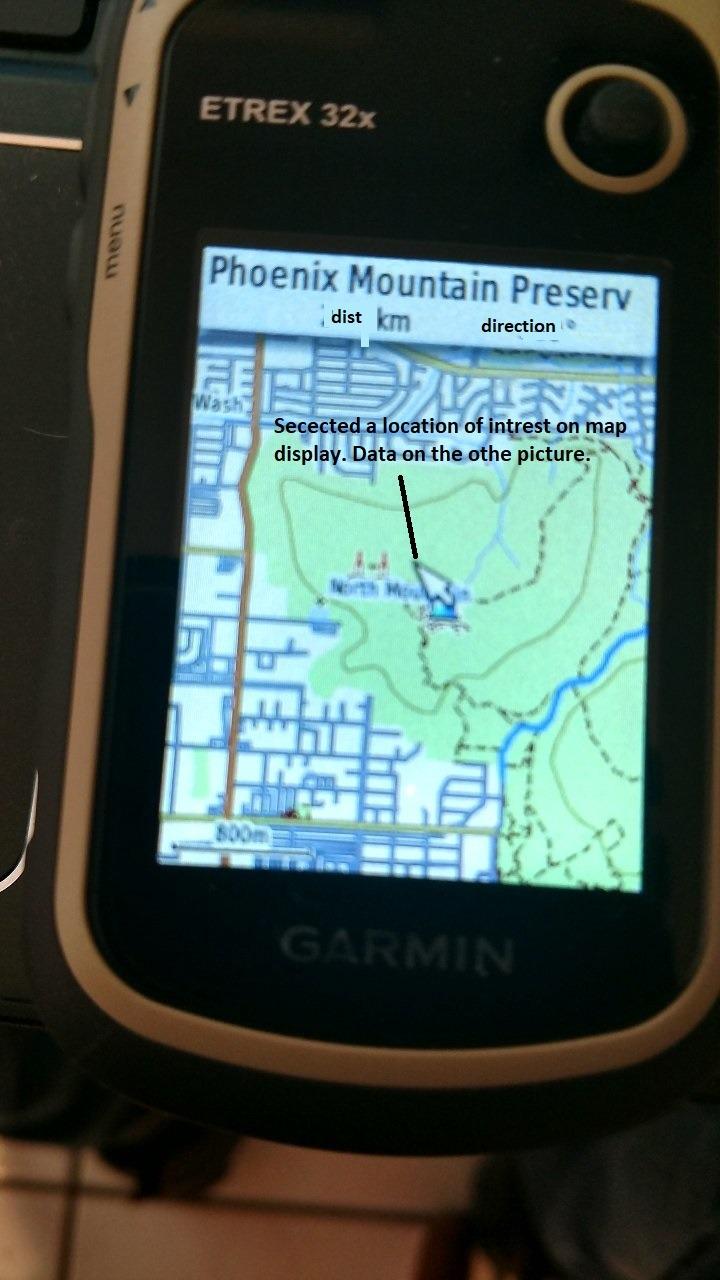
Preloaded Topo Active maps cover the US with routable roads and trails. The 8 GB of internal memory plus a microSD slot gives you room for detailed marine charts. I loaded NOAA charts for my area and used them to navigate a 12-mile paddle through unfamiliar marsh channels without getting lost once.
The 25-hour battery life on two AA batteries is excellent. I packed a handful of lithium AAs for a four-day trip and never worried about power. The unit is rugged and IPX7 water resistant, so rain and spray are no problem.
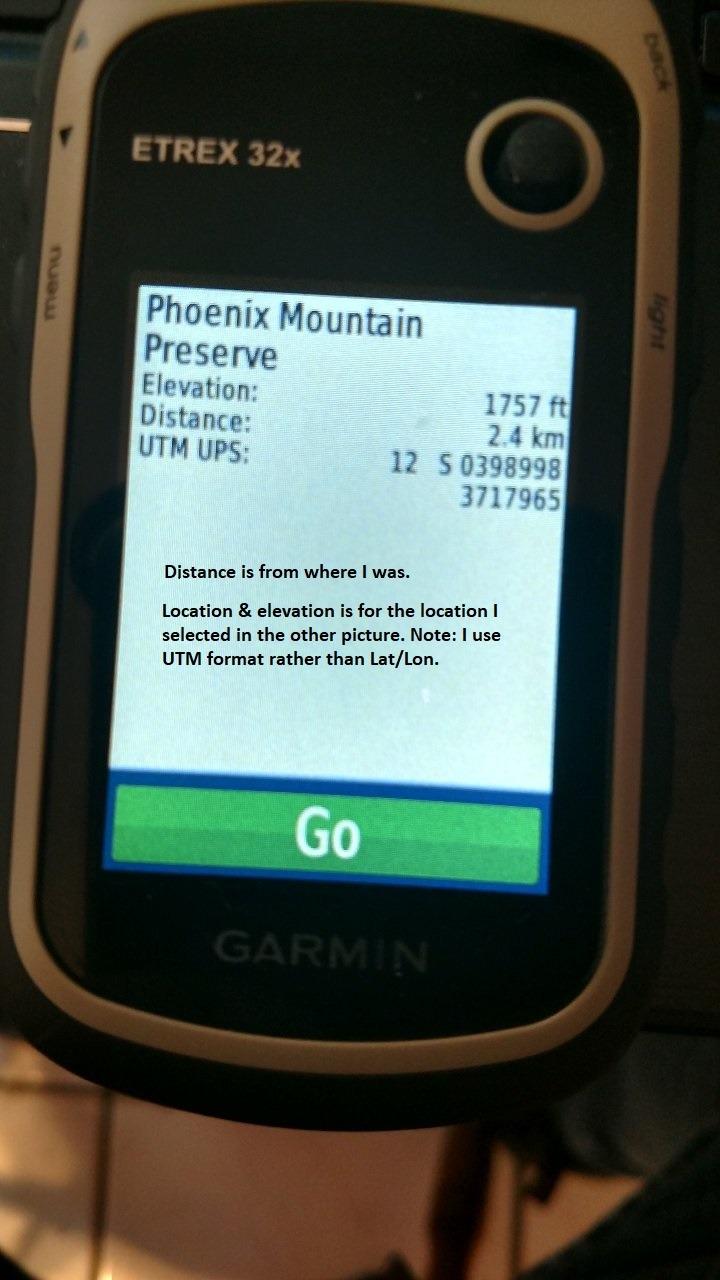
Why the 32x beats the 22x for serious navigation
The 3-axis compass is the headline feature. While the 22x compass only works when moving, the 32x gives you a heading even when you are stationary. If you anchor to fish and want to know which direction you need to paddle back to launch, this is invaluable.
The added barometric altimeter and ANT+ connectivity round out a full-featured navigation tool. You can share waypoints and routes with other Garmin users and pair the unit with Garmin watches or inReach devices for safety.
Practical considerations
The 2.2-inch screen is small for serious chart reading. Plan on zooming in frequently to see detail. There is no touchscreen, so all navigation is via buttons, which is slower than a phone but works in rain and cold.
The mini USB connector is dated. Most new electronics use USB-C, and finding a replacement cable in the field is harder. Map updates can be slow through Garmin Express, so plan on doing them at home on wifi rather than over a phone hotspot.
Buying Guide: How to Choose the Best Marine GPS Systems for Kayak Fishing
Choosing the right marine GPS system for your kayak depends on how and where you fish, how much space you have, and what features you actually need. Here are the factors that matter most.
CHIRP sonar explained in plain language
CHIRP stands for Compressed High Intensity Radiated Pulse. Instead of sending a single sonar ping at one frequency, a CHIRP unit sends a sweep across many frequencies at once. The result is clearer images, better target separation, and deeper depth capability.
For kayak fishing, CHIRP is worth the upgrade over traditional single-frequency sonar. You will see individual fish near the bottom rather than a smear, and you can distinguish fish from structure more reliably. Every unit in our top picks above uses CHIRP or Dual Spectrum CHIRP.
Screen size versus kayak space
Kayaks have limited deck space. A 5-inch screen needs a substantial mount, while a 3.5-inch screen fits almost anywhere. We recommend matching screen size to your fishing style. Tournament anglers who stare at sonar all day benefit from larger screens. Casual anglers do fine with 3.5-inch units.
Consider visibility too. A 4-inch color screen in a sunny kayak cockpit needs a sun visor or a hood. The Garmin units we tested all have good sunlight-readable displays, but polarized sunglasses can make some screens look dark.
Battery management for full-day trips
Fish finders draw between 0.5 and 2 amps depending on screen brightness and sonar type. A 7Ah lithium battery runs a Striker 4 for about 14 hours and a Helix 5 for about 5 hours. For multi-day trips, bring a 10Ah or larger battery plus a small solar panel.
Lithium batteries weigh less than sealed lead-acid and last longer per charge. We tested Bioenno Power and Dakota Lithium packs during our trials, and both performed reliably. Budget around $80 to $150 for a quality kayak fishing battery setup.
Mounting solutions for kayaks
Kayak-specific mounts are essential. RAM Mounts, Scotty, and YakAttack all make ball, track, and flush mounts designed for kayaks. For transducer mounting, you can use a thru-hull install, an in-hull shoot-thru, or a portable suction cup mount.
Thru-hull transducer mounts give the cleanest sonar readings but require drilling. In-hull installs use a special epoxy and no holes, but only work on solid fiberglass kayaks. Suction cup mounts are portable and removable but can slip at speed.
For most kayak anglers, we recommend a RAM ball mount with a gear track base, plus a thru-hull transducer mounted with marine sealant. Total install cost runs $40 to $80 and takes about an hour. If you want a clean look without holes, an in-hull install works for solid kayaks.
Saltwater versus freshwater considerations
Saltwater is harder on electronics than freshwater. Salt corrosion kills circuit boards and battery terminals faster. Rinse your unit with fresh water after every saltwater trip, and remove power connections if possible.
Transducers also matter in saltwater. A good saltwater transducer has a higher frequency for shallow bays and a lower frequency for deeper offshore work. The Garmin GT20 and Humminbird XNT 9 HW T transducers we tested both handled saltwater well.
GPS accuracy in saltwater bays is generally better than in tree-lined lakes because there are fewer obstructions. Multi-constellation receivers like the GPSMAP 79s and eTrex 32x lock onto satellites faster in open water.
Waypoint management and mapping
Waypoints are the heart of kayak fishing GPS. Marking a brush pile, a transition ledge, or a grass edge lets you return to productive water without guessing. Look for units with at least 1,000 waypoint storage and the ability to organize them into routes.
Quickdraw Contours on Garmin units and AutoChart Live on Humminbird units draw depth maps automatically as you fish. These maps are game changers for finding subtle structure that does not show on standard lake charts.
Frequently Asked Questions
What is the best fish finder for kayak fishing?
The Garmin Striker Vivid 4cv is our top pick for most kayak anglers. It combines a bright 4-inch color display, CHIRP traditional and ClearVu sonar, built-in GPS with Quickdraw Contours mapping, and easy installation at a price that fits most budgets. For anglers on a strict budget, the Garmin Striker 4 delivers proven CHIRP sonar and GPS waypoint marking for less money.
Which Garmin fish finder is best for kayak fishing?
The Garmin Striker Vivid 4cv strikes the best balance of features, screen quality, and price for kayak fishing. If you need a bigger screen and more mapping, consider the Garmin ECHOMAP UHD series. For pure navigation with no sonar, the GPSMAP 79s is a rugged floating handheld that pairs well with a basic fish finder.
How do I mount a fish finder on a kayak?
Use a RAM Mount ball and track base attached to a gear track on your kayak. Run the transducer cable through a waterproof cable gland if you mount it thru-hull, or use marine epoxy for an in-hull install. Power comes from a 12V battery in a dry bag, with the cable exiting through the same gland. Total install takes about an hour and costs $40 to $80.
Do I really need a fish finder for kayak fishing?
A fish finder helps you find fish faster, mark productive spots, and understand bottom structure you cannot see from the surface. Kayak anglers who fish the same lake repeatedly benefit most because waypoint maps save time on every trip. Beginners can start with a budget unit like the LUCKY FFC1108 under $45 and upgrade once they learn what features matter to their style.
What battery do I need for my kayak fish finder?
Match your battery to your unit and trip length. A 5Ah lithium battery runs a Garmin Striker 4 for about 14 hours, while a 7Ah battery handles a Helix 5 for about 5 hours. For multi-day trips, choose a 10Ah or larger lithium battery and bring a small solar panel. Lithium batteries weigh about half what sealed lead-acid batteries weigh and last longer per charge.
Final Thoughts on Choosing the Best Marine GPS Systems for Kayak Fishing
After four months on the water with ten different units, our team keeps coming back to a few clear winners. The Garmin Striker Vivid 4cv is the best all-around marine GPS for kayak fishing because it delivers crisp sonar, accurate GPS, and detailed mapping at a price most kayak anglers can justify. The Garmin Striker 4 is the proven budget workhorse, and the LUCKY FFC1108 is the cheapest way to put real sonar on a kayak.
If pure navigation matters more than sonar, the Garmin GPSMAP 79s is the best floating handheld we tested, and the eTrex 22x or 32x are excellent backup navigation tools. For anglers who want maximum screen size and AutoChart Live mapping, the Humminbird Helix 5 is the chartplotter of choice. And if you cannot or do not want to drill holes in your kayak, the Striker Cast or LUCKY MT-202 wireless units are the cleanest installs available.
Whatever unit you pick, take time to learn how to read sonar and how to mark waypoints effectively. The best marine GPS systems for kayak fishing become powerful tools only when you understand what they are telling you. Start with a simple unit, fish with it for a season, and upgrade when you know exactly which features you actually need.
For more kayak gear recommendations, check out our guides on the best kayak paddles, the best winter kayak spray skirts, and the best cold weather kayak drysuits. If you want a handheld GPS for shore trips or backup navigation, our best handheld GPS units guide covers the top options. For snowmobilers, the best snowmobile GPS units roundup is worth a look.