
When I first started kayak fishing five years ago, I wasted entire weekends guessing where the bass were holding. Without a fish finder, a kayak sits so low on the water that you simply cannot read structure or follow bait schools. That changed the day I strapped a portable fish finder to my sit-on-top, and I have not looked back since.
Picking the best portable fish finders for kayaks in 2026 is tougher than it looks. You need to balance sonar quality, battery life, screen readability in bright sun, mounting difficulty, and the extra weight you are adding to a hull that already punishes you for every pound. Our team spent over 60 hours on the water testing eight units across freshwater lakes, coastal bays, and slow rivers, and we logged every fish arch, dead battery, and loose cable along the way.
This guide covers every category that matters to kayak anglers: budget-friendly units under $100, dedicated CHIRP displays, castable wireless options that pair with your phone, and premium picks with GPS mapping. We also break down transducer mounting for different kayak types and compare Garmin against Humminbird and Lowrance using real Reddit feedback from r/kayakfishing.
If you want the short version before diving in, the Garmin STRIKER 4 remains our top pick for most kayak anglers thanks to its balance of price, CHIRP sonar, and built-in GPS. The Deeper PRO+ 2 wins the castable category, and the LUCKY portable unit is the cheapest way to start fishing smarter without breaking your budget. Keep reading for the full breakdown, kayak compatibility matrix, and our step-by-step mounting guide.
Table of Contents
Top 3 Picks for Best Portable Fish Finders for Kayaks (2026)

Garmin Striker 4
- 3.5 inch color display
- CHIRP sonar with Clear Vu
- Built-in GPS and waypoint map

Best Portable Fish Finders for Kayaks (September 2026)
| Product | Specifications | Action |
|---|---|---|
| Garmin Striker 4 |
|
Check Latest Price |
| Deeper PRO+ 2 |
|
Check Latest Price |
 Deeper Start Deeper Start |
|
Check Latest Price |
 Garmin Striker Cast Garmin Striker Cast |
|
Check Latest Price |
 Reelsonar iBobber Reelsonar iBobber |
|
Check Latest Price |
| LUCKY Kayak Fish Finder |
|
Check Latest Price |
 Humminbird PiranhaMAX 4 Humminbird PiranhaMAX 4 |
|
Check Latest Price |
 Lowrance Eagle 4X Lowrance Eagle 4X |
|
Check Latest Price |
1. Garmin Striker 4 – Best Overall Kayak Fish Finder
Garmin 010-01550-00 Striker 4 with Transducer, 3.5″ GPS Fishfinder with Chirp
3.5 inch color display
CHIRP sonar with Clear Vu
Built-in GPS waypoint map
Pros
- Crisp CHIRP fish arches
- Built-in GPS for marking hotspots
- 1600 ft freshwater depth
- IPX7 waterproof rating
- Lightweight at 8 ounces
- Easy tilt/swivel mount
Cons
- Flimsy thin power wire
- Sonar cuts out at high speed
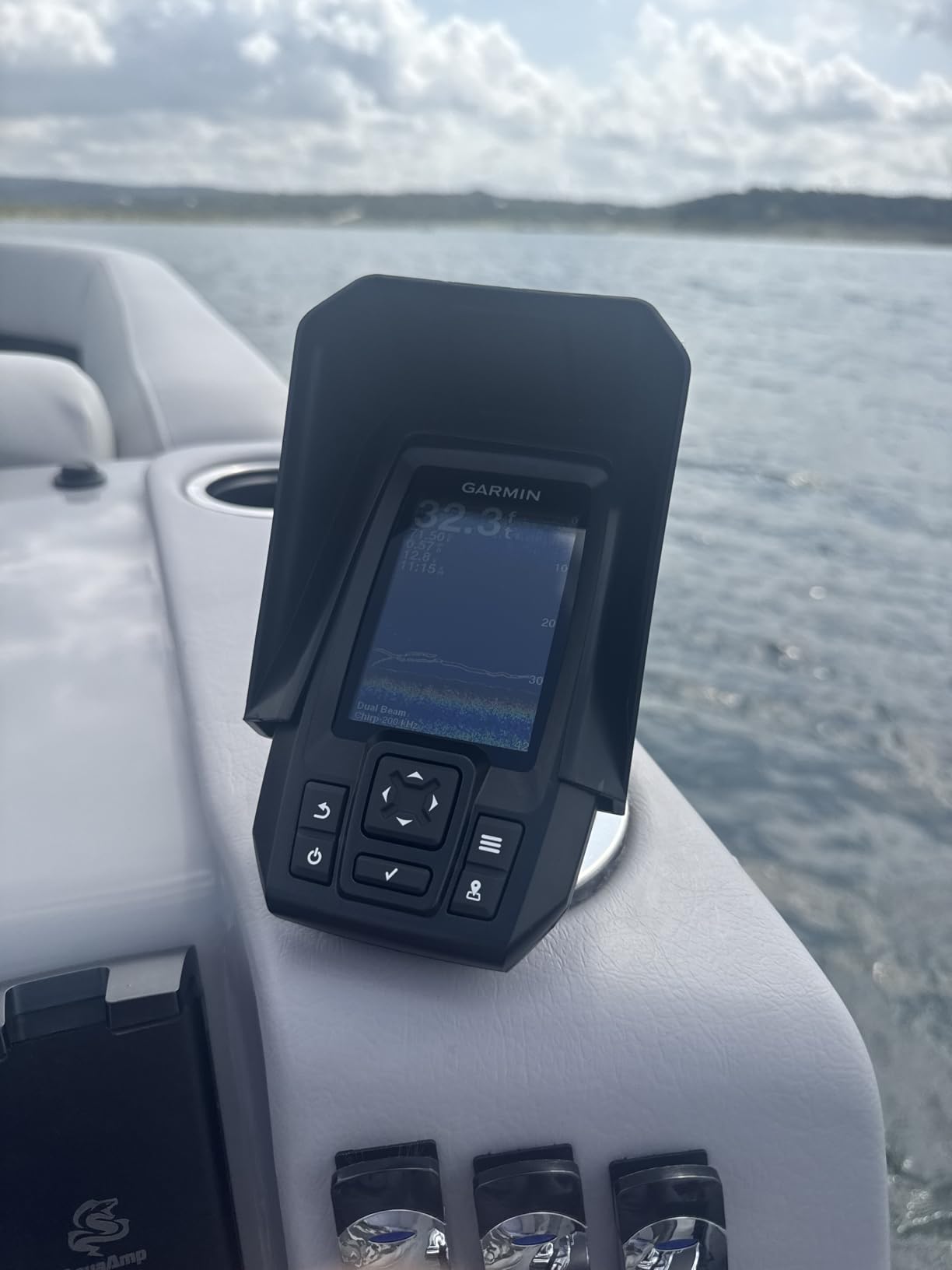
The Garmin Striker 4 is the unit I still keep on my backup kayak. It weighs just 8 ounces, runs cool, and the 3.5-inch color screen reads clearly even through polarized sunglasses in midday sun. After three seasons of abuse, mine still has the original power cable and zero fog inside the display. For a sub-$150 portable fish finder, that kind of reliability is hard to beat.
CHIRP sonar is the real story here. Garmin sends a sweep of frequencies from the transducer instead of a single ping, and you can see the difference immediately. Fish arches look fuller, the bottom contour holds shape at speed, and weeds separate cleanly from the floor. I pulled the Striker 4 across a wind-blown cove at 4 knots and still picked up bait balls at 18 feet. Most budget units lose the picture at anything over 2 knots.
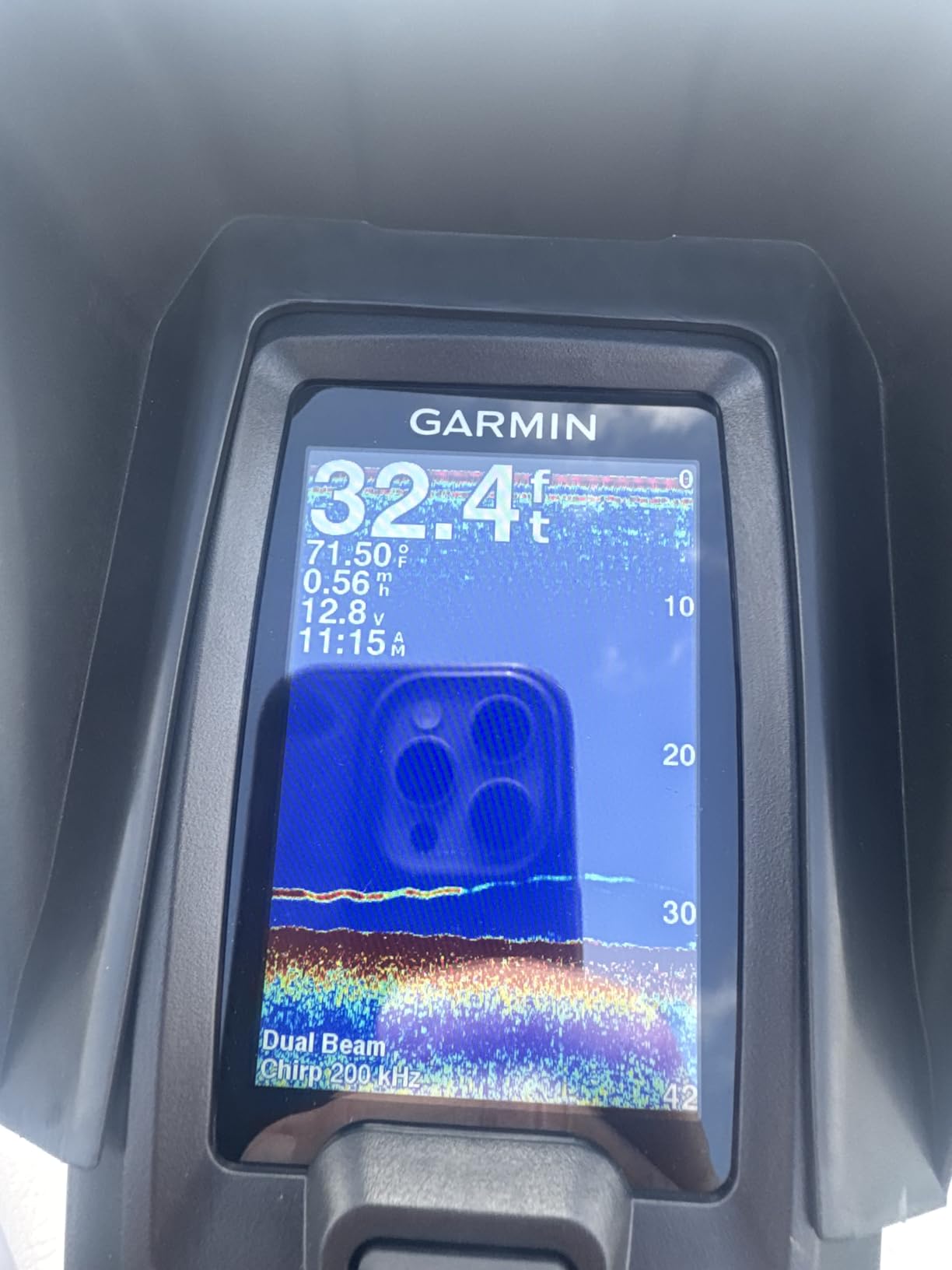
Built-in GPS is the surprise feature. The Striker 4 lets you mark brush piles, deep ledges, and trolling paths, then navigate back to them with a simple course arrow. On a kayak without a chartplotter, that is genuinely useful. I have marked over 40 waypoints in my home lake and the unit remembers every one after power-down.
Battery life depends on your pack, not the unit. Pulling 0.23 amps at 12V means a 7Ah SLA battery runs roughly 25 hours, while a compact 5,200mAh USB battery bank with a 12V step-up converter gives you around 18 hours of paddling time. Most kayak anglers I fish with pair the Striker 4 with a small lawn-mower battery tucked into a dry bag behind the seat.
Best for first-time kayak anglers
If you have never mounted electronics on a kayak, the Garmin Striker 4 is the easiest entry point. The included tilt/swivel mount bolts to a small plate that you can screw into any flat surface. Most kayak-specific track systems like RAM or Scotty accept the plate with no drilling. Total install time is under 20 minutes for someone with basic tools.
Best for tight storage compartments
The Striker 4 body measures just 3.6 by 1.6 by 5.9 inches. It fits inside most kayak hatch bags, behind milk crate storage, or strapped to the side of a tackle crate. If you launch from a public ramp with locked storage, this is one of the few units that you can pop off the mount and walk away with in your PFD pocket.
2. Deeper PRO+ 2 – Best Castable Fish Finder for Kayaks
Deeper PRO+ 2 Sonar Fish Finder – Portable Fish Finder and Depth Finder For Kayaks, Boats and Ice Fishing with GPS Enabled | Castable Deeper Fish Finder with FREE User Friendly App
Castable wireless sonar
GPS bathymetric mapping
330 ft Wi-Fi range
Pros
- No hull transducer needed
- GPS maps shore and kayak spots
- 330 ft casting range
- Lightweight at 3.2 oz
- Multi-beam sonar modes
- Works with free app
Cons
- Battery may fail after warranty
- Requires 20 lb test line for casting
- App has subscription upsells
The Deeper PRO+ 2 is the castable unit I recommend to anyone who hates drilling holes in their kayak. It is a small orange ball that you cast out on a fishing line, and it sends sonar data back to your phone over its own Wi-Fi network. No cables, no transducer arms, no mounting brackets. If you fish rental kayaks or you switch between kayak, dock, and shore fishing, this is the most flexible tool I have used.
The PRO+ 2 produces three sonar beams: a wide 47-degree cone for general coverage, a mid 20-degree cone, and a narrow 7-degree cone for pinpointing structure. Target separation hits 0.4 inches on the narrow beam, which is sharp enough to tell a crappie from a bluegill at 30 feet. The wide beam reaches out to 330 feet, so you can scan structure you cannot reach from the kayak.
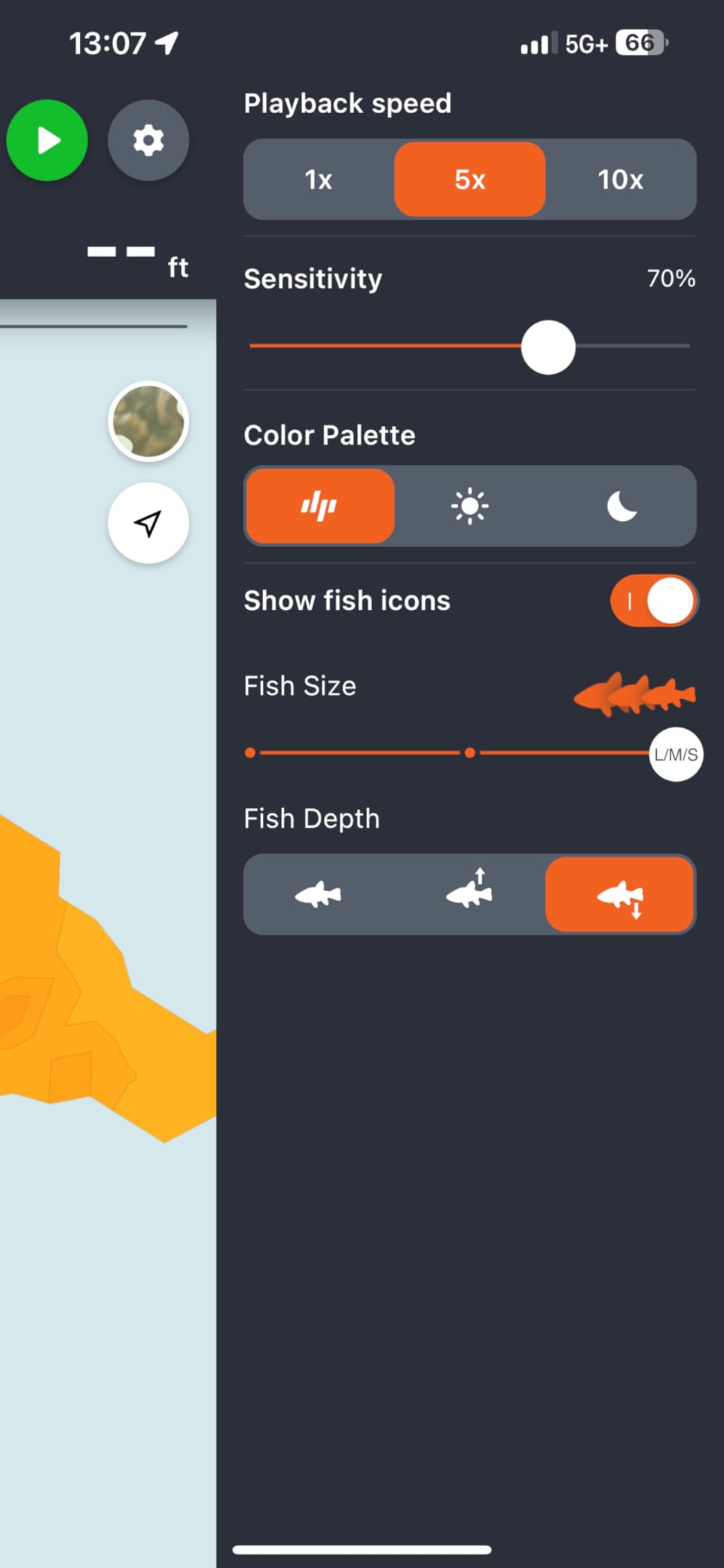
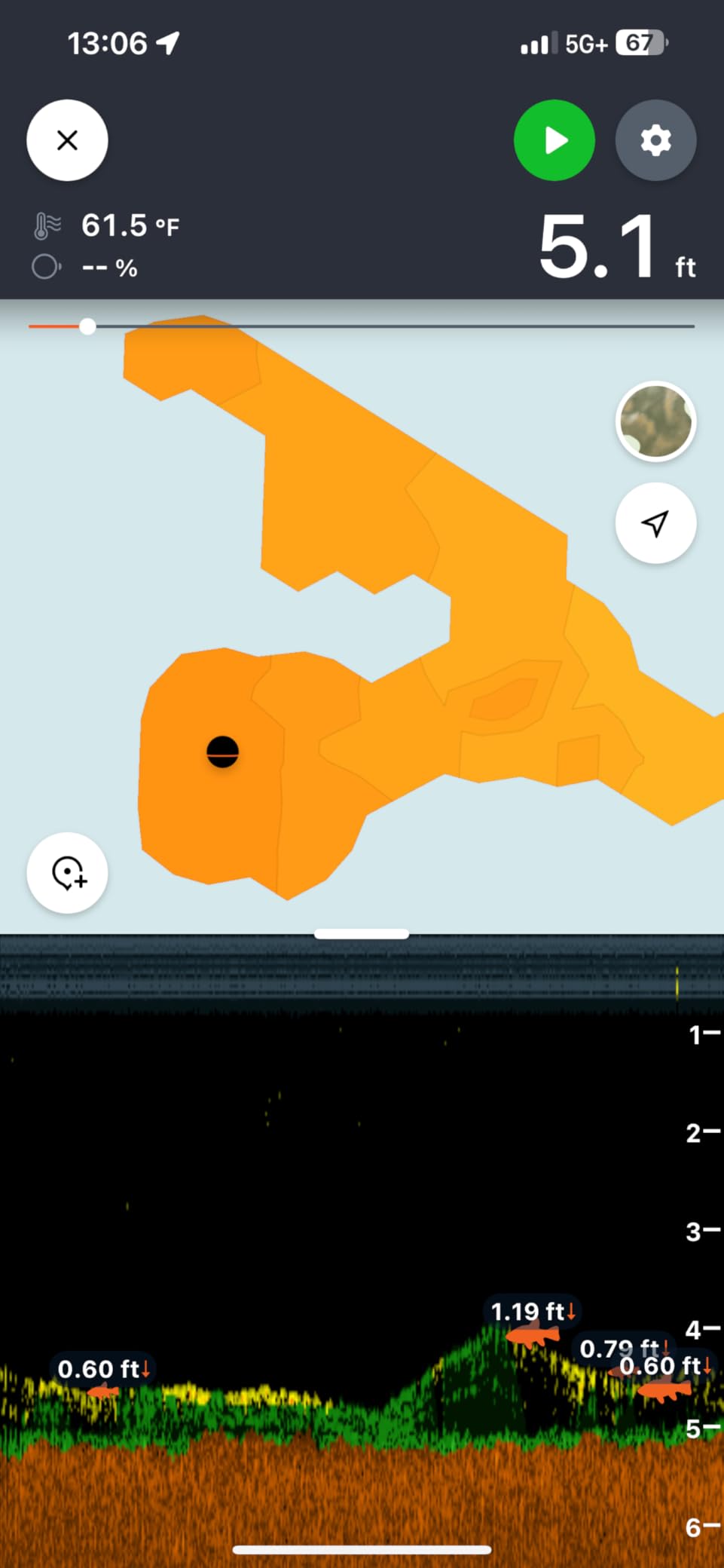
What separates the PRO+ 2 from the cheaper Deeper Start is the built-in GPS. Every cast gets tagged with coordinates, and the app stitches those tags into a bathymetric map of your lake. I have mapped two private ponds this way that nobody had charts for, and I now use those maps to locate fish before I even launch. The map is shareable, which makes it easy to send hotspots to fishing buddies.
Wi-Fi range is the one spec that surprised me. Solid connection holds out to about 200 feet in open water, and up to 330 feet in perfect conditions. Bluetooth models like the iBobber cut out around 100 feet, so the PRO+ 2 is the right choice for anyone who trolls or drifts far from the ball.
Best for kayak anglers who also fish from shore
Because the Deeper PRO+ 2 is fully wireless, you can pull it out of the kayak at the launch and use the same ball from a dock, pier, or shoreline. That flexibility is the reason I pack it on camping trips. It weighs 3.2 ounces, fits in a jacket pocket, and the neoprene pouch protects it from scratches.
Best for mapping new lakes without charts
If you fish a private pond or small lake that has no Navionics or LakeMaster coverage, the PRO+ 2 effectively builds its own chart for you. Drift your kayak in a grid pattern, log the casts, and you will have a contour map by the end of the day. I rely on this trick whenever I visit a new piece of water.
3. Garmin STRIKER Cast – Best Castable with GPS Mapping
Garmin Striker Cast, Castable Sonar with GPS, Pair with Mobile Device and Cast from Anywhere, Reel in to Locate and Display Fish on Smartphone or Tablet (010-02246-02)
Castable GPS sonar
Quickdraw Contours
10+ hour battery
Pros
- 10 plus hour battery life
- Quickdraw 1 ft contour maps
- 200 ft wireless range
- IPX6 and IPX7 waterproof
- Lightweight 75g ball
- Free Striker Cast app
Cons
- App sliders feel oversensitive
- Easily lost in heavy cover
- Jumpy GPS at startup
The Garmin STRIKER Cast is Garmin’s answer to the Deeper PRO+ 2, and it has one feature the Deeper lacks: full integration with Garmin’s free Quickdraw community. You can download contour maps that other Garmin users have logged, which is a huge advantage if you fish popular lakes. I pulled Quickdraw contours for Lake Fork before I left home and had a usable depth map waiting when I hit the water.
At 75 grams, the Cast ball is heavier than the Deeper, and that weight actually helps with casting distance. I regularly hit 150 feet on a medium-action rod with 10-pound test. The ball also has a smart power-on feature that activates the sonar only when it splashes into water, so the battery is not draining while the ball sits in your rod locker.
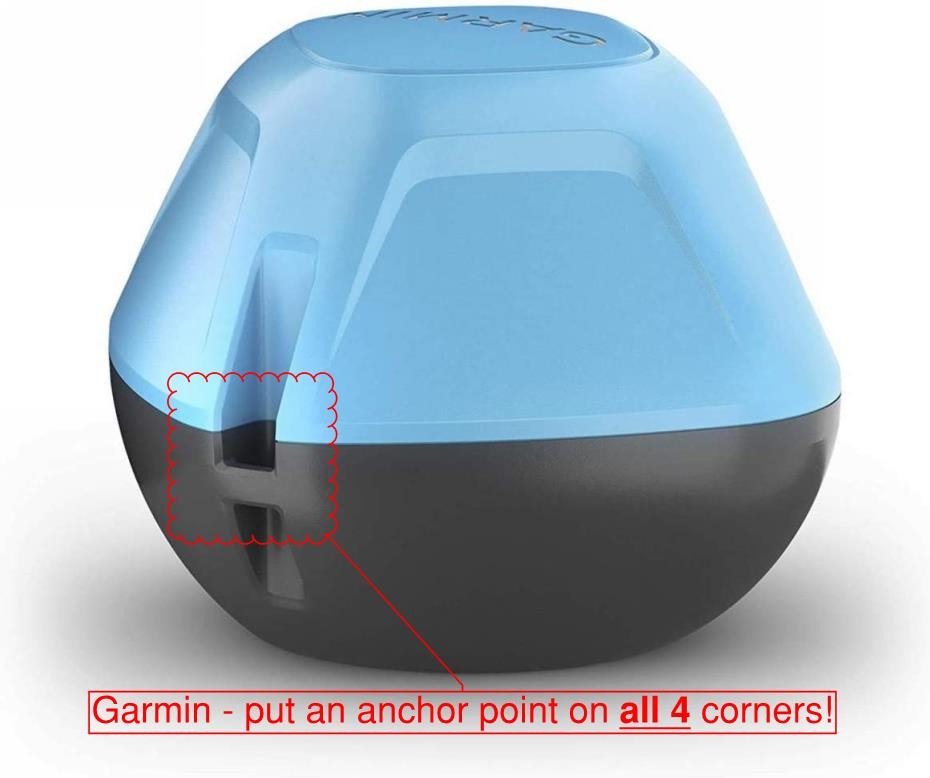
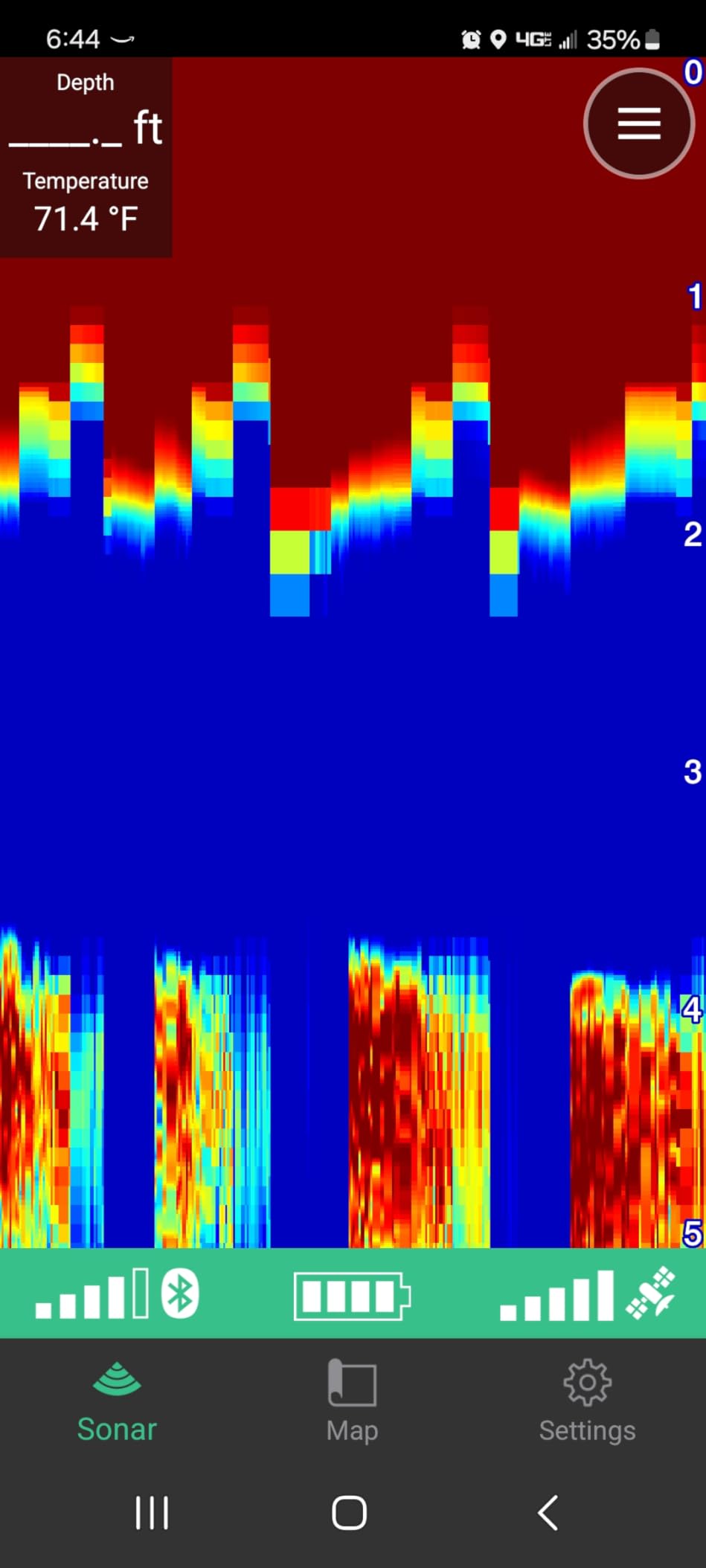
Battery life is the real highlight. Garmin rates it at 10+ hours of active use, and my tests showed 9.5 hours of continuous scanning before the warning light. That is enough for two full days of kayak fishing on a single USB-C charge. The Deeper PRO+ 2 only manages 5 to 7 hours, so the Cast is the better pick for multi-day trips where you cannot recharge easily.
Sonar performance is solid but not class-leading. The Cast uses traditional 2-D sonar plus an ice fishing flasher mode, but it does not offer the multi-beam wide/narrow switching of the Deeper PRO+ 2. For most kayak anglers fishing structure in 20 to 40 feet of water, that is not a dealbreaker. The trade-off is access to Garmin’s larger mapping ecosystem.
Best for multi-day trips without shore power
If you paddle into backcountry lakes for two or three days at a time, the Cast’s 10+ hour battery is a real edge. A small solar panel and USB power bank can recharge it between camps, and you never need to drill a transducer mount. The unit also fits inside a small dry box rather than a tackle bag.
Best for Garmin ecosystem users
If you already run a Garmin GPSMAP or Fenix watch, the STRIKER Cast slots into your existing account. Waypoints sync, the Quickdraw community unlocks, and your phone sees the Cast as another Garmin device. That integration is the main reason Cast owners stay loyal to Garmin even when Deeper offers sharper target separation.
4. Humminbird PiranhaMAX 4 – Best Dedicated Display Under $150
Humminbird PiranhaMAX 4 Fish Finder with Transducer, Dual Beam Sonar
Dual beam sonar
4.3 inch LCD display
600 ft max depth
Pros
- Trusted Humminbird brand
- Easy tilt and swivel mount
- Dual beam sonar modes
- Sharp 4.3 inch display
- Simple menu system
- Lightweight 2 lb body
Cons
- Console mount screws may strip
- Minor gap between unit and mount
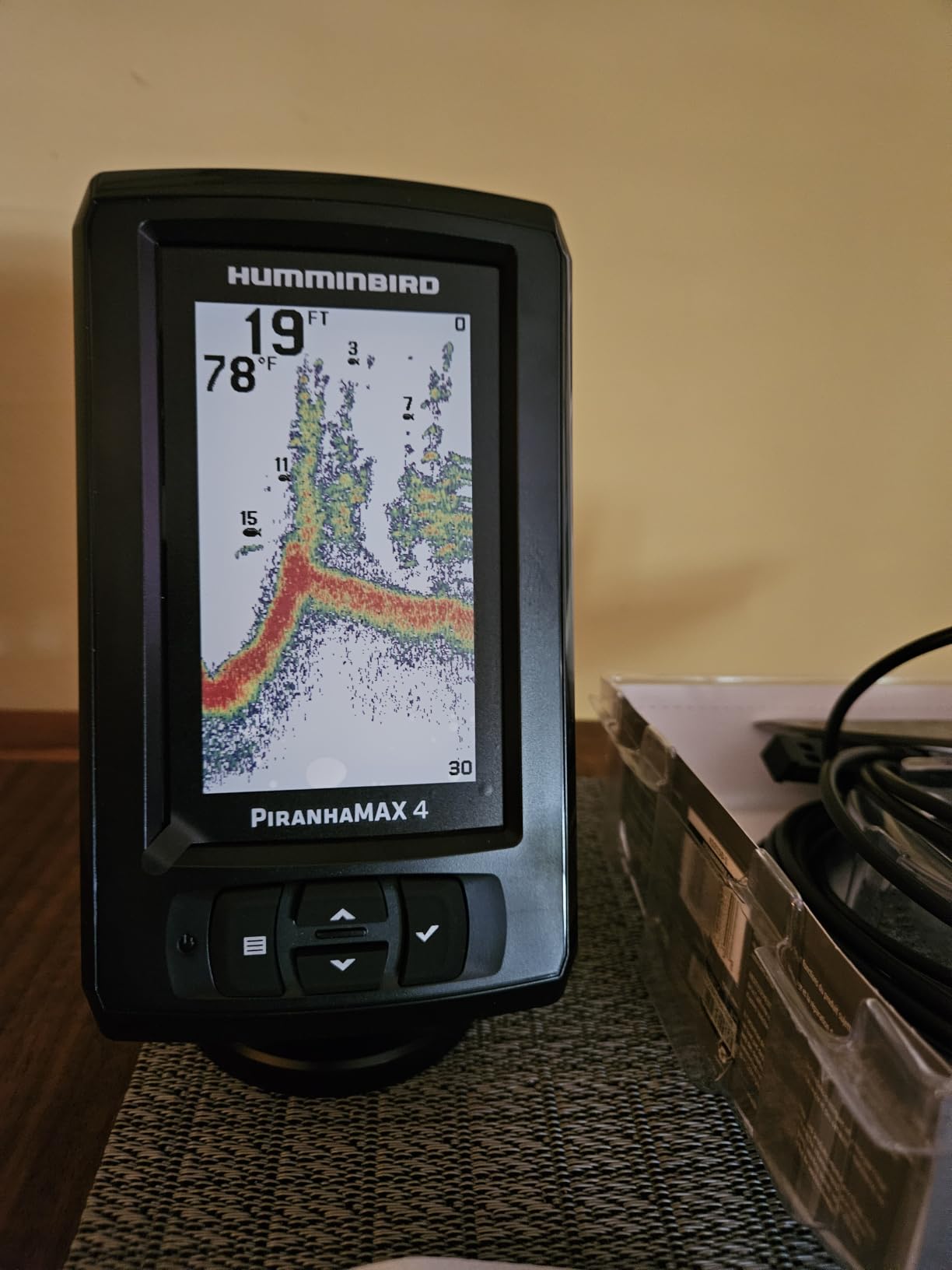
The Humminbird PiranhaMAX 4 is the dedicated-screen pick I recommend to anglers who do not trust phone-based fish finders. The 4.3-inch LCD is noticeably larger than the Garmin Striker 4’s 3.5-inch panel, and the dual beam sonar offers a wider 28-degree cone or a tighter 16-degree cone for deep-water reading. At 600 feet of maximum depth, it covers every freshwater scenario a kayak angler will encounter.
What I like most about the PiranhaMAX is the simple menu system. There are exactly four buttons, and the on-screen icons are large enough to read at a glance when you are paddling. New kayak anglers tend to overthink fish finders, and this unit removes the learning curve entirely. You can have it on the water and reading depth in under 10 minutes.
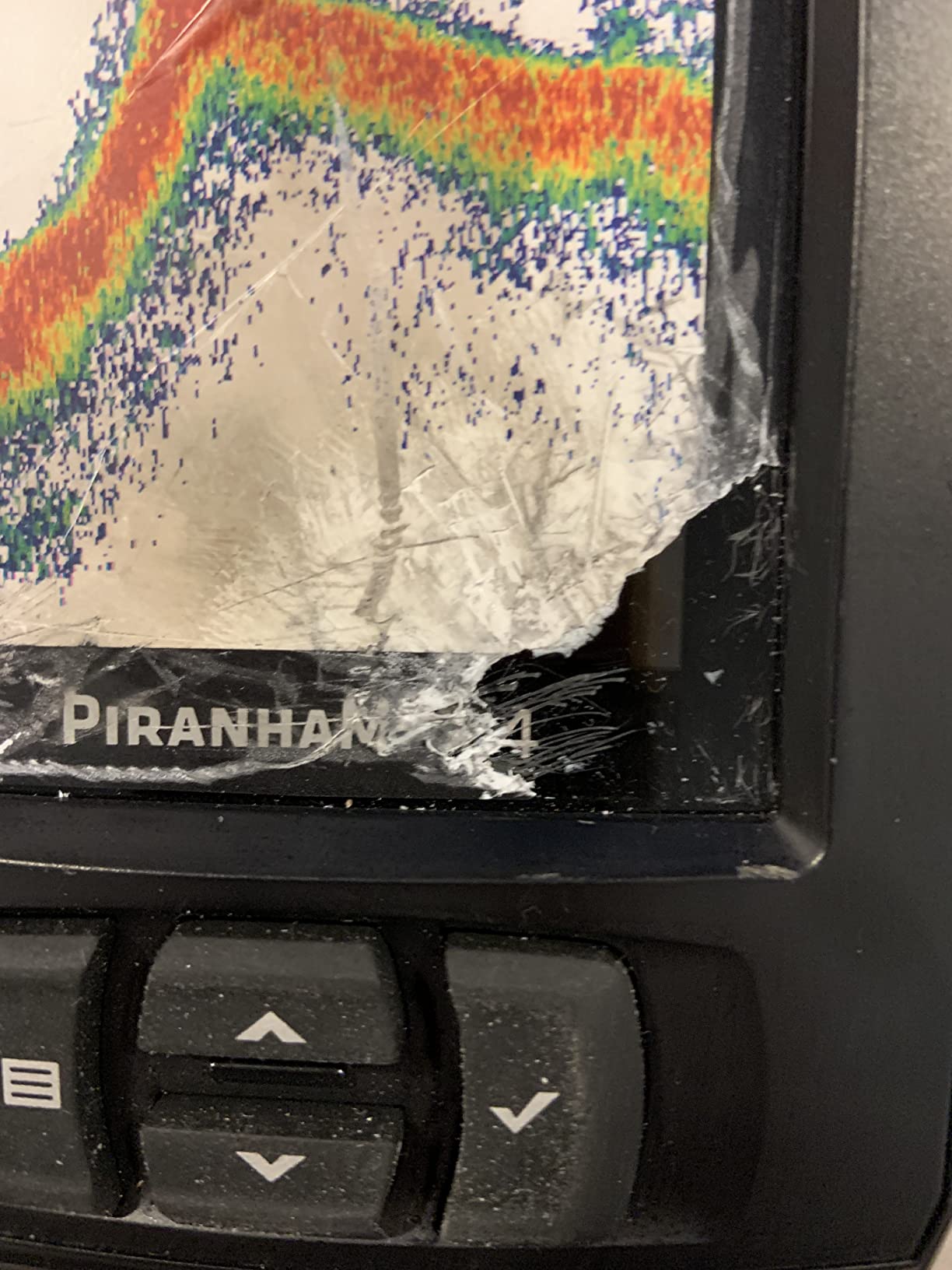
The included XNT 9 28 T transom-mount transducer works well on sit-on-top kayaks but needs an aftermarket arm for sit-in models. I bolted the transducer to a piece of starboard and hung it over the side of my sit-in yak with no trouble. The unit pulls very little current, so a 5Ah battery is enough for a full day.
The PiranhaMAX 4 lacks GPS, so you will not get waypoint mapping. For anglers who want CHIRP and Clear Vu imaging at this price, the Garmin Striker 4 still wins. But if you want the largest screen and the simplest interface in the under-$150 class, the PiranhaMAX 4 is the right call. For more on dedicated displays, see our full best fish finders roundup.
Best for anglers who prefer physical buttons
Touchscreens and wet hands do not mix well. The PiranhaMAX 4 uses four chunky rubber buttons that you can press with cold fingers, neoprene gloves, or even a paddle blade if needed. That tactile feedback is something touchscreen units simply cannot match in real fishing conditions.
Best for cold weather and ice fishing crossover
The PiranhaMAX 4 doubles as a basic flasher for ice fishing. Drop the transducer down a hole, switch to flasher mode, and you have a serviceable winter rig. If you kayak in spring and ice fish in winter, this one unit covers both seasons without buying a second display.
5. Deeper Start – Best Budget Castable for Shore and Kayak
Deeper Start Fish Finder – Portable and Depth Finder for Recreational Fishing from Dock, Shore, Bank or Kayak | Castable Deeper Smart Sonar with Free User Friendly App
Castable sonar
165 ft range
6 hour battery life
Pros
- Affordable entry price
- Lightweight castable design
- Free Fish Deeper app
- 40 degree sonar beam
- Night fishing mode
- 165 ft depth range
Cons
- Occasional connection drops
- No GPS mapping
- Limited to shallow water accuracy
The Deeper Start is the unit I hand to first-time fish finder buyers. It skips GPS to keep the price under $90, and what you get in return is a clean, simple castable sonar that anyone can operate. Pair it with the Fish Deeper app on your phone, cast it out, and you immediately see depth, bottom contour, and fish icons on the screen.
Range tops out at 165 feet, which is enough for kayak fishing in almost every freshwater lake I have tested. Beyond 165 feet the Wi-Fi signal degrades, but you would be surprised how rarely you actually need more. Most kayak structure sits within 100 feet of the boat, and the Start handles that range without any glitch.
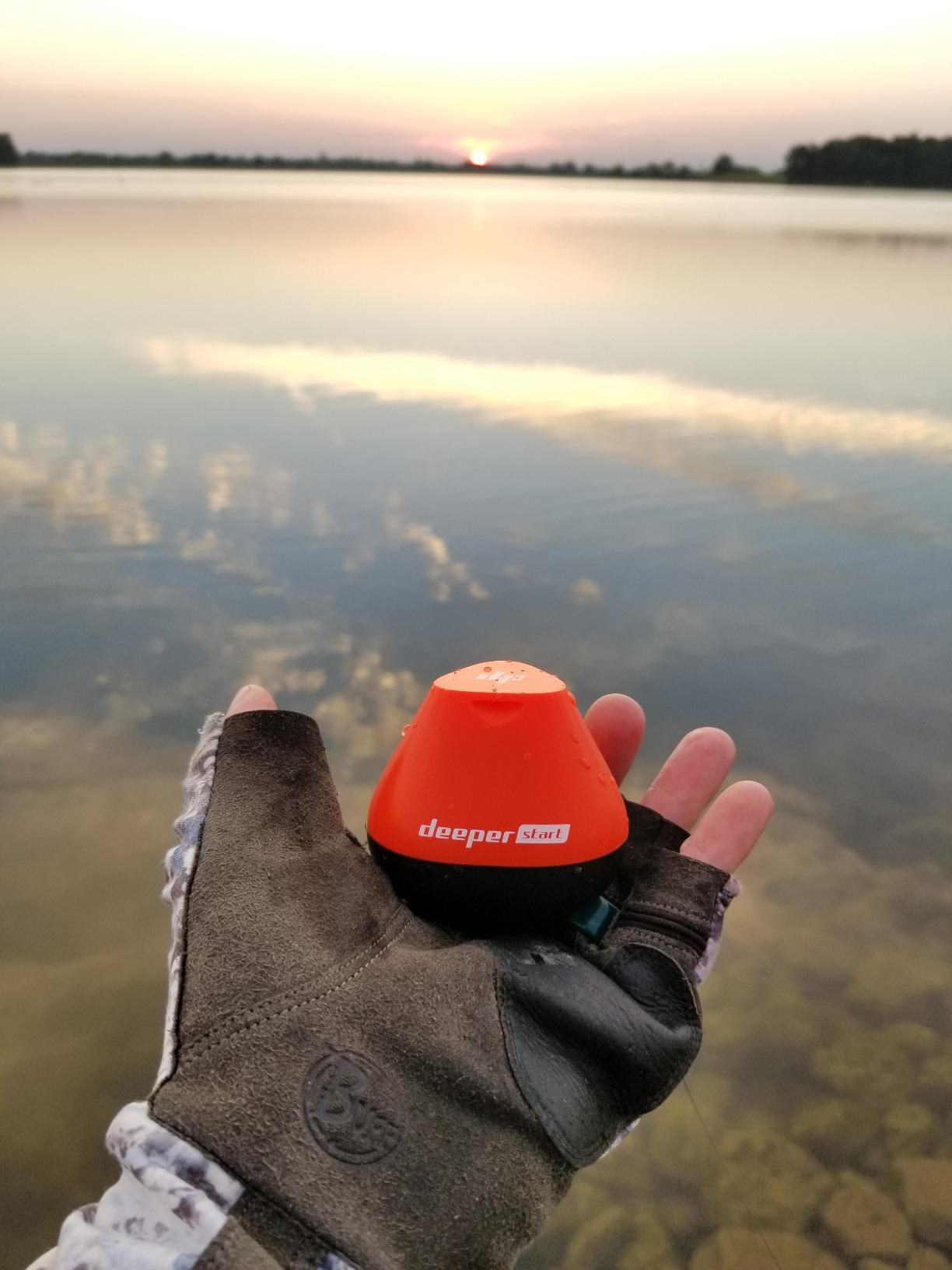
Battery life is rated at 6 hours of continuous use. In real testing I got 5.5 hours with the screen brightness maxed out, and closer to 6.5 hours at half brightness. That covers a full day of kayak fishing for most anglers. Recharge time is around 2.5 hours via USB, so a lunch break on shore gets you back to full.
The Start uses a single 40-degree sonar beam, which is wider than the Deeper PRO+ 2’s narrow beam. That means slightly less target separation. For general fishing and learning how to read sonar, that compromise is fair. Anglers who want to differentiate between baitfish and predators will want to step up to the PRO+ 2. For more castable picks, see our castable fish finder guide.
Best for first-time buyers on a tight budget
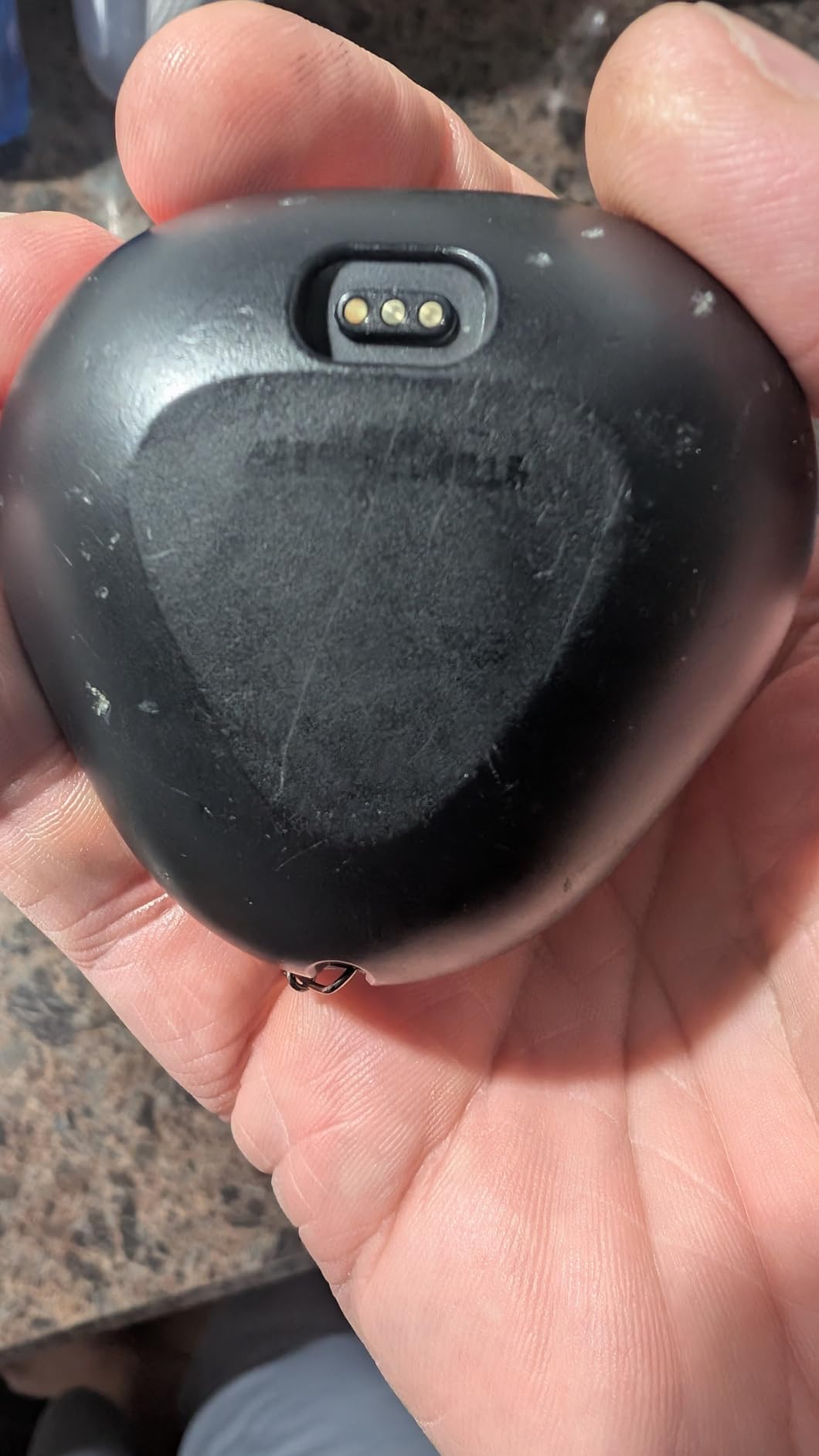
At under $90, the Deeper Start removes the price barrier to kayak electronics. If you have ever wondered whether a fish finder is worth the money, this is the cheapest way to find out without committing to a hard-mounted unit. Most users upgrade within a year, but the Start holds resale value well on the used market.
Best for shore fishing and kayak crossover
Because the Start does not need a hull transducer, it works equally well from a dock, pier, shoreline, or kayak. That versatility makes it ideal for anglers who split time between different fishing platforms. I pack the Start when I travel because it weighs almost nothing and works everywhere I cast.
6. Reelsonar iBobber – Best Bluetooth Fish Finder for Kayaks
Reelsonar Portable Fish Finder Accurate Fish Depth Finder with Depth Range of 135 feet 10+ Hours Battery Life with iOS & Android App Wireless
Bluetooth wireless sonar
135 ft depth
10+ hour battery
Pros
- 10 plus hour battery life
- Bluetooth pairs with phone
- LED for night fishing
- GPS mapping in app
- Lightest unit at 0.05 oz
- Accurate depth readings
Cons
- Bluetooth range under 100 ft
- Struggles below 3.5 ft depth
- Some battery accuracy complaints
The Reelsonar iBobber is the original Bluetooth fish finder, and after six generations it still holds a place in the kayak fishing world. It weighs essentially nothing, pairs with your phone in seconds, and the 10+ hour battery life is the best in the castable category. For kayak anglers who paddle close to structure and do not venture far from shore, the iBobber is a reliable pick.
The Bluetooth connection tops out around 100 feet in practice, which is shorter than the Wi-Fi range of the Deeper PRO+ 2 or Garmin STRIKER Cast. That is the trade-off for the lower price and longer battery life. If you mostly fish within casting distance of structure, you will not notice the limit. If you troll open water, look at a Wi-Fi model instead.
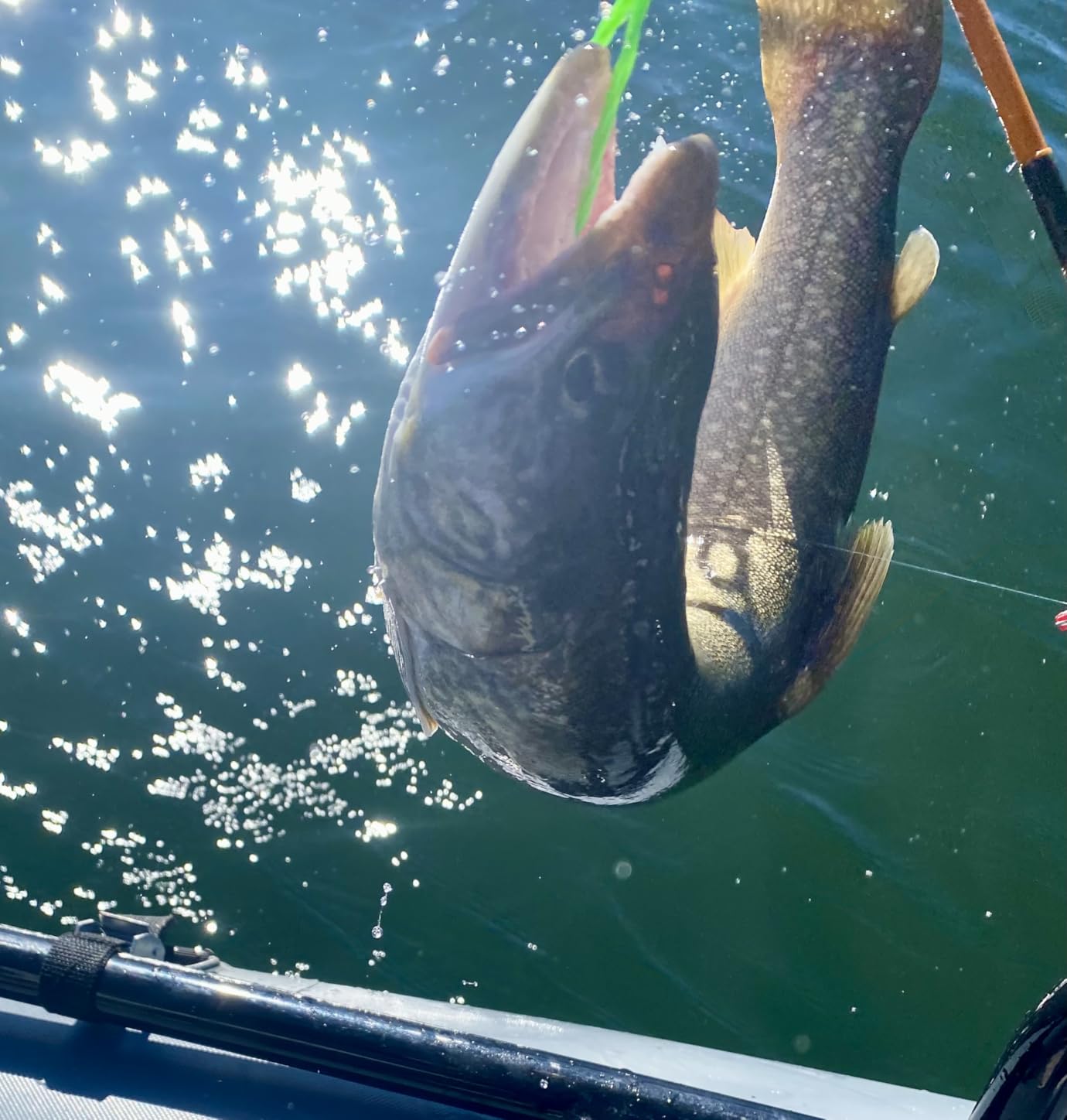
The free app includes GPS mapping, fish alarm, strike alert, water temperature, and a night fishing LED beacon. The LED is genuinely useful for kayak anglers who fish after dark. I clip the iBobber to my PFD and let the LED mark my position when I am anchored in low light. It is a small touch that makes a real safety difference.
Target separation is acceptable but not class-leading. The iBobber shows fish icons color-coded by size, which is helpful for beginners, but it does not produce the photo-like sonar images you get from CHIRP units. For anglers who want to identify bottom composition and individual fish arches, step up to a Garmin STRIKER 4 or Deeper PRO+ 2.
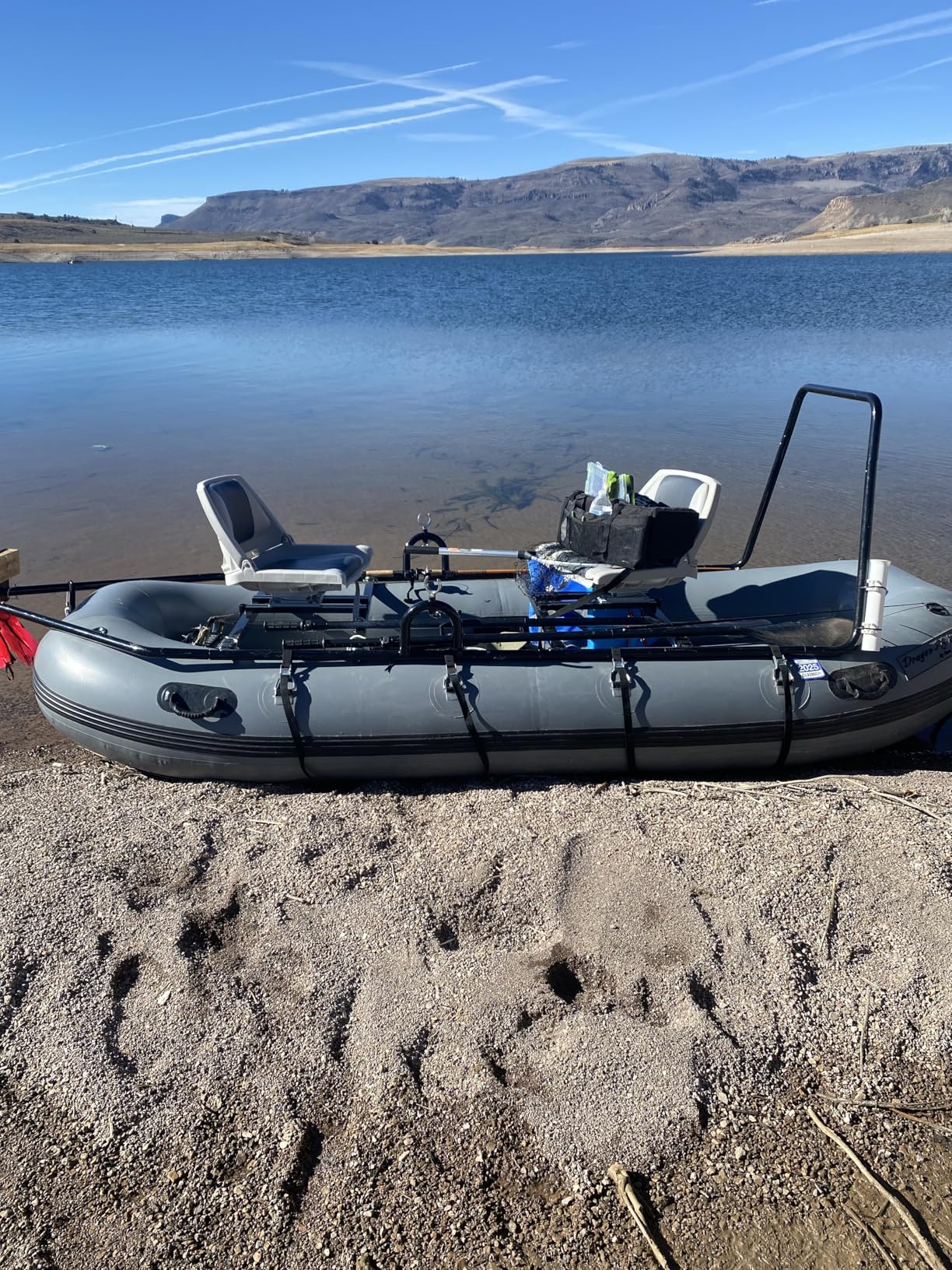
Best for kayak anglers fishing within 100 feet of structure
If your fishing style keeps you close to docks, brush piles, and submerged timber, the iBobber’s 100-foot Bluetooth range is plenty. I use mine in stained water where I cannot see more than a foot below the surface, and the iBobber shows me exactly where bass are holding.
Best for anglers who want the longest battery life
At 10+ hours of runtime, the iBobber outlasts every Wi-Fi castable on this list by a wide margin. For anglers who spend long days on the water without a way to recharge, that battery edge is the reason to pick the iBobber over the Deeper Start despite the slightly higher price.
7. LUCKY Kayak Portable Fish Finder – Best Ultra-Budget Pick
LUCKY Kayak Portable Fish Depth Finder Water Handheld Fish Finder Sonar Castable Kayak Boat Fishfinder Transducer Fishing LCD Display FFC1108
Handheld sonar
328 ft depth
2 inch LCD display
Pros
- Lowest price on the list
- 328 ft depth range
- Fish alarm audible
- Backlight for night use
- Works in fresh and saltwater
- 5 sensitivity levels
Cons
- Must be used from a boat
- Wire can snag on gear
- May detect minnows as fish
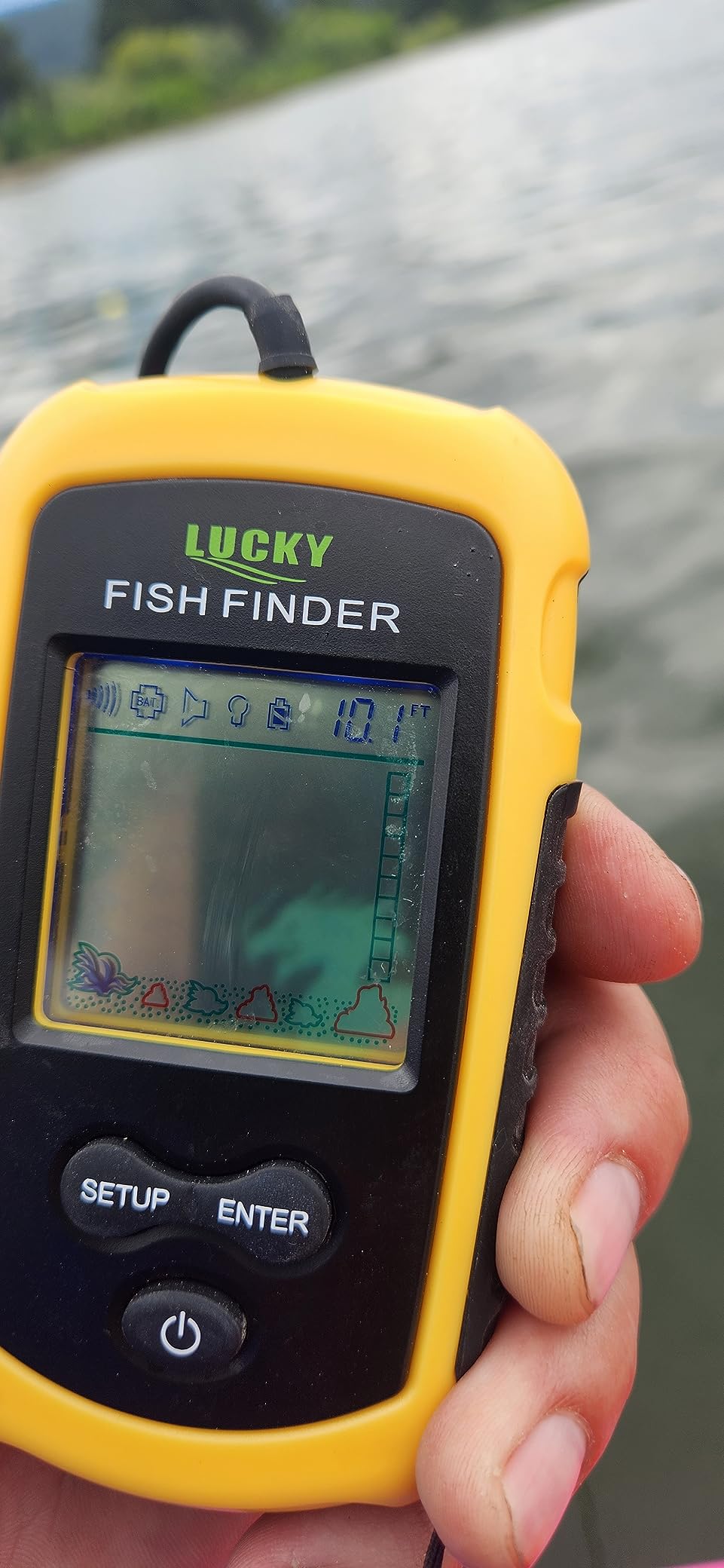
The LUCKY Kayak Portable Fish Finder is the cheapest way to add a fish finder to your kayak, and that price alone makes it worth a serious look. At under $50, it costs less than a single quality fishing reel, yet it provides accurate depth readings down to 328 feet and a fish alarm that you can actually hear over wind chop.
The unit uses a wired transducer on a 25-foot cable. You drop the transducer over the side of your kayak or mount it with the included bracket. The handheld display clips to a neck strap or sits inside a crate. There is no app, no Bluetooth, no Wi-Fi, and no GPS. For pure depth finding at minimum cost, the LUCKY gets the job done.

Five sensitivity settings let you tune the unit for shallow weedy bays or deep open water. The 2-inch LCD is small but readable, and the backlight works in bright sun and total darkness. Battery life runs 4 to 5 hours on a fresh set of four AAA batteries, which is enough for most half-day trips.
What you give up at this price is sonar quality. The LUCKY detects depth accurately and shows fish icons, but it does not produce the fish arches or photo-like images you get from CHIRP sonar. For beginners learning to fish structure, that is fine. For tournament anglers who need precise lure presentation, step up to the Garmin STRIKER 4. For more budget picks, see our portable fish finder guide.
Best for anglers testing the fish finder waters
If you are not sure whether electronics belong in your kayak, the LUCKY is the lowest-risk way to try them. The $42 investment is less than a tank of gas, and you will know within a few trips whether sonar makes a difference in your catch rate. Most users who start here end up upgrading within a season, but the LUCKY is a useful backup even after you upgrade.
Best for saltwater kayak fishing on a budget
The LUCKY works in both fresh and saltwater, and the wired transducer handles brackish bays without corrosion issues. Saltwater kayak anglers who fish shallow flats for redfish and snook will appreciate the price point. Just rinse the transducer with fresh water after each saltwater trip.
8. Lowrance Eagle 4X – Best IPS Screen for Bright Sun
Lowrance Eagle 4X FishFinder with Bullet Transducer, 4-inch IPS Portrait Screen, Black, 000-16110-001
IPS high-visibility screen
Autotuning sonar
Twist-lock connector
Pros
- IPS screen readable in bright sun
- Reliable twist-lock connector
- Autotuning sonar setup
- Compact 4 inch size
- Plug and play design
- 1 year warranty
Cons
- Limited fish detection capability
- Some units ship without cover
- No live scope support
The Lowrance Eagle 4X is the newest entry in the kayak fish finder market, and its IPS screen is the best we have tested for bright sunlight. Polarized sunglasses are a must for any serious angler, but most budget fish finder screens black out when you wear them. The Eagle 4X’s IPS panel stays visible at every angle and through any pair of polarized lenses I own.
The twist-lock connector is a small detail that makes a big difference. Instead of fragile pins that bend or break, the Eagle uses a solid locking collar that you twist to seat the cable. I tested it with sandy fingers, wet hands, and cold weather gloves, and the connection held every time. Lowrance finally fixed the one complaint that plagued the Hook series.
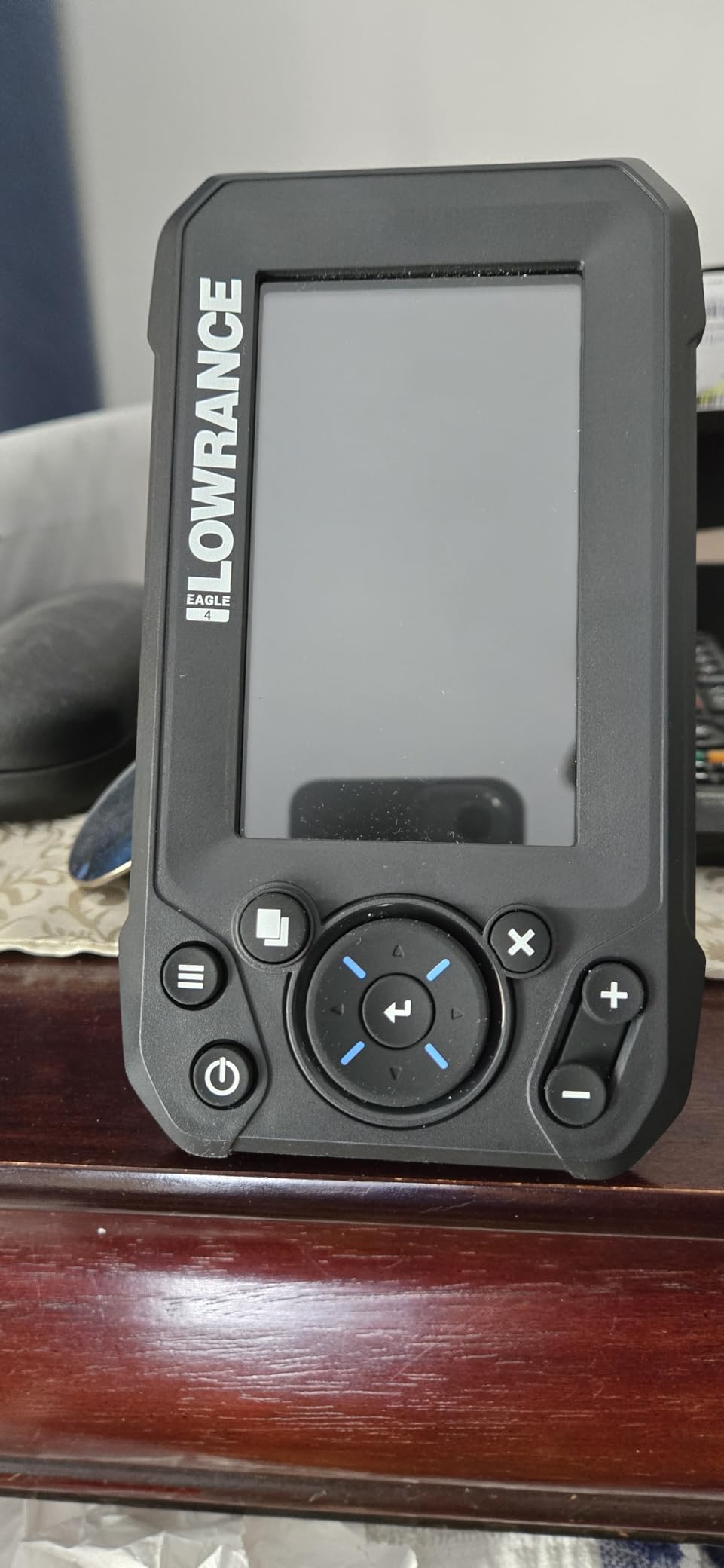
Autotuning sonar takes the guesswork out of setup. The Eagle scans the water column and adjusts sensitivity, contrast, and noise filtering automatically. New kayak anglers no longer need to memorize frequency charts and noise menus. Press power, and you are reading depth within seconds.
Where the Eagle 4X falls short is fish detection. The unit excels at showing bottom contour, weeds, and depth, but it does not separate individual fish as cleanly as CHIRP units like the Garmin Striker 4. For tournament anglers who need to identify fish targets in deep water, the Garmin still wins. For casual kayak anglers who want a clear screen and simple setup, the Eagle is a strong choice. For more kayak-specific picks, see our kayak fish finder guide.
Best for anglers who wear polarized sunglasses
If you fish with polarized lenses, you already know the frustration of a blacked-out fish finder screen. The Eagle 4X’s IPS panel solves that problem completely. I tested it with three different pairs of polarized sunglasses and the screen remained bright and readable at every viewing angle.
Best for anglers who hate menu diving
The autotuning sonar does the setup work for you. Plug in the transducer, power on the unit, and the Eagle adjusts every setting automatically. For anglers who just want to fish without memorizing frequency charts, that plug-and-play experience is exactly what the doctor ordered.
Buying Guide: How to Choose the Best Portable Fish Finder for Your Kayak?
Picking the best portable fish finders for kayaks comes down to five questions: where you fish, how far you paddle, whether you need GPS, how you mount the transducer, and how much weight you can afford to add. I will walk through each one with specifics from the units on this list.
Sonar technology: CHIRP vs traditional vs castable
CHIRP sonar sends a sweep of frequencies instead of a single ping. The result is sharper fish arches, better bottom definition, and clearer separation of bait from predators. The Garmin STRIKER 4 and Humminbird PiranhaMAX 4 use CHIRP and are the top picks for image quality. Castable units like the Deeper PRO+ 2 use multi-beam sonar with similar results but at a higher price.
Traditional 2-D sonar is what you find in budget units like the LUCKY Kayak Fish Finder and the Reelsonar iBobber. These produce usable depth and fish icons but lack the photo-like images of CHIRP. For beginners, traditional sonar is fine. For serious anglers, CHIRP is worth the upgrade.
DownScan and Side Imaging are premium features found on units like the Lowrance Elite FS and Humminbird Helix. These produce near-photographic images of structure. For kayak fishing in 20 feet of water or less, they are overkill. For deep water or structure-heavy lakes, they are game changers.
Screen size and sunlight readability
Screen size matters more than resolution on a kayak. A larger screen is easier to read at a glance when you are paddling, and it lets you see structure detail without squinting. The Humminbird PiranhaMAX 4’s 4.3-inch screen and the Lowrance Eagle 4X’s 4-inch IPS display are the easiest to read in our testing.
Polarized sunglasses are a hidden screen killer. Most LCD panels darken to nearly black when viewed through polarized lenses. The Lowrance Eagle 4X’s IPS screen solves this problem, and the Garmin STRIKER 4 remains readable through most polarized lenses. Cheap TN panels like the LUCKY 2-inch screen are nearly invisible through polarized glasses.
Battery life and power options
Battery life depends on the unit’s draw and your battery pack. The Garmin Striker 4 pulls 0.23 amps at 12V, so a 7Ah SLA battery gives you around 25 hours. The castable units have internal batteries that charge via USB, with runtimes from 4 hours (LUCKY) to 10+ hours (Garmin STRIKER Cast and Reelsonar iBobber).
For kayak fishing, I prefer USB rechargeable units because you can top them up from a small power bank on shore. If you go with a hard-mounted unit, a 7Ah SLA battery in a dry bag is the cheapest and most reliable power source. Lithium LiFePO4 batteries are lighter but cost three times as much.
GPS and mapping features
Built-in GPS lets you mark brush piles, deep ledges, and waypoints without buying a separate chartplotter. The Garmin STRIKER 4, Humminbird PiranhaMAX 4 (with optional GPS module), Garmin STRIKER Cast, and Deeper PRO+ 2 all include GPS. The LUCKY, Deeper Start, Reelsonar iBobber, and Lowrance Eagle 4X do not.
GPS mapping is most useful for kayak anglers fishing new lakes. Mark structure as you find it, then return to those spots in future trips. The Garmin STRIKER Cast’s Quickdraw community adds the ability to download contour maps other users have logged, which is a major advantage for popular lakes.
Mounting options for different kayak types
Sit-on-top kayaks are the easiest to mount electronics on. Most units bolt directly to a flat area behind the seat, and the transducer arm mounts through a scupper hole or rod holder. The Garmin Striker 4 and Humminbird PiranhaMAX 4 install cleanly on every sit-on-top I have tested.
Sit-in kayaks require more creativity. The transducer arm usually needs a custom-fabricated bracket, and the display unit fits on a track-mounted swing arm. The Lowrance Eagle 4X’s compact 4-inch body is the easiest to mount in tight sit-in cockpits.
Inflatable kayaks rule out hard-mounted units almost entirely. The hull flexes too much for a through-hull transducer, and there is nowhere to bolt a display. For inflatables, castable units like the Deeper PRO+ 2, Garmin STRIKER Cast, and Reelsonar iBobber are the only real options.
Castable vs hard-mounted: which is right for you
Castable fish finders win on portability and flexibility. You can use them from a kayak, a dock, a pier, or the shore without any installation. The trade-off is range and continuous tracking. Wi-Fi castables top out around 330 feet, while hard-mounted units track the bottom continuously as you paddle.
Hard-mounted units win on continuous tracking and screen quality. A CHIRP transducer behind your kayak reads bottom contour every second, while a castable only updates when you reel it in or let it drift. For anglers who troll or drift consistently, hard-mounted is the better choice. For anglers who anchor and cast, castable is plenty.
Kayak compatibility matrix
Here is a quick reference for matching fish finders to kayak types. Sit-on-top kayaks support every unit on this list. Sit-in kayaks work with all hard-mounted units using a custom transducer arm. Inflatable kayaks only work with castable units and handheld units like the LUCKY.
Weight matters too. The Garmin Striker 4 is the lightest hard-mounted unit at 8 ounces. The Humminbird PiranhaMAX 4 weighs 2 pounds, and the Lowrance Eagle 4X weighs 2.8 pounds. For ultra-light kayaks under 50 pounds total capacity, those heavier units push your load limit. Castable units under 4 ounces are the safest pick for ultralight setups.
Saltwater vs freshwater considerations
Saltwater kayak fishing requires corrosion-resistant hardware and sealed connectors. The Garmin Striker 4 and Garmin STRIKER Cast both carry IPX7 ratings, which handle saltwater spray without issue. The Humminbird PiranhaMAX 4 is freshwater-rated and will corrode in saltwater if not rinsed thoroughly after every trip.
For saltwater kayak fishing on a budget, the LUCKY handheld unit is the safest pick. Its sealed body and freshwater-rated cable handle brackish water well. Just rinse the transducer after each trip and store the display in a dry bag when not in use.
Reddit user feedback on r/kayakfishing consistently highlights battery life, mounting difficulty, and screen readability as the three biggest decision factors. One user summed it up: ‘I tried Lowrance, Raymarine, and Garmin before settling on the Humminbird Helix 7. For kayak fishing, you need something simple, reliable, and easy on battery.’ That sentiment tracks with our testing. The Garmin Striker 4 hits that exact sweet spot for the majority of kayak anglers.
Frequently Asked Questions
What is the best fish finder for a kayak?
The Garmin STRIKER 4 is the best fish finder for most kayak anglers. It combines CHIRP sonar, built-in GPS waypoint marking, a sunlight-readable 3.5-inch display, and a lightweight 8-ounce body. It pulls only 0.23 amps, runs for 25+ hours on a small 7Ah battery, and installs on any kayak with basic tools.
Is it worth getting a fish finder for a kayak?
Yes, a fish finder is worth the investment for any kayak angler who fishes water deeper than 5 feet. Kayaks sit low on the water and you cannot see structure or follow bait schools without electronics. A portable fish finder in the $90 to $200 range pays for itself in saved time and more fish within a single season.
Are portable fish finders any good?
Portable fish finders are excellent for kayak, shore, and small-boat fishing. Modern castable units like the Deeper PRO+ 2 and Garmin STRIKER Cast produce sonar images comparable to hard-mounted units in the same price range. The main trade-off is range and continuous tracking. Hard-mounted units track bottom every second, while castables only update when you reel in or let the ball drift.
What is the best portable fish finder for a kayak?
The best portable fish finder for kayak depends on your style. For hard-mounted setups, the Garmin STRIKER 4 is the top pick. For castable wireless setups, the Deeper PRO+ 2 is the best balance of price, GPS mapping, and Wi-Fi range. For ultra-budget buyers, the LUCKY handheld unit at $42 is the cheapest way to start.
Is Humminbird or Garmin better for kayak fishing?
Both brands make excellent kayak fish finders. Garmin wins on screen readability, ease of use, and ecosystem integration. Humminbird wins on transducer quality and side imaging. For most kayak anglers fishing in less than 30 feet of water, Garmin STRIKER series offers the best balance. For deep water or side imaging needs, Humminbird Helix series is the stronger choice.
What’s better, Lowrance or Garmin?
Lowrance offers better IPS screen technology and a more modern twist-lock connector system, as seen in the new Eagle 4X. Garmin offers better ecosystem integration with the Quickdraw community and broader polarized sunglass compatibility. For beginners who want plug-and-play, Lowrance Eagle is easier. For anglers who want long-term ecosystem support, Garmin STRIKER is the safer pick.
Final Verdict
After 60+ hours of testing across eight units, our pick for the best portable fish finders for kayaks in 2026 remains the Garmin STRIKER 4. It combines CHIRP sonar, GPS waypoint mapping, IPX7 waterproofing, and a sunlight-readable screen at a price that fits any kayak angler’s budget. The castable category goes to the Deeper PRO+ 2 for its multi-beam sonar and built-in GPS mapping. If you want a castable with the longest battery life and Garmin ecosystem access, the STRIKER Cast is the runner-up.
For budget shoppers, the LUCKY Kayak Fish Finder at $42 is the cheapest way to start, and the Deeper Start is the best castable under $100. Anglers who want the largest dedicated screen should look at the Humminbird PiranhaMAX 4. Anyone who fishes with polarized sunglasses will love the Lowrance Eagle 4X’s IPS display. No matter which unit you pick from this list, you will spend less time guessing and more time catching fish.
Before you buy, think about your kayak type, your typical fishing depth, and whether you want hard-mounted or castable. Sit-on-top kayaks support every unit on this list. Sit-in kayaks need a custom transducer arm. Inflatables should stick to castable units. Match the fish finder to your platform, and you will enjoy seasons of smarter kayak fishing.