
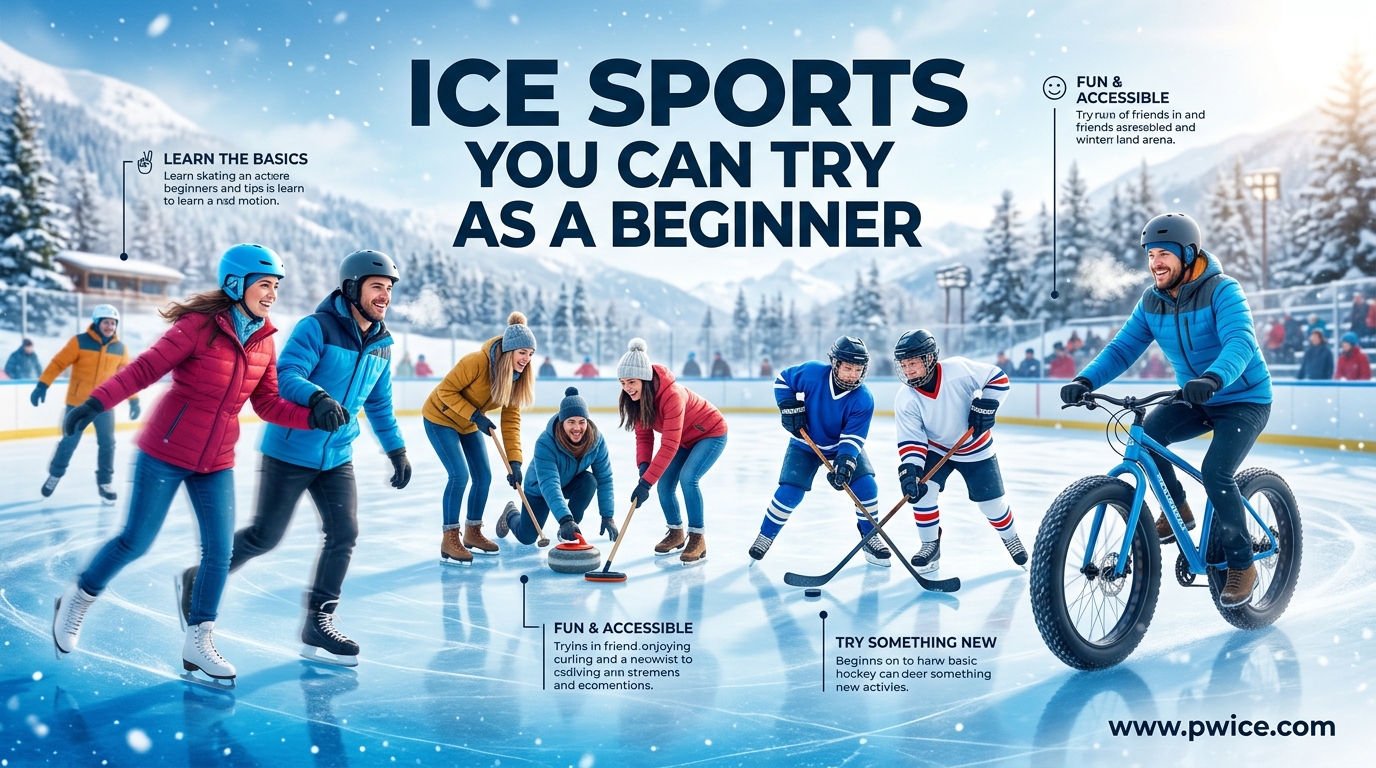
Ice sports you can try as a beginner include ice skating, curling, recreational ice hockey, broomball, ringette, figure skating, and speed skating. Each activity offers different levels of physical intensity, equipment requirements, and social engagement. Most beginners can learn basic skills in their first session with proper instruction and the right mindset.
Our team has spent months visiting local rinks and talking with coaches to put together this practical guide. We wanted to create something better than the generic lists we kept finding online. Whether you are 15 or 55, there is an ice sport that fits your fitness level and interests.
Table of Contents
Quick Comparison: 7 Beginner-Friendly Ice Sports
Before diving into each sport, here is how they stack up for beginners. I have rated each on difficulty, cost, and what kind of person they suit best.
| Sport | Difficulty | Cost/Session | Equipment Needed | Best For |
|---|---|---|---|---|
| Ice Skating | 2/5 | $8-$15 | Skates (rental) | Solo or social |
| Curling | 2/5 | $15-$25 | Slider, broom (provided) | Social, strategic |
| Recreational Hockey | 4/5 | $20-$40 | Full gear | Team players |
| Broomball | 3/5 | $10-$20 | Helmet, shoes (provided) | No-skate option |
| Ringette | 3/5 | $15-$30 | Skates, ring | Fast-paced team |
| Figure Skating | 4/5 | $20-$50 | Figure skates | Artistic focus |
| Speed Skating | 3/5 | $15-$35 | Long-blade skates | Fitness focused |
Ice Skating: The Most Accessible Starting Point
Ice skating is where most people begin their journey on ice. You need minimal equipment and can progress at your own pace. Most rinks offer public sessions where you can rent skates and practice basic skills.
The fundamentals are straightforward. You will learn to march in place, glide forward, and stop using the snowplow technique. These three skills can be picked up in a single 1-hour session with a bit of guidance.
What to Expect in Your First Session
Your first time on ice will feel strange. The blades are thin and the ice is slippery. Most beginners cling to the boards for the first 10 minutes.
Within 20 to 30 minutes, you should be able to take small steps away from the wall. By the end of an hour, most people can glide short distances and attempt a basic stop.
Wear thick socks and gloves. Falling is normal, so dress in layers you can move in comfortably. Helmets are not required for recreational skating but are recommended for children.
Curling: Strategy on Ice
Curling is often called “chess on ice” and is one of the most beginner-friendly team sports you can try. It requires no skating ability, just special shoes that slide on one foot and grip on the other.
The objective is to slide a 42-pound granite stone down the ice toward a target called the house. Your teammates sweep the ice in front of the stone to control its speed and direction. It is social, strategic, and surprisingly physical.
What to Expect in Your First Session
Most curling clubs offer “learn to curl” sessions that include all equipment. You will start by learning to slide from the hack with the stone.
Balancing on the slider foot takes practice. Many beginners use a stabilizer, which is like a cane with a plastic base, to stay upright while delivering the stone.
Sweeping is harder than it looks. It works your core and arms while you are bent in a low stance. You will appreciate why curlers consider this a legitimate workout.
Recreational Ice Hockey: Team Sport Thrills
Recreational ice hockey, sometimes called “shinny” or “pond hockey,” is the casual version of the organized game. Many rinks offer beginner leagues specifically for adults who have never played before.
The barrier to entry is higher than other ice sports. You need to skate reasonably well before adding stick handling and puck control. But the team aspect and fast pace make it worth the effort for many beginners.
What to Expect in Your First Session
Entry-level hockey programs usually start with skating drills. You need to be comfortable moving forward, stopping, and turning before you pick up a stick.
Gear is extensive. You will need a helmet with face protection, shoulder pads, elbow pads, gloves, hockey pants, shin guards, and skates. Most beginner programs have loaner gear to get you started.
Expect to be exhausted. Hockey uses every muscle group, and the first few sessions will leave you sore in places you did not know you had muscles.
Broomball: Ice Sport Without Skates
Broomball is the perfect ice sport if you are not ready to strap on skates. Players wear regular rubber-soled shoes and run on the ice using a ball instead of a puck.
The game resembles hockey but with a few key differences. You use a broom-shaped stick to hit a small rubber ball toward the net. The running on ice element makes it physically demanding in a different way than skating.
What to Expect in Your First Session
Broomball is immediately accessible. If you can run and swing a stick, you can play at a basic level.
The ice is slippery even in shoes. You will fall at least once, often while trying to change direction quickly. The trick is to take shorter, choppier steps than you would on dry ground.
Helmets are essential. The ball and sticks can cause injuries, and falling on ice hurts regardless of footwear. Most organized leagues require full face protection for goalies.
Ringette: Fast-Paced Team Alternative
Ringette was invented in Canada in 1963 as an alternative to ice hockey for girls, though it is now co-ed at many levels. Players use a straight stick to pass and shoot a rubber ring.
The sport emphasizes passing and skating skills over individual stick handling. There is no puck to carry, so the game moves quickly with lots of transitions up and down the ice.
What to Expect in Your First Session
You need basic skating ability before trying ringette. Being able to stop and start confidently is the minimum entry point.
Ring control takes practice. The ring slides differently than a puck, and catching passes while moving requires coordination. Beginner programs spend considerable time on ring handling drills.
The pace surprises many first-timers. Even beginner ringette moves faster than casual skating, so your cardio fitness will be tested.
Figure Skating: Artistry on Ice
Figure skating combines athletic skill with artistic performance. It is the most visually stunning ice sport, which draws many beginners to try it.
Be prepared for a steeper learning curve than recreational skating. Figure skates have toe picks at the front, which you must learn to use properly for jumps and certain edge work.
What to Expect in Your First Session
Adult beginner classes are widely available and welcoming. Instructors understand that you are not training for the Olympics, just learning a new skill.
You will start with forward gliding and basic edges. Edges are the foundation of figure skating, teaching you to balance on the inside or outside of your blade.
Toe picks can trip you up. Many beginners catch their picks when pushing off, causing awkward falls. Your coach will teach you to push from the side of the blade, not the front.
Speed Skating: Pure Speed and Fitness
Speed skating is about going fast on ice. It is an incredible cardio workout and appeals to beginners who want fitness results from their ice time.
The skates are different from figure or hockey skates. Speed skates have long, flat blades called clap skates that allow for a different pushing technique and greater speed.
What to Expect in Your First Session
Speed skating clubs often have beginner programs that teach the basic position and stroke. You skate with your body low and back rounded, which uses muscles differently than upright skating.
The long blades feel unstable at first. They do not have the curved rocker of figure skates, so turning requires a different technique. Most beginners stay on the straightaways initially.
Expect a serious workout. Speed skating is continuous movement with no stopping or standing around. Your heart rate will stay elevated the entire session.
Cost Comparison: What Each Sport Really Costs
Cost is a real concern for many beginners. Here is a realistic breakdown of what you can expect to spend as you start each sport.
Ice Skating
Public session admission runs $8 to $15 depending on your location. Skate rental adds $4 to $7. Private lessons cost $40 to $80 per hour, while group lessons are $100 to $200 for an 8-week session.
If you buy your own skates, expect to spend $80 to $200 for beginner recreational skates. Figure skates and hockey skates start around $150 and go up significantly for better quality.
Curling
Learn-to-curl sessions are typically $15 to $25 and include all equipment. If you join a league, annual club dues range from $200 to $500 depending on the club and how often you play.
Personal equipment is minimal. A slider and gripper shoes run $50 to $150. Many curlers eventually buy their own broom for $100 to $200.
Recreational Ice Hockey
This is the most expensive beginner ice sport. Full equipment costs $300 to $800 if you buy new. Many beginners start with used gear or rental programs that cost $50 to $100 per season.
League fees vary widely. Adult beginner leagues run $300 to $600 per season. Drop-in sessions cost $15 to $25 each.
Broomball and Ringette
Both sports are middle-range in cost. Broomball often has lower equipment costs since you do not need skates, but league fees are similar to hockey at $200 to $400 per season.
Ringette requires skates and a stick but no extensive protective gear beyond a helmet. Expect $150 to $300 to get started with basic equipment.
Figure Skating
Group lessons are $15 to $25 per session. Private coaching jumps to $50 to $100 per hour. Competition-level figure skating becomes expensive quickly, but recreational skating is reasonable.
Entry-level figure skates cost $150 to $300. Testing and competition fees add up if you pursue those paths.
Speed Skating
Club memberships are $150 to $300 annually. Speed skates are specialized and cost $200 to $500 for beginner models.
The sport has lower ongoing costs than hockey since equipment needs are minimal once you have skates and a helmet.
What to Wear and Essential Equipment
Dressing right makes a huge difference in your first ice sport experience. The rink is cold, but you will warm up quickly once moving.
Clothing Basics
Wear layers you can remove as you warm up. Avoid cotton, which stays wet when you sweat. Synthetic or wool base layers work best.
Pants should allow free movement. Athletic leggings or sweatpants are ideal. Jeans are too restrictive and uncomfortable if you fall.
Gloves are essential. They protect your hands from the cold and from the ice if you fall. Thin knit gloves work for casual skating; padded gloves are better for hockey or broomball.
Safety Equipment
Helmets are required for hockey, broomball, and speed skating. They are strongly recommended for beginner skaters of any age. A basic bike helmet works for casual skating; hockey requires a certified hockey helmet.
Knee pads and elbow pads help prevent bruises from falls. Many beginner skaters appreciate the extra protection while learning to stop.
Rental vs. Buying Equipment
Rent skates for your first 3 to 5 sessions. Rental skates are adequate for learning basics and let you confirm you enjoy the sport before investing.
Once you are committed, buying your own skates makes sense. Properly fitted skates improve your skating dramatically. Used gear in good condition is a smart way to save money on hockey and ringette equipment.
How to Find Local Rinks and Beginner Programs
Most communities have ice facilities you might not know about. Here is how to find them.
Start with a web search for “ice rink near me” or “skating lessons [your city].” Municipal recreation centers often have ice sheets that host public skating and beginner classes.
Check USA Hockey, US Figure Skating, or USA Curling websites for club locators. These national governing bodies list affiliated programs by region.
Call rinks directly and ask about adult beginner programs. Many facilities have dedicated “learn to skate” or “adult only” sessions that are less intimidating than public sessions filled with fast-moving kids.
Community Facebook groups and Nextdoor are great resources. Local skaters often share recommendations for coaches and programs that might not appear in web searches.
FAQ: Common Questions About Starting Ice Sports
What is the easiest winter sport to learn?
Ice skating and curling are the easiest ice sports for beginners to learn. Ice skating fundamentals can be picked up in a single session, while curling requires no skating ability at all. Both have low equipment costs and welcoming beginner communities at most local rinks.
What is the easiest sport to start?
Among all sports, not just winter activities, ice skating ranks as one of the easiest to start because you can begin at any age without prior athletic experience. Most rinks rent equipment, so you can try it once with minimal investment. The basic skills of moving forward and stopping are achievable within your first hour on the ice.
What sports can you play on ice?
Sports you can play on ice include ice skating, curling, recreational ice hockey, broomball, ringette, figure skating, and speed skating. Team sports include hockey, broomball, and ringette. Individual sports include figure skating and speed skating. Curling combines team play with individual skill. All seven can be learned as a beginner with proper instruction.
Is 25 too old to start a sport?
25 is not too old to start any ice sport. Adult beginner programs exist for skating, hockey, curling, and all other ice activities. Many adults begin ice skating in their 30s, 40s, and beyond. The learning curve may be slightly longer than for children, but adults often progress faster due to better focus and body awareness. Local rinks typically offer adult-only beginner classes for this reason.
How long does it take to learn ice skating basics?
Most beginners can learn basic ice skating skills including forward movement, gliding, and simple stopping within 1 to 3 sessions. Basic proficiency where you feel comfortable on the ice typically takes 4 to 8 weeks of regular practice. Advanced skills in figure skating, hockey, or speed skating require months or years of dedicated training.
What should I wear for my first ice skating session?
Wear warm, comfortable clothing in layers including a base layer, mid-layer, and jacket. Choose pants that allow free movement like athletic leggings or sweatpants. Bring gloves to protect your hands from cold and falls. Wear thick socks that rise above your ankle. Avoid jeans and cotton clothing which become cold and uncomfortable when damp.
Do I need my own skates to start ice sports?
No, you do not need your own skates to start. All ice rinks rent skates for $4 to $8 per session. Rental skates are adequate for learning basics. Consider buying your own skates after 5 to 10 sessions if you plan to continue. Properly fitted personal skates improve comfort and performance significantly.
How much do beginner ice skating lessons cost?
Group ice skating lessons typically cost $100 to $200 for an 8-week session with one class per week. Private lessons range from $40 to $80 per hour including ice time. Many rinks offer single drop-in group lessons for $15 to $25. Learn-to-skate programs through organizations like Learn to Skate USA provide structured progression at reasonable rates.
Getting Started: Your Next Steps
Ice sports you can try as a beginner are more accessible than most people assume. You do not need to be an athlete or start as a child. You need a willingness to try something new and accept that falling is part of the process.
Pick one sport from this list that appeals to you. Ice skating is the safest starting point for most people. If you prefer team activities and have basic skating skills, consider broomball or a beginner hockey program.
Search for your local rink this week. Most facilities offer beginner-friendly sessions where you can rent everything you need. The hardest part is walking through the door for the first time. Once you are on the ice, you will wonder why you waited so long to start.