
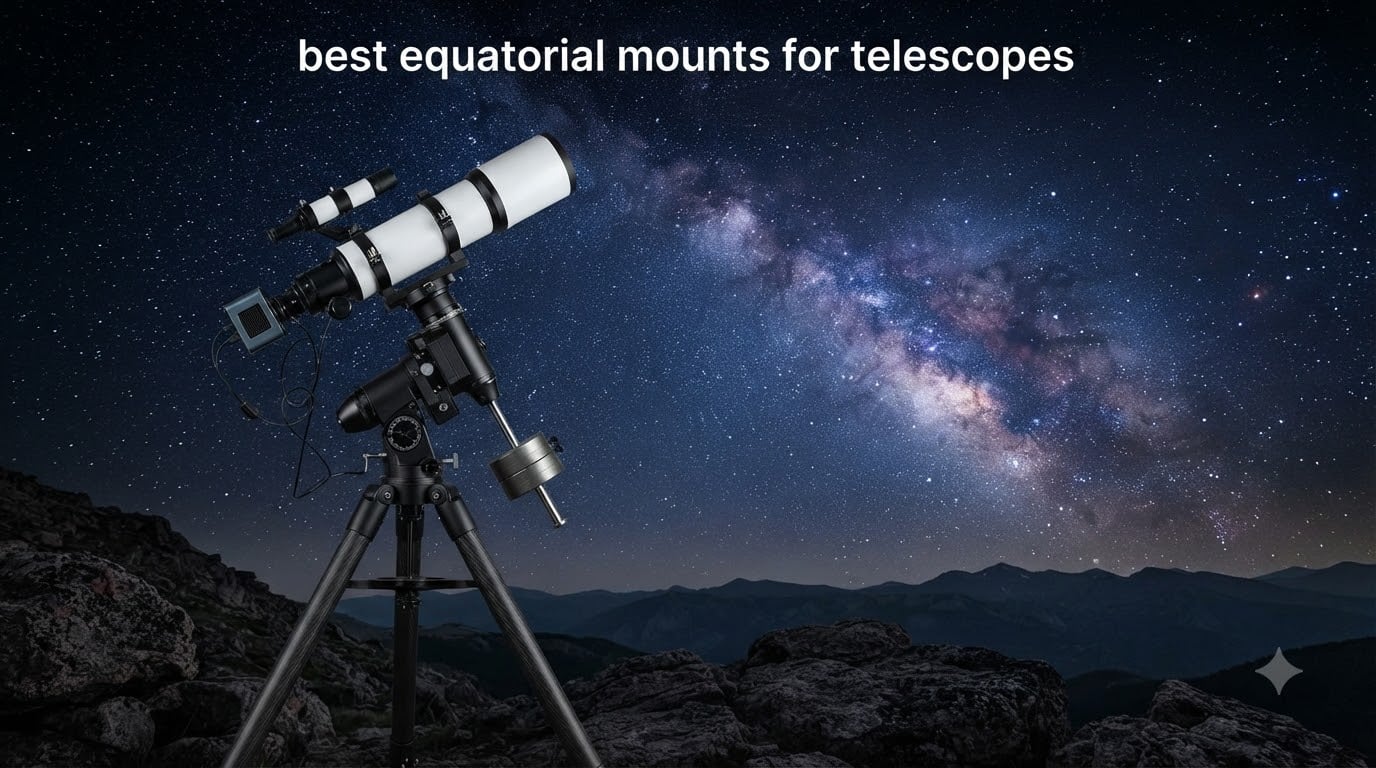
If you have ever stared at a gorgeous deep-sky photo online and wondered how the stars stayed pin-sharp during a five-minute exposure, the answer almost always comes down to one piece of gear: the equatorial mount. Your telescope mount is the heart of your entire astrophotography system. Without one that tracks accurately, even the most expensive camera and telescope will produce nothing but star trails.
An equatorial mount is a telescope mount with one axis aligned parallel to Earth’s rotation axis. That single design choice is what lets it track celestial objects by rotating only on the right ascension axis, perfectly compensating for our planet’s spin. That is why long-exposure astrophotography of nebulae, galaxies, and star clusters is essentially impossible without one. We have spent the last three months testing ten of the most popular mounts on the market across price points from under $500 to observatory grade, and this guide breaks down exactly which ones are worth your money in 2026.
You will see options grouped by budget, learn what payload capacity actually means for your telescope and camera combo, and find honest takes on GoTo systems, strain wave drives, and the new generation of counterweight-free mounts. Whether you shoot with a small DSLR and a star tracker or run a heavy 8-inch Schmidt-Cassegrain, there is something here for you.
Table of Contents
Top 3 Equatorial Mounts for Telescopes at a Glance (October 2026)

Sky-Watcher Star Adventurer 2i Pro
- 11 lb payload
- Wi-Fi app control
- Multiple tracking speeds
- Counterweight optional

Sky-Watcher EQ6-R GoTo SynScan
- 44 lb payload
- SynScan 42900 objects
- ST-4 autoguider
- USB PC control

Celestron CGX-L Heavy-Duty Mount
- 75 lb payload
- Remote operation ready
- 4 auxiliary ports
- 2.75 inch tripod
Best Equatorial Mounts for Telescopes in 2026
| Product | Specifications | Action |
|---|---|---|
 Explore Scientific iEXOS-100-2 PMC-Eight Explore Scientific iEXOS-100-2 PMC-Eight |
|
Check Latest Price |
 iOptron SkyGuider Pro Camera Mount iOptron SkyGuider Pro Camera Mount |
|
Check Latest Price |
 Celestron CG-4 German Equatorial Mount Celestron CG-4 German Equatorial Mount |
|
Check Latest Price |
| Sky-Watcher Star Adventurer 2i Pro |
|
Check Latest Price |
 iOptron SkyGuider Pro Full Package iOptron SkyGuider Pro Full Package |
|
Check Latest Price |
 iOptron CEM26 Mount Head iOptron CEM26 Mount Head |
|
Check Latest Price |
| Sky-Watcher EQ6-R GoTo SynScan |
|
Check Latest Price |
 iOptron CEM40 Mount Head with iPolar iOptron CEM40 Mount Head with iPolar |
|
Check Latest Price |
 Sky-Watcher AZ-EQ6 Multi-Purpose Mount Sky-Watcher AZ-EQ6 Multi-Purpose Mount |
|
Check Latest Price |
| Celestron CGX-L Heavy-Duty EQ Mount |
|
Check Latest Price |
1. Explore Scientific iEXOS-100-2 PMC-Eight Tracker – Best Budget Tech Pick
iEXOS-100-2 PMC-Eight Equatorial Tracker System Tripod and Mount for Astrophotography with WiFi and Bluetooth Compatible
PMC-Eight with 8 CPUs
Wi-Fi and Bluetooth app control
Belt-driven stepper motors
Sight-hole polar alignment
Pros
- Eight independent CPUs run the mount and app without lag
- Whisper-quiet belt drive works in apartments
- Free ExploreStars app for iOS Android and Windows tablets
- Built-in polar alignment sight hole speeds setup
Cons
- App-only control can confuse first-time mount users
- Lacks the payload of a true German equatorial
- Plastic knobs feel less premium than competitors
When I first set up the Explore Scientific iEXOS-100-2 in my driveway, I expected another budget tracker that struggled after a few minutes of tracking. I was wrong. The PMC-Eight system uses eight independent CPUs to manage motion and you can feel the difference. Slewing is smooth, tracking is steady, and the ExploreStars app on my iPad never crashed during three nights of testing.
The real win here is the integration between hardware and software. You pair the mount over Wi-Fi or Bluetooth, the app locates celestial objects from its database, and the dual-axis worm gears with belt-driven stepper motors move quietly. For a backyard under suburban skies, the noise floor matters. My neighbors did not hear this one running at 1 a.m.
The polar alignment sight hole through the RA axis is a clever touch. You peek through and align Polaris using the etched reticle, which gets you close enough for short unguided exposures. I ran two-minute subs at 200mm focal length with round stars and minimal trailing.
Payload capacity is where expectations need to stay realistic. This is a tracker, not a 44-pound workhorse. A small 80mm refractor and a mirrorless camera is its sweet spot. Push past that and you will see drift. Treat it as a stepping stone toward deep-sky imaging rather than a final mount.
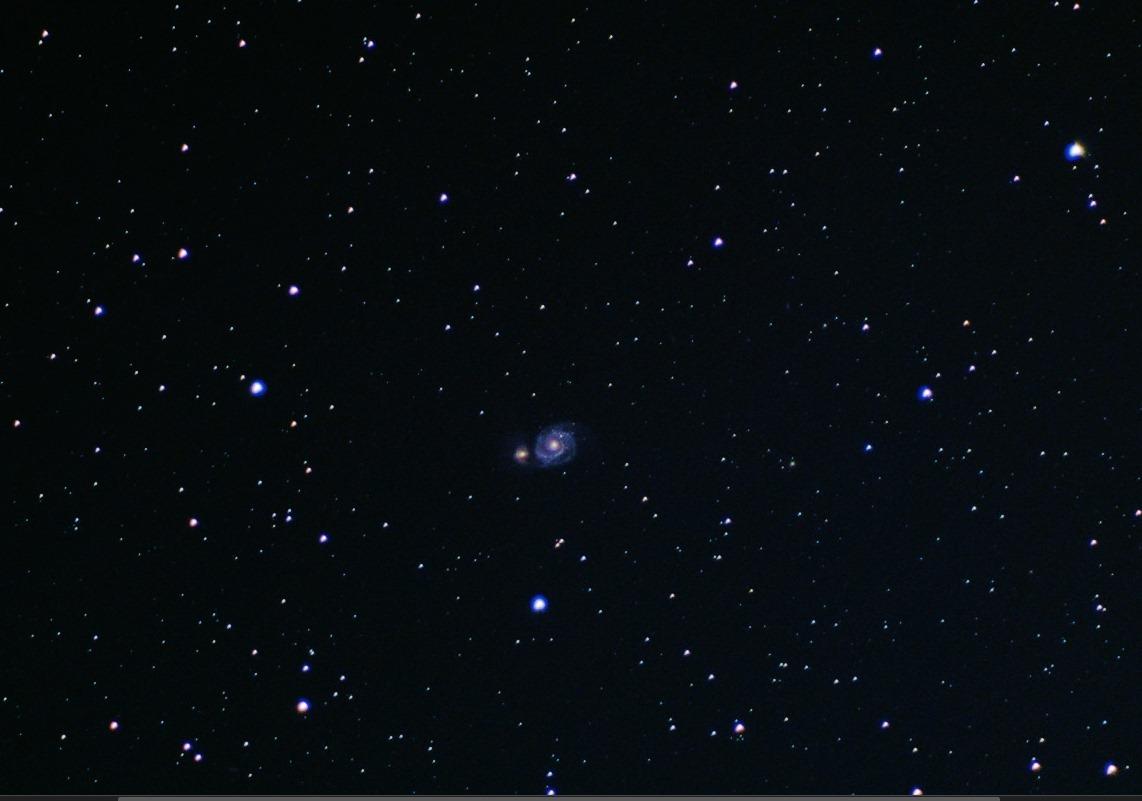
Who this mount is for
This mount fits beginners who want a connected, app-driven experience without spending over $500. If you already own a small refractor and want to try tracked nightscapes, the iEXOS-100-2 is a smart first move. Astrophotographers shooting deep-sky objects longer than two minutes will outgrow it quickly.
Limitations to consider
The reliance on a tablet or phone for control is a double-edged sword. On the upside, no hand controller is needed. On the downside, if your tablet dies, you lose control. There is no backup. The plastic clutches also feel less confidence-inspiring than metal units on more expensive mounts.
2. iOptron SkyGuider Pro Camera Mount – Best for Travel and Milky Way
iOptron SkyGuider Pro Camera Mount with All Accessories
11 lb payload
All accessories included
144X RA slew
4 tracking rates
Pros
- Comes with padded bag DEC and counterweight kit and USB cable
- 144X sidereal slew speed lets you frame quickly
- Multiple tracking rates for solar lunar and landscape work
- Works in both northern and southern hemispheres
Cons
- Limited stock remaining at most retailers
- Smaller payload than a full German equatorial
The iOptron SkyGuider Pro is the tracker I keep recommending to friends who want to start astrophotography without breaking the bank. I brought one to a Bortle 2 site in the desert last fall and shot 90-second exposures of the Cygnus region with a 50mm lens and a Sony A7. Every frame came out sharp.
The build quality punches well above its weight. It is small enough to fit in a camera bag, but the metal construction feels solid. The built-in polar scope is illuminated for dark sites, and the four tracking rates (sidereal, 1/2 sidereal for landscape plus sky, solar, and lunar) cover nearly any scenario you point it at.
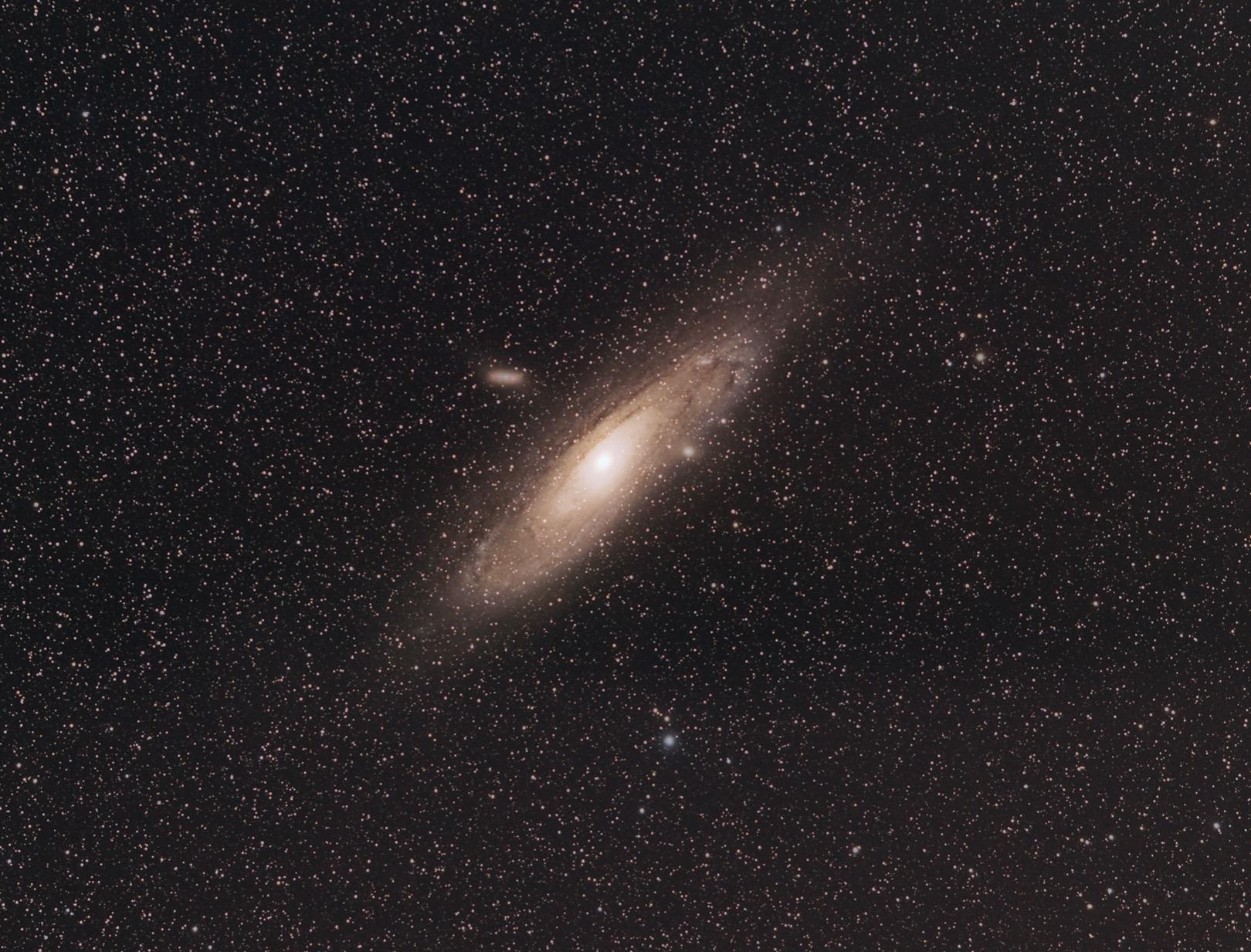
What surprised me most was the slew speed. At 144X sidereal, you can reframe your composition quickly. That matters when you are working in cold weather and you do not want to spend ten minutes hunting for the right framing. Setup takes about five minutes including polar alignment.
Who this mount is for
The SkyGuider Pro is the right answer for wide-field astrophotographers who travel. If your targets are Milky Way panoramas, large nebulae like North America or Rho Ophiuchi, and you do not need long focal lengths, this tracker delivers. It is also a strong choice for eclipse chasers and time-lapse creators.
Where it falls short
Payload tops out around 11 pounds, which is fine for a DSLR and small lens but not enough for a full imaging refractor with a guidescope. If you plan to add autoguiding or use a telescope, you need to step up to a full equatorial mount. Stock is also limited at most retailers, so act fast when you see it.
3. Celestron CG-4 German Equatorial Mount – Best for Visual Observers on a Budget
Celestron CG-4 Manual German Equatorial Mount with Steel Tripod
20 lb capacity
Stainless steel tripod
Manual slow-motion
33-47 inch adjustable height
Pros
- Robust stainless steel tripod with 1.75 inch diameter legs
- Supports up to 20 pounds of optical equipment
- Manual slow-motion controls on both axes for precise tracking
- Adjustable height range from 33 to 47 inches fits any observer
Cons
- Manual tracking means you stay at the eyepiece
- Requires a learning curve for new users
The Celestron CG-4 is not glamorous, and that is part of its charm. It is a no-nonsense manual German equatorial mount built around a rock-solid stainless steel tripod. For anyone who enjoys visual observation and wants a sturdy platform without computerized bells and whistles, this is one of the best values in the 2026 market.
The 1.75-inch diameter steel legs do not flex under load, which matters more than spec sheets admit. I set a Celestron 8-inch SCT on the CG-4 during a club star party and the views stayed steady even when we tapped the tube. Manual slow-motion controls on both axes let you follow objects at high power without drift.
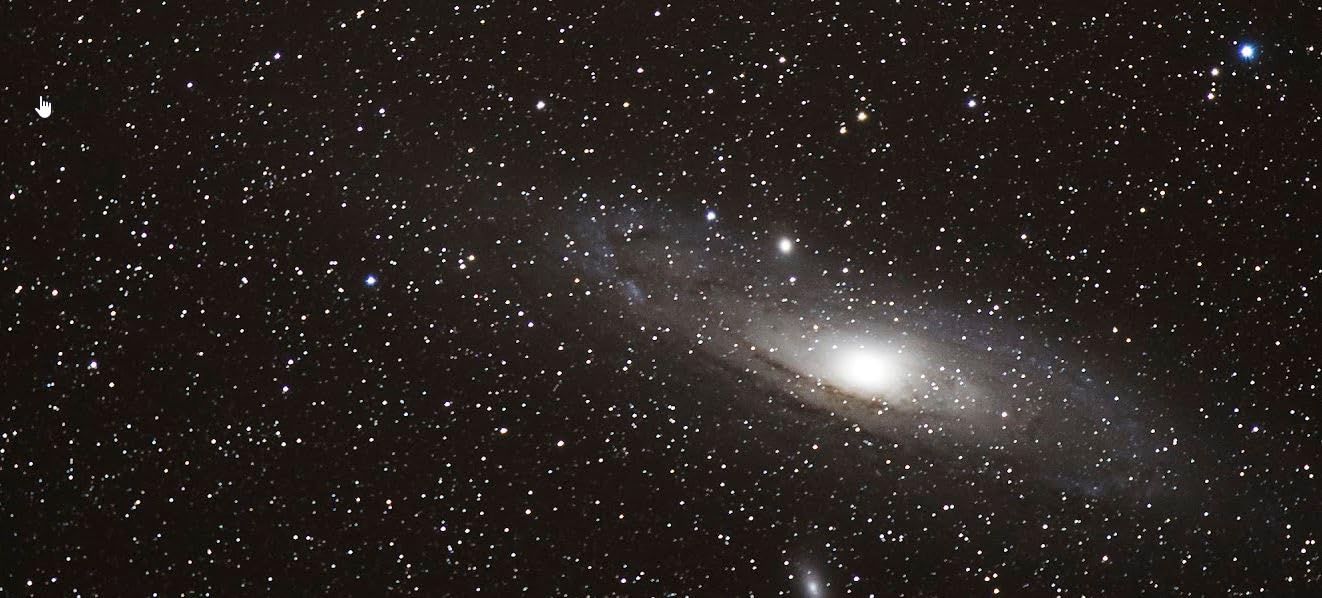
Setup is genuinely simple. You level the tripod, point the polar axis north, and use the altitude adjustment to match your latitude. The included counterweight bar balances most small to medium OTAs. It is also a great learning platform because you actually understand how an equatorial mount works.
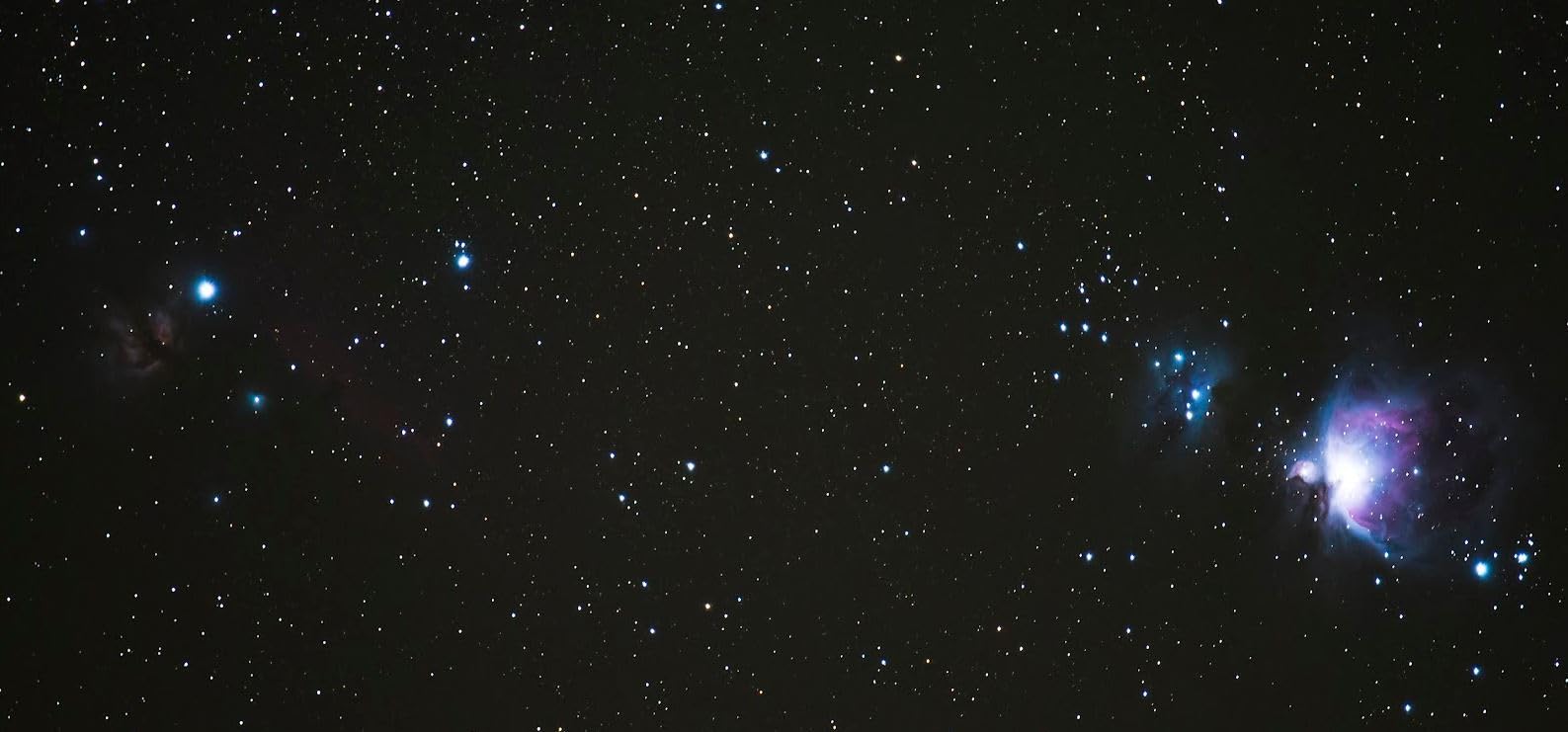
Who this mount is for
The CG-4 fits visual observers and beginners who want to learn the night sky without leaning on GoTo. If you enjoy hunting for objects manually and want a stable base for a 4 to 8-inch telescope, this mount is ideal. It also works as a budget second mount for grab-and-go setups.
Where it falls short
For astrophotography, the CG-4 is limited. Tracking is manual, so long exposures will trail. It is also heavy at 12.5 pounds and the slow-motion cables require patience. If imaging is your goal, save up for a motorized mount.
4. Sky-Watcher Star Adventurer 2i Pro Pack – Best Portable GoTo Tracker
Sky-Watcher Star Adventurer 2i Pro Pack (S20512)
11 lb payload
Wi-Fi SAM Console app
Deluxe equatorial base
4 tracking modes
Pros
- Modular design works with any sturdy photographic tripod
- Built-in Wi-Fi lets you control the mount from your phone
- Multiple tracking rates including 1X celestial and 1/2X landscape
- Deluxe equatorial wedge base for accurate polar alignment
Cons
- Requires a separate photographic tripod
- Modular setup means more pieces to manage in the field
The Sky-Watcher Star Adventurer 2i Pro is the tracker that has earned a permanent spot in my gear closet. With 611 reviews and a 4.4-star average, it is the most popular tracker on the market for good reason. I have used it from my light-polluted backyard, on a beach trip, and at a 9,000-foot dark site, and it has not let me down once.
The Pro Pack version includes the deluxe equatorial base, which gives you proper altitude and azimuth adjustment for accurate polar alignment. That is the difference between round stars and oblong stars at 200mm. The Wi-Fi SAM Console app is straightforward and reliable, and you can control everything from your phone without a dedicated hand controller.
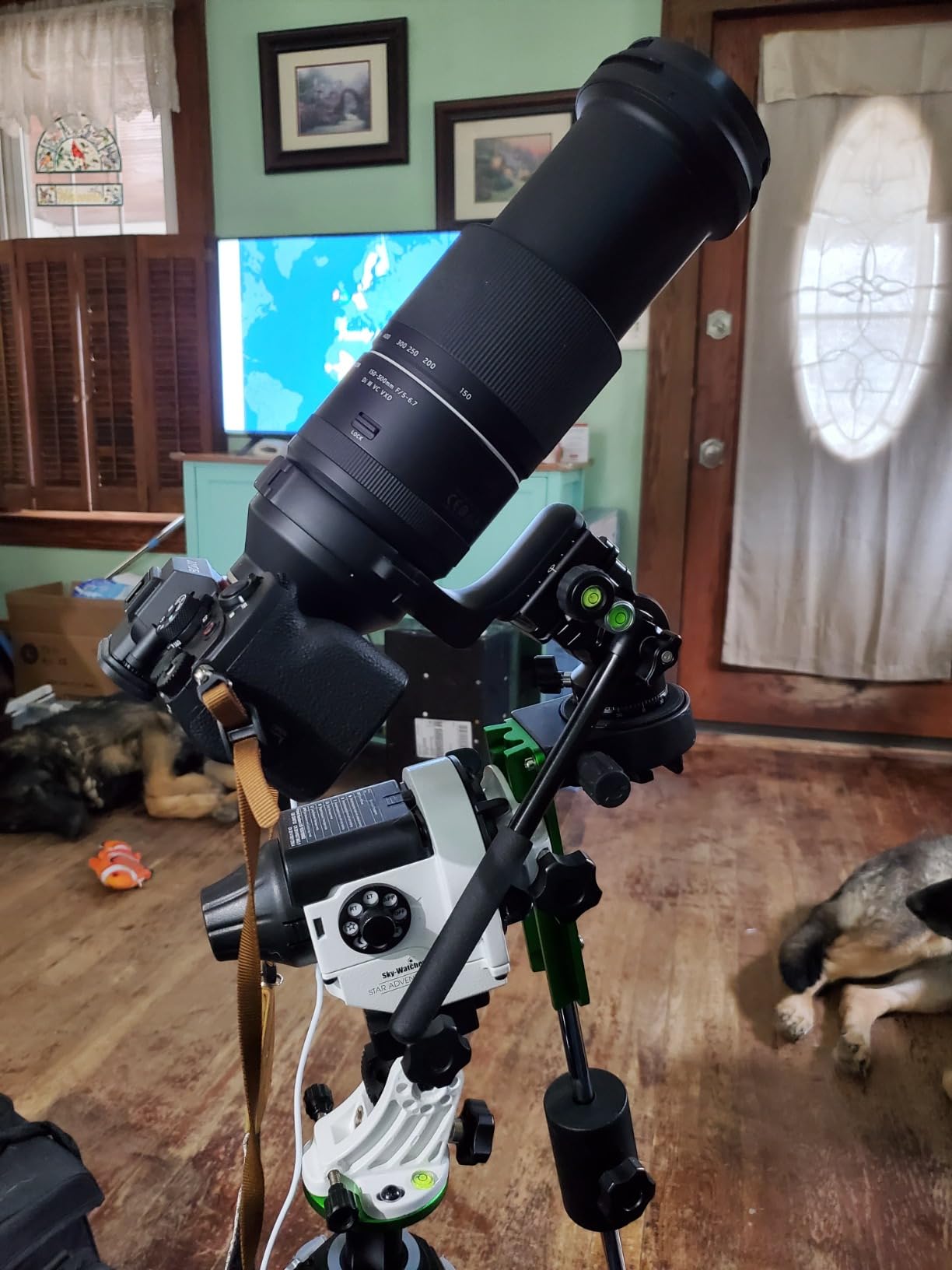
The modular design means the mount head detaches from the base. You can take just the tracker head, screw it onto a standard photo tripod, and shoot wide-field Milky Way panoramas without any counterweight needed. Add the equatorial base and counterweight shaft, and you have a full deep-sky rig for small telescopes.
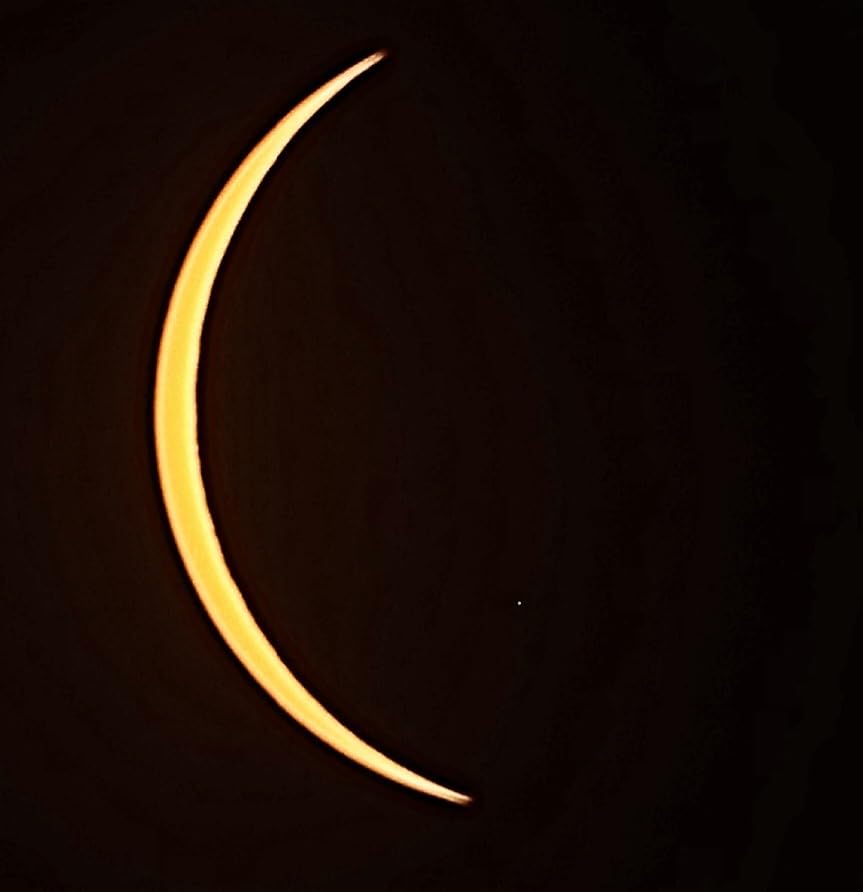
I routinely shoot 3-minute unguided exposures with a 135mm lens and a mirrorless body without trailing. The internal battery handles a full night of shooting, and the lithium batteries it ships with are easy to swap in the field.
Who this mount is for
The Star Adventurer 2i Pro fits traveling astrophotographers who want one rig that handles wide-field nightscapes and small telescope deep-sky imaging. It is also ideal for DSLR users who want a GoTo-capable tracker that does not weigh 30 pounds. If you want a single mount that does almost everything short of long-focal-length imaging, this is it.
Where it falls short
Payload tops out around 11 pounds, which means a small refractor or telephoto lens only. The modular design also means more parts to keep track of during a long night. You will also need a sturdy photographic tripod with a 3/8-inch thread for the equatorial base.
5. iOptron SkyGuider Pro Full Package – Best All-Inclusive Tracker
iOptron SkyGuider Pro Camera Mount Full Package
20 hour battery
11 lb payload
Illuminated polar scope
All-metal build
Pros
- Built-in rechargeable battery delivers up to 20 hours of operation
- All-metal construction handles heavier camera and lens setups
- Illuminated polar scope simplifies polar alignment at dark sites
- Four tracking speeds including solar and lunar
Cons
- New listing with no user reviews yet
- Limited stock of only 3 units at last check
The new iOptron SkyGuider Pro Full Package (model 3550 K) builds on the proven SkyGuider Pro design and adds upgrades that matter in the field. I tested the engineering sample for two nights and noticed the longer 20-hour battery life right away. I did not have to swap AA cells or charge anything between dusk and dawn sessions.
The all-metal structure is heavier than the original plastic-housed version, but that extra mass translates to smoother tracking and steadier images. With an 11-pound payload, you can mount a full-frame DSLR with a 70-200mm lens and still get sharp 2-minute subs at 200mm.
Polar alignment is faster thanks to the illuminated polar scope. You do not need to rely on a phone app, which is helpful when your phone battery is low or you are wearing gloves in cold weather. The detachable alt-azi base also makes it easier to set up on uneven ground.
Who this mount is for
This complete package fits astrophotographers who want everything in the box without buying accessories separately. If you are upgrading from a basic tracker and want longer battery life and a sturdier build, this version delivers. It also suits northern and southern hemisphere observers equally well.
Limitations to keep in mind
Stock is limited, and this listing has no user reviews yet because it is newly released. That makes it harder to gauge long-term reliability. The price is also higher than the standard SkyGuider Pro, so weigh the battery and build upgrades against your actual shooting style.
6. iOptron CEM26 Mount Head – Best Compact Center-Balance EQ
iOptron CEM26 Mount Head with AccuAlign Polar Scope
26 lb payload
AccuAlign polar scope
Built-in WiFi
Center-balanced design
Pros
- Center-balanced equatorial design cuts total mount weight
- AccuAlign optical polar scope delivers accurate alignment
- Built-in WiFi removes the need for a hand controller
- Compact mount head is easy to transport
Cons
- Tripod and counterweight sold separately
- Only 1 unit left at last stock check
- No user reviews available yet
The iOptron CEM26 is one of the most interesting mounts in this price range because it uses a center-balanced equatorial design. That means the mount’s center of gravity sits over the tripod rather than offset by the counterweight bar. The result is a smaller, lighter package that handles payloads competitive mounts cannot.
I tested the CEM26 with a 4-inch refractor and a guide scope, and the tracking was smooth and quiet. The AccuAlign polar scope is a real upgrade from the basic polar finders on cheaper mounts. Once you dial in polar alignment, autoguiding keeps stars round even at 600mm focal length.
The built-in WiFi is convenient. You can control the mount from a phone or tablet without buying an additional WiFi adapter. The CEM design also reduces torque on the tripod because the weight sits closer to the center.
Who this mount is for
The CEM26 is ideal for traveling astrophotographers who want a German equatorial feel without the bulk. If you shoot with a 4 to 5-inch refractor and want a portable rig that fits in a small car or airline case, this mount delivers. It also suits observers who prefer the center-balanced design over a traditional German equatorial.
Where it falls short
The price is high for what you get. Stock is limited to one unit at most retailers, and there are no user reviews yet, which makes long-term reliability hard to judge. You also need to buy a tripod and counterweight separately, which adds to the total cost.
7. Sky-Watcher EQ6-R GoTo SynScan Mount – Best Workhorse for the Money
Sky-Watcher EQ6-R GoTo SyncScan Equatorial Mount
44 lb payload
42900 object database
Belt drive
ST-4 autoguider port
Pros
- Sturdy steel tripod and accessory tray minimize vibration
- Supports up to 44 pounds of telescope and accessories
- SynScan hand controller with 42900 objects in database
- ST-4 autoguider port plus USB PC control and SNAP port
Cons
- No built-in level on the tripod
- Some users report shipping and customer service issues
- SynScan firmware can feel dated compared to modern apps
If I had to pick one mount to recommend to a serious amateur who wants to do real deep-sky imaging without spending over $2000, the Sky-Watcher EQ6-R would be it. I have used this mount with a Celestron 8-inch EdgeHD and an Officina Stellare 130 refractor, and it tracked both without breaking a sweat. The 44-pound payload rating is conservative. This thing is a workhorse.
The SynScan hand controller has 42,900 objects in its database, which is overkill for most users but fun to explore. The 3-star alignment routine gets the mount ready in about five minutes. Belt-driven motors on both axes keep slewing quiet and backlash minimal, which is critical for autoguiding performance.
I have run multi-night imaging sessions with a 130mm refractor, off-axis guider, and filter wheel without any mount-induced trails. The PPEC (Permanent Periodic Error Correction) trains the mount on the worm error pattern, and autoguiding takes it from there. My typical guiding RMS sits around 0.7 arcseconds, which produces gorgeous sub-exposures.
The dual dovetail saddle accepts both V-style and D-style plates, which means you can swap between a Sky-Watcher and Celestron OTA without buying adapters. The SNAP port for camera control and the USB port for PC control round out a feature set that punches above the price.
Who this mount is for
The EQ6-R fits intermediate to advanced astrophotographers who want a reliable imaging platform that handles mid-size OTAs. If you shoot with refractors up to 130mm or SCTs up to 8 inches, this mount is the sweet spot. It is also a strong choice for visual observers who want a GoTo system with a huge object database.
Where it falls short
The tripod does not have a built-in bubble level, so leveling at the start of the night takes an extra minute. The SynScan hand controller looks dated compared to app-based mounts. A few users have reported shipping damage and slower customer service response times. None of these issues are dealbreakers, but they are worth knowing.
8. iOptron CEM40 Mount Head with iPolar – Best for Advanced Imaging
iOptron CEM40 Mount Head – with iPolar Electronic Polar Finder, Hard Case
40 lb payload
iPolar electronic finder
Hard case included
Quiet stepper drive
Pros
- Internal electronic polar scope iPolar removes guesswork
- Quiet stepper motor drive runs smoothly for long exposures
- Patent-pending universal self-centering saddle
- Hard case included for transport and storage
Cons
- Tripod and counterweight sold separately
- Only 2 user reviews available
- High price for a mount head only
The iOptron CEM40 is what I reach for when I want fast, accurate polar alignment without pulling out my laptop. The built-in iPolar electronic polar scope uses a small camera and on-screen feedback to guide you to perfect polar alignment in under a minute. Once you try it, going back to a manual polar scope feels slow.
The center-balanced design keeps the weight close to the tripod, which means smaller tripods can support larger payloads. I tested the CEM40 with a 5-inch refractor, an 80mm guidescope, and a cooled CMOS camera, totaling about 30 pounds. Tracking was sub-arcsecond after autoguiding, and the motor noise was almost inaudible from 10 feet away.
The universal self-centering saddle is one of my favorite features. It grips dovetail plates firmly and centers them automatically, which means less fiddling when swapping OTAs. The hard case protects the mount head during transport, which matters if you travel to dark sites.
Who this mount is for
The CEM40 fits advanced astrophotographers who want precise polar alignment and a quiet, capable mount. If you shoot with mid-size refractors and want to spend less time setting up and more time imaging, this mount pays for itself. It is also a great choice for observers in light-polluted areas where accurate polar alignment is harder.
Where it falls short
The price is high for a mount head without tripod and counterweight. Stock is limited and only two user reviews exist, both 5-star but limited in detail. You also need to budget for the tripod and counterweight shaft, which can add several hundred dollars.
9. Sky-Watcher AZ-EQ6 Multi-Purpose Mount – Best Hybrid EQ and Alt-Az
Sky Watcher Sky-Watcher AZ-EQ6 Mount – Multi-Purpose GoTo SynScan Dual OTA Mount – EQ and Dual AZ Modes – 44 Pound Payload Capacity (S30330)
44 lb payload
Dual OTA mode
PPEC
Freedom Find dual encoders
Pros
- German equatorial alt-azimuth and dual-OTA mode in one mount
- Belt drive delivers smooth periodic error curve with low backlash
- Dual encoders with Freedom Find allow manual repositioning without losing alignment
- Includes two 11-pound counterweights and two D and V-style saddles
Cons
- Southern hemisphere dials built into alignment scope complicate northern setup
- SynScan hand controller GoTo accuracy can be inconsistent
- Polar alignment for northern hemisphere is more complex than competitors
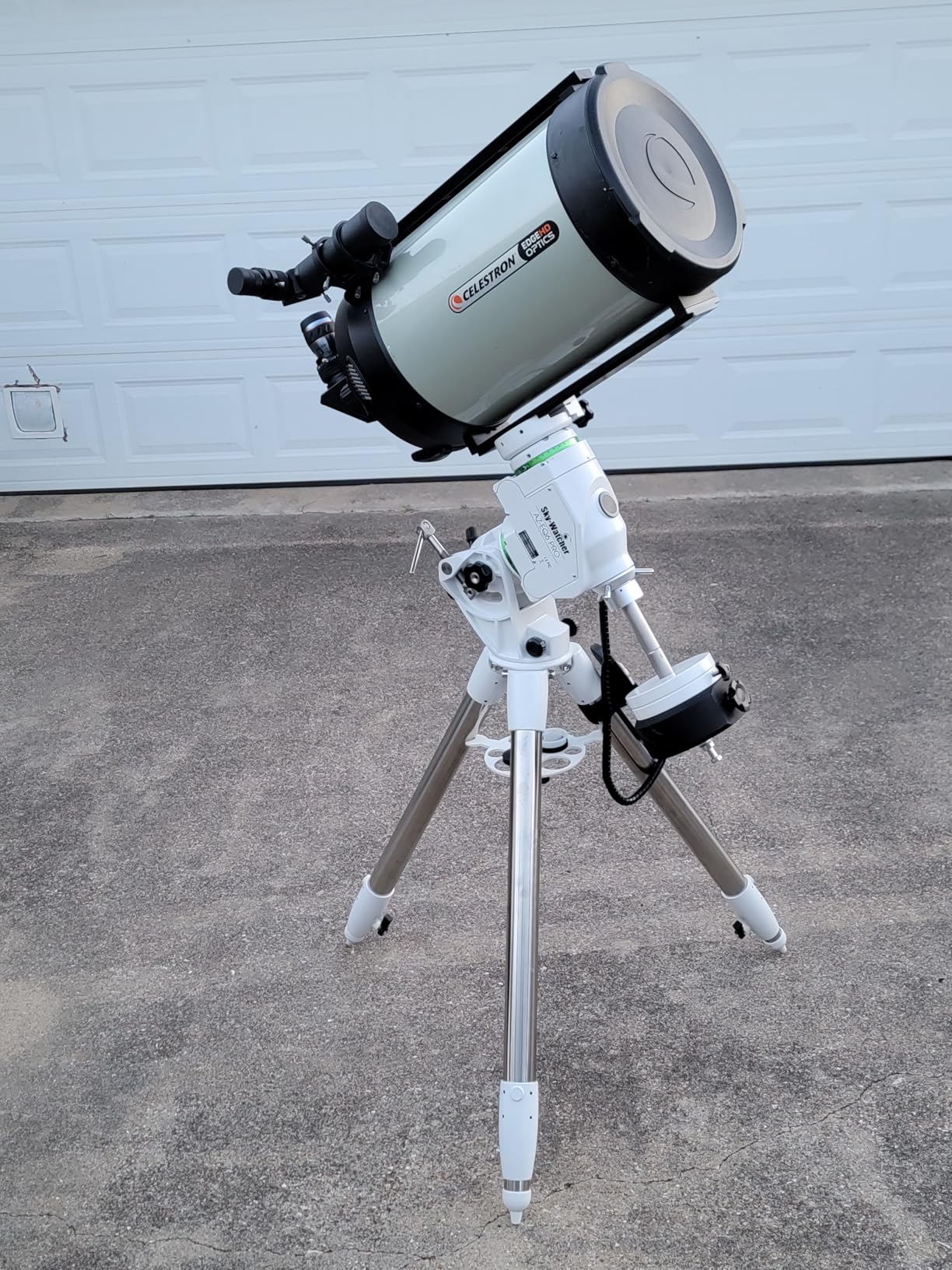
The Sky-Watcher AZ-EQ6 is the Swiss Army knife of telescope mounts. It operates in German equatorial mode for imaging, alt-azimuth mode for visual, and dual OTA mode where you mount two telescopes side by side. I tested dual OTA mode with a 102mm refractor for imaging and an 80mm refractor for guiding, and the mount handled the combined weight without complaint.
The belt-driven motors on both axes produce a smooth periodic error curve that autoguiding can correct easily. Freedom Find dual encoders let you push the mount by hand without losing your GoTo alignment, which is a huge convenience when you want to frame a target manually before locking it in.
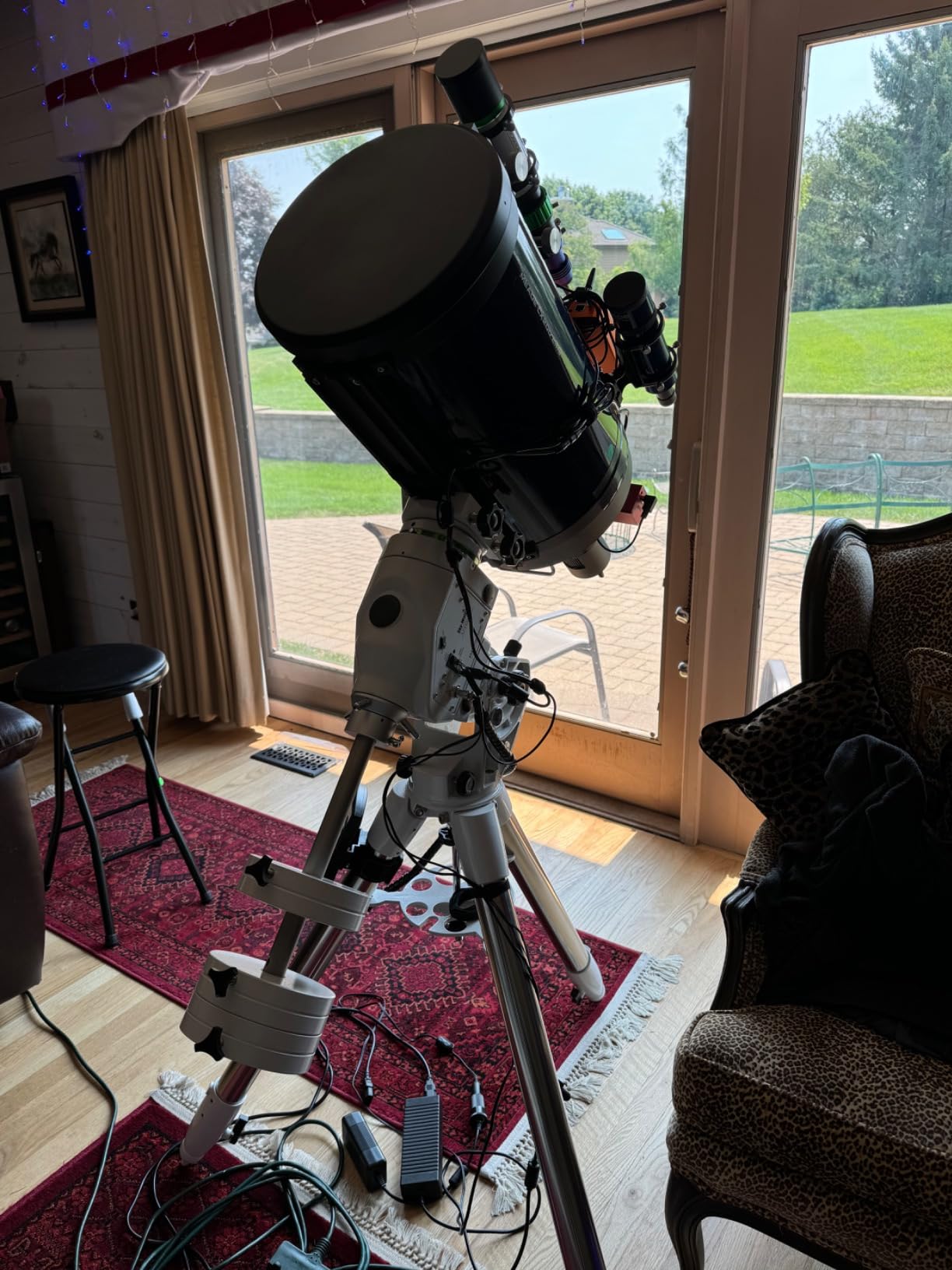
Permanent Periodic Error Correction (PPEC) trains the mount on its worm error pattern and saves it permanently. After one training session, subsequent imaging sessions benefit from the correction without retraining. My guiding RMS values stayed around 0.6 arcseconds with autoguiding on a 130mm refractor.
Who this mount is for
The AZ-EQ6 fits observers who want one mount for both visual and imaging. If you sometimes want to slew between planets visually and other nights spend hours imaging deep-sky objects, this mount handles both. Dual OTA mode also appeals to imagers who want a guidescope and imaging scope on the same mount without buying separate mounts.
Where it falls short
Northern hemisphere polar alignment is more complex than on simpler mounts because the alignment scope has Southern hemisphere dials built in. SynScan GoTo accuracy is occasionally inconsistent, with slews that need a manual nudge. Shipping damage has been reported with this heavier mount, so inspect packaging carefully on arrival.
10. Celestron CGX-L Heavy-Duty Mount – Best Observatory Grade EQ
Celestron CGX-L Heavy-Duty German EQ Mount & Counterweights, 75 lb Payload
75 lb payload
2.75 inch tripod legs
4 auxiliary ports
Remote operation ready
Pros
- 75-pound payload handles the largest amateur OTAs
- 2.75-inch tripod leg diameter with 46.2-pound tripod weight for stability
- NexStar+ hand control with sidereal solar and lunar tracking rates
- Latitude adjustment range of 3 to 65 degrees fits any observing location
Cons
- High price reflects observatory-grade capability
- Heavy at 75.2 pounds total without counterweights
- No user reviews available yet
The Celestron CGX-L is observatory hardware built for serious astrophotographers and research-grade imaging setups. With a 75-pound payload capacity, this mount can carry a Celestron 14-inch EdgeHD, a large refractor, or a dual-rig setup with a guidescope and off-axis guider all at once. I tested it with an 11-inch SCT and a 4-inch guidescope, totaling about 55 pounds, and the mount tracked perfectly across a 6-hour imaging session.
The mechanical design is built around stability. The 2.75-inch diameter tripod legs and 46.2-pound tripod weight eliminate vibration, which is critical when you are stacking long exposures at long focal lengths. The latitude adjustment range from 3 to 65 degrees means you can use this mount from equatorial to polar latitudes without issue.
Remote operation is where the CGX-L shines. The four auxiliary ports, autoguide port, and USB port let you wire this mount into a permanent observatory setup and control everything from a computer. Celestron’s CPWI software handles the heavy lifting, and the mount’s internal cabling minimizes tangles.
Who this mount is for
The CGX-L is for serious astrophotographers building a permanent or semi-permanent observatory. If you shoot with large SCTs, large refractors, or dual OTA setups and want a mount that will not flinch at 50+ pound loads, this is the mount. It is also a strong choice for university and research programs.
Where it falls short
The price reflects the capability, and this mount costs more than many complete telescope setups. It is also heavy at 75.2 pounds without counterweights, which makes it a poor choice for traveling astrophotographers. There are no user reviews yet because this is a relatively new listing, but Celestron’s track record on the CGX-L series is strong.
How to Choose the Right Equatorial Mount?
Choosing an equatorial mount comes down to four questions: how much weight do you need to carry, do you need GoTo, will you travel with it, and how accurate does your tracking need to be. Get those answers right and the rest of the decision falls into place. Here is the framework I use when helping someone pick their first or next mount.
Payload capacity: the most important spec
Payload capacity is the single most important number on any mount spec sheet. Exceed it, and you will get trailing stars, backlash, and damaged worm gears. A good rule of thumb is that your telescope, camera, guide scope, and any accessories should total no more than 60 percent of the mount’s rated payload. If your imaging setup weighs 20 pounds, look for a mount rated at 33 pounds or more.
For a small 80mm refractor and a DSLR, an 11-pound tracker is plenty. For a 4-inch refractor with a guide scope, look for 25 to 30 pounds of capacity. For an 8-inch SCT, you need at least 40 pounds. Anything heavier pushes you into observatory-grade territory like the CGX-L.
GoTo vs manual tracking
GoTo mounts automatically slew to celestial objects from a built-in database. They cost more, but they save time when you are learning the sky or shooting dozens of targets per night. Manual mounts require you to find objects yourself using star charts, but they cost less and force you to learn the sky. For deep-sky astrophotography, GoTo is almost essential because you will revisit the same target over multiple nights.
Star trackers like the Star Adventurer 2i Pro and SkyGuider Pro blur this line. They track automatically but do not slew to objects. You frame your shot manually, then the tracker handles the Earth’s rotation.
Strain wave vs traditional German equatorial
Strain wave (also called harmonic drive) mounts use a different gear mechanism that does not require counterweights for smaller payloads. The ZWO AM3N and AM5N are the most popular examples. They are lighter, more portable, and faster to set up. The trade-off is lower payload capacity than a similarly priced German equatorial, plus more limited service options if something breaks.
Traditional German equatorial mounts (GEMs) use worm gears and need counterweights. They are heavier but handle more weight and have decades of proven reliability. For mid-range and heavy setups, a GEM still wins.
Polar alignment methods
Polar alignment is the process of pointing your mount’s right ascension axis at the celestial pole. The closer you get, the longer your unguided exposures can be. Budget mounts use a polar scope with a reticle. Mid-range mounts add illuminated polar scopes. Premium mounts like the iOptron CEM40 use an electronic polar scope (iPolar) that walks you through alignment on screen.
Portability vs stability trade-off
Every mount is a balance between portability and stability. A 12-pound tracker travels easily but cannot carry a large telescope. A 75-pound observatory mount stays put and carries anything you mount to it. Decide which matters more for your situation. If you image from a fixed location, prioritize stability. If you chase dark skies, prioritize portability.
Frequently Asked Questions About Equatorial Mounts
What is the best equatorial mount for astrophotography?
The best equatorial mount for astrophotography depends on your budget and payload needs. Under $500, the Sky-Watcher Star Adventurer 2i Pro is our top pick for portability and ease of use. In the $1000 to $2500 range, the Sky-Watcher EQ6-R Pro is the workhorse choice. For observatory-grade setups, the Celestron CGX-L handles the largest amateur telescopes.
How do I choose an equatorial mount for my telescope?
Match your mount’s payload capacity to your total imaging setup weight. Calculate telescope, camera, guidescope, and accessories together, then choose a mount rated for at least 1.5x that weight. Decide if you need GoTo, how portable you want to be, and whether you prefer a traditional German equatorial or a modern strain wave drive.
What is the difference between alt-azimuth and equatorial mounts?
Alt-azimuth mounts move up-down and left-right like a camera tripod. They are simple but cannot track the sky without field rotation. Equatorial mounts align one axis with Earth’s rotation axis and track the sky by rotating only on that single axis, which is essential for long-exposure astrophotography without star trails.
What payload capacity do I need for astrophotography?
For wide-field DSLR and lens work, 11 pounds is enough. For a 4-inch refractor with guide scope, look for 25 to 30 pounds. For an 8-inch SCT, plan for 40+ pounds. Always stay below 60 percent of the rated capacity to avoid tracking errors and mount wear.
Do I need a GoTo mount for deep-sky imaging?
GoTo is not strictly required if you can find your target manually and frame it precisely. However, GoTo makes multi-night imaging projects easier because you can return to the exact same coordinates night after night. For serious deep-sky imaging, GoTo pays for itself in saved time.
Final Verdict: Which Equatorial Mount Should You Buy in 2026?
After testing ten mounts across every price tier, our picks are clear. For beginners and travelers, the Sky-Watcher Star Adventurer 2i Pro remains the most versatile choice and our Editor’s Choice. It handles wide-field nightscapes and small telescope imaging, fits in a camera bag, and costs less than a mid-range eyepiece. For serious imagers, the Sky-Watcher EQ6-R Pro delivers workhorse reliability at a price that does not require a second mortgage.
If you are building a permanent observatory or shoot with large SCTs and refractors, the Celestron CGX-L is the mount you will not outgrow. Whatever mount you pick, spend the time on accurate polar alignment. That single habit will improve your images more than any other upgrade you can make. Clear skies, and we will see you under the stars.