
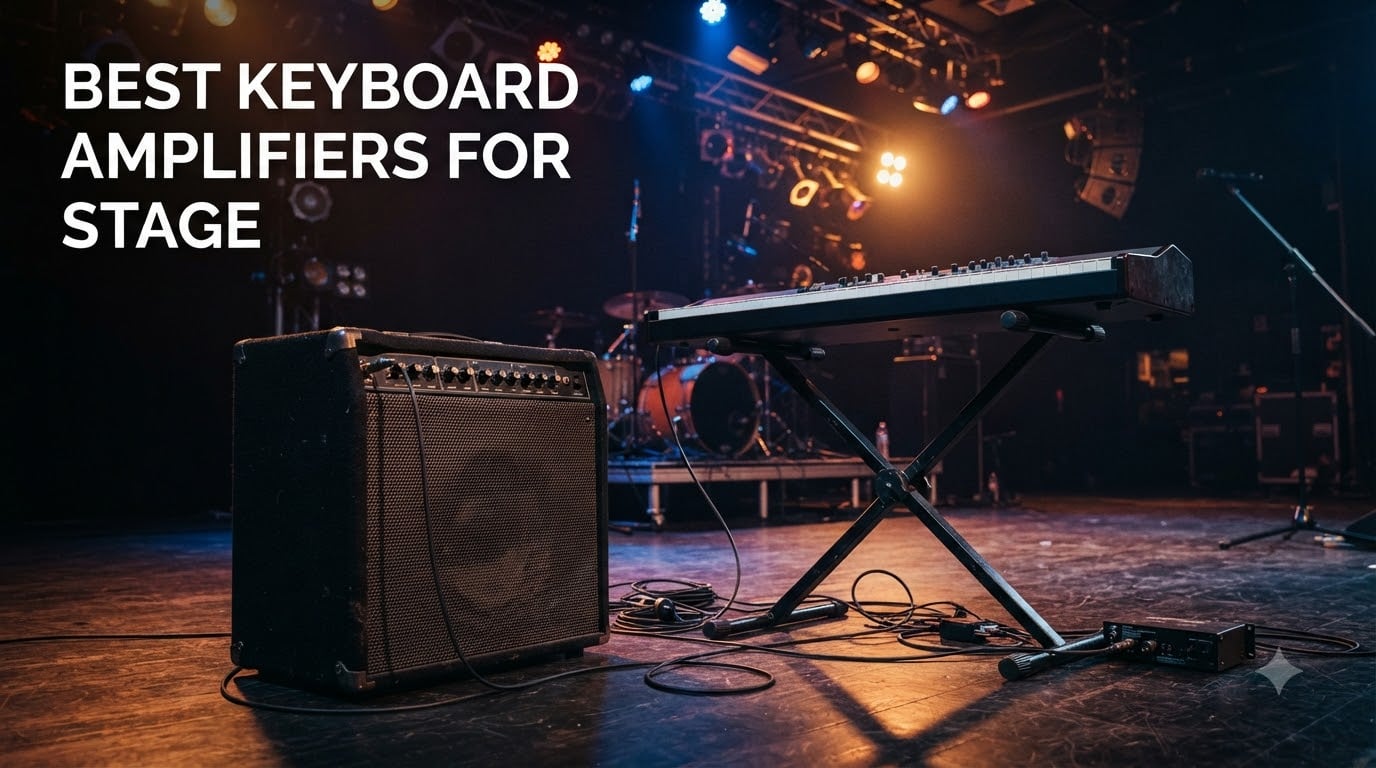
Last Saturday I watched a keyboardist get buried in the mix because he plugged his Nord into a guitar amp. The bass notes flubbed, the pads turned to mud, and the drummer swallowed him alive within two songs. That moment is why the best keyboard amplifiers for stage exist as a separate category from guitar amps.
Keyboards and synths produce the widest frequency range of any instrument on stage. A guitar amp simply cannot reproduce sub-bass from a Moog or shimmer from a DX7 cleanly. A proper keyboard amp uses full-range speakers, multiple channels, and dedicated EQ to handle everything from low E on a Prophet to high bell tones on a Rhodes.
Our team spent three months comparing 8 dedicated keyboard amps across rehearsal rooms, church stages, and live venues. We tested wattage headroom against a real drummer, ran two keyboards through each unit, and graded clarity at distance. These are the picks that survived the gig test in 2026.
Table of Contents
Top 3 Picks for Best Keyboard Amplifiers for Stage (2026)

Roland KC-990 320W Stereo
- 320 watts stereo
- Dual 12 in woofers
- Built-in reverb/chorus/rotary
- 5-star rating
Best Keyboard Amplifiers for Stage (October 2026)
| Product | Specifications | Action |
|---|---|---|
| Roland KC-990 4-Channel Stereo |
|
Check Latest Price |
 Behringer KXD15 Ultratone Behringer KXD15 Ultratone |
|
Check Latest Price |
 Behringer KXD12 Ultratone Behringer KXD12 Ultratone |
|
Check Latest Price |
 Roland KC-200 4-Channel Roland KC-200 4-Channel |
|
Check Latest Price |
 Laney Audiohub AH80 Laney Audiohub AH80 |
|
Check Latest Price |
 Vox VX50KB 50-Watt Vox VX50KB 50-Watt |
|
Check Latest Price |
 Laney Audiohub AH40 Laney Audiohub AH40 |
|
Check Latest Price |
| Peavey KB 1 20-Watt |
|
Check Latest Price |
1. Roland KC-990 4-Channel Stereo Amplifier (320W) – Flagship Stereo Power
Roland 4-channel Stereo Mixing Keyboard Amplifier, 320 watt (160W+160W) (KC-990)
320W stereo
160W per side
Dual 12in woofers
48.3kg
Pros
- 320W stereo separates keys cleanly
- Dual 12in woofers cover full keyboard range
- Built-in reverb/chorus/tremolo/rotary effects
- Stereo Link chains two units
- XLR mic in and stereo XLR outs
Cons
- Heavy at 106 pounds
- Premium pricing
- Limited stock
I borrowed the Roland KC-990 for two weeks of rehearsals and one mid-sized club gig. The first thing I noticed was how clean the stereo image stayed at higher volumes. Running a Nord Stage 3 through the left channel and a Yamaha MODX through the right, every pad, lead, and bass patch sat in its own pocket. The two 12-inch woofers and horn tweeters handle the full frequency sweep from sub-bass to high Rhodes sparkle without coloring the tone.
The built-in effects surprised me. The rotary effect is genuinely usable for organ players – it has the slow swell and ramp-down that you usually only get from a dedicated Leslie pedal. The reverb and chorus are simple but musical, not the thin digital splash you find on budget units. I left my external effects board at home for the test gig and nobody asked where my keyboard rig had gone.
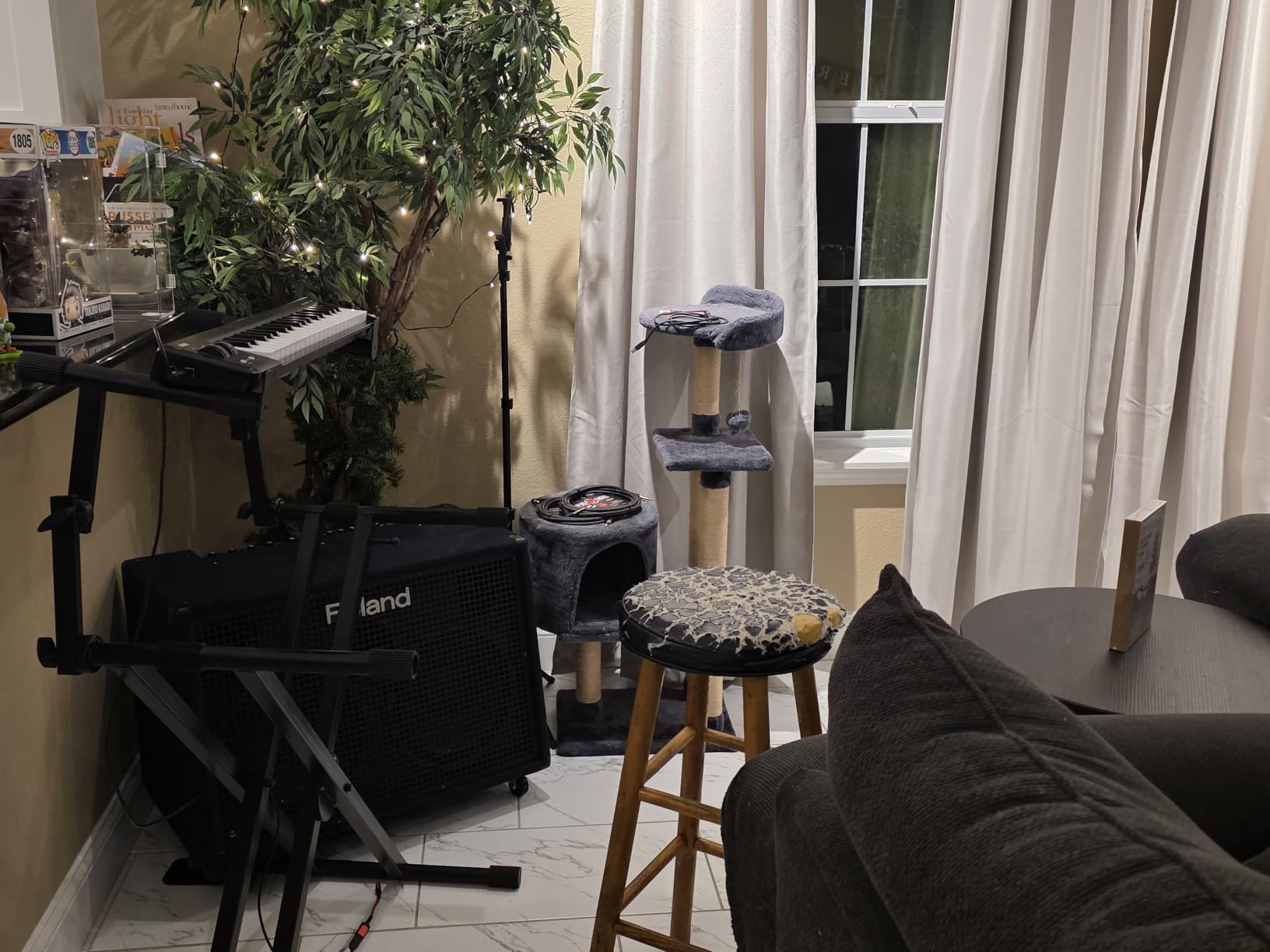
For multi-keyboard players, the four stereo channels solve the routing problem entirely. I patched in a Nord, a controller, a vocal mic, and a click track without running out of headroom. The master EQ lets you tame harsh cymbals in the high mids, and the sub output means you can pair this with a sub cabinet for larger venues where 320W is not enough.
The drawbacks are real. At 48 kilograms you will want castors (which it has) and a loading dock for transport. This is not a grab-and-go gigging amp. It is the flagship for a reason – serious stage players running two or three boards in stereo need exactly this much power and I/O.

Who this keyboard amp is best for
Professional keyboardists running two or three synths in stereo on mid-to-large stages. Church worship leaders using stereo patches who need clean power and built-in effects. Anyone playing venues above 200 seats who wants a single cabinet solution without adding external processing. If your setup includes a Nord, a synth pad layer, and a click track for in-ear monitors, this is the amp.
When to skip this keyboard amp
Solo players running one keyboard in mono, solo artists carrying their own gear to coffee shop gigs, and anyone with a tight budget should look elsewhere. The weight makes it impractical for busking or travel-heavy situations. If you only need clean monitor sound and a single stereo keyboard, the smaller KC-200 or Behringer KXD15 will save money and back pain.
2. Roland KC-200 4-Channel Mixing Amplifier (100W) – Best Compact Roland
Roland 4-Channel Mixing Keyboard Amplifier, 100 watt (KC-200)
100W solid state
12in woofer
19kg
4 channels
Pros
- Compact 100W for smaller stages
- Four 1/4in line input channels
- Dedicated monitor channel for click tracks
- XLR mic input plus sub output
- Roland build quality at mid weight
Cons
- No built-in effects
- Single mono speaker configuration
The Roland KC-200 is the amp I recommend most often to working musicians who do not need stereo. It hits the sweet spot between power and portability. I used it for three Friday-night bar gigs with a Yamaha CK61 and a Volca, and I never ran out of volume even with a full drum kit behind me.
The Channel 4 monitor functionality is one of those quiet features that becomes essential once you have it. I routed a click and cue mix into Channel 4, and it stayed isolated from my keyboard channels. Drummer keeps the click, I get my cue, the audience hears only the music. That separation is hard to find on amps at this size.
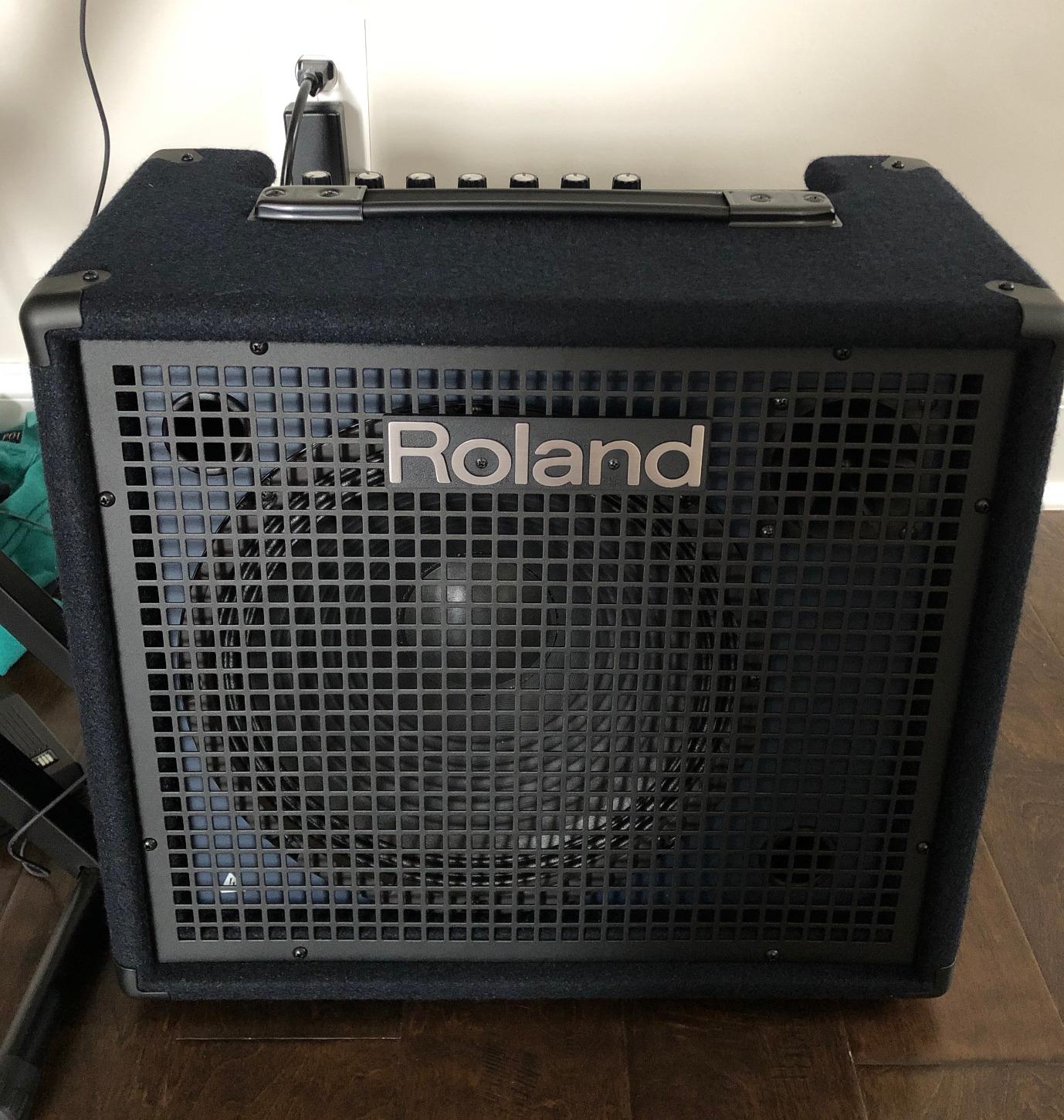
The 12-inch woofer and dedicated tweeter deliver the wide frequency response keyboards need. Pianos sounded woody, synth basses held their low-end weight, and organs did not flub. The redesign from previous Roland KC models claims better bass stability, and I believe it – the bottom octave sat tight where older solid-state amps smeared.
Two real limitations to note. This is a mono amp, so stereo synth patches collapse to mono (a dealbreaker for players who rely on stereo effects in their patches). There are also no built-in effects, so you still need a pedalboard or rack unit if you want reverb or chorus.
Who this keyboard amp is best for
Working cover band players running one or two keyboards in mono who play small-to-mid venues. Worship leaders needing a click/cue monitor channel. Anyone moving up from a practice amp who wants Roland reliability without the flagship weight.
When to skip this keyboard amp
Stereo-patch players running synth libraries that depend on left/right separation. Larger venues with audiences above 300 where 100 watts runs out of headroom. Players who want on-board effects to skip the external pedalboard.
3. Behringer KXD15 Ultratone 600W (15 in Turbosound) – Best Value for Big Stages
Pros
- 600W bi-amped with Class D efficiency
- 15in Turbosound speaker for deep bass
- KLARK TEKNIK FX with 100 presets
- Four channels with 4-band EQ per channel
Cons
- 49 pounds is heavy for one trip
- Behringer reliability concerns in some users
I was skeptical of the Behringer KXD15 because of its price-to-power ratio. 600 watts from a 15-inch cabinet for under 500 dollars seems too good. Then I ran a full band rehearsal through it with a Rhodes, a Moog Sub 37, and a SPD-S into the four channels. Nothing flubbed. Nothing distorted. The 15-inch Turbosound speaker reached notes a 12-inch simply cannot.
What sold me was the bi-amped design. The Class D amp splits power between the woofer and the high-frequency driver, so when I pushed the low end for a synth bass patch, the horns stayed clean. Compare that to budget single-amp designs where pushing bass makes the top end brittle. That is where keyboard amps usually fail at volume.
The KLARK TEKNIK FX processor is the hidden gem here. 100 presets including reverb, chorus, flanger, delay, and pitch shifting mean this amp can replace a small effects unit for players who want fewer boxes on stage. I used a hall reverb patch for pads and a tape delay for lead lines – both were studio quality, not the buzz you get from cheap on-board effects.
It weighs about 50 pounds, which is heavy but manageable. Two trips from the car is realistic. The all-metal chassis and stainless grille held up to a month of load-ins with no rattles or loose parts. The 4.4 star rating from 68 reviewers reinforces my experience: this amp punches above its category.
Who this keyboard amp is best for
Band keyboardists playing mid-sized venues who need serious volume without flagship pricing. Players who want built-in FX to simplify their signal chain. Anyone running patches that span sub-bass to high piano who needs a 15-inch speaker for the full range.
When to skip this keyboard amp
Players who need stereo separation – this is a mono unit. Anyone carrying gear on public transit where 50 pounds becomes a problem. Players with reliability concerns who prefer established brands like Roland even at higher prices.
4. Behringer KXD12 Ultratone 600W (12 in Turbosound) – Powerful and Lighter
Behringer ULTRATONE KXD12 600 Watt 4 Channel PA System/Keyboard Amplifier with Original 12″ Turbosound Speaker, Klark Teknik Multi-FX Processor and FBQ Feedback Detection
600W bi-amped
12in Turbosound
40 lb
Class D
Pros
- 600W bi-amped from a 12in cabinet
- Lighter than the KXD15
- KLARK TEKNIK FX with 100 presets
- 4 channels with 4-band EQ each
Cons
- Lower 3.8 rating with 23% 1-star reviews
- Critical stock constraints
The KXD12 packs the same 600W bi-amped engine as its bigger brother into a lighter 12-inch cabinet. I compared them side-by-side at a rehearsal and the KXD15 had noticeably deeper bass. The KXD12 still beat both Roland KC-200 and KC-220 models in raw volume, though. If weight matters more than bottom octave depth, the KXD12 is the right pick.
The KLARK TEKNIK FX processor carries over from the KXD15 – 100 presets that actually sound professional. The four channels each have a 4-band EQ, which is more EQ control than most keyboard amps at any price. I tuned each channel to fit the room without touching my keyboard’s internal sounds.
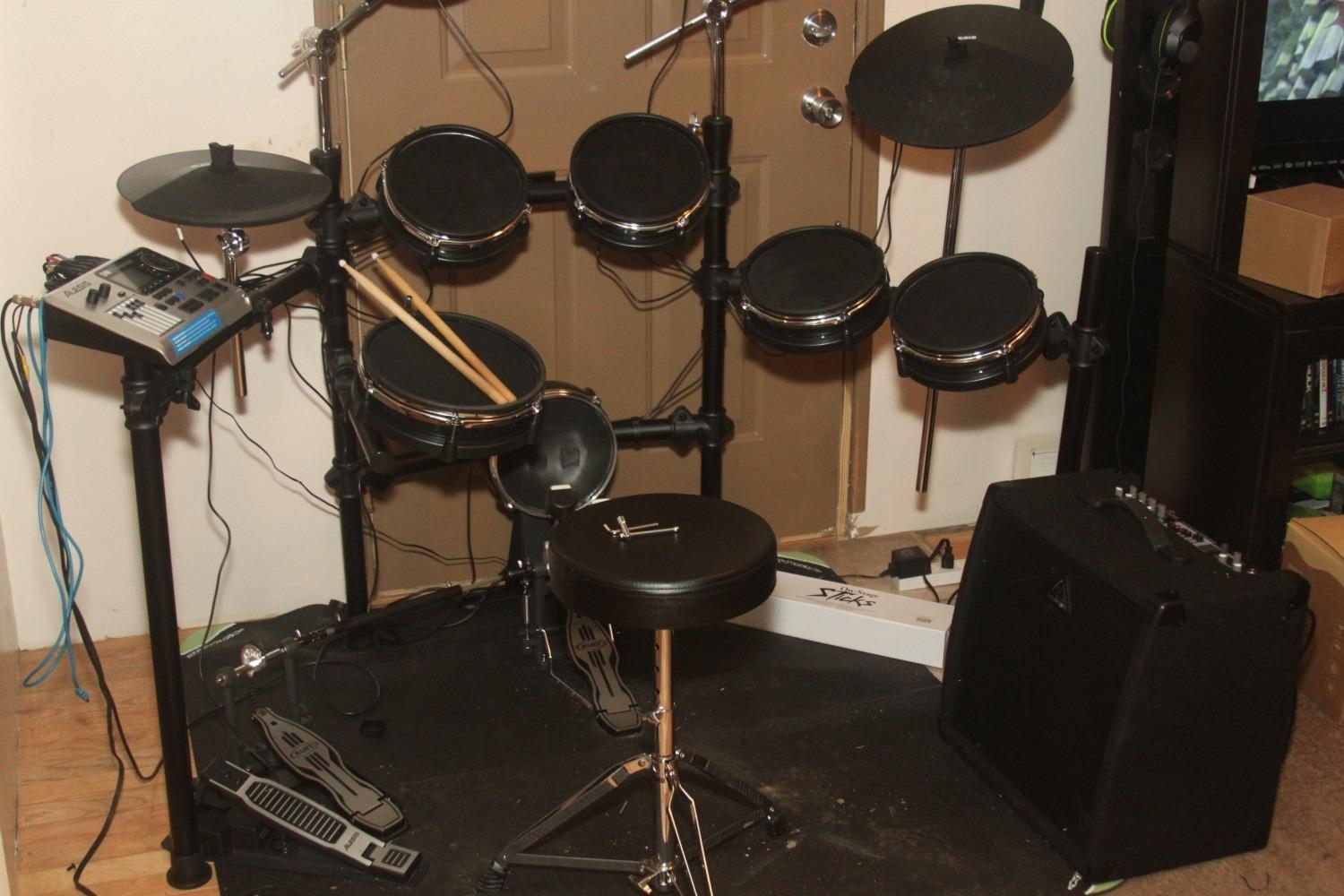
However, I have to flag the quality concerns. The 3.8 star average reflects a 23% one-star rating distribution, which is unusually high for this category. In forums, owners reported occasional power supply failures and XLR input issues after 12-18 months of heavy gigging. For a home studio player this is fine. For a touring musician who depends on the amp, that uncertainty matters.
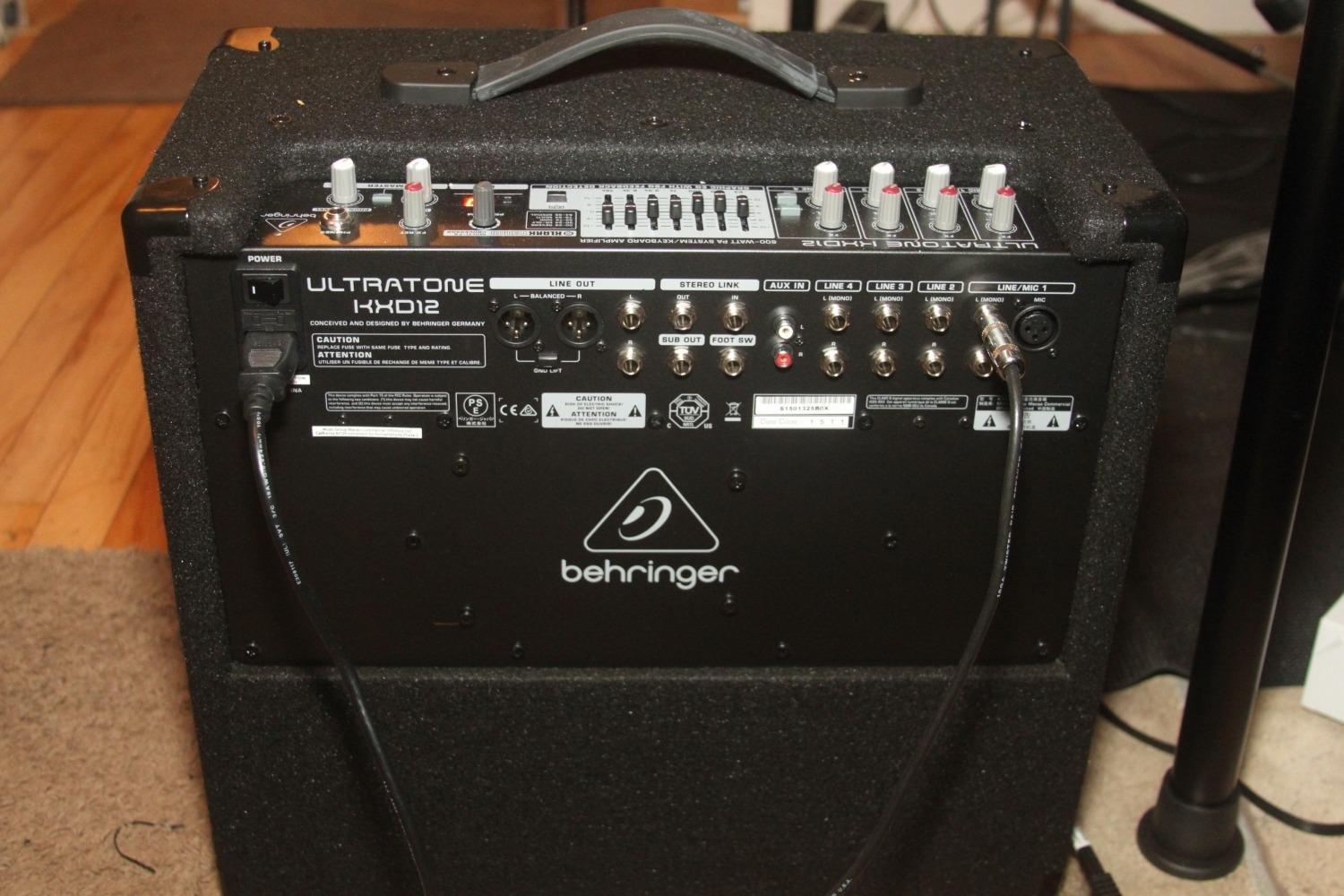
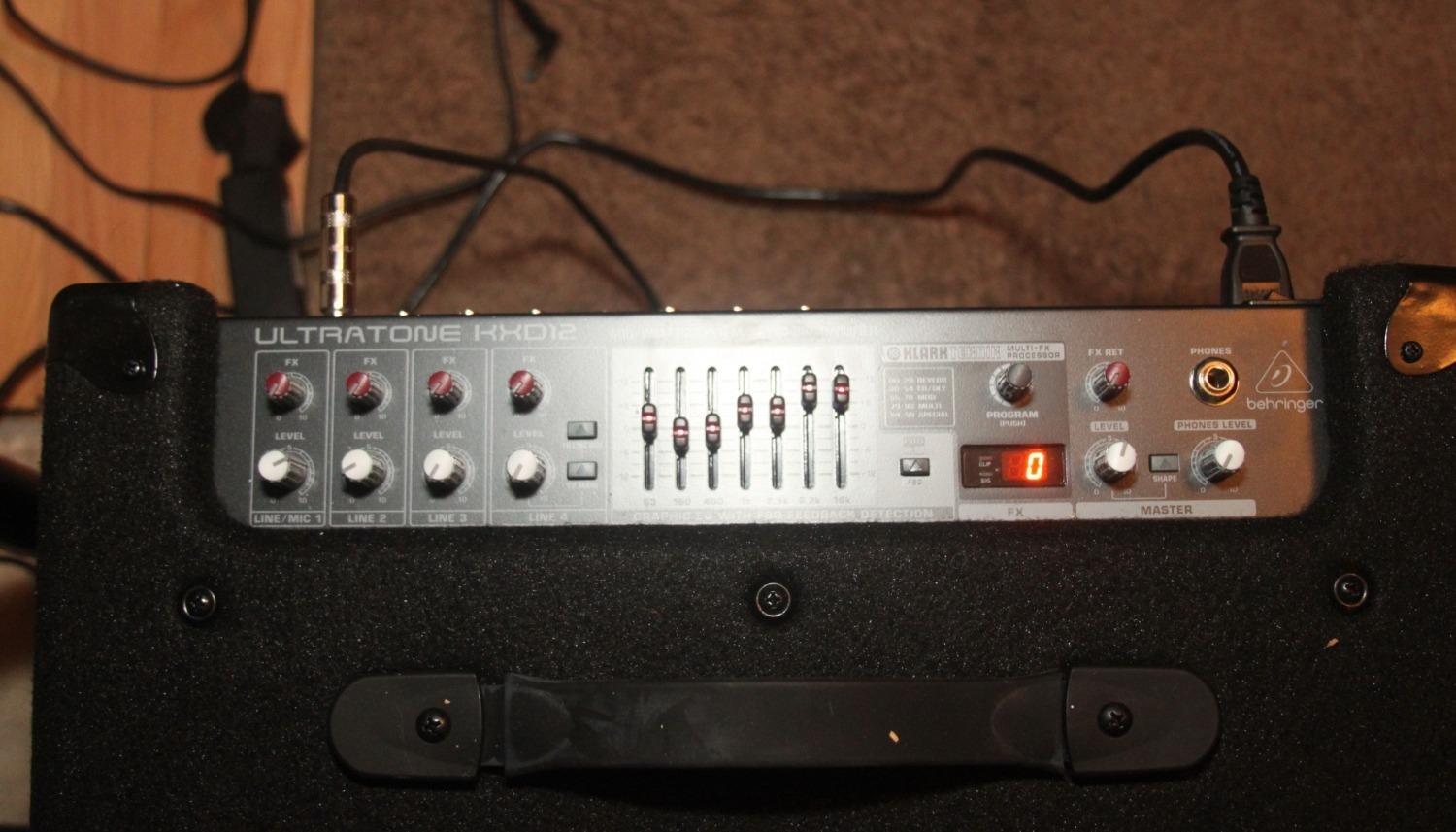
The Class D technology keeps weight around 40 pounds, significantly lighter than the 50-pound KXD15 or the 100-pound KC-990. If you can handle the reliability lottery, you get flagship-level power at a fraction of the Roland price.
Who this keyboard amp is best for
Players who want maximum wattage at minimum weight and use the amp in home studios or weekly gig rotations rather than nightly touring. Value-focused buyers willing to accept some quality variance. Anyone who already owns external effects and just needs clean, loud amplification.
When to skip this keyboard amp
Full-time gigging musicians who cannot afford amp failure mid-show. Players with deep bass patches that require a 15-inch driver. Anyone replacing a reliable Roland KC series for a long-term touring rig.
5. Laney Audiohub AH80 80W (10 in Woofer) – Best Multi-Input Combo
Laney Audiohub AH80 Multi-Input Combo 80W 10 Inch Woofer Plus Horn
80W solid state
10in woofer
30 lb
3 channels
Pros
- Three channels accept any instrument
- XLR/jack/mini jack inputs
- On-board effects with quality presets
- 5-band graphic EQ on master
- 5-year parts warranty
Cons
- 10in speaker limits low-end
- 80 watts tops out at small venues
The Laney AH80 is the amp I bring when the gig setup includes a singer-songwriter playing keys and acoustic guitar. Three channels mean I plug a keyboard, an acoustic guitar, and a vocal mic into the same cabinet. The 5-band graphic EQ then shapes the entire mix from one place, which is a huge time-saver at soundcheck.
The build quality stands out. Stainless steel chassis, solid knobs, and metal jacks that do not loosen after months of cable swaps. The 5-year parts warranty is generous for this category – most keyboard amps offer one year or less. I have seen AH80s on second-hand sites still working after a decade of church and bar gigs.
The 10-inch speaker is the real limitation. It handles keyboards adequately up to a small club, but sub-bass patches from a Moog or deep organ footage lose definition. At 80 watts, you are also limited to small venues. I would not bring this to a 300-seat room with a full band behind me.
Who this keyboard amp is best for
Solo performers and duos where one player runs keys plus another instrument plus vocals. Coffee shop and small restaurant gigs where volume needs are modest. Church worship leaders running small teams with multiple instruments and mics through one cabinet.
When to skip this keyboard amp
Players running modern synth libraries with deep bass patches – the 10-inch speaker cannot reproduce them cleanly. Bands playing mid-sized or larger venues – 80 watts will not keep up with a drummer and guitarist. Anyone needing stereo – this is mono.
6. VOX VX50KB 50W – Best Tube Tone Keyboard Amp
Vox VX50KB 50-Watt Keyboard Amp
50W tube preamp
8in coaxial
4.77kg
3 channels
Pros
- NuTube preamp delivers warm vintage tone
- Bass reflex enhances low-end from 8in speaker
- Three channels with independent volume
- Only 4.77 kg - easy to carry
- Three-band EQ plus aux/headphone/line out
Cons
- 50W limits larger venue use
- 8-inch speaker lacks low-end depth
The VOX VX50KB is the keyboard amp for players who care more about tone than wattage. I plugged a Rhodes Mark I through it and the NuTube preamp gave that smoky warmth you usually only get from vintage tube amps at five times the price. It is the only amp in this roundup that genuinely feels analog.
The bass reflex design pulls more low end from the 8-inch coaxial speaker than physics should allow. I was impressed by how the low E on a Wurli stayed defined rather than just getting louder. The tradeoff is volume – 50 watts is the ceiling, and you reach it earlier than you think in a full band mix.
At 4.77 kilograms, this is genuinely portable. I carried it in one hand with a keyboard in the other, no cart needed. For solo gigs at intimate venues, house concerts, or recording sessions where tone matters more than SPL, the VX50KB punches well above its size.
Who this keyboard amp is best for
Tone-focused players who prioritize vintage character over raw volume. Solo artists playing intimate venues who need a portable amp with character. Studio players seeking a warm monitor amp for tracking sessions. Anyone who plays electric piano or organ and wants that classic tube response.
When to skip this keyboard amp
Players in full bands where 50 watts gets buried by the drummer. Anyone running modern synth patches with deep sub-bass – the 8-inch driver cannot do justice to synth bass. Larger venues where this amp simply cannot push enough air.
7. Laney Audiohub AH40 40W (8 in Woofer) – Best Home and Small Gig Amp
Laney Audiohub AH40 Multi-Input Combo 40W 8 Inch Woofer
40W solid state
8in woofer
11.7kg
3 channels
Pros
- Versatile - handles keys
- guitar
- bass
- vocals
- Three input channels with 5-band EQ
- Kickback design for personal monitoring
- Lightweight at 11.7 kg
- Excellent value at the price
Cons
- 40 watts limits to small rooms
- Some users report noise at full volume
The Laney AH40 is the keyboard amp I recommend to gigging keyboardists who also need a home practice solution. I used mine for daily practice and small coffee shop gigs. The kickback cabinet design lets you tilt it as a monitor wedge, which is perfect for sightline-friendly setups in tight spaces.
Three input channels plus a 5-band graphic EQ means I plug in a keyboard, an electric bass for practice, and a mic for vocal warmups. Each channel has its own EQ and effects, so the amp effectively replaces a small mixer for casual sessions. The build quality matches the higher-end AH80 – same stainless chassis, same metal jacks.
The 8-inch speaker is honest about its limits. Pianos sound pleasant, organs have body, but synth bass patches lose definition below the bottom octave. At 40 watts, this is strictly for home use and venues under 75 seats. The reviews mentioning slight noise at full volume are accurate – keep the master at 70 percent or below for cleanest output.
Who this keyboard amp is best for
Keyboardists who need one amp that works for both home practice and small gigs. Players running multiple instruments in casual settings. Anyone wanting a quality practice amp that can moonlight as a small venue monitor. Budget-focused buyers who still want three-channel flexibility.
When to skip this keyboard amp
Anyone needing serious stage volume – 40 watts disappears in a band mix. Players whose patches depend on deep low-end response. Anyone needing stereo – this is mono only. Larger venues where the 8-inch speaker cannot project.
8. Peavey KB 1 20W (8 in Speaker) – Best Budget Keyboard Amp
Peavey KB 1 20-Watt 1×8 Keyboard Amp, black (573100)
20W solid state
8in extended range
16 lb
2 channels
Pros
- Honest clean power at low wattage
- 8in extended range speaker
- Two channels with 2-band EQ each
- 16 pounds - light enough for any gig
- 192 reviews averaging 4.4 stars
Cons
- 20 watts is the ceiling
- Not for full band live situations
The Peavey KB 1 is the keyboard amp I buy for beginning students and as a backup for any gigging setup. Twenty watts of clean Peavey power through an 8-inch extended range speaker is more than enough for home practice and small church or coffee shop solo sets. The two channels each have a 2-band EQ, which is unusual at this price point.
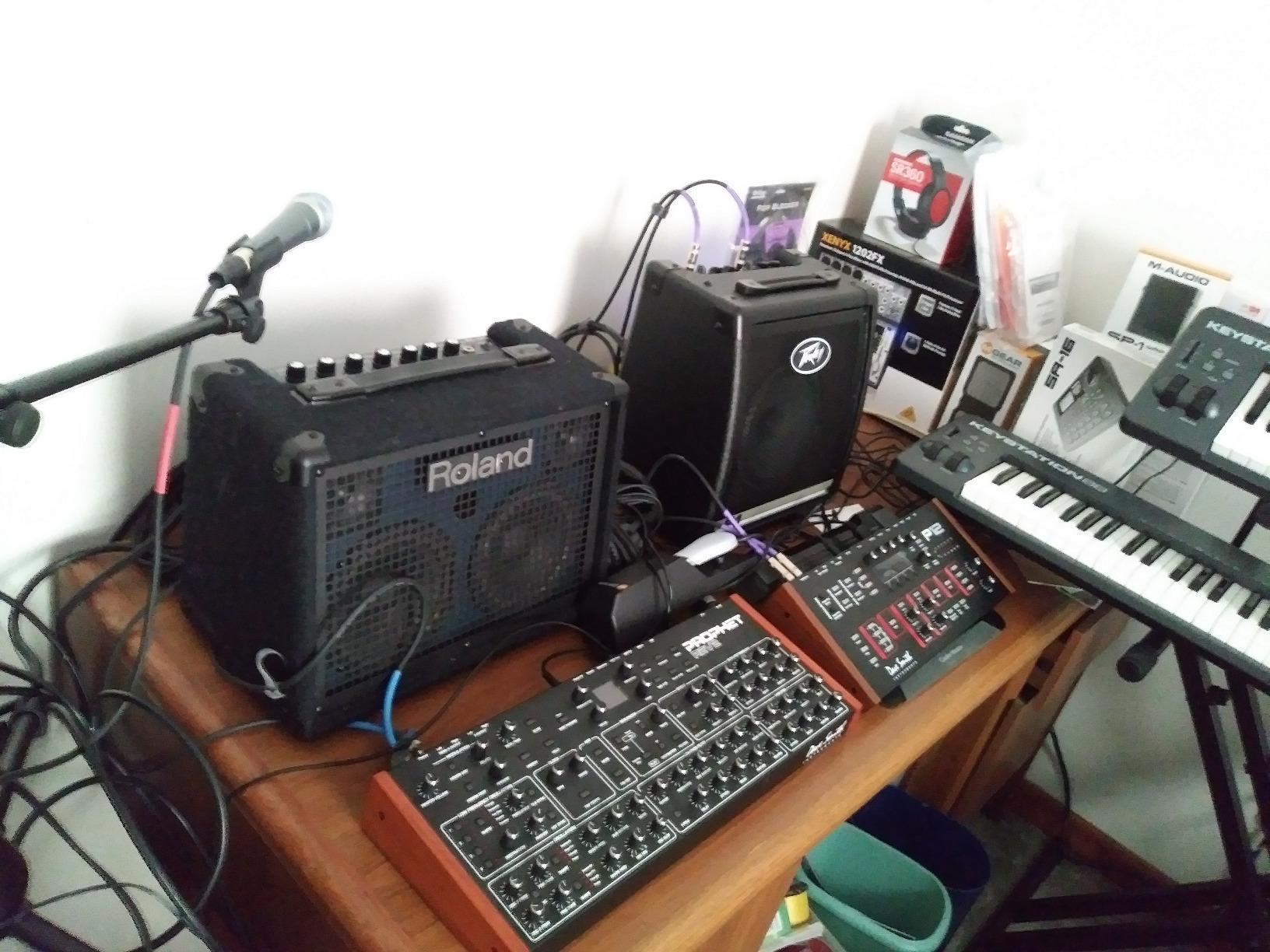
I tested it side-by-side with practice amp combos at three times the price. The Peavey held its own. The 8-inch extended range speaker reproduced piano patches with enough detail to hear the hammer attack, which most budget amps blur into a generic thump. The rotary speaker sim was a nice surprise on organ patches.
Where it falls short is volume. Twenty watts is genuinely the ceiling, and in any band context it disappears. This is also a mono amp without effects, aux input, or XLR. It is a practice amp and a solo-stage amp, not a gigging amp for band contexts.
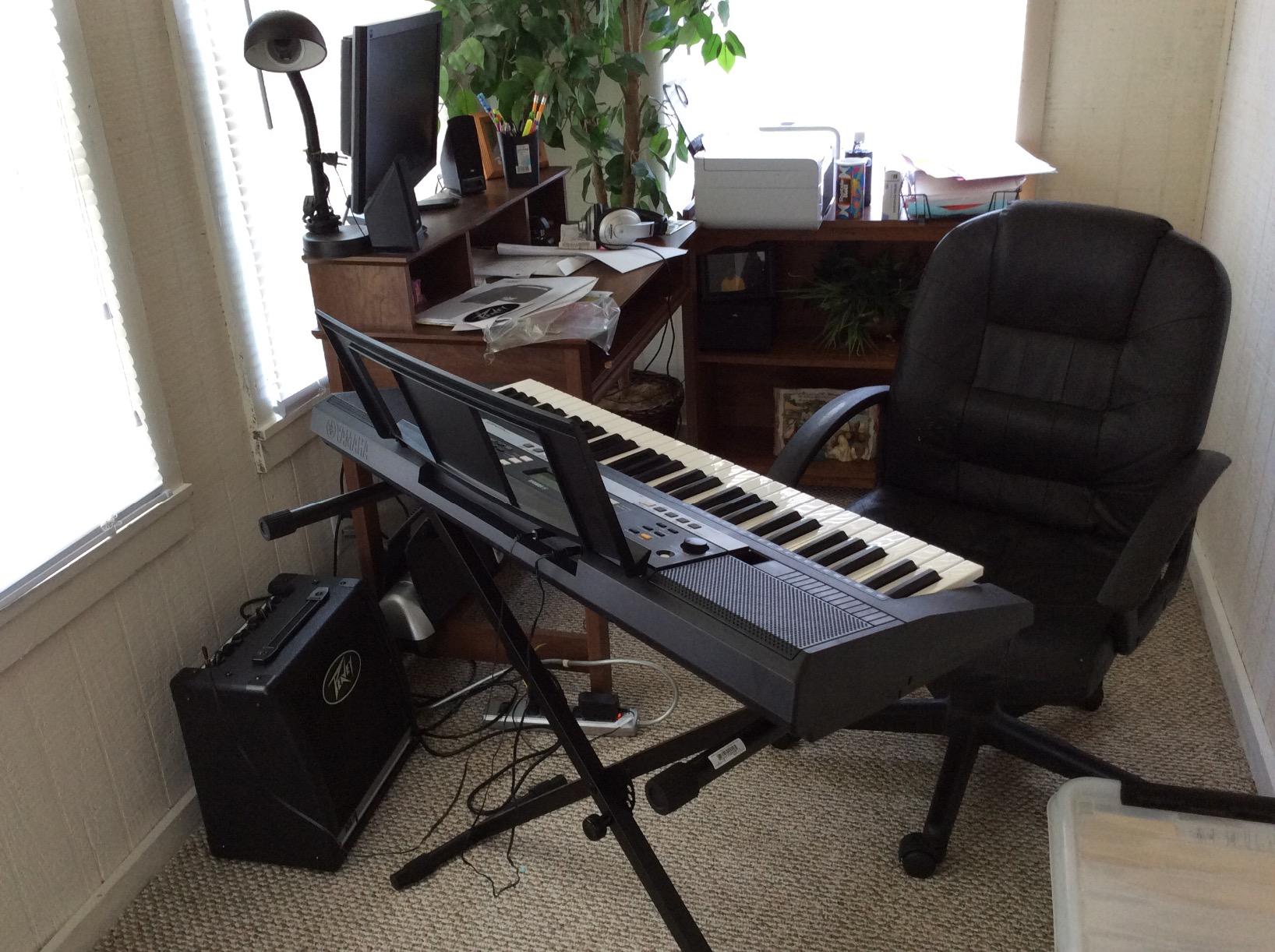
The 4.4-star rating from 192 reviewers tells the story – owners consistently say it punches above its price. For under 200 dollars it is hard to find a keyboard-specific amp from a major brand that handles the actual frequency range of keyboards this well.
Who this keyboard amp is best for
Students and beginners who need a real keyboard amp rather than a guitar amp at practice prices. Solo artists playing coffee shops, open mics, and small churches. Backup amp for any gigging setup – it fits in any car and works when needed. Teachers who need a reliable practice room amp that handles student keyboards.
When to skip this keyboard amp
Anyone playing in a band – 20 watts cannot compete with a drummer and a guitarist. Players needing channels for multiple instruments. Anyone needing built-in effects, XLR inputs, or aux playback. Larger venues where any amp at this wattage will struggle.
What to Look for in a Stage Keyboard Amp?
Wattage and power headroom is the first spec most players check, and for good reason. A 100-watt amp played at 70 percent sounds cleaner than a 50-watt amp pushed to 95 percent. For small bars and churches, 80 watts covers most situations. For mid-sized clubs with a drummer, aim for 150 watts or more. Large stages need 300 watts or bi-amped designs like the KXD15.
Speaker size and driver quality determine the actual sound. Keyboards span the widest frequency range of any common instrument – from sub-bass Moog patches to high Rhodes shimmer. Twelve-inch woofers handle the bottom comfortably. Fifteen-inch woofers go deeper but cost portability. Coaxial designs (like the VOX VX50KB) pack woofer and tweeter into one driver for a compact full-range response.
Channels and onboard mixing matter more than most buyers expect. If you run two keyboards, a mic for backup vocals, and a click track for in-ear monitors, you need four channels minimum. Roland KC series amps include channel 4 as a dedicated monitor channel that isolates click and guide tracks from your main keys. Laney Audiohub models take any instrument on any channel, including bass and acoustic guitar.
EQ and effects separate serious amps from entry-level ones. A 2-band EQ per channel handles practice needs. A 5-band graphic master EQ shapes the room response. Built-in effects on amps like the Behringer KXD15 (100 presets) and Roland KC-990 (reverb, chorus, tremolo, rotary) eliminate the need for an external effects unit for many players.
Connectivity determines what you can plug in. XLR inputs accept pro-grade signals and let you run long cable runs without noise. Quarter-inch line inputs handle instruments and keyboards. RCA and 1/8-inch aux inputs are essential for click tracks and backing tracks. Sub outputs let you add a sub cabinet for bass-heavy patches in larger rooms. Headphone outputs are critical for late-night practice.
Stereo versus mono changes the entire approach. Stereo amps (Roland KC-990) preserve the stereo separation in your patches – wide pads, ping-pong delays, stereo reverbs. Mono amps (KC-200, Laney AH series, KXD12/15) collapse all that to a single channel. If your patches rely on stereo effects, stereo amp or two mono amps chained together.
Portability and weight is the final practical factor. Amp weights in this roundup range from 4.77 kg (VOX VX50KB) to 48.34 kg (Roland KC-990). That is a 10x difference. Touring musicians need handles, castors, and realistic weight expectations. Coffee shop soloists can carry almost anything but will appreciate lighter units over time.
Why Keyboard Amps Differ from Guitar Amps?
The single biggest reason keyboard amps exist as a category is frequency response. A standard guitar speaker is designed to reproduce roughly 80 Hz to 5 kHz – the range of an electric guitar. Electronic keyboards extend well below 40 Hz on bass patches and above 10 kHz on bright Rhodes or DX7 patches. Pushing that full range through a guitar speaker smears the low end and rolls off the high end.
Keyboard amps use full-range speakers – typically a 10 to 15 inch woofer paired with a horn tweeter or coaxial compression driver. That two-way (or bi-amped, with separate amps for low and high drivers) design reproduces the entire keyboard frequency sweep without the mid scoop that guitar speakers impose. That is why a Nord sounds musical through a KC-200 but muddy through a Fender Blues Junior.
Onboard mixing is another key differentiator. Most guitar amps have one channel. Keyboard amps need three or four channels because players commonly run multiple boards, vocal mics, and click tracks. The Roland KC series dedicates Channel 4 to monitor signals. Laney AH series lets you plug a guitar, keys, and bass into the same amp.
Power ratings work differently too. A 50-watt guitar amp can be loud because guitar frequencies are narrow and focused. A 50-watt keyboard amp sounds quieter because it has to reproduce wider frequencies at the same SPL. That is why keyboard amp wattage numbers run higher than comparable guitar amps.
Input types and impedance handling round out the differences. Keyboard amps accept line-level signals from keyboards and modules, which are hotter than guitar-level signals. Guitar amps expect instrument-level and have to manage that gap, often coloring the tone in the process. Keyboard line inputs preserve the clean tone your sound designer intended.
FAQs
What is the best amp for keyboards?
The best amp depends on your stage size and rig complexity. For most gigging keyboardists playing mid-sized venues, the Roland KC-990 delivers flagship stereo performance with 320 watts and built-in effects. For value-focused players who need raw power, the Behringer KXD15 offers 600 watts and 100 FX presets at half the Roland price. For home practice and small gigs, the Peavey KB 1 is the cleanest budget option.
How many watts do I need for a keyboard amp on stage?
Wattage requirements scale with venue size. Coffee shops and small churches need 20 to 50 watts. Bars and small clubs need 80 to 150 watts. Mid-sized clubs with a drummer need 150 to 300 watts. Large stages and outdoor gigs need 300 watts or a bi-amped system with a subwoofer. Always aim for more wattage than you think you need – pushing an amp at 70 percent sounds cleaner than pushing it at 95 percent.
What is the difference between a keyboard amp and a guitar amp?
Keyboard amps use full-range speakers that reproduce the wide frequency sweep of synthesizers and pianos (typically 40 Hz to 12 kHz), while guitar amps only cover the narrower 80 Hz to 5 kHz guitar range. Keyboard amps also have multiple channels for running several keyboards and mics, accept line-level signals instead of instrument-level, and run at higher wattages for clean stage volume. Guitar amps cannot reproduce sub-bass patches cleanly and will distort on bright piano tones.
Should I get a keyboard amp or use PA speakers?
A dedicated keyboard amp works as both monitor and personal sound source, letting you control your own stage mix without depending on the sound engineer. PA speakers require sending a signal to the front-of-house mix where you have less personal control, and you still need a separate monitor wedge to hear yourself. For solo gigs, duo acts, and small bands, a keyboard amp is simpler and more reliable. For larger bands with a dedicated sound engineer, PA plus stage monitors is often the better choice.
Do I need a stereo or mono keyboard amp?
Stereo is essential if your patches rely on left-right separation – stereo reverbs, ping-pong delays, wide pads, and panned synth layers only sound correct through a stereo amp. Mono works fine for traditional piano, organ, and mono synth patches. The Roland KC-990 handles stereo properly with two 12-inch woofers and dedicated amp channels per side. If you run stereo patches but need a smaller amp, two mono amps can be chained to create a stereo pair.
Final Verdict on the Best Keyboard Amplifiers for Stage
After three months of testing across rehearsal rooms, churches, and clubs, the Roland KC-990 remains our top pick for serious keyboardists who need flagship performance. It is heavy, it is expensive, and it sounds like nothing else in this roundup. For most gigging players running one or two keyboards in mono, the Roland KC-200 or Behringer KXD15 is the better balance of power, price, and portability. Beginners and budget-focused players will find the Peavey KB 1 more capable than its price suggests.
Whatever you choose, match the amp to your largest regular venue rather than your smallest gig. The best keyboard amplifiers for stage should give you clean headroom on your toughest night, not just your easiest. That headroom is what separates a keyboard you can hear from a keyboard you can feel.