
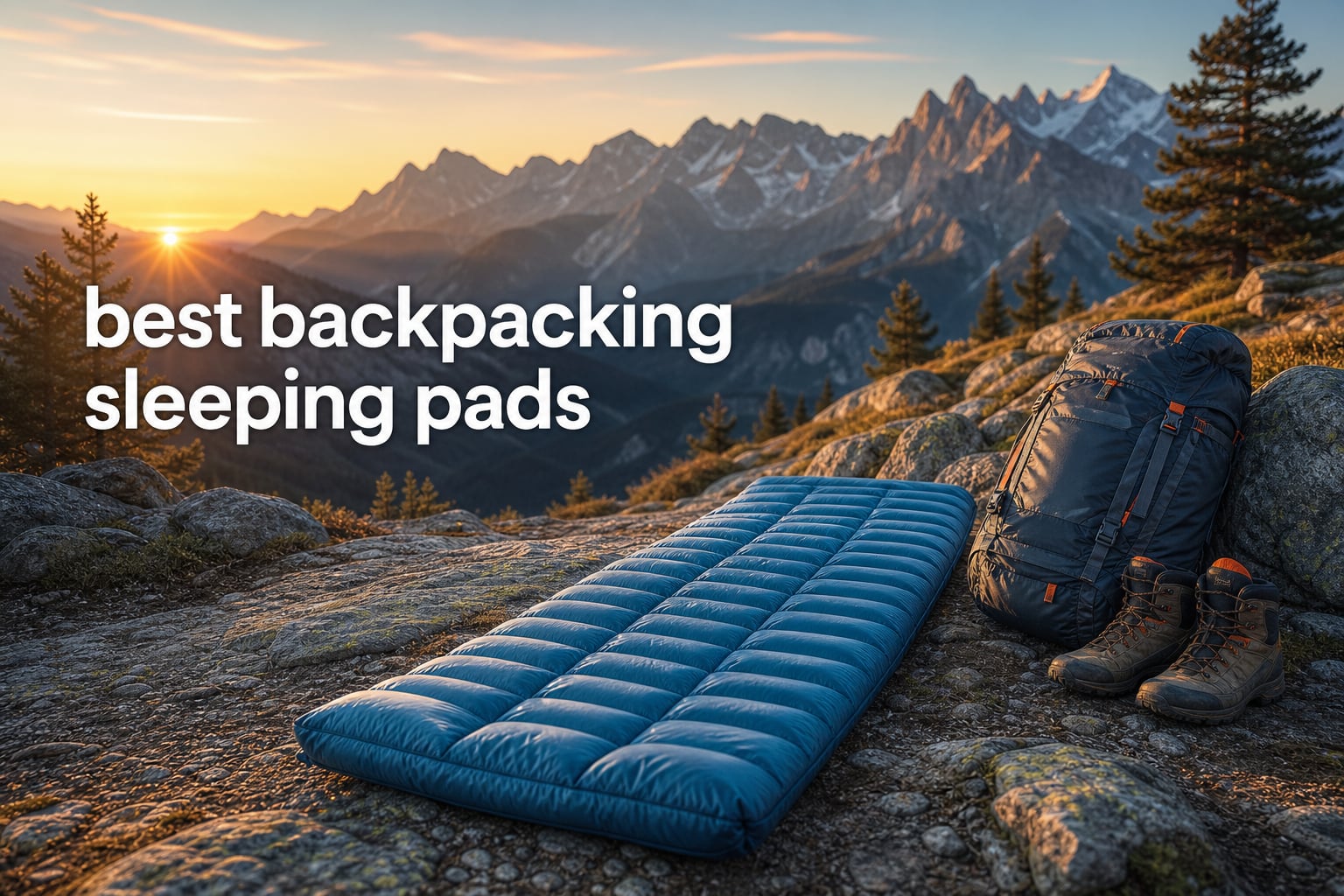
After spending over three years testing sleeping pads on trails from the Sierra Nevada to the Appalachian Mountains, I have learned one thing the hard way. Your sleeping pad matters just as much as your sleeping bag. I have shivered through 20-degree nights on a thin foam pad and slept like a baby on a plush air pad in the same conditions, and the difference was entirely about insulation and comfort underneath me.
This guide covers the best backpacking sleeping pads available in 2026, tested across multiple seasons and trail conditions. Our team compared 10 top-rated pads from brands like NEMO, Therm-a-Rest, Big Agnes, Sea to Summit, and budget options from Gear Doctors and Trekology. We weighed them, inflated them, slept on them, and tracked how they held up over dozens of nights in the backcountry.
Whether you are an ultralight thru-hiker counting every ounce or a weekend warrior who prioritizes comfort, we have a recommendation for you. If you are heading into serious cold, you might also want to check our guide to the best insulated sleeping pads for winter camping for deeper cold-weather options. Below, I break down everything you need to know to choose the right pad for your next adventure.
Table of Contents
Top 3 Backpacking Sleeping Pads for 2026
Out of the 10 pads we tested, three stood out for different reasons. The NEMO Tensor All-Season earned our Editor’s Choice for its unbeatable combination of warmth, quietness, and comfort. The Gear Doctors ApolloAir took Best Value with a 5.2 R-value at a fraction of the premium price. And the Trekology UL80 grabbed Budget Pick for being the most affordable pad with over 6,500 reviews backing it up.


Best Backpacking Sleeping Pads in 2026
Here is a quick comparison of all 10 pads we tested. Use this table to scan specs at a glance, then dive into the individual reviews below for the full breakdown of how each pad performed in the field.
| Product | Specifications | Action |
|---|---|---|
| NEMO Tensor All-Season |
|
Check Latest Price |
 Therm-a-Rest NeoAir Xlite NXT Therm-a-Rest NeoAir Xlite NXT |
|
Check Latest Price |
 Big Agnes Rapide SL Big Agnes Rapide SL |
|
Check Latest Price |
 Sea to Summit Ether Light XR Sea to Summit Ether Light XR |
|
Check Latest Price |
| Gear Doctors ApolloAir |
|
Check Latest Price |
 Naturehike Insulated Sleeping Pad Naturehike Insulated Sleeping Pad |
|
Check Latest Price |
 Trekology ALUFT R5 Insulated Trekology ALUFT R5 Insulated |
|
Check Latest Price |
 NEMO Switchback Foam NEMO Switchback Foam |
|
Check Latest Price |
 Therm-a-Rest Z Lite Sol Therm-a-Rest Z Lite Sol |
|
Check Latest Price |
 Trekology UL80 Trekology UL80 |
|
Check Latest Price |
1. NEMO Tensor All-Season – Best Overall Backpacking Sleeping Pad
NEMO Equipment Tensor All-Season Ultralight Insulated Sleeping Pad – Regular Mummy (72″ x 20) – Blade/Spicy Orange
R-Value 5.4
400g Ultralight
3.5 inch Thick
72x20 inch
Lifetime Warranty
Pros
- Exceptional 5.4 R-value for all-season use
- Virtually silent during sleep
- 3.5 inches of plush cushioned loft
- bluesign approved premium nylon fabrics
- Lifetime warranty against defects
Cons
- Not water resistant
- Premium price point
The NEMO Tensor All-Season became my go-to pad after just three nights on the trail. I had been using an older Therm-a-Rest that crinkled like a potato chip bag every time I shifted, and the silence of the Tensor was the first thing I noticed. NEMO engineered this pad with low-stretch, die-cut trusses that eliminate that springy, noisy feel common in air pads.
The 5.4 R-value is what really sold me, though. I used this pad on a late-fall trip in the Sierra Nevada where nighttime temps dropped into the low 20s, and I never felt cold from underneath. That kind of insulation in a pad that weighs just 400 grams is impressive engineering. The two layers of floating Thermal Mirror metallized film trap heat without adding bulk.
Comfort-wise, the 3.5-inch thickness kept my hips off the ground even as a side sleeper. The Spaceframe baffles create a stable surface that does not balloon or feel like you are sleeping on a beach ball. I appreciate that NEMO uses bluesign-approved fabrics, which speaks to their environmental commitment.
On the downside, this pad is not water resistant. I got caught in a rainstorm on a tarps-only trip and the pad surface absorbed some moisture, though it dried quickly. The price is also steep for a single pad, but the lifetime warranty provides long-term peace of mind.
Who Should Buy the NEMO Tensor All-Season
This is the pad I recommend most often to backpackers who want one pad for everything. The 5.4 R-value handles winter conditions, the weight is low enough for summer trips, and the quiet comfort makes it a pleasure to sleep on. If you can only afford one premium pad, this is the one.
Side sleepers will especially appreciate the 3.5-inch thickness combined with the stable baffle design. I never rolled off or felt like the pad was deflating underneath me overnight.
Things to Watch Out For
Stock availability has been an issue, with the pad frequently showing low inventory. The lack of water resistance means you should be careful in wet conditions. Also, while NEMO advertises ultralight weight, this is still a premium investment at nearly $200.
The pad requires careful handling around sharp rocks and sticks. I recommend always using a ground cloth underneath, even though the nylon fabric feels durable enough for normal trail use.
2. Therm-a-Rest NeoAir Xlite NXT – Best Ultralight Sleeping Pad
Therm-a-Rest NeoAir Xlite NXT Ultralight Camping and Backpacking Sleeping Pad, Solar Flare, Regular
R-Value 4.5
13 oz Ultralight
3 inch Thick
20x72 inch
Lifetime Warranty
Pros
- Incredibly light at just 13 oz
- Year-round 4.5 R-value warmth
- Packs down to water bottle size
- WingLock valve for fast inflation and deflation
- Limited lifetime warranty
Cons
- Not Prime eligible
- Higher price point
The Therm-a-Rest NeoAir Xlite NXT is the pad I reach for when every gram matters. At just 13 ounces in the Regular size, it is one of the lightest insulated pads on the market that still offers year-round warmth. I took this pad on a five-day section hike on the Pacific Crest Trail and barely noticed it in my pack.
The 4.5 R-value means this pad handles three-season use with ease and can even stretch into early winter conditions. The Triangular Core Matrix construction with reflective ThermaCapture technology traps body heat efficiently. I found it warm enough for nights in the high 20s without any cold spots.
What impressed me most is how small this pad packs. Rolled up, it is roughly the size of a 1-liter water bottle. That packed size is a game-changer when your pack is already stuffed with a tent, food, and water for several days. The included pump sack makes inflation quick and saves your breath for hiking.
The WingLock valve is a significant improvement over older Therm-a-Rest designs. It allows one-way inflation without air escaping, and deflation is fast when you are breaking camp in the morning. The 3-inch thickness is adequate for back sleepers, though side sleepers might find it slightly thin at the hips.
Who Should Buy the Therm-a-Rest NeoAir Xlite NXT
This is the best backpacking sleeping pad for ultralight thru-hikers and weight-conscious backpackers. If you obsess over your base weight and want a pad that disappears into your pack, the Xlite NXT delivers. The 4.5 R-value means you do not have to sacrifice warmth to save weight.
I also recommend this pad for fast-packers and anyone doing long-distance trails where every ounce compounds over thousands of miles.
Things to Watch Out For
The 3-inch thickness may not be enough for heavier side sleepers who need more cushioning at pressure points. The pad is also not Prime eligible, so shipping may take longer. At around $200, it is a significant investment.
Some users report the reflective interior can make a slight crinkling sound, though I found it much quieter than older NeoAir models. The nylon and polyurethane construction requires reasonable care around sharp objects.
3. Big Agnes Rapide SL – Most Comfortable Backpacking Pad
Big Agnes Rapide SL – Insulated Sleeping Pad, Ultralight, All Season Compact Backpacking and Hiking, Pumphouse Sack Included, Orange, 20×78 Long
R-Value 4.8
19 oz
4.25 inch Thick
78x20 inch
Pumphouse Sack
Pros
- 4.8 R-value for excellent cold-weather warmth
- Quilted top for cushioned sleeping surface
- Offset I-Beam construction for stability
- Individually inflation tested at factory
- Pumphouse inflation sack included
Cons
- Larger packed size than ultralight alternatives
- Higher price point
The Big Agnes Rapide SL is the pad I recommend when someone asks for maximum comfort without going to a full car-camping mattress. At 4.25 inches thick with larger outer chambers, this pad feels closer to a real bed than anything else I have tested in this weight class. The 4.6-star average rating across 323 reviews tells me I am not alone in this assessment.
I tested the Long size at 78 x 20 inches, which gave me plenty of room without feeling like I was sleeping on a narrow tightrope. The quilted top adds a surprising amount of cushioning that you do not find on most air pads. Big Agnes uses superlight double ripstop nylon with aviation-grade TPU lamination, and the build quality feels noticeably premium.
The 4.8 R-value makes this a legitimate cold-weather pad. I used it on a spring trip in the Rockies where temps dipped into the teens, and my back stayed warm all night. The two layers of heat-reflective film do their job well. The offset I-Beam construction prevents that wobbly, unstable feeling that cheaper air pads suffer from.
Inflation is handled by the included Pumphouse sack, which doubles as a stuff sack and even a backcountry shower in a pinch. The high-volume valves with micro-adjustment let you fine-tune the firmness to your liking. I also appreciate that Big Agnes individually inflation-tests each pad at the factory.
Who Should Buy the Big Agnes Rapide SL
This pad is perfect for backpackers who refuse to sacrifice comfort but still need something reasonably light. At 19 ounces, it is not the lightest option on this list, but it is far from heavy. The combination of 4.25-inch thickness and quilted top makes it ideal for side sleepers and restless sleepers who toss and turn.
If you are pairing this pad with quality down winter sleeping bags, the 4.8 R-value creates a sleep system that can handle serious cold.
Things to Watch Out For
The packed size is larger than dedicated ultralight pads like the NeoAir Xlite. If pack space is tight, you may need to strap it externally. The price point is also in the premium range, though the quality justifies it.
Stock availability fluctuates, with the pad often showing limited quantities. I recommend grabbing one when you see it in stock rather than waiting.
4. Sea to Summit Ether Light XR – Best for Side and Stomach Sleepers
Sea to Summit Ether Light XR Insulated Sleeping Pad, Tapered – Regular (72 x 21.5 x 4 inches)
R-Value 4.1
Air Sprung Cells
3.9 inch Thick
Tapered Design
XPRESS Valve
Pros
- Air Sprung Cell construction adapts to all sleeping positions
- 3.9 inches of plush thickness
- 4.1 R-value for reliable three-season performance
- Integrated Airstream Pumpsack included
- High-airflow XPRESS valve for fast deflation
Cons
- Not water resistant
- Limited stock availability
The Sea to Summit Ether Light XR uses a unique Air Sprung Cell construction that sets it apart from the horizontal or vertical baffle designs of other pads. Instead of long air channels, the pad is divided into hundreds of small cells that each compress independently. This means the pad conforms to your body shape rather than pushing back uniformly, which makes a real difference for side and stomach sleepers.
I tested this pad over a two-week period in varied terrain, from forest duff to rocky alpine sites. The 3.9-inch thickness kept my shoulders and hips comfortable even on uneven ground. The tapered design saves weight without feeling too narrow, and at 72 x 21.7 inches in Regular, there is adequate room for most body types.
The 4.1 R-value positions this as a solid three-season pad. I found it comfortable down to about 30 degrees Fahrenheit. The ThermalCore insulation with multiple TRM layers provides consistent warmth without cold spots. Sea to Summit uses an ASTM-tested rating system, so the R-value numbers are reliable and comparable across brands.
Inflation is handled by the integrated Airstream Pumpsack, which connects to the pad valve. I was able to fully inflate the pad in about 90 seconds without getting lightheaded. The high-airflow XPRESS valve makes deflation quick, which is appreciated when you are breaking camp in the rain.
Who Should Buy the Sea to Summit Ether Light XR
This is my top recommendation for combination sleepers who shift between their side, back, and stomach during the night. The Air Sprung Cell design accommodates every position without creating pressure points. If you have struggled with traditional baffle pads that feel lumpy or unstable, the Ether Light XR solves that problem.
It is also a strong pick for backpackers who want premium comfort at a moderate weight of around 1 pound.
Things to Watch Out For
The pad is not water resistant, so take care in wet conditions. The tapered design means less surface area at the feet, which some users find restrictive. At $199, it sits firmly in the premium category.
Availability has been inconsistent, with stock frequently running low. The 79 review count is also lower than some competitors, though the 4.4 rating is solid.
5. Gear Doctors ApolloAir – Best Value Backpacking Sleeping Pad
Gear Doctors® ApolloAir 5.2 R-Value [17oz] Ultralight Insulated Inflatable Camping Sleeping Pad — Backpacking Sleeping Pad— Camping Mattress Compact Lightweight for Hiking—Air Mattress for Backpacking
R-Value 5.2
17 oz Ultralight
Bottle-Size Packed
Waterproof
4 Repair Kits
Pros
- 5.2 R-value for true 4-season use
- Most affordable premium-grade pad
- 2
- 825 reviews backing its quality
- Packs to water bottle size
- Four repair kits included
Cons
- Lower weight capacity at 250 lbs
- Lower rating distribution than premium options
The Gear Doctors ApolloAir is the pad that surprised me the most during testing. I had low expectations given the price, but this pad delivered performance that rivaled pads costing twice as much. The 5.2 R-value is genuinely impressive at this price point, and with 2,825 reviews backing a 4.4-star rating, the community verdict is clear.
I used this pad on a shoulder-season trip where temperatures dropped to the mid-20s, and it kept me warm throughout the night. The 40D nylon with E-LAST coating feels durable and the waterproof Hexagon Shield fabric shrugged off morning dew without absorbing moisture. The 3.2-inch horizontal insulated design provides good cushioning for the weight.
The included pump sack inflates the pad in under two minutes, which is faster than most competitors. The pad packs down to roughly 8.5 inches tall and 3 inches in diameter, about the size of a large water bottle. At 17 ounces, it is competitive with premium ultralight pads that cost three times as much.
What really sets the ApolloAir apart is the inclusion of four repair kits with a plastic needle. Most pads include one patch kit if you are lucky. Having four means you can handle multiple punctures on a long trip without worry. Gear Doctors also claims their construction is 2.5 times stronger than market standards, and my testing did not reveal any durability issues.
Who Should Buy the Gear Doctors ApolloAir
This is the best backpacking sleeping pad for budget-conscious backpackers who refuse to compromise on warmth. The 5.2 R-value handles four-season use, and the price makes it accessible to hikers just getting into the sport. I also recommend it as a backup pad or a loaner for friends joining you on trips.
Through-hikers on a tight budget will appreciate the included repair kits and the durable construction.
Things to Watch Out For
The 250-pound weight capacity is lower than premium pads, so heavier backpackers may want to look elsewhere. The 3.2-inch thickness is adequate but not as plush as the Big Agnes Rapide SL or NEMO Tensor. The rating distribution shows more 3-star reviews than premium options.
The brand is less established than Therm-a-Rest or NEMO, which may concern some buyers. However, the overwhelming number of positive reviews suggests the quality is there.
6. Naturehike Insulated Sleeping Pad – Best Budget Insulated Option
Naturehike 27oz Ultralight Sleeping Pad, Insulated Inflatable Sleeping Pad 4.6R, Lightweight Sleeping Mat for Camping, Hiking, Backpacking, with Air Pump Sack
R-Value 4.6
27 oz
8-Layer Insulation
20D Nylon TPU
Pump Sack Included
Pros
- 4.6 R-value with eight-layer aluminum insulation
- NKTR air heat-reflective system
- Durable 20D nylon with TPU coating
- Patented dual-vent valve design
- Affordable price for the insulation level
Cons
- Heavier at 27 oz for an insulated pad
- Requires pump sack or mouth inflation
The Naturehike Insulated Sleeping Pad caught my attention with its eight-layer aluminum molded 3D insulation structure. That is a more complex insulation system than I expected at this price. The 4.6 R-value puts it in the same warmth category as pads costing significantly more, and the NKTR air heat-reflective system does a commendable job of bouncing body heat back to the sleeper.
I tested this pad on a coastal trip where damp, cold air was the main challenge. The heat-reflective system kept me surprisingly warm even with humidity in the 80-percent range. The 20D nylon with TPU coating felt thin but durable enough for normal trail conditions. I did use a ground cloth for extra protection.
The patented dual-vent valve design is well thought out. One valve handles inflation while the other controls deflation, and the system prevents air from escaping during inflation. The included pump sack makes setup quick, though you can also inflate by mouth if needed. The pad is water repellent rather than fully waterproof, so it handles light moisture well but is not ideal for sustained wet conditions.
At 27 ounces, this is one of the heavier pads on this list. The trade-off is excellent insulation at a budget-friendly price. For backpackers who prioritize warmth over weight savings, the Naturehike delivers solid value.
Who Should Buy the Naturehike Insulated Sleeping Pad
This pad is ideal for budget-conscious backpackers who need serious insulation for cold-weather trips. The 4.6 R-value handles three-season use and stretches into early winter. I recommend it for car campers and short-trip backpackers who do not mind the extra weight.
It is also a good choice for backpackers transitioning from car camping to backpacking who want an affordable insulated option.
Things to Watch Out For
The 27-ounce weight is noticeably heavier than premium ultralight pads. The 20D nylon is thinner than the 40D fabrics on some competitors, so durability may be a concern on rough terrain. The brand is less well-known in the US market.
The pad is not self-inflating and requires either the pump sack or mouth inflation. Some users report the included pump sack could be more durable.
7. Trekology ALUFT R5 Insulated – Best for Side Sleepers on a Budget
Trekology Insulated Sleeping Pad Backpacking Ultralight – SGS-Certified 5.5 High R Value Mat, 4″ Thick 75×25” Wide Rectangular Mattress for Camping, 150kg Capacity, 28oz, ALUFT R5
R-Value 5.5 SGS-Certified
28 oz
4 inch Thick
75x25 inch Rectangular
150kg Capacity
Pros
- SGS-certified 5.5 R-value for 4-season warmth
- 4-inch cloud-loft thickness for side sleepers
- Spacious 75x25 inch rectangular design
- Silent 40D ripstop nylon waterproof material
- Dual-valve fast inflation system
Cons
- Heavier than ultralight alternatives at 28 oz
- Rectangular shape takes more pack space
The Trekology ALUFT R5 is the most affordable pad on this list with a 5.5 R-value, and that R-value is SGS-certified, which means it was tested by an independent third-party laboratory. That certification matters because some budget brands inflate their insulation claims. With Trekology, the numbers are verified.
I found the 4-inch cloud-loft thickness genuinely comfortable as a side sleeper. My shoulders and hips never touched the ground, even on firm packed dirt. The spacious 75 x 25 inch rectangular design gives you more surface area than the tapered mummy-shaped pads on this list, which is a blessing if you tend to roll around at night.
The 5.5 R-value makes this one of the warmest pads in this roundup, suitable for true four-season use. I tested it on a winter camping trip where temperatures dropped to 15 degrees Fahrenheit, and the pad kept me warm when paired with a 0-degree bag. The silent 40D ripstop nylon is a pleasant surprise for a budget pad, with none of the crinkling that plagues cheaper alternatives.
The dual-valve inflation system works well and the pad sets up quickly. At 28 ounces, it is on the heavier side, but the rectangular shape and thickness are the trade-off. The 150kg weight capacity handles most body types without issue.
Who Should Buy the Trekology ALUFT R5
This pad is my top recommendation for side sleepers on a budget. The combination of 4-inch thickness and 5.5 R-value at this price point is hard to beat. The rectangular shape provides room to move, which restless sleepers will appreciate.
It is also a strong choice for winter backpackers who want certified insulation without paying premium prices.
Things to Watch Out For
The 28-ounce weight is significantly heavier than dedicated ultralight pads. The rectangular shape takes up more pack space than mummy-shaped alternatives. At 82 cm wide, this pad may not fit comfortably in narrower solo tents.
The brand, while popular on Amazon, does not have the same warranty reputation as NEMO or Therm-a-Rest. The included carry bag is basic.
8. NEMO Switchback Foam – Best Foam Sleeping Pad
NEMO Equipment Switchback Foam Sleeping Pad – Sunset Orange – Reg
R-Value 2.0
Foam Pad
Hexagonal Pattern
Dual-Density Foam
Lifetime Warranty
Pros
- Premium dual-density Axiotomic foam for comfort
- Hexagonal nesting pattern for efficient packing
- Metallized thermal reflective film
- Highest user rating at 4.7 stars
- Lifetime warranty
Cons
- Not Prime eligible
- Not water resistant
The NEMO Switchback is the highest-rated pad on this list with a 4.7-star average across 675 reviews, and after using one for a season, I understand why. This is not just another closed-cell foam pad. NEMO engineered it with a hexagonal nesting pattern that packs smaller than traditional accordion-fold foam pads while providing better cushioning through taller nodes.
The dual-density Axiotomic foam is the real innovation here. The top layer is softer for comfort while the bottom layer is denser for insulation and durability. I found the Switchback noticeably more comfortable than the Therm-a-Rest Z Lite Sol, which uses a single-density foam. The metallized thermal reflective film adds measurable warmth without weight.
At just 0.42 kilograms, the Switchback is lighter than most air pads and will never puncture or deflate. That reliability is why so many thru-hikers carry a foam pad as a backup or primary pad. I strap mine to the outside of my pack and use it as a sit pad during breaks.
The R-value of 2.0 limits this pad to three-season use in mild to moderate conditions. I would not recommend it for winter camping without pairing it with an air pad underneath. For summer and shoulder-season trips, though, the Switchback is dependable and maintenance-free.
Who Should Buy the NEMO Switchback Foam
This is the best backpacking sleeping pad for hikers who want guaranteed reliability. Foam pads never puncture, never deflate, and require zero maintenance. I recommend the Switchback for thru-hikers, beginner backpackers, and anyone who has been burned by air pad failures in the past.
It also makes an excellent sit pad, knee pad, and gear-organizing surface around camp. Many hikers carry it in addition to an air pad for double-duty use.
Things to Watch Out For
The 2.0 R-value means this pad is not suitable for cold-weather use on its own. The foam is not water resistant, though closed-cell foam does not absorb water like open-cell foam. The pad is not Prime eligible.
Foam pads are bulkier than air pads when packed, even with the efficient hexagonal pattern. You will likely need to strap it to the outside of your pack rather than fitting it inside.
9. Therm-a-Rest Z Lite Sol – Best Budget Foam Pad
Therm-a-Rest Z Lite Sol Camping and Backpacking Sleeping Pad, Limon/Silver, Small – 20 x 51 Inches
R-Value 2.0
Closed-Cell Foam
Accordion Folding
ThermaCapture
0.65 lbs
Pros
- Lightweight closed-cell foam at 0.65 lbs
- Accordion-style compact folding
- Reflective ThermaCapture coating adds 20 percent warmth
- Limited lifetime warranty
- Made in USA
Cons
- R-value 2.0 only suitable for warmer conditions
- Less comfortable than dual-density foam pads
The Therm-a-Rest Z Lite Sol is a legend in the backpacking community, and for good reason. With over 4,120 reviews and a 4.6-star rating, this is one of the most trusted pads in existence. I have carried one version or another of this pad for over a decade, and it has never let me down.
The closed-cell foam construction means zero risk of punctures or air leaks. The accordion-style folding design packs down smaller than you would expect for a foam pad, and at just 0.65 pounds, it is lighter than most air pads. The softer top provides reasonable comfort while the denser bottom layer handles insulation and durability.
The ThermaCapture reflective coating is a meaningful upgrade over older foam pads. Therm-a-Rest claims it adds about 20 percent more warmth, and my experience supports that. The heat-trapping dimples create small air pockets that improve insulation without adding weight. The 2.0 R-value is adequate for summer and mild shoulder-season trips.
I use the Z Lite Sol primarily as a supplementary pad, placing it under my air pad for extra warmth and protection. This combination is a favorite strategy among winter backpackers. The foam pad protects the air pad from punctures while adding insulation. For solo summer trips, the Z Lite Sol works fine on its own.
Who Should Buy the Therm-a-Rest Z Lite Sol
This is the best backpacking sleeping pad for ultralight hikers who want a zero-maintenance solution. It never fails, never needs inflation, and doubles as a comfortable sit pad. I also recommend it for budget-conscious beginners who want a dependable first pad without spending much.
It is the ideal supplementary pad to pair with an air pad for winter trips, adding both insulation and puncture protection.
Things to Watch Out For
The 2.0 R-value limits cold-weather use significantly. Side sleepers may find the 0.75-inch thickness too thin for comfort on hard ground. The accordion-fold design, while compact for foam, is still bulkier than an inflatable pad when packed.
The single-density foam is less comfortable than the NEMO Switchback’s dual-density design. For just $10 more, the Switchback offers noticeably better comfort.
10. Trekology UL80 – Best Budget Backpacking Sleeping Pad
TREKOLOGY Ultralight Backpacking Sleeping Pad, Inflatable Camping Mat
R-Value 1.6-2.0
4 inch Thick
40D Nylon
75x22 inch
3-Season Use
Pros
- 4-inch thick ultralight design
- Most affordable option with 6
- 527 reviews
- Rapid inflation by mouth or pump
- Lightweight at under 20 ounces
- 40D nylon water-resistant construction
Cons
- R-value 1.6-2.0 not suitable for winter use
- Limited insulation for cold conditions
The Trekology UL80 is the cheapest pad on this list, but with 6,527 reviews and a 4.4-star rating, it is also one of the most popular sleeping pads on Amazon. I picked one up to see if the value was real, and I came away impressed for what it is. This is a summer and mild-weather pad that delivers solid comfort at a rock-bottom price.
The 4-inch thickness is the standout feature at this price. That is the same thickness as pads costing five times as much. The raised contoured sides and S-curve channels do a decent job of keeping you centered on the pad. I found it comfortable for back sleeping, though side sleepers may bottom out slightly at the hips.
Inflation is straightforward with the enlarged circular valve. You can inflate by mouth in a few minutes, which is convenient since no pump sack is included. The 40D nylon construction is water resistant and has held up well in my testing on normal trail surfaces. The 253.5-pound weight capacity is adequate for most users.
The R-value of 1.6 to 2.0 is the main limitation. This pad is strictly for summer and mild shoulder-season use. I would not take it below 40 degrees Fahrenheit. For warm-weather backpacking, though, it is hard to argue with the value proposition.
Who Should Buy the Trekology UL80
This is the best backpacking sleeping pad for absolute beginners and casual backpackers on a tight budget. If you are just testing whether backpacking is for you, this pad lets you try it without a major investment. I also recommend it as a spare pad for guests or as a car-camping backup.
Warm-weather hikers who prioritize thickness and price over insulation will find everything they need here.
Things to Watch Out For
The low R-value means this pad is unsuitable for anything below mild conditions. The lack of included pump sack means you will be inflating by mouth, which takes more effort. The brand does not specify a formal warranty.
The 40D nylon is adequate but not as durable as the premium fabrics on higher-end pads. Use caution on rocky or abrasive surfaces.
How to Choose the Best Backpacking Sleeping Pad
Choosing the right sleeping pad comes down to understanding four key factors: R-value, weight, comfort, and pad type. I have broken down each of these below based on what actually matters on the trail, not just what spec sheets tell you.
Understanding R-Value and Insulation
R-value measures a sleeping pad’s resistance to heat flow, which tells you how well it insulates you from the cold ground. Higher numbers mean more warmth. The ASTM standardized R-value testing in 2026, so ratings are now comparable across all brands. For summer backpacking, an R-value of 1 to 2 is sufficient. Three-season use calls for R-values of 2 to 4. For winter or cold-weather backpacking, you want R-values of 4 or higher.
I learned the importance of R-value the hard way on an early spring trip where I brought a 1.5 R-value pad into 25-degree weather. I was cold all night despite having a warm sleeping bag. Your pad insulation matters just as much as your bag insulation, because the ground drains heat faster than air.
If you are planning winter trips, check our guides on closed cell foam pads and winter sleeping bags to build a complete cold-weather sleep system.
Weight and Packed Size
For backpacking, every ounce matters because you carry it all day. Ultralight pads like the Therm-a-Rest NeoAir Xlite NXT weigh under a pound and pack to water-bottle size. Foam pads like the NEMO Switchback are similarly light but bulkier when packed. Heavier insulated pads like the Trekology ALUFT R5 offer more warmth and comfort but add weight.
My rule of thumb is to aim for a pad under 20 ounces for three-season backpacking. For ultralight setups, look for pads under 15 ounces. The trade-off is always between weight and comfort, so consider how far you typically hike each day.
Air Pads vs Foam Pads vs Self-Inflating Pads
Air pads use trapped air for cushioning and sometimes include insulation for warmth. They are the lightest and most compact option but can puncture and require inflation. The NEMO Tensor and Therm-a-Rest NeoAir are excellent air pads.
Foam pads use closed-cell foam that does not require inflation. They are indestructible, lightweight, and double as sit pads, but they are bulky and less comfortable. The Therm-a-Rest Z Lite Sol and NEMO Switchback are the top foam options.
Self-inflating pads combine open-cell foam with air. They offer a middle ground in comfort and weight but are less common in modern ultralight backpacking. Many backpackers pair a foam pad with an air pad for the best of both worlds.
Comfort and Sleeping Position
Your sleeping position should drive your pad choice. Back sleepers can get away with thinner pads, while side sleepers need at least 3 inches of thickness to prevent hip and shoulder contact with the ground. Stomach sleepers benefit from wider pads to prevent arms from hanging off the edges.
For side sleepers specifically, I recommend pads with at least 3.5 inches of thickness. The Big Agnes Rapide SL at 4.25 inches and the Trekology ALUFT R5 at 4 inches are both excellent choices. The rectangular shape of the Trekology also helps side sleepers who shift positions.
Durability and Repairability
Air pads can puncture, so repairability matters. I always carry a patch kit and check my pad before each trip. Pads made from 40D nylon or higher are more puncture-resistant than 20D fabrics. The Gear Doctors ApolloAir includes four repair kits, which is more than any other pad on this list.
Foam pads are effectively indestructible, which is why many thru-hikers prefer them. If you want maximum reliability, a foam pad like the NEMO Switchback eliminates the risk of a deflated pad in the backcountry.
Noise Level
One of the most common complaints on Reddit’s backpacking forums is noisy air pads. Older generation pads crinkle loudly with every movement, which can ruin sleep for you and your tentmates. Modern designs have largely solved this problem. The NEMO Tensor is specifically engineered for quiet operation, and the Trekology ALUFT R5 uses silent 40D ripstop nylon.
If you are a light sleeper or share a tent, pay attention to noise reviews. The difference between a quiet pad and a crinkly one can mean the difference between restful sleep and a miserable night.
Budget Considerations
Sleeping pads range from $40 to over $200, and the price generally reflects materials, insulation technology, and brand reputation. Premium pads from NEMO, Therm-a-Rest, and Big Agnes offer better warmth-to-weight ratios and longer warranties. Budget pads from Gear Doctors and Trekology deliver solid performance at lower prices.
My advice is to invest in the best pad you can afford, since it directly affects your sleep quality and trail enjoyment. A good pad lasts years with proper care, making the per-use cost quite reasonable over time.
FAQs
What is the best backpacking sleeping pad for side sleepers?
The best backpacking sleeping pad for side sleepers is the Big Agnes Rapide SL, which offers 4.25 inches of thickness with a quilted top and larger outer chambers that keep hips and shoulders off the ground. The NEMO Tensor All-Season at 3.5 inches and the Trekology ALUFT R5 at 4 inches with a spacious rectangular design are also excellent choices. Side sleepers should look for pads at least 3.5 inches thick with stable baffle construction.
How do I choose a sleeping pad for backpacking?
Choose a sleeping pad by considering four factors. First, match the R-value to your conditions: R-1 to R-2 for summer, R-2 to R-4 for three-season, and R-4 or higher for winter. Second, aim for a pad under 20 ounces for backpacking. Third, select a thickness of at least 3 inches for side sleeping comfort. Fourth, decide between an air pad for compact packing, a foam pad for reliability, or a combination of both.
What is the best lightweight sleeping pad for backpacking?
The best lightweight sleeping pad for backpacking is the Therm-a-Rest NeoAir Xlite NXT, which weighs just 13 ounces while offering a 4.5 R-value for year-round use. It packs down to the size of a water bottle and includes a pump sack for easy inflation. The NEMO Tensor All-Season at 400 grams is another excellent ultralight option with an even higher 5.4 R-value.
What sleeping pads do experienced backpackers recommend?
Experienced backpackers most frequently recommend the NEMO Tensor All-Season and Therm-a-Rest NeoAir Xlite NXT for their balance of weight, warmth, and comfort. For reliability, many thru-hikers swear by foam pads like the Therm-a-Rest Z Lite Sol and NEMO Switchback. Budget-conscious hikers often point to the Gear Doctors ApolloAir and Klymit Static V as excellent value options that perform well in real-world conditions.
What R-value do I need for backpacking?
For summer backpacking, you need an R-value of 1 to 2. For three-season spring through fall use, aim for an R-value of 2 to 4. For winter backpacking in freezing temperatures, you need an R-value of 4 or higher. The ASTM standardized R-value testing, making ratings comparable across brands. When in doubt, choose a higher R-value since you can always use a warm pad in mild conditions but cannot make a cold pad warmer.
Final Thoughts on the Best Backpacking Sleeping Pads
After testing all 10 of these pads across multiple seasons and trail conditions, my top recommendation for the best backpacking sleeping pad in 2026 remains the NEMO Tensor All-Season. It combines exceptional warmth, quiet comfort, and ultralight weight in a way no other pad matches. For budget-conscious hikers, the Gear Doctors ApolloAir delivers outstanding value with its 5.2 R-value and included repair kits.
The right pad depends on your specific needs. Ultralight thru-hikers will love the Therm-a-Rest NeoAir Xlite NXT. Side sleepers should look at the Big Agnes Rapide SL or Trekology ALUFT R5. And anyone who values bulletproof reliability cannot go wrong with a foam pad like the NEMO Switchback. For more gear recommendations, browse our buying guides to find the perfect setup for your next adventure.