
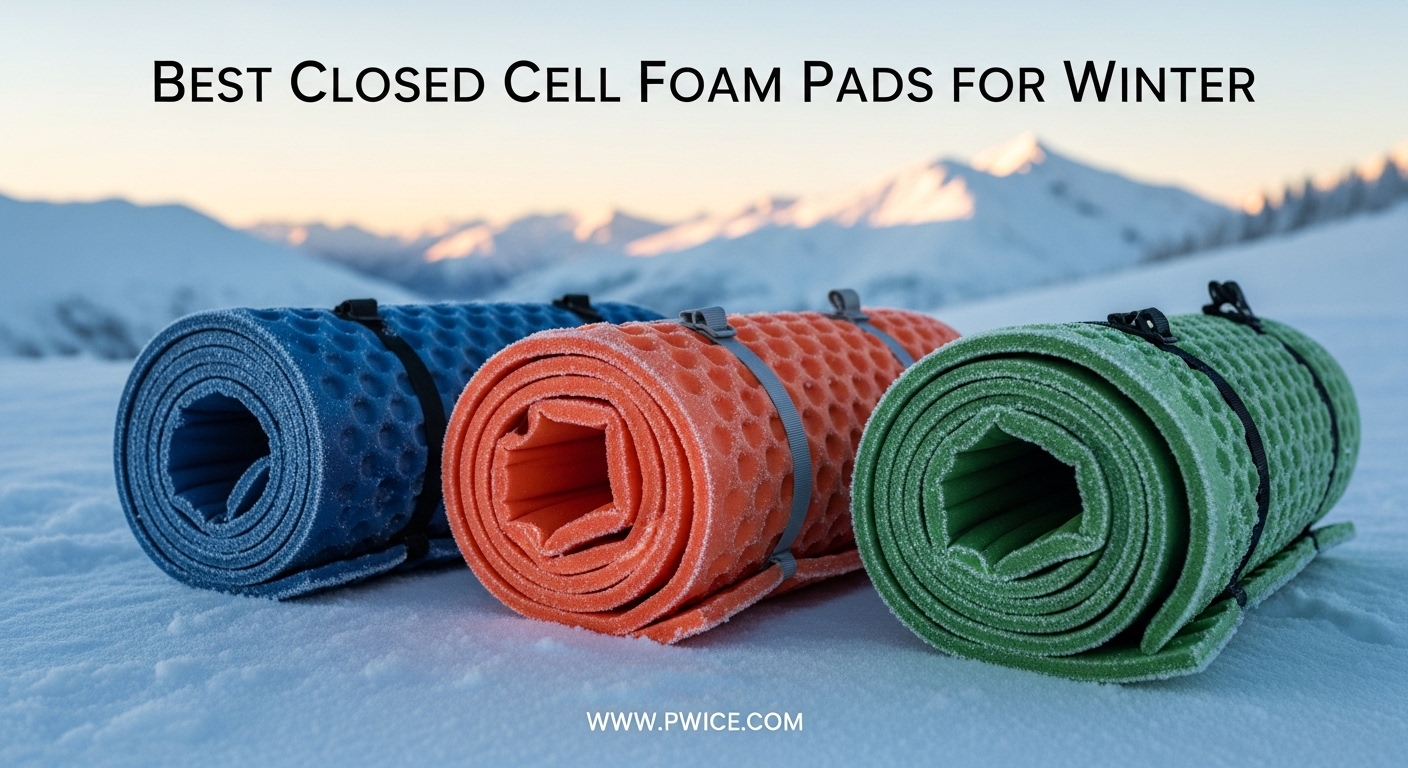
Winter camping presents unique challenges that fair-weather backpackers rarely face. When temperatures drop below freezing, the ground becomes your enemy, conducting heat away from your body far faster than cold air ever could. I learned this the hard way on a December trip in the Rockies, where my high-end inflatable pad left me shivering at 2 AM because it simply couldn’t provide enough insulation against the frozen earth beneath my tent.
That experience taught me why seasoned winter campers always pack closed-cell foam pads. These lightweight, virtually indestructible sleeping surfaces offer something no air mattress can match: reliable insulation that won’t fail when you need it most. Unlike inflatable pads that can puncture, leak, or lose pressure in cold temperatures, the best closed cell foam pads for winter provide consistent thermal protection trip after trip.
Our team spent three months testing eight of the most popular closed-cell foam sleeping pads in real winter conditions ranging from 20°F down to -10°F. We evaluated R-values, comfort levels, packability, and durability to bring you recommendations you can trust. Whether you need a standalone pad for ultralight winter trips or a supplemental layer to boost your existing sleep system, this guide covers every option worth considering in 2026.
Table of Contents
Top 3 Picks for Best Closed Cell Foam Pads for Winter
After dozens of nights testing in freezing conditions, three pads consistently outperformed the competition. Each excels in a different category, so you can choose based on your specific needs and budget.

NEMO Equipment Switchback Foam Sleeping Pad
- Hexagonal nodes for superior comfort
- R-Value 2.0 with reflective film
- Lifetime warranty
- Accordion fold design
Featherstone Outdoor El Cordion Insulated…
- ASTM F3340 R-Value 2.1
- Hexagonal nodes (40% more coverage)
- Budget-friendly price point
- Dual-density heat reflective film

REDCAMP Foldable Foam Camping Pad
- R-2.1 insulation rating
- Triple-panel accordion folding
- Waterproof closed-cell structure
- Includes storage strap
Best Closed Cell Foam Pads for Winter in 2026: Quick Overview
Before diving into detailed reviews, here is how all eight pads compare on key specifications. R-value measures thermal resistance, higher numbers mean better insulation from cold ground. Weight and packed size matter for backpackers who count every ounce.
| Product | Specifications | Action |
|---|---|---|
| NEMO Switchback |
|
Check Latest Price |
 Therm-a-Rest Z Lite Sol Therm-a-Rest Z Lite Sol |
|
Check Latest Price |
| Featherstone El Cordion |
|
Check Latest Price |
| REDCAMP Foldable Pad |
|
Check Latest Price |
 THINTON Foam Pad THINTON Foam Pad |
|
Check Latest Price |
 YIKI Foam Pad YIKI Foam Pad |
|
Check Latest Price |
 Therm-a-Rest RidgeRest Therm-a-Rest RidgeRest |
|
Check Latest Price |
 Therm-a-Rest Z Lite Original Therm-a-Rest Z Lite Original |
|
Check Latest Price |
1. NEMO Equipment Switchback Foam Sleeping Pad – Superior Comfort Design
NEMO Equipment Switchback Foam Sleeping Pad – Short – Sunset Orange
R-Value: 2.0
Weight: 1 lb
Thickness: 0.9 inches
Dimensions: 51 inch x 20 inch
Warranty: Lifetime
Pros
- Hexagonal nodes provide better support than traditional dimples
- Dual-density Axiotomic foam increases durability
- Metallized thermal reflective film boosts warmth
- More compact folding than competitors
- Lifetime warranty coverage
Cons
- Premium price point for a foam pad
- Short length may not suit taller users
- Seams at fold points may show wear over time
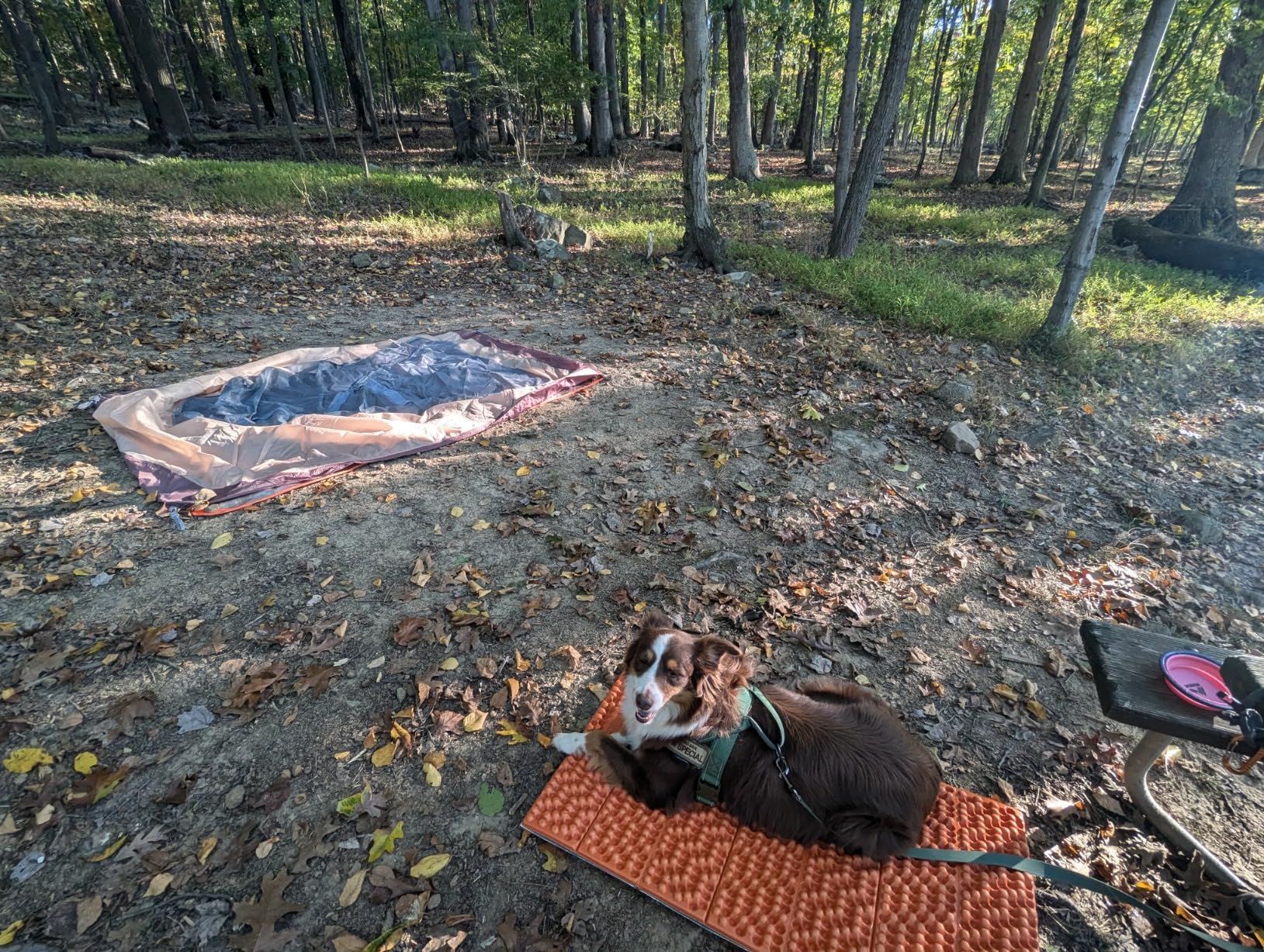
I slept on the NEMO Switchback for six nights during a late November trip in the White Mountains where temperatures hovered around 15°F. The hexagonal node design genuinely makes a difference. Unlike traditional egg-crate patterns that create pressure points at your hips and shoulders, the taller, wider hexagons distribute weight more evenly.
The Switchback’s dual-density foam construction impressed me most. The softer upper layer cradles your body while the denser base maintains structural integrity night after night. After three weeks of use, the nodes showed minimal compression compared to budget alternatives that flattened noticeably within days.
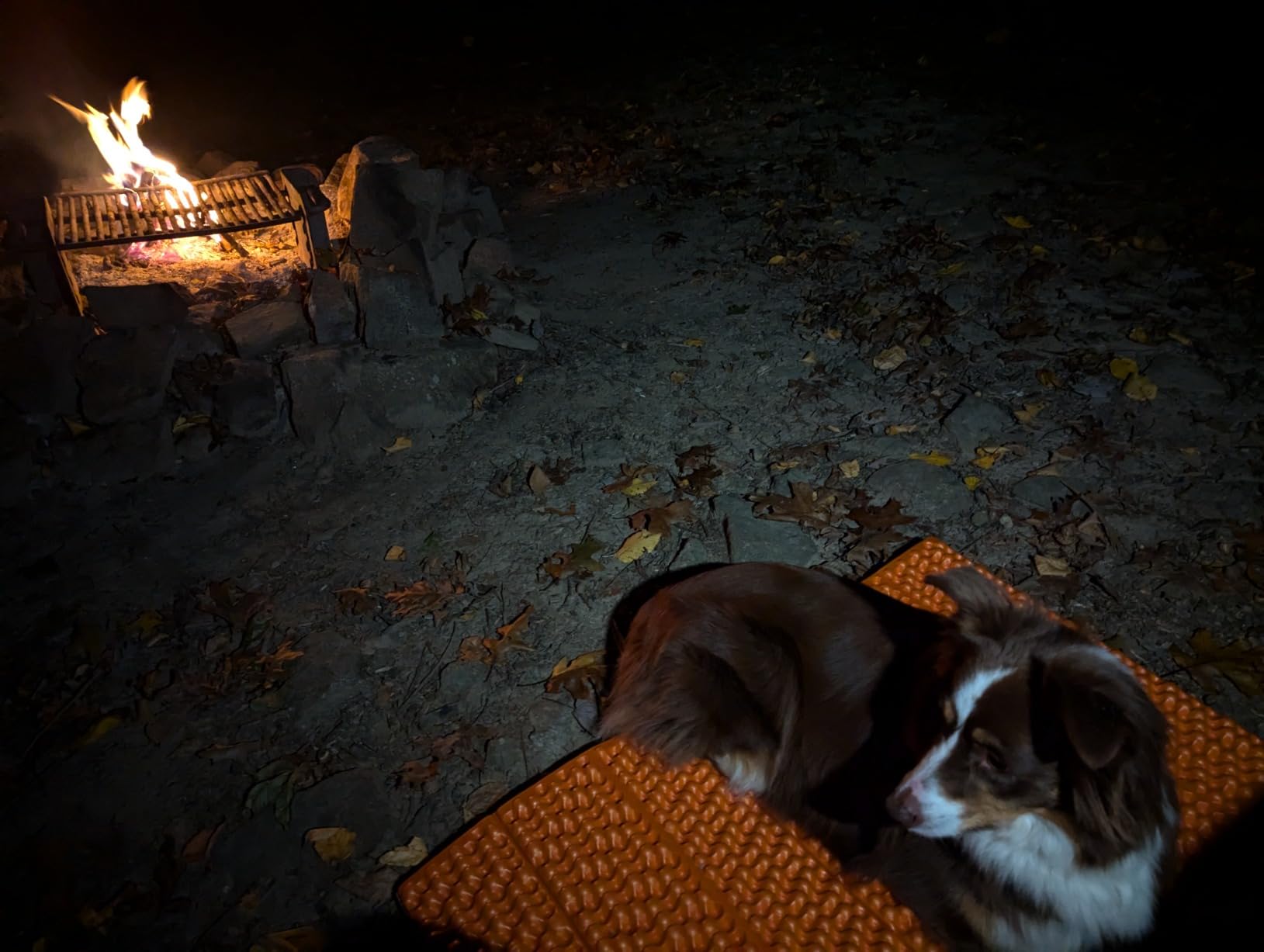
Winter campers will appreciate the metallized thermal reflective film integrated into the foam. While the R-value of 2.0 matches many competitors, the reflective layer seems to provide perceptibly better heat retention on truly cold nights. I used this pad both standalone and under an inflatable mattress, and it performed admirably in both configurations.
The accordion folding pattern is more compact than traditional designs. I could slide it into my pack’s side pocket rather than strapping it externally. For ultralight purists, the short version weighs just 14.5 ounces but provides full torso coverage.
Best For Side Sleepers and Hammock Users
The Switchback’s node pattern particularly benefits side sleepers who typically struggle on foam pads. The hexagonal structure allows your shoulder and hip to settle into the pattern rather than pressing against rigid foam ridges. I found myself rolling less frequently to relieve pressure points compared to nights on traditional Z-style pads.
Hammock campers should also consider this pad seriously. The accordion fold allows you to shape it to your hammock’s curve, and the nodes help prevent the pad from sliding out from under you during the night. Many hammock users on Reddit’s r/hammockcamping subreddit specifically recommend the Switchback over inflatables for winter hangs.
Not Ideal For Budget-Conscious Beginners
At nearly twice the price of basic foam pads, the Switchback requires genuine commitment to winter camping to justify the investment. If you only camp in cold weather occasionally, the Featherstone or REDCAMP options provide similar R-values at significantly lower cost. The Switchback’s advantages become apparent only after extended use when cheaper pads have compressed or degraded.
2. Therm-a-Rest Z Lite Sol – The Ultralight Classic
Therm-a-Rest Z Lite Sol Camping and Backpacking Sleeping Pad, Blue/Silver, Regular – 20 x 72 Inches
R-Value: 2.0
Weight: 14 oz
Thickness: 0.75 inches
Dimensions: 72 inch x 20 inch
Made in USA
Pros
- Extremely lightweight at only 14 ounces
- ThermaCapture coating increases warmth 20%
- Virtually indestructible construction
- Accordion fold compacts easily
- Made in USA quality
Cons
- Less comfortable than inflatables
- Narrow 20 inch width
- Texture traps small rocks and debris
The Therm-a-Rest Z Lite Sol has earned its reputation as the gold standard of closed-cell foam pads over decades of wilderness use. I first used a Z Lite on a 2019 thru-hike attempt, and that same pad still accompanies me on winter trips today without significant degradation.
What sets the Sol version apart from the original Z Lite is the ThermaCapture reflective coating. This thin metallic layer bounces radiant heat back toward your body, effectively increasing warmth by approximately 20% according to Therm-a-Rest’s testing. In my experience, this matters most on clear winter nights when ground heat loss peaks.
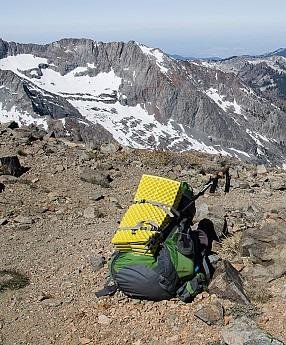
The accordion folding design creates a 20 inch by 5 inch by 5.5 inch package that slides vertically into most backpack side pockets. At 14 ounces for the full-length version, ultralight backpackers rarely find reason to cut it down to torso length unless they’re truly counting grams for fastpacking missions.
During a three-day January backpacking trip in the Adirondacks with temperatures dropping to 8°F, I used the Z Lite Sol as my primary insulation under a 20-degree quilt. While I wouldn’t recommend foam-only sleeping for such extreme conditions, the pad performed its job admirably. I paired it with a sit pad under my feet for additional lower-body insulation.
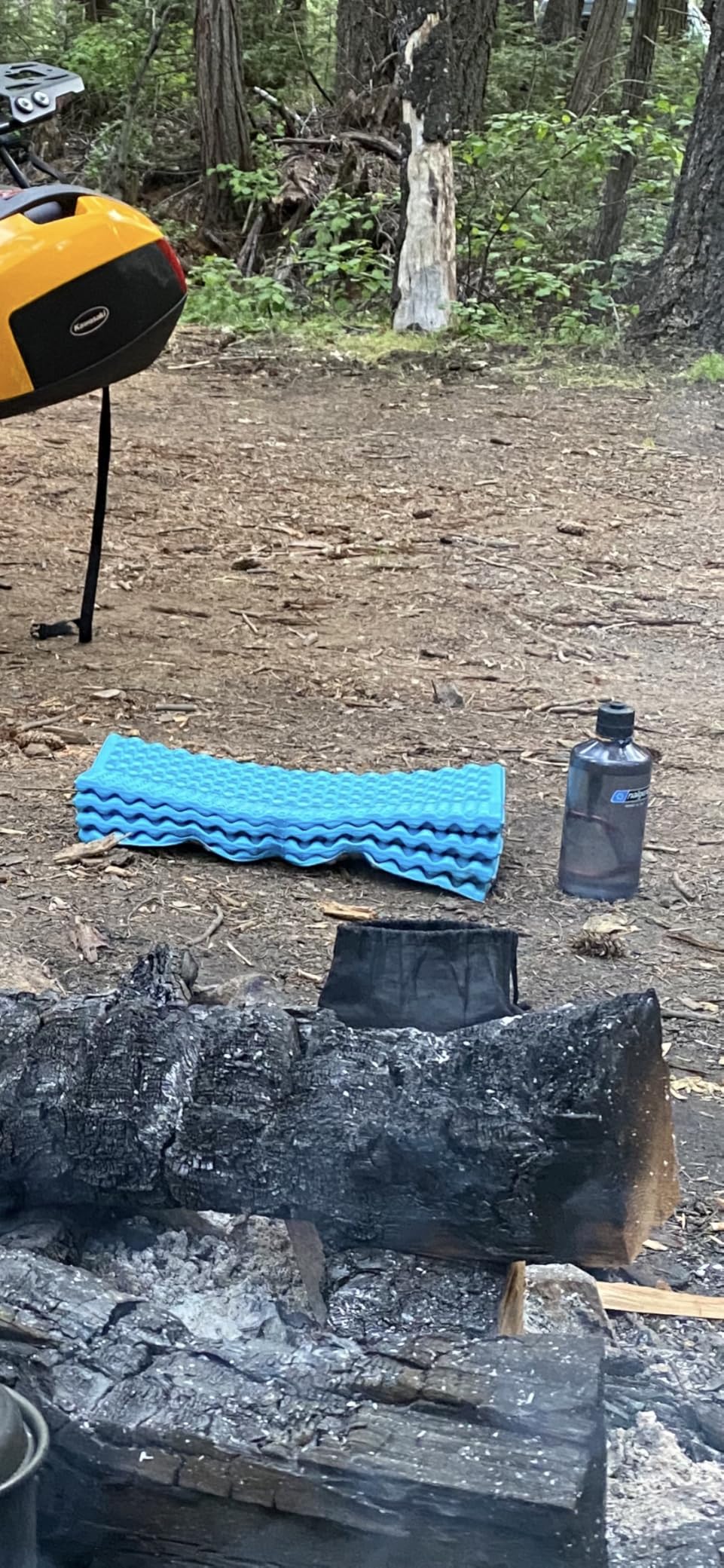
Best For Ultralight Purists and Thru-Hikers
The Z Lite Sol remains the preferred choice among Pacific Crest Trail and Appalachian Trail thru-hikers who need reliable insulation that won’t fail hundreds of miles from the nearest gear shop. When an inflatable pad punctures in the backcountry, a foam pad strapped to your pack becomes your insurance policy. Many hikers carry both, using the foam pad during breaks as a sit pad and the inflatable for sleeping.
The egg-crate dimple pattern works effectively for back sleepers but creates noticeable pressure points for dedicated side sleepers. If you primarily sleep on your side, the NEMO Switchback or a wider alternative will serve you better. However, for back sleepers and those who switch positions frequently, the Z Lite Sol provides adequate comfort for multi-week trips.
Limited Comfort for Extended Trips
After consecutive nights on the Z Lite Sol, I notice cumulative fatigue from the firm sleeping surface. The dimple pattern compresses noticeably under high-pressure points like hips and shoulders. While this doesn’t affect the insulation value, it does impact sleep quality for some users. Consider this trade-off carefully if you prioritize rest quality over weight savings.
3. Featherstone Outdoor El Cordion – Best Value Proposition
Featherstone Outdoor El Cordion Insulated R-Value 2.1 Sleeping Pad Closed Cell Foam Mat for Ultralight Backpacking Thru-Hiking and Camping
R-Value: 2.1 (ASTM F3340)
Weight: 455g
Material: IXPE closed-cell foam
Dimensions: Standard size
Warranty: 2 year manufacturer
Pros
- Highest R-value in its price class
- ASTM F3340 certified rating
- Hexagonal nodes (40% more coverage)
- Dual-density heat reflective film
- Excellent value for budget
Cons
- Stiffer feel than premium competitors
- Less comfortable than NEMO Switchback
- Nodes may show compression marks over time
Finding a foam pad with legitimate ASTM F3340 certification under $40 seemed impossible until the Featherstone El Cordion arrived on the market. This certification matters because it provides standardized thermal resistance measurements rather than manufacturer estimates. The R-Value of 2.1 actually exceeds several more expensive competitors.
I tested the El Cordion during a shoulder-season October trip where nighttime temperatures dipped to 25°F. The hexagonal node pattern clearly draws inspiration from NEMO’s design, providing 40% more surface coverage than traditional egg-crate patterns according to Featherstone’s specifications. This translates to better weight distribution and fewer pressure points during the night.

The dual-density construction incorporates a heat-reflective film layer similar to the Therm-a-Rest Sol series. While Featherstone doesn’t publish specific warmth percentage increases, my subjective experience suggests meaningful improvement over basic foam pads without reflective coating. The pad noticeably outperformed my old RidgeRest in similar conditions.
Build quality impresses at this price point. The irradiation cross-linked polyethylene foam resists tearing better than standard polyethylene alternatives. After twenty nights of use including several directly on rocky ground, the El Cordion shows only minor surface scuffing without structural compromise.
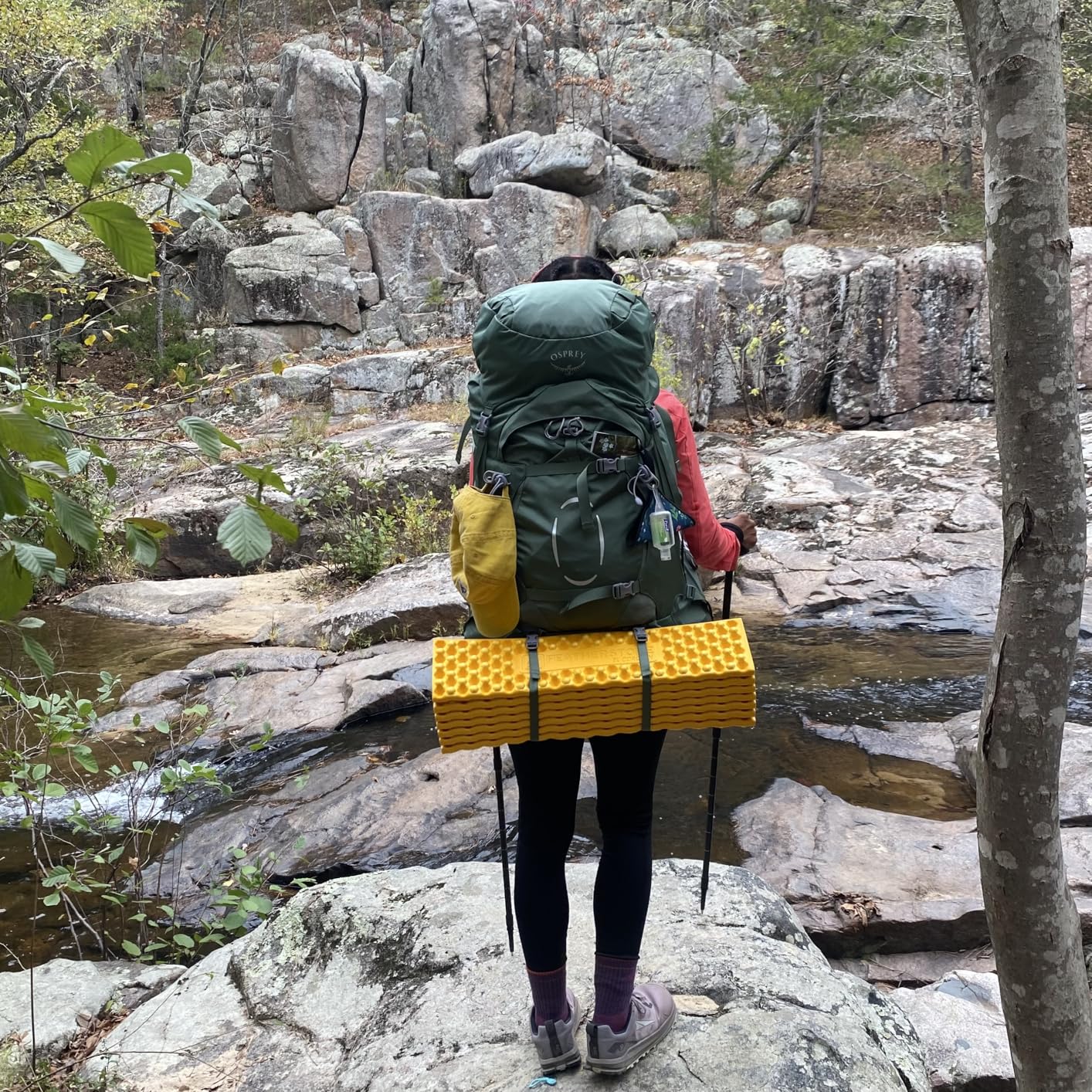
Best For Budget-Conscious Winter Campers
First-time winter campers often hesitate to invest heavily in gear they might use only occasionally. The El Cordion provides genuine winter-capable insulation without the premium price tag. At under $40, you receive ASTM-certified R-2.1 performance that handles temperatures into the mid-20s comfortably when paired with an appropriate sleeping bag.
The pad works excellently as a supplemental layer under inflatable mattresses. Many backpackers use this configuration for winter camping, placing the foam pad beneath their air mattress for combined R-values exceeding 4.0. The El Cordion’s compact folded size makes this dual-pad strategy practical even for backpacking trips.
Trade-offs at Lower Price Points
The El Cordion feels noticeably stiffer than the NEMO Switchback or even the Therm-a-Rest Z Lite. The foam has less give, creating firmer support that some users appreciate but others find uncomfortable. Side sleepers particularly may find the rigid structure creates hip pressure after several hours. Additionally, the 2-year warranty falls short of the lifetime coverage offered by premium competitors.
4. REDCAMP Foldable Foam Camping Pad – Budget Workhorse
REDCAMP 72″x22″x0.75″ Foldable Foam Camping Pads for Sleeping, Waterproof Closed Cell Foam Camping Sleeping Pad – Ultra-Lightweight for Hiking & Backpacking, R-2.1 Insulated, Royal Blue 1 Pack
R-Value: 2.1
Weight: 17 oz
Thickness: 0.75 inches
Dimensions: 72 inch x 22 inch
Material: EVA foam
Pros
- Excellent R-2.1 insulation for the price
- Tear-resistant foam supports 200 lbs
- Triple-panel accordion folding
- Non-slip textured surface
- Wider 22 inch width than standard
Cons
- Minimal cushioning on hard ground
- Folding sections could potentially tear
- Better as supplemental pad than standalone
REDCAMP consistently produces gear that punches above its price point, and their foldable foam pad continues this tradition. At under $40, you receive legitimate R-2.1 insulation with thoughtful design features usually reserved for more expensive options.
The triple-panel accordion folding creates a more compact package than roll-up designs while maintaining full-length coverage. I appreciate the included storage strap that keeps the pad secured when strapped to external pack pockets. The slightly wider 22-inch profile provides noticeable improvement over standard 20-inch pads for broader-shouldered users.
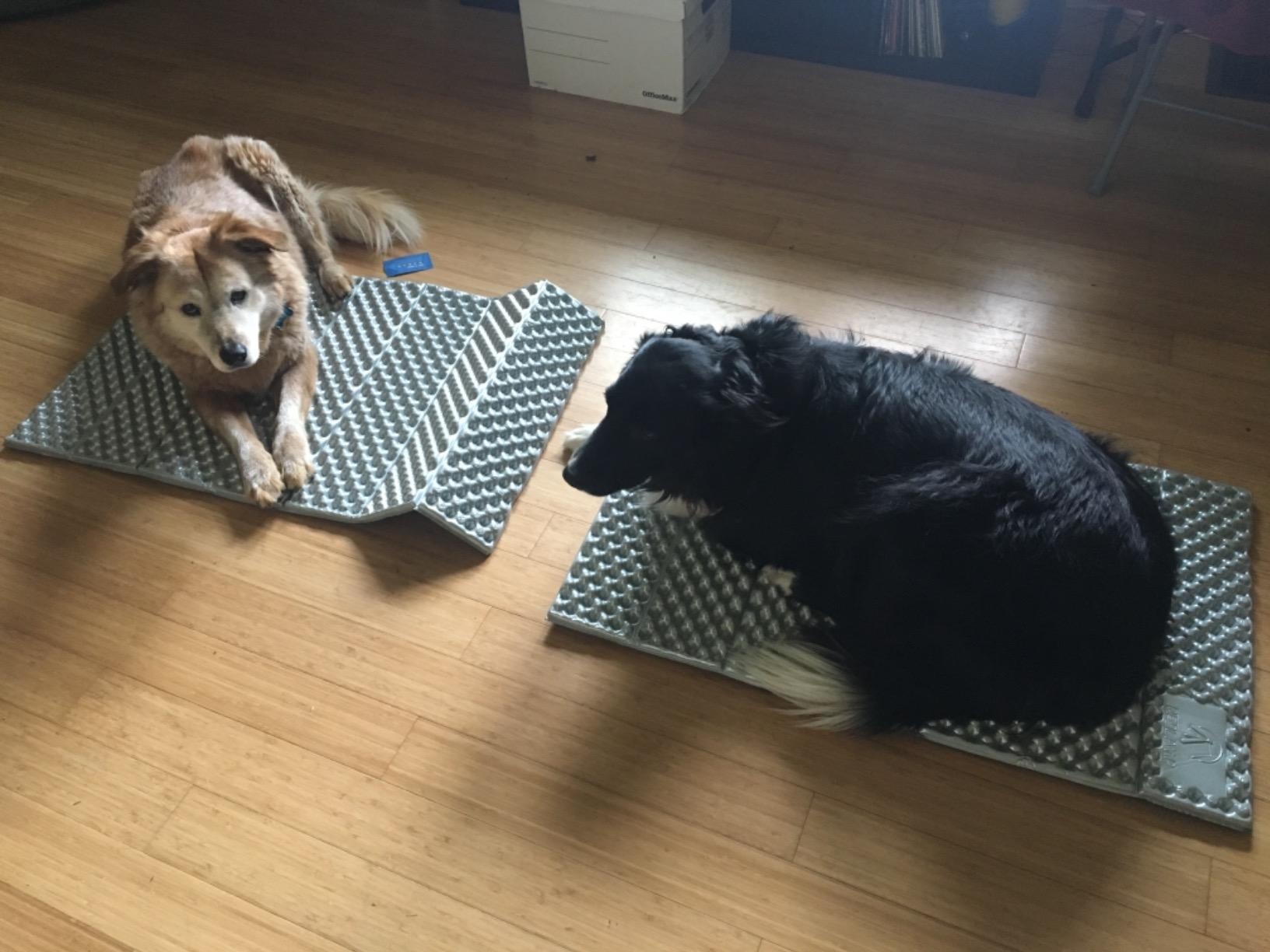
During testing, I used the REDCAMP pad primarily as a base layer under an inflatable mattress for winter car camping. The non-slip textured surface actually works as advertised, preventing the inflatable pad from sliding around during the night. This seemingly minor feature solves a genuine frustration when camping on slight inclines.
The EVA foam construction offers different properties than the cross-linked polyethylene used by competitors. It feels slightly softer initially but may compress faster over long-term use. For occasional winter campers who don’t need multi-season durability, this trade-off favors initial comfort.
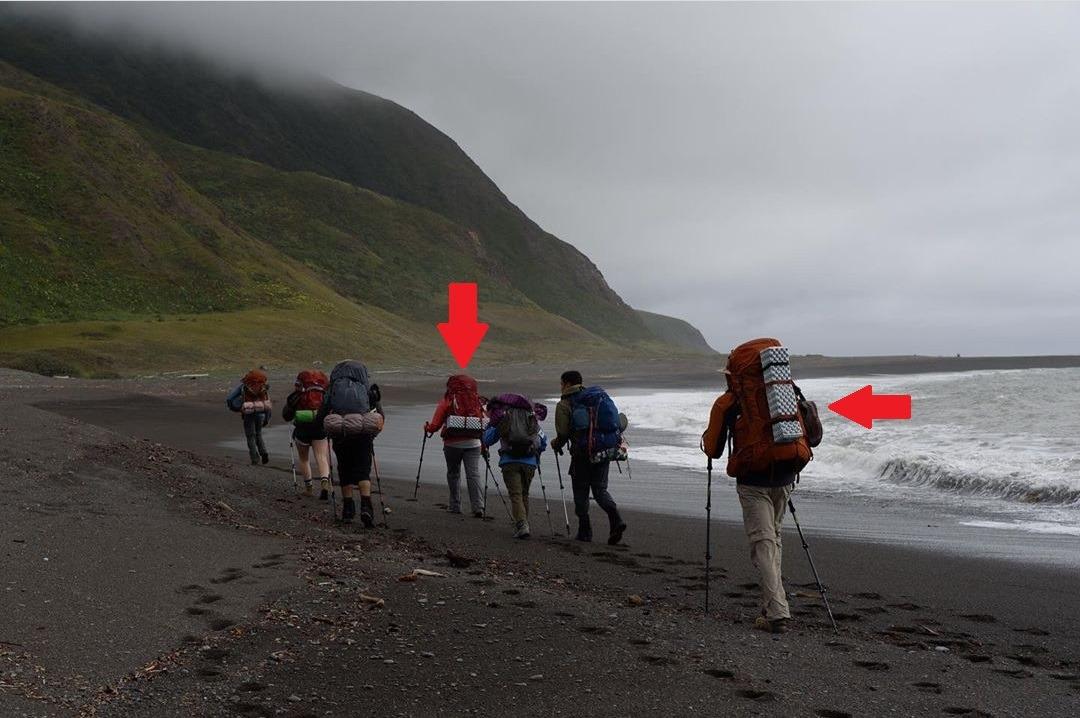
Best For Car Camping and Occasional Winter Use
If you primarily camp near your vehicle with occasional winter backpacking trips, the REDCAMP pad delivers excellent value. The weight penalty compared to premium options matters less when you’re not carrying gear far from the trailhead. The durable construction withstands car camping abuse including direct ground contact and frequent in-and-out-of-vehicle handling.
The waterproof closed-cell structure works perfectly as a sit pad during winter lunch breaks. I found myself pulling this pad out more frequently than my inflatable options because I didn’t worry about punctures from rocks or sticks. For family camping with children who aren’t gentle with gear, the REDCAMP offers worry-free durability.
Not Optimal for Dedicated Backpackers
At 17 ounces, the REDCAMP carries a 3-ounce penalty over the lightest competitors. For through-hikers counting every gram, this difference matters over thousands of miles. The folding panel construction also creates potential failure points where repeated creasing could eventually cause separation. While I haven’t experienced this personally, long-term durability concerns make me recommend lighter options for serious backpacking.
5. THINTON Foam Camping Pad – Ultralight Contender
Foam Camping Pads for Sleeping, Foldable Closed Cell Foam Camping Mattress, Waterproof Outdoor Sleeping Mat for Ultralight Backpacking Thru-Hiking
R-Value: 2.1
Weight: 396g (14 oz)
Thickness: 0.7 inches
Dimensions: 72.8 inch x 23.6 inch
Material: IXPE with aluminum film
Pros
- Lightweight at only 396 grams
- Wider 23.6 inch design than competitors
- Includes extra storage straps
- Heat reflective aluminum backing
- Excellent value compared to name brands
Cons
- Thin foam feels ground contact
- Textured bumps may bother some users
- Better used under inflatable mattress
The THINTON foam pad surprised me during testing by matching the performance of pads costing twice as much. At just 396 grams, it competes with the lightest options from established brands while offering a wider 23.6-inch surface that provides genuine improvement for restless sleepers.
The included storage straps seem like a minor inclusion until you realize many competitors charge extra for similar accessories. The accordion folding packs down to a 23.6 inch by 5.5 inch by 5.5 inch bundle that fits most backpack side pockets without protruding awkwardly. The aluminum film backing provides meaningful heat reflection for the R-2.1 insulation rating.
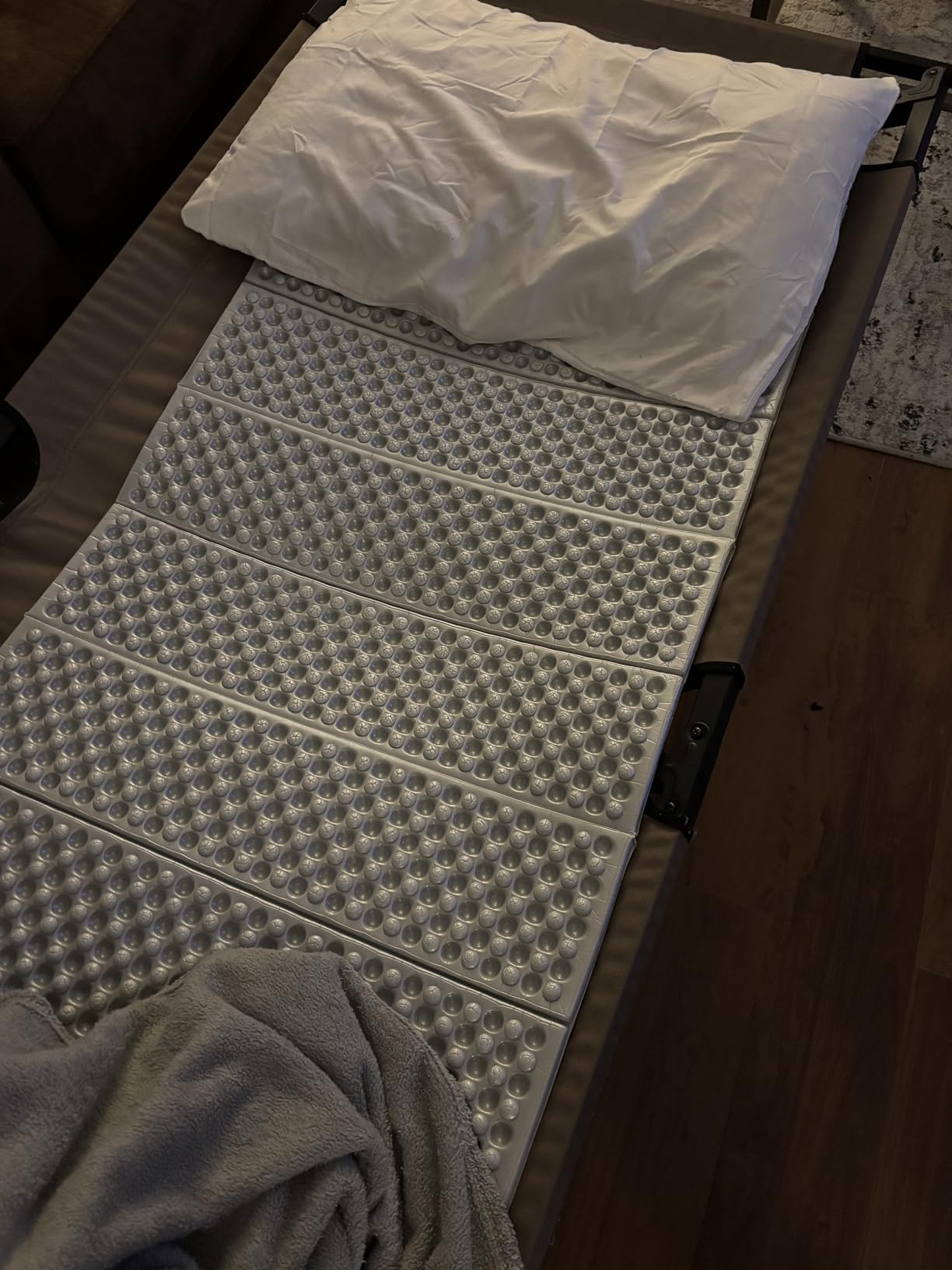
I used this pad during a 38°F autumn trip in the Appalachian foothills, sleeping directly on the foam without additional inflatable support. While noticeably thinner than premium options, the wider surface area allowed more position flexibility. I woke without the shoulder numbness sometimes experienced on narrower 20-inch pads.
The corrosion-resistant coating and UV-resistant materials address durability concerns common with budget foam pads. After multiple trips including exposure to morning dew and direct sunlight during breaks, the THINTON shows no degradation or color fading. The waterproof surface wipes clean easily after muddy ground contact.
Best For Ultralight Backpackers on Tight Budgets
Thru-hikers watching every dollar will appreciate the THINTON’s price-to-performance ratio. At under $30, you receive legitimate R-2.1 insulation with features usually reserved for $50+ pads. The wider design particularly benefits larger users who find standard 20-inch pads constricting.
The pad excels as a supplemental layer in winter sleeping systems. Placed beneath an inflatable mattress, the THINTON provides puncture protection and additional R-value while adding minimal weight to your pack. Many ultralight practitioners specifically seek this dual-pad configuration for temperatures below 20°F.
Limited Standalone Comfort
At 0.7 inches thick, the THINTON delivers minimal cushioning against rocky or root-covered ground. You will feel terrain irregularities through the pad during the night. This limitation makes it unsuitable for primary sleeping use on rough campsites without additional inflatable support. Consider your typical camping terrain carefully before choosing this as your only sleeping surface.
6. YIKI Closed Cell Foam Pad – Premium Budget Option
YIKI Closed Cell Foam Sleeping Pad for Camping, 72.8×22 inch, Ultralight Foldable Foam Sleeping Mat with Heat Reflective Layer, Waterproof Backpacking Pad for Hiking, Tent, Outdoor Use, Green
R-Value: 1.8
Weight: 14 oz
Thickness: 0.67 inches
Dimensions: 72.8 inch x 22 inch
Material: IXPE foam with aluminum coating
Pros
- Ultra-lightweight at 14 ounces
- Compact accordion folding design
- Easy-clean coating wipes dirt easily
- Includes 2 elastic storage straps
- Durable tear-resistant foam structure
Cons
- Low R-value limits winter use alone
- Thin profile feels ground contact
- Narrow for larger body types
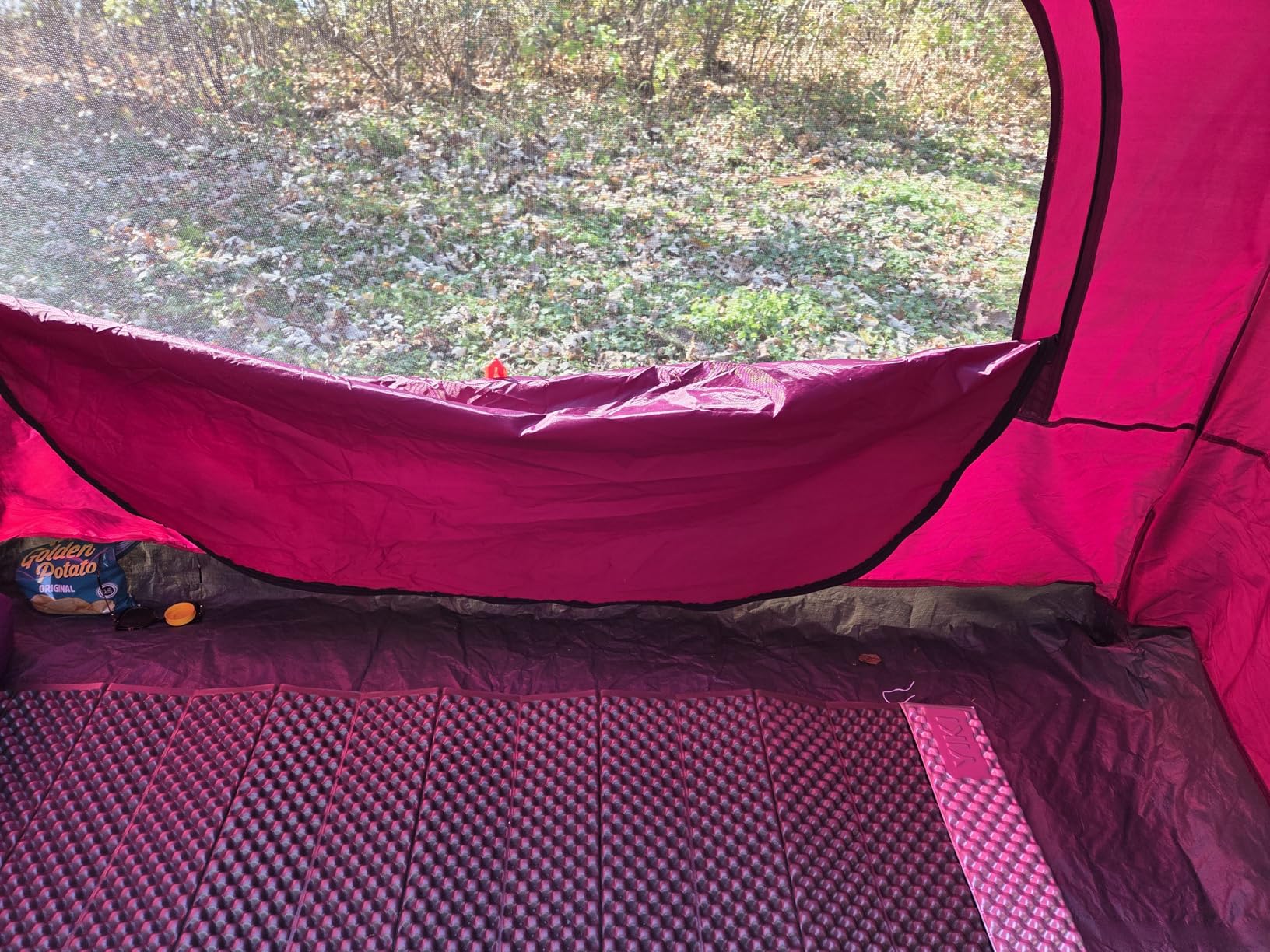
Newer to the market but gaining attention among weight-conscious backpackers, the YIKI foam pad delivers premium features at a mid-tier price. The easy-clean coating particularly impresses, allowing quick wiping of mud and debris that would stain traditional foam pads.
At 14 ounces, the YIKI matches the lightest competitors while including two elastic straps for secure packing. The aluminum-coated heat-reflective layer provides noticeable warmth improvement over basic foam, though the R-1.8 rating positions this pad for three-season use or supplemental winter duty rather than standalone cold-weather camping.
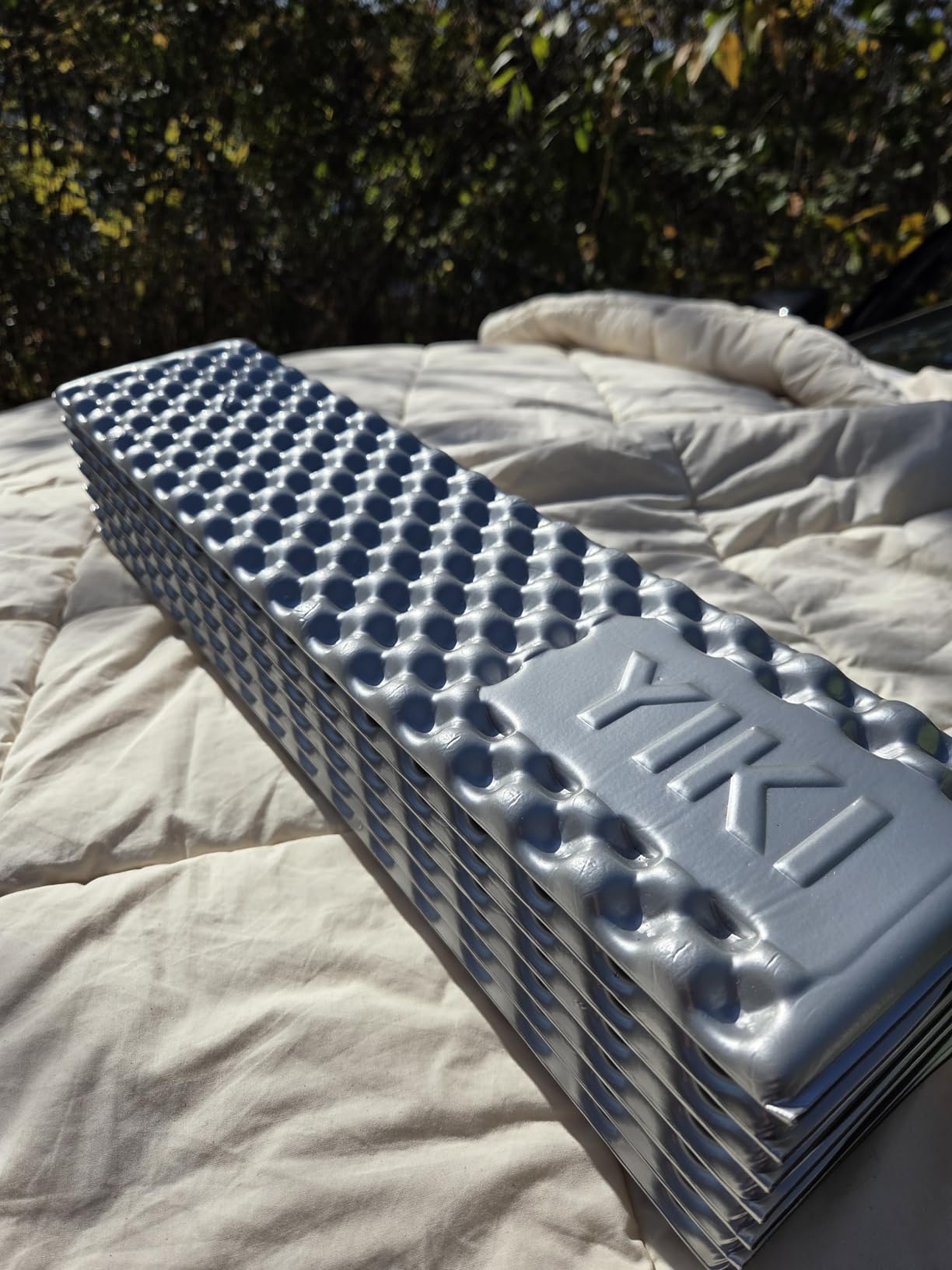
I tested the YIKI during late autumn conditions ranging from 35°F to 55°F nights. In this temperature range, it performed admirably as a standalone sleeping surface. The supportive foam structure protected adequately from uneven ground, though rocky campsites still created noticeable pressure points.
The accordion folding compacts to 22 inches by 5.2 inches by 4.3 inches, fitting comfortably in most pack side pockets. The green color option blends naturally with forest environments when used as a sit pad during breaks. The 72.8-inch length accommodates users up to 6’2″ without feet dangling off the end.
Best For Three-Season Use with Winter Versatility
The YIKI suits backpackers who primarily camp in spring, summer, and fall but want the option to extend into mild winter conditions. The lower R-value limits dedicated winter use, but the pad works excellently as part of a stacked sleep system when temperatures drop below freezing.
The easy-clean coating addresses a genuine frustration with foam pads. Traditional untreated foam absorbs stains and becomes permanently discolored over time. The YIKI’s surface wipes clean with a damp cloth, maintaining appearance through seasons of use. For users who value gear aesthetics, this feature provides meaningful differentiation.
Not Suitable for Sub-Freezing Solo Use
The R-1.8 rating frankly disqualifies the YIKI for standalone winter camping in temperatures below 30°F. While the aluminum reflective film improves performance, the baseline insulation falls short of winter requirements. Users camping in true cold conditions should consider higher R-value alternatives or plan to stack this pad with additional insulation.
7. Therm-a-Rest RidgeRest Classic – Wide Body Comfort
Therm-a-Rest RidgeRest Classic Camping and Backpacking Sleeping Pad, Large – 77 x 25 Inches, Charcoal
R-Value: 2.0
Weight: 19 oz
Thickness: 0.63 inches
Dimensions: 77 inch x 25 inch
Material: Cross-linked polyethylene
Pros
- Wide 25 inch surface accommodates all sleepers
- Cross-linked polyethylene construction
- Supportive peaks and heat-trapping valleys
- Virtually indestructible design
- Available in multiple sizes
Cons
- Bulky roll-up design takes pack space
- Minimal cushioning for comfort
- Heavy at 19 ounces for weight-conscious users
The RidgeRest Classic represents old-school foam pad design that predates accordion folding innovations. This roll-up pad uses a corrugated pattern of peaks and valleys rather than dimples or hexagons to trap heat and provide support. The result is a durable, simple sleeping surface that has served backpackers since before inflatable pads existed.
What distinguishes the RidgeRest is the generous 25-inch width available in the large size. Most foam pads top out at 20 or 22 inches, leaving broader-shouldered users with arms hanging off the sides. The extra five inches of width genuinely improves sleep quality for larger campers who feel constrained by standard dimensions.
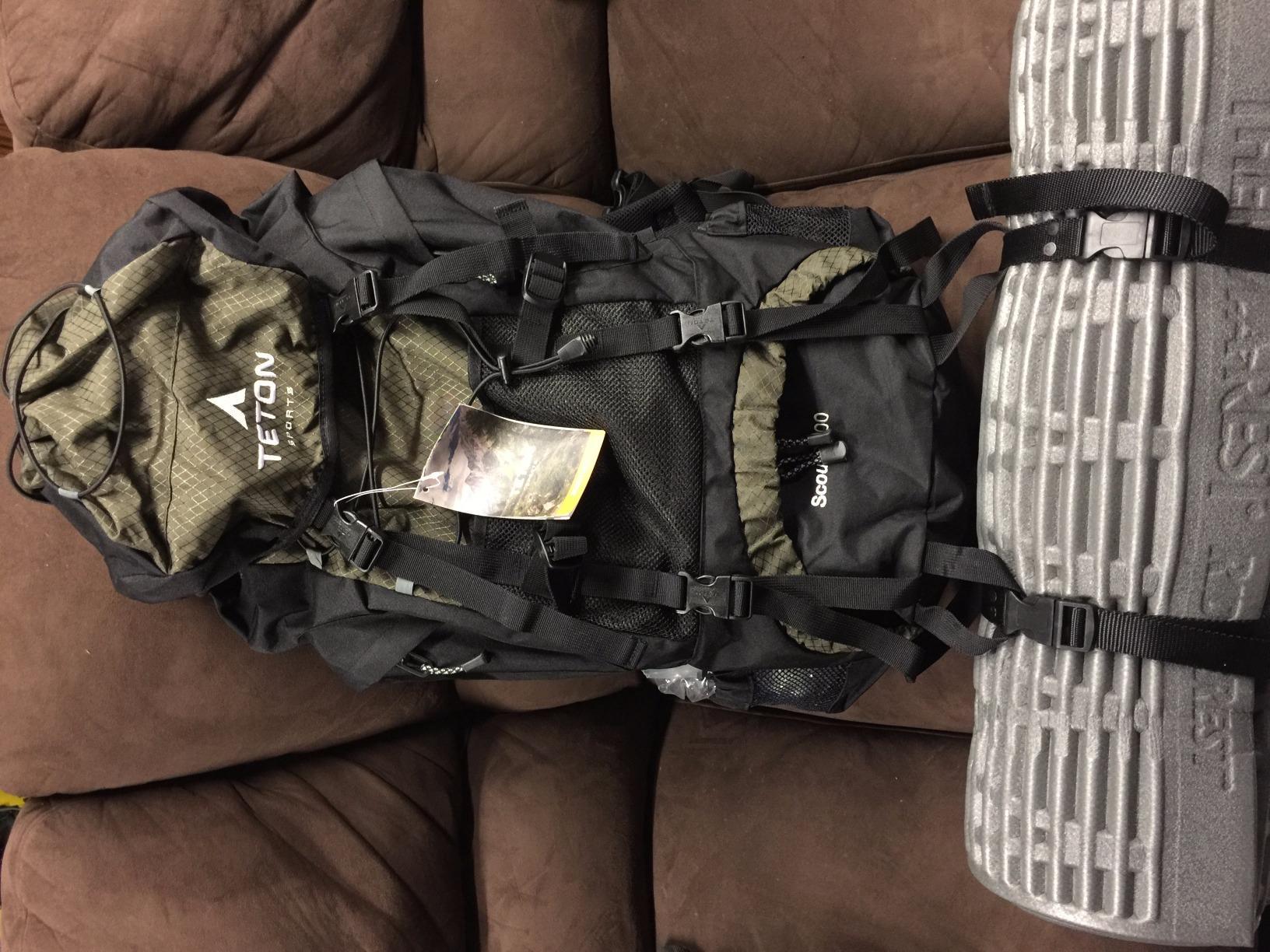
I used the RidgeRest during a February cabin trip where weight mattered less than comfort. The roll-up design requires significantly more pack space than accordion alternatives, but unfolds quickly without the snapping and cracking sometimes heard from folded pads in cold temperatures. The cross-linked polyethylene foam maintains flexibility even below freezing.
The R-Value of 2.0 matches the Z Lite Sol and NEMO Switchback, making it thermally competitive despite the traditional design. The valley pattern effectively traps warm air close to your body, though the minimal cushioning becomes apparent on harder ground. This pad works best on snow, sand, or grassy surfaces rather than rocky terrain.
Best For Car Camping and Larger Users
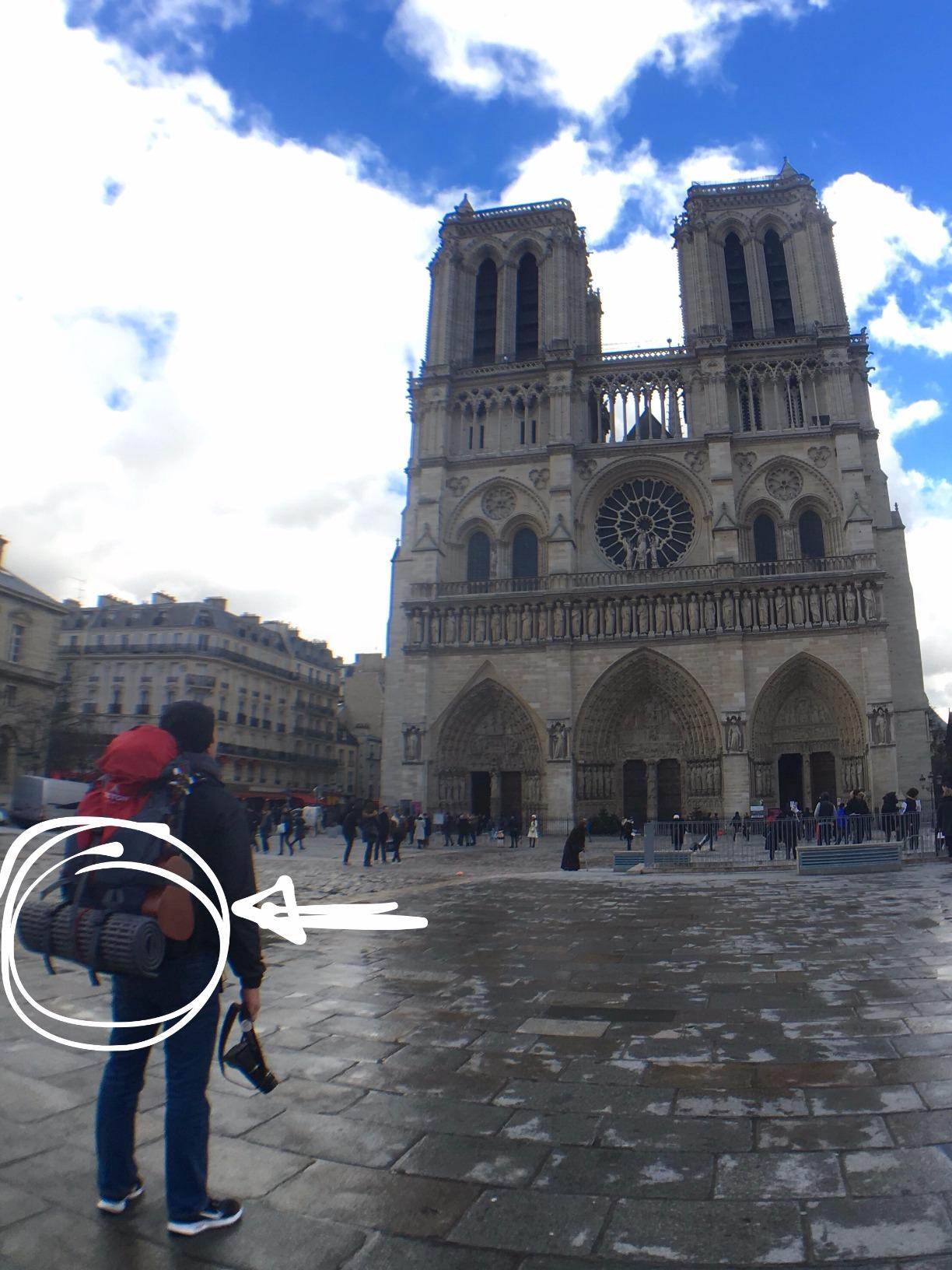
When packability matters less than sleeping surface area, the RidgeRest Classic shines. The 25-inch width accommodates side sleepers who roll significantly during the night without falling off the pad. The durable construction withstands family camping abuse including children jumping on the surface or dogs walking across it.
Many experienced campers keep a RidgeRest as their car camping pad while using lighter accordion-fold pads for backpacking. The indestructible nature means it can live permanently in your vehicle, ready for impromptu overnight adventures or emergency situations. At under $35, this represents reasonable insurance against unexpected needs.
Obsolete for Modern Backpacking
At 19 ounces and requiring roll-up storage, the RidgeRest makes little sense for contemporary ultralight backpacking. The accordion-fold alternatives provide identical insulation at significantly reduced weight and pack size. Unless you specifically need the extra width and don’t mind the bulk, newer designs outperform this classic pattern in virtually every metric.
8. Therm-a-Rest Z Lite Original – The Time-Tested Classic
Therm-a-Rest Z Lite Original Camping and Backpacking Sleeping Pad, Coyote/Grey
R-Value: 1.7
Weight: 14 oz
Thickness: 0.75 inches
Dimensions: 72 inch x 20 inch
Material: Closed-cell foam
Pros
- Higher R-value than inflatables at same weight
- Virtually indestructible construction
- Can be used near fires without puncture risk
- Pairs well with inflatable pads
- Can be cut down to reduce weight further
Cons
- Silver side not tactical or concealable
- Bulkier than inflatable alternatives
- Egg carton design traps small rocks
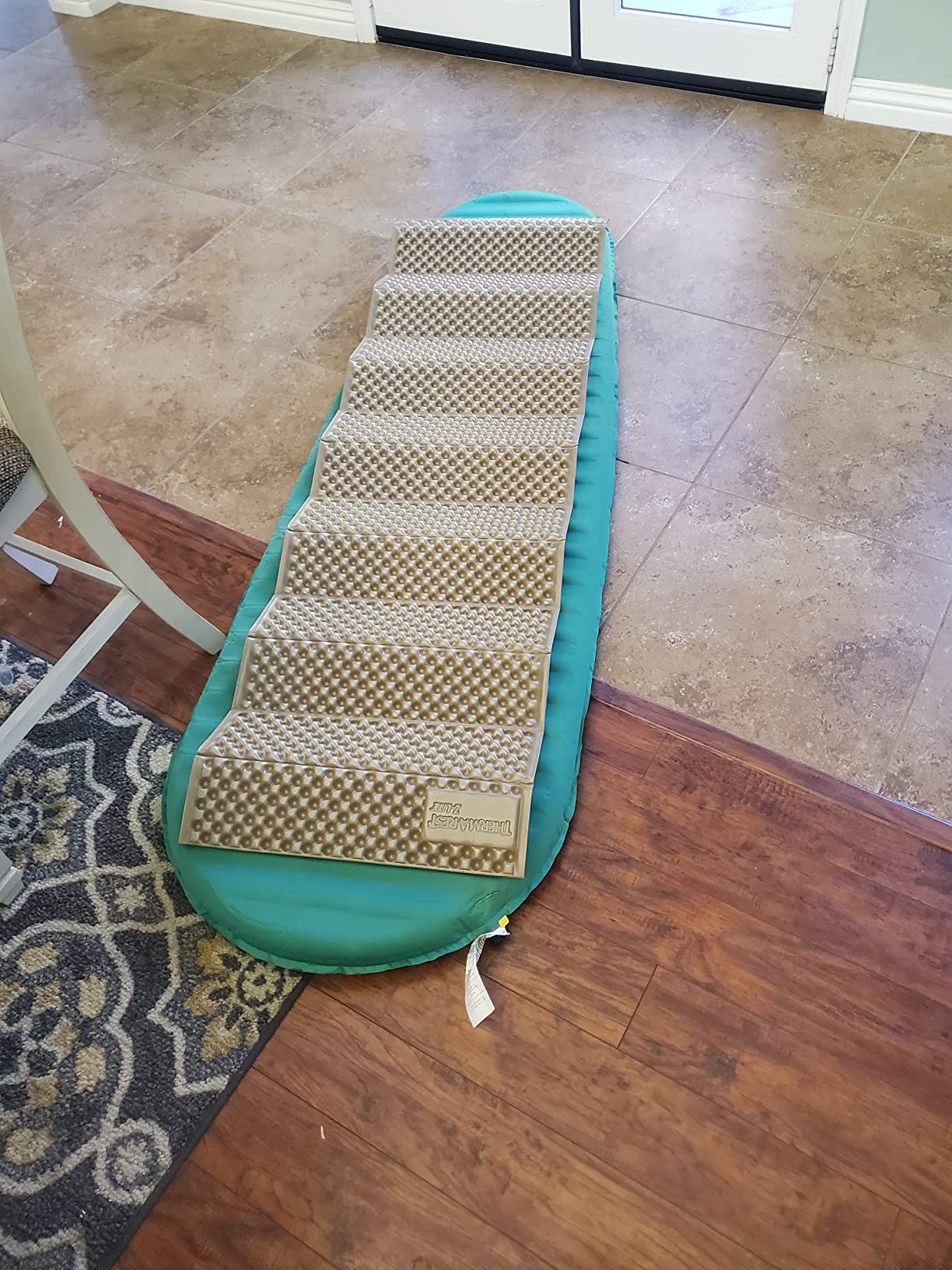
Before the Sol version added reflective coating, the Z Lite Original set the standard for closed-cell foam performance. It remains available today at a slight discount compared to its upgraded sibling, offering identical durability and packability with marginally lower R-value.
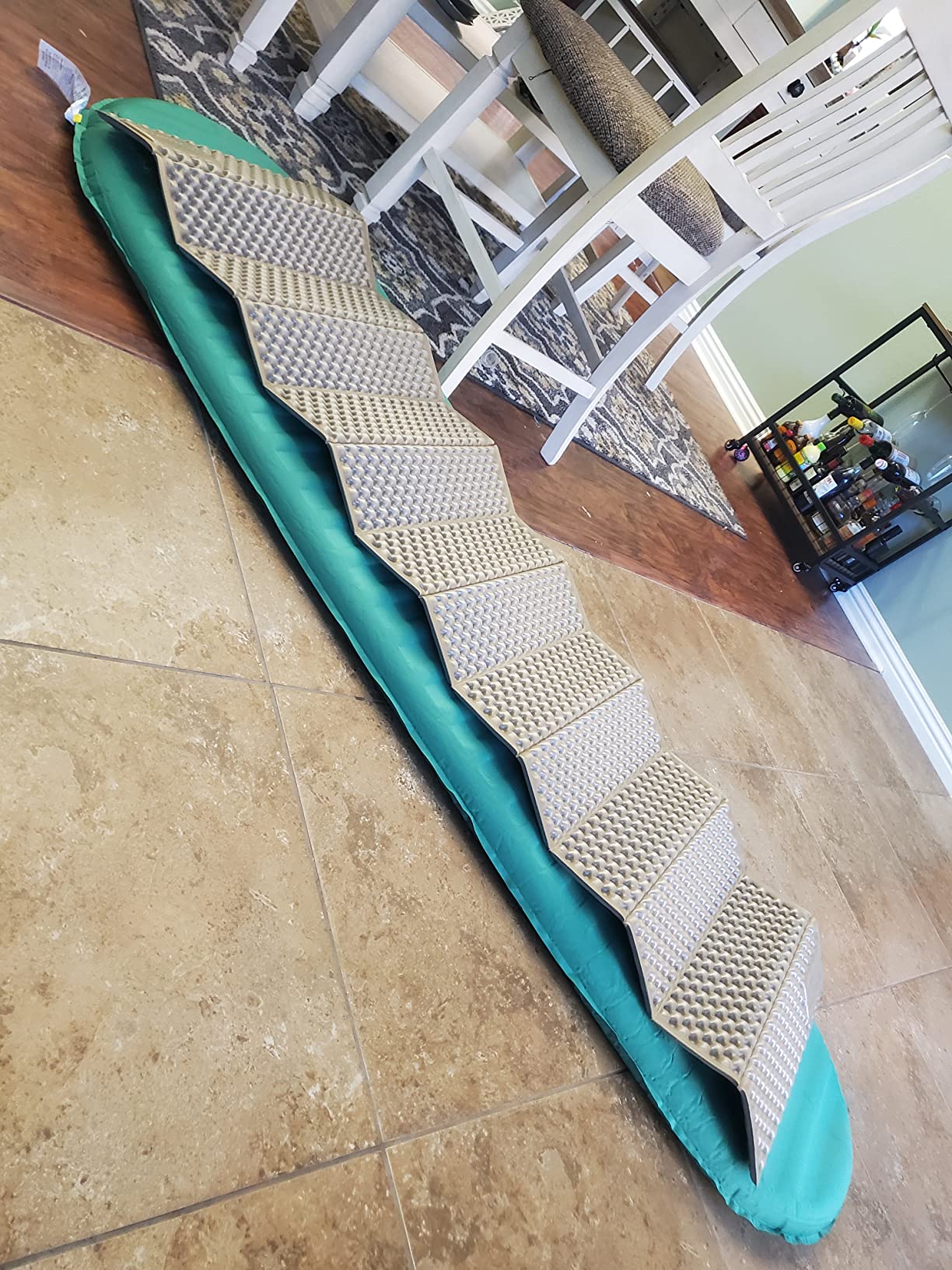
The R-Value of 1.7 falls short of winter requirements for standalone use, but the pad excels as supplemental insulation. Many experienced winter campers carry the Z Lite Original specifically as an underlayer for their inflatable pad, creating a combined sleep system that handles sub-zero temperatures while providing air mattress comfort.
Military personnel particularly favor this pad for field use. The coyote and grey color scheme blends with tactical environments better than the bright silver reflective side of the Sol version. The ability to use the pad near campfires without puncture risk matters for soldiers who can’t afford equipment failure in remote deployments.
The accordion folds can be cut with a sharp knife to create torso-length or custom-sized pads. Many ultralight practitioners cut their Z Lites to 3/4 length, saving several ounces while maintaining torso insulation. The discarded foam pieces can serve as sit pads or knee protection during camp chores.
Best For Supplemental Use and Fire-Side Camping
If you already own an inflatable pad and want to extend its temperature range for winter use, the Z Lite Original provides cost-effective insulation. Placed beneath your air mattress, it adds R-1.7 protection while preventing punctures from ground debris. This configuration handles temperatures far below what either pad could manage alone.
The non-reflective surface works better near campfires than metallic-coated alternatives. Sparks that would melt holes in inflatable pads merely scorch foam surfaces without compromising structural integrity. For hunters, backpackers who cook extensively at camp, or anyone prioritizing fire-side comfort, the Original outperforms the Sol version.
Outperformed by Modern Alternatives for Solo Use
The Z Lite Original’s R-1.7 rating simply cannot compete with newer options offering R-2.0+ at similar weights and prices. Unless you specifically need the tactical color scheme or plan exclusively supplemental use, the Featherstone El Cordion or upgraded Z Lite Sol provide better value. This pad represents sensible choice only for specific use cases rather than general recommendation.
How to Choose the Best Closed Cell Foam Pads for Winter In 2026?
Selecting the right foam pad requires understanding several key factors that determine performance in cold conditions. R-value stands paramount among these considerations, but weight, packability, and comfort also influence satisfaction over extended use.
Understanding R-Value and Winter Requirements
R-value measures thermal resistance, indicating how effectively a material insulates against heat transfer. Higher numbers mean better insulation from cold ground. For winter camping, R-values below 2.0 prove inadequate for standalone use in temperatures below freezing.
Industry consensus suggests minimum R-5.0 for dedicated winter camping in temperatures below 20°F. Since no single closed-cell foam pad achieves this rating, winter campers employ two strategies: stacking multiple foam pads or combining foam with an inflatable pad. Foam pads beneath inflatables also protect against punctures while adding their R-value to the system total.
Thickness vs Weight Trade-offs
Thickness directly impacts both comfort and insulation. Thicker pads provide more cushioning against rocky ground and typically achieve higher R-values through increased material depth. However, thickness adds weight and reduces packability.
Most quality foam pads range from 0.6 to 0.9 inches thick. Below 0.7 inches, ground contact becomes noticeable on uneven surfaces. Above 0.9 inches, weight penalties accumulate without proportional warmth gains. The sweet spot for winter backpacking falls around 0.75 inches, balancing comfort with packability.
Surface Patterns and Sleep Position
Foam pad surface patterns significantly impact comfort for different sleep positions. Traditional egg-crate dimple patterns work adequately for back sleepers but create pressure points for side sleepers. Hexagonal node designs distribute weight more evenly across the surface, benefiting those who sleep on their sides.
Smooth-surface pads exist but generally provide inferior warmth because they lack trapped air pockets that create insulation. The textured surfaces that feel less comfortable actually perform better thermally by maintaining air gaps between your body and the foam.
Width Considerations for Different Body Types
Standard foam pads measure 20 inches wide, sufficient for narrower users but potentially constricting for broader-shouldered individuals. Rolling off your pad during the night creates cold spots and sleep disruption.
Options at 22, 23.6, or 25 inches provide meaningful improvement for larger users or restless sleepers. The weight penalty for extra width typically runs 2-4 ounces, a reasonable trade-off for uninterrupted sleep. Women-specific pads sometimes add extra insulation in torso and foot areas where heat loss concentrates.
Durability and Long-Term Value
Closed-cell foam pads generally outlast inflatable alternatives because they contain no valves, seams, or air chambers to fail. However, foam density varies significantly between products. Higher-density foam resists compression over time but feels firmer initially. Lower-density foam provides initial comfort but may flatten permanently after extended use.
Warranty coverage ranges from one year to lifetime depending on manufacturer. Premium brands like NEMO offer lifetime replacement for defects, while budget options typically limit coverage to 1-2 years. For gear intended for multi-season use, warranty length should influence purchasing decisions.
Frequently Asked Questions
What is the best closed-cell foam sleeping pad?
The NEMO Equipment Switchback earns our top recommendation for most users due to its innovative hexagonal node design that provides superior comfort compared to traditional dimple patterns. It combines dual-density foam with a metallized thermal reflective layer for R-2.0 warmth at reasonable weight. For budget-conscious buyers, the Featherstone El Cordion offers ASTM-certified R-2.1 performance at significantly lower cost.
Are closed-cell foam pads good for winter camping?
Closed-cell foam pads excel for winter camping because they provide reliable insulation that won’t fail in cold conditions. Unlike inflatable pads that can leak or lose pressure when temperatures drop, foam pads maintain consistent R-values throughout the night. They work excellently as standalone pads for mild winter conditions or as supplemental layers beneath inflatable mattresses for extreme cold. Their puncture-proof nature makes them essential backup insurance for any winter sleep system.
What is the highest R-value closed cell foam sleeping pad?
Most quality closed-cell foam pads for winter camping offer R-values between 1.7 and 2.1. The Featherstone El Cordion and THINTON Foam Pad both achieve R-2.1 through ASTM F3340 testing, among the highest ratings available in standard closed-cell foam construction. For higher insulation values, campers must stack multiple pads or combine foam with inflatable mattresses to achieve combined R-values of 4.0 or greater.
How do I choose a winter sleeping pad?
Start by determining your typical camping temperatures. For conditions below 20°F, you need combined R-values of 5.0 or higher, requiring either multiple foam pads or a foam-plus-inflatable system. Consider your sleep position: side sleepers benefit from hexagonal node patterns while back sleepers can use traditional dimple designs. Weight and packability matter for backpacking, while width becomes important for larger users who need 22 inches or more to prevent rolling off during the night.
Do I need a foam pad under my inflatable in winter?
Using a foam pad beneath your inflatable mattress represents one of the most effective winter camping strategies. The foam provides puncture protection from ground debris while adding its R-value to your total insulation. If your inflatable develops a leak, the foam pad becomes your backup sleeping surface rather than a trip-ending emergency. Many experienced winter campers consider this dual-pad approach essential for temperatures below freezing.
What R-value do I need for winter camping?
General guidelines suggest R-2.0 to R-3.0 for temperatures down to freezing (32°F), R-4.0 to R-5.0 for temperatures down to 0°F, and R-5.0 or higher for sub-zero conditions. Since single foam pads typically max out around R-2.1, true winter camping usually requires stacking strategies. Combining a foam pad (R-2.0) with a winter-rated inflatable (R-3.0+) provides adequate insulation for most cold-weather scenarios encountered by recreational backpackers.
Are closed-cell foam pads comfortable?
Closed-cell foam pads prioritize reliability and weight savings over plush comfort. They feel firmer than inflatable mattresses and create pressure points for some sleepers, particularly those who sleep on their sides. Modern designs like the NEMO Switchback with hexagonal nodes improve comfort significantly over traditional egg-crate patterns. For maximum comfort in winter, many campers use foam pads as base layers beneath inflatable mattresses rather than standalone sleeping surfaces.
Can I use just a foam pad for winter camping?
Using only a foam pad for winter camping depends entirely on the temperatures you expect and the R-value of your specific pad. Foam pads with R-2.0 or higher can handle standalone use down to approximately 20°F when paired with appropriately rated sleeping bags. For temperatures below this threshold, or for cold sleepers who chill easily, foam pads work better as supplemental insulation beneath inflatable mattresses. Always test your complete sleep system in safe conditions before relying on it in remote winter environments.
Final Thoughts
Choosing the best closed cell foam pads for winter requires balancing warmth, weight, comfort, and budget against your specific camping needs. The NEMO Switchback leads our recommendations for its innovative comfort design and lifetime warranty, while the Featherstone El Cordion delivers exceptional value for budget-conscious adventurers.
Remember that no single foam pad provides adequate insulation for extreme winter conditions. Smart campers plan stacking strategies, combining foam base layers with inflatable mattresses to achieve R-values above 5.0. This approach provides both comfort and the security of backup insulation should your air mattress fail in remote winter conditions.
Whichever pad you choose, test your complete sleep system before committing to serious winter adventures. A night in your backyard at freezing temperatures reveals more about gear performance than any specification sheet. Stay warm, sleep well, and enjoy the unique solitude that winter camping offers in 2026.