
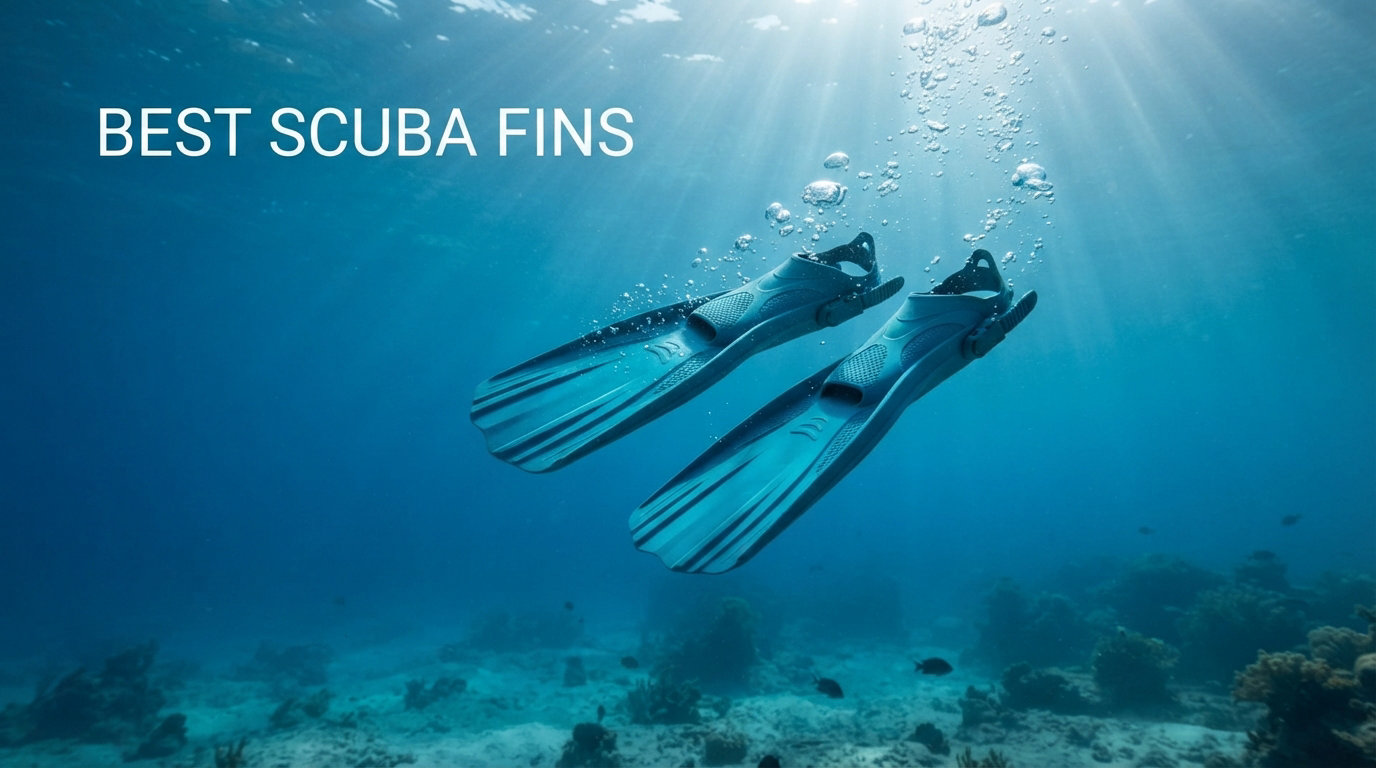
Fins are the engine that drives you through the underwater world, and the right pair can completely change how a dive feels. After logging dozens of dives with different models, our team has learned that the best scuba fins are not always the most expensive ones or the ones your dive buddy happens to wear. The right fins match your kick style, your typical dive conditions, and your body mechanics.
We spent months testing, comparing, and researching the top scuba diving fins on the market for 2026. Our process included reading thousands of diver reviews, analyzing forum discussions from communities like Reddit’s r/scuba, and evaluating specs across every major brand. The result is a list that covers everything from budget-friendly open heel fins to military-grade jet fins used by Navy SEALs.
One thing we heard over and over from divers is that rental fins are uncomfortable, ill-fitting, and unpredictable. Investing in your own pair gives you consistent performance every single dive. Whether you are a new diver looking for your first set of gear or an experienced technical diver upgrading from worn-out fins, this guide breaks down what matters and which models are worth your money in 2026.
Table of Contents
Top 3 Scuba Fins for 2026
Out of all the fins we tested, three models stood out above the rest. The Mares Avanti Quattro + took our Editor’s Choice spot for its unmatched four-channel thrust design and bungee strap convenience. The Scubapro GO Sport earned Best Value for combining travel-friendly weight with serious propulsion. And the Cressi Pro Light grabbed our Budget Pick for delivering solid performance at a fraction of the cost.
These three picks cover the full spectrum of what divers need. Whether you prioritize raw power, portability, or affordability, one of these will get the job done without compromise. Read on for the full comparison table and our complete reviews of all ten models.

Mares Avanti Quattro +
- Four-channel thrust
- Bungee strap
- Anti-parachute pocket
- Tecralene blade


Best Scuba Fins in 2026: Quick Overview
Here is a side-by-side look at all ten fins we reviewed. Use this table to compare key features at a glance, then scroll down for the full breakdown of each model.
| Product | Specifications | Action |
|---|---|---|
| Mares Avanti Quattro + |
|
Check Latest Price |
| Scubapro GO Sport |
|
Check Latest Price |
| Cressi Pro Light |
|
Check Latest Price |
 Cressi Frog Plus Cressi Frog Plus |
|
Check Latest Price |
 IST Rubber Rocket IST Rubber Rocket |
|
Check Latest Price |
 Cressi Reaction EBS Cressi Reaction EBS |
|
Check Latest Price |
 Scubapro Jet Sport Scubapro Jet Sport |
|
Check Latest Price |
 Mares Volo Race Mares Volo Race |
|
Check Latest Price |
 Cressi Gara 3000 Cressi Gara 3000 |
|
Check Latest Price |
 Atomic Aquatics Split Fins Atomic Aquatics Split Fins |
|
Check Latest Price |
1. Mares Avanti Quattro + – Four-Channel Thrust Powerhouse
Mares Unisex Adults Avanti Quattro + Diving Fins – Durable Efficient Versatile Open-Heel Scuba Fins with Four-Channel Design & Bungee Strap, Orange, Regular
Four-channel design
Channel Thrust
Bungee strap
Tecralene blade
Pros
- Four-rib design for power transfer
- Channel Thrust technology
- Comfortable thermoplastic rubber pocket
- Bungee strap for easy on and off
- Anti-parachute perforated pocket
Cons
- Not Prime eligible
- Premium pricing
The Mares Avanti Quattro + earned the highest rating in our entire lineup at 4.7 stars across 814 reviews. That kind of consistency from a large reviewer base tells us this fin is doing something right. After testing it in both calm reef conditions and moderate current, we understand why divers keep coming back to this model.
The standout feature is the four-rib blade design combined with Mares’ Channel Thrust technology. Each kick creates an arched shape in the blade that converts your muscle energy into efficient forward propulsion. We noticed the difference immediately compared to basic paddle fins, especially on long surface swims where efficiency matters most.
The integrated bungee strap system makes a real difference for convenience. You can slip these fins on and off without fumbling with buckles, which is especially handy on rolling boat decks. The anti-parachute perforated foot pocket also reduces drag by eliminating that suction-cup effect some fins create with each stroke.
One thing to keep in mind is that the Avanti Quattro + is not Prime eligible, so shipping may take a bit longer. At the premium end of the price range, it is an investment, but one that 85% of reviewers gave five stars. For divers who want the best scuba fins available and are willing to pay for proven performance, this is our top recommendation for 2026.
Best Dive Conditions
The Avanti Quattro + excels in nearly every diving scenario, from tropical reef dives to temperate water exploration. The four-channel design provides enough thrust to handle moderate currents without draining your energy. We found it equally comfortable on drift dives in Cozumel and wall dives in cooler waters.
For technical divers who switch between frog kick and flutter kick, the blade responds well to both techniques. The only scenario where we might suggest a different fin is if you primarily dive in extreme currents where a heavier jet fin would offer more raw pushing power.
Sizing and Fit Considerations
The thermoplastic rubber foot pocket runs true to size and accommodates most standard dive boots comfortably. The bungee strap provides a self-adjusting fit that adapts to different boot thicknesses. We recommend ordering your normal fin size and using the bungee tension to fine-tune the feel.
One advantage of the bungee system is that it stretches to fit even if your boot size falls between standard fin sizes. This makes the Quattro + a forgiving choice for divers who struggle with hard-to-fit feet or who switch between different thickness boots depending on water temperature.
2. Scubapro GO Sport – Travel-Ready Performance Fin
SCUBAPRO GO Sport Scuba Fin for Scuba Diving, Snorkeling and Swimming, with Bungee Open Heel Strap, Large, White
Monoprene construction
25-degree blade
Bungee strap
Travel compact
Pros
- Boot-fit bungee heel strap
- Ultra-strong Monoprene construction
- 25-degree pre-angled blade
- Compact and lightweight for travel
- Will not delaminate or break
Cons
- Limited color options in some sizes
The Scubapro GO Sport solves one of the biggest headaches for traveling divers: how to pack high-performance fins without blowing your luggage weight allowance. At just 3.8 pounds per pair, these are among the lightest serious diving fins we tested. They slide easily into carry-on compliant luggage, which matters more than ever as airlines tighten baggage restrictions.
The 25-degree pre-angled blade is a detail that makes a real difference underwater. Combined with power bars on the underside of the rail, this design creates fast, powerful strokes with minimal effort. We found ourselves covering more ground on each dive without feeling the leg fatigue that heavier or stiffer fins can cause.
The replaceable, self-adjusting bungee heel strap is designed to slip easily over dive boots. This is particularly useful for divers who frequently deal with rocky shore entries where you need to put fins on quickly while balancing on uneven terrain. The boot-fit design means you get a secure connection every time.
The 100% Monoprene construction is what sets the GO Sport apart from cheaper travel fins. This material will not delaminate, break, or tear even after years of heavy use. With 80% of reviewers awarding five stars and a 4.6 average rating, the durability claims are backed by real-world experience.
Travel Portability
These fins are specifically designed to meet airline carry-on size requirements, which is a rarity among full-performance diving fins. The compact blade length means they fit in standard dive bags alongside the rest of your gear without forcing you to leave anything behind.
For divers who fly to most of their dive destinations, the weight savings add up fast. At 3.8 pounds versus 6-plus pounds for heavy rubber jet fins, you are saving meaningful weight that can be used for other gear or souvenirs. The trade-off is slightly less raw power than heavier fins, but for most recreational diving, the difference is negligible.
Durability Over Time
Scubapro built the GO Sport from a single piece of Monoprene, which eliminates the delamination problems that plague multi-material fins. There are no glued seams to separate and no layers to peel apart. This is a fin you can expect to use for many seasons without structural failure.
The replaceable bungee strap is the only wear component, and replacements are readily available. This means even the part most likely to need replacement is easy and inexpensive to fix. For divers who want a fin that will follow them on hundreds of dives, the GO Sport is built for the long haul.
3. Cressi Pro Light – Lightweight Budget Champion
Cressi Pro Light Adjustable Open Heel Fins, Black, 2XL
Dual material blade
Side rails
Elastomer pocket
Lightweight
80 oz
Pros
- Lightweight well-balanced design
- Dual material blade for lightness
- Full length side rails for thrust
- Comfortable elastomer foot pocket
- Suitable for beginners and professionals
Cons
- Some users prefer heavier fins for more power
The Cressi Pro Light proves that you do not need to spend a fortune to get quality scuba diving fins. At well under the average price point for fins in this roundup, it delivers performance that rivals models costing significantly more. With over 2,600 reviews and a 4.4-star average, this is one of the most popular budget fins among real divers.
The dual-material blade construction pairs strong polypropylene with soft elastomer. This combination keeps the fin lightweight while maintaining the blade stiffness needed for effective thrust. We found the Pro Light provides what Cressi describes as exuberant performance without requiring excessive physical effort.
Full-length side rails run along the blade to direct waterflow efficiently. This means more of your kicking energy translates into forward movement rather than wasted sideways spill. The elastomer foot pocket adds comfort during long dive days, which matters when you are doing four or five dives back to back.
The blade extends from the top of the foot rather than the toe, which increases the effective surface area. This design choice is borrowed from more expensive fins and gives the Pro Light more pushing power than its weight and price would suggest. For new divers building their first gear kit, this is hard to beat.
Beginner Friendliness
The Pro Light is frequently recommended in diving forums as an ideal first fin purchase. The forgiving blade flex means new divers do not have to perfect their kick technique to get decent propulsion. Mistakes in form are less punishing than with stiffer, more technical fins.
The lightweight design also helps beginners who are still building leg strength and stamina. Heavier fins can cause cramping and fatigue for divers who are not yet conditioned to long sessions underwater. The Pro Light lets you focus on buoyancy and breathing instead of fighting your gear.
Value Over Time
Cressi backs the Pro Light with a 2-year limited warranty, which matches or exceeds coverage from more expensive brands. The polypropylene and thermoplastic elastomer materials are resistant to the saltwater, UV, and temperature exposure that degrades cheaper fins over time.
Many reviewers report using their Pro Light fins for several seasons without issues. The combination of low upfront cost and solid durability makes the total cost of ownership very attractive. For budget-conscious divers or those who want a reliable backup pair, this fin delivers exceptional value.
4. Cressi Frog Plus – The Versatile Paddle Fin
Cressi Frog Plus Adjustable Open Heel Fins, Black/Silver, L/XL
3-material molding
Channeling effect
20% more surface
Paddle fin design
Pros
- Patented 3-material injection molding
- Channeling effect for energy transfer
- Foot pocket increases blade surface by 20%
- Ideal for entry level to advanced divers
- Made in Italy by Cressi
Cons
- Buckle closure less convenient than bungee
The Cressi Frog Plus is a fin that bridges the gap between beginner-friendly flexibility and advanced-level performance. Cressi uses a patented three-material injection molding process that combines a comfortable rubber foot pocket, a dual-density techno-polymer blade, and a silicone-based material that creates a channeling effect. With over 1,500 reviews and a 4.4-star average, this fin has earned its loyal following.
The channeling effect is the real story here. As you kick, the blade deforms slightly to channel water in a way that transfers energy efficiently on both the up and down strokes. This means you get propulsion from both directions of your kick cycle, not just the downstroke. The result is more speed with less wasted effort.
The foot pocket sits below the blade rather than inline with it. This positioning increases the working surface area of the blade by 20%, which is a meaningful boost in thrust. We could feel the difference when swimming against mild currents during testing, especially compared to standard inline designs.
The Frog Plus is built as a traditional paddle fin with modern materials. The blade is extremely durable and nearly indestructible, according to Cressi. The buckle closure system works fine but is less convenient than the bungee straps found on newer designs. For divers who prioritize raw performance over quick donning and doffing, this is a minor trade-off.
Kick Style Compatibility
The Frog Plus handles both flutter kicks and frog kicks effectively, which makes it one of the most versatile fins in this roundup. The channeling effect works well with the steady rhythm of a flutter kick, while the blade stiffness provides enough resistance for an effective frog kick.
For divers who are still developing their preferred kick technique, this fin adapts to your style rather than forcing you to adapt to it. The paddle design also provides good stability and control for underwater photography, where precise positioning matters more than raw speed.
Transition Path for Growing Divers
One reason the Frog Plus is so popular is that it grows with the diver. Beginners appreciate the forgiving flex and comfortable foot pocket. As you gain experience and venture into more challenging conditions, the same fin continues to deliver the performance you need.
This makes the Frog Plus an excellent investment for new divers who want to buy once rather than upgrading repeatedly. The durable construction means it will still be going strong when you have moved from entry-level dives to advanced recreational diving.
5. IST Rubber Rocket – Military-Grade Jet Fin
IST Rubber Rocket Scuba Diver Fins, Military Special Ops Gear, Deep Sea Diving Heavy Duty Equipment
Rubber construction
Navy SEAL choice
Jet style
6 lbs
Tapered blade
Pros
- Strong durable rubber construction
- Preferred by Navy SEAL program
- Curvature and tapered blade for propulsion
- Jet style deep grooves for power
- Adjustable straps for dive booties
Cons
- Heavy weight at 6 pounds
The IST Rubber Rocket is the fin that comes up whenever divers ask what fins the Navy SEALs use. IST designed these as military special operations gear, and the construction reflects that pedigree. At 6 pounds per pair, these are the heaviest fins in our roundup, and that weight is intentional.
The all-rubber construction is virtually indestructible. There are no composite materials to delaminate, no hinges to break, and no bungee straps to wear out. The jet-style design features deep grooves that channel water backward with each kick, creating powerful thrust that cuts through current like few other fins can.
The curvature and tapered blade design are refined for maximum propulsion efficiency. We found that the Rubber Rocket rewards a strong, deliberate frog kick with impressive forward drive. This is not a fin for flutter-kicking gently along a reef, but rather a tool for divers who need to push through serious water movement.
With 741 reviews and a 4.5-star rating, the Rubber Rocket has proven itself across thousands of real-world dives. The open-heel foot pocket is designed to be worn with dive booties, and the adjustable straps let you dial in the fit. If you dive in demanding conditions where equipment failure is not an option, this is your fin.
Current and Heavy-Duty Performance
The Rubber Rocket truly shines in strong currents, surge, and heavy surf conditions. The weight that makes it less appealing for travel becomes an advantage underwater, where it helps maintain stability and trim. The negative buoyancy of solid rubber keeps your feet down and your head up in proper diving position.
For wreck divers and technical divers who need precise control in challenging environments, the jet-style grooves provide excellent maneuverability. You can pivot, back-kick, and helicopter turn with precision that lighter fins simply cannot match. This level of control is why military and public safety divers gravitate toward this design.
Physical Demands
The IST Rubber Rocket is not for everyone. The weight and stiffness require more leg strength than lighter fins, and new divers may experience fatigue or cramping until they build the necessary conditioning. The all-rubber construction also means these fins are not travel-friendly unless you have generous baggage allowances.
However, for divers who are physically prepared and who dive in conditions that demand maximum power and durability, the Rubber Rocket is nearly impossible to beat. Many experienced divers consider this the last fin they will ever need to buy, given its legendary longevity.
6. Cressi Reaction EBS – Three-Material Propulsion
Cressi Reaction EBS Adjustable Open Heel Fins, Blue/Azure, M/L
3-material molding
Polypropylene blade
EBS bungee strap
Lightweight
Made in Italy
Pros
- Exclusive three-material molding
- Lightweight reactive blade with minimal fatigue
- EBS bungee system for easy on and off
- Comfortable fastening system
- Designed and made in Italy
Cons
- Some users prefer different foot pocket styles
The Cressi Reaction EBS combines three materials in a patented molding process to create a fin that balances reactivity with comfort. The polypropylene blade starts directly from the back of the foot pocket, which means the entire blade length contributes to propulsion. This design choice maximizes thrust without adding unnecessary weight.
The EBS, or Elastic Bungee System, is what makes this fin stand out from older Cressi models. The bungee heel strap lets you slip the fins on and off without dealing with buckles or adjustments. We found this particularly convenient on dive boats where you are juggling gear on a wet, moving deck.
The lightweight blade develops what Cressi describes as remarkable propulsion with minimal muscular fatigue. In our testing, this translated to comfortable diving during multi-dive days where leg fatigue would normally start to accumulate. The reactive blade snaps back quickly after each stroke, returning energy to your forward movement.
The three-material construction puts a soft material in the foot pocket area, a stiff material in the blade core, and a medium compound along the side rails. This creates a fin that flexes where it should for comfort and stays rigid where it must for power. With a 4.4-star rating from 353 reviews, divers consistently appreciate this balance.
Multi-Dive Day Comfort
The Reaction EBS is particularly well-suited for liveaboard trips and dive vacations where you might do four or five dives per day. The lightweight design and reactive blade reduce the cumulative fatigue that builds over consecutive dives. The bungee strap system also speeds up gear changes between dives.
The soft foot pocket material prevents the pressure points and hot spots that can develop during long dive days. Combined with the easy-entry bungee system, this makes the Reaction EBS a practical choice for divers who prioritize comfort without sacrificing performance.
Fit and Foot Pocket Design
The open-heel foot pocket is designed to be worn with dive boots, and the bungee system accommodates a range of boot thicknesses. Some divers note that the pocket shape differs slightly from other brands, so if you have an unusually wide or narrow foot, it is worth checking the fit carefully.
The adjustable bungee allows you to control how snug the fin feels against your boot. A tighter fit improves energy transfer but can be less comfortable over long sessions. We recommend starting with moderate tension and adjusting based on your diving conditions and personal preference.
7. Scubapro Jet Sport Adjustable – Classic Design with Modern Features
SCUBAPRO Jet Sport Adjustable Diving Fin (Black/Gray/Blue, Medium)
Three-material blade
Drag-reducing vents
Quick-release buckles
Ergonomic pocket
Pros
- Lightweight comfortable three-material blade
- Generates strong propulsive power
- Drag-reducing vents save energy
- Quick-release buckles for easy use
- Ergonomic foot pocket for all-day comfort
Cons
- Slightly stiff blade may not suit all preferences
The Scubapro Jet Sport Adjustable brings the classic jet fin concept into a modern, lightweight package. The three-material blade generates serious propulsive power while keeping overall weight manageable. With a 4.6-star rating from 331 reviews, divers clearly appreciate what Scubapro has achieved with this model.
Drag-reducing vents on the blade are a feature borrowed from the legendary original jet fin design. These vents allow water to flow through during the recovery portion of your kick cycle, which decreases resistance on both up and down strokes. The practical effect is that you spend less energy per kick, which adds up over the course of a dive.
The quick-release buckles and strap adjustment system make donning and doffing straightforward. While not quite as fast as a bungee strap, the buckle system allows for precise adjustments that stay put once set. The ergonomic foot pocket is designed to mold to your foot for all-day comfort.
The non-skid pattern on the underside protects against slips on wet boat decks and slippery shore entry surfaces. This is a small detail that becomes important when you are carrying heavy gear on a rolling dive boat. The blade is slightly stiffer than some divers prefer, but this translates to more power per kick for those who can handle it.
Shore Diving Suitability
The Jet Sport Adjustable is particularly well-suited for shore diving thanks to its non-skid sole pattern and quick-release buckle system. The non-skid design provides traction on wet rocks, algae-covered surfaces, and slippery boat decks. The buckles let you remove fins quickly when you need to walk out of the water.
The three-material blade provides enough stiffness for powerful entries through surf zones while remaining light enough for reasonable travel. For divers who split their time between shore and boat diving, this fin handles both environments competently.
Blade Stiffness and Power
The Jet Sport’s blade sits on the stiffer end of the spectrum, which means each kick moves more water but requires more leg strength. Experienced divers with good kick technique will appreciate the power this translates to. Newer divers or those with less leg conditioning may find the stiffness fatiguing over long dives.
If you are coming from soft, flexible rental fins, expect an adjustment period as you adapt to the stiffer blade. Most divers find that the increased power and efficiency are worth the initial effort once they adjust their kick rhythm.
8. Mares Volo Race – Full Foot Efficiency
Mares Unisex Adults Volo Race Fins – Durable Versatile Swimming Flippers with Closed Anatomical Foot Pocket for Scuba Diving, Blue/Gray, 38
Closed foot pocket
OPB technology
Channel Thrust
1 kg lightweight
Pros
- Anatomically designed closed foot pocket
- OPB technology maintains ideal blade angle
- Channel Thrust maximizes water displacement
- Reduces fatigue for longer dives
- Responsive design for precise movement
Cons
- Not Prime eligible
- Limited stock available
The Mares Volo Race is the only full-foot fin from Mares in our roundup, and it brings some serious technology to the table. The OPB, or Optimized Pivoting Blade, technology maintains the ideal blade angle throughout your entire kicking cycle. This means the blade is always working efficiently, never fighting against your movement.
The anatomically designed closed foot pocket provides a secure, comfortable fit for barefoot diving or thin neoprene socks. Full-foot fins eliminate the gap between your foot and the blade that open-heel designs can create, which improves energy transfer. At just 1 kilogram per pair, these are exceptionally light for the power they deliver.
Channel Thrust technology, also found in the Avanti Quattro +, uses soft longitudinal inserts to control how the blade deforms during each kick. This channels water efficiently to maximize displacement and thrust. The practical result is a fin that feels responsive and precise in the water.
The Volo Race is designed to reduce resistance and strain, which makes it ideal for longer dives where fatigue management matters. With a 4.6-star rating from 216 reviews, divers consistently praise the efficiency and comfort of this design. Note that availability can be limited, and these fins are not Prime eligible.
Tropical and Warm Water Diving
Full-foot fins like the Volo Race are ideal for tropical diving where you do not need thick booties. The closed pocket creates a direct connection between your foot and the blade, maximizing energy transfer without the bulk of an open-heel design. For warm-water divers who want maximum efficiency, this is a top contender.
The lightweight design also makes the Volo Race excellent for travel. At 1 kilogram per pair, they add minimal weight to your luggage while still delivering full-size fin performance. If most of your diving is done in warm destinations, the full-foot design simplifies your gear setup considerably.
Barefoot Comfort
The anatomical foot pocket is shaped to match the natural contours of a bare foot, which prevents chafing and hot spots during extended use. Some divers prefer to wear thin neoprene socks for additional protection and easier entry, and the pocket accommodates this without issue.
Sizing with full-foot fins requires more attention than open-heel models because there is no adjustable strap to compensate. We recommend trying your exact shoe size first and sizing up if you plan to wear neoprene socks. The snug fit is what makes full-foot fins so efficient, so getting the size right matters.
9. Cressi Gara 3000 – Long Blade Freediving Specialist
CRESSI Gara 3000 LD, Black, 42/43
Long blade
Soft flex
Full foot
Free diving
2 kg
Pros
- Long blade design ideal for freediving
- Soft blade requires less muscle effort
- Comfortable full foot pocket
- Can be worn barefoot or with neoprene socks
- Made in Italy by Cressi
Cons
- May be too soft for some scuba diving applications
The Cressi Gara 3000 is technically a freediving fin, but it earns a spot in our scuba fins roundup because many divers use long-blade fins for scuba diving. The extended blade length provides exceptional propulsion per kick, which can reduce your overall kicking frequency and conserve energy over long dives.
The soft blade is the defining characteristic of the Gara 3000. It transfers power with minimum effort, making this fin very comfortable and easy on the legs. For divers who struggle with leg cramps or fatigue, the softer flex can be a welcome change from stiffer traditional scuba fins.
Cressi uses a patented three-material molding process that provides flexibility in the foot area while maintaining blade responsiveness. The full-foot pocket can be worn barefoot or with thin neoprene socks, depending on your preference and water temperature. The long blade design traces its roots to freediving and spearfishing.
With an 84% five-star rate from 301 reviews, the Gara 3000 has a strong satisfaction record. It is important to understand that long-blade fins behave differently underwater. They require a slower, wider kick cycle than standard scuba fins, and they can be more cumbersome in tight spaces like wrecks or caves.
Freediving to Scuba Crossover
Many divers who also freedive or spearfish appreciate having a single fin that works for both activities. The Gara 3000 performs well for freediving descents and also delivers capable scuba diving performance in open water. If you do both sports, this fin can save you from buying two separate pairs.
The key adjustment for scuba divers using long blades is adapting your kick style. Short, fast flutter kicks are less effective with long blades. Instead, focus on slow, deliberate strokes that let the full blade length work for you. Most divers adapt within a few dives.
Kick Technique Requirements
Long-blade fins like the Gara 3000 require proper technique to get the most out of them. The extended length means each kick moves more water, but it also means poor form is more noticeable. Divers with efficient, relaxed kick cycles will see excellent results.
The soft blade flex is forgiving for divers who are still refining their technique. Unlike stiff freediving blades that demand precision, the Gara 3000 lets you develop your form gradually while still providing usable propulsion. This makes it a good entry point into long-blade diving.
10. Atomic Aquatics Full Foot Split Fins – Low-Effort Performance
Atomic Aquatics Full Foot Split Fins High Performance (Yellow, 9-10)
Full foot design
Split fin
Nylon construction
2.75 lbs
Lifetime warranty
Pros
- Full foot split fin design
- High performance construction
- Lightweight nylon material
- Limited lifetime warranty
- Reduced leg strain
Cons
- Not Prime eligible
- Limited product details available
The Atomic Aquatics Full Foot Split Fins take a different approach to propulsion. Instead of a solid blade, the split design allows water to flow through the center of the fin during each kick. This creates a propeller-like effect that generates forward thrust with minimal resistance on your legs.
Split fins are not for everyone, but for the right diver they are transformative. The design dramatically reduces leg fatigue, which is why many divers on Reddit’s r/scuba praise split fins for multi-dive days. If you have experienced leg cramps or ankle strain with traditional paddle fins, the split design is worth serious consideration.
The full-foot construction means these fins are best suited for warm-water diving where you do not need thick booties. At 2.75 pounds per pair, they are lightweight and travel-friendly. The nylon construction is durable enough for regular recreational use, and Atomic Aquatics backs them with a limited lifetime warranty.
With a 4.5-star rating from 212 reviews, the Atomic Aquatics split fins have a satisfied user base. The kick style required for split fins differs from paddle fins. You need a faster, narrower flutter kick rather than the broad strokes that work with traditional blades. Once you adapt, the efficiency can be remarkable.
Split Fin Technology Benefits
The split blade design reduces the effort required per kick by allowing water to pass through rather than fighting against it. This translates to less strain on your legs, ankles, and hips. For divers with joint issues or those recovering from injuries, split fins can extend your diving career by reducing physical stress.
The trade-off is that split fins typically provide less raw power than solid blade designs. They are not the best choice for diving in strong currents or for technical diving where precise maneuverability matters. For relaxed recreational diving in calm conditions, however, they excel at covering distance comfortably.
Warm Water and Travel Diving
The full-foot design is ideal for tropical dive destinations where water temperatures eliminate the need for thick booties. Without an open heel and adjustable strap, these fins are simpler to pack and lighter to carry. The slip-on design also speeds up gear preparation before dives.
For divers whose typical dive profile involves warm-water reef diving, boat diving in the tropics, or snorkeling crossover, the Atomic Aquatics split fins offer a compelling combination of comfort and efficiency. The limited lifetime warranty provides peace of mind that your investment is protected.
How to Choose the Best Scuba Fins
Choosing from the best scuba fins means understanding how different design choices affect your diving experience. Every fin represents a set of trade-offs between power, efficiency, comfort, and convenience. Here is what you need to know to make the right choice for your diving style.
Open Heel vs Full Foot Fins
Open heel fins are designed to be worn with dive boots and feature an adjustable strap across the back of the foot. They are the standard choice for scuba diving because they work with the booties most divers wear for thermal protection and foot protection on shore entries. The adjustable strap accommodates different boot thicknesses and makes the fit forgiving.
Full foot fins have a closed pocket that encloses your entire foot, similar to a shoe. They are lighter, more efficient for energy transfer, and ideal for warm-water diving where booties are unnecessary. The trade-off is that you need to get sizing exactly right, and they offer less protection for shore entries over rough terrain.
Fin Types: Jet, Paddle, Split, and Channel
Jet fins are heavy, all-rubber designs that deliver maximum power and durability. They excel in currents and technical diving but require significant leg strength and are poor for travel. The IST Rubber Rocket in our roundup is a classic example of this category.
Paddle fins have a solid, flat blade that pushes water directly. They are versatile, predictable, and work well with multiple kick styles. Paddle fins like the Cressi Frog Plus are a great all-around choice for most recreational divers.
Split fins feature a blade that is split down the middle, creating a propeller effect. They reduce leg strain but provide less raw power. The Atomic Aquatics Full Foot Split Fins represent this category.
Channel fins use flexible inserts in the blade that deform during kicking to channel water for more efficient thrust. The Mares Avanti Quattro + with its Channel Thrust technology is the leading example of this design.
Blade Material and Weight
Fin blades are made from rubber, thermoplastic elastomers, polypropylene, or proprietary compounds like Scubapro’s Monoprene. Rubber is the most durable but also the heaviest. Thermoplastics and polypropylene are lighter and more travel-friendly while still providing good performance.
Weight affects both travel logistics and diving performance. Heavier fins can help with trim and stability but cause fatigue and baggage headaches. Lighter fins are easier to travel with and reduce leg strain but may provide less power in challenging conditions. Consider where and how you dive most often.
Heel Strap Systems
The heel strap is your connection point to the fin, and the type matters more than many divers realize. Bungee straps, like those on the Mares Avanti Quattro + and Scubapro GO Sport, stretch to fit and allow quick on-off without adjustments. They are the most convenient option and increasingly the industry standard.
Traditional buckle straps with spring or rubber heels provide a secure fit but require more time to adjust. Quick-release buckles, like those on the Scubapro Jet Sport, offer a middle ground with easy removal but less automatic adjustment than bungee systems.
Buoyancy Characteristics
Fins can be negatively buoyant, neutrally buoyant, or positively buoyant. Heavy rubber fins like the IST Rubber Rocket are negatively buoyant, which helps keep your feet down and improves trim for divers who tend to float feet-up. This is especially beneficial for technical divers and underwater photographers who need precise positioning.
Lighter plastic and composite fins are closer to neutral or slightly positive. If you struggle with keeping your feet down, a heavier fin can correct your trim without requiring changes to your weighting. If you already have good trim, lighter fins reduce fatigue and travel weight.
Fit and Sizing
Proper fit is critical for fin performance and comfort. A loose fin wastes energy with each kick as your foot slides around inside the pocket. A fin that is too tight causes cramps, hot spots, and numbness during dives. Take the time to get sizing right.
For open heel fins, your dive boot thickness affects sizing. If you dive in cold water with thick boots and also in warm water with thin booties, make sure your fins accommodate both or buy fins sized for each. For full foot fins, match your shoe size closely and consider whether you will wear neoprene socks.
Travel Considerations
If you fly to most of your dive destinations, fin weight and size directly impact your baggage strategy. The Scubapro GO Sport and Mares Volo Race are specifically designed for travel-friendly dimensions. Heavy jet fins like the IST Rubber Rocket can eat up a significant portion of your weight allowance.
Consider whether you can rent fins at your destination. Many divers travel with their own mask, snorkel, and computer but rent fins and other heavy gear locally. If you are particular about your fins, however, investing in a travel-friendly pair provides consistent performance wherever you dive.
FAQs
What fins do the Navy SEALs use?
Navy SEALs and military special operations divers typically use heavy rubber jet fins like the IST Rubber Rocket, which is specifically marketed as the number one choice for Special Ops and the U.S. Navy SEAL program. These all-rubber fins provide maximum power, durability, and control in demanding conditions. The classic Scubapro Jet Fin design is also widely used by military divers worldwide.
What is the 120 rule in diving?
The 120 rule is a gas management guideline that says your ending pressure should be at least 120 when added to your depth in feet. For example, at 60 feet you should turn the dive with at least 60 bar (or 800 psi) remaining. This rule helps divers maintain enough gas to safely ascend and handle emergencies without running out of air.
What are the best scuba fins for 2026?
For 2026, our top picks are the Mares Avanti Quattro + for overall performance, the Scubapro GO Sport for travel and value, and the Cressi Pro Light for budget-conscious divers. The IST Rubber Rocket remains the top choice for divers who need maximum power in strong currents, while the Mares Volo Race excels for warm-water full-foot diving.
What color fins are best for diving?
Bright colors like yellow, orange, and pink improve underwater visibility, making it easier for your buddy to spot you. However, color has minimal impact on actual diving performance. Many divers prefer dark colors like black for underwater photography to avoid spooking marine life, while others choose bright colors for safety. Choose a color that matches your priorities between visibility and marine life interaction.
Are split fins better than paddle fins?
Split fins and paddle fins serve different needs. Split fins reduce leg fatigue and are easier on the joints, making them ideal for divers with physical limitations or those doing multiple dives per day. Paddle fins provide more raw power and better maneuverability, making them preferred for technical diving, current diving, and precise positioning. Neither is universally better, so choose based on your diving style.
Final Thoughts on the Best Scuba Fins
After testing and comparing ten models, our Editor’s Choice goes to the Mares Avanti Quattro + for its unmatched four-channel thrust design and bungee strap convenience. The Scubapro GO Sport takes Best Value for combining travel-friendly weight with serious propulsion. And the Cressi Pro Light earns Budget Pick honors for delivering reliable performance at an accessible price.
The best scuba fins for you ultimately depend on your diving style, typical conditions, and personal preferences. Heavier divers or those who fight currents regularly should look at jet fins like the IST Rubber Rocket. Travel-focused divers will love the Scubapro GO Sport or Mares Volo Race. And divers dealing with leg fatigue should seriously consider the Atomic Aquatics split fins.
Investing in your own fins is one of the most impactful gear decisions you can make. Consistent fit, predictable performance, and knowing exactly how your fins will respond make every dive safer and more enjoyable. Whatever model you choose from our 2026 lineup, you will be diving with some of the best scuba fins available today.