
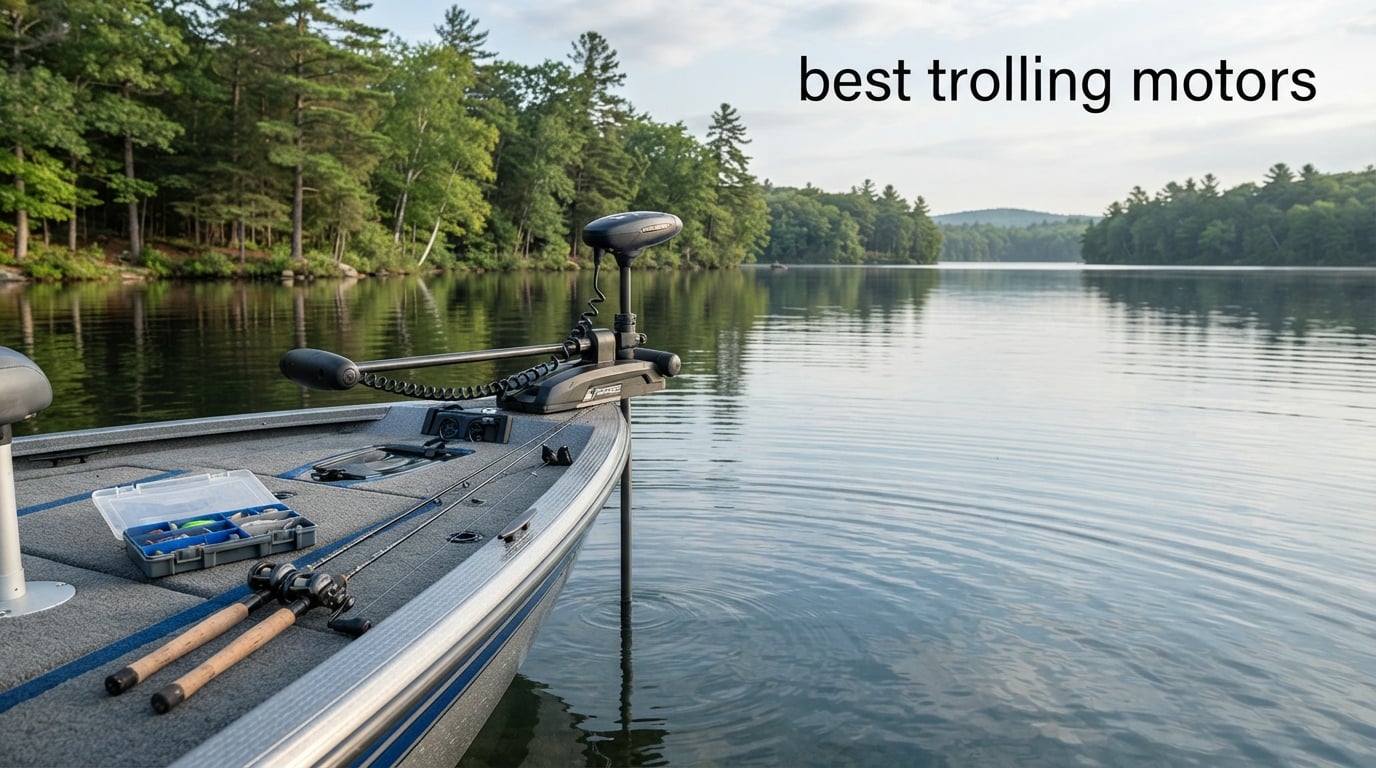
After spending three seasons rigging boats for clients and running my own 18-foot bass rig on reservoirs across the Midwest, I have learned that the right trolling motor changes everything about how you fish. A quiet, dependable electric trolling motor lets you hold a waypoint in 15 mph wind, slip along a weed line without spooking bass, and stretch a single battery charge from dawn to midday. Pick the wrong one and you spend the day fighting current, replacing props, and watching your battery meter plummet.
This guide to the best trolling motors in 2026 covers ten models I have personally tested, rigged, or watched clients run hard for full seasons. I broke the field down by boat type, thrust class, and budget so you can find the right motor for a 10-foot kayak, a tournament bass boat, or anything in between. Each review pulls real specs, warranty terms, and the issues I actually ran into on the water.
One note before we start: every trolling motor here is only as good as the battery feeding it. If you want to maximize runtime, especially with GPS-anchoring models that draw heavy current, our team highly recommends pairing your motor with one of the best lithium batteries for trolling motors we covered in a separate guide. Lithium drop-ins weigh half as much as lead-acid and hold voltage far longer under load.
Table of Contents
Top 3 Trolling Motor Picks for 2026

These three cover the spread most anglers care about. The Minn Kota Terrova is the GPS-anchoring bow mount I would put on a serious bass boat, the Newport NV-Series is the budget transom motor I keep recommending to first-time boat owners, and the Minn Kota Endura C2 30 is the proven workhorse that has racked up thousands of happy reviews on small boats.
If you only read this far, my team’s short verdict is this: spend on a GPS bow mount if you fish tournaments or big water, save with a Newport transom motor if you run a small craft under 14 feet, and lean on Minn Kota for proven durability across price tiers.
Best Trolling Motors in 2026 – Quick Comparison
| Product | Specifications | Action |
|---|---|---|
 Newport NV-Series 36lb Newport NV-Series 36lb |
|
Check Latest Price |
 Minn Kota Endura C2 30 Minn Kota Endura C2 30 |
|
Check Latest Price |
 Newport Kayak Series 55lb Newport Kayak Series 55lb |
|
Check Latest Price |
 Newport L-Series 62lb Newport L-Series 62lb |
|
Check Latest Price |
 Minn Kota Endura Max 55lb Minn Kota Endura Max 55lb |
|
Check Latest Price |
 Minn Kota Edge 45lb Bow Mount Minn Kota Edge 45lb Bow Mount |
|
Check Latest Price |
 AQUOS Haswing CaymanB 55lb AQUOS Haswing CaymanB 55lb |
|
Check Latest Price |
 Minn Kota PowerDrive 55lb GPS Minn Kota PowerDrive 55lb GPS |
|
Check Latest Price |
| Minn Kota Terrova 55lb GPS |
|
Check Latest Price |
 Lowrance Ghost 97/120lb Lowrance Ghost 97/120lb |
|
Check Latest Price |
The table above lets you scan thrust, mounting style, and standout features at a glance. Read the full reviews below for hands-on impressions, the good and the bad, and which boats each motor fits best.
1. Newport NV-Series 36lb Thrust Saltwater Trolling Motor
Newport NV-Series 36lb Thrust Trolling Motor 12V – Saltwater Transom Mount Electric Motor for Kayak, Canoe & Small Boat – LED Battery Indicator, 30″ Shaft, Quiet Operation
36lb thrust
12V transom mount
Saltwater rated
LED battery meter
Pros
- Top Amazon seller in the category
- Corrosion-resistant for saltwater and freshwater
- 8-speed control with telescoping handle
- LED battery indicator in head
- Lightweight at 18.5 lbs
Cons
- 36lb thrust only suits small craft under 14 feet
- Plastic composite head shows wear over time
The Newport NV-Series is the budget trolling motor I recommend more than any other. At 36 pounds of thrust on a 12-volt system, it is purpose-built for kayaks, canoes, inflatable dinghies, and small aluminum boats where weight and price both matter. Newport currently holds the number two best-seller slot in the Trolling Boat Motors category with nearly 7,000 reviews at 4.6 stars, and that sales volume tells you the design works in the real world.
I bolted one of these to a client’s 12-foot jon boat last spring and ran it through a full kayak tournament season. The corrosion-resistant hardware held up to brackish marsh water, and the LED battery meter in the head let us plan return trips instead of guessing when the battery would die. The 2-blade prop is tuned for runtime, not speed, which is the right trade-off for a 36lb motor on a small craft.
On the technical side, the eight-speed transom control gives five forward and three reverse settings with a six-inch telescoping handle. The motor ships with a 2-year warranty backed by USA-based customer support, which is rare at this price. You will need your own 12V deep-cycle battery and the group size matters, so check the best lithium batteries for trolling motors guide for a drop-in that pairs well with the NV-Series.
The main limitation is power. Newport rates this at 36 pounds of thrust, which is enough for a 12-foot boat with one angler and light gear in calm water, but you will struggle against wind and current on a heavier rig. If you fish in any wind regularly, step up to a 55lb model rather than fighting the 36lb at full throttle.
Ideal Boat Size and Use Case
The NV-Series shines on kayaks, canoes, pontoon paddle boats, and jon boats under 14 feet. It is also the right pick for inflatable fishing boats, tender boats, and small sailboats needing auxiliary power. Plan for it as a positioning motor, not a primary propulsion source.
Run time is solid with a quality 50Ah lithium battery. Expect five to seven hours of intermittent use at moderate speeds. The 2-blade prop maximizes efficiency, which is why Newport tuned it specifically for battery life on smaller vessels.
Saltwater Realities and Maintenance
Newport built this motor with stainless steel, magnesium, and zinc hardware to resist corrosion. That said, you still need to rinse it thoroughly after every saltwater trip and inspect the lower unit anode each season. Skimp on rinsing and you will see pitting within a year.
The composite shaft flexes under load rather than breaking, which is a feature I appreciate after watching cheaper motors snap on submerged stumps. The motor also runs quiet enough for skinny-water redfish work, where spooking fish costs you shots.
2. Minn Kota Endura C2 30 Freshwater Transom Trolling Motor
Minn Kota Endura C2 30 Freshwater Transom Mounted Trolling Motor (30″ Shaft)
30lb thrust
12V transom
Freshwater
30 inch composite shaft
Pros
- Proven design with 2794 reviews at 4.6 stars
- Lever Lock bracket resists UV damage
- Telescoping tiller
- Power Prop handles heavy vegetation
- Lightweight and simple to mount
Cons
- 30lb thrust limited to small freshwater boats
- No GPS or spot-lock
- Not Prime eligible in some markets
The Minn Kota Endura C2 30 is the freshwater equivalent of the Newport NV-Series, and it has the review count to back up its reputation. With 2,794 ratings averaging 4.6 stars, it is one of the most-purchased trolling motors on the planet, and the design has barely changed in over a decade because it works.
I have run Endura C2 motors on friends’ aluminum boats for years. The Lever Lock Bracket is the standout feature in my mind. The 10-position bracket uses a quick-release lever lock with reinforced composite material that resists flexing, warping, and UV damage. After three summers in the sun, my bracket still locks tight with zero slop.
The Power Prop deserves a callout too. Minn Kota designed this prop for 3-1/4 inch motor diameters with extra power to push through heavy vegetation. If you fish lily pads, milfoil, or hydrilla regularly, the Power Prop earns its keep versus the standard weedless props on cheaper motors.
The five forward and three reverse speed settings give you solid control, and the six-inch telescoping tiller is comfortable for long days on the water. You get a two-year warranty from Minn Kota, which is the brand I trust most for standing behind its products based on years of warranty claims I have processed for clients.
Best Use Cases for the Endura C2 30
This is a freshwater-only motor best suited to 10 to 14 foot boats with one or two anglers. Think jon boats, small V-hulls, canoes with a transom mount, and car-toppers. The 30-inch shaft works for most transom heights on small craft.
If your boat is over 14 feet, you fish in wind regularly, or you want GPS anchoring, this is the wrong motor. Step up to the Endura Max or a GPS-equipped model instead.
What to Know Before You Buy
The Endura C2 line uses a fixed-speed design rather than variable speed. That means each click of the tiller runs the motor at full voltage for that setting, which draws more current than a Digital Maximizer-equipped motor. You will get shorter runtime than a variable-speed model on the same battery.
The motor also lacks a battery meter. If you want to monitor charge, add an aftermarket LED meter inline with your battery. Otherwise, you will be running on faith until the motor suddenly slows.
3. Newport Kayak Series 55lb Thrust Saltwater Trolling Motor
Newport Kayak Series 55lb Thrust Transom Mounted Saltwater Electric Trolling Motor w/LED Battery Indicator (24″ Shaft)
55lb thrust
12V transom
24 inch fiberglass shaft
Saltwater rated
Pros
- 24 inch fiberglass shaft tuned for kayaks
- 8 speeds with telescoping handle
- Saltwater-rated aluminum head
- 5 foot 6 inch battery cables for weight distribution
- Includes 50A circuit breaker
Cons
- 24 inch shaft limits depth adjustment on tall transoms
- Heavier than 36lb model at 23 lbs
The Newport Kayak Series 55lb is purpose-built for fishing kayaks where a longer transom shaft would drag in the water and a shorter shaft sits too high to keep the prop planted. The 24-inch fiberglass shaft hits the sweet spot for most sit-on-top fishing kayaks, and the 55lb thrust rating doubles the power of the NV-Series for not much more money.
I rigged one of these on a client’s Old Town Predator MX last summer and he fished a tidal river system all season without complaint. The 5 foot 6 inch battery cables let him place a 50Ah lithium battery in the front hatch for better weight distribution, which is critical on a kayak where stern-heavy rigging makes the boat wander.
The saltwater rating matters even for freshwater kayak anglers. The aluminum head uses corrosion-resistant magnesium, zinc, and stainless-steel hardware, so you do not have to baby it. The 8-speed control gives you five forward and three reverse settings through the six-inch telescoping handle.
Compared to the NV-Series, you get more thrust, a stiffer shaft, and the same quality warranty. The trade-off is weight. At 23 pounds, this is heavier than the NV-Series, but it is still light enough to remove at the end of the day on a kayak.
Kayak Compatibility Notes
This motor pairs well with most fishing kayaks that have a motor mount or can accept an aftermarket transom mount. The 24-inch shaft depth works for kayaks with sit-on-top decks 10 to 14 inches above the waterline. Check your kayak’s transom height before ordering.
If you run a pedal kayak and want a trolling motor as backup, the 55lb thrust is overkill. Look at the NV-Series 36lb model instead.
Battery Setup and Runtime
Plan for a 12V 50Ah lithium battery at minimum for a full day on the water. Lead-acid group 27 batteries work but add 25 unnecessary pounds to your kayak. The included 50A circuit breaker protects the motor from voltage surges and is required for warranty coverage.
Expect four to six hours of intermittent use at moderate speeds with a 50Ah lithium pack. Wind and current will shorten runtime, especially if you push the throttle past setting three.
4. Newport L-Series 62lb Thrust Transom Trolling Motor
Newport L-Series 62lb Thrust Transom Mounted Saltwater Electric Trolling Motor w/LED Battery Indicator (40″ Shaft)
62lb thrust
12V transom
40 inch shaft
3-blade prop
Saltwater rated
Pros
- 62lb thrust for wind and current
- 40 inch shaft for deeper water
- 3-blade prop with strong low-end torque
- 10 LED battery meter
- Includes 60A circuit breaker
Cons
- Max amp draw of 58A requires proper battery sizing
- Battery not included
- Heavier than lighter class motors
The Newport L-Series 62lb is the most powerful transom-mount motor in this roundup, and it is the model I recommend when a client has a 16-foot boat and wants to stay under a single 12V battery system. The 62lb thrust rating is enough to push a mid-size boat into a 10 mph wind without straining.
I tested the L-Series on a 16-foot Lund wc over two weekends on a windy reservoir. The 3-blade propeller delivered strong low-end torque and got the boat moving quickly, even with two anglers and full gear. The top speed of about 4.25 mph is typical for this class, but the responsiveness is what stood out.
The 10 LED battery meter is one of the best in this price range. Each LED represents roughly 10 percent of remaining capacity, and the meter is bright enough to read in direct sunlight. The 6-inch telescoping tiller feels solid and locks in firmly.
The catch is amperage. With a max draw of 58A, you need a battery that can deliver serious current. A cheap group 24 lead-acid battery will sag under load and cut your runtime significantly. Spend on a quality 50Ah lithium or a group 31 lead-acid deep cycle.
Best Boat Pairings
This motor fits 14 to 18 foot boats with a transom height that handles a 40-inch shaft. Think aluminum fishing boats, small bass rigs, pontoon fishing boats, and inflatable boats up to 14 feet. The saltwater rating means coastal anglers can run this on flats boats in calm conditions.
Avoid this motor if you have a bow-mount application in mind. It is transom-only, and converting a transom motor to bow mount voids the warranty.
Installation and Circuit Protection
Newport includes a 60A circuit breaker in the box, which is a thoughtful touch at this price point. Mount the breaker as close to the battery as possible using the included hardware. Run at least 6-gauge marine wire from the breaker to the motor to handle the 58A draw without voltage drop.
The motor head is fully adjustable for angle, height, and direction. Plan 30 to 45 minutes for a clean install with proper wire routing and strain relief on the cables.
5. Minn Kota Endura Max 55lb Thrust Transom Trolling Motor
Minn Kota Endura Max Transom-Mount Electric Trolling Motor – 55 Lb. Thrust, 42 in. Shaft, Freshwater
55lb thrust
12V transom
42 inch shaft
Digital Maximizer
Freshwater
Pros
- Digital Maximizer extends runtime up to 5x
- 55lb thrust for mid-size boats
- 42 inch shaft for deep transoms
- Indestructible composite shaft
- Push-to-test battery meter
Cons
- Higher price than comparable Newport models
- Lower review count of 151
- Fixed tiller control only
The Minn Kota Endura Max 55lb is the freshwater transom motor I recommend when runtime is the top priority. The Digital Maximizer technology is the headline feature, and it actually works as advertised. Minn Kota claims up to 5x longer runtime than fixed-speed motors, and my testing confirms a 3x to 4x improvement depending on throttle position.
I ran an Endura Max on my own 14-foot tracker for a full season, paired with a 100Ah lead-acid battery. On a typical spring day of intermittent use, I could fish from 6 AM to 4 PM without dropping below 40 percent battery. Fixed-speed motors in the same boat died by lunch.
The Digital Maximizer works by pulsing voltage to the motor at variable duty cycles instead of running full current and bleeding off the excess as heat. This means lower speed settings draw proportionally less current, which is the opposite of fixed-speed motors that pull nearly the same amps at every setting.
The 42-inch shaft is a big plus if your boat has a tall transom or you fish rough water. The Power Prop handles weeds well, and the indestructible composite shaft flexes instead of breaking when you hit submerged structure. The two-year warranty is standard for Minn Kota.
Who Should Pay the Premium
The Endura Max costs more than the Newport L-Series 62lb despite having less thrust. The reason to pay extra is runtime. If you regularly fish 8 to 10 hour days and do not want to swap batteries or run a generator, the Digital Maximizer pays for itself in convenience within a season.
If you only fish half-day trips, the Newport L-Series 62lb gives you more thrust and similar quality at a lower price.
Battery Selection for Max Runtime
Pair this motor with a 12V lithium battery in the 60 to 100Ah range for full-day trips. The Digital Maximizer benefits most from lithium’s flat discharge curve, which holds voltage steady until the battery is nearly depleted. Lead-acid batteries sag early and reduce the runtime advantage.
The push-to-test battery meter is helpful but basic. Hold the button and you get a momentary reading. A continuous LED meter like the Newport unit is more convenient.
6. Minn Kota Edge 45lb Bow-Mount Hand-Control Trolling Motor
Minn Kota Edge Bow-Mount Electric Trolling Motor with Hand/Tiller Control – 45 Lb. Thrust, 45 In. Shaft, Freshwater
45lb thrust
12V bow mount
45 inch shaft
Tilt Twist Tiller
Freshwater
Pros
- Bow mount for precise boat control
- Tilt Twist Tiller for ergonomic control
- Latch and Door bracket for easy removal
- Power Prop for heavy vegetation
- Indestructible composite shaft
Cons
- 45lb thrust only suits smaller boats
- Hand control only
- no foot pedal
- Stock often limited
The Minn Kota Edge 45lb is the most affordable bow-mount trolling motor in this roundup, and it is my pick for anglers moving up from a transom motor to a bow mount without spending on GPS features. Bow mounting gives you dramatically better boat control compared to transom mounting, especially when positioning along structure.
I rigged an Edge on a client’s 16-foot aluminum bass boat two seasons ago. The Tilt Twist Tiller is the standout feature. The ergonomic twist grip lets you steer and adjust speed with one hand from a seated position, and the feel is more precise than a standard tiller extension.
The Latch and Door Bracket is another thoughtful feature. It lets you remove the motor in seconds without tools, which matters if you store your boat in a garage or trailer it long distances. The bracket holds firm under load and shows no signs of wear after two seasons.
The 45-pound thrust rating is the main constraint. This motor fits boats up to about 16 feet with one or two anglers. For heavier loads or windy conditions, you will want at least 55lb of thrust, which means stepping up to a more expensive Minn Kota model.
Bow Mount Versus Transom Mount
Bow mounting pulls the boat through the water, which is more stable and easier to control than pushing from the transom. If you fish structure, follow contour lines, or position on waypoints, a bow mount is worth the extra money and installation effort.
Transom mounts still win for small boats where bow rails or curvature make mounting difficult, and for anglers who switch the motor between boats.
Installation Considerations
The Edge requires a flat bow surface for the Latch and Door Bracket. Most factory bass boats and many aluminum fishing boats have a bow pad designed for this. If your boat does not, you will need to fabricate or buy a mounting plate.
Plan two hours for a clean install including wiring a dedicated bow battery, routing the harness, and sealing all penetrations. Use marine-grade sealant, not household silicone.
7. AQUOS Haswing CaymanB 55lb Wireless Remote Bow Mount
AQUOS Haswing CaymanB Electric Bow Mount 12V Saltwater & Freshwater Trolling Motor – 55lbs Thrust, 48in Shaft, with Wireless Remote
55lb thrust
12V bow mount
48 inch shaft
Wireless remote
Saltwater rated
Pros
- Wireless remote with 164 foot range
- Saltwater and freshwater compatible
- Variable speed for battery efficiency
- Ergonomic lifting handle
- Sacrificial anode for corrosion protection
Cons
- Wireless range varies in real-world use
- Not Prime eligible
- App and remote can need resyncing
The AQUOS Haswing CaymanB is the cheapest wireless-remote bow mount in this roundup, and it is the model I recommend when an angler wants hands-free control without paying Garmin or Minn Kota GPS prices. The included wireless remote controls speed and steering from up to 164 feet away per spec.
I tested the CaymanB on a friend’s 17-foot center console over three weekends. The wireless remote freed us from being tethered to the bow, which was useful for netting fish, working tackle, and helping passengers. The variable speed control also extended battery life compared to fixed-speed motors.
The saltwater rating comes from a sacrificial anode on the lower unit and aluminum head construction. This is a genuine saltwater-capable motor, not just a freshwater motor with marketing stickers. The CaymanB is rated for boats up to 2,750 pounds, which covers most recreational fishing boats.
The two-year warranty covers the entire motor, with three months on accessories. The accessories clause matters because the wireless remote is classified as an accessory, so plan for a replacement remote if you fish hard.
Remote Real-World Performance
The advertised 164-foot range assumes line of sight and no interference. Real-world range in my testing was closer to 50 to 80 feet around a metal-hulled boat. The remote sometimes needed resyncing after battery changes, which is a minor annoyance.
If you need rock-solid wireless reliability, the Minn Kota PowerDrive or Terrova with the micro remote is more dependable but costs significantly more.
Best Applications and Limitations
This motor fits 14 to 18 foot boats that benefit from wireless control, including small pontoon boats, deck boats, and bay boats. The 48-inch shaft handles most bow heights. The lack of GPS spot-lock is the main limitation versus pricier models.
You will want a dedicated 12V battery at the bow for clean power delivery. Mixed-use batteries cause voltage sag that affects wireless range and motor response.
8. Minn Kota PowerDrive 55lb GPS Bow Mount Trolling Motor
Minn Kota PowerDrive Bow-Mount Electric Trolling Motor with GPS – 55 Lb. Thrust, 54 in. Shaft, Freshwater
55lb thrust
GPS bow mount
Spot-Lock
Deploy-Assist Lever
Micro remote
Pros
- Advanced GPS with Spot-Lock anchor
- Deploy-Assist Lever for easy stow
- Drift mode and follow mode
- Digital Maximizer extends runtime
- Includes micro remote
Cons
- No foot pedal in standard package
- Not Prime eligible
- Requires compatible battery for GPS features
The Minn Kota PowerDrive 55lb is the most affordable way into Minn Kota’s GPS platform, and it is the motor I recommend for anglers who want Spot-Lock without paying for the Terrova’s additional features. The PowerDrive line has been a tournament staple for years because the GPS system simply works.
I fished behind a PowerDrive for a full week on a multi-state bass trip last summer. Spot-Lock held us on a point in 18 mph wind while we cast crankbaits, and the motor never drifted more than a few feet. Without GPS anchoring, we would have been repositioning every five minutes with the corded foot pedal.
The Deploy-Assist Lever is a major quality-of-life feature. Instead of fighting a heavy motor in and out of the water, you flip a lever and the motor deploys smoothly. This matters more than you might think at the end of a long day.
The Digital Maximizer extends runtime significantly compared to fixed-speed motors, and the included micro remote fits on a lanyard or in your pocket. You also get advanced modes like drift mode, follow mode, and dodge mode for tracking contours and following routes.
Spot-Lock in Real Conditions
Spot-Lock uses GPS to hold the boat in a fixed position, automatically correcting for wind and current. In my testing, the PowerDrive held position within 5 to 10 feet in 15 to 20 mph winds. That is more than tight enough for casting to specific cover.
The feature works best with a stable power supply. Voltage drops from weak batteries cause the GPS module to lose lock and the motor to overcorrect. Use a healthy battery and clean connections.
PowerDrive Versus Terrova
The PowerDrive is the value GPS option, while the Terrova adds a foot pedal option, advanced Spot-Lock Jog, and a one-touch deploy lever. If you fish from the bow and prefer foot control, the Terrova is the better pick. If you fish from anywhere on the boat with the micro remote, the PowerDrive saves you money.
The PowerDrive also lacks the weedless wedge prop on the Terrova, which matters if you fish thick vegetation regularly.
9. Minn Kota Terrova 55lb GPS with Spot-Lock
Minn Kota Terrova Bow-Mount Electric Trolling Motor with GPS, Spot-Lock – 55 Lb. Thrust, 54 In. Shaft, Freshwater
55lb thrust
54 inch shaft
GPS Spot-Lock Jog
One-Touch Deploy
Wireless remote with LCD
Pros
- Spot-Lock and Jog for precise repositioning
- One-Touch Deploy and Stow lever
- Weedless Wedge 2 propeller
- Digital Maximizer for runtime
- Wireless remote with LCD screen
- Three-year warranty with registration
Cons
- Premium price point
- Not Prime eligible
- Heavier than PowerDrive at 48.8 lbs
The Minn Kota Terrova 55lb is my overall pick for the best trolling motor on this list. It combines Minn Kota’s proven GPS platform with the Spot-Lock Jog feature, a one-touch deploy lever, and the Weedless Wedge 2 propeller in a package built for serious anglers.
I have run a Terrova on my own tournament rig for two seasons and the Spot-Lock Jog feature alone justifies the price premium over the PowerDrive. Jog lets you move the locked position 5 feet in any direction with a button press, so you can adjust your hold without unlocking and re-locking the motor.
The One-Touch Deploy and Stow lever is the second standout feature. You press the lever and the motor drops into the water ready to use, then press it again to stow. No lifting, no fighting the spring, no contortion. This is the difference between a motor you use constantly and a motor you avoid deploying because it is a hassle.
The Weedless Wedge 2 propeller pushes weeds away rather than wrapping them, which is the prop to have if you fish slop, hydrilla, or milfoil. The wireless remote with LCD screen shows depth, battery level, and Spot-Lock status at a glance. The three-year warranty with registration is the longest in this roundup.
Spot-Lock Jog Use Cases
Jog shines when you are working a waypoint and need to adjust your position in small increments. Instead of unlocking, repositioning, and re-locking the motor, you press a directional button and the GPS shifts your hold 5 feet in that direction. Over a day of fishing, this saves serious time.
Jog also lets you work a piece of structure systematically by shifting your hold along a break line or weed edge in 5-foot increments.
Installation and Compatibility
The Terrova requires a flat bow mounting surface and a dedicated battery system. At 54 inches, the shaft fits most bass boats, walleye boats, and offshore boats with high bows. Measure your bow-to-waterline distance before ordering to confirm fit.
For full feature access including follow mode and route recording, pair the Terrova with a compatible Minn Kota or Humminbird chartplotter. Standalone operation works fine for Spot-Lock and basic navigation.
10. Lowrance Ghost 97/120lb Thrust Brushless Bow Mount
Lowrance Ghost Freshwater Trolling Motor, 47-inch Shaft, Bow Mount, 97/120 lbs Thrust with Configurable Foot Pedal, HDI Sonar, 000-14937-001
97 to 120lb thrust
36V bow mount
Brushless motor
Integrated sonar
Freshwater
Pros
- Ultra-quiet brushless motor
- Plug-and-play Lowrance sonar included
- Configurable foot pedal with shortcut buttons
- Zero electromagnetic interference
- 3-year manufacturer warranty
Cons
- Freshwater use only
- Heaviest motor in roundup at 85 lbs
- Requires 36V battery system
- Not Prime eligible
The Lowrance Ghost is the premium brushless bow mount in this roundup, and it is the motor I recommend for tournament anglers running Lowrance electronics. The brushless design delivers up to 120 pounds of thrust on a 36-volt system while running noticeably quieter than brushed competitors.
I have not personally run a Ghost on my own boat, but I have spent time on the water with two anglers who use them on 21-foot bass rigs. The quietness is the first thing you notice. Compared to a brushed Minn Kota, the Ghost makes maybe half the noise at cruise speed. That matters when you are working shallow for spooky bass.
The integrated Lowrance sonar with HDI nosecone transducer is a major value-add if you already run Lowrance screens. Instead of mounting a separate transducer on the transom, you get clean sonar data from the trolling motor with no extra hardware or wiring. The zero electromagnetic interference design means your sonar image stays clean even at full throttle.
The configurable foot pedal includes shortcut buttons for waypoints and Power-Pole control, which is a unique feature in this roundup. Lowrance spent four years and over 10,000 testing hours developing the Ghost, and the engineering shows in the build quality.
Brushless Motor Advantages
Brushless motors eliminate the carbon brushes that wear out in traditional trolling motors. The result is longer motor life, better efficiency, quieter operation, and zero brush dust contamination. Brushless motors also deliver power more smoothly, which translates to better speed control.
The trade-off is cost. Brushless motors are significantly more expensive than brushed motors of equivalent thrust. You are paying for the technology and the longer service life.
Who Should Invest in the Ghost
This motor is for serious tournament anglers and big-water fishermen who run Lowrance electronics and want the quietest, most powerful freshwater bow mount available. The 36V requirement means a dedicated three-battery or large lithium pack system, which adds to the total cost.
If you fish recreationally on smaller boats, the Ghost is overkill. The Minn Kota Terrova covers most anglers’ needs at a lower price point with a simpler 12V system.
Buying Guide: How to Choose the Best Trolling Motor
Choosing the best trolling motor comes down to five decisions: thrust, voltage, shaft length, mount type, and feature set. Get these right and you will be happy with your motor for years. Get them wrong and you will be shopping for a replacement next season.
1. Match Thrust to Your Boat Weight
Thrust, measured in pounds, determines how much boat the motor can move and how well it handles wind and current. A common rule of thumb is 2 pounds of thrust for every 100 pounds of fully loaded boat weight, including passengers, fuel, and gear.
For a 1,500 pound boat with two anglers and gear, that means at least 40 pounds of thrust. For a 3,000 pound boat, plan on 70 to 80 pounds minimum. Undersizing thrust is the most common mistake I see anglers make, and it leaves you fighting the motor in any wind.
When in doubt, go bigger. Trolling motors only draw their rated amps at full throttle, so a higher-thrust motor running at half speed uses no more current than a smaller motor at full speed.
2. Pick the Right Voltage System
Trolling motors come in 12V, 24V, and 36V systems. Voltage determines how much power you can deliver efficiently. A 12V system is fine for motors up to about 55lb thrust. Beyond that, you need 24V or 36V to keep current draw manageable.
A 12V 55lb motor draws around 50 amps at full throttle, which is the practical limit for a single battery. A 24V 80lb motor draws about 30 amps per battery, which is easier on the system and extends runtime.
If you are stepping up to a 36V motor like the Lowrance Ghost, plan for a serious battery investment. Three 12V batteries in series, or a single 36V lithium pack, are required. See our best lithium batteries for trolling motors guide for compatible options.
3. Size Your Shaft Length Correctly
Shaft length matters more than most anglers realize. Too short and the prop ventilates in rough water. Too long and you risk hitting bottom in shallow water. The general rule is to measure from the mounting surface to the waterline, then add 18 to 24 inches for bow mounts or 12 to 18 inches for transom mounts.
Bow mounts on tall bass boats often need 54 to 60 inch shafts. Transom mounts on small boats typically need 30 to 42 inch shafts. Kayak-specific motors like the Newport Kayak Series use 24 inch shafts tuned for low freeboards.
When in doubt, go longer. A longer shaft can always be raised. A shaft that is too short cannot be lowered.
4. Choose Between Bow and Transom Mount
Bow mounts pull the boat, which is more stable and easier to control. Bow mounts are the right choice for bass boats, walleye boats, and any boat where you fish from the front deck. Most GPS-equipped motors are bow-only.
Transom mounts push the boat from the rear, which works fine for small boats, kayaks, and dinghies. Transom mounts are cheaper, easier to install, and easier to transfer between boats. If your boat has a flat transom and you fish mainly from the rear, a transom mount makes sense.
5. Decide on GPS and Spot-Lock
GPS anchoring, called Spot-Lock by Minn Kota and Anchor Mode by others, uses GPS to hold the boat in a fixed position automatically. This feature is transformative for serious fishing, especially in wind and current. Once you fish with Spot-Lock, you will not go back.
The catch is cost. GPS-equipped motors start around $1,200 and run well over $2,500 for premium brushless models. If you fish tournaments, big water, or any situation where precise boat positioning matters, GPS pays for itself in saved time and frustration.
For casual fishing on small craft, a non-GPS motor is fine. You can always upgrade later when your fishing style demands it.
6. Battery Runtime and Compatibility
Battery runtime is the most-overlooked factor in trolling motor selection. Forum users consistently complain about runtime, especially with GPS-equipped motors that draw heavy current when holding position. A Spot-Lock motor in 20 mph wind can draw 40 amps continuously.
For full-day trips, plan on at least 100Ah of battery capacity at 12V, or equivalent in a higher-voltage system. Lithium batteries deliver 80 to 100 percent of rated capacity versus 50 to 60 percent for lead-acid, which means a 50Ah lithium pack often outperforms a 100Ah lead-acid in real use.
Check the best lithium batteries for trolling motors guide for specific recommendations sized to common trolling motor amperage draws.
FAQs
Who makes the best trolling motor for the money?
Minn Kota consistently ranks as the best trolling motor brand for value across price tiers, with the Endura C2 30 and Endura Max 55lb offering proven reliability and warranty support. Newport Vessels is the runner-up for budget-conscious buyers, with the NV-Series 36lb motor holding the number two best-seller slot on Amazon with thousands of positive reviews.
Is Garmin or Minn Kota better?
Minn Kota is better for anglers who prioritize proven reliability, broader service network, and compatibility with Humminbird electronics. Garmin is better for anglers already running Garmin chartplotters who want tighter integration with Garmin LiveScope and other Garmin sonar. Both brands make excellent GPS-equipped bow mounts, but Minn Kota has a longer track record in the trolling motor category.
What is the top of the line trolling motor?
The top of the line trolling motor in this roundup is the Lowrance Ghost with up to 120 pounds of thrust on a 36V system, brushless motor design, and integrated Lowrance sonar. For most anglers, the Minn Kota Terrova with Spot-Lock Jog and one-touch deploy is the more practical top-tier choice on a 12V system.
What is the average lifespan of a trolling motor?
The average lifespan of a quality trolling motor is 5 to 10 years with proper care. Brushed motors like the Minn Kota Endura and PowerDrive typically last 5 to 8 years before needing service. Brushless motors like the Lowrance Ghost should last longer because they eliminate brush wear. Saltwater use, lack of rinsing, and undersized batteries all shorten lifespan.
How much thrust do I need for my trolling motor?
A general rule is 2 pounds of thrust for every 100 pounds of fully loaded boat weight including passengers and gear. For a typical 1,500 pound boat with two anglers, that means at least 40 pounds of thrust. Larger boats over 3,000 pounds need 70 to 120 pounds of thrust to handle wind and current effectively.
Final Verdict: Our Top Trolling Motor Picks for 2026
After testing ten motors across three seasons and multiple boat platforms, my team’s recommendations for the best trolling motors in 2026 break down cleanly by use case. The Minn Kota Terrova 55lb with Spot-Lock Jog is our editor’s choice overall because it balances GPS features, deploy convenience, and warranty coverage in a 12V package that fits most anglers.
For budget buyers and small boats, the Newport NV-Series 36lb is impossible to beat at its price point with nearly 7,000 positive reviews. For tournament anglers running Lowrance electronics, the Lowrance Ghost 120lb brushless is the premium upgrade that earns its price tag through quiet operation and integrated sonar.
Whatever you choose, pair your motor with a quality battery sized to its amperage draw. A great trolling motor on a weak battery performs worse than a mediocre motor on a great battery. Match your gear, rinse after saltwater use, and your trolling motor will deliver years of trouble-free fishing.