
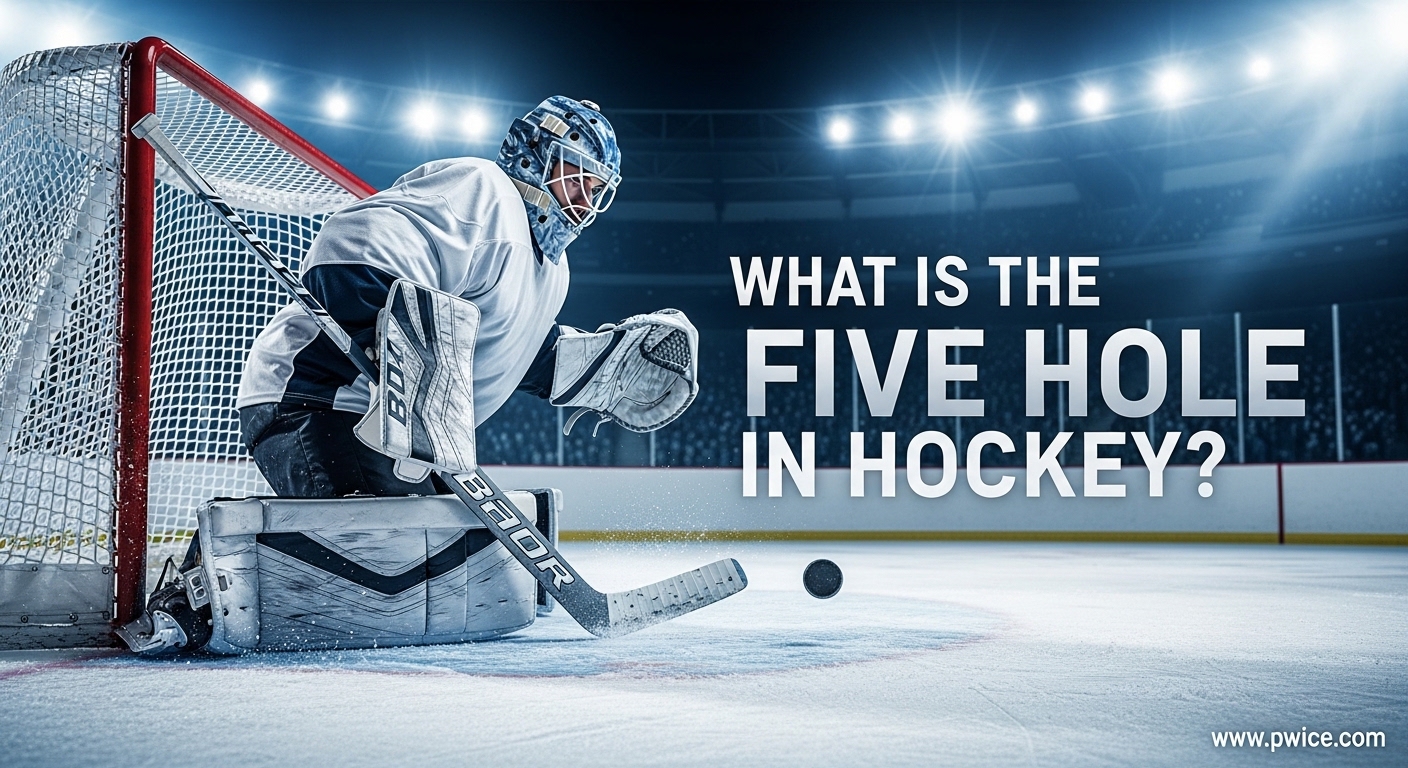
The five hole in hockey is the space between a goaltender’s leg pads, representing the fifth and most vulnerable scoring target on a goal. Every hockey player, from beginners learning to shoot to goalies learning positioning, needs to understand this fundamental concept. In this guide, I will explain exactly what the five hole is, why it got its name, and how both shooters and goalies approach this critical area of the net.
Table of Contents
What Is the Five Hole in Hockey?
The five hole is the gap between a goalie’s legs where pucks can slip through when the goaltender is in ready position. This opening sits at the bottom center of the net, directly between the two leg pads.
To fully understand the five hole, you need to know about the five primary shooting targets on a hockey goal. Hockey players and coaches number these holes to quickly communicate shooting strategies:
1. High Glove Side (Top Left): The upper corner above the goalie’s glove hand. This is the most difficult target for goalies to reach quickly.
2. Low Glove Side (Bottom Left): The lower corner on the glove side, just above the pad but below the goalie’s catching glove.
3. High Stick Side (Top Right): The upper corner above the goalie’s stick or blocker hand. Like the high glove side, this requires precise shooting.
4. Low Stick Side (Bottom Right): The lower corner on the stick side, between the pad and the goalie’s body.
5. The Five Hole (Center Bottom): The space between the goalie’s legs, the only target that sits in the middle of the net rather than a corner.
The five hole is unique because it sits at ice level and requires the puck to travel through the goalie’s equipment rather than around it. This makes it both an attractive target for shooters and a constant concern for goaltenders.
Why Is It Called the Five Hole?
The term “five hole” was first recorded in 1976 by NHL player Reggie Leach of the Philadelphia Flyers. During interviews, Leach used the phrase to describe scoring between the goalie’s legs, and the hockey world quickly adopted it.
What makes this term interesting is that hockey players never refer to holes one through four by number. You will hear announcers say “glove side” or “stick side,” but no one says “he shot it through the two hole.”
The five hole became the exception because it needed a specific name. Unlike the corners which have directional descriptions, the gap between a goalie’s legs had no simple way to describe it. The term stuck so firmly that Merriam-Webster officially added “five hole” to the dictionary in 2017, recognizing it as legitimate hockey terminology.
Some hockey historians suggest the numbering system originated from bowling, where the five pin sits in the center. Others believe it simply emerged organically from coaches diagramming the five scoring areas on chalkboards. Either way, Reggie Leach gave the term its permanent place in hockey vocabulary.
How Goalies Defend the Five Hole In 2026?
Goaltenders spend countless hours practicing techniques to seal off the five hole. The most fundamental defensive position is the butterfly style, where the goalie drops to their knees with pads flared outward, creating a wall that closes the gap between the legs.
When a goalie drops into the butterfly position properly, the inner edges of both leg pads press together or overlap, eliminating the five hole entirely. This is why you see goalies immediately drop to their knees when a shooter approaches on a breakaway.
However, the butterfly is not perfect. The five hole opens up whenever a goalie moves laterally across the crease. During these transitions, the legs separate slightly to allow skating movement, creating brief windows where pucks can sneak through.
Elite goaltenders use additional techniques to protect the five hole:
Stick Coverage: The goalie’s stick blade sits on the ice between the pads, acting as a barrier for low shots. Proper stick positioning can block pucks even when the legs separate slightly.
Blocker Positioning: Experienced goalie coaches emphasize that blocker hand positioning controls most five hole coverage. The blocker and stick work together to seal the gap during lateral movements.
Paddle Size Selection: Goalies must choose stick paddles that match their height and stance. A paddle that is too short leaves gaps at the bottom, while one that is too tall forces the goalie to hold their hands awkwardly, opening holes elsewhere.
How to Score Through the Five Hole In 2026?
Players looking to score through the five hole need to understand when this target is vulnerable and how to exploit it. The five hole opens most often during lateral movement, quick transitions, or when goalies overcommit to one side.
The most effective five hole goals come from these situations:
Breakaways: When a player approaches the goalie one-on-one, the goalie must respect shot options to both sides. A well-timed deke that forces the goalie to open their legs creates the perfect five hole opportunity.
Lateral Passes: During cross-ice passes, goalies must slide across the crease to follow the puck. This lateral movement naturally separates the legs, leaving the five hole exposed for brief moments.
Rebounds: After an initial save, goalies often scramble to reset their position. During this recovery, their legs may not seal completely, creating five hole chances for alert forwards.
Successful five hole shooting requires specific techniques:
Quick Release: The five hole only stays open for fractions of a second. Players need to release shots without telegraphing their intent, catching goalies before they can seal the gap.
Low Shot Trajectory: The five hole sits at ice level. Wrist shots and snap shots that stay flat along the ice have the best chance of slipping through before the goalie drops into butterfly.
Deception: Looking pass then shooting, or faking to one side before sliding the puck between the pads, forces goalies to move and open their five hole. The best five hole shooters are masters of deception.
Famous Five Hole Goals in NHL History
Some of hockey’s greatest players built their scoring reputations partly on their ability to exploit the five hole. These players combined quick hands with perfect timing to slip pucks through goalies at the highest level.
Wayne Gretzky: The Great One scored 894 career NHL goals, and many of them came through patient five hole shots on breakaways. Gretzky’s ability to wait for goalies to commit before sliding the puck between their pads became legendary.
Sidney Crosby: Known for his incredible hand-eye coordination, Crosby has scored countless five hole goals by pulling pucks from seemingly impossible angles and slipping them through tight gaps. His backhand five hole shots are particularly feared.
Brett Hull: With one of the quickest releases in NHL history, Hull capitalized on goalies who could not seal their five hole fast enough. His wrist shot was lethal when fired low between the pads.
These players demonstrate that five hole scoring is not about power. It is about precision, timing, and reading goalie positioning to exploit the brief moments when the five hole opens.
Pro Tips for Players and Goalies
Whether you are trying to score more goals or stop more shots, understanding five hole mechanics gives you a real advantage. Here are practical tips from experienced players and coaches.
Tips for Goalies
Get your paddle size measured correctly. A proper fitting paddle should allow your blocker hand to sit comfortably at your side with the blade flat on the ice. Most goalies use paddles that are slightly too short, which leaves gaps at the bottom of the five hole.
Focus on blocker positioning. Keep your blocker hand centered in front of your body rather than drifting to the side. This central position helps seal the five hole during lateral slides and transitions.
Squeeze your legs together when dropping into butterfly. Simply falling to your knees is not enough. Actively press your inner pad edges together to eliminate any gap between them.
Practice post coverage. Many five hole goals happen when goalies hug the post for wraparound attempts, leaving the five hole exposed for backhand shots. Work on sealing the post while maintaining five hole coverage.
Tips for Players
Watch the goalie’s stance during warmups. Goalies with wider stances naturally have larger five holes. Target these goalies with low shots through the middle when you get chances in games.
Be patient on breakaways. Rushing your shot often results in hitting the goalie’s pads. Take that extra half-second to force the goalie to open their legs, then slide the puck through the gap.
Shoot early on lateral plays. When you receive a cross-ice pass, release your shot immediately while the goalie is still sliding across the crease. Do not wait for them to set their position.
Practice low shots during drills. Many players practice raising the puck but neglect accuracy at ice level. The five hole requires precise low shots that stay flat on the ice surface.
Frequently Asked Questions
Why do they call it the fifth hole in hockey?
The term originated in 1976 when Philadelphia Flyers player Reggie Leach first used it to describe scoring between a goalie’s legs. While hockey has five numbered scoring targets, only the fifth hole is commonly referred to by number because it needed a specific name unlike the corners which have directional descriptions.
How many holes are in a hockey goal?
Hockey traditionally recognizes five primary shooting targets called holes: high glove side, low glove side, high stick side, low stick side, and the five hole between the legs. Some modern coaches also refer to a 6 hole (under the glove arm) and 7 hole (under the blocker arm), but the classic five hole system remains standard.
Why is the five hole a weak spot in hockey?
The five hole is vulnerable because goalies must keep their legs apart to move laterally, and the gap naturally opens during transitions. When goalies drop into butterfly position, the five hole closes, but during skating movements or when a goalie overcommits to one side, the gap between the pads becomes an accessible target.
What is the 6 hole and 7 hole in hockey?
The 6 hole refers to the small gap under the goalie’s glove-side armpit, while the 7 hole is the space under the blocker-side armpit. These terms emerged more recently and are less commonly used than the five hole, but some coaches use them to describe additional scoring targets above the shoulders.
Who invented the term five hole?
NHL player Reggie Leach of the Philadelphia Flyers first recorded the term in 1976. While the concept of five scoring areas existed before Leach, he popularized the phrase ‘five hole’ during interviews, and it became the standard hockey terminology for describing the space between a goalie’s legs.
Conclusion
Understanding the five hole in hockey makes you a smarter player whether you are shooting or defending. Shooters who master the timing and technique of five hole shots add a reliable weapon to their scoring arsenal. Goalies who focus on proper butterfly technique, paddle sizing, and blocker positioning can eliminate this vulnerability and build confidence in their net presence. Now that you know the history, mechanics, and strategies surrounding the five hole, take these insights to the rink and elevate your game.