
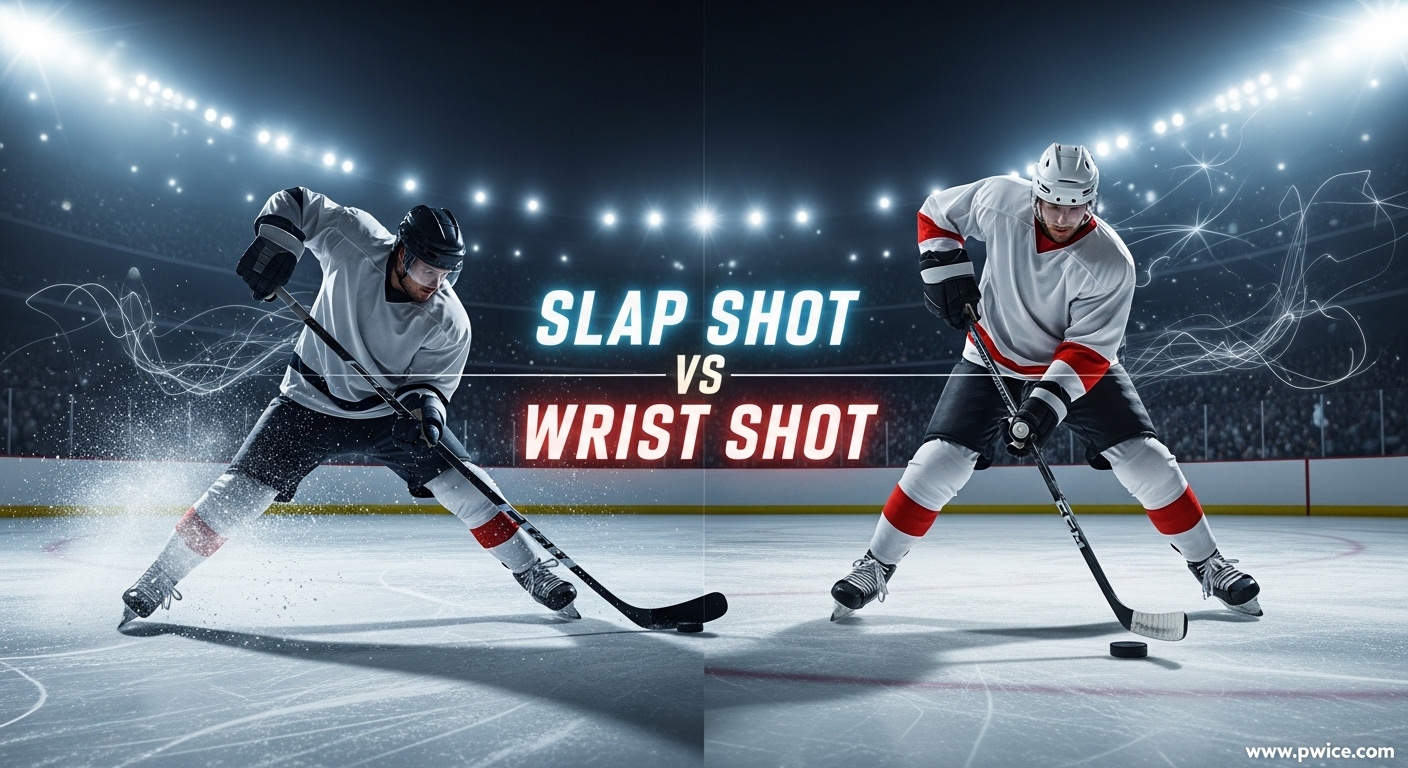
Understanding the difference between a slap shot vs wrist shot is essential for every hockey player who wants to improve their scoring ability. These two fundamental shooting techniques serve different purposes on the ice, and knowing when to use each one can significantly impact your game.
In this guide, I will break down exactly what makes each shot unique, how to execute them properly, and when to choose one over the other. Whether you are a beginner learning the basics or an experienced player looking to refine your technique, this comparison will help you make smarter decisions during gameplay.
Table of Contents
Slap Shot vs Wrist Shot: Two Core Shooting Techniques
The slap shot and wrist shot represent the two most common shooting methods in ice hockey. Each technique has distinct mechanics, advantages, and ideal use cases that players must master to become versatile offensive threats.
What is a Slap Shot
A slap shot is a hockey shooting technique where the player generates maximum power through a wind-up motion, striking the ice 12 to 18 inches behind the puck to create stick flex, then transferring that stored energy into the puck for explosive speed.
The mechanics involve raising your stick high above your head or shoulder level, then bringing it down in a controlled arc. The key contact point with the ice before the puck creates stick flex, which acts like a spring loading energy. When the stick finally makes contact with the puck, it releases that stored energy, sending the puck toward the net at speeds ranging from 80 to over 100 miles per hour.
Proper weight transfer is critical for an effective slap shot. You should shift your weight from your back foot to your front foot as you strike the puck. This downward pressure during follow-through adds additional power and helps keep the shot accurate. The slap shot is widely considered the fastest and most powerful shooting technique in hockey.
How to Execute a Proper Slap Shot
- Position the puck 12 to 18 inches in front of your back foot.
- Raise your stick with both hands in a controlled wind-up motion.
- Strike the ice behind the puck to load your stick flex.
- Transfer weight from back foot to front foot during contact.
- Follow through toward your target with your blade pointing at the net.
What is a Wrist Shot?
A wrist shot is a hockey shooting technique that relies on a quick snapping motion of the wrists and forearms to generate power and accuracy, characterized by a rapid release with no wind-up time required, making it ideal for deception and close-range scoring.
Unlike the slap shot, the wrist shot keeps continuous contact between the stick blade and the puck throughout the shooting motion. You start with the puck near your back foot, pull it forward while cupping it with your blade, then snap your wrists forward at the last moment to create lift and velocity.
The wrist shot typically generates puck speeds between 70 and 90 miles per hour, though elite NHL players can exceed these numbers. What the wrist shot sacrifices in raw power, it makes up for in accuracy, quick release, and the ability to surprise goaltenders with deception. The shooter can change the angle of their blade at the last second, making it difficult for goalies to read where the puck is going.
How to Execute a Proper Wrist Shot
- Start with the puck near your back foot on the stick side.
- Pull the puck forward while maintaining blade control and cupping motion.
- Transfer weight from back to front foot as you approach the release point.
- Snap your wrists forward sharply while pointing the blade toward your target.
- Follow through completely with your blade finishing high for elevation.
Slap Shot vs Wrist Shot: Key Differences at a Glance
This comparison table breaks down the essential differences between these two fundamental hockey shooting techniques.
| Characteristic | Slap Shot | Wrist Shot |
|---|---|---|
| Power | Very High (80-100+ mph) | Moderate (70-90 mph) |
| Accuracy | Moderate | High |
| Setup Time | 1-2 seconds (wind up required) | Instant (no wind up) |
| Release Speed | Slow | Fast (quick release) |
| Best Range | Long distance (blue line, point) | Close to medium range (slot, circles) |
| Deception | Low (easy to read) | High (hard to predict) |
| Ideal Use | Power plays, one-timers, point shots | Scoring chances, deflections, screens |
| NHL Usage 2026 | Declining (predictable) | Dominant (versatile) |
Power vs Accuracy: Which Shot Wins
The slap shot delivers superior raw power, making it the go-to choice when you need to beat a goaltender with pure velocity. NHL hardest shot competitions regularly see slap shots exceeding 100 miles per hour. This speed gives goalies minimal reaction time, especially from long range.
However, the wrist shot wins the accuracy battle decisively. Because the blade maintains contact with the puck throughout the entire motion, shooters can make last-second adjustments to place the puck exactly where they want it. The quick release also means goalies have less time to track the puck, compensating for the lower velocity with better placement and deception.
From a goaltender’s perspective, wrist shots are often harder to save despite being slower. The unpredictable release point and ability to change angles mid-motion create a challenging read. Slap shots, while faster, give goalies more time to prepare because of the obvious wind-up motion.
When to Use Each Shot?
When to Use a Slap Shot
- Power play situations with time and space at the point
- One-timer opportunities when receiving a cross-ice pass
- Long-range shots from the blue line with traffic in front
- When the goalie is screened and you need to get the puck through traffic
- Shooting through lanes when accuracy matters less than velocity
When to Use a Wrist Shot
- In tight scoring areas around the net and slot
- When you need to release the puck quickly before defenders close gaps
- Shooting through screens when you need to pick corners
- Breakaway situations requiring deception and placement
- Off the rush when carrying speed and defenders are backchecking
Why Are Slap Shots Declining in Modern Hockey?
Professional hockey has seen a significant shift away from slap shots over the past decade. The modern game emphasizes speed and quick decision-making, leaving little time for the 1-2 second wind-up a slap shot requires. Defensive systems are tighter, shot-blocking is more prevalent, and goaltending techniques have evolved to handle high-velocity shots more effectively.
Today, even defensemen at the point often prefer quick wrist shots or snap shots over full wind-up slap shots. The faster release reduces the chance of the puck being blocked and creates more rebound opportunities. Players who master the wrist shot and snap shot find themselves with more scoring chances in today’s fast-paced game.
The Snap Shot: The Best of Both Worlds
The snap shot represents a hybrid shooting technique that combines the quick release of a wrist shot with increased power approaching that of a slap shot. It has become increasingly popular in modern hockey as players look for ways to generate velocity without the lengthy wind-up.
A snap shot begins like a wrist shot with the puck on your stick, but incorporates a small loading motion where you draw the puck back slightly before snapping it forward. This abbreviated loading creates some stick flex without the full wind-up of a slap shot. The result is a shot that travels faster than a pure wrist shot while releasing nearly as quickly.
Many professional players now rely on the snap shot as their primary scoring weapon. It offers the deception and quick release needed to beat modern goaltenders while generating enough power to score from medium range. If you have already mastered the wrist shot, learning the snap shot techniques should be your next priority for offensive improvement.
Common Mistakes to Avoid
Slap Shot Mistakes
- Striking too far behind the puck – This reduces power and creates a slow, fluttering shot. Keep the ice contact point within 12-18 inches.
- Poor weight transfer – Failing to shift from back foot to front foot costs you significant power potential.
- Looking down during follow through – Keep your eyes on the target, not the puck, throughout the entire motion.
- Over-winding – A massive wind-up telegraphs your shot and gives defenders time to block it.
Wrist Shot Mistakes
- No follow through – Stopping your motion at the puck kills both power and accuracy. Finish with your blade pointing at the target.
- Incorrect blade angle – Opening or closing the blade face at release sends shots wide or into the goalie’s chest.
- Telegraphing the shot – Looking at your target too early gives the goalie time to prepare. Deception comes from looking one way and shooting another.
- Rushing the release – While quick release is important, sacrificing proper mechanics for speed reduces accuracy.
Tips for Improving Your Shooting
Improving Slap Shot Power
Practice your weight transfer off the ice first to build muscle memory. Focus on flexing the proper amount of stick for your strength level. A stick with appropriate flex rating makes a significant difference. Off-ice training should include core strengthening and rotational exercises that mimic the shooting motion.
Improving Wrist Shot Accuracy
Set up targets in the corners of the net and practice hitting them consistently from various distances. Work on your quick release by having a partner pass you pucks that you shoot without settling. Practice shooting while moving, as most game situations require shooting off the rush or after receiving a pass in motion.
Stick Flex Considerations
Your stick flex rating affects both shots differently. A lower flex (more whippy) helps generate power on slap shots and snap shots through easier loading. A higher flex (stiffer) provides better control for wrist shots and passing. Most adult players use sticks between 75 and 100 flex, but your strength and shooting style should determine your choice.
Frequently Asked Questions
What is the difference between a slap shot and a wrist shot?
A slap shot uses a wind-up motion and strikes the ice behind the puck to generate maximum power through stick flex, while a wrist shot uses continuous blade contact and wrist snap for quick release and accuracy. Slap shots prioritize velocity (80-100+ mph) while wrist shots prioritize placement and deception with faster release times.
What is the hardest shot to save in hockey?
Wrist shots are often harder for goalies to save despite being slower than slap shots. The quick release and deception factor give goalies less time to track the puck, and the ability to change blade angles at the last second makes the shot direction unpredictable. Well-placed wrist shots to the corners are particularly challenging.
Why no more slap shots?
Slap shots have declined because modern defensive systems leave less time for the 1-2 second wind-up required. Shot blocking is more prevalent, and goalies are better trained to handle high-velocity shots. The snap shot and quick wrist shot have become preferred alternatives because they offer nearly as much power with faster release and less predictability.
How fast is the wrist shot compared to the slap shot?
Wrist shots typically travel 70-90 miles per hour, while slap shots range from 80-100+ mph. Elite NHL players can exceed these ranges in both categories. While slap shots are faster, the wrist shot’s quick release often makes it more effective in game situations because goalies have less time to react.
What is a snap shot in hockey?
A snap shot is a hybrid technique combining the quick release of a wrist shot with increased power similar to a slap shot. It involves a small loading motion without a full wind-up, creating stick flex while maintaining the fast release needed to beat modern goaltenders. Many professional players now use the snap shot as their primary scoring weapon.
Which shot should beginners learn first?
Beginners should learn the wrist shot first because it teaches proper blade control, follow through, and weight transfer fundamentals. The wrist shot is more versatile and immediately useful in game situations. Once comfortable with wrist shots, players can progress to snap shots and eventually slap shots as they develop strength and timing.
Conclusion: Master Both for Complete Offensive Versatility
Understanding slap shot vs wrist shot differences gives you the knowledge to choose the right technique for every scoring opportunity. The slap shot remains valuable for power play situations and long-range bombs when you have time and space. The wrist shot dominates modern hockey with its quick release, accuracy, and deception capabilities that create goals in tight spaces.
The best players develop proficiency in both techniques plus the hybrid snap shot. This versatility keeps defenders and goalies guessing while giving you options in any situation. Start with wrist shot fundamentals if you are new to hockey, then add snap shots and slap shots as your skills progress. Practice each technique with purpose, focusing on proper mechanics rather than just firing pucks at the net.
Whether you are playing beer league or aspiring to higher levels, mastering these shooting techniques will directly translate to more goals and better offensive production. Get on the ice, work through these mechanics step by step, and watch your scoring percentage rise throughout 2026.