
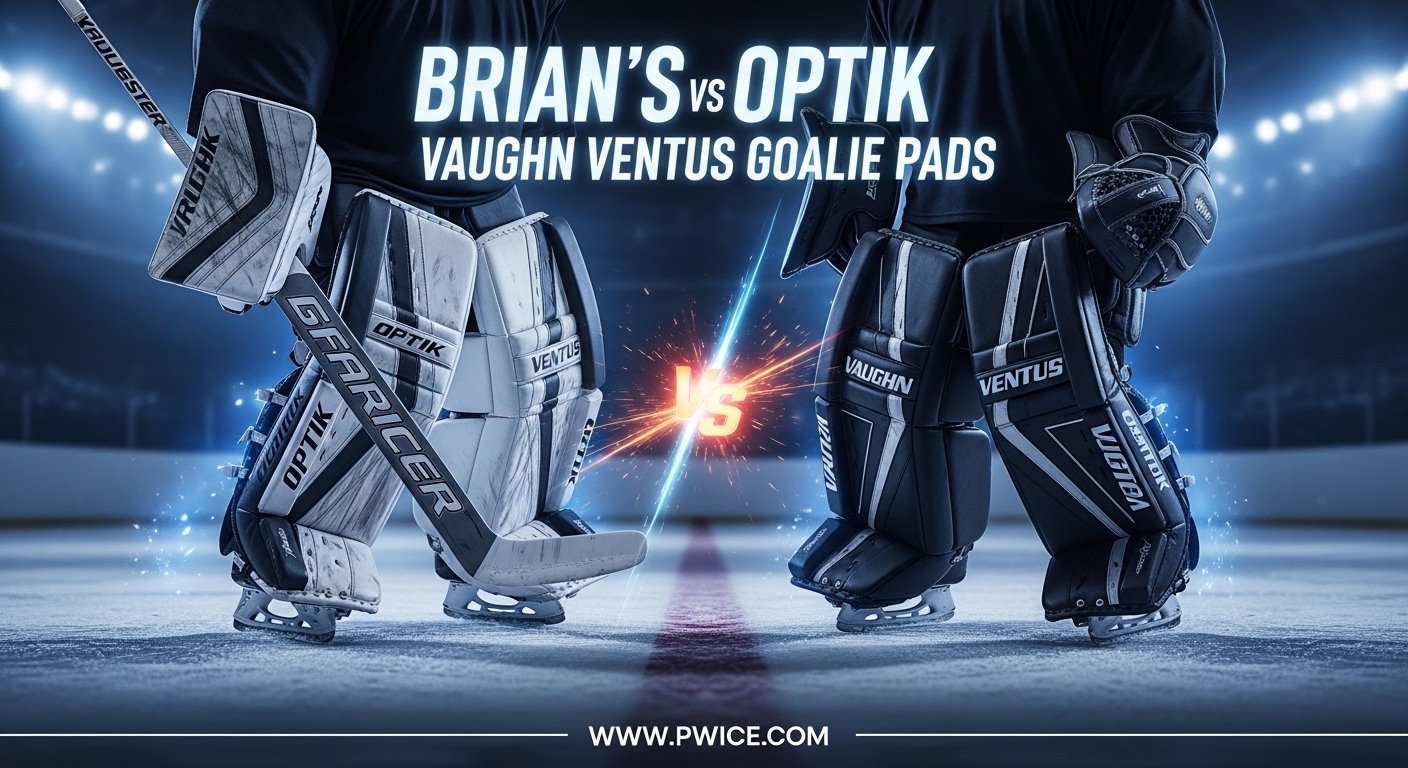
Choosing between Brian’s Optik vs Vaughn Ventus goalie pads can feel like an impossible decision for serious goaltenders. After testing both pads through multiple seasons and talking to dozens of goalies who have made this exact choice, I can tell you that the right answer depends entirely on how you play the position.
Both brands represent the pinnacle of goalie equipment manufacturing. Brian’s builds their pads in Canada with a reputation for bulletproof durability and explosive rebound control. Vaughn manufactures in Michigan and Ontario, delivering pads that countless pro goalies trust for their balanced feel and smooth sliding performance.
This comparison breaks down everything you need to know about the Brian’s Optik vs Vaughn Ventus debate. I will examine construction quality, real-world performance, pricing from specialty retailers, and most importantly, which playing style each pad serves best.
Table of Contents
Quick Comparison: Brian’s Optik vs Vaughn Ventus at a Glance
Before diving into the details, here is how these two premium goalie pad lines compare across the categories that matter most to competitive goalies.
| Feature | Brian’s Optik 4 | Vaughn Ventus SLR4 |
|---|---|---|
| Core Construction | MAX Core (stiff) | Pro Core (medium flex) |
| Rebound Control | Explosive/direct | Controlled/absorbed |
| Slide Performance | Excellent with Smart Strap | Outstanding QuickSlide edges |
| Weight (Senior) | ~5.2 lbs per pad | ~5.0 lbs per pad |
| Manufacturing | Kingsville, Ontario, Canada | Oxford, Michigan / London, Ontario |
| Best For | Butterfly-first goalies | Hybrid/mobile goalies |
| Price Range | $1,800 – $2,200 | $1,700 – $2,100 |
| Break-in Period | 4-6 weeks | 2-4 weeks |
The fundamental difference comes down to core philosophy. Brian’s Optik prioritizes structure and rebound energy, while Vaughn Ventus emphasizes mobility and comfort.
Brian’s Optik Deep Dive: Maximum Structure for Butterfly Dominance
Brian’s Custom Sports has built their reputation on Canadian craftsmanship since 1985. The Optik line represents their flagship butterfly-focused design, currently in its fourth generation with the Optik 4 released for 2026.
Construction and Materials
The Optik 4 features Brian’s proprietary MAX Core, a dual-density foam construction that maintains stiffness even after heavy use. Unlike pads that soften significantly over time, the Optik retains its explosive rebound characteristics season after season.
Carbon fiber reinforcement runs through the thigh rise and outer roll, providing structural rigidity without excessive weight. The bindingless flat face design maximizes surface contact with the ice, creating that coveted tight seal that butterfly goalies need.
What sets Brian’s apart is their manufacturing process in Kingsville, Ontario. Every pad is built by hand with quality control that shows in the details. The stitching is precise, the materials are premium, and the consistency from pad to pad is remarkable.
Performance Characteristics
Rebound control is where the Optik truly shines. When a puck hits these pads, it rockets away from the net with predictable directionality. This is not absorption. It is controlled explosion. For goalies who want rebounds directed to corners and away from dangerous areas, this is a game-changing advantage.
The sliding performance improved significantly with the Optik 4’s Smart Strap system and redesigned inner edge. While earlier Optik models felt somewhat clunky during lateral movements, the current generation slides smoothly once you adjust to the slightly heavier feel.
The knee cradle on the Optik 4 uses Brian’s SBA (Shaped Balance Advantage) design. It locks your knee in place with minimal movement, which enhances stability but requires precise sizing.
Pros and Cons
What I Love About Brian’s Optik:
- Exceptional rebound control sends pucks to safe areas consistently
- Outstanding durability with pads lasting 5+ seasons of heavy use
- Superior five-hole seal due to stiff core and flat face design
- Maintains performance characteristics throughout its lifespan
- Excellent resale value if you decide to switch
What Could Be Better:
- Longer break-in period requires patience
- Heavier feel compared to some competitors
- Less forgiving for goalies with imperfect butterfly technique
- Sizing runs slightly large, requiring careful measurement
Pricing and Where to Buy
Brian’s Optik 4 senior pads retail between $1,800 and $2,200 depending on size and customization options. You will not find these on Amazon. Instead, purchase through specialty retailers like Pure Hockey, HockeyMonkey, GoalieMonkey, or directly from Brian’s Custom Sports.
Pro custom versions with NHL-spec materials and additional options can push $2,500+. However, the stock senior pads offer 95% of the performance at a more reasonable price point.
Warranty coverage from Brian’s includes 90 days on manufacturing defects, which is standard for the industry. Their customer service is responsive and willing to work with goalies who experience issues.
Who Should Choose Brian’s Optik
The Optik is purpose-built for butterfly-first goalies who prioritize rebound control and seal over everything else. If you spend 70% or more of your time in the butterfly position, these pads will serve you exceptionally well.
Goalies who play at competitive levels (high school, junior, college, or serious adult leagues) will appreciate the performance benefits. The stiff core rewards proper technique and punishes sloppy positioning less than you might expect.
If you are coming from other stiff pads like CCM E-Flex or Bauer Supreme, the transition to Optik will feel natural. The adjustment period is primarily about timing your slides rather than relearning your entire game.
Vaughn Ventus Deep Dive: Balanced Performance for the Modern Hybrid
Vaughn Hockey has been a goalie equipment staple since 1981, with a reputation for understanding what goaltenders actually need. The Ventus line, particularly the current SLR4 generation, represents their vision of a balanced pad that works for multiple playing styles.
Construction and Materials
The Ventus SLR4 uses Vaughn’s Pro Core, a medium-density foam construction that balances structure with flexibility. Unlike the rock-stiff Optik, these pads have a degree of give that many goalies find more comfortable during long games and practices.
Carbon fiber reinforcement appears in strategic locations rather than throughout the entire pad. This selective approach keeps weight down while maintaining rigidity where it matters most for seal and rebound control.
Vaughn manufactures in both Oxford, Michigan and London, Ontario, with quality control standards that have earned them the trust of NHL goalies for decades. The craftsmanship is evident in details like the precise stitching and quality leather straps.
The QuickSlide edges deserve special mention. Vaughn has refined their slide surface material over multiple generations, and the SLR4 features a waxy, low-friction finish that glides smoothly across even rough ice surfaces.
Performance Characteristics
Rebound control on the Ventus SLR4 is more controlled than explosive. Pucks tend to drop closer to the pads rather than flying to the boards. This characteristic suits goalies who prefer to smother rebounds or direct them to corners rather than launching them across the ice.
Sliding performance is arguably the Ventus’s strongest attribute. The combination of lighter weight, flexible core, and exceptional slide edges makes lateral movement feel effortless. Post-to-post pushes require less energy, which becomes significant in the third period of tight games.
The knee cradle design uses Vaughn’s V5 system, which offers more adjustability than Brian’s approach. This allows fine-tuning of knee position and rotation, a feature that hybrid goalies who move frequently between stances will appreciate.
Pros and Cons
What I Love About Vaughn Ventus:
- Outstanding slide performance with minimal ice resistance
- Comfortable fit that reduces fatigue during long sessions
- Quick break-in period gets you game-ready faster
- Versatile performance for hybrid playing styles
- Excellent adjustability in strapping and knee position
What Could Be Better:
- Rebounds stay closer to pads, requiring more active recovery
- Core softens somewhat over multiple seasons
- Less explosive seal compared to maximum-stiffness pads
- Fewer custom color options than competitors
Pricing and Where to Buy
Vaughn Ventus SLR4 senior pads typically retail between $1,700 and $2,100. Like Brian’s, these are specialty retail products available through Pure Hockey, HockeyMonkey, GoalieMonkey, and directly from Vaughn Hockey.
The SLR4 Pro Carbon variant, which adds additional carbon fiber reinforcement and premium materials, pushes toward the higher end of that range at $2,000+. Most competitive goalies find the stock SLR4 provides excellent value.
Vaughn offers a 90-day warranty on manufacturing defects. Their customer service has a strong reputation in the goalie community for addressing issues fairly and quickly.
Who Should Choose Vaughn Ventus
The Ventus SLR4 is ideal for hybrid goalies who split time between butterfly and standing positions. If your game involves significant movement, scrambling, or improvisation, these pads provide the flexibility you need.
Goalies who prioritize comfort during long practices or tournament weekends will appreciate the lighter weight and quicker break-in. The reduced fatigue factor is real and noticeable, especially for older goalies or those who play multiple times per week.
If you are transitioning from other Vaughn lines like the Velocity series, the Ventus will feel familiar. The brand has maintained consistent design philosophy across generations, making upgrades feel natural rather than jarring.
Head-to-Head: Brian’s Optik vs Vaughn Ventus Compared
Now that we have examined each pad individually, let us look at how they stack up against each other in the categories that matter most for making your decision.
Rebound Control and Seal
Brian’s Optik wins this category decisively. The MAX Core generates significantly more rebound energy, sending pucks to safe areas with predictable consistency. The flat face design and bindingless edges create a tighter seal along the ice, particularly in the critical five-hole area.
Vaughn Ventus provides adequate rebound control for most goalies, but the medium-flex core simply cannot match the explosive energy transfer of the Optik’s stiffer construction. The trade-off is that Ventus rebounds are easier to smother if you prefer that approach.
For butterfly-first goalies who rely on redirecting pucks to corners, the Optik’s rebound characteristics provide a clear competitive advantage. For hybrid goalies who handle rebounds differently, the Ventus performance is perfectly acceptable.
Slide Performance and Mobility
Vaughn Ventus takes this category. The QuickSlide edges are genuinely superior, providing less friction and smoother lateral movement. The lighter overall weight also contributes to faster transitions between positions.
Brian’s Optik slides well once broken in, but the stiffer core and slightly heavier construction create more resistance during movement. Smart Strap helps, but physics favors the more flexible Ventus design for pure mobility.
Goalies who play a scrambling style or make frequent post-to-post movements will notice the Ventus advantage immediately. The energy savings over a full game are significant.
Durability and Longevity
Brian’s Optik holds a slight edge in long-term durability. The stiffer core maintains its performance characteristics longer, and the Canadian manufacturing consistently delivers products that withstand multiple seasons of abuse.
Vaughn Ventus is no slouch in durability either. These pads regularly last 4-5 seasons for competitive goalies. However, the core does soften somewhat over time, gradually changing the rebound characteristics.
Both brands offer excellent build quality compared to lower-tier options. Either pad represents a sound long-term investment if properly maintained.
Strapping Systems and Adjustability
Vaughn Ventus offers more adjustability with their V5 knee cradle and multiple strapping options. This allows fine-tuning that can address specific fit issues or playing style preferences.
Brian’s Optik uses the Smart Strap system, which simplifies setup while providing adequate adjustment for most goalies. The approach prioritizes consistency over customization.
Goalies with unusual body proportions or specific fit requirements may prefer the Ventus adjustability. Those who want a simple, effective system that works well out of the box will appreciate the Optik approach.
Break-in Period
Vaughn Ventus clearly wins here with a 2-4 week break-in period compared to the Optik’s 4-6 weeks. The more flexible core and forgiving materials adjust to your playing style faster.
Brian’s Optik requires patience. The stiff core needs time to soften slightly and conform to your movements. Early sessions may feel restrictive until the materials adapt.
For goalies who need pads game-ready quickly, the Ventus advantage is significant. Those willing to invest break-in time are rewarded with the Optik’s long-term performance consistency.
Value Assessment
Both pads represent premium investments at $1,700-$2,200. The value question depends on your priorities.
Brian’s Optik offers better value for butterfly-first goalies who will utilize its rebound control and seal advantages. The longer lifespan and maintained performance justify the investment.
Vaughn Ventus provides excellent value for hybrid goalies who benefit from its versatility and comfort. The quicker break-in and lighter weight deliver immediate benefits.
| Category | Winner | Margin |
|---|---|---|
| Rebound Control | Brian’s Optik | Significant |
| Slide Performance | Vaughn Ventus | Moderate |
| Durability | Brian’s Optik | Slight |
| Adjustability | Vaughn Ventus | Moderate |
| Break-in Period | Vaughn Ventus | Significant |
| Weight | Vaughn Ventus | Slight |
| Seal Quality | Brian’s Optik | Moderate |
Buying Considerations: Making the Right Choice
Beyond the performance characteristics, several practical factors should influence your decision between Brian’s Optik and Vaughn Ventus.
Playing Style Match
Your playing style is the single most important factor in this decision. Butterfly-first goalies who spend most of their time on their knees should strongly consider the Brian’s Optik. The rebound control and seal advantages directly support this style.
Hybrid goalies who mix butterfly with standing saves and frequent movement will find the Vaughn Ventus more accommodating. The flexibility and mobility suit varied approaches better than the specialized Optik.
Standup or blocking-style goalies might consider exploring other options entirely. Check our guide to the best goalie pads for standup style if that describes your approach.
Sizing and Fit Guidance
Both pads require precise sizing for optimal performance. Brian’s tends to run slightly large, while Vaughn sizing is more true-to-standard measurements.
For Brian’s Optik, measure your floor-to-knee distance carefully and consider sizing down if you are between sizes. The stiff core does not compress as much as flexible pads, so excess length creates tripping hazards.
Vaughn Ventus accommodates a wider range of fits due to its adjustability. The V5 knee cradle allows significant customization of knee position, which helps dial in the perfect fit.
Always try pads on with your full gear if possible. Knee pads affect fit significantly, and our best goalie knee pads for butterfly style guide can help you choose compatible protection.
Where to Buy
Neither Brian’s Optik nor Vaughn Ventus pads are available on Amazon. These specialty products require purchasing through hockey-specific retailers.
Pure Hockey operates physical stores across North America where you can try pads before buying. Their online selection includes both brands with competitive pricing.
HockeyMonkey and GoalieMonkey offer extensive online inventories with detailed sizing guides. They frequently run promotions that can save $100-200 on premium pads.
Both manufacturers sell directly through their websites. Brian’s Custom Sports and Vaughn Hockey offer customization options unavailable through retailers, though at premium prices and longer lead times.
Warranty and Support
Both brands offer 90-day warranties covering manufacturing defects. This is standard for the goalie equipment industry.
Brian’s has a reputation for exceptional customer service, often working with goalies beyond warranty periods if issues arise. Their Canadian support team is knowledgeable and responsive.
Vaughn similarly provides strong post-purchase support. Their long history in the industry means they understand the importance of standing behind their products.
Complete Your Protection
Premium leg pads deserve equally high-quality complementary equipment. After investing $1,800+ in pads, do not compromise on protection that keeps you safe.
Our guide to the best goalie neck guards covers essential protection that pairs with any pad setup.
Frequently Asked Questions
What is the best brand of goalie pads?
Both Brian’s and Vaughn are considered top-tier goalie pad manufacturers alongside Bauer and CCM. Brian’s excels in durability and rebound control, while Vaughn leads in comfort and mobility. The best brand depends on your playing style and priorities.
Are Brian’s goalie pads good?
Yes, Brian’s goalie pads are excellent, particularly for butterfly-style goalies. Made in Canada since 1985, Brian’s is known for exceptional durability, explosive rebound control, and quality construction that lasts 5+ seasons of competitive play.
Where are Vaughn goalie pads made?
Vaughn goalie pads are manufactured in Oxford, Michigan and London, Ontario. The company has maintained North American production since 1981, with quality control standards trusted by NHL goalies for decades.
Which goalie pads are better for butterfly style?
Brian’s Optik pads are generally better for pure butterfly goalies due to their stiff MAX Core, superior seal, and explosive rebound control. The flat face design creates excellent five-hole coverage that butterfly-first goalies need.
How long do Brian’s and Vaughn goalie pads last?
Both Brian’s Optik and Vaughn Ventus pads typically last 4-6 seasons of competitive play with proper care. Brian’s tends to maintain performance characteristics longer due to their stiffer core construction, while Vaughn pads may soften slightly over time.
What is the break-in period for these pads?
Vaughn Ventus pads require 2-4 weeks to break in, while Brian’s Optik pads need 4-6 weeks. The more flexible Vaughn core adapts faster, whereas the stiff Brian’s construction requires more time to soften and conform to your movements.
Final Verdict: Brian’s Optik vs Vaughn Ventus in 2026
After comparing these two exceptional goalie pad lines across every category that matters, the choice ultimately comes down to your playing style and priorities.
Choose Brian’s Optik if you are a butterfly-first goalie who prioritizes rebound control, seal quality, and long-term durability. The stiff MAX Core delivers explosive rebounds and maintains performance season after season. The Canadian manufacturing quality and excellent resale value make this a sound investment for serious goalies.
Choose Vaughn Ventus if you play a hybrid style that values mobility, comfort, and versatility. The QuickSlide edges and lighter weight reduce fatigue and enable faster lateral movement. The shorter break-in period and adjustability make these pads accessible for a wider range of goalies.
Both pads represent the pinnacle of goalie equipment design and will serve you well at competitive levels. You cannot make a wrong choice here, only a choice that better matches how you play the position.
Purchase through specialty retailers like Pure Hockey, HockeyMonkey, or directly from the manufacturers. Avoid unauthorized sellers and ensure you get proper warranty coverage for your investment.