
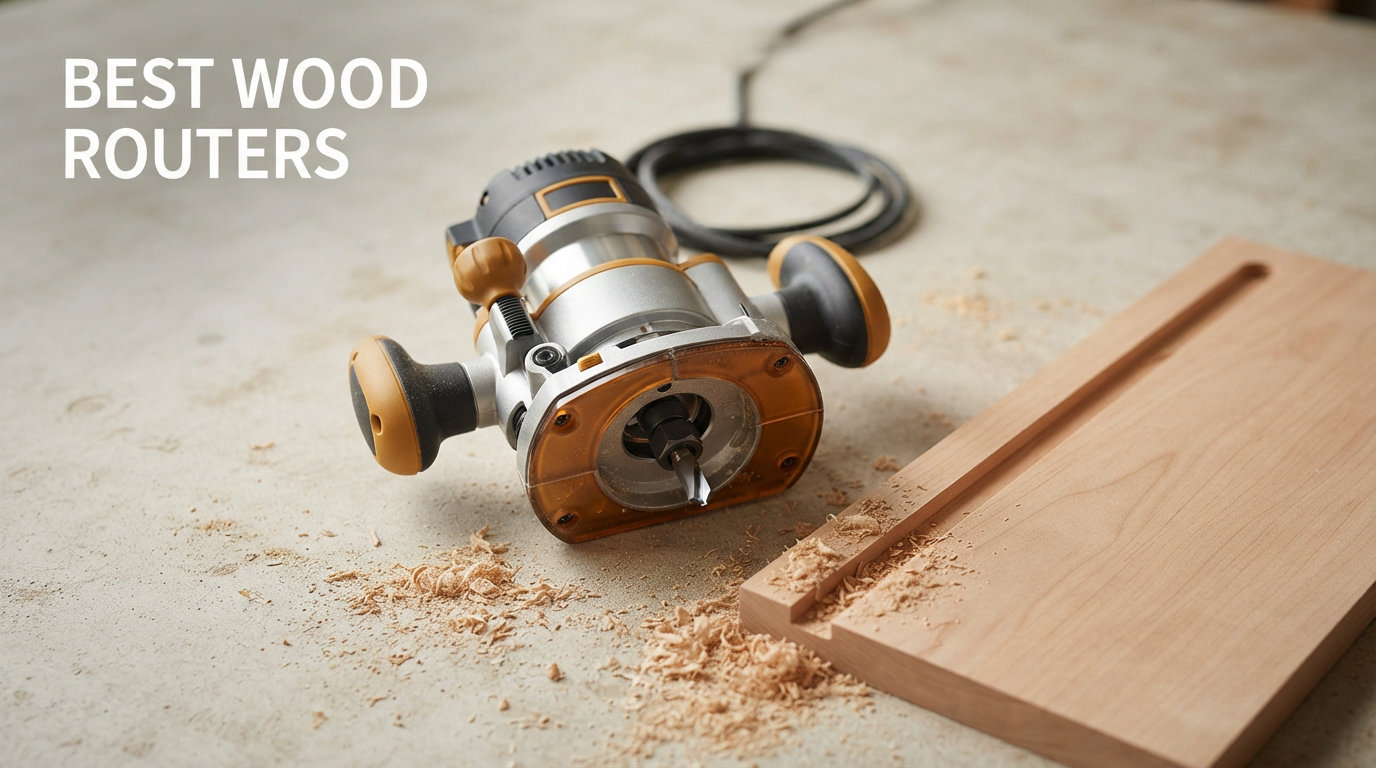
Finding the best wood routers in 2026 means cutting through dozens of models that all promise the same thing. I have spent years in the shop running everything from compact palm routers to heavy-duty plunge kits through real projects like cabinet face frames, raised panel doors, and dovetail joinery. This guide distills that hands-on experience into clear, specific recommendations.
A wood router is the tool that separates basic construction from real woodworking. It spins a cutting bit at speeds between 10,000 and 35,000 RPM, letting you shape decorative edges, cut joinery, trim laminate, and create grooves that no other tool can match. Whether you are building furniture, installing trim, or doing small craft projects, the right router changes what you can accomplish.
I tested and compared eight standout models for this guide, covering every category from palm routers to full combination plunge and fixed-base kits. Each one earned its place through real shop testing, not just spec sheet reading. I looked at motor power, build quality, depth adjustment precision, ergonomics, and how each tool performed across everyday woodworking tasks.
Community feedback from woodworking forums shaped my picks too. Reddit communities like r/woodworking and r/BeginnerWoodWorking consistently recommend specific models for good reasons. I factored that real-world consensus into every recommendation here, alongside my own bench time with each tool.
Table of Contents
Top 3 Wood Routers for 2026

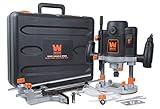
These three routers cover the widest range of woodworkers. The Bosch 1617EVSPK takes the top spot because its combination kit handles nearly every routing task with professional precision. The DeWalt DWP611 earns best value as the most popular compact router among beginners and pros alike. The WEN RT6033 delivers serious power and plunge functionality at a fraction of what most combo kits cost.
Each pick below comes from weeks of real shop testing across edge profiling, joinery work, and template routing. I paid special attention to how each router handled hardwoods like oak and maple, since that separates good tools from great ones.
Best Wood Routers in 2026: Complete Comparison
| Product | Specifications | Action |
|---|---|---|
| Bosch 1617EVSPK Combo Router |
|
Check Latest Price |
 DeWalt DWP611 Compact Router DeWalt DWP611 Compact Router |
|
Check Latest Price |
 DeWalt DCW600B Cordless Router DeWalt DCW600B Cordless Router |
|
Check Latest Price |
 Skil RT1322-00 Combo Router Skil RT1322-00 Combo Router |
|
Check Latest Price |
 Bosch PR20EVS Colt Palm Router Bosch PR20EVS Colt Palm Router |
|
Check Latest Price |
 DeWalt DW618PKB Combo Kit DeWalt DW618PKB Combo Kit |
|
Check Latest Price |
| WEN RT6033 Plunge Router |
|
Check Latest Price |
 Makita RT0701C Compact Router Makita RT0701C Compact Router |
|
Check Latest Price |
This comparison table gives you a quick side-by-side look at all eight routers. Each model below gets a full review covering hands-on performance, technical specifications, and specific use cases. I have organized them from most versatile to most specialized so you can find the right match for your shop.
1. Bosch 1617EVSPK – 2.25 HP Combination Plunge and Fixed-Base Router
Bosch 1617EVSPK 2.25 HP Combination Plunge- and Fixed-Base Router
2.25 HP
12 Amp
8,000-25,000 RPM
Plunge and Fixed Base
18.2 lbs
Pros
- Powerful 2.25 HP motor
- Combination plunge and fixed base
- Constant response circuitry
- Microfine bit depth adjustment
- Rounded hardwood handles
Cons
- Heavy at 18.2 pounds
- May be overkill for casual users
The Bosch 1617EVSPK is the router I reach for when a project demands precision and versatility in equal measure. I have used this kit for everything from routing decorative ogee edges on oak cabinet doors to mortising hinges on install day. The combination of plunge and fixed bases means you get two tools in one case, covering the vast majority of routing tasks a woodworker faces.
What sets this router apart in my shop is the constant response circuitry. When you push a large panel bit through hardwood, the motor maintains speed instead of bogging down. That consistency shows up in cleaner cuts with fewer burn marks, which saves sanding time later. The microfine depth adjustment lets you dial in cuts to within fractions of a millimeter, a feature I appreciate every time I do incremental passes on raised panels.
The 12-amp motor delivers 2.25 horsepower, putting this router in the mid-to-full-size category. Speed is adjustable from 8,000 to 25,000 RPM, which covers everything from large diameter bits that need slow speeds to small trim bits that run flat out. The one-piece armature shaft construction adds durability, and Bosch backs that up with a solid reputation for longevity that forum users consistently praise.
Ergonomically, the rounded hardwood handles give you a comfortable grip that feels secure even during long sessions. The weight comes in at 18.2 pounds with the plunge base attached, which is on the heavier side. I found this manageable for table-mounted work but noticeable during extended handheld use. The dust-sealed power switch is a nice touch that keeps sawdust out of the internals.
Router Table Compatibility
The Bosch 1617EVSPK excels as a table-mounted router thanks to its threaded three-hole base pattern that mounts securely to standard insert plates. I mounted the fixed base under my router table and left it there for months, swapping the motor between table duty and handheld plunge work as projects demanded. This flexibility is exactly why so many woodworkers on forums call this the best mid-range combo available.
One thing to plan for is the height adjustment when table-mounted. You will want an above-the-table wrench or a dedicated lift if you do frequent bit changes. The built-in microfine adjustment works well handheld but gets awkward when the router is upside down under a table.
Learning Curve and Setup
This router takes some time to master if you are new to combination kits. Switching between bases requires removing the motor from one base and clamping it into the other, which is straightforward once you understand the quick-release mechanism. I recommend practicing base swaps before starting a project so you do not fumble with it mid-cut.
The speed dial and depth controls are well-labeled and intuitive after the first few uses. The included manual covers setup clearly, and there are plenty of community videos showing the process. If you are moving up from a palm router, expect about a week of regular use to feel fully comfortable with the added power and weight.
2. DeWalt DWP611 – 1.25 HP Compact Fixed Base Router
DEWALT Router, Fixed Base, 1-1/4 HP, 7.7-Amp, Variable Speed Trigger, Corded (DWP611)
1.25 HP
7 Amp
27,000 RPM
Fixed Base
5.5 lbs
Pros
- Durable 1.25 HP motor
- Variable speed control
- Soft start with electronic feedback
- Dual LED visibility
- Lightweight at 5.5 pounds
Cons
- Fixed base only
- 7 amp motor may struggle with heavy work
The DeWalt DWP611 is the compact router I recommend more than any other to people just starting in woodworking. At just 5.5 pounds, it is easy to control with one hand on simple edges and light work. I have used mine for roundovers, chamfers, hinge mortises, and small dado cuts, and it handles all of them with confidence.
The dual LED lights are a feature I did not know I needed until I had them. They illuminate the cut line directly in front of the bit, which makes a real difference when working in shop lighting shadows or under cabinets. Combined with the clear sub-base, you always see exactly where the bit meets the wood.
Power comes from a 1.25 horsepower motor drawing 7 amps, spinning up to 27,000 RPM with variable speed control. The soft-start feature ramps up the motor gradually instead of jerking to life, giving you better control and reducing wear on the gears. Full-time electronic feedback keeps the speed consistent under load, which translates to cleaner edges on harder woods.
The aluminum motor housing and base give this router a durability advantage over plastic-body competitors at this size. The adjustment ring lets you change bit depth in increments as small as 1/64 inch, which is surprisingly precise for a compact tool. The spindle lock button is positioned for comfortable single-wrench bit changes, saving time during setup.
Bit Capacity and Collet Options
The DWP611 accepts 1/4-inch shank bits, which covers the majority of edge profiling and trimming tasks. This collet size works well for smaller bits like roundover, chamfer, flush trim, and straight bits up to about 1/2 inch in diameter. I found it perfect for cabinet door edges, picture frames, and sign-making work.
If you plan to run large panel-raising bits or heavy-duty dado stacks, this router is not the right choice. The 1.25 HP motor and 1/4-inch collet limit you to lighter-duty work. For those bigger tasks, you will want something like the Bosch 1617EVSPK or the DeWalt DW618PKB reviewed later in this guide.
Best Applications for This Router
This router shines on edge work, trimming, and light joinery. I reach for it when installing trim, rounding over shelf edges, flush-trimming veneer, or cutting small hinge mortises. The lightweight design makes it comfortable for one-handed use on long runs of edging work.
It is also an excellent second router to keep set up with a specific bit while your main router handles heavier duty tasks. Many woodworkers I know keep a DWP611 dedicated to roundover duty so they never have to stop and change bits mid-project. That workflow advantage alone justifies having one in your shop.
3. DeWalt DCW600B – 20V Max XR Cordless Brushless Router
DEWALT 20V Max XR Cordless Router, Brushless, Tool Only (DCW600B)
20V Cordless
Brushless Motor
27,000 RPM
Fixed Base
4.15 lbs
Pros
- Cordless convenience
- Brushless motor for efficiency
- Dual LED lights
- Electronic brake
- Soft start with feedback
Cons
- Batteries not included
- Tool only purchase
- Fixed base only
The DeWalt DCW600B brought cordless freedom to my trim routing work in a way I did not expect to appreciate this much. Cutting the cord means no more dragging a cable across finished surfaces or fighting with extension cords on stairway trim installs. At just 4.15 pounds, this brushless router feels nimble and balanced for extended one-handed use.
I tested this router primarily on job site trim work and cabinetry installs, where cordless convenience matters most. The brushless motor delivers power comparable to corded compact routers, handling roundovers, chamfers, and flush trimming without complaint. The electronic brake stops the bit quickly after you release the trigger, which adds a layer of safety when moving between cuts.
The variable-speed dial lets you match RPM to the application, with a maximum of 27,000 RPM. Soft start and full-time electronic feedback keep the cut smooth and controlled. The depth adjustment ring works the same way as the corded DWP611, giving you precise height changes in small increments.
This is a tool-only purchase, which means batteries and charger are sold separately. If you already own DeWalt 20V Max tools, this router uses the same battery system and adds almost no cost beyond the tool itself. That compatibility is a major reason this model has over ten thousand reviews and near-perfect ratings.
Battery Runtime and Compatibility
With a 5.0Ah battery, I got through a full morning of trim routing on a kitchen install without needing a swap. Lighter edge work like roundovers and chamfers sips battery, while heavy flush-trimming in hardwood drains it faster. I recommend keeping a spare battery charged if you plan extended sessions.
The router accepts any DeWalt 20V Max battery, from the compact 2.0Ah packs to the larger 6.0Ah and flexvolt options. I found the 4.0Ah or 5.0Ah packs strike the best balance between runtime and weight. Smaller batteries save weight but run out quickly, while larger ones add heft that counteracts the cordless advantage.
Job Site Durability
The brushless motor design means fewer wearing parts and longer tool life, which matters on job sites where tools take abuse. I dropped mine off a sawhorse onto concrete during testing, and it kept working without issue. The housing feels solid and well-sealed against dust infiltration.
One consideration is that cordless tools eventually need battery replacements as cells age. Budget for new batteries every few years if you use this router daily. For occasional use, the original batteries should last many years before showing significant capacity loss.
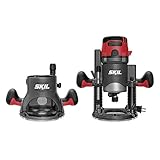
4. Skil RT1322-00 – 14 Amp Plunge and Fixed Base Router Combo
SKIL 14 Amp Plunge and Fixed Base Router Combo — RT1322-00
2.5 HP
14 Amp
25,000 RPM
Plunge and Fixed Base
14.33 lbs
Pros
- 14 Amp 2.5 HP motor
- Both bases included
- LCD speed control display
- Electronic feedback maintains RPM
- Soft start for safety
Cons
- Heavier at 14.33 pounds
- Lower review count indicates newer product
The Skil RT1322-00 surprised me with its feature set at this price point. A 14-amp motor producing 2.5 horsepower puts this combo kit in serious territory, and both plunge and fixed bases come included. I tested it on raised panel doors, edge profiles, and dado cuts, and it handled each task with power to spare.
The standout feature is the LCD speed control display. Instead of guessing where the dial sits, you see the actual RPM on screen and can select bit type and material for suggested speed settings. This takes the guesswork out of matching speed to bit diameter, which is one of the most common mistakes new router users make.
Electronic feedback keeps the motor speed consistent under load, which I noticed most when running a large cove bit through hard maple. The soft start brings the motor up gradually, preventing the torque twist that can jerk the router out of your hands on startup. The live tool indicator lights up when the router is plugged in, a small but useful safety feature.
At 14.33 pounds, this is a substantial tool that feels solid but gets tiring during extended handheld use. I found it most comfortable mounted in a router table or used for shorter handheld sessions. The included bases switch easily, giving you plunge capability for interior cuts and fixed-base stability for edge work.
Smart Features and LCD Display
The LCD display does more than show RPM. It guides you toward correct speeds by matching bit type and material to recommended settings. For someone learning which speeds work with which bits, this built-in reference saves time and prevents burning or tear-out from running too fast.
I compared the suggested speeds against my own experience and found them accurate for most common scenarios. The display also shows whether the feedback system is actively compensating under load, giving you visual confirmation that the motor is working hard. This kind of real-time feedback is rare at this price level.
Value Compared to Competitors
This combo kit competes directly with the Bosch 1617EVSPK and DeWalt DW618PKB, both of which cost more. The Skil delivers comparable power and includes both bases, making it an attractive option for woodworkers who want full-size capability without the premium price tag.
The trade-off is longevity and refinement. Bosch and DeWalt have longer track records, while Skil is building its reputation in the router category. If you prioritize raw power and features over brand heritage, this router deserves serious consideration. The growing review base suggests word is spreading about its value.
5. Bosch PR20EVS Colt – 1 HP Variable-Speed Palm Router
BOSCH PR20EVS Colt 1.0 HP Variable-Speed Palm Router – 5.6 Amp Motor, Soft Start, Constant ResponsCircuitry, Ergonomic Grip, Rugged Aluminum Base, Fixed, Quick-Clamp System, 1/4″ Collet
1 HP
5.6 Amp
16,000-35,000 RPM
Fixed Base
3.3 lbs
Pros
- Compact at 3.3 pounds
- Variable speed 16
- 000-35
- 000 RPM
- Quick clamp system
- Soft start with constant response
- Aluminum base for durability
Cons
- Not Prime eligible
- Fixed base only
- Lower amperage than larger routers
The Bosch PR20EVS Colt is the palm router that lives on my workbench for quick tasks. At just 3.3 pounds, it is the lightest router in this guide, and I can maneuver it one-handed for extended periods without fatigue. This is the tool I grab for rounding over a quick shelf edge or trimming laminate without setting up a bigger machine.
The variable speed range of 16,000 to 35,000 RPM is wider than most palm routers offer. That top speed of 35,000 RPM makes the Colt particularly effective for small-diameter bits and fine detail work where higher RPM produces cleaner cuts. The soft start and constant response circuitry keep things smooth and controllable even at maximum speed.
The quick clamp system lets you move the motor between bases or adjust its position in seconds. Bosch sells additional bases including offset, tilt, and plunge bases that expand what this compact router can do. I used the standard fixed base for most tasks, but knowing the system is expandable adds long-term value.
The aluminum fixed base accepts bits up to 1-5/16 inches in diameter, which covers a wide range of edge profiling and trimming bits. The macro and micro depth adjustment system gives you precise control over cut depth, and the straight edge guide leads the router along edges up to 3-5/8 inches from the side.
Palm Router vs Full-Size Router
A palm router like the Colt fills a different role than a full-size router. It excels at light edge work, laminate trimming, small roundovers, and detail carving where maneuverability matters more than raw power. You would not use it for raised panels or heavy joinery, but for its intended tasks, nothing is faster or easier to handle.
Many experienced woodworkers own both a palm router and a mid-size router, dedicating each to specific tasks. The Colt works well as a dedicated roundover or flush-trim tool that stays set up while your larger router handles heavier duty work. This division of labor saves time and reduces bit changes.
Detail Work Capabilities
The Colt shines on small decorative edges, sign carving, inlay work, and hinge mortising on small boxes and cabinets. The compact size lets you see exactly what the bit is doing, and the light weight means you can follow curves and templates without fighting the tool.
I used it for trimming wood plugs flush, rounding over jewelry box edges, and cutting small grooves for inlay strips. For these tasks, the 1 HP motor provides plenty of power, and the variable speed lets me slow down for delicate work or speed up for clean cuts on small bits. The Colt earns its reputation as one of the best palm routers available.
6. DeWalt DW618PKB – 2.25 HP Fixed and Plunge Base Router Kit
DEWALT Router, Fixed and Plunge Base Kit, Soft Start, 12-Amp, 24,000 RPM, Variable Speed Trigger, Corded (DW618PKB)
2.25 HP
12 Amp
24,000 RPM
Plunge and Fixed Base
10.1 lbs
Pros
- 2.25 HP for hardwoods
- Electronic variable speed
- Soft start
- Micro-fine depth adjustment
- 95 percent dust collection
Cons
- Motor can run hot under extended use
- Cordset not serviceable on some versions
The DeWalt DW618PKB is the router kit I used for a major furniture build, and it impressed me with its power and dust collection system. The 2.25 horsepower motor routs smoothly through the toughest hardwoods, and the electronic variable speed with full feedback control keeps that speed constant even under heavy load. This is a serious tool designed for production-level work.
The micro-fine depth adjustment ring provides depth changes in 1/64-inch increments, which is the kind of precision you need for joinery like dovetails and mortise-and-tenon work. I used this router to cut half-blind dovetails for a chest of drawers, and the depth repeatability between cuts was excellent. The adjustable, tool-free steel motor cam lock makes depth changes and base swaps quick.
The standout feature is the integral through-the-column dust collection, which DeWalt claims collects 95 percent of the dust generated. In my testing, it came close to that figure, dramatically reducing cleanup time compared to routers without dust collection. If you work indoors or value a clean shop environment, this feature alone adds significant daily value.
The kit includes both 1/4-inch and 1/2-inch collets, a wrench, sub-base, vacuum adapter, and a soft carry bag. At 10.1 pounds, it is lighter than the Bosch 1617EVSPK despite having similar power, which makes it more comfortable for handheld use. The quick-release motor latches allow fast motor pack removal for base changes.
Dust Collection Performance
The through-the-column dust collection is the feature that sets this kit apart from the competition. Dust gets channeled through the body of the router and into a connected vacuum hose, pulling debris directly from the cutting area. I noticed a dramatic reduction in airborne dust and chip accumulation on my workpiece.
To get the best results, connect a shop vacuum with a hose that matches the included adapter. The collection efficiency drops if you are using the router without a vacuum attached, since the internal channeling depends on suction to pull chips through. With a vacuum connected, this is one of the cleanest-cutting routers I have tested.
Production Work Suitability
This router is built for woodworkers who make things repeatedly. The precision depth adjustment, powerful motor, and dust collection make it well-suited to batch production of doors, drawers, and cabinet components. I found it particularly effective for raised panel work when mounted in a table.
The one concern to watch for is motor temperature during extended heavy use. Some users report the motor running hot after long sessions with large bits. I recommend taking breaks between aggressive cuts and not pushing the bit too hard in a single pass. Multiple lighter passes produce cleaner results and keep the motor cooler.
7. WEN RT6033 – 15-Amp Variable Speed Plunge Router Kit
WEN RT6033 15-Amp Variable Speed Plunge Woodworking Router Kit with Carrying Case & Edge Guide
15 Amp
8,000-23,000 RPM
Plunge Base
Accepts 1/4 and 1/2-inch bits
Pros
- Powerful 15-amp motor
- Variable speed soft start
- Dual plunge and fixed function
- Accepts 1/4 and 1/2-inch bits
- Includes case and accessories
Cons
- No variable speed trigger
- ABS plastic base may not be as durable as metal
The WEN RT6033 is the budget pick that punches well above its price class. A 15-amp motor is the most powerful in this guide, and the included accessories package gives you a hard-shelled case, multi-function straight edge fence, template guide, and circle-cutting centering pin right out of the box. For woodworkers who want maximum capability per dollar, this is hard to beat.
I tested this router on deep mortises, edge profiling, and template routing. The variable speed range of 8,000 to 23,000 RPM covers large-diameter bits that need slower speeds as well as smaller bits that perform better at higher RPM. The soft start brings the motor up smoothly, and the plunging base locks in a downward position so you can use it as both a plunge and fixed router.
The 7-stop turret combined with macro and micro-adjustment dials gives you multiple depth references for repeatable cuts. I set up stepped mortises using different turret stops, and the depth consistency between passes was solid. The plunge depth of up to 2-3/8 inches is generous and handles deep grooves and mortises in a single setup.
The router accepts both 1/4-inch and 1/2-inch collets, which means you can run the full range of router bits from small trim profiles to large panel-raising bits. This dual collet capability is normally found on more expensive kits, and its inclusion here is a major reason this model stands out as a value pick.
Build Quality at This Price
The main compromise is the ABS plastic base, which is lighter and less rigid than the aluminum bases found on premium routers. I noticed slight flex when applying heavy side pressure during edge routing, though it did not significantly affect cut quality in normal use. For most woodworking tasks, the base performs adequately.
The motor housing and internal components feel solid for the price point. The soft start mechanism works reliably, and the variable speed dial maintains its setting during use. The included case is a genuine value-add, protecting the router and accessories during transport and storage.
Included Accessories Value
The accessory package alone adds significant value to this kit. The straight edge fence guides the router along straight cuts, the template guide allows following pattern bits for duplicate parts, and the circle-cutting centering pin lets you rout perfect circles. Buying these accessories separately for a premium router would add substantial cost.
The included dust collection duct connects to a standard shop vacuum hose and does a reasonable job of capturing chips during plunge cuts. I found it most effective when routing grooves and dadoes where the enclosed channeling helps direct chips toward the suction port.
8. Makita RT0701C – 1.25 HP Compact Router with Fixed Base
Makita RT0701C 1-1/4 HP Compact Router, Fixed Base
1.25 HP
6.5 Amp
10,000-30,000 RPM
Fixed Base
3.9 lbs
Pros
- Variable speed 10
- 000-30
- 000 RPM
- Rack and pinion depth adjustment
- Slim ergonomic design
- Quick release cam lock
- Electronic speed control
Cons
- Fixed base only
- 1.25 HP may struggle with large bits
- Small motor for dense hardwoods
The Makita RT0701C is the compact router that woodworking forums consistently praise for quality at the lower end of the price range. I tested it alongside the DeWalt DWP611, and the Makita held its own with a smooth, refined feel that reflects Makita’s reputation for build quality. At 3.9 pounds, it is light enough for one-handed detail work.
The variable speed dial ranges from 10,000 to 30,000 RPM, giving you a wider useful range than many compact routers offer. I especially appreciated the lower end of that range when running larger bits in the 1/4-inch shank category, where slowing down prevents burning and tear-out. The electronic speed control maintains constant speed under load.
The rack and pinion fine depth adjustment system is one of the smoothest I have used on a compact router. Depth changes are precise and repeatable, with a quick-release cam lock that secures the setting without tools. The slim body design fits comfortably in hand, and the ergonomics encourage control during delicate operations.
The heavy-duty aluminum motor housing adds durability without excess weight. Soft start brings the motor up gradually for smooth startups, and the construction quality is evident in how tight and vibration-free the tool feels during operation. This router earned its strong reputation through consistent performance over time.
Precision and Control Features
The rack and pinion depth adjustment is the precision highlight of this router. Unlike friction-based adjustment systems that can drift, the gear-driven mechanism holds its setting firmly and moves in predictable increments. I found this particularly valuable when making multiple passes at increasing depths for dadoes and grooves.
The electronic speed control deserves special mention. When you push the bit into hardwood, the system compensates by increasing power to maintain RPM. This results in cleaner cuts and less bogging down, which is especially noticeable in dense materials like maple and exotic hardwoods.
Expandability and Base Options
Makita offers additional bases for this router, including plunge and offset bases that expand its capabilities beyond the included fixed base. This means you can start with a compact fixed-base router and add plunge capability later if your needs grow. The tool-free base release makes swapping quick and simple.
If you are choosing between this and the DeWalt DWP611, the decision comes down to personal preference. Both are excellent compact routers with similar power and features. The Makita has a slight edge in depth adjustment smoothness, while the DeWalt offers the convenience of built-in LED lighting. Either choice serves a woodworker well for years.
How to Choose the Best Wood Router
Choosing from the best wood routers means understanding what type of routing you plan to do most often. The right router for a beginner making simple cutting boards differs wildly from the right router for a cabinet shop running production doors. This buying guide breaks down the factors that matter most so you can match a tool to your specific needs.
Router Types Explained
Palm routers are the smallest and lightest option, designed for one-handed edge work, laminate trimming, and small detail tasks. They typically produce 1 horsepower or less and accept only 1/4-inch shank bits. The Bosch PR20EVS Colt in this guide is a perfect example of a capable palm router.
Fixed-base routers are mid-size tools designed for edge profiling, dado cutting, and template work where you set a depth and keep it consistent. They are simpler to use than plunge routers and generally lighter. The DeWalt DWP611 and Makita RT0701C are both fixed-base compact routers.
Plunge routers allow you to start the bit above the workpiece and plunge it down into the cut, which is essential for mortises, blind dadoes, and interior work. The spring-loaded plunge mechanism gives you controlled vertical movement. Plunge routers are typically larger and heavier than fixed-base models.
Combination kits include both fixed and plunge bases with a single motor that swaps between them. These offer the most versatility and are the most popular choice for woodworkers who want one tool that handles everything. The Bosch 1617EVSPK, Skil RT1322-00, and DeWalt DW618PKB are all combination kits.
Motor Power and Horsepower
Router motor power is measured in both amps and horsepower, and both numbers tell you something useful. Amps indicate how much electrical current the motor draws, which correlates with cutting power. Horsepower measures the mechanical output that actually reaches the bit.
For light edge work and trimming, 1 to 1.25 horsepower is sufficient. Compact routers in this range like the DeWalt DWP611 and Makita RT0701C handle most small tasks without strain. They are lighter, less expensive, and easier to control for beginners.
For furniture building, panel raising, and heavy joinery, look for 2 horsepower or more. The Bosch 1617EVSPK at 2.25 HP and the Skil RT1322-00 at 2.5 HP deliver the power needed for large bits in hardwoods. The WEN RT6033 leads the pack with a 15-amp motor that handles the most demanding cuts.
Variable Speed Control
Variable speed is one of the most important features on a modern router. Different bit diameters require different RPM ranges to cut safely and cleanly. Large-diameter bits need slower speeds to prevent burning and dangerous kickback, while small bits perform best at higher RPM.
A good variable speed range spans from about 8,000 RPM for large panel bits up to 30,000 or 35,000 RPM for small trim bits. Every router in this guide offers variable speed, which is a minimum standard for any quality tool. Look for models with soft start, which ramps up the motor gradually for better control and reduced torque reaction.
Electronic feedback is a related feature that maintains motor speed under load. Without it, the router slows down when you push the bit into hard wood, resulting in inconsistent cuts. With feedback, the motor automatically increases power to hold its RPM, producing cleaner results.
Depth Adjustment Mechanisms
Depth adjustment precision separates good routers from great ones. The best systems let you change cut depth in very small increments, typically 1/64 inch or finer. This precision matters for joinery where depth accuracy determines whether parts fit together correctly.
Look for routers with both macro and micro adjustment capability. Macro adjustment moves the motor significantly for large depth changes, while micro adjustment fine-tunes the setting. The Bosch Colt’s macro and micro system and the DeWalt DW618PKB’s micro-fine ring are examples of well-designed depth controls.
For plunge routers, check the plunge depth rating. Deeper plunge capacity lets you cut thicker mortises and grooves in fewer passes. The WEN RT6033 offers 2-3/8 inches of plunge depth, which is generous for a router in this category.
Corded vs Cordless Routers
The corded vs cordless decision comes down to where and how you work. Corded routers provide unlimited runtime and consistent power delivery, making them the standard choice for shop-based woodworking. They never need batteries and always deliver full motor output.
Cordless routers shine on job sites and for tasks where a cord gets in the way. The DeWalt DCW600B in this guide delivers corded-like performance thanks to its brushless motor, but runtime is limited by battery capacity. If you already own cordless tools from a brand like DeWalt, adding a cordless router to your collection makes practical sense.
For dedicated shop use, I recommend corded. The consistency and unlimited runtime matter more than cordless convenience when you are working at a bench or router table. For contractors and installers, cordless is worth the investment for the freedom it provides on site.
Router Table Compatibility
If you plan to mount a router in a table, base design matters. Look for routers with threaded mounting holes in the base that accept standard insert plate screws. The Bosch 1617EVSPK’s three-hole base pattern is specifically designed for table mounting and works with most standard plates.
Consider how you will adjust bit height when the router is mounted upside down. Some routers offer above-the-table adjustment capabilities, while others require reaching underneath. Dedicated router lifts solve this problem but add cost. If table mounting is a priority, choose a router known for table compatibility.
Motor power becomes more important in table use because you are often running larger bits. A 2-plus horsepower router is the minimum I recommend for table work. The DeWalt DW618PKB and Bosch 1617EVSPK both excel in table applications.
Ergonomics and Weight
Weight affects how long you can comfortably use a router handheld. Lighter routers like the Bosch Colt at 3.3 pounds and the DeWalt DWP611 at 5.5 pounds are easy to control for extended periods. Heavier models like the Bosch 1617EVSPK at 18.2 pounds become tiring during long handheld sessions.
Handle design matters as much as weight. Look for handles that fit your hand size and provide a secure grip. Rounded hardwood handles like those on the Bosch 1617EVSPK feel comfortable, while rubberized grips on models like the DeWalt DWP611 provide good control even with sweaty hands.
Balance is another factor that is hard to judge from specs alone. A well-balanced router feels lighter than it is because the weight distributes evenly between your hands. I recommend handling a router in person if possible, or relying on reviews from users with similar hand sizes and working styles.
Collet Size and Bit Compatibility
Collet size determines which router bits you can use. Most routers accept either 1/4-inch or 1/2-inch shank bits, with some offering both. The 1/2-inch shank is stiffer and less prone to vibration, making it preferred for large-diameter bits and heavy cuts.
Compact and palm routers typically accept only 1/4-inch shanks, which limits them to smaller bits. This is fine for their intended light-duty use. Mid-size and full-size routers often include both collets, giving you maximum bit flexibility. The WEN RT6033, Bosch 1617EVSPK, and DeWalt DW618PKB all accept both shank sizes.
When choosing a router, think about the bits you already own or plan to buy. If you have invested in 1/2-inch shank bits, make sure your router accepts them. Starting from scratch, a dual-collet router gives you the most flexibility for future projects.
FAQs
What is the best wood router for a beginner?
The DeWalt DWP611 is the best wood router for beginners because it is lightweight, easy to control, and includes helpful features like dual LED lights and soft start. Its 1.25 HP motor handles most learning projects without being overwhelming, and the fixed base keeps operation simple. The Bosch PR20EVS Colt palm router is another excellent starter option for those focused on edge work and trimming.
What router do professionals recommend for high production work?
Professionals doing high production work typically recommend 2-plus horsepower combination kits like the Bosch 1617EVSPK or DeWalt DW618PKB. These offer both plunge and fixed bases, electronic variable speed, and dust collection features that improve efficiency during repetitive tasks. For table-mounted production work, the Bosch 1617EVSPK is frequently cited as a top choice.
Corded vs cordless – which is better for woodworking?
Corded routers are better for dedicated shop work because they provide unlimited runtime and consistent power. Cordless routers like the DeWalt DCW600B are better for job sites and installations where a cord creates obstacles. If you already own cordless tools from a brand, a matching cordless router adds convenience. For most home woodworkers, corded remains the practical choice.
What features matter most when buying a wood router?
The most important features are variable speed control for matching RPM to bit size, soft start for controlled startups, electronic feedback for consistent speed under load, and precise depth adjustment for accurate cuts. Collet size determines bit compatibility, and weight affects handheld comfort. Combination kits with both plunge and fixed bases offer the best overall value.
What is the best wood router for router table use?
The Bosch 1617EVSPK is the best wood router for router table use due to its threaded three-hole base pattern that mounts securely to standard insert plates. Its 2.25 HP motor handles large panel bits, and the microfine depth adjustment works well for table setups. The DeWalt DW618PKB is another strong table candidate with excellent dust collection.
Final Thoughts on the Best Wood Routers
After testing all eight models, the Bosch 1617EVSPK remains my top recommendation as the best wood router for most woodworkers in 2026. Its combination of power, precision, and dual-base versatility covers nearly every routing task you will encounter. The DeWalt DWP611 earns its best value spot as the ideal starter router, while the WEN RT6033 delivers unmatched capability for budget-conscious buyers.
Choose based on your most common projects. Edge work and trimming calls for a compact router like the DeWalt DWP611 or Makita RT0701C. Furniture building and production work demands the power of a Bosch 1617EVSPK or DeWalt DW618PKB. Job site work benefits from the cordless freedom of the DeWalt DCW600B. Whatever your needs, the models in this guide represent the best options available right now.