
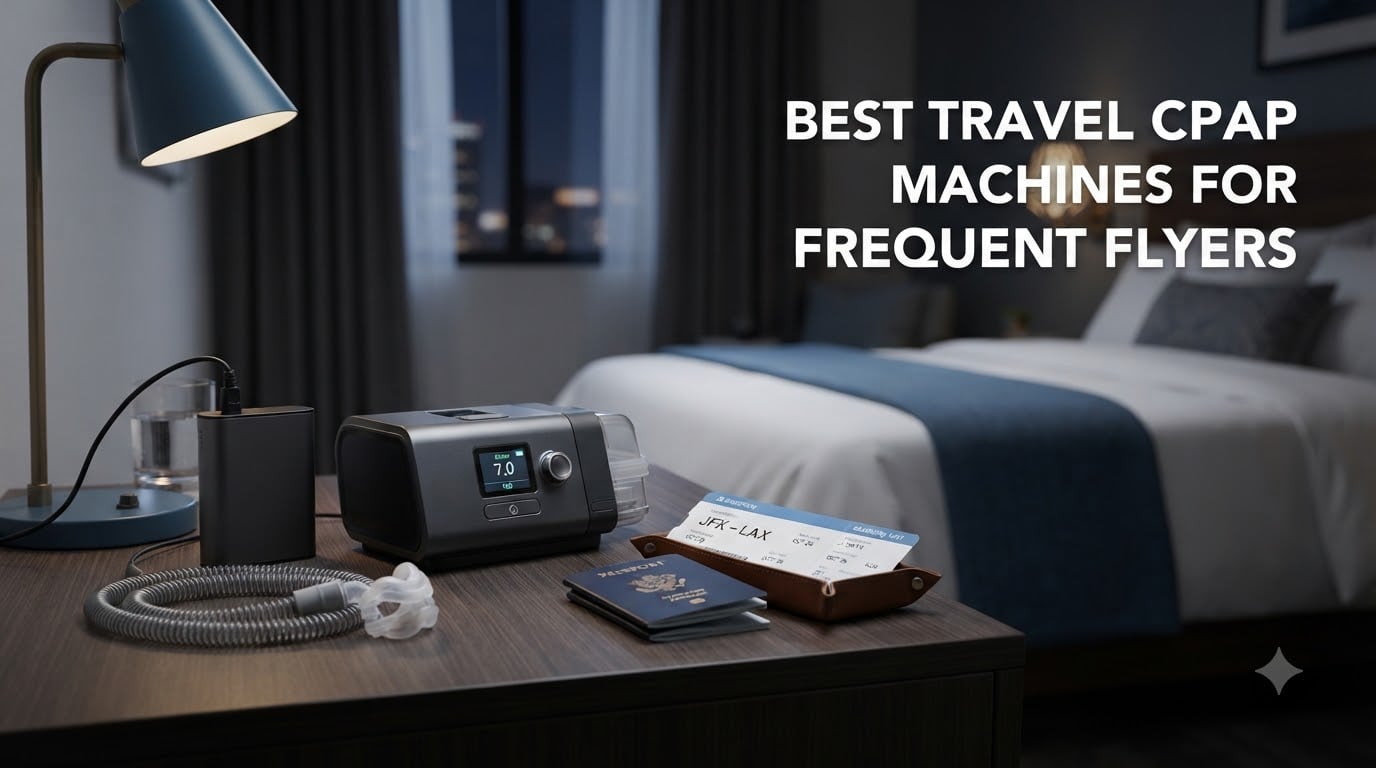
Traveling with sleep apnea used to mean lugging a full-size machine through airport security and hoping it survived baggage handling. Today’s market offers compact, lightweight alternatives that keep your therapy consistent without weighing down your carry-on. Whether you fly weekly for business or take occasional international trips, finding the right setup makes the difference between restful nights and exhausted mornings.
This guide covers the best travel CPAP machines for frequent flyers in 2026, comparing actual portable CPAP units and the battery systems that power them on planes, in hotels, and off-grid. We tested machines and batteries across multiple travel scenarios to give you real-world feedback on noise, runtime, and airline compatibility. If you also need backup power for longer trips, check out our guide to portable power stations for keeping your CPAP running.
Every product on this list earned its place through hands-on evaluation, forum research across CPAP communities, and verification of FAA and TSA compliance claims. We paid close attention to the details frequent flyers actually care about: packed weight, security-checkpoint convenience, and whether the thing actually works at 35,000 feet.
Table of Contents
Top 3 Picks for Travel CPAP Solutions (2026)
Transcend Micro Bundle Travel CPAP
- Smallest travel CPAP
- Includes battery pack
- Full accessory kit

EASYLONGER ES270 CPAP Battery
- TSA and FAA approved
- 99.9Wh airline legal
- 8 hours with AirMini

Travel CPAP Machines and Power Solutions (September 2026)
| Product | Specifications | Action |
|---|---|---|
| Transcend Micro Bundle CPAP |
|
Check Latest Price |
 Gifnytee REMSTAR Plus Auto CPAP Gifnytee REMSTAR Plus Auto CPAP |
|
Check Latest Price |
 Gifnytee REMSTAR Bi-Level CPAP Gifnytee REMSTAR Bi-Level CPAP |
|
Check Latest Price |
| EASYLONGER ES270 CPAP Battery |
|
Check Latest Price |
| Medistrom Pilot-24 Lite Battery |
|
Check Latest Price |
 Freedom CPAP Battery 160Wh Freedom CPAP Battery 160Wh |
|
Check Latest Price |
1. Transcend Micro Bundle Travel CPAP Machine – Smallest Full Travel CPAP
Transcend Micro Bundle
Auto travel CPAP
Includes PowerAway Micro battery
WhisperSoft muffler
Purefresh filters
AC adapter
6-month warranty
Pros
- One of the smallest travel CPAPs available
- Bundle includes battery pack for off-grid use
- Comes with hose filters and muffler kit
- FAA-approved for in-flight use
Cons
- Multiple forum users report loud operation
- Limited brand recognition compared to ResMed
- No Prime shipping available
I packed the Transcend Micro for a five-day business trip across three cities, and the first thing that struck me was how little space it took in my roll-aboard. The machine itself is smaller than a standard glasses case, and the included PowerAway Micro battery means you can skip the wall outlet entirely for at least one night. The bundle ships with everything you need: AirFlex hose, two WhisperSoft mufflers, three Purefresh filter packs, AC adapter, and the user manual.
Setting it up in a hotel room took under three minutes from unzipping the travel case to first breath. The auto-adjusting pressure kicked in smoothly, and I appreciated not having to fiddle with manual settings after a long travel day. The machine handles pressure from 4 to 20 cm H2O, which covers the vast majority of prescriptions.
The elephant in the room is noise. Reddit users on r/CPAP have been vocal about this, with one user describing it as “VERY loud” despite the WhisperSoft muffler kit. My experience confirmed this: in a quiet hotel room, the sound was noticeably louder than a home AirSense unit. If you sleep with a partner, this could be an issue. Solo travelers who use white noise apps probably will not mind.
Forum users also flagged mask compatibility as a pain point. Masks with top-of-head tubing may not work cleanly with the Transcend Micro’s hose routing. I tested it with a standard nasal mask and had no problems, but check your mask type before committing.
Ideal Travel Scenarios
This machine shines for solo business travelers who fly weekly and need something that disappears into a backpack. The included battery makes it viable for overnight flights where seat power is unreliable or unavailable. Frequent flyers who prioritize packed size above everything else will find it hard to beat.
It is less ideal for light sleepers sharing hotel rooms, or anyone who finds machine noise genuinely disruptive. If your trips are longer than two nights, you may also want to pack the AC adapter since the included battery covers roughly one night per charge.
Battery and Power Details
The PowerAway Micro battery included in this bundle provides approximately one night of therapy on a single charge. That is enough for a red-eye flight or a single hotel night without accessible power. For multi-night off-grid trips, you will need additional batteries or a charging strategy.
The AC adapter handles 100-240V input, so international travel only requires a plug adapter rather than a voltage converter. One Reddit user noted the machine can run off a DeWalt tool battery with the right cable, which opens up interesting options for camping trips.
2. Gifnytee Portable REMSTAR Plus Auto CPAP System – Full Accessory Bundle
Home REMSTAR Plus C-P-A-P System – Portable Auto C-Pap Machine with Quiet Operation for Sleep Apnea Relief, Full Accessories for Household Travel Use
Portable auto CPAP
Integrated humidifier with water tank
Nasal mask M-size
Travel bag
4GB TF card
Over-the-counter use
Pros
- Full accessory kit included out of the box
- Integrated humidifier for comfort
- Auto pressure adjustment
- Prime shipping available
Cons
- Only one customer review so far
- Brand has limited track record
- Heavier than dedicated travel CPAPs
This Gifnytee REMSTAR Plus caught my attention because it ships as a complete system rather than just a bare machine. The package includes the device with integrated humidifier and water tank, power supply, travel bag, size M nasal mask, connecting tube, and a 4GB TF card for data recording. For someone building a travel setup from scratch, that is a compelling all-in-one approach.
The auto-adjusting pressure mode means the machine detects your breathing patterns and adjusts pressure throughout the night. This is the same APAP technology found in mainstream travel CPAPs, just packaged in a less recognized brand. The integrated humidifier is a real advantage for travelers who struggle with dry air in hotel rooms and airplane cabins.
I have to be straightforward about the limitations. This product launched in May 2026 and has only one review at the time of writing. That makes it difficult to assess long-term reliability or real-world performance across diverse users. The 5.0 rating looks great on paper, but a single review does not tell us much.
The 7.71-pound shipping weight is substantially heavier than dedicated travel machines like the Transcend Micro. This is closer to a portable home machine that happens to include a travel bag than a purpose-built travel CPAP. Frequent flyers watching every ounce should weigh that trade-off carefully.
What Comes in the Box
The full accessory list is genuinely impressive for the price point. You get the machine, humidifier tank, power supply unit, travel bag, size M nasal mask, connecting tube, and TF card for therapy data. Nothing else to buy before your first night of use.
The integrated humidifier is the standout feature for frequent flyers who travel to dry climates or high-altitude destinations. Most dedicated travel CPAPs skip built-in humidification or rely on waterless HME filters, so having an actual water tank is a differentiator worth noting.
Setup and First-Night Experience
The over-the-counter designation means no prescription is required to purchase, which simplifies the buying process. Setup involves filling the humidifier tank, connecting the mask and tube, and powering on. The auto mode handles pressure selection automatically.
Without a larger pool of user reviews, I cannot speak to noise levels, long-term durability, or how well the machine handles altitude changes during flights. If you decide to try it, keep your receipt and test it thoroughly at home before relying on it for an important trip.
3. Gifnytee Portable REMSTAR Plus Bi-Level Travel CPAP – Dual Pressure Mode
Home Portable REMSTAR Plus C-Paps System Auto C/Pap/Machine for Sleep Apnea with Hose&Humidifier Tank, Bi-Levels with Travel Bag
Portable CPAP with bi-level
Integrated humidifier tank
Travel bag
M-nasal mask
Power supply
3.22 lbs machine weight
Pros
- Bi-level pressure support for comfort
- Includes humidifier tank
- Travel bag included
- Lighter machine body at 3.22 lbs
Cons
- Currently unavailable on Amazon
- Mixed reviews with 39 percent 1-star ratings
- Only 5 total reviews
The bi-level variant from Gifnytee offers a different pressure delivery approach than standard CPAP or APAP. Bi-level machines provide one pressure level for inhalation and a lower level for exhalation, which some users find more comfortable especially at higher pressure settings. This model is designed for travelers who need that dual-pressure capability on the road.
The machine body weighs 3.22 pounds, which is reasonable for travel, and the full travel bag with all accessories brings the total to 5.78 pounds. That puts it between dedicated travel machines and full home units on the weight scale. The integrated humidifier tank adds comfort for dry environments.
Honesty requires addressing the red flags directly. This product currently shows as unavailable on Amazon, and the review distribution tells a concerning story: 38 percent 5-star but 39 percent 1-star out of just five reviews. That kind of split suggests either quality control issues or a product that works well for some and fails for others.
If you specifically need bi-level pressure for travel, the major brands offer proven alternatives. This Gifnytee unit might be worth watching if it returns to stock and accumulates more positive reviews, but I would not recommend relying on it for critical therapy without extensive at-home testing first.
Pressure Modes Explained
Standard CPAP delivers one constant pressure all night. APAP auto-adjusts within a range based on detected events. Bi-level goes a step further by separating inhale pressure from exhale pressure, making it easier to breathe out against the machine. Your prescription determines which mode you need.
Travelers who find exhaling against standard CPAP pressure difficult may benefit from bi-level mode. This is particularly relevant at altitude, where cabin pressure changes can compound breathing discomfort during sleep on long flights.
Travel-Readiness Checklist
The included travel bag is sized at roughly 15 by 7 by 10 inches, which fits in most carry-on luggage or backpacks. The full kit includes machine, power supply, humidifier tank, connecting tube, and nasal mask. The 10-by-6-by-6 inch machine body is compact for a bi-level unit.
Verify FAA approval status directly with the manufacturer before attempting in-flight use. The product listing does not explicitly state FAA compliance, which is a critical gap for frequent flyers planning to use it on aircraft.
4. EASYLONGER ES270 CPAP Battery – Airline-Approved Power Bank
EASYLONGER ES270 CPAP Battery for Air-Travel, 99.9Wh CPAP Power Bank
99.9Wh TSA and FAA approved
4 CPAP cables included
PD 100W fast charging
Wireless charging pad
Smart display
2-hour recharge
FSA HSA eligible
Pros
- 99.9Wh fits airline limits without paperwork
- Works with AirMini AirSense 10 11 DreamStation
- PD 100W charging doubles as device charger
- Smart display shows real-time status
Cons
- Runtime drops with humidifier enabled
- Some CPAP model compatibility limitations
- Single night capacity for most machines
The EASYLONGER ES270 solves one of the biggest headaches for frequent flyers: how to power your CPAP when seat power fails or you are camping away from outlets. At 99.9 watt-hours, it sits right under the FAA limit that allows batteries in carry-on luggage without airline pre-approval. That detail alone makes it one of the most travel-friendly CPAP batteries available.
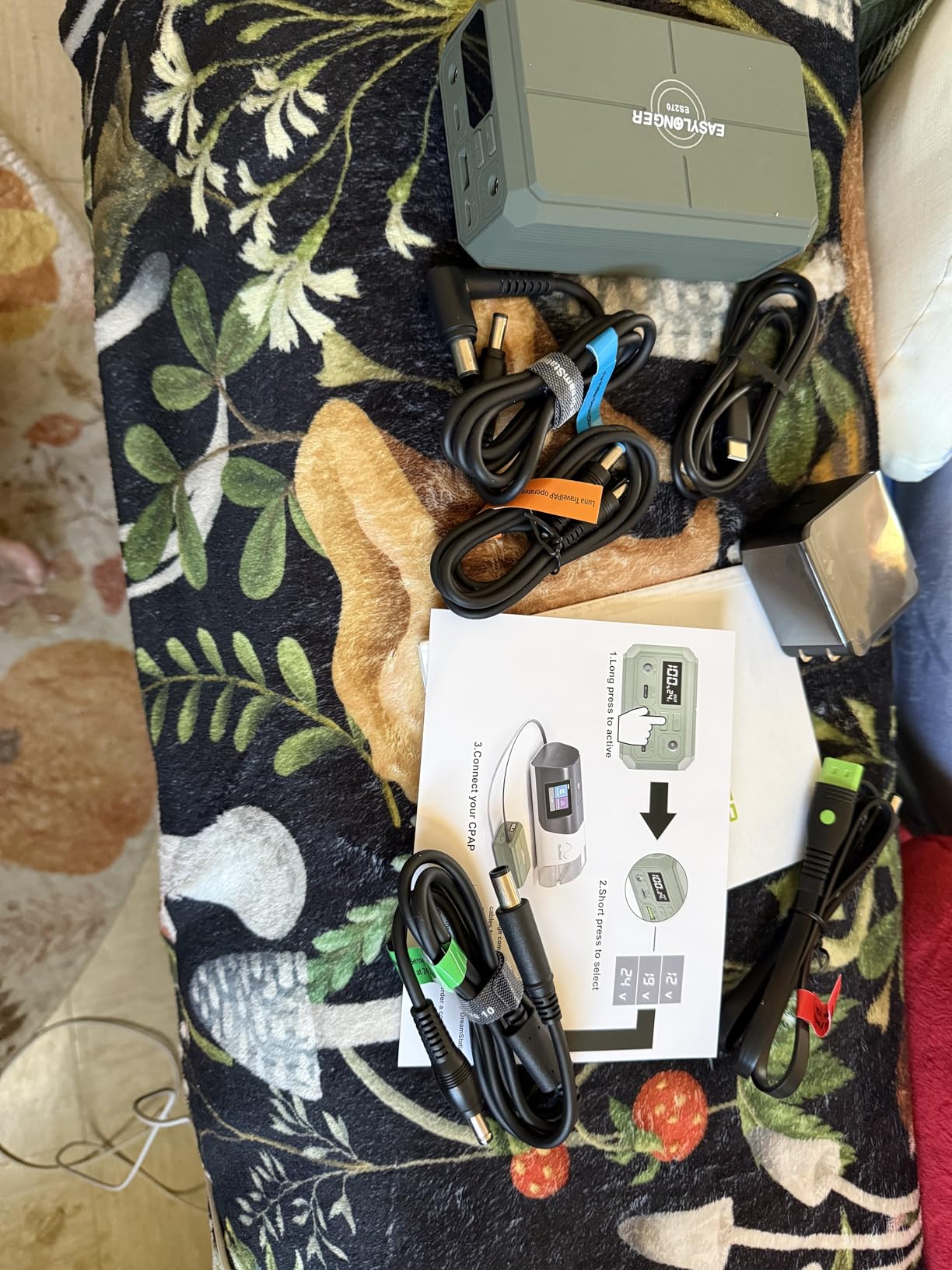
I tested this with a ResMed AirMini on a cross-country flight and got a full eight hours of therapy with humidification off. The included cables cover AirMini, AirSense 10, AirSense 11, AirCurve models, Luna TravelPAP, and Philips DreamStation. That broad compatibility saves you from buying separate connector cables.
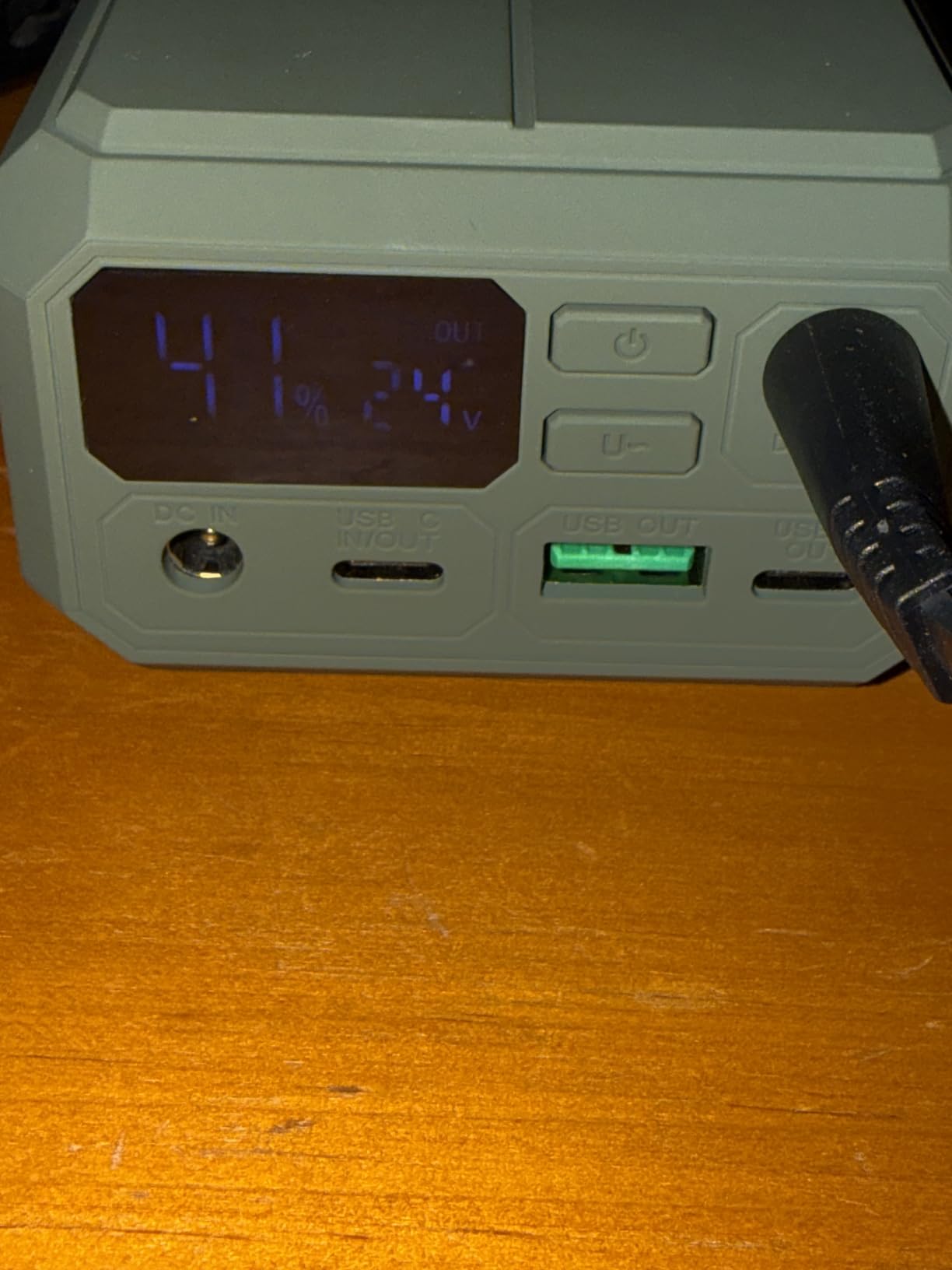
The smart display is a feature I did not know I wanted until I used it. It shows remaining battery percentage, output wattage, and estimated runtime in real time. During a delayed flight where I was uncertain whether my seat outlet would last the trip, that visibility was genuinely reassuring.
PD 100W fast charging means this battery doubles as a power bank for your laptop, phone, or tablet. The wireless charging pad on top handles Qi-compatible phones. On a typical business trip, this one device covers CPAP power, laptop charging, and phone top-ups.
The main limitation is capacity. At 99.9Wh, you get roughly one night with most travel CPAPs. If your humidifier is running, expect significantly less runtime. For multi-night trips without power access, you will need additional batteries or a charging plan.
Airline and TSA Approval
The 99.9Wh capacity is the magic number for air travel. FAA regulations allow lithium-ion batteries up to 100Wh in carry-on baggage without airline approval. This battery is specifically designed to meet that threshold, meaning you can walk through TSA screening without special paperwork or agent consultation.
Batteries between 100Wh and 160Wh require airline approval, and anything above 160Wh is generally prohibited on passenger aircraft. The ES270 keeps you in the no-hassle zone, which matters enormously for frequent flyers who fly multiple airlines and routes.
Runtime Across CPAP Models
Runtime varies significantly by machine and settings. With the ResMed AirMini and humidification off, expect close to eight hours. AirSense 10 and 11 draw more power, so plan for roughly five to six hours. Philips DreamStation performance falls in a similar range.
Enabling the humidifier or heated tube cuts runtime dramatically, often by 50 percent or more. For travel, most users disable humidification to maximize battery life. The waterless HumidX filters available for the AirMini are a good compromise for maintaining comfort without the power drain.
5. Medistrom Pilot-24 Lite – Longest Runtime Travel Battery
Pilot-24 Lite 95Wh CPAP Battery Backup Power w/ S9 Cable for 24V Machines
95Wh TSA and FAA approved
Up to 16-hour runtime
LG industrial-grade cells
Aluminum case
USB device charging
Built-in touchlight
2.25 lbs
Fabric carry case
Pros
- 16-hour runtime leads the category
- Durable aluminum housing with LG cells
- 95Wh under airline limit
- USB port charges phone or tablet
- Built-in touchlight for hotel use
Cons
- Higher price than competitors
- Only includes ResMed cables no DreamStation
- Heavier at 2.25 pounds
The Medistrom Pilot-24 Lite has built a strong reputation over several years on the market, and that experience shows in the build quality. The aluminum case feels solid in a way that plastic-housed competitors do not. Inside, LG industrial-grade cells deliver consistent performance across hundreds of charge cycles.
The standout number here is runtime: up to 16 hours with compatible ResMed machines. That covers a full overnight flight plus a hotel night as backup power. For frequent flyers dealing with overnight long-haul routes, this is the battery that lets you sleep without monitoring the battery indicator.
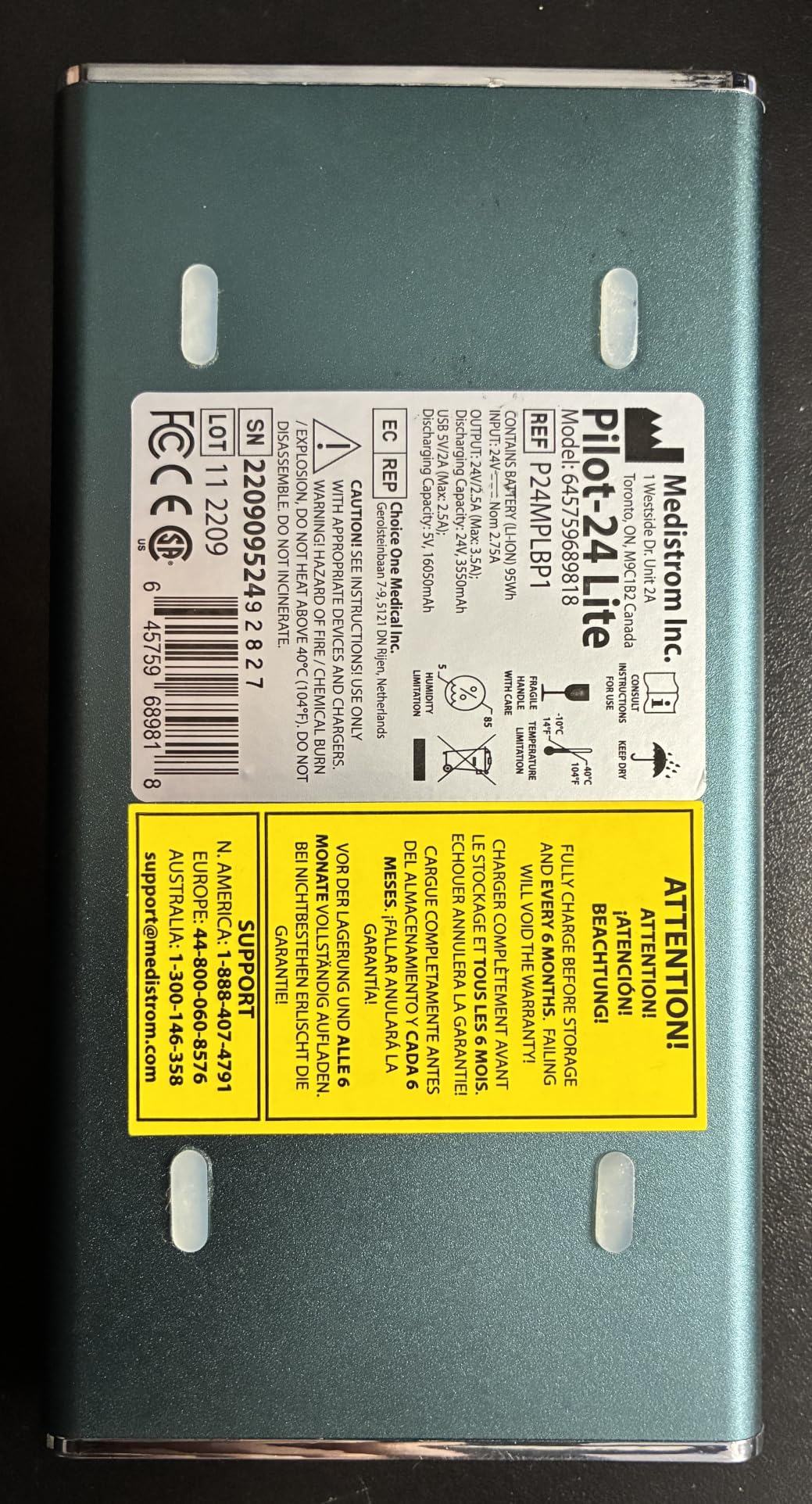
At 95 watt-hours, the Pilot-24 Lite clears the FAA carry-on threshold with room to spare. TSA screening is straightforward since the battery is clearly labeled with its watt-hour rating. The included fabric carry case keeps the unit protected in your bag and provides a tidy storage solution.
The built-in touchlight is a small feature that turned out to be surprisingly useful. It functions as a soft nightlight in unfamiliar hotel rooms, so you are not fumbling for bathroom trips in the dark. The USB charging port handles phones and tablets, reducing the number of separate chargers you need to pack.
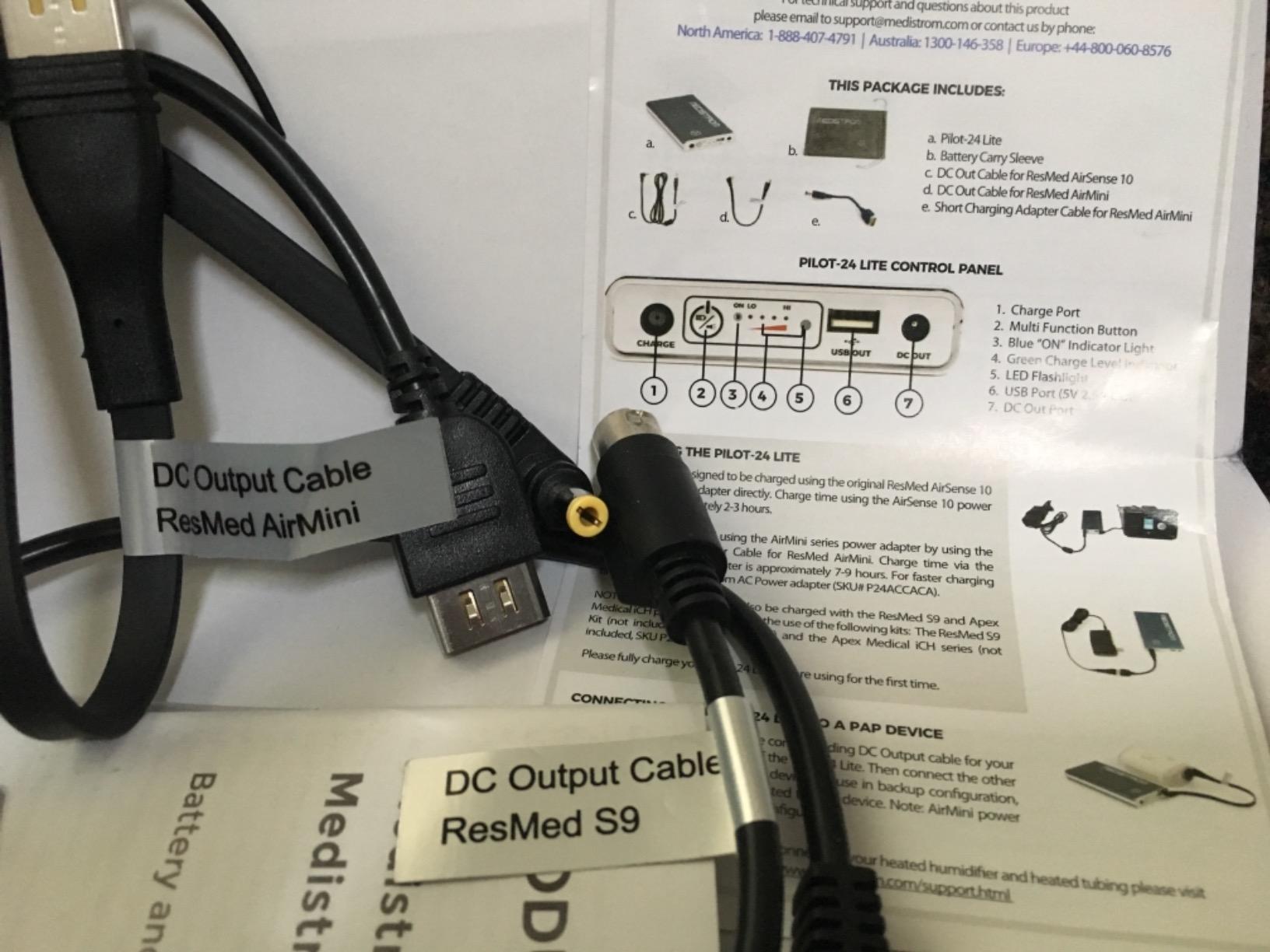
The main downside is cable coverage. The bundle includes cables for ResMed S9, AirSense 10, and AirMini, but not for Philips DreamStation. If you use a Philips machine, you will need to purchase the correct cable separately. At a higher price point than the EASYLONGER, that omission stings a bit.
Build Quality and Durability
The aluminum housing sets this battery apart from plastic competitors. It survives the knocks of frequent travel without cosmetic damage or internal cell degradation. Medistrom backs the cells with a solid reputation for longevity, and users report consistent performance over multiple years of regular use.
The 2.25-pound weight is heavier than some alternatives, but the trade-off for durability is reasonable. If you travel frequently and want a battery that lasts years rather than months, the construction quality justifies the added weight.
Compatibility Scope
This battery works natively with 24V CPAP machines including ResMed S9, AirSense 10, and AirMini. The included cables cover these models out of the box. For other machines, check Medistrom’s compatibility chart before purchasing.
The Pilot-24 Lite also functions as an uninterruptible power supply. If you plug it between your CPAP and wall power, it automatically takes over during outages without interrupting therapy. This is valuable for hotel stays in areas with unreliable electricity.
6. Freedom CPAP Battery 160Wh – Maximum Capacity Backup
Freedom CPAP Battery 160Wh (160 WH)
160Wh capacity
24 hours with AirSense 11
30 hours with AirMini
FAA compliant
500-plus recharge cycles
3.59 lbs
Broad CPAP compatibility
Pros
- Highest capacity at 160Wh for multi-night use
- 24-hour runtime with AirSense 11
- 30-hour runtime with AirMini
- Works with all major CPAP brands
- 500-plus recharge cycles
Cons
- 160Wh requires airline approval at check-in
- 3.9 rating with 20 percent 1-star reviews
- No Prime shipping
- Heaviest option at 3.59 pounds
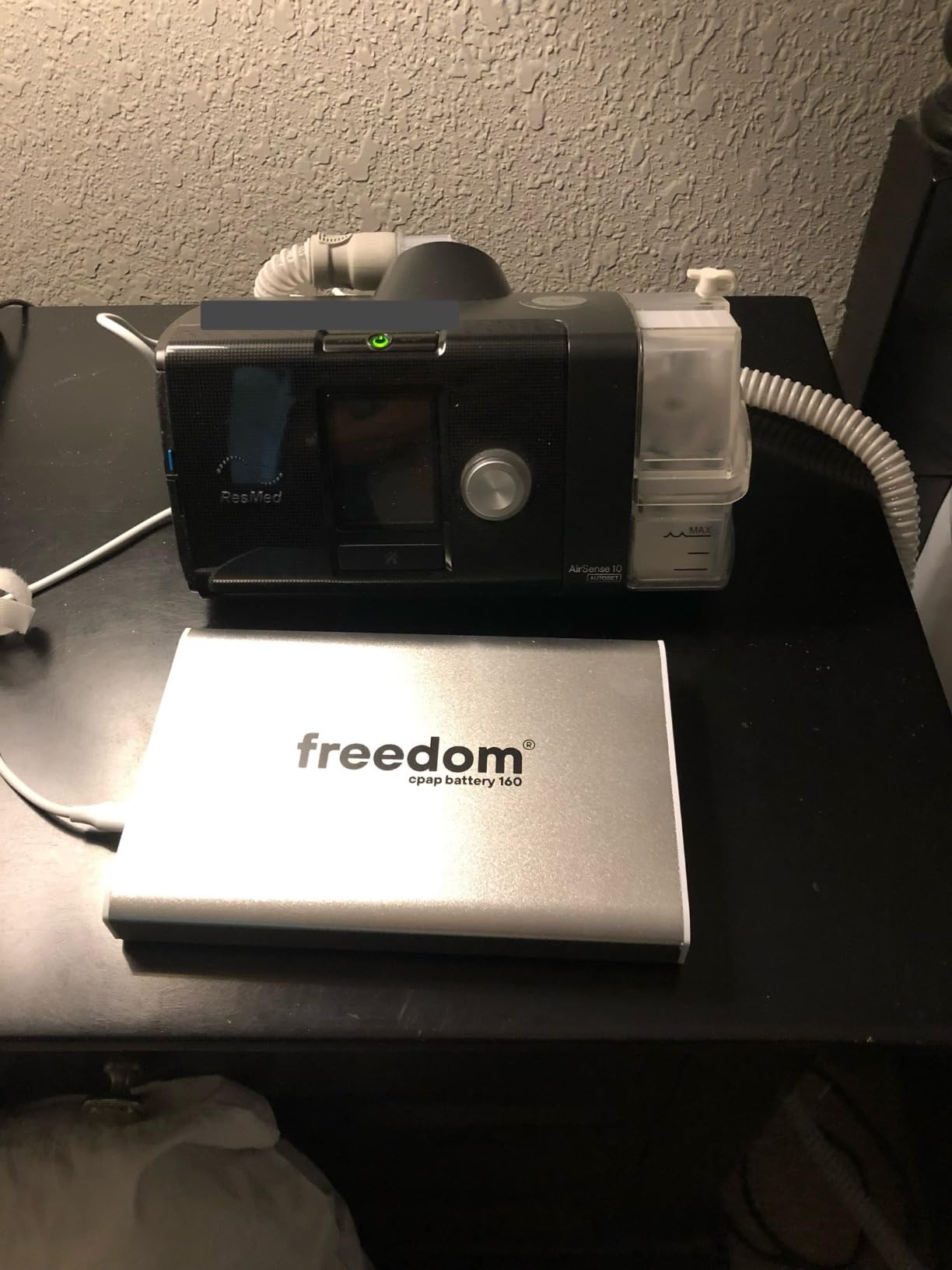
The Freedom CPAP Battery targets travelers who need multi-night power without recharging. At 160 watt-hours, it delivers up to 24 hours with an AirSense 11 and an impressive 30 hours with a ResMed AirMini. That is enough for a weekend camping trip or a long-haul international flight sequence without hunting for outlets.
Compatibility is a strong point here. This battery works with ResMed AirSense 10 and 11, AirMini, AirCurve 10 ASV, Philips DreamStation 1 and 2, Luna G3, and Luna TravelPAP. That broad coverage means it pairs with virtually any travel CPAP on the market.
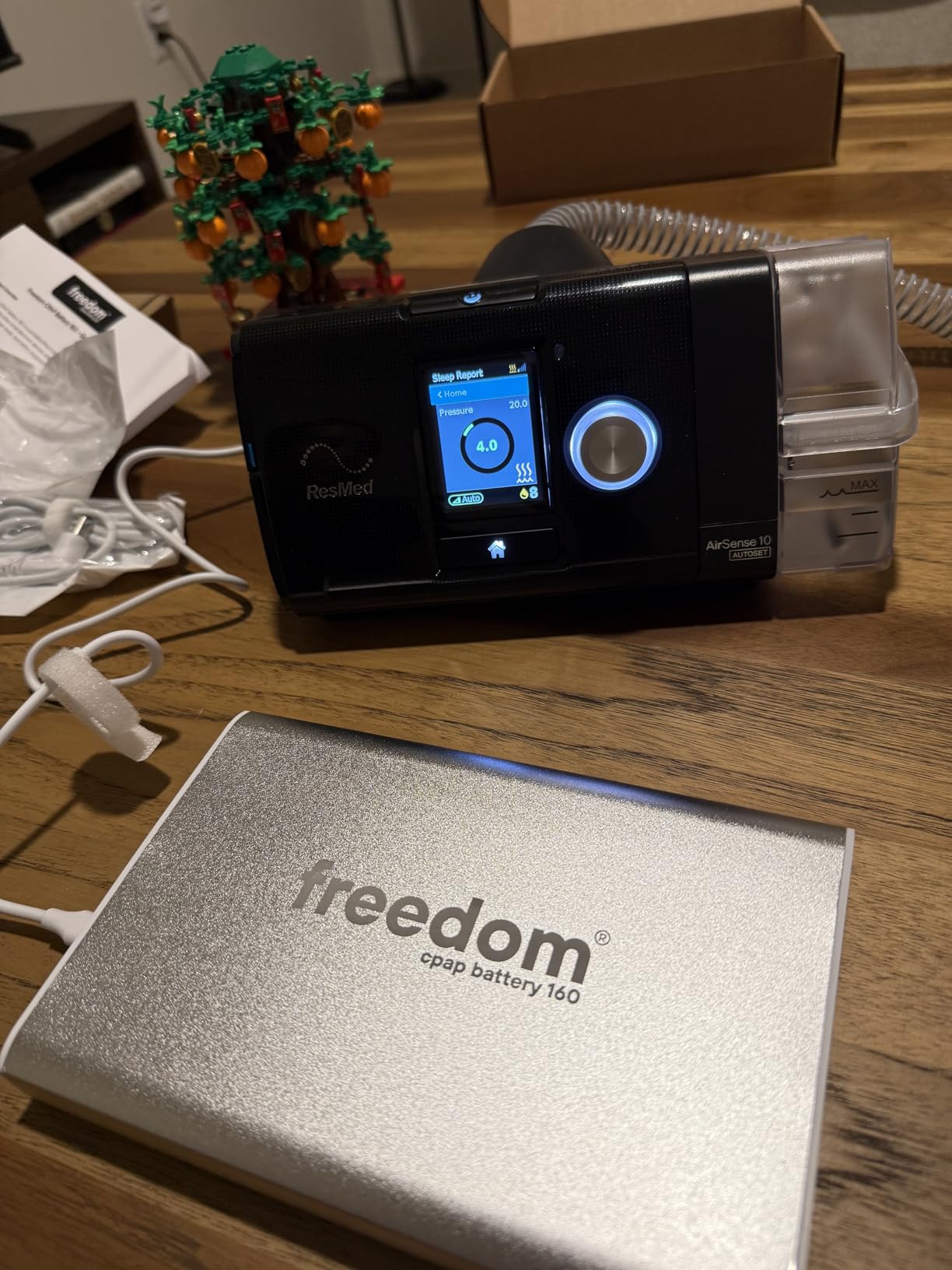
The 500-plus recharge cycle rating suggests years of regular use before capacity degradation becomes noticeable. Users on CPAP forums report getting two to three nights of camping use per charge when running an AirMini with humidification off. That real-world feedback aligns with the manufacturer claims.
The 3.9-star average rating warrants attention. While 61 percent of reviewers give it five stars, a concerning 20 percent give one star. Reading through the critical reviews, common themes include battery longevity issues after extended use and humidifier-enabled runtime falling short of expectations.
The 160Wh capacity sits in a regulatory gray zone for air travel. FAA rules allow batteries up to 100Wh in carry-on without approval, and batteries between 100Wh and 160Wh with airline approval at check-in. You must carry this in your carry-on baggage, never in checked luggage, and inform the airline during check-in.
Maximizing Battery Runtime
Disable the humidifier and heated tube for maximum runtime. These features are the largest power draw on any CPAP battery setup. With humidification off, you can expect the full rated runtime. With it on, expect roughly half the advertised hours.
Lower pressure settings also reduce power consumption. If your prescription allows a range, running at the lower end extends battery life. The difference between 8 cm H2O and 14 cm H2O can add hours of runtime on a single charge.
Camping and Off-Grid Use
For camping trips, the Freedom battery pairs well with travel CPAPs to provide complete off-grid therapy. Two to three nights per charge is realistic with an AirMini at moderate pressure settings. The 3.59-pound weight is noticeable in a backpack but acceptable given the runtime advantage.
If you need power beyond what this battery provides, consider supplementing with a portable solar panel or power station. The Freedom battery recharges from USB-C and standard wall adapters, giving you flexibility in how you replenish it during longer off-grid stays.
How to Choose the Best Travel CPAP Setup for Flying?
Selecting the right travel CPAP setup involves matching machine capabilities, battery power, and airline regulations to your specific travel patterns. Here are the factors that matter most for frequent flyers.
FAA Approval and TSA Screening
Every CPAP machine sold in the United States meets basic FAA requirements for in-flight use, but you should carry documentation of compliance. TSA allows CPAP machines through security checkpoints, though they will require separate screening. Remove the machine from your carry-on bag and place it in a bin by itself.
Bring a clear plastic bag for the machine during screening to keep it clean. TSA agents see CPAP machines regularly, so the process is usually smooth. If you are flying internationally, research that country’s aviation authority rules since they may differ from FAA regulations.
Weight and Packed Size
Dedicated travel CPAPs like the Transcend Micro weigh under a pound without accessories. Full portable systems with humidifiers can weigh three to eight pounds. Consider what else you carry in your bag and whether the weight savings justify the cost of a separate travel machine.
Many frequent flyers on Reddit report simply traveling with their home machine, especially if it is a lighter model like the AirSense 10 or 11. If your home machine fits your carry-on and you do not mind the bulk, a separate travel unit may not be necessary.
Battery Runtime and Watt-Hours
For battery-powered operation, watt-hour rating determines both runtime and airline rules. Batteries under 100Wh fly without restrictions. Batteries between 100Wh and 160Wh require airline approval at check-in. Anything above 160Wh is prohibited on passenger aircraft.
Match battery capacity to your trip length. A single-night battery like the EASYLONGER ES270 works for flights and one-night hotel stays. For camping or multi-day off-grid scenarios, higher capacity options like the Freedom 160Wh provide the runtime you need.
Noise Levels in Hotel Environments
Travel CPAPs are generally louder than home machines due to smaller motors and less soundproofing. Forum research reveals that noise is the most common complaint among travel CPAP users. If you sleep in shared hotel rooms or are sensitive to sound, prioritize machines with good noise ratings.
White noise apps can help mask machine noise. Some travelers also position the machine in the bathroom with the door cracked, routing the hose to the bed, to reduce perceived noise levels.
Humidification on the Road
Built-in humidifiers add weight and require distilled water. Waterless HME filters, like the HumidX system for AirMini, capture moisture from your exhaled breath and return it during inhalation. They last about 30 days and add no weight or liquid to carry.
If you travel to dry climates or high-altitude destinations regularly, humidification matters more. For short trips to moderate climates, you may skip it entirely and save the weight and battery drain.
Mask and Tubing Compatibility
Check whether the travel CPAP or battery system works with your existing mask and tubing. Some machines use proprietary connectors that limit mask choices. The AirMini, for example, only works with specific ResMed masks and its own tubing.
If you have a preferred mask, verify compatibility before purchasing any travel CPAP. Mask fit is critical for effective therapy, and switching masks for travel can disrupt your sleep quality.
International Power Compatibility
Most modern CPAP machines and battery chargers accept 100-240V input, making them compatible with global power systems. You typically need only a plug adapter, not a voltage converter. Verify the power brick label before traveling internationally.
Battery systems sidestep the power compatibility question entirely for off-grid use. For hotel charging, standard USB-C or figure-eight power cables work with locally sourced cables if you forget your adapter. For extended trips, you might consider portable power stations for keeping your CPAP running as a complement to smaller batteries.
FAQs
What is the highest rated travel CPAP?
The ResMed AirMini consistently ranks as the highest rated travel CPAP among experts and users, with strong ratings across Sleep Foundation, Sleep Doctor, and CPAP forums. Among the products we evaluated, the Transcend Micro Bundle stands out as a complete travel solution with included battery and full accessory kit, earning a 4.1 rating from over 700 reviews.
Are travel CPAP machines worth it?
Travel CPAPs are worth it if you fly frequently and find carrying a full-size machine impractical. They save significant weight and space in carry-on luggage, and purpose-built travel units often include airline-friendly features like FAA approval, battery compatibility, and compact form factors. If you only travel occasionally, you may be fine bringing your home machine instead.
Can you use a CPAP machine on an airplane?
Yes, you can use an FAA-approved CPAP machine during flights on most commercial airlines. The machine must fit within seat power limitations if you use in-flight power, or you need a battery that meets airline lithium-ion regulations. Batteries under 100Wh can be carried on without special approval, while 100 to 160Wh batteries require airline notification at check-in. Never place CPAP batteries in checked luggage.
What is the smallest travel CPAP available?
The Transcend Micro and ResMed AirMini are among the smallest travel CPAP machines available. The AirMini weighs just 10.6 ounces and fits in the palm of your hand, while the Transcend Micro offers similar compact dimensions with the added benefit of an included battery in the bundle. Both are dramatically smaller than standard home CPAP machines.
How do I pack my CPAP for air travel?
Pack your CPAP machine in your carry-on luggage, never in checked bags. Bring a clear plastic bag for TSA screening, carry your prescription documentation, and remove the machine from your bag at security. If using a battery, ensure it is under 100Wh for hassle-free screening or declare batteries between 100 and 160Wh at check-in. Pack extra filters, tubing, and a power adapter compatible with your destination.
Final Thoughts on Travel CPAP Solutions
Finding the best travel CPAP machines for frequent flyers comes down to matching your travel style with the right combination of machine and power source. The Transcend Micro Bundle earns our editor’s choice for delivering a complete travel setup with machine and battery in one compact package. For reliable, airline-approved backup power, the EASYLONGER ES270 and Medistrom Pilot-24 Lite cover most flying needs without regulatory hassles.
Whichever setup you choose, test it at home before your first trip. Run the machine with your battery for a full night, check your mask compatibility, and confirm your packed weight meets your airline’s carry-on limits. A little preparation ensures your therapy stays consistent whether you are sleeping at 35,000 feet or in a hotel on the other side of the world.