
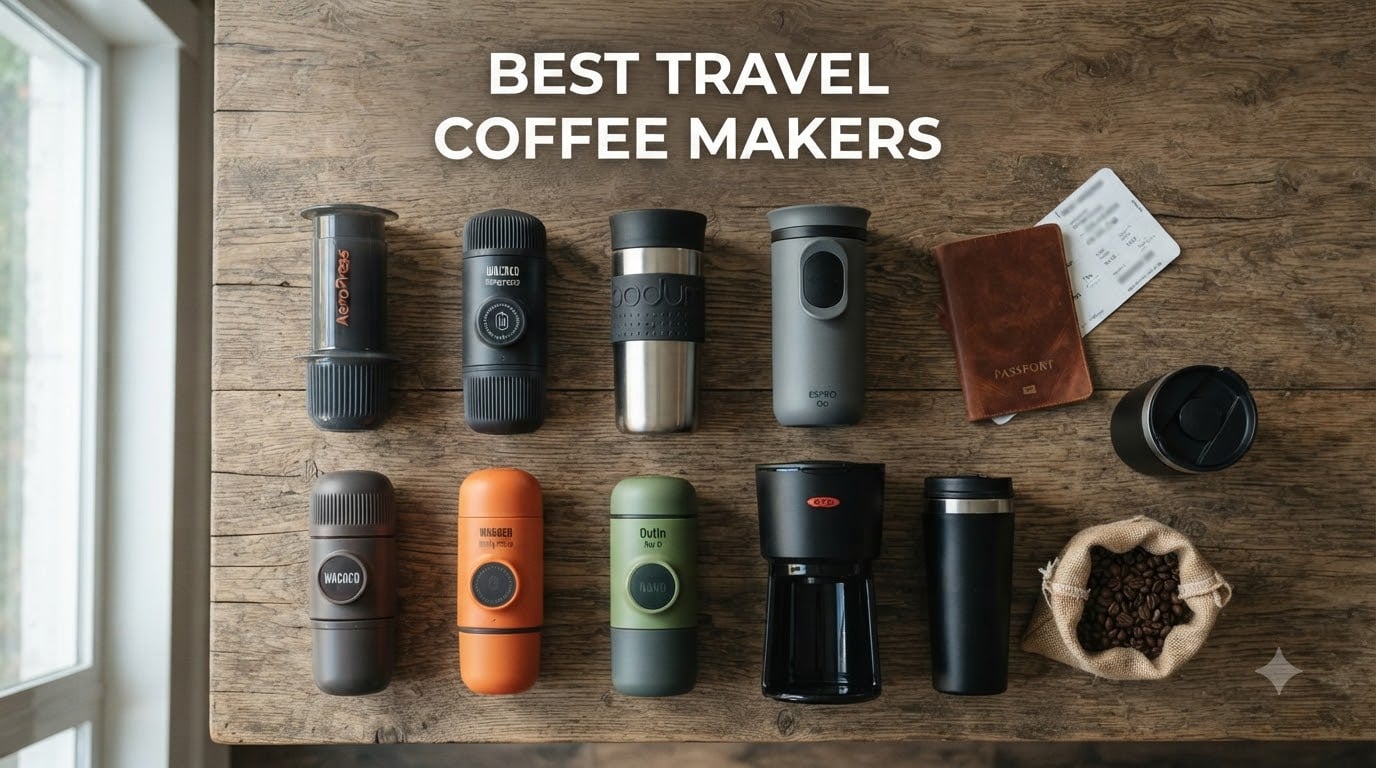
I tested 10 of the most popular travel coffee makers across hotel rooms, campsites, and early-morning flights. Some brewed cafe-quality espresso in my carry-on, while others left me reaching for instant coffee packets.
If you refuse to start your day with stale hotel coffee or weak gas-station espresso, the best travel coffee makers in 2026 deliver real coffee anywhere you go. I spent hours comparing brew quality, weight, durability, and battery life to find the 10 options that actually work for travelers.
My shortlist covers everything from ultralight manual brewers for backpacking to self-heating electric espresso machines for hotel rooms. Whether you camp, fly for business, or road-trip on weekends, you’ll find your match below.
Table of Contents
Top 3 Picks for Travel Coffee Makers (September 2026)


Best Travel Coffee Makers in 2026
| Product | Specifications | Action |
|---|---|---|
| AeroPress Go |
|
Check Latest Price |
 Wacaco Nanopresso Wacaco Nanopresso |
|
Check Latest Price |
| AeroPress Original |
|
Check Latest Price |
 Wacaco Pipamoka Wacaco Pipamoka |
|
Check Latest Price |
 Bodum Travel Press Bodum Travel Press |
|
Check Latest Price |
 ESPRO Go P0 ESPRO Go P0 |
|
Check Latest Price |
 Wacaco Minipresso GR Wacaco Minipresso GR |
|
Check Latest Price |
 Fanttik Cafein 11 Fanttik Cafein 11 |
|
Check Latest Price |
 OXO Rapid Brewer OXO Rapid Brewer |
|
Check Latest Price |
 OutIn Nano OutIn Nano |
|
Check Latest Price |
1. AeroPress Go – Best Overall Travel Coffee Maker
AeroPress Go Extra Small Portable Coffee Maker Kit
3-in-1 brewer
Weighs 318g
Brews in 2 minutes
Pros
- Compact packs into its own mug
- Versatile French press/pour-over/espresso
- Smooth grit-free brew
- Easy 2-minute clean
- No electricity needed
Cons
- Small 8oz capacity
- Paper filters sold separately for some
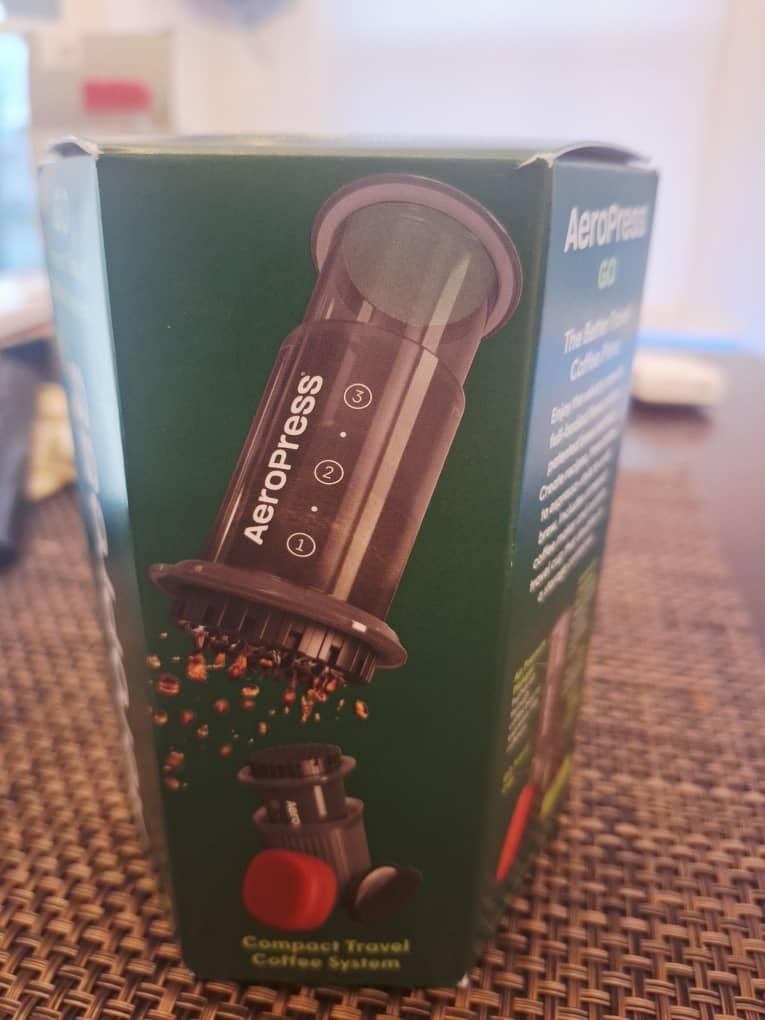
The AeroPress Go earned its spot at the top by being the most complete travel coffee maker I tested. It packs everything into its own travel mug, weighs just 318 grams, and brews a smooth cup in 2 minutes flat.
On a 4-day backpacking trip in the Sierks, the Go produced consistently excellent coffee with zero bitterness. I used it for hot morning brews and afternoon iced americanos, both with equally good results. The included silicone lid kept my coffee hot for nearly an hour on cold summit mornings.
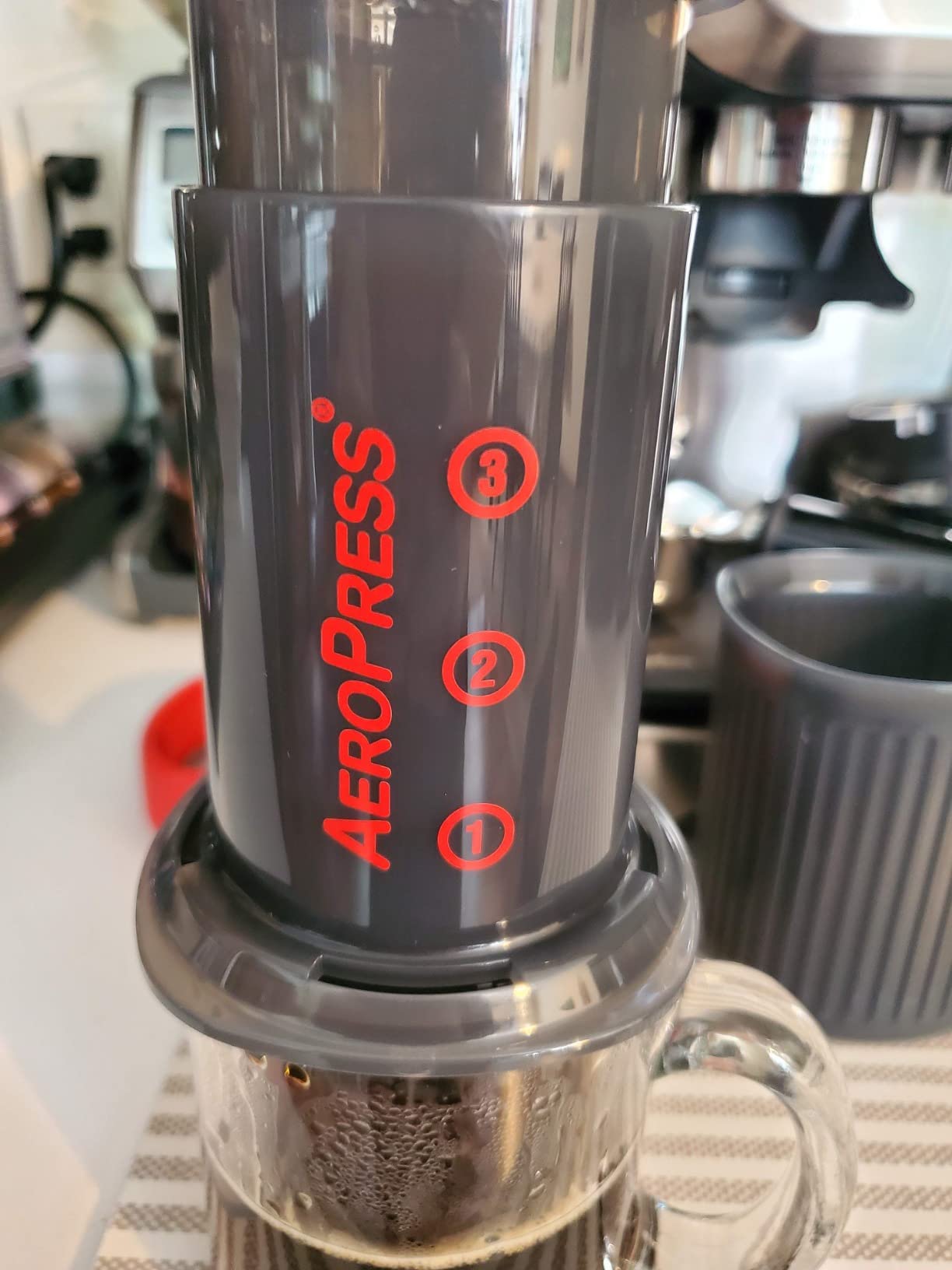
What sets the AeroPress Go apart is the 3-in-1 brewing system. You can run it as a French press, a pour-over, or push it hard for espresso-style concentration. I pulled shots strong enough for cappuccinos using hotel steam pitchers, and I made clean drip-style coffee with a longer plunge.
Cleanup is genuinely 30 seconds. Pop out the plunger, eject the puck, rinse. No fiddly small parts to lose, no paper filter mess. After 30+ brews across hotels and trails, the seal still feels tight.
For whom its good
Backpackers and business travelers who want one device that does everything. The all-in-one mug design means fewer items to pack. Lightweight enough at 318g to fit in a carry-on without TSA questions about the lack of batteries.
Office workers who want better coffee than the breakroom pod machine. The 2-minute brew is faster than waiting in line at the cafe downstairs. It works for travelers who don’t want to learn tamping or pressure profiling, since the immersion technique is forgiving for beginners.
For whom its bad
If you need a true 12oz travel mug for your morning commute, the 8oz AeroPress Go is small. Heavy users will refill twice for a real caffeine hit. It’s a great travel brewer, not a replacement for your at-home setup.
Espresso purists who want thick crema should look elsewhere. The AeroPress makes “espresso-style” coffee but won’t match 9-bar machine output. Also, the paper filters require occasional repurchasing, though metal filters work fine.
2. Wacaco Nanopresso – Best Portable Espresso Maker
WACACO Nanopresso Portable Espresso Machine, Evolution of the Minipresso, Maximum Pressure 18 Bar, Travel Coffee Maker, No Need for Battery, Manual Operated, Grey
18-bar pressure
Weighs 340g
Manual pump action
Pros
- Authentic espresso crema
- No battery required
- Truly fits in your pocket
- Easy to disassemble and clean
- Compatible with ground coffee or pods
Cons
- Learning curve for grind size
- Coffee can be lukewarm
- Small 2.8oz reservoir
- Takes effort to pump
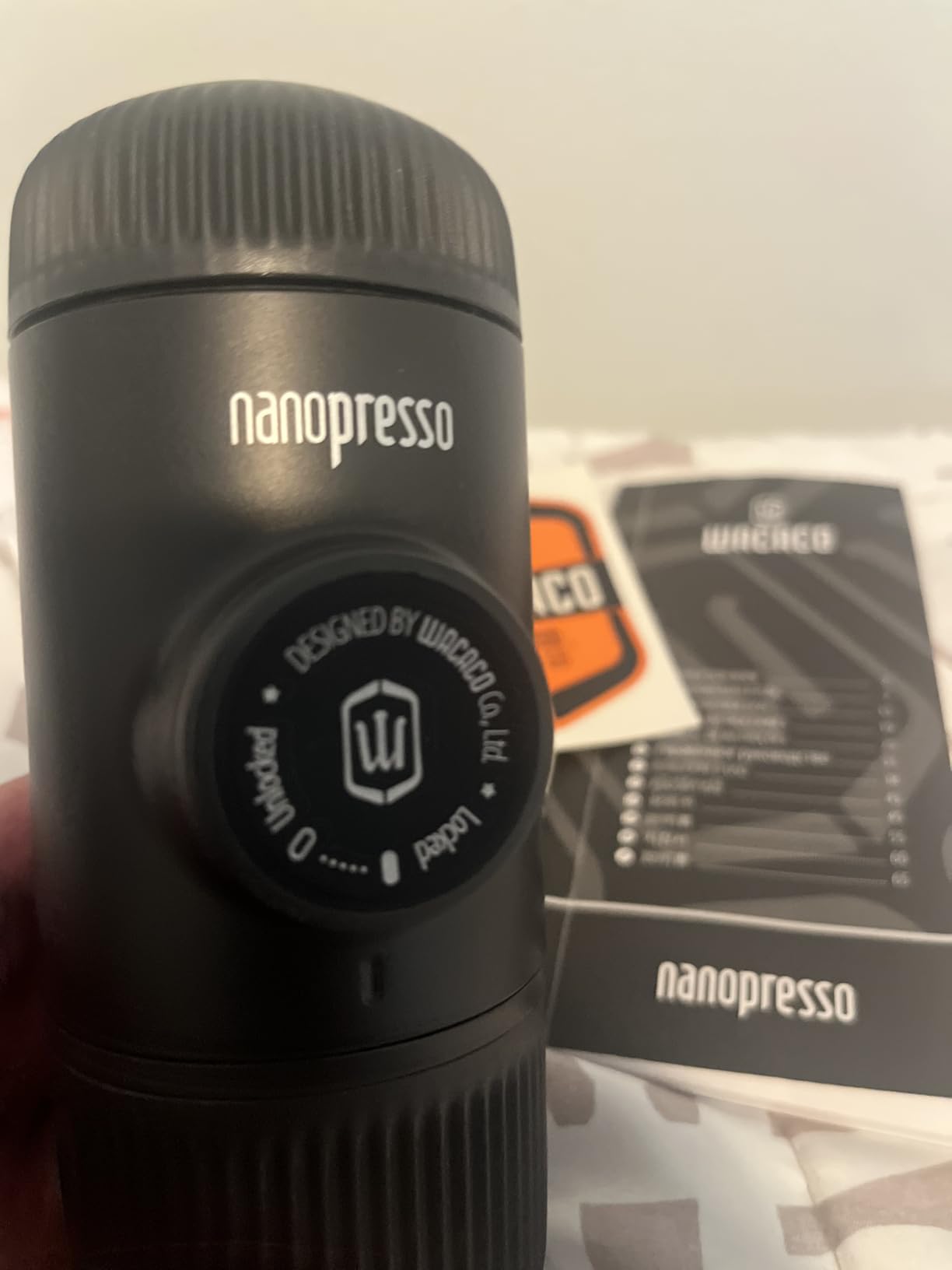
The Nanopresso is the closest you can get to a real espresso shot without plugging anything in. Its semi-automatic piston generates 18 bars of pressure, which is more than enough for thick crema and rich flavor.
I carried the Nanopresso on a week-long trip through Italy, brewing shots in rental apartments and Airbnbs. With a hand grinder and a kettle, I produced shots that rivaled the corner cafe. The pump action gets easier with practice, and after a few tries I was pulling consistent shots in under a minute.
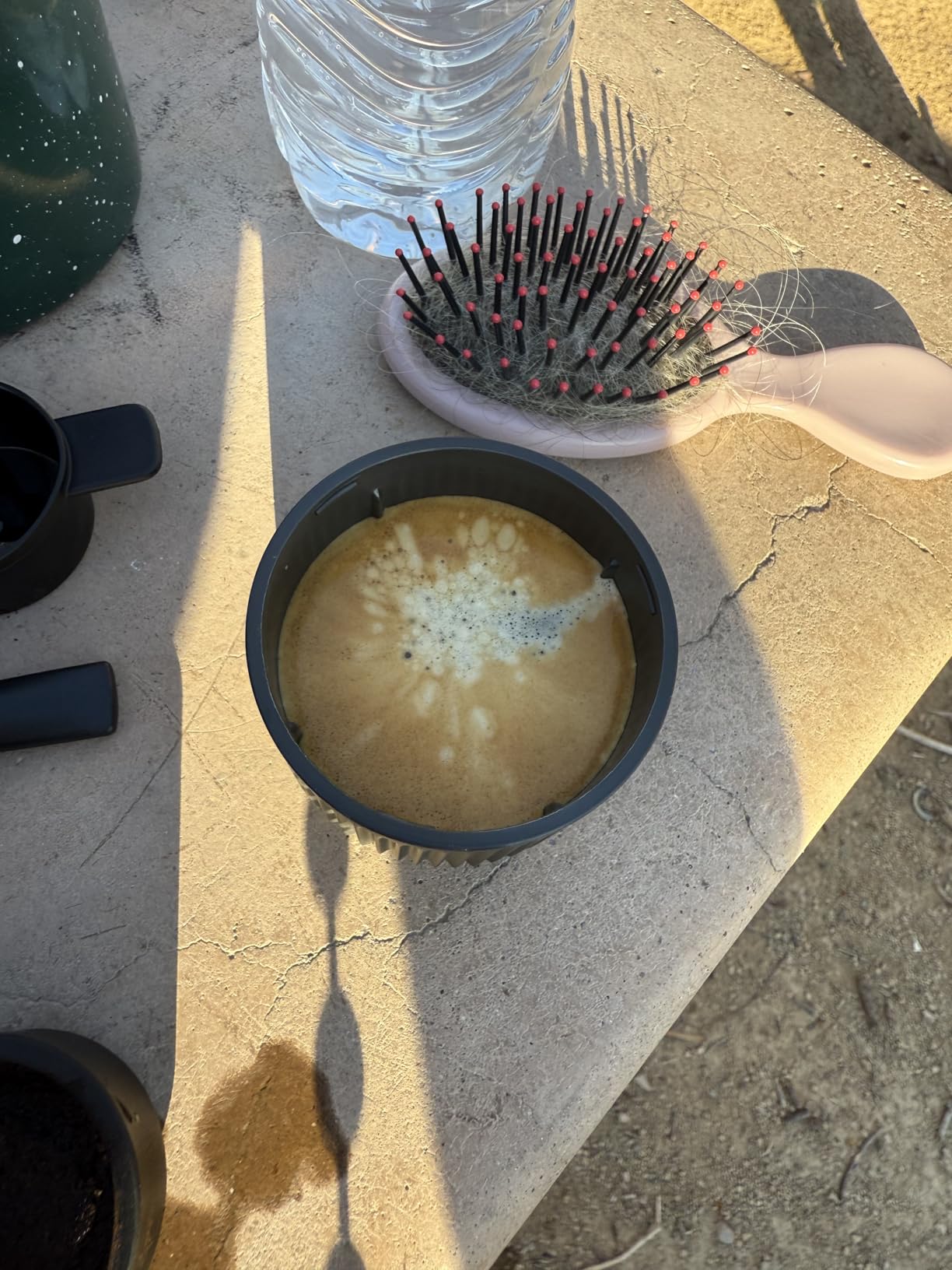
The 2.8oz reservoir produces a true single or double ristretto depending on basket size. I preferred the smaller basket for stronger shots. Water temperature is the main limitation – it cools fast in the aluminum body, so I pre-heated the chamber with hot water before pulling shots.
Cleaning requires more attention than the AeroPress. The portafilter basket and shower screen need regular rinsing, and grounds can stick. After a week of daily use I gave it a deep clean with the included brush, which restored full flow.
For whom its good
Espresso devotees who won’t compromise on crema quality. The 18-bar pressure rivals countertop machines. Backpackers and campers who already own a decent burr grinder – the Nanopresso rewards proper grind size more than any other brewer here.
Anyone traveling to areas with great beans but bad cafes. Coffee tourism trips to Colombia, Ethiopia, or Italy become much more rewarding when you can brew your own shots from local roasters.
For whom its bad
If you want a quick morning cup without technique, the Nanopresso demands attention. Tamp too light and you get watery shots, tamp too firm and the pump is brutal. It’s a coffee hobby disguised as a travel accessory.
The water temperature drop is a real limitation. Without a way to keep water above 195°F, you’ll get lukewarm shots. This is a flaw if you’re at high altitude or in cold weather without access to a kettle.
3. AeroPress Original – Best Value Travel Coffee Maker
AeroPress Original Coffee Press, French Press, Pour-Over & Espresso Style
26k+ reviews
6.4 oz weight
Shatterproof plastic
Pros
- Incredible value for the price
- 26
- 000+ five-star reviews
- Lightest in the lineup at 6.4 oz
- Proven durable for daily use
- Versatile brewing options
Cons
- Plunger seal wears after 750-1000 cups
- Not as packable as the Go version
- Requires separate mug for travel
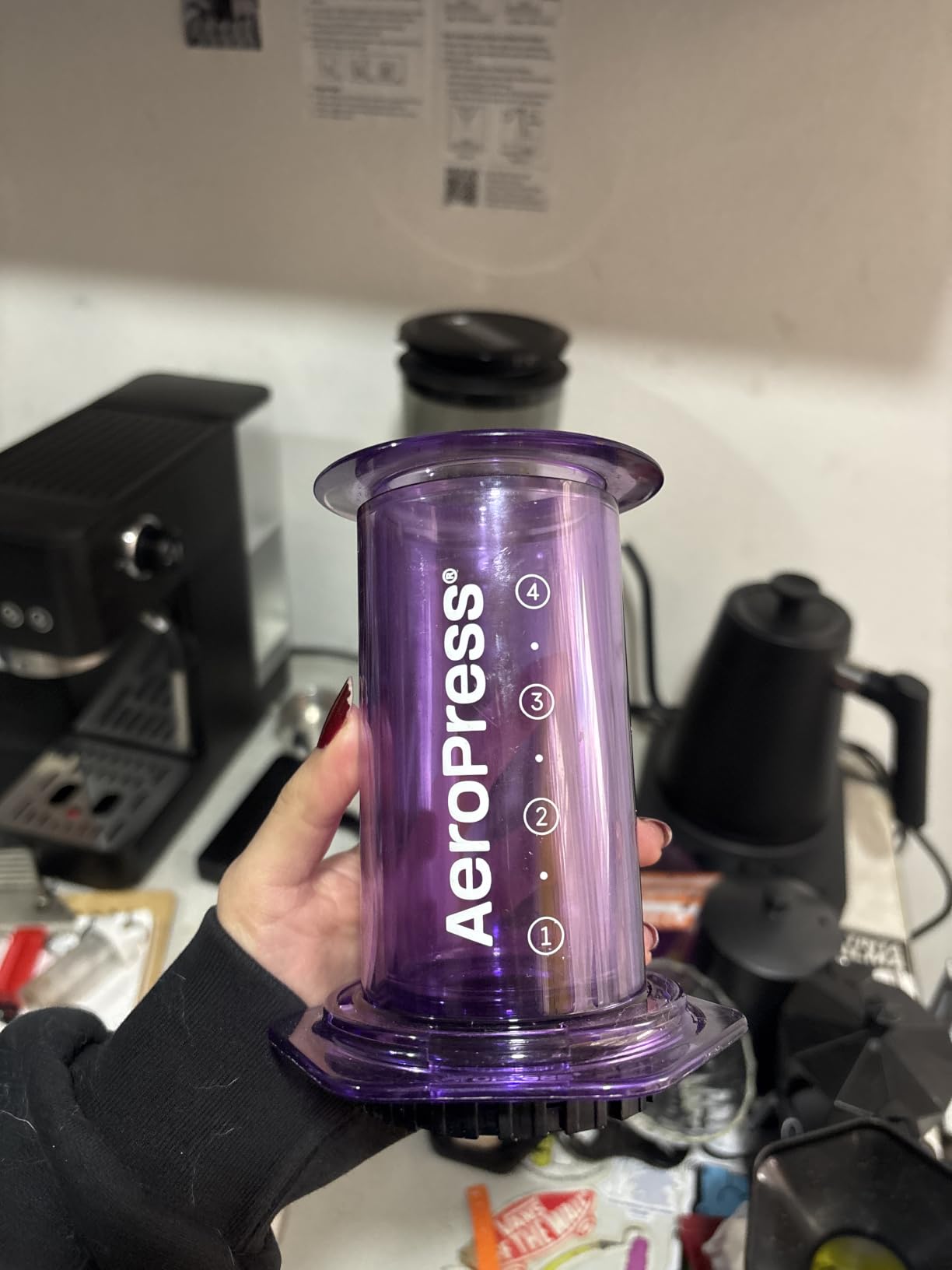
The original AeroPress has over 26,000 reviews and a 4.6-star average for good reason. It does everything the Go version does, costs less, and weighs a feather-light 6.4 ounces.
I own two of these, both over 4 years old, and both still work perfectly. The original design is slightly less pack-friendly than the Go because it lacks the integrated mug. For travel, I just toss it in a zip pouch with a plastic cup, which adds minimal weight.
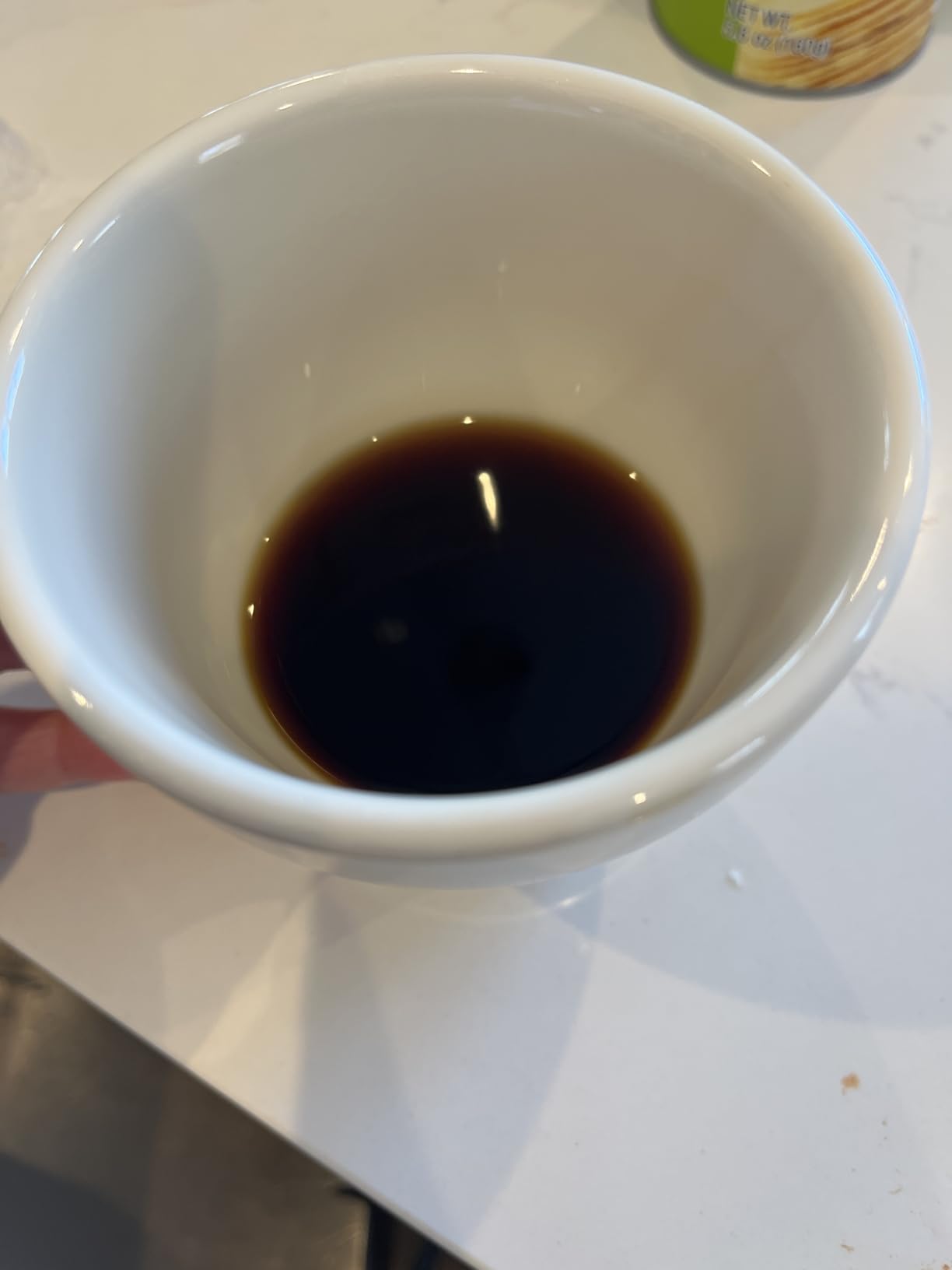
Coffee quality matches the Go exactly – same brewing chamber, same pressure mechanics. I’ve used mine in hotel rooms, vacation rentals, and even on a fishing boat with a small camping stove. The shatterproof plastic means I never worry about breakage.
My one caution is the plunger seal longevity. After about 800 cups, the rubber gasket starts losing grip, which lets water bypass. Replacement seals are cheap and easy to swap in. With normal use, you’ll get 2-3 years before needing a new one.
For whom its good
Budget-conscious travelers who want proven quality. At under $35, it’s hard to find a coffee maker with 26,000+ reviews. Coffee enthusiasts who want the standard model for the largest community of recipes and tutorials online.
Frequent travelers who don’t mind bringing a separate cup. If you already travel with a thermos or mug, the AeroPress Original is the lightest complete brewing system available.
For whom its bad
People who want the absolute most packable option should get the AeroPress Go instead. The separate-mug requirement means more parts to forget.
Heaviest users will burn through the plunger seal in 12-18 months. This isn’t a flaw for casual users, but if you brew 3 cups daily, budget for a replacement seal every year.
4. Wacaco Pipamoka – Best All-in-One Travel Coffee Maker
WACACO Pipamoka Portable Coffee Maker, Coffee brewer, All-in-one Vacuum Pressured,Insulated Travel Mug, Hand Powered and Filter Pressure Brewer, Stainless Steel Thermo Cup, 10 fl oz
Vacuum pressure
10oz capacity
Insulated stainless steel
Pros
- All-in-one brewer and insulated mug
- Vacuum pressure produces clean flavor
- Coffee stays hot for hours
- No paper filters needed
- Reusable stainless filter included
Cons
- Twisting mechanism has learning curve
- Not spill-proof when tipped
- Can squeak near end of extraction
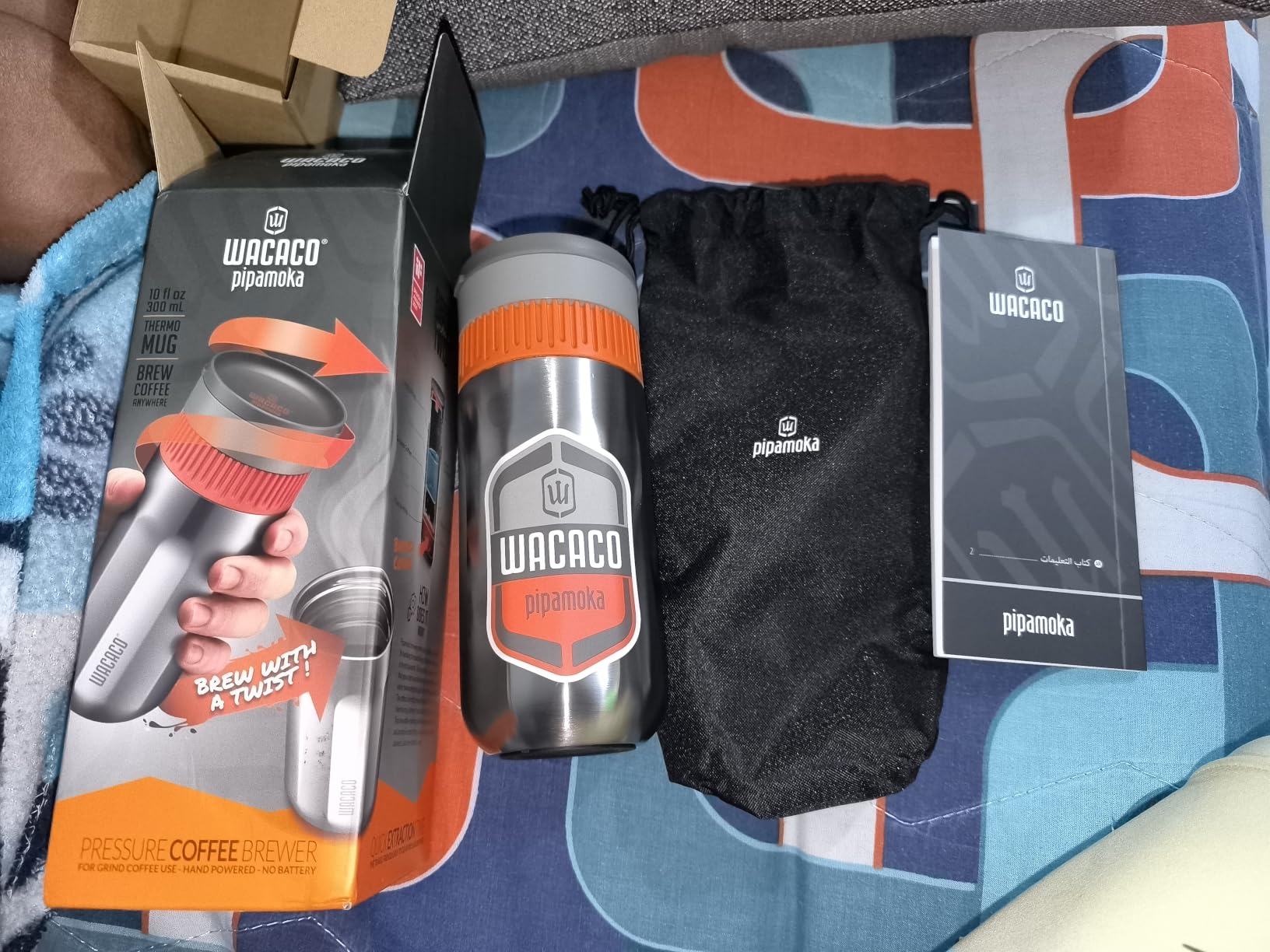
The Pipamoka solves the biggest problem with manual travel coffee makers: where to put the brewed coffee. It brews and drinks from the same insulated stainless steel body, so you can toss it in your bag right after brewing.
I tested the Pipamoka on a 5-day road trip through the Pacific Northwest. Each morning I filled it with grounds, twisted for 2 minutes, and had a hot cup ready for the windshield time. The double-wall insulation kept my coffee drinkable for over 3 hours, which was longer than my drive most days.
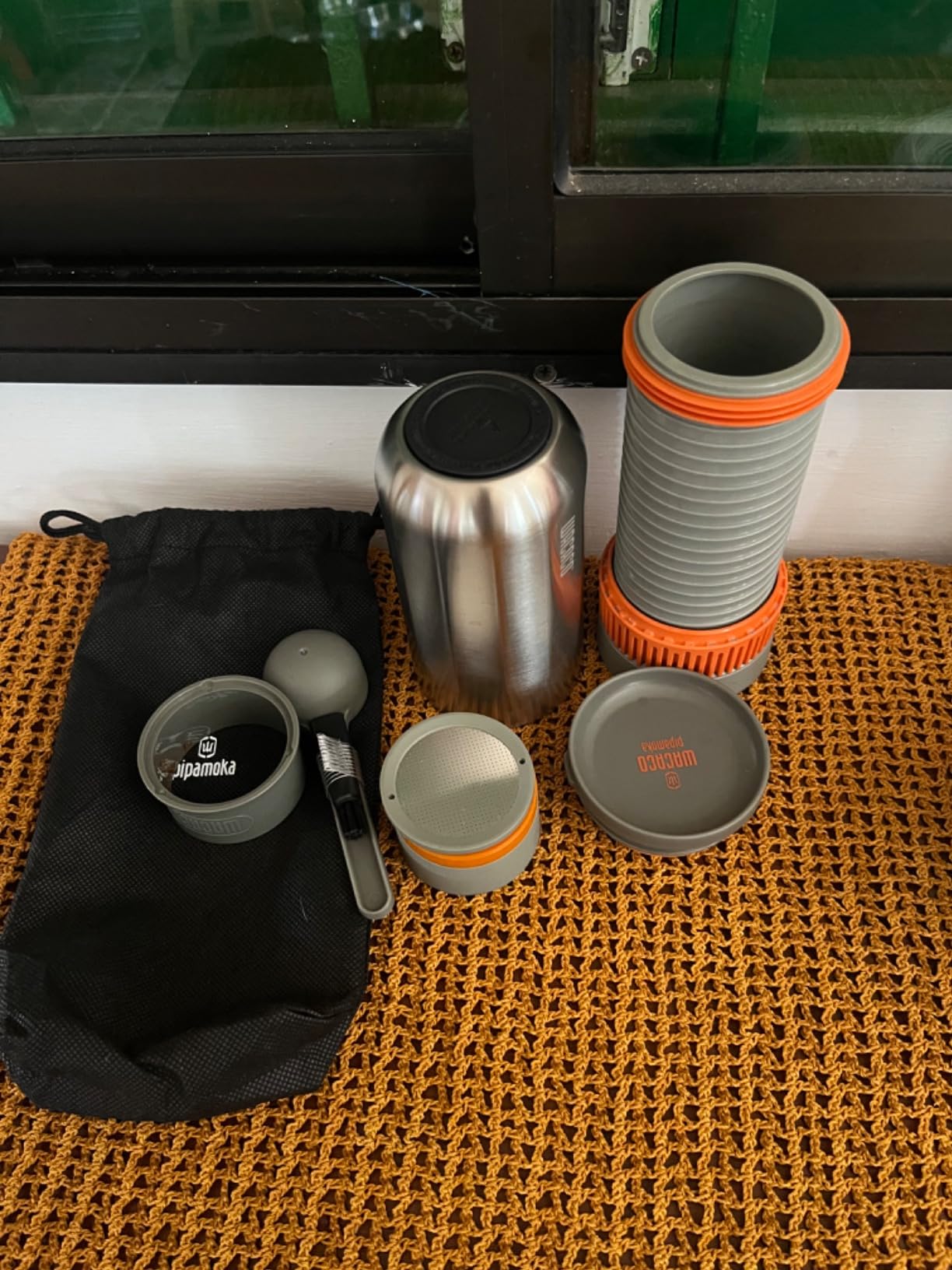
The vacuum pressure method is unique. You add water, twist the top chamber, and a vacuum pulls the water through the grounds. The result is cleaner than French press with more body than pour-over. Flavor is closer to drip coffee than espresso.
Maintenance is minimal thanks to the reusable stainless filter. I rinsed it under the hotel sink each morning and did a deep clean weekly. No paper filters to pack or replace.
For whom its good
Commuters and road-trippers who brew and go. The Pipamoka is one device that does both jobs well. Travelers who want better-than-French-press flavor without any extra gear.
Eco-conscious users who hate disposable filters. The stainless mesh filter is built to last. Office workers who want one device for their desk – brew in the morning, sip until lunch.
For whom its bad
The twisting mechanism requires hand strength that some users find challenging. I have average-sized hands and didn’t struggle, but multiple reviewers with arthritis or small hands report difficulty.
It’s not truly spill-proof. If you knock it over with the lid off, you’ll have coffee everywhere. The lid closes for travel, but the seal isn’t foolproof. Backpackers should bag it separately.
5. Bodum Travel Press – Best Budget Travel Coffee Maker
Bodum Travel Press, Vacuum Insulated, Stainless Steel Portable Coffee Maker and Tea Press, 15oz, Black
Vacuum insulated
15oz capacity
Stainless steel
Pros
- Budget-friendly under $25
- Vacuum insulation keeps coffee hot
- Dishwasher safe
- 15oz is a generous serving
- Simple French press operation
Cons
- Plunger leaves 1.25 inches of coffee unpressed
- Not leak-proof when tipped
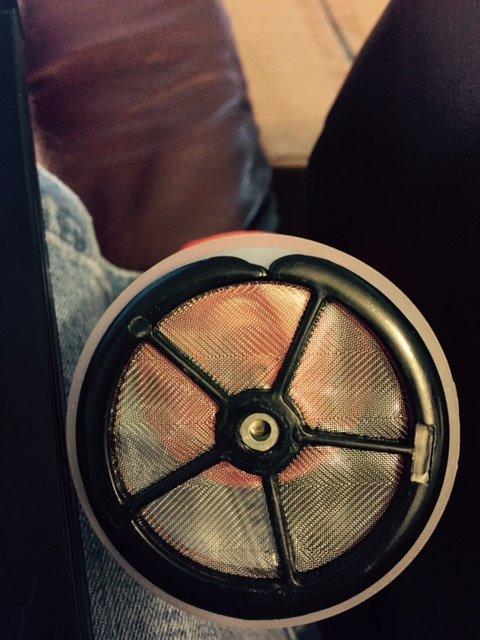
- Some grounds can slip through
The Bodum Travel Press is the simplest, most affordable way to brew real coffee on the road. At under $25, it costs less than a week of cafe lattes and lasts for years.
I’ve gifted the Travel Press to several friends and family members heading on trips. Every one of them still uses theirs years later. The double-wall vacuum insulation is genuinely effective – my coffee was still steaming 3 hours after brewing on a winter road trip.
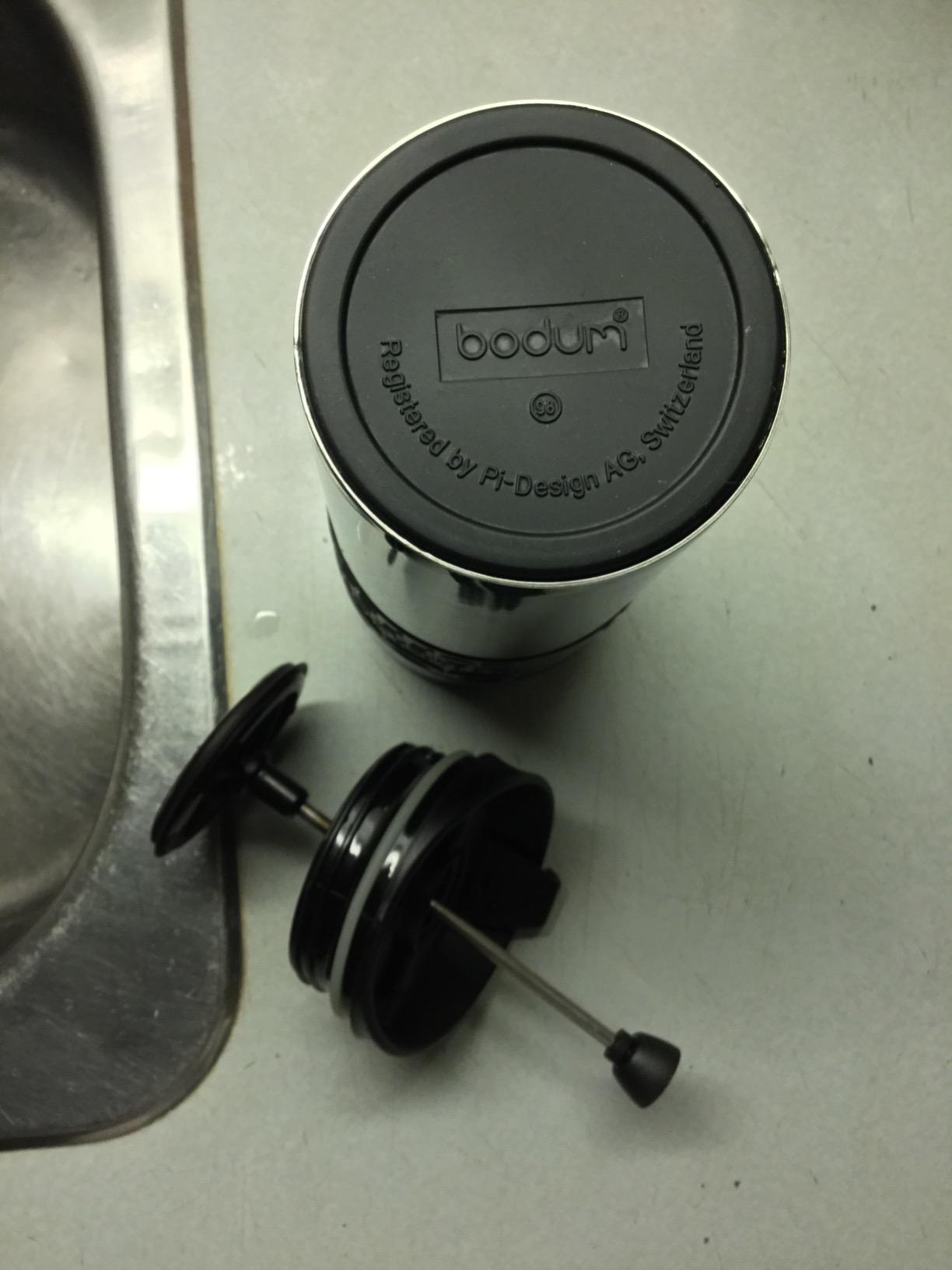
The 15oz capacity is the largest in this lineup, making it better for sharing or for people who want a real travel mug size. The silicone grip keeps it comfortable to hold even when filled with boiling coffee.
The plunger stops about 1.25 inches from the bottom, which leaves a layer of brewed coffee mixed with grounds at the bottom. This is by design, but it means the last few sips can be gritty. I pour off the last ounce to avoid this.
For whom its good
Budget travelers who want maximum value. At $25, you can replace it without stress if it gets lost or damaged. Office workers who want a simple alternative to the breakroom coffee.
Hotel-stay travelers who want French press coffee without hauling gear. The Bodum fits in any carry-on and works with any coffee grounds. Beginners who don’t want to learn pressure profiles or pump counts.
For whom its bad
Espresso lovers should skip this. The Bodum makes immersion coffee, no pressure extraction. If you want crema, look at the Nanopresso or OutIn Nano instead.
People who drink the last sip need to know about the sediment. It’s not a deal-breaker, but if you’re sensitive to grit, pour off the bottom ounce or use a paper filter.
6. ESPRO Go P0 – Lightest Travel Coffee Maker
ESPRO Go P0 Ultralight French Press Coffee Maker for Travel, Vacuum Insulated Stainless Steel, 16 Ounces, Matte Meteorite Black
210g weight
16oz capacity
Double micro-filter
Pros
- World's lightest travel press at 210g
- Double micro-filter produces grit-free coffee
- Vacuum insulation keeps coffee hot for hours
- Spill-proof lid for travel
- Multiple color options
Cons
- Cleaning the filter can be tedious
- Not dishwasher safe
- Higher price than basic French presses
At just 210 grams, the ESPRO Go P0 is the lightest insulated travel press I’ve ever held. It feels like holding a thermos but brews like a proper French press with superior filtration.
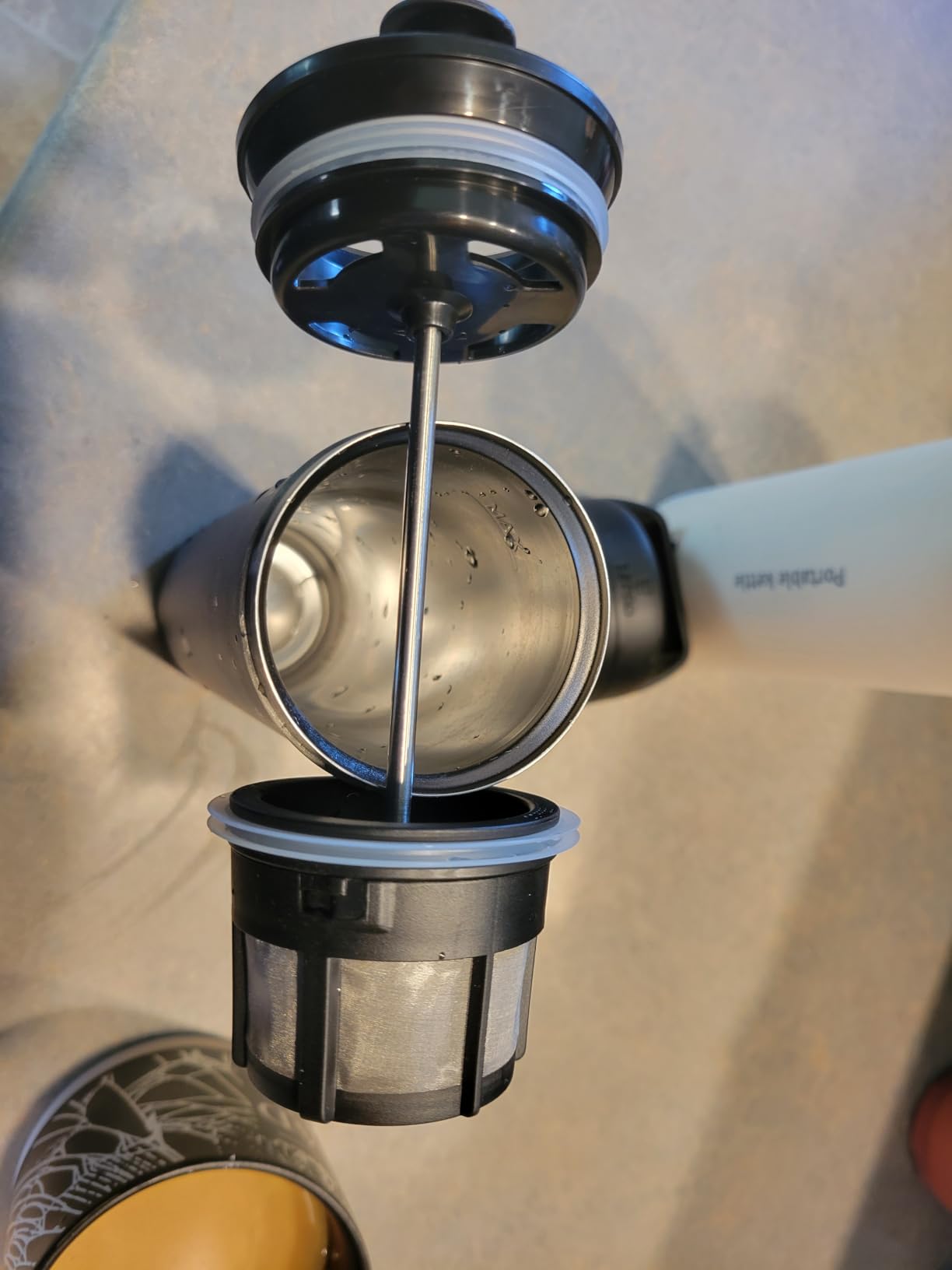
The patented double micro-filter is the standout feature. Instead of a single mesh screen like most French presses, the ESPRO uses two stacked filters that block even fine sediment. The result is a cup that looks and tastes clean – no gritty bits, no sludge at the bottom.
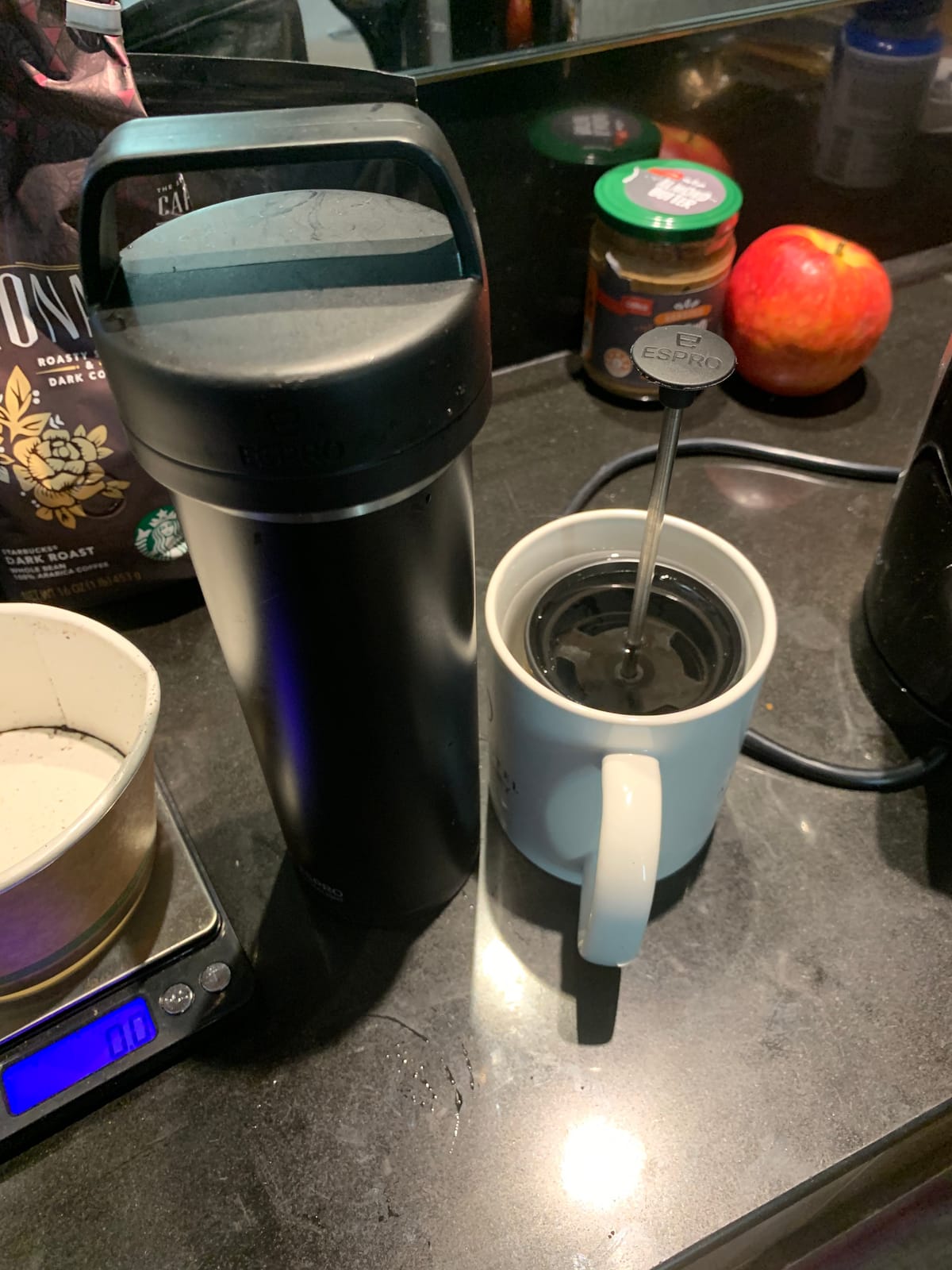
I took the P0 on a 10-day hiking trip and barely noticed it in my pack. The 16oz capacity brewed up to 12oz of clean coffee that stayed hot for over 4 hours in cold mountain air. The spill-proof lid is genuinely leak-tight, which I tested by tossing it in my pack sideways.
The trade-off is filter cleaning. The double micro-filter needs disassembly to clean properly, and small grounds can clog the fine mesh. I cleaned mine nightly on longer trips, which added 2 minutes to my routine.
For whom its good
Ultralight backpackers who count every gram. At 210g, the P0 saves weight over every competitor here. Coffee drinkers who hate sediment in their cup.
Campers and outdoors users who want vacuum insulation. The double-wall keeps coffee hot far longer than single-wall presses. Travelers who value a leak-proof seal for tossing in bags.
For whom its bad
Budget buyers should look at the Bodum instead. The ESPRO costs more for its premium features. Dishwasher users will be disappointed – the seal requires hand washing to maintain.
Heavy users will find the filter cleaning tedious. If you brew daily and want minimal maintenance, the AeroPress is simpler.
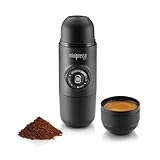
7. Wacaco Minipresso GR – Compact Manual Espresso Maker
Wacaco Minipresso GR, Portable Espresso Machine, Compatible Ground Coffee, Hand Coffee Maker, Travel Gadgets, Manually Operated, Perfect for Camping, Hiking
Manual pump
360g weight
Ground coffee compatible
Pros
- No batteries or electricity needed
- Compatible with any ground coffee
- Generous crema production
- Built-in scoop and tamper
- Compact 6.89 inch height
Cons
- Requires 60+ pumps per shot
- Small 8g single-shot basket
- Can be messy to clean
- Plastic smell initially reported
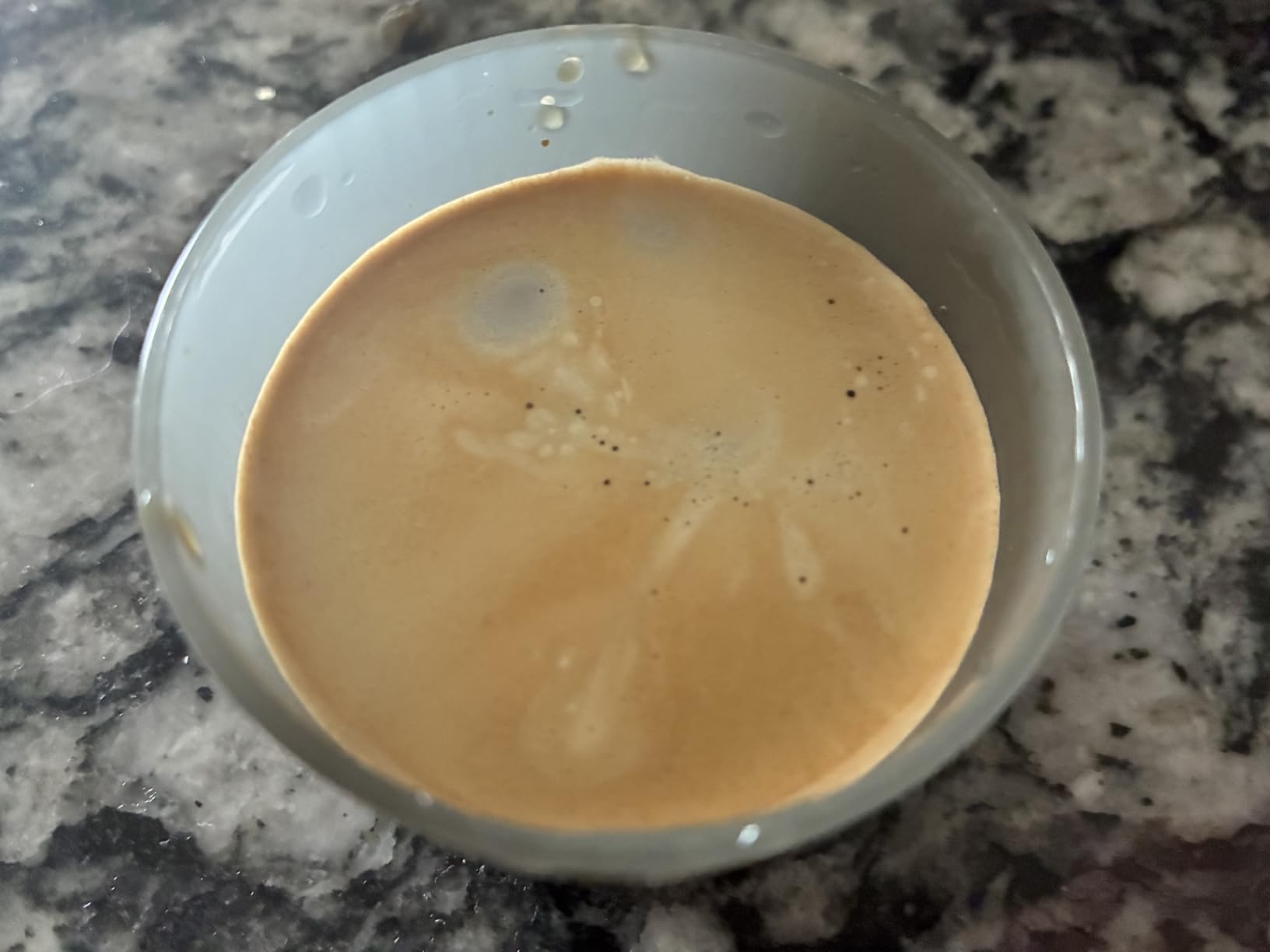
The Minipresso GR is Wacaco’s original portable espresso maker and still one of the most popular. It uses ground coffee directly, no pods required, and produces a respectable shot with rich crema.
I tested the Minipresso alongside the newer Nanopresso. The Nanopresso produces slightly better espresso thanks to improved pressure mechanics, but the Minipresso GR costs less and accepts any ground coffee you have on hand. For casual travel espresso, it’s a solid choice.
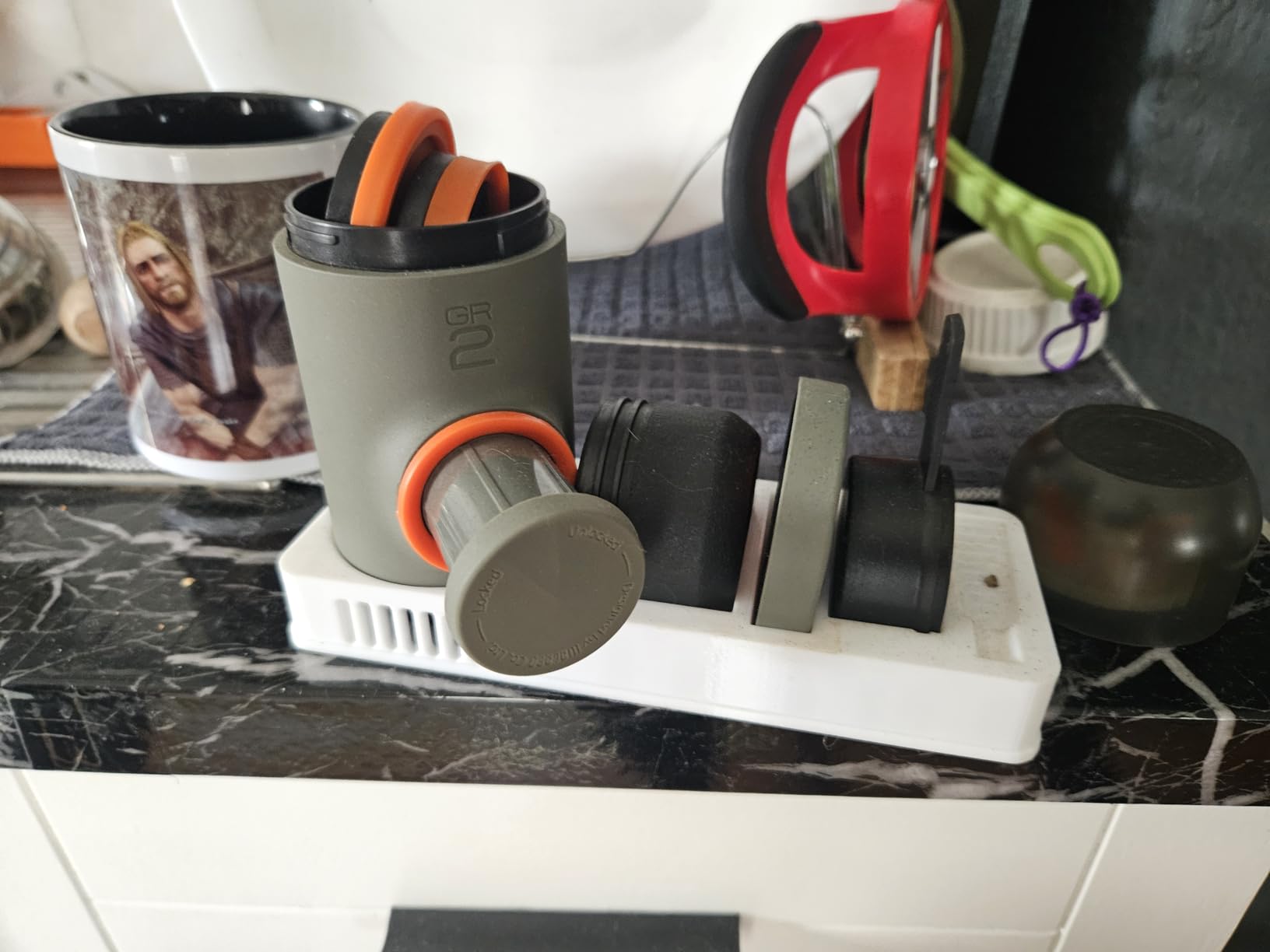
The pump action takes effort – expect 60+ pumps per single shot. My forearms got a workout during testing, but the result was worth it. The included scoop doubles as a tamper, which is convenient for travel.
Build quality is mostly plastic, which keeps weight down to 360g. I noticed a slight plastic smell on the first brew, but it faded after a few uses with hot water rinses.
For whom its good
Budget travelers who want Wacaco quality at a lower price. The Minipresso costs $20 less than the Nanopresso. Anyone who already grinds coffee fresh and wants a brewer that doesn’t restrict roast or grind size.
Campers and hikers who want simple operation. The Minipresso has fewer parts to manage than the Nanopresso. Travelers who appreciate not needing to maintain specialty accessories.
For whom its bad
If you want the best possible portable espresso, the Nanopresso wins. The pressure mechanics and ergonomics are noticeably improved. The Minipresso also runs hotter on the outside during pumping, which can be uncomfortable.
People with limited hand strength will struggle with the pumping action. Older users or those with joint issues should consider an electric option like the Fanttik Cafein 11 instead.
8. Fanttik Cafein 11 – Best Electric Travel Coffee Maker
Fanttik Cafein 11 Portable Espresso Maker, 20 Bar Coffee machine with USB-C
20-bar pressure
135-second heat
USB-C charging
Pros
- Heats water to 198°F in 135 seconds
- 20-bar pressure for excellent crema
- USB-C fast charging
- IP65 dust and moisture protection
- Premium stainless steel build
Cons
- Premium price point
- Heavier at 825g
- Limited battery for cold water use
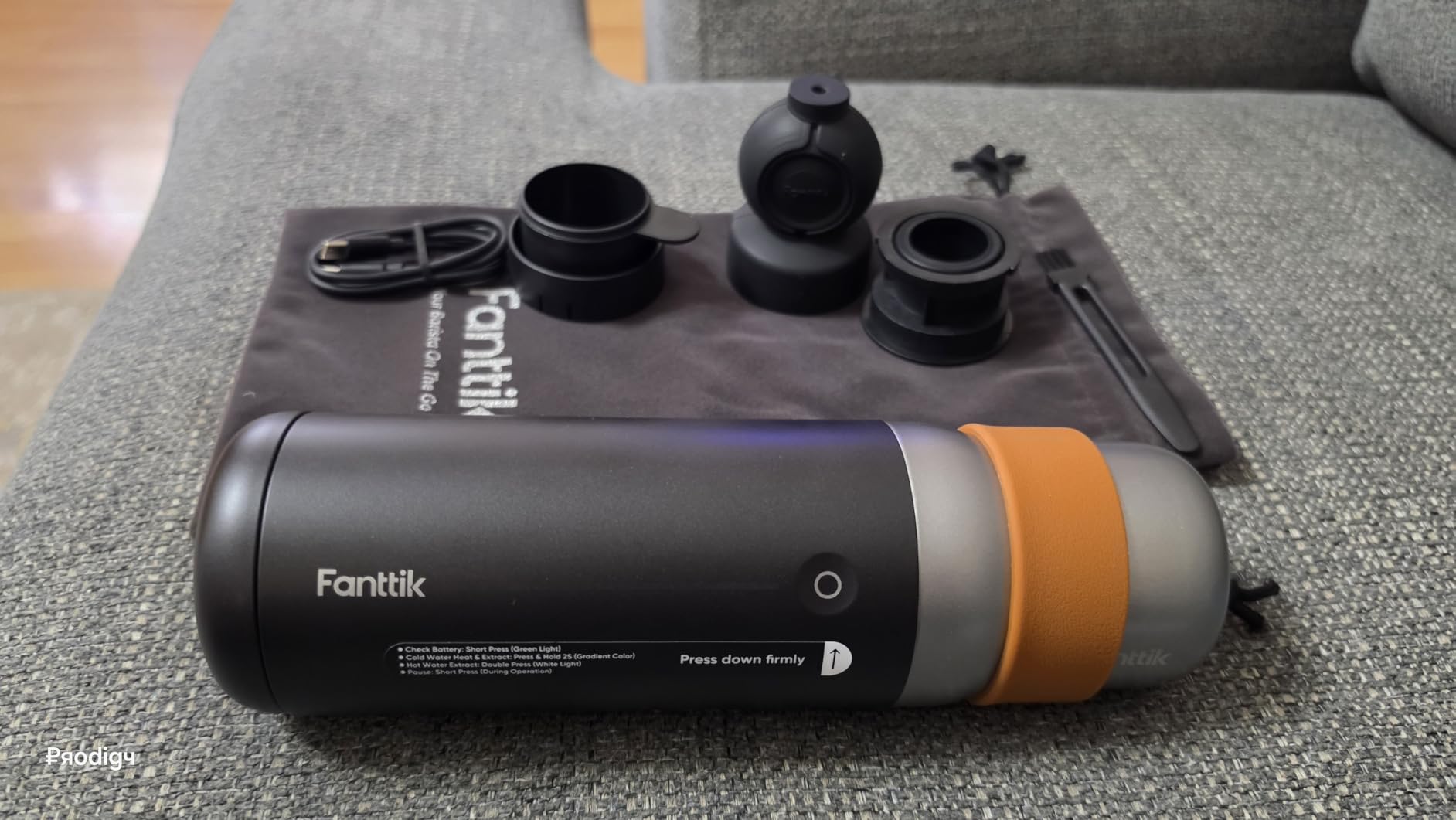
The Fanttik Cafein 11 is what you get when someone engineers a portable espresso maker without compromises. It heats water from cold to brewing temperature in 135 seconds and pushes 20 bars of pressure for true espresso output.
On a hotel room test, I poured cold tap water into the Cafein 11, hit the button, and had a 198°F espresso in just over 2 minutes. The shot had thick crema and balanced flavor that rivaled my home espresso machine. No pre-heating, no kettle, no waiting.
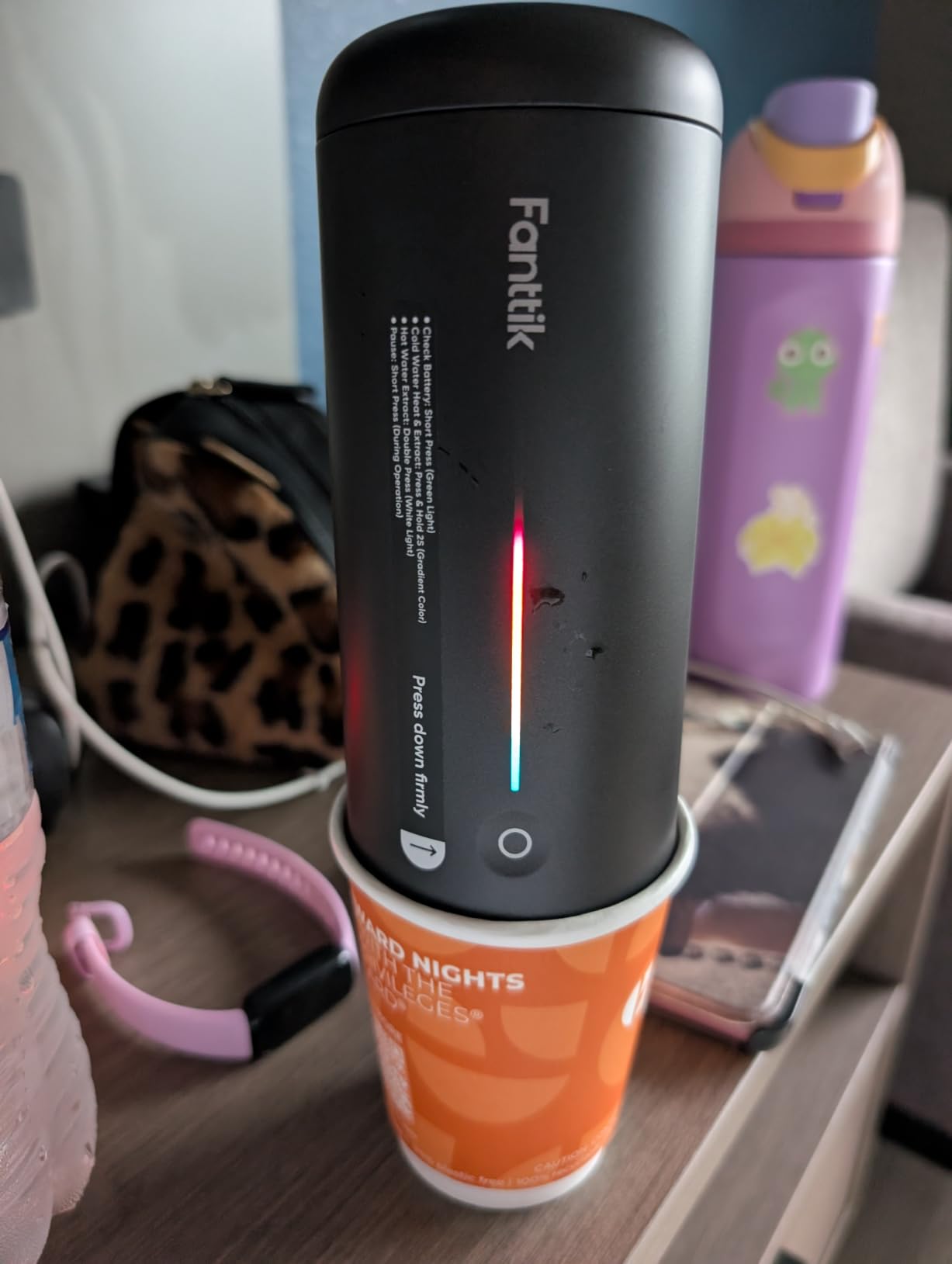
USB-C charging is the modern convenience I didn’t know I needed. I charged it from my laptop between meetings and from a 30W wall block overnight. The 30W Type-C fast charging fully refills the battery in under an hour.
Battery life depends on water temperature. With pre-heated water, you get up to 500 shots per charge. With room temperature water, expect 8 shots before needing a recharge. That’s plenty for a weekend trip.
For whom its good
Travelers who want espresso quality without any setup. The Cafein 11 is the only option here that doesn’t require a separate kettle or grinder for hot water. Office workers and hotel-stayers who need consistency every morning.
Road-trippers and RV users who can charge from a car outlet. The 12V compatibility makes it ideal for camping with a power station. Anyone who values USB-C charging over proprietary cables.
For whom its bad
Backcountry campers without power should skip this. The battery is the main feature, but without charging options, it dies. Heavier than manual options at 825g.
Premium price at over $127 is steep. Budget travelers can get similar results from manual brewers plus a small kettle for less money.
9. OXO Brew Portable Rapid Coffee Brewer – Fastest Manual Brew
Pros
- Fast 2-minute hot brew
- 5-minute cold brew option
- Built-in reusable stainless filter
- No batteries needed
- Dishwasher safe
Cons
- Produces concentrate requiring dilution
- Small 160ml capacity
- Cleaning the chamber can be tedious
The OXO Rapid Brewer produces concentrated coffee in just 2 minutes for hot brew or 5 minutes for cold brew. It’s a manual brewer with the speed of an electric machine.
The trick is the multi-stroke air pump system. You pump the top a few times to force water through the grounds under pressure, similar to an AeroPress but faster. The result is a small amount of strong concentrate that you dilute with water or milk.
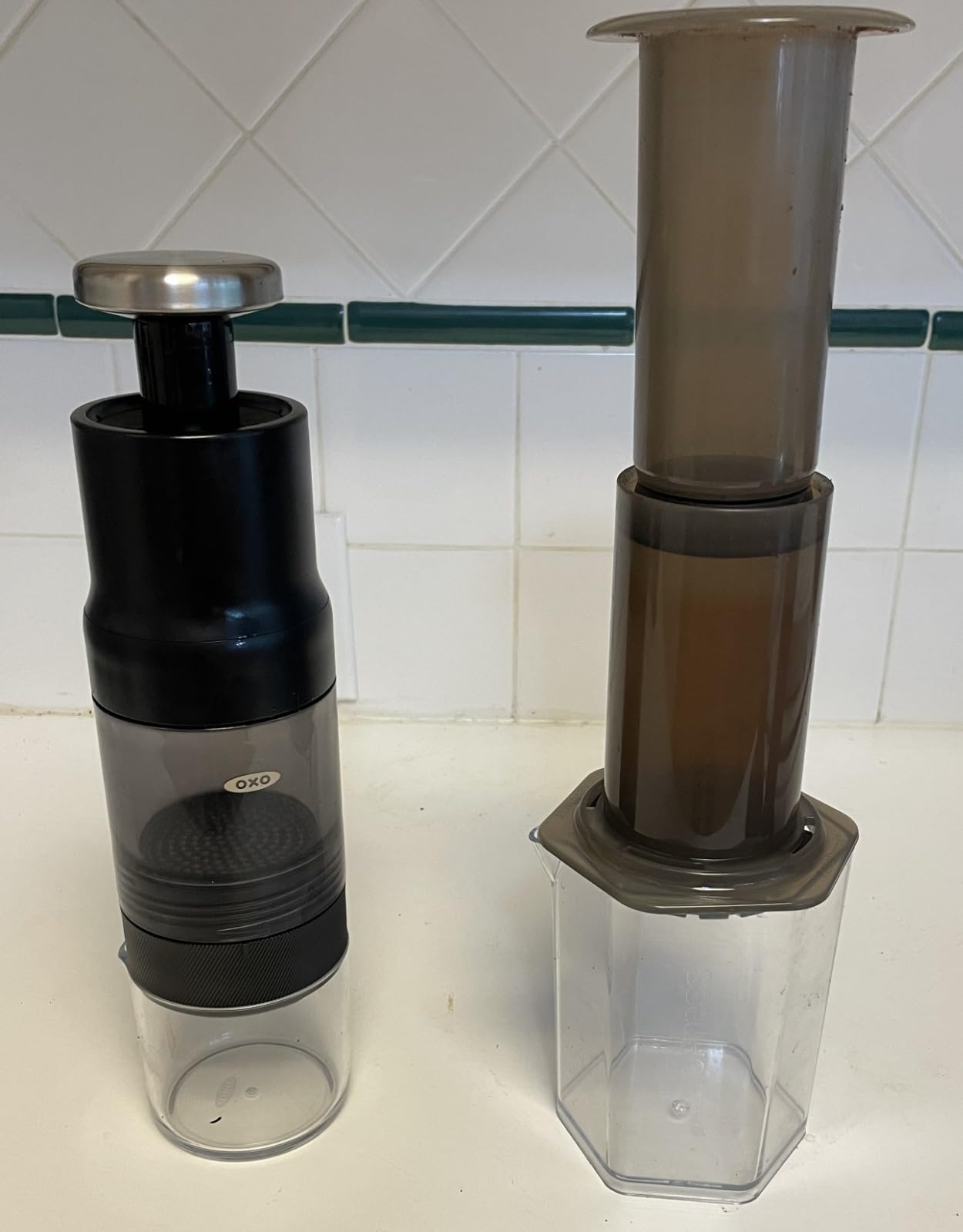
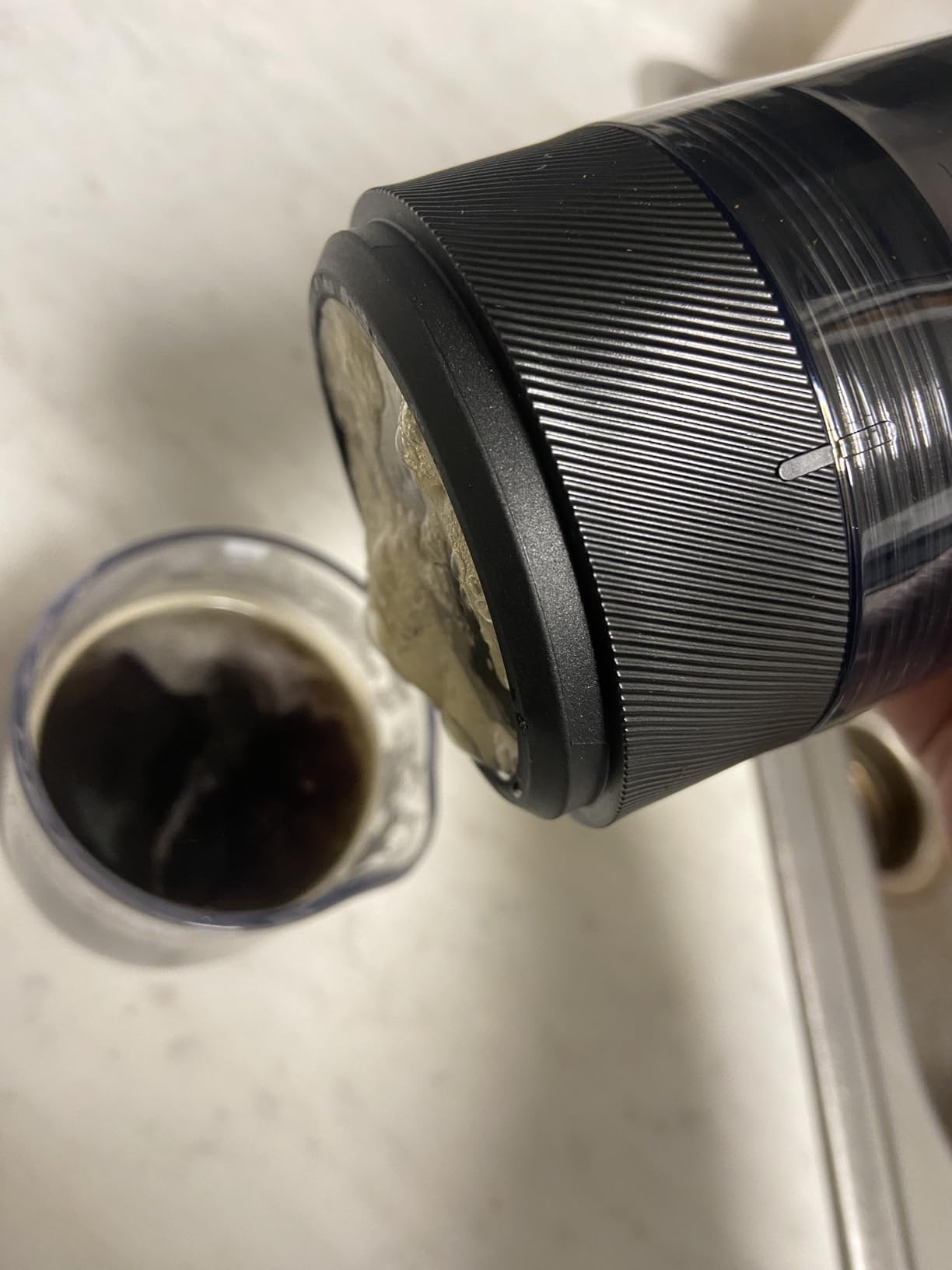
I tested the OXO on a summer road trip and used it daily for cold brew concentrate that I poured over ice. The 5-minute cold brew was a revelation – no overnight steeping required. The reusable stainless filter means no paper waste.
The concentrate format isn’t for everyone. If you want ready-to-drink coffee, you’ll need to add hot water or milk. I enjoyed the flexibility – one shot became an americano, two became a latte.
For whom its good
Cold brew lovers who don’t want to wait 12 hours. The 5-minute cold brew is a genuine alternative to overnight steeping. Travelers who want flexibility to make different drink sizes from one concentrate.
Manual brewer fans who want speed. Faster than most pour-over or French press options. Anyone who hates paper filters – the reusable stainless mesh is built in.
For whom its bad
If you want ready-to-drink coffee, the dilution step is annoying. The OXO produces concentrate, not finished coffee. Some users find this inconvenient for quick morning routines.
The cleaning process is more involved than an AeroPress. The ground coffee chamber needs brushing out. Heavy users may find daily cleaning tedious.
10. OutIn Nano – Self-Heating Travel Espresso Maker
OutIn Nano Portable Electric Espresso Machine, Travel Coffee Maker
20-bar pressure
Self-heating
USB-C charging
Pros
- Heats water to 198°F in 200 seconds
- 20-bar pressure with rich crema
- Works with ground coffee and Nespresso pods
- Compact 670g weight
- One-button simple operation
Cons
- Limited 3-5 shots per charge
- Cannot use while charging
- Small reservoir
- Some users report weak shots
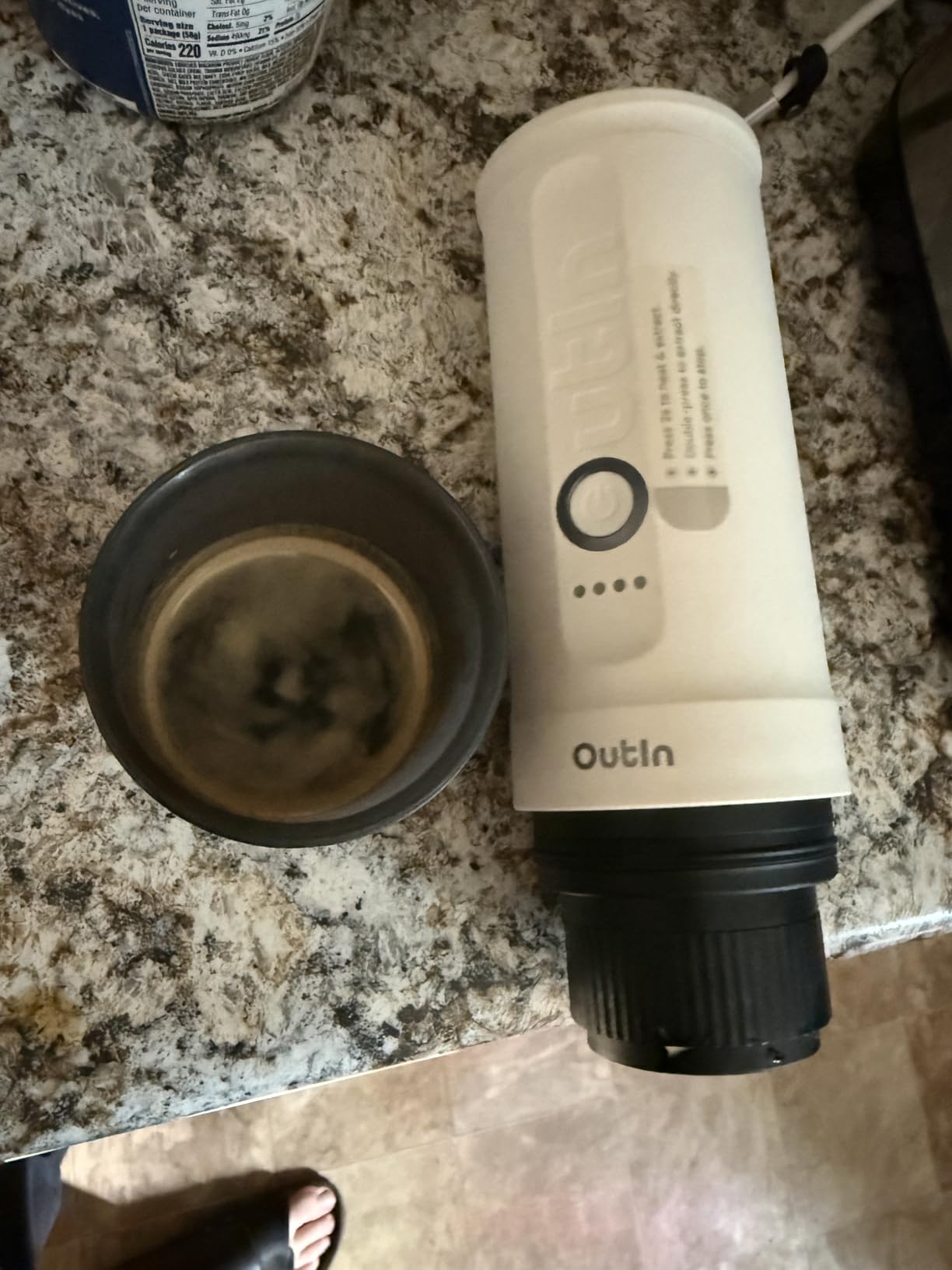
The OutIn Nano was one of the first self-heating portable espresso makers to hit the market, and it remains a popular choice for travelers who want zero-setup espresso. Press one button, wait 3 minutes, get a shot.
On a camping trip, the OutIn Nano was a game-changer. I filled it with cold water from a water bottle, pressed the button, and had espresso ready before my breakfast was cooked. The 20-bar pressure produced shots that genuinely tasted like cafe espresso.
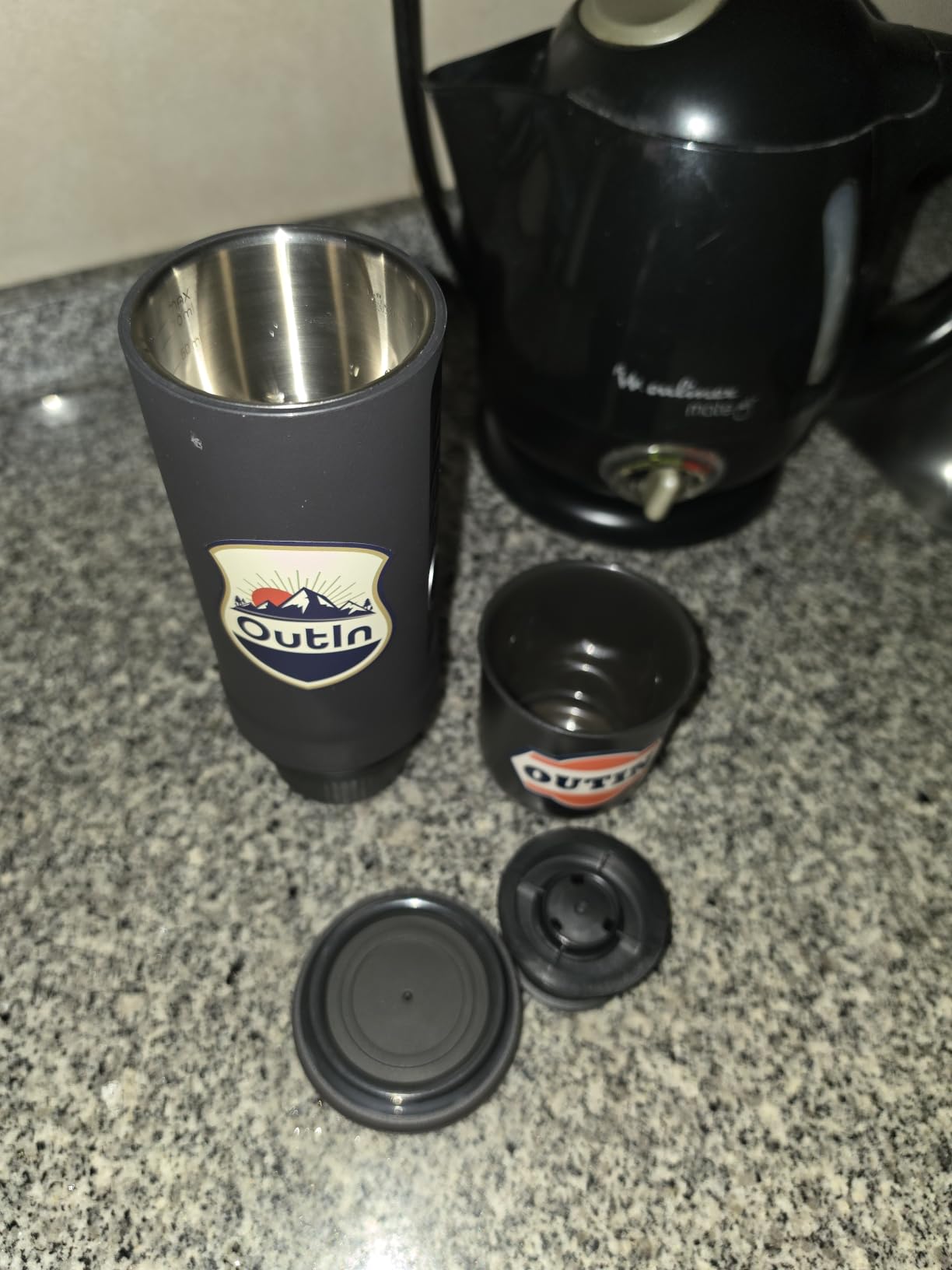
Compatibility with Nespresso Original capsules is a nice option. I packed both ground coffee for mornings and a couple of capsules for quick afternoon shots. The one-button operation means no learning curve.
Battery life is the main limitation. You get 3-5 hot shots per charge with cold water. For a weekend trip, that meant daily charging. The USB-C port also won’t run while plugged in, so you can’t extend use indefinitely.
For whom its good
Travelers who want truly set-and-forget espresso. The self-heating eliminates any need for kettles or external hot water sources. Campers with portable power stations or car chargers.
Nespresso users who want to take their pods on the road. The 2-in-1 design accepts both grounds and capsules. Office workers without access to hot water.
For whom its bad
Heavy users will run out of battery mid-day. With 3-5 shots per charge, the OutIn Nano is best for occasional use, not all-day coffee drinking. Consider the Fanttik Cafein 11 for better battery life.
Some users report weaker shots requiring double extraction. The small reservoir and 20-bar pressure aren’t always optimized. Coffee snobs may want the Wacaco Nanopresso for better flavor control.
How to Choose the Best Travel Coffee Maker for You?
Picking the right travel coffee maker depends on what kind of traveler you are. Here are the key factors I considered when ranking the best travel coffee makers for 2026.
Portability and Weight
For backpackers and hikers, weight matters more than features. The ESPRO Go P0 at 210g is the lightest insulated option. For business travelers, slightly heavier options like the Wacaco Nanopresso (340g) or AeroPress Go (318g) offer better brewing without much weight penalty.
Size also matters. The Minipresso GR and Nanopresso both fit in a coat pocket, while the Pipamoka and Bodum are taller travel-mug shaped. Measure your carry-on space before choosing.
Power Source and Setup
Manual brewers like the AeroPress, Nanopresso, and Bodum need no electricity. You bring your own hot water from a kettle, hotel coffee maker, or camp stove. These are ideal for off-grid travel and lightweight packing.
Battery-powered options like the OutIn Nano and Fanttik Cafein 11 heat water internally. They cost more and weigh more, but they eliminate the need for any external equipment. Great for hotel rooms and car camping.
Coffee Style Preference
Espresso lovers should focus on the Wacaco Nanopresso, Minipresso GR, Fanttik Cafein 11, or OutIn Nano. These all produce crema-rich shots under pressure. The Nanopresso has the best flavor-to-effort ratio for espresso purists.
Drip coffee and French press fans will love the AeroPress Go, AeroPress Original, Bodum Travel Press, ESPRO Go P0, or Wacaco Pipamoka. These produce cleaner, lighter coffee without pressure extraction.
Cleaning and Maintenance
The easiest to clean are the AeroPress products – just rinse and you’re done. Most others require some disassembly. The ESPRO Go P0 and OXO Rapid Brewer have more parts but cleanable filters.
For camping without running water, simple brewers win. The AeroPress ejects grounds with one press. The Bodum and ESPRO require more rinsing.
Grinder Compatibility
For espresso quality on the Wacaco or OutIn brewers, you need a quality burr grinder. I recommend the Timemore Chestnut or 1Zpresso JX for travel. Pre-ground coffee works but limits flavor.
The AeroPress, Bodum, and ESPRO are more forgiving of grind size. If you don’t want to pack a grinder, these are better choices.
Frequently Asked Questions
What is a good travel-friendly coffee maker?
A good travel-friendly coffee maker balances portability, brew quality, and ease of use. The AeroPress Go is my top pick because it packs into its own mug, weighs just 318g, and brews in 2 minutes. For espresso lovers, the Wacaco Nanopresso produces 18-bar crema without electricity. The right choice depends on your travel style – backpackers need ultralight gear, while hotel travelers can prioritize brew quality.
What are some good portable coffee machines for travel?
The best portable coffee machines for travel include the AeroPress Go for all-around versatility, the Wacaco Nanopresso for espresso, the Bodum Travel Press for budget buyers, and the OutIn Nano for self-heating convenience. Manual options like the AeroPress work anywhere with hot water. Electric options like the OutIn Nano and Fanttik Cafein 11 heat water internally but require battery charging. For backpacking, ultralight picks like the ESPRO Go P0 (210g) save weight.
Are portable coffee makers any good?
Yes, modern portable coffee makers produce excellent coffee that often rivals home machines. The Wacaco Nanopresso pushes 18 bars of pressure for genuine espresso crema. The AeroPress uses air pressure extraction for smooth, grit-free coffee. The main limitations are small batch sizes (usually 2-10 oz per brew) and the need for pre-heated water on most manual models. For travelers who refuse to drink hotel coffee, a portable maker is a worthwhile investment that pays for itself in cafe savings within weeks.
What is the best way to make coffee while traveling?
The best way to make coffee while traveling depends on your setup. In hotels, bring an AeroPress Go and ask the front desk for hot water. For camping, pair the Wacaco Nanopresso with a hand grinder and a small camping stove. For road trips, the OutIn Nano self-heats in your car with USB-C charging. The key is matching the brewer to your power and water access. Manual brewers offer maximum flexibility, while electric options provide convenience at the cost of battery management.
Final Thoughts on the Best Travel Coffee Makers
After testing 10 of the top travel coffee makers, the AeroPress Go remains my top pick for most travelers. It balances portability, brew quality, and ease of use better than any competitor. The Wacaco Nanopresso is the clear winner for espresso lovers who want crema on the road.
For ultralight backpackers, the ESPRO Go P0 at 210g is unbeatable. For budget buyers, the Bodum Travel Press delivers French press quality under $25. For travelers who want zero-setup espresso, the Fanttik Cafein 11 and OutIn Nano heat water internally.
Whatever your travel style, the best travel coffee makers in 2026 deliver real coffee without the cafe lines. Pick the one that matches your power access, weight budget, and coffee preferences, then start your mornings right anywhere you go.