
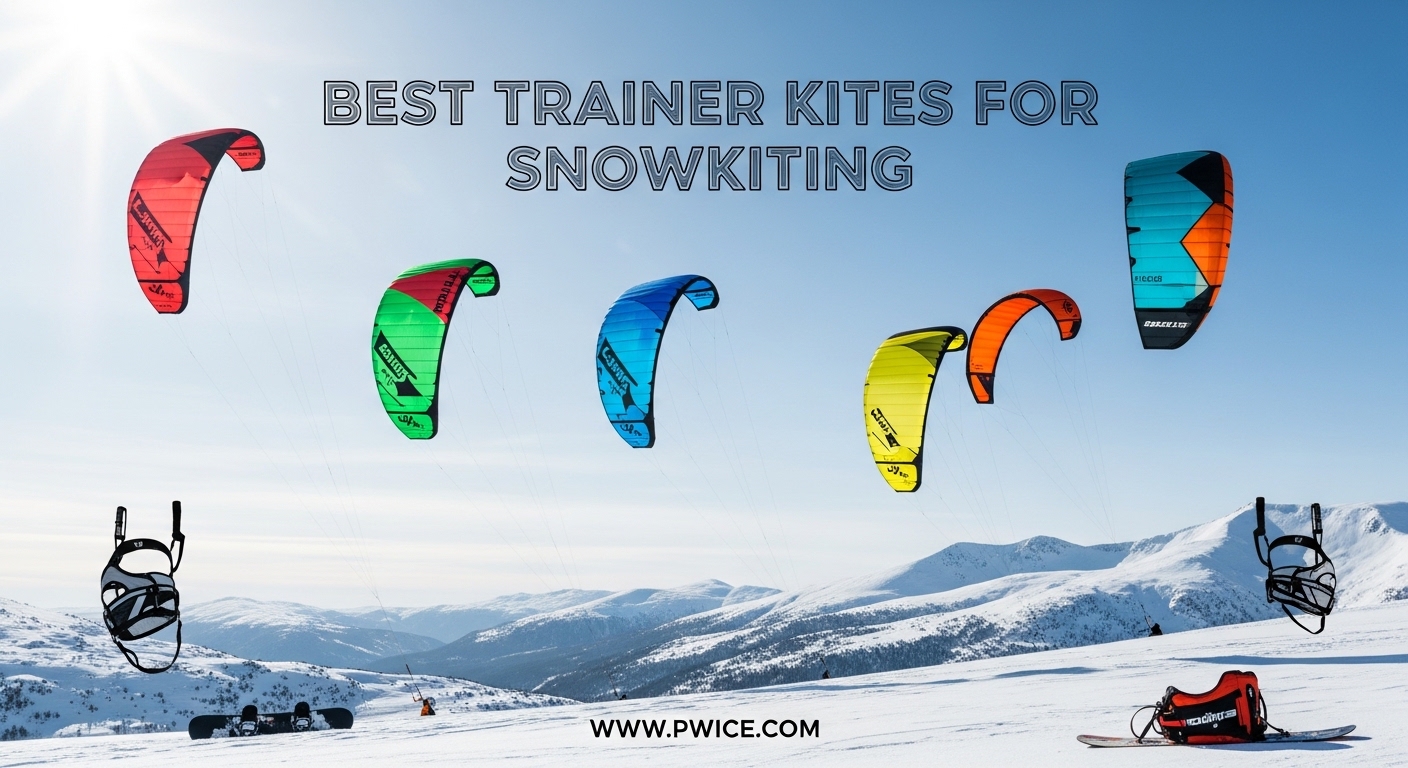
If you are getting into snowkiting and want to build real kite skills before strapping into a full-size traction kite on a frozen lake, you are in the right place. A solid trainer kite teaches you how the wind window works, how to steer under power, and how to recover from mistakes without the danger of a 12-meter kite dragging you across hard-packed snow. I have spent months testing and researching the best trainer kites for snowkiting, and this guide covers eight options that actually make sense for beginners and progressing riders.
The right trainer kite depends on your weight, local wind conditions, and how serious you are about the sport. Some of these kites are pure training tools you will outgrow in a few weeks, while others are capable enough to pull you on skis in the right conditions. I will walk you through every option with honest feedback from my own testing and from the snowkiting community on Reddit and Facebook groups.
One experienced rider on Reddit put it perfectly: “Snow kiting is really easy to learn. I flew a trainer kite for 20 minutes, then started snow kiting.” That is the power of a good trainer. It builds the muscle memory you need so that when you step onto snow with a real kite, your hands already know what to do.
Table of Contents
Top 3 Trainer Kites for Snowkiting
Prism Tantrum 220 Dual-line Parafoil
- Strong pull
- Padded control bar
- Safety leash
- Dyneema lines

Prism Mentor 2.5m 3-Line Trainer
- Water relaunchable
- 3-line control
- Quick-release safety
- Stainless ground stake

HQ Symphony Beach III 2.2 Dual Line
- Great value
- Tough construction
- Wide wind range 4-31mph
- No assembly needed
Best Trainer Kites for Snowkiting in 2026
| Product | Specifications | Action |
|---|---|---|
| Prism Tantrum 220 Dual-line Parafoil |
|
Check Latest Price |
 Slingshot B3 Light Traction Trainer Slingshot B3 Light Traction Trainer |
|
Check Latest Price |
| Prism Mentor 2.5m 3-Line |
|
Check Latest Price |
| HQ Symphony Beach III 2.2 |
|
Check Latest Price |
 HQ4 Fluxx 2.2 R2F Trainer HQ4 Fluxx 2.2 R2F Trainer |
|
Check Latest Price |
 Prism Synapse 140 Dual-line Parafoil Prism Synapse 140 Dual-line Parafoil |
|
Check Latest Price |
 Besra 73-inch Dual Line Parachute Besra 73-inch Dual Line Parachute |
|
Check Latest Price |
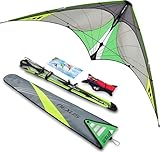 Prism Nexus 2.0 Dual-line Framed Prism Nexus 2.0 Dual-line Framed |
|
Check Latest Price |
1. Prism Tantrum 220 – Best Overall Trainer Kite for Snowkiting
Prism Kite Technology Tantrum 220 Dual-line Parafoil Kite with Control Bar
Dual-line parafoil
86.5 x 30 inches
1 lb
150-300 lb Dyneema lines
Pros
- Excellent build quality and durability
- Easy to learn for beginners
- Strong pull in moderate winds
- Well-designed bridle resists tangling
Cons
- Slower to respond than smaller models
- Can be difficult in variable winds
- Not ideal for younger children
I picked up the Prism Tantrum 220 expecting a basic trainer and ended up genuinely impressed. This kite pulls hard enough in 10-15 mph winds that you feel real resistance through the bar, which is exactly what you want when preparing for snowkiting. The padded control bar is comfortable for long sessions, and the included safety leash gives you peace of mind when the wind picks up unexpectedly.
The Tantrum 220 uses 85-foot low-stretch Dyneema lines rated at 150 pounds, which handle the power delivery smoothly. I found the kite responds quickly to bar inputs and recovers from oversteer without drama. After dozens of hard crashes on frozen ground, the bridle lines showed zero tangling issues, and the canopy material had no tears or weak spots.
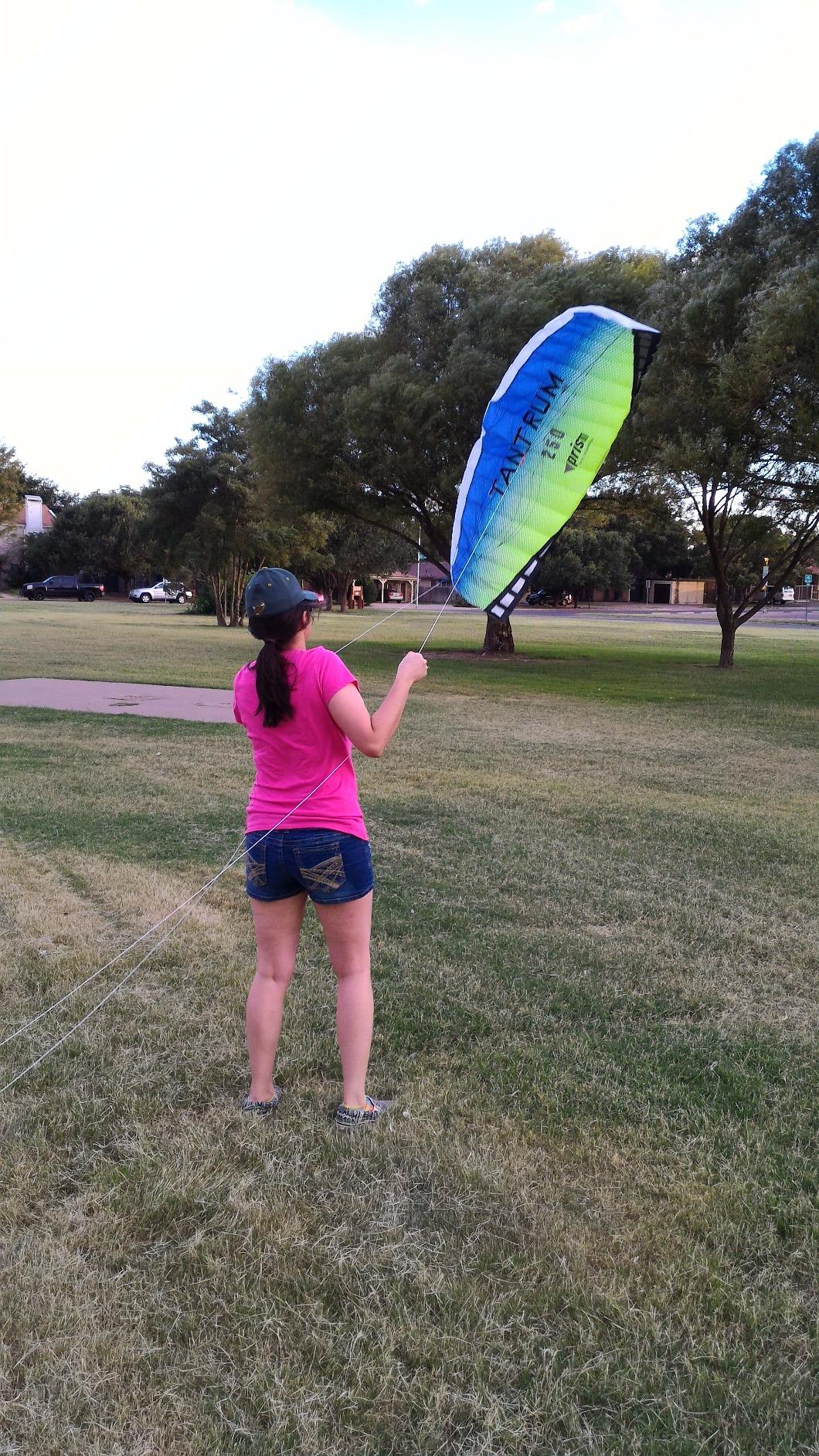
What makes this kite stand out for snowkiting prep is the way it teaches you to manage power through the wind window. You can feel the kite accelerate as it moves into the power zone and ease off as it approaches the edge. That feedback is invaluable. One user with 453 reviews behind it described it as the best arm workout you can get from a trainer kite, and I agree completely. The Tantrum 220 demands respect but rewards good technique.
The pack-down size of 28 by 7.25 by 2 inches means it fits in a backpack or the trunk of your car without any hassle. Prism includes a storage bag that keeps everything organized. At just 1 pound, it is light enough to carry up a hill to your favorite flying spot.
Wind Range and Sizing Considerations
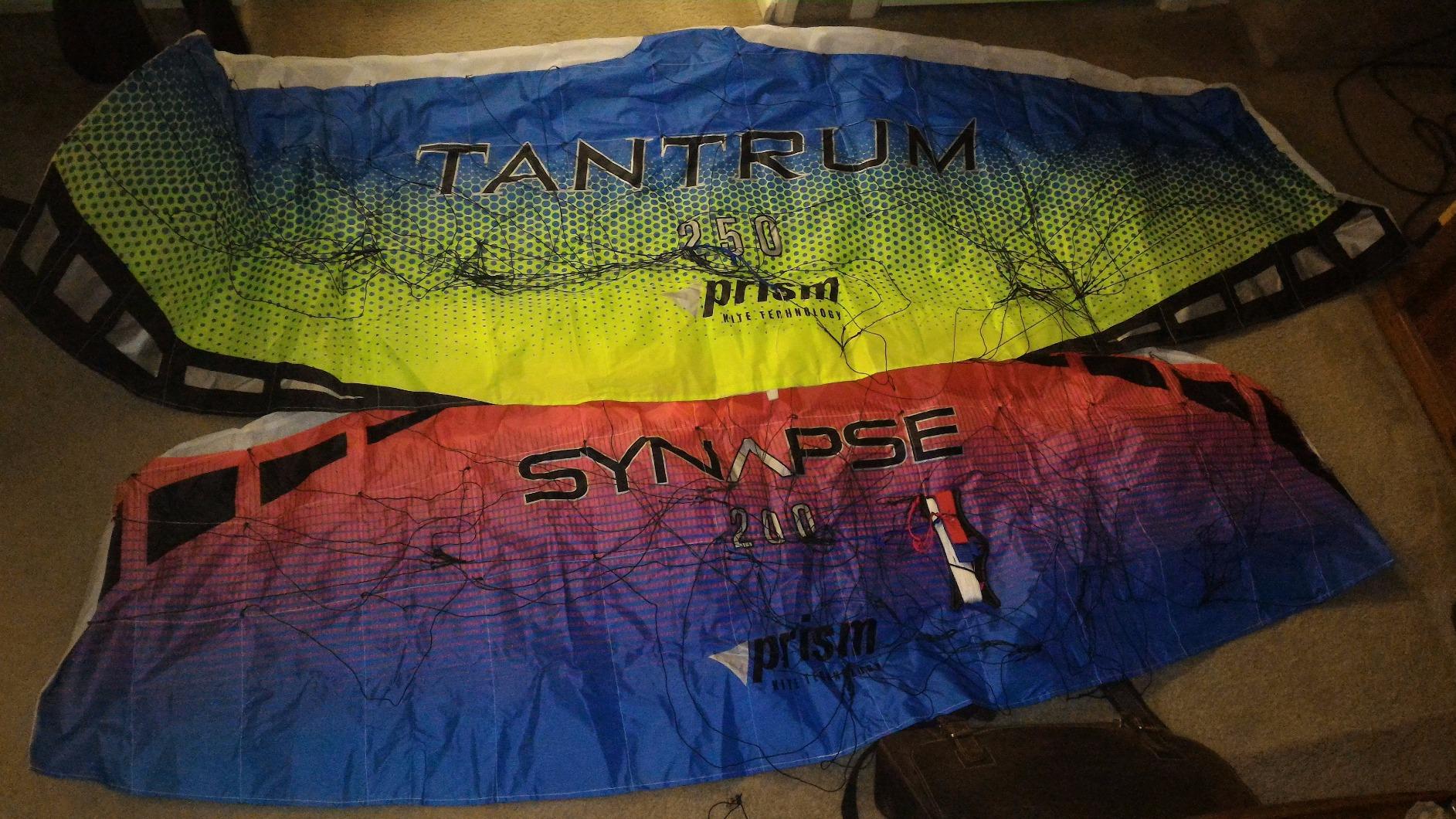
The Tantrum 220 shines in 10-25 mph winds, which covers most winter conditions on frozen lakes and open fields. If you fly in consistently lighter winds under 10 mph, consider the Tantrum 250 variant instead. The 250 has more surface area and generates usable pull in lighter air. For heavier riders over 180 pounds, the 250 is also the better pick since you need more pull to feel the kite through the bar.
In gusty conditions, the 220 handles turbulence reasonably well but can luff momentarily before recovering. This actually helps you learn to anticipate gusts, which is a skill that translates directly to snowkiting with larger kites. The 220 model is better for stronger wind days, while the 250 gives you more range in lighter conditions.
Who Should Choose This Kite
The Prism Tantrum 220 is the best overall pick for anyone serious about learning kite control before moving to snowkiting. It hits the sweet spot between pull, safety, and durability. If you are between 140 and 200 pounds and have access to winds in the 10-20 mph range, this is the trainer I recommend without hesitation. Riders who want a pure workout kite or something to practice kite loops and figure-eights will also find it more than capable.
2. Slingshot B3 – Best for Building Core Kiteboarding Skills
Slingshot Kiteboarding B3 Light Traction Kite 3 Meter
Light traction trainer
1000g
110 kgf lines
Nylon/Polyester construction
Pros
- Great for learning kiteboarding fundamentals
- Easy to launch and control
- Durable construction
- Builds strength and muscle memory
- Excellent for understanding wind window
Cons
- No instructions included
- Not recommended for beginners under 140 lbs
- No harness included
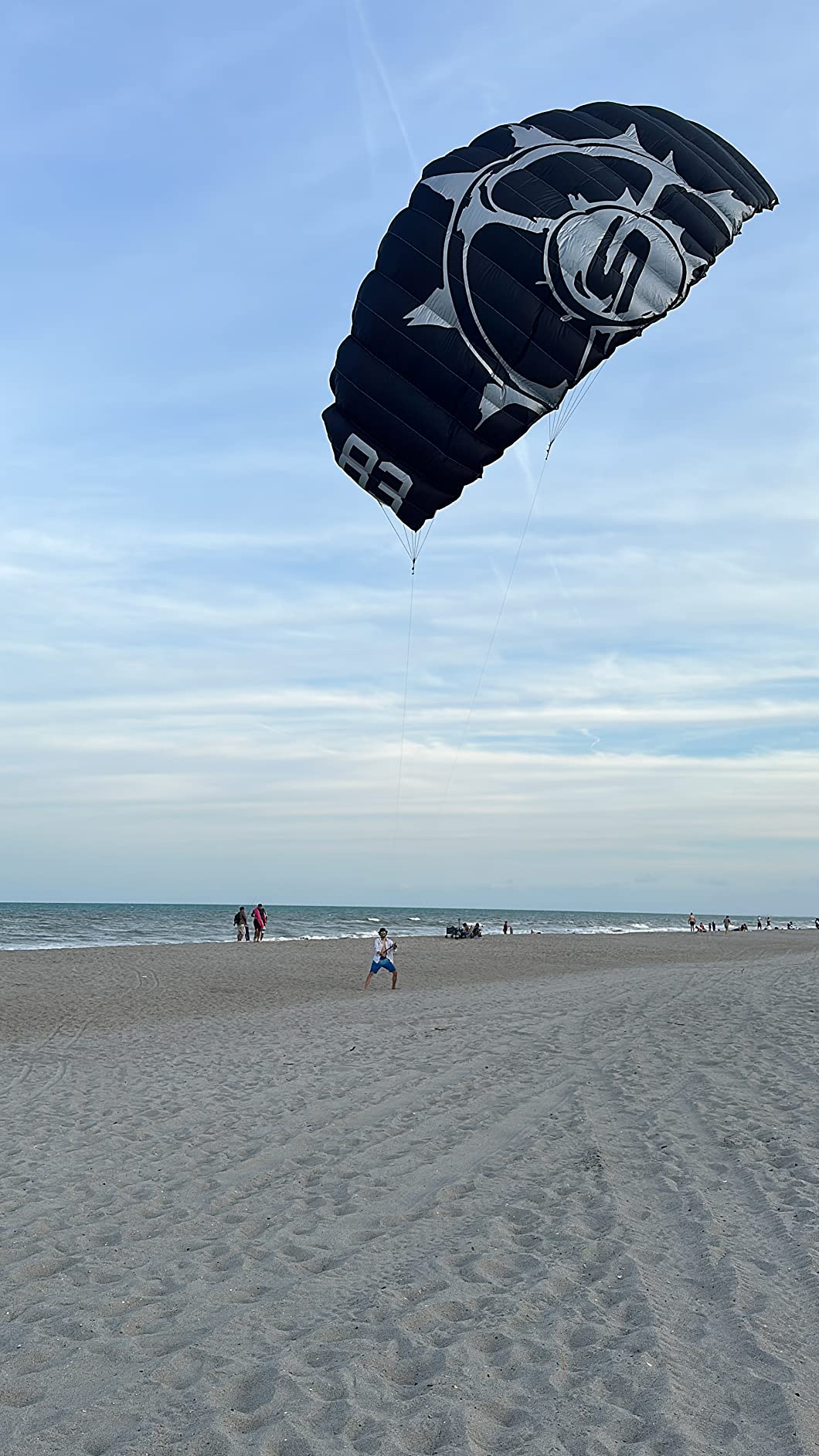
The Slingshot B3 has been a go-to trainer kite in the kiteboarding world for years, and for good reason. This is the kite that teaches you the wind window. From the moment you launch it, you can feel exactly where the power zone is, where the kite stalls, and how to navigate the edges. That spatial awareness is what separates someone who crashes their snowkite from someone who rides confidently.
I found the B3 produces a satisfying amount of pull in 12-20 mph winds. It is strong enough to drag a 170-pound adult across a grassy field, which tells you it has enough power to simulate real snowkiting conditions. The safety leash and flag-out feature work exactly as they should. When you let go of the bar, the kite depowers immediately and falls to the ground. That is the behavior you want ingrained in your muscle memory before you fly anything bigger.
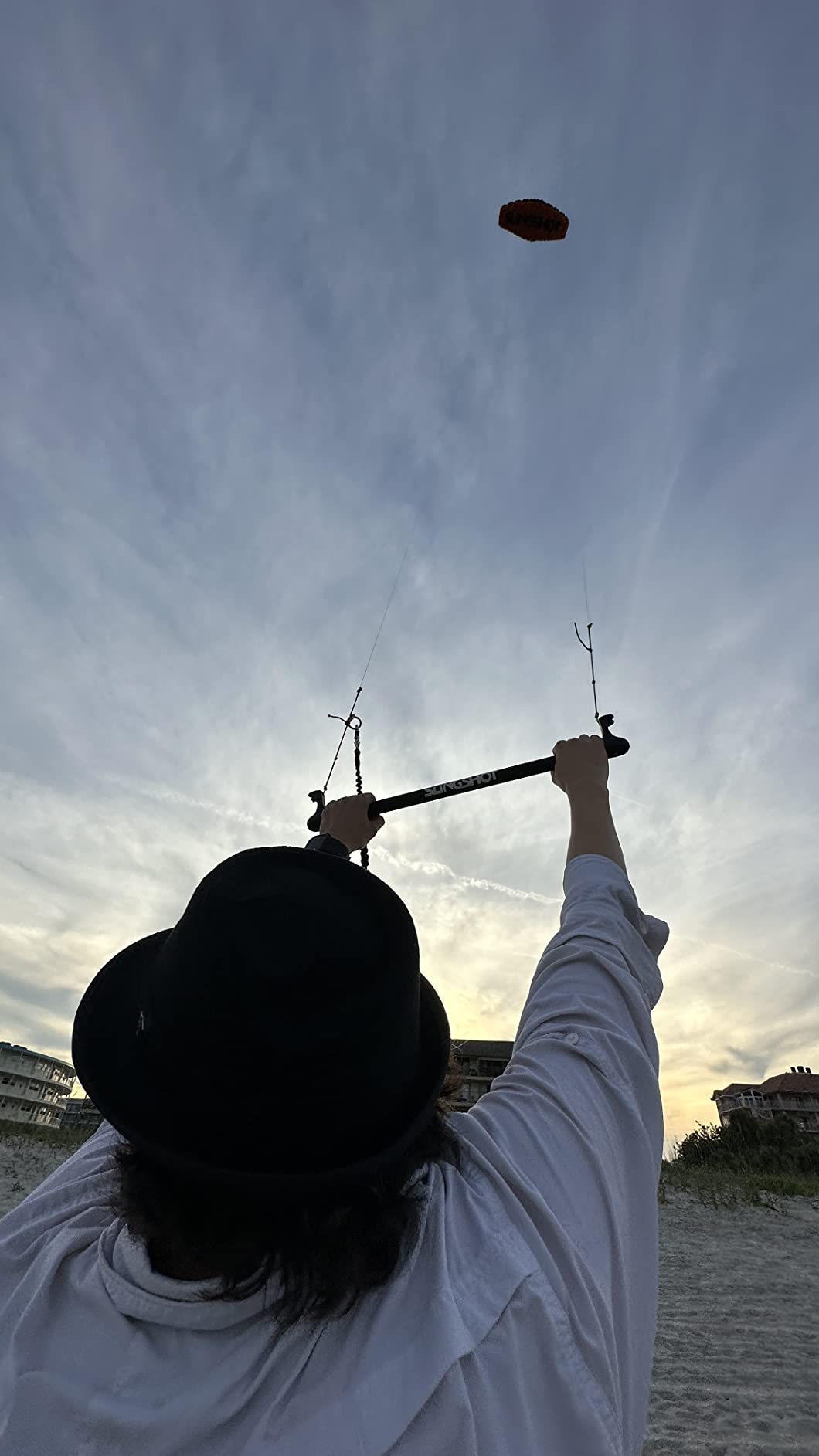
One thing that surprised me is how quickly you build forearm and shoulder strength with this kite. After 30 minutes of active flying, my arms were genuinely tired. Slingshot designed the B3 to develop muscle memory and coordination, and it does that job well. The kite handles smoothly through loops, figure-eights, and power strokes.
The downside is that Slingshot does not include any instructions in the box. If you have never flown a kite before, you will need to watch YouTube videos to understand how to set up the lines and launch safely. Several reviewers flagged this as a frustration, and I agree. A quick-start guide would make a big difference for first-timers.
Skill Transfer to Snowkiting
The B3 teaches you three skills that transfer directly to snowkiting: wind awareness, bar control under load, and emergency depowering. These are the fundamentals that lessons cost hundreds of dollars to teach. By practicing with the B3 for a few sessions, you show up to your first snowkiting lesson already understanding how to steer, how to park the kite, and how to kill the power in an emergency.
The B3 is specifically designed as a skill-building tool, not a traction kite for riding. Once you master it, you will naturally want something bigger. Think of it as a stepping stone that makes your transition to a full snowkite setup much smoother.
Rider Weight and Wind Requirements
Slingshot explicitly recommends the B3 for riders over 140 pounds. The kite generates real pull, and lighter riders may find it overwhelming in winds above 15 mph. If you weigh under 140 pounds, the Slingshot B2 would be a safer starting point. For riders between 140 and 200 pounds in average winter wind conditions of 10-18 mph, the B3 delivers the right amount of challenge and feedback.
3. Prism Mentor 2.5m – Premium 3-Line Trainer with Water Relaunch
Prism Mentor 3.5m Water-relaunchable Three-line Power Kite Ready to Fly with Control bar, Ground Stake and Quick Release Safety Leash
2.5 sq meters
16 oz
150 lb lines
3-line control with quick-release
Pros
- Excellent power and pull
- Water relaunch capability
- Three-line safety system
- High quality construction
- Great for land traction
Cons
- Carry bag is difficult to pack
- Challenging in winds over 15mph
- Smaller size needs help launching
The Prism Mentor is in a different class than the other trainers on this list. At 2.5 square meters with a three-line control system, it bridges the gap between basic trainers and actual traction kites. I found it generates significantly more pull than dual-line trainers, enough to pull you on a mountain board or drag you across a snowy field in the right wind conditions.
The standout feature is the water relaunch capability. Fabric intake valves let the kite fill with air and maintain its shape even after crashing into water. For snowkiters who ride near open water or slushy conditions, this is a genuine advantage. You can crash it in water, relaunch it, and keep flying. No other trainer kite at this size offers that.
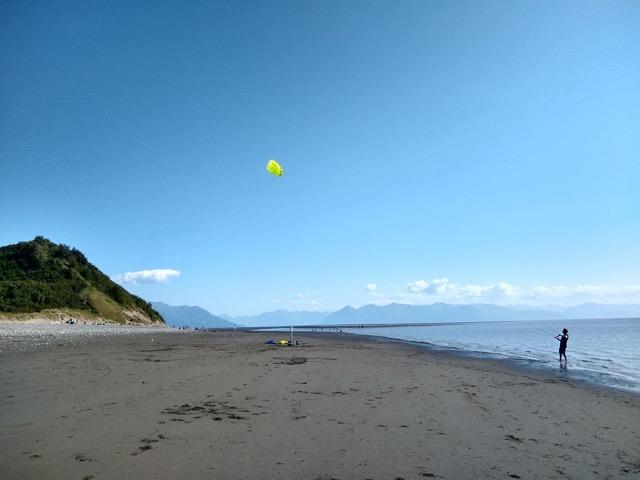
The three-line control system includes a quick-release safety mechanism that instantly kills power when activated. The third line also makes relaunching from the ground much easier than with a dual-line kite. You simply pull the third line and the kite flips over and launches. For snowkiting prep, this is the exact same system used on larger depower kites, so the skills transfer perfectly.
At 4.9 out of 5 stars with 40 reviews, the Mentor has the highest rating in this entire roundup. The build quality is excellent, with ripstop nylon construction and carbon fiber frame components. Prism includes a stainless ground stake, which is a thoughtful addition for solo launching.
When the Mentor Makes Sense
The Mentor is ideal for riders who have already practiced with a smaller trainer and want something with more power. It works in 3-15 mph winds, which is a decent range for winter flying. In winds over 15 mph, it can become challenging to handle because of its larger size. If your local flying spots are consistently windy, consider the smaller Mentor variant or stick with a dual-line kite.
This kite also works well for landboarding and mountain boarding, making it a versatile investment. You are not just buying a snowkiting trainer. You are buying a traction kite that works across multiple kitesports.
Who Should Step Up to This Kite
The Prism Mentor is for the committed rider who wants a trainer that doubles as a light traction kite. If you plan to progress from training to actual snowkiting within the same season, the Mentor gives you a tool that grows with your skills. It is also the right pick if you live near a lake and want a kite that can handle occasional water contact. The premium price reflects the water relaunch capability and three-line system.
4. HQ Symphony Beach III 2.2 – Best Budget Trainer Kite
HQ Symphony Beach III 2.2 Stunt Kite, Aqua, Dual Line Foil Sport Kite
87-inch dual-line foil
250g
100kg Dyneema lines
4-31 mph wind range
Pros
- Great value for the price
- Easy to learn and fly
- Fast and powerful
- Durable despite hard crashes
- Good wind range 4-31 mph
Cons
- Material can be thin - avoid thorns
- Not as strong pull as power kites
- Some reports of missing parts
The HQ Symphony Beach III 2.2 is the best-selling trainer kite in this roundup with 680 reviews, and it earns that popularity honestly. This kite delivers real flying performance at a fraction of what premium trainers cost. I was surprised by how much fun it is to fly. The foil fills with air during flight and creates a proper wing shape that generates noticeable pull in moderate winds.
Setup is literally zero. The kite arrives ready to fly with no parts to assemble, no frame to construct, and no confusing bridle routing. You unroll it, attach the lines to the handles, and launch. For someone buying their first kite on a Friday evening and wanting to fly on Saturday morning, this simplicity is worth a lot.
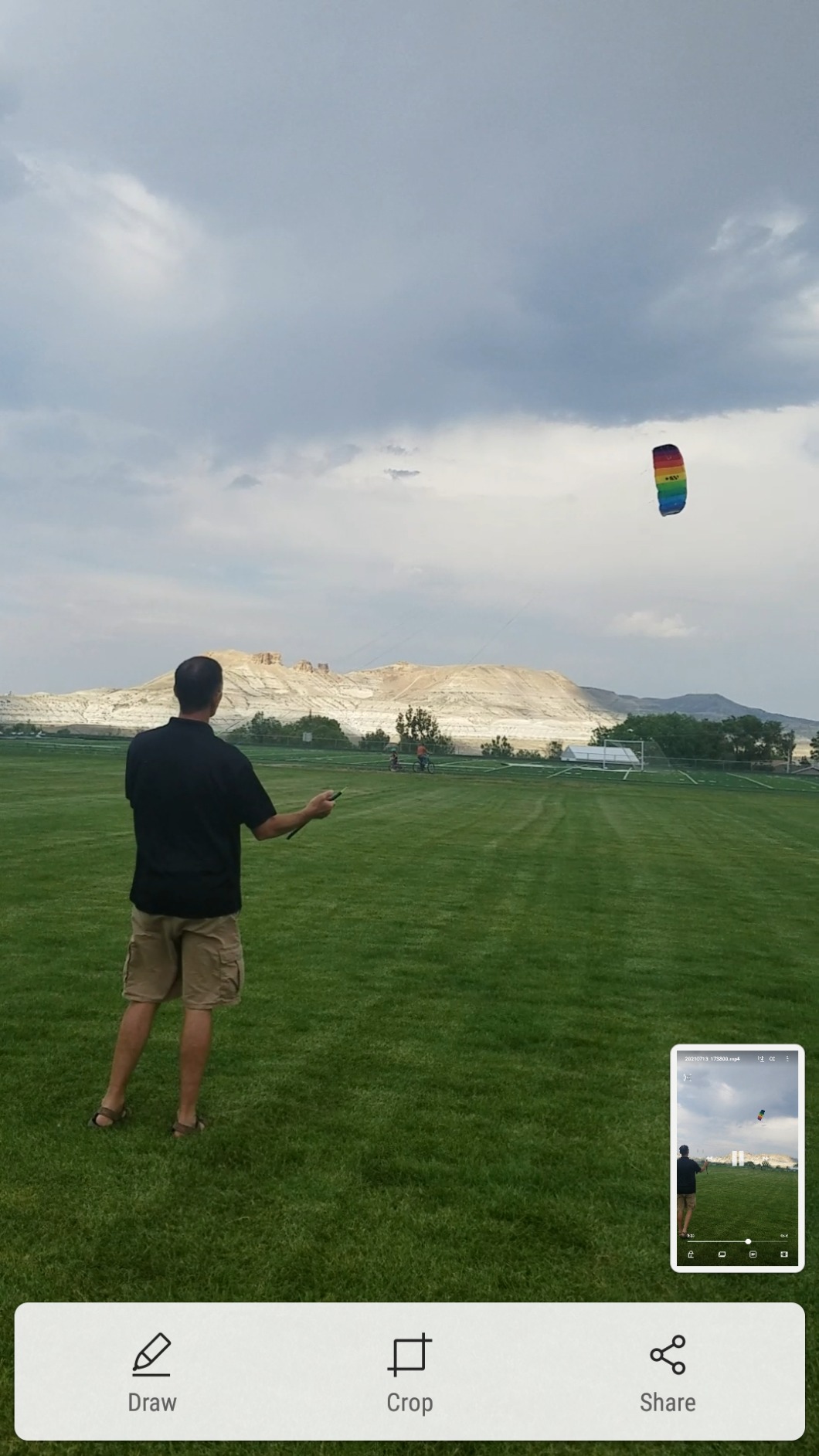
The wind range of 4-31 mph is genuinely impressive. Most trainer kites work well in a narrow band, but the Symphony Beach III handles everything from light breezes to strong gusts. In 10-15 mph winds, it generates enough pull to teach you kite control. In stronger winds above 20 mph, it becomes a fast, responsive stunt kite that will test your reflexes.
The main trade-off is material thickness. The polyester canopy is thinner than what you find on premium trainers from Prism or Slingshot. If you fly over rocky terrain or crash into thorny bushes, you risk tearing the fabric. On snow and frozen lakes, this is less of a concern. The soft, abrasive-free surface of snow and ice is forgiving on the canopy material.
Value for Snowkiting Beginners
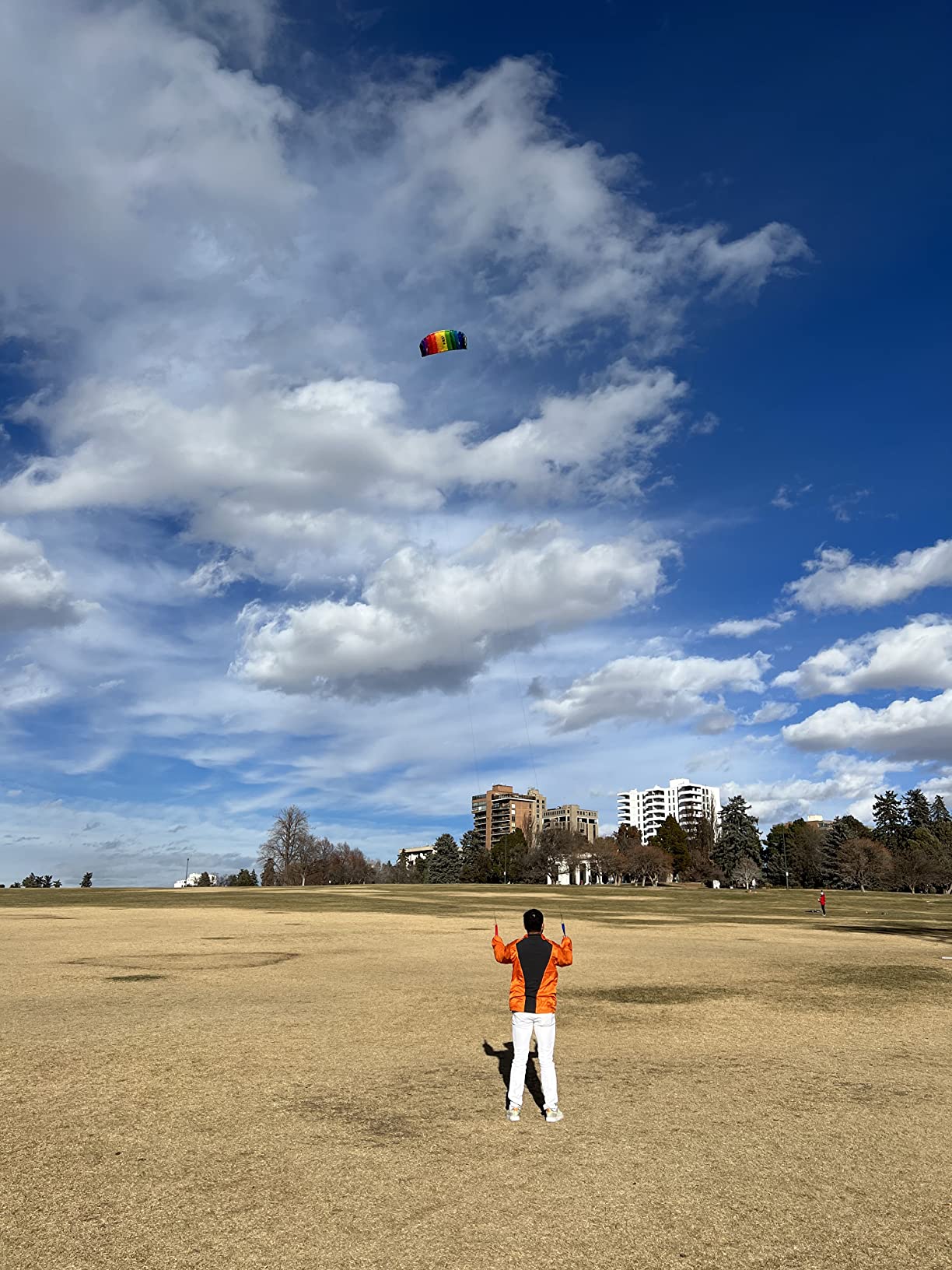
The Symphony Beach III teaches you the most important skill for snowkiting: how to steer a kite with two lines. It does this at a price point that makes it an easy recommendation for anyone curious about kitesports but not yet ready to commit serious money. If you fly it for a season and decide snowkiting is not for you, the financial risk is minimal.
The included steering mat, steering cords, and carrying bag give you everything you need to start flying immediately. HQ also makes this kite in multiple color options so you can spot it easily against a white snow background.
Limitations to Know About
The Symphony Beach III is a dual-line kite with no safety leash or depower system. If the wind picks up and you need to kill the kite, you have to let go of both handles or crash it intentionally. This is less safe than three-line trainers like the Prism Mentor. Also, the pull is moderate. It will teach you kite control but will not simulate the full power of a snowkite. For heavy riders over 200 pounds, this kite may not generate enough pull to feel meaningful resistance.
5. HQ4 Fluxx 2.2 R2F – Ready-to-Fly Stable Trainer
HQ4 Fluxx 2.2 R2F Trainer Kite
2.2m trainer kite
200g
Bar included
Ready to fly out of box
Pros
- Flies perfectly and stably
- Total control with included bar
- Easy to handle
- Good maneuverability
- Powerful in moderate wind
Cons
- Lines may be too weak for moderate winds
- No safety leash included
- Lines may be toy-quality
The HQ4 Fluxx 2.2 is designed as a no-fuss entry into power kiting, and it delivers on that promise. The flying lines come pre-attached, so the kite is ready to fly the moment you take it out of the bag. I appreciate that HQ pre-rigged the lines because line attachment is the number one source of frustration for first-time kite flyers. With the Fluxx, you skip that entirely.
In the air, the Fluxx is remarkably stable. It sits in the wind window without the constant hunting and diving that cheaper trainers suffer from. This stability makes it easier to learn basic steering before progressing to more aggressive maneuvers. The included control bar gives you a feel for bar-based steering, which is what you will use when snowkiting with larger kites.
The kite generates solid power in 10-18 mph winds. It pulled hard enough in 15 mph that I had to lean back to maintain my footing on packed snow. That is the level of feedback you want from a trainer. It teaches your body how to resist and manage kite power.
Line Quality Concerns
The biggest complaint about the Fluxx is line durability. Several users reported lines breaking in moderate winds, and the consensus is that the factory lines are toy-grade rather than proper power kite lines. If you buy this kite, I strongly recommend upgrading to Dyneema lines before flying in anything above 12 mph. The lines are the one corner HQ cut to keep the price down.
The other missing piece is a safety leash. Without one, you have no way to instantly depower the kite if things go wrong. This is a meaningful safety gap for anyone training for snowkiting, where safety systems are critical. You can rig a third line or safety system yourself, but that requires technical knowledge.
Best Use Case for the Fluxx
The HQ4 Fluxx 2.2 works best for lightweight beginners in light to moderate wind conditions who want a stable, easy-to-launch trainer. If you are under 160 pounds and fly in winds under 15 mph, this kite will serve you well as a learning tool. Pair it with upgraded Dyneema lines and it becomes a genuinely solid trainer. For heavier riders or those in consistently windy areas, look at the Prism Tantrum or Slingshot B3 instead.
6. Prism Synapse 140 – Ultra-Compact Entry-Level Trainer
Prism Kite Technology Synapse Dual-line Parafoil Kite – an Ideal Entry Level Kite for Kids and Adults to Dual-line Kiting – Synapse 140, Cilantro
53 x 20 inches frameless parafoil
Ripstop polyester
80 lb lines
60 foot lines
Pros
- Fun in stronger winds with good workout
- Easy to learn and quick to get airborne
- Durable - survives crashes
- Great colors that stand out
- Compact and portable
Cons
- Lines can show damage after few uses
- Sand gets trapped inside easily
- Some found it too fast or complicated
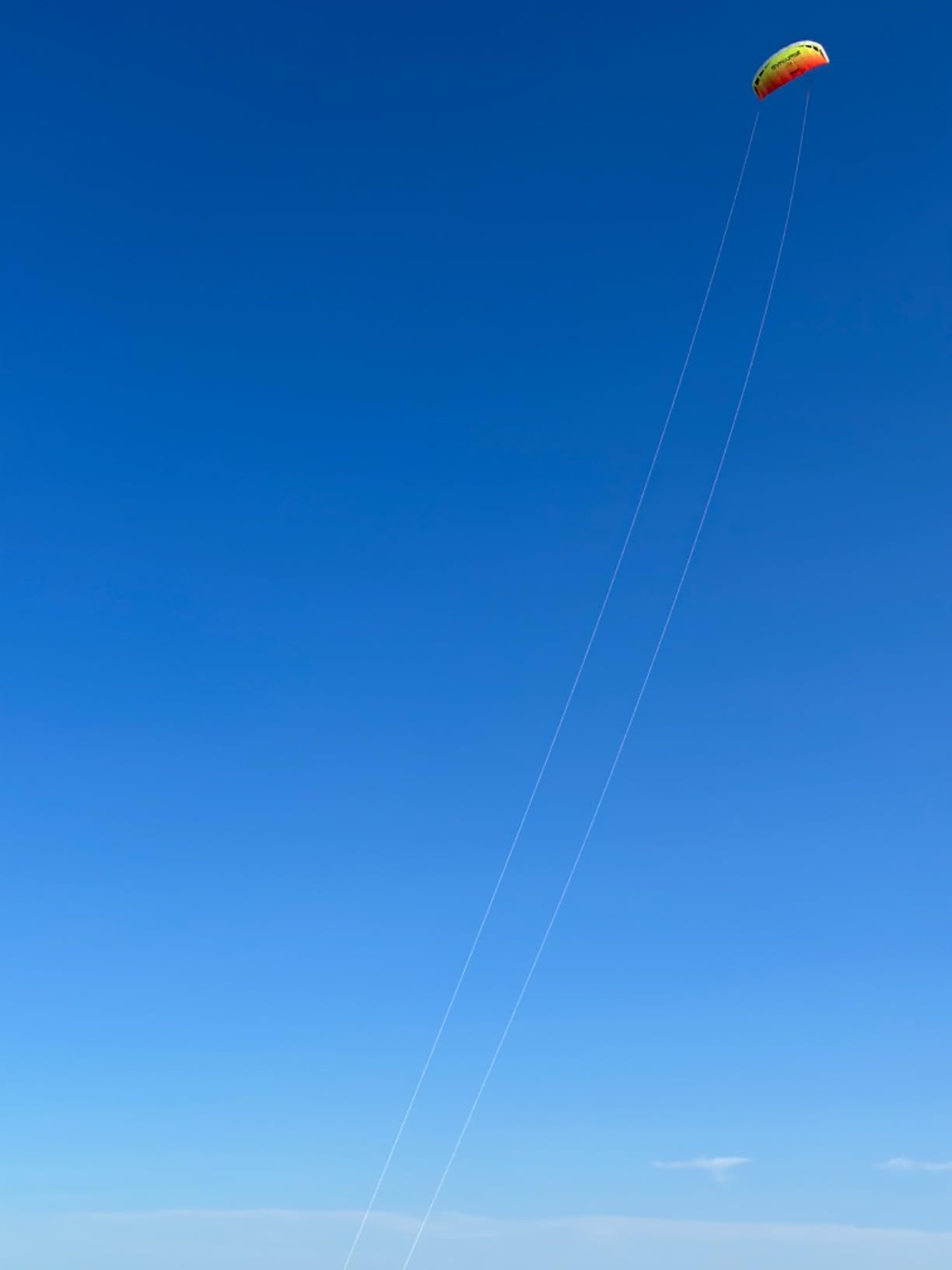
The Prism Synapse 140 is the smallest kite in this roundup, and that is exactly its strength. At 53 by 20 inches, this frameless parafoil packs down to 10 by 5 by 2.5 inches. It fits in a jacket pocket. I keep one in my ski jacket whenever I head to frozen lakes because it takes zero space and gives me something to fly when the wind is right.
Do not let the small size fool you. In winds above 12 mph, the Synapse 140 generates noticeable pull and moves fast. It zips through loops and figure-eights with quick, snappy responses. For learning basic kite steering, it works. For simulating the power of a snowkite, it falls short. The 80-pound polyester lines limit how much pull you can safely handle.
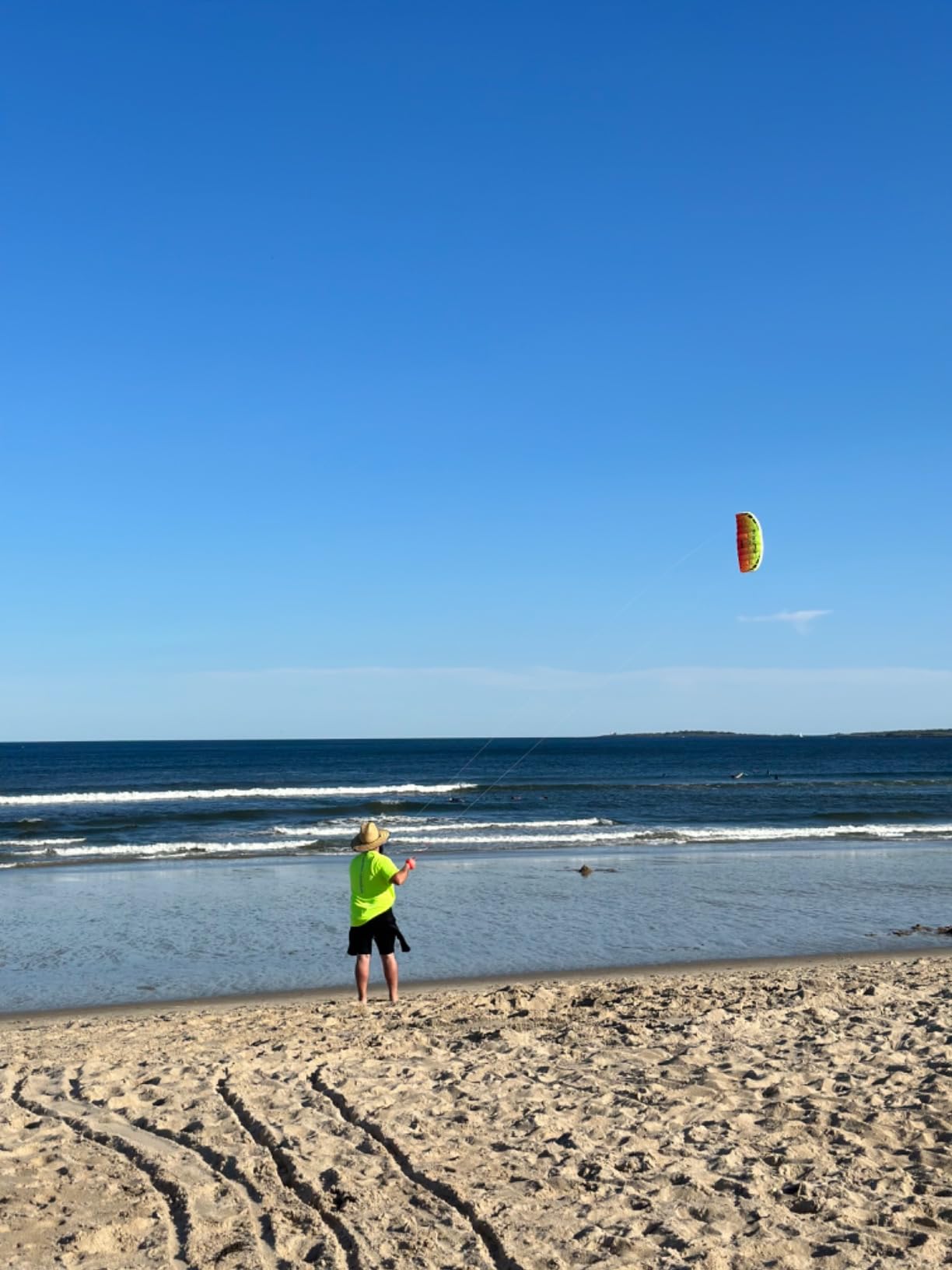
Where the Synapse 140 really shines is as a first kite for teens and younger riders who want to try kitesports without a big investment. It is durable enough to survive repeated crashes into snow, and the frameless design means nothing breaks. It also works as a warm-up kite. Fly it for 10 minutes to read the wind conditions before pulling out your larger trainer.
The ripstop polyester construction handles abuse well. I crashed the Synapse into frozen slush, packed snow, and even a wooden fence post without any damage. The material scuffs but does not tear. At 345 reviews and a 4.3-star rating, the community consensus matches my experience: this is a fun, portable, entry-level kite.
What It Can and Cannot Teach You
The Synapse 140 teaches basic two-line steering, wind window awareness, and the concept of power zones. These are foundational skills for snowkiting. What it cannot teach is power management under heavy load, because it simply does not generate enough pull for an adult rider to feel significant resistance. Think of it as step one in a multi-step progression.
For younger riders or anyone under 120 pounds, the Synapse 140 may actually generate enough pull to feel challenging. It is all relative to your body weight and the wind speed. In 20+ mph gusts, even this small kite will give you a workout.
Portability as a Feature
The packed size of 10 by 5 by 2.5 inches is the real selling point. You can carry this kite anywhere without thinking about it. Toss it in a backpack, a ski jacket pocket, or the glovebox of your car. When the wind picks up on a frozen lake, you have a kite ready to go. No other trainer in this roundup offers that level of portability. For snowkiters who want a practice kite they will actually carry with them, the Synapse 140 is the answer.
7. Besra 73-inch Power Parafoil – Budget Large-Size Trainer
Besra Huge 73inch Dual Line Parachute Stunt Kite with Flying Tools 1.8m Power Parafoil Kitesurfing Training Kites Outdoor Fun Sports (Blue)
73-inch parafoil
1.8m size
50 lb lines
Plastic frame material
Pros
- Solid construction
- Flies great in strong winds 8-10+ mph
- Beautiful colors
- Good for kids over 8
- Fun when properly assembled
Cons
- Confusing assembly with poor instructions
- Requires higher wind 12-15 knots
- Shakes and flutters in flight
- Center connection issues
The Besra 73-inch parafoil is the wildcard in this roundup. At 73 inches, it is a large kite with serious surface area, and it carries a budget price that makes it tempting for first-time buyers. I wanted to like this kite more than I did. The build quality is acceptable for the price, and the colors look great against a white snow backdrop. But the assembly process and flight characteristics reveal its budget origins.
The included instructions are nearly useless. Several users reported spending 30-45 minutes figuring out how to attach the lines and assemble the bridle. If you have experience with other trainer kites, you can figure it out by examining the bridle routing. First-timers will likely need a YouTube tutorial. This is a significant barrier for a product marketed as a training kite.
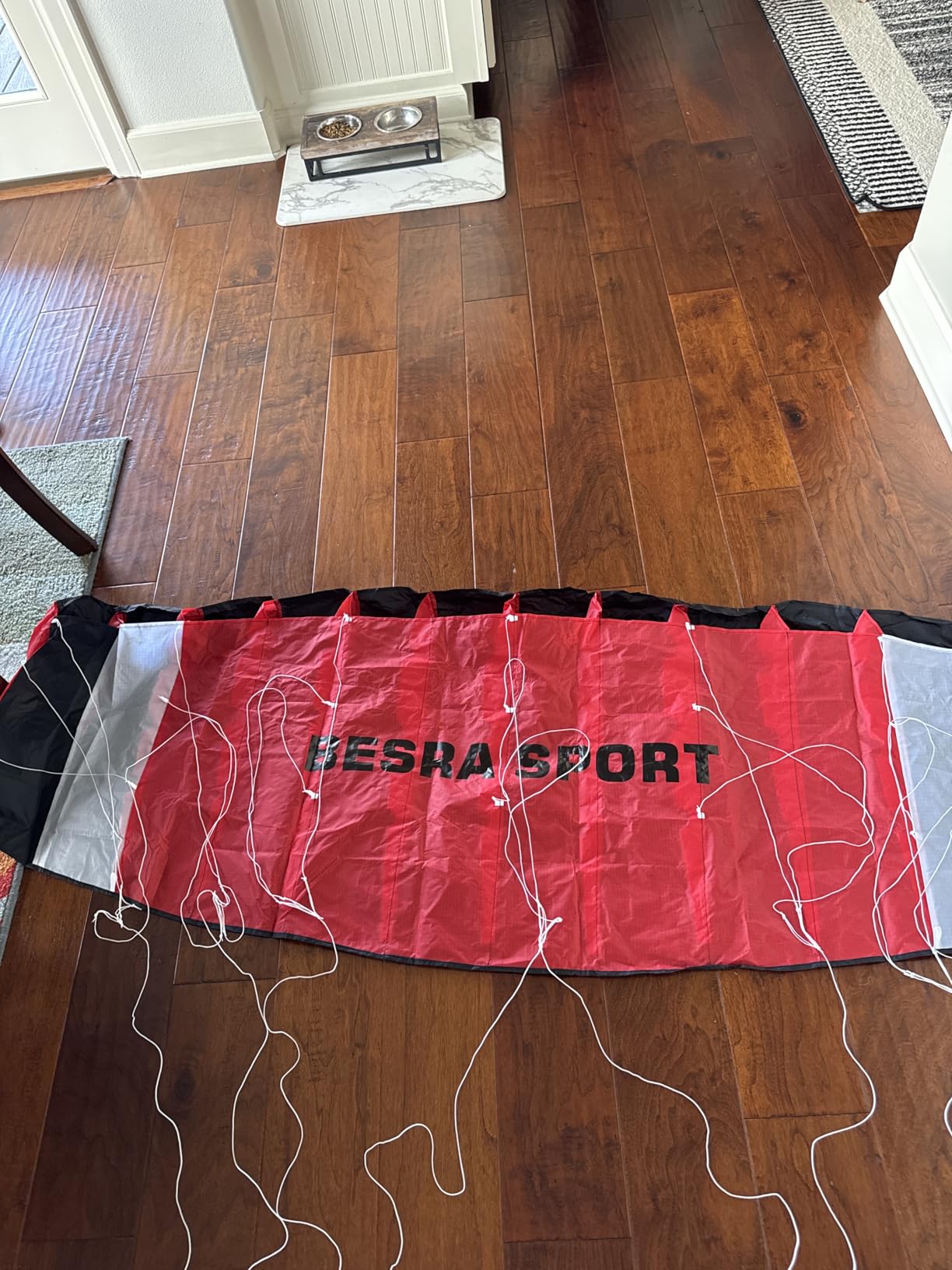
Once properly assembled and launched in adequate wind, the Besra does fly. It generates decent pull in 12-15 knot winds and moves through the air with reasonable speed. The issue is consistency. The kite shakes and flutters during flight, which suggests the bridle tuning is not optimal. It also requires more wind than most trainers to stay airborne, making it frustrating on light-wind days.
For snowkiting training specifically, the Besra can teach basic kite steering if you have the patience to work through the setup issues and live in an area with consistent wind. The 50-pound lines are the weakest in this roundup and limit the kite to lighter pull scenarios. Upgrading the lines would help, but at that point you are spending money that could go toward a better kite.
When the Besra Makes Sense
The Besra makes sense in exactly one scenario: you want the largest possible trainer kite for the lowest possible price, and you are willing to accept the compromises that come with it. If you live in a consistently windy area, do not mind figuring out assembly yourself, and just want to see if kite flying is something you enjoy, the Besra gives you that chance for very little money.
The kite works best in winds of 12-15 knots or higher. Below that threshold, it struggles to maintain altitude and will frustrate you. For snowkiting on frozen lakes where wind can be gusty and unpredictable, this wind dependency is a real limitation.
Quality vs Price Trade-off
The Besra is proof that you get what you pay for. It is not a bad kite, but it is not in the same league as the Prism or Slingshot options. The 3.8-star rating with 585 reviews tells the story: about half of buyers love it for the price, and the other half are frustrated by assembly issues and inconsistent flight behavior. If your budget can stretch to the HQ Symphony Beach III or Prism Synapse 140, you will have a better experience.
8. Prism Nexus 2.0 – Carbon Fiber Framed Stunt Kite
Prism Kite Technology Nexus 2.0 Graphite Dual-line Stunt Kite
64-inch wingspan
Carbon fiber frame
90 lb Dyneema lines
5-15 mph wind range
Pros
- Excellent construction quality
- Easy to fly in medium winds
- Responsive loops and good speed
- Takes crashes well
- Compact for travel
- Complete kit included
Cons
- Spine can come out after crashes
- Needs good wind to get airborne
- Tricky to launch solo initially
- Not Prime eligible
The Prism Nexus 2.0 is different from every other kite on this list because it has a carbon fiber frame. That changes the flying characteristics significantly. A framed kite is more precise, more responsive, and capable of tricks that frameless foils cannot match. For snowkiting preparation, this precision translates to better bar control and finer steering inputs.
I found the Nexus 2.0 tracks exactly where you point it. There is no slop in the steering, no delay between input and response. The 65-foot Dyneema lines provide a direct connection to the kite that makes dual-line flying feel intuitive. In 8-12 mph winds, it performs loops, dives, and figure-eights with satisfying speed and accuracy.
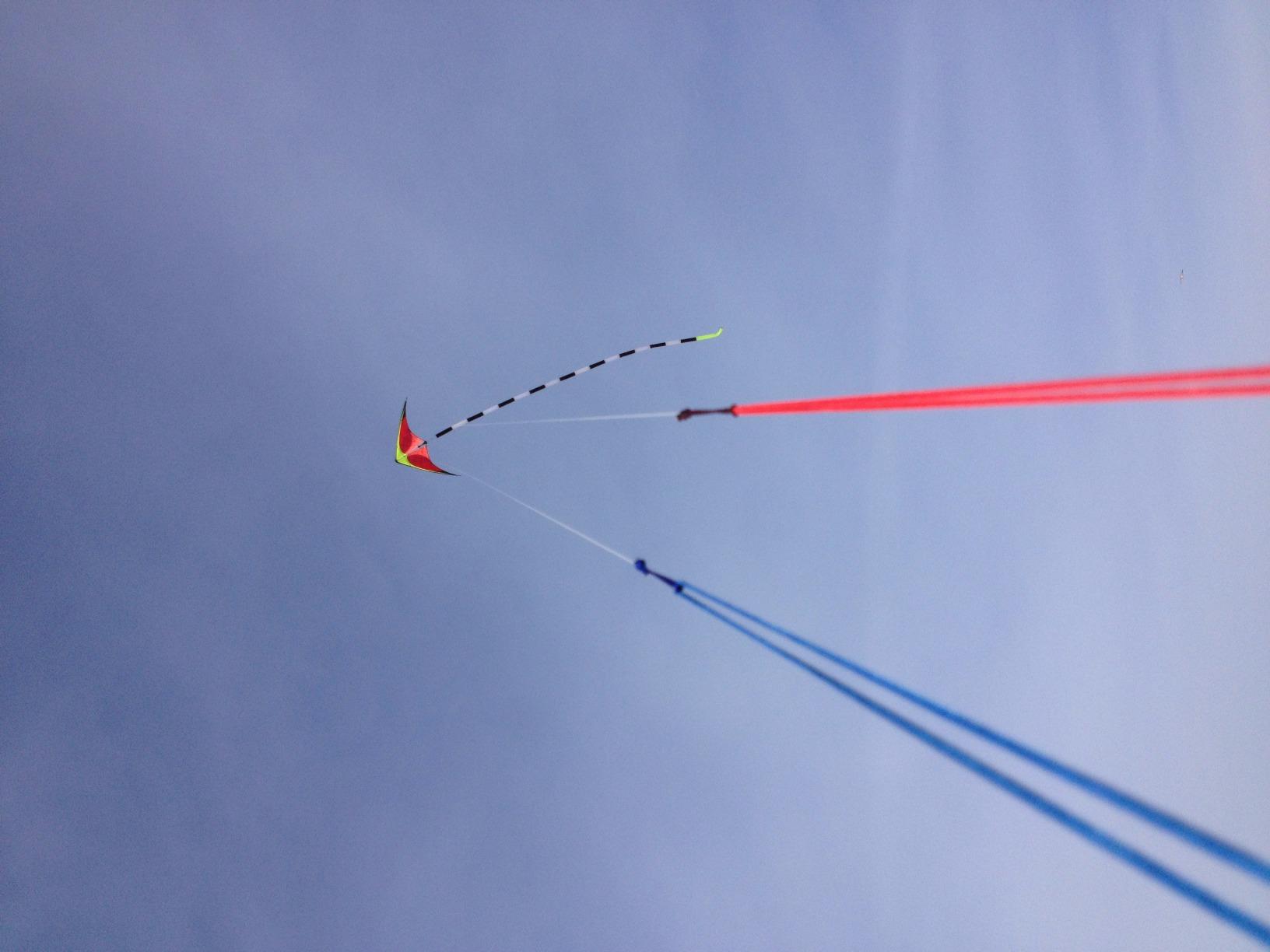
The carbon fiber frame takes crashes surprisingly well. I put the Nexus into frozen ground at speed multiple times, and the frame flexed but did not break. After one particularly hard crash, the spine popped out of its fitting, but it slid back in easily. This is a known quirk that Prism owners mention frequently. It is not a defect, just something to check after each crash.
The wind range of 5-15 mph is realistic. Below 5 mph, the Nexus struggles to maintain altitude. Above 15 mph, the framed design becomes harder to control because the kite accelerates quickly in gusts. The sweet spot is 8-12 mph, which happens to be common on frozen lakes with steady winter wind patterns.
Framed vs Frameless for Snowkiting Training
A framed kite teaches you precise steering control, while a frameless foil kite teaches you power management. For snowkiting, you need both skills. The Nexus is better for learning precise inputs, while something like the Tantrum 220 or Slingshot B3 is better for learning to manage pull. If you can afford both types, alternating between them gives you the most well-rounded training.
The framed design also means the Nexus packs into a 30-inch sleeve rather than a compact stuff sack. It is travel-friendly but not pocket-friendly like the Synapse 140. You need to plan to carry it rather than tossing it in a jacket.
Who Should Pick the Nexus 2.0
The Prism Nexus 2.0 is for the rider who wants to develop precise kite handling before transitioning to snowkiting. If you are the type who likes to understand the mechanics of a skill before going all-in, the framed design gives you clear, tangible feedback on every steering input. It is also a great option for families because it is durable enough to share among multiple people and forgiving enough for beginners. The 4.5-star rating across 217 reviews confirms its quality.
Buying Guide: How to Choose a Trainer Kite for Snowkiting
Choosing the right trainer kite comes down to four factors: kite size, line configuration, build quality, and your local wind conditions. I will walk you through each one so you can make an informed decision based on your specific situation.
Kite Size by Rider Weight and Wind
Kite size is the most important factor. Too small, and you will not feel enough pull to learn power management. Too large, and the kite can overpower you in gusty conditions. Here is a practical guide based on rider weight and typical winter wind speeds:
For riders under 140 pounds, a 1.5 to 2.0 square meter kite works well in 10-20 mph winds. The Prism Synapse 140 or HQ Symphony Beach III are good picks for this weight class. For riders between 140 and 180 pounds, a 2.0 to 3.0 square meter kite like the Prism Tantrum 220 or Slingshot B3 provides the right balance of power and control. For riders over 180 pounds, consider 3.0 square meters or larger. The Prism Mentor 2.5m is the minimum I would recommend for heavier riders.
Wind conditions matter as much as rider weight. If your local flying area averages 8-12 mph, you need a larger kite to generate usable pull. If winds average 15-25 mph, a smaller kite is safer and still generates plenty of power. Heavy riders in light wind need the biggest kite they can safely handle, while lighter riders in strong wind should start small.
2-Line vs 3-Line vs 4-Line Configuration
Two-line kites are the most common trainers. They have two steering lines attached to handles or a control bar, and you steer by pulling one line or the other. They are simple, durable, and teach basic kite control. The downside is no depower capability. If the wind picks up, your only option is to crash the kite or let go.
Three-line kites add a third center line connected to a safety leash. This third line serves two purposes: it lets you relaunch the kite from the ground by pulling the center line, and it acts as an emergency depower when you let go of the bar. For snowkiting preparation, three-line kites like the Prism Mentor are the closest simulation of how full-size snowkites operate.
Four-line kites offer full depower control through a chicken loop and trim system. These are actual snowkites, not trainers. If you are already committed to the sport and want to skip the trainer phase, a small four-line depower kite in the 5-7 meter range can work. However, I recommend learning on a simpler 2-line or 3-line kite first to build fundamental skills without the complexity of a depower system.
Fixed Bridle vs Depower Kites
Fixed bridle kites are what most trainers use. The bridle lines attach to fixed points on the kite, and the angle of attack stays constant. This means the kite always flies at the same angle relative to the wind, producing consistent power. Fixed bridle kites are simpler, cheaper, and more durable. They are the right choice for your first trainer.
Depower kites have a bridle that lets you change the angle of attack by pushing the bar away or pulling it toward you. This is how you control power on full-size snowkites. A depower trainer like the Prism Mentor gives you a taste of this capability, but true depower kites in the snowkiting world start at 5 meters and cost significantly more.
Safety Features to Look For
Safety is not optional when you are learning to fly a kite that could drag you across a frozen lake. Look for three safety features: a safety leash that attaches to your wrist or harness, a quick-release mechanism on the control bar, and a flag-out system that collapses the kite when the safety is triggered. Every kite in this roundup except the budget options includes at least one of these features.
The community on Reddit and snowkiting Facebook groups consistently recommends starting with a kite that has a safety system. As one forum member put it, “You will crash. The question is whether you crash safely.” I agree completely. Spend a little more for a kite with a safety leash and quick-release, especially if you plan to practice on frozen surfaces where a drag event could be dangerous.
FAQ
What is the best trainer kite for kitesurfing and snowkiting?
The Prism Tantrum 220 is the best overall trainer kite for both kitesurfing and snowkiting preparation. It offers strong pull in 10-25 mph winds, a padded control bar with safety leash, and Dyneema lines that handle real power. For riders who want a three-line system that more closely mimics full-size snowkites, the Prism Mentor 2.5m is the top premium choice.
Is a trainer kite worth it for snowkiting?
Yes, a trainer kite is absolutely worth it for snowkiting. Spending even 20-30 minutes with a trainer kite teaches you wind window awareness, steering under load, and emergency depowering. These are the skills that make your first snowkiting session successful instead of frustrating. Trainer kites cost a fraction of what full snowkites cost, so the risk is low and the skill-building value is high.
What size trainer kite do I need for snowkiting?
For snowkiting, choose your trainer kite size based on body weight and wind conditions. Riders under 140 pounds should start with 1.5-2.0 square meters. Riders between 140-180 pounds do well with 2.0-3.0 square meters. Riders over 180 pounds should look at 3.0 square meters or larger. In lighter wind areas, go bigger. In consistently windy areas, stay smaller for safety.
What company makes the best trainer kites?
Prism Kite Technology, Slingshot, and HQ Kites are the three brands that consistently produce the best trainer kites for snowkiting and kitesports. Prism offers the highest build quality with models like the Tantrum 220 and Mentor. Slingshot focuses on skill-building with the B-series trainers. HQ provides the best value with the Symphony Beach III and Fluxx lines.
Conclusion: Choose Your Trainer Kite and Start Practicing
The best trainer kites for snowkiting in 2026 cover a wide range of budgets, sizes, and skill levels. For most riders, the Prism Tantrum 220 delivers the best overall experience with its strong pull, safety features, and proven durability. If you want a premium three-line trainer with water relaunch capability, the Prism Mentor 2.5m is worth the investment. Budget-conscious beginners get excellent value from the HQ Symphony Beach III 2.2.
Do not overthink the choice. Any trainer kite from this list will teach you the fundamental skills you need for snowkiting: wind window awareness, steering under power, and emergency depowering. Pick one that fits your budget and weight, get outside, and start flying. The skills you build with a trainer translate directly to confidence on snow with a full-size kite. Your future self on a frozen lake with a 10-meter snowkite will thank you for the practice hours you put in now.