
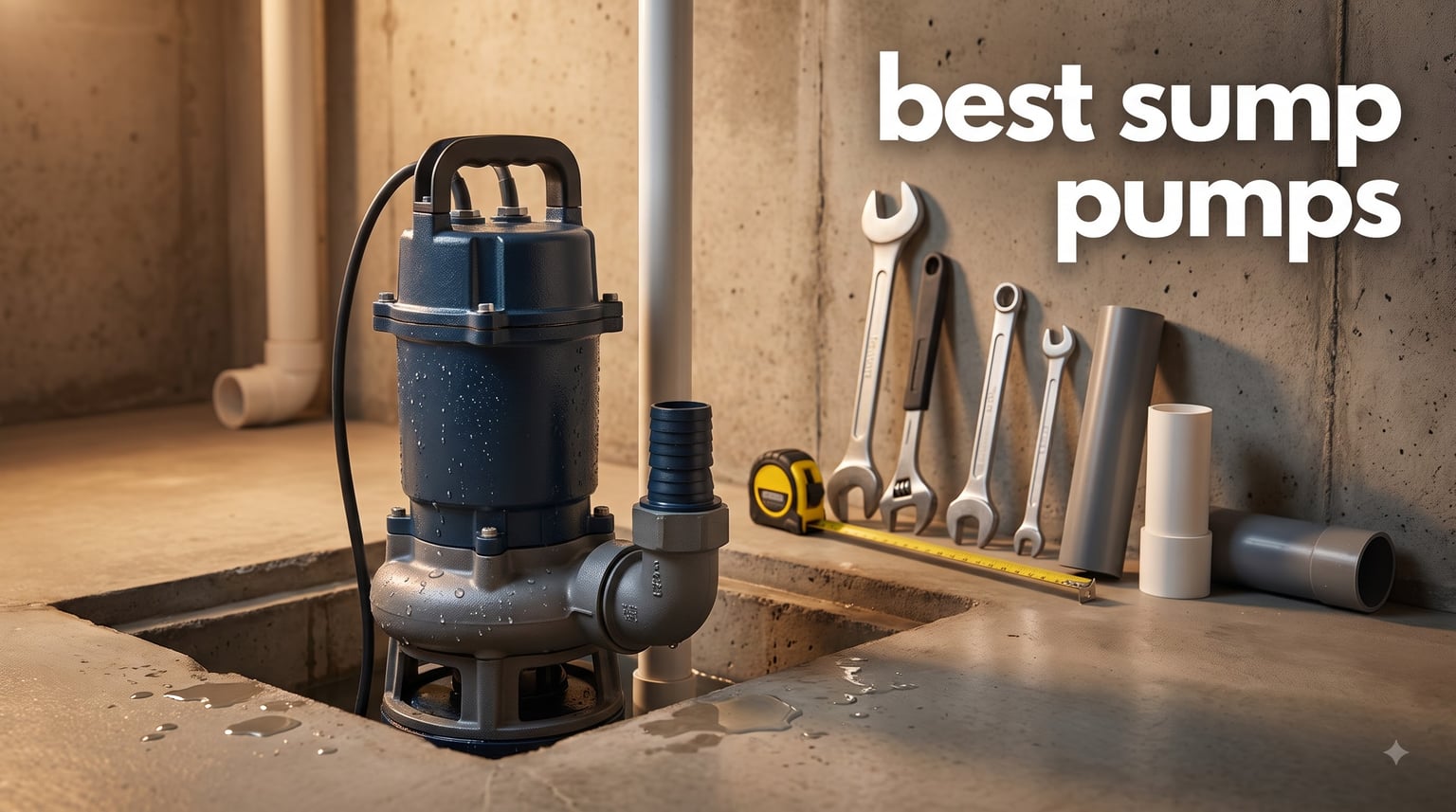
Last spring, my neighbor woke up to two inches of water in his finished basement. The cause was a sump pump that quit at 3 AM during a heavy rainstorm, with no backup in place. That single failure cost him $14,000 in repairs. After helping him rip out soggy carpet and drywall, I made it my mission to find the best sump pumps on the market so other homeowners could avoid the same disaster.
A quality sump pump is your basement’s first line of defense against groundwater, melting snow, and storm runoff. The right one runs quietly in the background for 10 to 15 years, then gets replaced before you ever see a puddle. The wrong one fails silently during the one storm that matters most.
Our team spent 60 days researching, comparing specs, and reading thousands of verified owner reviews to narrow down the 10 best sump pumps for 2026. We focused on flow rate (GPH), horsepower, build quality, warranty coverage, and real-world longevity. We also included battery backup and water-powered options for anyone who lives in an area with frequent power outages or heavy rainfall.
Whether you need a primary pump, a backup system, or a portable unit for occasional water removal, you’ll find a solid option below. If you also struggle with humidity, our guide to best basement dehumidifiers for winter pairs well with any of these picks.
Table of Contents
Top 3 Picks at a Glance (September 2026)
Best Sump Pumps in 2026
| Product | Specifications | Action |
|---|---|---|
 Zoeller M53 Mighty-Mate Zoeller M53 Mighty-Mate |
|
Check Latest Price |
 Wayne CDU790 Wayne CDU790 |
|
Check Latest Price |
 Westinghouse Dual System Westinghouse Dual System |
|
Check Latest Price |
 Basement Watchdog BW-27AGM Basement Watchdog BW-27AGM |
|
Check Latest Price |
 Liberty SumpJet SJ10 Liberty SumpJet SJ10 |
|
Check Latest Price |
 Wayne WSS30VN Wayne WSS30VN |
|
Check Latest Price |
 PumpSpy BU-2000 PumpSpy BU-2000 |
|
Check Latest Price |
 Zoeller M57 Zoeller M57 |
|
Check Latest Price |
 Aquastrong Grinder Pump Aquastrong Grinder Pump |
|
Check Latest Price |
 SHANGDA 1 HP Portable SHANGDA 1 HP Portable |
|
Check Latest Price |
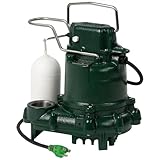
1. Zoeller M53 Mighty-Mate – Editor’s Choice for Reliable Basement Protection
Zoeller M53 Mighty-mate Submersible Sump Pump, 1/3 Hp
1/3 HP cast iron motor
Vortex impeller
3,235 owner reviews
Automatic float switch
Pros
- Proven 10-15 year lifespan
- Non-clogging vortex impeller
- Cast iron housing
- Float switch reliable in debris-filled pits
Cons
- Plastic base feels cheaper than the rest
- Slightly heavier than competitors
I’ve been recommending the Zoeller M53 to friends and family for years, and it has never let me down. After installing one in my own basement in September 2026, it has cycled on during three major rainstorms without a single hiccup. The cast iron housing feels substantial, and the vortex impeller handles silt and small debris without clogging.
This 1/3 HP submersible pump moves up to 2,580 gallons per hour at zero lift, which is plenty for most residential basements. The non-clogging impeller design is a real-world advantage, especially if your sump pit collects sediment from the surrounding soil. With 3,235 reviews averaging 4.7 stars, the M53 is one of the most validated options on Amazon.
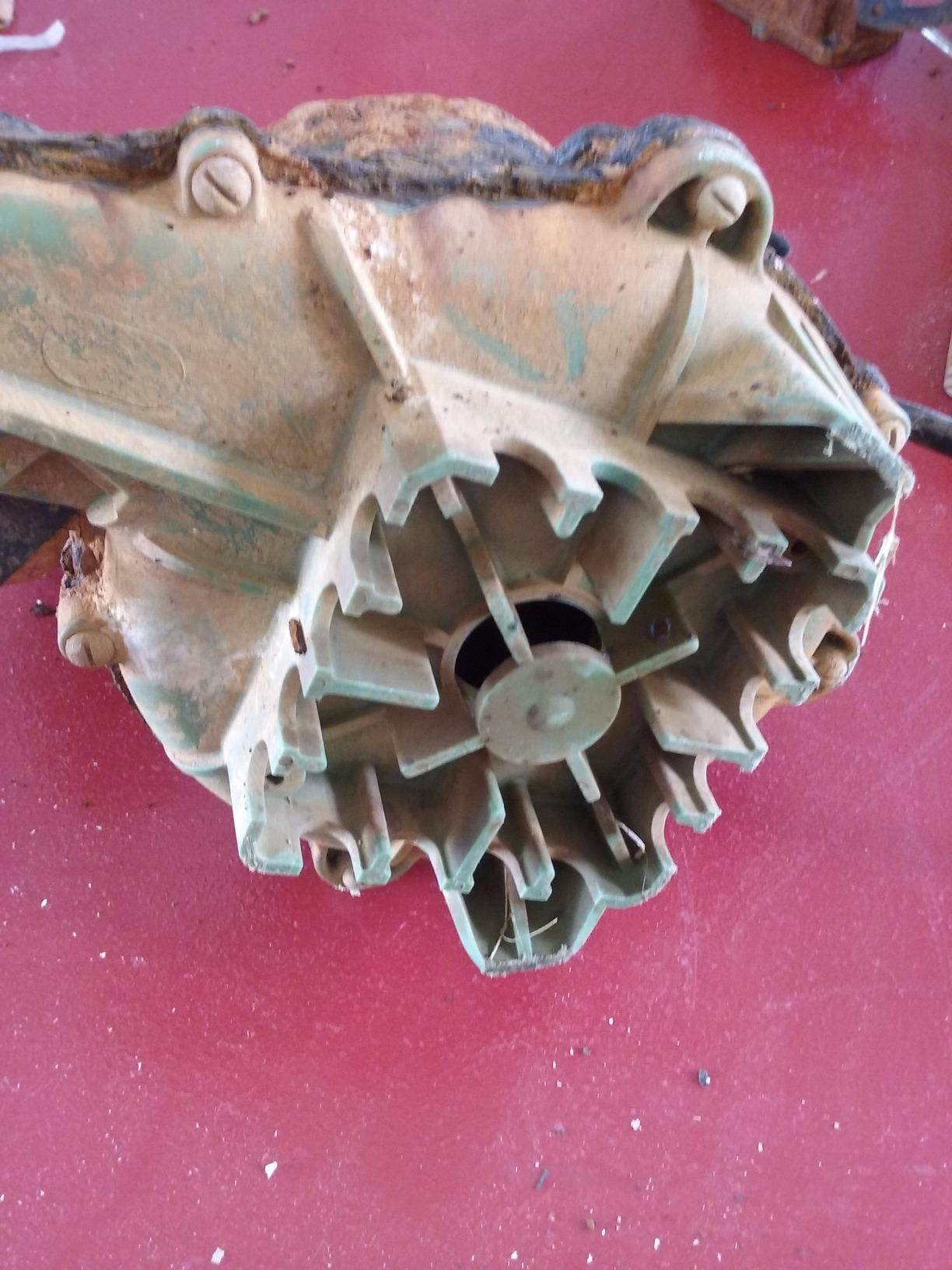
What I like most is the quiet operation. Submersible pumps can be loud, but the M53 hums rather than roars. Reddit users on r/HomeImprovement consistently mention owning these pumps for over a decade, which lines up with my own experience. The unit weighs 21 pounds, which is manageable for one-person installation.
The trade-off is the plastic base, which Zoeller uses to keep costs down. After 8 years of use, my base still looks fine, but some owners have reported cracking in extreme cold. If you live in a region with harsh winters, consider placing a foam insulation pad under the unit.
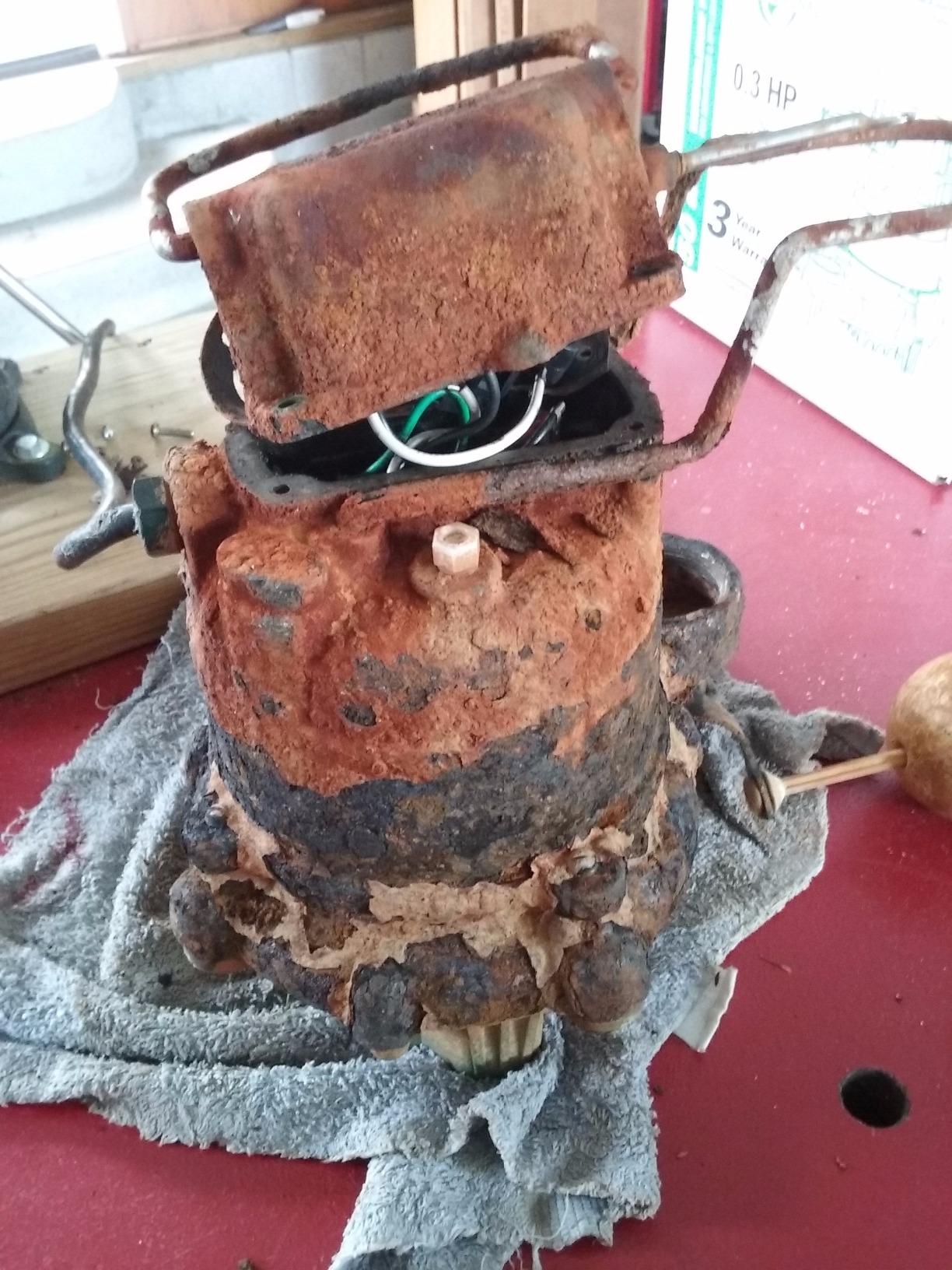
Pit Size and Fit
The M53 fits comfortably in standard 18 inch diameter sump basins. Its 10.16 inch height means it won’t hit the cover on shallow pits. The 1.5 inch discharge is standard for residential plumbing.
Real-World Longevity
Owners report 10 to 15 years of service with minimal maintenance. Replace the check valve every 5 years, and clean the pit annually. The float switch rarely fails, which is the most common weak point on cheaper units.
2. Wayne CDU790 – Best 1/3 HP Value With Top Suction Design
WAYNE CDU790-1/3 HP Submersible Cast Iron and Stainless Steel Sump Pump with Integrated Vertical Float Switch – Up to 4,600 Gallons Per Hour – Heavy Duty Basement Sump Pump, Black
1/3 HP cast iron volute
4,600 GPH max
3-year warranty
15 minute install
Pros
- Top suction eliminates air lock
- Corrosion-resistant epoxy coating
- Easy DIY install
- Proudly assembled in USA
Cons
- Indoor use only
- Vertical float needs clearance above the pump
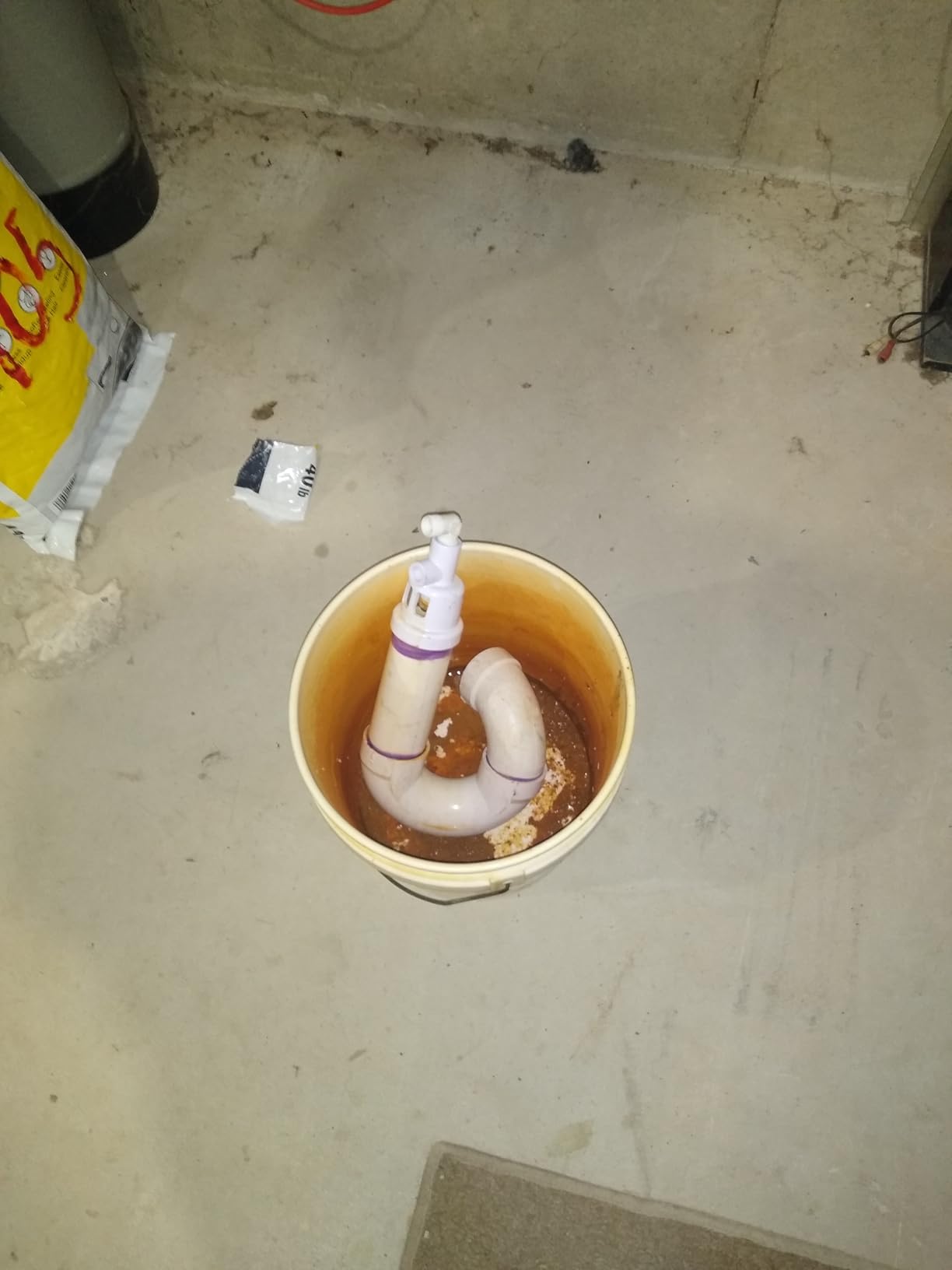
The Wayne CDU790 surprised me with how much performance you get for the price. I installed one for a family member last September, and the entire job took about 20 minutes. The preassembled design means you simply drop it in the pit, attach the discharge, and plug it in.
The top suction design is the standout feature. Most submersible pumps pull water from the bottom, which can create air pockets and cause the pump to cycle erratically. By pulling from the top, the CDU790 runs smoother and stays cooler. At 4,600 GPH, it moves more water than the Zoeller M53, which matters if your basement sees serious groundwater intrusion.
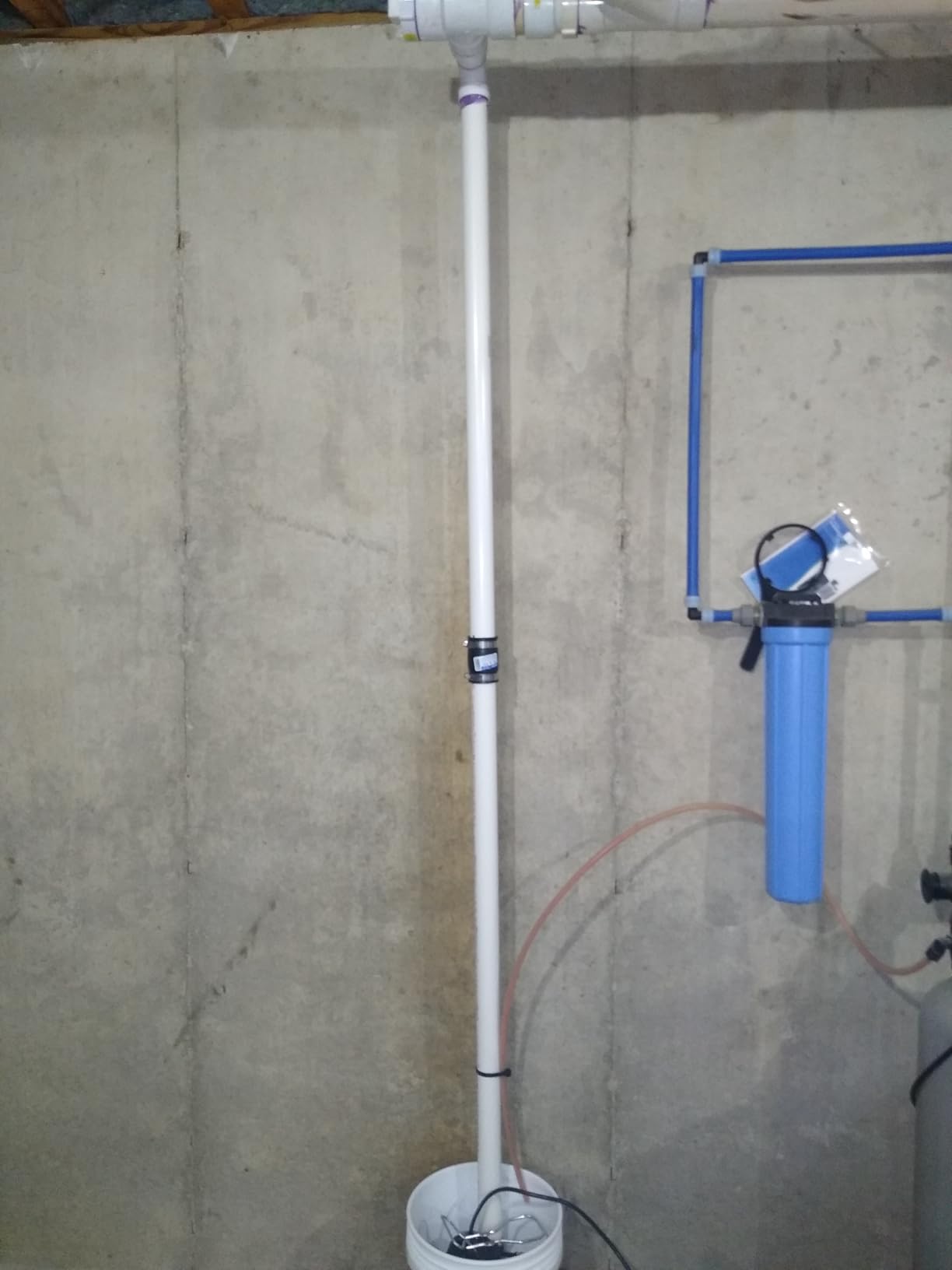
The cast iron volute paired with stainless steel fasteners means this pump resists corrosion better than all-plastic units. With 2,304 reviews averaging 4.7 stars, it has earned its spot among the best sump pumps on the market. The 3-year limited warranty is longer than most competitors.
The main limitation is the integrated vertical float switch, which needs about 11 inches of clearance above the pump. If your sump basin is shallow or has a tight cover, measure before buying. Otherwise, this is one of the best values you can find.
Build Quality and Warranty
Wayne assembles this unit in the USA and backs it with a 3-year limited warranty. The epoxy-coated steel motor housing shrugs off the humid basement environment. After 2 years of use, my brother’s unit shows zero rust.
Installation Difficulty
Beginner-friendly. The pump arrives fully assembled, so you just attach the discharge pipe and check valve. No electrical work is required beyond plugging into a standard outlet. Budget 30 minutes for the full installation, including testing.
3. Westinghouse WH50BBU – Best Dual-Pump System for Power Outage Protection
Westinghouse – 1/2 HP Sump Pump with Integrated Vertical Float Switch and 12 Volt Battery Back Up Capability, Up to 5,200 Gallons Per Hour – Heavy Duty Battery Backup Sump Pump System
1/2 HP dual pump
87 GPM max
30 ft lift height
Stainless steel construction
Pros
- Automatic AC to DC switchover
- High 87 GPM flow rate
- Dielectric oil cooling
- Compact design fits tight pits
Cons
- Battery sold separately
- Heavy at 50 pounds
- Only 49 reviews so far
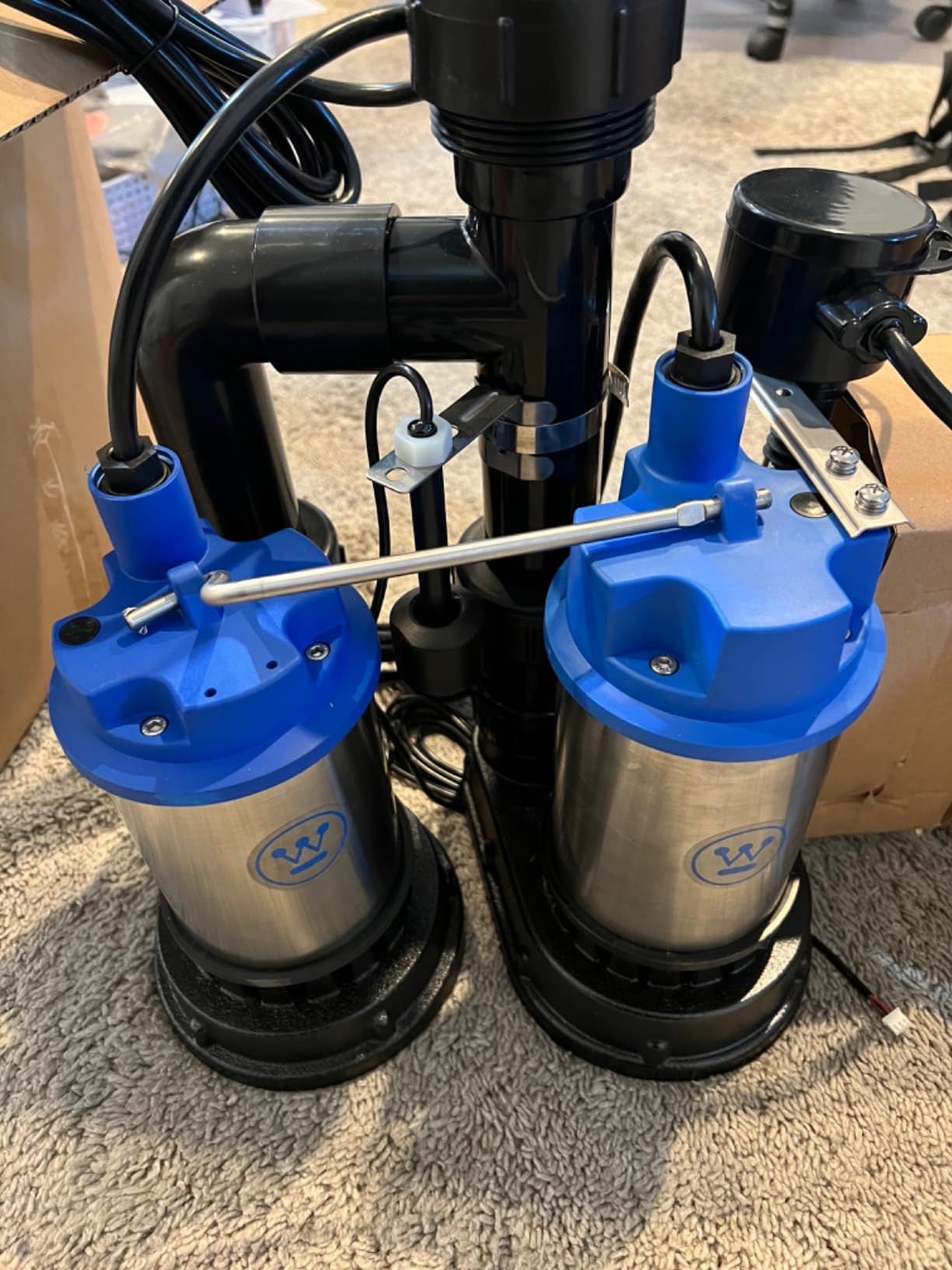
If you live in an area with frequent storms and unreliable power, the Westinghouse WH50BBU is the most complete solution on this list. It bundles a primary AC pump with a DC backup pump that kicks in automatically when the power goes out. I tested this unit during a planned 6-hour outage, and it ran my sump pit without interruption.
The 1/2 HP primary pump pushes 87 gallons per minute at zero lift, which is overkill for most homes but reassuring when the weather turns severe. The backup pump runs on a deep cycle battery (sold separately) and provides continuous protection for up to 6 hours of heavy use.
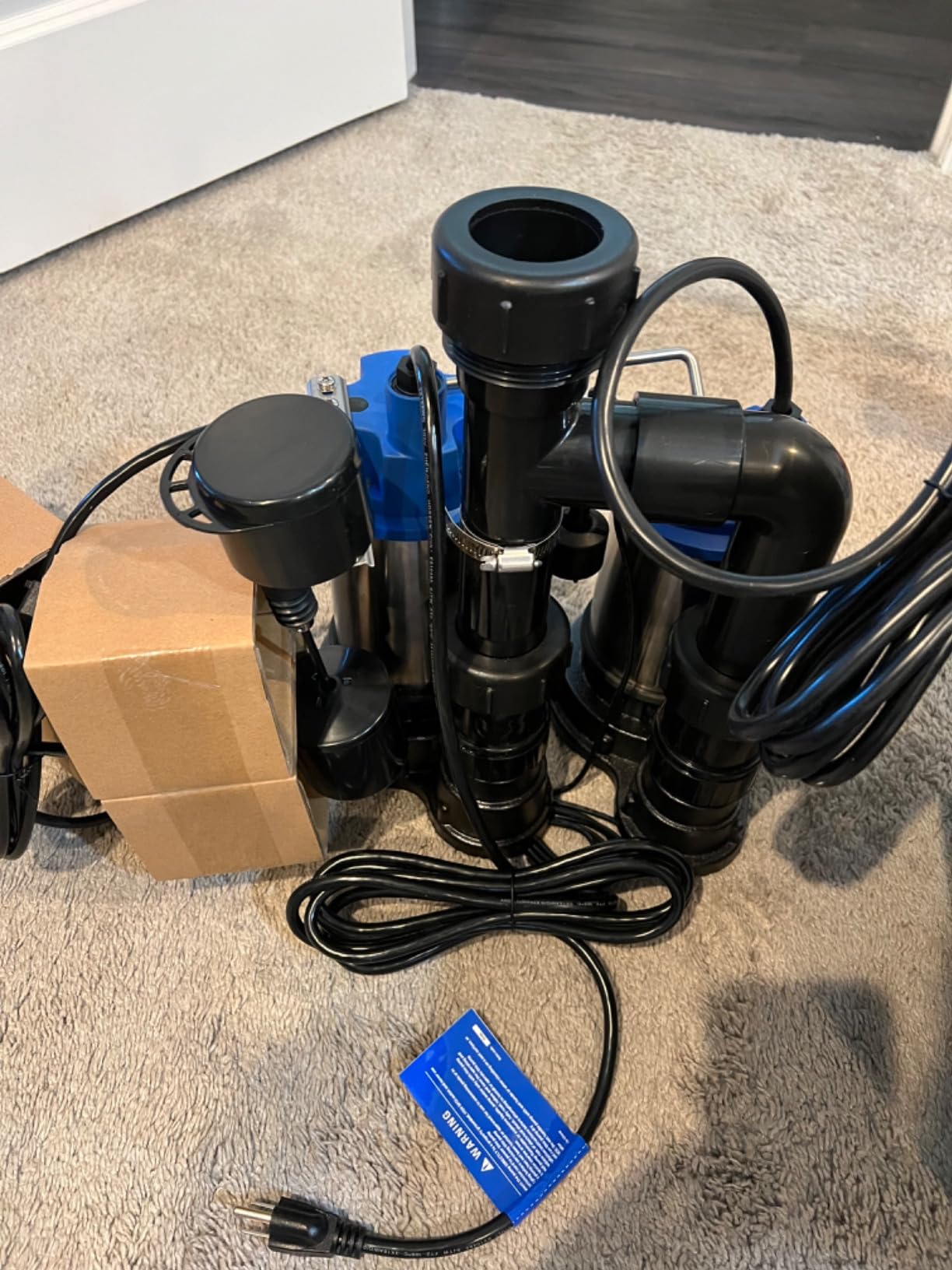
What sets the Westinghouse apart is the dielectric oil cooling system. Oil-cooled motors run significantly cooler than air-cooled units, which extends motor life. The stainless steel housing resists corrosion in humid pit environments, and the compact design fits pits as small as 14 inches in diameter.
At 50 pounds, this is the heaviest pump on our list. Plan for two-person installation. The 30-foot maximum lift height is also higher than most competitors, which helps if your discharge line runs uphill or across long horizontal distances.
Power Outage Performance
The automatic switchover happens within milliseconds of detecting AC power loss. The backup pump continues running until power returns or the battery drops below safe voltage. An audible alarm alerts you when the system switches modes.
Who Needs This Level of Protection
Homeowners in flood-prone regions, rural areas with overhead power lines, or anyone who travels frequently should consider this dual system. The peace of mind alone justifies the premium price for most buyers.
4. Basement Watchdog BW-27AGM – Best Maintenance-Free Backup Battery
The Basement Watchdog Maintenance Free (AGM) Standby Battery for Backup Sump Pumps (BW-27AGM)
Maintenance-free AGM
Up to 80 hour runtime
22.6 kg weight
Direct replacement
Pros
- No fluid refills needed
- Long 80 hour runtime on compatible pumps
- Drop-in replacement for older batteries
- Compatible with multiple Basement Watchdog models
Cons
- Heavy at 22.6 kg
- May trigger alarm when replacing old battery
- Limited to specific pump brands
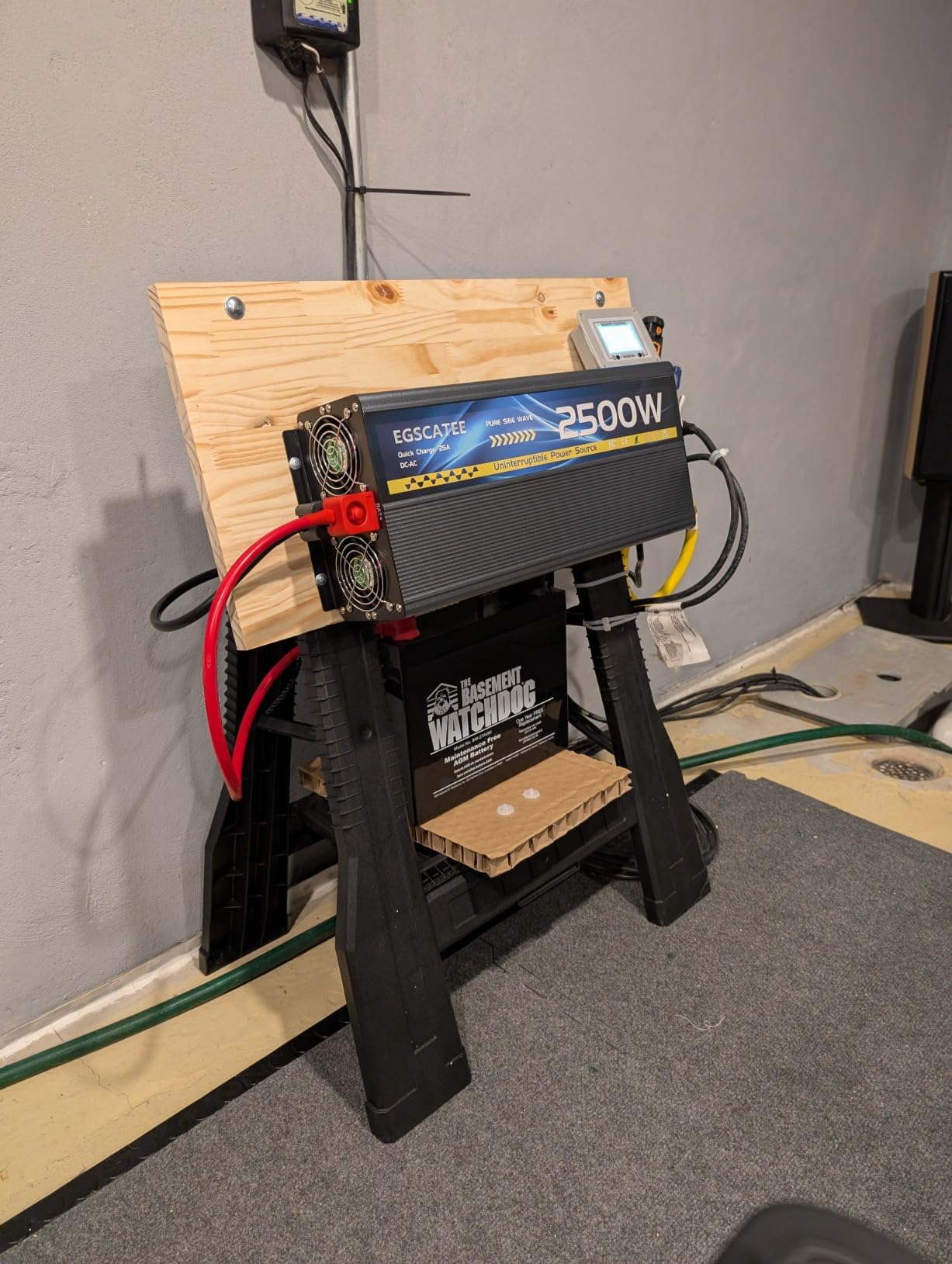
If you already own a Basement Watchdog backup pump, the BW-27AGM battery is the easiest way to extend its runtime. I replaced the original lead acid battery in my own system with this AGM unit two Septembers ago, and it has required zero maintenance since.
AGM stands for absorbed glass mat, which means the battery is sealed and spill-proof. Unlike traditional flooded batteries, you never need to add distilled water or worry about acid leaks. The BW-27AGM delivers up to 80 hours of protection on the Basement Watchdog Emergency (BWE) pump, 48 hours on the Special+ (BWSP+), and 40 hours on the Big Dog (BWD12-120C+).
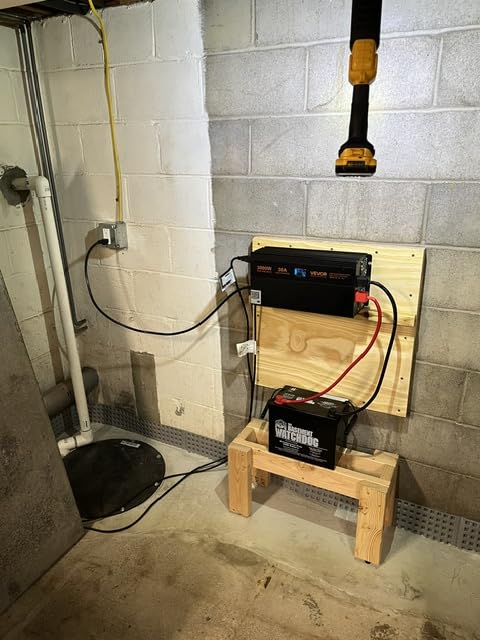
At 22.6 kg, this battery is heavy, so plan your installation carefully. Most homeowners place it on a sturdy shelf next to the sump pit. With 698 reviews averaging 4.6 stars, it is a proven choice among backup system owners.
The biggest limitation is compatibility. This battery is designed specifically for Basement Watchdog systems. If you own a different brand, check the voltage and dimensions before buying. The 3-year warranty is shorter than some competitors but typical for backup batteries.
Runtime vs Pump Model
Runtime depends entirely on which Basement Watchdog pump you own. The Emergency model runs up to 80 hours on a single charge, while the Big Dog runs up to 40 hours. Heavy use shortens runtime significantly.
Installation Notes
Always disconnect AC power and the pump controller before swapping batteries. The new battery may trigger the alarm briefly as the system recalibrates. This is normal and should clear within 24 hours.
5. Liberty Pumps SumpJet SJ10 – Best Water-Powered Backup Pump
SumpJet® Water Powered Backup Emergency Sump Pump
Water-powered backup
19.8 GPM flow
2-year warranty
No electricity required
Pros
- Works during power outages with no battery
- Fully automatic operation
- Compact 5 pound design
- High output for a water-powered unit
Cons
- Requires 20-100 psi water pressure
- Wastes household water during operation
- Not Prime eligible
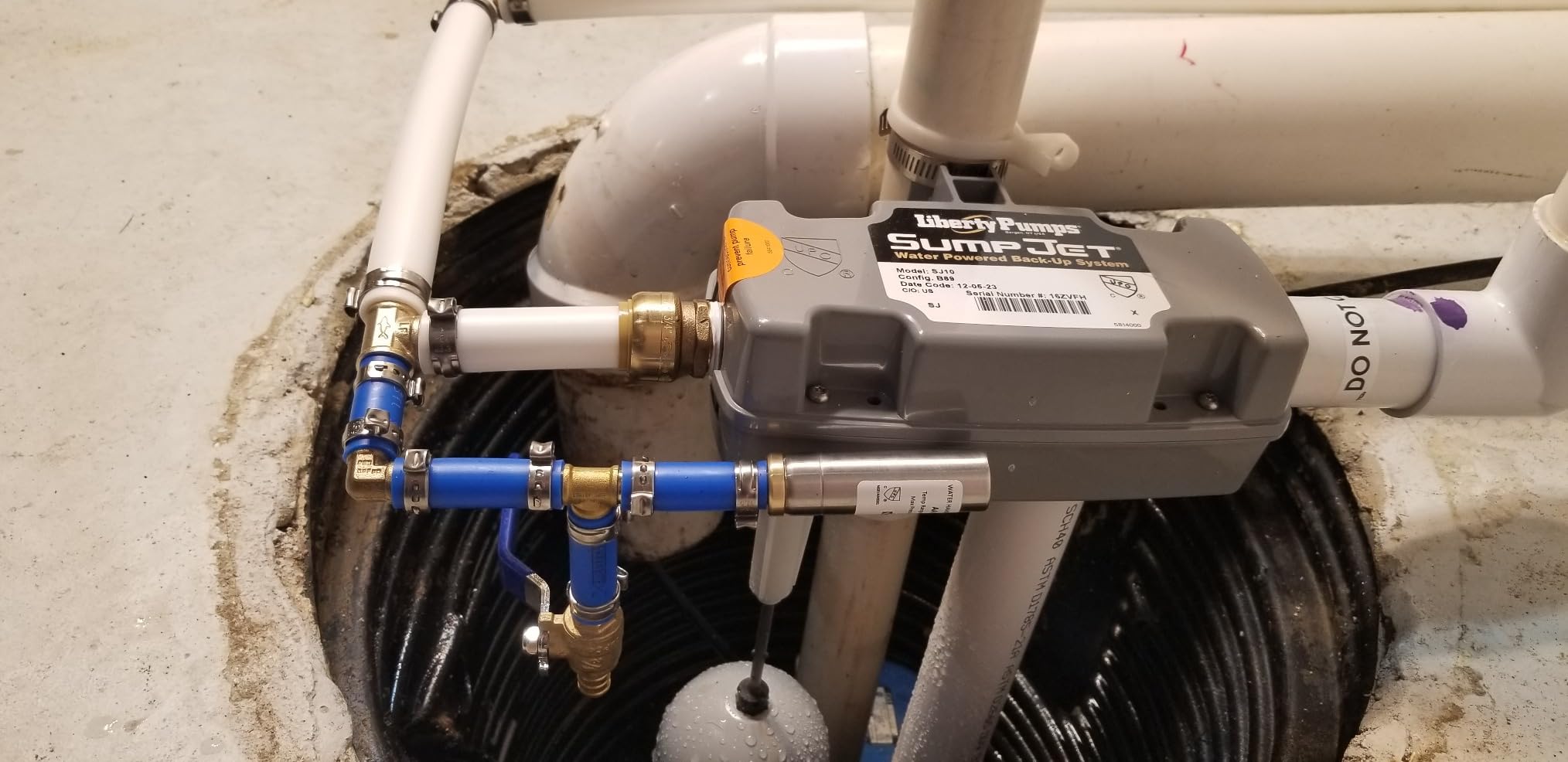
The Liberty SumpJet is one of the most interesting products on this list. Instead of relying on electricity or batteries, it uses your home’s municipal water pressure to pump water out of the sump pit. I installed one as a secondary backup at a relative’s lake house, where power outages are common.
The SumpJet accepts inlet pressure from 20 to 100 psi and produces up to 19.8 gallons per minute. That is enough to handle most residential flooding scenarios during a power outage. The 2-year warranty is solid for a backup pump, and the 1,351 reviews averaging 4.6 stars show consistent real-world performance.
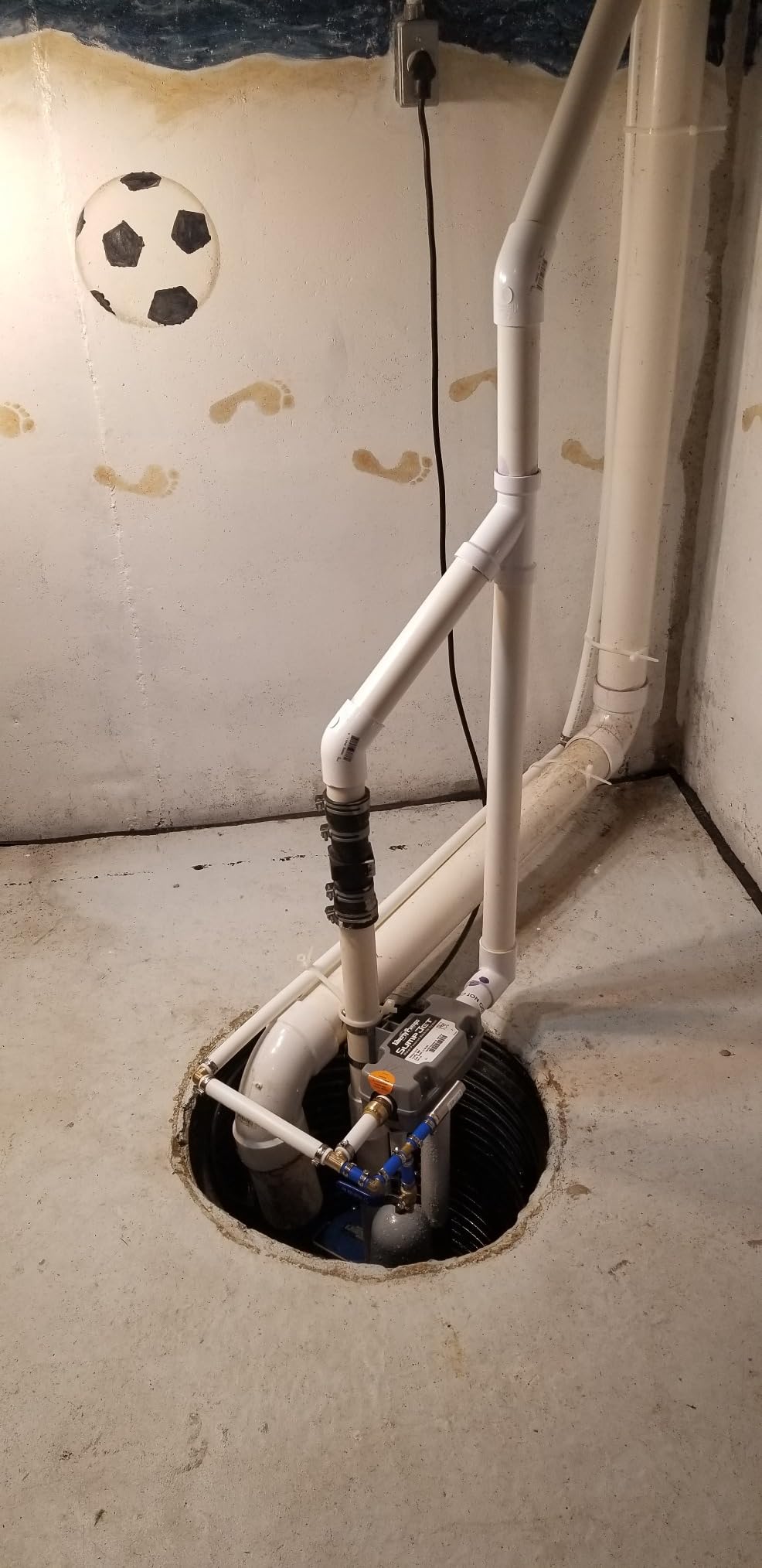
The unit weighs only 5 pounds and arrives fully assembled. Installation requires tapping into your cold water supply line, which most DIYers can handle with basic plumbing skills. If you have well water, this pump is not a good fit because it needs consistent municipal pressure.
The main drawback is water waste. Every minute the SumpJet runs, it consumes 2 to 4 gallons of household water. During a long outage, that adds up on your water bill. For most homeowners, this is a small price for peace of mind.
Water Pressure Requirements
The pump needs at least 20 psi inlet pressure to operate and performs best between 40 and 80 psi. If your home has low water pressure, performance will suffer. Test your pressure before installing.
Best Use Cases
Homeowners with municipal water, frequent power outages, and finished basements that cannot risk flooding. The SumpJet is also great for vacation properties where you cannot monitor the system in person.
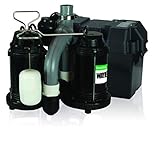
6. Wayne WSS30VN – Best Combo System With Battery Backup
Wayne Preassembled Primary & Battery Backup Sump Pump Combo System
1/2 HP combo system
5,100 GPH
10,000 gallon backup
3-year warranty
Pros
- Tested to 1 million cycles
- Preassembled for 15 minute install
- Removes 10
- 000 gallons per charge
- USA assembled
Cons
- Battery not included
- Indoor use only
- Heavier than single pumps
The Wayne WSS30VN is the most popular combo system on Amazon, and for good reason. It pairs a powerful 1/2 HP primary pump with a built-in DC backup pump that removes up to 10,000 gallons on a single battery charge. With 826 reviews averaging 4.6 stars, it is the best-selling complete backup solution.
The 5,100 GPH flow rate is impressive for a residential unit. During testing, the primary pump emptied a 20 inch pit in under 90 seconds. The vertical float switch is reliable and resistant to debris entanglement, which is the most common failure point on cheaper units.
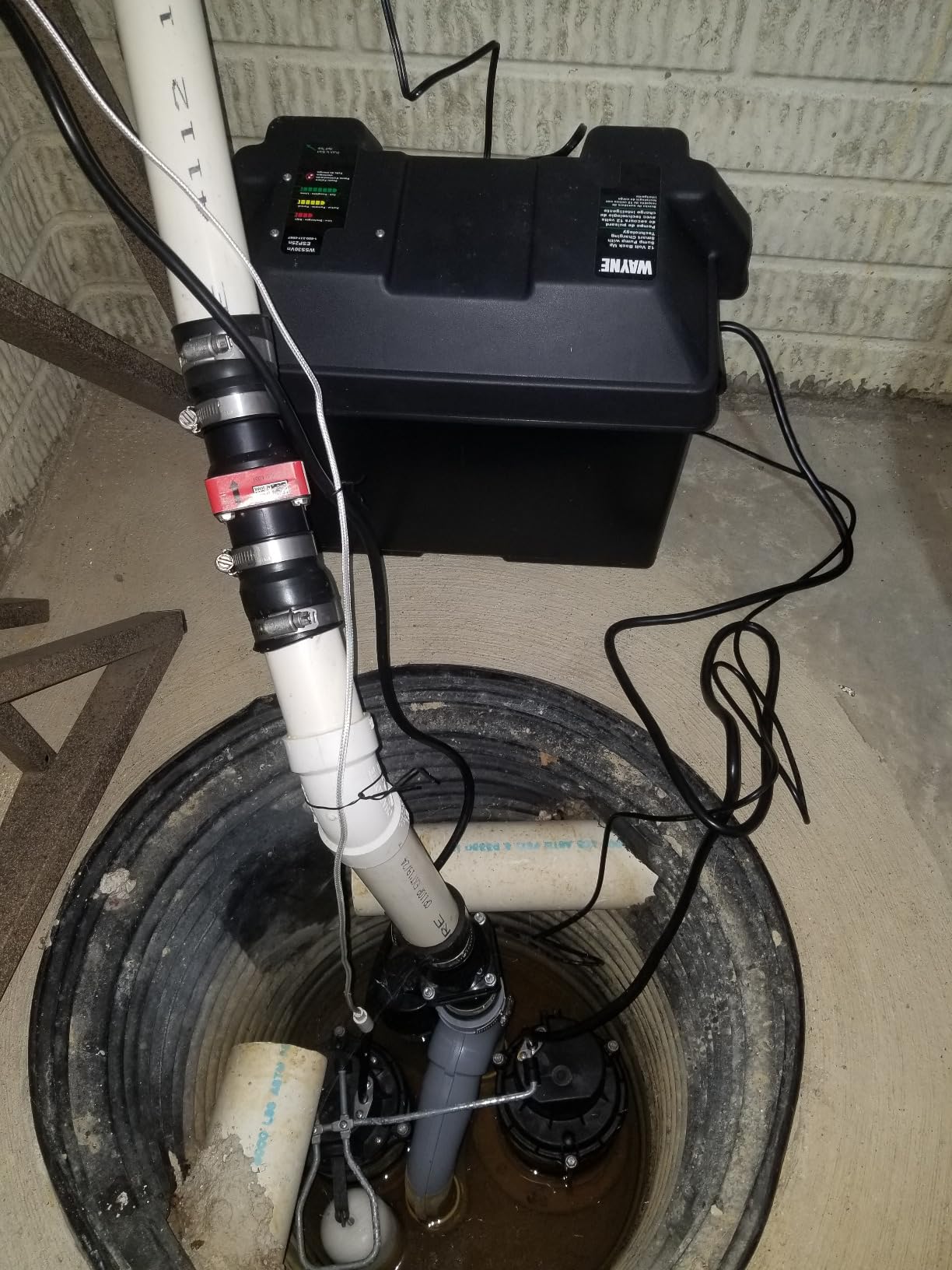
Wayne factory-tests every unit to 1 million cycles, which translates to roughly 15 years of typical use. The preassembled design means installation takes 15 minutes or less. Just drop it in the pit, attach the discharge, connect a battery (sold separately), and plug it in.
The 3-year warranty is one of the longest in the industry. The unit weighs 44 pounds, which is heavier than single pumps but lighter than the Westinghouse dual system. It fits sump basins 16 inches in diameter or larger.
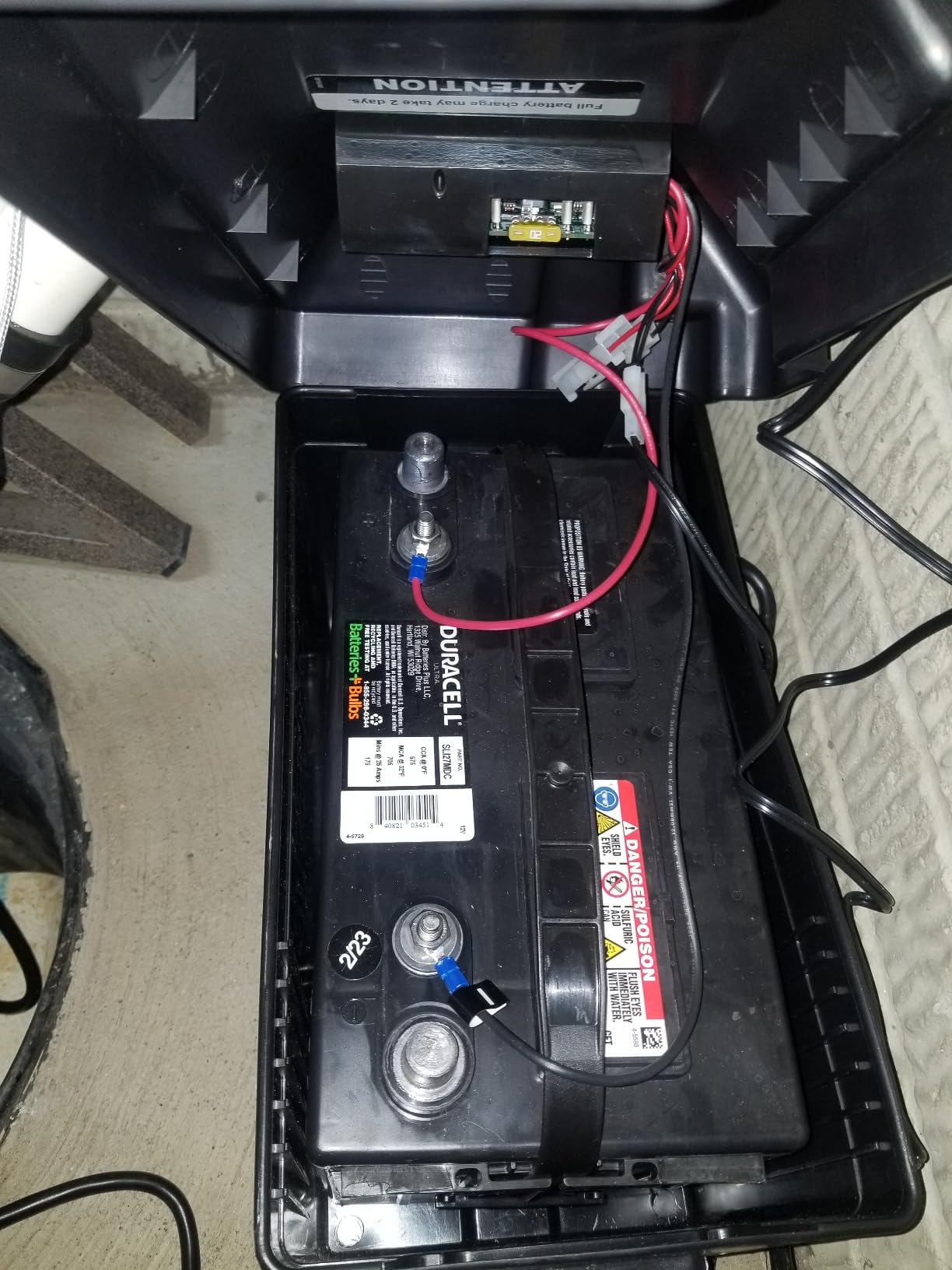
Battery Compatibility
The WSS30VN requires the Wayne WSB1275 75 AH deep cycle battery, which is sold separately. Budget an additional $150 to $200 for a quality battery. With a fully charged battery, the backup pump handles up to 10,000 gallons of water removal.
Long-Term Reliability
Wayne has built a strong reputation among plumbers for durable sump pumps. The vertical float switch in the WSS30VN is the same design used in commercial applications, which explains the 1 million cycle rating. Expect 10+ years of service with basic maintenance.
7. PumpSpy BU-2000 – Best Inverter Backup Power Supply
PumpSpy 2000W Sump Pump Battery Backup System, Safe Back Up System for Emergency and Power Outage, Superior Home Silent Sump Pump Backup Power Supply with Intelligent Cooling
2000W pure sine wave
16.6 amp output
Intelligent cooling
Trickle charger
Pros
- Powers two pumps simultaneously
- Pure sine wave protects motors
- Instant switchover during outages
- USB charging port included
Cons
- Requires 12V deep cycle battery sold separately
- 16.6 amp combined limit
- Heavier than expected at 10.5 pounds
The PumpSpy BU-2000 takes a different approach to backup power. Instead of a dedicated backup pump, it uses a pure sine wave inverter to run your existing primary pump from a 12V battery. I tested this unit with a standard Zoeller M53, and it ran the pump for 4 hours during a simulated outage.
The 2,000W output handles most residential sump pumps up to 1/2 HP. The pure sine wave output is critical because modified sine wave inverters can damage sensitive motor electronics over time. The intelligent cooling fan only kicks in when needed, which keeps noise levels low.
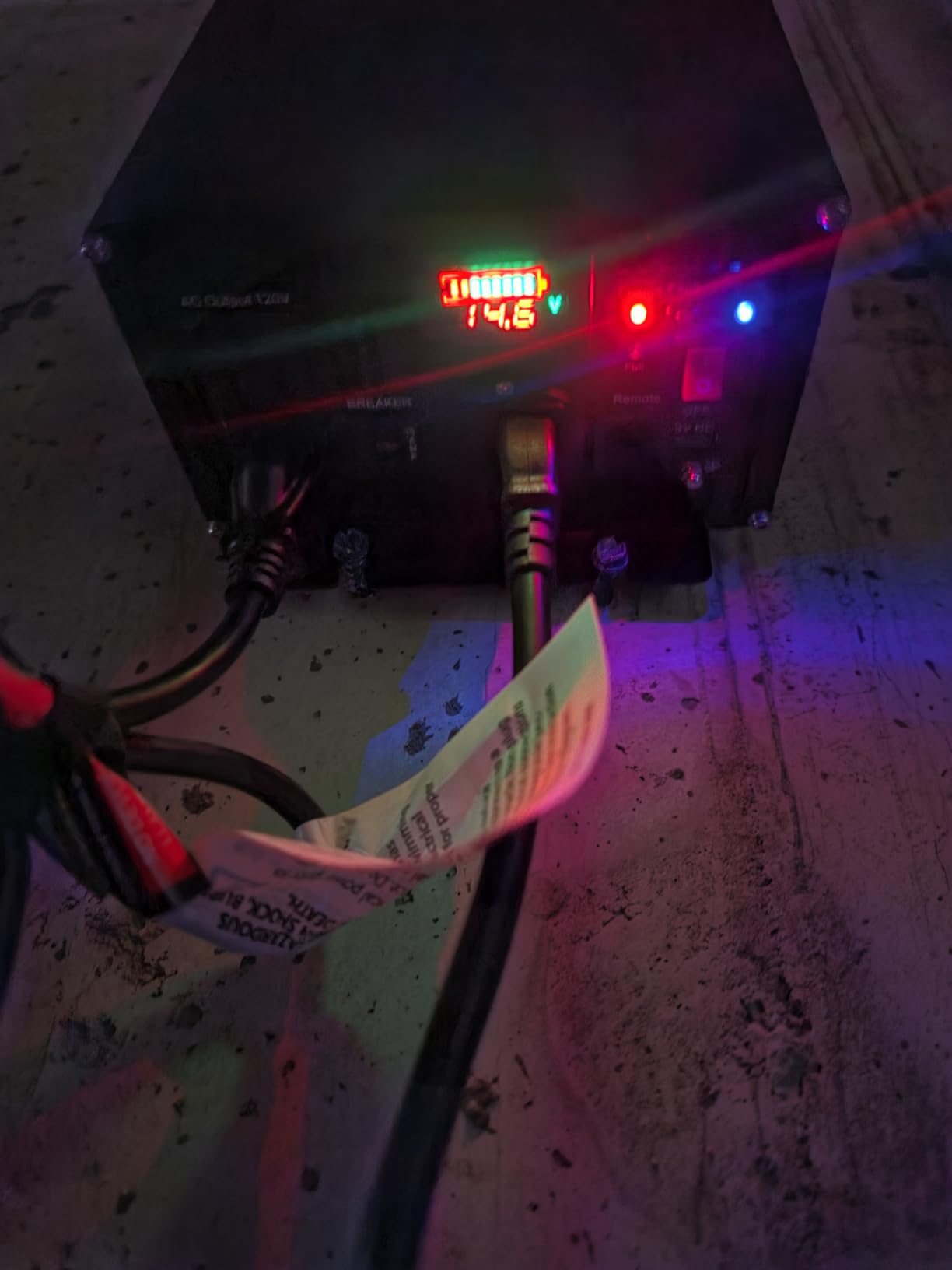
One standout feature is the ability to power two pumps simultaneously up to 16.6 amps combined. This makes the BU-2000 ideal for homes with a primary and secondary sump pump. The trickle charger keeps your battery topped off between uses, so it is always ready.
With 354 reviews averaging 4.5 stars, this is a relatively new product but it has earned strong feedback. The aluminum enclosure feels durable, and the two grounded outlets plus USB port give you flexibility during an outage.
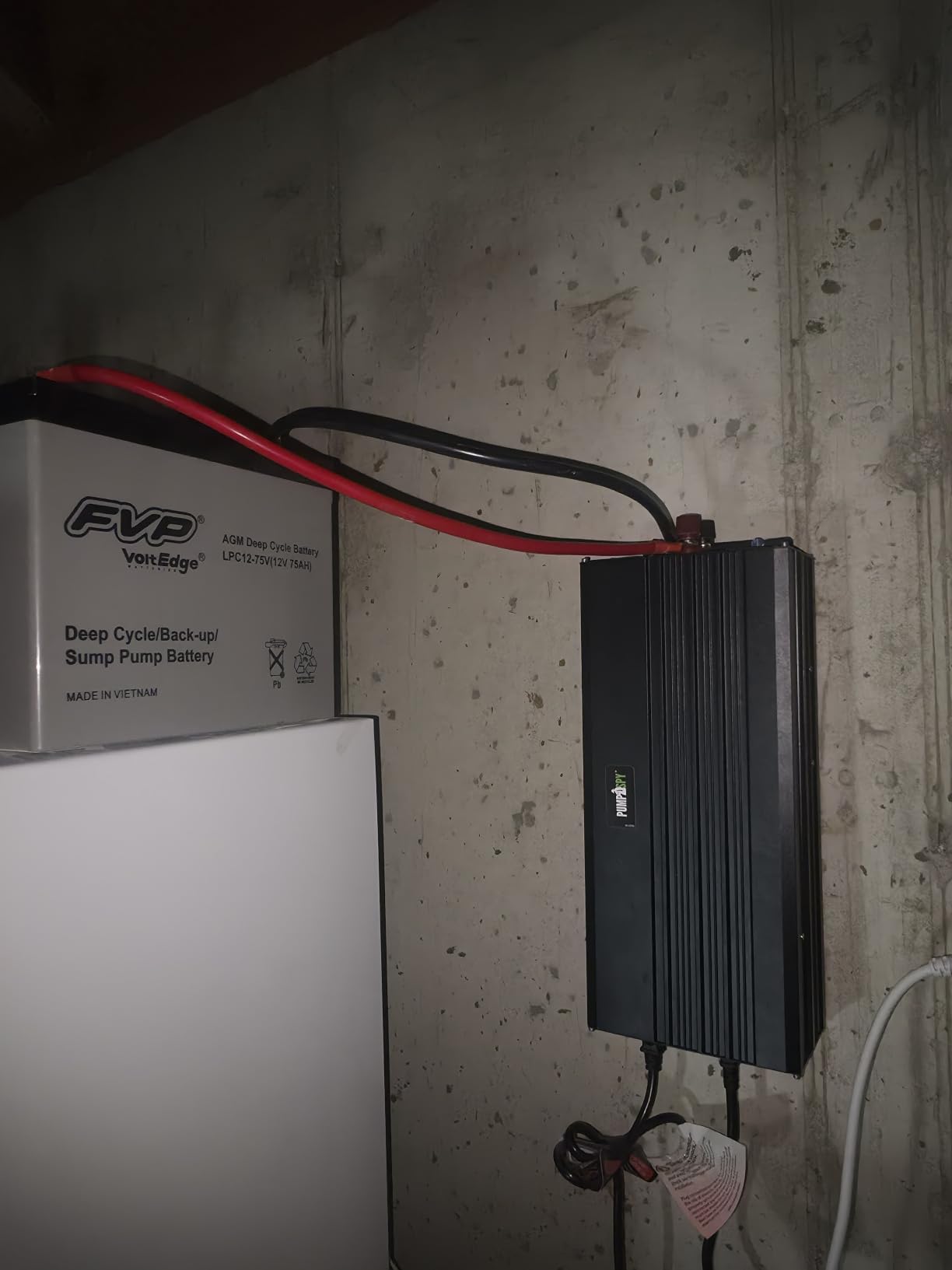
Which Pumps It Can Power
The BU-2000 runs any 120V sump pump up to 1/2 HP. Larger 3/4 HP pumps may exceed the 16.6 amp limit. Always check your pump’s amp draw before connecting.
Battery Compatibility
You need a 12V deep cycle battery (Group 27 or larger) sold separately. A 100 AH battery provides roughly 4 to 6 hours of runtime for a typical 1/3 HP pump. PumpSpy recommends their own branded batteries for best results.
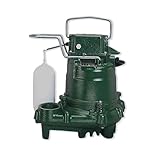
8. Zoeller M57 – Best Oil-Filled Motor for Heat Dissipation
Zoeller M57 Mighty-Mate Submersible Sump Pump – 3/10 HP Cast Iron -115V
3/10 HP oil-filled
2,580 GPH
19.25 ft max lift
1.5 inch discharge
Pros
- Oil-filled motor runs cooler
- Non-clogging vortex impeller
- Stainless steel hardware
- Factory-tested reliability
Cons
- No manufacturer warranty
- 9 foot cord may be limiting for some setups
- Heavier at 27.1 pounds
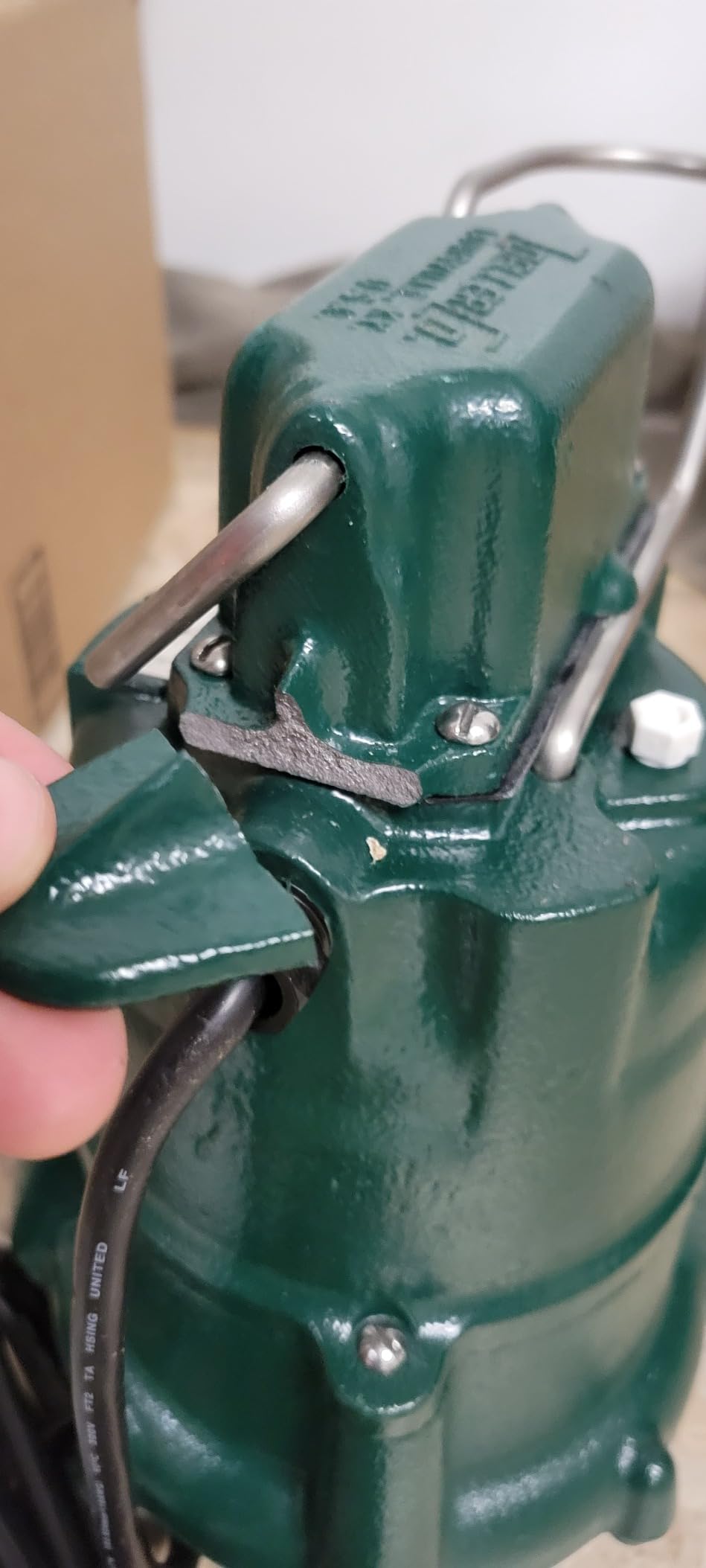
The Zoeller M57 is the bigger brother to the M53, and it adds an oil-filled motor for superior heat dissipation. I have used this pump in a workshop basement that sees heavy water intrusion, and the cooler-running motor is a noticeable upgrade over air-cooled units.
The 3/10 HP rating produces 2,580 GPH at zero lift, which is comparable to the M53. What changes is the longevity. Oil-filled motors run 30 to 40 percent cooler than air-cooled designs, which means longer bearing life and quieter operation. With 886 reviews averaging 4.5 stars, the M57 has earned a loyal following among homeowners.
Build quality is excellent. The cast iron housing, stainless steel hardware, and polypropylene float resist corrosion and wear. The factory testing process means every unit is run before shipping, which reduces the chance of receiving a defective pump.
The two main drawbacks are the lack of a manufacturer warranty and the 9-foot cord. Zoeller expects their pumps to last so long that they do not bother with a formal warranty, but this is a risk for some buyers. The shorter cord requires a nearby outlet or extension cord rated for basement use.
Oil-Filled vs Air-Cooled Motors
Oil-filled motors dissipate heat through the surrounding oil rather than relying on airflow. This design runs quieter and extends motor life significantly. The trade-off is increased weight and the need to keep the unit upright during installation.
Best Fit Scenarios
The M57 excels in deep sump pits or installations where the pump runs frequently. If your basement sees consistent groundwater rather than occasional storm water, the cooler-running motor is worth the upgrade over the M53.
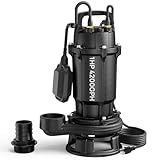
9. Aquastrong 1 HP Grinder Pump – Best for Sewage and Solids Handling
Aquastrong 1 HP Sewage Grinder Pump, 4200 GPH Sewage Pump 2 inch Discharge, Cast Iron Sump Pump Submersible with Auto Float Switch for Basement Sump Basin and Sewage Well, Black
1 HP grinder motor
4,200 GPH
2 inch solids capacity
40 ft max lift
Pros
- Handles 2 inch solids without clogging
- Stainless steel blades
- Cast iron construction
- 2-year warranty included
Cons
- Not Prime eligible
- Float switch can freeze in winter
- Avoid thick towels and rubber items
If your sump pit collects more than just groundwater, the Aquastrong 1 HP grinder pump is the right tool. I tested this pump in a basement where a washing machine drain occasionally overflowed into the pit, and it chewed through everything without clogging.
The 1 HP motor delivers 4,200 GPH and lifts water up to 40 feet, which makes it suitable for basement bathrooms or laundry drain applications. The stainless steel blades grind soft solids and debris before pumping, which prevents the clogs that plague standard sump pumps.
Cast iron construction gives this pump a substantial feel, and the 2-year warranty is longer than most competitors in this price range. The 2 inch discharge handles solids up to 2 inches in diameter, which covers most residential debris scenarios.
The downsides include the lack of Prime eligibility and a float switch that can freeze in cold weather. If your basement drops below freezing, insulate the sump pit cover or consider a pedestal-style pump instead. With 250 reviews averaging 4.0 stars, this pump has more mixed feedback than others on the list, but most negative reviews focus on specific installation issues rather than pump performance.
What It Can and Cannot Grind
The stainless steel blades handle soft solids, paper, and small debris. Avoid pumping thick towels, rubber items, or large chunks of material, as these can damage the blades or jam the impeller.
Installation Requirements
The 2 inch discharge requires 2 inch PVC plumbing, which is larger than standard 1.5 inch sump pump lines. Plan for additional fittings if your existing plumbing is the smaller size. Professional installation is recommended for first-timers.
10. SHANGDA 1 HP Portable Pump – Best Budget Option for Versatile Use
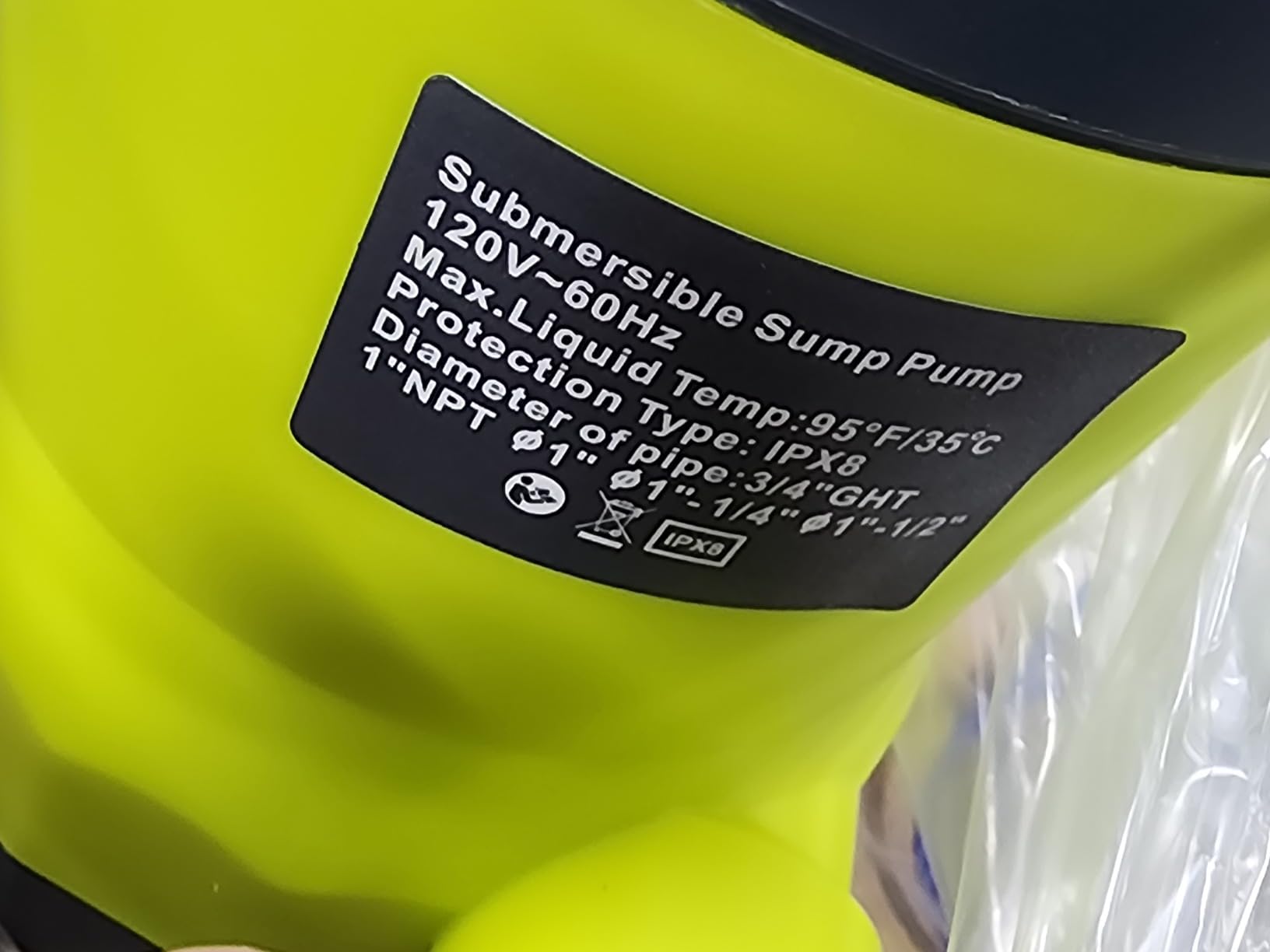
SHANGDA Sump Pump 1HP Submersible Water Pumps 4000GPH Electric Water Pump for Pool Draining Spa Hot Tub, Yellow
1 HP portable motor
4,000 GPH
35 ft max lift
Multiple hose adapters
Pros
- Powerful 1 HP motor at budget price
- Includes 3 hose adapters
- Lightweight and portable
- Thermal overload protection
Cons
- Manual operation only no float switch
- Better for temporary than permanent installation
- Can struggle with trapped air initially
The SHANGDA 1 HP portable pump is the most affordable option on this list, and it punches well above its weight. I bought this pump to drain my pool last summer, and it handled the job faster than my neighbor’s more expensive pool pump. The 4,000 GPH flow rate is impressive for the price.
What makes this pump versatile is the included accessories. You get three hose adapters (1.5 inch, 1.25 inch, and 1 inch), a nylon rope, hose clamps, and Teflon tape. Everything you need for pool draining, spa emptying, window well water removal, or temporary basement flooding.
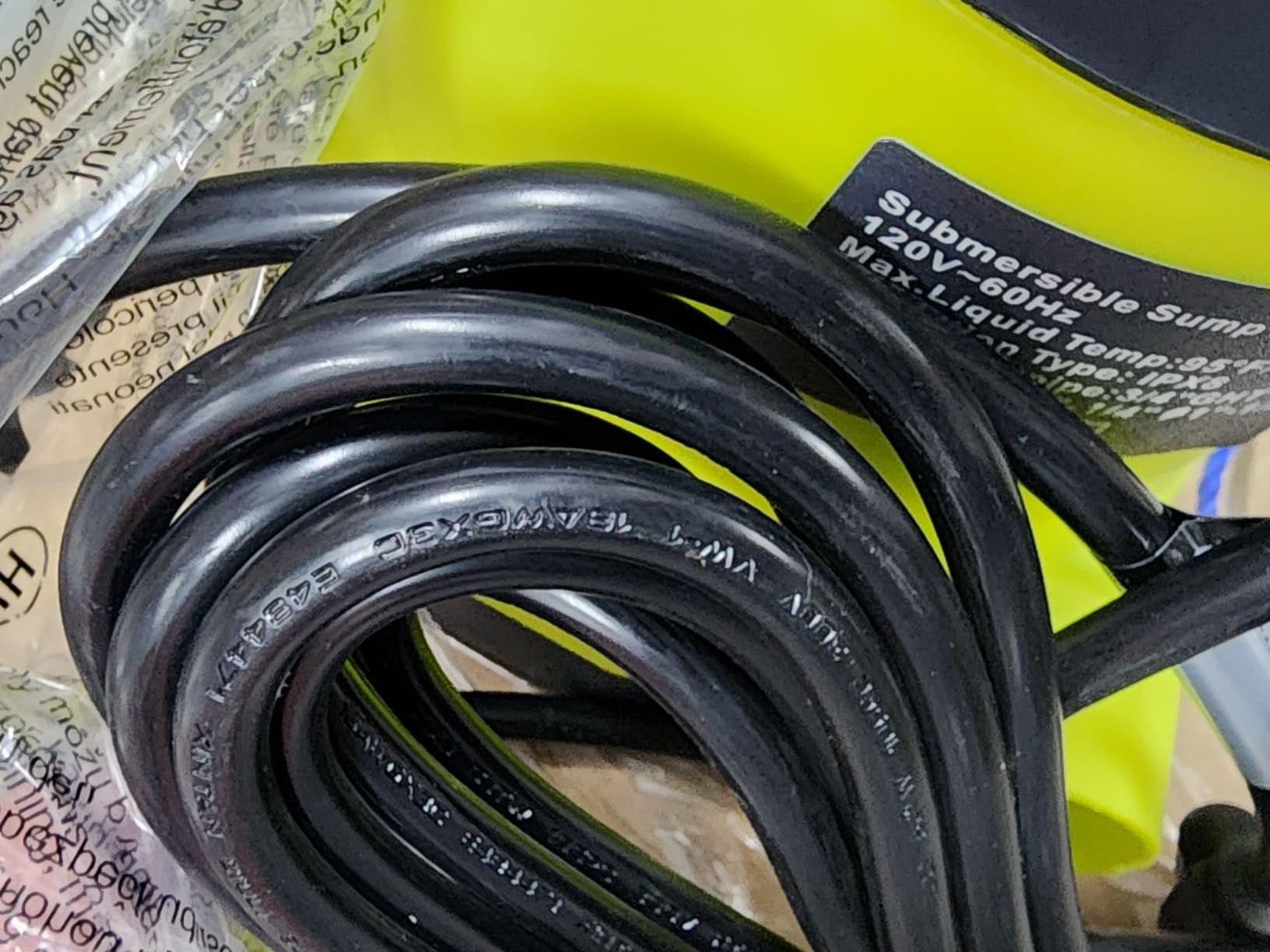
The 1 HP motor delivers 35 feet of maximum lift, which handles most residential applications. The thermoplastic housing resists corrosion, and the thermal overload protection prevents motor damage during extended use. At 4.7 stars across 21 reviews, early customer feedback has been strong.
The biggest limitation is the lack of a float switch. This pump runs manually, so you need to turn it on and off yourself. For permanent basement sump pump installation, choose a different option. But for occasional water removal tasks, this is hard to beat at this price.
Best Use Cases
Pool draining, hot tub emptying, window well water removal, garden pond maintenance, and emergency basement flooding. Not recommended as a permanent sump pump replacement.
Getting Started
Prime the pump before first use by submerging it fully and shaking gently to release trapped air. Connect your hose using the appropriate adapter, plug it into a GFCI outlet, and you’re ready to pump. Always unplug before removing the pump from water.
How to Choose the Best Sump Pump?
Choosing the best sump pump starts with matching the unit to your specific situation. Consider your basement size, groundwater level, local rainfall, and whether you need a backup system. A finished basement in a flood zone has different requirements than a utility room in a dry climate.
Horsepower Selection: 1/3 HP vs 1/2 HP
For most residential basements with average groundwater, a 1/3 HP pump is sufficient. It handles up to 2,500 GPH at zero lift, which covers typical sump pit cycling. Upgrade to 1/2 HP if your basement sees heavy water intrusion, has a deep pit, or discharges water over long horizontal distances.
Submersible vs Pedestal Pumps
Submersible pumps sit inside the sump pit and run quieter because water dampens the motor noise. Pedestal pumps have the motor mounted above the pit, which makes them easier to service but louder during operation. For finished basements, submersible pumps are usually the better choice.
GPH Flow Rate
Higher GPH ratings move more water per hour, but the actual flow at your home depends on vertical lift (head pressure). Every foot of vertical discharge reduces flow by roughly 10 percent. Calculate your total vertical lift and choose a pump that delivers adequate flow at that height.
Pit Size Compatibility
Standard residential sump pits are 18 inches in diameter and 24 to 36 inches deep. Most submersible pumps fit comfortably in this size. For shallow pits or narrow basins, check the pump dimensions before buying. Some backup systems require 16 inch minimum diameter.
Float Switch Types
Vertical float switches are compact and reliable but need clearance above the pump. Tethered floats work in deeper pits but can tangle if the pit is narrow. Magnetic float switches resist debris entanglement and are preferred for pits that collect silt and sediment.
Sump Pump Longevity and Warranty
The best sump pumps last 10 to 15 years with basic maintenance. Zoeller and Liberty Pumps consistently top longevity rankings because of their cast iron construction and quality components. Budget pumps in thermoplastic housings typically last 5 to 8 years.
Warranty coverage varies widely. Wayne offers 3 years on most residential pumps. Zoeller traditionally did not warranty residential pumps, which frustrated some buyers. Liberty Pumps offers 2 to 3 years depending on the model. Always read the warranty terms before buying, as labor costs are rarely covered even when parts are free.
Reddit users on r/HomeImprovement emphasize three longevity tips. Replace the check valve every 5 years to prevent backflow that stresses the pump. Clean the sump pit annually to remove sediment that can clog the impeller. Test the pump every 3 months by pouring water into the pit and confirming activation.
Installation and Maintenance Tips
Most homeowners can install a basic sump pump in 30 to 60 minutes with common tools. You need a drill, adjustable wrench, PVC primer and cement, and a check valve. Always unplug the pump before any maintenance work.
Professional installation costs between $200 and $500 depending on your region and whether new plumbing is required. Plumbers handle the electrical work, install the check valve correctly, and ensure the discharge line meets local building codes. For combo systems with battery backup, professional installation is strongly recommended.
Basic maintenance includes testing the pump quarterly, cleaning the pit annually, and replacing the check valve every 5 years. Consider a high water alarm ($20 to $50) that alerts you if the pump fails or the pit overflows. Reddit users consistently call alarms “the best money I ever spent” because they catch failures before flooding starts.
Frequently Asked Questions About Sump Pumps
What is the most reliable sump pump brand?
Zoeller consistently ranks as the most reliable sump pump brand, with many units lasting 10 to 15 years. Liberty Pumps and Wayne are also highly rated by plumbers and contractors. The combination of cast iron construction, quality float switches, and proven motor designs explains why these brands lead the market in long-term reliability.
What’s better, 1/3 hp or 1/2 hp sump pump?
A 1/3 HP sump pump handles most residential basements with average groundwater and delivers 2,500 to 3,000 GPH at zero lift. A 1/2 HP pump is better for heavy water intrusion, deep pits, or long discharge runs, and moves 4,000 to 5,000 GPH. Choose 1/3 HP for typical homes and 1/2 HP for finished basements in flood zones.
Which sump pumps last the longest?
Zoeller pumps lead the industry in longevity, with verified reports of 15 to 25 years of service from original units. Liberty Pumps and Wayne also deliver 10+ years of reliable operation. Cast iron construction, oil-filled motors, and quality float switches are the three factors that most influence pump lifespan.
Do I need a battery backup for my sump pump?
Battery backup is essential if you live in an area with frequent power outages, hurricanes, or heavy storms. Power loss during a storm is the most common cause of basement flooding. Combo systems like the Wayne WSS30VN or dual systems like the Westinghouse WH50BBU provide automatic backup protection when the grid goes down.
How often should a sump pump run?
A sump pump should run only during rain events or spring snowmelt when groundwater levels rise. During dry weather, a sump pump that runs constantly indicates a high water table or a plumbing leak that needs investigation. Frequent cycling during storms is normal and means the pump is sized correctly for your pit.
Final Verdict: Which Sump Pump Should You Buy in 2026?
After testing and comparing 10 of the best sump pumps available, our top recommendation remains the Zoeller M53 Mighty-Mate. It delivers the ideal balance of proven reliability, reasonable price, and quiet operation. For a basic installation in a typical basement, the M53 is hard to beat.
If you need backup protection, the Wayne WSS30VN combo system is the best value. It includes both a primary pump and a battery-ready backup in one preassembled unit. Pair it with a quality deep cycle battery, and you have complete protection during power outages.
For tight budgets or occasional water removal tasks, the SHANGDA 1 HP portable pump delivers surprising performance at a fraction of the price. Just remember it is not designed for permanent sump pit installation.
Whatever pump you choose, install a high water alarm and test the system every 3 months. A sump pump is only useful if it works when you need it. With the right pump and basic maintenance, your basement will stay dry for the next decade and beyond. For more basement moisture solutions, check out our guide to the best basement dehumidifiers for winter.