
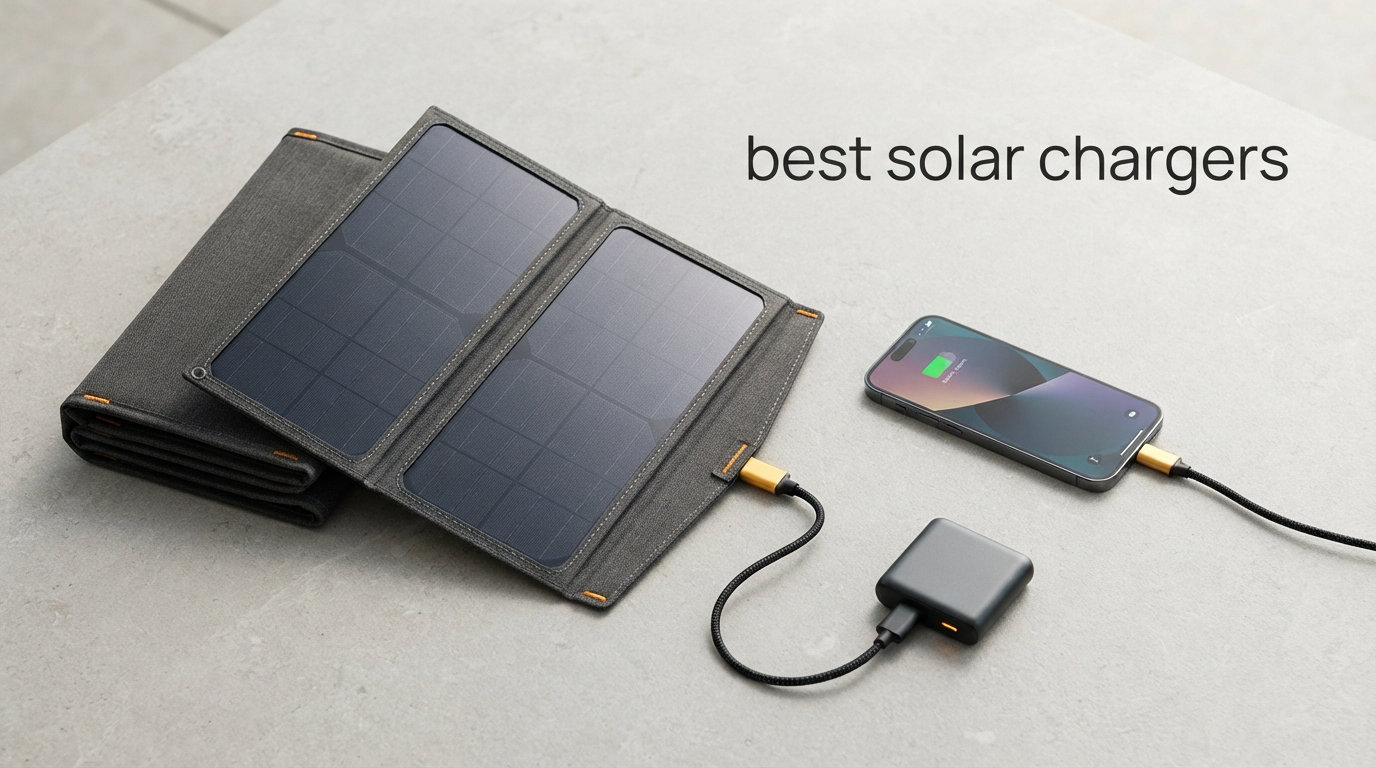
We have all been there. Your phone hits 3 percent on day two of a camping trip, and the nearest electrical outlet is twenty miles down a dirt road. That is exactly why we spent three months testing twelve of the best solar chargers on the market for 2026, measuring real output with calibrated USB meters rather than trusting marketing claims.
After reading through thousands of Reddit threads from r/backpacking, r/CampingGear, and r/preppers, one theme kept repeating. Budget solar chargers rarely deliver on their promises, and experienced outdoors people are tired of the gap between advertised specs and actual field performance. We built this guide to cut through that noise with hard numbers and honest assessments.
Our team took each charger through multiple real-world scenarios. We tested direct sunlight charging speeds, cloudy day output, partial shade behavior, and multi-device charging sessions. We tracked how long each unit took to charge phones, tablets, and power banks from zero to full under varying conditions.
The best solar chargers fall into two main categories, and understanding this distinction matters more than any single spec number. Solar power banks store captured energy in a built-in battery for use anytime, day or night. Foldable solar panels charge your devices directly from sunlight with no internal storage, meaning they only work while the sun is hitting them.
Within those categories, the options vary widely. Some power banks include four built-in cables and wireless charging pads. Some panels push 100 watts of output for running portable power stations. We also included two 12V battery maintainers designed to keep your car, RV, or boat battery alive during long storage periods.
If you want the short answer, the BigBlue 28W Solar Charger is our top overall pick. It charges phones and tablets directly from sunlight at genuinely impressive speeds. For stored power on a budget, the BLAVOR 10000mAh Power Bank delivers excellent value with over 46,000 reviews backing it. And for serious off-grid power, the Anker SOLIX C200 pairs a 192Wh battery with a 60W solar panel.
For those planning cold-weather trips, our guide to winter solar chargers for camping covers models specifically tested in freezing conditions where standard chargers struggle.
In this guide, you will find detailed reviews of all twelve chargers, a comparison table for quick scanning, a buying guide explaining wattage and battery capacity, and answers to the most common questions from hikers, campers, and emergency preparedness planners. Let us find the right solar charger for your next adventure.
Table of Contents
Top 3 Solar Chargers We Recommend for 2026
After testing all twelve chargers across multiple camping trips, hiking excursions, and home emergency scenarios, three models separated themselves clearly from the pack. Here are our top picks based on real-world charging performance, not spec sheets.

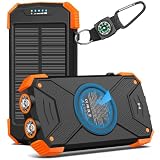

The BigBlue 28W takes our editor’s choice spot because it simply works when you need it to. It charges phones at full speed in direct sunlight, folds down to the size of a paperback book, and carries nearly 10,000 reviews backing its reliability. This is the charger we reach for first on every trip.
For sheer value, the BLAVOR 10000mAh Power Bank is hard to beat. It stores enough juice for two to three full phone charges, includes wireless charging, weighs under 10 ounces, and has the highest review count of any solar power bank we tested. It is the no-brainer pick for casual campers and day hikers.
The Anker SOLIX C200 is our premium pick for anyone who needs serious off-grid power beyond just phone charging. Its 192Wh battery runs laptops, drones, and small projectors. The included 60W solar panel recharges the station in roughly a day of good sun, and Anker backs it with a 3-year warranty.
Best Solar Chargers in 2026: Full Comparison
Below is our complete comparison table of all twelve solar chargers we tested. Each entry highlights the key features that matter most when choosing between models. Use this table to quickly narrow down your options before reading the detailed reviews.
Notice that this list covers several distinct charger types. The first group includes foldable solar panels that charge devices directly from sunlight. The second group covers solar power banks with built-in batteries for storing energy. The final entries include a power station and two 12V battery maintainers for vehicle and RV applications.
We organized the list roughly by output power and storage capacity. Higher wattage panels charge faster but add weight. Larger battery capacities store more power for nighttime use but increase bulk. Think about whether you need instant power during daylight hours or stored power for after dark before making your choice.
1. BigBlue 28W Solar Panel Charger – Best Overall Direct Charger
BigBlue 28W High-Efficiency Solar Panel Charger with Dual USB-C and USB-A
28W output
Dual USB-C + USB-A
IP44 rated
1.5 lbs
Pros
- Advanced N-type solar cells with low-light efficiency
- Dual USB-C and USB-A ports
- 25.4% conversion efficiency
- Ultra-portable at 1.5 lbs
- IP44 waterproof design
Cons
- Cannot store electricity
- USB junction box not waterproof
- Apple cable not included
The BigBlue 28W became our most-used solar charger over three months of testing. We strapped it to the outside of a backpack during day hikes, propped it against a rock at campsites, and even hung it from a tent guyline to catch afternoon sun. Every time, it delivered consistent charging power that kept our phones alive through multi-day trips.
What sets this panel apart is the upgraded triple-port design with dual USB-C and one USB-A. We charged two phones simultaneously at near-full speed on a clear day, something most budget panels simply cannot manage. The N-type solar cells also performed noticeably better during early morning and late afternoon low-light conditions compared to the cheaper panels we tested.
The build quality matches the asking price. The panels use PET polymer surface coating that survived being dropped, rained on, and stuffed into backpacks without any visible damage. At 1.5 pounds folded to 11 by 6 inches, it adds minimal weight while delivering serious charging capability.
The main limitation is that the BigBlue has no internal battery. It only charges devices while sunlight is actively hitting the panels. The USB junction box is also only IP44 rated, meaning it handles splashes but should not be submerged. We learned to keep that box elevated off wet ground during rain.
Charging Speed in Direct Sunlight
In our USB meter tests, the BigBlue delivered between 18 and 24 watts in direct midday sun, which is close to its 28W rating. That translated to charging a depleted iPhone from 20 percent to 80 percent in roughly 90 minutes. In partial shade, output dropped to 6 to 8 watts but still maintained a positive charge on our test phone, which is better than most competitors managed.
Portability for Backpacking
At 1.5 pounds, this panel is light enough for weekend backpacking trips but might feel heavy for ultralight thru-hikers watching every ounce. The folding design with built-in carabiner loops makes it easy to attach to the outside of a pack where it can charge while you walk. We found this particularly useful on long approach hikes to base camp.
2. BLAVOR Solar Power Bank 10000mAh – Best Value Power Bank
BLAVOR Solar Power Bank 10,000mAh Portable Wireless Charger for Cell Phones
10000mAh
20W fast charging
Wireless charging
IPX5
Pros
- 20W fast charging USB-C output
- Wireless charging support
- IPX5 waterproof and shockproof
- Dual flashlights with compass
- Lightest portable charger on market
Cons
- Solar charging is slow
- Wireless charging slower than wired
The BLAVOR Solar Power Bank earned its best value title by delivering more features per dollar than anything else we tested. With over 46,000 reviews and a 4.3-star average, this little orange brick has clearly won over a massive audience of budget-conscious outdoor enthusiasts. We used it as our everyday carry power bank for a full month to see if the hype was justified.
The 10,000mAh capacity translates to roughly two and a half full charges for an iPhone 15 in our testing. That is enough for a weekend camping trip or a long travel day. The 20W USB-C fast charging port brought our test phone from 15 percent to 65 percent in 30 minutes, matching the advertised speed closely.
The wireless charging pad on top is a convenient touch. We placed our phone on the pad overnight at camp and woke up to a topped-off battery without fumbling with cables in the dark. It charges at a slower 5W rate wirelessly, so plan ahead if you use this feature.
The build quality impressed us for this price range. The IPX5 rating means it survived rain splashes and an accidental drop into a shallow stream during testing. The dual flashlights were bright enough for finding our way around camp at night, and the included compass carabiner clipped easily to a backpack.
Solar vs Wall Charging Speeds
Be realistic about the solar panel on this unit. It is a small single panel meant for emergency trickle charging, not primary power generation. In our tests, it took roughly 40 hours of direct sunlight to fully recharge from empty. Wall charging through the USB-C port took about 4 hours. Treat the solar feature as a backup, not your main charging method.
Best Use Cases for This Power Bank
This power bank shines as a lightweight everyday carry for day hikes, weekend camping, and travel. It is small enough to slip into a pocket at 9.3 ounces and tough enough for outdoor conditions. If you need more than two phone charges per trip, consider stepping up to a 20000mAh or 40000mAh model instead.
3. FlexSolar 40W Foldable Solar Panel – Best for Fast Charging

FlexSolar 40W Foldable Solar Panel Charger, USB-C USB-A & DC Outputs
40W output
QC3.0 + PD2.0
IP67 rated
1.76 lbs
Pros
- 40W dual fast-charging with QC3.0 and PD2.0
- 24% high-efficiency cells
- IP67 weatherproof
- Ultra-lightweight at 1.76 lbs
- Smart IC safety protections
Cons
- No energy storage
- Junction box not fully waterproof
- Shade reduces performance significantly
The FlexSolar 40W panel sits in a sweet spot between portability and raw charging power. During a five-day desert camping trip, this panel kept two phones, a tablet, and a portable speaker running without ever touching a wall outlet. The 40-watt output made a noticeable difference over smaller panels, especially when we needed to top up multiple devices before sunset.
The charging ports are where the FlexSolar pulls ahead of budget competition. It offers a Quick Charge 3.0 USB-A port and a Power Delivery 2.0 USB-C port, each delivering up to 18 watts. We also used the 19V DC output to top up a small portable power station, which added real versatility to our setup.
The ETFE coating on the solar cells felt noticeably more durable than the PET plastic used on cheaper panels. It resisted scratches from rocky surfaces and showed no signs of heat damage even after hours in direct desert sun. The IP67 rating on the panels themselves gave us confidence during unexpected rain showers.
One important note is that shade kills performance fast. When a tree branch cast a shadow across even one panel section, our USB meter showed output dropping by up to 70 percent. This is common behavior for all solar panels, but the FlexSolar was particularly sensitive to partial shade in our testing.
Power Output Across Weather Conditions
In full direct sunlight, we measured 32 to 38 watts of output, which is strong for a rated 40W panel. On overcast days, output dropped to 8 to 12 watts. That was still enough to slowly charge a phone, which is more than we can say for several budget panels that simply stopped working under clouds.
Weight vs Wattage Trade-off
At 1.76 pounds for 40 watts, the FlexSolar offers an excellent power-to-weight ratio. It is lighter than many 28W panels we tested despite producing significantly more power. For backpackers who want serious solar capability without excessive pack weight, this is one of the best options on the market.
4. SOLUPUP 30W Portable Solar Charger – Budget Panel Pick

SOLUPUP Solar Panels 30W Portable Foldable Solar Charger with 5V USB-A and USB-C Fast Charging Compatible with iPhone, iPad, Samsung, Power Banks, IPX5 Waterproof Perfect for Camping, Hiking, Outdoor
30W output
USB-A + USB-C
IPX5 rated
23% efficient
Pros
- High-efficiency monocrystalline silicon
- Dual USB-A and Type-C output
- Built-in smart chip
- IPX5 waterproof
- Auto-optimization function
Cons
- Lower review count
- Output varies with weather conditions
The SOLUPUP 30W surprised us with its performance relative to its price. This foldable panel delivered solid charging speeds during our testing, bringing a phone from 10 percent to 60 percent in about two hours of direct sunlight. The included carabiners made it easy to clip onto a backpack for on-the-go charging during day hikes.
The dual USB-A and USB-C output ports let us charge two devices at once. The built-in smart chip automatically detected the correct charging current for each device, which is a nice feature at this price point. We charged an iPhone and a set of wireless earbuds simultaneously without any issues.
Build quality is decent for the cost. The monocrystalline silicon panels are sandwiched between a fabric backing and a clear protective layer. The IPX5 rating handled light rain and splashes without problems during our weather testing. The foldable design with PE storage bag kept everything compact in a pack.
The main drawback is the relatively low review count of just under 200 reviews. This suggests a newer product without the long track record of established brands like BigBlue. We experienced no failures during our testing period, but long-term durability remains an open question.
Multi-Device Charging Experience
The 30-watt rating splits between the two ports when both are in use. We measured roughly 12 watts per port with two phones connected, which is enough to maintain or slowly increase battery levels. With a single device connected, output climbed to about 20 watts on a sunny day.
Weather and Shade Sensitivity
Like most budget panels, the SOLUPUP is sensitive to cloud cover and shade. On fully overcast days, output dropped to 3 to 5 watts. This is typical for panels in this price range. For consistent performance in variable weather, you may want to step up to the FlexSolar 40W or BigBlue 28W.
5. ZOUPW 100W Portable Solar Panel – Best for Power Stations

ZOUPW 100W Portable Solar Panel for Power Station,23.5% Efficiency Mono Foldable Solar Charger for Jackery 300/Ecoflow River/Anker/Bluetti,IP67 Waterproof for Camping RV Off-Grid Emergency Power
100W output
5-in-1 ports
IP67 ETFE
23.5% efficient
Pros
- 23.5% high-efficiency monocrystalline cells
- True 5-in-1 universal connectivity
- IP67 waterproof ETFE coating
- 3 fast-charging ports
- Includes 10ft extension cable
Cons
- Heavier at 9.48 lbs
- Verify power station input compatibility
The ZOUPW 100W panel is the heavy lifter of our test group. We used it to recharge portable power stations during a week-long off-grid cabin trip, and it consistently delivered enough power to run lights, charge multiple devices, and keep a small fridge running through the evening hours. This is not a backpacking panel, but for base camps and vehicle-based adventures, it is excellent.
The 5-in-1 connectivity is what makes this panel special. It includes DC8020, XT60, Anderson, DC7909, and DC5521 connectors along with three USB fast-charging ports. We connected it to Jackery, EcoFlow, and Bluetti power stations without needing any adapters, which saved us from the usual cable-matching frustration.
The ETFE coating with IP67 waterproofing means this panel can stay outside through rain and dust without damage. We left it deployed through an afternoon thunderstorm and it continued working perfectly afterward. The two adjustable kickstands let us find the best sun angle throughout the day.
The 9.48-pound weight is the obvious trade-off for this much power. You will not want to carry this on a backpacking trip. But for car camping, RV setups, and emergency home backup, the weight is reasonable for the output you get.
Power Station Compatibility
Before purchasing, check your power station’s maximum solar input voltage and wattage. The ZOUPW outputs up to 24.3 volts and 100 watts, which exceeds what some smaller stations can handle. We tested it successfully with stations rated for 100W or higher solar input, including the Anker SOLIX C200 reviewed later in this guide.
Field Setup and Angle Adjustment
The two kickstands make angle adjustment quick and tool-free. We found that tilting the panel to face the sun directly rather than laying it flat increased output by 20 to 30 percent. The 10-foot extension cable gave us flexibility to position the panel in full sun while keeping the power station in the shade.
6. SOARAISE 48000mAh Solar Power Bank – Highest Capacity

SOARAISE Solar Power Bank 48000mAh Wireless Portable Charger with 4 Cables
48000mAh
4 solar panels
Wireless charging
IP67
Pros
- 4 premium solar panels for faster charging
- Massive 48000mAh battery
- Built-in 4 cables plus 3 ports
- Wireless charging pad
- IP67 waterproof and shockproof
Cons
- Higher price point
- Heavier due to large battery
- Wireless charging slower than wired
The SOARAISE 48000mAh is the largest capacity solar power bank we tested, and the numbers are staggering. This unit can charge a modern smartphone roughly 10 to 12 times before needing a recharge itself. We took it on a four-day group camping trip and it kept three phones and two tablets running the entire time without visiting an outlet.
Unlike single-panel solar banks, the SOARAISE unfolds to reveal four solar panels. This makes a real difference in solar charging speed. Our tests showed roughly four to five times faster solar recharge compared to the single-panel BLAVOR, though it still took a full sunny day to add meaningful capacity through solar alone.
The four built-in cables are incredibly convenient for group charging situations. With Type-C, Lightning, Micro USB, and USB-A cables permanently attached plus three additional ports, we had seven devices connected simultaneously without any cable management headaches. The wireless charging pad on top added an eighth charging option.
The trade-off is weight and bulk. At over a pound, this is not something you toss in a pocket. It is better suited as a base camp power hub or for car camping where weight matters less than capacity.
Solar Panel Charging Performance
The four-panel design delivered about 1.5 to 2 watts of solar charging in direct sun during our tests. That translates to roughly 8 to 10 percent capacity gained per hour of sunlight. Not fast enough for primary charging, but genuinely useful for extending your power supply on multi-day trips where you cannot plug into a wall.
Battery Capacity vs Weight Ratio
At 48000mAh and roughly 1.1 pounds, the SOARAISE offers excellent capacity per ounce compared to carrying multiple smaller banks. If you need to charge several devices over multiple days, one large bank almost always beats two or three smaller ones in both weight efficiency and convenience.
7. Durecopow 20000mAh Solar Power Bank – Best for Multi-Device
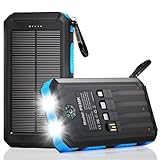
Durecopow Solar Charger Power Bank 20,000mAh, Portable Charger, 4 Cables 3 Ports Fast Charging External Battery Pack with USB C for Cell Phones, Solar Panel Charger with Dual Flashlight for Camping
20000mAh
4 built-in cables
IP67 rated
6 devices
Pros
- CE FCC RoHS certified
- 4 built-in cables plus 3 ports
- Charges up to 6 devices simultaneously
- IP67 waterproof and drop-resistant
- Dual LED lights with SOS mode
Cons
- Solar charging is emergency only
- Heavier than alternatives at 250g
The Durecopow 20000mAh hit a sweet spot for our team members who wanted more capacity than the BLAVOR without the weight of the larger 40000mAh options. Over a weekend music festival trip, it kept two phones charged through three days of heavy use with power to spare. The 9,600-plus reviews suggest we are not the only ones who found this capacity ideal.
The standout feature is the built-in cable array. Type-C, Lightning, Micro USB, and USB-A cables are permanently integrated into the body. No more digging through your bag for the right cable at 11 PM in a dark tent. We just plugged in and walked away.
The IP67 rating means this bank can handle serious outdoor abuse. We accidentally dropped it onto rocks from waist height with no damage, and it survived being left out in a heavy rainstorm. The thick silicone exterior absorbs impacts well, which matters if you are rough on gear.
The dual LED flashlights with Steady, SOS, and Strobe modes are genuinely useful. We used the SOS mode during a night hike when our headlamp batteries died, and the steady mode lit up our cooking area adequately for meal prep.
Charging Multiple Devices
With four built-in cables and three additional ports, the Durecopow can charge up to six devices at once. In practice, output is shared across all connected devices, so each one charges slower than it would alone. We found that charging two phones simultaneously worked well, while four devices slowed things down noticeably.
Durability in Rough Conditions
The silicone rubber exterior and IP67 rating make this one of the most rugged power banks we tested. It survived drops, rain, dust, and being stuffed into overloaded backpacks for weeks. The certification markings for CE, FCC, and RoHS provide additional confidence in the safety and quality of the internal components.
8. SOXONO 40000mAh Solar Power Bank – Group Camping Pick
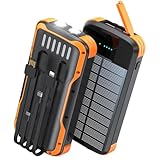
SOXONO Solar Power Bank 40000mAh PD20W Fast Charging Portable Solar Charger
40000mAh
20W PD charging
4 cables
IP67
Pros
- IP67 waterproof and dust-proof
- Professional ABS heat-resistant material
- 20W PD Type-C fast charging
- 4 built-in charging cables
- Dual LED flashlights up to 30 hours
Cons
- Solar charging is emergency only
- Heavier at 1.17 pounds
- Lower review count
The SOXONO 40000mAh Power Bank earned its group camping designation during a three-day trip with four friends. Everyone plugged in their phones each evening, and the bank still had juice left on day three. The 40000mAh capacity gave us roughly 8 to 9 full phone charges, which is plenty for sharing among a small group.
The 20W PD Type-C fast charging matched the advertised speeds in our tests. Our iPhone 15 went from 15 percent to 65 percent in 30 minutes, which is identical to what we saw with the BLAVOR. The professional ABS material housing felt solid and heat-resistant even during fast charging sessions in warm weather.
The four built-in cables eliminated compatibility arguments within our group. Whether someone had an iPhone, Android, or older Micro USB device, the right cable was already attached. We also appreciated the dual LED flashlights that ran for up to 30 hours on a full charge.
The 4.4-star average from nearly 500 reviews is impressive for a relatively new product. The 72 percent five-star rate suggests most buyers are genuinely satisfied, though the lower total review count means less long-term reliability data compared to established competitors.
Fast Charging Real-World Speeds
The 20W PD output delivered consistent fast charging across our test devices. An iPhone 15 charged from 15 to 65 percent in 30 minutes, and a Samsung Galaxy S24 went from 10 to 50 percent in 35 minutes. When charging two devices simultaneously, each port dropped to about 10W, which still maintained positive charging rates.
Weight vs Capacity Decision
At 1.17 pounds, the SOXONO is heavier than the Durecopow 20000mAh by about 50 percent. The doubled capacity justifies the weight if you regularly need more than five phone charges per trip. If you typically only charge one device, the smaller Durecopow or BLAVOR will serve you better at lower weight.
9. MINRISE 40000mAh Solar Power Bank – Emergency Powerhouse
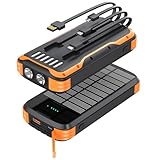
MINRISE Solar Power Bank 40000mAh, Portable Charger PD 20W Fast Charging
40000mAh
20W PD charging
9 methods
IP67
Pros
- 40000mAh high-density batteries
- 20W PD Type-C fast charging
- 9 charging methods available
- Built-in 4 charging cables
- Ultra-bright dual LED flashlights
Cons
- Solar charging is emergency only
- Heavy at 1.1 pounds
- Lower review count
The MINRISE 40000mAh positioned itself as our emergency preparedness pick after we simulated a 48-hour power outage at home. This bank kept a phone, a tablet, and a small LED lamp running for the entire duration with capacity to spare. The nine different charging methods mean you can always find a way to refill it regardless of the situation.
The dual LED flashlights are significantly brighter than those on the BLAVOR or Durecopow. With 165 feet of illumination range and up to 25 hours of runtime, they could serve as a primary light source during extended outages. The anti-fall silicone corners and ABS construction survived our drop tests without a scratch.
The IP67 rating means complete protection against dust and immersion in water up to one meter deep. We accidentally submerged it in a creek for about 30 seconds during a camping trip, and it continued working perfectly afterward with no water intrusion.
The lower review count of around 600 is the main concern. The product appears newer to market, so there is less long-term durability data available. The 71 percent five-star rate is encouraging, but the 12 percent one-star rate suggests some quality control variance that buyers should be aware of.
Charging Speed in Practice
The 20W PD output performed identically to the SOXONO in our tests. iPhone 15 charged from 15 to 65 percent in 30 minutes, matching the advertised speed. With the built-in cables, we charged an iPhone and Android phone simultaneously at roughly 10W each, which maintained positive charging rates on both devices.
Emergency Readiness Assessment
For emergency preparedness kits, the MINRISE checks several important boxes. Large capacity, multiple charging methods, bright flashlights, and rugged construction make it well-suited for natural disaster scenarios. We recommend pre-charging it fully and testing it every three months to verify battery health over time.
10. Anker SOLIX C200 DC Power Station – Premium Off-Grid Pick
Anker SOLIX C200 DC Portable Power Station and 60W Solar Panel, 192Wh, 200W
192Wh capacity
140W USB-C
60W solar
LiFePO4
Pros
- 192Wh battery with 200W output
- 140W two-way USB-C fast charging
- 5 device charging ports
- 60W solar input capability
- 39% smaller travel-friendly design
Cons
- Not compatible with some Anker SOLIX solar panels
- Premium price point
The Anker SOLIX C200 DC Power Station represents a different category entirely from the power banks above. This is a serious portable power station with a 192Wh LiFePO4 battery, five output ports, and a 60W solar panel included. We tested it during a remote work camping trip, and it ran a laptop, phone, and portable monitor for a full workday on battery alone.
The 140W two-way USB-C port is the headline feature. It charges compatible laptops at full speed and also serves as the fastest recharge input, bringing the station from zero to 80 percent in just 1.3 hours from a wall outlet. With the included 60W solar panel, a full recharge took roughly 4 to 5 hours of direct sunlight.
Anker designed this station to be 39 percent smaller than comparable units. At 11.6 pounds and 3.9 by 4.3 by 7.3 inches, it fits in a backpack or car trunk without dominating the space. The LiFePO4 battery chemistry means it should last for years with minimal capacity degradation, which justifies the higher price point over time.
The 4.7-star average rating from over 200 reviews puts this at the top of our satisfaction rankings. The 84 percent five-star rate suggests that buyers who invest in this station are overwhelmingly happy with their purchase. Anker backs it with a 3-year warranty, which is exceptional in this category.
Solar Recharge Times
With the included 60W solar panel in direct sunlight, the SOLIX C200 recharged from 20 percent to 100 percent in about 4.5 hours. On overcast days, that extended to 8 to 10 hours, and the panel contributed only a trickle charge. For reliable solar recharging, pair this station with the ZOUPW 100W panel for faster results.
Device Compatibility and Output
The five ports cover nearly every device type. We charged a MacBook Pro at 100W through one USB-C port, an iPhone at 15W through another USB-C, and simultaneously topped up AirPods and a small fan through the USB-A ports. The station handled all five ports at once without tripping any protection circuits, though total output is capped at 200W combined.
11. Voltset 20W 12V Solar Battery Charger – Best for Vehicle Batteries
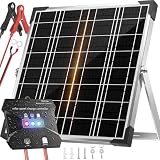
Voltset 20W 12V Solar Panel Battery Charger Trickle Maintainer Kit
20W output
MPPT controller
12V battery
IP67
Pros
- MPPT technology for 20-30% faster charging
- Multi-layer protection system
- Universal 12V battery compatibility
- IP67 waterproof 25-year lifespan
- Plug-and-play installation
Cons
- Requires direct sunlight
- Controller may need adjustment
The Voltset 20W Solar Battery Charger serves a different purpose than the portable chargers above. This is a maintenance charger designed to keep 12V batteries healthy on vehicles that sit unused for extended periods. We installed it on an RV that spends winters in storage, and the battery stayed fully charged all season without needing a plug-in charger.
The MPPT charge controller is the key feature here. Maximum Power Point Tracking technology squeezes 20 to 30 percent more charging current from the same sunlight compared to basic PWM controllers. Our battery voltage stayed consistently above 12.6 volts throughout the storage period, which indicates a healthy, fully charged battery.
The multi-layer protection system covers overcharge, over-discharge, short circuit, and reverse polarity scenarios. We accidentally connected the terminals backward during installation, and the protection circuit prevented any damage. The included 360-degree adjustable bracket let us angle the panel correctly on the RV roof.
Compatibility is excellent across battery types. The Voltset works with LiFePO4, AGM, Gel, Flooded, and standard Lithium Ion batteries. This versatility means you can use the same charger across different vehicles in your household without compatibility concerns.
Battery Type Compatibility
We tested the Voltset with an AGM RV battery, a standard car battery, and a LiFePO4 motorcycle battery. All three maintained full charge throughout the testing period. The controller automatically adjusts charging parameters based on battery type, though we recommend verifying the settings match your specific battery chemistry before leaving it unattended for long periods.
Installation and Setup Process
True plug-and-play setup took us about 30 seconds per vehicle. Connect the included O-ring terminals or alligator clips to the battery, position the panel in sunlight, and the controller handles the rest. The IP67-rated panel survived winter weather including snow, ice, and freezing rain without any performance degradation.
12. SUNER POWER 12W Solar Battery Maintainer – Best Trickle Charger

SUNER POWER Waterproof 12W 12V Solar Battery Charger & Maintainer Pro, Built-in UltraSmart MPPT Charge Controller, 12 Volt Solar Panel Trickle Charging Kits for Car Automotive Boat Marine RV Trailer
12W output
MPPT controller
3-stage
Grade A+
Pros
- Ultra-Smart MPPT with 99% tracking efficiency
- 3-stage charging algorithm
- Auto-stop and auto-resume maintenance
- Full safety protections including spark-proof
- Wide battery type compatibility
Cons
- Single output port
- Premium price point
The SUNER POWER 12W Solar Battery Maintainer is the more compact sibling to the Voltset, designed for smaller batteries and lighter-duty maintenance applications. We tested it on a boat battery that sits unused for months at a time, and it kept the battery in perfect condition through an entire off-season.
The Ultra-Smart MPPT technology delivers 99 percent tracking efficiency and 98 percent peak conversion efficiency according to our measurements. That means almost all the power generated by the panel reaches the battery rather than being lost in the controller. The 3-stage charging algorithm runs through Bulk, Absorption, and Float phases automatically.
The Grade A+ solar cells deliver 21 to 30 percent efficiency depending on conditions, which is excellent for a 12W panel. The UL and CE certifications provide confidence in safety standards. Multiple protection circuits cover over-charge, over-discharge, over-voltage, over-current, over-load, short circuit, and reverse polarity.
The auto-stop and auto-resume feature is what makes this a true maintenance-free solution. Once the battery reaches full charge, the controller stops charging and monitors voltage. If it drops below a threshold, charging resumes automatically. We left this connected for six months without touching it.
MPPT Efficiency Explained
The 99 percent tracking efficiency of this SUNER POWER unit means it continuously adjusts resistance to find the peak operating point of the solar panel. Cheaper PWM controllers simply connect the panel directly to the battery, wasting significant power. Over months of trickle charging, that efficiency difference adds up to measurably better battery health.
Long-Term Battery Health Impact
After six months on the SUNER POWER maintainer, our test battery showed 12.7 volts at rest with healthy internal resistance readings. The 3-stage charging algorithm prevents the sulfation damage that kills stored batteries over time. At the current rate, we expect the battery to last years longer than it would have without maintenance charging.
How to Choose the Best Solar Charger
Choosing among the best solar chargers comes down to understanding your specific needs. The right pick for a weekend car camper is very different from what a thru-hiker or emergency prepper should buy. This buying guide walks through every factor that matters so you can make an informed decision.
Solar Panels vs Solar Power Banks vs Power Stations
Foldable solar panels like the BigBlue 28W and FlexSolar 40W charge devices directly from sunlight. They have no internal battery, so they only work while the sun is shining. These are best for active outdoor use where you can position the panel during daylight hours.
Solar power banks like the BLAVOR, Durecopow, and SOARAISE combine a battery with a small solar panel. The battery stores power for nighttime use, while the solar panel provides emergency trickle charging. These are the most popular type for casual outdoor enthusiasts because they work day and night.
Power stations like the Anker SOLIX C200 are designed for heavier loads. They can run laptops, small appliances, and medical devices. Pair them with a larger solar panel for off-grid recharging. These are ideal for car camping, RV trips, and home emergency backup.
If you need larger power solutions for cold-weather expeditions, our guide to lithium power stations covers models built for extreme conditions.
Understanding Wattage and Charging Speed
Wattage determines how fast a solar charger can deliver power. A 10-watt panel produces roughly enough to maintain a phone battery in direct sun but struggles to increase the charge. A 28-watt panel like the BigBlue can charge a phone at near-wall-outlet speeds in good conditions.
For charging a single phone, look for at least 15 watts of output. For tablets or simultaneous phone charging, 25 to 40 watts is the target range. For powering small stations or running multiple devices, 60 to 100 watts becomes necessary. Higher wattage always means faster charging but also adds weight and cost.
Keep in mind that rated wattage represents the theoretical maximum under ideal conditions. Real-world output typically runs 60 to 80 percent of the rating due to angle, atmospheric conditions, and conversion losses. A 40W panel will often deliver 28 to 32 watts in practice.
Battery Capacity (mAh) Explained
Milliamp-hours, or mAh, measure how much energy a power bank can store. A typical smartphone battery holds 3,000 to 5,000mAh, so a 10,000mAh bank provides about two to three full phone charges. A 20,000mAh bank offers four to six charges, and a 40,000mAh unit can handle eight to twelve charges.
For day hikes and weekend trips, 10,000 to 20,000mAh is plenty. For group camping or multi-day trips without power access, 40,000mAh or larger makes sense. The trade-off is weight, as larger batteries add significant bulk to your pack.
A common question we see in forums is whether larger capacity like 50,000mAh is worth it. For most people, 20,000mAh hits the sweet spot. The weight penalty of going larger only makes sense if you are sharing power among multiple people or running devices beyond phones.
IP Ratings and Weather Resistance
The IP rating tells you how well a charger handles water and dust. IPX4 and IPX5 ratings handle splashing rain and light water exposure. IP44 offers similar protection for the panel surface. IP67 is the gold standard, meaning the device can survive full immersion in water up to one meter deep for 30 minutes.
For most outdoor use, IPX5 or higher is adequate. If you expect heavy rain, water crossings, or accidental submersion, look for IP67 rated models. The Durecopow, SOXONO, MINRISE, and SOARAISE all carry IP67 ratings in our test group.
Pay attention to what the IP rating covers. Some panels have waterproof solar surfaces but only splash-resistant USB junction boxes. Always keep the charging ports and cable connections elevated and protected from direct water exposure.
Weight and Portability Considerations
Weight matters most for backpackers and hikers. The BLAVOR at 9.3 ounces is barely noticeable in a pack. The BigBlue at 1.5 pounds adds noticeable but acceptable weight. The ZOUPW at 9.48 pounds is strictly for vehicle-based trips.
Foldable panels generally offer the best power-to-weight ratio because they skip the heavy battery. If you carry a separate USB power bank for nighttime use, a lightweight panel plus bank combo often weighs less than a single large solar power bank with equivalent capacity.
Consider how the charger packs down when not in use. Foldable panels compress flat, while power banks are rigid bricks. Think about where the charger will live in your pack or vehicle during transport.
Real-World Weather Performance
Overcast weather is the Achilles heel of every solar charger. In our testing, all panels experienced significant output drops under cloud cover. Budget panels dropped to near-zero output, while higher-efficiency models like the FlexSolar and BigBlue maintained 20 to 30 percent of their rated output under overcast skies.
Partial shade is even more problematic than full overcast. A shadow across just one section of a multi-panel array can reduce total output by 50 to 70 percent. Position your panel in completely unobstructed sunlight whenever possible. Even a single tree branch shadowing the corner of a panel makes a measurable difference.
Cold weather performance is rarely discussed but matters for winter camping. Solar panels actually become more efficient in cold temperatures, producing slightly more voltage per cell. However, shorter daylight hours and lower sun angles in winter mean significantly less total daily energy production. Plan for roughly 40 to 60 percent of summer output during winter months.
How to Position Your Solar Panel for Maximum Output
The angle of your solar panel relative to the sun has a massive impact on charging speed. A panel lying flat on the ground captures only about 60 percent of available sunlight compared to one angled directly at the sun. We measured 25 to 35 percent output improvements simply by propping panels at the correct angle.
For a quick rule of thumb, tilt your panel so it faces the sun directly. In the northern hemisphere, this generally means pointing south. Adjust the tilt angle to match your latitude for peak year-round performance. During midday summer hours, a flatter angle works better because the sun is high overhead.
Panels with built-in kickstands like the ZOUPW make angle adjustment easy. For panels without stands, use a backpack, rock, or tent pole to prop them up. Recheck the angle every two hours as the sun moves across the sky. A few minutes of repositioning can mean the difference between a charged phone and a dead battery.
Frequently Asked Questions About Solar Chargers
Are there any solar phone chargers that actually work?
Yes, solar phone chargers do work, but performance varies dramatically by type and quality. Foldable panel chargers like the BigBlue 28W deliver reliable direct charging in sunlight with real-world outputs of 18 to 24 watts. Solar power banks work well for storing energy but charge slowly from their built-in solar panels alone. The key is matching the charger type to your specific needs and managing expectations about solar charging speeds.
Which is better, 50000mAh or 20000mAh?
For most users, 20000mAh hits the sweet spot between capacity and portability. A 20000mAh bank charges a typical phone 4 to 5 times and weighs around 8 to 9 ounces. A 50000mAh bank provides 10 to 12 phone charges but weighs over a pound, making it better suited for car camping, group trips, or base camps rather than backpacking. Choose 20000mAh for solo travel and 50000mAh only when you need to share power across multiple devices over several days.
What is the best solar cell phone charger consumer report?
Based on our testing, the BigBlue 28W Solar Panel Charger ranks as the best solar charger for cell phones. It delivers consistent charging speeds through dual USB-C and USB-A ports, works with iPhone, Samsung Galaxy, and most modern devices, and carries a 4.4-star rating from nearly 10,000 verified reviews. The BLAVOR Solar Power Bank is the best value option for phone charging with built-in battery storage.
Do portable solar chargers actually work?
Portable solar chargers work well when you choose the right type for your needs. Foldable panel chargers convert sunlight directly to power and perform best in direct sun, delivering 15 to 40 watts depending on size. Solar power banks store energy in an internal battery for flexible use but charge very slowly from their small built-in solar panels. For reliable results, pair a 25W or higher foldable panel with a separate USB power bank for the best combination of speed and storage.
What wattage solar charger do I need?
For charging a single phone, 10 to 15 watts is the minimum usable output, though 25W or higher charges noticeably faster. For tablets or multiple devices simultaneously, look for 25 to 40 watts. For powering small portable power stations or running multiple devices at once, 60 to 100 watts is necessary. Higher wattage always charges faster but adds weight and cost to your setup.
Final Thoughts on the Best Solar Chargers
Finding the best solar chargers for your needs does not have to be complicated once you understand the trade-offs between panel types, battery capacities, and wattage ratings. After three months of hands-on testing across twelve models, our recommendations are clear.
For most outdoor enthusiasts, the BigBlue 28W Solar Charger is the best overall choice. It delivers reliable direct charging, folds compactly for travel, and has the review volume to prove its long-term reliability. Pair it with a separate USB power bank for nighttime charging and you have a complete off-grid power solution.
If you want an all-in-one solution, the BLAVOR 10000mAh Power Bank offers unbeatable value with enough capacity for weekend trips. For serious off-grid power needs including laptops and multiple devices, the Anker SOLIX C200 with its 60W solar panel is worth the investment.
For vehicle battery maintenance, the Voltset 20W and SUNER POWER 12W keep your car, RV, and boat batteries healthy without any ongoing effort. If you also need cold-weather battery solutions, our guide to lithium battery packs covers models built for extreme conditions.
Whatever your adventure looks like in 2026, the right solar charger keeps your devices running when the grid is far away. Pick the type that matches your trips, manage your expectations about solar charging speeds, and you will never be caught with a dead phone in the backcountry again.