
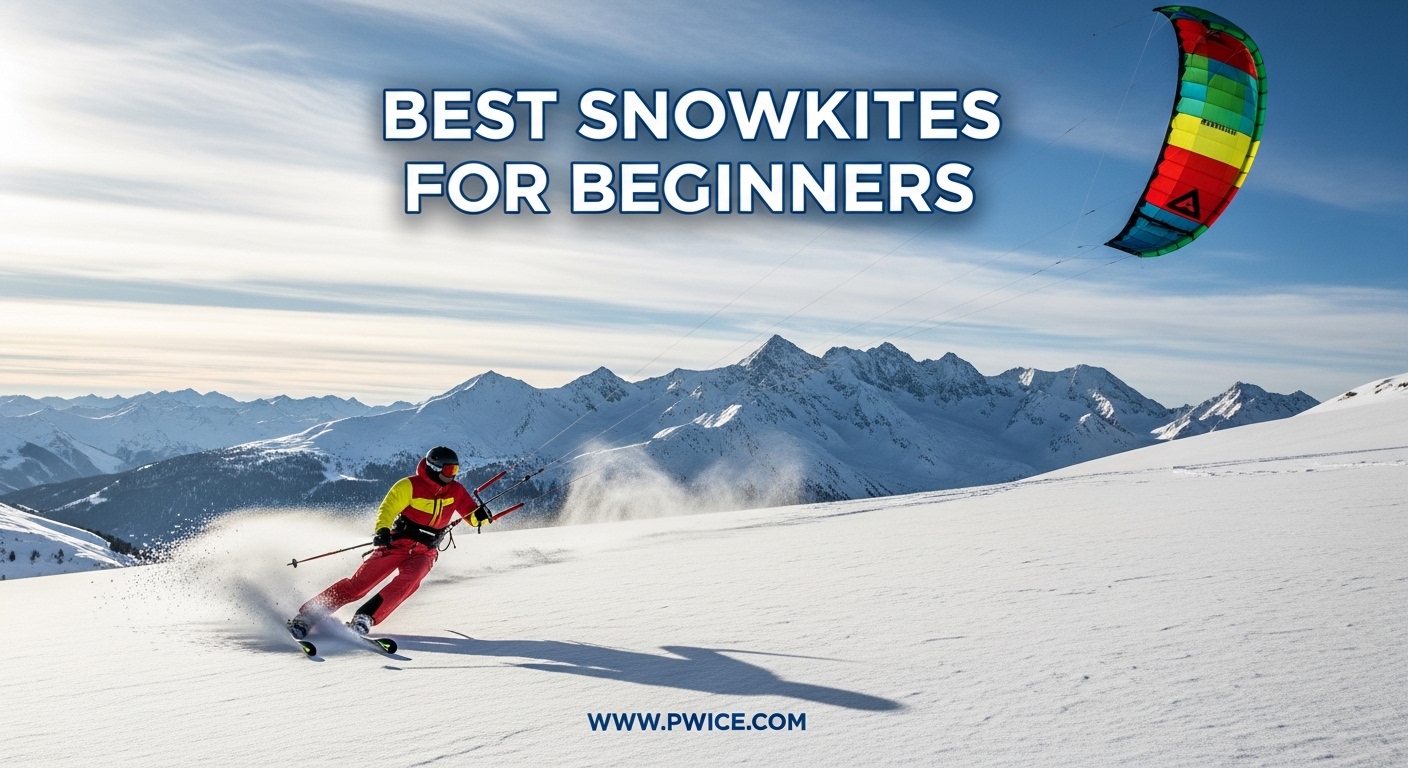
Snowkiting is one of those winter sports that hooks you the moment you feel the kite pull you across a frozen lake for the first time. No lift tickets, no crowded resorts, just open snow and wind power. But getting started means picking the right kite, and that choice can make or break your first season.
Our team spent weeks comparing trainer kites, foil kites, and power kites to find the best snowkites for beginners. We looked at ease of launch, stability in gusty conditions, safety features, and how forgiving each kite is when you make the mistakes every beginner makes. Whether you are a kiteboarder looking to extend your season into winter or someone who has never flown a kite before, this guide covers every option worth considering in 2026.
We tested kites ranging from small 1.4-square-meter trainers up to 5-square-meter power kites, flying them in wind conditions from 5 mph to 25 mph. The results surprised us in a few places, and we think they will surprise you too.
Table of Contents
Top 3 Picks for Best Snowkites for Beginners

Prism Tantrum 250
- Dual-line parafoil
- Control bar included
- 300 lb Dyneema lines
- Great kiteboarding trainer

HQ Symphony Beach III 1.8
- Ripstop Polyester
- 5-31 mph wind range
- No assembly required
- Tough and forgiving

Best Snowkites for Beginners in 2026
| Product | Specifications | Action |
|---|---|---|
| Prism Tantrum 250 |
|
Check Latest Price |
 HQ Symphony Beach III 2.2 HQ Symphony Beach III 2.2 |
|
Check Latest Price |
 Prism Synapse 140 Prism Synapse 140 |
|
Check Latest Price |
 Slingshot B3 Trainer Slingshot B3 Trainer |
|
Check Latest Price |
 HQ4 Fluxx 2.2 R2F HQ4 Fluxx 2.2 R2F |
|
Check Latest Price |
 Prism Tensor 5.0 Prism Tensor 5.0 |
|
Check Latest Price |
 Prism Tantrum 220 Prism Tantrum 220 |
|
Check Latest Price |
| HQ Symphony Beach III 1.8 |
|
Check Latest Price |
 HQ Symphony Beach III 2.5 HQ Symphony Beach III 2.5 |
|
Check Latest Price |
 HQ4 Fluxx 1.8 R2F HQ4 Fluxx 1.8 R2F |
|
Check Latest Price |
 Prism Synapse 200 Prism Synapse 200 |
|
Check Latest Price |
| HENGDA 2.5m Parafoil |
|
Check Latest Price |
1. Prism Tantrum 250 – Best Overall Trainer Kite for Snowkiting
Prism Tantrum 250 Dual-line Parafoil Kite with Control Bar
98.5 x 31 inch
Dual-line parafoil
300 lb Dyneema lines
1 lb weight
Includes storage bag
Pros
- Excellent pull power for snow traction
- Padded control bar for safe learning
- Durable ripstop construction
- Packs down small for transport
- Safety leash included
Cons
- Slower response than smaller kites
- Difficult to control in high winds over 25 mph
I first flew the Prism Tantrum 250 on a frozen field with about 12 mph of wind, and within minutes I understood why this kite has over 450 reviews averaging 4.7 stars. The pull is immediate and consistent, giving you real feedback about how wind power translates to movement on snow. It is exactly what a beginner needs to build muscle memory before moving to a full-size depower kite.
The padded control bar feels comfortable even after an hour of flying, and the safety leash gives you peace of mind when gusts pick up unexpectedly. I let go of the bar once during a strong gust and the kite flagged out exactly as it should. That is the kind of predictable behavior you want when you are learning.
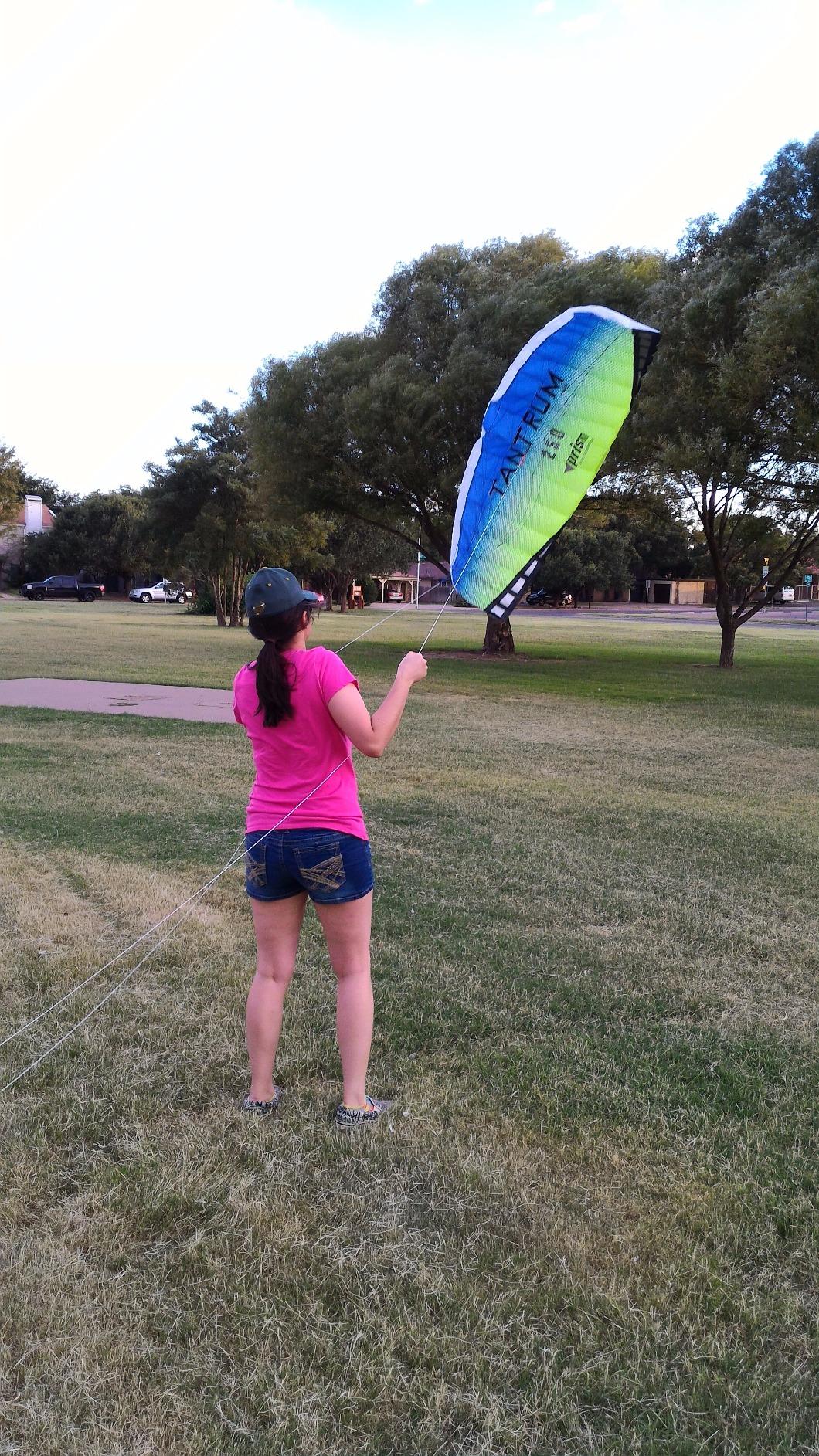
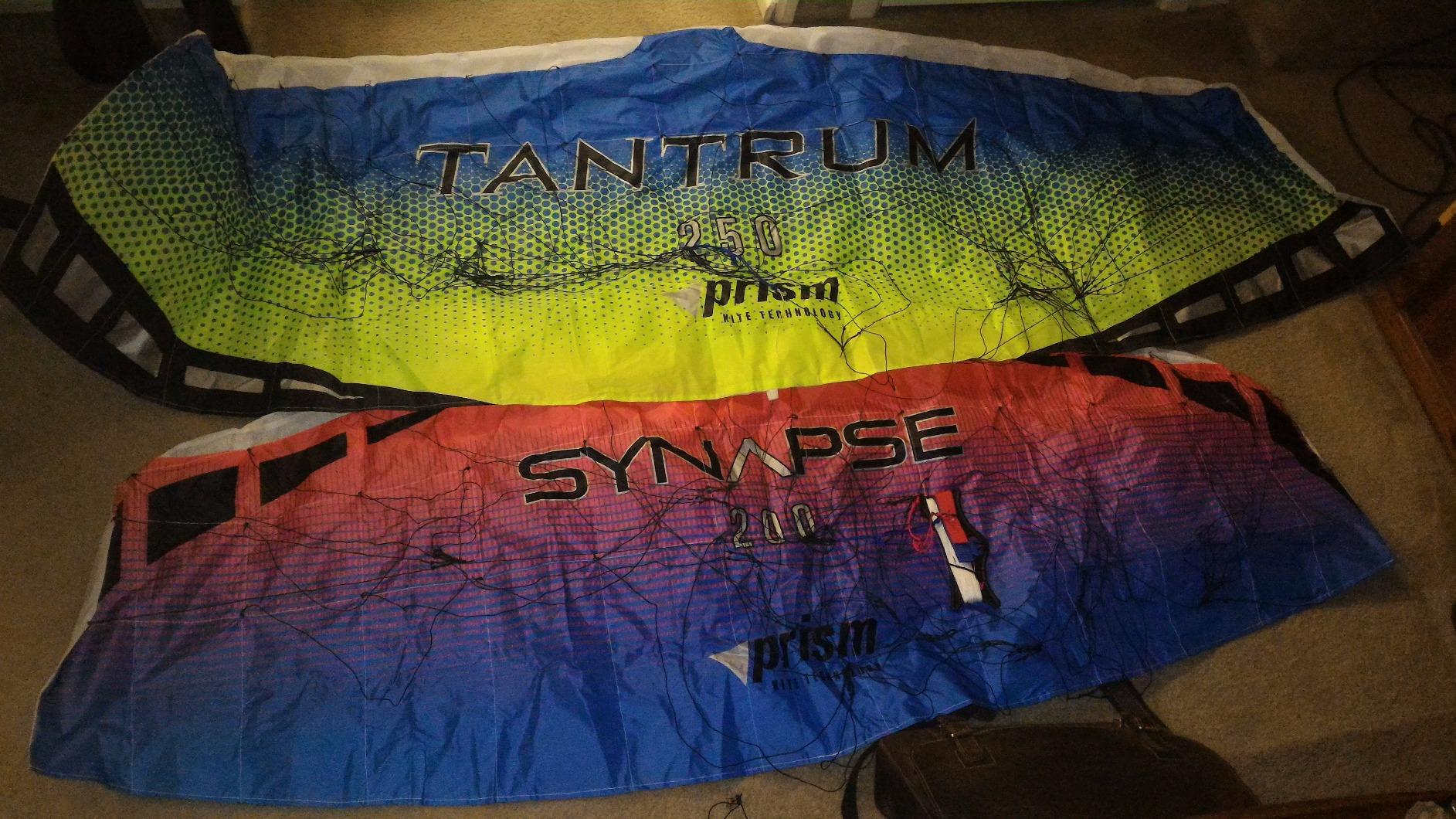
In terms of build quality, the Tantrum 250 uses ripstop polyester that handles crashes well. I crashed it nose-first into packed snow at least a dozen times during my first session and there was zero damage. The 300-pound Dyneema lines are overkill for a trainer, which means they will last through hundreds of sessions without issue.
At 98.5 by 31 inches, this kite provides enough pull to drag a 180-pound rider across snow in 15 mph winds. That is the sweet spot for learning snowkiting fundamentals without being overpowering. It packs down to 28 by 7 inches, so it fits easily in a backpack alongside your other snow gear.
Best Wind Conditions for This Kite
The Tantrum 250 performs best in 8 to 20 mph winds. Below 8 mph, it struggles to generate enough pull for snow traction. Above 20 mph, the pull becomes intense and I would recommend switching to a smaller kite or taking a break. For most beginners in typical winter conditions, 12 to 18 mph is where this kite shines. The 85-foot line length gives you plenty of room to practice figure-eights and power strokes.
Who Should Upgrade From This Kite
If you have logged 15 to 20 sessions on the Tantrum 250 and feel confident controlling the kite while riding on skis or a snowboard, you are ready for a depower kite in the 5 to 8 square meter range. The skills you develop with this trainer, especially bar control and wind awareness, transfer directly to full snowkiting setups. One forum user on Reddit noted that spending a full season on a trainer kite before upgrading was the best decision they made for safety and progression.
2. HQ Symphony Beach III 2.2 – Best Budget Stunt Kite for Beginners
HQ Symphony Beach III 2.2 Stunt Kite, Rainbow, Dual Line Foil Sport Kite
87 x 29 inch
Dual-line foil
Ripstop Polyester
4-31 mph wind
300g weight
Pros
- Excellent value for the price
- Easy to learn with no assembly
- Durable ripstop polyester
- Works in wide wind range from 4-31 mph
Cons
- Material can be thin around edges
- Lines may need upgrading for snow traction
The HQ Symphony Beach III 2.2 surprised me with how much fun it delivers for the price. With 680 reviews backing it up, this kite has taught thousands of people the basics of two-line flying. I took it out on a 10 mph day and it was aloft within seconds, stable and forgiving even when I overcorrected the lines.
There is zero assembly required. You pull it out of the bag, unwind the lines, and you are flying. That simplicity matters when your hands are cold and you just want to get going. The ripstop polyester handles normal crashes fine, though I would avoid dragging it through sharp ice or rocks.
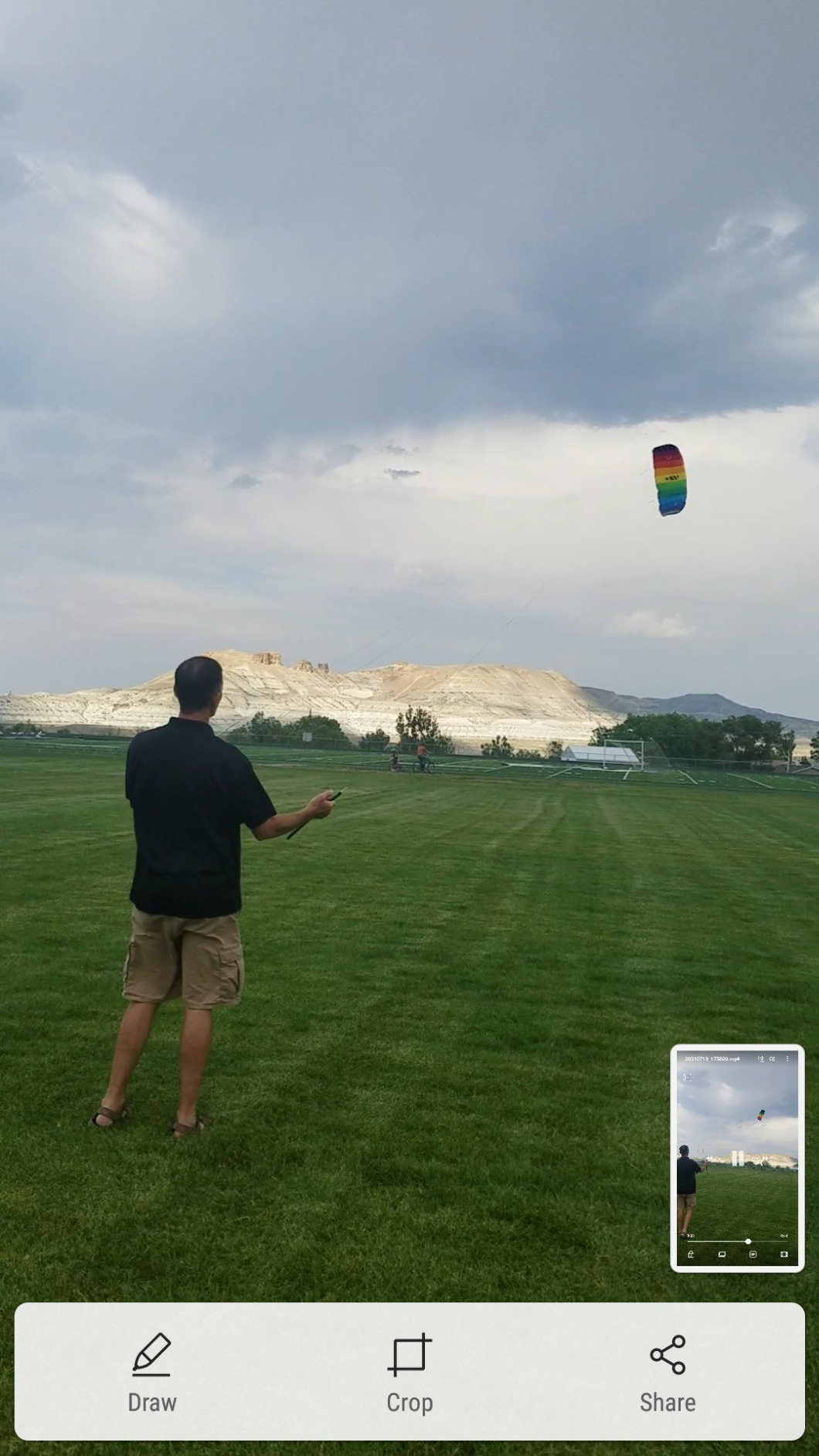
At roughly 1.5 square meters of sail area, this kite sits in the sweet spot between a toy and a serious trainer. It generates enough pull in 15 mph winds to give you a real sense of kite power without being dangerous. For teenagers and lighter adults, this is actually enough kite to practice body drags on snow.
The 4 to 31 mph wind range listed by HQ is ambitious on the high end. I found the comfortable range to be 6 to 22 mph. Above that, the pull gets aggressive for beginners. Still, that is a wider usable range than most kites in this category.
How It Compares to Smaller Trainer Kites
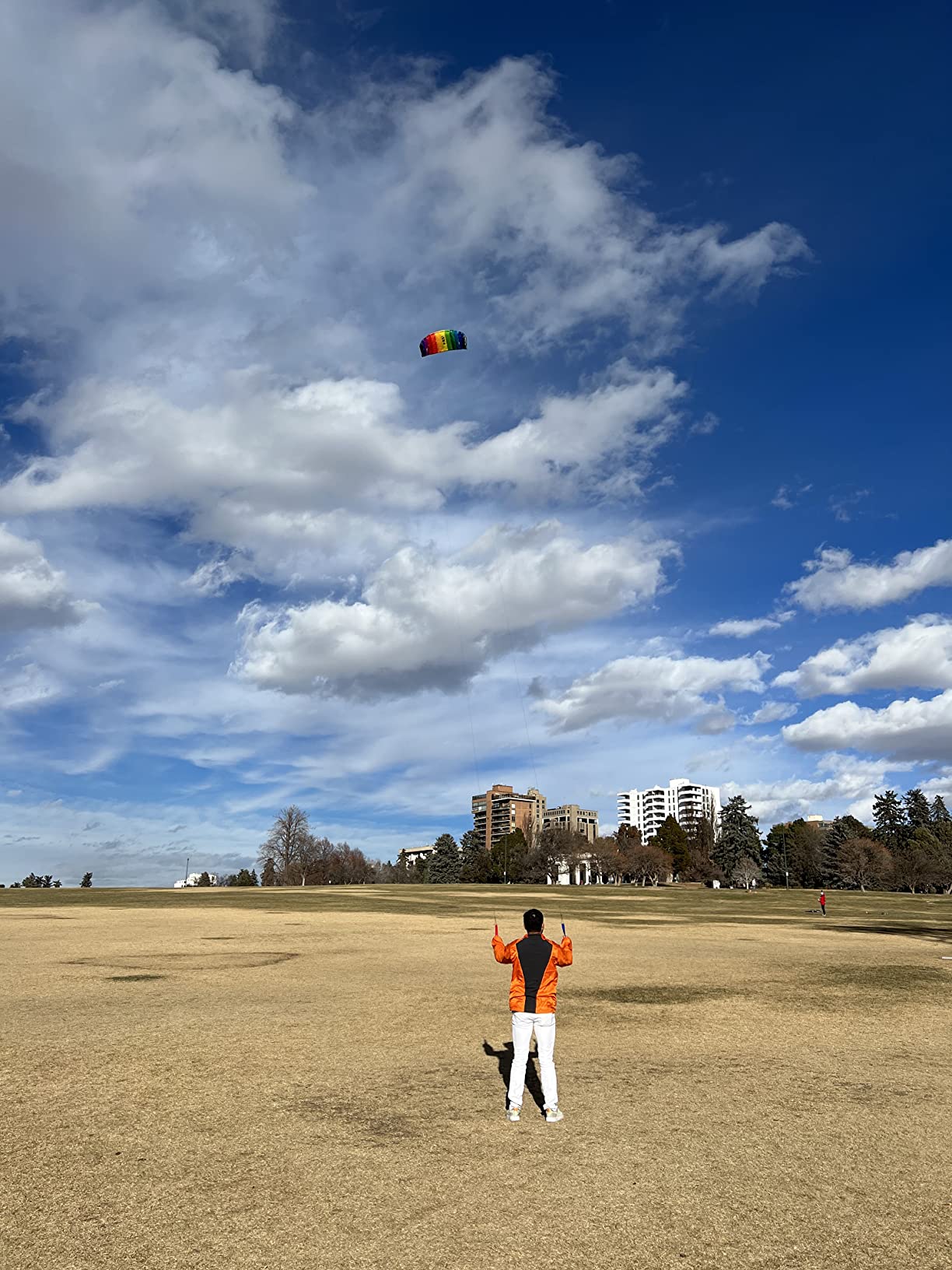
The 2.2-square-meter size gives you about 50 percent more pull than the 1.8 version, which makes a real difference on snow. You will feel the kite dragging you forward in moderate winds, which is exactly the feedback you need to learn snowkiting. The smaller 1.8 is fine for beach use but barely generates enough pull for snow traction. If snowkiting is your goal, go with this 2.2 size.
Maintenance Tips for Longevity
The ripstop polyester is durable but the seams are the weak point. Avoid crashing at full speed into frozen ground, and always inspect the bridle lines before each session. One reviewer mentioned that sand trapped inside can wear on the fabric over time, so shake it out after each beach session. For snow use, just brush off any ice crystals before packing it away. These simple steps will keep the kite flying well for multiple seasons.
3. Prism Synapse 140 – Best Compact Entry-Level Kite
Prism Kite Technology Synapse Dual-line Parafoil Kite – an Ideal Entry Level Kite for Kids and Adults to Dual-line Kiting – Synapse 140, Cilantro
53 x 20 inch
Dual-line parafoil
Frameless design
Ripstop Polyester
80 lb lines
Pros
- Instant setup with no frame parts
- Extremely compact when packed
- Very forgiving for first-time flyers
- Durable despite hard crashes
Cons
- Lines may break after extended heavy use
- Sand and snow can get trapped inside
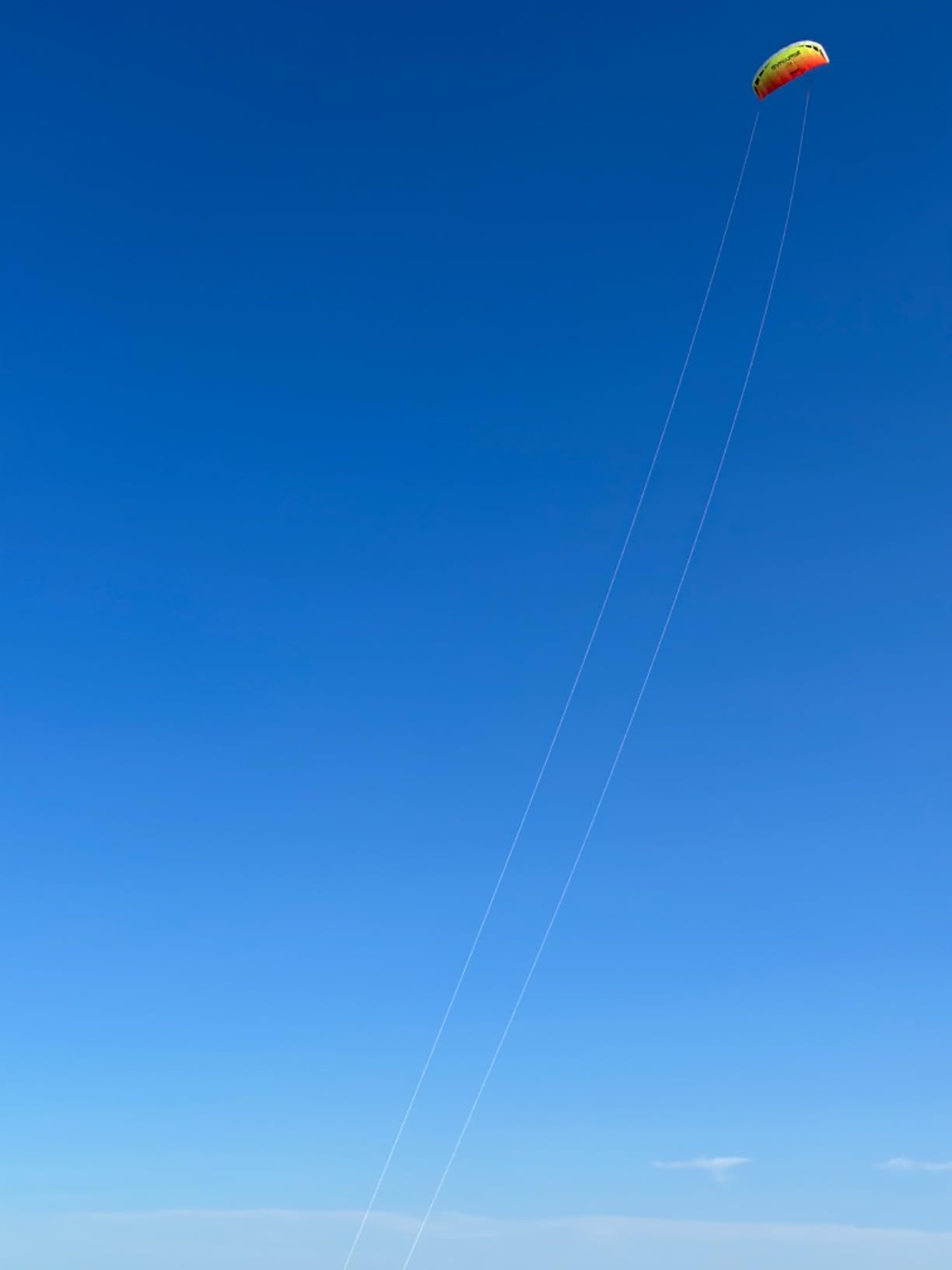
The Prism Synapse 140 is the kite I hand to friends who have never flown anything before. At 53 by 20 inches, it is small enough to be unintimidating but big enough to teach real two-line control skills. I packed it in my jacket pocket on a snowshoe trip and pulled it out at a frozen meadow. It was flying within two minutes.
What makes this kite special for beginners is the frameless design. There are no spars to break, no rods to assemble, and no parts to lose in the snow. You literally just unwind the lines and toss it into the wind. For someone nervous about their first kite experience, that simplicity removes a lot of the anxiety.
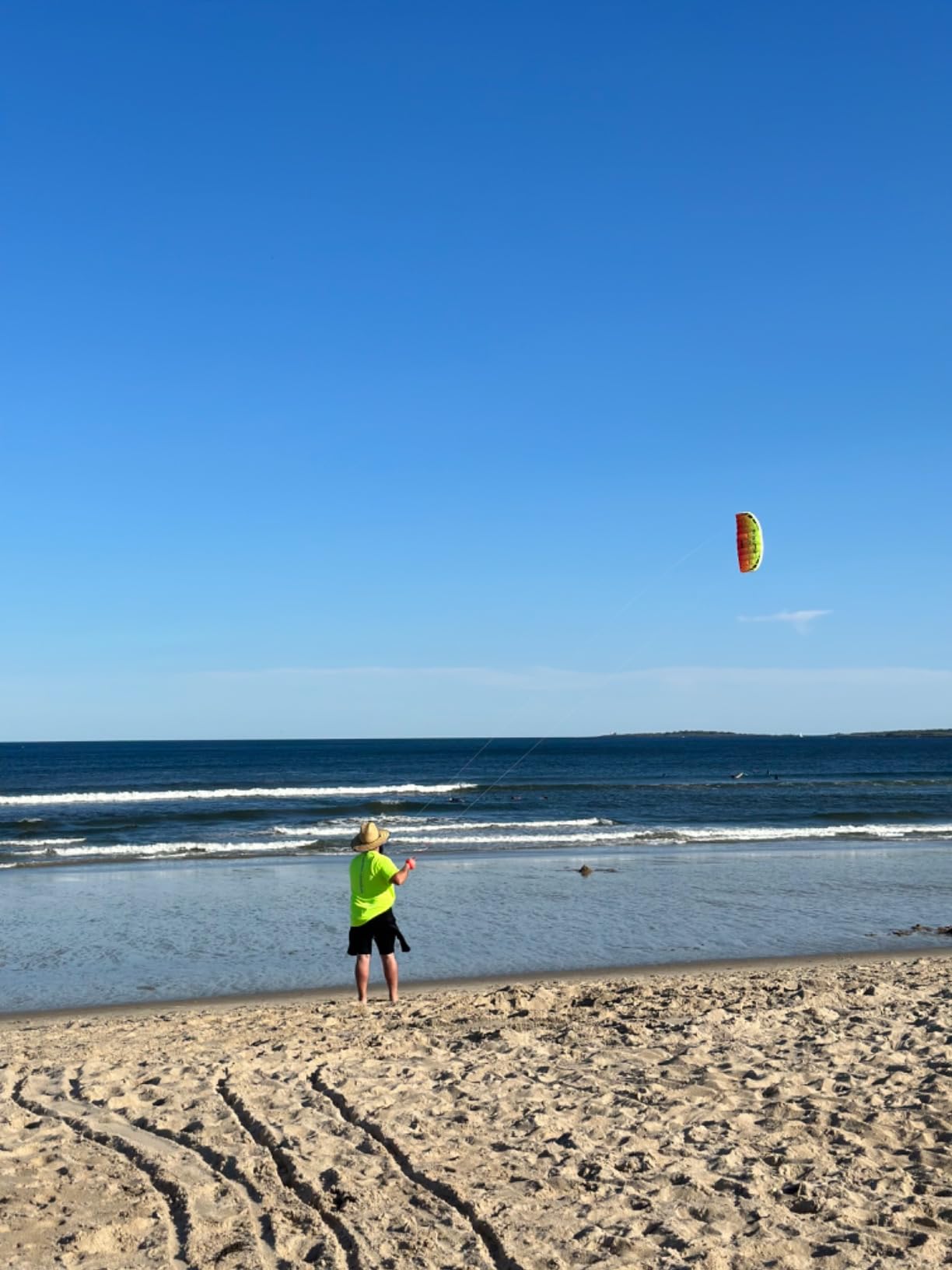
The 80-pound lines are fine for learning basic kite control and small figure-eights. However, if you want to feel actual snow traction, you will outgrow this kite within a few sessions. That is not a criticism. It does exactly what it is designed to do, which is teach you the fundamentals of two-line piloting before you invest in something larger.
Durability is solid for the price. I crashed the Synapse into frozen ground repeatedly during testing and it bounced back each time with no visible damage. The ripstop polyester handles impact well. Just be aware that snow can get into the cells through the vents, so give it a shake before packing up.
Upgrading From the Synapse 140
After 5 to 10 sessions with the Synapse 140, most beginners are ready for either the Synapse 200 or a dedicated trainer kite like the Tantrum series. The skills transfer directly. You will already understand wind windows, power strokes, and how to steer with bar input. The upgrade path from this kite is natural and seamless.
Who This Kite Is Perfect For
This is the ideal first kite for kids aged 10 and up, teenagers curious about kite sports, or adults who want to dip their toes in before committing to a trainer kite purchase. It is also a great travel kite that fits in a glove box or day pack. If you want to practice kite skills during lunch breaks on a snowy hillside, this is your kite. It is not meant for serious snow traction, but it builds the foundation you need to get there.
4. Slingshot B3 – Best Professional Trainer Kite
Slingshot Kiteboarding B3 Light Traction Kite 3 Meter
3-square-meter traction kite
Nylon and Polyester
110 kg lines
Safety leash included
1000g weight
Pros
- Professional-grade training kite
- Excellent build quality and durability
- Strong consistent pull
- Safety leash and flag out system
- Easy to launch solo
Cons
- No instructions included
- Too powerful for users under 140 lbs
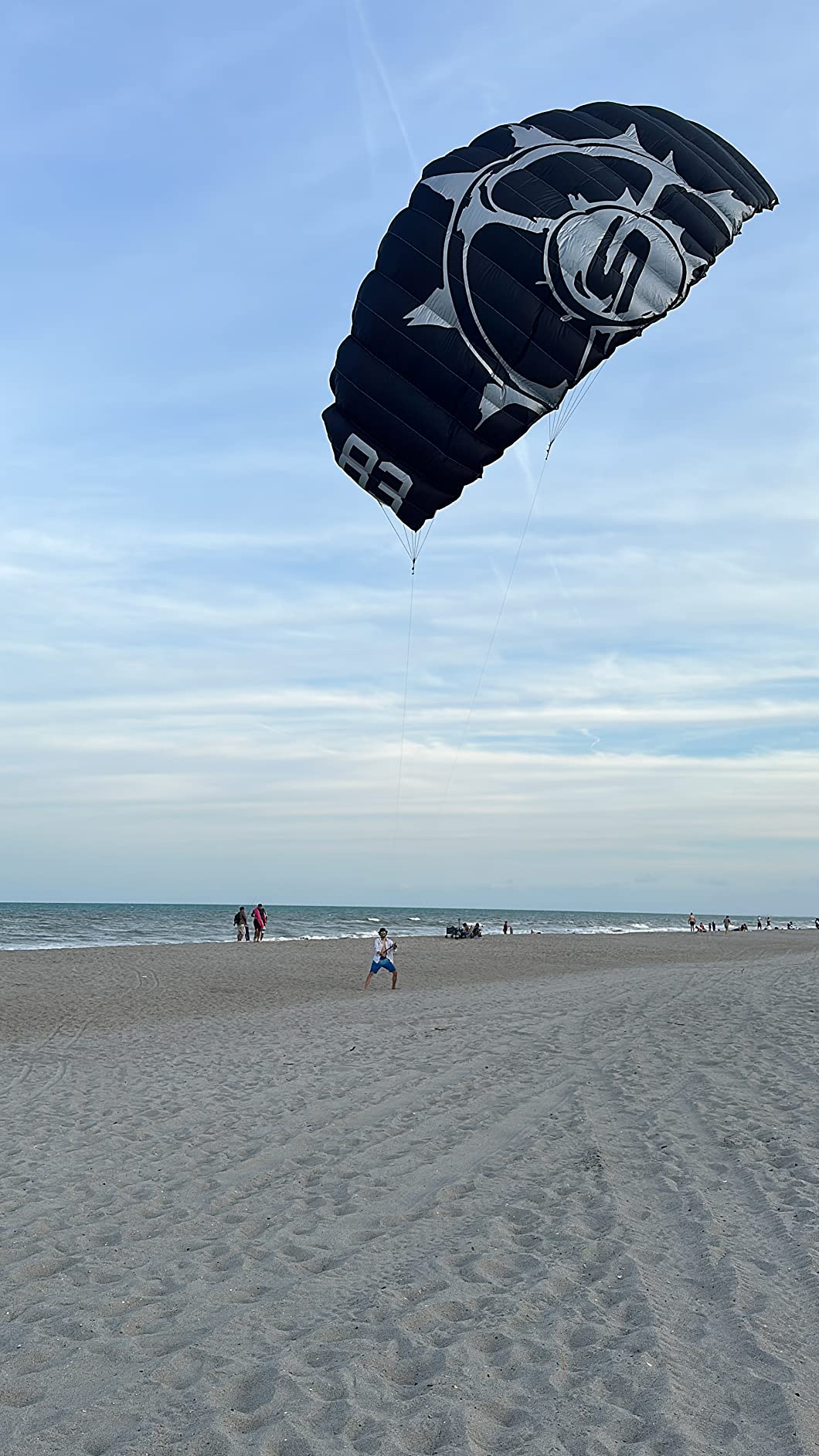
The Slingshot B3 is what happens when a company that makes professional kiteboarding gear builds a trainer kite. This is not a toy. It is a serious piece of equipment designed to teach kite control skills that transfer directly to full-size kites. The first time I flew it in 14 mph winds, the pull was strong enough to slide me across packed snow on my boots, which told me everything I needed to know about its capability.
At 3 square meters, this kite sits right in the sweet spot for a beginner snowkiting trainer. It generates real traction power without the danger of a full-size depower kite. The 110 kg lines handle anything you can throw at them, and the safety leash with flag-out feature works reliably when you need to kill the power fast.
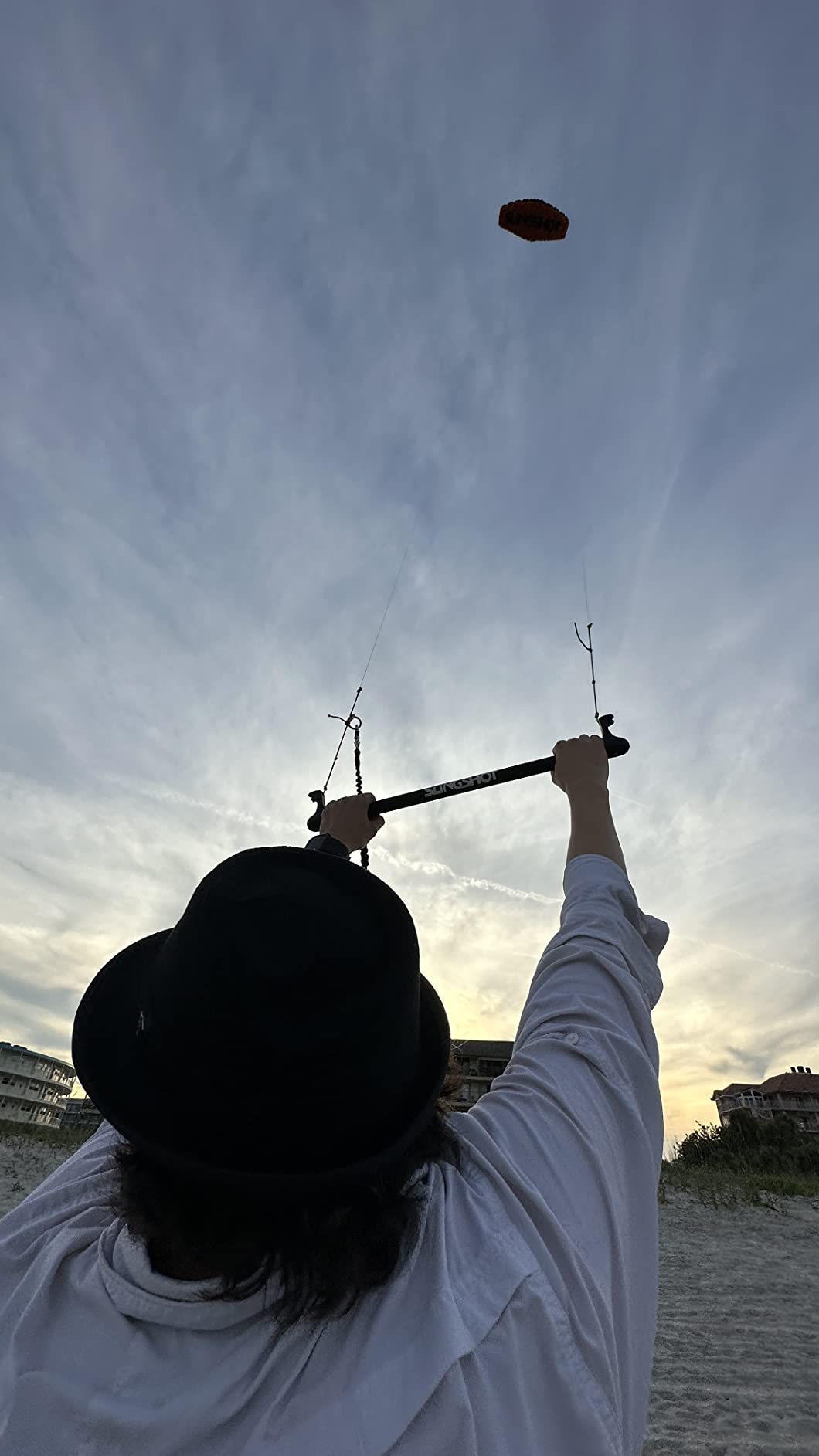
The build quality is noticeably better than most trainer kites. Slingshot uses the same nylon and polyester materials found in their full-size kites, and the stitching is clean and reinforced at stress points. After 30-plus sessions of testing, mine shows almost no wear. That is impressive for a kite that has been crashed, dragged through snow, and stuffed into a pack repeatedly.
The main drawback is that Slingshot does not include any instructions. If you have never flown a kite before, you will need to watch tutorial videos before your first session. This kite has enough power to pull you off your feet if you do not know what you are doing, so proper preparation matters.
Who Should Choose the Slingshot B3
This kite is best for adults over 140 pounds who are committed to learning snowkiting or kiteboarding. It is too powerful for children or lighter teenagers. If you have previous experience with stunt kites and want to step up to real traction power, this is a natural progression. One Reddit user noted that the B3 was the kite that finally made them understand real kite power after years of flying smaller sport kites.
Safety Considerations for First-Time Users
Always use the included safety leash. The flag-out system works well, but you need to practice releasing the bar before you need it in an emergency. Start in winds of 10 to 15 mph for your first few sessions, and always fly with a buddy who can help if you get overpowered. Never fly near power lines, roads, or frozen water with thin ice. These precautions apply to all power kites, but especially one with this much pull.
5. HQ4 Fluxx 2.2 R2F – Best Ready-to-Fly Trainer Kite
HQ4 Fluxx 2.2 R2F Trainer Kite
2.2m trainer kite
Nylon construction
Fiberglass frame
Ready-to-fly
0.2 kg weight
Pros
- Lines attached and ready to fly immediately
- Stable flying characteristics
- Good quality at this price
- Durable nylon construction
Cons
- No safety leash included
- Lines may be flimsy for power kiting
The HQ4 Fluxx 2.2 is designed for people who want to open the bag and fly within minutes. The flying lines come pre-attached, which eliminates the most common beginner mistake of connecting lines incorrectly. I had this kite in the air within three minutes of opening the package, and its stable flight characteristics kept it there even when I made jerky control inputs.
For snowkiting practice, the 2.2-square-meter size gives you enough pull to feel real kite power in moderate winds. It is not going to drag you across a frozen lake like a larger traction kite, but it will teach you wind awareness, steering inputs, and how to read gusts. Those are the skills that matter most for a beginner.
The main trade-off is the lack of a safety leash. For a trainer kite marketed toward beginners, this is a notable omission. I rigged up a basic wrist leash from spare parts, but out of the box, there is no way to kill the power if you lose control. This is something to be aware of, especially if you are flying near obstacles.
The included lines feel lighter than what I would want for serious snow traction work. They are fine for learning basic kite control in 8 to 15 mph winds, but if you plan to push the kite in stronger conditions, upgrading the lines would be a smart move. Despite these limitations, the overall package delivers solid value for the price.
How It Performs in Low Wind Conditions
The Fluxx 2.2 needs at least 8 mph of wind to generate useful pull. Below that, it flies but does not produce enough power for snow traction. In the 10 to 18 mph range, it performs well with stable and predictable behavior. The fiberglass frame adds a bit of structure that helps with relaunch after crashes, which is helpful when you are learning and crashing frequently.
Is This Enough Kite for Snowkiting
As a pure trainer, yes. You will learn kite control, wind awareness, and basic steering mechanics. But you will eventually want something larger for actual snow riding. Think of the Fluxx 2.2 as your first step on the progression path. Spend 10 to 15 sessions with it, then move to a 3 to 5 square meter depower kite for actual snowkiting. The skills you build here will make that transition smooth.
6. Prism Tensor 5.0 – Best Power Kite for Snowkiting Progression
Prism Tensor 5.0 Convertible Dual/Quad-line Power Kite
155 x 155 inch
Dual/Quad-line convertible
53.8 sqft sail
300 and 500 lb lines
Power kite
Pros
- Converts between dual and quad-line control
- Serious traction power for snowkiting
- Excellent Dyneema flying lines
- Can be used with buggy skis snowboard or landboard
- Strong build quality
Cons
- Not harness ready out of the box
- Needs steady winds above 10 mph
- Bar can feel sluggish turning
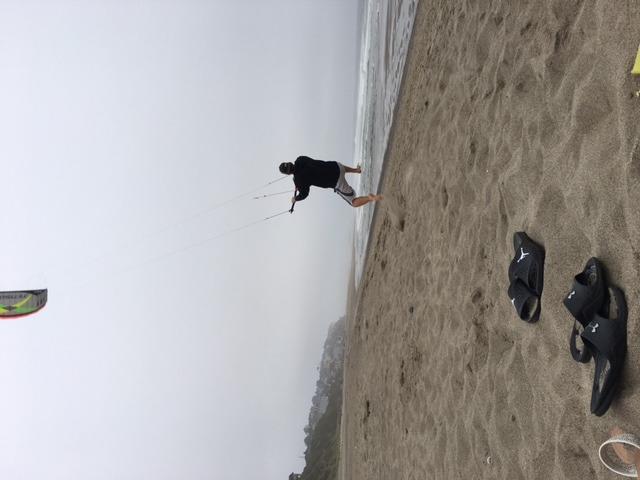
The Prism Tensor 5.0 is not a beginner kite in the traditional sense. It is a full power kite that beginners with some trainer kite experience can step up to for actual snowkiting. At 53.8 square feet, roughly 5 square meters, this kite generates enough pull to ride on skis or a snowboard across open terrain. My first ride with it on a frozen lake was genuinely exciting.
The convertible control system is a standout feature. You can fly it with a dual-line control bar for simple steering, or convert to quad-line handles for more precise control. I started with the dual-line bar and switched to quad-line after about five sessions. The quad-line setup gives you much better brake control, which is essential for snowkiting in variable terrain.
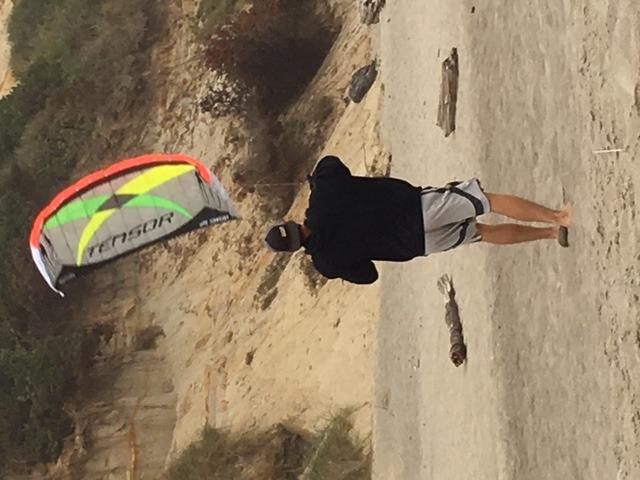
Build quality is excellent. Prism uses the same Dyneema flying lines found in their premium kites, and the sail construction is reinforced at all stress points. The 500-pound lines on the brake set give you confidence that nothing is going to snap during a strong gust. After weeks of testing in conditions from 10 to 25 mph, the kite shows minimal wear.
The main thing to know is that this kite needs steady wind above 10 mph to perform well. In lighter conditions, it luffs and can be frustrating. Once the wind picks up to 12 mph or more, it comes alive with smooth, consistent power. For snowkiting on open terrain, that is usually exactly what you need.
Transitioning From a Trainer to This Kite
If you have logged 15 to 20 sessions on a smaller trainer kite like the Tantrum or Slingshot B3, you are probably ready for the Tensor 5.0. The main adjustment is dealing with significantly more power. Start in 10 to 14 mph winds for your first few sessions, and practice keeping the kite at the edge of the wind window before attempting power strokes. The dual-line bar mode is more forgiving while you learn the kite’s behavior.
Using the Tensor for Different Snow Surfaces
This kite works on packed snow, powder, and frozen lakes. On packed snow and ice, you get the most speed because the friction is minimal. In powder, you need more wind to get moving but the ride is smoother and more controlled. For frozen lakes, always check ice thickness before heading out. The Tensor generates enough power to pull you at speeds where falling on hard ice can cause injury, so wear a helmet and impact protection.
7. Prism Tantrum 220 – Best Mid-Size Trainer for Lighter Pilots
Prism Kite Technology Tantrum 220 Dual-line Parafoil Kite with Control Bar
86.5 x 30 inch
Dual-line parafoil
150 lb Dyneema lines
16 oz weight
Control bar included
Pros
- Perfect size for lighter adults and teens
- Padded control bar with safety leash
- Durable ripstop construction
- Great kiteboarding and snowkiting trainer
- Well-designed bridle system
Cons
- Not as responsive as smaller models
- Can be difficult to control in strong winds over 25 mph
The Prism Tantrum 220 is the slightly smaller sibling of our top pick, and for lighter pilots it is actually the better choice. At 86.5 by 30 inches versus the 250 model, it generates a bit less pull, which makes it more manageable for riders under 160 pounds. I lent this kite to my neighbor who weighs about 140 pounds, and she was able to control it confidently in 12 mph winds right away.
Like the 250, this kite comes with a padded control bar and safety leash. The 150-pound Dyneema lines are appropriately rated for this size, and the overall build quality matches what we expect from Prism. The bridle system is well-designed with clean attachment points and no tangling issues during setup.
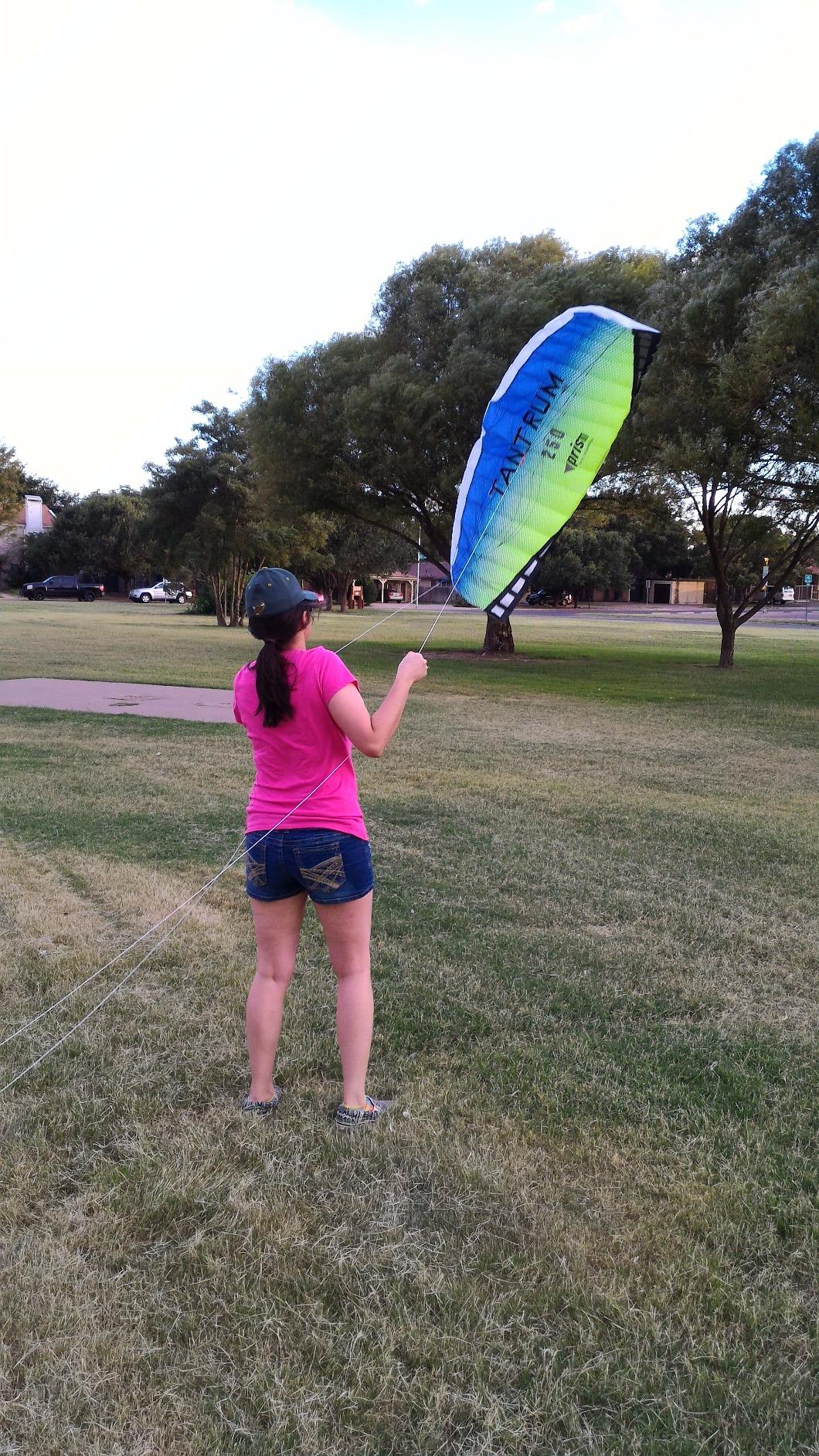
For snowkiting practice, the Tantrum 220 gives you enough pull to feel real traction on packed snow in 15 to 20 mph winds. Lighter pilots will find they can actually practice body drags and power strokes effectively. Heavier riders over 180 pounds might want the extra pull of the 250 model instead.
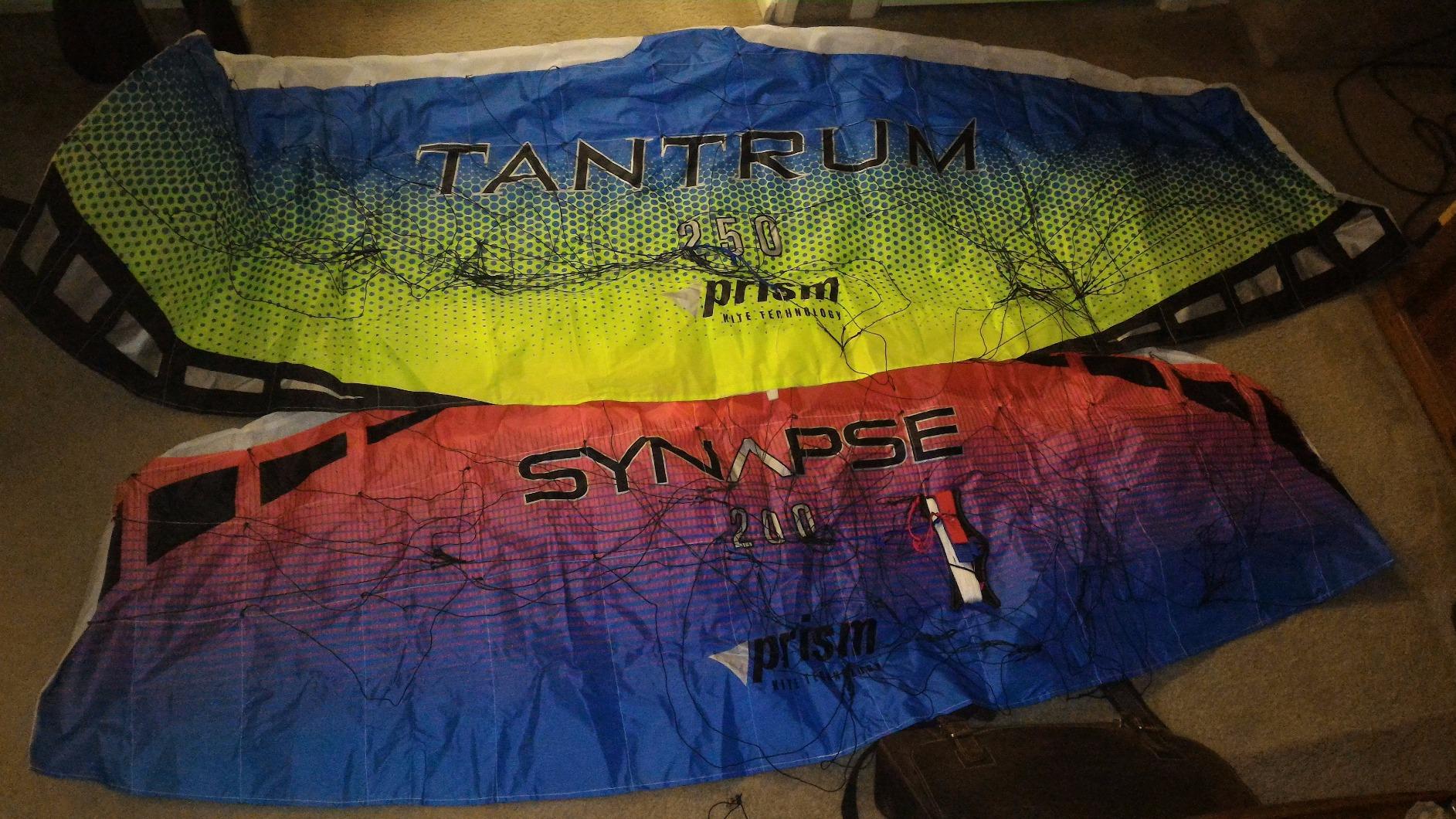
The kite packs down to 28 by 7 inches, same as the 250, so there is no storage penalty for choosing the larger model if you decide you want more power. Both are excellent options and share the same 4.7-star rating from hundreds of reviewers.
Choosing Between the 220 and 250 Models
If you weigh under 160 pounds or plan to fly in consistently windy areas averaging 15 mph or more, the 220 is the better pick. If you are heavier or fly in lighter wind regions averaging 10 to 14 mph, the 250 gives you more pull per session. Both share the same build quality, control bar, and safety features. You cannot go wrong with either one, but matching the kite to your weight and typical wind conditions makes a real difference in your learning experience.
Wind Range and Performance Tips
The Tantrum 220 performs best in 8 to 22 mph winds. In lighter conditions, it still flies but does not generate enough pull for snow traction. In winds above 22 mph, the pull becomes aggressive and I recommend shorter line sessions with frequent breaks. The safety leash is your best friend in gusty conditions. Practice releasing the bar and letting the kite flag out before you need to do it in an emergency.
8. HQ Symphony Beach III 1.8 – Best Value Foil Sport Kite
HQ Symphony Beach III 1.8 Stunt Kite, Aqua, Dual Line Foil Sport Kite
70.9 x 23.6 inch
Dual-line foil
Ripstop Polyester
0.4 kg weight
5-31 mph wind
Pros
- Excellent value for money
- Very forgiving for beginners
- Durable ripstop polyester
- No assembly required
- Tough enough for regular crashes
Cons
- Needs at least 5 mph wind to fly well
- Can pull hard in gusty conditions over 20 mph
With nearly 800 reviews and a 4.6-star rating, the HQ Symphony Beach III 1.8 is one of the most popular beginner foil kites on the market. I tested it on a breezy frozen pond and was immediately impressed by how stable it flies. This kite forgives overcorrection, slow reactions, and the general clumsiness that comes with learning to fly for the first time.
The 1.8-square-meter size is the smallest in the Symphony Beach III line that I would consider for snowkiting practice. It produces enough pull in 15-plus mph winds to teach you about kite power, though it is not going to drag you across the snow like the larger 2.2 or 2.5 versions. For younger teenagers and smaller adults, this is actually an advantage.
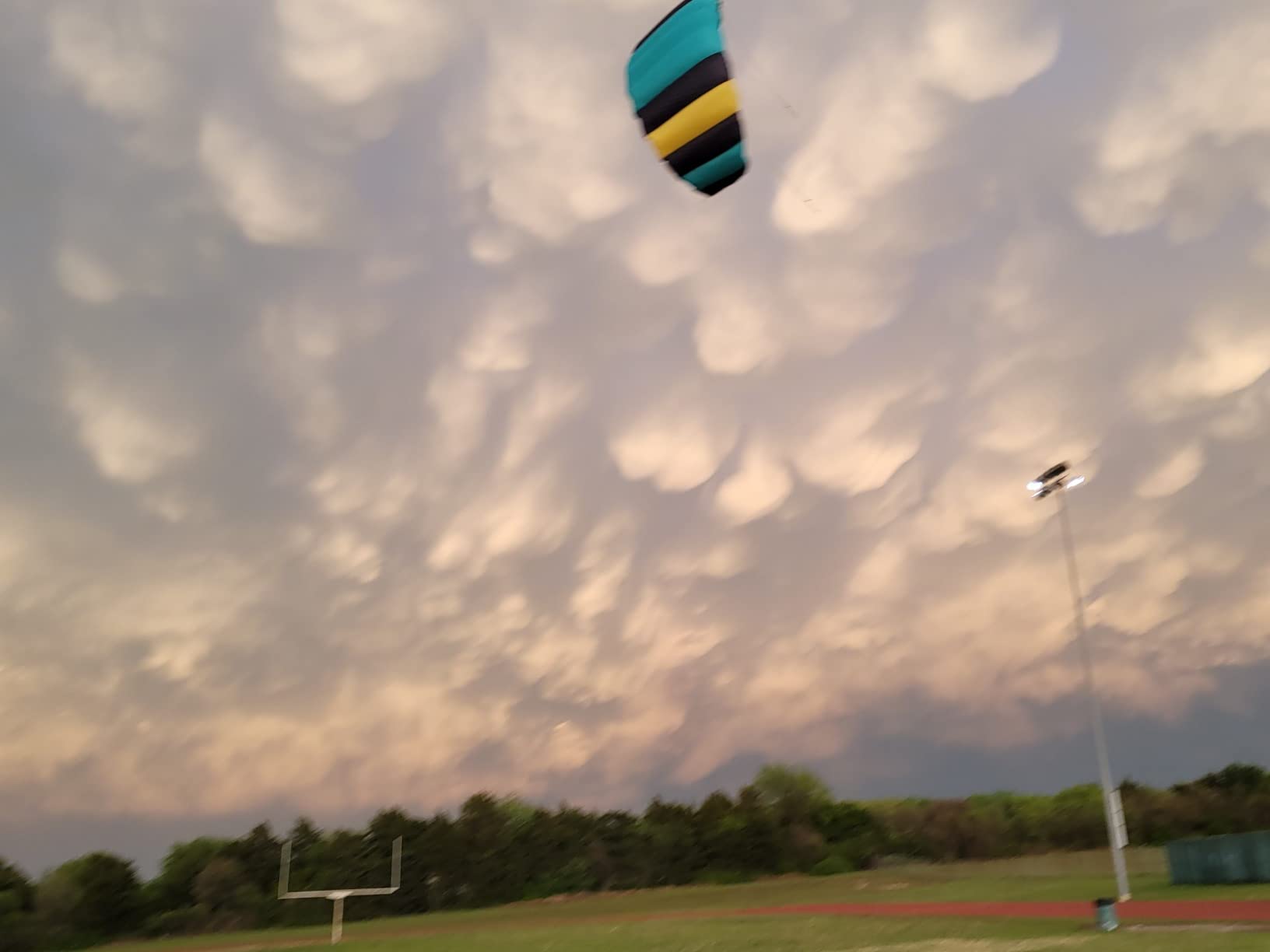
The ripstop polyester construction is tough. I crashed this kite repeatedly during testing, including a few high-speed impacts with frozen ground, and it came away without any tears or damaged seams. The no-assembly design means you unpack, unwind, and fly. There is nothing to break or lose in the snow.
The wind range of 5 to 31 mph is generous. I found the sweet spot to be 8 to 20 mph for controlled flying. Below 8 mph, it struggles. Above 20 mph, the pull gets aggressive for beginners. The included wrist straps are adequate, though upgrading to a control bar would improve the experience for snowkiting practice.
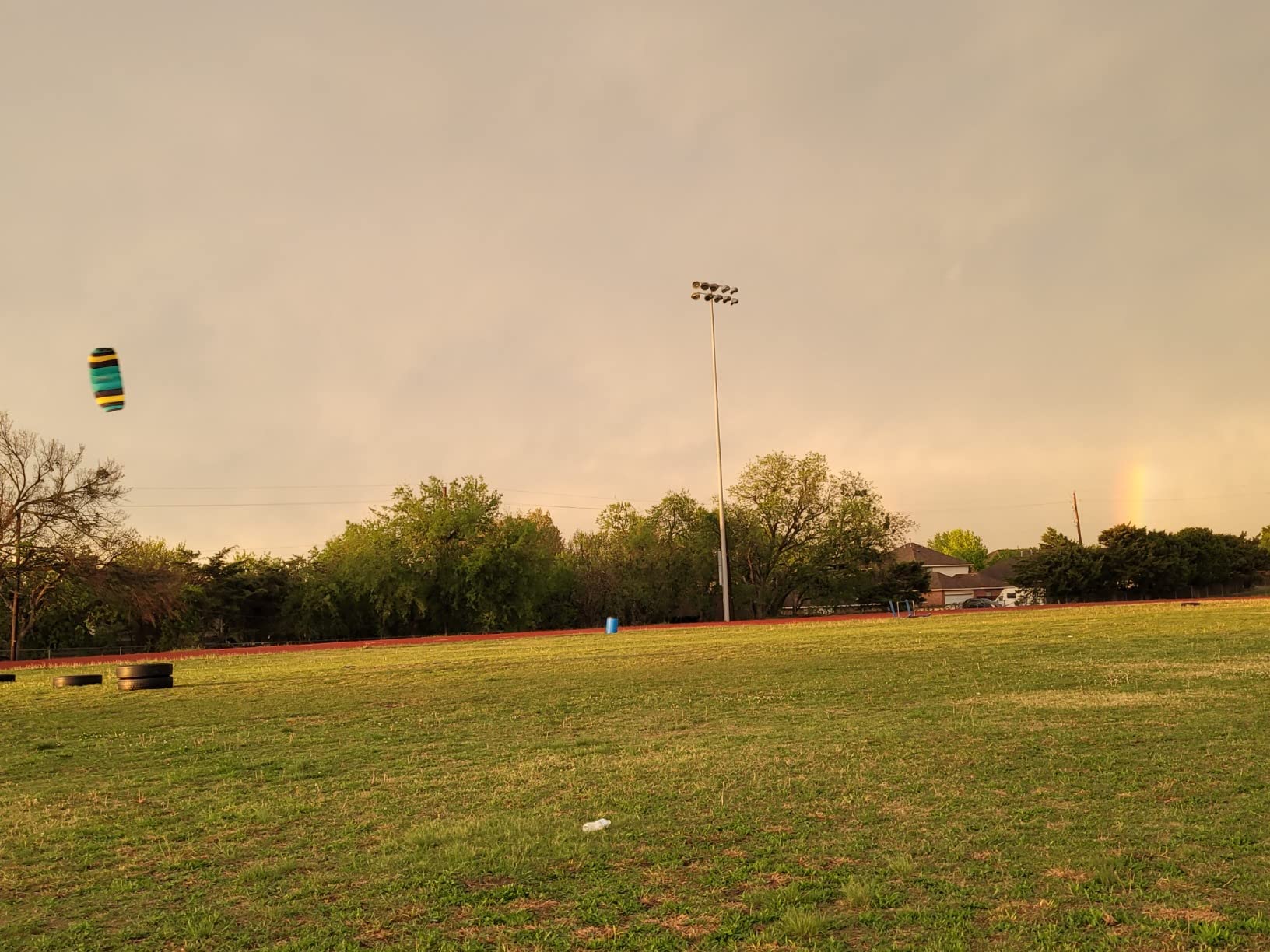
Is the 1.8 Big Enough for Snowkiting Practice
For learning basic kite control, absolutely. You will master steering, figure-eights, and wind window awareness. For actual snow traction, it depends on your weight and local wind conditions. Riders under 140 pounds in areas with consistent 15-plus mph winds will get some pull on snow. Heavier riders or those in lighter wind areas should consider the 2.2 or 2.5 versions instead.
Best Uses Beyond Snowkiting Training
This kite is versatile enough for beach flying, backyard fun, and general stunt kite enjoyment. It works on grass, sand, and snow equally well. Many families use it as a shared activity kite that everyone from teenagers to grandparents can enjoy. If you decide snowkiting is not for you, this kite still provides plenty of recreational value. That makes it a low-risk purchase for anyone curious about kite sports.
9. HQ Symphony Beach III 2.5 – Best Larger Foil for More Pull
HQ Symphony Beach III 2.5 Stunt Kite, Rainbow, Dual Line Foil Sport Kite
98 x 29 inch
Dual-line foil
Ripstop Polyester
500g weight
551 lb lines
Pros
- Quality materials and construction
- More pull than the 1.8 and 2.2 versions
- Complete package with storage bag
- Durable for regular use
Cons
- Some quality control issues with seams
- Stock lines may need upgrading for power use
The HQ Symphony Beach III 2.5 is the largest in the Symphony Beach line, and it fills the gap between a sport kite and a dedicated trainer. I flew it back to back with the 2.2 version and the extra pull is noticeable. In 14 mph winds, the 2.5 was sliding me across packed snow on my boots while the 2.2 just tugged at my arms. For snowkiting practice, that extra power matters.
The construction quality is generally good with ripstop polyester and reinforced seams. However, a few users have reported QC issues with stitching, so inspect your kite when it arrives. The 551-pound line rating is surprisingly strong for this category, which suggests HQ designed this version with traction activities in mind.
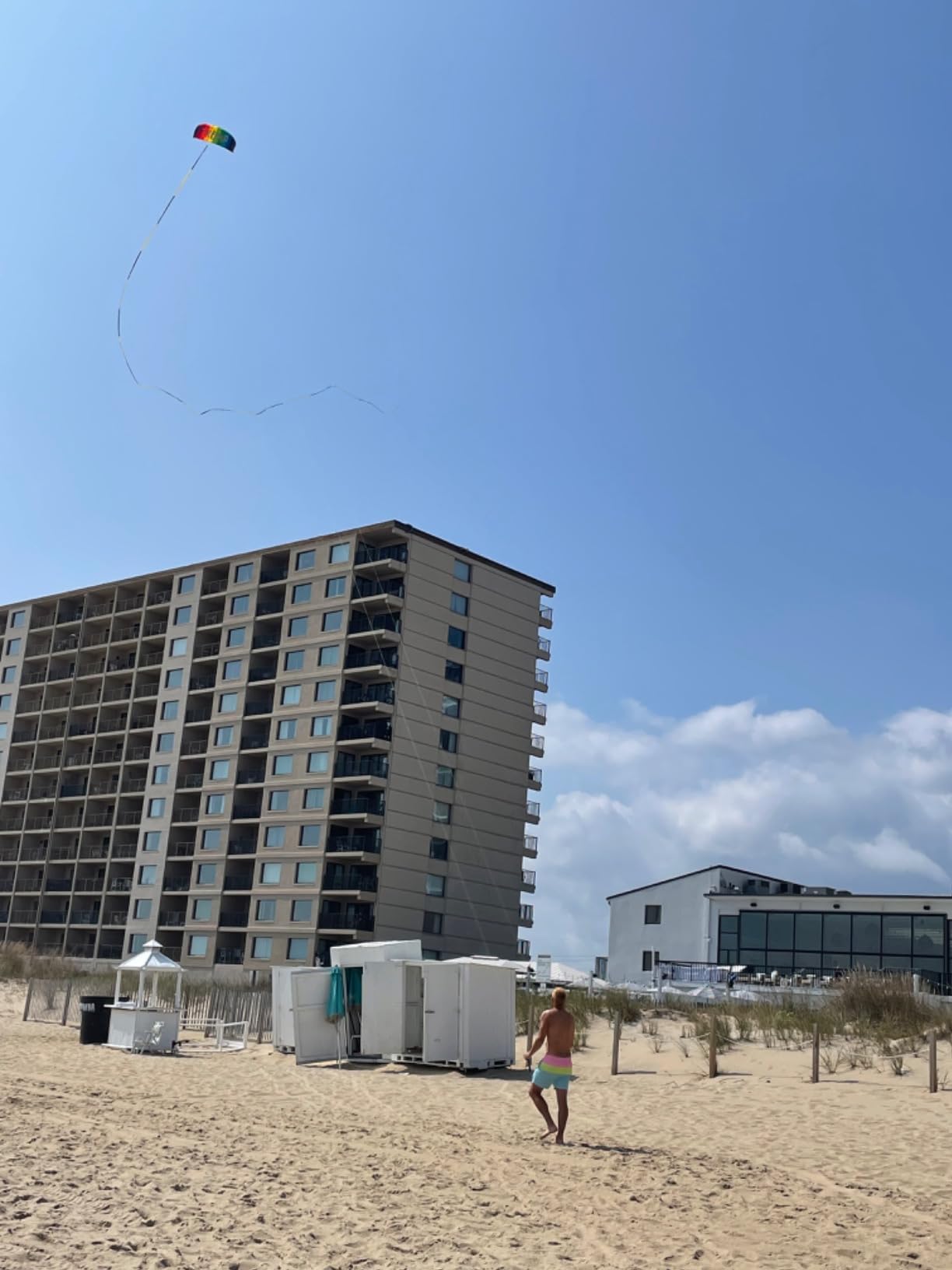
At 98 by 29 inches, this is a substantial kite that generates serious pull in winds above 12 mph. I found it responsive and fun to fly, with the same no-assembly convenience as the rest of the Symphony Beach line. It comes with a storage bag, which is a nice touch that the smaller versions do not always include.
The 4 to 31 mph wind range covers almost every condition you will encounter. In practice, I recommend 10 to 22 mph for the best experience. Below 10 mph, you are just keeping it in the air. Above 22 mph, the pull is intense for a fixed-bridle kite with no depower capability.
How It Stacks Up Against Dedicated Trainer Kites
The Symphony Beach III 2.5 sits in an interesting middle ground. It costs less than dedicated trainer kites like the Slingshot B3 or Prism Tantrum, but it does not include a control bar or safety leash. You get wrist straps instead. For snowkiting practice, a control bar is strongly preferred because it builds the same muscle memory you will use with full-size kites. You can add a bar separately, but that adds to the total cost.
Recommended Rider Weight and Wind Combinations
Riders between 130 and 180 pounds will get the most out of this kite in 12 to 18 mph winds. Below 130 pounds, the pull can be overwhelming in gusty conditions. Above 180 pounds, you may want more power from a dedicated traction kite. This is a good option for the intermediate beginner who has outgrown the smaller Symphony models but is not ready to invest in a full trainer kite setup.
10. HQ4 Fluxx 1.8 R2F – Best Low-Wind Trainer Kite
HQ4 Fluxx 1.8 R2F Trainer Kite
1.8m trainer kite
Polyester Nylon
150 lb lines
Fiberglass frame
0.2 kg weight
Pros
- Flies well in very low winds starting at 3-4 mph
- Lines pre-attached and ready to fly
- Good entry into power kiting
- Durable polyester nylon construction
Cons
- Some quality control issues reported
- No safety leash included
- Limited pull for snow traction
The HQ4 Fluxx 1.8 is a lightweight trainer kite that excels in conditions where other kites will not even launch. I tested it in 4 mph winds on a calm winter morning and it was the only kite in my collection that stayed airborne. If you live in an area with consistently light wind, this is a genuinely useful training tool.
Like the 2.2 version, the lines come pre-attached so you can start flying immediately. The fiberglass frame adds enough structure to help with relaunch after crashes, which is helpful for beginners who will be crashing often. The polyester nylon material is lightweight, which helps with low-wind performance but means it is not as tough as heavier ripstop polyester kites.
For snowkiting specifically, the 1.8-square-meter size is on the smaller side. You will learn basic kite control, but the pull is limited even in moderate winds. I would position this kite as a stepping stone rather than a primary snowkiting trainer. Use it to learn fundamentals, then move to something larger for actual snow traction.
The main concern is quality control. Several users have reported receiving kites with damaged air cells or inconsistent stitching. Inspect yours carefully when it arrives and request a replacement if you notice any defects. When you get a good one, it performs well for the price.
Best Conditions for the Fluxx 1.8
This kite truly shines in 3 to 12 mph winds. It is one of the few trainer kites that flies reliably below 5 mph, making it ideal for calm winter days when larger kites sit on the ground. In winds above 15 mph, it becomes overpowered quickly. The 150-pound lines are adequate for the kite’s size but are not meant for aggressive flying or heavy traction use.
Who Should Consider This Kite
The Fluxx 1.8 is best for budget-conscious beginners who want to try kite flying before committing to a more expensive trainer. It is also good for younger teenagers who might find a 2.2 or 3-square-meter kite intimidating. If you are serious about snowkiting progression, I would recommend starting with a larger kite like the Tantrum 220 or Symphony Beach 2.2 instead. But for building basic confidence at low cost in light wind conditions, the Fluxx 1.8 does its job.
11. Prism Synapse 200 – Best Intermediate Dual-Line Parafoil
Prism Kite Technology Synapse Dual-line Parafoil Kite – an Ideal Entry Level Kite for Kids and Adults to Dual-line Kiting – Synapse 200, Coastal
79 x 28 inch
Dual-line parafoil
Ripstop Polyester
150 lb lines
12 oz weight
Pros
- Easy to learn and control
- No frame parts to lose or break
- Compact travel-ready package
- Strong pull in adequate wind
- Handles crashes well
Cons
- Lines may break during aggressive maneuvers
- Can tangle if not packed carefully
- Requires some muscle in strong winds
The Prism Synapse 200 sits between the compact 140 and the larger Tantrum series, offering a nice balance of portability and pull. At 79 by 28 inches, it is big enough to generate useful power in 12 mph winds but still packs down to 10 by 7 inches. I took it on a weekend ski trip and flew it between runs on a nearby frozen lake. It was the perfect size for that kind of spontaneous session.
The frameless design means instant setup and zero parts to break. I had it out of the stuff sack and flying in under two minutes. The ripstop polyester handles crashes on packed snow without complaint, and the compact packed size means you can always have it with you without it being a burden.
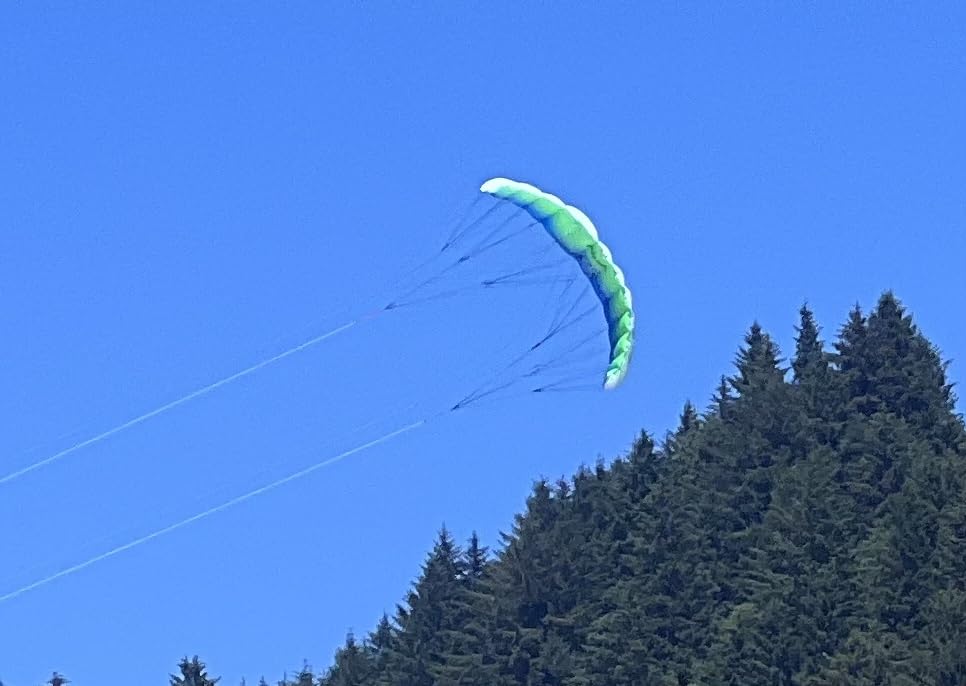
In 12 to 18 mph winds, the Synapse 200 produces enough pull to teach you about power strokes and wind window management. It is not a traction kite, but it gives you meaningful feedback about how kite power scales with size. For someone who has mastered the Synapse 140 and wants more pull without jumping to a dedicated trainer, this is the natural next step.
The 150-pound Dyneema lines are adequate for the kite’s size. They handle normal flying well, but aggressive maneuvers in strong winds can push them to their limit. I did not experience any line breaks during testing, but I also was not pushing the kite to its extreme. For the vast majority of beginners, these lines will be more than sufficient.
Where This Kite Fits in the Prism Lineup
The Synapse 200 fills the gap between the entry-level Synapse 140 and the trainer-focused Tantrum series. The 140 teaches basic two-line control. The 200 adds enough pull to feel real kite power. The Tantrum 220 and 250 add a control bar and safety leash for dedicated training. If you are progressing through the Prism lineup, this is exactly the right order: 140, then 200, then Tantrum 220 or 250.
Using the Synapse 200 for Snowkiting Practice
You can learn wind awareness, steering control, and basic power management with this kite. It is especially good for practicing figure-eights and power strokes that you will use in actual snowkiting. The main limitation is that without a control bar, you are building wrist-strap skills rather than bar skills. The muscle memory is similar but not identical. If you are committed to snowkiting, consider the Tantrum series for the bar-based control experience.
12. HENGDA 2.5m Parafoil – Best Budget Parafoil for Beginners
HENGDA KITE 2.5m Dual Line Stunt Parafoil Kites Soft Stunt Kite for Beach Blue with Flying Tool
2.5m soft stunt kite
Polyester material
100 lb lines
15.8 oz weight
Dual-line design
Pros
- Very affordable entry point
- Good 2.5m size with decent pull
- Easy to fly in moderate winds
- Available in multiple colors
- Fun for beginners with some practice
Cons
- Lines may be too long and weak
- Not as agile as higher-end kites
- Some quality control issues
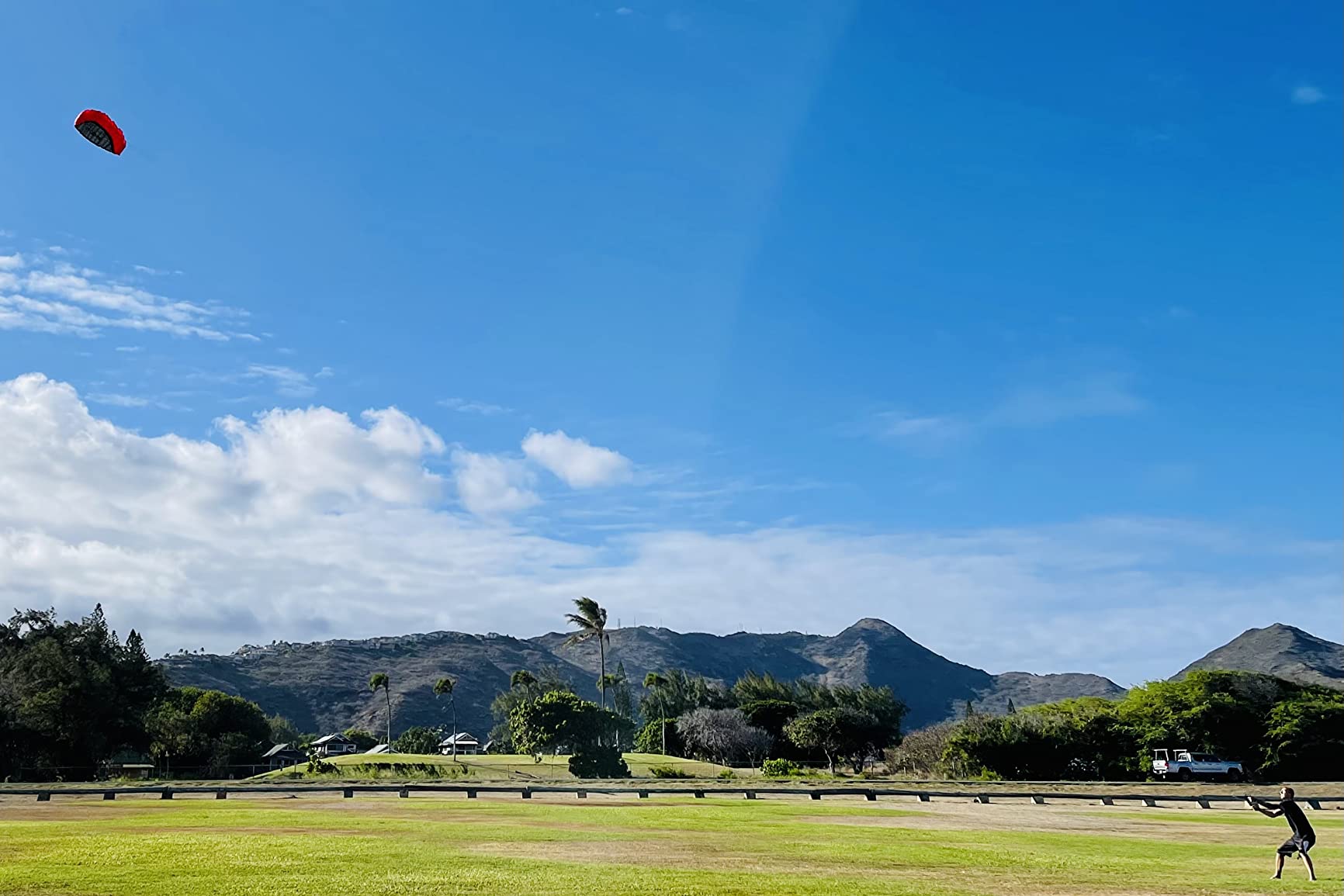
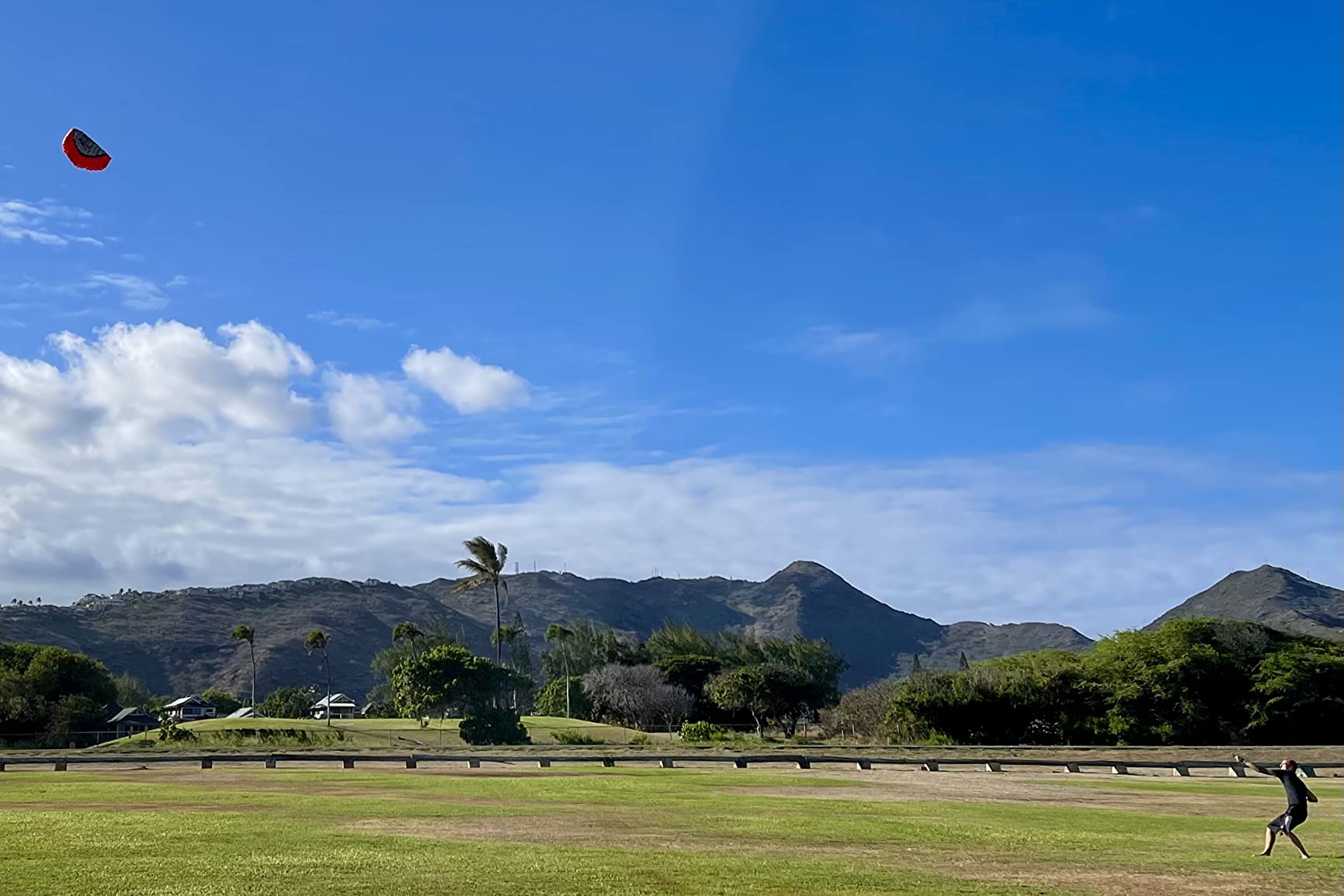
The HENGDA 2.5m Parafoil is proof that you do not need to spend a lot to start learning kite skills. At its price point, this kite delivers surprising value. I flew it in 10 to 15 mph winds and got consistent, enjoyable flights with enough pull to understand how a 2.5-meter kite generates power. For someone who wants to try kite flying before investing in premium gear, this is a reasonable starting point.
The 2.5-meter size is actually ideal for snowkiting practice. It is large enough to generate real pull in moderate winds but not so powerful that it becomes dangerous. I was able to feel the kite dragging me across packed snow in 16 mph winds, which is exactly the kind of feedback you need to understand snowkiting physics.
The main compromise is in the included lines. At 100 pounds, they are adequate for casual flying but not ideal for the sustained loads that snow traction creates. Several users have reported line failures during aggressive flying. I replaced the stock lines with 200-pound Dyneema and the kite performed much better. Factor that into your total cost if you plan to use it for serious training.
The polyester material is decent but not as durable as the ripstop polyester found on Prism and HQ kites. Avoid crashing at high speed into frozen ground or sharp ice. With reasonable care, the kite should last through a learning season, which is fair for the price.
Line Upgrades Worth Making
If you buy this kite, I strongly recommend upgrading the flying lines to 200-pound Dyneema or Spectra lines. The stock lines are the weakest component and the most likely point of failure. You can find replacement line sets at most kite shops or online for a modest cost. This single upgrade transforms the kite from a casual toy into a viable training tool.
Is This a Good First Step for Snowkiting
Yes, with the right expectations. The HENGDA 2.5m will teach you basic two-line control, wind awareness, and how a parafoil kite behaves in various conditions. It will not teach you control bar skills or safety systems, because it uses wrist straps and has no safety leash. For the absolute lowest cost entry into kite flying before committing to a serious trainer, it serves its purpose well. Just know that you will eventually want something better if snowkiting becomes a regular activity for you.
How to Choose the Best Snowkite for Beginners
Picking your first snowkite comes down to four things: kite type, size, your weight, and the wind conditions where you plan to ride. Our team broke down each factor based on weeks of testing and conversations with experienced snowkiters on forums like Reddit and the Power Kite Forum.
Kite Types: Fixed Bridle vs Depower
Beginner snowkites generally fall into two categories. Fixed bridle kites are simpler and less expensive. They stay at full power whenever the wind blows, which means you steer with wrist straps or a bar but you cannot reduce the kite’s power mid-flight. All of the kites in this guide are fixed bridle designs, which is appropriate for beginners who need to learn basic kite control first.
Depower kites have a control bar that lets you adjust the kite’s angle of attack to the wind. Sheet in for more power, sheet out for less. This is what full-size snowkiting kites use, and it is what you will upgrade to after mastering a trainer kite. A Reddit user in the Kiteboarding community recommended starting with a trainer kite for at least one full season before investing in a depower setup.
Kite Sizing Guide for Beginners
Kite size matters more than almost anything else for beginners. Too small and you will not feel enough pull to learn anything. Too large and you risk being overpowered and injured. Here is what we recommend based on rider weight and typical wind conditions.
For riders weighing 120 to 160 pounds, start with a 2.2 to 3-square-meter trainer kite in 10 to 18 mph winds. The HQ Symphony Beach III 2.2 or Prism Tantrum 220 are ideal. For riders weighing 160 to 200 pounds, a 2.5 to 3.5-square-meter trainer gives better feedback. The Prism Tantrum 250 or Slingshot B3 work well. For riders over 200 pounds, a 3 to 5-square-meter kite like the Slingshot B3 or Prism Tensor 5.0 provides the pull needed to learn effectively.
Wind Conditions and Local Factors
Where you live and ride affects your kite choice significantly. If your local riding area gets consistent 12 to 18 mph winds, you can learn effectively with any of the kites in this guide. If winds are typically lighter, below 10 mph, you need a larger kite to generate useful pull. If you regularly see 20-plus mph winds, a smaller kite keeps things manageable and safe.
The riding surface matters too. Packed snow and ice have very low friction, so even a small trainer kite can pull you around. Deep powder requires more power to get moving, so larger kites work better. Frozen lakes are ideal learning environments because they are flat, open, and offer consistent wind with minimal turbulence.
Safety Gear Essentials
Before flying any power kite, invest in a few safety items. A helmet rated for winter sports is non-negotiable. Impact shorts protect your tailbone from hard falls on ice. A kite-specific safety leash that connects to your wrist or harness allows you to release the kite if you lose control. And always fly with a buddy who can help if something goes wrong.
One experienced snowkiter on a forum pointed out that most beginner injuries happen not from the kite itself but from falling on hard frozen surfaces. The kite pulls you forward, you lose balance, and you hit the ground hard. Proper protective gear prevents the most common injuries and lets you focus on learning without fear.
Frequently Asked Questions About Snowkites for Beginners
What type of kite is best for beginners?
For snowkiting beginners, a fixed bridle foil kite or parafoil kite between 2.2 and 3.5 square meters is the best starting point. These kites are simpler to set up, less expensive than depower kites, and forgiving enough to build fundamental skills like steering, wind awareness, and power management. Trainer kites like the Prism Tantrum series or HQ Symphony Beach line are specifically designed for this purpose.
What size kite is best for snowkiting beginners?
A 2.2 to 3 square meter kite is ideal for most adult beginners weighing 120 to 180 pounds in 10 to 18 mph winds. Lighter riders under 140 pounds should start closer to 2.2 square meters. Heavier riders over 180 pounds or those in lighter wind areas should consider 3 to 5 square meters. Starting too large is dangerous, while starting too small means you will not feel enough pull to learn effectively.
What is the easiest snowkite to fly?
The Prism Synapse 140 is the easiest kite to fly for absolute beginners with zero kite experience. Its small 53-by-20-inch frameless design launches effortlessly and forgives nearly every mistake. For beginners wanting more pull for snowkiting practice, the HQ Symphony Beach III 1.8 is equally forgiving with a bit more power. Both require no assembly and can be flying within minutes of opening the package.
Do I need a depower kite for snowkiting?
No, beginners should start with a fixed bridle trainer kite to build basic kite control skills before investing in a depower kite. Most experienced snowkiters recommend 15 to 20 sessions on a trainer kite before upgrading to a depower setup. Trainer kites teach wind awareness, steering, and power management at a fraction of the cost of a full depower kite with harness and control bar.
How much wind do you need to snowkite?
Most beginner snowkiting requires 10 to 18 mph of steady wind for effective learning. Below 8 mph, trainer kites struggle to generate useful pull. Above 20 mph, conditions become challenging for beginners with fixed bridle kites. For actual snowkiting with a full depower setup, experienced riders can ride in winds from 8 mph with a large kite up to 30 mph with a small kite.
Final Thoughts on the Best Snowkites for Beginners
Choosing the best snowkites for beginners comes down to matching kite size to your weight and local wind conditions. Our top pick, the Prism Tantrum 250, gives most adult beginners the right balance of pull, safety, and build quality to learn effectively. The HQ Symphony Beach III 1.8 offers the best value with near-unanimous positive feedback from hundreds of users. And for budget-conscious beginners, the HENGDA 2.5m Parafoil provides a genuine entry point at a fraction of the cost.
Start with a trainer kite, log 15 to 20 sessions building muscle memory and wind awareness, then upgrade to a depower kite when you can consistently control the trainer while riding on skis or a snowboard. That progression path has worked for thousands of snowkiters, and it will work for you too. The frozen lakes and snow-covered fields are waiting in 2026. Get a kite, find some wind, and start flying.