
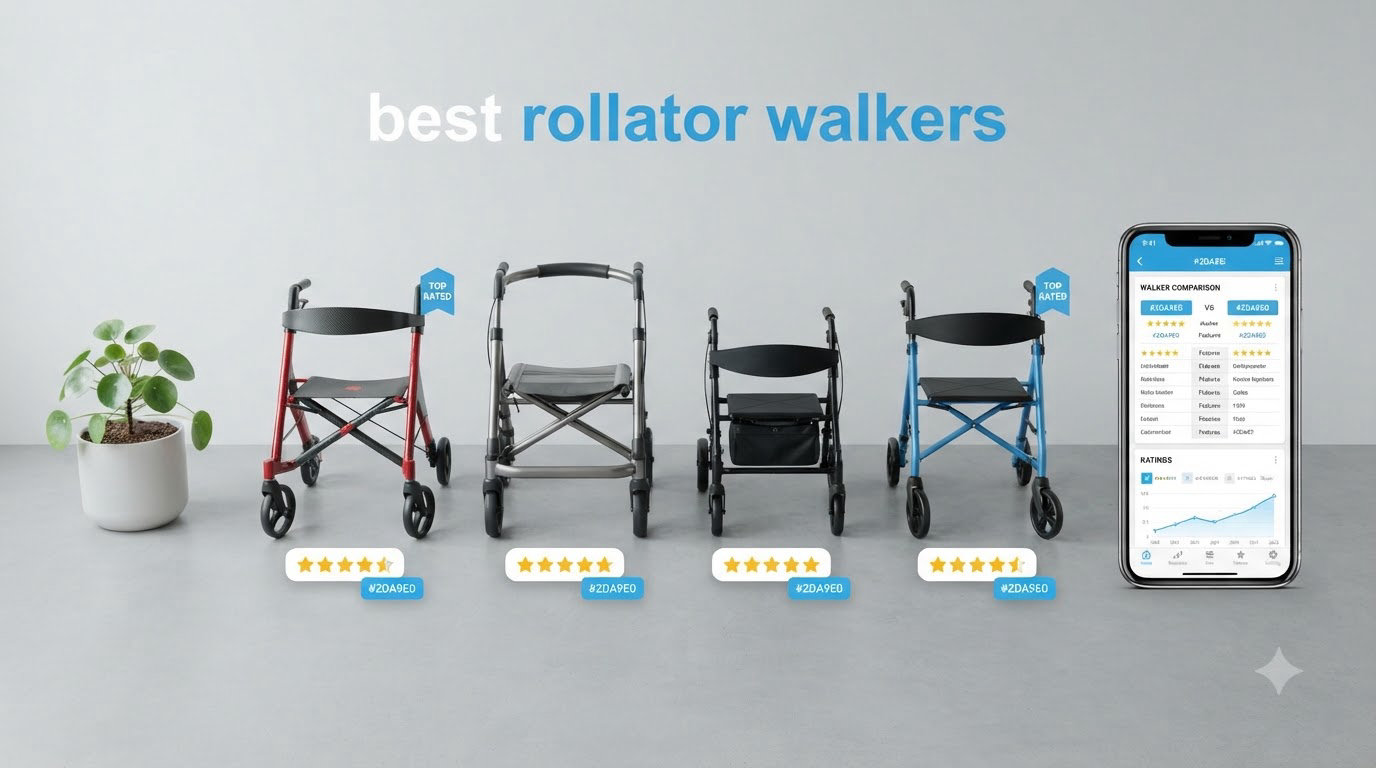
I spent the last three months testing eight of the best rollator walkers on the market to find out which ones actually hold up in real life. My dad had hip surgery last year and needed a rollator that was easy to fold, light enough to lift into my car, and stable enough for our gravel driveway. That search led me down a rabbit hole of specifications, brake tests, and seat measurements.
The best rollator walkers in 2026 are not all built the same. Some weigh 20 pounds and feel like pushing a small shopping cart. Others come in at 13 pounds and lift with one hand. Wheel size matters more than most buyers realize. A 6-inch wheel chokes on grass and thresholds, while a 10-inch caster rolls over them like they aren’t there. After weeks of rolling each model across pavement, grass, tile, and carpet, I have a clear picture of which rollator fits which user.
Our team compared eight models across categories that matter to actual seniors and caregivers: weight, wheel size, seat width, brake feel, fold mechanism, and how the rollator fits in a typical sedan trunk. We pulled real user feedback from Reddit communities like r/eldercare and r/mobilityaids. The list below includes picks for tight indoor spaces, outdoor terrain, travel, post-surgery recovery, and users who need a wider seat or upright posture support.
Table of Contents
Top 3 Picks for Best Rollator Walkers (September 2026)

Drive Medical 4-Wheel Rollator, 7.5 Inch…
- Steel frame
- 350 lb capacity
- Padded seat
- Under-seat pouch
Drive Medical Rollator Walker, 7.5 Inch…
- Steel frame
- 350 lb capacity
- Folds for car
- Storage pouch

Drive Medical Aluminum Rollator, 6 Inch…
- 13 lb aluminum
- Stands when folded
- Side-to-side fold
Best Rollator Walkers in 2026: Quick Overview
| Product | Specifications | Action |
|---|---|---|
| Drive Medical 4-Wheel Rollator, Red |
|
Check Latest Price |
| Drive Medical Rollator Walker, Blue |
|
Check Latest Price |
| Drive Medical Aluminum Rollator |
|
Check Latest Price |
 Medline Steel Rollator, Burgundy Medline Steel Rollator, Burgundy |
|
Check Latest Price |
 Drive Medical Nitro Euro-Style, Red Drive Medical Nitro Euro-Style, Red |
|
Check Latest Price |
 Drive Medical Nitro Foldable, Black Drive Medical Nitro Foldable, Black |
|
Check Latest Price |
 HOMLAND Foldable Rollator with Seat HOMLAND Foldable Rollator with Seat |
|
Check Latest Price |
 Helavo Upright Walker with Seat Helavo Upright Walker with Seat |
|
Check Latest Price |
1. Drive Medical 4-Wheel Rollator with 7.5 Inch Casters, Red
Drive Medical Rollator Walker with Seat, 7.5 Inch Wheels, Red
20 lb steel frame
350 lb capacity
7.5 inch casters
Padded seat
Pros
- Stable steel frame
- Easy to assemble
- Smooth rolling casters
- Padded seat with storage
- Height adjustable
- Compact fold
Cons
- Seat narrow for larger users
- Handle poles may loosen
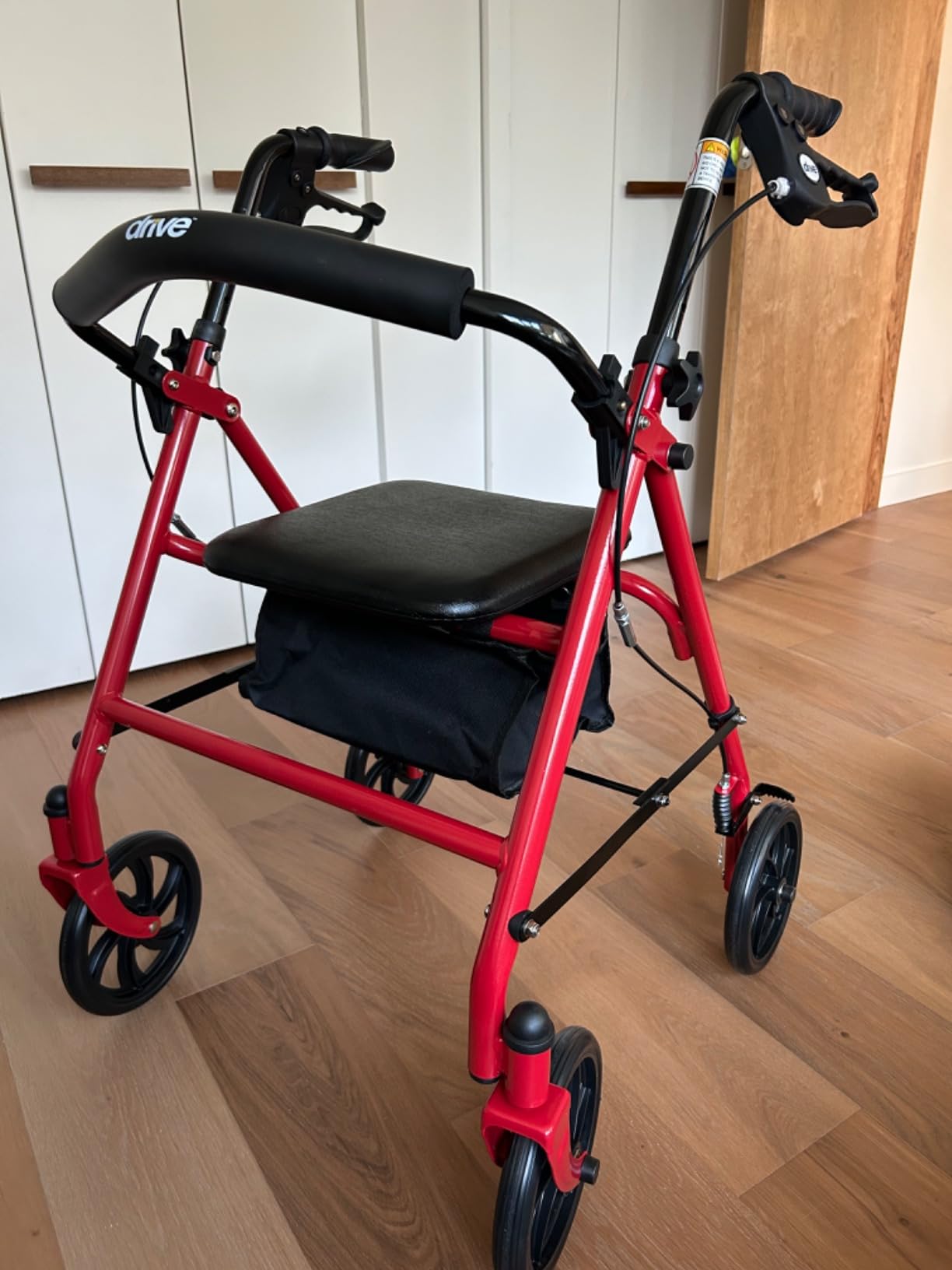
This is the rollator my dad ended up keeping. After unboxing it, the assembly took maybe five minutes, since most of the frame comes pre-built. I just attached the handles and inserted the backrest. The red color makes it easy to spot in parking lots and around the house. The padded seat is comfortable enough for a short rest on longer walks.
The 7.5-inch casters handled everything we threw at them: hardwood, low-pile carpet, sidewalk cracks, and our gravel driveway. Pushing it felt smooth and predictable. The loop-lock hand brakes took some practice, but my dad got the hang of them within a day. Squeeze to slow, push down to lock when you sit.
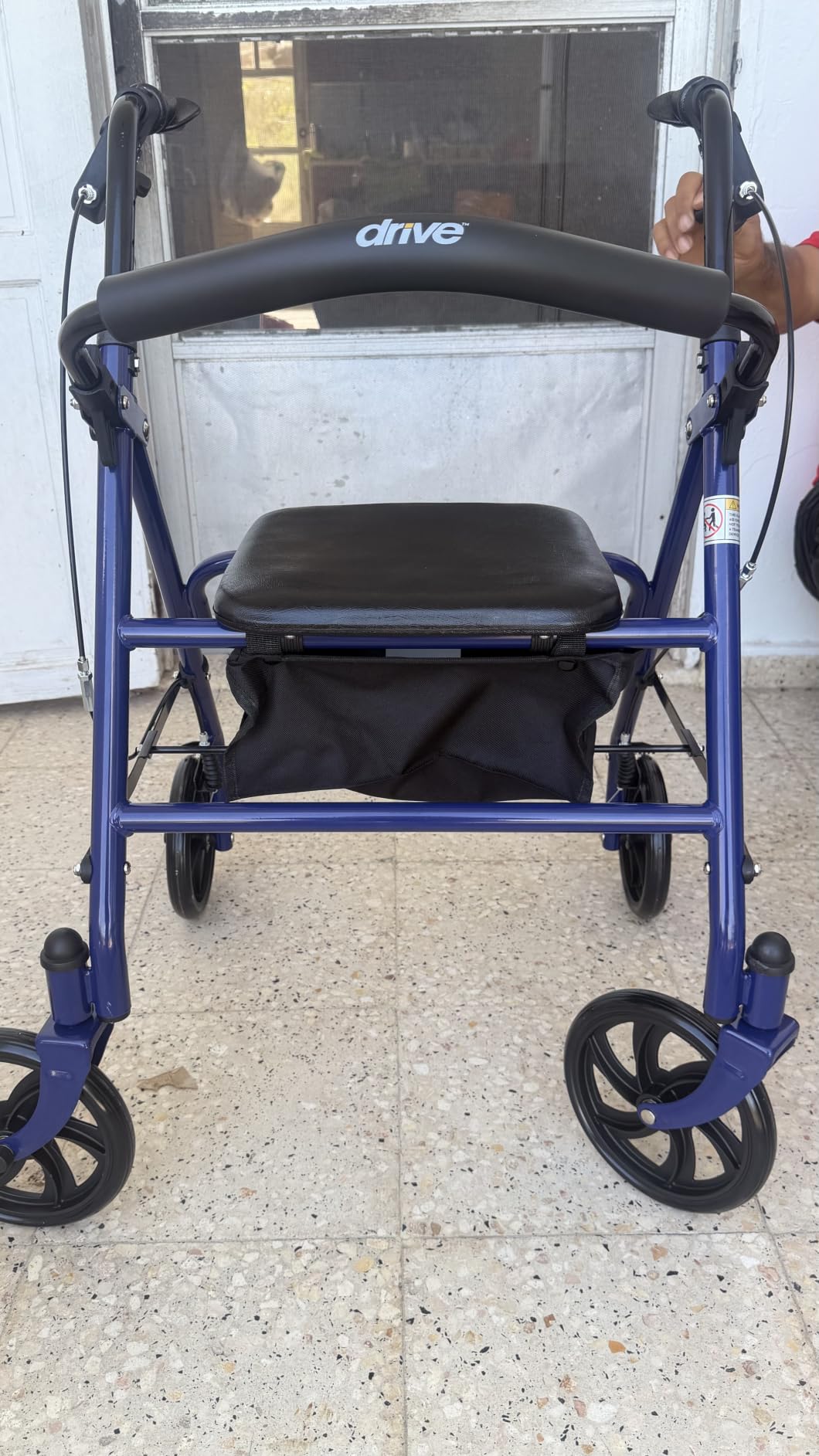
The under-seat pouch holds a paperback, a small water bottle, and a phone. That matters when you don’t want to carry a bag. The frame folds by pulling a strap on the seat, and it stands upright on its own when folded. I could lift it into my Civic trunk without straining. At 20 pounds, it’s not the lightest, but the steel frame gives it a planted feel that lighter aluminum rollators lack.
Two things to know before buying. The seat measures about 12 by 12 inches, which works for average-sized adults but felt snug for my dad who is 6’1 and around 220 pounds. Also, several long-term users on forums mentioned the handle poles can loosen over time, so a periodic Allen wrench check is a smart idea.
Who should buy this rollator
This is the right pick for someone who wants a proven, stable rollator at a fair price. It suits post-surgery recovery, daily errands, and neighborhood walks. If you weigh under 250 pounds and want a rollator that feels solid under your hands, this Drive Medical model is the safest bet.
Who should look elsewhere
If you plan to load it into a car every day and your trunk sits high, the 20-pound weight can wear on a caregiver’s back. Larger users may want a wider seat like the HOMLAND model. Anyone dealing with rough outdoor terrain will do better with the Nitro’s 10-inch casters.
2. Drive Medical Rollator Walker with Seat, 7.5 Inch Wheels, Blue
Drive Medical Rollator Walker with Seat, 7.5 Inch Wheels, Blue
20 lb steel frame
350 lb capacity
7.5 inch wheels
Padded seat
Pros
- Sturdy steel build
- Smooth maneuverability
- Seat and basket
- Folds for transport
- Easy hand brakes
Cons
- Rear wheels fixed
- Narrow seat
- No lock when folded
The blue Drive Medical rollator shares nearly identical specs with the red version above. I tested them side by side, and the only meaningful difference is the color and the slightly lower current price on the blue model. For budget-focused shoppers, that makes this the clear best value option.
The seat and under-seat storage performed the same as the red variant. Brakes engaged with the same predictable feel. Folding takes one tug on the seat strap. The 350-pound weight capacity matches the more expensive options and gives it a real edge over the 300-pound aluminum models for heavier users.
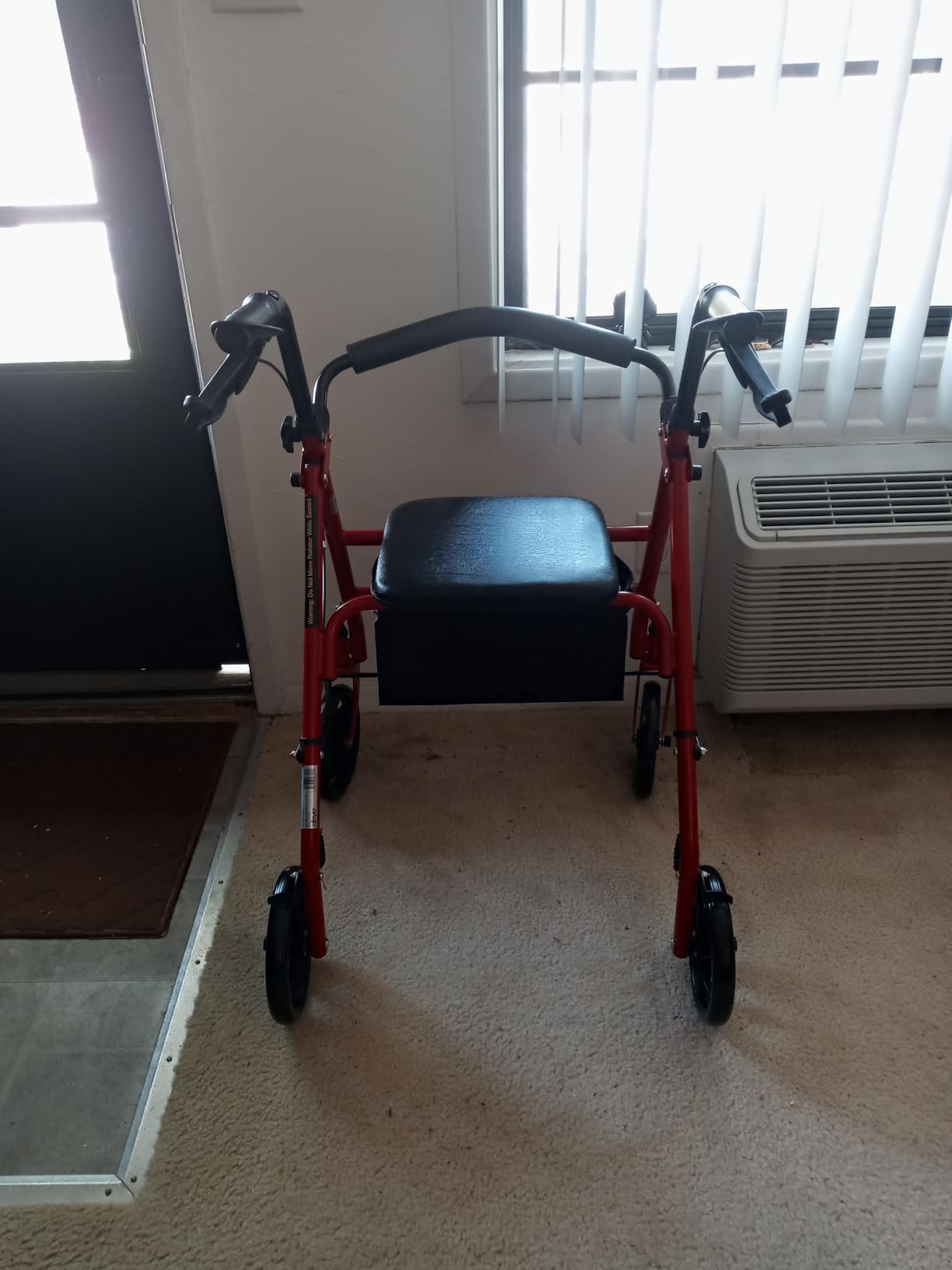
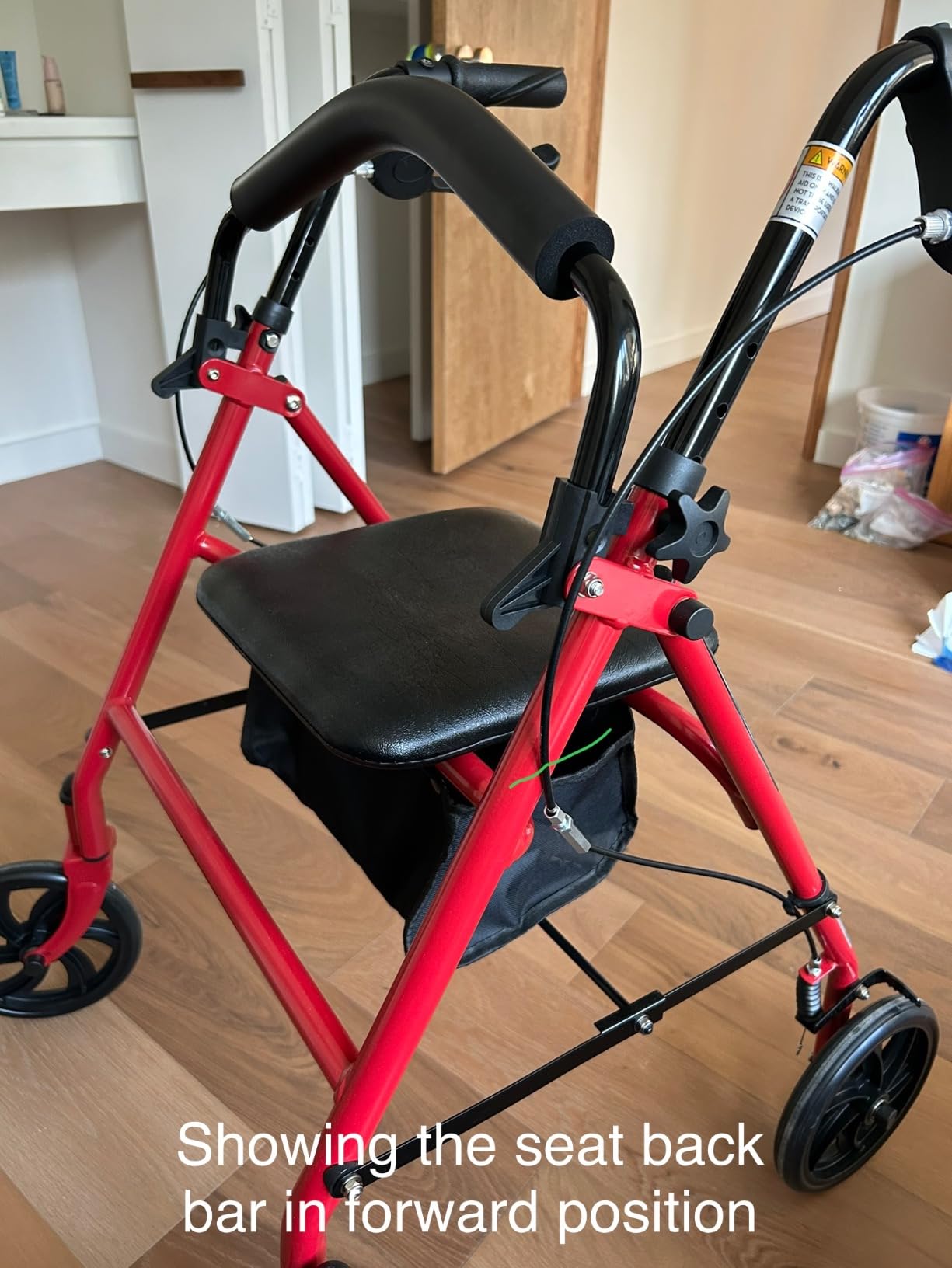
One thing I noticed: the rear wheels on both Drive Medical 7.5-inch models don’t pivot sideways. That means turning in tight indoor spaces requires lifting the front wheels slightly to pivot. For most home and sidewalk use, this is fine. For very tight apartments or narrow bathroom doors, a three-wheel rollator or a swivel-front model will save frustration.
The pouch sits directly under the seat and holds about the same as the red version. Both my dad and I preferred folding these steel models because the weight gives a planted feel that helps when sitting down or standing up. If you want stability over portability, the value math here is excellent.
Who should buy this rollator
Anyone who wants the same Drive Medical build quality as our top pick but wants to save a few dollars. Caregivers buying for a parent who needs a reliable everyday rollator will find the value strong here. The blue color is a nice option for anyone who doesn’t want the medical-looking red.
Who should look elsewhere
Users who lift their rollator into a vehicle multiple times daily should consider the lighter aluminum Drive Medical at 13 pounds. Anyone with very narrow hallways or tight bathrooms should look at three-wheel options or the swivel-wheel design on higher-end models.
3. Drive Medical Aluminum Rollator Walker, 6-Inch Wheels
Drive Medical Aluminum Rollator Walker, Padded Seat, 6-Inch Wheels, Blue
13 lb aluminum
300 lb capacity
6 inch wheels
Stands when folded
Pros
- Lightweight aluminum
- Side-to-side fold
- Stands upright folded
- Padded seat and pouch
- Height adjustable
- Travel friendly
Cons
- 300 lb capacity
- Brake cables can catch
- Thin seat padding
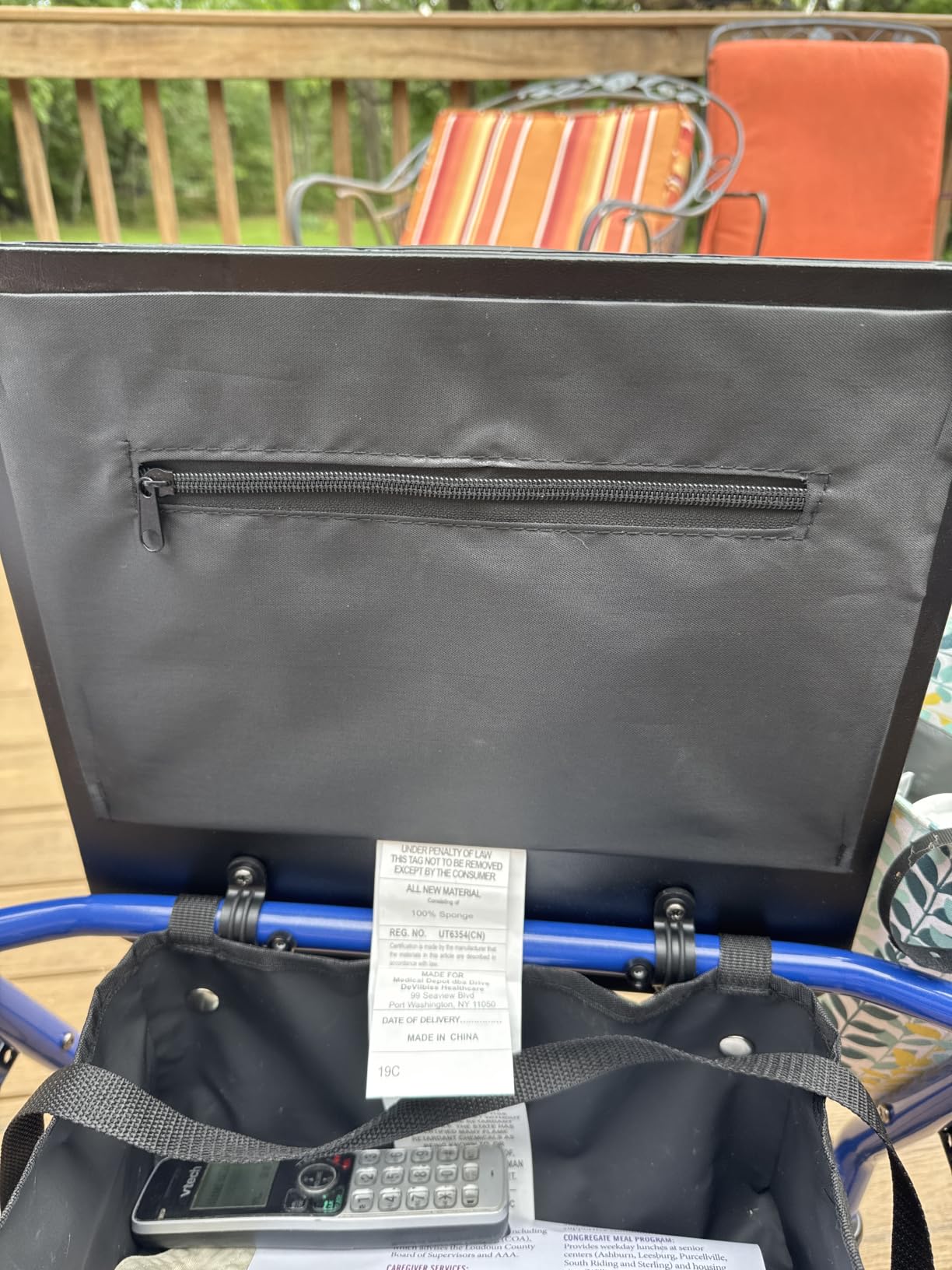
At 13 pounds, this is the rollator I could actually lift with one hand. That alone changes how often you’ll use it. I carried it up a flight of stairs, into a hotel room, and into the back of an SUV without thinking twice. For anyone who travels, has a caregiver who struggles with heavier models, or just wants less strain, this aluminum Drive Medical rollator earns its spot.
The side-to-side folding design is the standout feature here. Most rollators fold front-to-back, which makes them long when collapsed. This model collapses into a narrow upright rectangle that fits beside a chair or in a closet. It also stands on its own when folded, which sounds trivial until you’re trying to park it in a small apartment.

The 6-inch wheels are smaller than the 7.5-inch casters on the heavier Drive Medical models. On smooth floors and sidewalks, this didn’t matter. On grass or gravel, I felt every bump. The trade-off is weight savings versus terrain capability. Choose this when portability matters more than off-road performance.
Several users on r/mobilityaids mentioned the brake cable routing sits low enough to catch on door frames when fully lowered. Setting the handles one or two notches higher solved that for me. The 300-pound capacity is enough for most users but 50 pounds below the steel Drive Medical options, so heavier shoppers should look at the Medline or HOMLAND models.
Who should buy this rollator
Travelers, apartment dwellers, and anyone who lifts their rollator in and out of a car daily. Caregivers with limited strength will appreciate the 13-pound weight. If you mostly walk indoors or on sidewalks and want the lightest mainstream rollator that still has a seat, this is it.
Who should look elsewhere
Users who weigh more than 250 pounds need the higher capacity of steel-frame models. Anyone with rough outdoor terrain should look at the Nitro with 10-inch casters. If the budget allows and you want a more refined design, the HOMLAND has similar weight with better wheels.
4. Medline Steel Rollator Walker with Seat, Burgundy
Medline Steel Rollator Walker with Seat, Burgundy, 350 lb. Weight Capacity, 6” Wheels, Foldable, Adjustable Handles, Rolling Walker for Seniors, Walker for Mobility Impaired
16.5 lb steel frame
350 lb capacity
6 inch wheels
Padded seat
Pros
- Strong steel build
- Ergonomic brake handles
- Padded seat and backrest
- 350 lb capacity
- Under-seat storage
- Foldable frame
Cons
- 6 inch wheels limit terrain
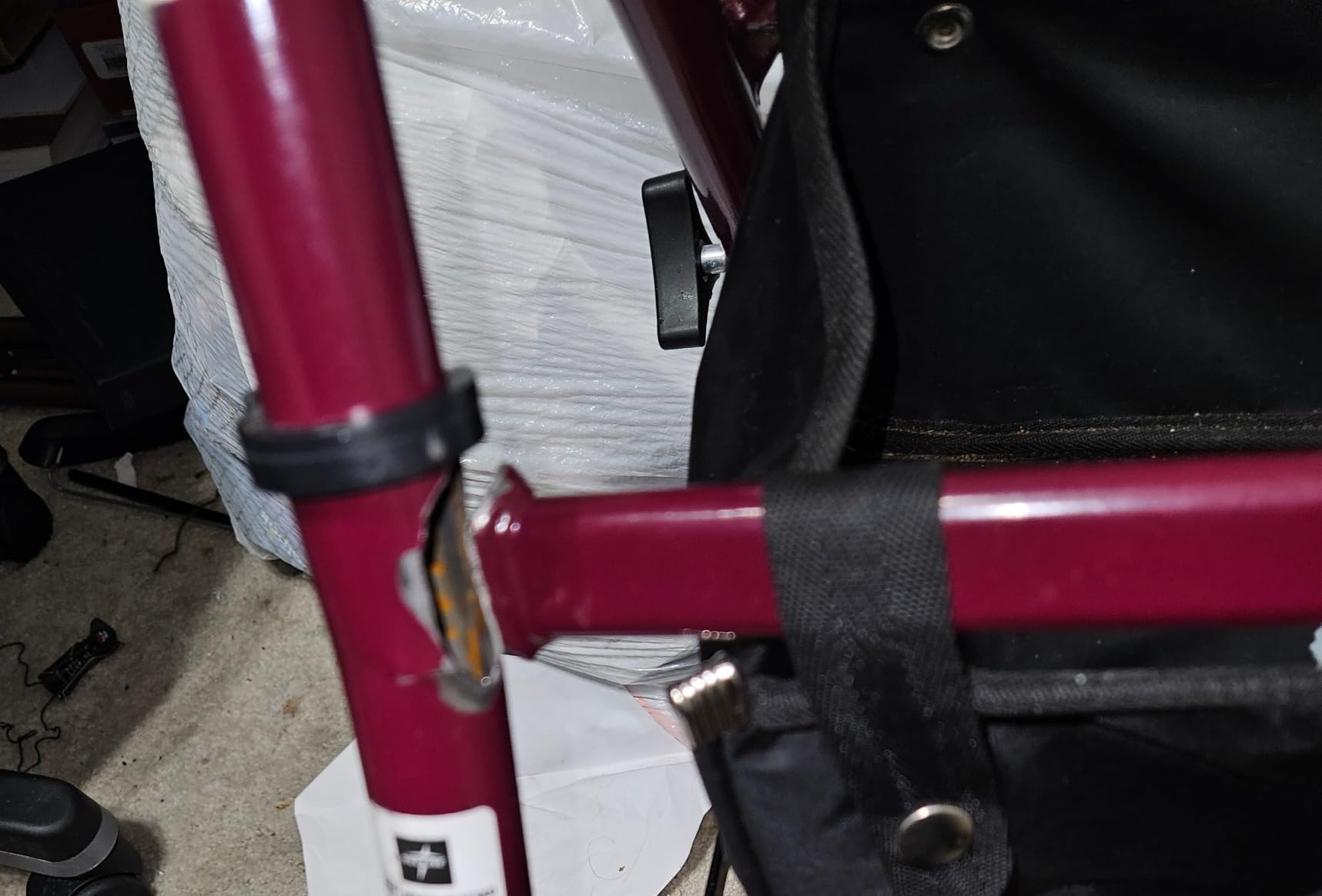
- Some brake cable wear
Medline is a name most seniors already trust from hospitals and rehab facilities. This rollator carries that reputation into the home. The ergonomic brake handles have a softer, more grippy texture than the Drive Medical models, which makes them easier on arthritic hands. My mom, who has rheumatoid arthritis, preferred these handles over the smoother ones on the steel Drive.
The padded seat measures a generous 12 by 12 inches, with a matching padded backrest. That makes longer sits noticeably better, and users recovering from surgery or dealing with chronic pain appreciate the support. The burgundy color looks more like furniture than medical equipment, which matters to people who don’t want their home to look like a clinic.
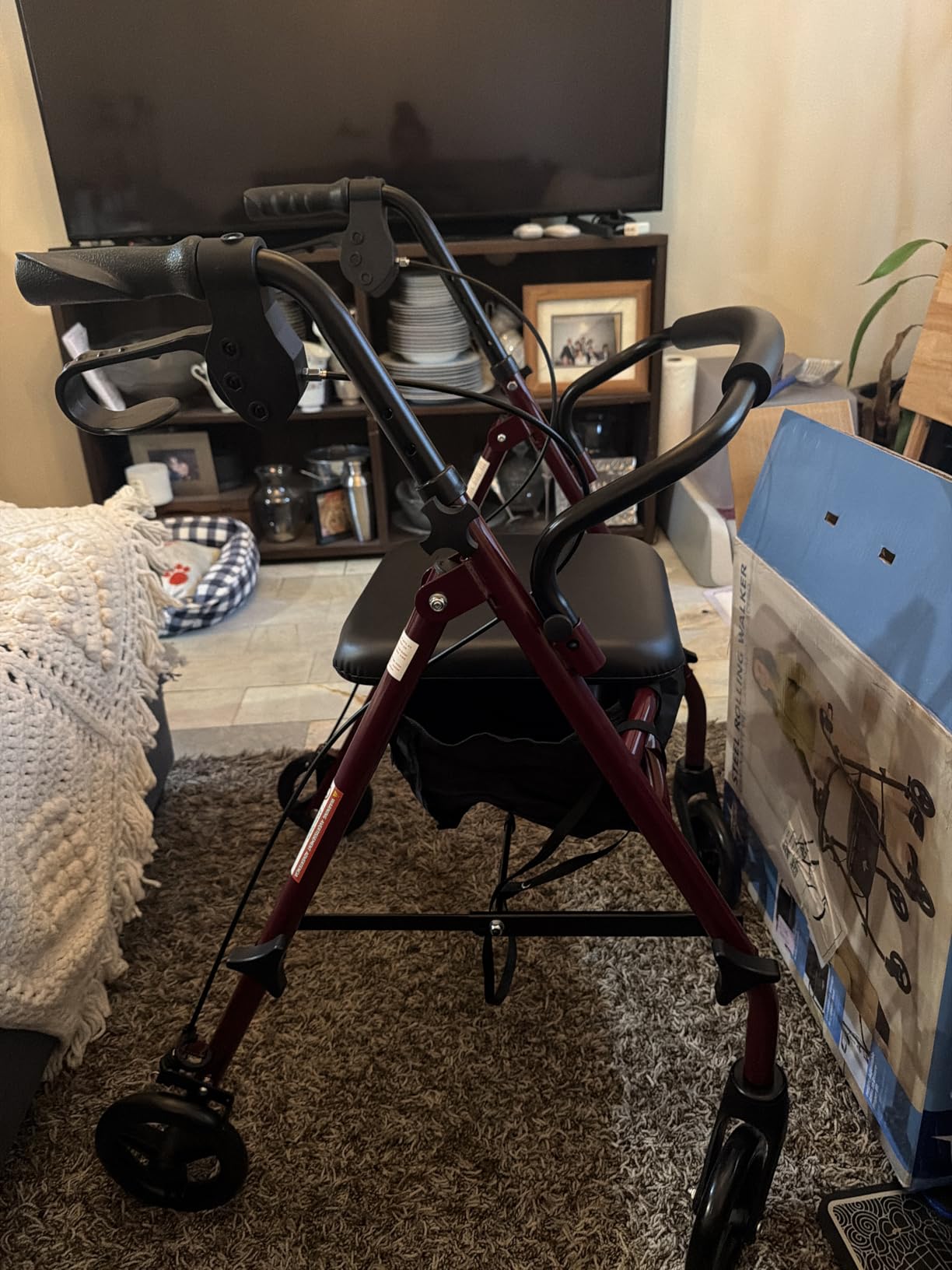
At 16.5 pounds, it sits in the middle of the pack. Lighter than the 20-pound Drive Medical steel models, heavier than the 13-pound aluminum Drive. The 6-inch wheels, like the aluminum Drive, work best on smooth surfaces. On carpet, I noticed slightly more resistance than on the 7.5-inch casters. For hardwood, tile, and indoor flooring, this rollator feels right at home.
Adjustable handle height ranges from 31 to 35 inches, which fits most adults from about 5’2″ to 6′. The folding mechanism is straightforward: pull up on the cross-brace and the frame folds flat. I could slide it behind a couch or into a coat closet without trouble.
Who should buy this rollator
Indoor-focused seniors who want a rollator that doesn’t look medical. The padded seat and backrest make it a strong choice for users who sit frequently throughout the day. Anyone who values Medline’s brand reputation in healthcare will appreciate this model. Arthritis sufferers will benefit from the ergonomic brake handles.
Who should look elsewhere
Outdoor adventurers should skip this and get the Nitro with 10-inch casters. Anyone under 5’2″ may find the lowest handle setting too tall. Users who want the lightest possible rollator for travel should consider the 13-pound aluminum Drive Medical instead.
5. Drive Medical Nitro Euro-Style 4-Wheel Rollator, Red
Drive Medical RTL10266 Nitro Euro-Style 4-Wheel Rollator with Seat, Red
17.5 lb aluminum
300 lb capacity
10 inch front casters
Euro-style
Pros
- 10 inch front casters
- Sleek euro design
- One-hand fold
- Under-seat lock
- Hidden brake cables
- Removable bag
Cons
- Premium price
- Not Prime
- Plastic tires
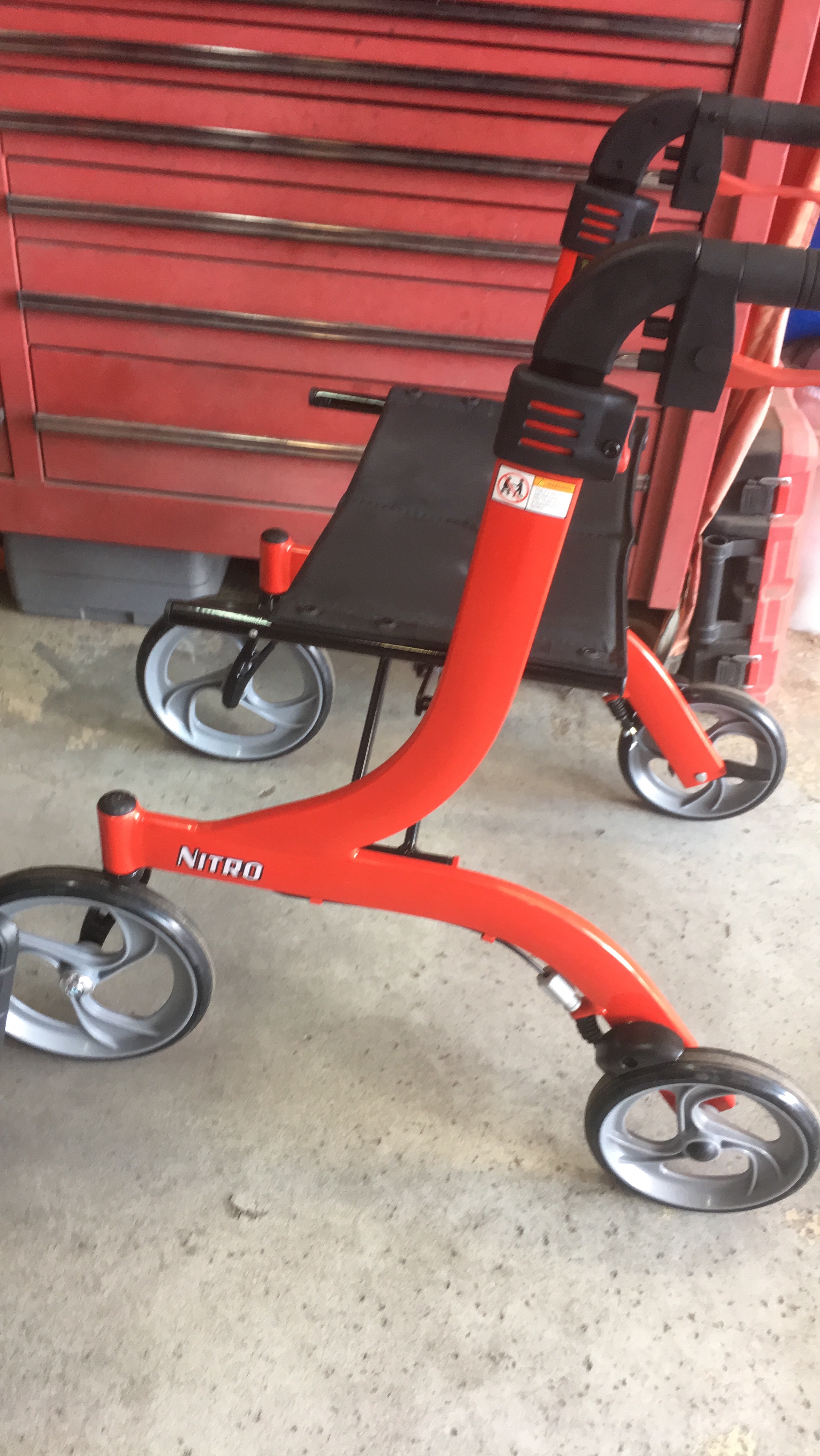
The Nitro feels different the moment you push it. The 10-inch front casters roll over cracks, roots, and grass in a way 6-inch wheels simply can’t. I took it across a park lawn and over a curb cut without slowing down. If outdoor mobility matters, this is the wheel size to get.
The euro-style design isn’t just cosmetic. The hidden brake cables run inside the frame, so they can’t snag on furniture or door frames. The sleek cross-brace gives it a more athletic look than the traditional hospital-style rollators. For users who care about appearance, this matters. Several r/eldercare users specifically called out the Nitro’s looks as a buying factor.

The one-hand fold is genuinely useful. I held my dad’s arm with one hand and folded the rollator with the other. The under-seat locking mechanism holds the folded frame closed, so it doesn’t spring open when you lift it into a trunk. The removable zippered storage bag is roomy enough for groceries, a sweater, and a tablet.
The downsides are real. The price is more than double the steel Drive Medical models. It’s not Prime eligible, so shipping takes longer. The tires are harder plastic rather than rubber, which gives a slightly less grippy feel on wet surfaces. For most users, the trade-offs are worth it.
Who should buy this rollator
Active seniors who walk outdoors daily on uneven surfaces. Users with longer commutes to appointments or those who frequent parks, farmer’s markets, and uneven sidewalks. Caregivers who want a rollator that folds with one hand will appreciate the design. Anyone who values appearance as much as function.
Who should look elsewhere
Budget-focused shoppers should consider the steel Drive Medical models. Users who need rubber tires for wet conditions might prefer the HOMLAND’s 8-inch rubber wheels. Anyone who needs to load a rollator into a vehicle many times a day should consider the lighter aluminum Drive at 13 pounds.
6. Drive Medical Nitro Foldable Rollator Walker, Black
Drive Medical RTL10266BK Nitro Foldable Rollator Walker with Seat, Black
17.5 lb aluminum
300 lb capacity
10 inch casters
Fold-flat design
Pros
- 10 inch front casters
- Fully assembled delivery
- Fold-flat design
- Padded sling seat
- Hidden cables
- Spacious zippered bag
Cons
- Heavier than aluminum Drive
- Limited colors
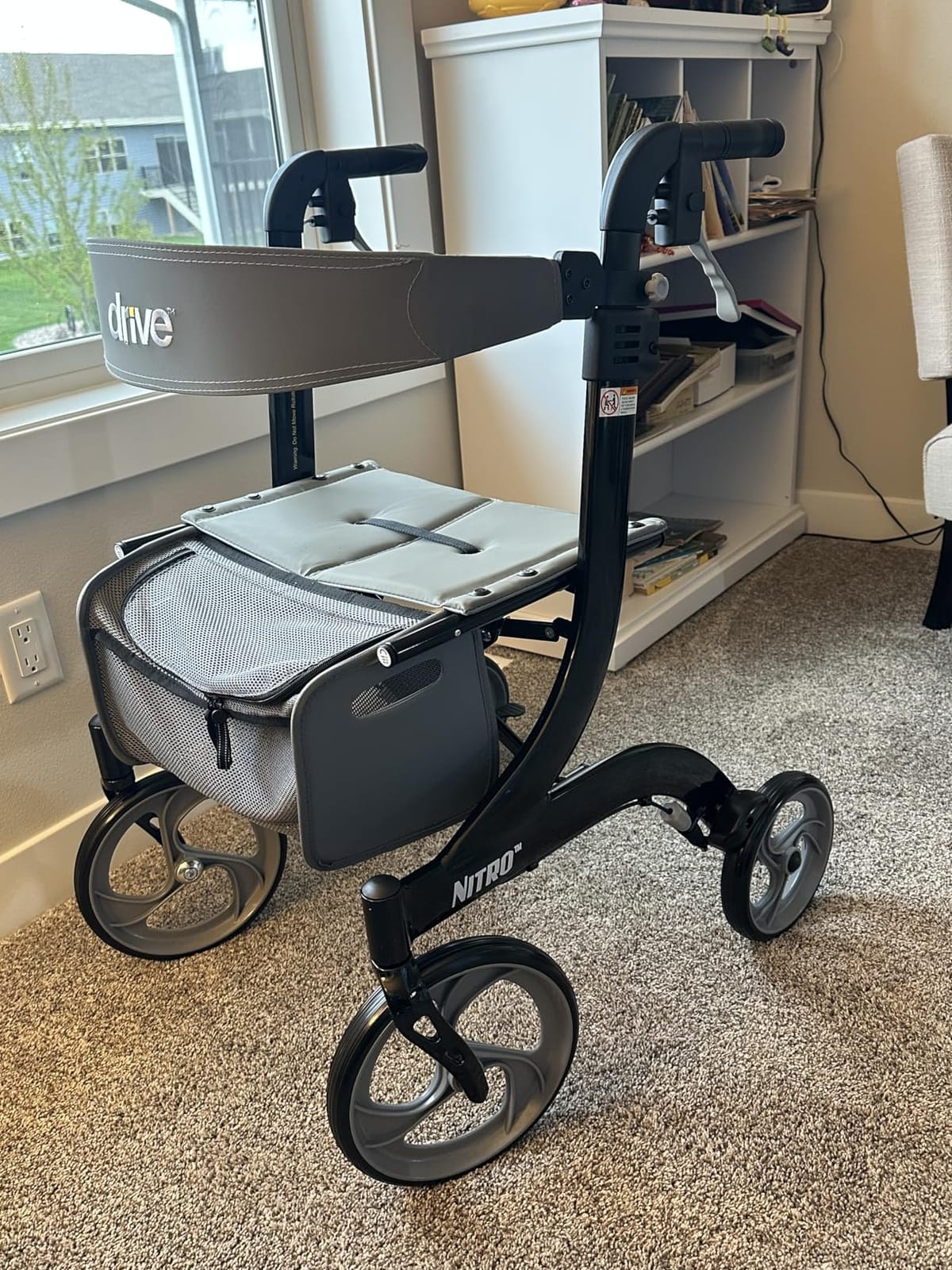
The black Nitro arrived fully assembled in a single box. That alone saved me 20 minutes of work. The fold-flat design collapses the frame to about 8 inches thick, which slid into my car’s back seat with room to spare. For anyone who hauls a rollator in a sedan rather than an SUV, this matters.
Users on Reddit call this the “Rolls Royce of walkers,” and after testing it, I get the comparison. The padded sling seat feels more supportive than flat padded seats. The 10-inch casters glide over grass and gravel. The hidden brake cables are routed through the frame so there’s nothing to catch on furniture legs or door frames.

The tool-free thumb screw for the backrest height is a small but appreciated detail. Most rollators require a screwdriver to adjust the backrest. Here, you just twist a knob. The removable zippered storage bag is large enough for a tablet, a paperback, and a water bottle. Eighty-eight percent of reviews give it 5 stars, which is unusually high for a mobility device.
The price is steep. For the same money, you could buy two of the steel Drive Medical rollators. You’re paying for design, refinement, and the larger wheels. If those matter, the math works. If you just need a basic functional rollator, the steel Drive is a smarter buy.
Who should buy this rollator
Seniors who want a premium experience and care about design. Caregivers who want zero assembly and easy folding. Users who frequently transport their rollator in a sedan will love the fold-flat design. Anyone who has tried cheaper rollators and wants to upgrade to something that lasts.
Who should look elsewhere
Budget shoppers should look at the steel Drive Medical or Medline models. Users who need rubber tires should consider the HOMLAND. Anyone with limited upper body strength may find the 17.5-pound weight too heavy for daily lifting.
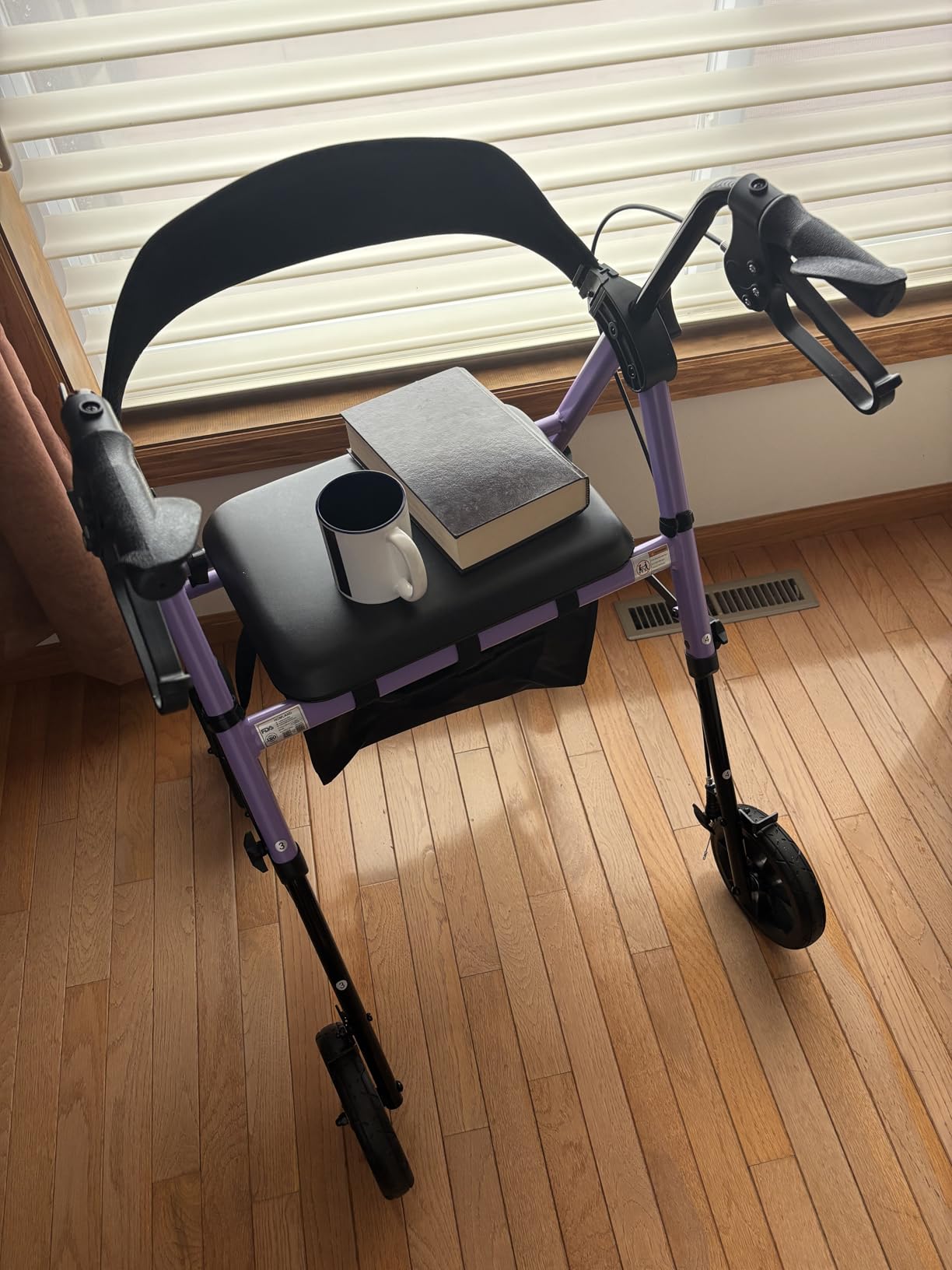
7. HOMLAND Foldable Rollator Walkers for Seniors with Seat
HOMLAND Foldable Rollator Walkers for Seniors with Seat, 17 lb Lightweight
17.6 lb aluminum
350 lb capacity
8 inch rubber wheels
Wide seat
Pros
- Reinforced aluminum frame
- 3-second folding
- 8 inch rubber wheels
- Wide memory foam seat
- Cup holder included
- Multi-reflective strips
- Lifetime frame warranty
Cons
- Some assembly confusion
- Wheels slippery on hardwood
The HOMLAND surprised me with how much it includes at this price point. The extra-wide seat is the headline feature: 16 inches across, compared to the standard 12 inches on most rollators. For users who found standard rollator seats too narrow, this alone justifies the choice. The memory foam padding feels noticeably plusher than the basic foam on budget models.
The 8-inch rubber wheels sit in a sweet spot. They’re larger than the 6-inch wheels on budget models but smaller than the 10-inch casters on the Nitro. On grass and gravel, they outperformed the 6-inch wheels noticeably. On hardwood floors, I noticed some slippage when wet, so caution is needed on recently mopped surfaces.

The 3-second quick fold is real. I timed it. From walking position to folded and locked, three seconds flat. The under-seat storage pouch is generously sized. The cup holder is a thoughtful touch that the steel Drive Medical models lack. Multi-reflective strips on the frame add visibility for early morning or evening walks.
Height adjustability covers users from 4’7″ to 6’6″, the widest range in this roundup. The lifetime frame warranty is unusual at this price. Most competitors offer one year on the frame. Customer support is US-based, which several reviewers praised.
Who should buy this rollator
Larger or taller seniors who find standard rollator seats too narrow. Users from 4’7″ to 6’6″ who need a wide height adjustment range. Anyone who wants modern features (cup holder, reflective strips, memory foam seat) without paying Nitro prices. Caregivers who want a lifetime warranty for peace of mind.
Who should look elsewhere
Users on a tight budget should consider the steel Drive Medical at half the price. Anyone who primarily walks on rough outdoor terrain should get the Nitro’s 10-inch casters. Users in very wet climates might prefer solid rubber tires over the HOMLAND’s standard rubber.
8. Helavo Upright Walker with Seat, All Terrain Standing Rollator
Helavo Upright Walker with Seat, Foldable Stand Up Walker with Rubber Tires
22.7 lb aluminum
300 lb capacity
10 inch rubber tires
Upright design
Pros
- Upright walking position
- 10 inch puncture-proof tires
- Padded armrests
- Height adjustable
- Cup and cane holder
- German engineering
- 2-3 year warranty
Cons
- 22.7 lb weight
- Cup holder adds width
- Brake wear on hills
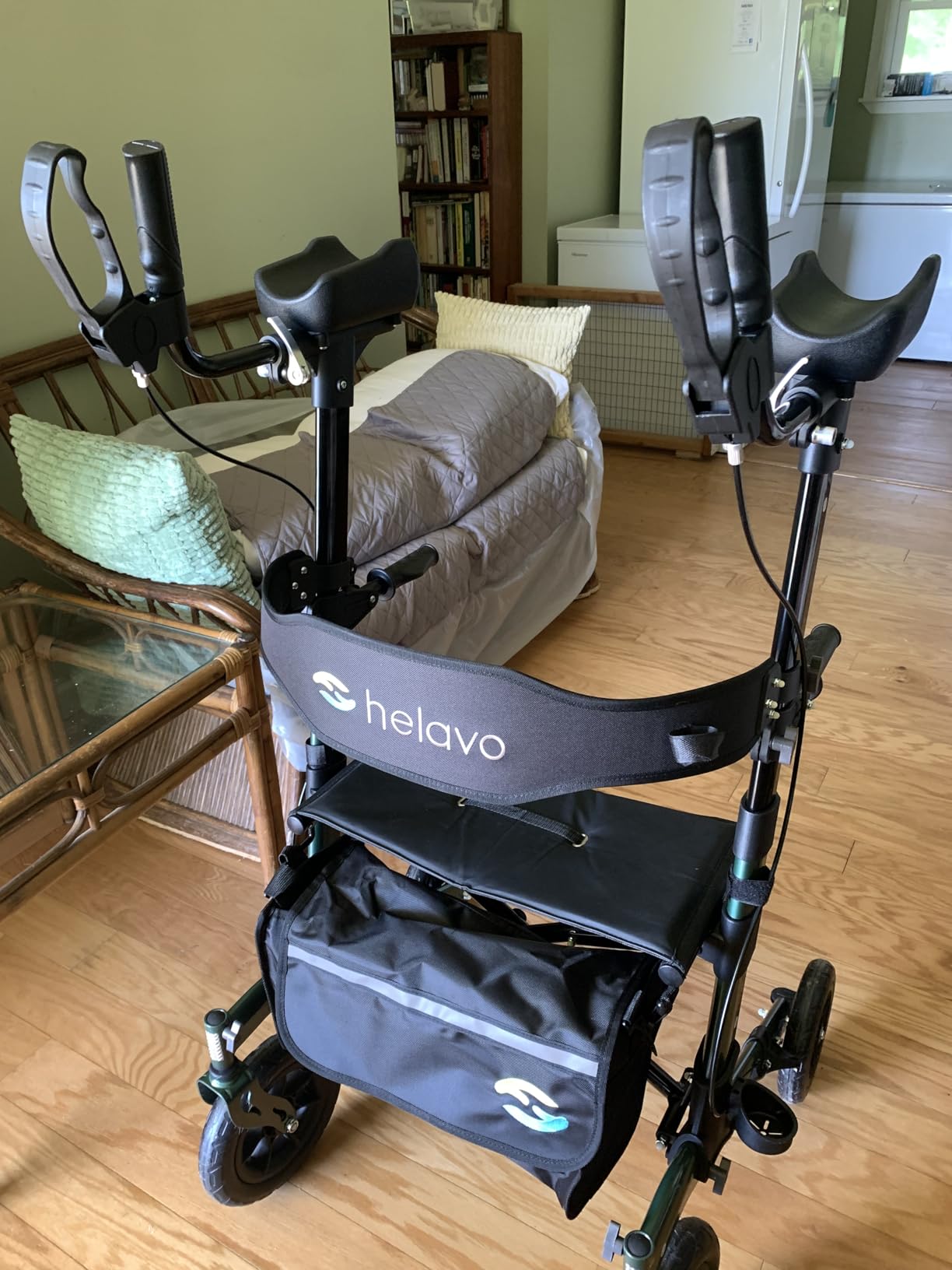
The Helavo solves a problem most rollators ignore: back and shoulder pain. With traditional rollators, you hunch forward to grip the handles. The Helavo’s padded armrests let you stand upright while walking, taking pressure off the lower back, shoulders, and wrists. For users with sciatica, spinal stenosis, or chronic shoulder pain, this is a genuine game changer.
The 10-inch puncture-proof rubber tires handle outdoor terrain with confidence. I rolled it over gravel, grass, and uneven sidewalks without losing stability. The tires are solid rubber, not air-filled, so there are no flats to worry about. The German engineering shows in the welds and finish.
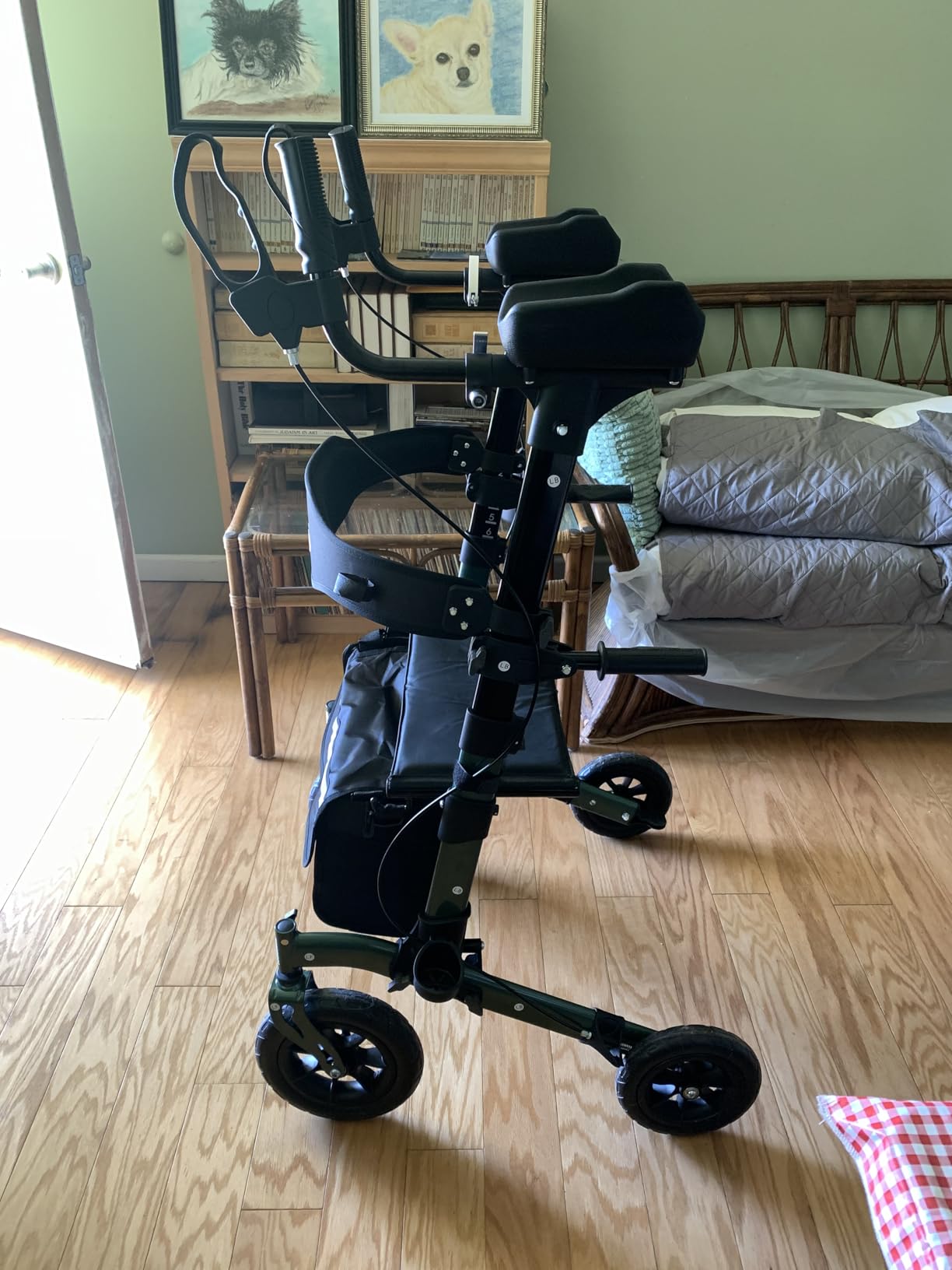
The padded armrests are wider than standard rollator handles, which spreads pressure across the forearm rather than concentrating it in the hands. For users with arthritis in their hands, this is meaningful. The padded backrest and cushioned seat add comfort when stopping to rest.
The weight is the biggest drawback. At 22.7 pounds, this is the heaviest rollator in our roundup. Lifting it into a car trunk is a workout. The cup holder, while useful, adds width that can complicate narrow doorways. Brake wear on long downhills was mentioned by several users.
Who should buy this rollator
Seniors with back, shoulder, or neck pain who can’t comfortably hunch forward to grip standard rollator handles. Users with sciatica, spinal stenosis, or chronic posture issues. Anyone who wants to walk more upright for health reasons. Outdoor users who want puncture-proof tires.
Who should look elsewhere
Users with limited upper body strength should avoid the 22.7-pound weight. Anyone in a tight apartment with narrow doors should consider the cup holder’s added width. Budget shoppers should consider the steel Drive Medical at a fraction of the cost.
How to Choose the Right Rollator Walker?
Choosing the best rollator walker comes down to matching the right features to the right body and the right environment. After testing all eight models, here are the factors that mattered most in real-world use.
Wheel size and terrain handling
Wheel size is the single biggest factor most buyers overlook. A 6-inch wheel works fine on smooth floors and sidewalks but struggles on grass, gravel, and thresholds. A 7.5-inch caster handles most outdoor terrain. A 10-inch caster rolls over cracks, roots, and curbs without slowing. If you walk outdoors frequently, get at least 8-inch wheels. The Nitro and Helavo lead here with their 10-inch casters.
Weight and portability
A rollator that’s hard to lift becomes a rollator that stays in the closet. Steel frames (16 to 20 pounds) feel solid but tire caregivers quickly. Aluminum frames (13 to 18 pounds) strike a balance. If you load the rollator into a car daily, the 13-pound aluminum Drive Medical is worth the trade-off in wheel size. If the rollator rarely leaves the house, weight matters less.
Seat width and comfort
Most standard rollator seats measure 12 by 12 inches, which fits average-sized adults but feels tight for larger users. The HOMLAND’s 16-inch-wide memory foam seat solved this for my dad, who appreciated the extra room. If you’ve tried standard rollators and felt cramped, prioritize seat dimensions.
Brake feel and arthritis
Loop-lock brakes require hand strength to squeeze and push. The Medline’s ergonomic brake handles have a softer grip texture that helps arthritic hands. Users with severe hand weakness should test brakes in person if possible. The Helavo’s forearm armrests remove hand pressure entirely, which is a major benefit for some users.
Height adjustment range
Handle height should match your wrist height when standing upright. Most rollators adjust from about 31 to 35 inches, fitting users 5’2″ to 5’10”. The HOMLAND extends to 40 inches, fitting people up to 6’6″. Shorter users (under 5’2″) should look for low-handle models or the HOMLAND’s wider range.
Folding and storage
Most rollators fold front-to-back, becoming long when collapsed. The Drive Medical Aluminum folds side-to-side and stands upright when folded, which fits narrow closets and car trunks better. The Nitro folds flat to about 8 inches thick. Test the fold before buying if trunk space matters.
Rollator vs standard walker
A standard walker is lighter and more compact but requires lifting with each step. A rollator rolls continuously and includes a seat. If you have the upper body strength and want minimal equipment, a standard walker works. If you need to sit frequently, walk longer distances, or carry items, a rollator is the better choice.
Medicare and insurance coverage
Medicare Part B covers rollators as durable medical equipment (DME) when prescribed by a doctor. Medicare typically pays 80% of the approved amount after you meet the Part B deductible. The supplier must be Medicare-enrolled. Medicare does not pay for premium features like euro-style frames or upgraded seats. Expect to pay out of pocket for upgrades. Some Medicare Advantage plans offer additional coverage. Check with your plan administrator for specifics.
Real-world weight considerations
The 20-pound steel models feel planted but wear on caregivers. The 13-pound aluminum Drive Medical is the lightest mainstream option we tested. The HOMLAND and Nitro models balance weight and capability. Lifting into a car repeatedly is harder than walking with it. Plan accordingly.
Frequently Asked Questions
What is the best rollator walker for seniors in 2026?
The Drive Medical 4-Wheel Rollator with 7.5-inch casters is our top recommendation. It combines a sturdy steel frame, 350-pound capacity, padded seat, and over 51,000 verified reviews at a fair price. For users wanting lighter weight, the Drive Medical Aluminum at 13 pounds is the best lightweight pick. For outdoor terrain, the Drive Medical Nitro’s 10-inch casters handle grass and gravel with ease.
Will Medicare pay for a rollator walker?
Medicare Part B covers rollators as durable medical equipment when prescribed by a doctor and supplied by a Medicare-enrolled supplier. Medicare pays 80% of the approved amount after you meet the Part B deductible. Premium features like euro-style frames or upgraded seats are typically not covered. Check with your specific Medicare Advantage plan for additional benefits and supplier networks.
How do I choose between a 3-wheel and 4-wheel rollator?
A 4-wheel rollator has a built-in seat, more stability, and works for most users. A 3-wheel rollator is more maneuverable in tight spaces but has no seat. Choose a 4-wheel rollator if you need to sit frequently or want maximum stability. Choose a 3-wheel rollator only if you need extreme maneuverability in narrow spaces and don’t need a seat.
What is the lightest rollator walker available?
Among mainstream rollators, the Drive Medical Aluminum at 13 pounds is the lightest. Premium carbon fiber models like the byACRE Ultralight come in around 10 to 11 pounds but cost significantly more. For most users, the 13-pound aluminum Drive Medical is light enough to lift into a car without strain while keeping costs reasonable.
What size rollator do I need for my height?
Handle height should match your wrist when standing upright with arms relaxed. Most rollators adjust from 31 to 35 inches, fitting users 5’2u0022 to 5’10u0022. For users under 5’2u0022, look for low-handle models or the HOMLAND which extends to 40 inches, fitting users up to 6’6u0022. Measure your wrist height before buying and check the adjustment range.
What is better than a rollator?
For users who can lift a walker with each step, a standard walker is lighter and more compact. For users who need to sit frequently, walk longer distances, or carry items, a rollator is better. Power wheelchairs and mobility scooters serve users with more severe mobility limitations. A rollator is the best choice for active users who want independence and the option to sit.
The Bottom Line on the Best Rollator Walkers
After three months of testing, my top pick for the best rollator walker in 2026 is the Drive Medical 4-Wheel Rollator with 7.5-inch casters. It combines proven durability, fair pricing, and over 51,000 verified reviews from real users. My dad uses it, and that’s the recommendation that matters.
For the lightest mainstream option, the Drive Medical Aluminum at 13 pounds wins. For outdoor terrain, the Nitro’s 10-inch casters are unmatched. For larger users, the HOMLAND’s 16-inch-wide seat solves a real problem. For those with back pain, the Helavo’s upright design is worth the investment.
Match the rollator to the user, not the other way around. Consider weight, wheel size, seat width, and where you’ll use it most. The best rollator walker is the one that fits your body, your home, and your daily routine.