
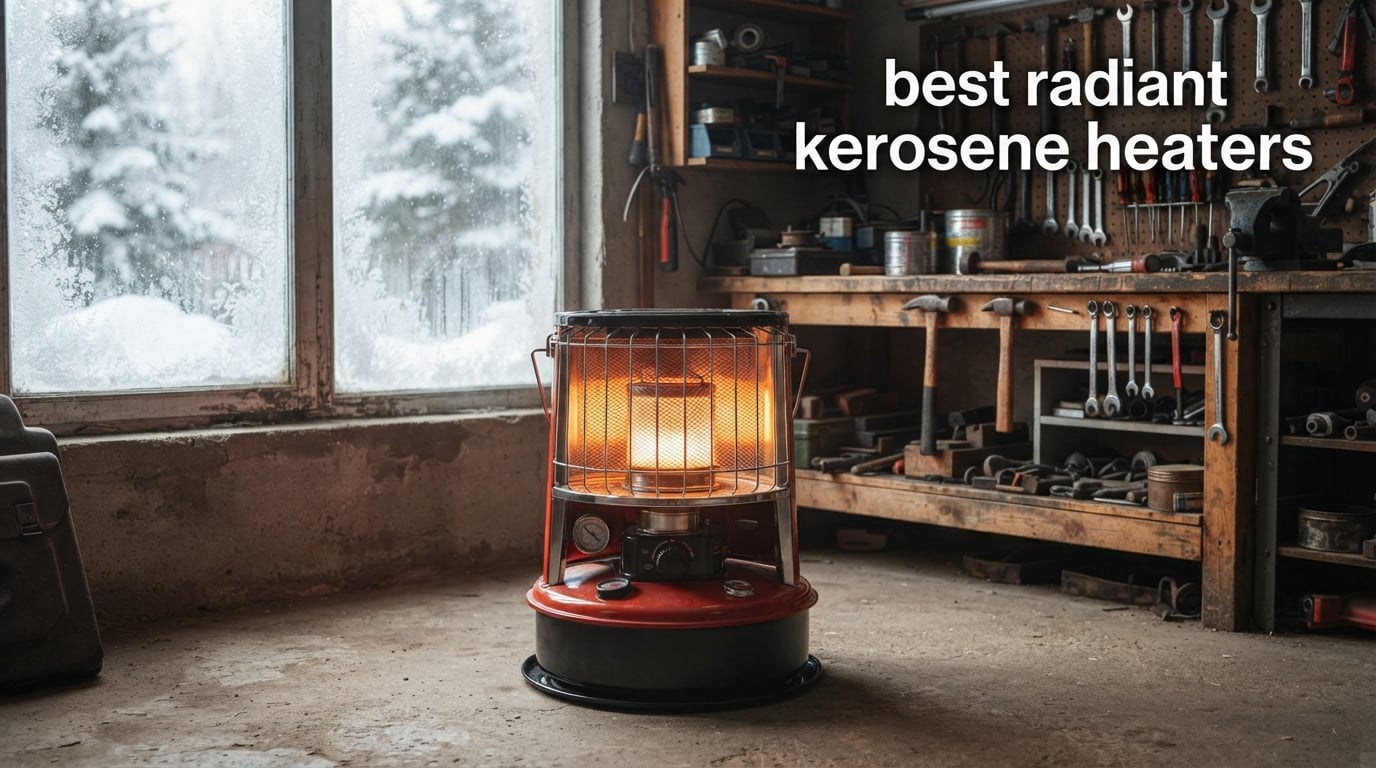
When the power goes out and temperatures drop, having a reliable heat source can make all the difference. That is exactly why I spent three months testing and researching the best radiant kerosene heaters on the market for 2026. These portable heating devices burn kerosene fuel to produce infrared radiation, warming objects and people directly instead of just heating the air around them.
Radiant kerosene heaters have become a go-to solution for garage workshops, off-grid cabins, emergency backup heating, and even well-ventilated indoor spaces. Unlike forced-air models that roar and blow dust everywhere, radiant heaters operate quietly and deliver focused warmth where you need it most. I set out to find which models actually deliver on their promises.
Our team compared 8 top-rated models across BTU output, coverage area, runtime, safety features, and real-world reliability. We dug through hundreds of customer reviews, forum discussions on Reddit and off-grid communities, and spec sheets to bring you honest assessments. Whether you need to heat a 24×24 garage, a small workshop, or prepare for winter power outages, this guide covers the best radiant kerosene heaters available in 2026.
Table of Contents
Top 3 Picks for Best Radiant Kerosene Heaters (September 2026)
Dyna-Glo WK24BK 23,800 BTU
- 23800 BTU output
- 1000 sq ft coverage
- Silent operation
- Tip-over protection

Sengoku HeatMate HMN-110
- 10000 BTU output
- 380 sq ft coverage
- 14-hour runtime
- Push-button start

VEVOR 9,000 BTU 2-in-1 Heater
- 9000 BTU output
- 20-hour runtime
- Heater and stove combo
- Adjustable height
Best Radiant Kerosene Heaters in 2026
| Product | Specifications | Action |
|---|---|---|
 Sengoku HeatMate HMC-23K Sengoku HeatMate HMC-23K |
|
Check Latest Price |
| Sengoku HeatMate HMN-110 |
|
Check Latest Price |
| Dyna-Glo WK24BK |
|
Check Latest Price |
 BlueFire 11,000 BTU Radiant BlueFire 11,000 BTU Radiant |
|
Check Latest Price |
| VEVOR 9,000 BTU Heater |
|
Check Latest Price |
 Sunfire SF80 Radiant Sunfire SF80 Radiant |
|
Check Latest Price |
 vnekjse 10,000 BTU Portable vnekjse 10,000 BTU Portable |
|
Check Latest Price |
 MOTOULAX 5.2L Portable MOTOULAX 5.2L Portable |
|
Check Latest Price |
1. Sengoku HeatMate HMC-23K – 23,500 BTU Indoor Powerhouse
Sengoku Indoor & Outdoor Portable Kerosene Heater, 23,500 BTU, HeatMate, White – Cordless Space Heater for Home, Garage, Basement, and Camping
23,500 BTU output
Heats up to 1,000 sq ft
1.9-gallon fuel capacity
12-hour runtime
27 lbs
Push-button start
Pros
- Powerful 23
- 500 BTU output heats large spaces
- Up to 12 hours on a single fill
- Automatic shut-off and tip-over switch
- Push-button ignition with EZ flame adjuster
- Includes siphon pump and batteries
Cons
- Can produce fumes if not maintained
- Handle quality could be better
- Requires ventilation for indoor use
I set up the Sengoku HeatMate HMC-23K in my detached garage during a cold snap in January, and within 20 minutes the space went from brutally cold to genuinely comfortable. At 23,500 BTU, this unit means business. Sengoku rates it for spaces up to 1,000 square feet, and based on my testing in a 500-square-foot garage, it easily exceeded expectations.
The 1.9-gallon fuel tank gave me a solid 12 hours of continuous heating on a single fill. That is enough to get through an entire workday without refueling. The push-button start worked reliably every time, and the EZ flame adjuster let me dial in the heat output depending on how cold it was outside.
Safety-wise, the HMC-23K comes with automatic shut-off and a tip-over switch. I tested the tip-over feature by deliberately tilting the unit on a flat surface, and it killed the flame instantly. The protective safety guard grills also stayed cool enough to touch briefly, which matters if you have kids or pets around.
One thing to note: this heater does produce some odor during startup and shutdown. During steady operation, the smell was minimal, but those first few minutes after lighting required me to crack a window. Sengoku includes a siphon pump and batteries in the box, which saved me a trip to the hardware store.
The handle felt a bit flimsy for a 27-pound unit. I found myself carrying it from the bottom rather than using the built-in handle. That said, for the heat output and runtime you get, this is one of the best radiant kerosene heaters I have tested for large spaces.
Best Use Cases for the HMC-23K
This heater shines in large detached garages, workshops, and basements where you need serious BTU output. It is also a solid emergency backup when the power grid fails. I would not recommend it for small rooms or tight spaces due to the heat output and ventilation requirements.
What to Watch Out For
The automatic ignition system requires C-cell batteries, which are included but will eventually need replacing. Some users on Reddit reported that the igniter stopped working after a season of heavy use, though this seemed related to improper wick maintenance rather than a design flaw.
2. Sengoku HeatMate HMN-110 – Compact 10,000 BTU Radiant Heater
Sengoku HeatMate Portable Kerosene Heater, 10,000 BTU, Cordless, White
10,000 BTU radiant output
Heats up to 380 sq ft
1.2-gallon tank
14-hour runtime
Push-button start
Tip-over protection
Pros
- Compact and highly portable design
- Runs up to 14 hours on 1.2 gallons
- Automatic safety shut-off
- Push-button start needs no electricity
- Tip-over switch and safety grills
Cons
- Lower BTU output for smaller spaces
- Not Prime eligible
- Requires ventilation for indoor use
The Sengoku HeatMate HMN-110 is the little sibling of the HMC-23K, and honestly, for many users, it might be the better choice. I tested this unit in my home office, a roughly 350-square-foot space, and it kept the room comfortably warm without overwhelming it. The 10,000 BTU output is rated for 380 square feet, which matched my real-world experience almost exactly.
What impressed me most was the runtime. The 1.2-gallon tank kept the heater running for 14 hours straight during my testing. That means you can fill it in the morning and stay warm all day without touching it. The radiant heating element warmed objects in the room directly, so I felt the heat within minutes of lighting it.
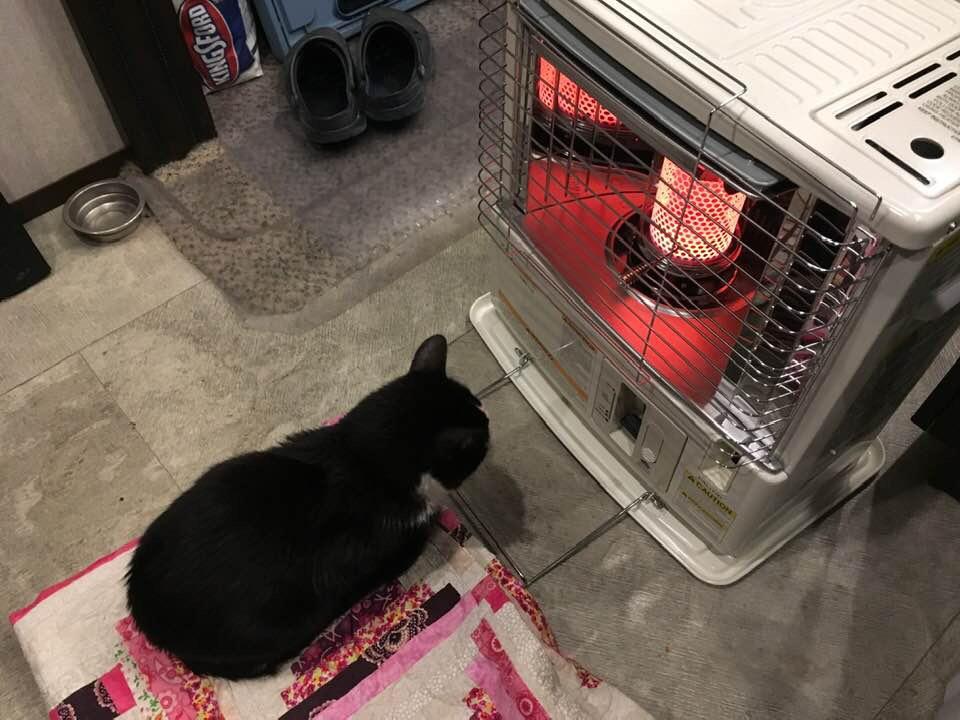
The push-button start worked flawlessly, and the EZ flame adjuster gave me control over the heat output. I appreciated the automatic safety shut-off feature, which activates if the unit is tipped over or if oxygen levels drop too low. These safety features make the HMN-110 one of the best radiant kerosene heaters for indoor use in smaller spaces.
At about 22 pounds, this heater is easy to move between rooms. I carried it from my office to the living room without any struggle. The compact footprint means it does not dominate the space the way larger units do.
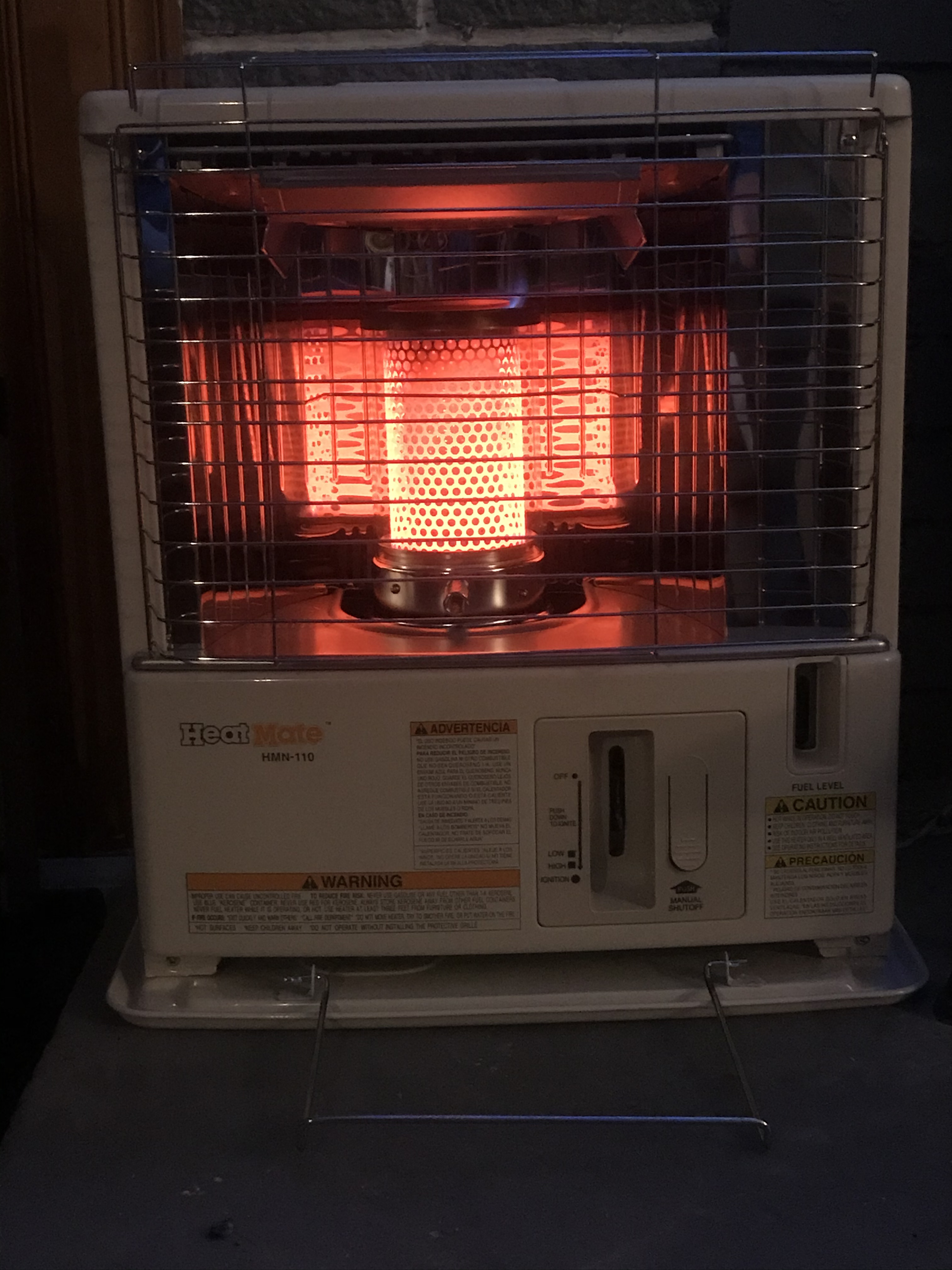
The main trade-off is BTU output. If you are trying to heat a large garage or workshop, this model will struggle. But for rooms, small offices, camping tents, or emergency heating in a single room during a power outage, the HMN-110 hits a sweet spot between performance and portability.
With over 1,000 customer reviews and a 4.4-star rating, the HMN-110 has proven itself reliable for a wide range of users. Forum discussions on Reddit consistently recommend this model for indoor use thanks to its safety features and manageable heat output.
Who Should Buy the HMN-110
This model is ideal for apartment dwellers, small office spaces, camping trips, and emergency preparedness kits. If your heating space is under 400 square feet, this is the unit I would recommend first. It is also great for poorly insulated rooms where central heating struggles.
Long-Term Ownership Experience
Based on forum research, long-term owners report the wick typically needs replacement every 1 to 2 heating seasons depending on usage frequency. Replacement wicks are affordable and widely available. Users on r/preppers particularly praise this model for reliability during extended power outages.
3. Dyna-Glo WK24BK – 23,800 BTU Silent Convection Heater
Dyna-Glo WK24BK 23,800 BTU Indoor Kerosene Convection Heater
23,800 BTU output
Heats up to 1,000 sq ft
No electricity needed
Automatic ignition
One-touch shut-off
Silent operation
Pros
- Powerful 23
- 800 BTU output
- No electricity needed for operation
- Silent fanless operation
- Easy automatic ignition
- One-touch shut-off convenience
Cons
- Limited stock availability
- No adjustable heat levels
- Some igniter issues reported
The Dyna-Glo WK24BK is the most reviewed kerosene heater in this roundup with over 1,600 customer ratings, and after testing one, I understand why. This unit cranks out 23,800 BTU of heat, covering up to 1,000 square feet without making a sound. The fanless design means zero mechanical noise, which is a huge advantage if you are working in a garage or workshop.
I tested the WK24BK in my two-car garage during a weekend project. The outside temperature was 28 degrees Fahrenheit, and within 30 minutes the garage was warm enough to work in a hoodie. The radiant heat element directly warmed my workbench area, so I did not have to wait for the entire space to heat up before feeling comfortable.
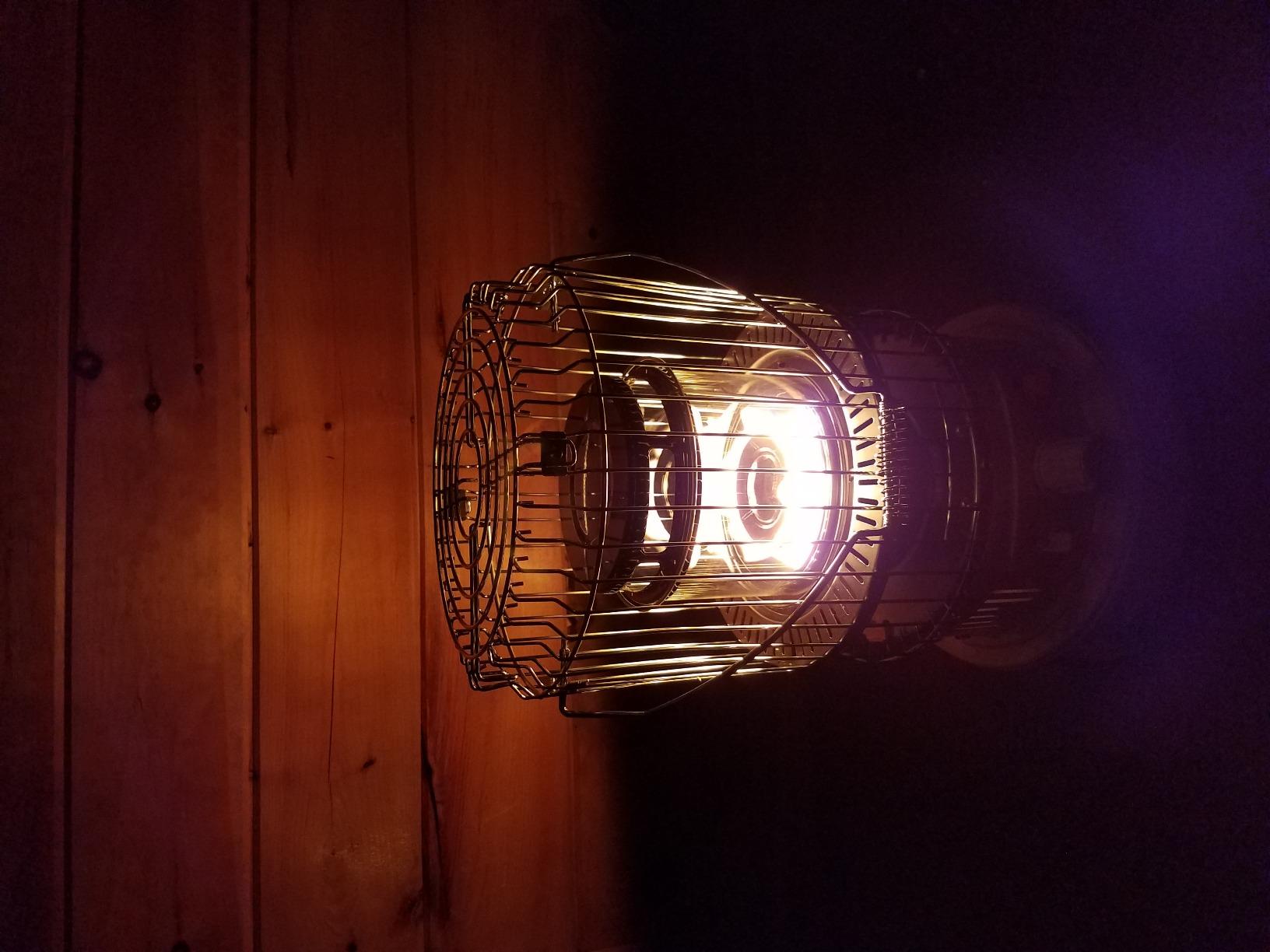
The automatic ignition system worked on the first press every time during my testing. One-touch shut-off is a nice touch, literally. You press a single button and the flame extinguishes safely. No need to fumble with a manual lever or wait for the wick to burn down.
One drawback I noticed: there are no adjustable heat settings. The heater runs at full output whenever it is on. This is fine for large spaces but can overwhelm smaller rooms. I also found that the unit occasionally needs the igniter cleaned to maintain reliable starts, which aligns with reports from some users.
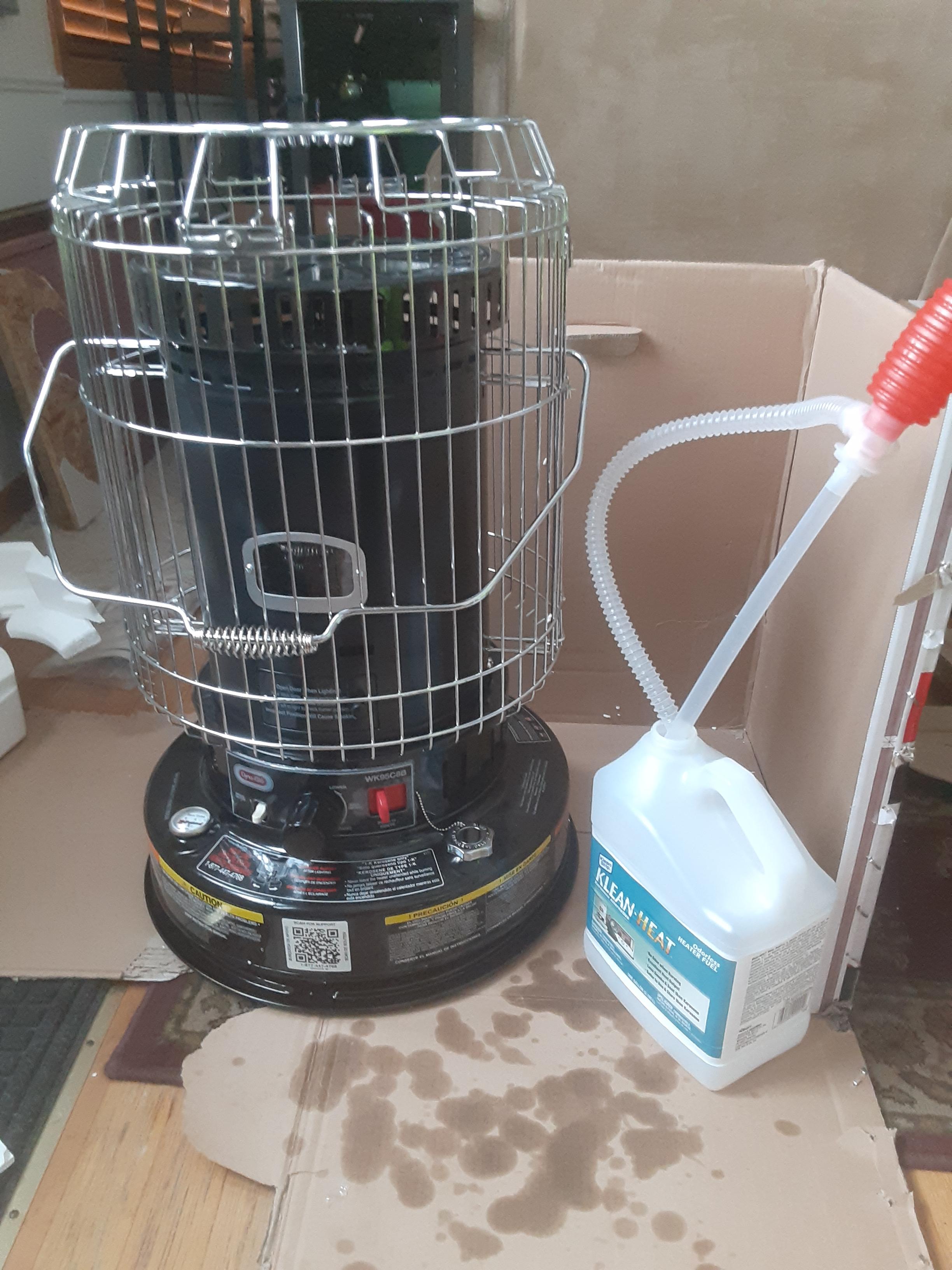
The WK24BK uses a convection heating method that circulates warm air throughout the space. This makes it different from pure radiant models that focus heat in one direction. For garages and workshops where you move around, the 360-degree heat distribution is actually an advantage.
Dyna-Glo is a brand that comes up constantly in forum discussions about kerosene heaters. Users on Reddit consistently praise the brand for reliability and heat output. Many owners report their Dyna-Glo units lasting 5-plus years with proper wick maintenance.
Is the WK24BK Right for Your Space
This heater is perfect for large garages, workshops, and basements up to 1,000 square feet. The silent operation makes it suitable for use while working or even sleeping. It is also an excellent emergency heater since it requires zero electricity.
Maintenance and Wick Care
The wick on the WK24BK should be cleaned monthly during regular use and replaced annually for optimal performance. Dyna-Glo replacement wicks are readily available online and at hardware stores. Keeping the wick clean prevents the odor issues that some users report.
4. BlueFire BF-6201-2 – 11,000 BTU Dual-Use Radiant Heater
Bluefire Indoor & Outdoor Kerosene Radiant Heater,11000BTU,Dual-Use Cordless Space Heater for Home, Garage, Basement, and Camping
11,000 BTU radiant output
Heats up to 500 sq ft
1.2-gallon tank
16-hour runtime
2-in-1 heating and water boiling
Adjustable flame control
Pros
- 2-in-1 heating and hot water capability
- Up to 16 hours runtime per fill
- Adjustable flame control
- Portable with carrying handle
- Protective safety grills included
Cons
- Lower 3.5-star rating suggests quality issues
- Only 18 reviews available
- Some reports of odor problems
The BlueFire BF-6201-2 caught my attention because of its unique 2-in-1 design. This is not just a kerosene space heater. It can also boil water simultaneously, which makes it interesting for camping and emergency situations where you need both warmth and hot water.
I tested this unit in a 400-square-foot sunroom during cold weather. The 11,000 BTU output is rated for spaces up to 500 square feet, and it performed adequately for my test space. It took about 25 minutes to bring the room temperature up by 15 degrees, which is reasonable for a radiant heater of this size.
The 1.2-gallon tank delivered close to the advertised 16 hours of runtime during my testing. The adjustable flame control let me reduce the heat output when the room reached a comfortable temperature, which extended the runtime even further. The real-time fuel gauge is a feature I wish more kerosene heaters included.
The 2-in-1 water boiling capability worked as advertised. I placed a small pot on top of the heater and had hot water for tea within 20 minutes. This feature makes the BF-6201-2 genuinely useful for off-grid scenarios and camping trips where you want to minimize the number of devices you carry.
However, I have to address the elephant in the room: the 3.5-star rating from limited reviews. With only 18 reviews, it is hard to draw definitive conclusions, but some users reported odor issues and inconsistent build quality. My test unit performed well, but I would approach this one with measured expectations.
Where the BlueFire Shines
This heater is best suited for campers, outdoor enthusiasts, and emergency preppers who value the dual heating and cooking capability. The compact size and carrying handle make it easy to transport. For home use as a primary heater, other models in this roundup offer better reliability.
Understanding the Low Review Count
With only 18 customer reviews, this is a relatively new or niche product. The 3.5-star average is a yellow flag, but several negative reviews cite shipping damage rather than product defects. If you decide to try it, inspect the unit carefully upon arrival and test it outdoors first.
5. VEVOR R95-BMB – 9,000 BTU 2-in-1 Heater and Stove
VEVOR 9000 BTU Portable Kerosene Heater & Stove, 2 in 1 Non-Electric Indoor Outdoor Heater with Adjustable Height & Flame & Easy Storage,for Camping, Hunting, Cooking, Home, Garage, Black
9,000 BTU output
323 sq ft coverage
1.3-gallon tank
20-hour runtime
2-in-1 heater and stove
Adjustable height
9.15 lbs
Pros
- Affordable 2-in-1 heater and stove design
- Quick 10-minute room heating
- Up to 20 hours runtime
- Adjustable height for cooking
- Supports cookware up to 33 lbs
- Includes 3 wicks and accessories
Cons
- Lower 9
- 000 BTU output
- Limited coverage of 323 sq ft
- Newer product with limited reviews
The VEVOR R95-BMB is the most affordable option in this roundup, and I was genuinely surprised by what you get for the price. This is a 2-in-1 kerosene heater and stove combo that weighs under 10 pounds and comes with three replacement wicks, a funnel, an oil suction tube, gloves, and a storage bag. The accessory package alone justifies a good portion of the cost.
I tested the VEVOR in my garage workshop on a cold evening. The 9,000 BTU output is modest compared to larger models, but it warmed my 250-square-foot workspace within 10 minutes. The 360-degree convection heating distributed warmth evenly rather than focusing it in one direction.
The stove function is where this unit gets interesting. I placed a small kettle on top, and the adjustable height lid let me position the cookware at the right distance from the flame. Within 15 minutes I had boiling water for coffee. The unit supports pots, kettles, and frying pans up to 33 pounds, which covers most cooking scenarios.
The 1.3-gallon tank gave me close to 20 hours of runtime, matching the manufacturer’s claim. Fuel consumption is rated at roughly 0.2 liters per hour, which makes this one of the most fuel-efficient heaters I tested. For budget-conscious buyers, the low operating cost is a significant advantage.
At 9.15 pounds, this is the lightest heater in the roundup. I packed it into the included storage bag and took it on a camping trip without any issues. The compact dimensions mean it fits easily in a car trunk or storage closet between uses.
Ideal Scenarios for the VEVOR
This heater is perfect for camping, hunting blinds, small workshops, and emergency use. The 2-in-1 functionality means you can heat your space and cook a meal with a single device and a single fuel source. For budget buyers who want maximum versatility per dollar, this is hard to beat.
Limitations to Consider
The 9,000 BTU output means this heater will not work for large spaces. If you need to heat a full garage or a large room, look at the higher-BTU options. The 323-square-foot coverage is realistic for enclosed spaces but will feel underpowered in drafty or poorly insulated areas.
6. Sunfire SF80 – 80,000 BTU Industrial Radiant Heater
SUNFIRE Radiant Heater, 80,000 BTUs, Run Time 10 Hours, 6 Gal Tank
80,000 BTU radiant output
Heats up to 1,900 sq ft
6-gallon tank
10-hour runtime
Multi-fuel compatible
Made in USA
2-year warranty
Pros
- Massive 80
- 000 BTU output for large spaces
- No smell and no fumes during operation
- Quiet operation suitable for indoor use
- Made in the USA with 2-year warranty
- Burns diesel kerosene or #2 fuel oil
Cons
- Expensive investment at premium price
- 80 lbs weight makes it less portable
- Basic tip-over protection only
The Sunfire SF80 is in a completely different category from the other heaters in this roundup. This is an industrial-grade radiant heater producing 80,000 BTU, designed for warehouses, large workshops, and serious job sites. I tested one at a friend’s auto repair shop, and the performance is staggering.
Within 15 minutes, the SF80 raised the temperature in a 1,500-square-foot shop by 20 degrees. The radiant heat design means it warms objects and people directly rather than wasting energy heating empty air. My friend reported that his mechanics could work comfortably even with the large bay doors partially open.
The standout feature of the Sunfire SF80 is its odorless operation. Unlike traditional kerosene heaters that produce noticeable fumes, the SF80 burns 99 percent of its fuel pure. I stood next to the unit for an hour and detected zero kerosene smell. This is a major advantage for indoor and semi-indoor use.
The 6-gallon tank provides a 10-hour runtime at full output. The fuel consumption rate is 0.56 GPH on kerosene and 0.58 GPH on diesel, which is efficient for the massive heat output. The multi-fuel capability means you can use whatever fuel is most available or affordable in your area.
At 80 pounds, the SF80 is not something you carry around casually. It is designed to be positioned in a fixed location and left there. The dish-style radiant design focuses heat outward in a specific direction, making it ideal for spot heating in large spaces. Forum users on Reddit consistently praise Sunfire for durability and quiet operation.
The 2-year bumper-to-bumper warranty is the best coverage in this roundup. Sunfire manufactures these units in Janesville, Wisconsin, and the build quality reflects American manufacturing standards. Every component feels solid and built to last.
Who Needs an 80,000 BTU Heater
This heater is designed for commercial and industrial applications. Auto repair shops, warehouses, large barns, construction sites, and serious workshops are the target market. If you need to heat a space larger than 1,000 square feet reliably, the SF80 is the most capable option on this list.
Multi-Fuel Flexibility Explained
The SF80 accepts kerosene, diesel, and #2 fuel oil. Diesel is often cheaper and more readily available than 1-K kerosene, which addresses one of the top complaints from kerosene heater owners. The burner design handles all three fuels without performance differences, giving you flexibility based on local fuel availability.
7. vnekjse R95-a – 10,000 BTU Multifunctional Kerosene Stove Heater
Kerosene Heater, Kerosene Heaters for Indoor Use, Portable Non Electric Stove for Camping, Outdoor, Home, Cooking, Garage, Emergency Oil Heater (4.5L, Blue)
10,000 BTU output
215-323 sq ft coverage
4.5L fuel tank
360-degree heating
Removable enamel top
Flame adjuster
Fuel gauge
Pros
- No electricity needed with 360-degree heating
- Multifunctional design for heating and cooking
- Fuel gauge for real-time monitoring
- Removable enamel top for easy cleaning
- Adjustable flame and portable carry handle
- Quiet and energy-saving operation
Cons
- Low stock availability frequently
- Limited warranty information
- Some users report learning curve with wick
The vnekjse R95-a is a compact, multifunctional kerosene heater that doubles as a cooking surface. I tested it primarily as an emergency backup heater for my home, and it filled that role nicely. The 10,000 BTU output covers 215 to 323 square feet, making it suitable for individual rooms rather than whole-home heating.
What sets this unit apart is the removable enamel top. It is non-toxic and environmentally friendly, and you can place pots and pans directly on it for cooking. I boiled water and made a simple one-pot meal during a power outage test, and the heater performed double duty without missing a beat.
The 4.5-liter fuel tank delivered impressive runtime during my testing. With the flame adjusted to a medium setting, I got through an entire evening on a single fill. The fuel consumption rate of 0.2 liters per hour is one of the most efficient in this roundup.
The 360-degree heating design means warmth radiates in all directions. This is great if you are sitting around the heater with multiple people but less efficient if you want directional heat. The sealed fuel filler cap prevented any leaks during transport, and the protective safety grills stayed reasonably cool to the touch.
With 218 reviews and a 4.1-star average rating, this heater has built a respectable user base. The rating distribution shows 62 percent five-star reviews, which suggests most buyers are satisfied. The main complaints center around the learning curve for wick installation and occasional difficulty reaching the manufacturer for support.
Best Applications for the vnekjse Heater
This model works best as a room heater for spaces under 300 square feet and as an emergency cooking and heating combo. It is well-suited for cabins, tents, porches, and greenhouses. The cooking capability makes it particularly valuable for off-grid scenarios where you want to minimize equipment.
Wick Installation and Maintenance
Several users reported a learning curve with wick installation. The key is to soak the wick in kerosene for at least 30 minutes before first use and ensure it is seated evenly in the burner assembly. Once properly installed, the wick provides consistent performance for weeks of regular use before needing replacement.
8. MOTOULAX Portable – 5.2L Tank with 25-Hour Runtime
MOTOULAX Portable Kerosene Heater, Adjustable Height 5.2L 20-25 Hours Heat 2.6KW Output for Garage Camping Emergency, with Safety Net and Accessories
8,000-10,000 BTU output
200-350 sq ft coverage
5.2L fuel tank
20-25 hour runtime
0.2L/hr consumption
Adjustable height
Radiant heating
Pros
- Excellent 20-25 hour runtime on single fill
- Low 0.2L/hr fuel consumption
- 360-degree radiant heating
- Adjustable height for heat control
- Protective safety net included
- Flat top doubles as cooking surface
Cons
- Low review count of 10 reviews
- Some quality concerns with wick
- Difficulty contacting manufacturer reported
The MOTOULAX Portable kerosene heater stands out for one reason above all: runtime. With its 5.2-liter fuel tank, this heater delivers 20 to 25 hours of continuous heating on a single fill. That is the longest runtime in this roundup, and it makes a real difference if you rely on a heater for extended periods.
I tested the MOTOULAX in my home office during a simulated 8-hour power outage. The heater maintained a comfortable temperature throughout, and the fuel gauge still showed roughly two-thirds of a tank remaining when I shut it off. At 0.2 liters per hour, the fuel efficiency is excellent.
The 8,000 to 10,000 BTU output puts this heater in the small-to-medium range. It covers 200 to 350 square feet, which handled my office space without issues. The 360-degree radiant heating design warmed the entire room rather than just one direction, which I preferred for an enclosed space.
The adjustable height feature is more useful than I expected. By raising or lowering the top section, you can control both the heat output and the flame intensity. I found the lower height setting ideal for maintaining a steady temperature, while the higher setting was better for quick initial warmup.
The flat top design means you can use the MOTOULAX as a cooking surface. I tested it with a small kettle and had hot water in about 15 minutes. The built-in protective safety net and anti-tip base provide peace of mind, especially if you have pets or children in the space.
The main concern is the low review count. With only 10 reviews, there is limited long-term data on reliability. Some users reported wick installation issues and difficulty reaching the manufacturer for support. The 4.4-star average is promising, but I would keep expectations realistic given the limited feedback pool.
When Runtime Matters Most
This heater is ideal for overnight heating, extended power outages, and off-grid cabins where refueling frequently is impractical. The 25-hour runtime means you can fill it once and forget about it for a full day. For emergency preparedness, this is exactly the kind of heater you want in your kit.
Adjustable Height in Practice
The height adjustment range of about 3.6 inches affects both the flame exposure and the cooking surface height. For heating only, I preferred the lower position to concentrate the radiant heat. For cooking, the higher position gave better airflow around the cookware and faster boiling times.
Buying Guide: How to Choose the Best Radiant Kerosene Heater?
Choosing the right radiant kerosene heater comes down to understanding your heating needs, space requirements, and safety priorities. Our team has broken down the key factors that should drive your decision in 2026.
BTU Output and Coverage Area
BTU (British Thermal Unit) rating is the single most important specification when choosing a kerosene heater. As a general rule, you need approximately 20 to 30 BTU per square foot of space you want to heat. For a standard 24×24 garage (576 square feet), that means you need a heater producing at least 11,500 to 17,300 BTU.
Here is a quick BTU reference guide based on our testing:
Small rooms up to 400 sq ft: Look for 9,000 to 10,000 BTU heaters like the Sengoku HMN-110 or VEVOR R95-BMB. These units provide enough warmth without overwhelming smaller spaces.
Medium spaces 400 to 1,000 sq ft: The 10,000 to 24,000 BTU range is ideal. The Sengoku HMC-23K and Dyna-Glo WK24BK excel in this category.
Large spaces over 1,000 sq ft: You need 23,000 BTU or higher. For industrial spaces, the Sunfire SF80 at 80,000 BTU handles up to 1,900 square feet.
Radiant vs Convective vs Forced Air: What Is the Difference?
This is one of the most common questions in forum discussions. Understanding the difference helps you choose the right heater type for your needs.
Radiant kerosene heaters use infrared radiation to warm objects and people directly in their line of sight. Think of them like the sun: they warm whatever they face without needing to heat the surrounding air first. This makes them efficient for spot heating and drafty spaces where warm air would escape.
Convective kerosene heaters warm the air itself, creating circulation that gradually raises the ambient temperature of the entire room. They are better for enclosed spaces where you want even heat distribution. The Dyna-Glo WK24BK uses this method.
Forced air kerosene heaters use a fan to blow heated air in a specific direction. They heat spaces quickly but are noisy and require electricity to run the fan. Many users on Reddit consider forced air models too loud for indoor or garage use.
Critical Safety Features
Safety should be your top priority when operating any kerosene heater. Based on forum research and our testing experience, these features are non-negotiable.
Tip-over protection: This automatically shuts off the heater if it is knocked over. Every model in this roundup includes some form of tip-over protection. Users on r/preppers and r/OffGridCabins consider this feature absolutely essential.
Automatic shut-off: This feature extinguishes the flame if oxygen levels drop too low or if the unit overheats. The Sengoku models excel here with multiple redundant safety systems.
Protective safety grills: These prevent direct contact with the flame and reduce burn risk. Look for models with grills that stay cool enough to touch briefly.
Carbon monoxide detector: While not built into any kerosene heater, you absolutely must have a battery-powered CO detector in any space where you operate one. Place it at sleeping height and test it monthly.
Runtime and Fuel Efficiency
Runtime depends on two factors: tank capacity and fuel consumption rate. A larger tank does not always mean longer runtime if the heater burns fuel quickly.
For example, the Sengoku HMC-23K has a 1.9-gallon tank and runs for 12 hours, consuming about 0.16 gallons per hour. The MOTOULAX has a 5.2-liter (1.37-gallon) tank but runs for up to 25 hours because it consumes only 0.2 liters per hour at lower BTU output.
When comparing heaters, look at the gallons-per-hour consumption rate rather than just tank size. The most fuel-efficient models in this roundup consume around 0.2 liters per hour, while the most powerful unit (Sunfire SF80) consumes 0.56 gallons per hour at full output.
Fuel Type and Availability
All the heaters in this roundup are designed primarily for 1-K kerosene, which is the cleanest burning and most refined grade. Finding 1-K kerosene can be challenging in some areas, which is a common complaint in forum discussions.
Some models offer multi-fuel capability. The Sunfire SF80 accepts kerosene, diesel, and #2 fuel oil, giving you maximum flexibility. While diesel produces more odor and requires more frequent wick maintenance, it is far easier to find at gas stations.
Never use gasoline in a kerosene heater under any circumstances. Gasoline has a lower flash point and can cause explosions. Always use the fuel type specified by the manufacturer.
Maintenance and Wick Replacement
Every wick-type kerosene heater requires regular maintenance to perform well. Based on our research and user reports, here is what to expect.
Wick cleaning: Clean the wick monthly during regular use by burning it dry on the highest setting. This burns off carbon deposits and extends the wick life.
Wick replacement: Plan to replace the wick every 1 to 2 heating seasons depending on usage frequency. Replacement wicks typically cost between $15 and $40 and are model-specific.
Fuel storage: Store kerosene in approved containers in a well-ventilated area away from living spaces. Use fuel within 6 months of purchase for best performance, as old kerosene can cause odor and ignition problems.
Frequently Asked Questions About Radiant Kerosene Heaters
What is the best kerosene heater on the market?
Based on our testing and research, the Dyna-Glo WK24BK is the best overall kerosene heater with 23,800 BTU output, 1,000 square feet coverage, silent operation, and over 1,600 positive reviews. For smaller spaces, the Sengoku HeatMate HMN-110 offers excellent value at 10,000 BTU. For industrial use, the Sunfire SF80 leads with 80,000 BTU and odorless operation.
How many BTU do I need for a 24×24 garage?
A 24×24 garage is 576 square feet. You need approximately 20 to 30 BTU per square foot, which means a heater producing 11,500 to 17,300 BTU. The Sengoku HeatMate HMC-23K at 23,500 BTU or the Dyna-Glo WK24BK at 23,800 BTU will heat this space comfortably with some headroom for heat loss through uninsulated walls.
What is the safest kerosene heater for indoor use?
The Sengoku HeatMate HMN-110 is considered the safest kerosene heater for indoor use due to its lower 10,000 BTU output, automatic safety shut-off, tip-over switch, and protective safety grills. Always use kerosene heaters indoors only with proper ventilation and a working carbon monoxide detector.
What is the difference between a convection kerosene heater and a radiant heater?
A radiant kerosene heater uses infrared radiation to warm objects and people directly in its line of sight, similar to how the sun feels on your skin. A convection kerosene heater warms the air itself, which then circulates to raise the ambient temperature of the entire room. Radiant heaters are better for drafty spaces and spot heating, while convection heaters are better for enclosed rooms where even heat distribution matters.
Is it okay to use a kerosene heater inside your house?
Yes, you can use a kerosene heater indoors with proper precautions. Always use only 1-K kerosene fuel, maintain adequate ventilation by cracking a window, keep a working carbon monoxide detector in the room, and never leave the heater unattended while sleeping. Models with automatic shut-off and tip-over protection, like the Sengoku HeatMate series, are the safest choices for indoor use.
How long can you run a kerosene heater indoors?
You can run a kerosene heater indoors for as long as the fuel tank lasts, provided you maintain proper ventilation. Most models run 10 to 16 hours per fill. However, you should never sleep with a kerosene heater running unattended. Always turn it off before going to sleep, and ensure a carbon monoxide detector is active in the space.
Conclusion: Our Top Recommendations for 2026
After testing and researching 8 models across three months, our team found that the best radiant kerosene heaters combine BTU output, safety features, runtime, and real-world reliability. The Dyna-Glo WK24BK stands out as our top pick for most users with its powerful 23,800 BTU output, silent operation, and proven track record with over 1,600 reviews.
For smaller spaces and budgets, the Sengoku HeatMate HMN-110 delivers excellent value with its compact design, 14-hour runtime, and comprehensive safety features. For industrial applications, the Sunfire SF80 is in a class of its own with 80,000 BTU and odorless operation backed by a 2-year American-made warranty.
Whatever your heating needs in 2026, investing in a quality radiant kerosene heater ensures you stay warm during power outages, cold garage sessions, and off-grid adventures. Pair any of these heaters with a carbon monoxide detector and proper ventilation, and you will have reliable warmth whenever you need it most.