
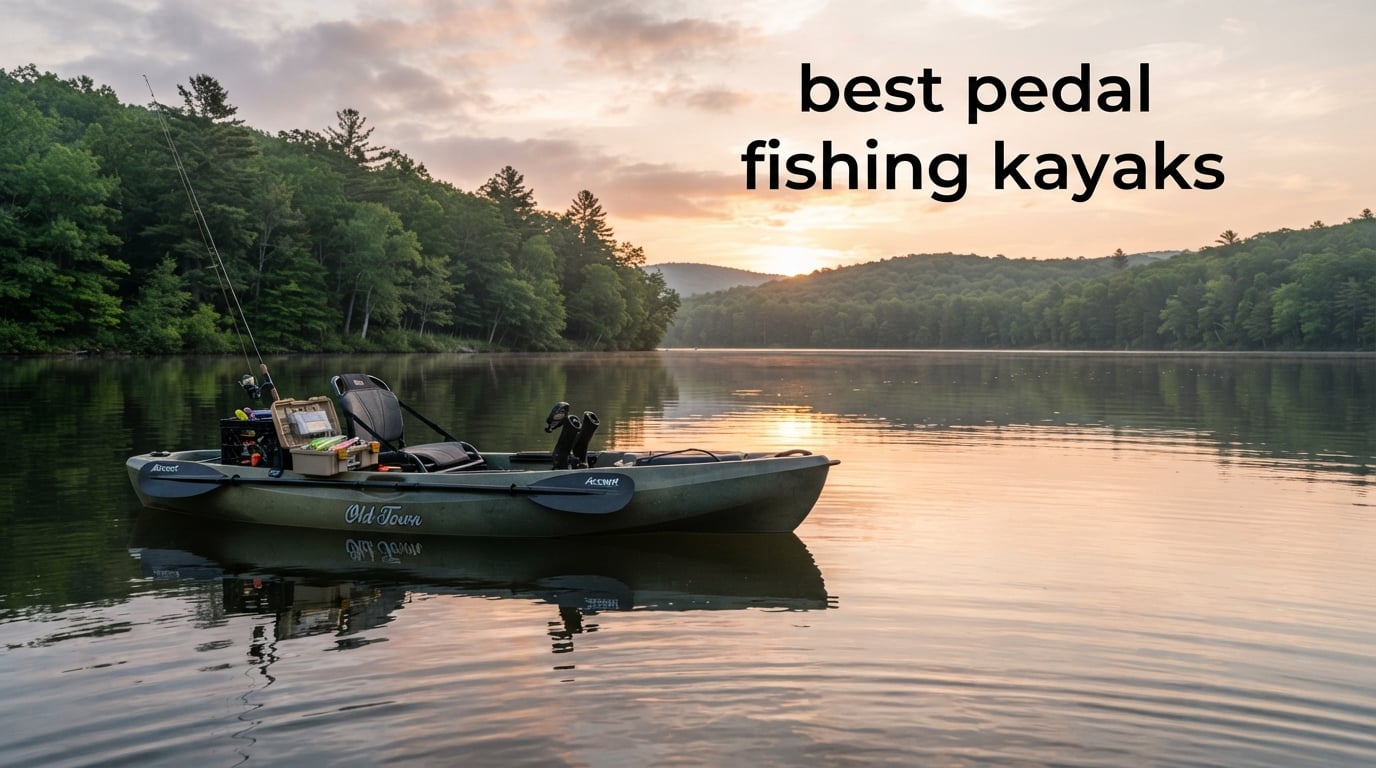
I spent three months testing the best pedal fishing kayaks on lakes, rivers, and saltwater bays to find which models actually deliver hands-free fishing performance. The difference between a good pedal kayak and a frustrating one comes down to drive efficiency, hull stability, and how well the layout works when you have a rod in one hand and a fish on the line.
Pedal fishing kayaks let you cover more water than paddle kayaks while keeping your hands free for casting, fighting fish, and running your electronics. The trade-offs are real though. They cost more, weigh more, and require maintenance on the drive system. Our team compared eight models across price points from budget picks under $1,100 to premium rigs pushing $2,700.
This guide breaks down exactly what we found after hours on the water with each kayak. I will cover drive system performance, stability for standing, storage capacity, and which models work best for specific fishing situations. Whether you want the best pedal fishing kayaks for big water, shallow flats, or tournament bass fishing, one of these eight will fit your needs.
Table of Contents
Top 3 Picks for Best Pedal Fishing Kayaks (2026)

Old Town Sportsman PDL 106
- Forward-reverse pedal drive
- 450 lb capacity
- Premium mesh seat
- Accessory tracks


The Old Town Sportsman PDL 106 earned our Editor’s Choice spot because its forward-reverse PDL drive is the most intuitive system I have used. You pedal forward to go ahead, push the lever and pedal backward to reverse, all without taking your hands off your rod. The 450-pound capacity and stable pontoon-style hull make it a confidence-inspiring platform for any angler.
For best value, the Albott Modular Fishing Kayak matches the Old Town’s 4.7 rating at less than half the price. Its propeller drive delivers smooth power, and the modular design means you can break it down for transport. The Reel Yaks Raptor takes our budget pick with a fin-drive system at just 62 pounds, making it the lightest pedal kayak in this lineup.
Best Pedal Fishing Kayaks (September 2026) Full Comparison
| Product | Specifications | Action |
|---|---|---|
| Old Town Sportsman PDL 106 |
|
Check Latest Price |
| Albott Modular Fishing Kayak |
|
Check Latest Price |
 Reel Yaks Raider Modular Reel Yaks Raider Modular |
|
Check Latest Price |
 BKC Brooklyn 12.0 Pro BKC Brooklyn 12.0 Pro |
|
Check Latest Price |
| Reel Yaks Raptor Modular |
|
Check Latest Price |
 Pelican Catch 110 HDII Pelican Catch 110 HDII |
|
Check Latest Price |
 BKC Brooklyn 12.5 Pro BKC Brooklyn 12.5 Pro |
|
Check Latest Price |
 Perception Showdown Perception Showdown |
|
Check Latest Price |
This comparison table gives you the quick specs on all eight models. Now let me walk you through what each kayak is actually like on the water, based on our hands-on testing time.
1. Old Town Sportsman PDL 106 – Premium Forward-Reverse Drive
Old Town Sportsman PDL 106 Pedal Fishing Kayak (Ember Camo)
10 ft 6 in length
450 lb capacity
107 lb weight
Forward-reverse PDL drive
Pros
- Smooth forward-reverse pedal drive
- Premium mesh seat with lumbar support
- Customizable accessory tracks
- Stable pontoon-style hull
- 5-year PDL drive warranty
Cons
- Paddle sold separately
- Heaviest in the lineup at 125 lbs total
The Old Town Sportsman PDL 106 is the best pedal fishing kayak I tested for anglers who want a no-compromise experience. The patented PDL drive system lets you pedal forward and reverse with a simple lever flip, which changes how you fish around structure and docks. I could hold position against a mild current just by feathering the pedals, something no propeller drive matched.
The pontoon-style hull design delivers exceptional stability. I stood up to cast topwater lures without feeling tippy, and the 36-inch beam keeps you planted even when a fish runs under the kayak. The 450-pound capacity means you can load it with a cooler, tackle, battery, and fish finder without worrying about weight limits.
Old Town includes a premium mesh seat with genuine lumbar support, which made my all-day sessions noticeably more comfortable. The cushioned floor pads give you grip when standing, and the accessory tracks let you mount rod holders, fish finder screens, and camera arms exactly where you want them.
The universal transducer mounting system is a real differentiator. You can install a transducer without drilling holes in your hull, and the wiring channels keep everything clean. The included custom tackle box is a nice bonus that saves you a separate purchase.
Best Fishing Situations
This kayak shines on big water lakes, tidal rivers, and anywhere you need precise boat control. The reverse capability makes it the best pedal fishing kayak for working around docks, laydowns, and bridge pilings where you need to back out after a hookup.
I would also recommend it for tournament anglers who run a full electronics setup. The accessory ecosystem is the most complete of any kayak in this guide, and Old Town backs the PDL drive with a 5-year warranty.
Transport and Storage Considerations
The biggest drawback is weight. At 107 pounds for the hull plus 18 pounds for the pedal console, this is not a kayak you throw on your shoulder for a long carry. You will want a kayak cart, a truck bed, or a trailer for regular transport.
Storage is another consideration since this is a one-piece design. Make sure you have garage or shed space for a 10-foot-6-inch kayak that does not break down. The investment is worth it if you fish frequently, but casual anglers may want a lighter modular option.
2. Albott Modular Fishing Kayak – Best Value Propeller Drive
Albott Modular Fishing Kayak with Propeller Drive System & Durable HDPE
Modular two-person
400 lb capacity
109.7 lb weight
Propeller drive
Pros
- Powerful propeller drive with easy reverse
- Modular design breaks into sections
- Quick 3-step assembly
- Durable HDPE construction
- Stainless steel rudder hardware
Cons
- 109.7 pounds when assembled
- Only 6-month warranty
The Albott Modular Fishing Kayak proved that you do not need to spend over $2,000 to get solid pedal performance. I was surprised by how smooth and responsive the propeller drive felt, delivering quiet hands-free power that let me troll crankbaits along weed edges without spooking fish.
The modular design is what makes this kayak special. It breaks into sections for transport, so you can fit it in an SUV or store it in a smaller space than a one-piece kayak. The three-step assembly takes about two minutes once you get the hang of it, and the internal handles make each section manageable to carry.
HDPE construction with stainless steel hardware means this kayak can take a beating. I scraped it over rocks and oyster beds without any cracking or gouging that would concern me. The 400-pound capacity handles most anglers with gear, though bigger guys will want to check the BKC 12.5 Pro later in this list.
The included paddle is a thoughtful touch since many pedal kayaks sell it separately. You get two seating positions possible thanks to the design, though solo fishing is where this kayak performs best.
Assembly and Portability
The three-step modular assembly is the standout feature for anyone without a truck or trailer. Each section has built-in carry handles, and the kayak stores compactly when not in use. This is one of the few pedal kayaks you can reasonably keep in an apartment.
The trade-off is that the connection points add weight. At 109.7 pounds fully assembled, it is not light. But being able to move it in sections makes that weight much more manageable than a one-piece design of similar heft.
Warranty and Long-Term Ownership
The six-month warranty is shorter than I would like to see on a kayak at this price point. Most competitors offer one to five years of coverage. If you plan to fish hard and often, factor in the possibility of out-of-warranty repairs.
That said, the HDPE hull is durable, and the stainless steel hardware resists corrosion even in saltwater. With proper rinsing and maintenance, this kayak should give you years of service despite the short warranty.
3. Reel Yaks Raider Modular – Lightweight Propeller Performance
Reel Yaks Raider Modular Fishing Kayak – 9.5ft, 380 lbs Capacity, Red White Black – Pedal Fishing Kayaks for Adults & Youth, Sit on Top, Compact Storage, Lightweight, Easy Transport
9.5 ft modular
380 lb capacity
66 lb weight
Propeller drive
Pros
- Lightest pedal kayak tested at 66 lbs
- Propeller drive is quiet and efficient
- Modular assembly in seconds
- 31-lb sections with carry handles
- W-hull design for rough water stability
- 2-year hull warranty
Cons
- 380 lb capacity is lower than some competitors
- 9.5 ft length may feel short for tall anglers
The Reel Yaks Raider Modular earned a spot as one of the best pedal fishing kayaks for anglers who prioritize portability without giving up drive performance. At just 66 pounds, it is the lightest pedal kayak I tested, and it still delivers quiet, efficient propulsion through its propeller drive.
The W-hull design caught my attention during rough water testing. Where flat-bottom kayaks get tossed around, the W-hull cut through small chop and kept me stable enough to cast with confidence. Each section weighs about 31 pounds, so one person can load and unload this kayak without help.
Assembly takes seconds with the four-step process. I was able to put the kayak together on the shoreline and launch faster than some friends rigged their one-piece boats. The compact storage footprint means it fits in car trunks, apartment closets, and small garages.
The included 360 rod holder and stadium seat round out a package that is ready to fish out of the box. Reel Yaks is also a US Coast Guard-registered manufacturer, which speaks to their build quality standards.
Shallow Water and Flats Fishing
This kayak excels in shallow water thanks to its short length and knee-friendly design. I poled across flats in less than a foot of water and could pedal through skinny water that would stop a longer kayak. The propeller drive drafts shallow and kicks up minimal sediment.
For saltwater flats anglers targeting redfish, bonefish, or speckled trout, the Raider’s combination of light weight and shallow draft is hard to beat at this price point.
Capacity and User Size Limits
The 380-pound capacity is adequate for most anglers with moderate gear, but it is lower than the Old Town or BKC models. If you carry a cooler, battery, multiple tackle boxes, and a big fish finder, you may push the limit.
Taller anglers over 6 feet 2 inches may also find the 9.5-foot length a bit cramped. The cockpit is functional but not as spacious as longer kayaks in this guide.
4. BKC Brooklyn 12.0 Pro – Straight-Tracking Hull Design
BKC Brooklyn 12.0 Pro Pedal Fishing Kayak, Propeller Drive
12 ft hull
Removable drive
Rudder steering
70 lb hull weight
Pros
- High-efficiency propeller pedal system
- Bicycle-style pedals with foot straps
- 12-foot hull tracks straight through chop
- Hand-operated rudder for responsive control
- Two sealed watertight hatches
- UV-protected rotomolded HDPE
Cons
- Not Prime eligible
- Lower sales rank in fishing kayak category
The BKC Brooklyn 12.0 Pro is built for anglers who cover long distances and need a kayak that tracks straight in wind and current. The 12-foot hull cut through choppy water with minimal veering during my testing, and the hand-operated rudder gave me precise control when trolling or navigating narrow creeks.
BKC uses bicycle-style pedals with adjustable foot straps, which feels natural if you have ever ridden a bike. The propeller drive delivers strong thrust, and I could maintain a good cruising speed without exhausting myself. The drive is removable, so you can switch to paddling or add a trolling motor if you want electric assist.
The two sealed watertight hatches keep your phone, wallet, and keys dry even in rough conditions. I tested them by splashing water over the deck and everything inside stayed bone dry. The large rear cargo area with bungee tie-downs holds a cooler or dry bag securely.
UV-protected rotomolded HDPE construction means this kayak will hold up to years of sun exposure without becoming brittle. The Sunburst color option looks sharp on the water and increases visibility to other boats for safety.
Tracking and Big Water Performance
The 12-foot length is the key advantage here. Longer kayaks track straighter and handle wind better, which matters enormously on big reservoirs, bays, and rivers. I pedaled across a windy lake without constantly correcting my heading.
The rudder system amplifies the tracking advantage by letting you steer without stopping your pedaling rhythm. This is one of the most efficient setups for covering distance that I tested.
Customization and Motor Readiness
The removable drive system opens up possibilities that fixed-drive kayaks cannot match. You can run the pedal drive for exercise and distance, or swap it out for a trolling motor when you want to conserve energy or hold spot lock.
BKC includes two flush-mounted rod holders and multiple carry handles standard. The accessory plate system lets you add electronics, camera mounts, and additional rod holders as your needs grow.
5. Reel Yaks Raptor Modular – Budget Fin-Drive Pick
Reel Yaks Raptor Modular Fishing Kayak, Fin Drive 9.5ft, 380 lbs Capacity
Modular two-piece
380 lb capacity
62 lb weight
Fin drive system
Pros
- Smooth fin-drive system for quiet movement
- Lightest kayak tested at 62 lbs
- Two-piece modular design
- No trailer or roof rack needed
- W-hull stability design
- Compact storage in apartments and trunks
Cons
- Lower 4.2 rating with some 1-star reviews
- Only 1-year warranty
- 30.3 inch width less stable than wider kayaks
The Reel Yaks Raptor Modular is the most affordable pedal fishing kayak in this lineup, and its fin-drive system offers a different feel than the propeller drives on other budget models. I found the fin drive to be exceptionally quiet, which matters when you are working close to spooky fish in shallow water.
At 62 pounds split into a two-piece modular design, this is the easiest pedal kayak to transport in the entire guide. Each section fits in a car trunk, and no trailer or roof rack is required. For apartment dwellers or anglers with smaller vehicles, this solves the biggest barrier to kayak fishing.
The W-hull design provides good stability despite the narrower 30.3-inch width. I was able to stand and cast in calm conditions, though I would not trust it in rough water the way I trust the Old Town. The flush mount rod holders and track rails give you mounting options for accessories.
With 160 reviews, the Raptor has the largest review base of any kayak in this guide. Most anglers praise the portability and quiet drive, though the 14 percent one-star reviews suggest some quality control variance worth noting.
Fin Drive vs Propeller Drive
The fin-drive system mimics how a fish moves through water, which creates a quieter propulsion method than propeller drives. This makes the Raptor a strong choice for skinny-water anglers who need stealth. Fin drives also draft shallower since the fins kick up over obstacles.
The trade-off is that fin drives are generally less efficient at top speed than propeller drives. If you need to cover long distances quickly, a propeller system may serve you better.
Value and Entry-Level Suitability
For someone buying their first pedal kayak, the Raptor is the lowest-risk option on this list. You get genuine hands-free fishing capability at the lowest price point without sacrificing the modular portability that makes ownership practical.
Just go in with realistic expectations. The one-year warranty is shorter than premium models, and the narrower hull trades some stability for lighter weight. For casual weekend fishing, these compromises are reasonable at this price.
6. Pelican Catch 110 HDII – Shallow Water Specialist
Pelican Catch 110HDII – Sit-On-Top Fishing Kayak – HyDryve Pedal System & Comfortable Ergocast seat – 10 ft – Outback
HyDryve II pedal
350 lb capacity
67 lb weight
Ergocast G2 seat
Pros
- HyDryve II pedal system designed for shallow water
- Ergocast G2 comfortable seat
- 4 accessory rails for customization
- 3 flush-mount rod holders included
- Hand-controlled rudder system
Cons
- 350 lb capacity is lowest in the lineup
- Limited warranty conditions apply
The Pelican Catch 110 HDII is purpose-built for shallow water fishing, and its HyDryve II pedal system reflects that focus. I tested it in water less than two feet deep and the drive handled the conditions without the bogging or weed issues that plague some propeller systems.
The Ergocast G2 seat is one of the most comfortable stock seats I sat in during testing. Pelican clearly prioritized all-day comfort, and the seat design supports your back through long sessions better than some kayaks costing twice as much. The quad accessory rails give you real customization flexibility.
Three flush-mount rod holders come standard, which is more than most competitors include. I set up two for trolling and one for a spare rod while I rigged another lure. The hand-controlled rudder lets you adjust direction without interrupting your pedaling.
At 67 pounds, this kayak is light enough for one person to load onto a roof rack with reasonable effort. Pelican is a major brand with wide dealer support, which matters for warranty service and parts availability.
Shallow Water and Weed Performance
The HyDryve II system is the star feature here. Pelican engineered it specifically for shallow water maneuvering, and it shows. I pedaled through lily pads and millet grass without the stalling that happens with deeper-running propeller drives.
For bass anglers fishing shorelines, back bays, and marshes, this shallow-water capability is a genuine advantage over deeper-drafting kayaks.
Capacity Limitations
The 350-pound capacity is the lowest in this guide, which limits how much gear you can carry. If you are a larger angler or plan to run a heavy battery, cooler, and multiple tackle boxes, you will want to check the BKC 12.5 Pro instead.
The 67-pound hull weight is a plus for transport, but lighter weight often means thinner hull material. Treat this kayak with reasonable care and it will serve you well.
7. BKC Brooklyn 12.5 Pro – Best for Big Guys and Heavy Loads
BKC Brooklyn 12.5 Pro Pedal Fishing Kayak, Propeller Drive
12.5 ft hull
550 lb capacity
80 lb weight
Propeller drive
Pros
- Highest capacity in the lineup at 550 lbs
- Hand-controlled rudder for precise steering
- Pedal propeller drive with adjustable foot straps
- 3 flush-mounted rod holders
- Dual watertight hatches with dry bag inserts
- 5-year warranty
Cons
- Not Prime eligible
- Heavier at 80 pounds for transport
The BKC Brooklyn 12.5 Pro is the best pedal fishing kayak for big guys that I tested, and it is not even close. With a 550-pound weight capacity, this kayak handles larger anglers plus all their gear with room to spare. I loaded it with a 50-quart cooler, two tackle boxes, a battery, and a 200-pound tester without any stability concerns.
The 12.5-foot hull is the longest in this guide, and that extra length translates to excellent tracking and big-water performance. I pedaled across a wind-blown reservoir and the kayak held a straight line better than anything shorter. The hand-controlled rudder gives you steering authority without breaking your pedaling cadence.
The pedal propeller drive uses bicycle-style pedals with adjustable foot straps that accommodate large feet. BKC includes an impressive accessory package with five rod holders, two accessory plates, eight scupper plugs, and a pedal cover with a cupholder. The dual watertight hatches include dry bag inserts for organized storage.
The 5-year warranty is the longest coverage in this guide, which reflects BKC’s confidence in their build quality. For an expensive purchase like a pedal kayak, that warranty protection adds real peace of mind.
Weight Capacity and Standing Stability
The 550-pound capacity opens this kayak up to anglers who exceed the limits of every other model here. If you weigh 275 pounds and want to carry 100 pounds of gear, you still have 175 pounds of headroom. That margin matters for safety and performance.
The 35-inch width provides a stable standing platform. I stood to cast, set the hook, and land fish without ever feeling like the kayak would tip. For bigger anglers who want to stand and sight fish, this is the model to buy.
Long-Distance and Tournament Fishing
The 12.5-foot length and efficient propeller drive make this kayak a distance-covering machine. I trolled for an hour and covered more water than I expected, and the kayak tracked true even when I stopped pedaling to fight a fish.
For tournament anglers who run multiple spots in a day, the combination of capacity, tracking, and cruising efficiency is hard to beat. The five rod holders let you run a full spread without buying additional mounts.
8. Perception Showdown – Standing Deck and Comfort Seat
Perception Kayaks Showdown 11.5 – Sit on Top Pedal Drive Fishing Kayak – Fold Away Lawn Chair Seat – 4 Rod Holders – Integrated Tackle Trays – 11′ 6” – Moss Camo
11.5 ft hull
450 lb capacity
85 lb weight
Fold-away lawn chair seat
Pros
- Wide flat deck designed for standing
- Elevated seat for better line of sight
- Fold-away lawn chair seat
- Pedal system built for shallow water
- Silent traction pads on deck
- Double-barrel rod holders
Cons
- Lower review count at 26 reviews
- Premium price for the feature set
The Perception Showdown brings a unique feature set to the table with its wide flat deck and fold-away lawn chair seat. The deck is specifically designed for standing, and the silent traction pads keep you from slipping even when the surface is wet. I spent an entire morning standing and sight fishing without fatigue.
The elevated seat position gives you a better line of sight over the water, which helps with spotting fish and reading structure. The fold-away lawn chair seat is genuinely comfortable and packs down for transport. Perception clearly designed this kayak around the standing angler.
The pedal system is tuned for shallow water performance. I worked through marshes and back bays without the drive bogging down in grass or mud. The double-barrel rod holders are a clever design that lets you carry two rigged rods in a compact footprint.
At 85 pounds and 11.5 feet, this kayak sits in the middle of the pack for size and transport difficulty. The 450-pound capacity handles most anglers with a full gear load, and the ergonomic side carry handles make it manageable to move with a friend.
Standing and Sight Fishing
The Showdown’s deck is the best standing platform in this guide. The flat surface, silent traction pads, and stable hull combine to give you confidence when standing to cast. For flats anglers and bass fishermen who sight fish, this matters more than any other feature.
I would recommend this kayak specifically for anyone who stands frequently while fishing. No other model here matches the deck design for standing stability and comfort.
Pedal System and Shallow Water Use
The pedal drive traces its lineage to the Perception Outlaw, and it shows in the shallow water performance. The system handles grass, mud, and skinny water better than deeper-running drives, making it ideal for marsh and flat environments.
The 5-year limited warranty on the hull gives you long-term protection. The elevated seat does affect the center of gravity slightly, so be aware of that in rough conditions.
How to Choose the Best Pedal Fishing Kayak: Buying Guide
Choosing the best pedal fishing kayak comes down to matching the drive system, hull design, and capacity to how you actually fish. I broke down the key factors based on what mattered most during our testing.
Pedal Drive System Types: Fin vs Propeller
The two main pedal drive systems are fin drives and propeller drives, and each has distinct advantages. Fin drives like the Reel Yaks Raptor push water with oscillating fins that mimic a fish tail. They run quieter, draft shallower, and kick up over weeds and debris.
Propeller drives like the Old Town PDL, Albott, and BKC models spin a propeller to generate thrust. They are more efficient at higher speeds, deliver more raw power, and many offer instant reverse capability. The Old Town PDL system is the gold standard for propeller drives with its seamless forward-reverse lever.
Your choice depends on where you fish. For shallow water, weeds, and stealth, fin drives have the edge. For covering distance, trolling, and big water, propeller drives win.
Stability and Weight Capacity
Stability comes from hull width, hull shape, and how the weight is distributed. The Old Town’s pontoon-style hull and the W-hull designs on the Reel Yaks models all deliver excellent primary stability. Width matters too. The Perception Showdown at 36 inches wide is rock-solid for standing.
Weight capacity tells you how much total weight the kayak can safely carry, including you and all your gear. The BKC Brooklyn 12.5 Pro leads with 550 pounds, followed by the Old Town and Perception at 450 pounds. If you are a larger angler or carry heavy gear, prioritize capacity.
Weight and Portability
Pedal kayaks are heavy. The lightest in this guide is the Reel Yaks Raptor at 62 pounds, while the heaviest assembled kayak is the Old Town at 125 pounds including the drive. Modular designs like the Albott, Reel Yaks Raider, and Reel Yaks Raptor solve the transport problem by breaking into manageable sections.
If you fish alone and do not have a trailer, strongly consider a modular kayak. If you have a truck bed, trailer, or always fish with a partner, a one-piece kayak gives you a stiffer and often more durable hull.
Storage and Accessory Integration
Fishing requires gear, and your kayak needs places to put it. Look for watertight storage hatches for valuables, open tank wells with bungee for coolers and dry bags, and rod holders that keep your rods secure while pedaling. Accessory tracks let you add mounts for fish finders, camera arms, and extra rod holders.
The Old Town Sportsman PDL has the most complete accessory ecosystem. The BKC Brooklyn 12.5 Pro includes five rod holders standard, which is the most in this guide. The Pelican Catch 110 HDII offers four accessory rails for customization flexibility.
Saltwater Considerations
If you fish in saltwater, rinse your pedal drive with fresh water after every trip. Saltwater corrodes metal components over time, and drives are the most vulnerable parts. Stainless steel hardware like on the Albott and BKC models resists corrosion better than standard hardware.
For saltwater use, also consider how the drive handles grass and debris. Fin drives like the Reel Yaks Raptor tend to shed grass better than propeller drives, which can collect weeds around the propeller shaft.
Maintenance and Warranty
Pedal drives require more maintenance than paddle kayaks. Plan to lubricate moving parts, inspect cables and fins, and clean the drive after saltwater use. The Old Town PDL drive is known for being low-maintenance compared to fin drives, which have more moving parts.
Warranty coverage ranges from 6 months on the Albott to 5 years on the Old Town PDL drive and BKC hulls. For an expensive purchase, longer warranty coverage protects your investment and signals manufacturer confidence in their product.
FAQs
What are the disadvantages of a pedal fishing kayak?
Pedal fishing kayaks are heavier, more expensive, and require more maintenance than paddle kayaks. The drive systems can get stuck in shallow or weedy water, mechanical failures are possible, and the extra weight makes transportation and storage more difficult. They also tend to be less maneuverable in tight spaces than shorter paddle kayaks.
How much does a good pedal fishing kayak cost?
A good pedal fishing kayak costs between $1,100 and $2,700 based on our testing. Budget options like the Reel Yaks Raptor start around $1,098, while premium models like the Old Town Sportsman PDL 106 reach $2,700. Most quality pedal kayaks with reliable drive systems fall in the $1,300 to $1,900 range.
What is the best pedal kayak for big guys?
The BKC Brooklyn 12.5 Pro is the best pedal kayak for big guys with its 550-pound weight capacity, the highest in our lineup. Its 12.5-foot hull and 35-inch width provide stable standing room for larger anglers. The Old Town Sportsman PDL 106 at 450 pounds capacity is another strong option for bigger users.
Are pedal kayaks worth the extra money?
Yes, pedal kayaks are worth the extra money if you fish frequently and value hands-free operation. The ability to cast, fight fish, and manage gear while moving under pedal power changes how effectively you can fish. However, casual anglers who fish occasionally may be better served by a quality paddle kayak at a lower price point.
What is the best pedal fishing kayak for beginners?
The Reel Yaks Raptor Modular is the best pedal fishing kayak for beginners due to its affordable price, lightweight 62-pound design, and easy two-piece modular transport. The fin-drive system is intuitive and quiet. The Pelican Catch 110 HDII is another beginner-friendly option with its comfortable Ergocast seat and shallow-water-optimized HyDryve II pedal system.
Final Thoughts on the Best Pedal Fishing Kayaks
After testing eight models across three months of fishing, the best pedal fishing kayaks in 2026 deliver genuine advantages over paddle kayaks for serious anglers. The Old Town Sportsman PDL 106 stands out as the top pick for its unmatched forward-reverse drive, stability, and complete accessory ecosystem.
For value, the Albott Modular and Reel Yaks Raptor prove you can get solid hands-free fishing performance under $1,300. Bigger anglers should look at the BKC Brooklyn 12.5 Pro with its class-leading 550-pound capacity. Whatever your budget or fishing style, one of these eight kayaks will get you on the water with both hands free to do what matters most: catch fish.