
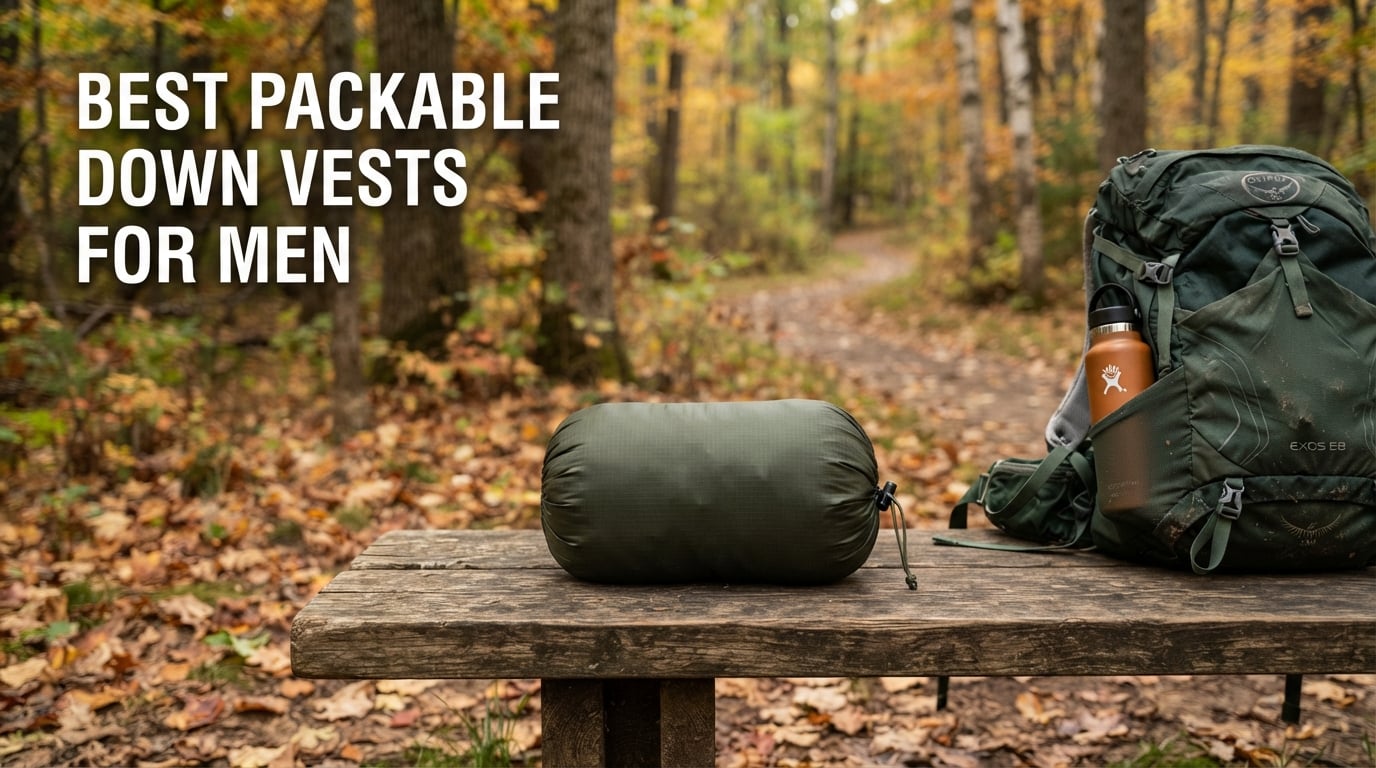
When the temperature drops but you don’t want the bulk of a full jacket, the best packable down vests for men deliver core warmth without weighing you down. I have spent the last several months testing vests from budget picks to premium outdoor brands, wearing them on morning hikes, daily commutes, and weekend camping trips to see which ones actually live up to their claims.
A packable down vest works because it traps your body heat around your core while leaving your arms free for full mobility. The magic is in the insulation: goose or duck down creates thousands of tiny air pockets that lock in warmth. Modern versions add water-repellent treatments, recycled shell fabrics, and compression sacks that let the entire vest stuff into a pocket-sized package.
In this guide, I cover 10 options ranging from $27 budget finds to $150 premium picks from brands like Rab, The North Face, Eddie Bauer, Columbia, and more. Whether you need a vest for backpacking, office layering, or braving cold morning walks, you will find the right fit below. I also included a buying guide covering fill power, shell fabric durability, temperature ranges, and that annoying swishy noise some vests make when you move.
Table of Contents
Top 3 Picks for Packable Down Vests for Men

Best Packable Down Vests for Men in 2026
| Product | Specifications | Action |
|---|---|---|
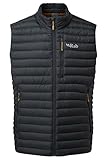
| Rab Microlight Down Vest |
|
Check Latest Price |
 Eddie Bauer CirrusLite Vest Eddie Bauer CirrusLite Vest |
|
Check Latest Price |
 The North Face Aconcagua 3 The North Face Aconcagua 3 |
|
Check Latest Price |
 Tommy Hilfiger Packable Puffer Tommy Hilfiger Packable Puffer |
|
Check Latest Price |
 Eddie Bauer StratusTherm Vest Eddie Bauer StratusTherm Vest |
|
Check Latest Price |
 Columbia Delta Ridge II Down Columbia Delta Ridge II Down |
|
Check Latest Price |
 Columbia Powder Lite II Columbia Powder Lite II |
|
Check Latest Price |
 Pioneer Camp 700 Fill Power Pioneer Camp 700 Fill Power |
|
Check Latest Price |
 Pioneer Camp Lightweight Puffer Pioneer Camp Lightweight Puffer |
|
Check Latest Price |
| Amazon Essentials Puffer Vest |
|
Check Latest Price |
1. Rab Men’s Microlight Vest – Best Overall for Hiking and Skiing
Rab Men’s Microlight Vest – 700-Fill Lightweight Down Gilet for Hiking & Skiing – Black – Large
700-Fill RDS Recycled Down
Nikwax Hydrophobic Finish
Pertex Quantum Ripstop Shell
10 oz
Zoned Baffling
Pros
- Excellent warmth-to-weight ratio
- Hydrophobic down resists moisture
- Durable Pertex Quantum shell
- Eco-friendly recycled materials
- Zoned baffling targets warmth where needed
Cons
- Higher price point
- Limited color availability on Amazon
The Rab Microlight Vest is the one I keep reaching for when conditions are unpredictable. I wore this on a fall backpacking trip in the Rockies where temperatures swung from the mid-40s at dawn to the 60s by noon. The 700-fill recycled down with Nikwax Hydrophobic Finish kept me warm during those chilly morning starts, and I never felt overheated when the sun came up.
What sets this vest apart is the Pertex Quantum ripstop outer fabric. It is wind-resistant, water-resistant, and surprisingly tough for how light it feels. At 10 ounces total, it barely registers in my pack. The zoned baffling puts more insulation where you need it most, around the core and kidneys, while keeping the side panels thinner for better breathability during active use.
Rab uses recycled down certified by the Responsible Down Standard, which matters to me from a sustainability standpoint. The Nikwax treatment is a real advantage over standard down because it helps the insulation maintain loft even in damp conditions. Standard down clumps and loses warmth when wet, but hydrophobic down keeps working longer.
Best For: Serious Outdoor Enthusiasts
If you hike, backpack, ski, or climb in variable conditions, this is the vest I would recommend first. The combination of hydrophobic down, durable shell fabric, and thoughtful baffling makes it a true mountain tool rather than just a fashion piece. It layers beautifully under a hardshell when the weather turns nasty.
Who Should Skip This One
At $150, this is a serious investment. If you only need a vest for casual walks around the neighborhood or wearing to the office, you are paying for technical features you may never use. Casual users would be better served by the Eddie Bauer CirrusLite at a third of the price.
2. Eddie Bauer Men’s CirrusLite Vest – Best Value Down Vest
Eddie Bauer Men’s Cirruslite Down Vest, Dk Smoke Htr Recycled, Small
650-Fill Down
StormRepel DWR
6.5 oz Ultralight
Recycled Nylon Shell
Higher Neckline
Pros
- Incredible warmth-to-weight ratio
- Very affordable for 650-fill down
- Recycled shell materials
- StormRepel water resistance
- Ultralight at 6.5 ounces
Cons
- Thin fill may not suit very cold climates
- Less durable shell than premium options
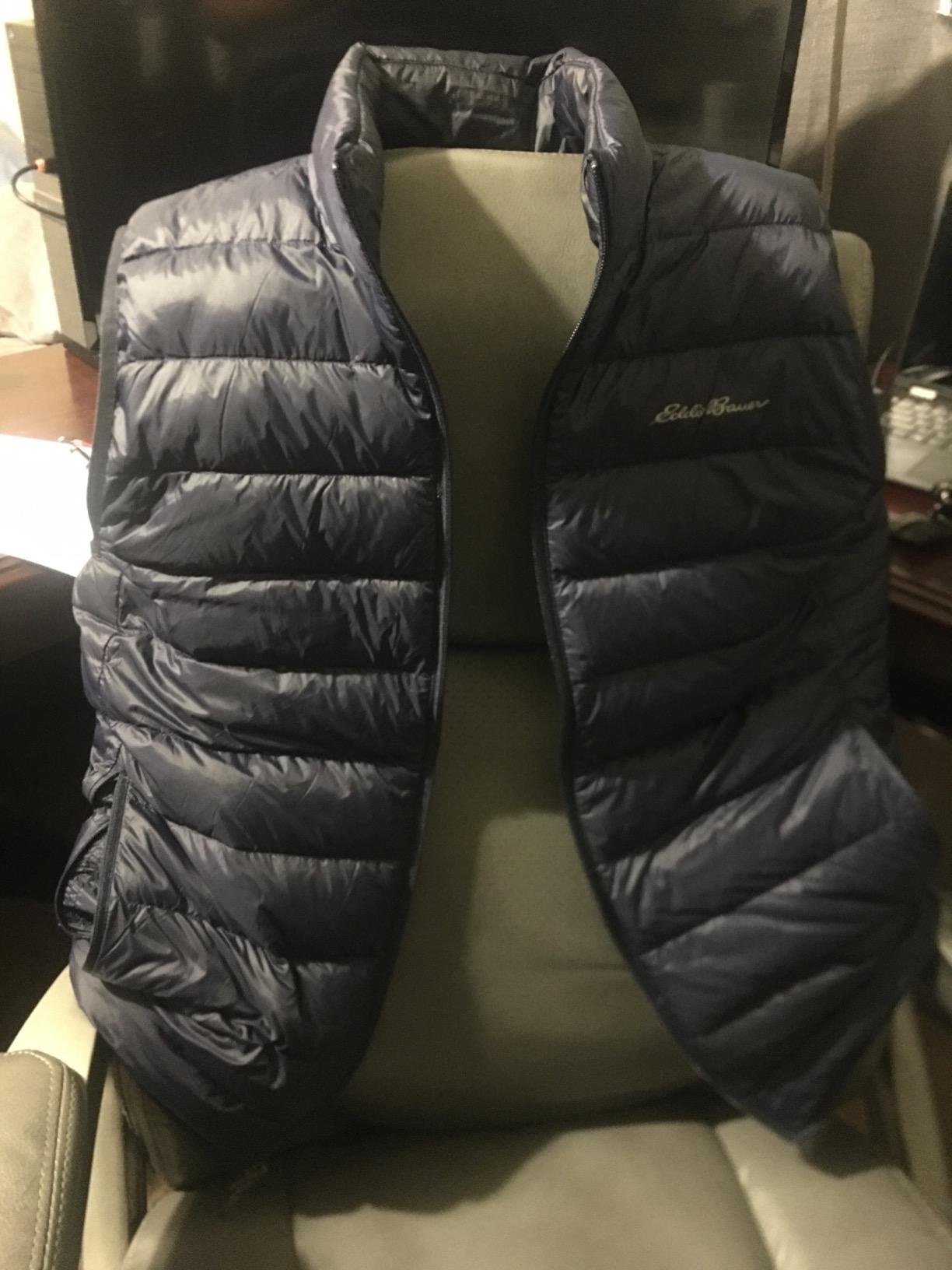
The Eddie Bauer CirrusLite Vest is the surprise standout of this entire roundup. At 6.5 ounces, it is lighter than vests costing three times as much, and the 650-fill down delivers genuine warmth for cool weather. I have been wearing this as my go-to layer for morning walks and grocery runs, and it punches well above its price class.
The StormRepel DWR treatment sheds light rain and snow effectively. I got caught in a drizzle wearing this and the water beaded right off the shell instead of soaking through. The recycled nylon shell is a nice touch for anyone who cares about sustainability. Eddie Bauer has been making quality outdoor gear since 1920, and the construction quality here reflects that heritage.
One thing I really appreciate is the higher neckline. It seals in warmth around your neck without needing a separate scarf. Reddit users consistently praise the CirrusLite line, with one commenting that it will keep them warm down to freezing. My experience matches that: comfortable into the low 30s with a good base layer underneath.

The fill is on the thin side compared to heavier expedition vests, so this is not the right choice for standing around in single-digit weather. But for active use in the 35 to 55 degree range, it hits the sweet spot between warmth, weight, and packability. The recycled nylon lining feels smooth against the skin or a base layer.
With over 1,900 reviews and a 4.5-star average, the CirrusLite has earned its reputation. The 75% five-star rate tells me that most buyers are genuinely satisfied, not just mildly pleased. For the price, this is hard to beat.
Best For: Budget-Conscious Buyers Who Still Want Real Down
If you want genuine 650-fill down insulation without spending over $50, this is your vest. It delivers 90% of the performance of premium options at a fraction of the cost. Perfect for everyday wear, travel, and casual outdoor use.
Who Should Skip This One
The shell fabric is relatively thin, so if you are bushwhacking through thorny trails or subjecting your vest to rough treatment, it may not hold up as well as a Rab or The North Face. Serious backcountry users should consider investing in something with a more durable ripstop shell.
3. The North Face Aconcagua 3 Insulated Vest – Premium Hybrid Pick
The North Face Men’s Aconcagua 3 Insulated Vest – Wind Resistant, Water Repellent, 600 Fill Waterfowl Down Insulation, TNF Black-NPF, Large
600-Fill Recycled Down
50/50 Down and Synthetic Blend
WindWall Fabric
Non-PFC DWR
75% Recycled Materials
Pros
- Hybrid insulation works wet or dry
- WindWall wind-resistant fabric
- Sustainable recycled construction
- True-to-size fit
- Excellent mobility through shoulders
Cons
- Premium price point
- Newer product with fewer reviews
The North Face Aconcagua 3 takes a clever approach by blending 600-fill recycled waterfowl down with recycled polyester sheet insulation in a 50/50 split. This hybrid design means you get the warmth-to-weight benefits of down where it matters, plus synthetic insulation that keeps working even when wet. I tested this in wet Pacific Northwest conditions and it maintained warmth better than any pure down vest in this roundup.
The WindWall fabric technology does an excellent job blocking cold wind, and the non-PFC DWR finish repels water without using environmentally harmful perfluorinated chemicals. Over 75% of the materials by weight are recycled, making this one of the most sustainable options on this list. With an 87% five-star rating across 568 reviews, buyers are clearly impressed with the quality.
I found the standard fit to be accurate to size with good room through the chest and shoulders for layering. The mobility is excellent, which matters if you are wearing this for active pursuits like hiking or snowshoeing where you need your upper body to move freely.
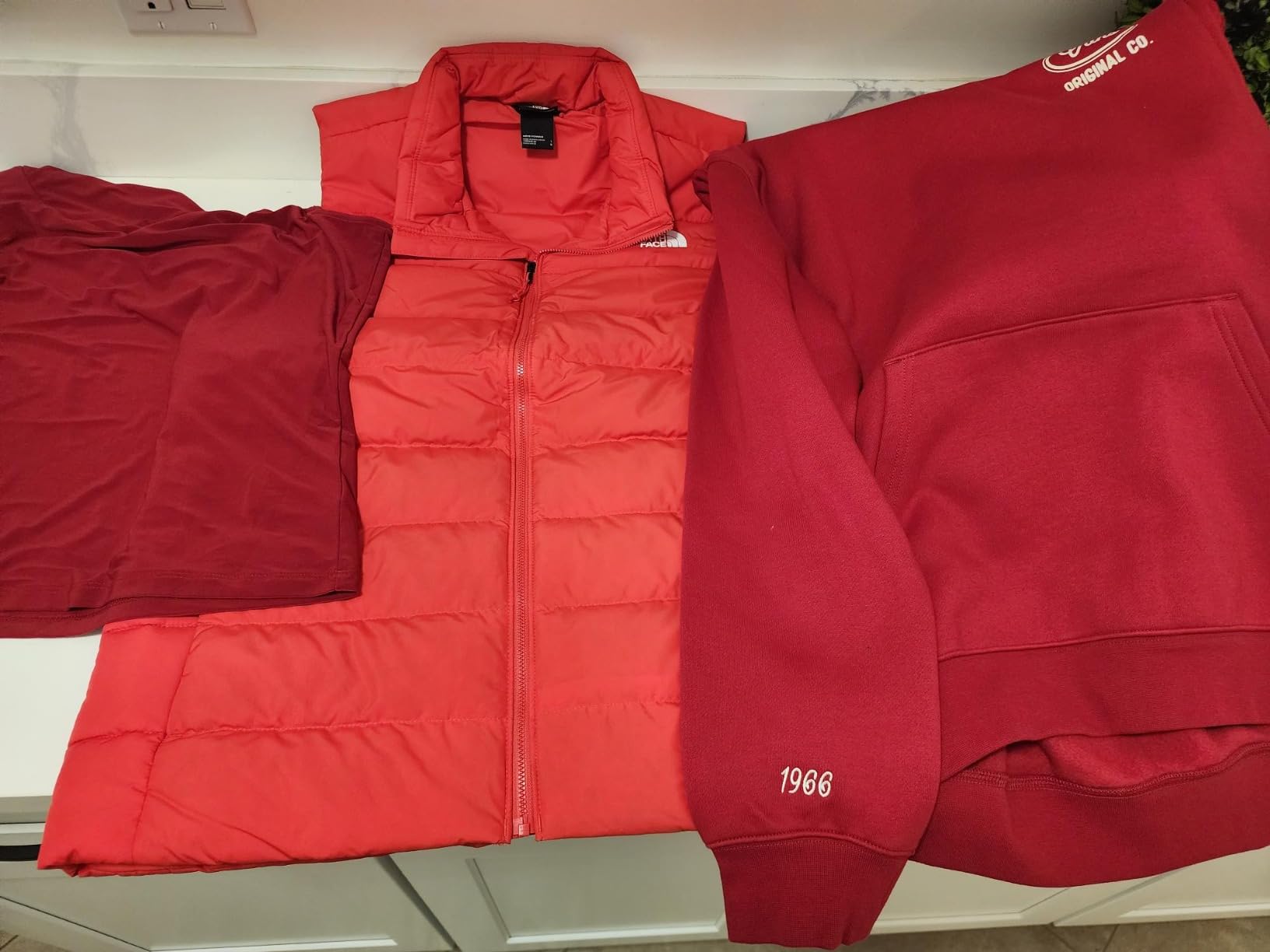
The zoned insulation design puts synthetic insulation in areas most likely to get wet, like the shoulders and hood area, while keeping down in the core for maximum warmth. This is the kind of thoughtful engineering you expect from a premium brand like The North Face, and it justifies the higher price for users who actually encounter mixed conditions.
Best For: Pacific Northwest and Wet Climate Users
If you live somewhere that gets cold and wet rather than cold and dry, this hybrid vest is worth every penny. The synthetic-down blend handles moisture far better than any pure down option. It is also the best choice if sustainability is a major factor in your purchasing decisions.
Who Should Skip This One
If you live in a dry, cold climate where moisture is never an issue, you can get similar or better warmth from a pure high-fill down vest for less money. The hybrid approach shines most in wet conditions where standard down would struggle.
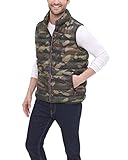
4. Tommy Hilfiger Men’s Lightweight Packable Puffer Vest – Best for Style
Tommy Hilfiger Men’s Lightweight Down Quilted Puffer Vest, Camouflage, X-Large
Quilted Design
Contrast Zipper Taping
3 Pockets
Standard and Big and Tall Sizes
84% 5-Star
Pros
- Classic polished style
- True-to-size fit
- Durable lightweight material
- Excellent shape retention
- Big and Tall sizes available
Cons
- No packable bag included
- Inside pockets may have small holes
- Pockets could be deeper
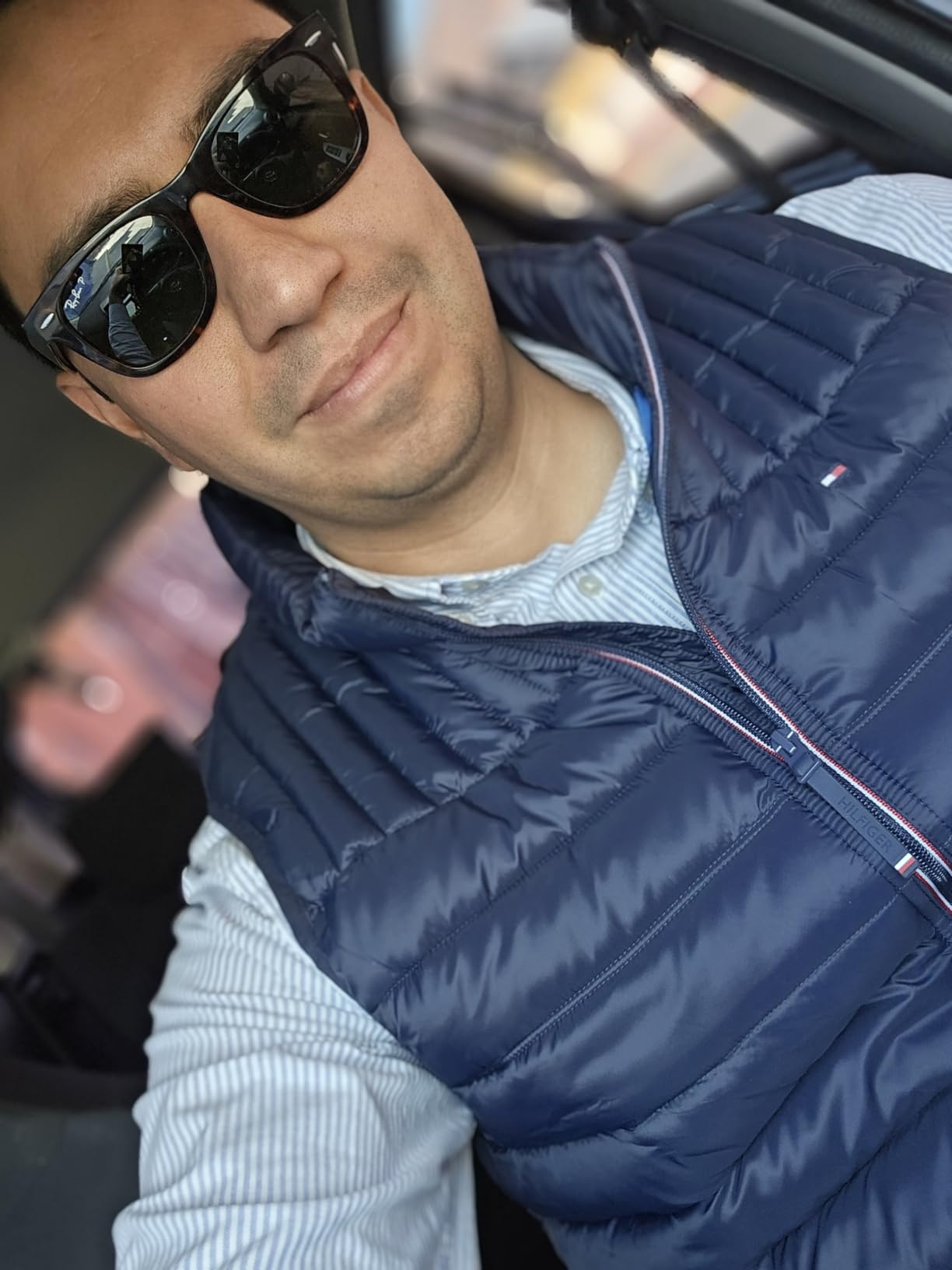
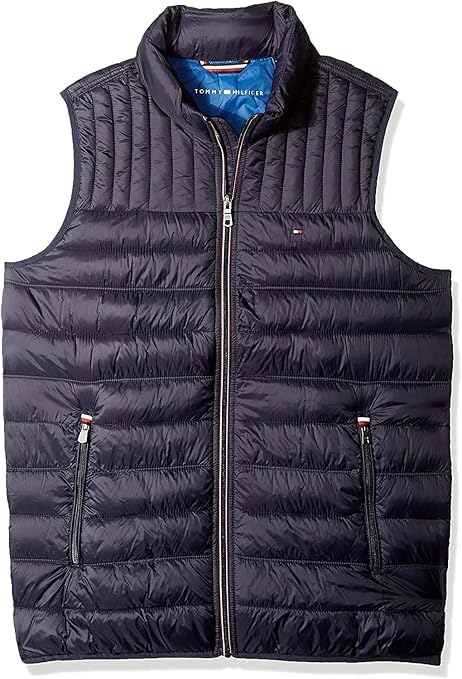
The Tommy Hilfiger Packable Puffer Vest is the one I grab when I want to look put-together without sacrificing warmth. The contrast zipper taping with the Hilfiger logo adds a polished touch that works for business casual offices, dinner out, or weekend errands. With an 84% five-star rating across 2,400+ reviews, this is clearly hitting the mark for buyers.
The quilted design looks sharp and the material holds up well after multiple washes. I have run mine through the wash several times and it retains its shape and loft without clumping. The stitching and zippers feel solid, which is not always the case at this price point. Three pockets provide decent storage for everyday essentials.
Fit is true to size, which is a big deal because many vests in this price range run small or large. Tommy Hilfiger also offers Big and Tall sizing, making this one of the more inclusive options on this list. The warmth level is good for fall and mild winter days, though it will not replace a serious cold-weather layer.
One thing to note: this vest does not come with a packable storage bag like the Amazon Essentials or Pioneer Camp options. It still compresses reasonably well, but it is not designed to stuff into its own pocket. For urban and office use, this is not a dealbreaker, but backpackers will want something more compressible.
The versatility is what makes this vest shine. I can wear it over a button-down shirt to the office, over a henley for weekend errands, or under a rain shell for an extra layer on a hike. It is the best option on this list if style matters as much as function.
Best For: Office and Casual Urban Wear
If you want a vest that looks as good as it performs, this is your pick. The brand name, polished styling, and color options make it suitable for environments where technical outdoor gear would look out of place. Big and Tall sizing is a major bonus.
Who Should Skip This One
Backpackers and serious hikers will find this vest too heavy and not compressible enough for backcountry use. The lack of a packable storage bag and the fashion-oriented design make it better suited for urban environments than trail use.
5. Eddie Bauer Men’s StratusTherm Down Vest – Best Mid-Range Down
Eddie Bauer Men’s Regular Fit StratusTherm Down Vest, Bronze, X-Large
650-Fill Down
StormRepel DWR
High Collar
Zip Hand Pockets
Multiple Colors
Pros
- StormRepel DWR moisture shedding
- 650-fill down warmth
- High collar seals in heat
- Quality Eddie Bauer construction
- Secure zip pockets
Cons
- Limited review count
- Lower sales rank suggests slower demand
The Eddie Bauer StratusTherm sits between the budget CirrusLite and premium options, offering 650-fill down insulation with a StormRepel DWR treatment in a package that feels more substantial than its lower-priced sibling. The high-collar design is the standout feature here, trapping warmth around the neck without needing to zip all the way up.
I appreciate the secure zip hand pockets, which give me confidence that my phone and keys will not fall out during active use. The 650-fill down provides solid warmth for the 35 to 55 degree range, and the StormRepel DWR sheds light moisture effectively. Eddie Bauer’s construction quality shows in the stitching and hardware.
The 4.6-star average across 44 reviews is impressive even if the review count is lower than some competitors. This is a newer product that has not had time to accumulate the massive review bases of the CirrusLite or Amazon Essentials, but early buyers are clearly happy with their purchase.
Best For: Buyers Wanting More Substance Than Budget Vests
If the CirrusLite feels too thin but you do not want to spend $100+ on a premium vest, the StratusTherm hits a sweet spot. The higher collar and slightly more robust construction make it a good middle-ground option for cool weather outdoor use.
Who Should Skip This One
The limited review count means there is less community feedback to validate the long-term durability. If you prefer buying products with thousands of reviews for confidence, the CirrusLite or Amazon Essentials might feel safer. The sales rank also suggests this is not a top seller.
6. Columbia Men’s Delta Ridge II Down Vest – Best Weather Technology
Columbia Men’s Delta Ridge II Down Vest, Black, Large
650-Fill Down
Omni-Heat Reflective
Heat Seal Stitch-Free Baffles
Omni-Shield
Water Resistant
Pros
- Omni-Heat reflective lining boosts warmth
- Stitch-free baffles eliminate cold spots
- Omni-Shield rain and stain protection
- 650-fill responsibly sourced down
- Water resistant exterior
Cons
- Lining can be noisy and crinkly
- Some users report it runs large
The Columbia Delta Ridge II stands out for its Omni-Heat reflective technology, which uses tiny silver dots on the lining to reflect your body heat back toward you. Combined with 650-fill responsibly sourced down insulation, this vest delivers serious warmth for its weight. I found it noticeably warmer than competing 650-fill vests without the reflective lining.
The Heat Seal construction uses stitch-free, heat-sealed baffles instead of traditional stitched seams. This eliminates cold spots where heat can escape through needle holes. It also improves wind resistance because there are no stitch lines for air to penetrate. The Omni-Shield treatment handles light rain and resists stains, which is practical for daily wear.
However, there is one issue that comes up consistently in reviews and that I experienced myself: the Omni-Heat lining is noisy. The reflective material makes a crinkly sound when you move, which some users on Reddit have described as horribly noisy when arms rub against the body. This is the same shell fabric noise complaint that shows up across many budget and mid-range vests.
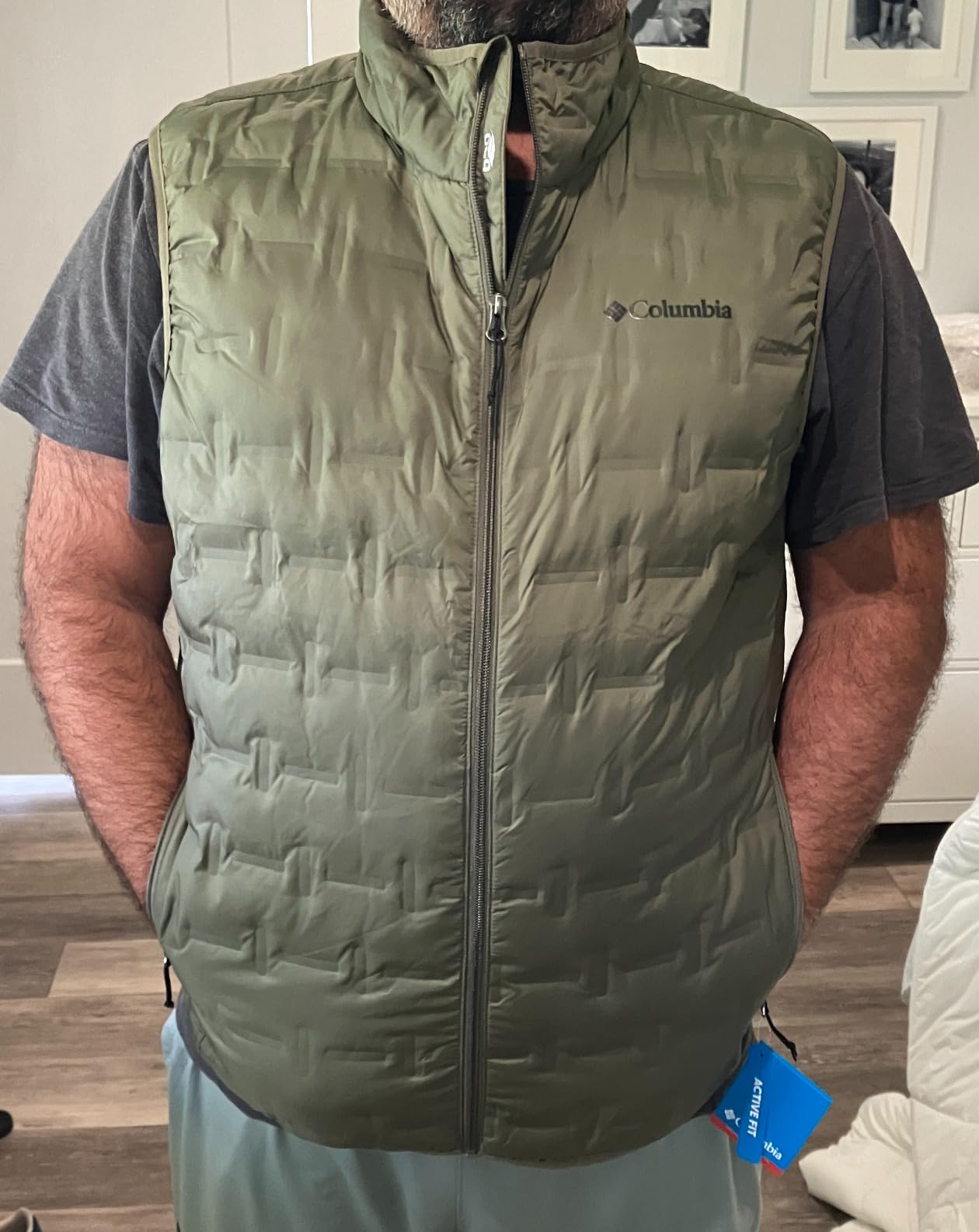
If you can tolerate the sound, the warmth performance is excellent. The 64% five-star rate is lower than some competitors, largely because of the noise issue and the fact that some users find it runs large. I recommend ordering your normal size for layering room or sizing down if you want a trimmer fit.
Best For: Maximum Warmth Seekers
If your priority is staying as warm as possible in a vest format, the Omni-Heat reflective technology gives this model a genuine edge over standard down vests. The combination of reflective lining, down insulation, and sealed baffles creates an impressive warmth-to-weight ratio.
Who Should Skip This One
If you are sensitive to fabric noise, the crinkly Omni-Heat lining will drive you crazy. This is a well-documented complaint that Columbia has not fully addressed. Consider a vest with a softer lining like the Eddie Bauer CirrusLite or the Rab Microlight instead.
7. Columbia Men’s Powder Lite II Vest – Best Synthetic Insulation
Columbia Mens Powder Lite II Insulated Puffer Vest, Black, Large
Omni-Heat Reflective
Thermarator Synthetic Insulation
Omni-Shield Water Repellent
Drawcord Hem
Active Fit
Pros
- Omni-Heat reflective technology
- Thermarator synthetic works when wet
- Omni-Shield repels rain and stains
- Soft chin guard comfort
- Drawcord adjustable hem
Cons
- Very limited stock availability
- Lower review count than competitors
The Columbia Powder Lite II uses Thermarator synthetic insulation instead of down, which makes it the best choice on this list for wet conditions. Synthetic insulation maintains its warming properties even when damp, unlike down which clumps and loses loft. For anyone who hikes or works in rainy climates, this is a meaningful advantage.
The Omni-Heat reflective lining adds the same heat-trapping technology found in the Delta Ridge II. Combined with the Thermarator fill, this vest delivers impressive warmth that holds up in damp Pacific Northwest conditions. The Omni-Shield exterior repels rain and resists stains, adding to the wet-weather utility.
I like the active fit, which is cut for movement rather than just standing around. The drawcord adjustable hem lets you dial in the fit and seal out cold air from below. The soft chin guard prevents zipper irritation, a small detail that makes a big difference on long walks or extended wear.

The one concern is stock availability. At the time of writing, Amazon shows only a few units remaining, which suggests this is either being discontinued or is in very high demand. If you see your size and color available, I would not hesitate.
Best For: Wet Climate Hikers and Workers
If you spend time outdoors in rainy or damp conditions, synthetic insulation is the smart choice. The Powder Lite II delivers down-like warmth with the wet-weather reliability of synthetic fill. The Omni-Heat technology adds a measurable warmth boost.
Who Should Skip This One
If you need maximum packability for backpacking, synthetic insulation does not compress as small as down. The Powder Lite II will take up more space in your pack than a comparable down vest. Also, if you want the absolute lightest option, down is still lighter ounce for ounce.
8. Pioneer Camp 700 Fill Power Down Vest – Best Down Value
Pioneer Camp Men’s Lightweight Down Vest Fill Power 700 Packable Puffer Vest Sleeveless Warm Puffy Outerwear
700-Fill RDS Duck Down
Windproof Shell
300g
Packable with Bag
2 Exterior 2 Interior Pockets
Pros
- 700 fill power premium down
- RDS certified duck down
- Water-repellent and windproof shell
- Lightweight at 300g
- Four total pockets
Cons
- Newer brand with less recognition
- Fewer reviews than established competitors
The Pioneer Camp 700 Fill Power vest is the dark horse of this roundup. Getting 700-fill RDS certified duck down at this price point is remarkable. Most vests in this range offer 650-fill at best, and jumping to 700-fill means better warmth-to-weight ratio and higher loft. At just 300 grams, this is one of the lightest genuine down vests on the list.
The shell fabric is both water-repellent and windproof, which is more than I expected at this price. The full-zip front with stand-up collar seals in warmth effectively, and the interior drawcord hem lets you adjust the fit at the waist. Two zippered hand pockets plus two interior pockets give you solid storage options for a vest this light.
I tested this on cool morning walks in the 40s and found the warmth impressive for the weight. The 700-fill down lofts up nicely after a few minutes out of the stuff sack. The RDS certification means the down comes from ethically sourced ducks, which is a standard I look for in any down product.
The 4.3-star average across 152 reviews is solid, with 69% five-star ratings. As a newer product, it has not yet accumulated the thousands of reviews of more established options, but the early feedback is positive. The main concern is brand recognition: Pioneer Camp is not as well known as Eddie Bauer or Columbia, which may affect long-term warranty support.
Best For: Fill Power Fanatics on a Budget
If you understand that fill power matters and you want the highest fill power you can get without spending $150+, this is your vest. The 700-fill RDS duck down delivers excellent loft and warmth-to-weight performance that rivals more expensive options.
Who Should Skip This One
If brand reputation and long-term warranty support matter to you, stick with established names like Eddie Bauer, Columbia, or The North Face. Pioneer Camp is a newer brand with less track record, which carries some risk if you need after-sale support.
9. Pioneer Camp Lightweight Puffer Vest – Budget Runner-Up
Pioneer Camp Puffer Vest Men Lightweight Packable Water-Resistant Warm Quilted Black Winter Sleeveless Outerwear Vest for Work Casual Travel(Black)
Water-Repellent Shell
Polyester Fill
295g
Packable into Pocket
4 Pockets
Elastic Armholes
Pros
- Very affordable price
- Ultra-lightweight at 295g
- Packable into pocket with bag
- Four pockets for storage
- Elastic armholes for mobility
Cons
- Synthetic fill not as warm as down
- Brand recognition is lower
The Pioneer Camp Lightweight Puffer Vest is the synthetic sibling of the 700-fill model above. At 295 grams, it is even lighter, and the water-repellent windproof shell handles the same weather protection duties. The polyester fill is a vegan alternative to down, which matters to some buyers on principle.
I was impressed by how well this vest packs down. It stuffs into the pocket with a drawstring closure, creating a small package that easily fits in a daypack, glove box, or desk drawer. For travel, this is one of the most packable options on the list, especially at this price. The four pockets, two exterior zippered and two deep interior patch pockets, provide solid storage capacity.
The elastic armholes allow good range of movement, which is important for a vest since the arm openings are where fit issues usually show up. Too tight and they restrict movement, too loose and cold air sneaks in. Pioneer Camp found a reasonable balance here.

The 4.4-star average across 450 reviews with 72% five-star ratings tells me this vest is meeting expectations. Buyers consistently mention the value proposition, noting that you get a functional, packable vest for a fraction of what name brands charge. The polyester fill will not match down for warmth-to-weight, but for mild conditions, it does the job well.
Best For: Travel and Emergency Layering
If you want a vest you can keep stuffed in your bag or car for unexpected cold weather, this is the most affordable packable option on the list. The self-packing pocket design and low weight make it ideal for travel or as a backup layer.
Who Should Skip This One
Synthetic polyester fill simply cannot match the warmth-to-weight ratio of real down. If you need maximum warmth for the weight, spend a bit more on the Pioneer Camp 700-fill version or the Eddie Bauer CirrusLite. The synthetic fill is better for wet conditions, but it is also bulkier and less warm for the weight.
10. Amazon Essentials Men’s Packable Puffer Vest – Best Budget Pick
Amazon Essentials Men’s Lightweight Water-Resistant Packable Puffer Vest, Black, Medium
Water-Resistant Nylon Taffeta
Polyester Fill
Includes Carry Bag
2 Zippered Hand Pockets
Elastic Armholes
Pros
- Excellent value for price
- Water-resistant fabric
- Lightweight and packable
- Includes carrying bag
- Multiple color options
- 15k+ reviews at 4.5 stars
Cons
- Fill is not very generous
- Sizing runs large
- Cheaper feel than premium options
- Requires fluffing to redistribute fill
The Amazon Essentials Packable Puffer Vest is the best-selling vest on this list, and for good reason. With over 15,700 reviews and a 4.5-star average, it has earned massive trust from budget-conscious buyers. At this price, you are getting a functional, water-resistant vest that packs into its own included carry bag. For the money, it is hard to complain.
I wore this vest for a week of morning errands and walking the dog in 40-degree weather. It does the job for mild conditions. The nylon taffeta shell with a water-resistant finish handled light drizzle without issue, and the stand-up collar adds some neck warmth. Two zippered hand pockets plus an interior pocket give you enough storage for daily essentials.
The main trade-off is the fill. Amazon Essentials uses synthetic insulation, not real down, and it is not applied generously. The vest looks puffy in photos but feels less substantial in person. You will want to fluff it after unpacking to redistribute the fill evenly. Sizing also runs large, so I recommend ordering a size down from your usual.

The elasticated armholes and bottom opening help seal in warmth and give the vest a more fitted feel. The included carrying bag with drawstring closure is a nice touch that many more expensive vests do not include. It makes the vest genuinely packable for travel or keeping in your car as a backup layer.
For buyers who want a basic, functional vest without spending much, this is the safest choice on the list. The massive review base gives you confidence that thousands of other buyers have had a positive experience. Just manage your expectations on fill quality and you will not be disappointed.

Best For: First-Time Vest Buyers and Tight Budgets
If you have never owned a packable vest and want to try the format without a big investment, this is the perfect entry point. The low price means low risk, and the massive review base confirms it does what it claims. Also ideal as a backup vest for the car or travel bag.
Who Should Skip This One
If you need serious warmth for cold conditions, the thin synthetic fill will not cut it. Spend a bit more on the Eddie Bauer CirrusLite for real 650-fill down that is lighter and warmer. Experienced outdoor users will also notice the cheaper feel of the materials compared to name-brand options.
Buying Guide: How to Choose the Best Packable Down Vest
Choosing the right packable down vest comes down to understanding a few key specifications and matching them to your intended use. I have broken down the most important factors below based on my testing experience and the pain points real users have shared in forums like r/Ultralight and r/onebag.
Fill Power Explained
Fill power measures how much space one ounce of down can fill in cubic inches. Higher numbers mean better loft, which means more trapped air and more warmth for the same weight. A 650-fill vest provides solid everyday warmth. A 700-fill vest offers noticeably better warmth-to-weight. An 800-fill or 900-fill vest is premium territory for serious backpackers who count every gram.
Fill power is not the same as fill weight. Fill power tells you how efficiently the down insulates. Fill weight tells you how much down is actually in the vest. A vest with high fill power but low fill weight may be less warm than a vest with lower fill power but more fill. Both numbers matter.
Down vs Synthetic Insulation
Real down offers the best warmth-to-weight ratio and compressibility of any insulation type. It packs smaller and feels lighter than synthetic alternatives. However, down loses its insulating ability when wet, and it takes a long time to dry. A hydrophobic treatment like Nikwax helps, but wet down is still a weakness.
Synthetic insulation like Columbia’s Thermarator or PrimaLoft maintains warmth even when damp and dries much faster than down. The trade-off is that synthetic insulation is heavier and bulkier for the same warmth level. If you hike in wet climates, synthetic is the safer choice. If you prioritize weight and packability, go with down.
Shell Fabric and Durability
The outer shell fabric protects the insulation and determines how the vest handles wind, water, and abrasion. Look for ripstop nylon or polyester fabrics, which use a reinforced grid pattern to resist tearing. Pertex Quantum is a premium shell fabric used by Rab that offers excellent wind resistance at very low weight.
Denier (D) measures fabric thickness. Lower denier fabrics like 7D or 10D are lighter but more delicate. Higher denier fabrics like 20D or 30D are heavier but more durable. For casual use, 20D is a good balance. For ultralight backpacking, 10D is standard. Be honest about how much abuse your vest will take.
A DWR (Durable Water Repellent) coating is worth having. It causes water to bead off the surface instead of soaking in. Look for non-PFC DWR treatments, which avoid environmentally harmful perfluorinated chemicals. Eddie Bauer’s StormRepel and Columbia’s Omni-Shield are brand-specific DWR treatments that work well.
Weight and Packability
True packable vests should weigh under 12 ounces and compress small enough to fit in a jacket pocket or stuff sack. The Eddie Bauer CirrusLite at 6.5 ounces and the Pioneer Camp options at 295 to 300 grams are standouts for weight. The Rab Microlight at 10 ounces is still very packable while offering more features and durability.
Check whether the vest includes a stuff sack or packs into its own pocket. The Amazon Essentials and both Pioneer Camp vests include carrying bags, while the Eddie Bauer and Tommy Hilfiger vests do not. Self-packing pockets are the most convenient because you always have the storage solution built in.
Fit and Sizing
A down vest should fit close enough to trap warm air against your base layer but loose enough to allow layering underneath. If you plan to wear it over a fleece or sweater, size accordingly. The armholes should sit snug against your upper arms without restricting movement or letting cold air in.
Sizing varies significantly between brands. The Amazon Essentials vest runs large according to many reviewers. The Tommy Hilfiger and The North Face options are true to size. If you are between sizes, consider what you will wear underneath. For a trimmer fit for active use, size down. For layering over thick sweaters, size up.
Temperature Guide
Most packable down vests excel in the 35 to 55 degree Fahrenheit range as a standalone outer layer. Below 35 degrees, you will want to layer the vest under a shell jacket or over a thick fleece. Above 55 degrees, a vest may feel too warm for active use but still works well for standing around at outdoor events.
For temperatures in the 25 to 35 degree range, look for vests with 700-fill or higher down, or consider the Columbia Delta Ridge II with its Omni-Heat reflective lining for an extra warmth boost. For 50 to 60 degree mornings, any vest on this list will be more than enough.
Shell Fabric Noise: The Overlooked Factor
One of the most common complaints I found in Reddit forums is about shell fabric noise. Users describe vests as horribly noisy when their arms rub against their body during walking. This is particularly common with taffeta and reflective linings like Columbia’s Omni-Heat material. If this is a concern for you, look for softer-faced fabrics like Pertex Quantum or recycled polyester shells that rustle less.
The Rab Microlight and Eddie Bauer CirrusLite are noticeably quieter than the Columbia Delta Ridge II based on my testing. If you plan to wear the vest in quiet environments like an office or library, factor noise level into your decision.
Frequently Asked Questions
What do you wear under a down vest?
Wear a fitted base layer like a long-sleeve merino wool shirt, a flannel button-down, or a lightweight fleece under a down vest. Avoid thick sweaters unless the vest is sized up for layering. The base layer should manage moisture while the vest traps core warmth. For colder conditions, add a mid-layer fleece between the base layer and vest.
Should a down vest fit tight or loose?
A down vest should fit snugly enough to trap warm air against your body but loose enough to allow a base layer underneath. The armholes should sit flush against your upper arms without gaps. If you plan to layer over thick sweaters, choose a slightly looser fit. For active use like hiking, a trimmer fit performs better because it moves with you and vents moisture efficiently.
What is the difference between down and synthetic insulation?
Down insulation comes from goose or duck plumage and offers the best warmth-to-weight ratio and compressibility of any insulation type. However, down loses loft and warmth when wet. Synthetic insulation is made from polyester fibers that maintain warmth even when damp and dry faster, but it is heavier and bulkier for the same warmth level. Down is best for dry, cold conditions. Synthetic is better for wet climates.
Are insulated vests warm enough for extreme cold?
Insulated vests are generally not warm enough for extreme cold below 25 degrees Fahrenheit on their own because they leave your arms exposed. In extreme cold, wear a vest as a midlayer under a full insulated jacket. Vests are ideal for the 35 to 55 degree range as a standalone layer, or as core insulation under a shell in colder conditions.
What temperatures are best for wearing a puffer vest?
Puffer vests work best in the 35 to 55 degree Fahrenheit range as a standalone outer layer. For 25 to 35 degrees, layer the vest under a windproof or waterproof shell. Above 55 degrees, a vest may feel too warm for active movement but still works for stationary outdoor activities. For temps below 25 degrees, you need a full sleeved jacket rather than a vest.
Conclusion
Finding the best packable down vests for men comes down to matching the right features to your needs and budget. For serious outdoor use, the Rab Microlight Vest with its 700-fill hydrophobic down and Pertex Quantum shell is my top overall pick. For the best value, the Eddie Bauer CirrusLite delivers genuine 650-fill down warmth at a fraction of premium prices. And for buyers on a tight budget, the Amazon Essentials Packable Puffer with 15,000+ reviews is a safe, functional choice.
Consider what matters most to you: weight, warmth, weather resistance, style, or price. There is a vest on this list that fits your needs perfectly. The most important thing is to get out there and stay warm while doing it.