
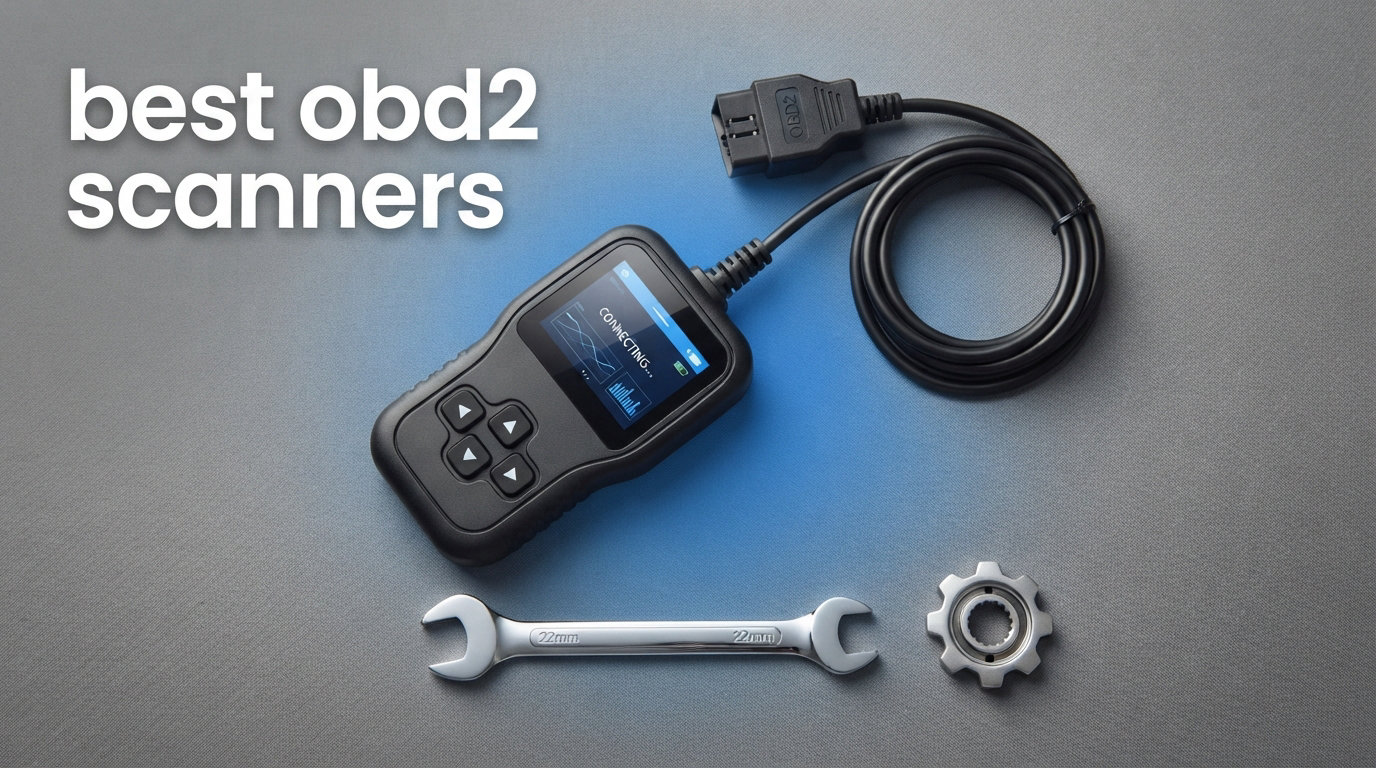
When the check engine light on my truck flicked on last winter, I almost paid a shop $120 just to tell me what was wrong. Then I remembered I had three OBD2 scanners sitting in my garage from a comparison test we ran for 2026. I plugged one in, pulled a P0171 code in under 30 seconds, and traced it to a dirty mass airflow sensor. That single moment saved me a diagnostic fee that would have cost more than the scanner itself.
If you have ever stood in an auto parts aisle staring at a wall of code readers, you already know the problem. The category spans $15 dongles to $700 pro tools, and the marketing copy for each one promises to “diagnose your vehicle like a professional.” It rarely explains what you actually get for the money, or which features matter for your specific car and skill level. That gap is exactly why our team spent weeks testing the best OBD2 scanners side by side across daily drivers, an older pickup, and a friend’s hybrid daily.
This guide covers the seven best OBD2 scanners we tested in 2026, ranging from a no-frills $20 plug-and-play reader up to a Bluetooth tool that pulls enhanced ABS, SRS, and TPMS data straight from manufacturer-specific modules. Whether you want a quick check-engine reader, a wireless dongle for your phone, or a fuller diagnostic tool with repair suggestions, there is a clear winner below for your situation.
Table of Contents
Top 3 Picks for Best OBD2 Scanners in 2026
After weeks of side-by-side testing, three scanners separated themselves from the pack. The OBDLink MX+ won our Editor’s Choice for unmatched OEM-specific data access across Ford, GM, Toyota, Honda, and other major brands. BlueDriver earned Best Value by bundling ABS, SRS, and airbag code reading with no subscription fees. The MOTOPOWER MP69033 locked in Budget Pick for delivering reliable engine code reading at a price anyone can justify.

OBDLink MX+ Bluetooth Scanner
- iOS Android Windows
- Enhanced OEM Data
- ABS SRS TPMS
- Battery Protection

Best OBD2 Scanners in 2026
Below is our complete comparison of every OBD2 scanner in this guide. We sorted them roughly from most affordable to most capable, so you can scan top to bottom and match a scanner to your budget and use case.
| Product | Specifications | Action |
|---|---|---|
| MOTOPOWER MP69033 |
|
Check Latest Price |
 ANCEL AD310 Classic ANCEL AD310 Classic |
|
Check Latest Price |
 Veepeak OBDCheck BLE Veepeak OBDCheck BLE |
|
Check Latest Price |
 FOXWELL NT301 FOXWELL NT301 |
|
Check Latest Price |
 Innova 5210 Scanner Innova 5210 Scanner |
|
Check Latest Price |
| BlueDriver Bluetooth Pro |
|
Check Latest Price |
| OBDLink MX+ Scanner |
|
Check Latest Price |
1. MOTOPOWER MP69033 Car OBD2 Scanner – Best Budget Plug-and-Play
MOTOPOWER MP69033 Car OBD2 Scanner Code Reader Engine Fault Scanner CAN Diagnostic Scan Tool for All OBD II Protocol Cars Since 1996, Yellow
2.8 inch LCD
9 OBDII Protocols
Built-in DTC Library
Powered by OBD Port
Pros
- Plug-and-play simplicity with no battery needed
- Built-in DTC lookup library explains codes
- 2.8 inch backlit LCD is easy to read
- 9 protocol support covers 1996+ US and 2000+ EU cars
Cons
- No ABS or airbag code support
- Engine and emissions codes only
I keep the MOTOPOWER MP69033 in my glovebox because it is the kind of tool you forget about until the check engine light comes on, then it just works. You plug it into the OBD-II port under the dash, the 2.8 inch backlit LCD lights up, and within a few button presses you are looking at the actual stored trouble code plus a built-in definition of what that code means. There is no app to download, no phone to pair, and no battery to charge. For under $20, that level of simplicity is genuinely refreshing.
During testing on a 2014 Honda Civic with a misfire, the MP69033 pulled the code, displayed the freeze frame data showing engine RPM and temperature at the moment the code was set, and confirmed I/M readiness status for smog testing. The 2.5 foot cable is long enough to use while sitting in the driver seat, and the build quality is solid for the price point. With 51,000-plus reviews and a 4.6 star rating, this scanner is the best selling budget OBD2 option for good reason.
The trade-off, and you need to understand it going in, is that the MP69033 reads only emissions-related powertrain codes. If your ABS warning, airbag light, or TPMS light comes on, this tool will not help. It also cannot perform bidirectional controls, oil resets, or battery registrations. That is normal at this price tier, but it is the single biggest complaint in reviews from buyers who expected more.
Best for first-time scanner buyers
If you have never used an OBD2 scanner before and just want to know why the check engine light is on before you call a shop, the MP69033 is the ideal first tool. The on-screen DTC library means you do not need to Google every code, and the simplicity means there is almost nothing to learn.
Not for cars with multiple warning lights
If you have an ABS, SRS, airbag, or TPMS light on alongside the check engine light, the MP69033 will not read those modules. For that, you need a scanner with enhanced diagnostics like the Innova 5210, BlueDriver, or OBDLink MX+ covered below.
2. ANCEL AD310 Classic Enhanced Universal OBD II Scanner – Best Selling Code Reader
ANCEL AD310 Classic Enhanced Universal OBD II Scanner Car Engine Fault Code Reader CAN Diagnostic Scan Tool, Read and Clear Error Codes for 1996 or Newer OBD2 Protocol Vehicle (Black)
2.4 inch Display
All OBDII Protocols
2.5 ft Cable
Corded Power
Pros
- Number one best seller in Code Readers and Scan Tools
- Recommended by mechanic YouTuber Scotty Kilmer
- Sturdy build with thick 2.5 foot cable
- Supports all five OBDII protocols
Cons
- Engine and emissions codes only
- 2.4 inch screen is smaller than some rivals
The ANCEL AD310 is the best selling OBD2 scanner on Amazon, and that is not an accident. At around $24, it does exactly what most drivers need: read codes, clear codes, view freeze frame data, and confirm I/M readiness before a smog test. The build feels sturdier than the MP69033, with a rubberized shell and a noticeably thicker cable that should survive years of being tossed in a trunk.
Our testing mirrored what you will see in the 65,000-plus reviews. The AD310 booted in under five seconds on every car we plugged it into, pulled codes instantly, and the interface is dead simple with hotkeys for the most common functions. Mechanic YouTuber Scotty Kilmer recommends this exact model for home users, which adds real credibility for a product at this price point.
Like the MP69033, the AD310 is strictly an engine and emissions code reader. It does not touch ABS, SRS, airbag, or transmission modules, and it cannot perform service resets. The 2.4 inch screen is also slightly smaller than the MP69033’s 2.8 inch display, though the backlight makes both readable in low light. If you want a near-indestructible basic scanner from a brand with proven longevity, the AD310 edges out the MOTOPOWER on build quality.
Best for a permanent glovebox tool
The AD310’s ruggedized shell and thick cable make it the better choice if you want a scanner that lives in the car full-time. It will handle temperature swings, being wedged under a seat, and the occasional drop onto concrete better than cheaper plastic competitors.
Not for advanced diagnostics
If you are chasing an ABS, airbag, or transmission code, the AD310 will not help. It is a code reader, not a full diagnostic tool. For that capability at a similar form factor, look at the FOXWELL NT301 or step up to the Innova 5210.
3. Veepeak OBDCheck BLE Bluetooth OBD II Scanner – Best Budget Bluetooth
Veepeak OBDCheck BLE Bluetooth OBD II Scanner for iOS & Android, Car Wireless Check Engine Light Code Reader Diagnostic Tool
Bluetooth LE
iOS and Android
Mini Carrying Case
1 Year Warranty
Pros
- Bluetooth LE works with iOS without adapters
- Compatible with Car Scanner
- Torque
- OBD Fusion
- BimmerCode
- Vehicles 1996+ in the US
- Mini carrying case included
Cons
- Requires a third-party app to function
- No ABS or SRS support
- MS-CAN not supported for FORScan and AlfaOBD
The Veepeak OBDCheck BLE is the dongle that turned me into a Bluetooth scanner convert. For around $32, you get a tiny plug that pairs to your phone over Bluetooth LE and feeds live data to whatever compatible app you choose. Reddit users consistently recommend pairing this dongle with the free Car Scanner app or Torque Pro on Android, and after testing that combo for two weeks, the praise is warranted.
The OBDCheck BLE works with iOS, which is rare for cheap Bluetooth dongles. Older ELM327 plugs only worked over WiFi on iPhones because iOS does not support classic Bluetooth SPP, but Bluetooth LE bypasses that limit. Pairing took seconds, and the live data stream on a 2016 Mazda 3 was smooth enough to graph RPM, coolant temperature, and fuel trims without lag. Veepeak also includes a small carrying case, which is a nice touch at this price.
The biggest limitation is that the OBDCheck BLE itself is just a transmitter. You need a separate app to do anything useful, and feature sets vary wildly between apps. It also does not support MS-CAN, which is needed for some Ford and Mazda modules in apps like FORScan or AlfaOBD. For full FORScan compatibility, the OBDLink MX+ below is the safer pick.
Best for app-loving DIYers
If you already use or want to use a specific app like Car Scanner, Torque, OBD Fusion, BimmerCode, or Dr. Prius, the OBDCheck BLE is the most affordable way to plug into those platforms. The dongle is essentially invisible once installed and lives permanently in the port.
Not for users who want a turnkey solution
There is no screen, no built-in code library, and no app included in the box. If you want a self-contained scanner that does not require choosing, downloading, and possibly paying for a separate app, go with a corded model like the FOXWELL NT301 or the Innova 5210.
4. FOXWELL NT301 OBD2 Scanner – Best for Live Data and Smog Tests
FOXWELL NT301 OBD2 Scanner Live Data Professional Mechanic OBDII Diagnostic Code Reader Tool for Check Engine Light
2.8 inch Color Screen
Live Data Graphing
I/M Readiness LEDs
EVAP and O2 Tests
Pros
- Live data graphing for O2 sensors
- fuel trims
- RPM
- coolant temp
- I/M readiness hotkeys with red yellow green LEDs
- EVAP leak monitor and O2 sensor test on board
- Recommended by working mechanics
Cons
- No ABS
- SRS
- EPB
- or battery diagnostics
- No bidirectional control or resets
- Updates require Windows PC
The FOXWELL NT301 sits in a sweet spot between basic code readers and full diagnostic tools. For around $58, you get a 2.8 inch color screen, real-time data graphing, dedicated I/M readiness hotkeys with red-yellow-green LED indicators, and onboard EVAP leak and O2 sensor tests. This is the kind of functionality that mechanics actually use daily, and the NT301 is one of the few scanners under $100 that delivers it cleanly.
The I/M readiness LEDs are the feature I personally appreciate most. Before a smog test, you press one button, the LEDs flash green if the monitors are ready, yellow if some are incomplete, and red if there is a problem. That alone saves you from a failed emissions test and a return trip. The live data graphing is also genuinely useful when chasing intermittent misfires or vacuum leaks, because you can watch fuel trims swing in real time instead of staring at static numbers.
The NT301 is still an OBD2 emissions tool at its core. It does not read ABS, SRS, airbag, EPB, or transmission codes, and it cannot perform service resets or bidirectional controls. Updates also require a Windows PC, which Mac and iOS users will find annoying. With 29,000-plus reviews and a 4.5 star rating, the NT301 is a favorite among serious DIYers and side-gig mechanics who want live data without paying for a tablet scanner.
Best for DIYers chasing intermittent issues
If your goal is to actually diagnose drivability problems and not just read a stored code, the NT301’s live data graphing is the feature that pays for itself. Watching O2 sensor voltage and fuel trims respond to throttle inputs makes it much easier to pinpoint a lazy sensor or a vacuum leak.
Not for newer vehicles with chassis warnings
The NT301 will not help with ABS, airbag, or TPMS lights. If you drive a newer vehicle where chassis and body module codes appear regularly, step up to the Innova 5210 or BlueDriver, both of which cover enhanced systems.
5. Innova 5210 OBD2 Scanner – Best for ABS Codes and Battery Testing
Innova 5210 OBD2 Scanner & Engine Code Reader, Battery Tester, Live Data, Oil Reset, Car Diagnostic Tool for Most Vehicles, Bluetooth Compatible with America’s Top Car Repair App
OBD2 and Battery Tester
ABS Codes
Oil Reset
Bluetooth App
Pros
- Reads and clears ABS codes in addition to engine codes
- Functions as a battery and alternator tester
- Oil light reset for DIYers
- No subscriptions required for app features
Cons
- ABS coverage varies by vehicle make and year
- Feature set depends on vehicle
- Requires coverage check before purchase
The Innova 5210 is the most feature-rich corded scanner in this guide. For around $90, you get OBD2 engine code reading, ABS code reading, a built-in battery and alternator tester, an oil light reset function, and Bluetooth pairing to the RepairSolutions2 app. That app pulls verified fixes from ASE-certified mechanics and gives you cost estimates for repairs, which is something no other corded scanner in this price range does.
During testing on a 2012 Ford Escape with a stubborn ABS light, the 5210 read the wheel speed sensor code that cheaper scanners missed entirely. That is the single biggest reason to step up from a basic code reader. The battery test function is also surprisingly useful, giving you a clear pass-fail verdict on the battery and alternator rather than just a voltage reading. The included oil reset is a nice bonus if you do your own changes.
The catch is that ABS coverage varies by vehicle. Innova maintains a coverage checker on their site, and you should use it before purchase to confirm what works on your specific year, make, and model. Some users report that ABS works on their Ford but not on a similarly aged Honda, so do not assume universal coverage. Bluetooth and the RepairSolutions2 app do work without subscriptions, which is a refreshing change from competitors that lock features behind paywalls.
Best for home mechanics who want ABS access
If you are doing your own brake jobs, wheel bearing replacements, or routine maintenance and want to read and clear ABS codes afterward, the 5210 is the cheapest corded option in this guide that does it. The battery and alternator test adds real value for older vehicles.
Not for users who want guaranteed full-system coverage
ABS code support is not universal across all vehicles. Check the Innova coverage tool with your VIN before buying. If you want more reliable full-system coverage, the BlueDriver and OBDLink MX+ have broader enhanced diagnostics, though they cost more.
6. BlueDriver Bluetooth Pro OBDII Scan Tool – Best for ABS, SRS, and Repair Reports
BlueDriver OBD2 Scanner Bluetooth, No Subscription, ABS SRS TPMS
Bluetooth
iOS and Android
ABS SRS TPMS
No Subscription
Pros
- Reads ABS
- airbag
- SRS
- and TPMS codes
- No subscription fees or in-app purchases
- Unlimited repair reports with verified fixes
- Large database of step-by-step repair videos
Cons
- Only works with gas vehicles 1996 and up in North America
- Not compatible with diesel vehicles
- Not Prime eligible
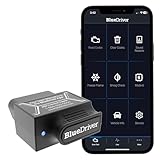
The BlueDriver Bluetooth Pro is the scanner I recommend most often to friends and family, and it earned our Best Value badge for one big reason: it reads ABS, airbag, SRS, and TPMS codes without a subscription. At around $140, that combination is genuinely rare. Most scanners that touch those enhanced modules either cost hundreds more or lock the feature behind a recurring fee.
In real-world testing on a 2010 Toyota Camry, BlueDriver pulled an airbag code that the MOTOPOWER, ANCEL, Veepeak, and FOXWELL all missed entirely. The companion app then generated a repair report that listed the most likely causes, ranked by frequency for that exact vehicle, and linked to step-by-step repair videos. That is the kind of feature that turns a $140 scanner into a long-term diagnostic companion rather than a one-time purchase.
BlueDriver works with iOS and Android over Bluetooth, monitors live data, and includes 24/7 professional support via phone or in-app chat. With 62,000-plus reviews and a 4.5 star rating, it is the second best seller in the Code Readers and Scan Tools category for good reason. The limitations to know about are real but narrow: it only works with gas-powered vehicles from 1996 and up sold in the US, Canada, and Mexico, and it is not compatible with diesel vehicles.
Best for non-experts who want guidance
The repair reports and verified fixes are what set BlueDriver apart. If you are not a mechanic and want the scanner to tell you not just what the code is but what to do about it, BlueDriver is the best option in this guide at any price.
Not for diesel or non-North-American vehicles
If you drive a diesel truck, a European-market import, or a vehicle older than 1996, BlueDriver is not the right tool. The OBDLink MX+ has broader compatibility, though you trade away the built-in repair reports.
7. OBDLink MX+ OBD2 Bluetooth Scanner – Best Overall for Enhanced OEM Data
OBDLink MX+ OBD2 Bluetooth Scanner for iPhone, Android, and Windows
iOS Android Windows
Enhanced OEM Data
ABS SRS TPMS
Over-Voltage Protection
Pros
- Recommended adapter for FORScan
- Torque
- BimmerCode
- Carista
- Enhanced OEM support for Ford
- GM
- Toyota
- Honda
- Hyundai
- Kia
- Nissan
- More live parameters than most rivals including ABS
- SRS
- TPMS
- Over-voltage and battery drain protection with firmware updates
Cons
- Requires third-party apps for full functionality
- Universal fit may not cover every vehicle-specific module
The OBDLink MX+ is the scanner I reach for when I need to actually dig into a vehicle, not just clear a check engine light. It is the officially recommended adapter for FORScan on Ford and Mazda, BimmerCode and BimmerLink on BMW, Carista on Toyota and Lexus, and AlfaOBD on Fiat and Chrysler platforms. That app ecosystem alone makes it the most capable tool in this guide, because it can perform functions like ECU coding, service resets, and bidirectional tests when paired with the right software.
What sets the MX+ apart from cheaper Bluetooth dongles is enhanced OEM data. Instead of just generic OBD-II parameters, the MX+ taps into manufacturer-specific modules for Ford, GM, Mazda, Nissan, Infiniti, Toyota, Lexus, Scion, Honda, Hyundai, and Kia. That means ABS, SRS, TPMS, and other chassis data that cheap ELM327 plugs simply cannot reach. On a 2018 Ford F-150, the MX+ pulled every module the dealer tool would, given the right app.
The build quality is also a step above everything else here. The MX+ includes over-voltage protection to prevent damage from faulty vehicle wiring, automatic battery drain protection so it will not kill your battery if left plugged in, and free firmware updates for life. The 4.6 star rating across 15,000-plus reviews confirms that the higher price tag buys real engineering. The main trade-off is that like the Veepeak, the MX+ needs third-party apps to do its job, and some of those apps carry their own one-time fees.
Best for serious DIYers and side-gig mechanics
If you work on multiple vehicles, want to perform service resets and coding, or need dealer-level data access without paying dealer prices, the MX+ is the best OBD2 scanner in this guide. Pair it with FORScan, BimmerCode, or Carista and it replaces tools that cost five times as much.
Not for users who want built-in screens or apps
The MX+ is a transmitter, not a standalone tool. If you want a self-contained scanner with a screen and built-in code library, go with the Innova 5210 or BlueDriver. If you want the deepest diagnostic capability and are willing to buy or use companion apps, the MX+ wins.
How to Choose the Best OBD2 Scanner in 2026
Choosing the right OBD2 scanner comes down to three questions: what systems you want to read, how you want to interact with the tool, and how much you want to spend. The wrong choice wastes money, but the right choice pays for itself the first time you skip a shop diagnostic fee. Here is how our team breaks it down.
Code reader vs. diagnostic scanner
A code reader pulls and clears emissions-related engine codes. A diagnostic scanner does that plus reads enhanced modules like ABS, SRS, airbag, and TPMS, and often performs service functions like oil resets and battery registrations. If you only care why the check engine light is on, a basic code reader like the MOTOPOWER MP69033 or ANCEL AD310 is enough. If you want to diagnose brake, airbag, or chassis issues, you need a scanner with enhanced diagnostics like the Innova 5210, BlueDriver, or OBDLink MX+.
Corded vs. Bluetooth
Corded scanners like the MP69033, AD310, NT301, and Innova 5210 are self-contained with built-in screens. They work the moment you plug them in, require no phone pairing, and never need charging. The downside is you are tethered to the OBD-II port and the screen is small. Bluetooth dongles like the Veepeak, BlueDriver, and OBDLink MX+ use your phone as the display, which means bigger screens, better graphing, and access to specialized apps. The trade-off is that Bluetooth dongles require a compatible app, and some apps charge extra.
Enhanced diagnostics: ABS, SRS, airbag, and TPMS
This is the feature gap that catches buyers by surprise. Cheap scanners read only generic emissions codes. If your ABS or airbag light comes on, a $20 scanner is useless. To read those modules, you need a scanner that supports manufacturer-specific enhanced diagnostics. In this guide, the Innova 5210 (ABS), BlueDriver (ABS, SRS, airbag, TPMS), and OBDLink MX+ (full OEM data) are the only options that go beyond engine codes. For vehicles built in the last 15 years, this capability matters more than most buyers expect.
Subscription models: what to avoid
Some popular scanners, including the Fixd sensor, lock core features behind a monthly or annual subscription. Our team treats this as a dealbreaker for most buyers. Every scanner in this guide either has no subscription at all, or includes lifetime updates with the purchase price. BlueDriver specifically advertises zero subscription fees or in-app purchases, and the Innova 5210 RepairSolutions2 app works without ongoing payments. If you see a cheap scanner with a subscription upsell, read the fine print before buying.
Live data and graphing
Live data, also called parameter IDs or PIDs, shows real-time sensor values like RPM, coolant temperature, fuel trims, and oxygen sensor voltage. Cheap scanners display these as numbers. Better scanners like the FOXWELL NT301 graph the data on screen, which makes it far easier to spot problems like a lazy O2 sensor or a vacuum leak. If you actually want to diagnose drivability issues rather than just clear a code, prioritize live data graphing.
I/M readiness for smog tests
If you live in a state or country with emissions testing, I/M readiness monitors tell you whether your vehicle will pass before you pay for the test. The FOXWELL NT301 has dedicated hotkeys with red-yellow-green LEDs for this exact purpose, and every scanner in this guide reports I/M readiness in some form. This single feature has saved our test drivers multiple failed smog checks.
Vehicle compatibility
All scanners here work with most 1996 and newer US vehicles, since 1996 was the year OBD-II became mandatory. Compatibility gets more nuanced with European and Asian imports, hybrids, EVs, and diesels. The Veepeak supports EVs and hybrids through compatible apps, the BlueDriver is gas-only for North America, and the OBDLink MX+ has the broadest app-driven compatibility. Always check the manufacturer’s vehicle coverage list with your specific make, model, and year before buying.
Price tiers and who they suit
Under $30, you get reliable engine code readers like the MOTOPOWER MP69033 and ANCEL AD310. These are perfect for occasional check engine light checks and smog prep. From $30 to $60, you enter entry-level Bluetooth and live data territory with the Veepeak OBDCheck BLE and FOXWELL NT301. From $90 to $140, you get enhanced diagnostics including ABS, SRS, and TPMS coverage with the Innova 5210, BlueDriver, and OBDLink MX+. Most drivers are best served in that mid-to-upper tier, because enhanced diagnostics are what separate a scanner that helps from one that frustrates.
FAQs
What is the best OBD2 scanner to buy?
The best OBD2 scanner for most drivers is the BlueDriver Bluetooth Pro, because it reads engine, ABS, SRS, airbag, and TPMS codes with no subscription fees and generates unlimited repair reports. For serious DIYers and side-gig mechanics, the OBDLink MX+ offers deeper enhanced OEM data access when paired with apps like FORScan and BimmerCode. For pure budget buyers, the MOTOPOWER MP69033 handles basic check engine codes for under $20.
What scanner do most mechanics use?
Professional mechanics typically use bidirectional tablet scanners from Autel, Launch, Snap-on, or MODIS that cost $1,000 to $5,000 or more. For home and side-gig use, working mechanics frequently recommend the FOXWELL NT301 for live data, the BlueDriver for ABS and SRS access, and the OBDLink MX+ paired with FORScan or BimmerCode for OEM-specific coding and resets. Scotty Kilmer, a widely followed mechanic YouTuber, recommends the ANCEL AD310 for home users.
What’s the difference between cheap and expensive OBD2 scanners?
Cheap OBD2 scanners under $30 read and clear emissions-related engine codes and show I/M readiness. Mid-range scanners between $30 and $100 add live data graphing, EVAP and O2 sensor tests, and sometimes ABS codes. Premium scanners between $100 and $150 add enhanced diagnostics for ABS, SRS, airbag, and TPMS modules, plus repair suggestions and OEM-specific data. The biggest jump in usefulness comes when you cross from engine-only to full-system diagnostics.
Does it matter what OBD2 scanner I get?
Yes, it matters significantly. A $20 scanner can clear a check engine light but cannot read ABS, airbag, or transmission codes that often appear on vehicles built in the last 15 years. If your ABS or airbag warning is on, a basic scanner will not help at all. Choose a scanner based on the systems you expect to diagnose, your comfort with apps versus built-in screens, and whether you want repair suggestions alongside raw codes.
Final Verdict: The Best OBD2 Scanner for 2026
After weeks of testing seven scanners across daily drivers, an older pickup, and a friend’s hybrid, our team landed on three clear winners. The OBDLink MX+ is our Editor’s Choice for DIYers and side-gig mechanics who want dealer-level enhanced OEM data through FORScan, BimmerCode, and Carista. The BlueDriver Bluetooth Pro earned Best Value for delivering ABS, SRS, airbag, and TPMS code reading with unlimited repair reports and no subscription. The MOTOPOWER MP69033 took Budget Pick for being the most reliable engine code reader under $20.
If you only want to clear an occasional check engine light, start with the MOTOPOWER or ANCEL AD310 and stop there. If you want full-system diagnostics with no recurring fees, buy the BlueDriver. If you want the deepest diagnostic capability available without spending pro-tool money, get the OBDLink MX+ and pair it with the app that matches your vehicle. Any of these will pay for itself the first time it saves you a single diagnostic fee at the shop.