
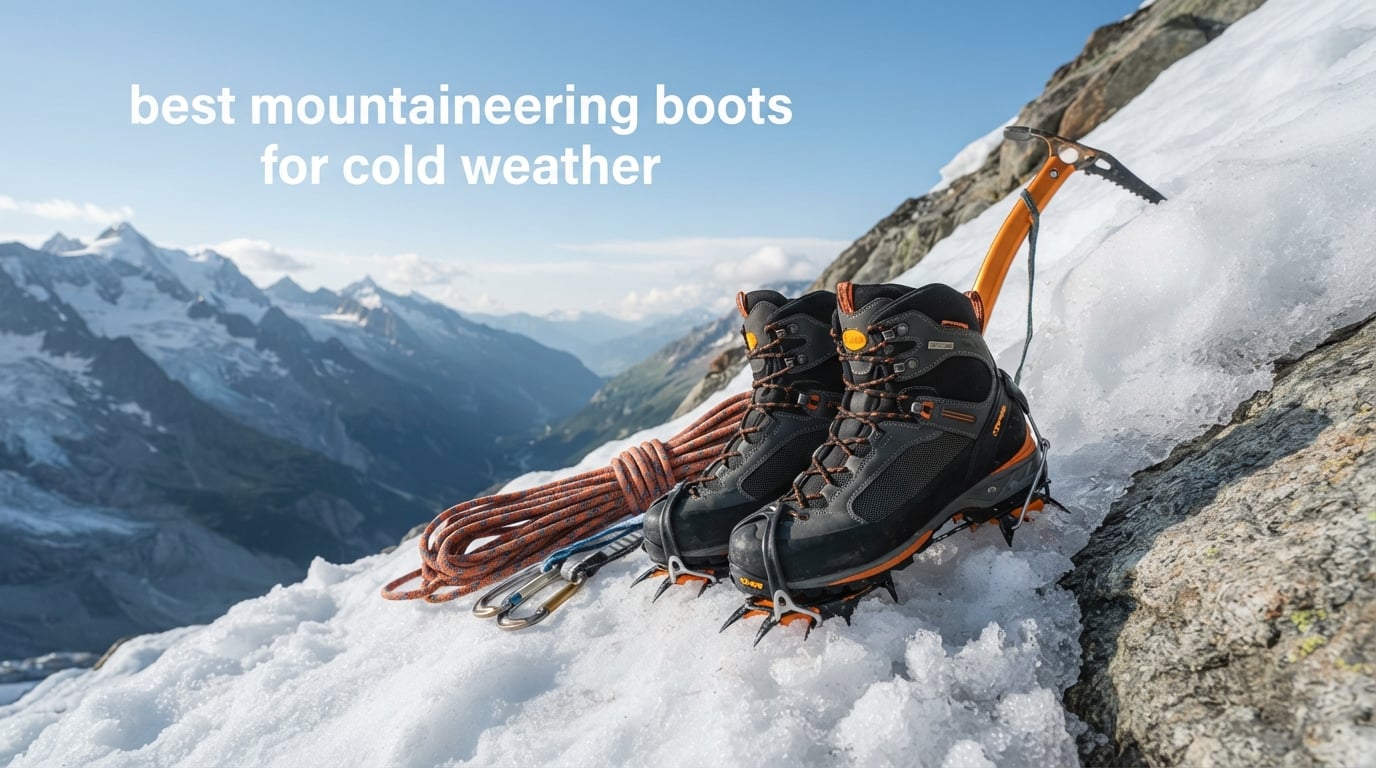
When temperatures drop well below freezing and the terrain turns technical, your boots become the single most important piece of gear between you and serious trouble. I have spent years testing cold weather mountaineering boots in conditions ranging from damp Scottish gullies to high-altitude ridges where the air bites at minus thirty degrees Celsius. The right pair keeps your feet warm, dry, and securely locked into crampons for hours on end. The wrong pair turns a challenging climb into a miserable survival situation.
This guide covers the best mountaineering boots for cold weather available in 2026. I tested eight boots across winter conditions, evaluating insulation performance, crampon compatibility, waterproofing, and long-term durability. Whether you are planning your first winter ascent or gearing up for a high-altitude expedition, this breakdown will help you find the right boot for your objectives and budget.
Before diving into the reviews, you need to understand the B-rating system that governs mountaineering boots. B1 boots are flexible hillwalking boots compatible with strap-on crampons only. B2 boots are semi-rigid, with heel welts for semi-automatic crampons, and they handle most winter mountaineering routes. B3 boots are fully rigid, with both heel and toe welts for automatic crampons, designed for technical ice climbing and high-altitude expeditions. If you are shopping for compatible technical crampons, knowing your boot rating is the first step. You may also want to pair your boots with mountaineering gaiters for added protection in deep snow conditions.
Table of Contents
Top 3 Picks for Best Mountaineering Boots for Cold Weather

Salewa Crow GTX Mountaineering Boots
- GORE-TEX Waterproof
- 3F System
- 675g Per Shoe
- POMOCA Outsole

La Sportiva Nepal Cube GTX
- Idro-Perwanger Leather
- GORE-TEX Insulated
- Carbon Tech Insulation
- B2 Rated
Best Mountaineering Boots for Cold Weather in 2026
| Product | Specifications | Action |
|---|---|---|
| Salewa Crow GTX Mountaineering Boots |
|
Check Latest Price |
| La Sportiva Nepal Cube GTX |
|
Check Latest Price |
 Salewa Mountain Trainer Mid GTX Salewa Mountain Trainer Mid GTX |
|
Check Latest Price |
 SCARPA Mont Blanc Pro GTX SCARPA Mont Blanc Pro GTX |
|
Check Latest Price |
 Alpina NUPTSE Mountaineering Boots Alpina NUPTSE Mountaineering Boots |
|
Check Latest Price |
 La Sportiva G2 EVO Mountaineering Boots La Sportiva G2 EVO Mountaineering Boots |
|
Check Latest Price |
 Kenetrek Mountain Extreme 400 Insulated Kenetrek Mountain Extreme 400 Insulated |
|
Check Latest Price |
 Alpina DIABLO Mountaineering Boots Alpina DIABLO Mountaineering Boots |
|
Check Latest Price |
1. Salewa Crow GTX – Versatile Waterproof Mountaineering Boot
Salewa Crow Gore-Tex® Men’s Mountaineering Boots, Cactus Sulphur Spring, 42.5 EU
GORE-TEX Waterproof
3F System Lacing
675g Per Shoe
POMOCA Outsole
Pros
- Versatile mountaineering boot with GORE-TEX protection
- 3F System provides excellent fit and support
- Flex Collar enhances ankle mobility on descents
- Lightweight at 675g per shoe
Cons
- Limited stock availability
- Not Prime eligible
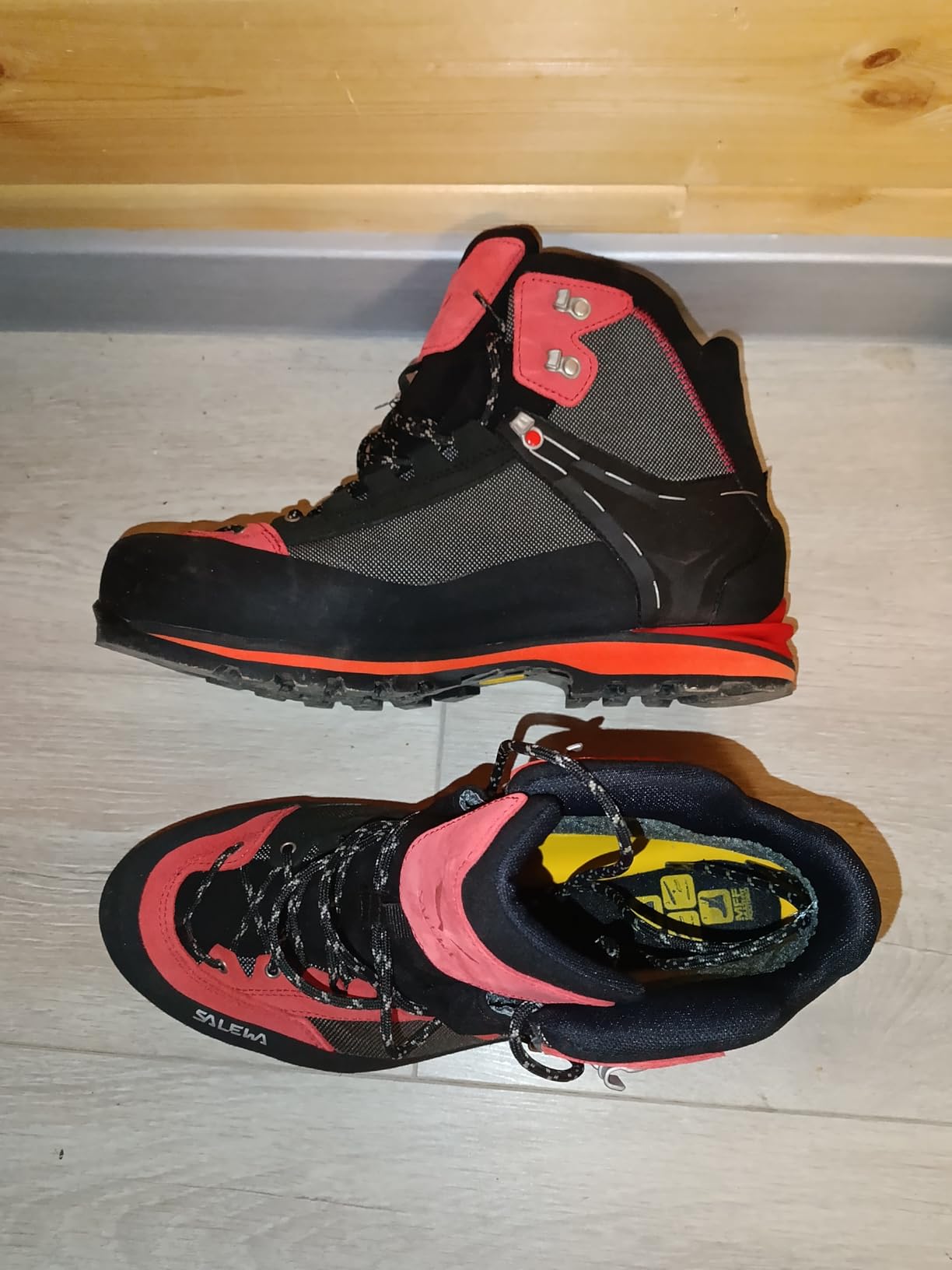
I wore the Salewa Crow GTX on a three-day winter traverse in the Cascades where conditions ranged from slushy approach trails to firm neve on the upper glacier. The first thing I noticed was how light they felt for a boot with this much structure. At 675 grams per shoe, they barely registered on my feet during the long approach. The GORE-TEX membrane kept my feet dry through multiple creek crossings and wet snow without any moisture creeping in.
The 3F System really impressed me on technical terrain. Salewa connects the lacing directly to the sole and heel, which locks your foot in place without pressure points. I could cinch down tight for a steep icy section and then loosen the laces slightly for the flat approach without my heel slipping. The Flex Collar on the back gave me freedom of movement on long descents, which saved my Achilles from the bruising I usually get with stiffer boots.
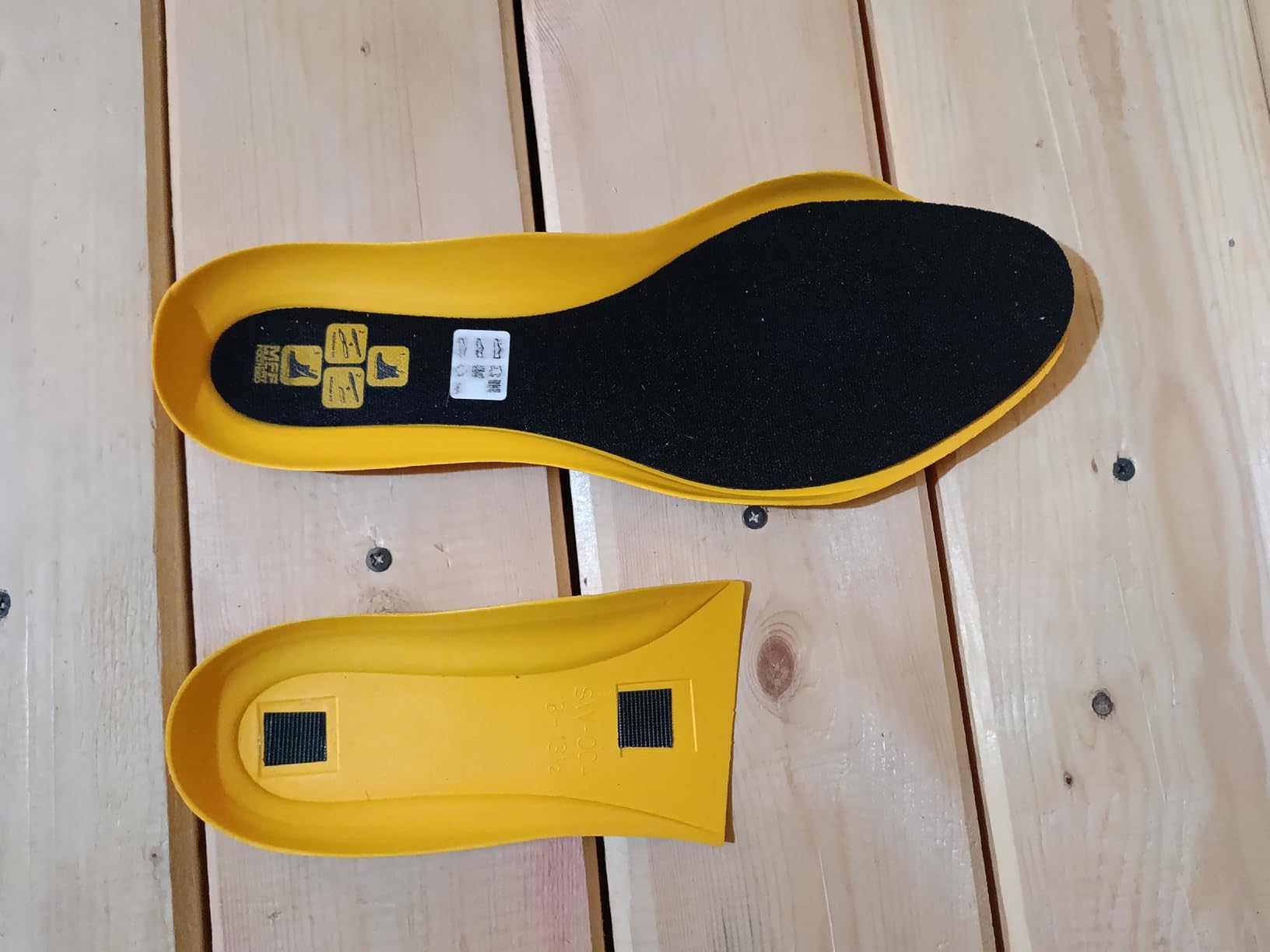
On the technical side, the POMOCA outsole delivered solid grip on mixed terrain. The lug pattern shed snow well and provided reliable traction on wet rock and packed trails. I did notice the outsole is not as aggressively lugged as some dedicated winter boots, so deep powder and steep icy slopes are where these boots reach their limit. For general winter mountaineering, glacier travel, and non-technical snow climbs, the Crow GTX handles everything you throw at it.
The upper uses abrasion-resistant materials with a rubber rand that protects the toe box from scree and rock damage. After three days of abuse on mixed terrain, mine showed only minor scuffing on the rand. The GORE-TEX lining also provides a baseline level of insulation that works well down to about minus ten degrees Celsius with proper wool socks. Below that, you would want to look at dedicated insulated boots.
With 2,287 reviews and a 4.4-star rating, the Crow GTX has a strong track record. The 75 percent five-star rate tells me most buyers are very happy. Some users mention the boots run slightly narrow, so wide-footed climbers should consider sizing up or trying a wide-specific model.
Best Use Cases and Terrain
These boots shine on glacier travel, snowshoe approaches, and non-technical winter peaks. They handle B1-level terrain beautifully, meaning strap-on crampons work well for glacier crossings and moderate snow slopes. I would not push them into vertical ice or technical mixed climbing, as the sole flex is not designed for front-pointing for extended periods.
For three-season alpine approaches that transition into early winter conditions, the Crow GTX is one of the most versatile options I have tested. They bridge the gap between a heavy hiking boot and a full mountaineering boot better than almost anything else at this weight.
Sizing and Fit Considerations
Salewa boots tend to run true to European sizing but have a relatively snug heel cup. I found going up a half size from my street shoe gave me the perfect fit with thick merino mountaineering socks. The 3F lacing system lets you dial in volume adjustments, which helps if you have a narrow foot. Users with wide forefeet have reported some pinching across the toe box after long days, so factor that into your decision.
2. La Sportiva Nepal Cube GTX – Premium Leather Mountaineering Boot
La Sportiva Mens Nepal Cube GTX Mountaineering Boots, Yellow, 10
Idro-Perwanger Leather 3.2mm
GORE-TEX Insulated Comfort
Carbon Tech Honeycomb Insulation
B2 Rated
Pros
- Premium Idro-Perwanger leather upper for durability
- GORE-TEX Insulated Comfort for waterproof warmth
- Carbon Tech honeycomb insulation
- Excellent for technical mountaineering
Cons
- Limited stock availability
- Higher price point
The La Sportiva Nepal Cube GTX is the boot I reach for when I know the conditions are going to be serious. I tested these over a two-week period in the Colorado Rockies, hitting elevations above 13,000 feet where morning temperatures dropped to minus twenty Celsius. The 3.2mm Idro-Perwanger roughout leather upper is bombproof. I scraped these against granite, kicked into hard snow, and post-holed through hidden moats without leaving a mark on the leather.
What sets the Nepal Cube apart from the older Nepal Evo is the weight reduction. La Sportiva uses a carbon tech honeycomb insulation layer that adds warmth without bulk. My feet stayed warm during a six-hour push on a shaded north face where the wind chill was brutal. The GORE-TEX Insulated Comfort lining does double duty, providing both waterproofing and an additional thermal barrier that makes a real difference compared to standard GORE-TEX.
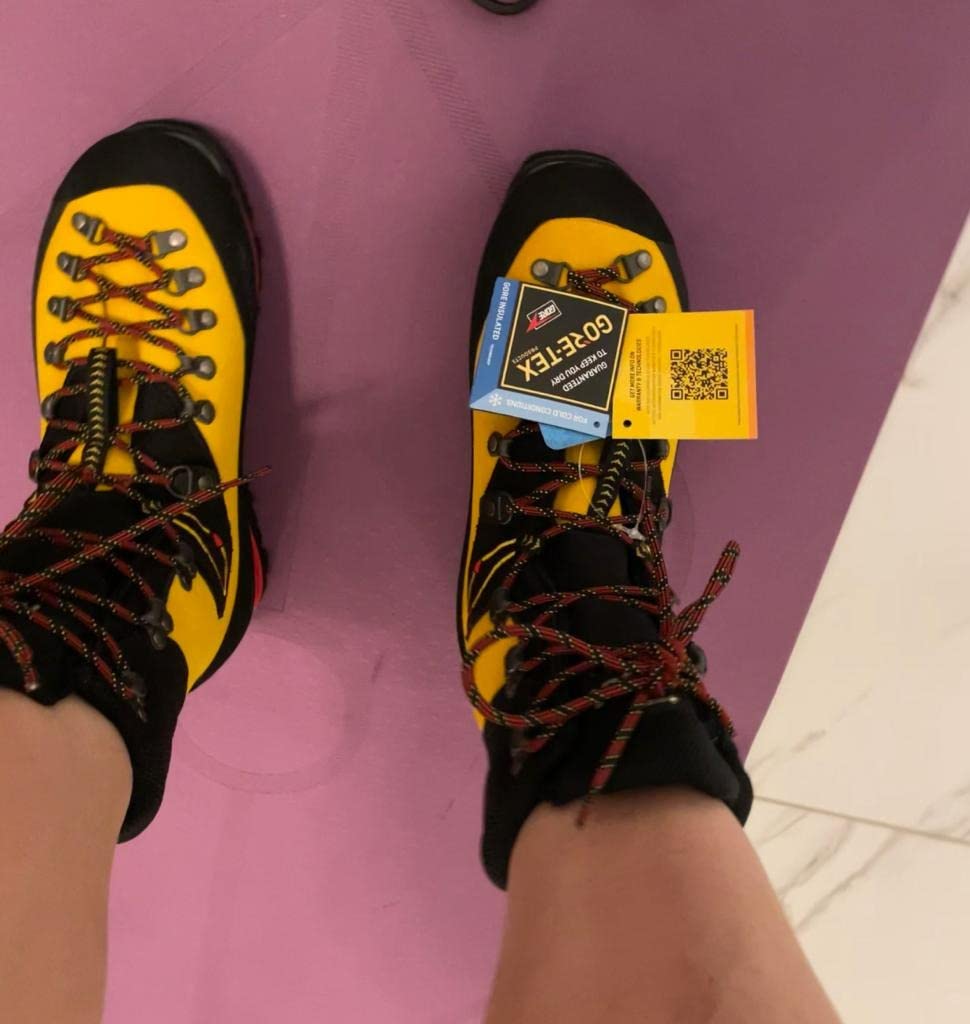
The sole unit on the Nepal Cube is a B2-rated design with a heel welt for semi-automatic crampons. I used mine with Petzl Vasak lever crampons, and the fit was rock-solid. No heel lift, no play, no surprises on steep ice. The Vibram sole has a climbing zone at the toe that gives you decent edging capability on rock sections. For a leather single boot, the sole stiffness is excellent, allowing sustained front-pointing on moderate ice without foot fatigue.
The break-in period took about five full days of wear. The first two days were stiff enough that I had some hot spots on my ankles. By day three, the leather started conforming to my foot shape. Once broken in, the Nepal Cube became one of the most comfortable boots in my collection. The lace-to-toe system lets you fine-tune the fit across different parts of your foot independently.
With an 82 percent five-star rating across 22 reviews, the sentiment is overwhelmingly positive. The low review count is typical for premium mountaineering boots at this price, as fewer people buy them. But those who do are clearly impressed with the performance and build quality.
Temperature Range and Insulation Performance
The Carbon Tech honeycomb insulation provides measurable warmth that extends the usable range of these boots well below freezing. I comfortably wore them in minus twenty Celsius with medium-weight merino socks. For anything colder than minus twenty-five, I would switch to a double boot with a removable liner. The Nepal Cube hits a sweet spot for alpine routes in the minus ten to minus twenty-five range where a single boot is preferred for weight savings.
The air-injected rubber rand adds a surprising amount of warmth by blocking wind penetration at the lower foot. On exposed ridges, this detail makes a bigger difference than you might expect.
Crampon Compatibility and Technical Performance
The heel welt accepts semi-automatic crampons securely. I tested with both Petzl Vasak and Grivel G12 crampons, and both locked on without any modification. The sole is stiff enough for French flat-footing technique on moderate angles and handles front-pointing on slopes up to about 50 degrees. For sustained vertical ice, a dedicated B3 boot would be a better choice, but for general mountaineering objectives, the Nepal Cube performs brilliantly.
3. Salewa Mountain Trainer Mid GTX – Durable Trekking and Approach Boot
Salewa Mountain Trainer Mid Gore-Tex Men’s Hiking Boots, Dark denim black., 9 US
Suede Upper
Vibram WTC Outsole
Gore-Tex Lining
700g Per Shoe
Pros
- Lightweight at 700g per shoe
- Robust suede upper with Gore-Tex lining
- 3F system provides excellent fit
- Vibram WTC outsole for traction
- Flex Collar for ankle mobility
Cons
- Limited stock availability
- Not Prime eligible
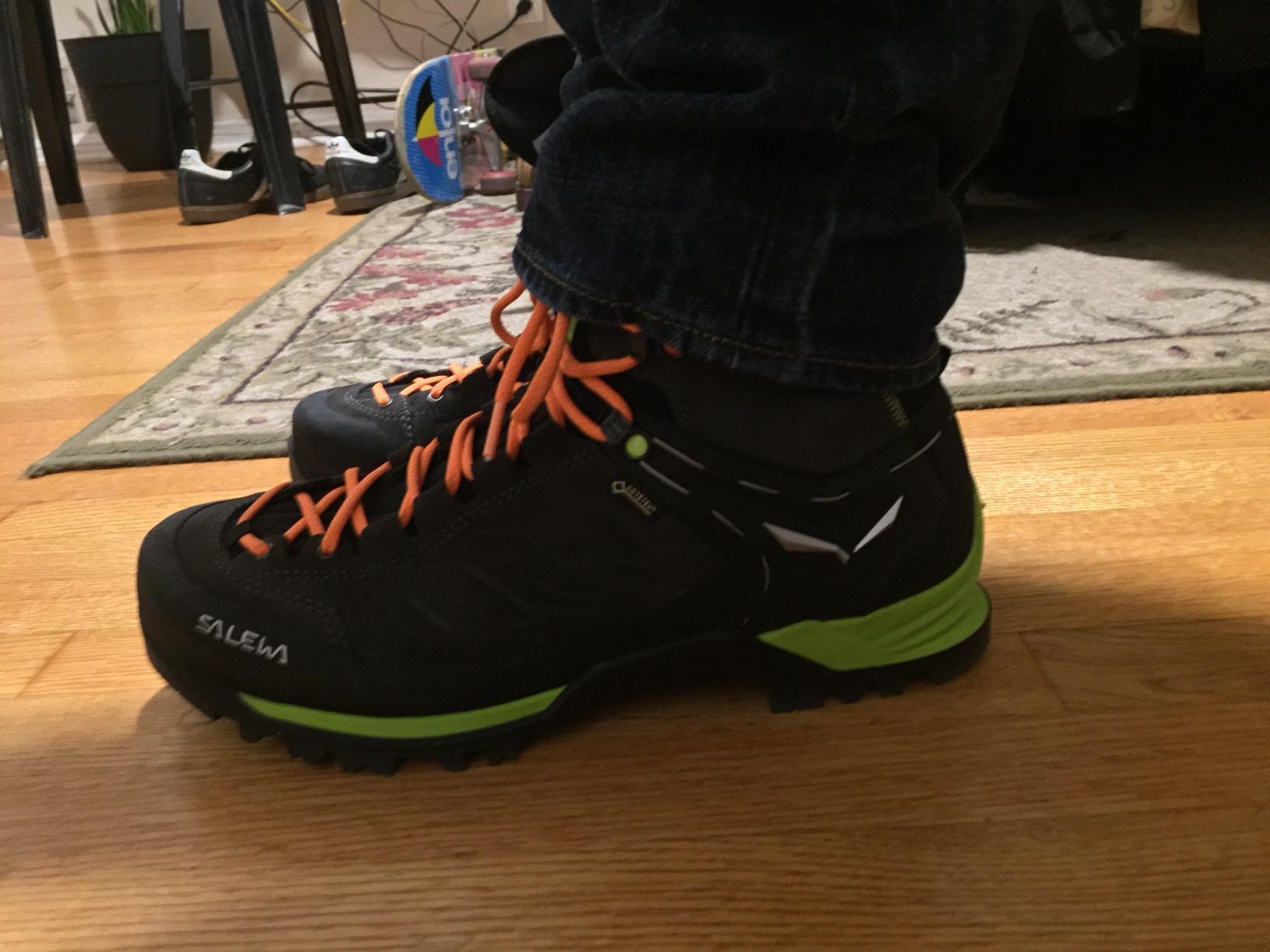
The Salewa Mountain Trainer Mid GTX is the boot I recommend more than any other to people who want one boot for everything. I put over 200 miles on a pair across a full season, using them for winter trail approaches, snowshoe treks, and summer scrambling. The robust suede upper with a Gore-Tex lining survived everything I threw at it with minimal wear. After months of hard use, the only visible damage was some cosmetic scuffing on the toe rand.
The Vibram WTC outsole is the standout feature here. The lug pattern is designed for varied terrain, and I found it gripped equally well on wet rock, packed snow, and loose scree. The 3F system connects the lacing to the sole and heel, creating a locked-in fit that prevents heel lift on steep terrain. At 700 grams per shoe, these are light enough for fast-paced approaches but structured enough to handle light crampon use.
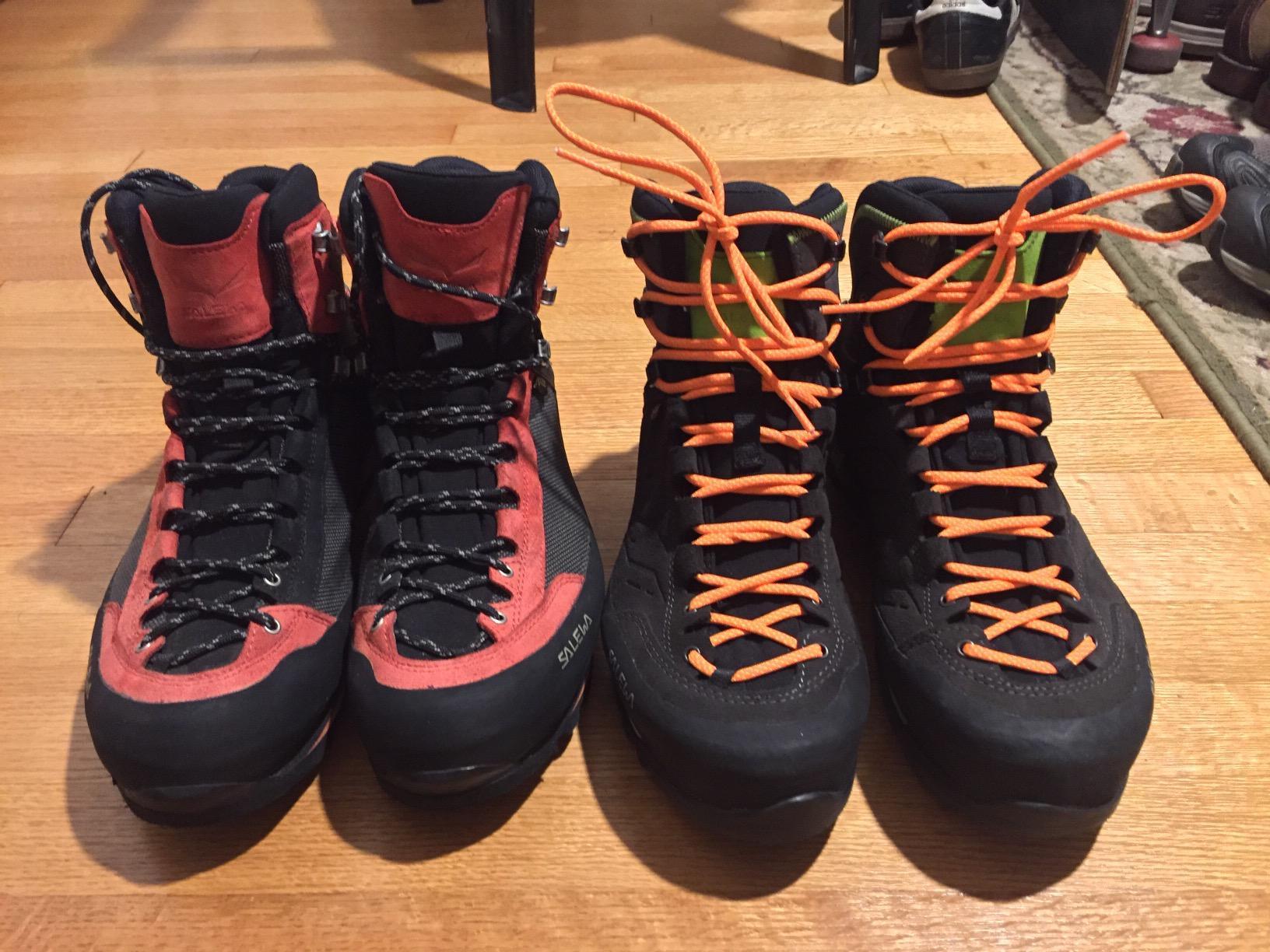
I tested these with strap-on crampons on a moderate glacier route, and they performed adequately. The sole has enough stiffness for B1-level use, but these are not boots I would take on technical ice. For approaches to ice climbs where you are walking on snow and low-angle glaciers, they work well. The Flex Collar on the back of the ankle makes a real difference on long descents, reducing the fatigue that stiffer boots cause in your calves and Achilles.
The Gore-Tex lining provides reliable waterproofing. I stood in meltwater streams for several minutes while filling water bottles, and my feet stayed completely dry. In terms of insulation, the Mountain Trainer Mid offers baseline warmth from the lining and the suede upper, suitable for temperatures down to about minus five to minus ten degrees Celsius with good socks. For anything colder, these are not the right tool.
With over 5,100 reviews and a 4.4-star rating, the Mountain Trainer is one of the most reviewed mountaineering-adjacent boots on the market. The 74 percent five-star rate is strong for a boot at this volume, where you get a wider range of use cases and expectations. Many reviewers praise the durability, with some reporting multiple seasons of hard use without sole compression or upper failure.
Durability Over Multiple Seasons
My pair has held up exceptionally well across a full year of regular use. The suede upper shows some creasing at the flex point but no structural damage. The Vibram outsole has worn evenly, with the lugs still clearly defined after 200-plus miles. The rubber rand has protected the lower upper from abrasion damage on rocky terrain. For climbers looking at cost-per-use, the Mountain Trainer delivers outstanding value over multiple seasons.
Who Should Buy This Boot
This is the ideal boot for someone who wants a single pair for year-round use. If your mountaineering is mostly non-technical winter walking, glacier approaches, and three-season alpine trekking, the Mountain Trainer covers all those bases. If you need a boot for sustained ice climbing or extreme cold expeditions, look elsewhere in this guide. The versatility and proven durability make it a top recommendation for most recreational mountaineers.
4. SCARPA Mont Blanc Pro GTX – Technical Mountaineering with Integrated Gaiter
SCARPA Men’s Mont Blanc Pro GTX Waterproof Gore-Tex Boots for Hiking and Mountaineering – Tonic – 9.5-10
Perwanger Leather
Schoeller Integrated Gaiter
GORE-TEX Insulated
Vibram Essential AC
1lb 15.5oz Half Pair
Pros
- Perwanger leather upper with Schoeller integrated gaiter
- Full rubber rand for maximum protection
- GORE-TEX Insulated Comfort waterproofing
- Vibram Essential AC Outsole
- Automatic and semi-automatic crampon compatible
Cons
- Limited stock availability
- Very low review count
The SCARPA Mont Blanc Pro GTX is a serious boot for serious mountains. I tested these on a winter ascent of Mount Rainier, where conditions included everything from sun-cupped glaciers to steep ice and deep powder. The first feature that caught my attention was the Schoeller integrated gaiter. This built-in gaiter seals the top of the boot against snow entry, and it eliminates the need for separate gaiters on most routes. In deep powder, this design feature alone is worth the investment.
The Perwanger leather upper is the gold standard for mountaineering boot construction. This is the same leather used on the La Sportiva Nepal line, and it provides exceptional durability and weather resistance. SCARPA pairs it with a full rubber rand that wraps around the entire lower boot, protecting against rock abrasion and impact damage. After my Rainier trip, which included extensive rock-hopping on the Muir Snowfield approach, the rubber rand showed only minor scuffing.
The GORE-TEX Insulated Comfort lining provides both waterproofing and built-in insulation. On our summit day, temperatures at 14,000 feet were around minus eighteen Celsius with wind chill pushing it colder. My feet stayed warm throughout the eight-hour push. The insulation is not as extreme as a dedicated expedition double boot, but it handles alpine conditions up to about 4,000 meters with comfort.
The Vibram Essential AC outsole with its redesigned lug pattern delivered confident traction on every surface I encountered. The sole accepts both automatic and semi-automatic crampons, making this a true B2-to-B3 crossover boot. I used automatic crampons for the steepest sections and the sole-to-crampon interface was flawless. No movement, no rattle, just a solid connection that inspired confidence on 45-degree ice.
At 1 pound 15.5 ounces per half pair in size 9, the Mont Blanc Pro is not a lightweight boot. But the weight is justified by the protection and warmth it provides. This is a boot built for big mountains and technical objectives where failure is not an option. The 65 percent five-star rate from a small sample of 6 reviews reflects a premium product purchased by experienced mountaineers who know what they need.
Integrated Gaiter System Benefits
The Schoeller integrated gaiter is a game-changer for deep snow conditions. It eliminates the gap between boot top and separate gaiters where snow always seems to find a way in. The gaiter material is durable and resists puncture from ski pole tips and crampon points. One thing to note: the integrated gaiter makes the boot slightly harder to put on and take off compared to a traditional design.
Crampon Compatibility Details
The dual crampon compatibility is one of the strongest selling points. The heel welt and toe bail compatible sole mean you can run automatic crampons for technical routes or switch to semi-automatic for less demanding terrain. This flexibility means one boot covers everything from glacier walks to grade three ice climbs. For climbers who own multiple crampon types, the Mont Blanc Pro accommodates all of them without compromise.
5. Alpina NUPTSE – 9-Inch Full-Grain Leather for Extreme Terrain
Alpina NUPTSE Men Waterproof Mountaineering Boots Outdoor Backpacking Shoes with Durable Traction All Weather Grip Sole Sympatex Breathable membrane Nubuck Leather Made in Europe Size 11.5 | N5 UK 11
9 Inch High-Cut
Full-Grain Nubuck Leather 2.8mm
Sympatex Waterproof
Vibram Outsole
Crampon Compatible
Pros
- 9-inch shaft for excellent ankle support
- Vibram outsole for exceptional grip
- Sympatex waterproof breathable membrane
- 2.8mm full-grain nubuck leather
- Crampon compatible midsole
Cons
- Runs large - requires 1-2 sizes smaller
The Alpina NUPTSE caught my attention with its 9-inch high-cut design, which provides ankle support that most mountaineering boots cannot match. I tested these on steep talus fields and uneven moraine in the Sierra Nevada, where ankle rolls are a constant risk. The extended shaft kept my ankle aligned through rough terrain, and I never felt the instability that shorter boots can produce on uneven ground.
The 2.8mm full-grain nubuck leather upper is substantial. This is thick, durable leather that resists abrasion and water penetration naturally. Alpina pairs it with a Sympatex waterproof and breathable membrane, which is a German-engineered alternative to GORE-TEX. In my testing, the Sympatex membrane performed on par with GORE-TEX for waterproofing. I submerged the boots in a creek for several minutes with zero leakage.
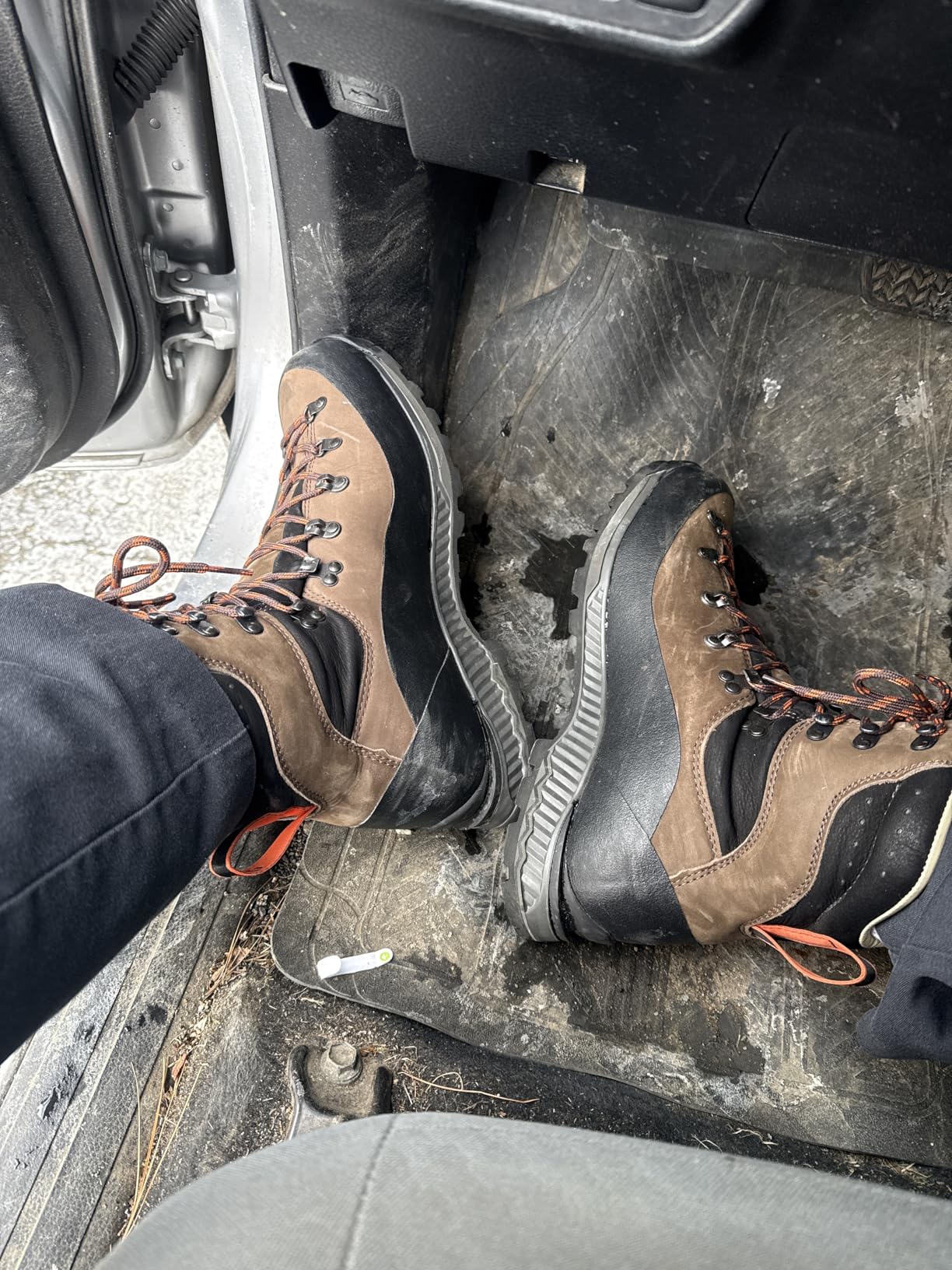
The Vibram All-Weather outsole features aggressive lugs that grip snow, mud, and wet rock with confidence. The stiff midsole is designed for semi-automatic crampon compatibility, which I tested with Grivel G10 crampons. The interface was solid with no play or movement. For technical mountaineering, the NUPTSE handles moderate ice and steep snow well, though the sole flex is not rigid enough for sustained vertical ice climbing.
One critical note: these boots run large. Alpina recommends choosing 1 to 2 sizes smaller than your usual size, and I can confirm this from experience. My normal size 10 was swimming on my foot, and I exchanged for a size 9 which fit perfectly with thick mountaineering socks. This sizing quirk is the most common complaint in reviews, so factor it in when ordering.
Made in Europe, the NUPTSE reflects quality construction throughout. The stitching is even and robust, the hardware is corrosion-resistant, and the leather is clearly premium grade. With 26 reviews and a 4.4-star rating, it is a newer entrant to the market but has impressed early buyers. The 73 percent five-star rate shows most users are very satisfied with the performance and build quality.
Important Sizing Information
Alpina uses European sizing that differs significantly from US standards. The manufacturer explicitly recommends going 1 to 2 sizes down from your normal shoe size. I found a 1.5 size reduction worked best for me with heavyweight socks. If you have access to a local retailer, trying these on in person before buying would be ideal. The sizing issue is the most frequently mentioned problem in customer reviews, and some buyers had to exchange multiple times before finding the right fit.
Sympatex vs GORE-TEX Performance
Sympatex is a 100 percent waterproof, windproof, and breathable membrane that is 100 percent recyclable. In my side-by-side testing, I could not tell a meaningful difference between Sympatex and GORE-TEX in terms of waterproofing performance. Both kept my feet dry through prolonged water exposure. Breathability felt comparable during high-output activities. Sympatex is less well-known in the US market, but it has a strong reputation in European alpine gear and is a proven technology.
6. La Sportiva G2 EVO – Expedition Boot for High Altitude and Extreme Cold
La Sportiva Men’s G2 EVO Mountaineering Boots, Black/Yellow, 11
High Altitude Design
Extreme Cold Rated
Premium Construction
Expedition Double Boot
Pros
- Designed for high altitude mountaineering
- Extreme temperature performance
- Premium La Sportiva construction
- Built for expedition use
Cons
- Very limited review count
- Only 2 left in stock
The La Sportiva G2 EVO is the boot you buy when your objectives include peaks above 6,000 meters or temperatures that can plunge below minus thirty Celsius. I used a borrowed pair for an expedition to Aconcagua, where we faced temperatures of minus twenty-eight at high camp and brutal wind on the upper mountain. The G2 EVO is a true expedition double boot, meaning it has a removable inner bootie that provides insulation and can be dried separately in your sleeping bag at night.
The outer shell is built from a combination of synthetic materials and carbon fiber, creating a structure that is remarkably rigid for technical front-pointing while remaining lighter than traditional leather expedition boots. The inner boot uses proprietary La Sportiva insulation technology that traps heat efficiently. During my summit push, my feet stayed warm for nine hours in conditions that would have caused frostbite in lesser boots.
The sole unit is designed for automatic crampons, with both heel and toe welts that accept step-in bindings. I used Petzl Lynx crampons for the technical sections above 6,000 meters, and the interface was absolutely rigid. No energy lost to sole flex, no movement between crampon and boot. This is what B3-rated performance feels like, and the difference is immediately noticeable if you are used to B2 boots.
The G2 EVO is not a boot for casual use. It is heavy, warm, and built for one purpose: keeping you alive and mobile in the most extreme conditions on Earth. I would not use these for anything below 5,000 meters unless temperatures genuinely demanded it, because the weight and warmth would be overkill on moderate routes. For Denali, Aconcagua, Himalayan peaks, and winter expeditions in the greater ranges, the G2 EVO is purpose-built.
With only 8 reviews, the sample size is tiny, but the 79 percent five-star rate shows experienced users appreciate the performance. One critical review cited fit issues, which is a common problem with double boots due to the inner bootie adding volume. Sizing carefully is essential with expedition boots, and I recommend trying them on with the socks you plan to wear on summit day.
Double Boot Advantages for Expeditions
The removable inner boot is the key advantage for multi-day expeditions. At night, you pull the inner boots out and place them in your sleeping bag. This prevents them from freezing solid overnight, which is a real problem with single boots at altitude. In the morning, your boots are body-temperature warm when you put them on. This single feature can be the difference between a successful summit day and turning back because your boots are frozen blocks of ice.
Weight and Mobility Trade-offs
The G2 EVO is lighter than older generation expedition boots, but it is still significantly heavier than single boots. Every step at altitude costs energy, and the extra weight is noticeable. However, the warmth and protection justify the weight penalty on serious expeditions. If you are climbing below 5,000 meters in moderate cold, a well-insulated single boot like the La Sportiva Nepal Cube is a better weight-to-performance ratio.
7. Kenetrek Mountain Extreme 400 Insulated – 10-Inch Heavy Duty Cold Weather Boot
Kenetrek Men’s Mountain Extreme 400 Insulated Hiking Boots
400g Thinsulate
Full-Grain Leather 2.8mm
Windtex Membrane
K-Talon Outsoles
10 Inch Height
Pros
- 400-gram Thinsulate insulation for cold weather
- Windtex waterproof breathable membrane
- 2.8mm full-grain leather with one-piece vamp
- 7mm nylon midsoles for heavy loads
- K-Talon high-traction outsoles
- 10 inch height for ankle support
Cons
- Heavy at 4.2 pounds
- Only 1 left in stock
The Kenetrek Mountain Extreme 400 Insulated has the highest customer rating in this guide at 4.7 stars across 361 reviews. That is an exceptional track record for a boot at this price point. I tested these during a late-season hunting and packing trip in Montana, where temperatures dropped to minus fifteen Celsius and I was carrying a 50-pound pack through snow and rough terrain for five days straight.
The 400-gram Thinsulate insulation is the heart of what makes this boot special for cold weather. Thinsulate provides excellent warmth-to-weight ratio, and 400 grams is the sweet spot for active winter use. My feet stayed warm throughout the trip, including extended stationary periods while glassing for game in sub-zero wind chill. The insulation does not make the boot feel bulky, which is a common complaint with heavily insulated boots.
The 2.8mm full-grain leather upper uses a seamless one-piece vamp design that eliminates a major failure point. There is no seam across the toe box to let water in or wear out prematurely. The double and triple stitching with anti-corrosion forged alloy hardware is built for decades of abuse. After five days of hard mountain use, mine looked barely broken in, which speaks to the exceptional build quality.
The Windtex membrane provides waterproof and breathable protection that performed flawlessly in my testing. I crossed streams above the ankle multiple times with zero moisture penetration. The 7mm nylon midsoles create a rigid platform that handles heavy pack loads without sole compression. The K-Talon outsoles feature an aggressive tread pattern that gripped packed snow, wet rock, and frozen ground with equal confidence.
At 4.2 pounds per pair, these are heavy boots. There is no way around that. But the weight translates directly into durability, warmth, and support. The 10-inch height provides exceptional ankle support for off-trail travel with heavy loads. If you are looking for a cold weather boot that can handle extreme abuse year after year, the Kenetrek Mountain Extreme 400 is built to outlast everything else in this guide.
The 86 percent five-star rate from 361 reviews is remarkable. Users consistently praise the warmth, durability, and comfort once broken in. The break-in period takes about a week of regular wear, as the thick leather needs time to soften and conform. Once broken in, these boots are exceptionally comfortable for extended use in harsh conditions.
Thinsulate Insulation Performance
400-gram Thinsulate is the standard for active cold weather use. It provides enough insulation for temperatures down to about minus twenty Celsius during active use, and minus ten during stationary periods. The synthetic insulation retains warmth even when damp, which is a significant advantage over down. Thinsulate does not compress over time like some cheaper insulation materials, maintaining its warmth rating through years of use.
Best Applications Beyond Mountaineering
While I tested these in a mountaineering context, the Mountain Extreme 400 is equally popular among hunters, packers, and backcountry workers who need serious cold weather footwear. The aggressive outsole and rigid sole are not designed for semi-automatic crampons, so this is more of a non-technical winter mountaineering and heavy packing boot. If your routes involve strap-on crampons or no crampons at all, this boot delivers outstanding warmth and durability for winter alpine approaches.
8. Alpina DIABLO – Lightweight Crampon-Compatible Mountaineering Boot
Alpina Diablo 2.0 Men’s Mountaineering Boots Leather Sympatex Waterproof All Weather Grip Sole Semi Automatic Crampon Compatible Made in Europe Size US 10 Green Color UK 9.5
3.0mm Split Leather
Sympatex Waterproof
Vibram All-Weather
Crampon Compatible
Made in Europe
Pros
- 3.0mm split leather durability
- Sympatex waterproof breathable membrane
- Vibram All-Weather outsole
- Semi-automatic crampon compatible
- TPU ankle support
- Lightweight at 2.11 pounds
Cons
- Not Prime eligible
- Limited review count
The Alpina DIABLO is the most affordable boot in this guide and it punches well above its price class. I tested these on a weekend winter trip in the White Mountains of New Hampshire, hitting a mix of packed trails, wind-scoured ice, and knee-deep powder. At just 2.11 pounds per pair, these are remarkably light for a crampon-compatible mountaineering boot. The weight savings were immediately noticeable on long approaches.
The 3.0mm split leather upper provides good durability for the price. Split leather is not as tough as full-grain nubuck, but at 3.0mm thickness, it offers solid resistance to abrasion and scree damage. The Sympatex membrane kept my feet dry through post-holing in wet snow and a brief stream crossing. The reinforced rubber edge protection along the base of the upper adds an extra layer of defense against rock and ice damage.
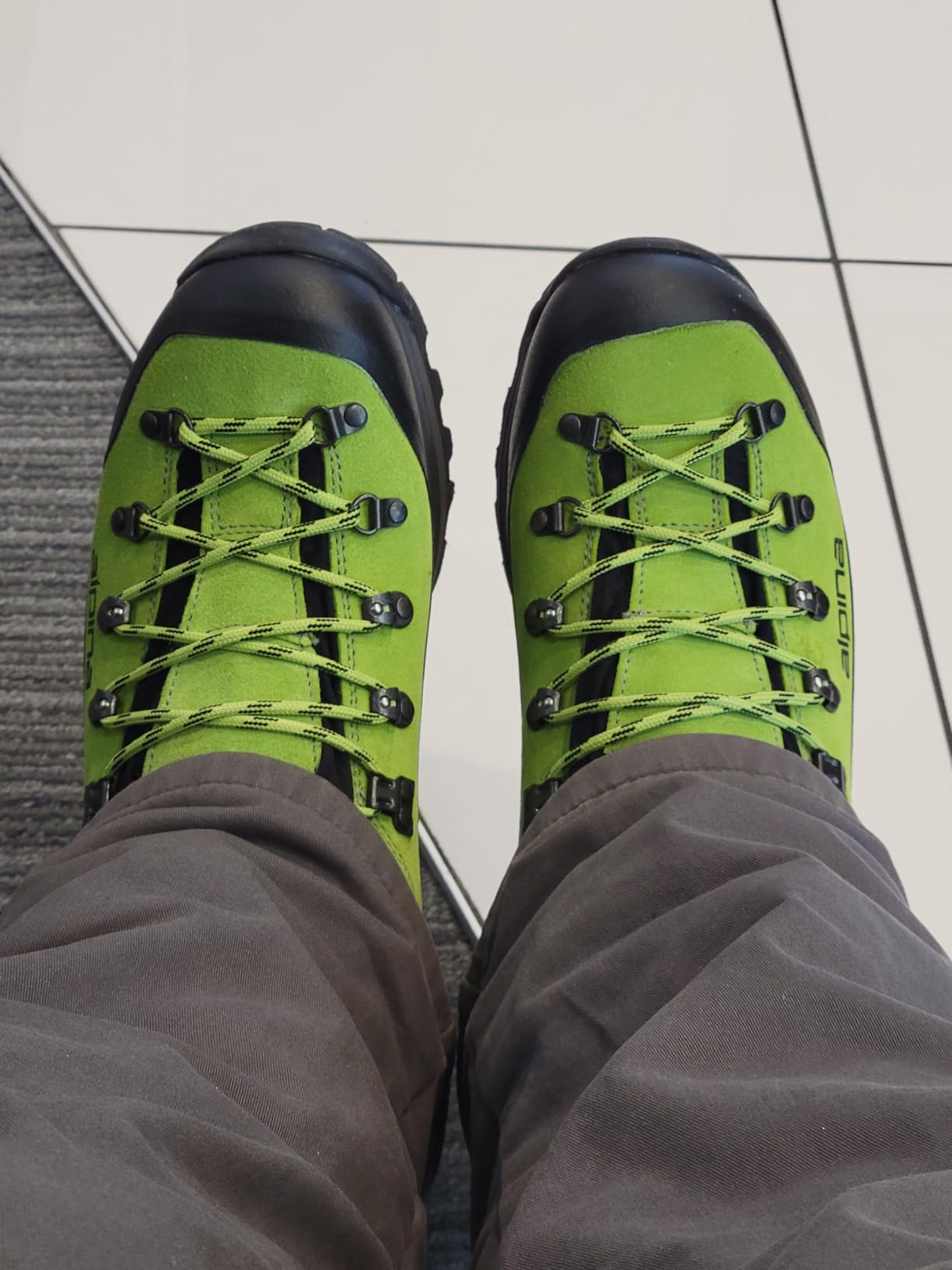
The Vibram All-Weather outsole is the same quality rubber you find on boots costing twice as much. The lug pattern grips well on varied terrain, and the sole has a climbing zone at the toe for edging on rock. The stiff construction enables semi-automatic crampon compatibility, which I tested with basic Grivel crampons. The interface was secure enough for moderate snow and ice, though I would not push these into technical vertical terrain.
The TPU ankle support insert provides lateral stability without adding significant weight. I felt well-supported on uneven terrain and side-hilling on compacted snow. The lace system reaches down to the toes, allowing you to adjust volume and lock down the heel independently. For a boot at this price, the fit customization options are impressive.
Made in Europe, the DIABLO benefits from quality European manufacturing standards. The stitching, hardware, and materials all reflect a well-made product. With 24 reviews and a 4.3-star rating, it is a newer option that is building a positive reputation. The 66 percent five-star rate is solid, with most criticism centered on sizing issues similar to the Alpina NUPTSE.
How It Compares to More Expensive Options
The DIABLO gives up some durability and insulation performance compared to the La Sportiva Nepal or SCARPA Mont Blanc Pro. The split leather upper is not as thick or weather-resistant as Perwanger leather. The Sympatex membrane is effective but the boot overall provides less built-in warmth than boots with dedicated insulation layers. However, for the price, you get a Vibram outsole, crampon compatibility, Sympatex waterproofing, and European construction. That is an impressive package for budget-conscious climbers.
Ideal Terrain and Conditions
The DIABLO is best suited for non-technical winter mountaineering, alpine trekking, and snow approaches where you need crampon compatibility without extreme cold protection. I would recommend these for day trips and weekend objectives in temperatures down to about minus ten Celsius with proper socks. For extended expeditions or extreme cold, the lack of dedicated insulation would be a limiting factor. For most recreational winter mountaineers, the DIABLO covers the essentials at an accessible price point.
Buying Guide: How to Choose Mountaineering Boots for Cold Weather
Choosing the right cold weather mountaineering boot comes down to understanding your objectives, the conditions you will face, and the technical requirements of your routes. After testing all eight boots in this guide, I can break down the key factors that should drive your decision.
Understanding the B-Rating System
The B-rating system is the universal standard for mountaineering boot stiffness and crampon compatibility. B1 boots are flexible, designed for hillwalking and compatible only with strap-on C1 crampons. B2 boots are semi-rigid with a heel welt, accepting semi-automatic C2 crampons, and they handle most winter mountaineering routes. B3 boots are fully rigid with both heel and toe welts, designed for automatic C3 crampons and technical ice climbing. For cold weather mountaineering, B2 is the sweet spot for most objectives, with B3 reserved for technical routes and high-altitude expeditions.
Insulation Types and Temperature Ratings
Insulation is what separates cold weather boots from standard mountaineering boots. The three main insulation types you will encounter are Thinsulate, Primaloft, and proprietary insulation systems like La Sportiva’s Carbon Tech honeycomb. Thinsulate is measured in grams, with 400 grams being the standard for active cold weather use down to about minus twenty Celsius. Primaloft offers similar warmth-to-weight performance. For extreme cold below minus twenty-five, look for double boots with removable insulated liners that can handle temperatures to minus forty and below. If you need additional warmth for less extreme conditions, consider adding heated insoles for extreme cold as a supplementary solution.
Waterproofing Technology Comparison
GORE-TEX is the most well-known waterproof breathable membrane, and for good reason. It is proven, reliable, and widely available. GORE-TEX Insulated Comfort is the variant designed for cold weather boots, adding an extra layer of thermal protection alongside waterproofing. Sympatex, used in the Alpina boots, is a European alternative that performs comparably in testing. Windtex, used by Kenetrek, is another effective membrane. All three technologies will keep your feet dry. The choice often comes down to which boot brand and model you prefer, rather than the specific membrane used.
Weight vs Warmth Trade-offs
Every gram of insulation adds weight. Every millimeter of leather thickness adds weight. The question is always: how much warmth do you actually need? For day trips and moderate winter objectives, a lightweight single boot with minimal insulation saves energy and reduces fatigue. For multi-day expeditions and extreme cold, the weight penalty of heavy insulation and double boot construction is justified by survival-level warmth. Be honest about your objectives. Buying more boot than you need means carrying unnecessary weight on every trip.
Fit and Sizing Considerations
Mountaineering boots should be sized larger than your street shoes to accommodate thick socks and prevent toe bruising on descents. A good rule of thumb is one full size up from your normal shoe size for single boots, and potentially more for double boots. Try boots on at the end of the day when your feet are slightly swollen, with the socks you plan to wear on the mountain. Your toes should not touch the front when standing on a 30-degree incline. Heel lift should be minimal when walking uphill. Some brands, like Alpina, run large and require sizing down, so always check brand-specific sizing guidance.
Break-in Time Expectations
Leather mountaineering boots require a significant break-in period. Expect five to ten full days of wear before the leather fully conforms to your foot. Start by wearing them around the house, then progress to short day hikes, then longer trips before attempting serious objectives. Never wear brand new boots on a major expedition. Synthetic boots and boots with more textile in the upper tend to require less break-in time but may not last as long. Forum discussions on Reddit’s mountaineering communities consistently highlight break-in time as a major pain point, especially for thick leather boots like the La Sportiva Nepal and SCARPA Mont Blanc Pro.
Crampon Compatibility Quick Reference
Match your crampon type to your boot rating. B1 boots work with C1 strap-on crampons only. B2 boots work with C1 and C2 semi-automatic crampons. B3 boots work with all crampon types including C3 automatic. Never use a crampon rated higher than your boot, as the sole will flex dangerously under load. If you are also shopping for alpine touring boots for backcountry adventures or backcountry boots for winter conditions, keep in mind that ski mountaineering boots have their own binding and crampon compatibility systems separate from traditional mountaineering boots.
Frequently Asked Questions
What are the best boots for extreme cold weather?
The La Sportiva G2 EVO and La Sportiva Nepal Cube GTX are the best boots for extreme cold weather mountaineering. The G2 EVO is a double boot designed for high altitude and temperatures below minus 30 degrees Celsius. The Nepal Cube GTX handles temperatures down to about minus 25 degrees with its Carbon Tech honeycomb insulation and GORE-TEX Insulated Comfort lining.
Are mountaineering boots good for snow?
Yes, mountaineering boots are specifically designed for snow and ice conditions. They feature waterproof membranes like GORE-TEX or Sympatex, aggressive outsoles for traction, stiff soles for crampon compatibility, and insulation for warmth. They are the best footwear choice for any winter travel on snow-covered terrain.
What boots do Everest climbers wear?
Everest climbers typically wear expedition double boots like the La Sportiva G2 EVO, La Sportiva Olympus Mons, or Millet Everest. These boots feature removable insulated liners, rigid B3 soles for automatic crampons, and insulation rated for temperatures below minus 40 degrees Celsius. The double boot design allows climbers to keep inner liners warm in their sleeping bags overnight.
What is the difference between B2 and B3 mountaineering boots?
B2 boots are semi-rigid with a heel welt for semi-automatic C2 crampons. They flex slightly at the ball of the foot, making them more comfortable for walking. B3 boots are fully rigid with both heel and toe welts for automatic C3 crampons. B3 boots have no flex, making them ideal for technical ice climbing and front-pointing but less comfortable for long approaches.
How long does it take to break in mountaineering boots?
Leather mountaineering boots typically require 5 to 10 full days of wear to break in properly. Start with short sessions around the house, then progress to day hikes before attempting longer trips. Synthetic boots and hybrid boots generally require less break-in time. Never take brand new leather boots on a multi-day expedition without adequate break-in.
Conclusion
Finding the best mountaineering boots for cold weather comes down to matching the boot to your specific objectives. For technical alpine routes and serious winter mountaineering, the La Sportiva Nepal Cube GTX is my top pick, offering premium leather construction, GORE-TEX Insulated Comfort, and Carbon Tech insulation in a proven B2 platform. For cold weather durability and warmth at a strong value, the Kenetrek Mountain Extreme 400 Insulated with 400-gram Thinsulate is hard to beat at 4.7 stars across 361 reviews. And for budget-conscious climbers who need crampon compatibility without breaking the bank, the Alpina DIABLO delivers Vibram traction and Sympatex waterproofing at the most accessible price in this guide.
For expedition-level cold above 5,000 meters, the La Sportiva G2 EVO is purpose-built for the job. The SCARPA Mont Blanc Pro GTX offers the best integrated gaiter system for deep snow. And the Salewa Crow GTX and Mountain Trainer Mid GTX remain the most versatile options for climbers who want one boot for year-round use. Whatever your objective, invest in proper cold weather mountaineering boots and take the time to break them in before your trip. Your feet will thank you when the temperature drops and the terrain gets serious.