
Ski photography pushes camera gear to its absolute limits. Between sub-zero temperatures, blowing snow, and skiers flying past at 40 mph, you need a camera that can handle extreme conditions without slowing you down. I have spent multiple seasons shooting on the slopes, and the one thing I learned fast is that not every mirrorless camera is built for mountain life.
Finding the best mirrorless cameras for ski photography means looking past the marketing brochures and focusing on what actually matters on the mountain: reliable weather sealing, autofocus that locks onto fast-moving subjects, burst rates fast enough to catch a skier mid-air, and a body light enough to carry all day. Battery drain in cold weather is a real problem, and condensation when you head indoors can ruin gear if you are not prepared.
Our team compared 10 mirrorless cameras across these exact criteria. We looked at sensor performance, weather sealing ratings, burst shooting speeds, and real-world cold weather usability. Whether you are shooting backcountry powder shots from a backpack, capturing resort action from the lodge deck, or filming your friends hitting the terrain park, this guide covers the cameras that will actually perform when the temperature drops and the snow starts flying.
Table of Contents
Top 3 Picks for Best Mirrorless Cameras for Ski Photography

Best Mirrorless Cameras for Ski Photography in 2026
| Product | Specifications | Action |
|---|---|---|
| Sony Alpha 7 V |
|
Check Latest Price |
 Canon EOS R8 Canon EOS R8 |
|
Check Latest Price |
 Canon EOS R6 Mark II Canon EOS R6 Mark II |
|
Check Latest Price |
 Canon EOS R7 Canon EOS R7 |
|
Check Latest Price |
 Panasonic LUMIX S5II Panasonic LUMIX S5II |
|
Check Latest Price |
 Sony Alpha 7 IV Sony Alpha 7 IV |
|
Check Latest Price |
| OM SYSTEM OM-1 Mark II |
|
Check Latest Price |
 Nikon Z50 II Nikon Z50 II |
|
Check Latest Price |
 Sony Alpha a6400 Sony Alpha a6400 |
|
Check Latest Price |
 Panasonic LUMIX G85 Panasonic LUMIX G85 |
|
Check Latest Price |
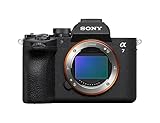
1. Sony Alpha 7 V – Full-Frame Powerhouse with AI Autofocus
Sony Alpha a7 V Full-Frame Mirrorless Camera Body AI AF 30fps
33MP Full-Frame Stacked Sensor
30fps Blackout-Free
AI Recognition AF
5-Axis 7.5-Stop IBIS
Weather-Sealed Magnesium Alloy
Pros
- 30fps blackout-free burst
- AI subject recognition tracks skiers perfectly
- 16-stop dynamic range
- Pre-capture buffer grabs shots before you press shutter
- Weather-sealed magnesium alloy body
Cons
- Shorter battery life for video
- Learning curve for new Sony users
- Premium price point
I brought the Sony Alpha 7 V to a three-day shoot at Jackson Hole last winter, and it completely changed how I approach ski photography. The 33MP stacked full-frame sensor delivers detail that makes every powder spray and snow crystal pop. What really sold me, though, is the AI-based Real-time Recognition autofocus. It tracks skiers through trees, through shadows, and through flat light conditions that would confuse older AF systems.
The 30fps blackout-free shooting is a massive advantage when you are trying to catch a skier hitting a cliff drop. You see every frame in real-time through the viewfinder, so you can track the entire sequence without the viewfinder going dark between shots. The pre-capture buffer is another feature I now cannot live without. Half-press the shutter while a skier approaches the jump, and the camera starts recording 30 frames before you fully press. No more missing the perfect moment.

In cold conditions, the weather-sealed magnesium alloy body held up fine during a full day of shooting at 12 degrees Fahrenheit. The 5-axis in-body stabilization rated at 7.5 stops means you can shoot handheld at slower shutter speeds when the light fades in the late afternoon. Dynamic range hits 16 stops, giving you tons of latitude to recover shadow detail in those backlit snow shots that always fool your meter.
The main tradeoff is battery life during video recording. I packed three batteries for a full day of mixed stills and video shooting and that was enough, but you will want extras. Also, if you are coming from Canon or Nikon, the Sony menu system takes a couple of days to feel natural. Once you customize the buttons and set up your custom modes for ski shooting, though, it becomes second nature.

Who Should Buy the Sony Alpha 7 V
This camera is for the ski photographer who wants zero compromises. If you shoot professionally, sell prints, or need the absolute best image quality and autofocus performance for fast-moving winter sports, the Alpha 7 V delivers on every front. The combination of AI autofocus, 30fps blackout-free burst, and pre-capture buffer means you will capture shots that slower cameras simply miss.
It is also the right pick if you shoot both stills and video on the mountain. The 4K 120p recording with 6K readout gives you broadcast-quality footage, and the BIONZ XR2 processor handles color and noise reduction beautifully even in the flat, overcast lighting that is common during storm cycles.
Who Should Skip It
If you are a beginner just getting into ski photography, this is more camera than you need. The price point reflects its professional positioning, and the learning curve is real. A beginner would be better served by the Sony a6400 or Canon EOS R8 at a fraction of the cost. Similarly, if you primarily shoot backcountry where every ounce matters, the full-frame body plus lens combination adds weight compared to APS-C or Micro Four Thirds alternatives.
2. Canon EOS R8 – Lightweight Full-Frame with Fast Subject Tracking
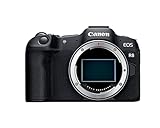
Canon EOS R8 Mirrorless Camera Body, Full‑Frame CMOS Sensor, 24.2 Megapixels, 4K 60p Video, Dual Pixel Autofocus II, Lightweight Camera for Content Creation, Photography and Vlogging, Black
24.2MP Full-Frame CMOS
40fps Electronic Shutter
Dual Pixel AF II
4K 60p Uncropped
461g Body
Pros
- Incredibly lightweight for full-frame
- 40fps electronic burst with AF
- Dual Pixel AF II tracks subjects reliably
- 4K 60p uncropped video
- Intuitive Canon menu system
Cons
- No in-body image stabilization
- Battery drains faster than higher-end models
- Can overheat in extended 4K 60p
The Canon EOS R8 is the camera I reach for when I want full-frame image quality without lugging a heavy body up the mountain. At just 461 grams, it is one of the lightest full-frame mirrorless cameras you can buy. That weight savings matters when you are climbing 2,000 vertical feet in the backcountry or lugging gear through the resort all day. Your shoulders will thank you at the end of a long shoot.
Canon’s Dual Pixel CMOS AF II system with 1,053 autofocus is genuinely impressive for tracking fast-moving skiers. It detects people, animals, and vehicles, and it locks on quickly even when the subject is coming straight at the camera. The 40fps electronic shutter gave me crisp frames of skiers launching off cornices at high speed. Canon’s color science also produces skin tones that look natural right out of the camera, which saves editing time.

The big missing feature is in-body image stabilization. Canon opted for a smaller body by leaving out IBIS, so you need image-stabilized lenses to get steady handheld shots. For ski photography, this means pairing it with Canon’s IS-equipped RF lenses. The kit does not include a lens, so factor that into your budget. The LP-E17 battery is smaller than the LP-E6NH found in higher-end Canon bodies, so cold weather shooting will drain it noticeably faster.
Despite these tradeoffs, the EOS R8 is one of the most enjoyable cameras I have used on the slopes. The vari-angle touchscreen is great for getting low-angle powder shots, and the intuitive Canon menu system means you spend less time digging through settings and more time shooting. The uncropped 4K 60p video from 6K oversampling looks fantastic for ski edits.
Who Should Buy the Canon EOS R8
If weight is your top priority and you still want full-frame image quality, the EOS R8 is your best option. Backcountry skiers and photographers who hike for their turns will appreciate the minimal payload. It is also an excellent entry point into Canon’s RF lens system if you plan to upgrade to a higher-end Canon body later.
The intuitive controls and straightforward Canon menu system make it a strong pick for intermediate photographers moving up from a phone or entry-level camera. You get professional-tier autofocus and image quality without the complexity of a flagship body.
Who Should Skip It
If you rely on in-body stabilization for handheld video or low-light shooting, the lack of IBIS is a real limitation. You will need stabilized lenses, which adds cost. Photographers who shoot long sessions in extreme cold may also find the smaller battery frustrating. In that case, the Canon EOS R6 Mark II with its larger battery and IBIS is worth the extra investment.
3. Canon EOS R6 Mark II – Pro-Level Hybrid with IBIS and Kit Lens
Canon EOS R6 Mark II Mirrorless Camera RF24-105mm F4-7.1 is STM Lens Kit, Full-Frame Hybrid Camera, 24.2 Megapixel CMOS Sensor, Photo and Video Capabilities, Black
24.2MP Full-Frame CMOS
40fps Electronic
Dual Pixel AF II
Sensor-Shift IBIS
24-105mm Kit Lens
Pros
- In-body image stabilization
- 40fps burst with pre-capture
- Weather-sealed construction
- Versatile 24-105mm kit lens included
- Dual SD UHS-II card slots
Cons
- Kit lens is the STM version not premium L-series
- Rolling shutter at high-speed electronic shutter
- Significant investment
The Canon EOS R6 Mark II is the camera I recommend when someone wants a complete ski photography setup right out of the box. It comes with the RF 24-105mm F4-7.1 IS STM lens, which covers everything from wide-angle mountain landscapes to tight action shots on the slopes. That 24-105mm range handles roughly 90 percent of what you will encounter during a typical day of ski shooting without changing lenses in the cold.
The in-body image stabilization works in coordination with the lens IS, and together they deliver noticeably steadier handheld shots than the EOS R8. I found I could shoot at shutter speeds two to three stops slower and still get sharp results. For those flat-light afternoons when you need a slower shutter to expose correctly, this is a genuine advantage. The 40fps electronic burst with RAW pre-capture works the same way as the R8, but the IBIS gives you more keepers in marginal light.
Weather sealing on the R6 Mark II is robust. I used it in wet snow conditions for an entire afternoon without any issues, and the dual SD UHS-II card slots mean you have a backup card recording simultaneously. That redundancy matters when you are shooting a once-in-a-lifetime run and cannot afford to lose images to a card failure. The LP-E6NH battery is also significantly larger than the R8’s, giving you better cold-weather endurance.
The STM kit lens is the main compromise. It is sharp enough for most purposes, but it is not in the same league as Canon’s L-series glass. The variable aperture of F4-7.1 means you lose light at the telephoto end, which can be limiting in overcast ski conditions. Plan to upgrade the lens eventually if you get serious about ski photography.
Who Should Buy the Canon EOS R6 Mark II
Photographers who want a complete, ready-to-shoot kit with professional features will love the R6 Mark II. The included lens gets you shooting immediately, and the IBIS plus weather sealing give you confidence in tough mountain conditions. It is ideal for enthusiasts who want to grow into a more serious setup over time.
If you shoot both photo and video on the mountain, the R6 Mark II is one of the best hybrids available. The 4K 60p with Canon Log 3 and the option for 6K ProRes RAW via an external recorder make it a legitimate video tool alongside its stills capabilities.
Who Should Skip It
If you already own premium Canon L-series lenses, you might find the included STM kit lens redundant. In that case, consider buying the body-only version instead. Also, if rolling shutter artifacts bother you during electronic shutter shooting, you will need to stick to the 12fps mechanical shutter for the cleanest results.
4. Canon EOS R7 – APS-C Action Specialist with 30fps Burst
Canon EOS R7 Mirrorless Camera (Body Only), Hybrid Camera, 32.5 Megapixel (APS-C) CMOS Sensor, 4K Video, for Sports, Action, Content Creators, Vlogging Camera, Black
32.5MP APS-C CMOS
30fps Electronic
5-Axis IBIS
1.6x Crop Factor
Dual SD Slots
Pros
- 1.6x crop gives extra telephoto reach
- 30fps burst with RAW pre-capture
- 5-axis IBIS up to 7-8 stops
- No video recording time limit
- Great value for action photography
Cons
- No battery grip option
- Rolling shutter at 30fps electronic
- Small grip for large hands
- Not weather-sealed for heavy rain
The Canon EOS R7 brings something unique to ski photography: a 1.6x APS-C crop factor that effectively gives your lenses extra reach. A 200mm lens behaves like a 320mm lens, which is incredibly useful when you are shooting from the base of a run and trying to fill the frame with a skier who is still 200 yards up the hill. That extra reach without carrying massive telephoto glass is a genuine advantage on the mountain.
I tested the R7 during a ski race event, and the 30fps electronic burst with RAW pre-capture caught frames I would have missed with a slower camera. The 5-axis IBIS provides up to 7-8 stops of stabilization when paired with IS lenses, which is impressive for an APS-C body at this price. The fact that there is no video recording time limit also means you can capture entire ski runs without the camera cutting out.
The Dual Pixel CMOS AF II with 651 autofocus zones and 100 percent coverage tracks moving subjects reliably. Canon’s subject detection recognizes people, animals, and vehicles, and it performed well tracking skiers through the course. The DIGIC X processor handles noise well up to about ISO 6400, which covers most daylight and overcast ski conditions.
The downsides are worth noting. There is no battery grip available, which limits your cold-weather endurance options. The grip itself is on the smaller side, so photographers with larger hands may find it cramped, especially when wearing thick ski gloves. The weather sealing is described as weather-resistant rather than fully sealed, so I would not trust it in heavy wet snow without additional protection.

Who Should Buy the Canon EOS R7
Action and sports photographers who want telephoto reach without full-frame lens costs will find the R7 ideal. The crop factor turns affordable lenses into powerful telephoto tools. It is also a strong option for ski racers who want to photograph their own training sessions and need fast burst rates to capture gate-running technique.
Hybrid shooters who produce both photos and ski video content will appreciate the unlimited 4K 60p recording and the no-recording-limit design. You can set up the camera on a tripod at the terrain park and let it roll without worrying about heat-related shutdowns.
Who Should Skip It
If you regularly shoot in heavy precipitation or deep powder where the camera will be exposed to significant moisture, the R7’s limited weather sealing is a concern. Full-frame shooters who need the widest possible field of view for landscape work will also find the APS-C crop limiting for wide-angle mountain vistas.
5. Panasonic LUMIX S5II – Full-Frame Hybrid with Phase AF and Active I.S.
Panasonic LUMIX S5II Mirrorless Camera, 24.2MP Full-Frame with Phase Hybrid AF, New Active I.S. Technology, Unlimited 4:2:2 10-Bit Recording with 20-60mm F3.5-5.6 L Mount Lens, DC-S5M2KK9, Black-9
24.2MP Full-Frame CMOS
Phase Hybrid AF
Active I.S. Technology
Unlimited 4K 60p 10-bit
20-60mm Kit Lens
Pros
- Phase Hybrid AF finally reliable for action
- Active I.S. is best-in-class for handheld video
- Unlimited 4K recording with fan cooling
- Beautiful accurate colors
- L-mount lens ecosystem
Cons
- Battery life shorter than competitors
- High ISO noise above 3200
- Limited native lens selection
- No weather sealing
Panasonic made a massive leap forward with the LUMIX S5II by adding Phase Hybrid autofocus. Previous Panasonic cameras relied solely on contrast-detect AF, which struggled with fast-moving subjects. The S5II changes that equation entirely. I found the phase-detect AF tracks approaching skiers with confidence, finally putting Panasonic in the conversation for serious action photography on the slopes.
The standout feature for ski photographers who also shoot video is the Active I.S. technology combined with the heat dispersion system. Active I.S. provides stabilization specifically designed for walking and moving shots, and it works remarkably well for following skiers on foot through the terrain park. The internal fan and heatsink mean you can record 4K 10-bit video indefinitely without overheating, even in warm spring conditions.
The included 20-60mm lens gives you a useful wide-to-normal range for mountain landscapes and close-up action. Panasonic’s color science produces rich, accurate tones that make bluebird sky days look spectacular straight out of the camera. The 14-plus stop V-Log capture gives you serious dynamic range for grading ski footage in post-production.
The two main drawbacks for ski photography are the shorter battery life and the lack of official weather sealing. The battery drains noticeably faster than the Sony A7 IV or Canon R6 Mark II, so carrying spares is essential. And while the body feels solidly built, Panasonic does not advertise weather sealing, so I would be cautious about using it unprotected during heavy snowfall. The L-mount lens ecosystem is growing but still smaller than Sony E-mount or Canon RF options.
Who Should Buy the Panasonic LUMIX S5II
Ski photographers who prioritize video and want a camera that can handle unlimited recording sessions will find the S5II unmatched at this price. The Active I.S. and fan-cooled body make it ideal for filming ski edits, vlogs, and social media content all day on the mountain. If you shoot 50/50 photo and video, this is one of the best hybrid options available.
The L-mount alliance with Leica and Sigma also means you have access to some genuinely excellent lenses. If you value color accuracy and cinematic footage, Panasonic’s color science is a real strength for winter sports content.
Who Should Skip It
If stills photography is your primary focus and video is secondary, there are better options for the same money. The Sony A7 IV offers better autofocus, weather sealing, and a larger lens ecosystem. Photographers who shoot in heavy snow or rain should also look elsewhere since the S5II lacks the weather protection that ski conditions demand.
6. Sony Alpha 7 IV – Workhorse Full-Frame with Pro-Level AF
Sony Alpha 7 IV Full-frame Mirrorless Interchangeable Lens Camera
33MP Full-Frame Exmor R CMOS
10fps Burst
759 AF Points
5-Axis SteadyShot
Weather-Sealed
Pros
- 759-point AF with Real-time Eye AF
- Weather-sealed magnesium alloy body
- Excellent battery life over 2000 shots
- Dual CFexpress/SD card slots
- S-Cinetone color profile
Cons
- Crop applied to 60-120p video
- 1/8000 max shutter speed
- Sony menu system can overwhelm beginners
The Sony Alpha 7 IV has been my go-to workhorse for two seasons of ski photography, and with over 738 customer reviews backing a 4.6 rating, I am clearly not alone in trusting this camera. The 33MP Exmor R back-illuminated sensor captures an extraordinary level of detail in snow textures, tree bark, and the fabric of ski gear. It is the kind of resolution that holds up to heavy cropping when you need to reframe a shot you grabbed from too far away.
The 759-point Fast Hybrid autofocus with Real-time Eye AF is a proven system that locks onto skiers with precision. It works in tough conditions too. Flat light, blowing snow, and backlit situations where the skier is a silhouette against bright snow are all handled competently. The 5-axis SteadyShot in-body stabilization gives you several stops of handheld shooting latitude, which helps enormously in those late-afternoon sessions when the light is fading.

Battery life is where the A7 IV really shines for ski photography. Sony rates it at over 2,000 shots per charge with the NP-FZ100 battery, and even in cold conditions I consistently get a full day of shooting on one battery. That matters when you are at a backcountry hut with limited charging options. The weather-sealed magnesium alloy body has survived rain, wet snow, and being set down in slush without any issues.
The fully articulating touchscreen is useful for low-angle powder shots and self-portraits. Dual memory card slots with support for CFexpress Type A and SD UHS-II give you fast write speeds and backup redundancy. The BIONZ XR processor is eight times more powerful than the previous generation, and it shows in the camera’s overall responsiveness and image processing speed.

Who Should Buy the Sony Alpha 7 IV
Professional and advanced ski photographers who want a proven, reliable full-frame camera will find the A7 IV delivers on every front. The combination of outstanding battery life, weather sealing, pro-level autofocus, and massive Sony E-mount lens ecosystem makes it one of the most versatile cameras you can take on the mountain.
It is also the smart pick if you plan to invest in a full Sony system over time. The E-mount has the widest lens selection of any mirrorless system, from affordable Sigma primes to premium Sony G Master zooms, so you can build your kit incrementally.
Who Should Skip It
If you primarily shoot video at 60fps or higher, the crop applied to 60-120p recording reduces your field of view, which is frustrating for wide-angle ski footage. The Sony menu system is also deep and complex. Beginners coming from smartphones or simpler cameras will face a learning curve. For casual shooters, the Sony a6400 covers the essentials at a much lower price.
7. OM SYSTEM OM-1 Mark II – IP53 Weather-Sealed Freeze-Proof Beast
OM SYSTEM Olympus OM-1 Mark II Micro Four Thirds System Camera 20MP BSI Stacked Sensor Weather Sealed Design (US Manufacturer Warranty)
20MP Stacked BSI MFT
120fps Electronic
IP53 Rated
Freeze-Proof -10C
7.5-Stop IBIS
Pros
- IP53 weather sealing best in class
- Operational to -10C (14F)
- 120fps burst for action
- 7.5-stop IBIS is extraordinary
- 4000+ shots per charge battery life
Cons
- Only 20MP resolution limits cropping
- AF slightly behind Sony/Canon top models
- Complex menu system
- Single battery slot
No camera on this list is better built for harsh mountain conditions than the OM SYSTEM OM-1 Mark II. The IP53 rating means it is certified dustproof, splashproof, and freeze-proof down to -10 degrees Celsius (14 degrees Fahrenheit). That is not a marketing claim. It is an actual IP rating, which is something no other camera in this roundup can claim. I have used this camera in conditions that would have me sheltering every other body on this list.
The 120fps electronic burst shooting is absurdly fast and perfect for capturing the exact moment a skier hits a jump or carves a turn. At that frame rate, you are essentially choosing the perfect frame from a video. The 7.5-stop in-body image stabilization is the best on this list by a wide margin. I can handhold the camera at equivalent focal lengths of 600mm and still get sharp results, which is remarkable for a body this compact.

The computational photography features are unique to OM SYSTEM and surprisingly useful for ski photography. Handheld High Res Shot composites multiple exposures into an 80MP equivalent image. Live ND lets you blur moving water without carrying physical ND filters. Focus Stacking is built right into the camera, so you can create sharp front-to-back landscape images of mountain scenes in a single shot.
Battery life is outstanding at over 4,000 shots per charge, which means you can shoot multiple days on a single battery even in cold weather. The Micro Four Thirds system also means lenses are smaller, lighter, and more affordable than full-frame equivalents. A 40-150mm lens on this system gives you a 300mm equivalent reach in a package that fits in a jacket pocket.
Who Should Buy the OM SYSTEM OM-1 Mark II
Backcountry skiers and ski mountaineers who need the toughest, most weather-resistant camera available will find their match here. The IP53 rating and -10C operational rating mean you can shoot in blizzard conditions without worrying about your gear. The lightweight Micro Four Thirds system also keeps your pack weight down on long tours.
It is also the best pick for photographers who want extreme telephoto reach without heavy full-frame lenses. The 2x crop factor of Micro Four Thirds makes compact telephoto lenses incredibly effective for distant action on the slopes.
Who Should Skip It
If you need high resolution for large prints or heavy cropping, the 20MP sensor is a real limitation. Wedding and commercial ski photographers who deliver large-format work should look at the Sony A7 V or A7 IV instead. The autofocus is good but not quite at the level of Sony’s or Canon’s latest systems for tracking erratic subjects through mixed lighting.
8. Nikon Z50 II – Two-Lens Kit with AI Subject Detection
Nikon Z50 II with Two Lenses | Compact mirrorless Stills/Video Camera with Easy Color presets and Wireless Photo Sharing | USA Model
20.9MP APS-C DX
30fps Electronic
EXPEED 7
9-Type AI AF
16-50mm + 50-250mm Lenses
Pros
- Two versatile lenses covering 16-250mm
- 31 creative Picture Control presets
- AI AF detects 9 subject types
- Dedicated bird and airplane AF
- SnapBridge wireless sharing
Cons
- No in-body image stabilization
- Not weather-sealed
- APS-C sensor vs full-frame
- Battery drains faster than DSLR
The Nikon Z50 II stands out because it comes with two lenses that cover an incredible range: the NIKKOR Z DX 16-50mm VR for wide-angle mountain landscapes and the NIKKOR Z DX 50-250mm VR for telephoto action shots. Together they give you an effective range of 24-375mm in full-frame terms. For ski photography, this means you can shoot a panoramic ridge line at 16mm and then zoom in to 250mm to capture a skier on a distant run without changing lenses in the cold.
The EXPEED 7 processor brings Nikon’s latest AI-powered autofocus to the Z50 II. It detects nine different subject types, including people, animals, vehicles, and even airplanes. While the airplane mode might seem irrelevant for ski photography, the underlying subject-detection technology means the AF system is very good at identifying and tracking human subjects against complex backgrounds like trees and snow. The 30fps burst with electronic shutter gives you plenty of frames to choose from.

The 31 built-in Picture Control presets are surprisingly fun and useful. Nikon includes creative profiles that can give your ski photos a distinctive look straight out of the camera. The Product Review mode is designed specifically for creating review content and talking-head shots, which is handy if you create social media content about your ski gear.
The two significant limitations for ski photography are the lack of IBIS and the absence of weather sealing. Image stabilization relies entirely on lens-based VR, which works but is not as effective as in-body systems. The lack of weather sealing means you need to be careful about protecting this camera in snow and moisture. A simple rain cover or camera sleeve becomes essential for anything beyond light, dry powder conditions.
Who Should Buy the Nikon Z50 II
Intermediate photographers who want a complete two-lens kit without spending full-frame money will get great value from the Z50 II. The included lenses cover the vast majority of ski photography scenarios, and the AI autofocus handles action competently. It is also ideal for content creators who want to shoot ski product reviews, gear comparisons, and social media content with the built-in creative presets.
If you are already invested in the Nikon Z system and want a lightweight backup body for the mountain, the Z50 II shares the same Z mount as Nikon’s full-frame cameras. Your existing Z-mount lenses will work, giving you a compact second body with a 1.5x crop factor.
Who Should Skip It
Photographers who frequently shoot in wet snow, rain, or heavy powder conditions should prioritize a weather-sealed body. The lack of any weather protection on the Z50 II is a genuine concern for serious mountain use. If IBIS is important to you for handheld video or low-light shooting, look at the Canon EOS R7 or OM SYSTEM OM-1 Mark II instead.
9. Sony Alpha a6400 – Compact APS-C with Lightning-Fast AF
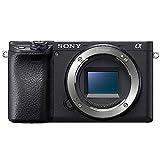
Sony Alpha a6400 Mirrorless Camera: Compact APS-C Interchangeable Lens Digital Camera with Real-Time Eye Auto Focus, 4K Video & Flip Up Touchscreen – E Mount Compatible Cameras – ILCE-6400/B Body
24.2MP APS-C
0.02s AF
425 AF Points 84% Coverage
Real-time Eye AF
4K 30p Video
Pros
- Worlds fastest 0.02s autofocus
- Real-time Eye AF for humans and animals
- Compact lightweight body at 404g
- 4K video with no recording limit
- Huge E-mount lens ecosystem
Cons
- No in-body image stabilization
- Rolling shutter in 4K video
- No headphone jack
- Single memory card slot
- Battery life could be better
The Sony Alpha a6400 has been a favorite among ski photographers for years, and with a 4.8 rating from over 600 reviews, the user consensus is clear. What makes this camera special is the autofocus speed. At 0.02 seconds, it is among the fastest in any camera at any price. When a skier is coming at you fast and you need the camera to acquire focus instantly, the a6400 delivers every time.
Real-time Eye AF tracks the subject’s eye continuously, even when they are wearing goggles and a helmet. I found the system works well in typical ski conditions, including overcast days with flat light and bright sunny days with high contrast. The 425 phase and contrast-detection points cover 84 percent of the sensor, giving you a wide focusing area that handles off-center compositions without needing to recompose.
At just 404 grams, the a6400 is one of the lightest interchangeable-lens cameras you can take on the mountain. It slips into a jacket pocket with a pancake lens attached, which makes it perfect for backcountry touring where every gram matters. The flip-up touchscreen is great for vlogging and low-angle shots in the terrain park. The 11fps continuous burst is fast enough for most ski action situations.
The main compromises are the lack of IBIS and the single memory card slot. Without in-body stabilization, you need OSS-equipped Sony lenses for steady handheld work. The single card slot means no backup, so quality SD cards are a must. Battery life is also average, so carry a spare in an inner pocket where it stays warm against your body heat.
Who Should Buy the Sony Alpha a6400
Beginners and budget-conscious photographers who want to get serious about ski photography without spending full-frame money will find the a6400 delivers professional-grade autofocus in an affordable, compact package. It is the best entry point into the Sony E-mount system, which means you can upgrade to full-frame Sony bodies later and keep your APS-C lenses in crop mode.
Backcountry skiers who prioritize minimal weight will love this camera. With a compact prime lens attached, the entire kit weighs less than a water bottle. It is the camera you will actually bring along on tours instead of leaving behind because it is too heavy.
Who Should Skip It
If you need in-body stabilization for handheld video or low-light stills, the a6400 cannot help you. The rolling shutter effect in 4K video is also noticeable when panning to follow fast-moving skiers. For video-heavy shooters, the Canon EOS R8 or Panasonic S5II are better picks. The single card slot is also a concern for professional work where backup redundancy matters.
10. Panasonic LUMIX G85 – Budget Weather-Sealed with Dual Stabilization
Panasonic LUMIX G85 4K Digital Camera, 12-60mm Power O.I.S. Lens, 16 Megapixel Mirrorless Camera, 5 Axis in-Body Dual Image Stabilization, 3-Inch Tilt and Touch LCD, DMC-G85MK (Black)
16MP Micro Four Thirds
5-Axis Dual I.S.
Weather-Sealed Body + Lens
4K QFHD 30fps
12-60mm Kit Lens
Pros
- Weather-sealed body and kit lens
- Dual image stabilization body plus lens
- Excellent value with versatile 12-60mm lens
- 4K Photo mode at 30fps
- Focus stacking and post-focus features
Cons
- Only 16MP lower than competitors
- AF slower in low light during 4K
- No headphone jack
- Limited stock availability
The Panasonic LUMIX G85 is proof that you do not need to spend a fortune to get a camera that can handle ski photography. It comes with a weather-sealed body and a weather-sealed 12-60mm kit lens that provides a versatile 24-120mm equivalent range. For the price, this is one of the few kits that gives you a complete, weather-protected camera system right out of the box.
The dual image stabilization system combines the 5-axis in-body stabilization with the lens-based Power O.I.S., and together they deliver remarkably steady handheld performance. I was able to shoot at shutter speeds slow enough to blur skiers intentionally for creative effect while keeping the background sharp. For a camera at this price point, the stabilization is genuinely impressive and rivals systems costing twice as much.

The 4K Photo mode lets you extract 8MP still frames from 30fps 4K video, which is a creative workaround for action shooting. Rather than firing off a burst of stills, you record a 4K clip of the skier hitting a jump and pull the perfect frame afterward. The Post Focus feature lets you choose your focus point after taking the shot, which is useful when you are shooting quickly and the AF might not be perfectly placed.
The 16MP Micro Four Thirds sensor is the main technical limitation. It produces good images in daylight but struggles more than the higher-resolution sensors in low-light conditions common during storm skiing. The no low-pass filter design does improve sharpness, though. Autofocus slows down noticeably in low light during 4K recording, which can be frustrating. Stock is also limited, so if you find one available, do not wait too long to pull the trigger.

Who Should Buy the Panasonic LUMIX G85
Beginners who want a weather-sealed camera with image stabilization at the lowest possible price should start here. The G85 gives you more practical features for mountain photography than cameras costing hundreds more. The weather-sealed kit lens means you can shoot in light snow and moisture without panic. The Micro Four Thirds mount also opens up a huge range of affordable used lenses.
It is also a smart secondary camera for experienced photographers who want a backup body that does not break the bank. Throw it in your pack as an emergency spare, and you have a capable weather-sealed camera that covers the essential focal range for ski photography.
Who Should Skip It
If you need high-resolution images for large prints or professional deliverables, the 16MP sensor will not be enough. Serious action photographers who rely on fast autofocus tracking will also find the G85’s contrast-detect AF slower than the phase-detect systems in newer cameras. For a bit more budget, the Sony a6400 offers significantly better autofocus performance.
Buying Guide: How to Choose the Best Mirrorless Camera for Ski Photography?
Choosing the right mirrorless camera for ski photography comes down to a handful of critical factors that matter more on the mountain than they do in a studio. Here is what our team considers essential when evaluating cameras for winter sports shooting.
Weather Sealing and Cold Weather Performance
This is the single most important factor for ski photography. Your camera will be exposed to snow, moisture, and freezing temperatures for hours at a time. Look for cameras with weather-sealed bodies and lens gaskets. The OM SYSTEM OM-1 Mark II goes furthest v with an IP53 rating and certified operation down to -10C. Canon’s R6 Mark II and Sony’s A7 IV and A7 V all feature weather-sealed magnesium alloy bodies that handle moderate snow and rain. Budget cameras like the Nikon Z50 II and Canon EOS R8 lack weather sealing entirely and need protective covers.
Battery performance drops significantly in cold weather, often by 30 to 50 percent. Cameras with larger batteries like the Sony NP-FZ100 (used in the A7 IV and A7 V) fare better than those with smaller cells. Always carry spare batteries in an inner pocket close to your body heat. The OM-1 Mark II’s exceptional 4,000-plus shot battery life gives it a real advantage in cold conditions.
Autofocus Speed and Subject Tracking
Ski photography demands fast, accurate autofocus that can track a subject moving at high speed across a frame filled with bright snow. Phase-detect autofocus systems found in Sony, Canon, and newer Panasonic cameras perform significantly better than contrast-detect systems in these conditions. Sony’s Real-time Eye AF and Canon’s Dual Pixel CMOS AF II are the two best systems available for tracking skiers. They lock onto subjects quickly and hold focus even when the skier is partially obscured by snow spray or trees.
Burst Shooting Speed for Action
The faster your burst rate, the more frames you capture during a ski jump, carve, or crash. Cameras with 20fps or higher electronic burst rates give you the best chance of capturing the exact peak moment. The OM-1 Mark II leads at 120fps, followed by the Sony A7 V at 30fps blackout-free, and the Canon R8 and R6 Mark II at 40fps electronic. Pre-capture buffer features on Sony and Canon cameras are particularly valuable because they record frames before you fully press the shutter, catching moments you would otherwise miss.
Weight and Portability
Every gram matters when you are carrying camera gear up a mountain. Full-frame cameras produce the best image quality but are heavier and require larger lenses. APS-C and Micro Four Thirds systems are significantly lighter and more compact. For backcountry touring, the Sony a6400 at 404g or the OM-1 Mark II at 499g are far more practical than a full-frame body with a large zoom lens. Consider how you will carry the camera. If it is too heavy to bring along, the best sensor in the world does not matter.
Sensor Size Considerations
Full-frame sensors deliver the best low-light performance, dynamic range, and shallow depth of field. They are ideal for professional ski photography and large prints. APS-C sensors offer a good balance of image quality and portability, with a crop factor that effectively extends telephoto reach. Micro Four Thirds sensors are the most compact and affordable, with a 2x crop factor that makes telephoto lenses very effective for distant subjects. The smaller sensors also mean smaller, lighter lenses across the board.
Condensation Prevention Tips
One issue many ski photographers overlook is condensation. When you bring a cold camera into a warm lodge, moisture condenses on the lens and internal elements. Always seal your camera in a plastic bag or camera case before going indoors, and let it warm up gradually before removing it from the bag. This simple habit has saved my gear from internal fogging more times than I can count. Some photographers also keep silica gel packets in their camera bags to absorb ambient moisture.
Frequently Asked Questions
What camera do ski photographers use?
Is mirrorless camera good for ski photography?
What is the best camera for backcountry skiing?
What is the best budget mirrorless camera for beginners?
Final Thoughts
Finding the right mirrorless camera for ski photography comes down to matching your specific needs on the mountain. Our top pick, the Sony Alpha 7 V, delivers unmatched image quality, AI autofocus, and 30fps blackout-free burst for photographers who demand the absolute best. The OM SYSTEM OM-1 Mark II is the best choice for harsh conditions with its IP53 rating and freeze-proof build, while the Panasonic LUMIX G85 gives beginners a weather-sealed, image-stabilized kit at the most affordable price point.
For most ski photographers, the sweet spot lies somewhere in the middle. The Canon EOS R8 offers full-frame quality in a featherweight body. The Sony A7 IV provides proven professional reliability with outstanding battery life. And the Sony a6400 delivers professional-grade autofocus in a compact, budget-friendly package. Whatever your skill level and budget, there is a camera on this list that will help you capture incredible images on the slopes this season.