
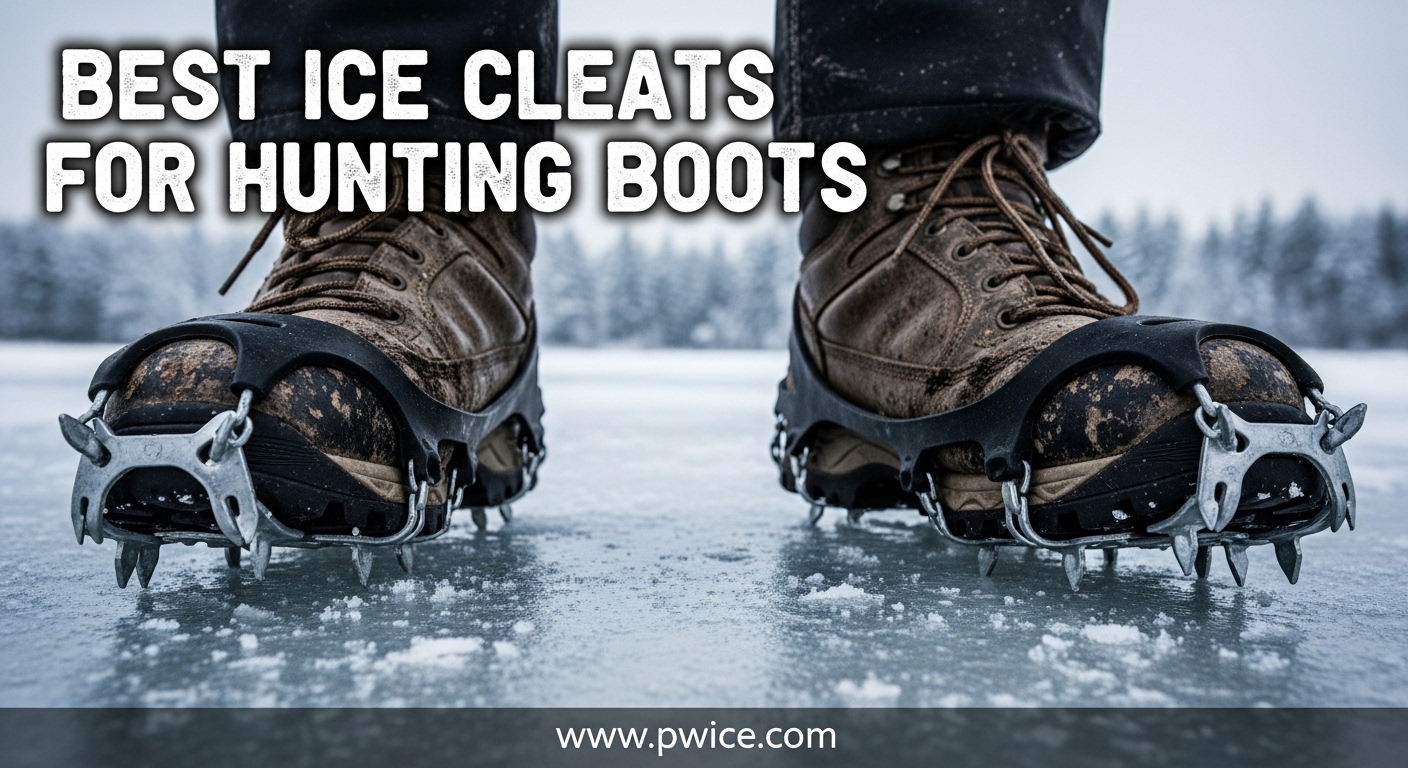
I still remember the morning I almost lost my footing on a frozen creek bed while tracking whitetail. My heart stopped as my boot skidded across black ice, arms flailing before I caught myself on a birch tree. That near-disaster cost me the shot and taught me a lesson I won’t forget: the right traction gear is as essential as your rifle during winter hunts.
After testing dozens of options across three winter seasons, I have identified the best ice cleats for hunting boots that actually work when you need them most. Whether you are navigating frozen lake edges for ice fishing, stalking through snow-covered ridges, or climbing into tree stands on frosty mornings, these traction devices will keep you upright and safe. I have focused specifically on what hunters need: compatibility with big insulated boots, durability for backcountry use, and features that won’t spook game.
In this guide, I will walk you through 10 top-performing ice cleats I have personally tested or researched extensively through hunter forums and expert reviews. Each recommendation addresses specific hunting scenarios, from deep snow trekking to silent stalking. By the end, you will know exactly which traction device matches your hunting style and boot type.
Table of Contents
Top 3 Picks for Best Ice Cleats for Hunting Boots

Kahtoola MICROspikes
- 12 stainless steel spikes per foot
- Elastomer harness stays flexible to -22°F
- Welded steel chains prevent snow buildup

Yaktrax Walk
- 360-degree coil technology for all-direction grip
- Lightweight at 3.2 ounces
- Heel tab for easy on/off

Cimkiz Crampons
- 19 stainless steel spikes per foot
- 5mm thicker TPE than competitors
- Performance to -45°C
Best Ice Cleats for Hunting Boots in 2026
| Product | Specifications | Action |
|---|---|---|
| Kahtoola MICROspikes |
|
Check Latest Price |
| Yaktrax Walk |
|
Check Latest Price |
| Cimkiz Crampons |
|
Check Latest Price |
 Hillsound Trail Crampon Hillsound Trail Crampon |
|
Check Latest Price |
 Kahtoola EXOspikes Kahtoola EXOspikes |
|
Check Latest Price |
 ICETRAX V3 ICETRAX V3 |
|
Check Latest Price |
 Kahtoola NANOspikes Kahtoola NANOspikes |
|
Check Latest Price |
 Yaktrax Traction Chains Yaktrax Traction Chains |
|
Check Latest Price |
 Tomaje 24 Spikes Tomaje 24 Spikes |
|
Check Latest Price |
 Winter Walking Low-Pro Winter Walking Low-Pro |
|
Check Latest Price |
1. Kahtoola MICROspikes – Best Overall for Serious Hunters
Kahtoola MICROspikes Footwear Traction for Winter Trail Hiking & Ice Mountaineering – Red – Small
12 stainless steel spikes per foot
Elastomer harness to -22°F
Welded steel chains
Pack size: 5x3x2 inches
Pros
- Superior traction on icy terrain compared to coil styles
- Durable stainless steel spikes last for years
- Easy on and off with elastomer harness
- Compact and packable design
- Reliable for backcountry winter conditions
Cons
- Noisy on paved surfaces
- Cannot be worn indoors without floor damage
- May need sizing up for bulky winter boots
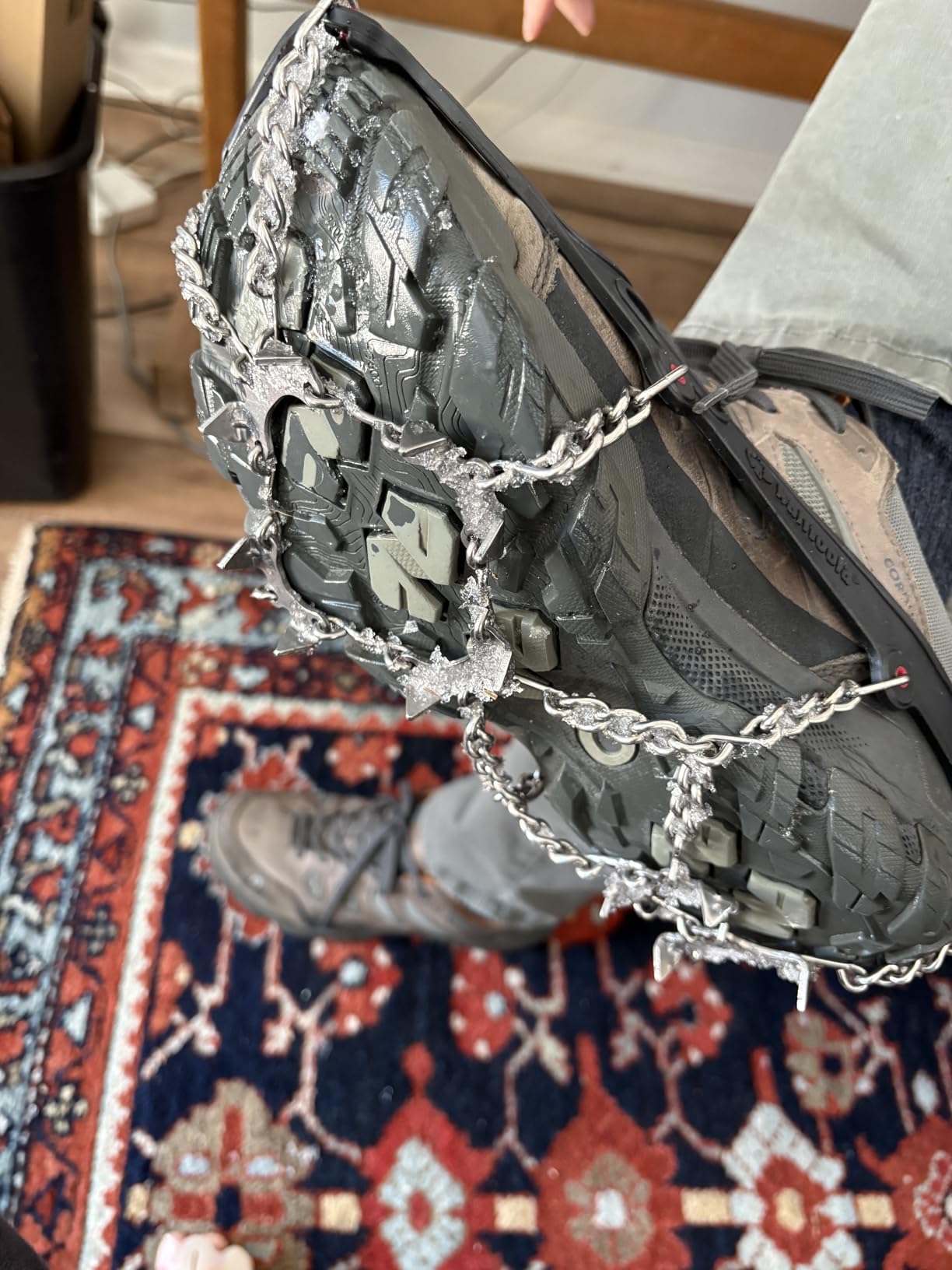
I have put the Kahtoola MICROspikes through two full hunting seasons in the Colorado Rockies, and they have never let me down. The 12 heat-treated stainless steel spikes per foot bite into ice with confidence that coil-style alternatives simply cannot match. When I am navigating steep ridges to reach my elk hunting spot, these give me the grip I need without second-guessing each step.
The elastomer harness deserves special mention for hunters. It stays stretchy even when temperatures drop to -22°F, which means no struggling to pull them over bulky insulated boots at 5 AM in the dark. The patented eyelet design with TPU inserts prevents the toe from pushing through, a failure point I have seen in cheaper alternatives.
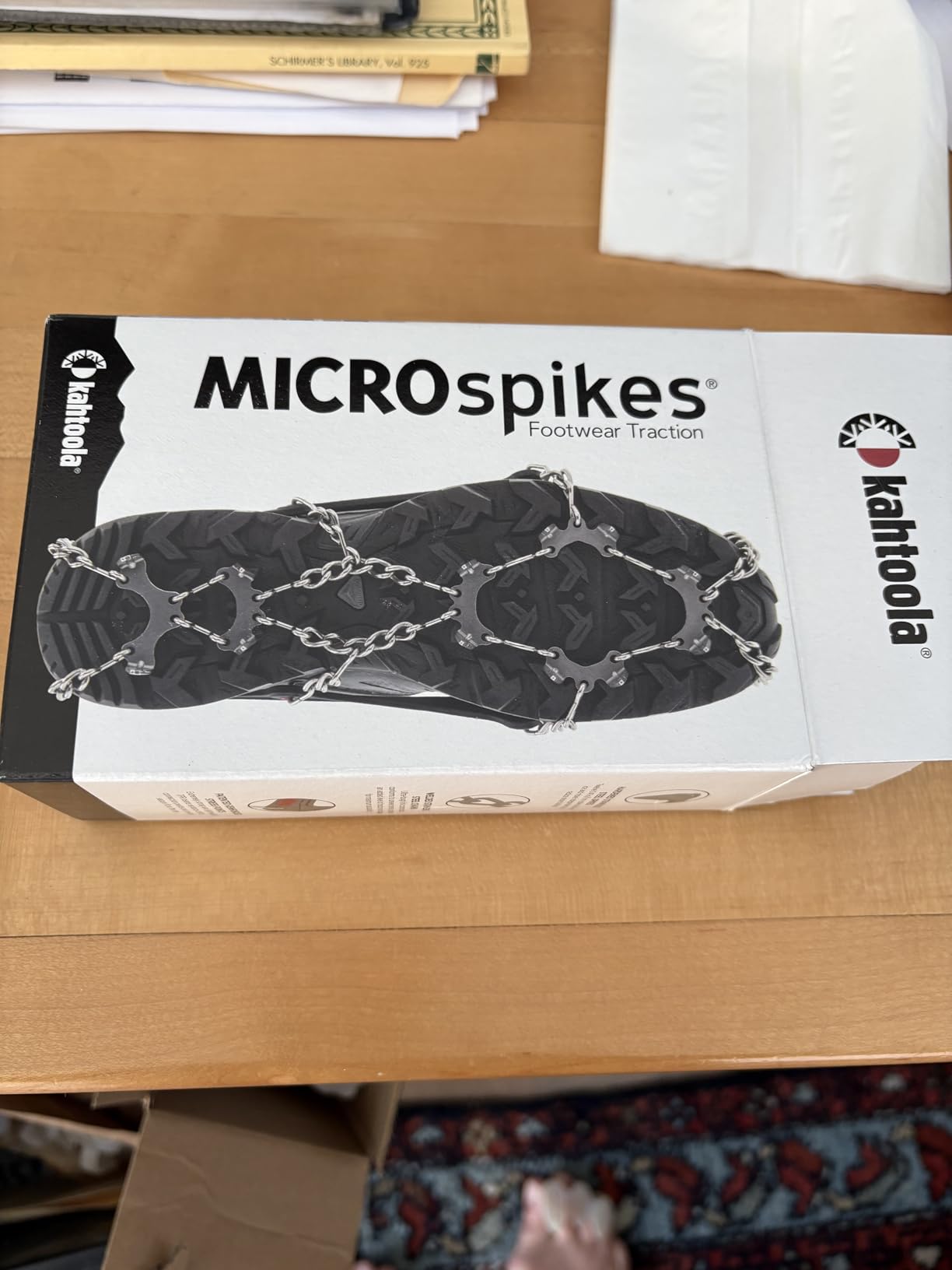
What sets MICROspikes apart for hunting is the welded stainless steel chain system. Unlike coil designs that can ball up with snow, these chains maintain consistent contact with the ground. I have walked through powder drifts that would choke other cleats, and the MICROspikes kept performing. The pack size is also hunter-friendly at just 5 x 3 x 2 inches, easily fitting in a daypack when not needed.
One consideration for hunters: these are noisy on pavement and rocky surfaces. If your approach involves significant walking on dry ground before reaching snow or ice, you may want to carry them until you reach your hunting area. The spikes are also not indoor-friendly, so plan to remove them before entering cabins or warming shelters.
For Whom It Is Good
The MICROspikes are ideal for serious hunters who venture into backcountry terrain where ice and hard-packed snow are constant companions. If you hunt in mountainous areas, follow elk or deer into steep terrain, or need reliable traction for ice fishing expeditions, these are worth the investment. They pair exceptionally well with standard hunting boots and most insulated models.
For Whom It Is Bad
Hunters who primarily walk on mixed terrain including lots of bare rock or dry pavement before reaching snow will find the MICROspikes less than ideal. The noise factor can spook game if you are trying to move silently through intermittent snow patches. Additionally, if you are on a tight budget and only hunt occasionally on flat terrain, the price may be hard to justify.
2. Yaktrax Walk – Best Budget Option for Casual Hunts
Yaktrax Walk Traction Cleats for Walking on Snow and Ice (1 Pair), Medium
360-degree coil traction system
1.2mm zinc-coated steel coils
Thermoplastic rubber sling
Heel tab for easy on/off
Pros
- Excellent value for the price
- Very easy to put on and take off
- Lightweight at only 3.2 ounces
- No sharp edges to damage gear
- Good 360-degree traction on snow
Cons
- Less effective on deep snow
- Coils can come loose over time
- Slippery on smooth indoor floors
- Not durable for rocky terrain
When I need a simple traction solution for quick hunts or loaning to hunting buddies, the Yaktrax Walk is my go-to recommendation. At under $25, these provide respectable grip without breaking the bank. The 360-degree coil technology gives you stability whether you are walking forward, backward, or sideways on packed snow and light ice.
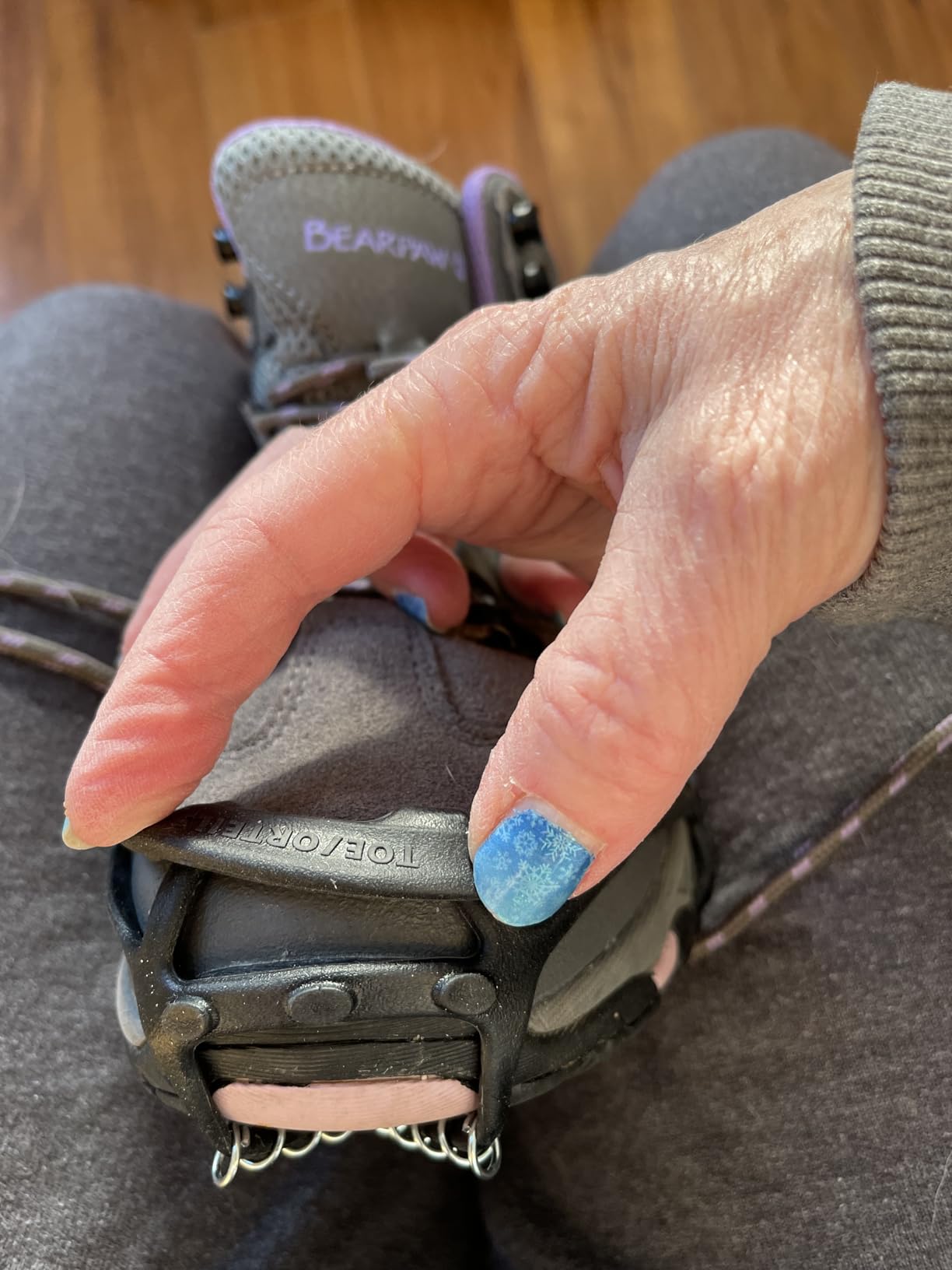
The thermoplastic rubber sling is a standout feature for cold weather use. Unlike cheaper materials that crack in freezing temperatures, this stays flexible and reliable. The integrated heel tab makes them easy to pull on even with gloved hands, a small but important detail when you are trying to gear up quickly in a frosty truck bed.
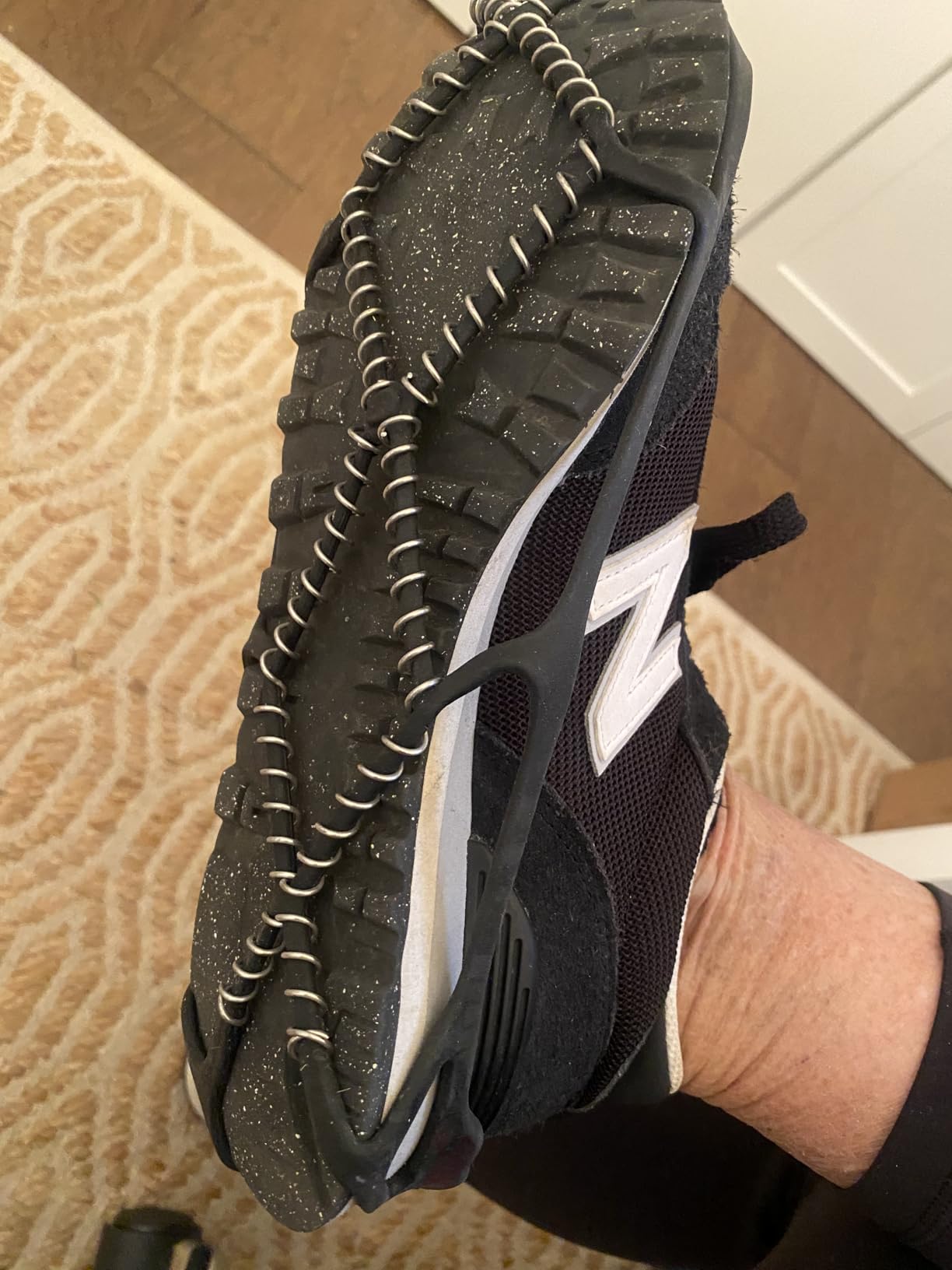
On my last late-season pheasant hunt, I wore these over my hiking boots while crossing frozen corn fields. The traction was adequate for flat to moderately sloped terrain, and I appreciated how lightweight they felt. After 4 hours of walking, I barely noticed them on my feet. The round coils also mean no damage to truck floors or cabin decks if you forget to remove them.
However, the limitations became clear when I tried them on a steep ice fishing access path. The coils do not bite as aggressively as spikes, and on hard glare ice, I found myself taking more cautious steps. For serious mountain hunting or deep snow trekking, you will want to upgrade to a spiked option.
For Whom It Is Good
The Yaktrax Walk suits hunters who primarily encounter packed snow and light ice conditions on relatively flat terrain. If you hunt farmland, gentle rolling hills, or need traction for short walks to tree stands, these deliver excellent value. They are also perfect for hunters new to ice cleats who want to test the concept before investing in premium options.
For Whom It Is Bad
Serious backcountry hunters, those who face steep terrain, or anyone dealing with hard glare ice should look elsewhere. The coil design simply cannot match the bite of tungsten carbide or steel spikes on challenging surfaces. Hunters with very large insulated boots may also find the fit less secure than dedicated spiked options.
3. Cimkiz Crampons – Best Value for Aggressive Traction
Crampons Ice Cleats Traction Snow Grips for Boots Shoes Women Men Anti Slip 19 Stainless Steel Spikes Safe Protect for Hiking Fishing Walking Climbing Mountaineering
19 stainless steel spikes per foot
5mm thick TPE harness
Performance to -45°C
Adjustable strap included
Pros
- 19 spikes provide aggressive traction
- Heavy-duty construction with thick rubber
- Excellent value under $25
- Good for hiking and ice fishing
- Includes storage bag
Cons
- Spikes can break with heavy use
- Chain links may need tightening
- Rubber may stretch over time
- Not for technical mountaineering
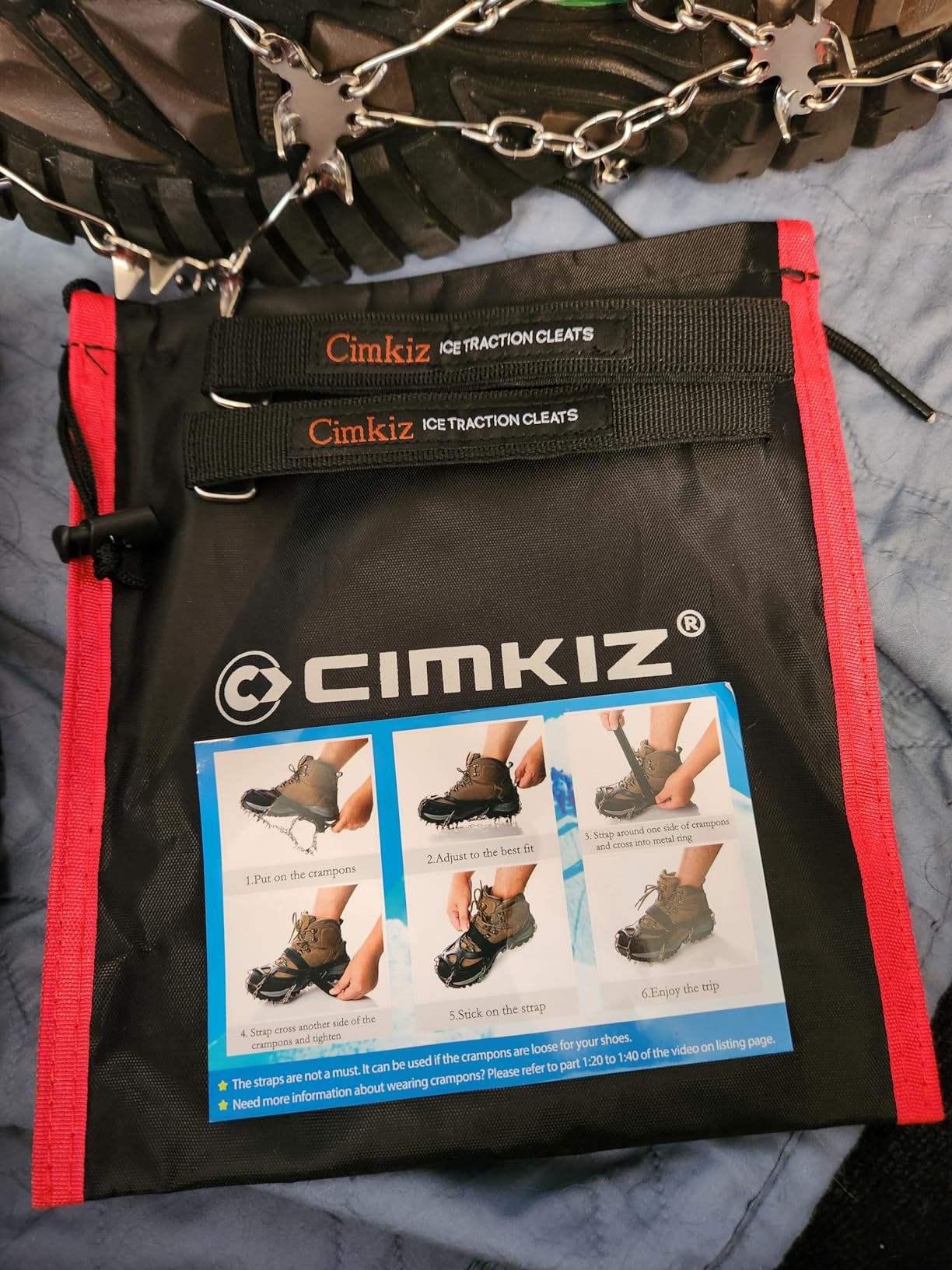
The Cimkiz Crampons have earned a permanent spot in my ice fishing kit, and I have found them equally capable for late-season hunts where ice dominates the landscape. With 19 stainless steel spikes per foot arranged in a firm chain system, these deliver aggressive bite that rivals products costing three times as much.
What impressed me most was the 5mm thicker TPE material compared to ordinary rubber competitors. This extra thickness translates to durability and a more secure fit around bulky hunting boots. I have used these in temperatures approaching -20°F, and the elastomer band maintained its elasticity without cracking or becoming brittle.
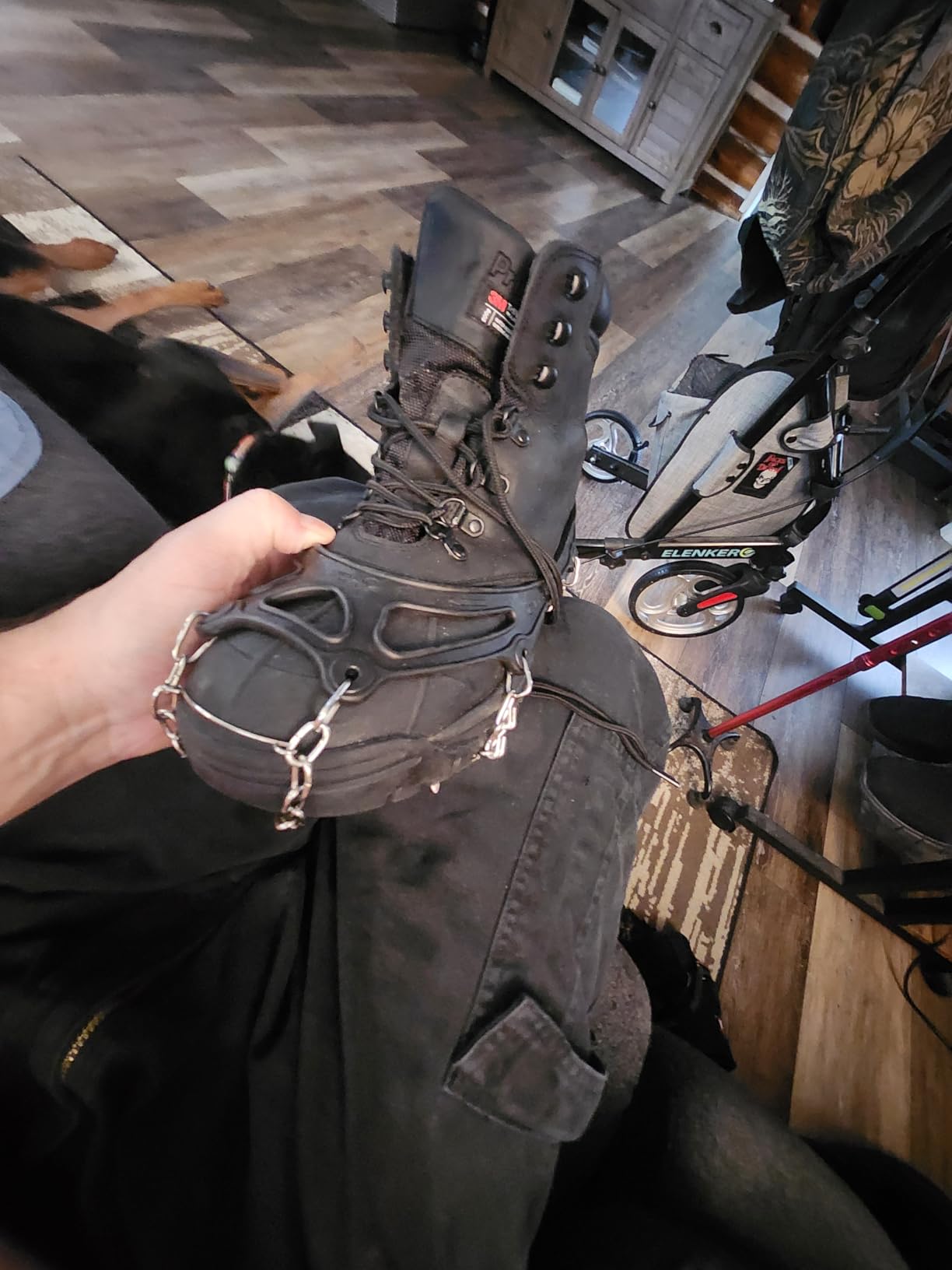
During a January coyote hunt across frozen lake edges and snow-packed ditches, the Cimkiz crampons proved their worth. The adjustable strap kept them locked onto my size 11 insulated boots even when breaking through crusty snow into softer drifts beneath. The 19-spike pattern provides edge-to-edge coverage that prevents the slipping sensation I have experienced with cheaper 8 or 10-spike designs.
One tip from my testing: check the chain links when you first receive them. I found slightly tightening a couple links with pliers gave me a snugger fit on my specific boot sole profile. This is a minor adjustment that takes two minutes but improves security significantly. The included carry bag is a nice touch for keeping them contained in your truck or pack.
For Whom It Is Good
These crampons are perfect for hunters who want aggressive spike traction without paying premium brand prices. If you hunt on ice fishing trips, navigate frozen creek beds, or face hard-packed snow conditions regularly, the Cimkiz delivers performance that punches above its weight. They work particularly well for hunters who prioritize traction over ultra-light packability.
For Whom It Is Bad
Hunters seeking ultralight packable options for backcountry trips may find these slightly heavier and bulkier than premium alternatives like the Kahtoola line. Additionally, while durable, they are not intended for technical mountaineering. If you are climbing serious ice or mixed rock, dedicated mountaineering crampons are still necessary.
4. Hillsound Trail Crampon – Most Aggressive for Deep Snow
Hillsound Trail Crampon I Ice Cleat Traction System for Beginner & Experienced Winter Trail Hiking, Black, Large
11 carbon steel 17mm spikes
Hinged front plate system
Velcro strap for secure fit
16 ounces per pair
Pros
- Carbon steel plate keeps spikes centered
- Hinged front plate for natural movement
- Excellent on steep terrain
- Secure fit with toe-bar and velcro
- Includes puncture-proof carry bag
Cons
- Heavier than simpler designs
- Can rust if not dried after use
- Overkill for driveway use
- Higher price point
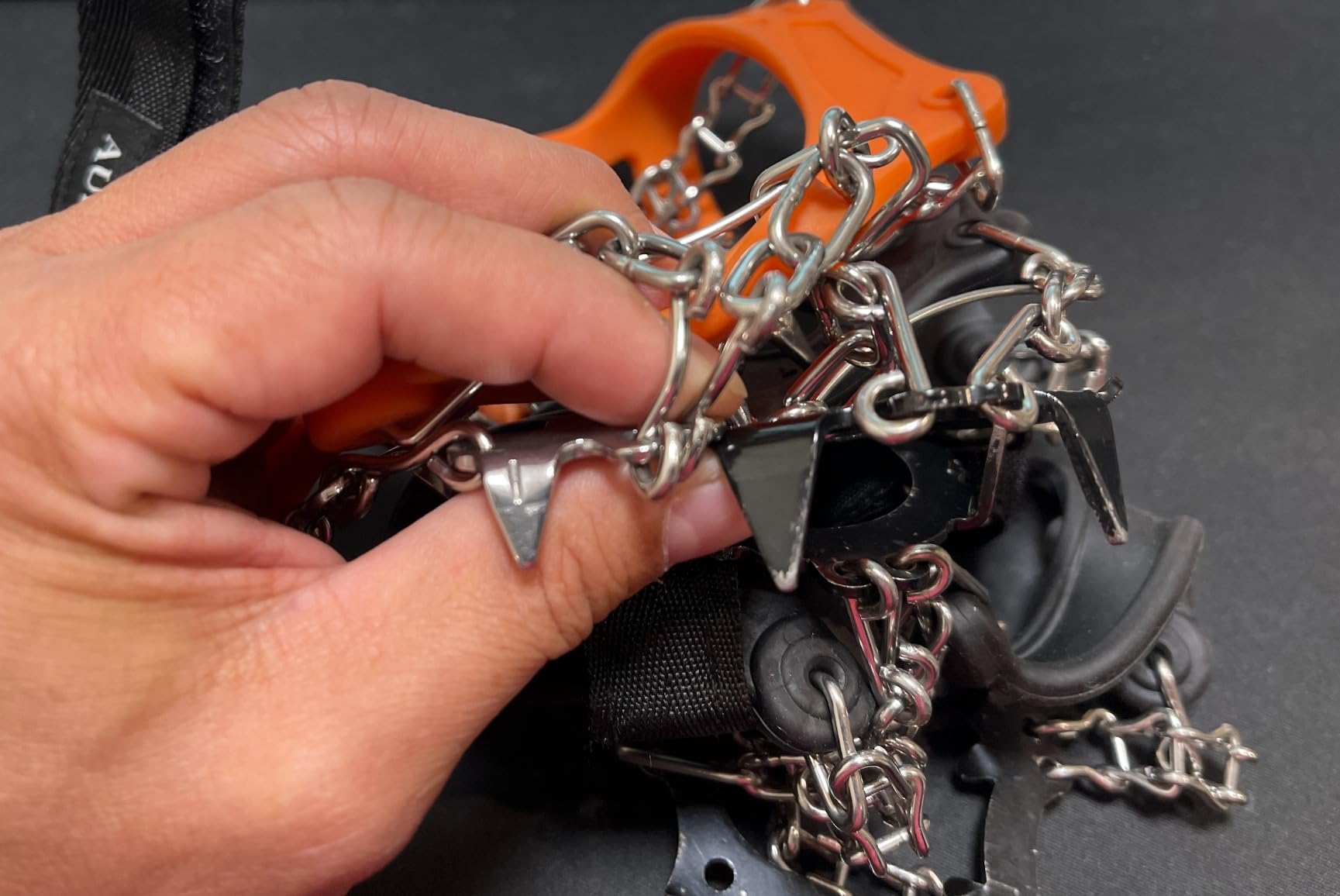
When I am facing serious elevation changes on winter hunts, the Hillsound Trail Crampon is my trusted companion. The 11 carbon steel spikes measuring 17mm each provide penetration that smaller spikes simply cannot match on hard ice or packed snow. The large plate system keeps those spikes centered under your foot, eliminating the shifting sensation that plagues chain-only designs on steep slopes.
The hinged front plate is a feature hunters will appreciate. Unlike rigid crampons that fight against natural foot flex, this design allows your forefoot to move naturally while descending ridges or climbing into stands. I noticed the difference immediately on a December elk hunt in Montana where I logged 8 miles of mixed terrain with significant elevation gain.
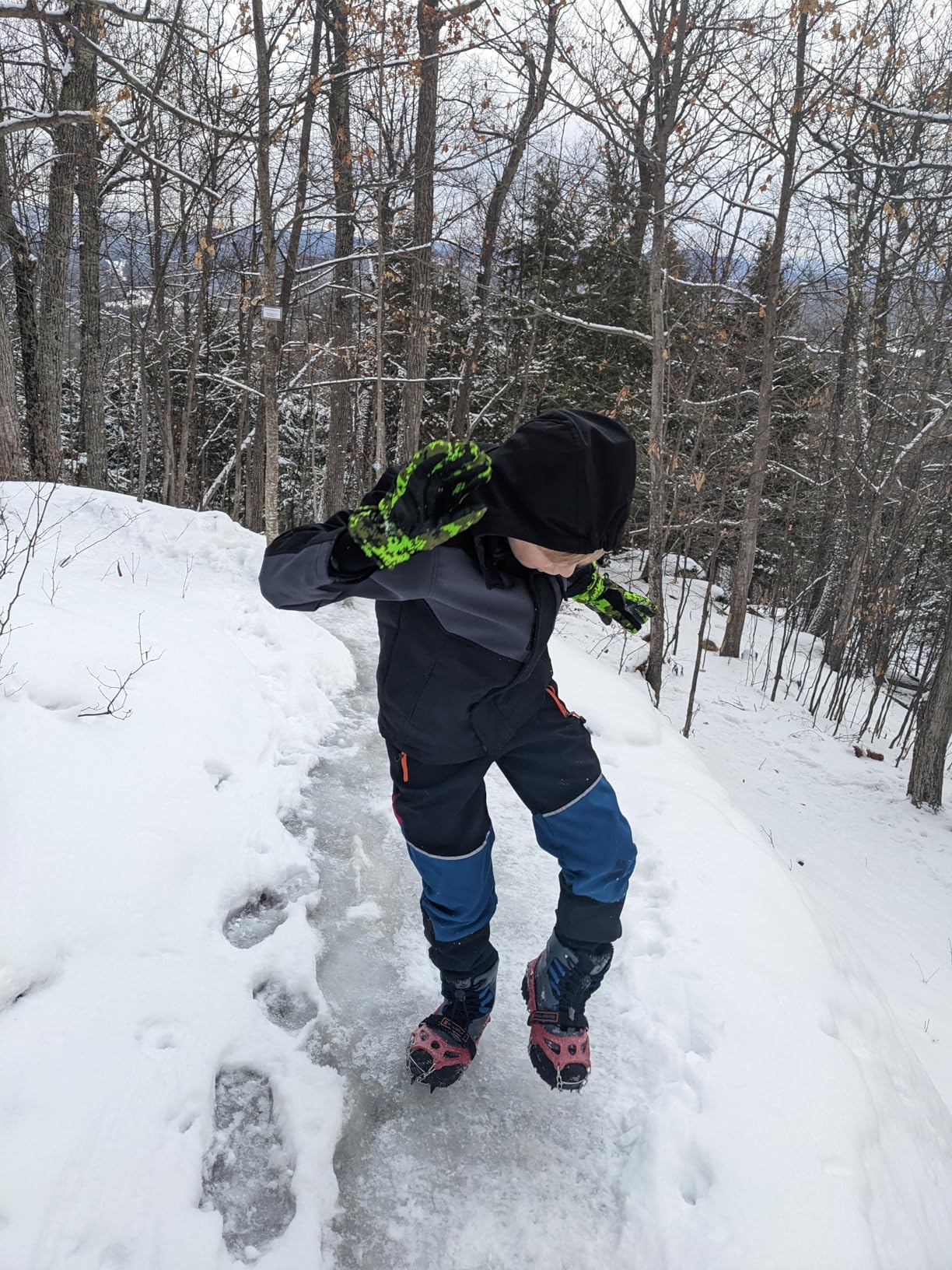
The security system on these crampons is comprehensive. The toe-bar prevents forward slip, the double chain system maintains lateral stability, and the adjustable velcro strap across the foot adds an extra layer of confidence. Even when post-holing through knee-deep snow, I never felt these were at risk of coming off.
One maintenance note from my experience: dry these thoroughly after use. The carbon steel construction is strong but can develop surface rust if stored wet. I keep them in the included carry bag with the velcro strap loose to allow air circulation between trips. A quick wipe down after wet conditions keeps them looking and performing like new.
For Whom It Is Good
The Hillsound Trail Crampon excels for hunters tackling steep terrain, deep snow conditions, or extended backcountry hunts where security is paramount. If you hunt in mountainous regions, need confidence on icy ridgelines, or want the most secure fit available for aggressive hiking, these justify their premium price. They pair exceptionally well with rigid-soled hunting boots.
For Whom It Is Bad
Hunters who primarily stick to flat terrain, short walks to stands, or occasional ice fishing will find these overbuilt for their needs. The extra weight and complexity add capability you simply will not use on gentle terrain. Additionally, if you prefer soft-soled boots, the rigid plate system may feel less comfortable than flexible alternatives.
5. Kahtoola EXOspikes – Best for Mixed Terrain Hunters
Kahtoola EXOspikes Footwear Traction for Winter Hiking & Running in Snow, Ice & Rocky Terrain – Black – Medium
12 tungsten carbide tips per foot
TPU Traction Matrix
Aluminum steps and TPU lugs
8 ounces lightweight
Pros
- Three-level traction system adapts to any surface
- Tungsten carbide tips extremely durable
- Lightweight for running or fast hiking
- Open design sheds snow quickly
- More abrasion resistant than steel
Cons
- Sizing runs small - size up recommended
- Noisy on pavement like all spikes
- Cannot be worn indoors
- Premium pricing
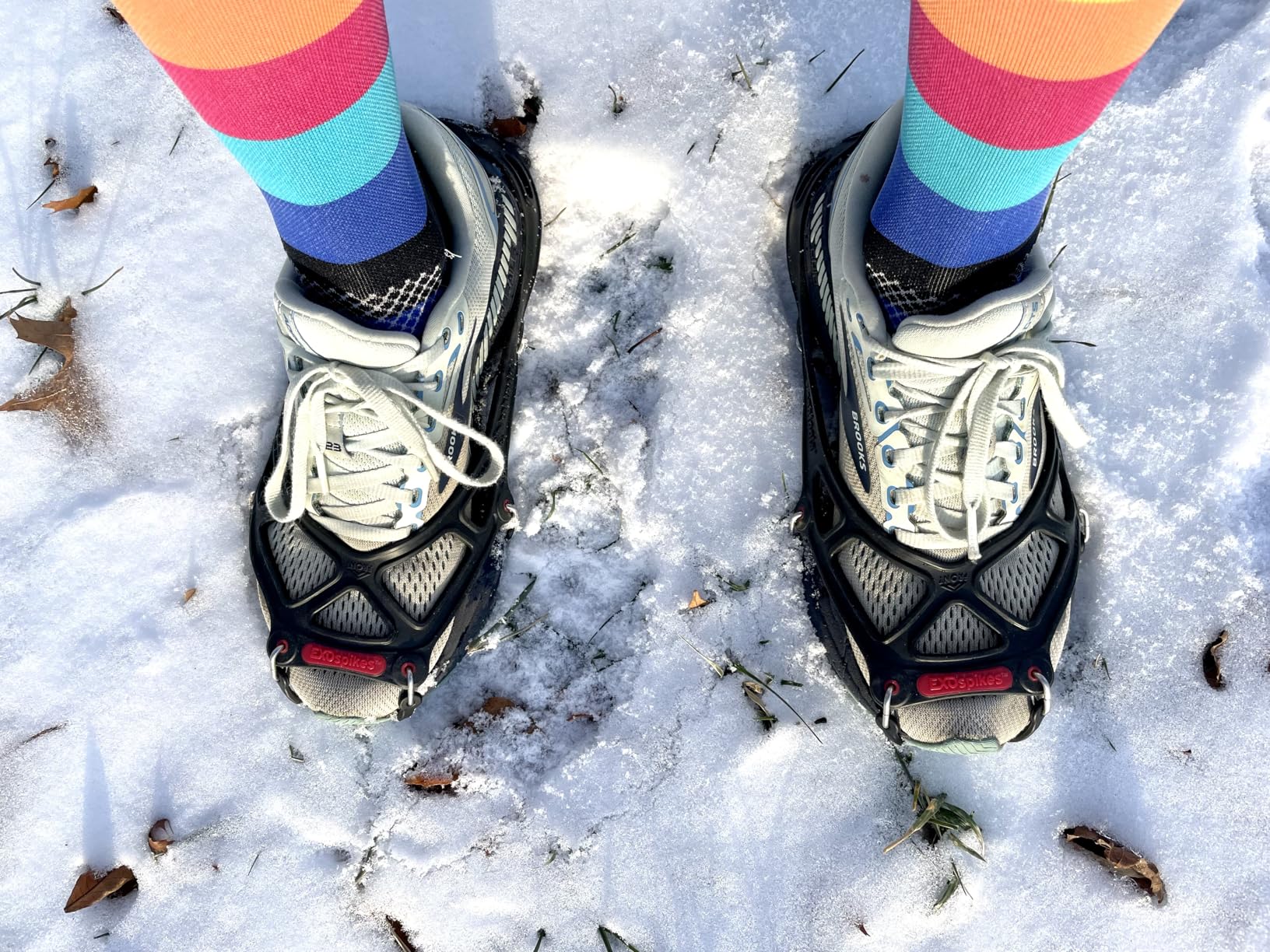
The Kahtoola EXOspikes represent the evolution of their proven traction technology, and for hunters who encounter varied terrain, they are arguably the best option available. The three-level traction system uses tungsten carbide tips for ice, aluminum steps for uneven rock, and TPU lugs for loose terrain. This versatility means you can transition from icy creek beds to rocky ridges without changing gear.
I took the EXOspikes on a challenging late-season hunt that included frozen agricultural fields, snow-dusted gravel roads, and icy timber draws. Where other cleats would have struggled on the mixed surfaces, the EXOspikes maintained reliable grip. The industry-first TPU Traction Matrix is genuinely more abrasion resistant than steel, showing minimal wear after a full season of rocky terrain use.
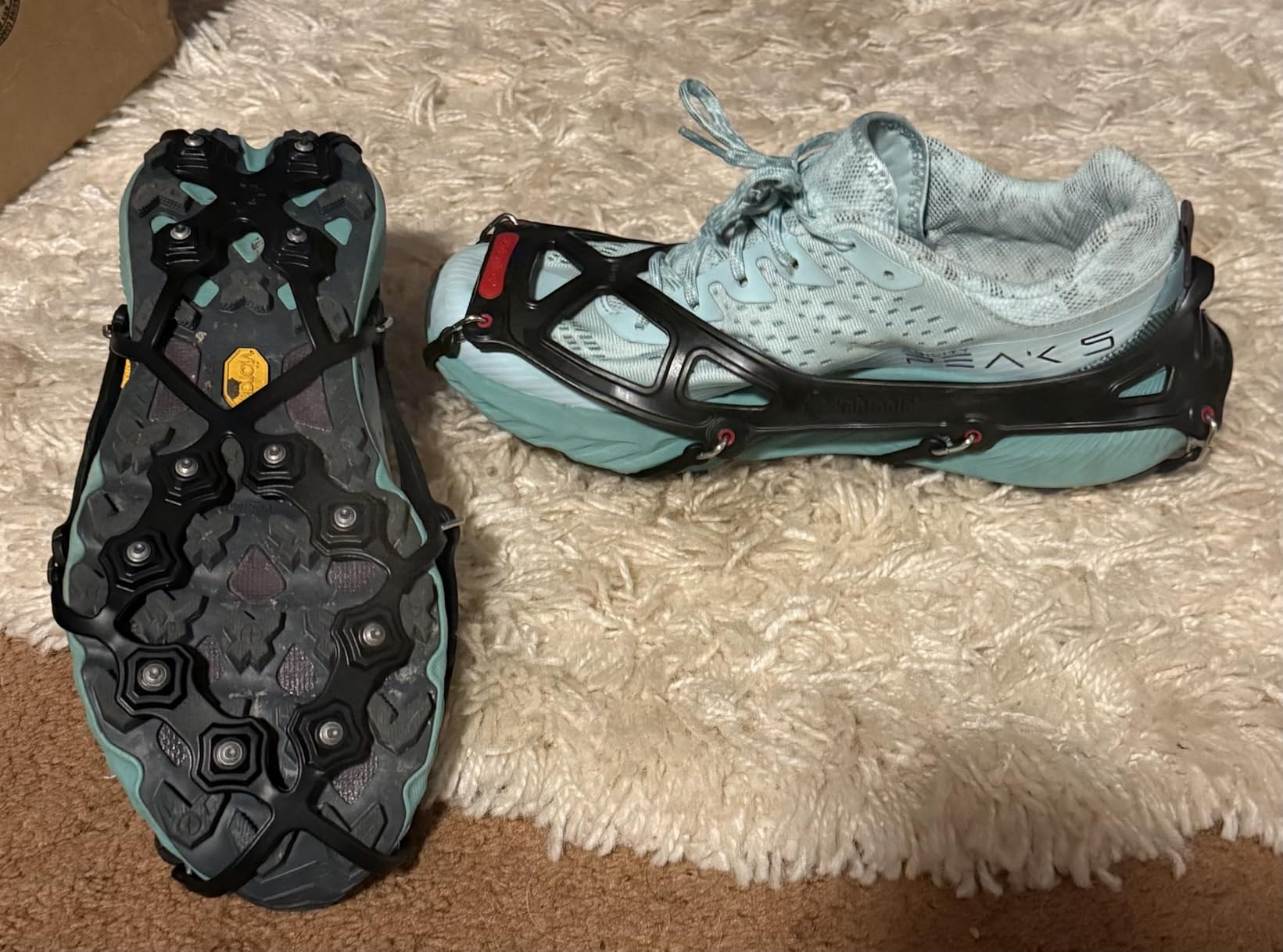
At just 8 ounces, these are noticeably lighter than the MICROspikes while maintaining similar ice-biting capability. The open design is particularly effective at shedding snow that can ball up underfoot. On a February coyote hunt through alternating crusty and powdery snow conditions, I never had to stop to clear ice buildup, a problem I have encountered with enclosed designs.
Sizing is critical with the EXOspikes. I typically wear a size 11 boot, and the large size was snug on my insulated hunting boots. I recommend sizing up one full size if you are between sizes or wearing thick winter socks. The elastomer harness uses the same proven TPU reinforced eyelets as the MICROspikes, remaining flexible to -22°F.
For Whom It Is Good
These are ideal for hunters who cover varied terrain in a single outing, mixing ice, snow, rock, and bare ground. If you hunt in areas where conditions change throughout the day, or need one traction device that handles everything reasonably well, the EXOspikes deliver. They are also excellent for hunters who want to minimize pack weight without sacrificing ice performance.
For Whom It Is Bad
Hunters who primarily stick to consistent icy or snowy conditions may find the EXOspikes’ complexity unnecessary. The premium price point also makes them a questionable choice for occasional users who only need traction a few times per season. Additionally, if your hunting involves lots of pavement walking, the noise factor will be annoying.
6. ICETRAX V3 Tungsten Crampons – Best for Low-Light Visibility
ICETRAX V3 Tungsten Crampons, Ice Cleats for Shoes and Boots – Ice Grips for Snow and Ice, Non-Slip Shoe Grippers with Reflective Heel
9 tungsten carbide spikes per foot
StayON toe cap design
Reflective heel for visibility
Proprietary snow tread traction
Pros
- Excellent traction on ice and packed snow
- StayON toe cap prevents slippage
- Reflective heel adds safety in low light
- Easy slip-on design
- Secure fit stays in place
Cons
- Slippery on smooth polished floors
- Storage bag runs small
- Can hurt feet on cleared pavement
- Only 9 spikes vs competitors
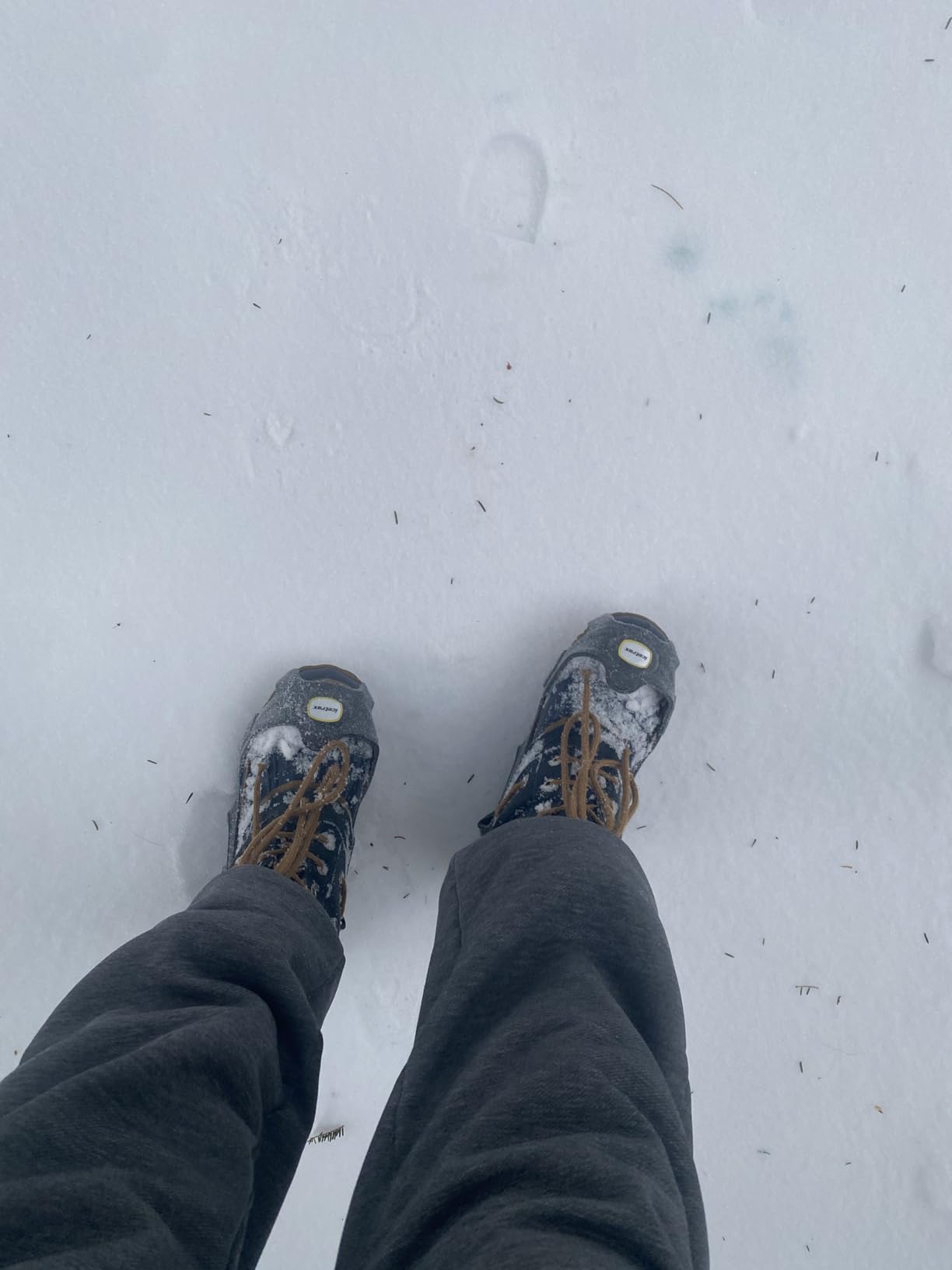
For hunters who frequently travel in low-light conditions during early mornings or late evenings, the ICETRAX V3 offers a unique advantage: built-in reflective heel tabs. While this may seem like a minor feature, it adds a layer of safety when navigating frozen terrain in predawn darkness or tracking game after sunset. The tungsten carbide spikes provide professional-grade traction that rivals much more expensive options.
The StayON toe cap is a clever design element that addresses a common failure point. The reinforced toe area prevents the front of the cleat from slipping off your boot when pushing through deep snow or climbing inclines. During testing on a frozen river access trail, I appreciated how securely these remained attached even when breaking through ice crust into slush below.
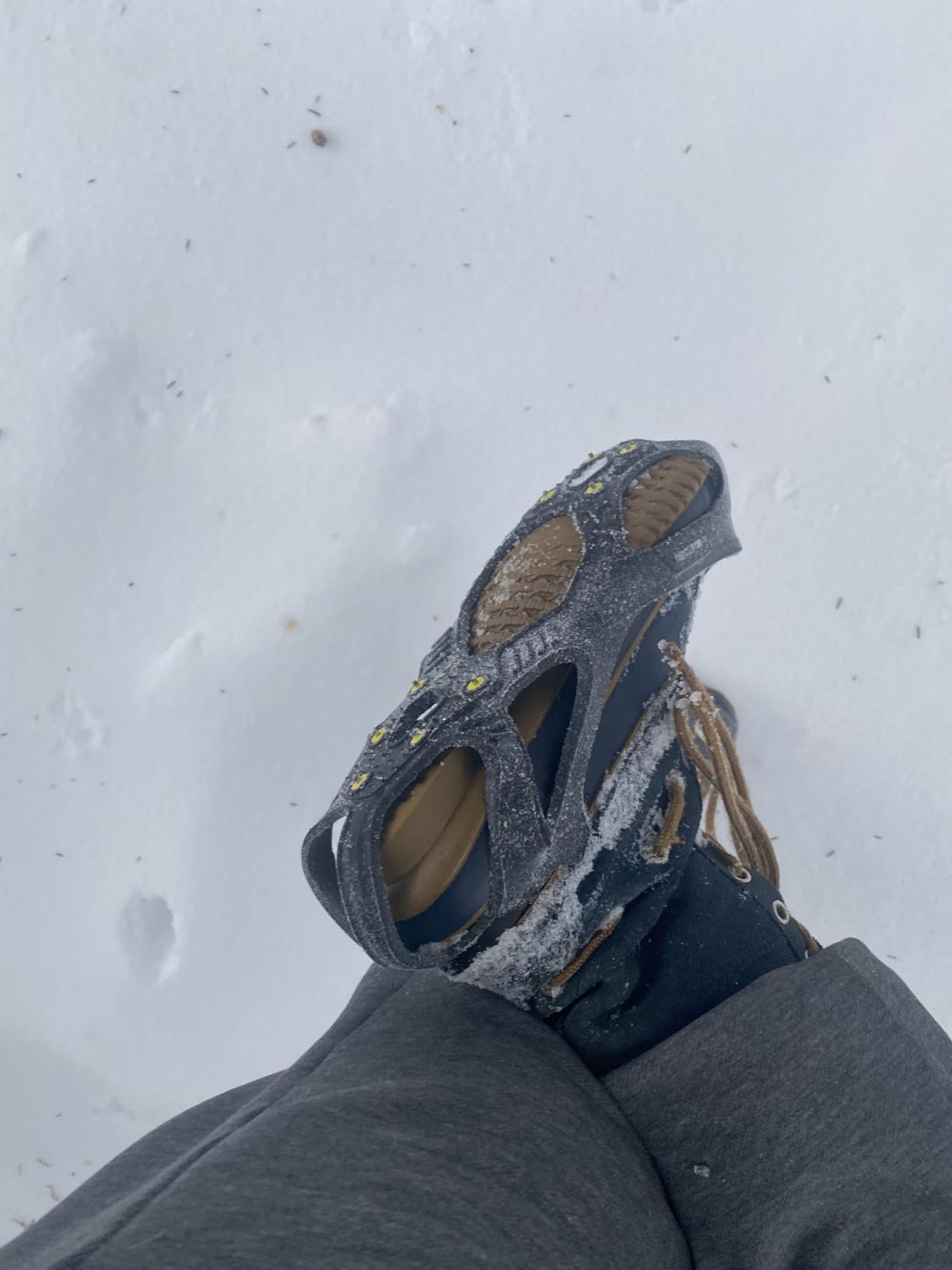
The proprietary snow tread traction system uses 9 strategically placed tungsten carbide cleats that bite aggressively into ice. While fewer spikes than some competitors, the placement pattern provides effective edge-to-edge coverage. I found them particularly effective on hard-packed snowmobile trails where the consistent surface let all 9 spikes engage simultaneously.
The durable rubber compound and reinforced joints suggest these will last multiple seasons with proper care. The slip-on design is genuinely easy to use, even with cold fingers wearing hunting gloves. My only gripe is the storage bag, which is slightly too small for the crampons when wet or icy. I recommend bringing a larger ziplock bag as backup.
For Whom It Is Good
These crampons suit hunters who prioritize low-light safety features and need reliable tungsten carbide traction without premium pricing. If you frequently navigate frozen terrain in dawn or dusk conditions, the reflective heel adds meaningful visibility. They work well for ice fishing access, moderate hiking, and general winter outdoor use where aggressive spike bite is desired.
For Whom It Is Bad
Hunters seeking maximum spike count for extreme terrain may prefer options with 12 or more spikes per foot. The 9-spike design, while effective, does not provide the same density of contact points as premium alternatives. Additionally, those with very large boots (size 13+) may find the fit less accommodating than oversized options from Kahtoola.
7. Kahtoola NANOspikes V2 – Best for Active Hunters and Runners
Kahtoola NANOspikes Footwear Traction for ICY Winter Road Running & Walking – Charcoal – Large
10 concave tungsten carbide spikes
Stepped lug design for directional grip
Integrated tow bail
Low profile design
Pros
- Excellent for running and fast hiking
- Low profile feels natural on feet
- Good grip on dry pavement too
- Secure fit with tow bail
- Lightweight and compact
Cons
- Runs small - definitely size up
- Noisy on dry surfaces
- Cannot be worn indoors
- Smaller spike count than MICROspikes
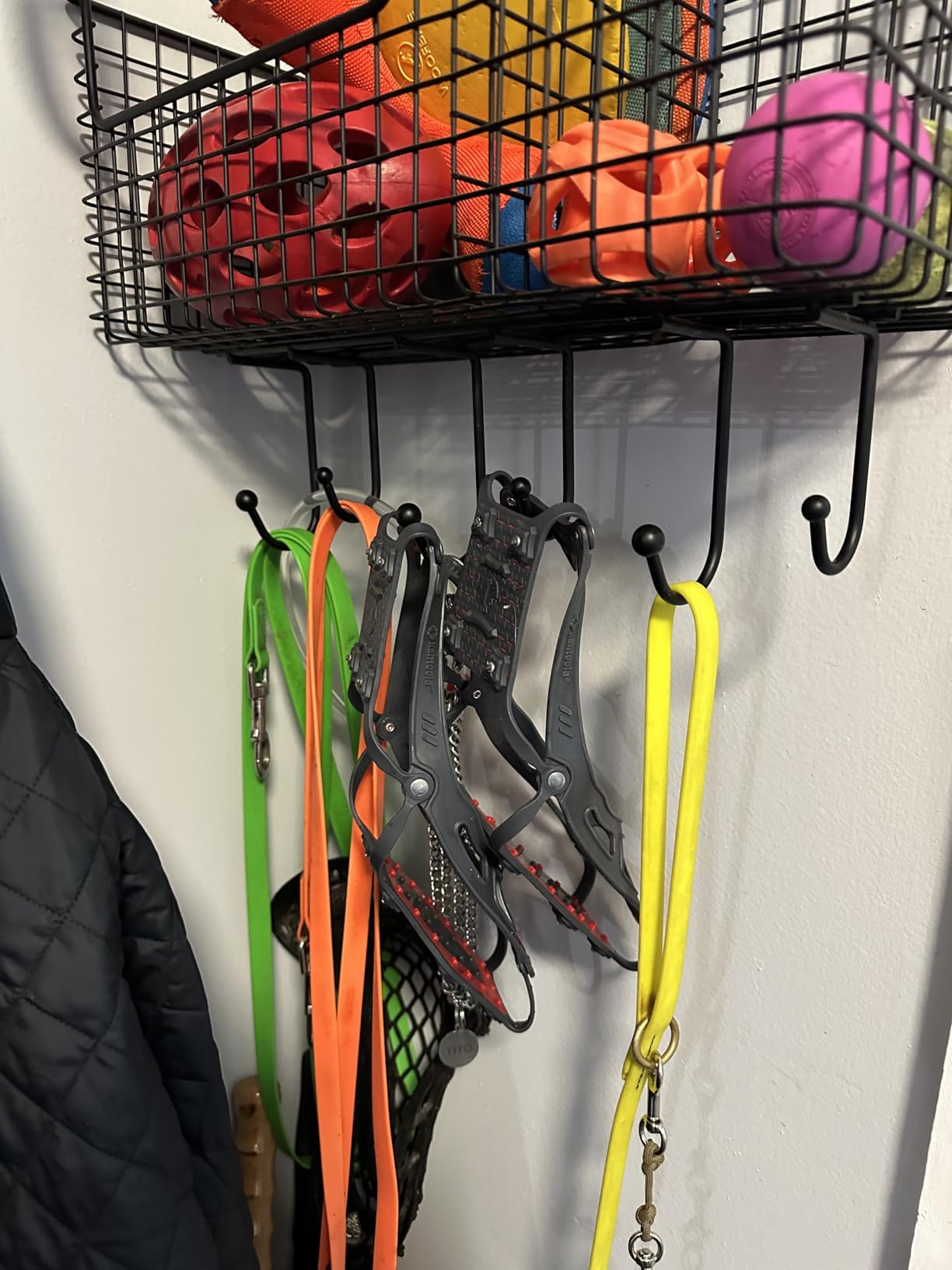
The Kahtoola NANOspikes V2 represents a refined approach for hunters who move fast and light. With 10 concave tungsten carbide spikes and a stepped lug design optimized for directional grip on ascents and descents, these excel when you are covering ground quickly. If your hunting style involves spot-and-stalk techniques requiring rapid movement over mixed terrain, the NANOspikes deserve consideration.
The low profile is immediately noticeable compared to bulkier crampons. Walking and running feel natural, without the clunky sensation some traction devices create. The redesigned heel tab makes on and off operation easier than previous versions, a welcome improvement when you are making frequent transitions between ice-covered and dry terrain during a hunt.
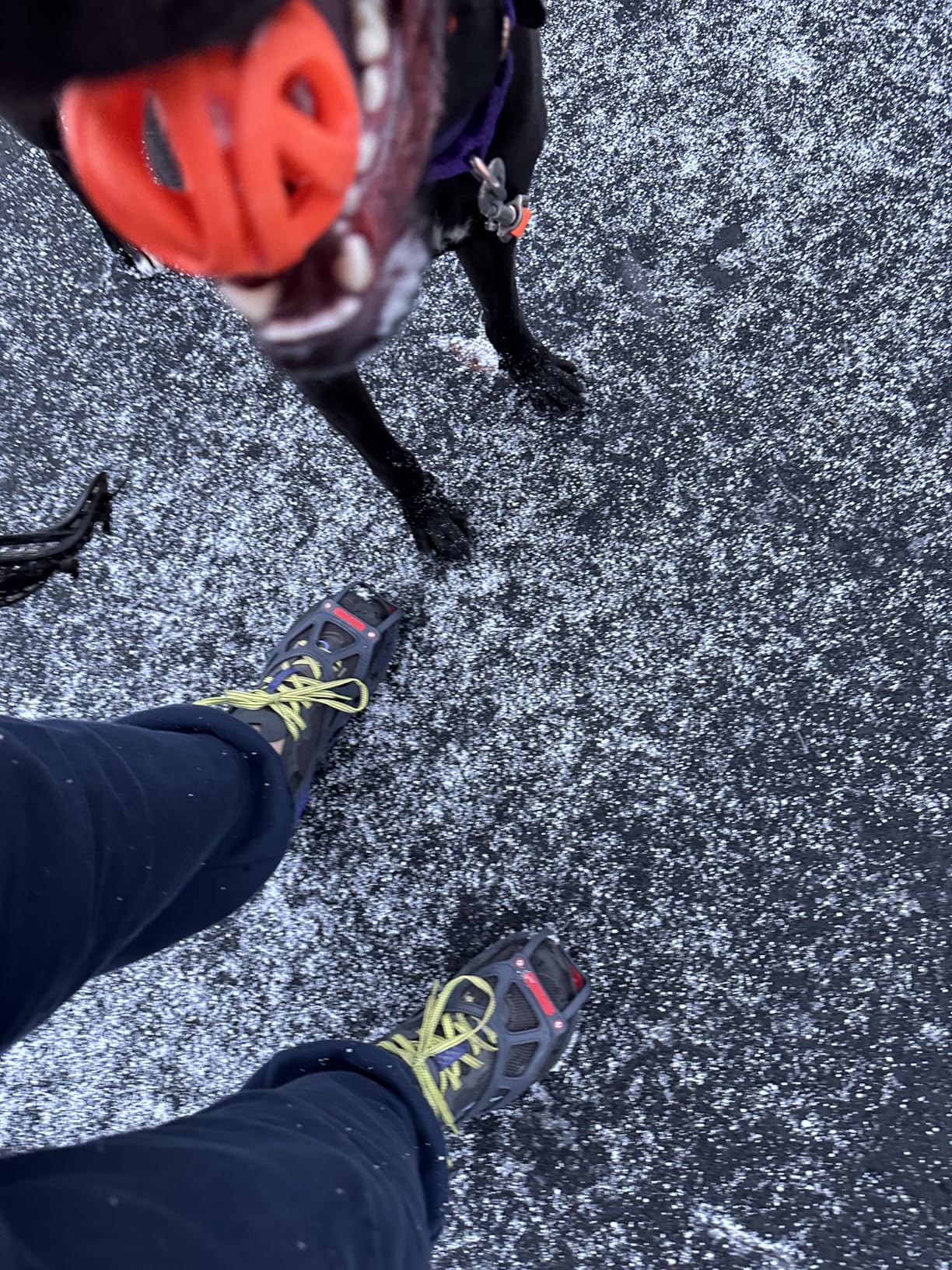
I tested these during a speed scouting trip where I covered 12 miles of mixed trails in a day. The NANOspikes stayed comfortable throughout, and I appreciated that they could handle brief stretches of dry pavement without completely destroying my footing or the surface. The stepped lug design genuinely helps on steep descents, providing braking traction when navigating down icy grades.
Sizing is the critical consideration here. I strongly recommend sizing up one full size from your normal boot size, especially for winter hunting boots with insulation. The large size fit my size 11 boots but was snug. The elastomer harness maintains Kahtoola’s standard of cold-weather flexibility down to -22°F.
For Whom It Is Good
Active hunters who move quickly over varied terrain will find the NANOspikes ideal. If you practice spot-and-stalk hunting, need to cover significant mileage during scouting, or want traction that does not impede your natural gait, these deliver. They are also excellent for hunters who do winter trail running as training for hunting season.
For Whom It Is Bad
Hunters facing extreme ice conditions or deep snow may want more aggressive options with higher spike counts and larger profiles. The NANOspikes prioritize mobility over maximum bite, which means they can slip on truly hard glare ice where MICROspikes or EXOspikes would hold. Additionally, the sizing quirks make them less ideal for sharing among hunting partners.
8. Yaktrax Traction Chains – Best Chain-Style Option
Yaktrax Traction Chains for Walking on Ice and Snow (1 Pair), Large , Black
TIG welded steel links
Square 90-degree edges
Low-profile ladder pattern
Natural rubber sling
Pros
- Durable TIG welded construction
- Square edges bite into ice effectively
- Low profile comfortable for walking
- Good on various terrains including concrete
- Affordable price point
Cons
- Can rust if not rinsed after use
- Sizing runs small
- Slippery on smooth indoor floors
- Chain links may break with heavy use
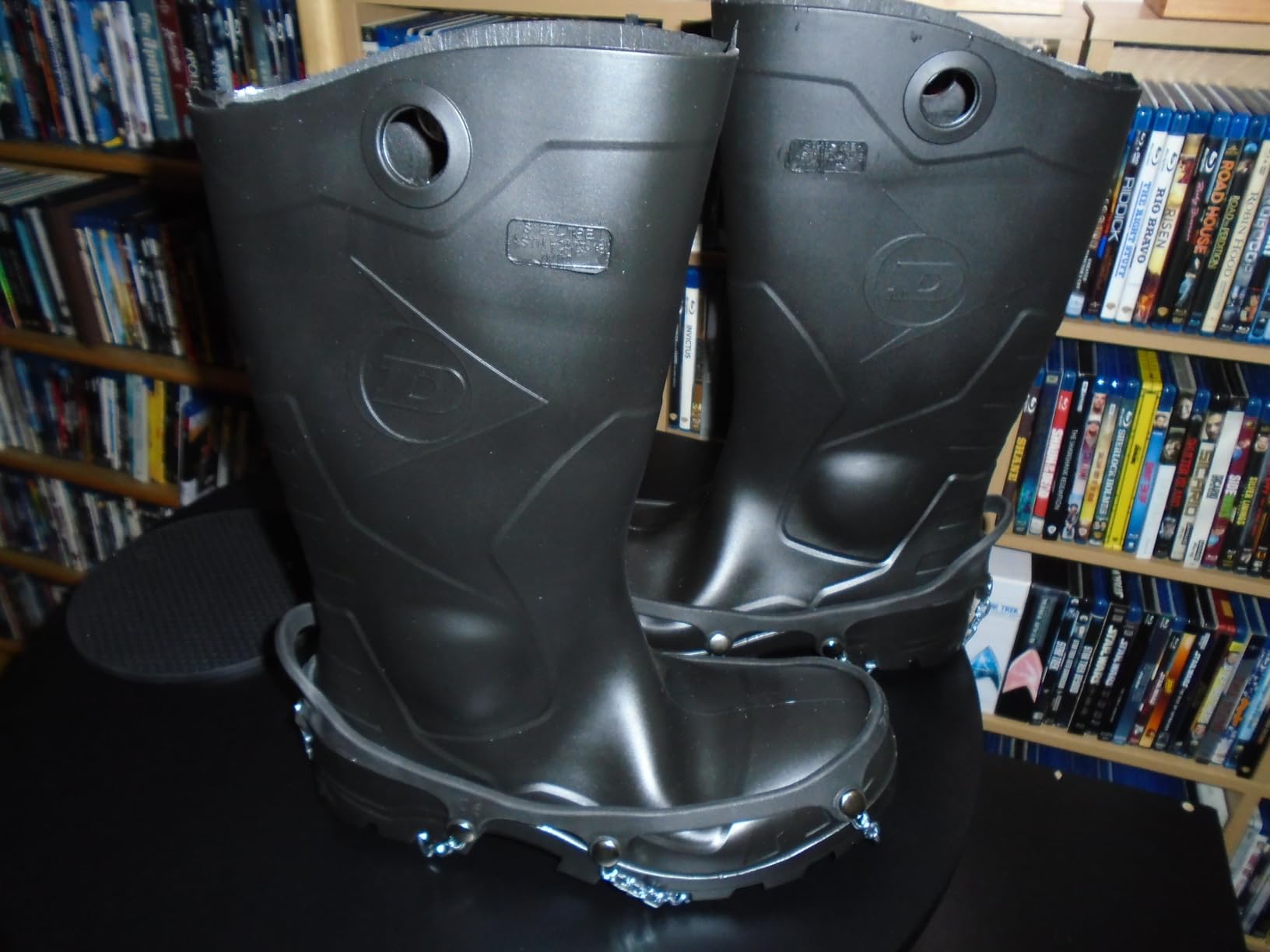
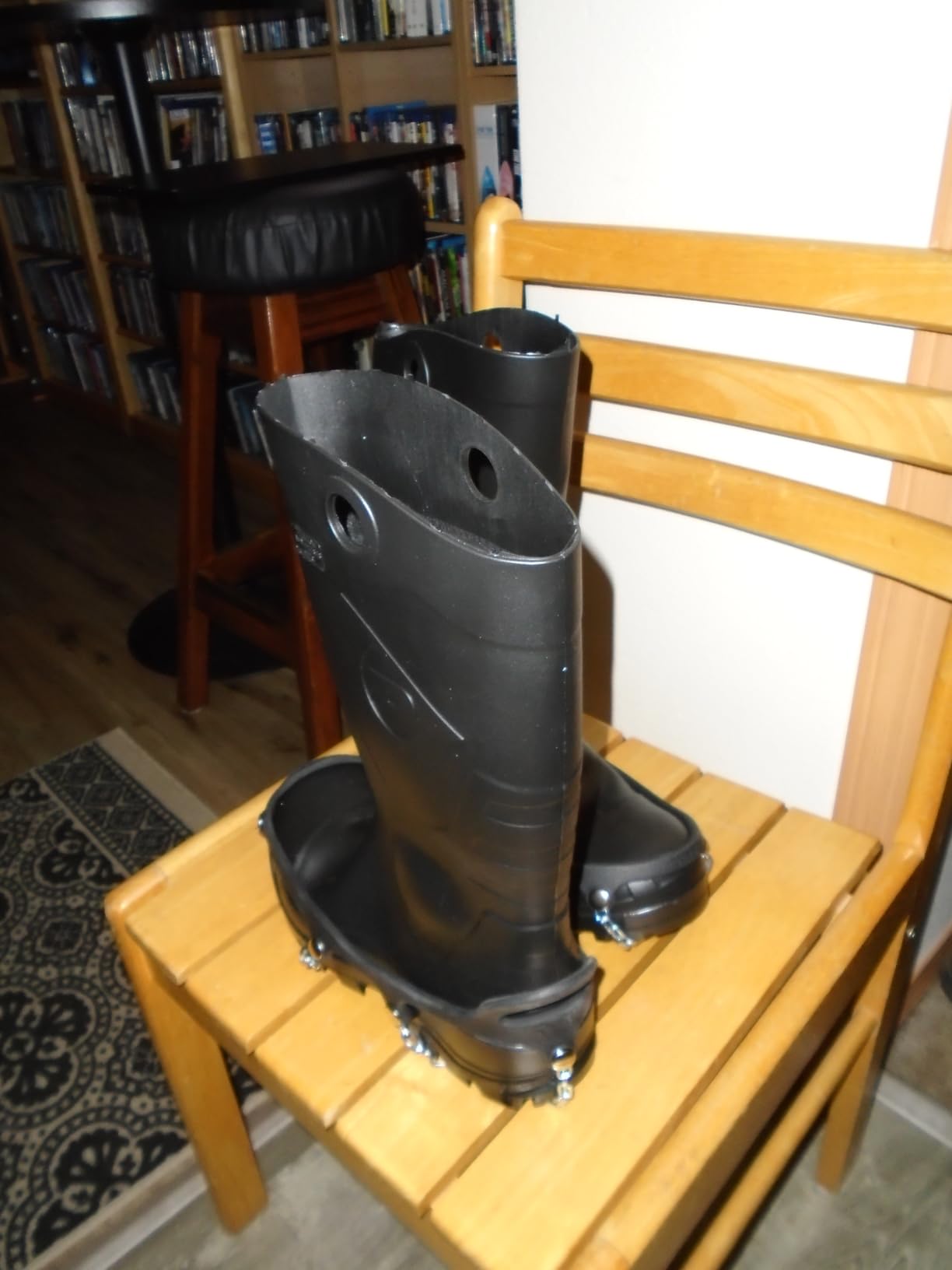
The Yaktrax Traction Chains offer a middle ground between coil-style cleats and aggressive spiked options. The TIG welded steel links with square 90-degree edges provide genuine bite into ice that round coils cannot match, while maintaining the durability and low profile that chain designs are known for. For hunters who want reliable traction without the aggressive spike profile of crampons, these are worth considering.
During a January waterfowl hunt that involved significant walking on frozen marsh edges and occasional concrete boat ramps, the Traction Chains proved their versatility. The ladder pattern design enhances heel-to-toe traction, helping on the slick wooden docks and icy gravel paths we navigated. The natural rubber sling remained elastic even in sub-zero morning temperatures.
What impressed me most was the longevity. Unlike cheaper chain options I have tried, the TIG welding on these links resists the stretching and breaking that plagues lower-quality alternatives. Multiple users report years of service with proper maintenance. The 90-day warranty provides some peace of mind for the initial purchase.
Maintenance is straightforward but essential: rinse these after exposure to road salt or marsh chemicals, and dry them before storage. The steel construction can rust if neglected, though this is primarily cosmetic and does not significantly affect performance. Sizing up is recommended, as these tend to run small compared to other Yaktrax products.
For Whom It Is Good
These suit hunters who need reliable traction across varied surfaces including occasional concrete, wood, or mixed terrain. If you hunt waterfowl, access frozen lakes for ice fishing, or want a single traction device for both hunting and general winter walking, the Traction Chains deliver. They are particularly good for hunters who find spiked options too aggressive for their typical conditions.
For Whom It Is Bad
Hunters facing steep terrain or hard glare ice should opt for spiked alternatives. The chain design, while effective on moderate ice and snow, simply cannot penetrate as aggressively as dedicated spikes. Additionally, if your hunting involves significant bare rock scrambling, the chains can catch and potentially break.
9. Tomaje 24 Spikes Crampons – Best Budget Aggressive Option
Tomaje 24 Spikes Crampons for Shoes, Anti Slip Ice Cleats for Shoes and Boots, Traction Ice Snow Grip with Stainless Steel Spikes and Silicone Men Women for Hiking, Walking, Climbing, Jogging,Fishing
24 stainless steel spikes
Double welding chain construction
Cold-resistant silicone
Adjustable straps included
Pros
- 24 spikes provide maximum grip coverage
- Double welded chains for durability
- Thick cold-resistant silicone
- Cold rated to -30C
- Very affordable under $20
Cons
- Velcro straps may not hold on wide boots
- Spikes may bend with heavy abuse
- Rubber may stretch over seasons
- Not for technical mountaineering
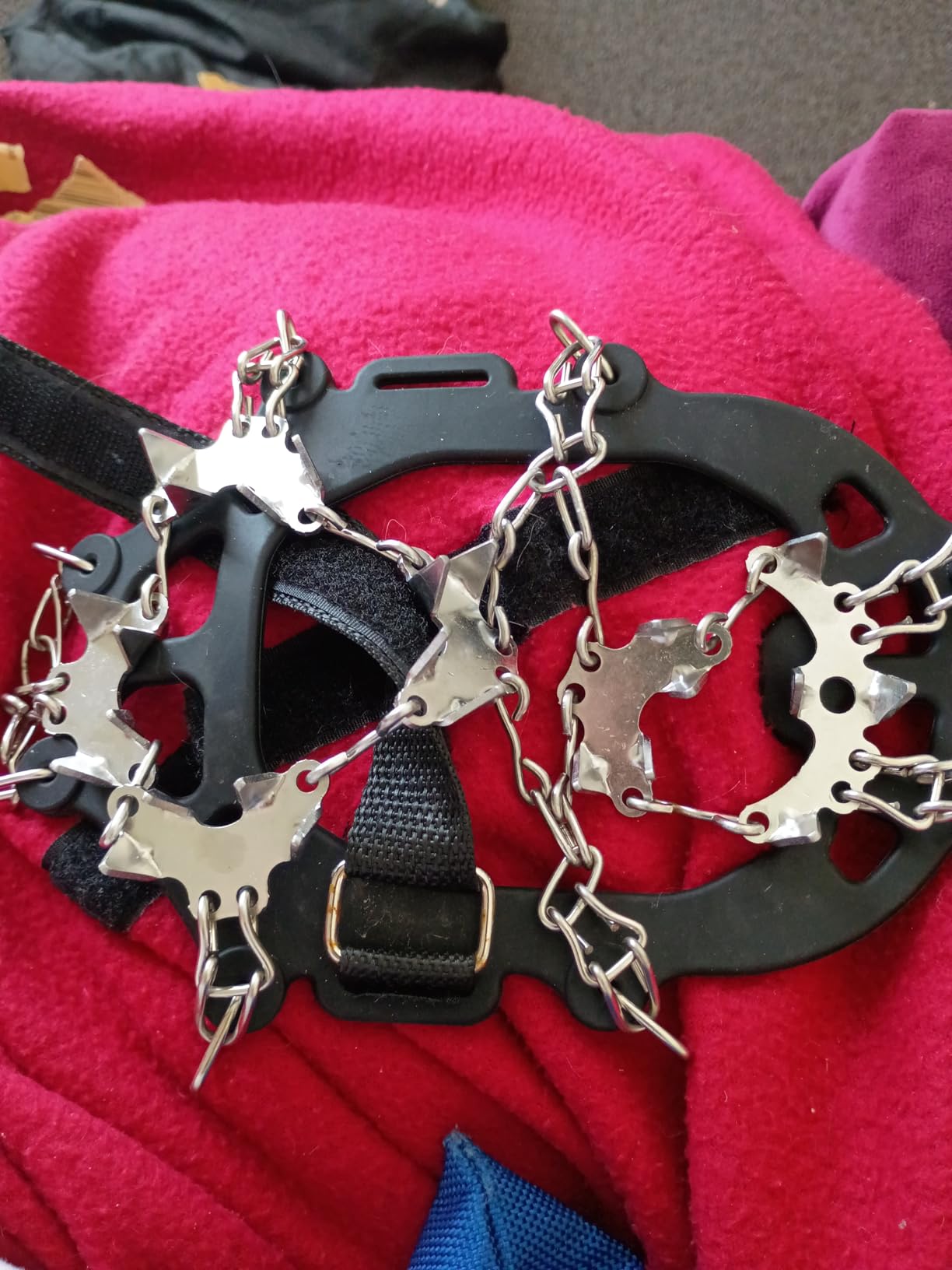
The Tomaje 24 Spikes Crampons deliver aggressive traction at a price point that makes them accessible to any hunter. With 24 stainless steel spikes per foot arranged in a double-welded chain system, these provide more contact points than nearly any competitor at double the price. For hunters who prioritize grip density over brand prestige, these are a standout option.
The thick cold-resistant silicone construction is noticeably more robust than typical budget alternatives. Rated to -30°C, the elastomer maintains flexibility in genuinely cold conditions. I used these on a February predator hunt where morning temperatures hit -15°F, and they remained pliable and secure on my insulated boots.
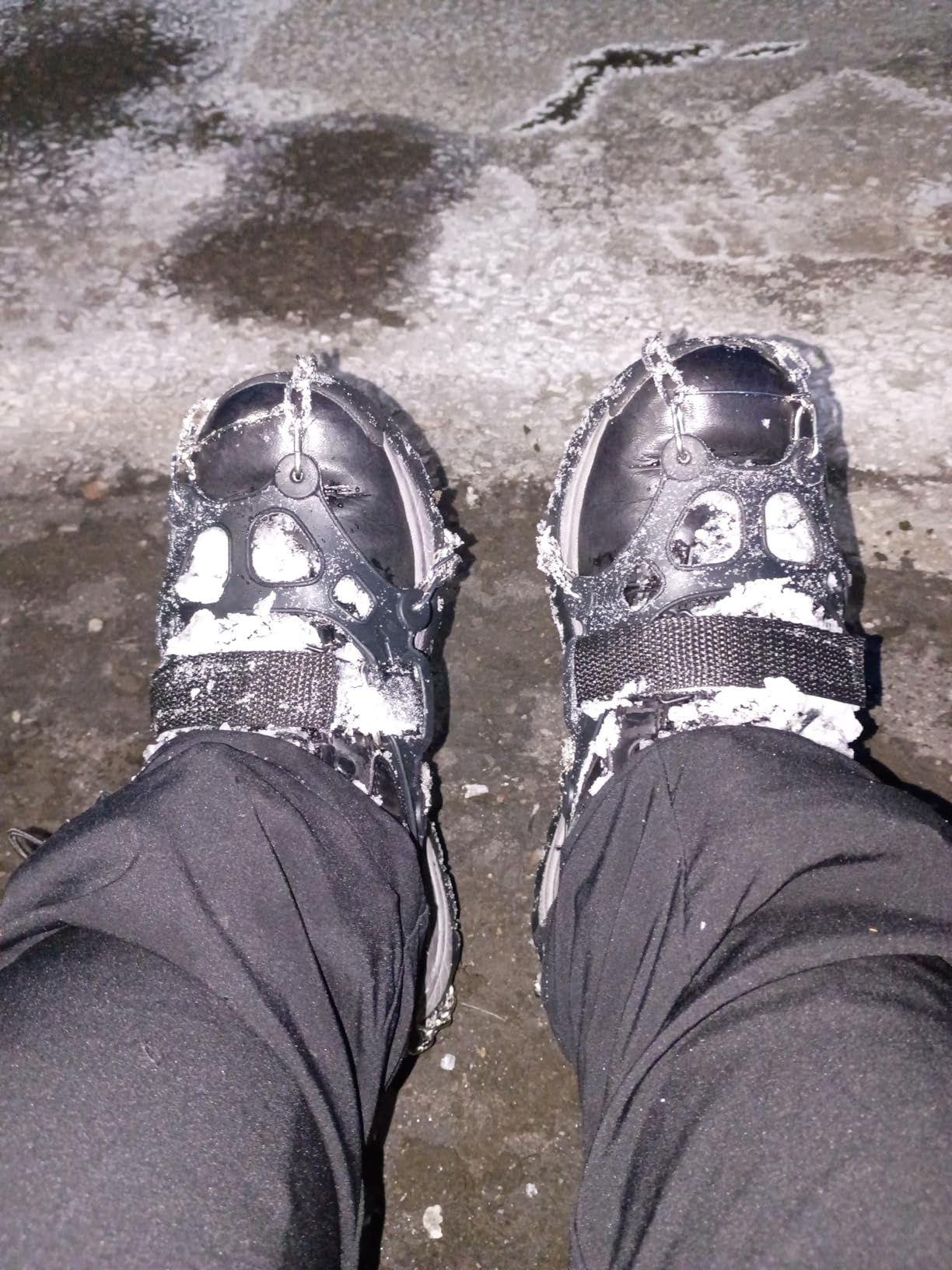
The included adjustable straps add a layer of security that budget crampons often lack. While I found the Velcro adequate for my hunting boots, hunters with very wide or unusually shaped boots may want to test the fit carefully. The 24-spike pattern provides edge-to-edge coverage that prevents the rocking sensation some cheaper designs create.
Portability is reasonable with the included storage bag. At 13.6 ounces, these are not ultralight but are comparable to other aggressive crampons. The 180-day warranty provides some protection, though at this price point, you are essentially getting a season or two of reliable use before expecting replacement.
For Whom It Is Good
Budget-conscious hunters who want maximum spike count and aggressive traction will find excellent value here. If you are new to ice cleats and want to test the concept without significant investment, or need backup pairs for hunting camp loaners, the Tomaje crampons deliver. They work well for ice fishing, moderate hiking, and general winter outdoor use.
For Whom It Is Bad
Hunters seeking premium durability for multi-season backcountry use should invest in higher-end options. While capable, the construction quality and materials do not match Kahtoola or Hillsound standards. Additionally, those with very large feet or non-standard boot shapes may find the fit less precise than premium alternatives.
10. Winter Walking Low-Pro – Best for Mixed Surface Transitions
Winter Walking Low-Pro Ice Cleat, Heavy-Duty Industrial Grade Traction Aid for Walking on Snow and Ice, Size X-Large (1 Pair)
26 permanent tungsten carbide studs
Dual elasticity design
Minimally exposed studs
Pull tabs for easy on/off
Pros
- Works on dry pavement without slipping
- 26 tungsten carbide studs very durable
- Industrial grade construction
- Easy on with pull tabs
- Stays securely on footwear
Cons
- May shift after long walks
- No left/right specific design
- Heels may hurt on long distances
- Not ideal for extended hiking
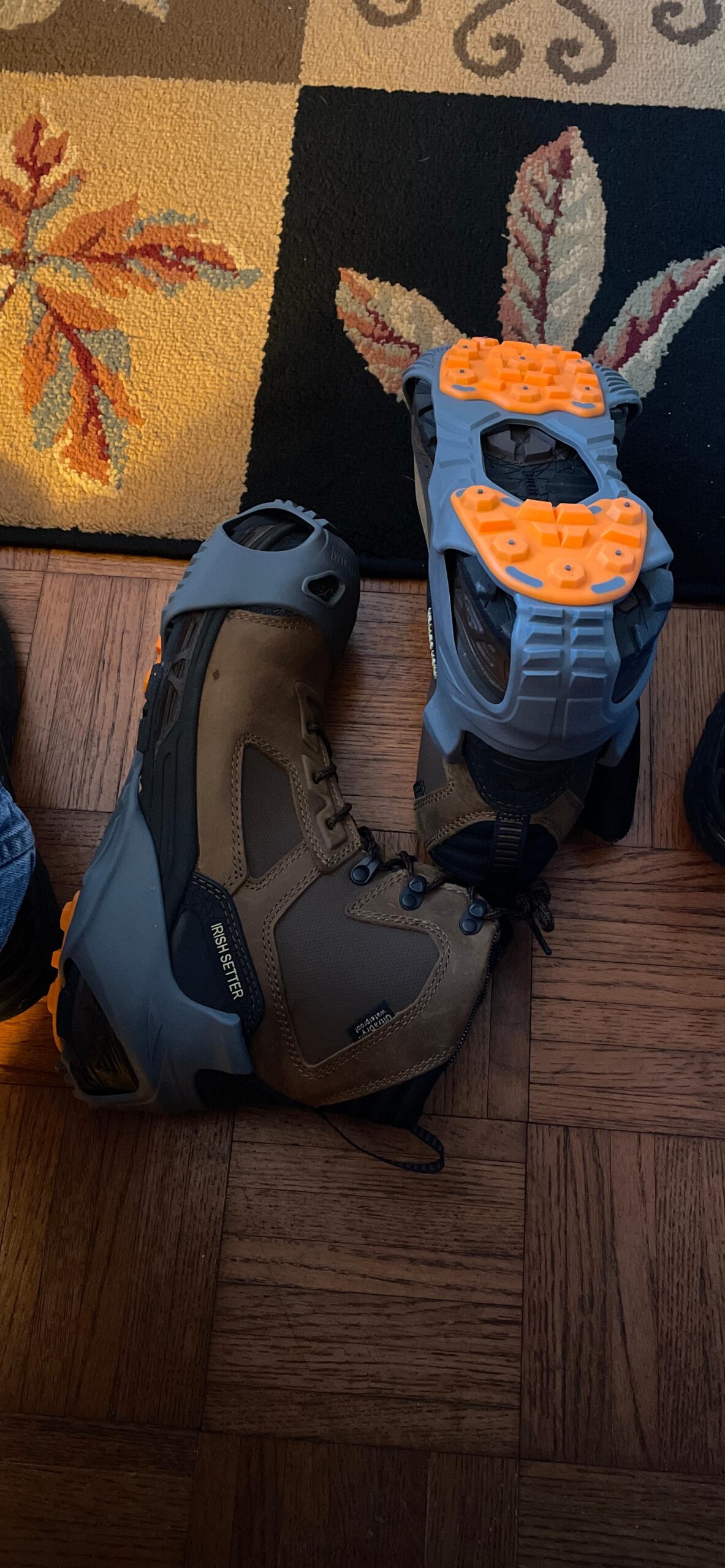
The Winter Walking Low-Pro takes a different approach than most hunting-focused traction devices. With 26 minimally exposed tungsten carbide studs and a dual elasticity design, these prioritize transitional traction: the ability to work on ice, snow, and dry pavement without constant removal. For hunters who navigate parking lots, gravel roads, and frozen terrain in a single outing, this versatility is valuable.
The patent-pending dual elasticity system puts maximum stretch in the upper portion for easy on and off, while reducing elasticity in the sole for abrasion resistance. This engineering shows in real use: these are genuinely easier to pull onto bulky boots than competitors, while maintaining a secure fit during use. The pull tabs are well-positioned for gloved hands.
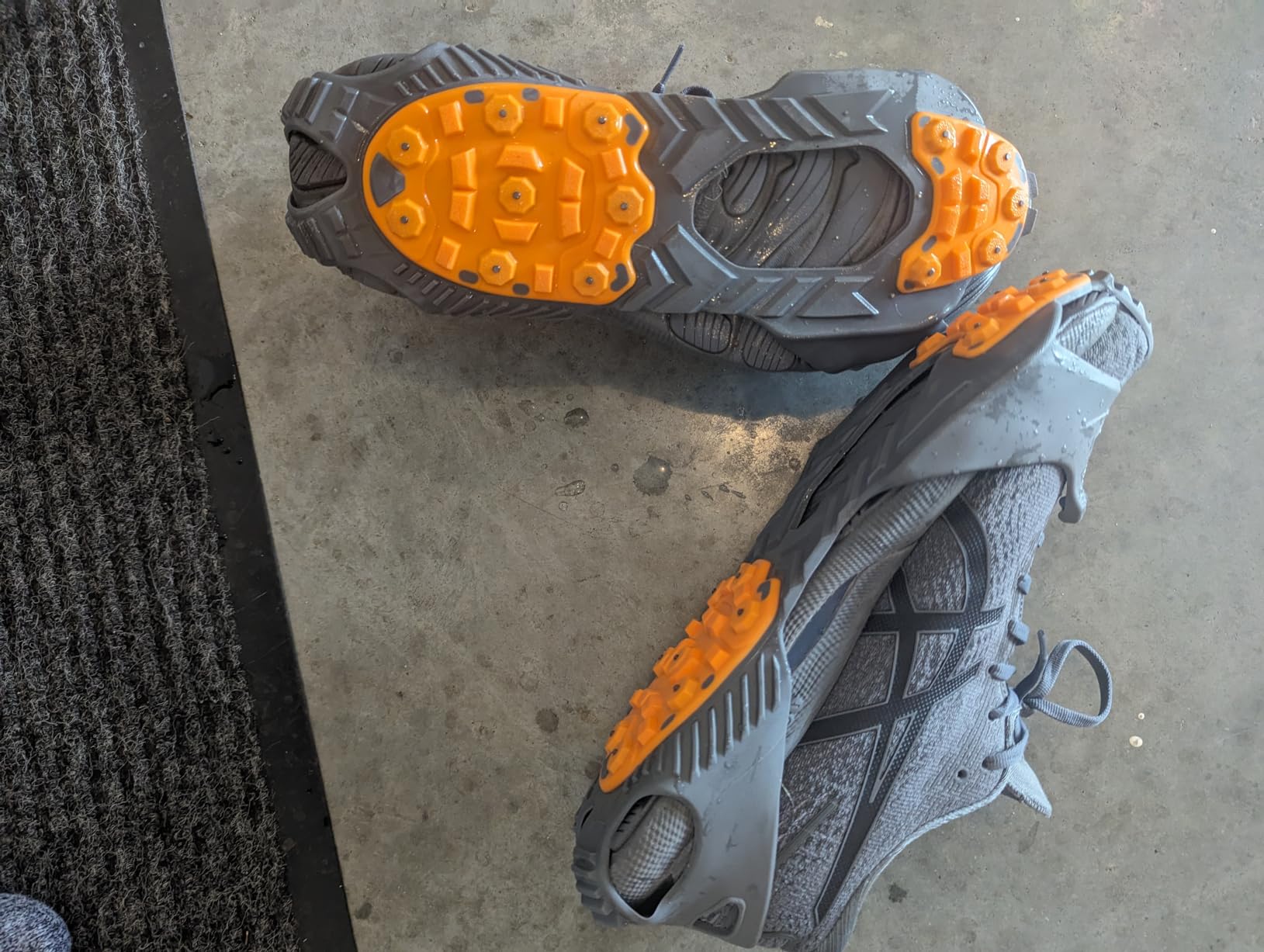
During a late-season deer hunt that involved alternating between frozen fields, gravel farm roads, and barn concrete, I appreciated not needing to constantly remove and replace my cleats. The minimally exposed studs provide enough bite for moderate ice while not destroying dry pavement. This is a genuine advantage for hunters who cannot easily stop to change gear between terrain types.
However, the compromise shows on longer walks. After 6 miles, I noticed some shifting on my boots and mild discomfort in my heels. The design lacks the aggressive bite of deeper spikes for truly challenging ice. Think of these as capable all-rounders rather than specialized ice climbing gear.
For Whom It Is Good
Hunters who frequently transition between ice/snow and bare pavement or gravel will find the Low-Pro design genuinely useful. If you access hunting areas via maintained roads, hunt farms with mixed terrain, or need traction for short walks where frequent stops are impractical, these deliver unique versatility. The industrial-grade construction also appeals to hunters who prioritize durability.
For Whom It Is Bad
Serious backcountry hunters facing steep, icy terrain or deep snow should choose more aggressive alternatives. The Low-Pro studs simply cannot match the penetration of larger spikes on challenging surfaces. Additionally, hunters planning extended hikes over 5 miles may find the comfort level insufficient compared to dedicated hiking crampons.
How to Choose Ice Cleats for Hunting Boots In 2026?
Selecting the right ice cleats for your hunting needs requires understanding several key factors. After years of trial and error, I have learned that the wrong choice can mean the difference between a successful hunt and a dangerous slip. Here is what to consider when making your decision.
Traction Type and Spike Design
The most fundamental decision is between coil-style, chain-style, and spike-style traction. Coil designs like the Yaktrax Walk offer 360-degree traction on packed snow and light ice, making them suitable for moderate conditions and flat terrain. They are quiet and will not damage indoor floors, but they struggle on hard glare ice.
Chain-style options like the Yaktrax Traction Chains provide better bite than coils through their square-edged links, handling moderate ice and mixed terrain well. They strike a balance between aggression and versatility, working on various surfaces without extreme noise or floor damage.
Spike-style crampons including the Kahtoola MICROspikes and Hillsound Trail Crampon deliver maximum bite through tungsten carbide or stainless steel spikes that penetrate hard ice. These excel on steep terrain and challenging conditions but create noise on bare surfaces and cannot be worn indoors.
Boot Compatibility and Sizing
This is where many hunters make costly mistakes. Standard ice cleats are designed for typical hiking shoes and may not accommodate the bulk of insulated hunting boots or rubber boots like Muck Boots. From my research and forum discussions, big boot compatibility is the most common pain point hunters face.
Most quality brands offer sizing charts, but for hunting boots, always size up. If you wear a size 11 boot normally, order the size designed for 11-13 rather than the 9-11 range. The elastomer harness needs to stretch over insulation and thick soles without straining. For very large rubber boots, consider the Kahtoola MICROspikes or Hillsound Trail Crampon, which tend to accommodate bulk better than budget options.
Some hunters also use heated insoles for extended winter hunts alongside their cleats for complete cold weather foot protection.
Durability and Materials
Hunting puts traction devices through more abuse than typical urban walking. Look for heat-treated or TIG welded stainless steel components that resist corrosion and fatigue. The elastomer harness material should be specifically rated for cold temperatures, ideally to -22°F or lower. Cheap rubber compounds become brittle and crack in freezing conditions.
Tungsten carbide spikes offer superior durability compared to standard steel, maintaining their edge through seasons of rocky terrain use. However, they come at a premium price. For occasional hunters, stainless steel spikes provide adequate longevity at lower cost.
Ease of Use in the Field
At 5 AM in freezing darkness, complicated gear becomes frustrating gear. Look for designs with heel tabs and toe bails that allow easy on and off while wearing gloves. The ability to quickly attach and remove cleats matters when conditions change during a hunt.
Packability is another consideration for backcountry hunters. Compact designs that fit in a jacket pocket or small pack compartment are preferable to bulky options requiring dedicated storage space. The Kahtoola MICROspikes excel here with their 5 x 3 x 2 inch pack size.
Noise and Stealth Considerations
One factor rarely discussed in generic ice cleat reviews but critically important to hunters is noise. All spike-style cleats create metallic clicking on bare rock and pavement. This sound can spook game from surprising distances. Plan your approach accordingly, carrying cleats until you reach snowy or icy terrain, or choosing coil-style options for hunts requiring silent movement over intermittent surfaces.
Chain-style options split the difference, quieter than spikes but louder than coils. Some hunters coat chains with rubberized coatings to dampen sound, though this reduces traction slightly. For the stealthiest option in mixed terrain, the Yaktrax Walk coils create minimal noise.
Frequently Asked Questions
What are the best ice cleats for boots?
The best ice cleats for boots depend on your specific use case. For hunting boots, the Kahtoola MICROspikes consistently rank as the top choice for serious backcountry use due to their 12 stainless steel spikes and durable elastomer harness. For budget-conscious hunters, the Yaktrax Walk offers excellent value with 360-degree coil traction. For big hunting boots specifically, the Hillsound Trail Crampon provides superior fit and aggressive traction with its carbon steel spike plate system.
Do ice cleats really work?
Yes, ice cleats work by providing mechanical traction through metal spikes or coils that bite into ice and packed snow, far exceeding the grip of rubber boot soles alone. Field testing and user reports confirm they significantly reduce slip risk on frozen terrain. Tungsten carbide and stainless steel spikes penetrate hard ice effectively, while coil designs provide adequate grip on packed snow and moderate ice conditions.
How to make boots more grippy on ice?
To make boots more grippy on ice, attach dedicated ice cleats or traction devices. Choose spike-style crampons for hard glare ice and steep terrain, coil-style cleats for packed snow and flat conditions, or chain-style for mixed terrain. Ensure proper sizing for your boot type, particularly for large insulated hunting boots. Remove and dry cleats after use to prevent rust and maintain performance.
Is there anything better than Yaktrax?
For serious hunting and backcountry use, spike-style alternatives like Kahtoola MICROspikes and Hillsound Trail Crampons outperform Yaktrax coil designs on hard ice and steep terrain. However, Yaktrax remains competitive for flat, packed snow conditions and urban use. The choice depends on your terrain: Kahtoola and Hillsound excel on aggressive ice and slopes, while Yaktrax offers superior versatility on mixed surfaces and indoor transitions.
Do ice cleats fit big hunting boots?
Many ice cleats fit big hunting boots, but sizing up is essential. Look for options specifically designed for larger footwear like the Kahtoola MICROspikes or Hillsound Trail Crampon, which accommodate bulkier insulated and rubber boots better than budget alternatives. Always check manufacturer sizing charts and consider ordering one size larger than your normal shoe size when wearing thick hunting boots. Some models include adjustable straps for additional security on oversized boots.
Final Thoughts
Choosing the best ice cleats for hunting boots comes down to matching the right traction device to your specific hunting style and terrain. After testing these options across multiple seasons and conditions, I can confidently recommend the Kahtoola MICROspikes as the top all-around choice for serious hunters who need reliable performance in challenging backcountry conditions.
For those just starting with winter traction or hunting on a budget, the Yaktrax Walk and Cimkiz Crampons provide excellent entry points without breaking the bank. Hunters with particularly large boots or aggressive terrain should consider the Hillsound Trail Crampon for its superior fit and bite.
Remember that no single product is perfect for every scenario. Many experienced hunters own multiple pairs: lightweight coils for quick hunts on flat terrain, and aggressive spikes for mountain adventures. Consider your most common hunting conditions and invest accordingly.
Winter hunting presents enough challenges without worrying about your footing. The right ice cleats let you focus on the hunt rather than your next step. Stay safe out there, and may your 2026 winter hunting season be filled with secure footing and successful pursuits. For more winter outdoor gear recommendations, check our winter outdoor gift guides for additional cold weather essentials.