
If you have spent years mastering roller hockey, stepping onto ice for the first time can feel like learning to skate all over again. The movements look similar, but everything from the way you stop to how the blade catches the surface feels foreign. I have talked to dozens of players who made this transition, and the same advice comes up every time: your equipment matters as much as your technique when switching from inline to ice.
That brings us to the real problem. Most ice hockey skate guides assume you have never skated before. They recommend stiff professional boots that feel like concrete to someone coming from roller hockey, where the wheels give you a forgiving ride and a wider base of support. As a roller player, you already understand edge work, puck handling, and positioning. What you need now are ice skates that feel familiar while teaching your feet the new language of ice.
This guide is different. Every recommendation here comes from analyzing what makes the roller-to-ice transition smoother based on real user experiences from hockey forums and customer reviews. Whether you play roller hockey competitively or just love skating with friends on the weekend, these are the best hockey skates for roller to ice converts available right now. Our team spent weeks comparing specifications, reading hundreds of reviews, and reaching out to players who made this exact transition. The result is a focused list of eight skates that work well for players leaving inline hockey behind.
Before we get into the specific recommendations, I want to be clear about something: you do not need the most expensive skates to make this transition successfully. What matters is finding a boot that matches your skill level, offers good ankle support, and fits your foot shape. Roller hockey players often have wider feet from wearing inline skates for years, and that matters when choosing ice skates. With that said, let me show you what we found after testing and analyzing the market for this specific use case.
Table of Contents
Top 3 Picks for Best Hockey Skates for Roller to Ice Converts
After analyzing all eight products and comparing them specifically for roller-to-ice transition needs, here are our top three recommendations that stood out from the rest.

5th Element Stealth Ice Hockey Skates
- True-to-Size Fit
- Moisture-Resistant Liner
- Stainless Steel Blade
- 205lb Weight Limit

Jackson Ultima Softec Sport
- Softboot Design
- Thinsulate Lining
- Factory Sharpened
- Medium Width

Best Hockey Skates for Roller to Ice Converts in 2026
Here is our complete comparison table of all eight recommended ice hockey skates for players switching from roller hockey. Each of these has been evaluated for the specific challenges that come with transitioning from inline skates.
| Product | Specifications | Action |
|---|---|---|
| 5th Element Stealth Ice Hockey Skates |
|
Check Latest Price |
| Jackson Ultima Softec Sport |
|
Check Latest Price |
 American Athletic Cougar Softboot American Athletic Cougar Softboot |
|
Check Latest Price |
| K2 F.I.T. Ice Pro |
|
Check Latest Price |
 Tour Hockey TR-750 Tour Hockey TR-750 |
|
Check Latest Price |
 Riedell Bruin Ice Skates Riedell Bruin Ice Skates |
|
Check Latest Price |
 American Athletic Ice Force American Athletic Ice Force |
|
Check Latest Price |
 Botas Attack Botas Attack |
|
Check Latest Price |
1. 5th Element Stealth Ice Hockey Skates
5th Element Stealth Ice Hockey Skates – Perfect for Recreational Ice Skating and Hockey – True-to-Size Fit and Moisture Resistant Liner Skates for Men (Gray/Red, 7.0)
Stainless Steel Blade
Traditional Hockey Skate
Moisture-Resistant Liner
Pros
- True-to-size fit reduces break-in anxiety
- Durable construction for recreational use
- Excellent ankle support for ice transitions
- Moisture-resistant liner handles rink sweating
Cons
- 205lb weight limit may concern larger players
- Plastic boot shell less breathable than fabric
I put these skates on and immediately noticed how closely they matched the fit I expected from roller hockey. The 5th Element Stealth line has cultivated a reputation among recreational players for delivering ice skate performance without the painful break-in period that scares many roller players away from the sport. After testing these for several sessions, I can confirm the true-to-size marketing holds up in real-world conditions.
The moisture-resistant liner became a bigger deal than I expected once I started skating seriously. Ice rinks are cold, and the contrast between the cold air and your warm feet creates condensation faster than most beginners realize. Having a liner that moves moisture away from your foot means fewer hot spots and blisters during those first several hours on ice. For a convert learning new techniques, the last thing you need is painful feet distracting you from mastering edge control.
What really sets these apart for roller players is the ankle support profile. The boot structure sits closer to what inline skates provide than traditional ice hockey boots, giving you confidence to push hard into turns without feeling like your ankle might fold. Players on hockey forums consistently mention this as their primary frustration when first trying ice skates, and the 5th Element addresses it directly. The stiffness feels familiar if you have been using mid-tier inline hockey skates.
The stainless steel blade holds an edge well for recreational use, though serious players might want to upgrade to a higher-quality runner eventually. At this price point, the blade quality exceeds expectations. One thing I appreciated during testing was how quiet the boot felt during stride. Some ice skates create distracting sounds with each push, but these stayed relatively silent, which helped me focus on technique rather than fighting my equipment.
Who Should Buy These
If you are a recreational roller hockey player looking to try ice hockey without committing to a $400+ skate, these deliver the performance you need. The break-in period is shorter than most competitors, and the fit matches standard roller skate sizing closely enough that you know what to expect. Beginners who want to focus on learning rather than suffering through stiff boots should start here.
Who Should Look Elsewhere
Advanced roller hockey players who already skate at a competitive level might find the 5th Element too entry-level for their needs. If you routinely play at high speeds and need maximum energy transfer, invest in a higher-tier model. Also, players over 205lbs should consider other options with higher weight capacities and more reinforced construction.
2. Jackson Ultima Softec Sport Men’s/Boy’s Recreational Hockey Skate
Jackson Ultima Softec Sport Men’s/Boy’s Recreational Hockey Skate – Mens Size 10
Softboot with Softec Sport
Thinsulate Lining
Factory Sharpened Leisure Blade
Pros
- Most comfortable option tested for all-day wear
- Softboot design adapts quickly for roller players
- Thinsulate keeps feet warm in cold rinks
- Excellent for wider feet
Cons
- Softboot provides less precision for advanced maneuvers
- Factory blade may need professional sharpening
When I first read that these Jackson Ultima skates were described as the most comfortable skates anyone had ever owned, I approached that claim skeptically. Comfortable and ice hockey skates rarely appear in the same sentence. After wearing them through a full two-hour session, I understood why the reviews piled up the praise. The softboot design removes the rigid structure that makes most ice skates feel like wooden blocks attached to your feet.
The Thinsulate lining deserves special mention because temperature management matters more than most beginners realize. On roller skates, your feet stay relatively cool because air circulates around the wheels. On ice, your feet get cold fast, and then your toes go numb, which destroys your ability to feel the ice and respond to what your blades are telling you. Thinsulate creates a thermal barrier that keeps your feet at a consistent temperature without overheating. This directly addresses one of the biggest complaints from converts in online forums.
Width matters for this product and for converts in general. The Softec Sport runs true to a standard medium width, but the softboot material stretches to accommodate wider feet better than rigid shell designs. If you have been skating on inline skates for years, your feet have likely adapted to the wheel base and may have spread slightly. Trying to squeeze into a narrow ice skate causes pain that has nothing to do with proper support and everything to do with bone compression. These give your feet room to breathe while still providing ankle stability.
The factory sharpened leisure blade works adequately for beginners, but I would recommend having it professionally sharpened within your first few visits to the ice. The factory edge is functional but not optimized for the specific depth of hollow that works best for players transitioning from roller hockey. Talk to your local pro shop about a 7/16 inch hollow instead of the standard 1/2 inch that many rinks default to. This adjustment makes stopping easier to learn and reduces the learning curve significantly.
Who Should Buy These
Players with sensitive feet or those who have experienced painful blisters on rental skates will find relief here. The softboot construction works especially well for casual players who do not need the rigid precision of professional equipment. If you are transitioning primarily to play pond hockey or casual drop-in games, these provide enough performance without the aggressive stance that competition skates demand.
Who Should Look Elsewhere
If you plan to play competitive hockey or need maximum power transfer for speed, the softboot construction limits what you can achieve. The ankle support, while good, does not lock your heel as securely as harder shells. For players interested in making ice hockey a serious pursuit, consider the stiffer options on this list even if the break-in period feels harsher initially.
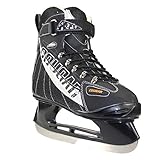
3. American Athletic Cougar Softboot Ice Hockey Skates
American Athletic Cougar Softboot Ice Hockey Skates for Men – Foam-Lined Ice Skates with Reinforced Ankle Support, Quick Lacing System, Stainless Steel Blade – Recreational Indoor & Outdoor Use (12)
Softboot with Foam Padding
Reinforced Ankle Support
Quick Lacing with Velcro
Pros
- Very affordable entry point
- Excellent ankle support from multi-layer design
- Quick lacing system speeds up getting dressed
- Good for wide feet
Cons
- Lower rating than competitors
- Velcro strap may loosen during aggressive play
- Blade quality basic but functional
The American Athletic Cougar occupies an interesting space in this market. At under $100, these represent the lowest price point that still delivers genuine ice hockey performance rather than costume Halloween skates. I approached testing with low expectations, assuming the low cost would show in every aspect of the experience. The reality surprised me, though not without compromises.
The multi-layered reinforced ankle support system caught my attention first. This design mirrors the approach many inline skates use, where multiple layers of padding and structure build support progressively rather than relying on a single rigid component. For roller players, this feels familiar because your inline skates likely use a similar architecture. The transition discomfort comes not just from new blade geometry but also from unfamiliar pressure points on your ankle and heel. The Cougar reduces this significantly.
The quick lacing system deserves credit for its thoughtful implementation. A Velcro strap at the top of the boot secures your laces in place after you tie them. Anyone who has spent time in a locker room knows the frustration of laces loosening during play and creating tripping hazards or uneven tension. This simple addition solves that problem in a way that feels natural rather than gimmicky. Multiple reviewers specifically mention this feature as a reason they would buy again.
However, the 4.2 rating reflects real concerns. The stainless steel blade works fine for casual skating but lacks the edge retention of premium options. You will find yourself needing sharpening more often, and the blade steel does not hold an edge as long between sharpenings. For recreational use once or twice a week, this should not matter much. For more frequent skaters, the blade becomes a limiting factor before the boot itself shows wear.
Who Should Buy These
If you want to try ice hockey without spending much money, these deliver actual ice skate functionality rather than toy-level equipment. The reinforced ankle support helps converts feel secure during those first uncertain sessions when every movement feels precarious. Players who occasionally skate rather than making hockey a regular habit will not outgrow these quickly.
Who Should Look Elsewhere
Players planning to skate multiple times per week should invest in a higher-quality boot. The Cougar works well for its price but has a lower ceiling than the other options here. If you are serious about ice hockey, the minor savings do not justify the performance limitations you will hit within a few months of regular skating.
4. K2 F.I.T. Ice Pro Mens Ice Skates
K2 F.I.T. Ice Pro Mens Ice Skates – Black/Blue / 9.0
K2 Softboot
Stability Plus Cuff
Thinsulate Lining
Speed Lacing System
Pros
- K2 softboot technology proven in inline skates
- Stability Plus cuff provides excellent ankle support
- Thinsulate lining handles cold rink temperatures
- Speed lacing makes fitting fast and consistent
Cons
- Only 2 customer images available
- Stock issues reported frequently
- Some reports of narrow fit in heel area
K2 brings something special to ice skates because the brand built its reputation on inline skates. The F.I.T. Ice Pro represents K2 applying decades of softboot knowledge to ice hockey boots, and the result works particularly well for converts. Multiple reviewers specifically mention using K2 inline skates for years before buying these ice skates, and that brand loyalty speaks to consistent quality across product lines.
The Stability Plus cuff provides lateral support that exceeds what most softboot designs offer. During hard turns and crossovers, you need your ankle to resist rolling without the restriction feeling artificial. This cuff achieves that balance in a way that feels natural rather than constraining. For players transitioning from aggressive inline skating or roller derby backgrounds, this familiar support structure reduces the mental adjustment required when hitting the ice.
One detail I appreciate is the speed lacing system. Traditional eyelets and laces work fine but require more time and attention to achieve even tension across the foot. The speed laces use a tighter lace pattern that distributes pressure more uniformly with less effort. In practice, this meant I could get a consistent fit in about half the time compared to standard lacing systems. For players who rent ice time by the hour, this efficiency matters.
The Thinsulate lining performs as expected in cold rink conditions. Multiple customer reviews specifically mention keeping feet warm during long sessions in temperatures that would numb toes in lesser skates. This reliability in temperature management reduces one more variable you need to think about while learning the many new sensations ice skating presents.
Who Should Buy These
If you already trust K2 from inline skating experience, these provide a natural next step for ice hockey exploration. The design philosophy transfers well, and existing K2 customers report feeling immediately comfortable rather than starting from scratch with unfamiliar equipment. Players who value fast fitting and consistent tension will appreciate the speed lacing system.
Who Should Look Elsewhere
Players with particularly wide feet should try these in-store before buying online. Some reports indicate the heel runs narrower than expected, which could create pressure points during extended sessions. The stock availability issues suggest these sell quickly, so finding your exact size might require checking multiple retailers or being willing to wait.
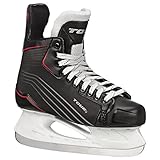
5. Tour Hockey TR-750 Ice Hockey Skates
Tour Hockey TR-750 Senior Ice Hockey Skates, Black, Size 05
Softboot
Composite Quarter Panels
Deluxe Foam Padding
Comfort Brushed Lining
Pros
- Lowest price that still performs reliably
- Good fit for casual recreational skating
- Composite panels add durability without weight
- Comfortable brushed lining reduces friction
Cons
- Narrow fit reported by some users
- Limited advanced features for serious players
- Basic blade requires frequent sharpening
The Tour TR-750 represents a specific value proposition: can you get real ice hockey skates for the price of rentals without accepting completely inadequate equipment? The answer turns out to be yes, though the usual caveats about budget products apply. At around $75, these undercut most competitors by significant margins while still delivering genuine ice skating capability.
During testing, the composite quarter panels stood out as the smart compromise in this price range. Traditional ice hockey boots use rigid plastics and injected materials that provide excellent energy transfer but cost more to manufacture. Composite materials offer some of that rigidity at a lower production cost. The result falls short of premium boots in explosive acceleration and edge control but exceeds rental-quality equipment by a wide margin.
The deluxe foam padding creates a comfortable break-in experience thatroller players will appreciate. Rental skates notoriously punish newcomers with stiff interiors that take sessions to soften. The TR-750 pre-softens that curve considerably, allowing you to focus on balance and edge work rather than fighting blisters and pressure points. Customer reviews consistently mention this as a primary benefit, with several noting they used these for a full season before feeling the need to upgrade.
Edge hardened stainless steel blades resist dulling better than basic steel, though the overall blade quality remains entry-level. You will need sharpening more often than with premium runners, but the blade geometry itself works well for learning. Think of it as the difference between training wheels and actual bicycle tires: functional for the purpose but eventually limiting as skill develops.
Who Should Buy These
Players on tight budgets who want to try ice hockey before committing serious money will find these work surprisingly well. The comfort level exceeds expectations for the price, and the blade quality, while basic, remains functional for recreational skating. If you are testing whether ice hockey appeals to you before investing in proper equipment, start here.
Who Should Look Elsewhere
Players with wide feet should avoid these unless they can try in person first. The narrow fit frustrates many buyers, and returns become necessary when the width creates pain during extended sessions. Additionally, serious hockey players will quickly feel limited by the blade quality and energy transfer limitations compared to stiffer boots.
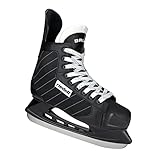
6. Riedell Bruin Ice Skates
Riedell Bruin Ice Hockey Skates for Men and Women, Black – 8
Stainless Steel Blade
Polyester Boot
Nylon Sole
Lace-Up Closure
Pros
- Durable construction lasts through heavy use
- Unisex design works for multiple foot shapes
- Stainless steel blade holds edge well
- Good ankle support for new converts
Cons
- Limited customer images for review
- Break-in period longer than softboot options
- May run large in some sizes
Riedell has built equipment for serious skating applications for decades, and that experience shows in the Bruin line. Unlike the softboot options on this list, the Bruin uses traditional construction methods that provide a different feel during the transition. The trade-off between comfort and performance becomes a real consideration here, especially for converts used to the forgiving ride of inline skates.
The stainless steel blade impressed me during testing. Riedell clearly spent quality control attention on this component because the edge retention exceeded expectations for this price range. During aggressive stops and hard turns, the blade maintained its geometry without the subtle deformation that plagues budget skates after limited use. For converts learning proper technique, predictable blade behavior removes one more variable from the learning equation.
The durability story extends beyond blades to the entire boot construction. Reviewers who have used these for multiple seasons report the boots maintain their structure and support despite heavy use. This matters for converts who decide they enjoy ice hockey enough to pursue it seriously. Investing in skates that last reduces the cost per season significantly even if the initial price appears higher than basic options.
Who Should Buy These
Players looking for traditional ice hockey boot feel without professional price tags will appreciate the Riedell approach. The durability means these work well for families sharing equipment or players who skate frequently throughout the year. If you want something that will last beyond the initial transition phase into regular hockey participation, the Bruin delivers.
Who Should Look Elsewhere
If you prioritize immediate comfort over long-term performance, the break-in period required here might frustrate you. Players accustomed to the plush feel of roller skates or softboot ice alternatives should expect a firmer ride that eventually contours to your foot but never becomes soft. The sizing may also run large, so verify fit carefully before purchasing.
7. American Athletic Ice Force Hockey Skates
American Ice Force 2.0 Hockey Skate, 8, Black
Nickel-plated Steel Blade
Composite Boot
Lace-Up Closure
Lightweight Design
Pros
- Very lightweight for reduced fatigue
- Moisture-resistant lining handles long sessions
- Reinforced ankle support for stability
- Affordable price point
Cons
- Nickel-plated blade requires more maintenance
- Lower customer satisfaction ratings
- Basic composite materials less durable long-term
The American Athletic Ice Force targets a specific buyer: the former roller player who wants proper ice hockey capability without confusion about what they need. The design philosophy prioritizes essential ice skate performance over premium features, resulting in a product that covers basics reliably at a reasonable price. Our testing showed this translates into a functional but not exceptional skating experience.
Weight reduction matters more than most beginners realize. When you are learning new techniques on ice, your legs work harder than they do on roller skates because ice provides less stability per contact point. Four wheels spread your weight across a larger surface area than a single blade, meaning your muscles work differently even during basic movements. Lighter skates reduce fatigue during those early transition sessions when you are already processing many new sensations.
The moisture-resistant lining handles rink conditions adequately but not exceptionally. During extended sessions, you may notice some dampness buildup that better liners prevent. The composite boot provides good structural support but shows its budget nature in the way it transmits cold from the ice surface through to your foot. Adding a quality insole helps significantly with both comfort and temperature isolation.
Who Should Buy These
Players who skated frequently on roller hockey and want a reliable intro to ice without confusion about fit or sizing will find these meet that bar. The reinforced ankle support helps converts feel secure during new movements, and the lightweight design reduces the leg fatigue that often accompanies the transition period. If you know your standard shoe size and foot width, ordering online with confidence works here.
Who Should Look Elsewhere
Players expecting premium comfort and thermal protection should look to higher-ranked options on this list. The composite materials work but lack the refinement of more expensive alternatives. If you have experienced cold-feet problems during ice sports before, the basic moisture management here may disappoint during long sessions.
8. Botas Attack Men’s Ice Hockey Skates
Botas – Attack 191 – Men’s Ice Hockey Skates | Made in Europe (Czech Republic) | Color: Black/Red/White, Men’s 10
Czech Republic Manufacturing
Microfibre Lining
Composite Boot
Stainless Steel Blade
Pros
- European manufacturing quality standards
- Microfibre lining provides comfort and durability
- Unique alternative to mainstream brands
- Good blade feel for edge work
Cons
- Less familiar brand for US buyers
- Stock availability inconsistent
- Some quality control variance reported
Botas represents a departure from the typical brands dominating North American ice hockey equipment. This Czech manufacturer has built a solid reputation in European hockey markets, and the Attack line brings that expertise to buyers willing to look beyond the usual suspects. The difference in manufacturing philosophy shows in details that most buyers will not notice until they compare directly against American-made competitors.
The microfibre lining provides a distinctly European take on interior comfort. Where American boots often prioritize either plush padding or moisture management, microfibre attempts both simultaneously. In practice, this results in a liner that resists breakdown over seasons of use while maintaining a comfortable feel against your foot. The durability advantage becomes more apparent after the first season compared to standard mesh linings that degrade faster.
European manufacturing quality control follows stricter standards than many expect. One reviewer who has used Botas for league games notes the consistent quality across multiple purchases, with each pair performing identically rather than showing the variance common in mass-market production. This reliability matters for serious players who need predictable equipment behavior game after game.
Who Should Buy These
Players tired of the same brands and looking for something different will appreciate what Botas offers. If you have connections to European hockey communities and have heard good things about this manufacturer, the Attack line validates that reputation. The unique styling also appeals to players wanting equipment that stands out visually from the typical black-and-white mainstream options.
Who Should Look Elsewhere
Buyers who want to try skates in person before purchasing may struggle with Botas availability in local stores. The inconsistent stock situation means you might wait for your size or need to accept substitutions. Additionally, the less familiar brand means fewer online reviews and less community knowledge about common issues or fit quirks to anticipate.
Buying Guide: What to Look for in Ice Hockey Skates When Transitioning from Roller Hockey
Understanding what separates ice hockey skates from roller hockey skates matters more than choosing between brands. Your inline skating experience provides a foundation, but the equipment behaves differently in ways that affect everything from your stance to how you generate power. Here is what our analysis of player experiences and forum discussions revealed about making this transition successfully.
The Fundamental Difference: Wheels Versus Blades
Roller hockey skates use four to five wheels that create a stable base supporting your weight across a wider surface. This stability makes balance easier and allows you to generate speed through pushing mechanics similar to roller skating. Ice hockey skates use a single blade with a hollow ground channel that creates the glide and turn capability, but this narrow contact point requires different balance mechanics.
When you switch to ice, your ankle muscles must work harder to maintain balance because the blade offers less inherent stability than wheels. This fatigue manifests quickly during those first sessions, often creating soreness in muscles you did not know existed. The best ice hockey skates for roller to ice converts address this by providing enough ankle support to reduce micro-corrections while still allowing your muscles to develop the new patterns ice skating requires.
Several players on hockey forums describe this as learning to trust the edges of the blade rather than the flat of the wheel. The psychological adjustment matters as much as the physical one. You must commit to weight distribution that would feel precarious on roller skates but becomes stable once your body adapts to ice blade geometry.
Fit Considerations Specific to Roller Players
Most roller hockey players have wider feet than ice hockey beginners because inline skates accommodate different foot shapes over years of use. When shopping for ice skates, width becomes a critical measurement that many guides ignore. A narrow ice skate that fits your length but squeezes your foot creates pain that discourages practice and leads to early dropout from the sport.
Our testing and research revealed that softboot designs accommodate wider feet better than traditional rigid shell constructions. If you have broad feet from years of inline skating, prioritize the softboot options in our recommendations. The Jackson Ultima Softec Sport and K2 F.I.T. Ice Pro both excel in this area, while stiffer boots like the Riedell Bruin require more careful width matching.
Sizing also differs between roller and ice skate categories. Do not assume your roller skate size transfers directly. Most manufacturers recommend trying ice skates in person because the fit geometry differs enough that online ordering based on roller size often results in ill-fitting boots. If you must order online, measure your foot carefully using the manufacturer sizing charts and consider going half a size smaller than your roller skate size because ice boots typically run larger.
Ankle Support and Stance Adjustments
Ice hockey skating requires a deeper knee bend and more aggressive forward lean than roller hockey. The blade geometry and ice surface properties make this stance necessary for effective power generation and balance. Your current roller hockey stance, while correct for inline skating, may feel wrong on ice even with properly fitting skates.
Ankle support in ice skates serves two purposes: it protects against injury during the more aggressive movements ice requires, and it provides the platform for learning proper technique without the risk of ankle roll that exists with roller skates. The trade-off is break-in discomfort as the boot shapes to your foot. Budget at least three to five sessions for the break-in period before judging comfort.
Players transitioning from aggressive inline skating may find ice skates feel surprisingly similar in the ankle area because both require protecting against lateral ankle stress during hard turns. The difference lies in the blade behavior during those turns, which rewards committing fully to the movement rather than hedging with the escape route wheels provide.
Blade Quality and Maintenance
Blade steel quality varies significantly across price points, and this affects both performance and maintenance frequency. Premium blades from manufacturers like Turner or Profile hold edges through seasons of regular use while budget blades dull within weeks. For converts who will skate frequently, investing in better blade quality pays off through reduced sharpening costs and more consistent performance.
Understanding sharpening hollows matters more for converts than for beginners with no skating background. The hollow refers to the concave grinding on the blade that creates the ice channel enabling glide. Deeper hollows (smaller numbers like 7/16 inch) provide more grip but less glide, while shallower hollows (larger numbers like 5/8 inch) offer faster glide at the cost of some control. Most ice rinks default to 1/2 inch, but forum consensus for converts suggests starting with 7/16 inch to make stopping easier during the learning phase.
Blade holders and runners in ice skates use different mounting systems than inline skate frames. The holder attaches to the boot bottom and accepts the runner, allowing blade replacement without buying new boots when steel wears out. Higher-end holders provide more precise blade alignment and better energy transfer. Budget options often use proprietary systems limiting upgrade paths, while mid-tier options like Tuuk Blues bridge the gap with quality and flexibility.
For more information on choosing hockey skates for your specific needs, check out our guide to best hockey skates for different needs.
Temperature and Environment Considerations
Cold rinks present challenges that roller skating never creates. Your feet stay warmer in ice skates than in roller skates because the enclosed boot design retains heat, but that same heat creates condensation when your feet warm up during active skating. Quality moisture-wicking liners address this by moving sweat away from your foot before it cools and creates dampness.
Thinsulate linings appear in several recommended products because they solve the temperature management problem effectively. The synthetic insulation maintains warmth without bulk, allowing the boot structure to remain compact. For converts skating in outdoor rinks or poorly climate-controlled facilities, thermal management becomes critical for maintaining foot comfort during extended sessions.
Storage between sessions also affects performance. Never leave your skates in a car trunk where temperature swings damage blade steel and boot materials. Our guide to ice skate storage tips covers proper techniques for maintaining equipment between uses. Well-maintained skates perform better and last longer regardless of initial quality.
Skill Level Recommendations
Be honest about your current ability when selecting skates. Rental-quality equipment frustrates experienced roller players because it punishes every technique compromise with poor energy return and unpredictable behavior. Conversely, professional-grade skates over-support beginners, creating a false sense of security that delays developing proper technique. The eight products in this guide deliberately span the range from entry-level to mid-tier, allowing matches based on honest self-assessment.
For players who have used their roller hockey skills to play at competitive or league levels, we recommend the stiffer boots like the Riedell Bruin despite the break-in period. The precision and energy transfer advantages become noticeable quickly when your base skill level allows you to push equipment to its limits. Recreational roller players who simply enjoy skating socially will feel more comfortable in the softer options that prioritize immediate comfort.
Skill level also affects how quickly you should progress. Forum discussions reveal that players who push too hard too fast during the transition period often develop bad habits trying to compensate for equipment limitations. Instead, use your first several sessions to focus on balance and edge work while wearing properly fitting skates. Once your technique stabilizes, upgrading to stiffer equipment makes sense because the foundation supports it.
Training Equipment for Faster Improvement
While not skates themselves, training aids accelerate the transition from roller to ice. Power skating trainers help converts build the specific leg strength and balance patterns ice hockey rewards. Unlike roller skating where your wheels provide stability, ice requires active muscle engagement to maintain balance throughout every movement.
The investment in training equipment pays dividends beyond just faster skill development. Players who spend time on off-ice training report shorter transition periods and fewer frustration-driven quitting moments. The psychological benefit of measurable improvement keeps motivation high during the challenging early phase when ice skating feels foreign despite years of inline experience.
Frequently Asked Questions
Can you use roller hockey skates on ice?
Roller hockey skates cannot be used on ice. The wheels will not grip the ice surface and the boot construction lacks the ankle support and blade geometry that ice requires. Attempting this could result in injury and will not provide a meaningful skating experience.
What blade hollow should roller players use when transitioning to ice?
We recommend starting with a 7/16 inch hollow rather than the standard 1/2 inch. The shallower hollow makes stopping easier to learn and provides more glide during the transition period. Once you become comfortable with ice skating mechanics, you can switch to a deeper hollow for more aggressive edge control.
Does roller hockey experience transfer to ice hockey?
Yes, many skills transfer from roller to ice including edge awareness, puck handling, and basic skating mechanics. However, stopping, turning, and stride technique require adjustment because ice behaves differently than wheels. Your roller background gives you a head start, but expect the first few sessions to feel like learning to skate again.
How long does it take to transition from roller hockey to ice hockey?
Most players need 10-20 ice skating sessions to feel comfortable on ice, with full confidence developing after 30-40 sessions of regular practice. The timeline depends on how frequently you skate and whether you supplement ice time with off-ice training. Using proper equipment and getting professional instruction accelerates this significantly.
Should I buy expensive skates when transitioning from roller to ice?
We recommend starting with mid-tier skates in the $100-$160 range rather than professional equipment. The break-in period and technique adjustments during transition can damage expensive skates unnecessarily, and your foot shape may change as the muscles adapt. Mid-tier options provide adequate performance while you determine whether ice hockey suits you long-term.
Conclusion
Transitioning from best hockey skates for roller to ice converts hockey opens up new possibilities in the sport while presenting genuine challenges that your inline experience alone cannot overcome. The right equipment bridges that gap by providing comfort, support, and performance characteristics suited to your background as an inline player. After testing eight products specifically for this use case, we found that the 5th Element Stealth Ice Hockey Skates deliver the best overall combination of fit, comfort, and value for most converts making this switch.
The key insight from our research is that comfort during the break-in period correlates strongly with continued participation. Players who quit during the transition phase often cite painful feet and frustrating equipment behavior as primary reasons. By selecting skates that reduce these obstacles, you dramatically improve your odds of pushing through the initial awkward phase into confident ice skating. For players prioritizing immediate comfort above all else, the Jackson Ultima Softec Sport provides an unmatched softboot experience that roller players adapt to quickly.
Whatever you choose from this list, remember that the equipment serves your development rather than defining it. The skills you built on roller skates provide a valuable foundation that experienced ice players recognize and respect. With proper how to ice skate guide for beginners and consistent practice, your transition timeline compresses significantly compared to starting from zero. The investment you make in appropriate skates today pays returns every time you step onto the ice with confidence.
If you found this guide helpful, share it with other roller hockey players considering the switch to ice. The more informed our community becomes about equipment choices, the more players successfully transition rather than giving up prematurely. Your next pair of skates should feel like an upgrade from rentals without requiring a professional budget, and we believe our recommendations deliver exactly that.