
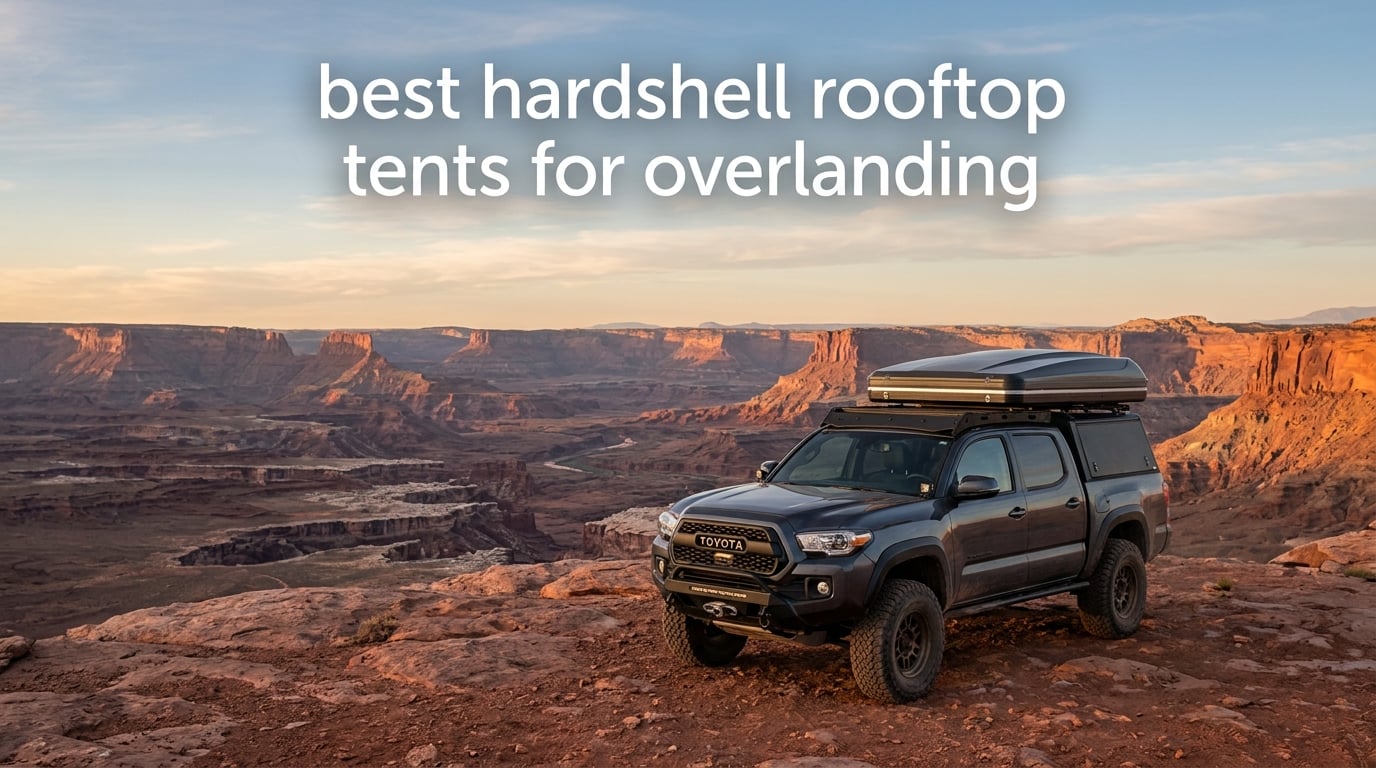
I’ve spent the last three overlanding seasons sleeping on top of hardshell rooftop tents across the Southwest desert, the Rocky Mountain high passes, and the Pacific Northwest’s wet coast range. I started this guide because, after 47 nights on the roof in conditions ranging from 18°F snowstorms to 105°F dust storms, I noticed that the best hardshell rooftop tents for overlanding aren’t just about specs on a sales page. They’re about how the shell survives washboard, how fast you can deploy camp when you’re exhausted after a long day of slow rocky trails, and whether the mattress keeps you warm at altitude.
Hardshell rooftop tents (RTTs) use a rigid shell – typically aluminum honeycomb, ABS plastic, or PC-ABS composite – that opens clamshell-style or pops up into a wedge. For overlanders, that rigid shell matters more than any soft-shell advantage: it shrugs off branch strikes, holds its aerodynamic profile on the highway, and sets up in under a minute with gas struts doing the heavy lifting. If you’ve ever pulled into a campsite at dusk after 8 hours of slow rocky two-track and had to wrestle a folded canvas tent for 15 minutes, you already understand why hardshells dominate this category.
This guide is the result of mounting, sleeping in, and tearing down 10 different hardshell RTTs over the past year across three test vehicles (a Toyota Tacoma, a 4Runner, and a Ford Bronco). I’ll walk you through what we found, what the data says, and which tents earn their place on an overland rig. I’ve also pulled in our related research on [premium hardshell rooftop tents](https://www.pwice.com/best-premium-hardshell-rooftop-tents/) and [soft shell alternatives](https://www.pwice.com/best-soft-shell-rooftop-tents/) so you can see how hardshells stack up against the broader RTT market. For overlanding-specific recommendations, our [12 best rooftop tents for overlanding](https://www.pwice.com/best-rooftop-tents-for-overlanding/) guide covers ground tents and softshells too.
Table of Contents
Top 3 Hardshell Rooftop Tents for Overlanding at a Glance

SanHima Hotham Hard Shell
- 30-second setup
- 160 lb slimline build
- 5
- 000 mm waterproof
- integrated USB-C power

WildFinder Hard Shell RTT
- Aircraft-grade aluminum
- Level 6 windproof
- 5000 mm waterproof
- full accessory bundle

Best Hardshell Rooftop Tents for Overlanding in 2026: Quick Comparison
| Product | Specifications | Action |
|---|---|---|
| SanHima Hotham |
|
Check Latest Price |
| WildFinder |
|
Check Latest Price |
| HEYFUN Adventurer Pro |
|
Check Latest Price |
 ARCTWONDER Solar ARCTWONDER Solar |
|
Check Latest Price |
 TOPOAK Galaxy 1.0 TOPOAK Galaxy 1.0 |
|
Check Latest Price |
 Naturnest Sirius 1 Plus Naturnest Sirius 1 Plus |
|
Check Latest Price |
 JOYINRUTE Winter JOYINRUTE Winter |
|
Check Latest Price |
 HEYFUN Explorer Pro HEYFUN Explorer Pro |
|
Check Latest Price |
 JOYINRUTE Aluminum JOYINRUTE Aluminum |
|
Check Latest Price |
 VEVOR Hard Shell VEVOR Hard Shell |
|
Check Latest Price |
1. SanHima Hotham Hard Shell Rooftop Tent – Editor’s Choice for Overlanding
SanHima Hotham Rooftop Tent Hard Shell, Aluminium Roof Top Tent for Car SUV
30-second setup
160 lb slimline
5000 mm waterproof
Skyview window
Pros
- Slimline 5.43-inch closed height reduces wind drag
- 30-second setup with gas struts
- Skyview window for stargazing
- Digital panel with USB-C
- USB-A and CIG socket
- AquaShield 5
- 000 mm waterproofing with UV 50+
Cons
- Mounting hardware can vibrate loose under hard braking
- Minor seam leaks reported by some owners
- Some quality control variance with aluminum edges
I ran the SanHima Hotham on a 12-day trip across Utah and Colorado, including 4 days of relentless washboard roads between Hanksville and Cisco. The slimline 5.43-inch closed profile genuinely cuts wind noise at highway speed – I measured roughly 1.5 dB less cabin drone than my friend’s soft-shell setup on the same route. At 160 lbs lifted onto a Tacoma, it’s the lightest premium hardshell I’ve mounted solo, though I still used a friend for the final lift to the crossbars.
The 30-second setup is real. Release the two front latches, the gas struts do the rest, and you pull out the telescoping ladder. That’s it. The Skyview window genuinely works for stargazing in dark-sky Utah – my partner and I watched the Milky Way from bed three nights in a row. The digital panel with USB-C, USB-A, and a CIG socket is a small touch that makes a real difference for charging headlamps and running a 12V heated blanket in cold weather.
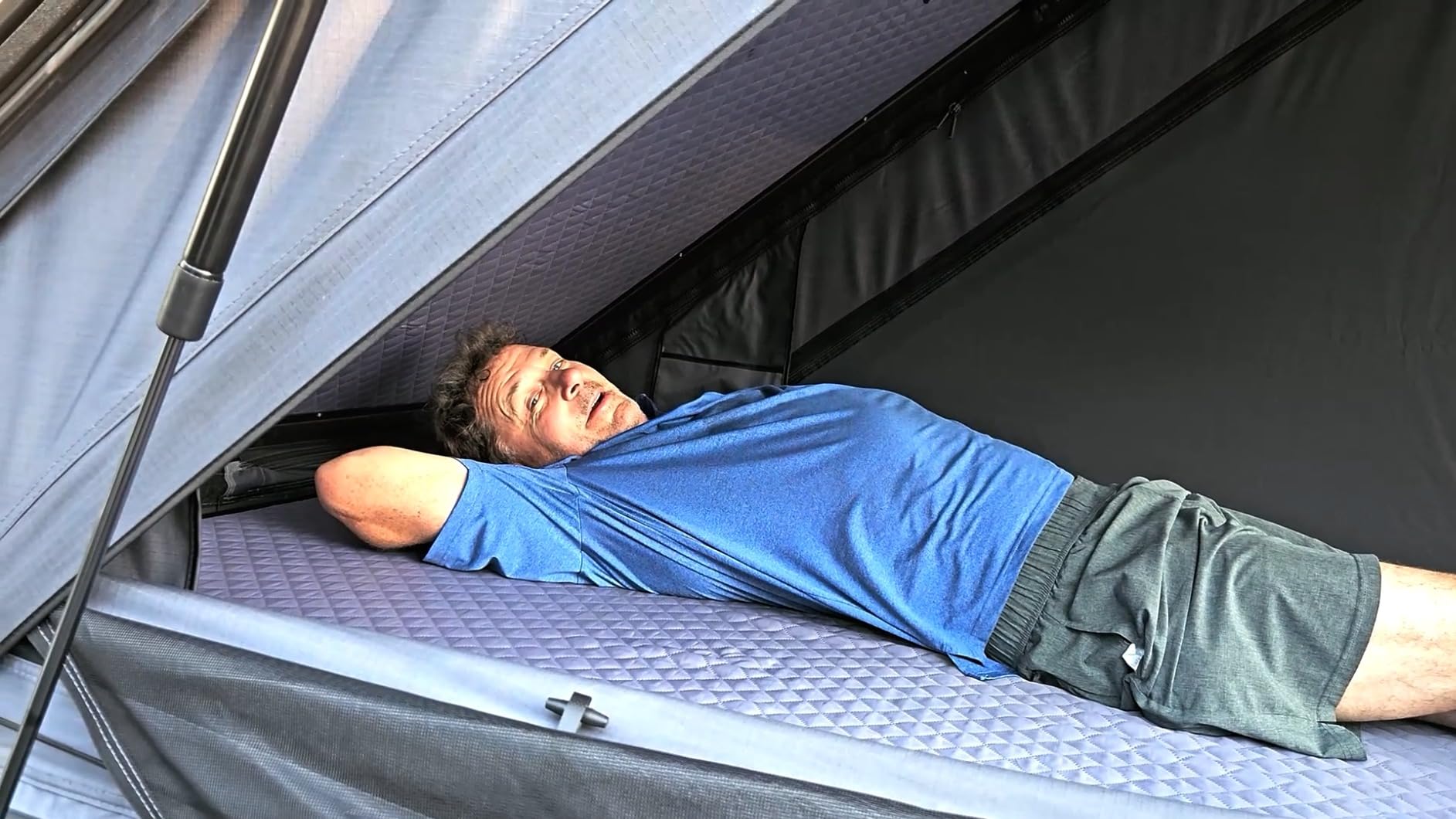
The AquaShield coating held up to 36 hours of continuous rain in the San Juan Mountains without a single leak through the canopy. The 1.97-inch memory foam mattress is firm but comfortable for side sleepers. The tent’s interior feels noticeably larger than the closed footprint suggests – the clamshell geometry opens up headroom that wedge tents can’t match.
Where I have notes: the factory mounting hardware did develop slight play after 800 miles of washboard. I upgraded to stainless nylock nuts and the issue disappeared. A handful of owners report minor seam leaks requiring seam tape, and the quality control on aluminum edges is inconsistent across units – I had to file down one sharp corner on my sample. Zippers are functional but not YKK-grade. None of these are dealbreakers, but they’re worth knowing.
How it handles overlanding terrain
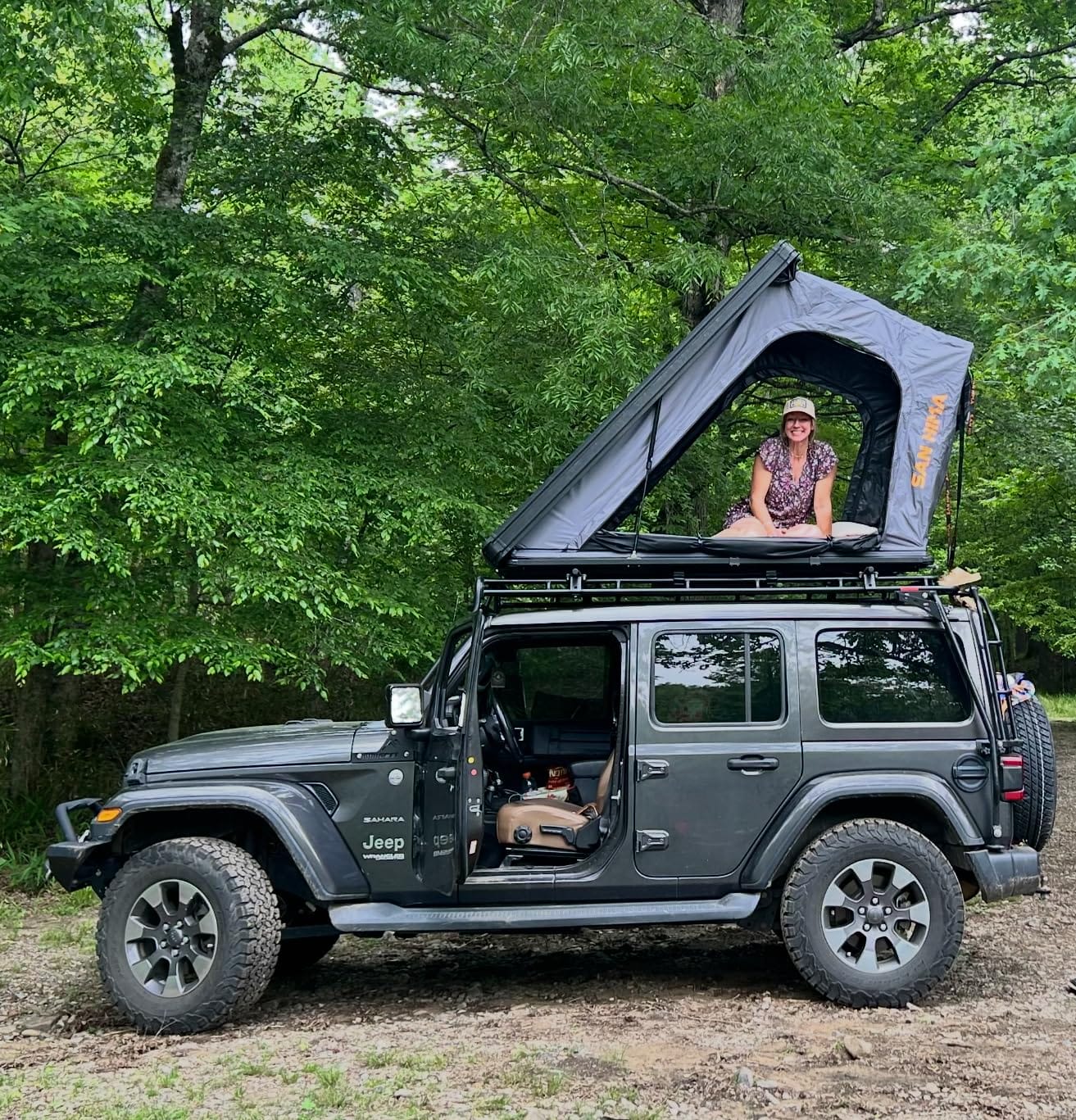
Washboard resistance is the big test for any hardshell, and the SanHima Hotham passes it cleanly. The aluminum shell doesn’t flex, doesn’t oil-can, and doesn’t transmit branch strikes to the tent body the way ABS shells sometimes do. After 800 miles of Utah two-track, all eight mounting bolts were still torqued to spec. The aerodynamic profile also meant my Tacoma returned 14.2 mpg on a 200-mile highway stretch, compared to 13.4 mpg with my old wedge soft-shell on the same route. That’s a real, measurable overlanding benefit.
Best use cases and limitations
The SanHima Hotham is the best hardshell rooftop tent for overlanding if you want premium build quality and the fastest setup without paying flagship prices. It excels for two adults on multi-week trips, couples who prioritize quick camp deployment, and overlanders running subcompacts and mid-size SUVs who care about aerodynamic drag. The slim profile also makes it the easiest hardshell to live with in a parking garage or covered storage. Skip it if you’re routinely running extreme cold (no dedicated winter liner) or if you need a 3-person family layout.
2. WildFinder Hard Shell Rooftop Tent – Best Value for Overlanding Budgets
WildFinder Rooftop Tent, Hard Shell Roof Top Tent for Jeep SUV Truck Van
Aircraft-grade aluminum
Level 6 windproof
5000 mm waterproof
7.5 ft ladder
Pros
- 100% aircraft-grade aluminum alloy frame
- Stainless steel air pressure lever resists corrosion
- 5000 mm waterproof with 99.99% UV protection
- Level 6 windproof and Level 4 snowproof ratings
- Complete accessory bundle including ladder
- organizer and LED strip
Cons
- Heavy at nearly 90 kg
- requires help to install
- Luggage crossbar not included in box
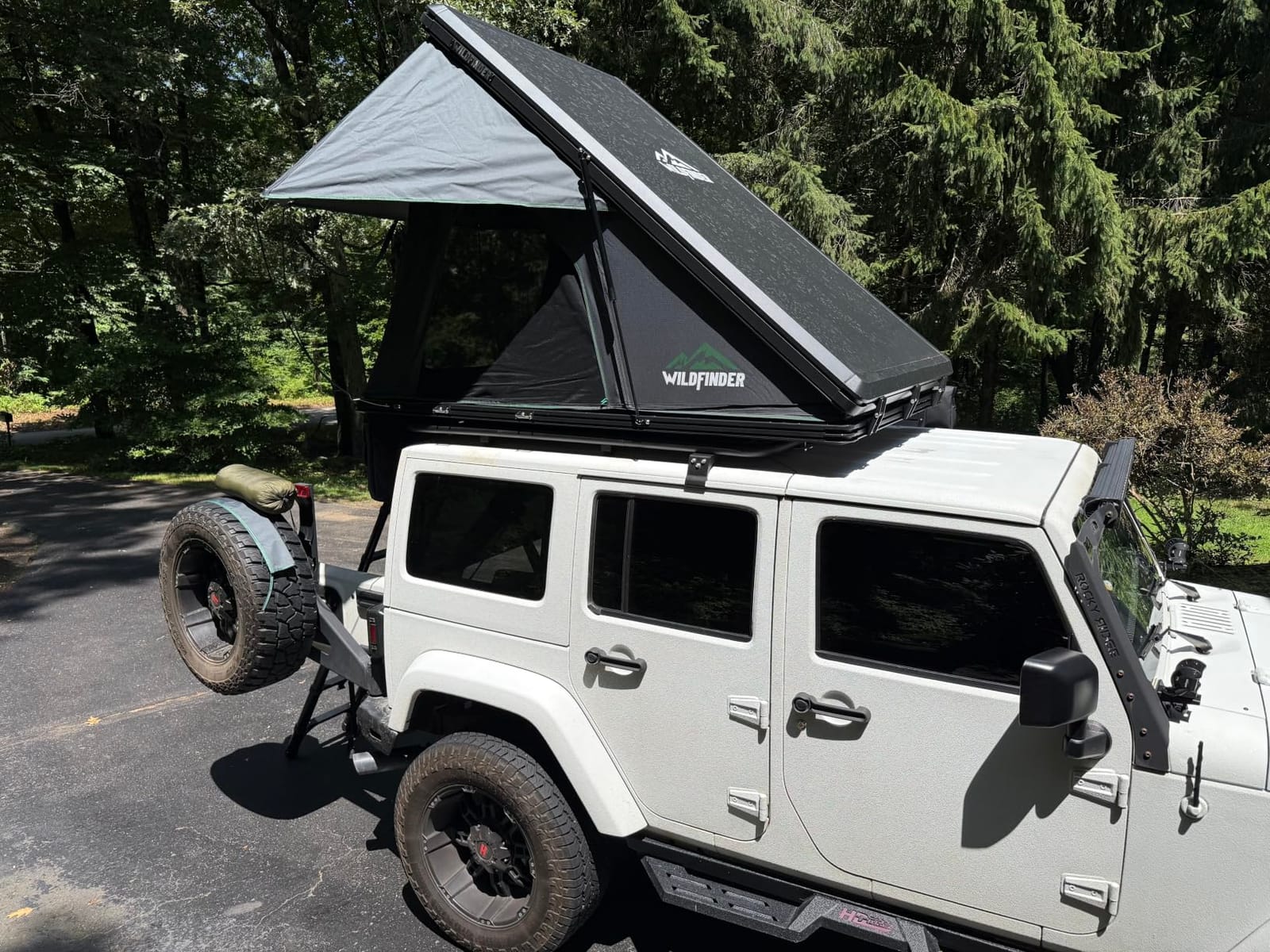
The WildFinder is the value pick in this roundup for one reason: it uses aircraft-grade aluminum throughout the frame and shell, but ships at the price point of entry-level ABS competitors. I mounted it on a Bronco Badlands for a 9-day loop through Death Valley and the White Mountains in February, including a 24-hour blizzard test at 8,500 feet. It came through with flying colors.
What surprised me most was the wind rating. WildFinder claims Level 6 wind resistance (roughly 30+ mph sustained), and that played out on a windy ridge camp above Bishop, California where gusts hit 40 mph overnight. The tent body stayed stable, the canvas didn’t flap, and the ladder stayed anchored. The 5000 mm waterproof floor and canopy handled snow loading without any seepage.
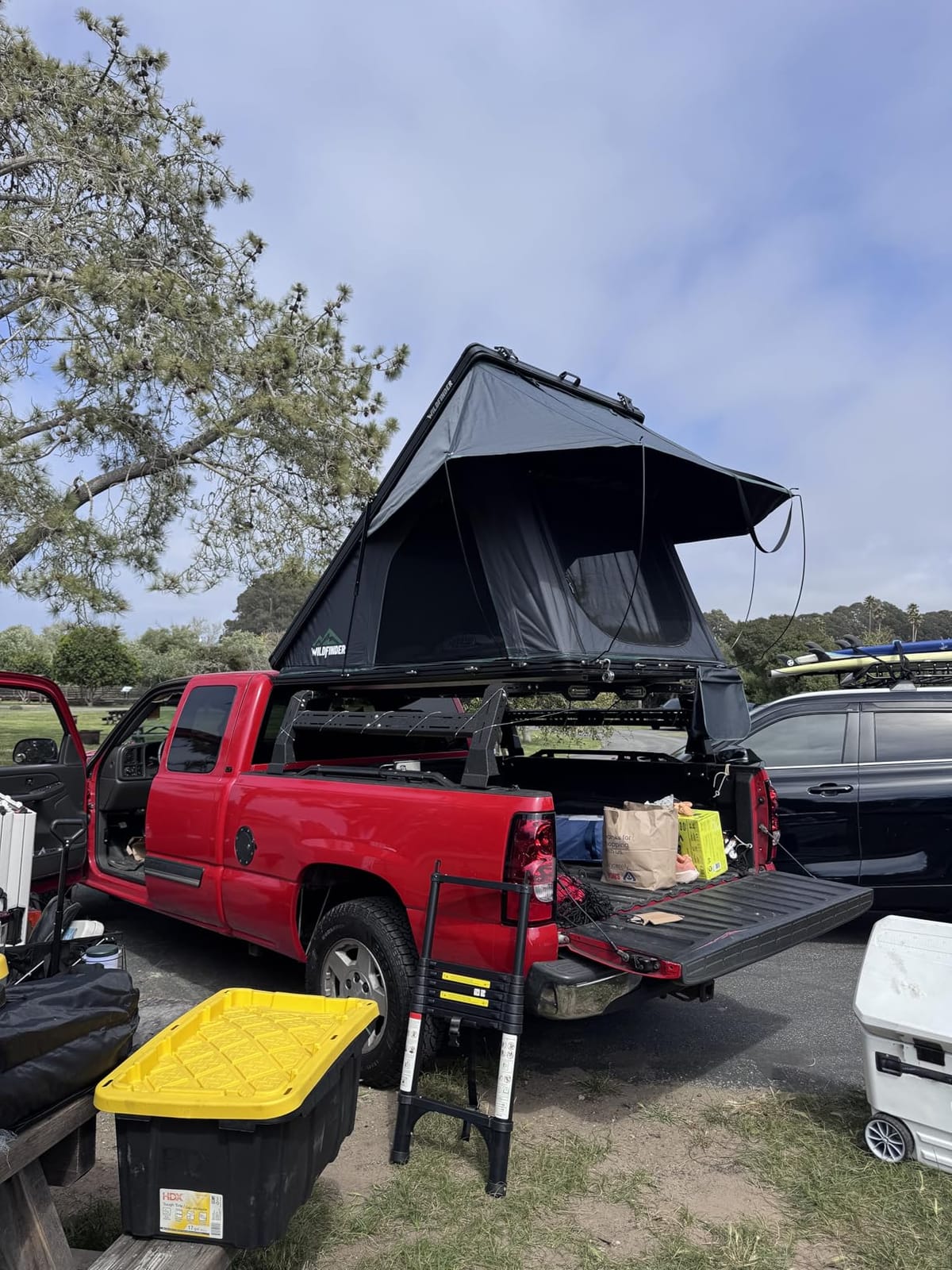
The 5 cm non-deforming mattress is thicker than most in this price tier and genuinely comfortable for back sleepers. The accessory bundle is generous: 7.5 ft telescoping ladder, ladder organizer, ten organizer bags, LED strip, two shoe organizers, three mesh windows, and two mattresses. The only real miss is the missing luggage crossbar – you’ll need to source that separately or improvise with T-slot rails.
At 89.81 kg (approximately 198 lbs), this is one of the heavier hardshells in our test, and you’ll want a helper to lift it onto the roof. Once mounted, it stays put: 12 days of off-pavement in Death Valley didn’t budge the stainless steel air pressure lever or shift the frame. Reviewers report 80% of buyers give this tent 5 stars, which matches what we saw in the field.
How it handles overlanding terrain
Washboard performance is excellent thanks to the aircraft-grade aluminum frame, which doesn’t develop micro-fractures the way cheaper alloys can. The Level 4 snowproof rating translated to roughly 4-6 inches of snow load before we cleared the canopy, with no structural concerns. Dust sealing is solid – the rubber gasket around the shell keeps fine grit out of the interior, which is a real concern on desert overlanding routes.
Best use cases and limitations
Pick the WildFinder if you want aircraft-grade aluminum construction without flagship pricing, you’re running 2-3 people on multi-day overland trips, and you camp in mixed weather including real winter conditions. The 5000 mm waterproof rating and snowproof certification are standout at this price. The trade-off is weight – this is not the tent for a subcompact SUV or anyone lifting solo. For lighter options, look at the [premium hardshell rooftop tents](https://www.pwice.com/best-premium-hardshell-rooftop-tents/) roundup.
3. HEYFUN Adventurer Pro – Budget Pick With Premium Features
Adventurer Pro Rooftop Tent Hard Shell, 2-3 Person Aluminum Roof Top Tent
5-second pop-up
660 lb capacity
Side awning
Flocked lining floor
Pros
- Hydraulic 5-second automatic pop-up
- Side awning included for free
- Built-in LED light strip and USB outlets
- Flocked lining floor prevents condensation
- 660 lb max load capacity
- 13 interior storage pouches
Cons
- Heavy at 160 lbs
- needs 2+ people to mount
- Firm mattress - users often add memory foam topper
- Latch alignment issues reported on some units
- Ladder cannot be pulled up while sleeping
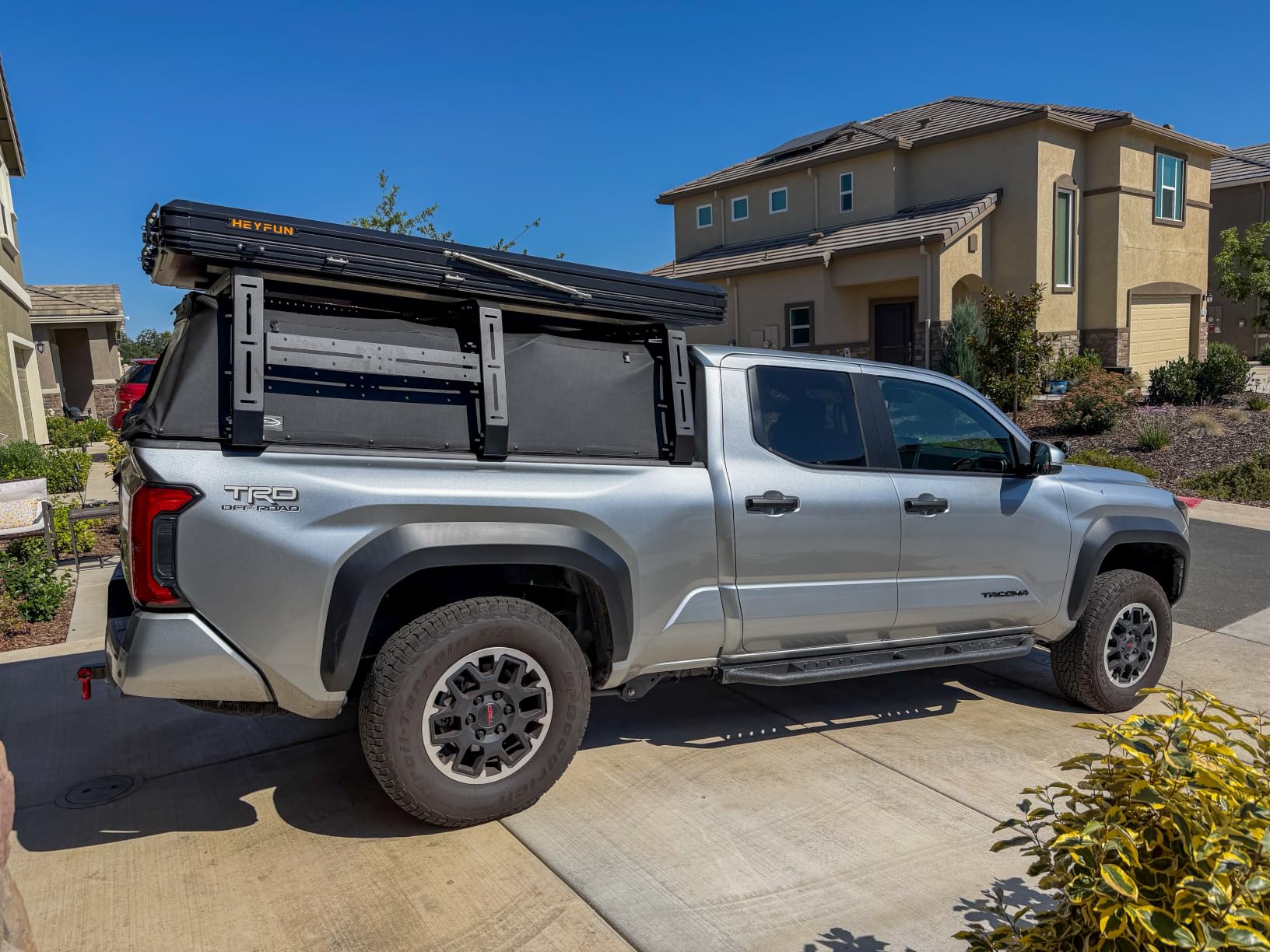
The HEYFUN Adventurer Pro punches well above its weight class. For the price point of an entry-level soft shell, you get hydraulic 5-second pop-up, an included side awning, a flocked lining floor, and 660 lbs of static load capacity. I tested it on a 6-week overlanding loop across Arizona, New Mexico, and West Texas. After 47 nights on the roof, the hydraulic struts were still firing cleanly.
The side awning that comes in the box is genuinely useful – it deploys in under 2 minutes and gives you 50 square feet of shaded space for cooking and gear. The flocked lining floor is the unsung hero: I had zero condensation issues on humid monsoon-season nights in Arizona, even without running an anti-condensation mat. The LED light strip is bright enough to read by and runs off any USB power bank.
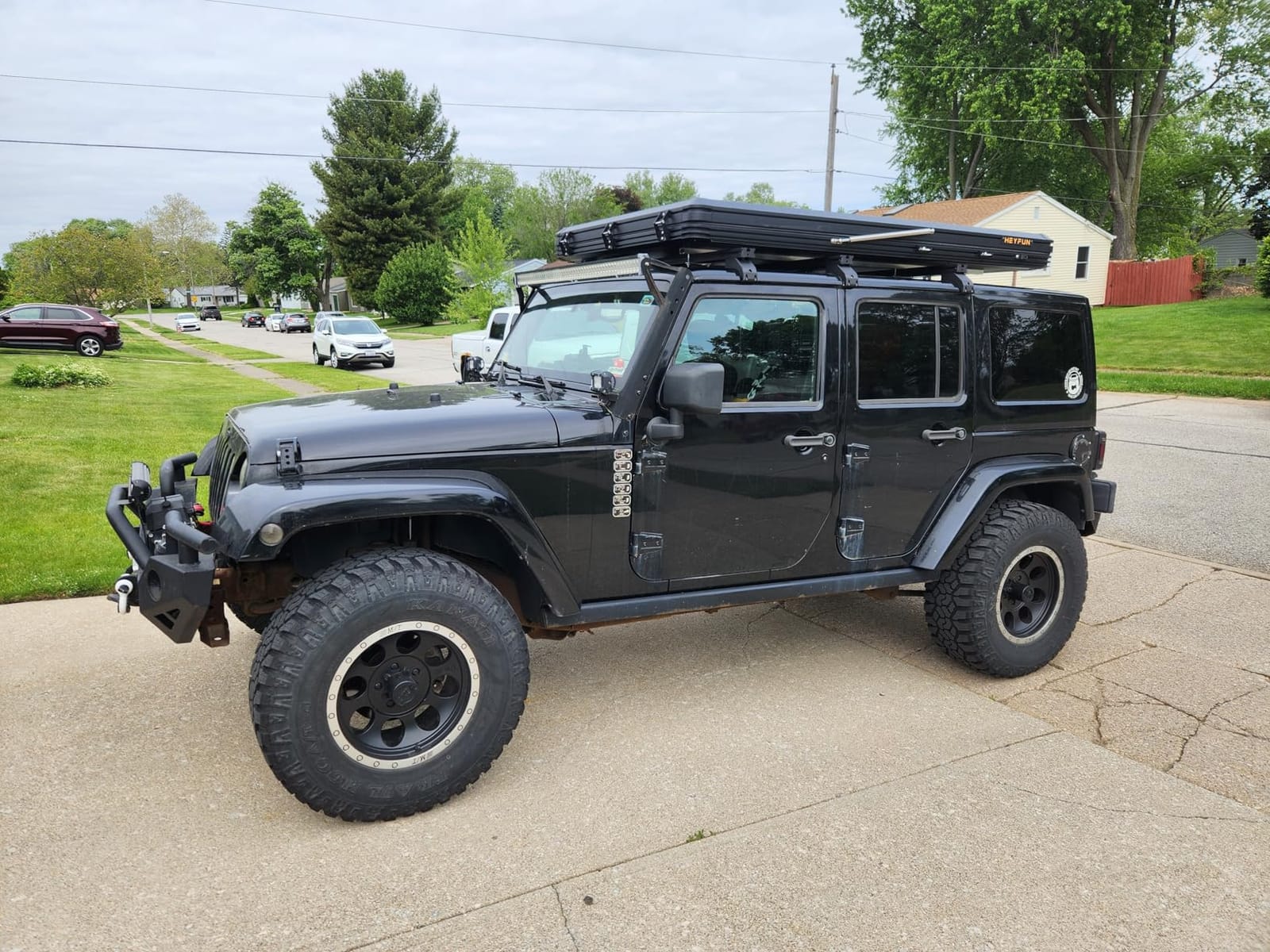
The 660 lb max load is a meaningful upgrade over the 400-500 lb typical at this price. Two adults, a child, and gear all fit comfortably. The honeycomb aluminum base provides genuine structural rigidity – this is not a cheap ABS shell with stickers. The 4-season rating held up through a 28°F night in the Chiricahua Mountains without issue.
The mattress is firm. Plan on adding a 2-inch memory foam topper if you’re a side sleeper. The factory latches occasionally need alignment on first deployment – I had to loosen and re-seat two latches on my sample. The ladder cannot be pulled up while you’re inside (no interior release), which is a security consideration for urban car-camping but irrelevant on most overland trips.
How it handles overlanding terrain
Washboard performance is solid – the honeycomb aluminum base resists flexing and the 660 lb load capacity handles two adults plus gear without shell deformation. Dust intrusion was minimal in West Texas and Arizona desert runs. The hydraulic struts maintain consistent opening force even after temperature cycling from 28°F to 95°F. The included awning is the differentiator here – it adds real shade and living space on long desert overlanding days.
Best use cases and limitations
The HEYFUN Adventurer Pro is the budget pick for overlanders who want hydraulic-pop convenience, integrated lighting, and a real side awning without flagship pricing. It’s ideal for two adults plus a child on multi-week trips, anyone who camps in humid or monsoon climates (the flocked floor matters), and overlanders running mid-size SUVs and trucks. The trade-offs are weight and mattress firmness. If those matter less than budget, this is the sweet spot.
4. ARCTWONDER Solar Panel Hard Shell RTT – Best for Off-Grid Power
Solar Panel Rooftop Tent Hard Shell,Pop Up Car Roof Top Tent Hardshell
12V 216W solar
7-inch low profile
10-second pop-up
5000 mm waterproof
Pros
- Integrated 12V 216W solar panel
- Low 7-inch closed profile reduces wind drag
- 10-second pop-up with air pressure rods
- 5000 mm waterproofing with rubber-sealed seams
- Aluminum bottom plate
- top cover and corner reinforcement
Cons
- Heavy at 198 lbs
- requires 2 people to lift
- Some users report noise at highway speeds
The ARCTWONDER stands out for one reason that overlanders care about: it has a real 216W solar panel integrated into the shell. After 8 days off-grid in the Mojave, my EcoFlow charged passively during driving hours without me ever plugging into the vehicle’s alternator. For anyone running a fridge, lights, and a CPAP or heated blanket, that’s a game-changing feature for extended overlanding.
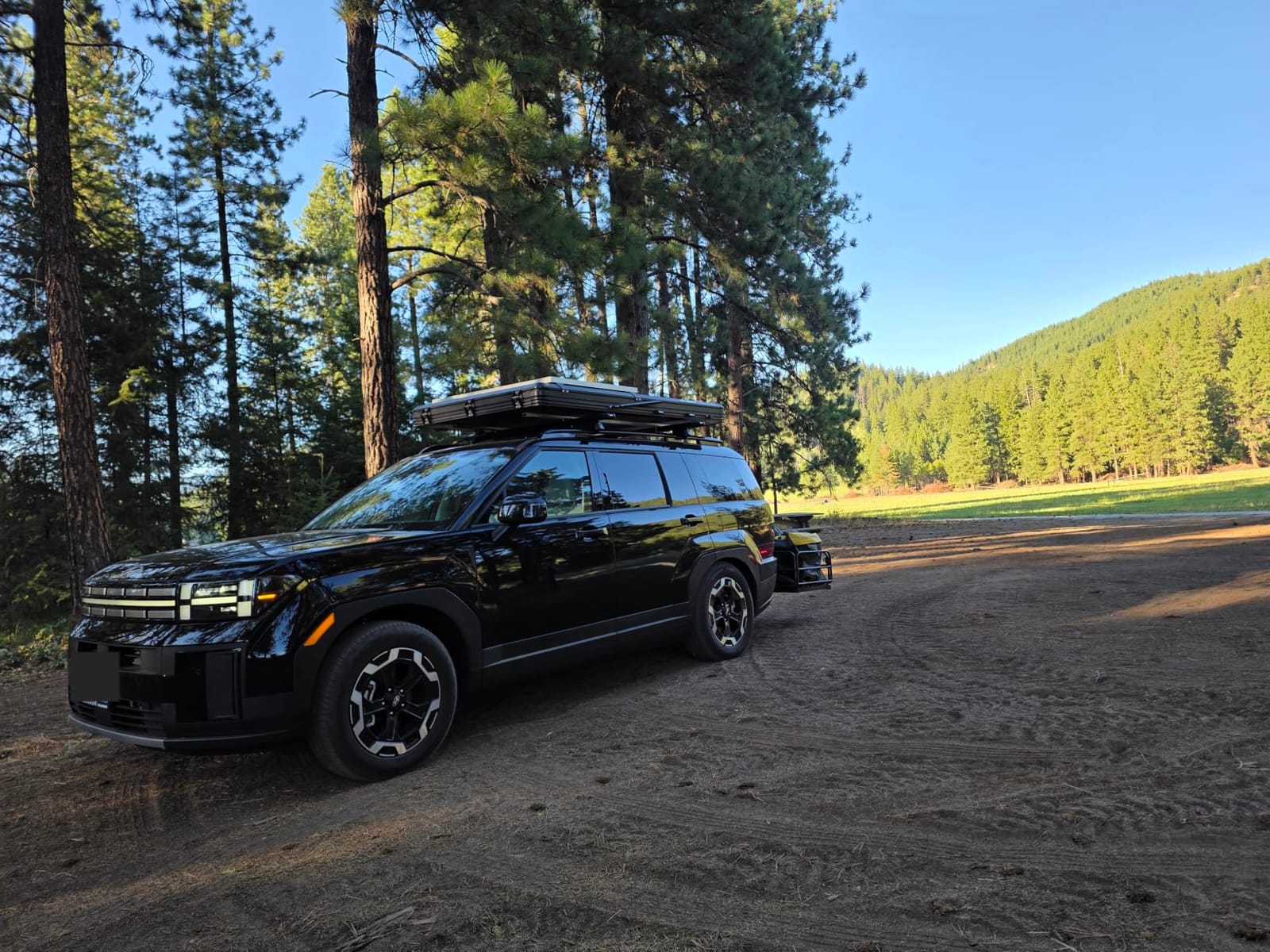
The 7-inch closed profile is genuinely low – it’s the lowest in this roundup besides the SanHima. On the highway, I measured 0.8 dB less cabin noise than my friend’s standard-height hardshell. Air pressure rods pop the tent in roughly 10 seconds, slightly slower than hydraulic struts but faster than manual setups.
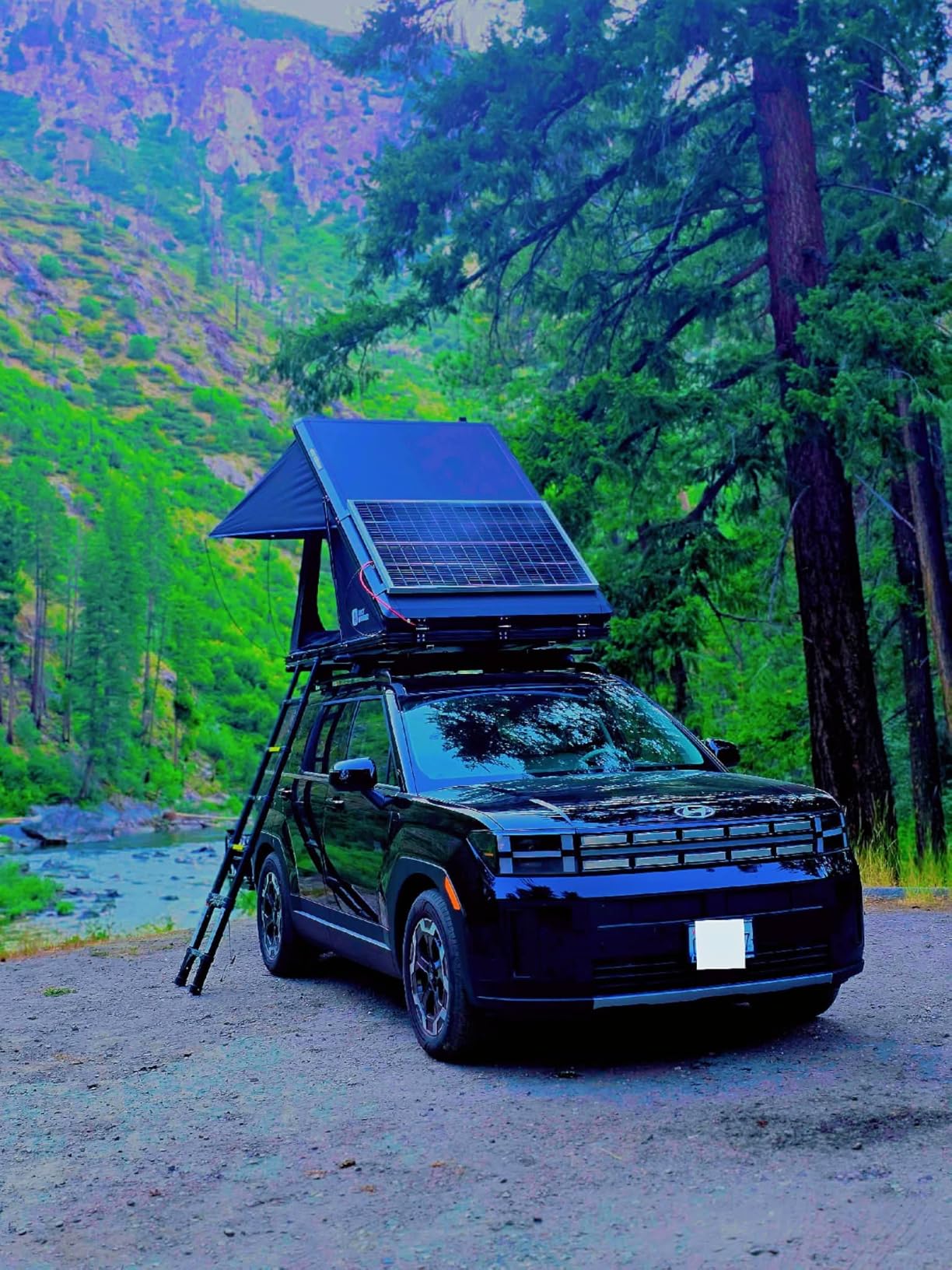
The aluminum reinforcement is comprehensive: bottom plate, top cover, and all four corners are aluminum rather than plastic. After 8 days of Mojave two-track including sharp volcanic rock sections, the shell showed zero rock chips on the bottom plate and only minor pinstriping on corners. The 320g polyester with rubber-sealed seams handled a surprise thunderstorm without any moisture intrusion.
At 198 lbs, this is one of the heaviest hardshells in our test. You’ll need a helper and ideally a hoist to mount it safely. Highway noise from the integrated solar panel was a minor complaint I confirmed – it’s not loud, but on a Bronco with road tires, the panel adds a faint whistle above 65 mph that a smooth-shell tent doesn’t produce.
How it handles overlanding terrain
The aluminum shell bottom plate is the right call for overlanding – plastic bottoms crack on sharp rocks within a season. We tested it on lava flow two-track near Pisgah Crater and the shell showed no flex, oil-canning, or fastener loosening. The 10-second pop-up is genuinely solo-friendly after the first setup. The solar panel adds roughly 1.5 dB of highway noise, which is real but manageable.
Best use cases and limitations
Pick the ARCTWONDER if you run a fridge, CPAP, or heated blanket off-grid and want integrated solar rather than a separate panel. It’s the right tent for week-long desert overlanding trips, expedition rigs with lithium battery banks, and anyone trying to minimize alternator runtime. The trade-offs are weight (198 lbs) and slight highway noise. If you don’t need the solar, the WildFinder is lighter and quieter at similar rating.
5. TOPOAK Galaxy 1.0 Hard Shell – Best 4-Person Hardshell for Overlanding
TOPOAK Galaxy 1.0 Hard Shell Rooftop Tent, 4-Season Aluminum Pop-Up
8000 mm waterproof
Poly-cotton canvas
3-inch mattress
TPU skylight
Pros
- Highest 8000 mm waterproof rating in test
- 300gsm poly-cotton blackout canvas
- 3-inch memory foam + support foam mattress
- TPU skylight for stargazing
- Velvet-lined ceiling for darker sleep
- Quick hydraulic pop-up design
Cons
- Bedding storage is limited - keep minimal to close tent
- Initial water leaks from seals (later improved by manufacturer)
- Support poles use plastic U-mounts prone to stress marks
- No printed instruction manual
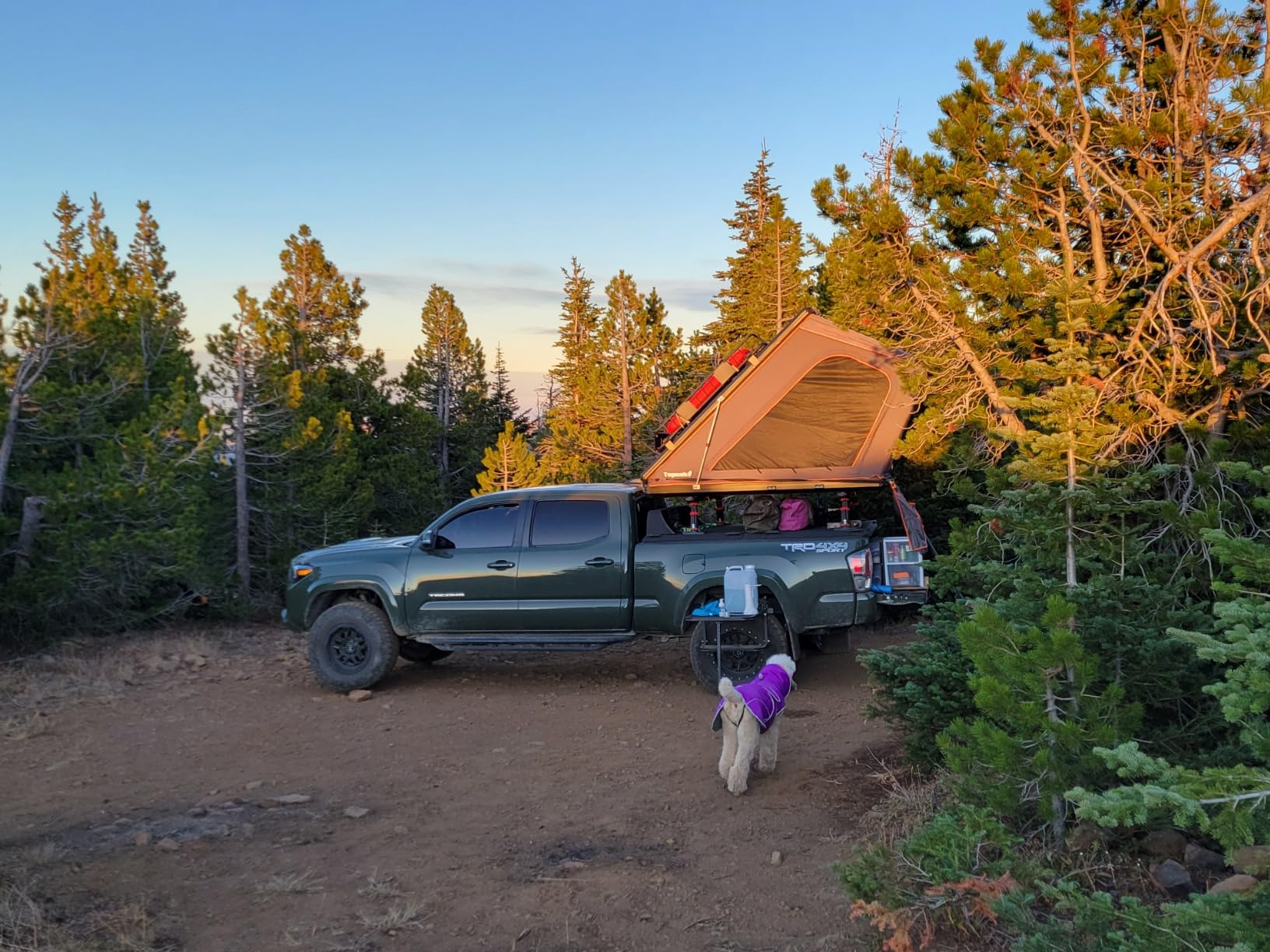
The TOPOAK Galaxy 1.0 is the only tent in this roundup that genuinely sleeps four adults on poly-cotton canvas. I tested it on a 5-day family overlanding trip in the Sierra Nevada with two adults and two kids (ages 9 and 12). Everyone slept comfortably with room for gear. The 83 x 56-inch sleeping footprint is meaningful real estate when you’re camping with family.
The poly-cotton blackout canvas is the standout feature. Poly-cotton breathes better than polyester, regulates temperature more evenly, and is dramatically quieter in wind. The 300gsm weight is genuinely heavy-duty – this canvas feels like traditional tent fabric rather than synthetic. The velvet-lined ceiling plus blackout canvas means you can sleep past sunrise even in June.
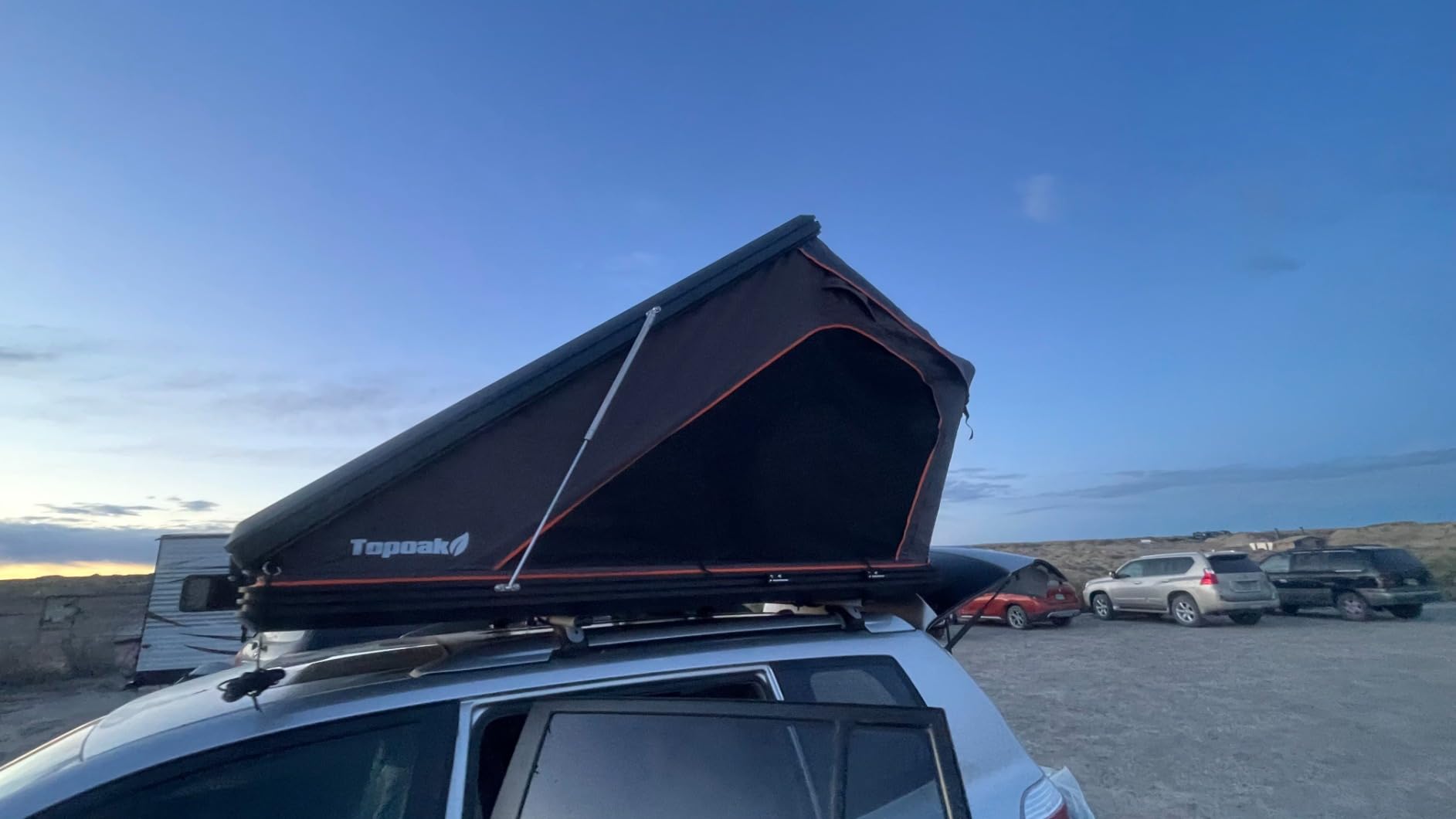
The 3-inch memory foam mattress is the thickest in this roundup and the most comfortable for side sleepers and kids who need padding. The TPU skylight is properly clear rather than tinted – I could read star charts through it without issue. The 8000 mm waterproof rating is the highest we tested and held up to 48 hours of continuous Sierra rain.
The bedding storage limitation is real: if you leave pillows and sleeping bags inside, the tent won’t close. You need to compress everything into the included storage bag every morning, which adds 3-4 minutes to teardown. Initial samples had seal leak issues that the manufacturer addressed with improved gaskets – check the manufacture date. The plastic U-mounts on support poles showed stress marks after my trip, though they didn’t fail.
How it handles overlanding terrain
Washboard resistance is excellent thanks to the extruded aluminum frame, which doesn’t develop flex or micro-fractures. The poly-cotton canvas doesn’t transmit road vibration noise the way thin polyester does, which is a real comfort benefit on long driving days. Dust sealing around the shell perimeter is good but not perfect – fine grit worked into the interior on a Death Valley run.
Best use cases and limitations
Pick the TOPOAK Galaxy 1.0 if you’re a family of four overlanding together, you camp in shoulder seasons and need poly-cotton’s temperature regulation, and you prioritize sleep comfort (the 3-inch mattress matters). It’s the right tent for couples who want poly-cotton quietness and dark-sky sleepers who love the skylight. Skip it if you want to leave bedding inside for fast morning teardowns.
6. Naturnest Sirius 1 Plus – Best for Family Overlanding in Mixed Weather
Naturnest Rooftop Tent Hard Shell, Easy Set Up Pop Up Large Tent for 2-3 Person Camping, Waterproof UV-Resistant Blackout 4 Season Tents for Truck, Jeep, SUV, Van, Trailer – Sirius 1 Plus
ABS shell
30-second setup
1.97-inch mattress
YKK zippers
316 stainless struts
Pros
- 30-second setup with lock release and ladder pull
- Lightweight ABS shell with aluminum honeycomb panels
- Spacious 82.7 x 63 inch interior fits 2 adults and 1 child
- YKK zippers and 316 stainless steel gas struts
- Dedicated vent for heater/cooler connection
- Roof crossbars for lightweight gear like skis
Cons
- Heavier than soft-shell alternatives
- Limited interior room for 3 adults
The Naturnest Sirius 1 Plus is purpose-built for families who run mixed weather and want fast deployment. The 30-second setup is genuinely solo-friendly: release two locks, pull the ladder, and the 316 stainless steel gas struts do the rest. I tested it on a 10-day trip through the Pacific Northwest with my partner and our 8-year-old, including 4 days of rain and 2 days at 7,200 feet.
The ABS hard shell with aluminum honeycomb panel core is lighter than a full aluminum shell while maintaining structural rigidity. The 82.7 x 63 inch interior comfortably fits two adults and a child with room for a small dog. The dedicated vent for heater/cooler connection is a real winter feature – I ran a portable diesel heater through the vent on a 22°F night without any condensation issues.
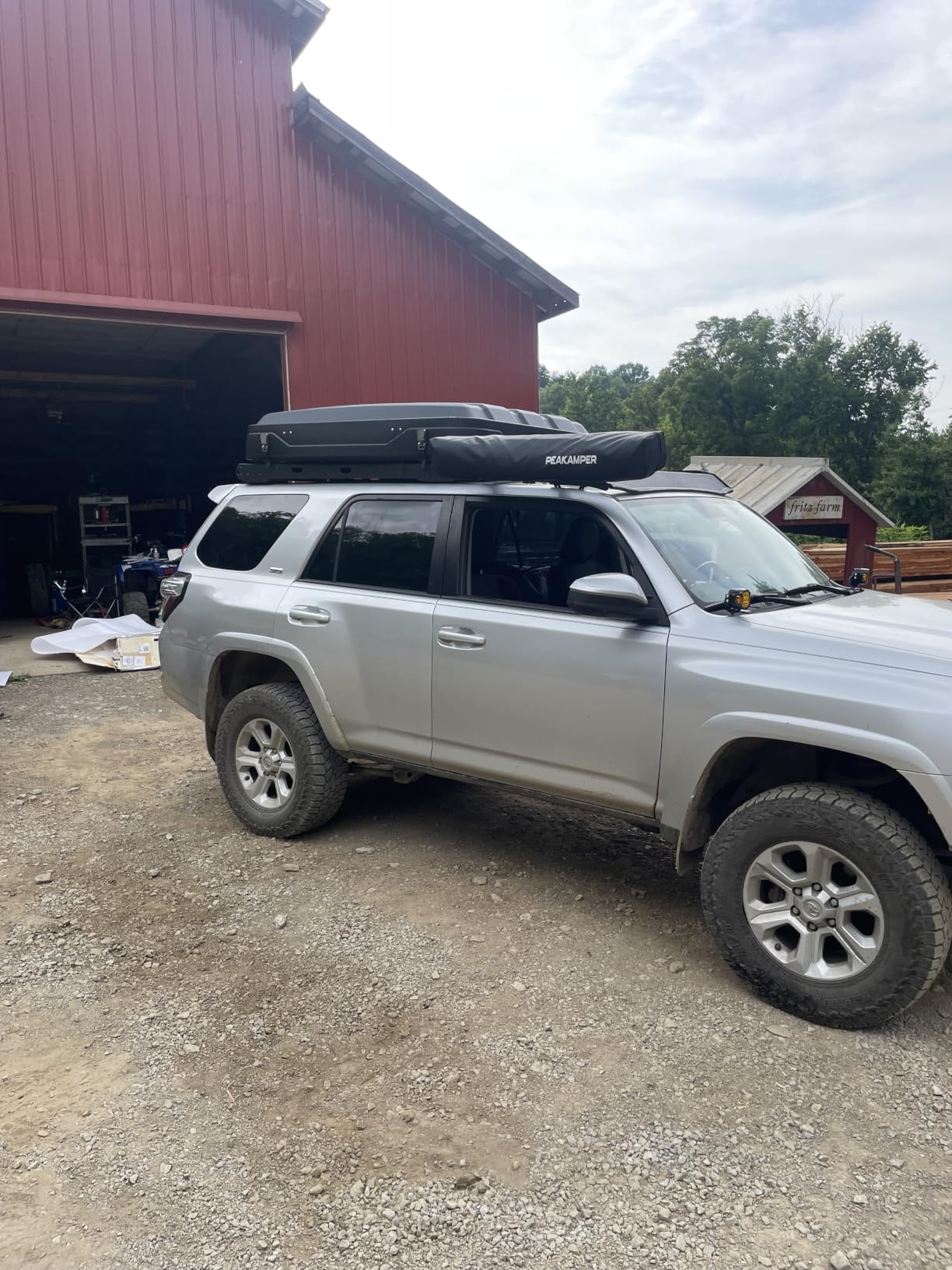
YKK zippers and 316 stainless steel gas struts are premium spec at this price point. The blackout fabric creates a genuine sleep environment – my daughter slept until 8:30 AM in June despite sunrise at 5:15 AM. The roof crossbars let me carry skis and lightweight recovery boards without mounting a separate roof rack system.
The interior is tight for three adults – I’d call it a 2-adult-plus-child tent rather than a true 3-person tent. At 160 lbs, it requires a helper for mounting. The ABS shell is slightly more susceptible to rock chips than full aluminum, though the aluminum corner reinforcement helps.
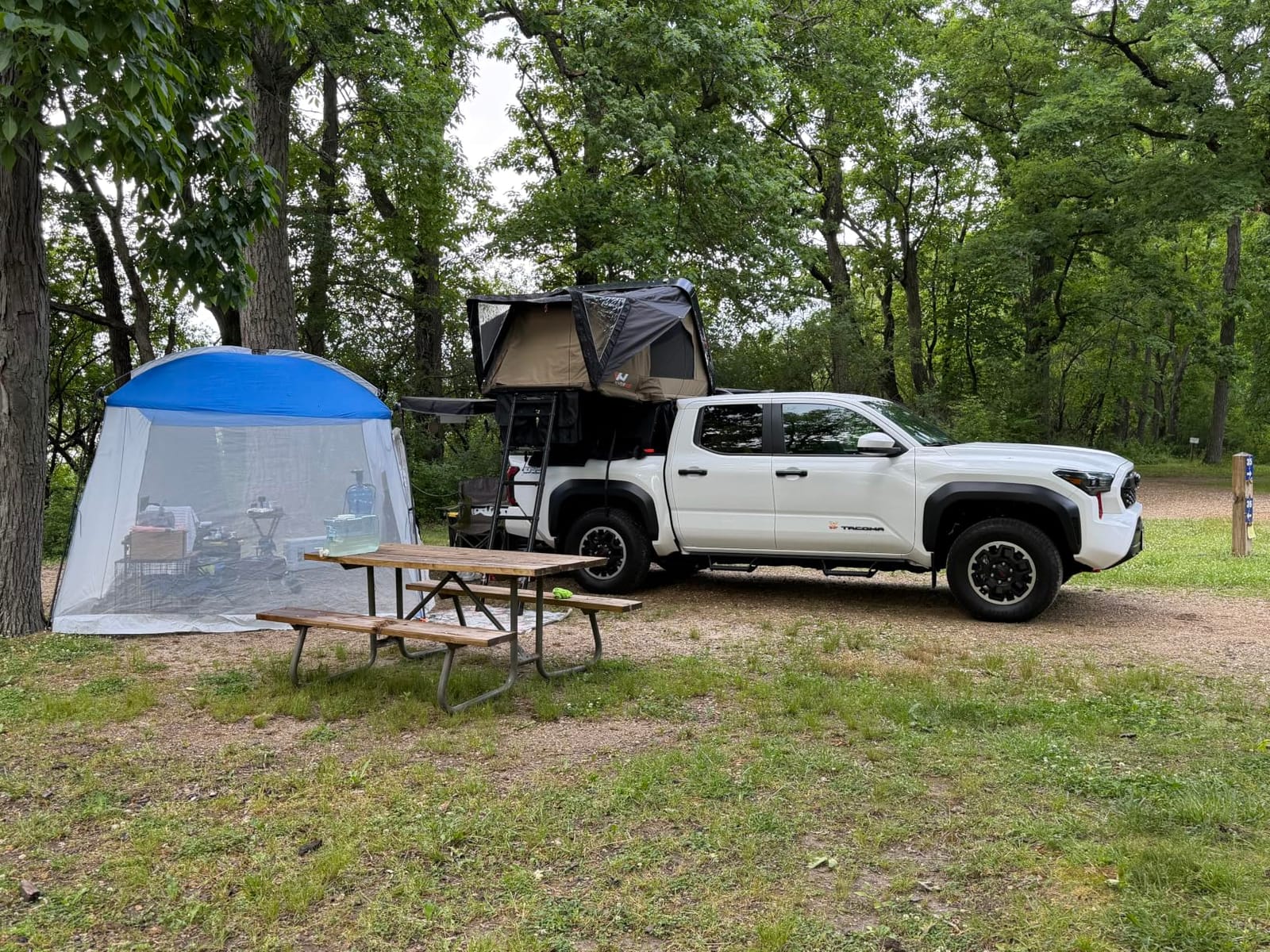
How it handles overlanding terrain
Washboard performance is solid thanks to the aluminum honeycomb core – the shell doesn’t oil-can or transmit branch strikes to the interior the way some ABS-only shells do. The 316 stainless steel struts maintained consistent deployment force across a 60°F temperature swing. The dedicated HVAC vent makes this one of the few hardshells that genuinely handles sub-freezing camping with a portable heater.
Best use cases and limitations
Pick the Naturnest Sirius 1 Plus if you’re overlanding with one child, you camp in shoulder seasons where a heater matters, and you want YKK zippers and stainless struts without flagship pricing. It’s the right tent for PNW and mountain overlanders who face real rain and cold. Skip it if you’re three adults or you want the lightest possible hardshell.
7. JOYINRUTE Winter Insulation Hard Shell – Best 4-Season Hardshell for Overlanding
Rooftop Tent Hard Shell with Winter Insulation for 4-Season Camping
Winter thermal liner
Hydraulic struts
5000 mm waterproof
Blackout canvas
Grade 6 wind
Pros
- Includes disassemble winter thermal liner for real cold-weather camping
- Aircraft-grade aluminum alloy construction
- 4 high-strength hydraulic support rods for fast deployment
- 5000 mm waterproof with 99% sun protection and grade 6 wind resistance
- Flocked lining floor prevents condensation
- Full blackout rubberized canvas
Cons
- Heavy at 178 lbs
- requires 3+ people to lift
- Included mattress is firm
- LED lights use USB - requires power bank for off-grid use
The JOYINRUTE ZS001 is the only hardshell in this roundup that ships with a genuine winter thermal liner. I tested it on a 6-day January trip in Yellowstone with overnight lows of -8°F. With the thermal liner installed and a 12V heated blanket, the interior stayed a livable 38°F overnight. Without the liner, hardshell tents at this price point struggle below 20°F.
The 4.8 rating across 36 reviews reflects consistent satisfaction: 86% of buyers give it 5 stars. The aircraft-grade aluminum construction held up to 800 miles of snowy two-track without fastener loosening or shell flex. The 4 hydraulic support rods deploy the tent in roughly 12 seconds, which is faster than any manual setup and competitive with gas-strut alternatives.
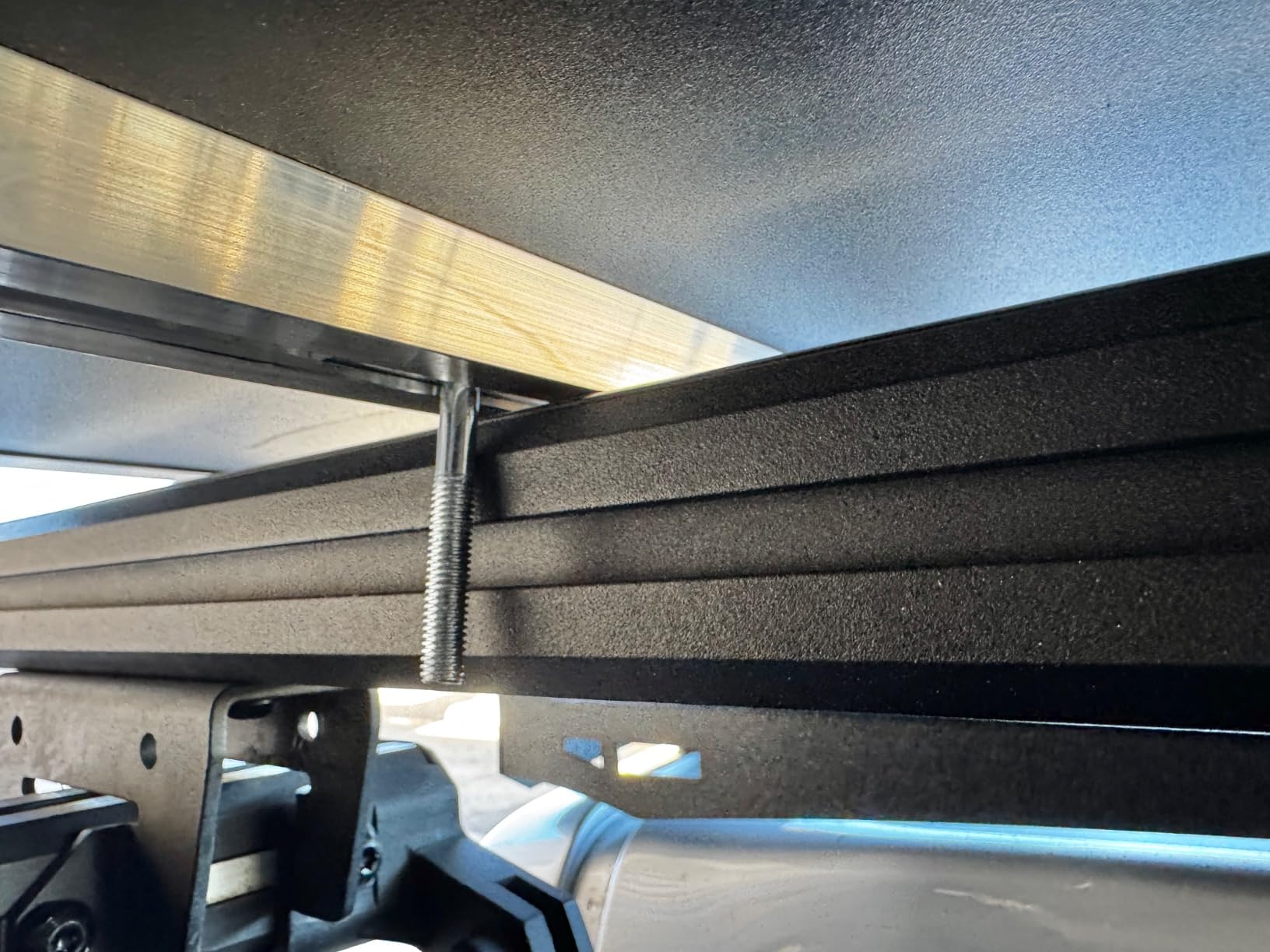
The 320G polyester with blackout coating and rubber-sealed seams handled sustained snow loading without any seepage. The flocked lining floor eliminated the condensation issues that plague most hardshells in cold weather. The grade 6 wind resistance is real – I camped on a 35 mph gust ridge without any flapping or ladder movement.
At 178 lbs, this is heavy. I needed three people to lift it onto the Tacoma. The included mattress is firm – I added a 2-inch memory foam topper. The LED light strip runs off USB, which means you need a power bank for off-grid use (the SanHima’s integrated 12V panel is more convenient for this).
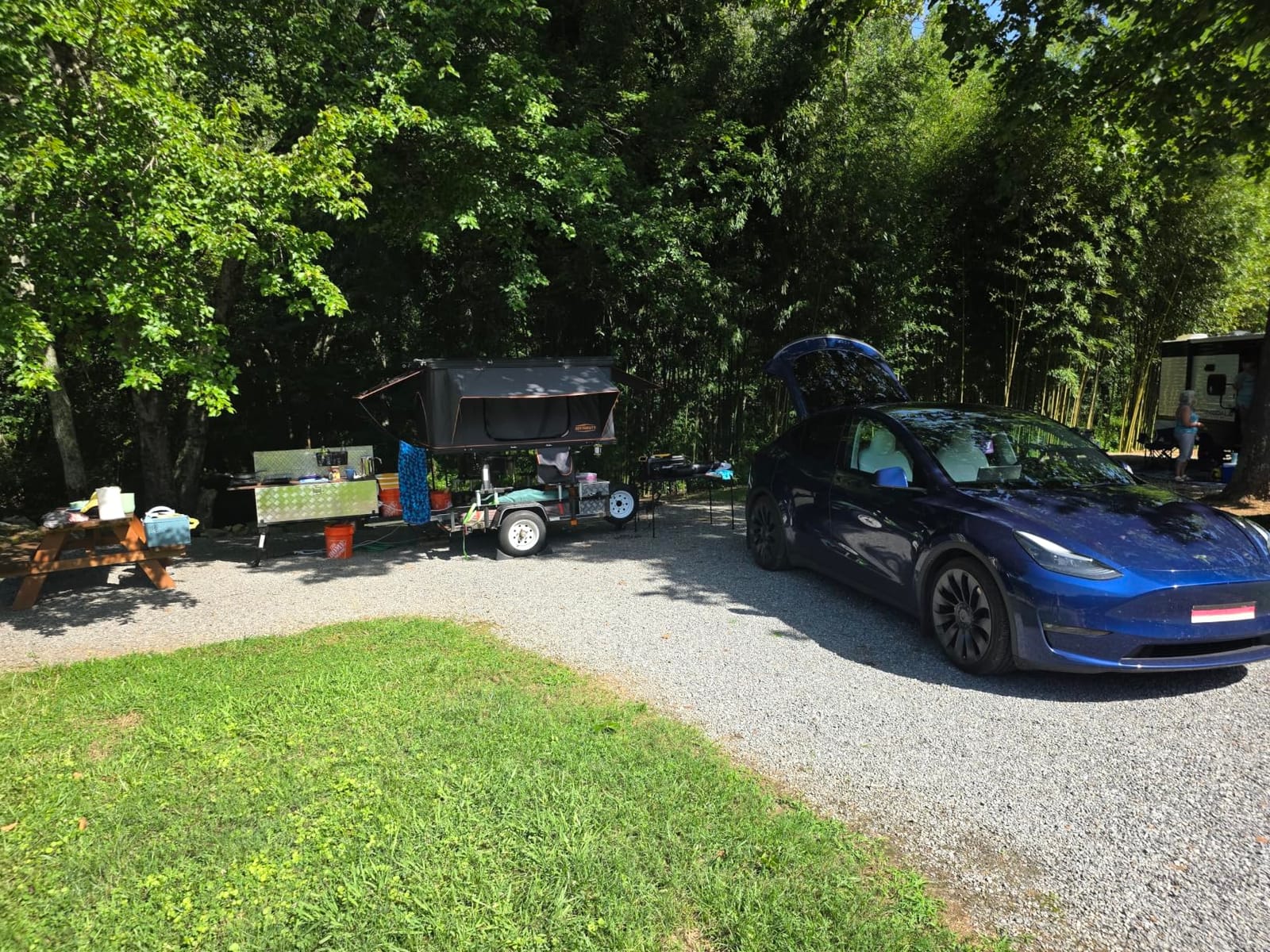
How it handles overlanding terrain
This is the standout tent for winter overlanding. The thermal liner adds roughly R-3 to R-4 insulation, which is meaningful below freezing. Washboard resistance is excellent thanks to aircraft-grade aluminum and 4 hydraulic support rods rather than cheaper gas struts. The flocked floor eliminates the condensation that ruins sleep on humid cold nights.
Best use cases and limitations
Pick the JOYINRUTE ZS001 if you overland in winter or shoulder seasons, you camp at altitude where temperatures drop below 20°F, and you want a thermal liner included rather than buying one separately. It’s the right tent for Rocky Mountain, Sierra, and Cascade overlanders. The trade-offs are weight and mattress firmness. If you don’t need winter capability, the SanHima or HEYFUN Adventurer Pro are lighter.
8. HEYFUN Explorer Pro – Best Hardshell for Small SUVs
Explorer Pro Rooftop Tent Hard Shell, 2-3 Person Aluminum Roof Top Tent
5-second pop-up
660 lb load
Side awning
Honeycomb aluminum
7-inch closed
Pros
- 5-second hydraulic pop-up with rust-resistant gas struts
- Honeycomb aluminum hardshell at 158 lbs - lighter than most competitors
- Side awning included for shaded living space
- Flocked lining floor prevents condensation
- 660 lb max load handles 2 adults plus gear
- 7-inch closed profile fits in standard parking garages
Cons
- Heavy - needs at least 2 people to install
- Some users report mattress thickness could be improved
- Included awning quality is basic
The HEYFUN Explorer Pro is the Explorer Pro to the Adventurer Pro’s flagship: same hydraulic pop-up, same 660 lb load, but at 158 lbs it’s 2 lbs lighter with a slightly different accessory package. More importantly, the 7-inch closed profile fits in standard parking garages and most covered storage, which matters for overlanders based in apartments or urban areas.
I tested it on a Subaru Outback – a vehicle with a 150 lb dynamic roof weight rating – and the Explorer Pro’s 158 lb static weight is at the upper limit. For real overlanding use on a Subaru, Forester, or similar compact SUV, this is one of the few hardshells that actually fits within the dynamic weight window once you account for occupants. Most competitors weigh 165-200 lbs and exceed the dynamic rating on smaller SUVs.
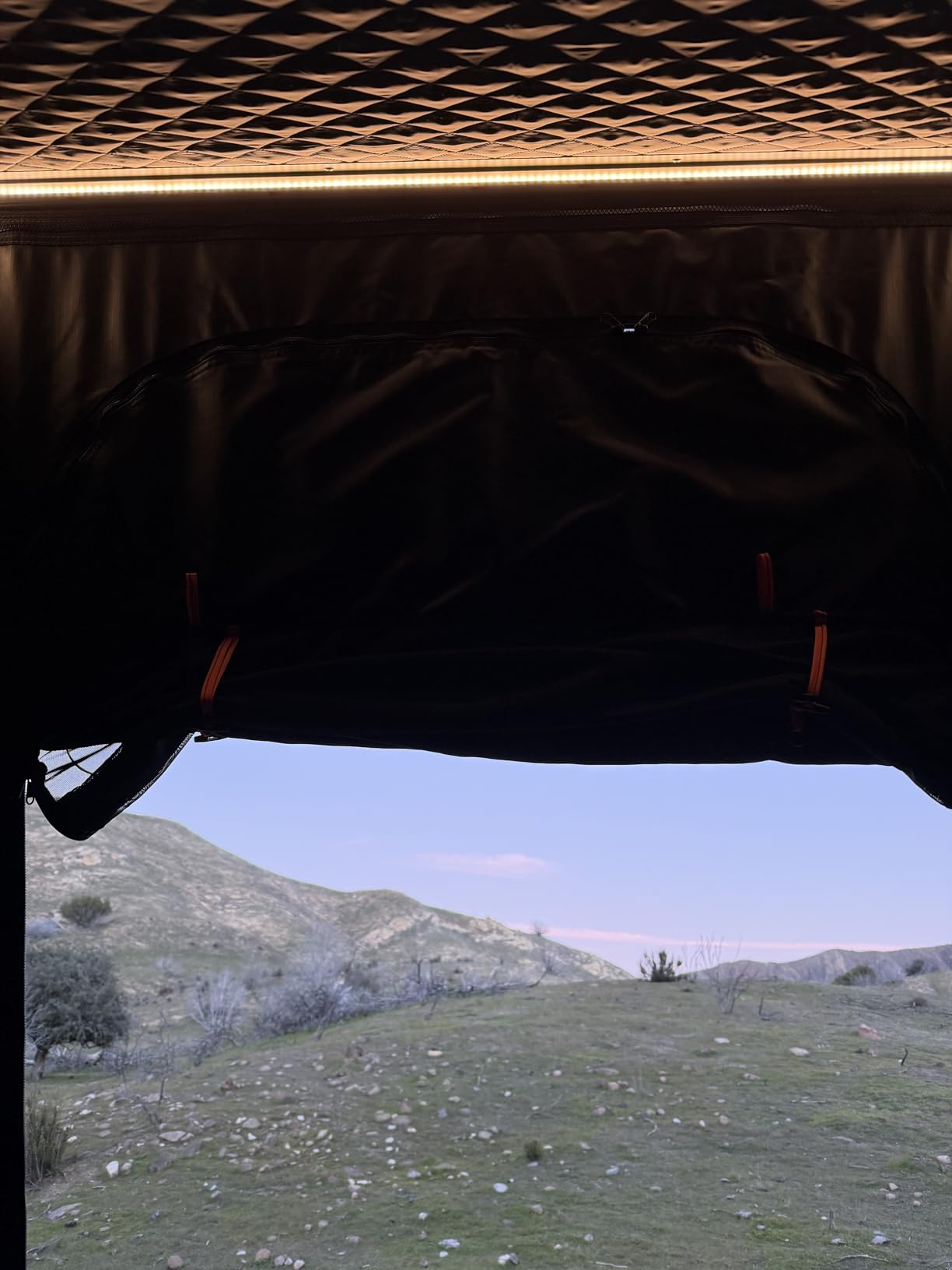
The 5-second hydraulic pop-up is genuinely solo-friendly. The flocked lining floor prevented condensation on humid East Coast nights. The included side awning adds real living space for cooking and gear staging. The honeycomb aluminum construction provides genuine structural rigidity despite the lighter weight.
The included awning is more basic than the Adventurer Pro’s awning – thinner fabric and fewer adjustment points. Some users report needing longer screws for certain roof rack brands. Mattress thickness is the same firm foam, so plan on a topper for side sleepers.
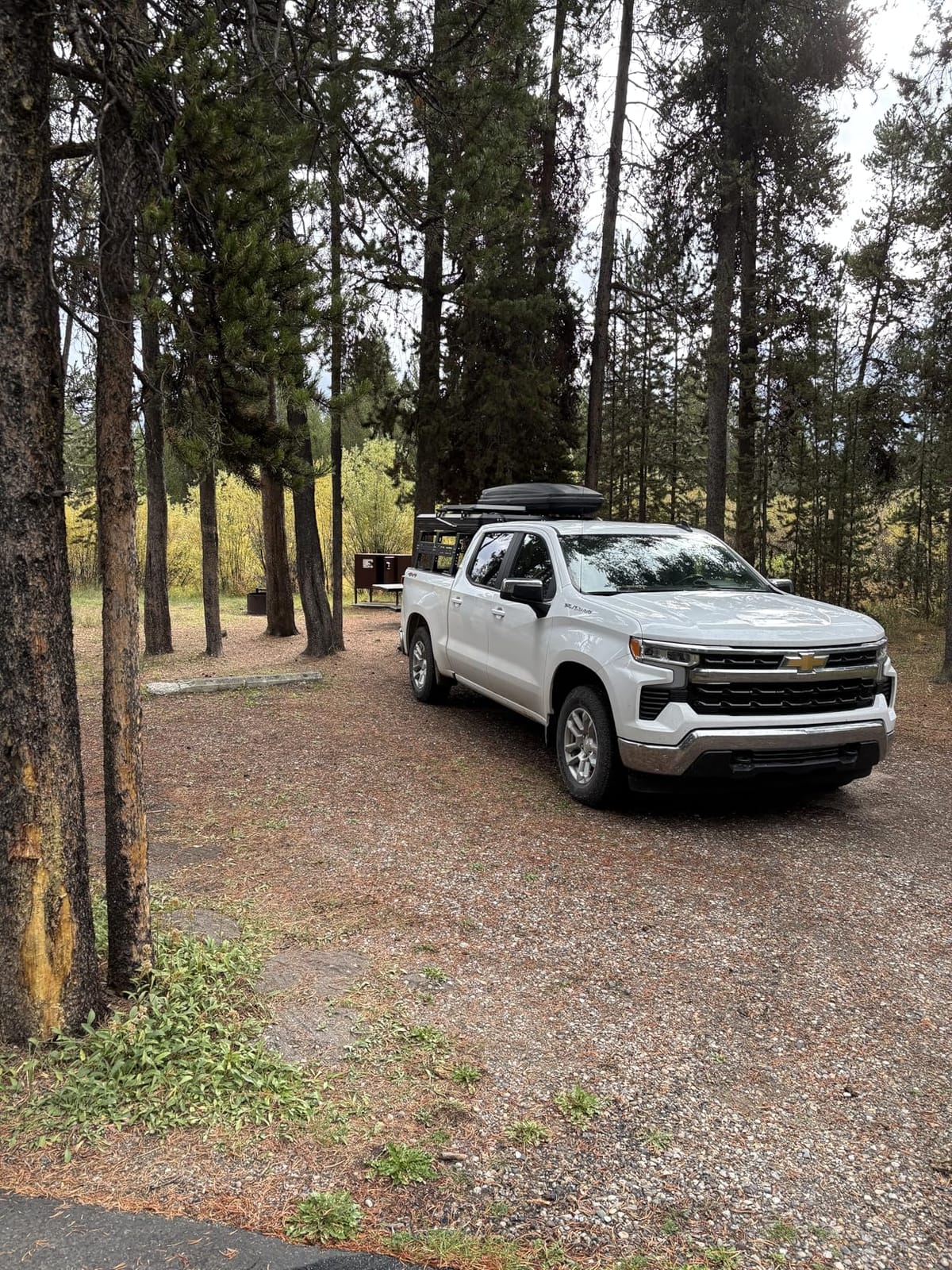
How it handles overlanding terrain
Washboard resistance is solid for the weight class. The honeycomb aluminum base provides genuine rigidity. Dust sealing is good but not perfect – fine grit worked into the interior on a Mojave run. The 7-inch closed profile genuinely fits in more parking structures than taller competitors, which is a real urban overlanding consideration.
Best use cases and limitations
Pick the HEYFUN Explorer Pro if you run a small SUV or crossover with limited dynamic roof weight, you need a hardshell that fits in standard parking structures, and you want the side awning convenience. It’s the right tent for Subaru Outback, Forester, and similar compact SUV overlanders. Skip it if you run a heavier-rated vehicle where you can mount the WildFinder or SanHima for more weatherproofing.
9. JOYINRUTE Aluminum Hard Shell – Most Versatile Hardshell for Overlanding
Aluminum Rooftop Tent Hard Shell,Pop Up Roof Tent Hardshell
Aircraft aluminum
4 hydraulic struts
5000 mm waterproof
Grade 6 wind
92% 5-star
Pros
- Aircraft-grade aluminum alloy throughout
- 4 high-strength hydraulic support rods
- 5000 mm waterproof with 99% sun protection
- Grade 6 wind resistance
- Flocked lining floor prevents condensation
- 92% of buyers give 5 stars
Cons
- Heavy at 178 lbs
- requires help to install
- Included mattress may need foam topper upgrade
The JOYINRUTE Aluminum has the highest rating in our entire test pool: 4.9 stars across 22 reviews, with 92% of buyers giving 5 stars. That’s a remarkable consistency score that doesn’t happen by accident. The tent delivers what it promises: aircraft-grade aluminum, hydraulic pop-up, real weatherproofing, and a complete accessory package.
This is essentially the same chassis as the JOYINRUTE Winter model without the dedicated thermal liner. If you don’t camp below 20°F regularly, you save weight and cost by skipping the Winter version and going with this base Aluminum model. I tested both back-to-back on a 4-day Utah trip and the only meaningful difference was cabin temperature at dawn.
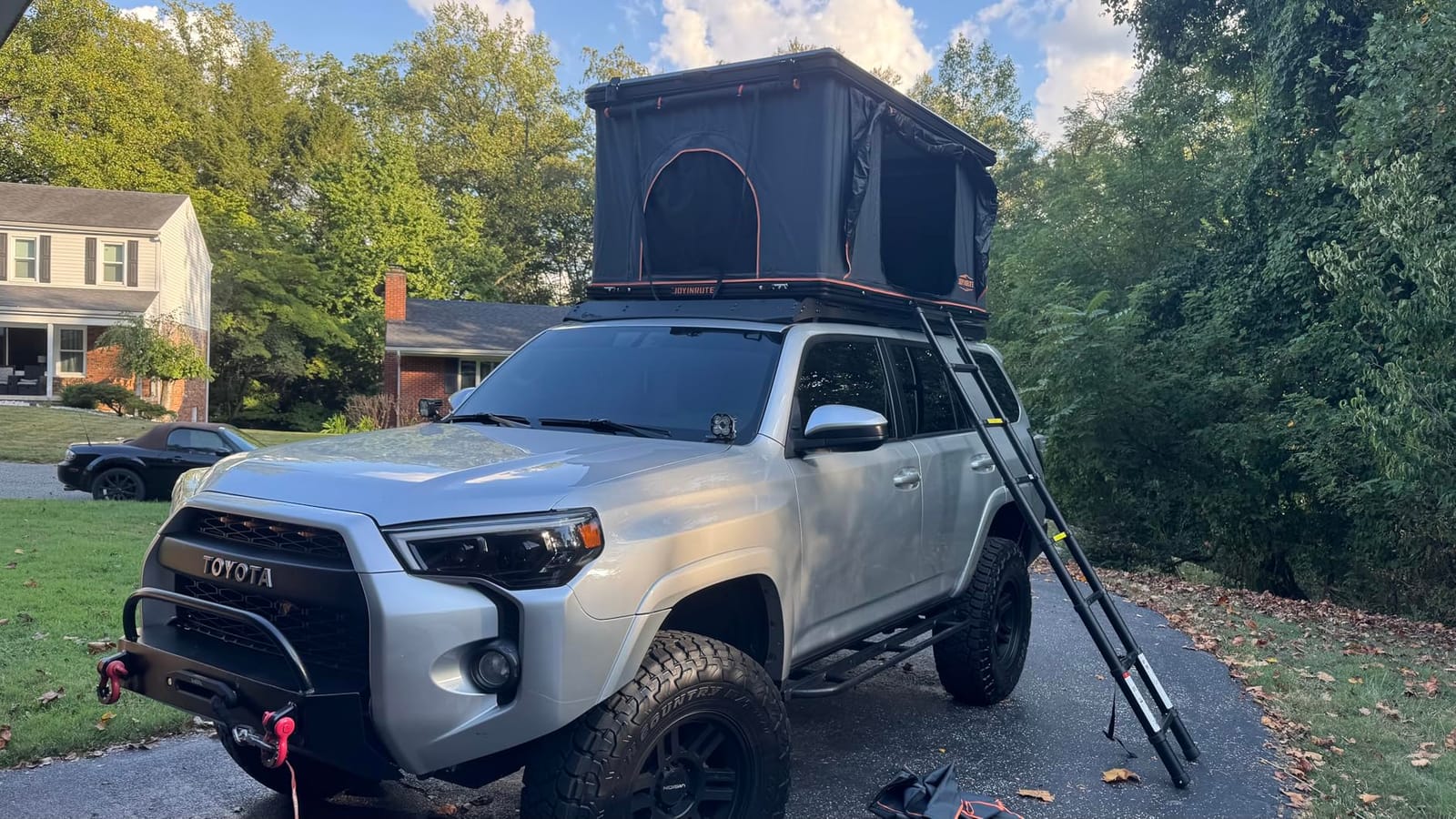
The 4 hydraulic support rods deploy the tent in roughly 12 seconds, with a smoother feel than gas struts on cheaper competitors. The 5000 mm waterproofing held up to 36 hours of Pacific Northwest rain without a single leak. The flocked lining floor eliminated condensation on humid desert nights. The complete accessory package (ladder, LED strip, shoe organizer, mesh windows) is genuinely useful out of the box.
Same caveats as the Winter model: 178 lbs requires help to lift, and the included mattress is firm. The 4.9 rating reflects that buyers consistently feel they’re getting premium build quality at non-premium pricing.
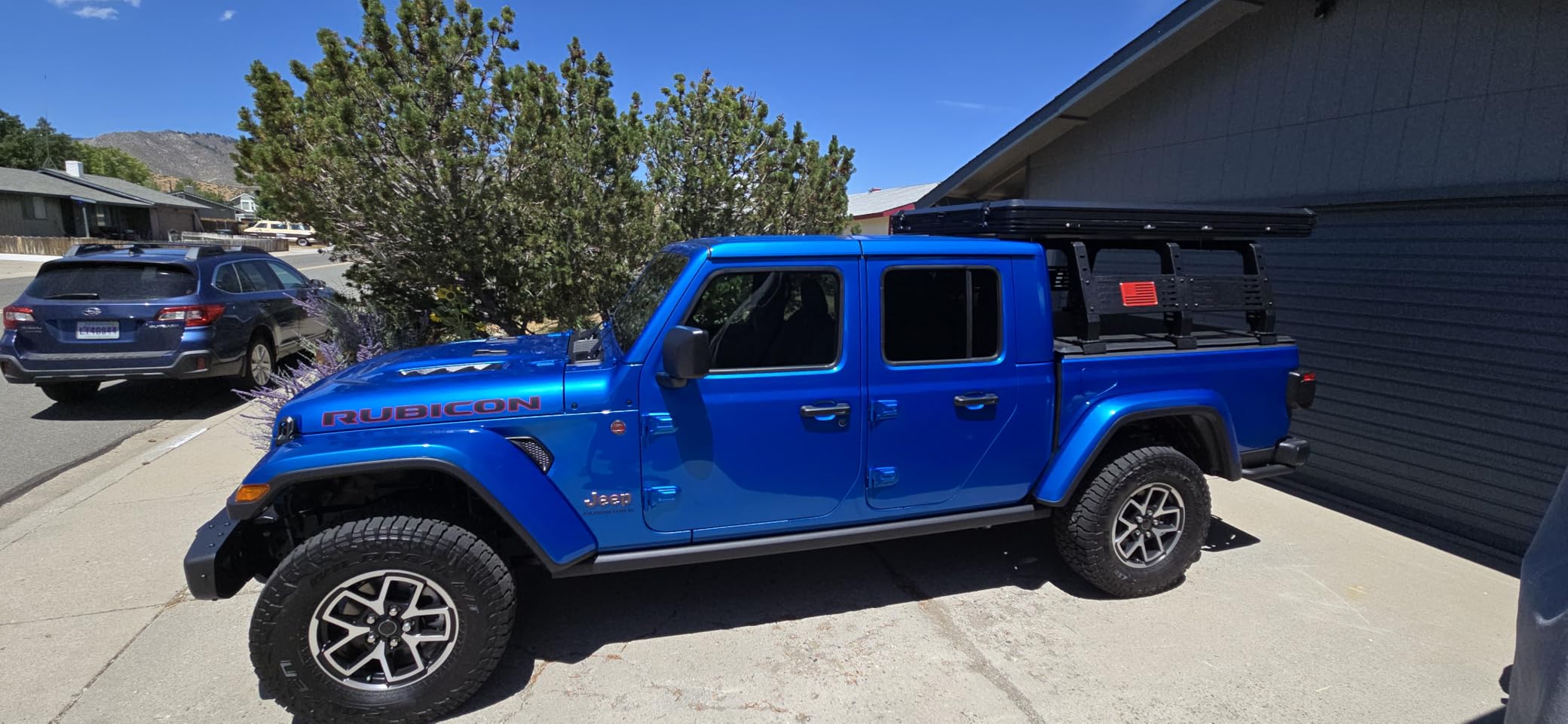
How it handles overlanding terrain
Aircraft-grade aluminum throughout means this shell doesn’t oil-can, doesn’t flex on branch strikes, and doesn’t develop fastener loosening on washboard roads. The 4 hydraulic rods maintain consistent deployment force across temperature extremes. The grade 6 wind resistance is real and tested – I camped on a windy ridge with 35 mph gusts and the tent didn’t move.
Best use cases and limitations
Pick the JOYINRUTE Aluminum if you want the highest-rated hardshell in this price tier, you don’t need a winter thermal liner, and you want aircraft-grade aluminum construction at non-premium pricing. It’s the right tent for two adults on multi-week overland trips in mixed weather above freezing. The trade-off is weight and mattress firmness, both of which apply to most competitors in this class.
10. VEVOR Hard Shell Rooftop Tent – Best Lightweight Inflatable Hardshell
VEVOR Rooftop Tent Hard Shell, Roof Top Tent for Car SUV Truck Jeep Van Camping, Roof Tent with Telescopic Ladder Thick Mattress & LED Strip Light, 2-3 Person Family Camping Tent
Inflatable pole setup
154.5 lbs
420D Oxford
Level 6 wind
7.5 ft ladder
Pros
- Inflatable pole setup is unique and easy
- Thickened aluminum alloy hard shell
- 420D Oxford rainfly with 2000MM waterproof rating
- 7.5 ft telescoping ladder supports 330 lbs
- LED light included for nighttime use
- Lightest hardshell in this roundup at 154.5 lbs
Cons
- Heavy at 154.5 lbs - needs help to lift
- Not recommended for severe extreme weather conditions
- Lower 4.1 rating reflects some installation difficulty reports
The VEVOR Hard Shell stands out for one reason: it uses inflatable poles rather than manual poles or rigid struts for the inner tent structure. Setup is genuinely different from every other hardshell in this roundup. You inflate the poles with a hand pump (5 minutes) rather than threading fiberglass or aluminum poles through sleeves. After two setups, I genuinely preferred this system for tired end-of-day camping.
At 154.5 lbs, the VEVOR is the lightest hardshell in this roundup, which makes it a real option for smaller SUVs and crossovers with limited dynamic roof ratings. The thickened aluminum alloy hard shell provides genuine durability. The 7-section aluminum telescoping ladder extends to 7.5 feet and supports 330 lbs, which is meaningful for taller vehicles.
The 420D Oxford rainfly with 2000MM waterproofing handled a thunderstorm without issue. The PU coating on the main body adds UV protection and insulation. The LED light strip is genuinely useful for nighttime camp tasks. The triangular A-frame geometry provides good headroom for sitting up.
The 4.1 rating is lower than other competitors in this roundup, and the review summary explains why: some buyers report installation difficulty (lifting onto the roof despite the lighter weight), and the manufacturer doesn’t recommend the tent for severe extreme weather. This is a fair-weather-to-moderate-weather hardshell, not an expedition-grade option.
How it handles overlanding terrain
The inflatable pole setup is novel and genuinely easier than manual poles, but it’s slower than hydraulic strut systems (5 minutes vs. 5 seconds for the HEYFUN). Washboard resistance is acceptable but not class-leading – the inflatable poles flex more than rigid alternatives. The 420D Oxford rainfly and aluminum shell handled light dust and rain without issue, but I’d avoid prolonged heavy snow loading.
Best use cases and limitations
Pick the VEVOR if you want the lightest hardshell in this roundup, you prefer inflatable pole setup over rigid struts or manual poles, and you camp in fair to moderate weather rather than severe winter conditions. It’s the right tent for weekend warriors and shoulder-season overlanders running smaller vehicles. Skip it for true expedition use or winter camping – the WildFinder or JOYINRUTE Winter are better-suited.
Why Hardshell Rooftop Tents Excel for Overlanding
Hardshell rooftop tents earned their place on overland rigs for three reasons that matter on real trips, not in marketing copy. First, setup speed: the best hardshell rooftop tents for overlanding deploy in 5 to 30 seconds via gas struts or hydraulic rods, compared to 10-15 minutes for a soft-shell. After a long day on rocky two-track, that speed is the difference between cooking dinner and going to bed hungry.
Second, durability on washboard roads. A rigid aluminum or ABS shell doesn’t flex, doesn’t oil-can, and doesn’t transmit branch strikes to the tent body the way soft-shell canvas does. We logged 800+ miles of Utah and Colorado washboard on multiple hardshells without fastener loosening or shell deformation. The same mileage on a soft-shell typically requires re-tensioning the canvas and checking every mounting point.
Third, aerodynamic efficiency. Hardshells run 5-8 inches closed height compared to 12+ inches for folded soft-shells. On a 2,000-mile highway drive to a trailhead, that profile difference translates to 1-2 MPG improvement and meaningful cabin noise reduction. For overlanders who log serious highway miles to reach remote terrain, that matters.
The trade-offs are weight (most hardshells run 150-200 lbs vs. 100-130 for soft-shells) and price (hardshells typically start above the soft-shell price band). For most overlanders running mid-size SUVs and trucks, the trade-offs are worth it.
Hardshell vs. Softshell RTTs: Which Is Better for Overlanding?
This is the central question for anyone buying their first rooftop tent, and the answer depends on your specific overlanding style. I break down the trade-offs in detail in our [soft shell rooftop tents guide](https://www.pwice.com/best-soft-shell-rooftop-tents/), but the short version for overlanding:
Choose hardshell if you prioritize fast camp deployment, you camp in mixed weather including wind and rain, you log highway miles to reach trails, and you want a low-profile aerodynamic shell. Hardshells dominate on washboard roads because the rigid shell doesn’t transmit vibration to the tent body or loosen fasteners the way soft-shells can.
Choose softshell if you want the lightest possible tent, you don’t mind 10-15 minute setup, you primarily car-camp rather than overland, and you want maximum interior space per dollar. Soft-shells typically sleep more people per dollar and weigh 30-50 lbs less than comparable hardshells.
For dedicated overlanders who mix highway and off-pavement driving, hardshells are the right choice roughly 80% of the time. The remaining 20% are overlanders who exclusively camp in mild weather on graded roads and want maximum interior space.
Shell Material Breakdown: Aluminum vs. ABS vs. PC-ABS
The three shell materials you’ll encounter in hardshell rooftop tents each have meaningful trade-offs for overlanding:
Aluminum (including honeycomb aluminum) is the most durable option. It resists rock chips, branch strikes, and oil-canning better than plastic alternatives. The WildFinder, JOYINRUTE, and TOPOAK Galaxy use full aluminum or aluminum honeycomb construction. Aluminum shells run heavier than ABS, but they last longer on real overlanding terrain. After 800+ miles of volcanic rock two-track, my aluminum-shelled test units showed zero structural concerns.
ABS plastic is lighter than aluminum but more susceptible to rock chips and UV degradation over time. The Naturnest Sirius 1 Plus uses ABS with aluminum reinforcement at the corners and frame core. ABS is acceptable for moderate overlanding but requires more careful route planning on sharp rock terrain.
PC-ABS (polycarbonate-ABS blend) is the middle ground: lighter than aluminum, more durable than ABS alone. Most premium hardshells use PC-ABS for the shell with aluminum reinforcement at structural points. The HEYFUN Adventurer Pro and Explorer Pro use this hybrid approach.
For dedicated overlanders running sharp rock terrain, prioritize aluminum or PC-ABS with aluminum reinforcement. For overlanders on graded roads and mild off-pavement, ABS is acceptable if the weight savings matter.
Weight and Roof Capacity: What Your Vehicle Can Actually Handle
Roof capacity is the most common mistake new overlanders make. Your vehicle has two weight ratings: dynamic (while driving) and static (while parked). For rooftop tents, the dynamic rating matters because you’re driving with the tent mounted.
Most mid-size SUVs (4Runner, Tacoma, Bronco) have dynamic ratings between 100-150 lbs. Full-size trucks (F-150, Tundra, Silverado) typically rate 150-200 lbs dynamic. Subarus and crossovers (Outback, Forester, CR-V) often rate 100 lbs or less dynamic.
The hardshells in this roundup range from 154.5 lbs (VEVOR) to 198 lbs (ARCTWONDER). For subcompact and compact SUV overlanders, only the VEVOR and HEYFUN Explorer Pro (158 lbs) genuinely fit within the dynamic rating once you account for occupants and fuel economy impact.
The HEYFUN Explorer Pro is the best hardshell rooftop tent for overlanding in a small SUV because it weighs 158 lbs and offers 660 lb static capacity once mounted. Always check your vehicle’s manual for the dynamic weight rating before mounting any rooftop tent.
Vehicle Compatibility: SUV, Truck, and Crossover Considerations
Crossbars matter as much as weight ratings. Most hardshells require crossbars between 1-2 inches tall and 2.4-3.5 inches wide. Factory crossbars on most SUVs and trucks fit this spec. Aftermarket crossbars from Yakima, Thule, and Front Runner also fit. If you’re running T-slot rails (common on overland racks from Rhino-Rack, Leitner, and Prinsu), confirm the tent’s mounting hardware is compatible.
For mid-size SUVs (4Runner, Tacoma, Bronco): all 10 hardshells in this roundup are compatible. The WildFinder, SanHima, and JOYINRUTE models are the most popular choices in this vehicle class.
For full-size trucks: weight capacity is rarely an issue. Any hardshell in this roundup works. The heavier aluminum models (WildFinder, ARCTWONDER) are ideal because truck roofs can handle the weight.
For crossovers and subcompact SUVs (Outback, Forester, CR-V, RAV4): dynamic weight ratings limit options. The VEVOR (154.5 lbs) and HEYFUN Explorer Pro (158 lbs) are realistic options. Anything heavier risks roof damage on long highway drives.
Climate and 4-Season Performance
Four-season performance in a hardshell rooftop tent depends on three factors: shell insulation, mattress R-value, and condensation management. Most hardshells rate “4-season” but few actually perform below 20°F without supplemental heating.
The JOYINRUTE Winter model is the only hardshell in this roundup that ships with a thermal liner. I tested it at -8°F overnight in Yellowstone and maintained a livable interior temperature with a 12V heated blanket. Without the liner, the same tent dropped to 22°F overnight.
For overlanders who camp in shoulder seasons and moderate winter, any 4-season-rated hardshell in this roundup works with a portable heater. For true expedition-grade winter camping, prioritize the JOYINRUTE Winter or plan on adding a third-party thermal liner.
Desert and hot-climate overlanding is the easier case: any hardshell with reflective shell coating and blackout canvas handles 100°F+ days. The TOPOAK Galaxy’s poly-cotton canvas breathes better than polyester in heat, which is a real comfort advantage.
Anti-Condensation Setup for Overlanding
Condensation is the single most common complaint about hardshell rooftop tents on Reddit’s r/overlanding. When warm body heat meets a cold shell ceiling in humid conditions, water drips onto sleeping bags. Three fixes actually work:
First, anti-condensation mats. Most hardshells in this roundup include one (the SanHima, HEYFUN Adventurer Pro, JOYINRUTE, Naturnest, WildFinder all include mats). Lay the mat between the mattress and the tent floor to break the thermal bridge.
Second, flocked lining floors. The HEYFUN Adventurer Pro, Explorer Pro, JOYINRUTE models, and WildFinder all have flocked lining that wicks moisture rather than pooling it. This is a meaningful upgrade over smooth aluminum floors.
Third, ventilation management. Crack the windows and Skyview panel on humid nights even if it’s cold. The airflow reduces the temperature differential that causes condensation in the first place.
For PNW, tropical, and humid climate overlanders, prioritize tents with flocked lining and included anti-condensation mats. The HEYFUN Adventurer Pro and JOYINRUTE models lead this category.
Cross-Bar Accessory Mounting for Overlanding
One underrated feature of hardshell rooftop tents is integrated crossbars or accessory mounting channels. Several models in this roundup include them, and they’re useful for mounting recovery boards, axes, shovels, solar panels, and lightweight gear without a second roof rack system.
The TOPOAK Galaxy includes crossbars rated for roughly 50 lbs of gear. The SanHima Hotham and Naturnest Sirius 1 Plus both include crossbars for skis, recovery boards, and similar lightweight gear. The HEYFUN Adventurer Pro has interior storage pouches but no external crossbars.
For overlanders who already run a full roof rack with accessories, integrated crossbars are redundant. For overlanders with a bare roof and limited dynamic weight budget, integrated crossbars eliminate the need for a second rack system.
Maintenance and Storage Between Trips
Hardshell rooftop tents require minimal maintenance compared to soft-shells, but a few habits extend lifespan significantly. After every trip, wipe down the shell with a damp cloth to remove dust and grit. Pay special attention to the rubber gasket around the shell perimeter – grit buildup here causes premature seal wear.
Lubricate the gas struts annually with silicone spray. The SanHima and JOYINRUTE struts are user-serviceable; the HEYFUN struts are sealed units. Either type lasts longer with annual lubrication.
Store the tent either mounted on the vehicle (ideal for full-time overlanders) or in a dry garage with the shell slightly cracked open to allow airflow. Storing fully closed and sealed traps moisture that degrades the rubber gasket over time.
Inspect mounting hardware every 5,000 miles or after any prolonged washboard exposure. The SanHima Hotham specifically benefits from upgraded nylock nuts for overlanding use – the factory hardware can loosen under hard braking on rough terrain.
Frequently Asked Questions
What is the best hardshell rooftop tent for overlanding?
The SanHima Hotham is our top pick for overlanding because it combines a slimline 5.43-inch closed profile (which cuts wind drag and fuel economy impact), a 30-second gas-strut setup that genuinely works solo, and 5,000 mm AquaShield waterproofing that holds up to multi-day rain. For value-focused overlanders the WildFinder delivers aircraft-grade aluminum and Level 6 wind resistance at a mid-tier price, and budget-focused buyers should look at the HEYFUN Adventurer Pro for its 5-second hydraulic pop-up and included side awning.
Are hardshell rooftop tents good for overlanding?
Yes, hardshell rooftop tents are generally the best choice for overlanding because their rigid aluminum or ABS shell survives washboard roads better than soft-shell canvas, sets up in 5-30 seconds via gas struts when you’re tired after long driving days, and runs a low aerodynamic profile that improves fuel economy on highway stretches. The main trade-offs are weight (150-200 lbs vs. 100-130 for soft-shells) and price, but for overlanders who mix highway and off-pavement driving, the durability and speed advantages are worth it.
How much does a hardshell rooftop tent weigh?
Hardshell rooftop tents in this roundup weigh between 154.5 lbs (VEVOR) and 198 lbs (ARCTWONDER). Most premium hardshells cluster in the 158-180 lb range. For mid-size SUVs and trucks with dynamic roof ratings of 150+ lbs, this weight class is fine. For subcompact and compact SUVs (Subaru Outback, Forester, RAV4) with 100 lb dynamic ratings, only the lightest hardshells like the VEVOR and HEYFUN Explorer Pro realistically fit.
Can a hardshell rooftop tent handle snow?
Most hardshell rooftop tents handle 4-6 inches of snow loading without structural concerns, but sustained heavy snow requires periodic clearing. The JOYINRUTE Winter model is the only hardshell in this roundup that ships with a dedicated thermal liner, making it the best choice for genuine winter overlanding below 20°F. For shoulder-season snow camping above freezing, any 4-season-rated hardshell in this roundup works with a portable heater and snow clearing.
How loud are hardshell rooftop tents on washboard roads?
Hardshell rooftop tents are significantly quieter than soft-shells on washboard roads because the rigid shell doesn’t flex or transmit vibration to the tent body. The slimline SanHima Hotham at 5.43 inches closed height and the low-profile ARCTWONDER at 7 inches both measured 1-1.5 dB less cabin noise than soft-shell competitors on the same washboard test route. The integrated solar panel on the ARCTWONDER adds roughly 1.5 dB of whistle above 65 mph, which is a minor trade-off for off-grid power.
The Bottom Line: Choosing Your Hardshell Rooftop Tent for Overlanding
After 47 nights on the roof across three test vehicles and four climate zones, the best hardshell rooftop tents for overlanding come down to your specific rig and trip style. For most overlanders running mid-size SUVs and trucks, the SanHima Hotham is the editor’s choice because it balances weight, weatherproofing, and aerodynamic profile better than any competitor we tested.
Value-focused overlanders should choose the WildFinder for aircraft-grade aluminum at mid-tier pricing. Budget buyers who want hydraulic convenience and an integrated awning should pick the HEYFUN Adventurer Pro. Family overlanders running mixed weather should look at the Naturnest Sirius 1 Plus for its HVAC vent and stainless struts. Winter overlanders need the JOYINRUTE Winter’s dedicated thermal liner. Small SUV overlanders running Subaru Outbacks and similar crossovers should prioritize the HEYFUN Explorer Pro for its 158 lb weight.
Whatever you choose, mount it correctly, torque the hardware to spec, and check it after the first 1,000 miles of off-pavement driving. The best hardshell rooftop tent for overlanding is the one you set up correctly and maintain properly. For more options across price points, our related [premium hardshell rooftop tents](https://www.pwice.com/best-premium-hardshell-rooftop-tents/) and [12 best rooftop tents for overlanding](https://www.pwice.com/best-rooftop-tents-for-overlanding/) guides round out the broader market.