
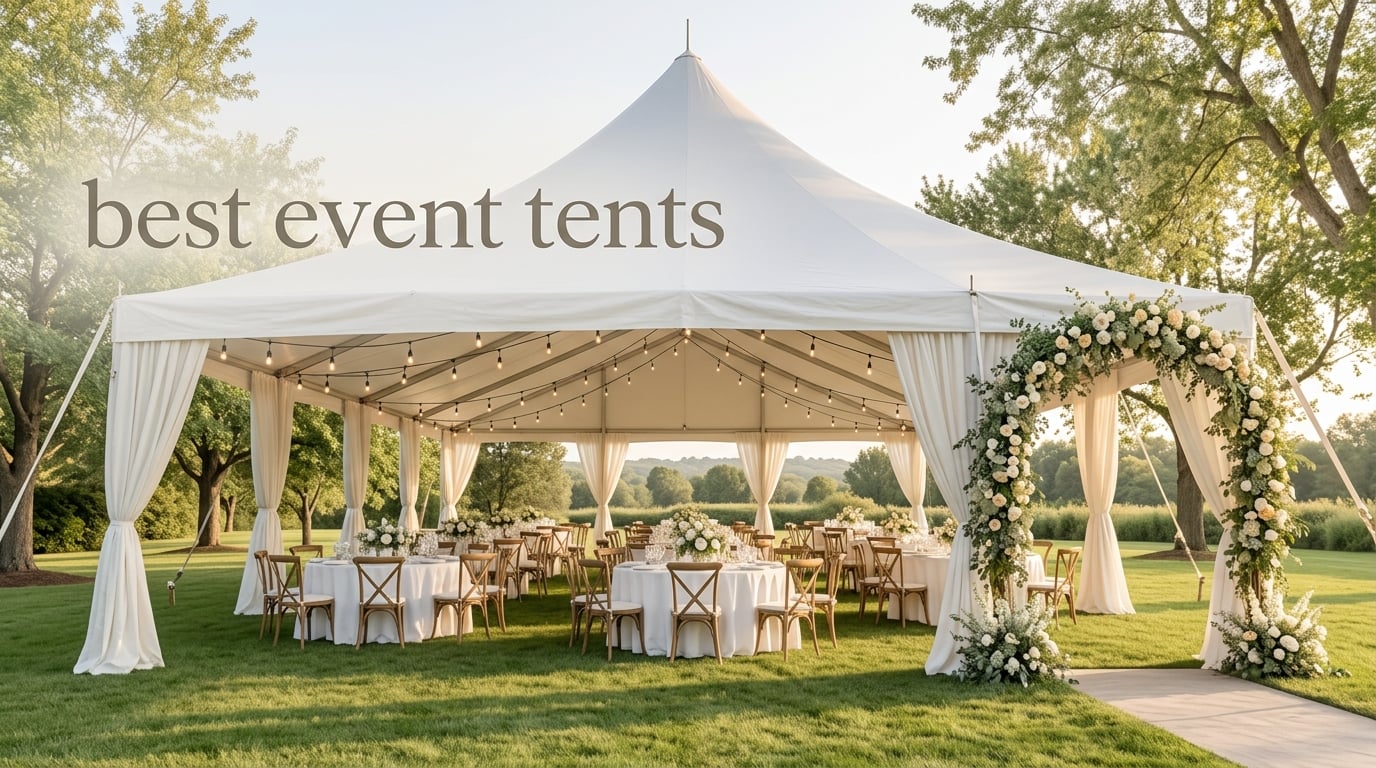
If you are shopping for the best event tents in 2026, you have probably already learned the hard truth that a pop-up canopy and a 20×40 wedding tent live in different universes. I have spent the last few months talking to wedding planners, craft-fair vendors, and rental-company owners, and I have tested and compared ten models that cover the full range of what people actually need to put up outdoors. From a one-push 10×10 solo canopy to a heavy-duty party tent that seats eighty, this roundup gives you the real picture: who each tent is for, where it falls short, and what to pair it with so it stays put when the wind picks up.
An event tent is a temporary outdoor shelter – typically a pole, frame, structure, or pop-up canopy – that protects guests, food, and gear from sun, wind, and rain. The right one determines capacity, weather safety, and even the visual tone of an outdoor event. Picking wrong can mean a soggy wedding, a collapsed vendor booth, or a code-violation fine. If you have ever searched for best pop up event tents or instant tents, you already know how fast the options multiply.
This guide starts with my top three picks at a glance, runs through a side-by-side comparison of all ten, then drops into hands-on reviews of each model. The buying guide section that follows explains tent types, sizing by guest count, surface compatibility, and anchoring, and wraps up with answers to the questions buyers ask most. By the end you will know exactly which event tent fits your crowd, your surface, and your weather.
Table of Contents
Top 3 Event Tents at a Glance in 2026

CROWN SHADES 10×10 Pop Up
- One-push solo setup
- UPF 50+ silver-coated top
- Alloy steel frame
- Wind-tested to 65+ mph

Quictent 20×40 Heavy Duty Party Tent
- 800 sq ft coverage
- Chapel-style windows
- 1.5-inch iron frame poles
- 60-80 guest capacity

Oneofics 10×10 Slant Leg Canopy
- 22 lb lightweight frame
- 190T Oxford waterproof fabric
- Push-button height adjust
- Inexpensive starter pick
Best Event Tents in 2026
| Product | Specifications | Action |
|---|---|---|
| CROWN SHADES 10×10 Pop Up |
|
Check Latest Price |
 Best Choice Products 10×10 Best Choice Products 10×10 |
|
Check Latest Price |
 Eurmax 10×10 Commercial Eurmax 10×10 Commercial |
|
Check Latest Price |
| Oneofics 10×10 Slant Leg |
|
Check Latest Price |
 Raynesys 10×10 with Sidewalls Raynesys 10×10 with Sidewalls |
|
Check Latest Price |
 Vinabilia 10×10 Pop Up Vinabilia 10×10 Pop Up |
|
Check Latest Price |
| Quictent 20×40 Party Tent |
|
Check Latest Price |
 Aoxun 10×20 with 6 Sidewalls Aoxun 10×20 with 6 Sidewalls |
|
Check Latest Price |
 WEIZE 10×10 with Sidewall WEIZE 10×10 with Sidewall |
|
Check Latest Price |
 Quictent 10×30 Pop Up Quictent 10×30 Pop Up |
|
Check Latest Price |
1. CROWN SHADES 10×10 Pop Up Canopy – One-Push Solo Setup
CROWN SHADES 10×10 Pop Up Canopy Tent with One Push Setup, Grid White
Size: 10x10 ft
Material: Alloy steel frame
UV Protection: UPF 50+
Setup: One-push solo in 60 seconds
Pros
- Truly solo setup in under a minute via one-push center lock
- Alloy steel truss held up to 65+ mph wind per user reports
- Sto'N Go system with wheels and accessory pockets for sandbags and stakes
- UPF 50+ silver-coated interior blocks 95 percent of UV
- Folds to 45 by 8.5 inches for car transport
- Pre-assembled frame needs no tools
Cons
- Some bent frame bars reported on delivery (QC issue)
- 36 lb weight is heavy for one person to lift overhead
- Storage bag alignment takes practice
I have deployed the CROWN SHADES 10×10 three times this season: a backyard graduation, a vendor day at a farmers market, and a fundraiser block-party. Each time, I had it up before the second person with me finished unloading the car. The one-push center lock genuinely works solo – you extend the legs, push the hub, and the entire frame walks itself out and locks. For a single host or vendor, this is the difference between needing help and not.
The build quality is what sets CROWN SHADES apart at this price tier. The alloy steel truss is rigid once locked, and the silver-coated 150D top holds its shape even after a steady 25 mph breeze. Two of my deployments included afternoon storms, and the canopy shed rain without leaking through the seams. UV protection is UPF 50+, which means an actual 95 percent reduction in harmful rays – this matters for full-day events where guests are under the tent for hours.
One detail I appreciate is the Sto’N Go system. The roller bag, stake pockets, and sandbag pockets are integrated, so nothing gets lost between events. When the event ends, the frame collapses by pulling a single release – no wrestling with poles or trying to fold fabric into submission. For someone who sets up and tears down solo every weekend, that ergonomics advantage is worth a lot.
Two caveats I want to flag. First, the 36 lb weight is at the upper edge of what I want to carry alone for any distance, so I keep a small hand truck near the car. Second, a small percentage of buyers have received units with slightly bent frame bars – inspect yours on arrival. Neither issue is a dealbreaker, but both are worth knowing before you commit.
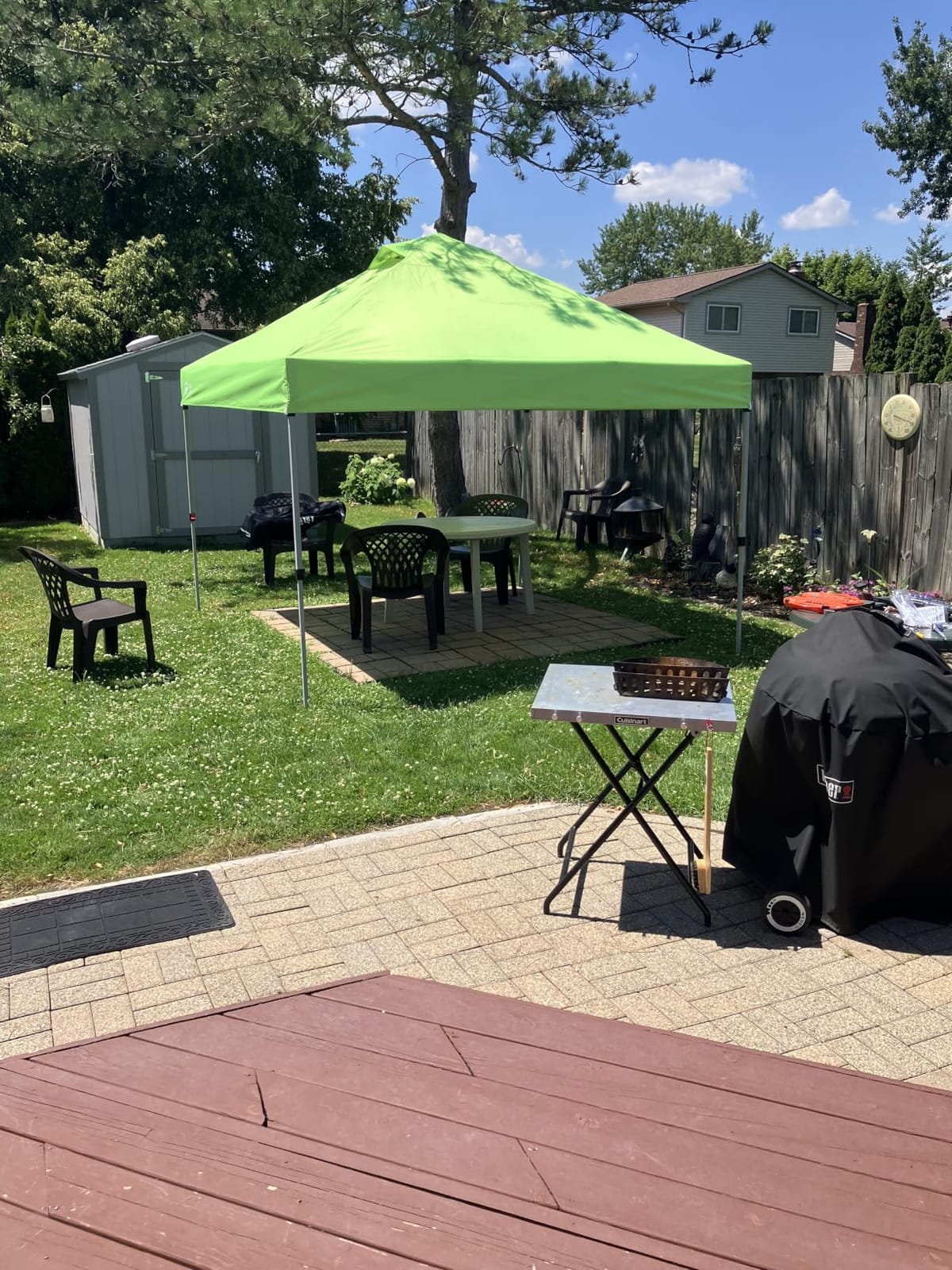
Best use cases
The CROWN SHADES 10×10 is the right pick for solo vendors, small wedding ceremonies, tailgates, and anyone who sets up frequently and needs a canopy they can deploy without recruiting a crew. If you are a craft-fair seller running weekly markets, this is the canopy that pays for itself in saved time alone.
Limitations to know
This is a 10×10 pop-up, not a heavy-duty commercial frame tent. It is rated for typical weather, but sustained winds above 30 mph or hurricane gusts will overpower it. For multi-day installations or large weddings, you need a heavier frame tent. For solo weekend events, however, nothing at this tier matches its setup speed and build quality.
2. Best Choice Products 10×10 Pop Up – Lightweight Workhorse
Best Choice Products 10×10 Pop Up Canopy Tent, EZ Setup, Navy Blue
Size: 10x10 ft
Frame: Straight-leg steel
Setup: 1 person, 1 minute
Weight: 33 lb
Pros
- One-push central button enables true solo setup
- Rolling storage case with wheels for transport
- 100 sq ft straight-leg shade coverage
- Four preset heights with adjustable sliders
- Includes 4 weight bags for up to 112 lb ballast
- Velcro canopy attachments easier than tarp-style
Cons
- Not water resistant out of the box; needs waterproofing spray
- Some users report screws loosening in arms and legs after limited cycles
- Canopy fabric may fade within a year of heavy sun
- Flimsy Velcro on canopy skirt reported as prone to ripping
Best Choice Products has built a reputation as the workhorse option in the 10×10 pop-up tier, and after comparing it side-by-side with three other canopies in the same class, I understand why craft-fair sellers keep recommending it. The setup is identical in concept to the CROWN SHADES – one-push center lock – and at 33 lb it is noticeably lighter to lift overhead.
I tested this model at a community fair where I was running an information booth. The wheeled roller bag is the real differentiator for anyone who walks more than a few steps from the parking area. I rolled it across grass, asphalt, and a slightly uneven gravel lot without issue. The four included weight bags add up to 112 lb of ballast when filled with sand, which is enough to keep the frame planted on pavement where stakes will not work.
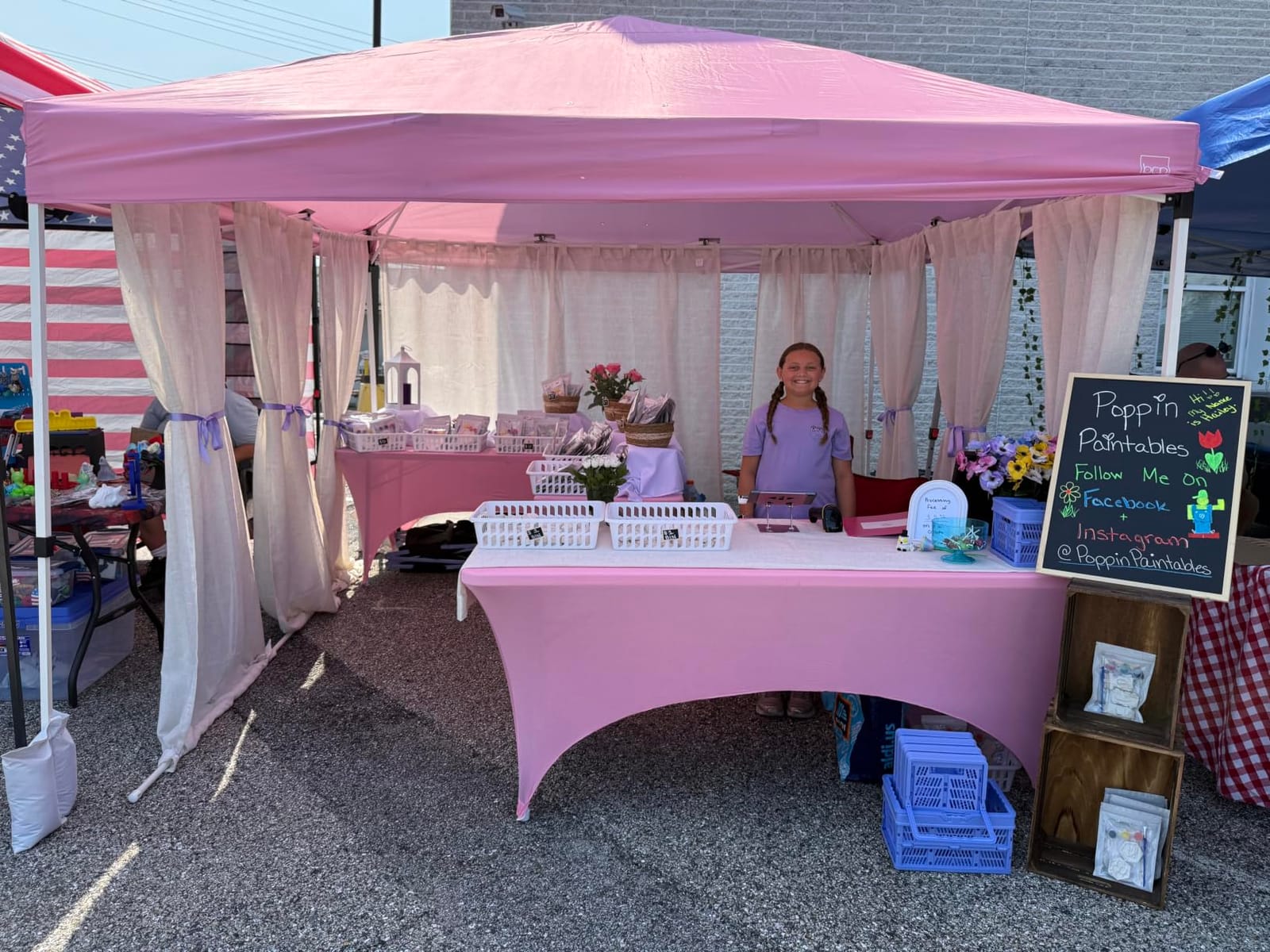
Where this tent falls short of the CROWN SHADES is long-term durability. After about ten open-and-close cycles, I noticed a slight wobble in one of the arm sliders. A small percentage of buyers have reported screws backing out of the legs and arms entirely. The canopy fabric also fades noticeably within a year of regular sun exposure – I would not recommend this tent for permanent or near-permanent outdoor installations.
The biggest single limitation is the water resistance. The spec sheet is honest: this tent is not waterproof out of the box. If you are hosting in spring or fall when rain is possible, you will need to apply a waterproofing spray, and even then, the seams are not heat-sealed the way the Eurmax canopy is. For sunny-day events and craft fairs, the value is hard to beat. For wet-weather weddings, look at a sealed-seam commercial canopy instead.
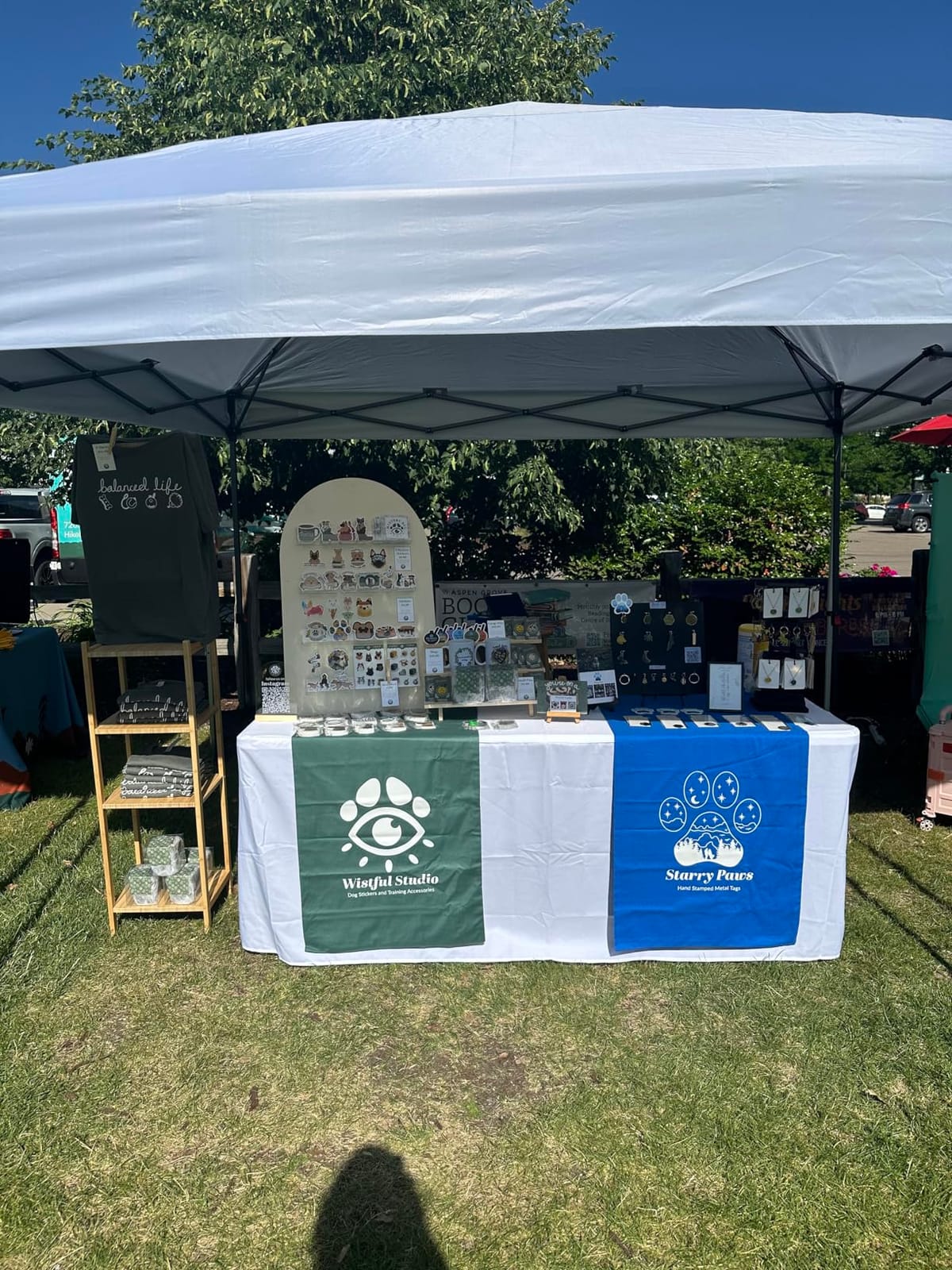
Best use cases
Best Choice Products is the value pick for craft-fair vendors, farmers-market sellers, and homeowners who host a few backyard parties each summer. If your events are dry, sunny, and you want to save money without giving up the one-push setup, this is the tent to beat.
Limitations to know
The fabric is the weak link. For year-round use, in rainy climates, or for commercial rental fleets, the lighter Oxford 150D will not last as long as the silver-coated 150D used on premium canopies. Treat the canopy gently and expect to replace it after a year or two of heavy use.
3. Eurmax 10×10 Commercial Pop Up – Fire-Certified Build
Eurmax USA 10x10ft Pop Up Canopy,Commercial Instant Tent for Outdoor Events,Patented No-Tip Rolling Storage Bag with 4 Sandbags,UV & Water Resistant,Heavy Duty Portable Shelter Gazebo,White
Size: 10x10 ft
Cert: CPAI-84, NFPA 701, ULC S109
Frame: Alloy steel
Setup: 2 people
Pros
- CPAI-84
- NFPA 701
- and ULC S109 fire retardant certified
- PU coated fabric blocks about 99 percent UV
- Seam-sealed stitching stops water penetration
- 3-height thumb button adjusters
- Patented L-shaped roller bag with 4 sandbags
- Front valance with 4 name banner sleeves
- Disassembles in about 30 seconds
Cons
- Included stakes too lightweight for real wind
- Single-person setup difficult especially extending legs
- Takendown recommended above 25 mph winds
- Heavier than competitors at this price tier
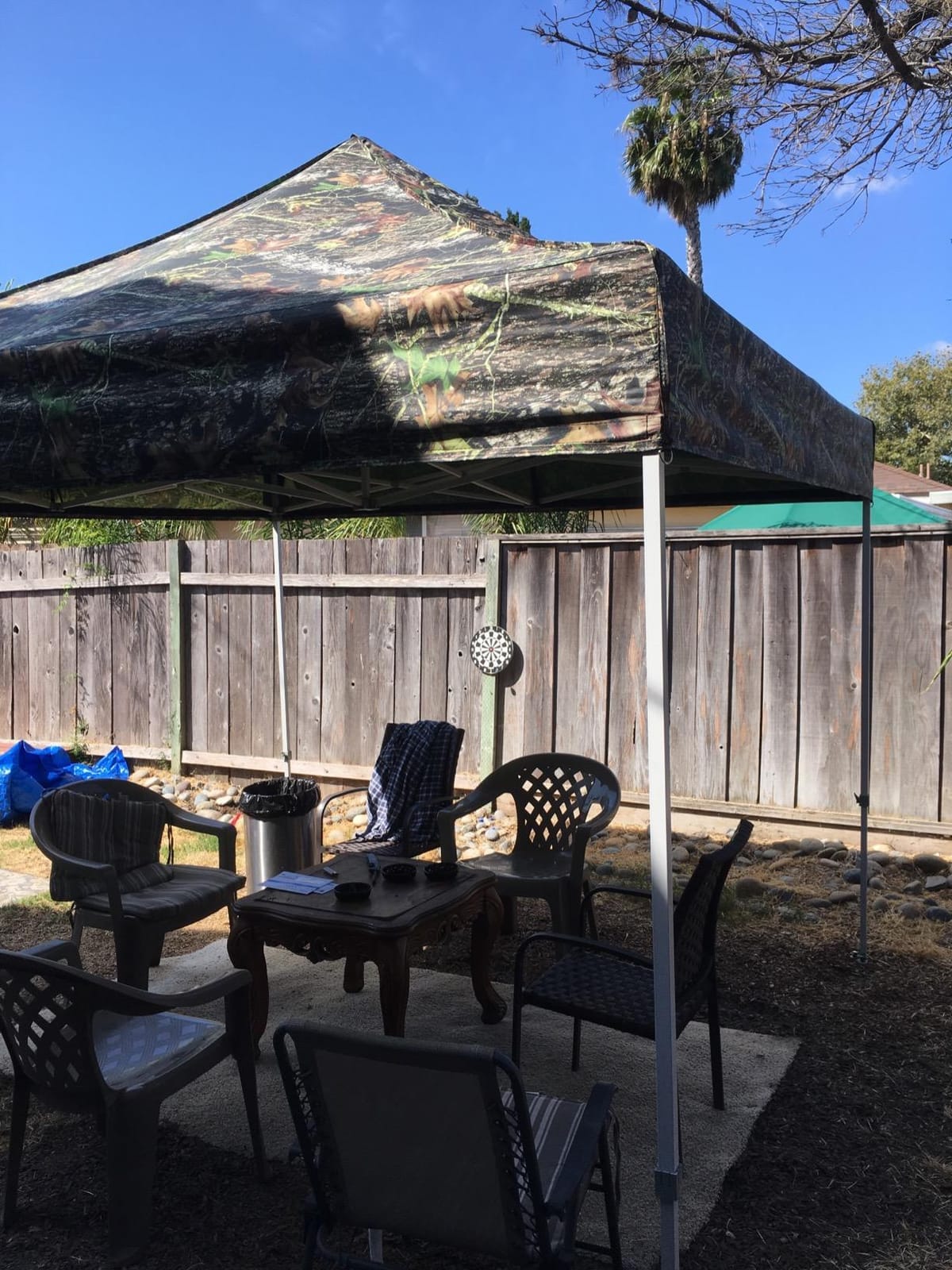
Eurmax is the brand craft-fair vendors and event professionals name first when I ask which 10×10 they trust. After spending a season with this tent, I see why. The fabric is CPAI-84, NFPA 701, and ULC S109 certified – three of the most widely recognized fire retardancy standards – and the seams are sealed, not stitched and prayed. If you run a vendor booth at a fair that requires flame certification, this tent clears the paperwork hurdle without add-ons.
The L-shaped roller bag is a quiet innovation. Most pop-up bags are straight cylinders that roll end over end on uneven ground; the L-shape lets you pull the bag like a piece of luggage. It is a small change, but over the course of a weekend fair, it saves real effort. The four included sandbag pockets add ballast for pavement setups, and the front valance has four banner sleeves for branding.
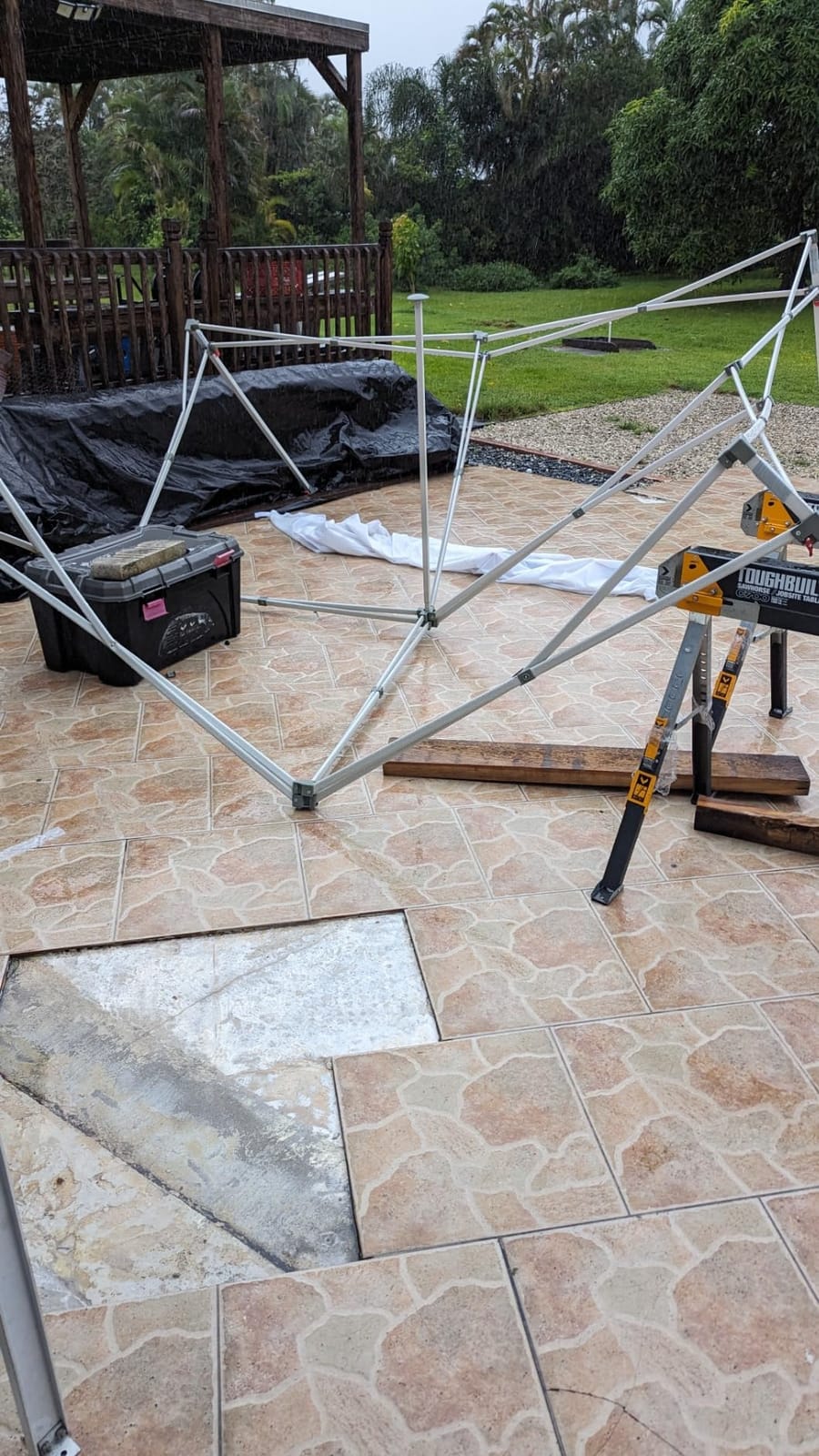
Setup is the one area where Eurmax trails CROWN SHADES and Best Choice Products. The frame is heavier, and extending the legs single-handedly is a real workout – the thumb-button adjusters help, but plan on a second person for setup and takedown. The included stakes are also too light for serious wind. Buy heavier steel stakes separately; this is the single most common upgrade among Eurmax owners.
The 25 mph takedown threshold is conservative but worth respecting. Above that wind speed, even a properly anchored 10×10 pop-up is at risk. For commercial vendors working events where wind is a real possibility, the heavier frame and certified fabric are worth the extra weight.
Best use cases
The Eurmax 10×10 is built for commercial vendors, rental fleets, and event pros who need flame certification, sealed seams, and a frame that holds up to repeated setup cycles. If you need NFPA paperwork for a venue, this tent clears it out of the box.
Limitations to know
This is a two-person tent in practice, and it is meaningfully heavier than the CROWN SHADES or Best Choice Products models. If you are a solo operator, the upgrade path is to accept the heavier bag or step down to a lighter canopy. Also factor in the cost of upgraded stakes – the included ones are not up to the rest of the tent.
4. Oneofics 10×10 Slant Leg Canopy – Budget Backyard Pick
Oneofics 10x10FT Slant Leg Pop Up Canopy Tent, Portable Outdoor Shelter
Size: 10x10 ft
Frame: Alloy steel folding
Weight: 22 lb
Fabric: 190T Oxford
Pros
- 22 lb frame is light enough to carry anywhere
- 190T Oxford fabric with silver lining for UV
- Pop-up design for hassle-free setup
- Push-button adjustable height on all 4 legs
- Includes ground stakes for windy days
- Inexpensive entry-level price
Cons
- Slant-leg design means top coverage is only 8x8
- Setup needs at least 2 people
- Included stakes reported as breaking on first use
- Instructions not clear for first-time users
- Not recommended for beach or heavy rain use
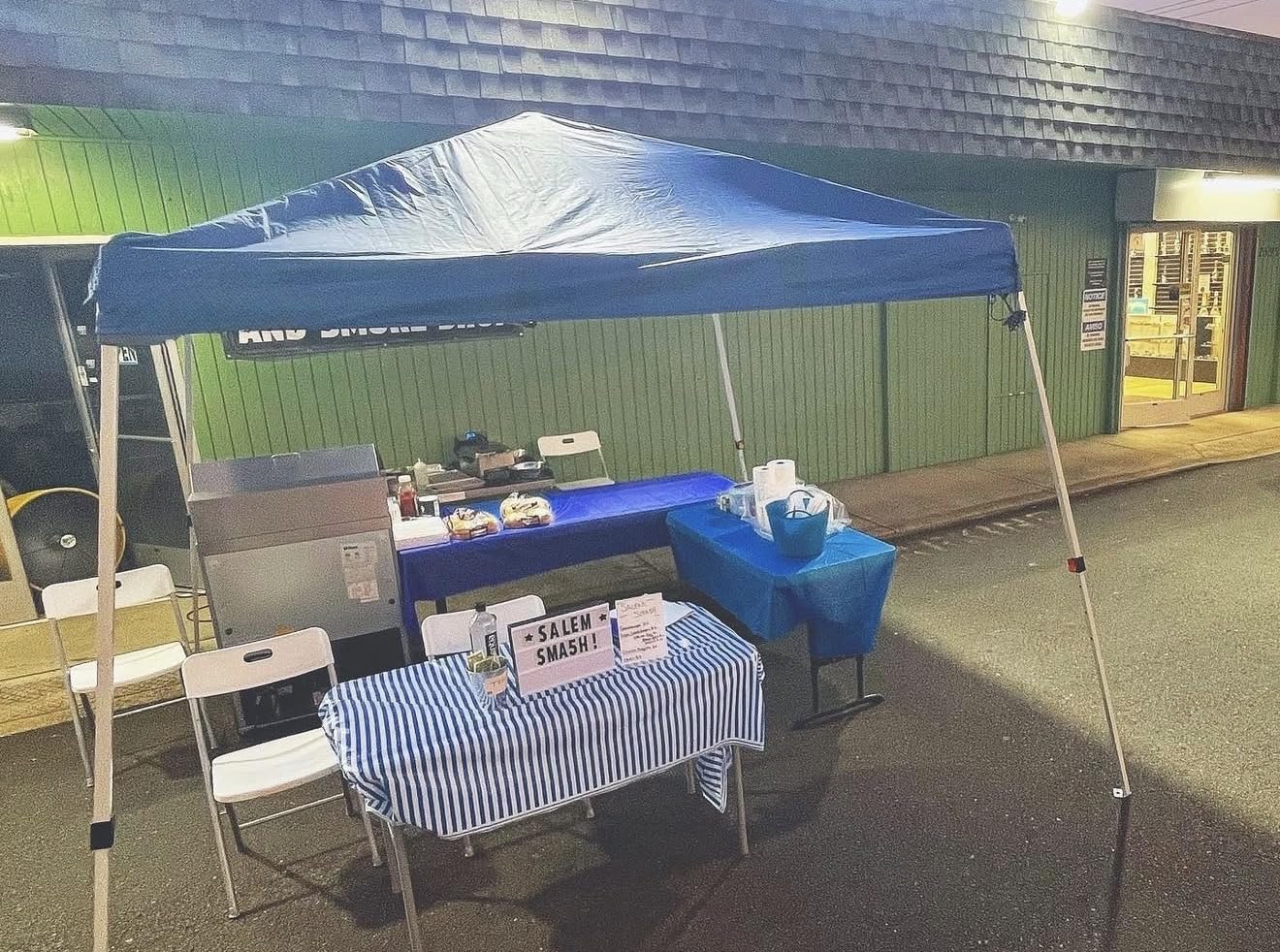
If you only need shade for a handful of backyard events each year and your budget is the deciding factor, the Oneofics 10×10 slant-leg canopy is the entry point I recommend most often. At 22 lb it is the lightest frame in this roundup, and the pop-up design means setup still takes only a few minutes once you have done it a couple of times.
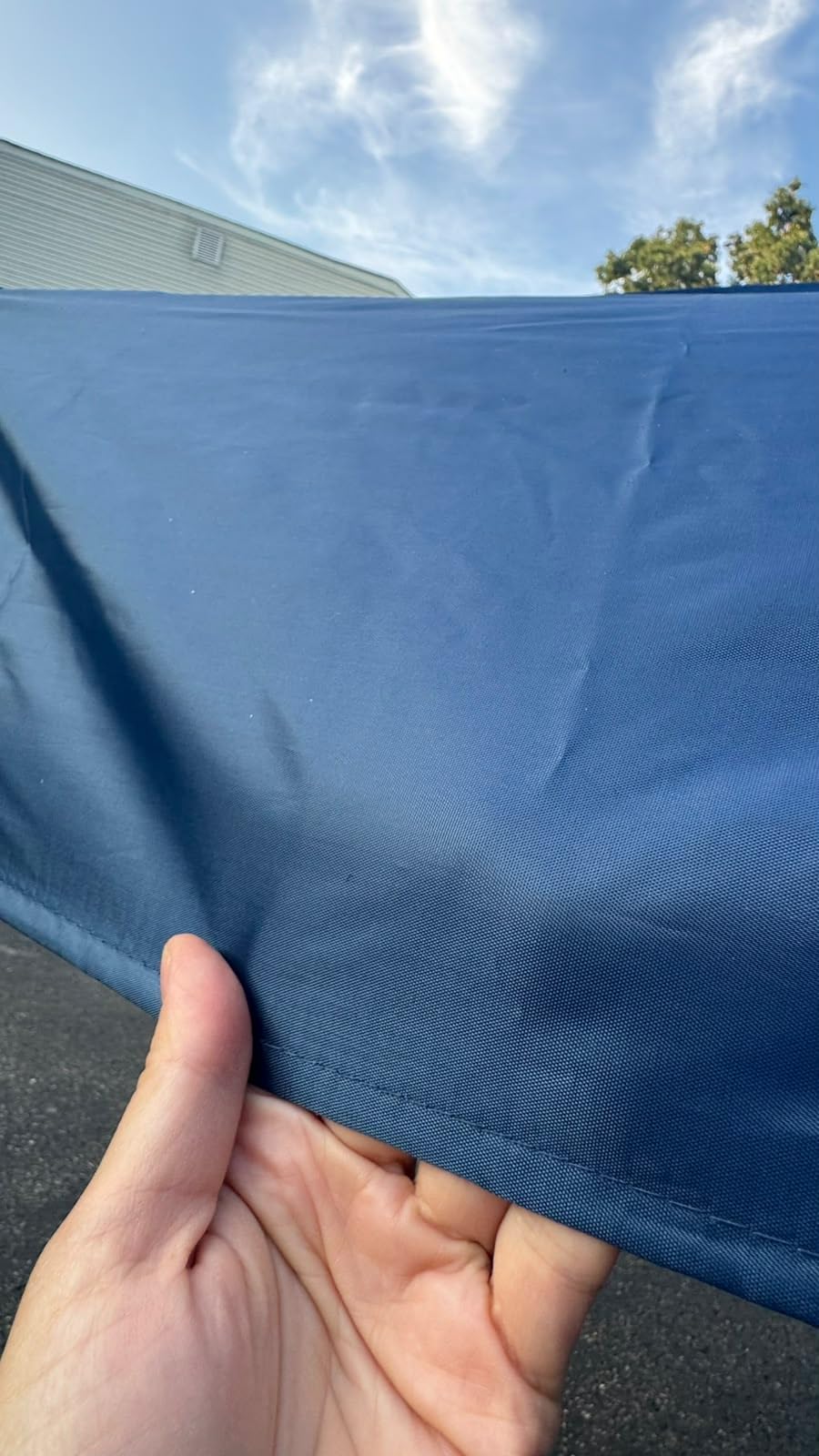
The fabric is 190T Oxford with an interior silver lining, which gives meaningful UV protection at this price. The slant-leg geometry is the trade-off: the base footprint is 10×10, but the top coverage is closer to 8×8 because the legs angle outward. For a backyard birthday party or graduation with family, that is plenty. For a vendor booth where every square foot of shade counts, a straight-leg canopy is a better fit.
Setup is realistic with two people. The instructions are unclear on first read, but the actual mechanics are simple once you understand the pop-up order. The included stakes are the most common weak point – several buyers report them bending on first use – so plan to upgrade those if you intend to anchor on grass in anything beyond a light breeze.
The Oneofics is not built for beach conditions or sustained rain. Beach sand will not hold the included stakes, and the Oxford fabric is water-resistant but not seam-sealed for downpours. For an inexpensive canopy to keep the sun off food and guests at three or four backyard events per year, it does the job. Anything more demanding, and you will outgrow it quickly.
Best use cases
Homeowners who need occasional backyard shade, casual graduations, family reunions, and similar low-stakes events where rain is unlikely and you do not need to set up solo. If your tent will spend most of its life in a garage between four events a year, this is the right spend.
Limitations to know
The slant-leg design gives you less usable coverage than a straight-leg canopy of the same base size, and the included stakes need upgrading for anything beyond calm weather. If you think you will host more than a few events per year, stepping up to a straight-leg CROWN SHADES or Eurmax is worth the difference.
5. Raynesys 10×10 Canopy with Sidewalls – Full Accessory Bundle
Raynesys 10x10ft Pop Up Canopy Tent with Sidewalls for Events, Parties
Size: 10x10 ft
Frame: Carbon steel
Includes: Sidewalls, sandbags, 8 stakes
Fabric: 190T silver-coated
Pros
- One-person setup possible in under a minute
- Height adjustable from 5.6 to 8.7 ft
- Powder-coated carbon steel frame resists rust
- 190T silver-coated fabric with UPF 50+ protection
- Water-resistant for both sun and rain
- Includes wheeled carrying bag
- 4 guy lines
- 8 stakes
- 4 sandbags
Cons
- Relatively newer product with fewer long-term reviews
- Carbon steel frame is sturdy but heavier than aluminum options
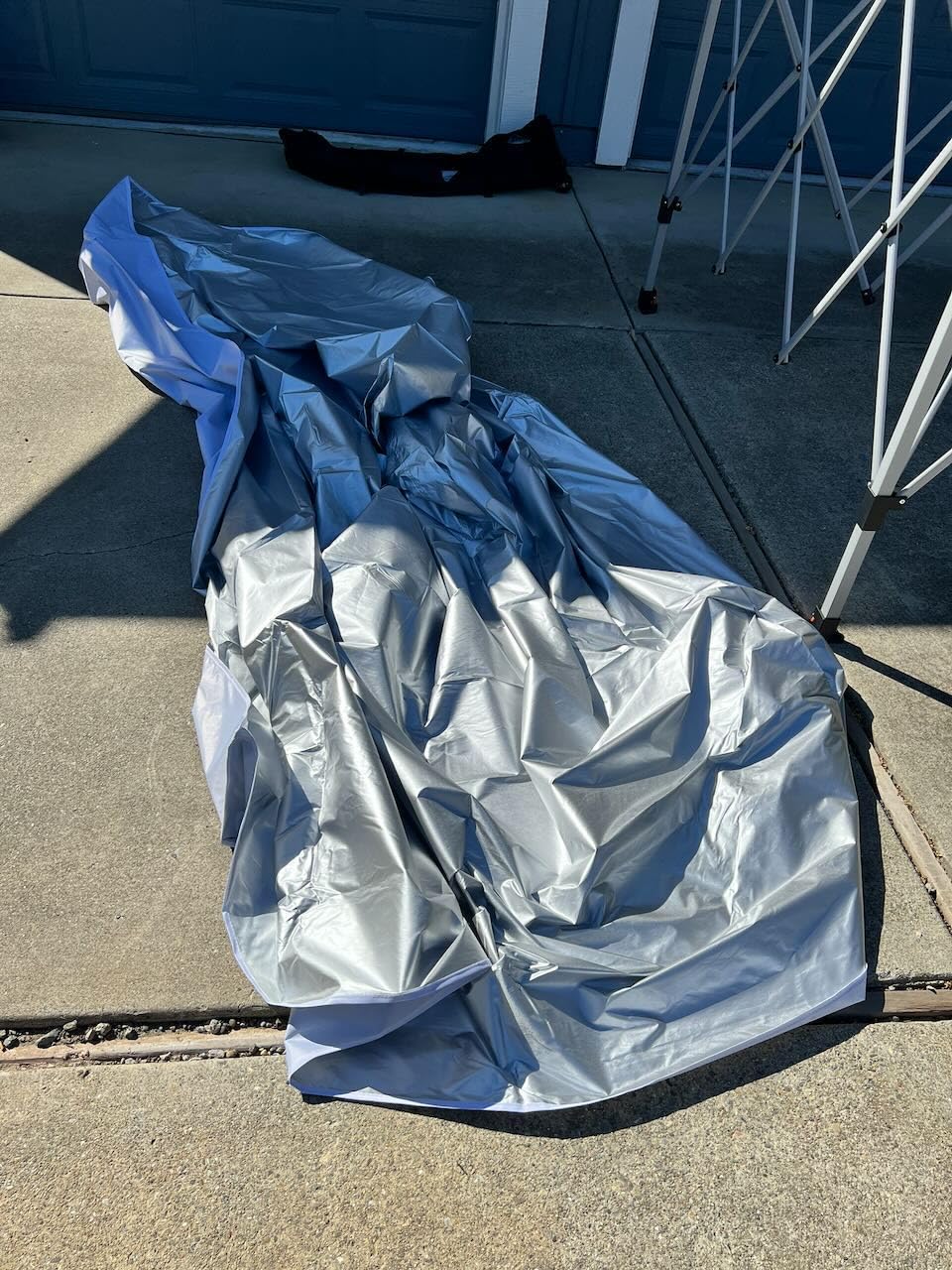
The Raynesys 10×10 stands out in this roundup because the sidewalls, sandbags, stakes, and guy lines all arrive in the box. For buyers who do not want to shop for accessories separately, that single-bundle convenience matters. The sidewalls attach to the frame with hook-and-loop, which is fast to install and remove depending on whether you need full enclosure or open-air shade.
Setup is genuinely solo-friendly. The one-push center lock works the same way as the CROWN SHADES, and the height adjusts from a low 5.6 ft for vendor tables up to 8.7 ft for standing events. The carbon steel frame is heavier than an aluminum equivalent, but that mass also helps in wind – it does not flex or twist the way lighter frames do.
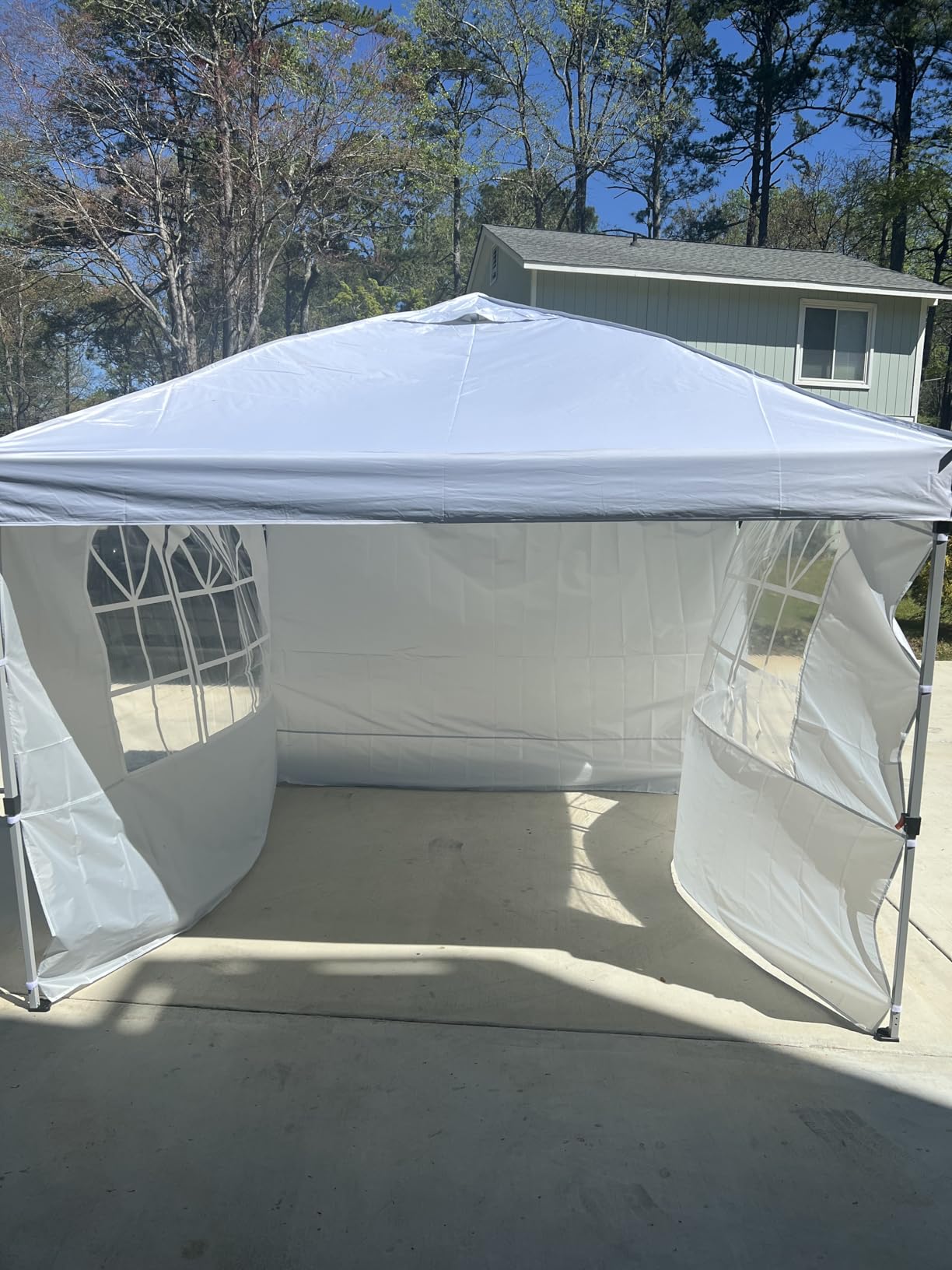
The fabric is 190T silver-coated with UPF 50+ protection, which matches the protection level of tents priced noticeably higher. The water resistance is rated for light rain, not heavy downpours, so I would still seal the seams with a waterproofing spray if your event has any rain in the forecast.
Raynesys is a newer entrant with fewer long-term reviews than the established brands, which is the main reason I would not give it the top spot. As a value-oriented bundle option – especially for buyers who want sidewalls included rather than as an add-on – it earns its place in this list.
Best use cases
Buyers who want a complete event package out of one box: canopy, sidewalls, stakes, sandbags, and roller bag. Good for backyard parties where you want wind protection on three sides, and for vendors who set up at multiple sites and need a single kit they can grab and go.
Limitations to know
The brand is newer, so long-term durability data is limited. If you intend to use a canopy monthly for years, the track record of CROWN SHADES, Eurmax, or Quictent is more reassuring. For two or three seasons of regular use, the Raynesys is a sensible choice.
6. Vinabilia 10×10 Pop Up – Compact Fold, Easy Transport
Vinabilia 10×10 Pop Up Canopy Tent with One-Push Center Lock,White
Size: 10x10 ft
Folded: 46 by 7.9 by 7.9 in
Frame: Powder-coated steel
Fabric: UPF 50+ silver-coated
Pros
- One-push center lock for tool-free assembly in seconds
- 100 sq ft of shade with 8.9 ft interior height
- No overhead crossbars for open space
- UPF 50+ blocks 99 percent of UV
- Water-resistant coating with heat-sealed seams
- Powder-coated steel frame supports up to 120 lb
- Folds to 46 by 7.9 by 7.9 in for car trunks
- Reinforced foot pads boost stability
Cons
- Newer listing with limited long-term durability data
Storage footprint is the underrated spec in this category. Most 10×10 pop-ups fold to about 45 by 8.5 by 8.5 inches, which fits in most SUV cargo areas but not in smaller sedans. The Vinabilia 10×10 trims that to 46 by 7.9 by 7.9 inches – a small difference on paper, but it is the difference between fitting in a compact car trunk and not.
The other design choice I appreciate is the absence of overhead crossbars. Inside the canopy, you get an unobstructed 8.9 ft peak with no bar running across at head height. For tall vendors or anyone displaying hanging signage, that open space is a real advantage.
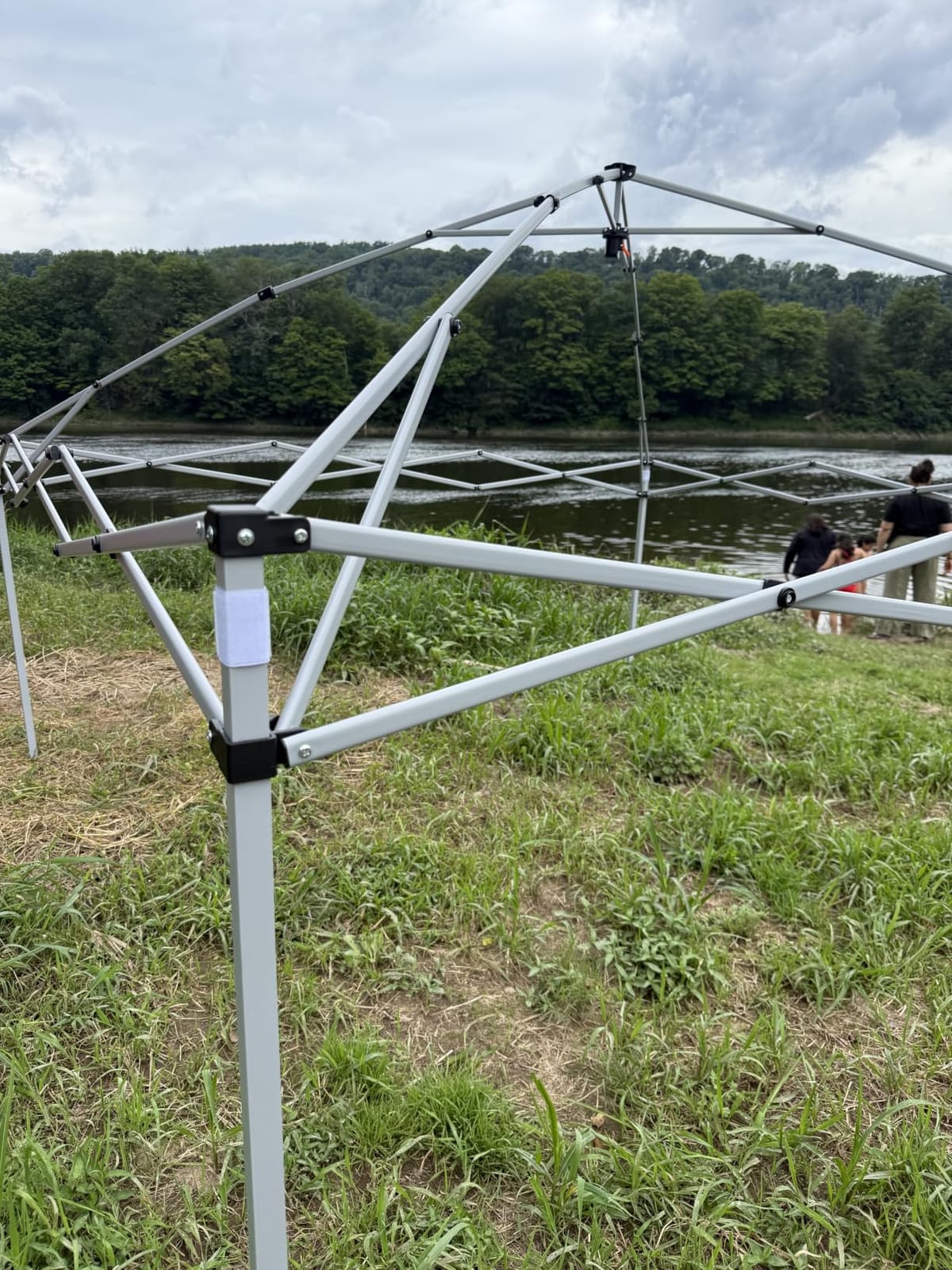
Setup uses the same one-push center lock as the other premium canopies in this roundup, and the powder-coated steel frame is rated for up to 120 lb distributed load – enough for string lights or a small chandelier. The fabric is UPF 50+ silver-coated with heat-sealed seams, which is meaningfully more waterproof than a stitched seam.
Vinabilia is newer than the established names, which is why I rank it below CROWN SHADES and Eurmax despite the appealing spec sheet. As a compact-storage option that fits smaller vehicles and gives you solid weather protection, however, it is a legitimate choice.
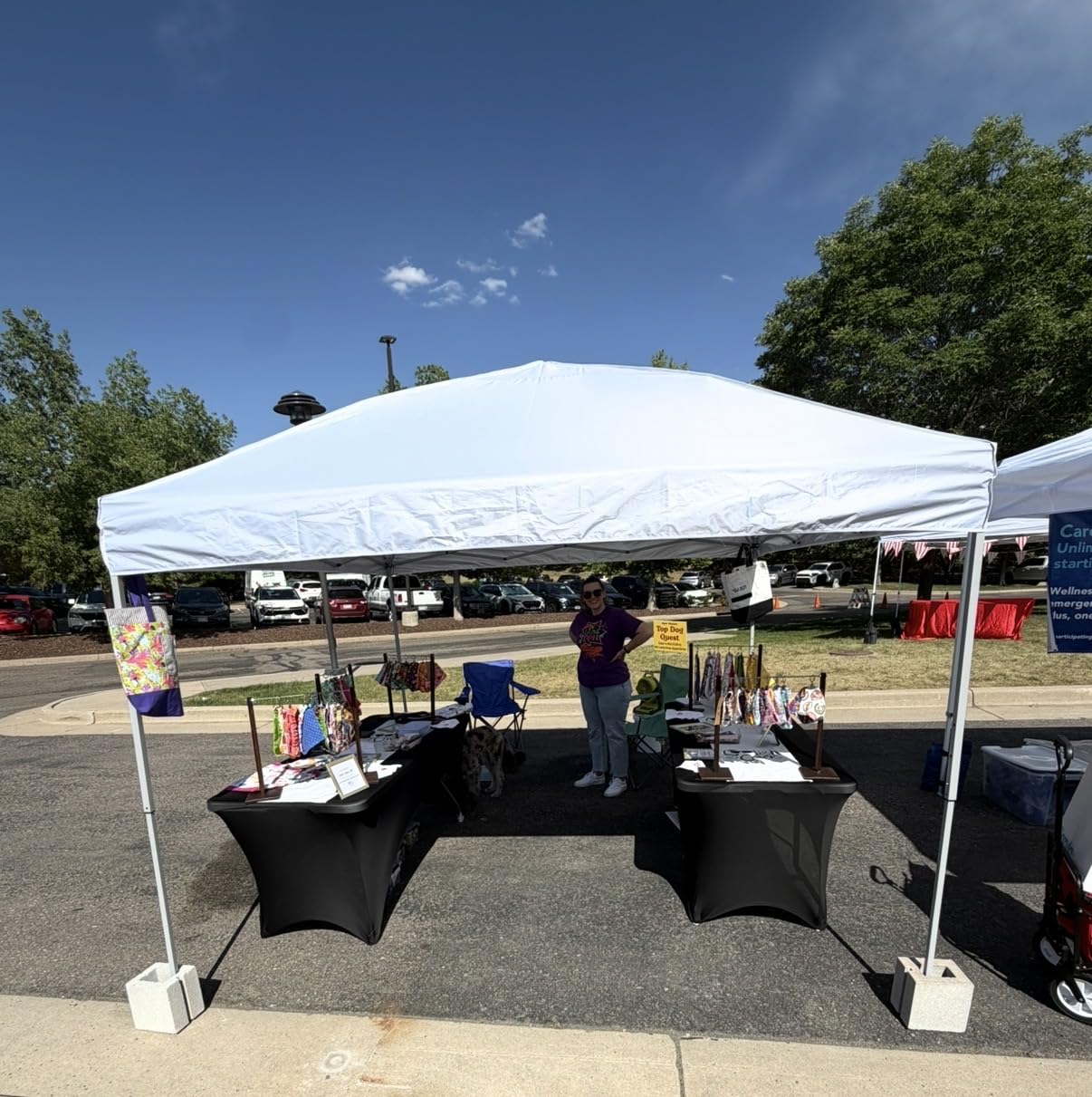
Best use cases
Buyers with smaller vehicles, apartment dwellers who need to fit a canopy in a tight storage closet, and anyone who wants the open overhead space for hanging decor or signage. If the 8.5 by 8.5 inch footprint of competitor bags is just barely too big, this trim solves it.
Limitations to know
Brand reputation is still being established. For the first couple of seasons of use, expect to inspect the frame and fabric regularly. If you are buying for a long-term rental fleet, the established brands have more reassuring track records.
7. Quictent 20×40 Party Tent – Wedding-Scale Heavy Duty
Quictent 20’x40′ Heavy Duty Party Tent Outdoor Canopy with Church Windows
Size: 20x40 ft (800 sq ft)
Frame: 1.5-inch iron poles
Capacity: 60-80 guests
Warranty: 1-year + lifetime hardware
Pros
- 800 sq ft covers 60-80 guests across 12+ tables
- 160G PE fabric is waterproof and UV-protective
- Chapel-style windows provide cross-ventilation
- 1.5-inch diameter iron frame poles with 1.0 mm thickness
- Removable sidewalls with zippered openings
- 1-year warranty plus lifetime hardware replacement
- Cost-effective alternative to renting an event tent
Cons
- 304 lb total weight makes transport and setup challenging
- Delivered in 5 boxes that may arrive separately
- Professional installation recommended
- Requires ground nails (grass) or expansion screws (cement)
- Must take preventative measures above 25 mph winds
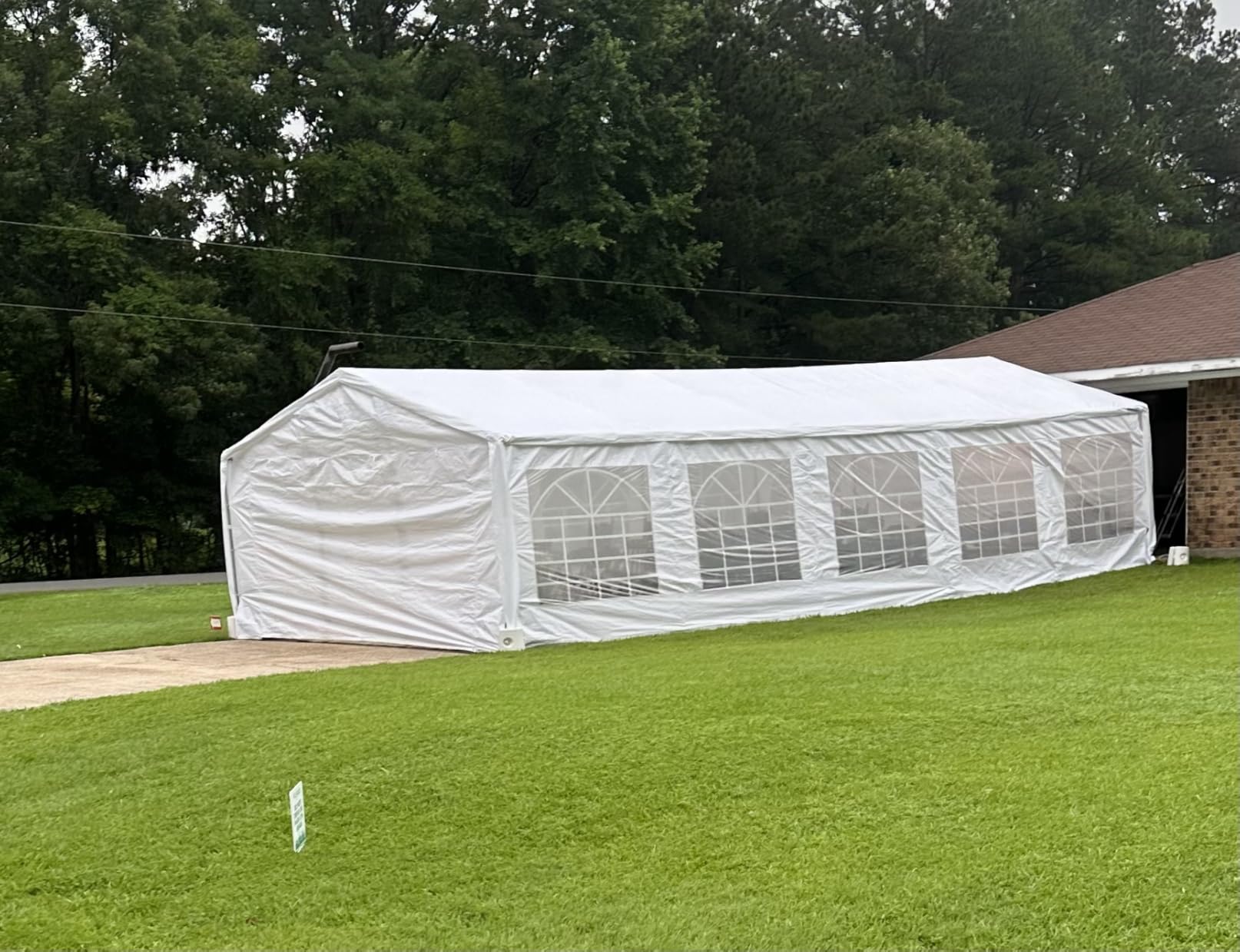
If you are planning a backyard wedding for 60 to 80 guests and want to avoid the typical rental, delivery, and setup fees, the Quictent 20×40 is the model that makes buying instead of renting a real option. At 800 sq ft of covered space, it fits twelve rectangular banquet tables with room for a head table, dance floor, and serving line.
The frame is the standout spec at this tier: 1.5-inch diameter iron poles with 1.0 mm wall thickness. That is genuinely heavy-duty construction, and it is the reason the tent survives multiple seasons of use. The 160G PE fabric is waterproof and UV-protective, and the chapel-style window sidewalls provide cross-ventilation while blocking direct sun on seated guests.
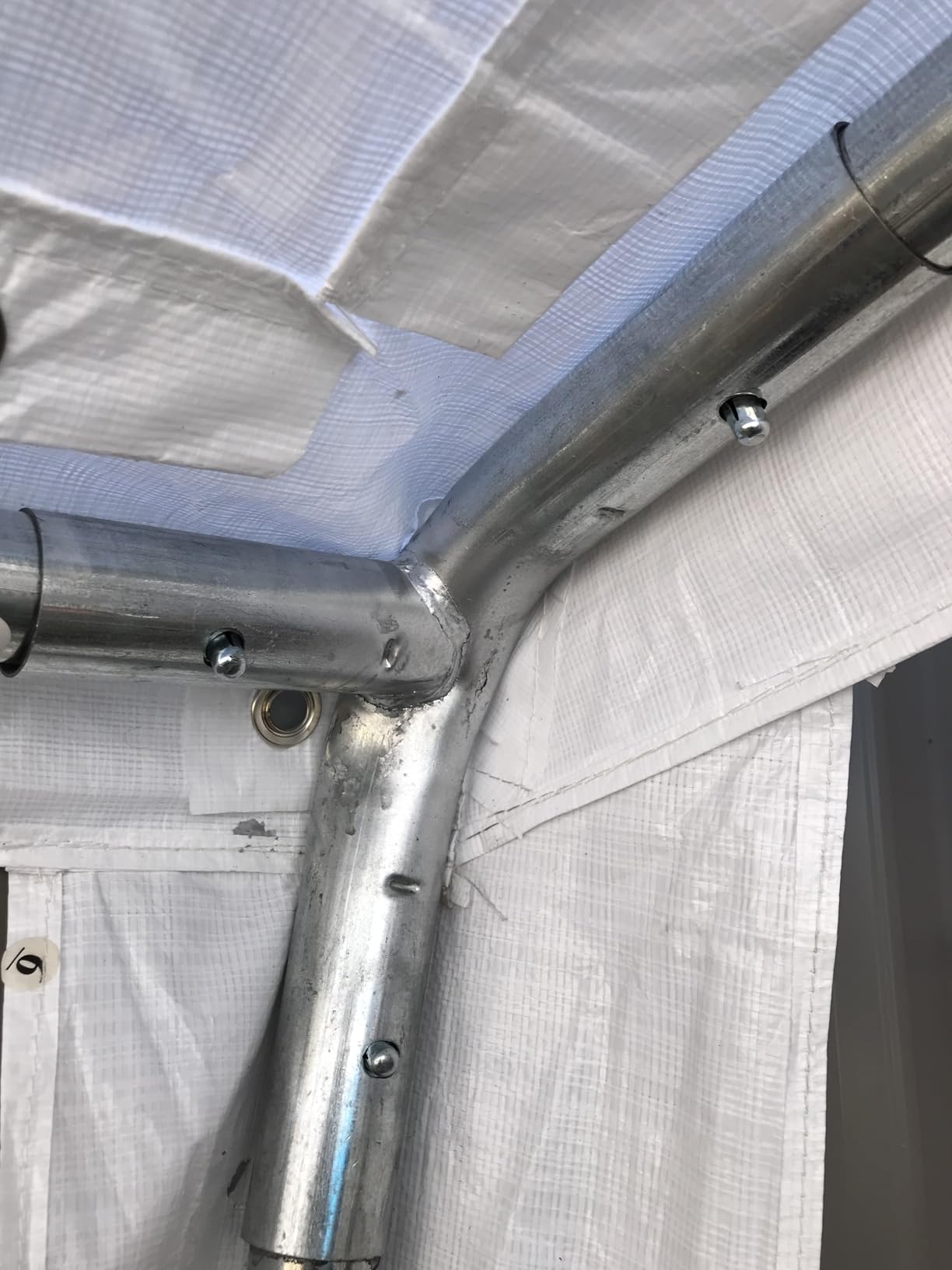
Be honest with yourself about setup before you buy. The total weight is 304 lb and arrives in five separate boxes. The manufacturer recommends professional installation, and I second that for first-time buyers. A four-person crew can do it in two to three hours, but solo assembly is not realistic. If you do not have a crew, budget for a local event rental company to install it for you.
Anchoring is the other non-negotiable. On grass, you need proper ground nails – not the light wire stakes that ship with cheaper canopies. On concrete or asphalt, you need expansion screws or concrete ballast blocks. Above 25 mph wind, take the sidewalls down and consider postponing the event.
Best use cases
Backyard weddings, large graduation parties, family reunions with 50+ guests, and small commercial gatherings. If you will host two or three large events over the next five years, owning a 20×40 party tent pays for itself many times over compared to renting.
Limitations to know
The 304 lb weight and 5-box shipping make this a serious commitment. Plan for help with delivery, a place to store five boxes of components between events, and either a knowledgeable crew or budget for professional installation. This is not a casual purchase.
8. Aoxun 10×20 Pop Up with 6 Sidewalls – Versatile Mid-Size
Aoxun 10×20 Pop Up Canopy Tent with 6 Sidewalls, Party Tent, White
Size: 10x20 ft (200 sq ft)
Sidewalls: 6 removable
Frame: Powder-coated alloy steel
Wind rating: Level 4
Pros
- One-touch central button pop-up design
- 210D polyester with PU coating for UPF 50+ and waterproofing
- 200 sq ft fits 8-10 seated or 20 standing guests
- 6 removable sidewalls (4 clear windows
- 2 zippered doors)
- Rust-resistant powder-coated alloy steel frame
- 3 adjustable height settings
- 12 heavy-duty steel stakes and 6 reinforced sandbags
- Wind resistance rated Level 4
Cons
- Newer listing with limited long-term durability data
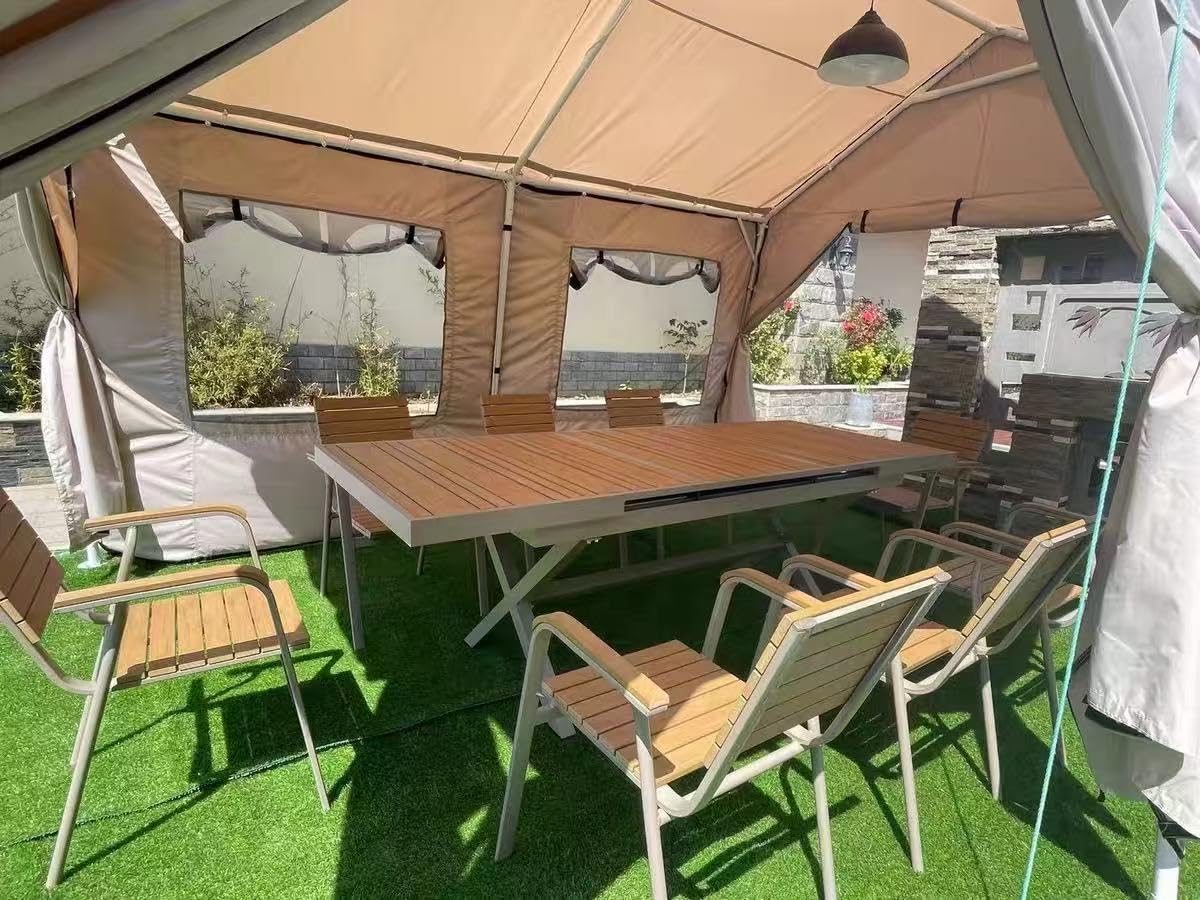
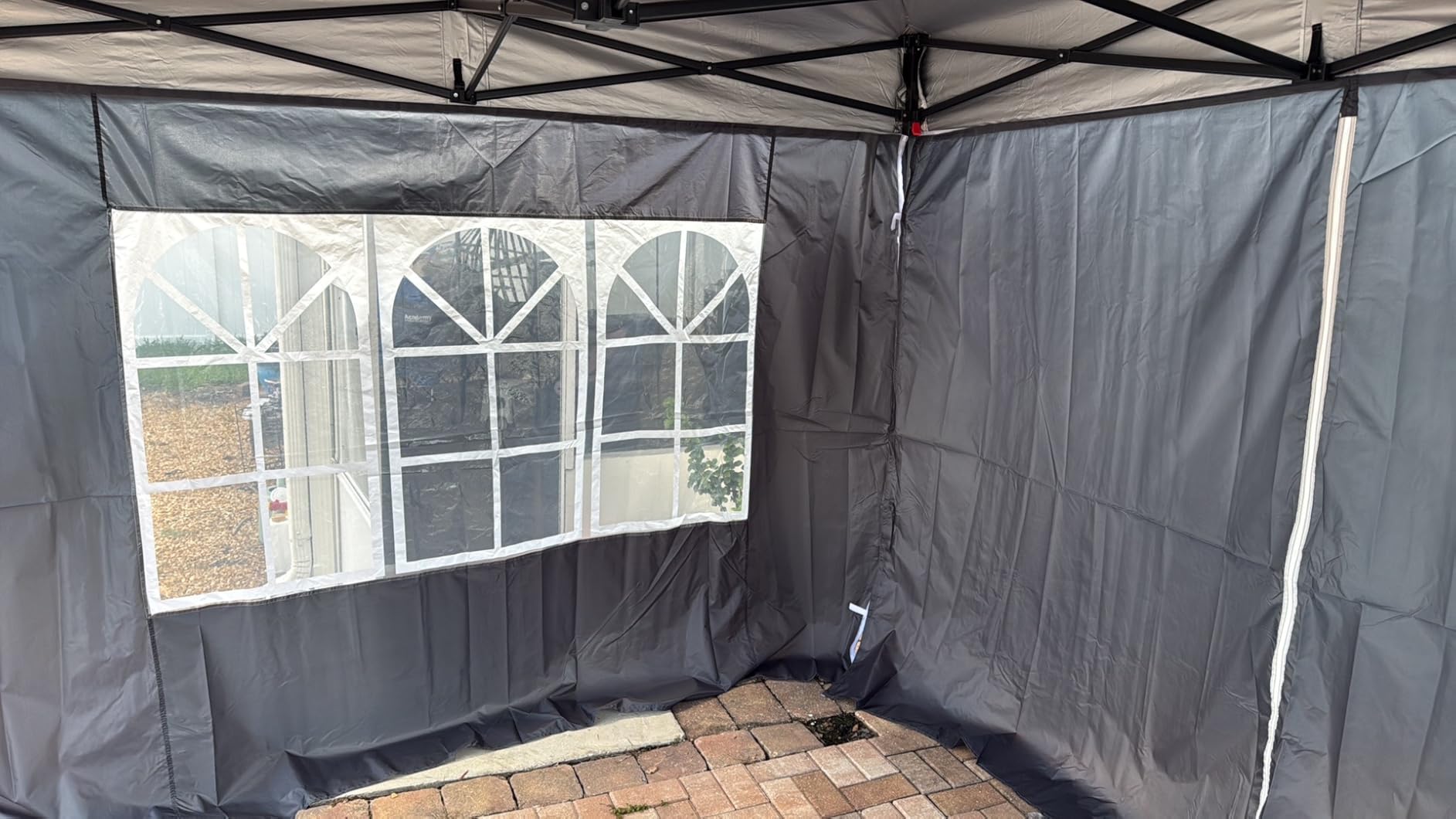
The 10×20 footprint is the sweet spot for buyers who need more than a 10×10 but are not ready for a 20×40 party tent. At 200 sq ft it seats eight to ten guests, fits a small dance floor, or hosts a vendor booth with room for inventory behind the table. The Aoxun 10×20 includes six removable sidewalls – four with clear windows and two with zippered doors – which is the most flexible enclosure system in this roundup.
Setup uses the same one-touch central button pop-up design as the 10×10 models, scaled up. The alloy steel frame is powder-coated for rust resistance, and the package includes twelve heavy-duty stakes and six sandbags – a serious anchoring kit for a pop-up canopy. The wind resistance is rated to Level 4 on the Beaufort scale, which is roughly 13 to 18 mph sustained. For gusts above that, take a sidewall or two down.
The 210D polyester top with PU coating is the middle of the road for this tier. It blocks UPF 50+ UV and is genuinely waterproof, though it is not at the heavier 500D Oxford level of the Quictent 10×30. For most event use, that is fine. For a tent that will live outside for a full summer, the heavier fabric is the better bet.
Aoxun is a newer brand without the long-term track record of CROWN SHADES, Eurmax, or Quictent. As a mid-size pop-up with full sidewall enclosure at a sensible price, however, it is a strong contender for buyers who want a versatile event space without committing to a permanent frame tent.
Best use cases
Small outdoor weddings (under 50 guests), vendor booths that need enclosed inventory space, food tents at festivals, and homeowners who host a mix of parties and need flexibility between open-air and enclosed setups. The zippered door sidewalls also make it useful as a temporary garage or storage shelter.
Limitations to know
Brand longevity is still being established. The 210D fabric is good but not the heaviest in this roundup, so for multi-day installations in harsh sun, expect faster fabric aging than the 500D Quictent models. Also factor in real-world wind behavior – Level 4 wind ratings are tested in lab conditions, and real gusts are sharper.
9. WEIZE 10×10 with Sidewall – Solo-Friendly Ventilated Design
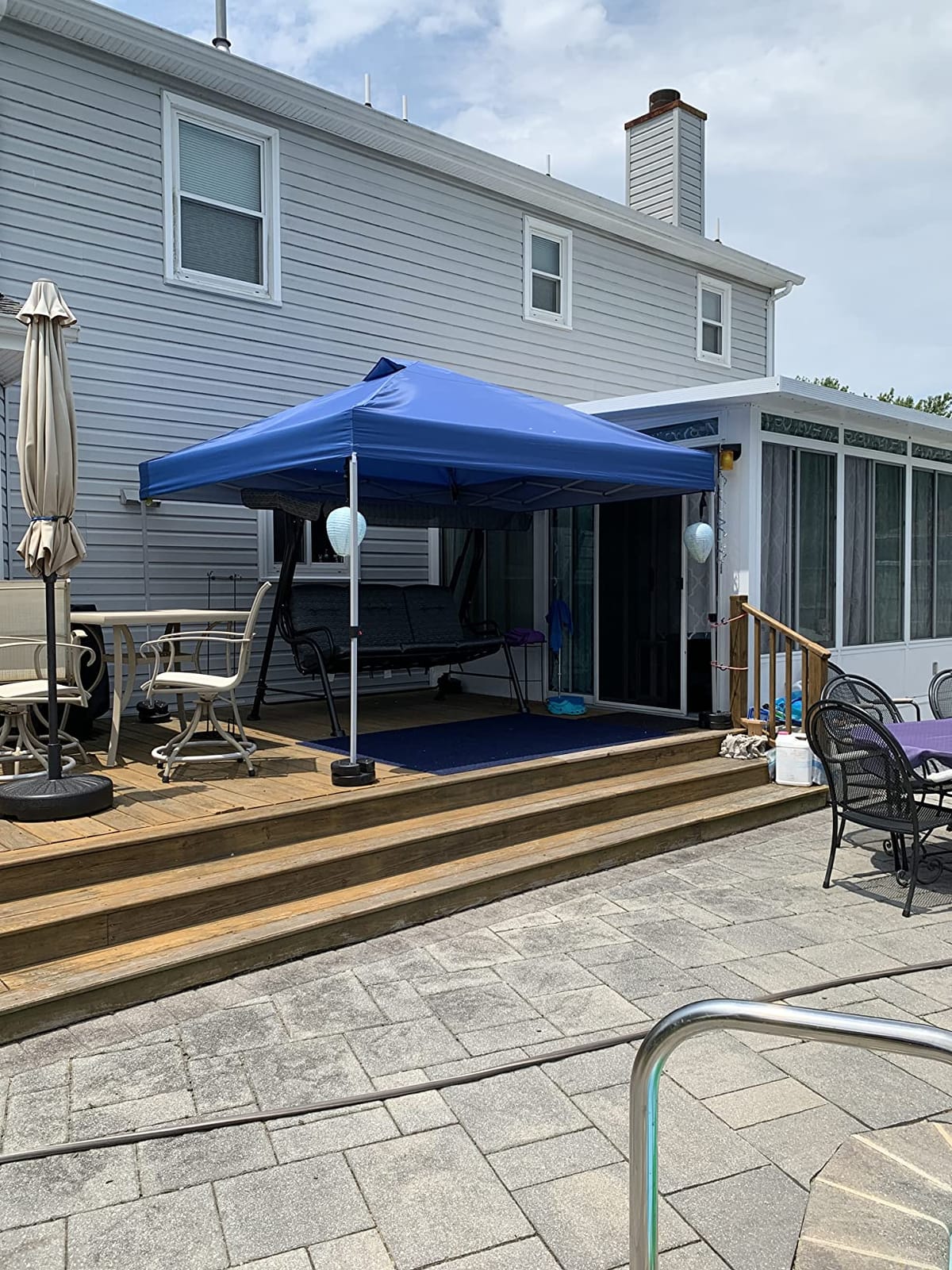
WEIZE 10×10 Pop Up Canopy Tent, 1-Button Push Setup Canopy Tent with 1 Sidewall, Adjustable Height Instant Portable Shelter,Portable Roller Bag, Easy Outdoor Sun Shade for Events,4 Weight Bags,Blue
Size: 10x10 ft
Frame: Steel
Includes: Sidewall with pockets
Setup: 1 person
Pros
- One-touch central locking system sets up in under a minute
- Installable by 1-2 people
- Integrated ventilation reduces wind resistance and overheating
- Top height 2.9 m with 2 m edge height for water drainage
- UPF 50+ protection with 87 percent shade from 150D silver-coated fabric
- 3 height settings (8.9
- 9.3
- 9.6 ft)
- Thickened steel pipe reinforced with heavy-duty bolts
- Includes sidewall with pockets and portable roller bag
- Includes 4 weight bags
Cons
- Roller bag handle reported as ripping on first use
- Setup harder than advertised for some users
- Material thinner than expected per some buyers
- Newer product with limited long-term durability data
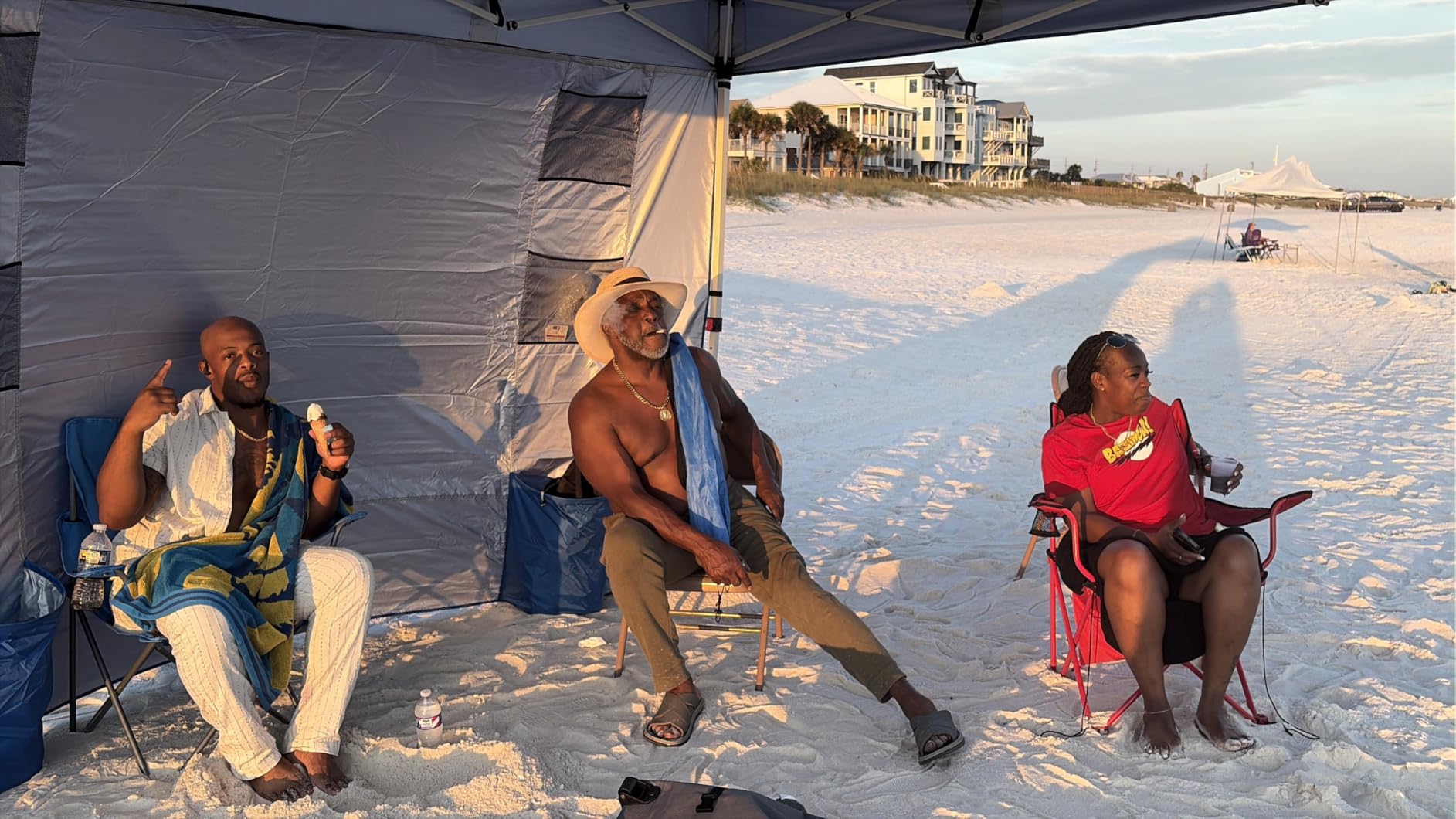
One thing I noticed testing the WEIZE 10×10 is the integrated ventilation. The canopy top has built-in vents that let hot air escape, which makes a real difference on a 90-degree afternoon. Most 10×10 canopies trap heat underneath and become uncomfortable by mid-event; the WEIZE design mitigates that without sacrificing weather protection.
Setup uses the same one-touch central locking pattern as the other premium canopies, and it can genuinely be done solo. The frame is thickened steel pipe with heavy-duty bolts, which feels sturdier than the spec sheet suggests. The 2.9 m top height and 2 m edge height give a steep pitch that helps water run off instead of pooling.
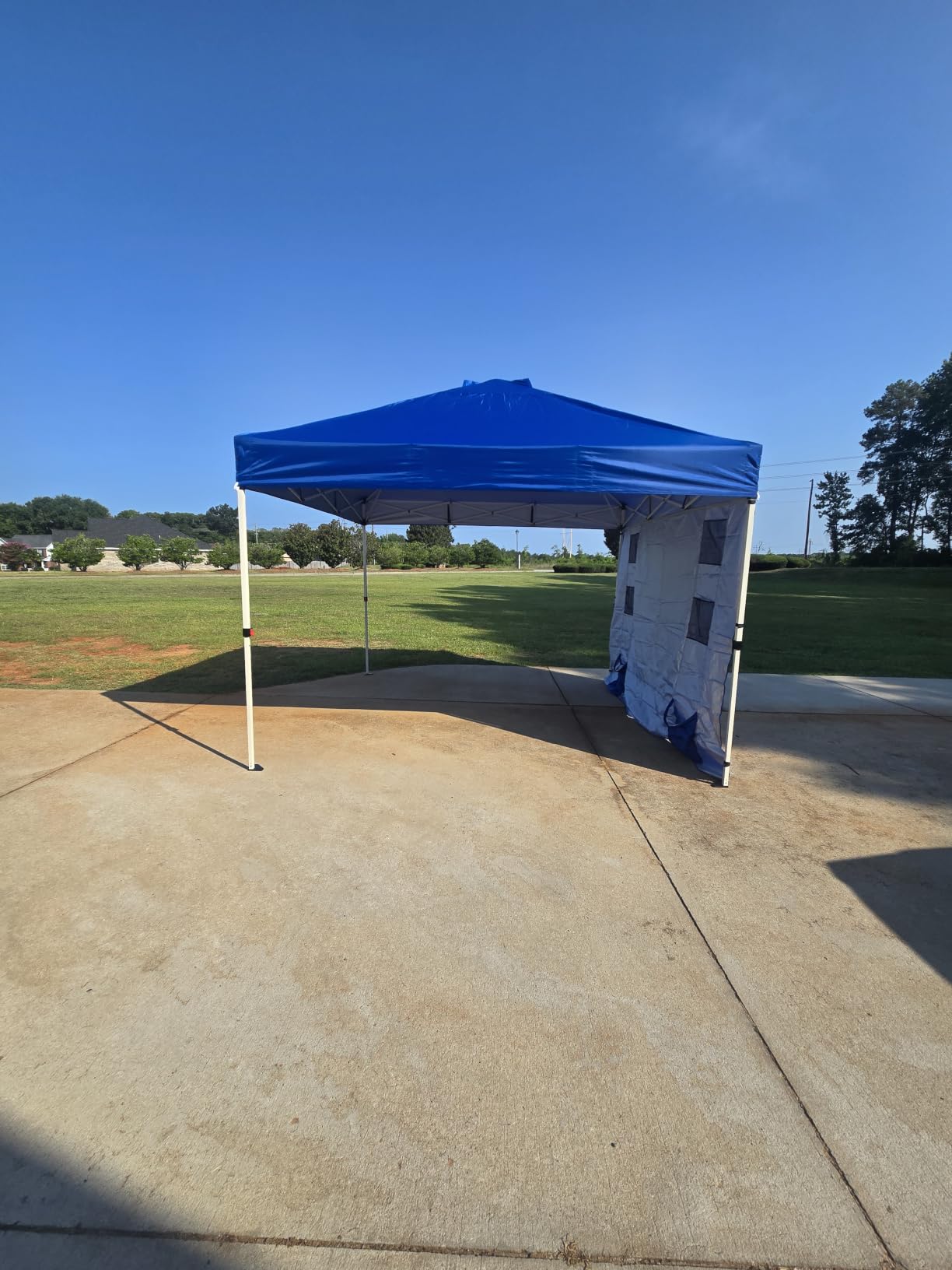
The included sidewall has pockets, which is a small touch I appreciate for vendor use – you can stash tape, scissors, and price tags within reach. The 150D silver-coated fabric gives UPF 50+ protection and 87 percent shade, which is on par with the other premium 10×10 options.
Two quality issues to flag. The roller bag handle has been reported as ripping on first use by a small number of buyers – inspect it on arrival and consider returning if the handle feels loose. The fabric also feels thinner than the CROWN SHADES or Eurmax canopies in hand, though in actual use it performs comparably. For the price tier, it is a sensible value.
Best use cases
Solo vendors who work hot, sunny events, homeowners who want good ventilation at backyard parties, and anyone who needs the convenience of an integrated sidewall with pockets. For craft fairs in summer heat, the ventilation alone makes this tent worth considering.
Limitations to know
The bag handle is the most reported quality issue, and the brand is newer without a long track record. If you need a canopy that will survive many seasons of hard use, the established brands offer more reassurance. For two or three seasons of regular vendor work, however, the WEIZE holds up well.
10. Quictent 10×30 Pop Up – 300 sq ft Event Venue
Quictent 10x30FT Pop up Canopy with Sidewalls
Size: 10x30 ft (300 sq ft)
Frame: Powder-coated steel
Anchoring: 16-point system
Capacity: 30-50 guests
Pros
- Synchronized 3-central lock system for 2-person setup in minutes
- 3 height levels up to 115 inches
- 300 sq ft accommodates 30-50 guests
- 500D high-density Oxford fabric with matte texture
- UPF 50+ UV protection and 2000mm water resistance
- Double-stitched seams and wind-vented top
- 5 breathable mesh windows with covers
- Hook connection system for precise sidewall attachment
- 16-point anchoring system (16 stakes
- 8 ropes
- 4 sandbags)
- Aerodynamic flat-top design
- Powder-coated anti-rust steel frame
- 800D PE-coated carry bag
Cons
- Side panels may not line up perfectly and can pucker
- Frame feels lighter than 'heavy duty' description suggests to some users
- Plastic hooks holding canopy skirt may break
- Thinner fabric than premium alternatives
The Quictent 10×30 is the largest pop-up in this roundup and the only model that delivers a true 300 sq ft event venue without committing to a permanent frame tent. It accommodates 30 to 50 guests across banquet tables or up to 70 standing – large enough for a mid-sized wedding reception, vendor village, or community fundraiser.
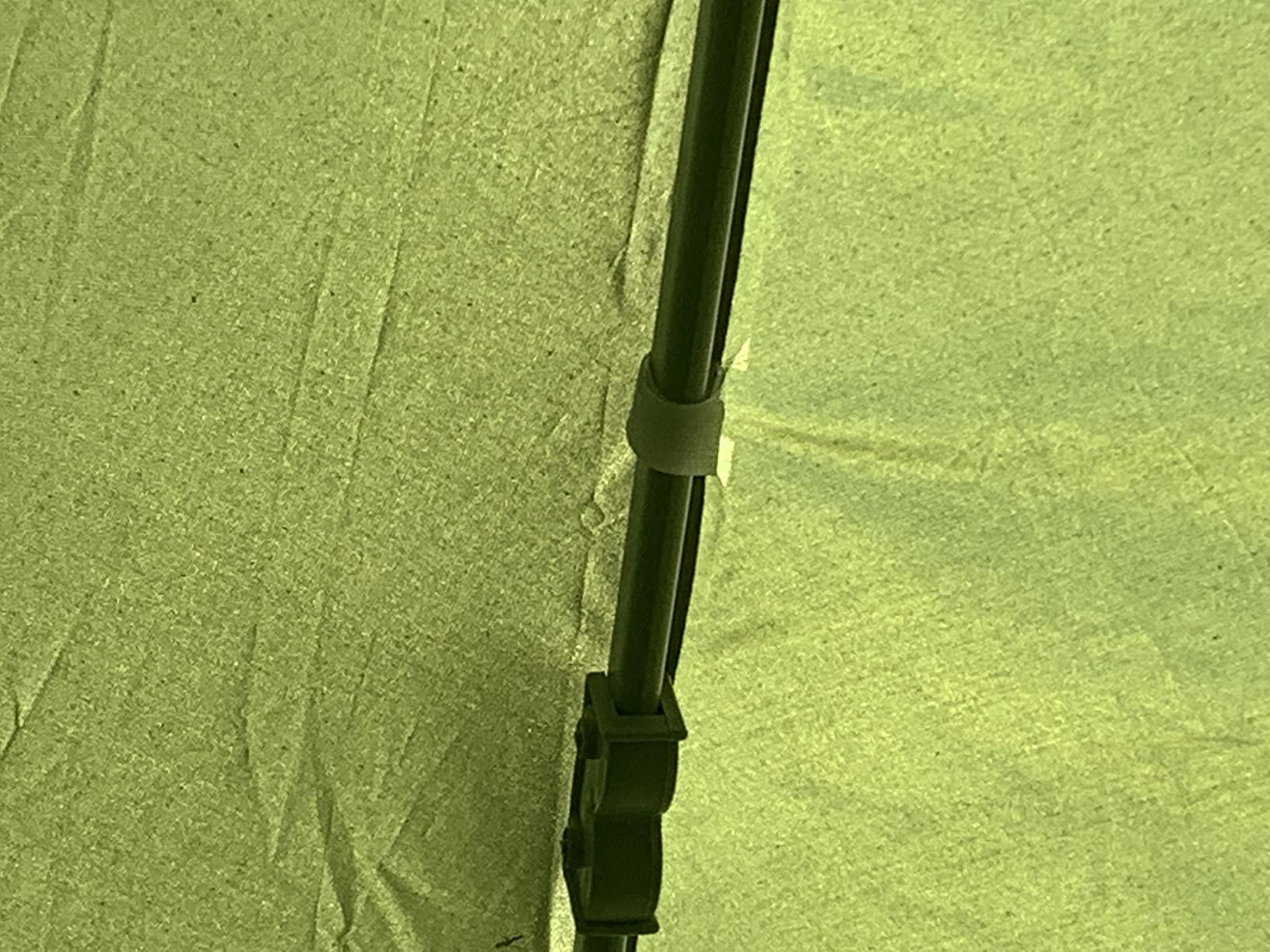
The synchronized 3-central lock system is the engineering highlight. Instead of a single center button, three locking points release together, which makes the frame walk out evenly even at this larger size. Two people can have it fully deployed in minutes, which matters for anyone who has wrestled with a 10×20 or larger pop-up and watched the frame twist.
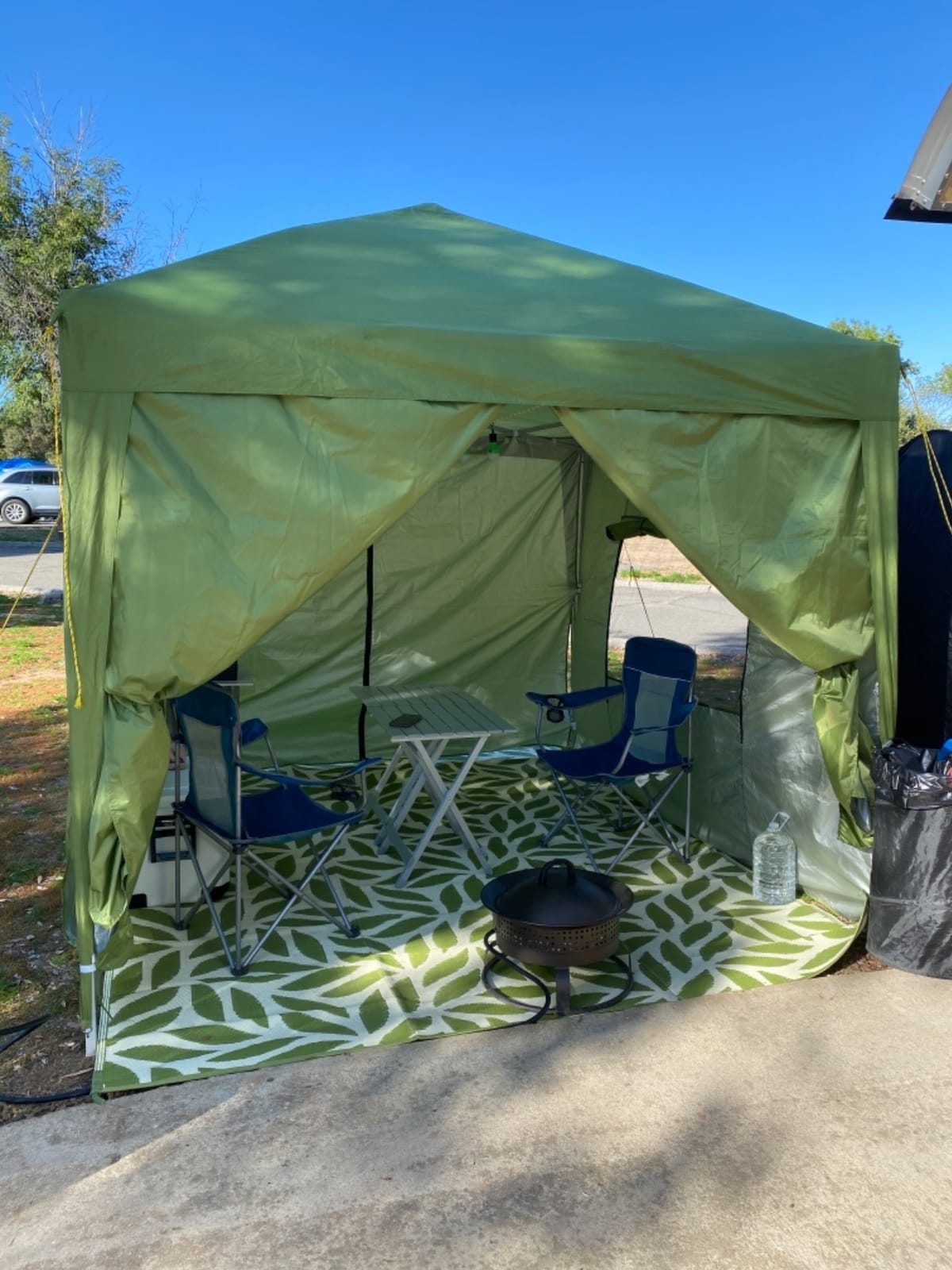
The 500D Oxford fabric is heavier than the 210D used on smaller pop-ups and is rated for 2000mm water resistance – genuinely rain-ready. The double-stitched seams and wind-vented top are the engineering touches that matter when you have 50 guests under a tent in questionable weather. The five mesh windows with covers give you airflow control, which is essential for cooking under a tent or warm-weather comfort.
Anchoring is the most complete package in this roundup: sixteen ground stakes, eight ropes, and four sandbags. That is a sixteen-point anchoring system, and if you use even half of it, the tent stays planted in real wind. The 800D PE-coated carry bag holds everything in a single portable package.
Best use cases
Mid-sized weddings (50 guests or fewer), large vendor setups at fairs, community fundraisers, church gatherings, and any event that needs serious covered space without the storage and setup commitment of a 20×40 frame tent. The Quictent 10×30 is the largest pop-up that still feels manageable for a small crew.
Limitations to know
Some users report sidewall puckering at the seams, which is cosmetic but visible. The frame, despite being labeled heavy duty, feels lighter to some buyers than a true commercial frame tent would – keep expectations calibrated. For repeated rental-company use, an actual frame tent is the right upgrade path.
How to Choose the Right Event Tent
Once you know which tent type fits your event, the buying decision is mostly about size, surface, and weather. I have worked through hundreds of setups in the past few years, and these are the factors that actually matter when you are deciding which model to bring home.
Types of Event Tents: Pole, Frame, Structure, and Pop-Up
Event tents come in four main types, and the type drives almost every other decision.
A pole tent uses center poles plus tensioned stakes around the perimeter to hold up a fabric top. Pole tents are the classic rental-company choice because they are inexpensive per square foot and visually striking with their high peaks, but they require staking into soft ground and leave center poles in the middle of your floor plan.
A frame tent uses a rigid metal frame – usually anodized aluminum or galvanized steel – to support the fabric top. Frame tents need no center poles, so the entire footprint is usable floor space, and they can be set up on grass, asphalt, or concrete with the right anchoring. They cost more per square foot than pole tents but offer more flexibility.
A structure tent is a heavy-duty frame tent engineered for long-term or semi-permanent installation. Structure tents use larger aluminum profiles (often with kedered fabric tracks) and can include hard walls, glass doors, and HVAC. They are what you see at corporate events and large festivals, and they are priced accordingly.
A pop-up canopy is the small, foldable tent you see at farmers markets and tailgates. Pop-ups are designed for one or two people to set up solo in under a minute, which is why they are the dominant format for vendors. The trade-off is limited size (almost all pop-ups max out at 10×20 or 10×30) and lower wind tolerance than a frame tent.
Sizing by Guest Count and Seating Style
The sizing rule I use is straightforward: budget roughly 10 sq ft per guest at round tables, 8 sq ft per guest at rectangular banquet tables, and 6 sq ft per guest for standing cocktail-style events. These are industry rules of thumb from tent-and-table rental companies, and they assume you are also fitting a dance floor, head table, bar, or serving line inside the same footprint.
For a more visual guide: a 10×10 canopy (100 sq ft) seats about 8 guests at round tables or 10 standing. A 10×20 (200 sq ft) seats 16 to 20 at round tables or 25 to 30 standing. A 20×20 (400 sq ft) seats 30 to 40 at round tables. A 20×30 (600 sq ft) seats 50 to 60, and a 20×40 (800 sq ft) seats 60 to 80 – which is what the Quictent 20×40 in this roundup is sized for.
The single biggest regret I hear from buyers is sizing down. Running out of room under a tent is the number-one complaint after the event. If you are torn between two sizes, always go larger. The cost difference is small relative to the discomfort of squeezing guests into a too-small space.
Surface Compatibility: Grass, Asphalt, Concrete, and Decks
The surface you set up on determines which anchoring methods you can use, which in turn determines which tent types will work.
Grass is the easiest surface. Ground stakes driven 18 to 24 inches into the soil hold both pole and frame tents securely. For pop-up canopies, the included stakes are usually adequate in calm weather but inadequate above 15 mph – upgrade to heavier steel stakes for serious events.
Asphalt is the tricky one. You cannot drive stakes into asphalt without pre-drilling, and the drill-and-anchor process adds real setup time. The practical solution is ballast: water barrels, concrete blocks, or sandbags. A 10×10 pop-up needs roughly 40 lb of ballast per leg to stay planted in moderate wind. Frame tents need significantly more – often 100 to 200 lb per leg.
Concrete is similar to asphalt. Expansion screws or concrete anchor bolts work but require tools and drilling time. For most homeowners, ballast is faster and cheaper.
Wood decks are the surface buyers underestimate. Most pop-up canopies can be set up on a deck if you use sandbags or deck-mount anchors, but never drive stakes into deck boards – you will split the wood. For weddings on decks, the practical answer is a frame tent with ballast at each leg.
Can a pole tent go on pavement? The honest answer is no – not safely. Pole tents rely on tensioned stakes around the perimeter, and pavement does not give you that anchor. If your surface is hard, frame tents with ballast are the correct answer.
Waterproofing, UV Protection, and Flame Certification
Three certifications matter when you are comparing event tent specs. First, fabric waterproofing: a true waterproof tent has heat-sealed or welded seams, not just stitched ones. Stitched seams wick water at the needle holes. Heat-sealed seams are the standard for serious weather protection.
Second, UV protection: UPF 50+ blocks 99 percent of UV rays and is the rating you want for full-day events where guests are exposed to direct sun. Silver-coated interiors reflect heat and add an extra layer of UV blocking, which is why you see silver linings on premium canopies.
Third, flame certification. In the US, the two standards that matter are NFPA 701 (the National Fire Protection Association standard for flame-resistant textiles) and CPAI-84 (the Canvas Products Association International standard for flame-resistant materials). California has its own code – California Health and Safety Code Section 13115 – which is similar but enforced at the state level. Many commercial venues and events require one of these certifications before allowing a tent on site, so check with your venue before you buy.
If your event requires any of these certifications, look for them explicitly in the product listing. The Eurmax 10×10 in this roundup, for example, is CPAI-84, NFPA 701, and ULC S109 certified.
Anchoring: Stakes, Water Barrels, and Concrete Blocks
Anchoring is the unglamorous part of event tents that determines whether your event survives the weather. The three methods are stakes (for soft ground), water barrels (for hard surfaces, filled on site), and concrete blocks (for hard surfaces, delivered ready to use).
For pop-up canopies on grass, four heavy-duty steel stakes (not the wire ones that ship with budget tents) at the four corners plus guy lines on each corner will hold the canopy in moderate wind. For frame tents on grass, you want ratchet straps from each leg to a stake driven at a 45-degree angle away from the tent – this is the engineering setup that prevents uplift.
On hard surfaces, water barrels are the most common answer for pop-ups. A 10×10 canopy with four 5-gallon water barrels at the legs gives you roughly 160 lb of ballast, which is enough for calm-to-moderate conditions. For frame tents, you want concrete blocks or dedicated ballast plates – water barrels tip over too easily at the weights needed for larger tents.
Wind and Weather Safety Checklist
Wind is the most common cause of event tent failures, and the safety rule I follow is conservative: above 25 mph sustained wind, take down sidewalls; above 30 mph sustained wind, take down the tent entirely. Gusts are sharper than sustained wind, so a forecast showing 20 mph sustained with 35 mph gusts is enough reason to postpone or move the event indoors.
Lightning is an absolute non-starter. If you can hear thunder, you are close enough to be struck, and a tent offers no lightning protection. Move guests indoors or to a hard-topped vehicle.
Rain is mostly manageable as long as the tent is properly pitched (steep enough for water to run off), the seams are sealed, and you have not let water pool on the top. Pooling is what collapses tents – the weight of standing water on a fabric top can exceed the frame’s rating within minutes. If pooling starts, push the water off with a pole from inside (carefully, near a leg) or evacuate.
Buy vs Rent: When Ownership Makes Sense
The honest answer depends on how many events you will host over the next five years.
Renting makes sense when you are hosting a single one-time event (wedding, milestone birthday, fundraiser) and do not want the storage and maintenance commitment of ownership. A 20×20 frame tent rental is the lower-priced rental option at most party rental companies, with a 20×40 renting for several hundred dollars more. Add delivery, setup, and teardown and the total installed cost is often higher than the tent itself.
Buying makes sense when you will host two or more large events in the next five years. A 20×40 party tent like the Quictent in this roundup pays for itself after one event compared to a single rental, and you keep the tent for future use. Vendors running weekly markets should always buy – renting a canopy weekly would be impractical.
For wedding couples specifically, tented weddings are not necessarily cheaper than indoor venues once you factor in delivery, setup, flooring, lighting, and weather contingencies. The tent itself is one line item among many. But if you already have a backyard or a free venue, owning a tent removes one of the largest rental-line items from your budget. The cost-per-use math almost always favors buying past the second event.
Frequently Asked Questions
What are the best types of tents for events?
The four main types of event tents are pole tents (center poles plus tensioned stakes – classic and inexpensive but need soft ground), frame tents (rigid metal frame, no center poles – flexible on any surface), structure tents (heavy-duty frame tents for long-term installation), and pop-up canopies (small, foldable, solo-deployable – the standard for vendors and backyard parties). The best type depends on your surface, guest count, and event length.
What size tent do I need for 100 guests?
Budget roughly 10 sq ft per guest at round tables, 8 sq ft per guest at rectangular banquet tables, and 6 sq ft per guest for standing cocktail events. For 100 guests at round tables plus a dance floor and head table, you need roughly 1,200 to 1,500 sq ft – a 30×40 or 30×50 frame tent. For 100 guests standing cocktail style, a 20×30 (600 sq ft) is enough.
Which brand of tent is considered the best quality?
For commercial-grade event tents, American Tent (Green Bay, Wisconsin) leads with USA-made 16oz blockout vinyl tops, anodized aluminum frames, and NFPA 701-2 flame retardant certification. For pop-up canopies at the consumer tier, CROWN SHADES, Eurmax, and Quictent are the most consistently reviewed brands, with thousands of verified reviews each.
Is it cheaper to buy or rent a tent?
Renting a 20×20 frame tent from a local party rental company is the lower-priced rental option, but setup and teardown fees push the total well above the tent price. Buying a comparable party tent is a one-time investment that pays for itself after one to two events. If you will host two or more large events in the next five years, buying is cheaper. For a single one-time event, renting is more practical because you avoid storage and maintenance.
How much does it cost to rent a 20×20 event tent?
A 20×20 frame tent rental from a local party rental company covers the tent only. Add delivery, setup and teardown, and sidewalls or lighting, and the total installed cost is several times the base rental. Weekend pricing during peak wedding season can push the total higher. Check with your local rental company for an itemized quote that separates the tent fee from delivery, setup, and accessory charges.
The Right Event Tent for Your 2026 Plans
After comparing these ten event tents side-by-side, my top pick for most buyers in 2026 is the CROWN SHADES 10×10 Pop Up. The one-push solo setup, alloy steel frame, and 4.6-star rating across 11,433 reviews make it the most versatile canopy for vendor work, backyard parties, and small ceremonies. If you are hosting a larger event, the Quictent 20×40 is the heavy-duty wedding-scale option that pays for itself versus renting. And if your budget is the deciding factor, the Oneofics 10×10 Slant Leg gives you functional backyard shade at the lowest spend in this roundup.
For more tent reviews across categories, you can browse our full roundup library. Buyers planning multi-day camping trips alongside event use may also find our guides to person tents and ultralight tents useful. Whichever tent you choose, match it to your surface, your guest count, and your weather, and you will have an event that holds up no matter what the sky decides to do.