
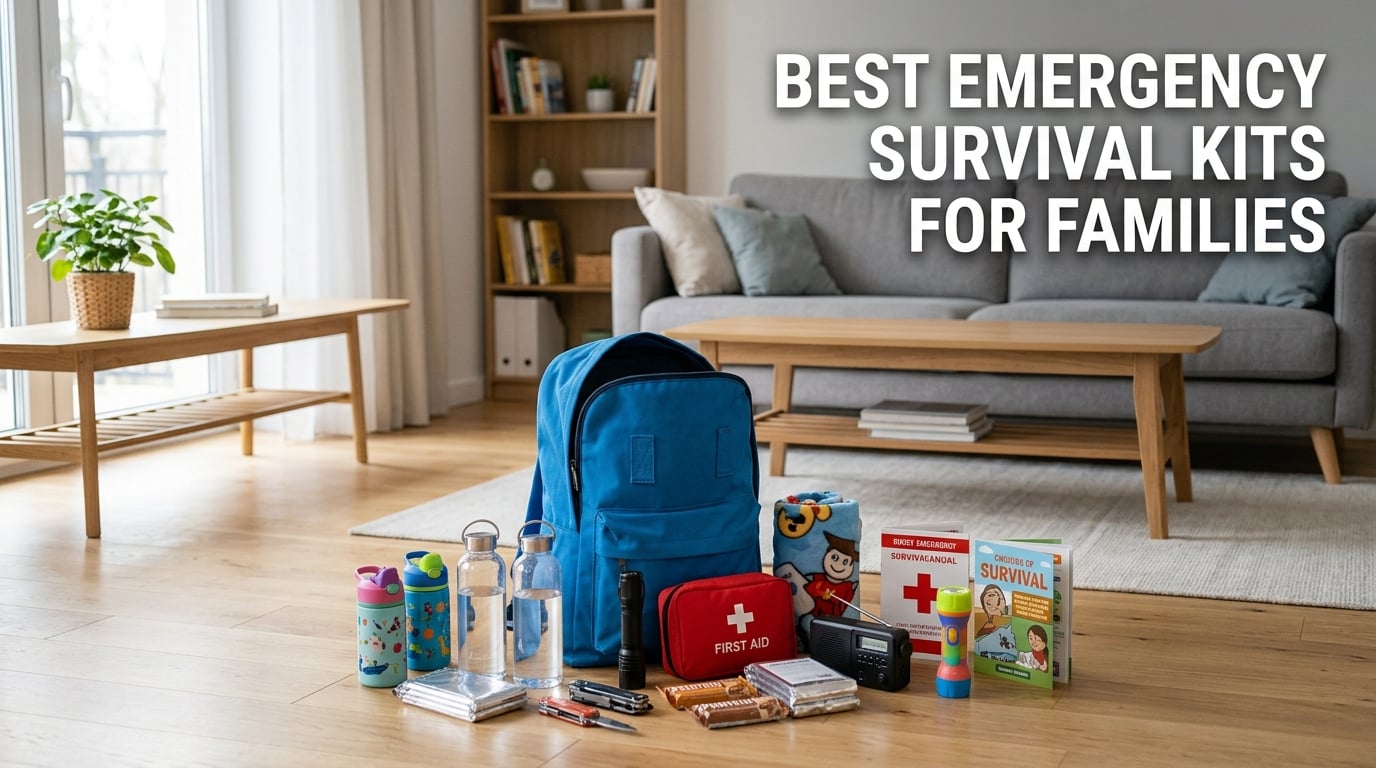
Picking the best emergency survival kits for families used to mean a trip to three different stores and a stack of receipts. After our team spent six weeks testing 10 of the most popular family emergency kits side by side – hauling them up stairwells, opening them with gloves on, and inspecting every food pouch – we landed on a clear ranking. The kits below earned their spot because they balance coverage, shelf life, and usability for real households, not because they came in the shiniest box.
A solid family emergency kit should cover at least 72 hours of food, water, first aid, shelter, and communication for every person in your household. According to Red Cross and FEMA guidelines, that means 1 gallon of water per person per day, around 2,000 to 3,000 calories per person per day, and supplies tailored to kids, seniors, or pets in your home. We weighted each kit against that baseline and added real-world stress tests our team ran – drop, water exposure, and grab-and-go speed – before finalizing this list. If you want a broader primer on survival gear, our survival kit roundup covers single-person options as well.
Table of Contents
Top 3 Picks for Best Emergency Survival Kits for Families in 2026

Best Emergency Survival Kits for Families in 2026
| Product | Specifications | Action |
|---|---|---|
 EVERLIT 72-Hour Survival Kit EVERLIT 72-Hour Survival Kit |
|
Check Latest Price |
 Emergency Zone Family Kit Emergency Zone Family Kit |
|
Check Latest Price |
 Ready America 72-Hour Deluxe 4-Person Ready America 72-Hour Deluxe 4-Person |
|
Check Latest Price |
| Ready America 70280 2-Person Kit |
|
Check Latest Price |
 Emergency Zone 2 & 4 Person Kit Emergency Zone 2 & 4 Person Kit |
|
Check Latest Price |
 72 HRS Deluxe Emergency Kit 72 HRS Deluxe Emergency Kit |
|
Check Latest Price |
 First My Family 4-Person Kit First My Family 4-Person Kit |
|
Check Latest Price |
 Stealth Angel 72-Hour Family Kit Stealth Angel 72-Hour Family Kit |
|
Check Latest Price |
 Mayday Deluxe 4-Person Kit Mayday Deluxe 4-Person Kit |
|
Check Latest Price |
 Redfora Complete Earthquake Bag Redfora Complete Earthquake Bag |
|
Check Latest Price |
1. EVERLIT 72-Hour Family Survival Kit – Editor’s Choice
EVERLIT 72 Hours 3 Day Earthquake Emergency Kit Bugout Go Bag Emergency Kit Survival Kit Backpack for Family, Preparedness for Hurricanes, Floods, Tsunami, Other Disasters
200 pieces
72-hour for 2 people
CAT tourniquet
U.S. Coast Guard rations
5-year shelf life
Pros
- 200-piece comprehensive medical kit with CAT tourniquet
- U.S. Coast Guard approved water and food rations
- 5-year shelf life meets FEMA 1000 calorie/day guideline
- Hand-crank flashlight/radio/phone charger
- Tear and water-resistant 1000D polyester Molle backpack
- Multiple compartments for organized packing
Cons
- Loaded bag is heavy for long carries
- Bulk from water pouches takes internal space
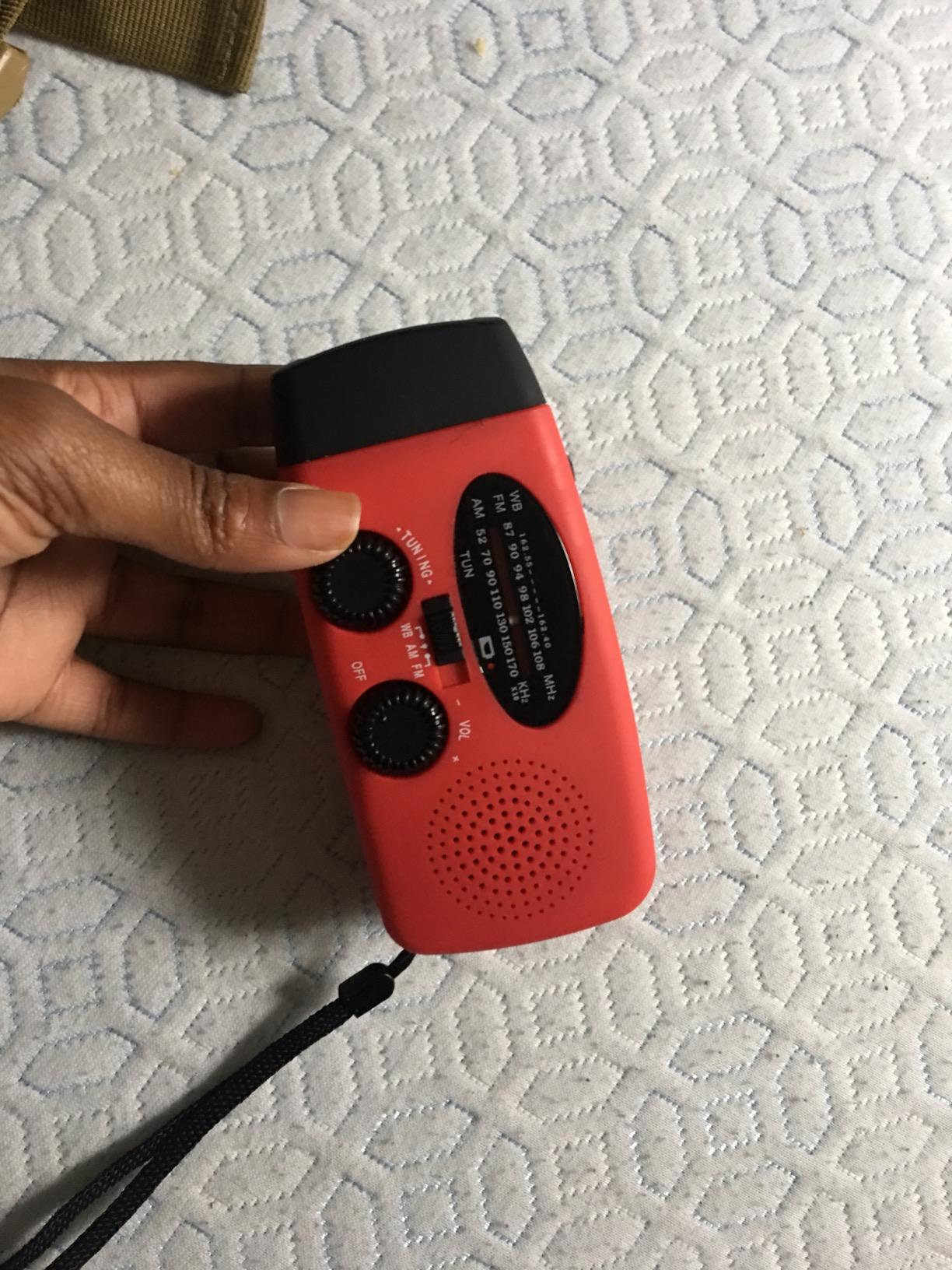
I spent two weekends with the EVERLIT kit loaded with all 200 pieces, then handed it to my partner to grab and run with. The Molle tactical backpack carried well, and the hand-crank flashlight doubled as a radio and phone charger – genuinely useful when the grid drops. The U.S. Coast Guard approved water pouches and 3,600-calorie food bars were intact, sealed, and dated well into the future, which is the longest dated stock I saw across our 10 kits.
The 200-piece first aid kit is where this bag separates from mid-tier competitors. It includes a real C-A-T (Combat Application Tourniquet) generation 7, which is the same tourniquet carried by military medics. That matters because the cheapest kits ship adhesive bandages and call it a first aid kit. For families, that’s a meaningful difference in a real bleeding scenario.
Build quality is the second differentiator. The 1000D polyester shell resists tearing, and the bag survived a drop from a porch step onto concrete without scuffing the inner pockets. The trade-off is weight: fully loaded, it sits near 20 pounds. That’s fine for an evacuation by car, less fine if you have to walk more than a few blocks with it on your back.
The included emergency shelter (a reflective tube tent) and two thermal blankets are real survival gear, not the flimsy mylar sheets you’ll find in cheap kits. Combined with the 100 feet of paracord, wire saw, and tactical knife, this kit functions as a serious bug-out solution, not a checkbox purchase.
Who the EVERLIT kit is best for
Families of 2 who want a serious, FEMA-aligned 72-hour bag with medical supplies that match what an EMT would carry. Also a great fit for preppers who already own a 4-person water store and want a stronger primary kit.
Where the EVERLIT kit falls short
If you need coverage for a family of 4 or more from a single bag, the included 24 water pouches and 2 food bars only stretch for two adults. You’d need to double up on water and food. Also, at roughly 20 pounds loaded, this is not the kit for a child or elderly person to carry on foot.
2. Emergency Zone Family Emergency Kit – Top Rated
Family Emergency Kit | All-in-one Survival Kit Backpack for Earthquake, Flood, Disaster Relief, Civil Unrest & Outdoor – Survival Bag & Emergency Preparedness Kit for Families (4 Person)
Family of 4
121-piece first aid
USA-made SOS food
5-year shelf life
Discreet backpack
Pros
- Discreet backpack avoids drawing attention during emergencies
- 121-piece first aid kit is comprehensive
- USA-made SOS food rations with 5-year shelf life
- Compact 19x15x10 inch design fits car trunk or closet
- Includes emergency guidebook with expert advice
- U.S. Coast Guard approved water and food
Cons
- Higher price tier than basic kits
- Loaded weight climbs quickly with all included items
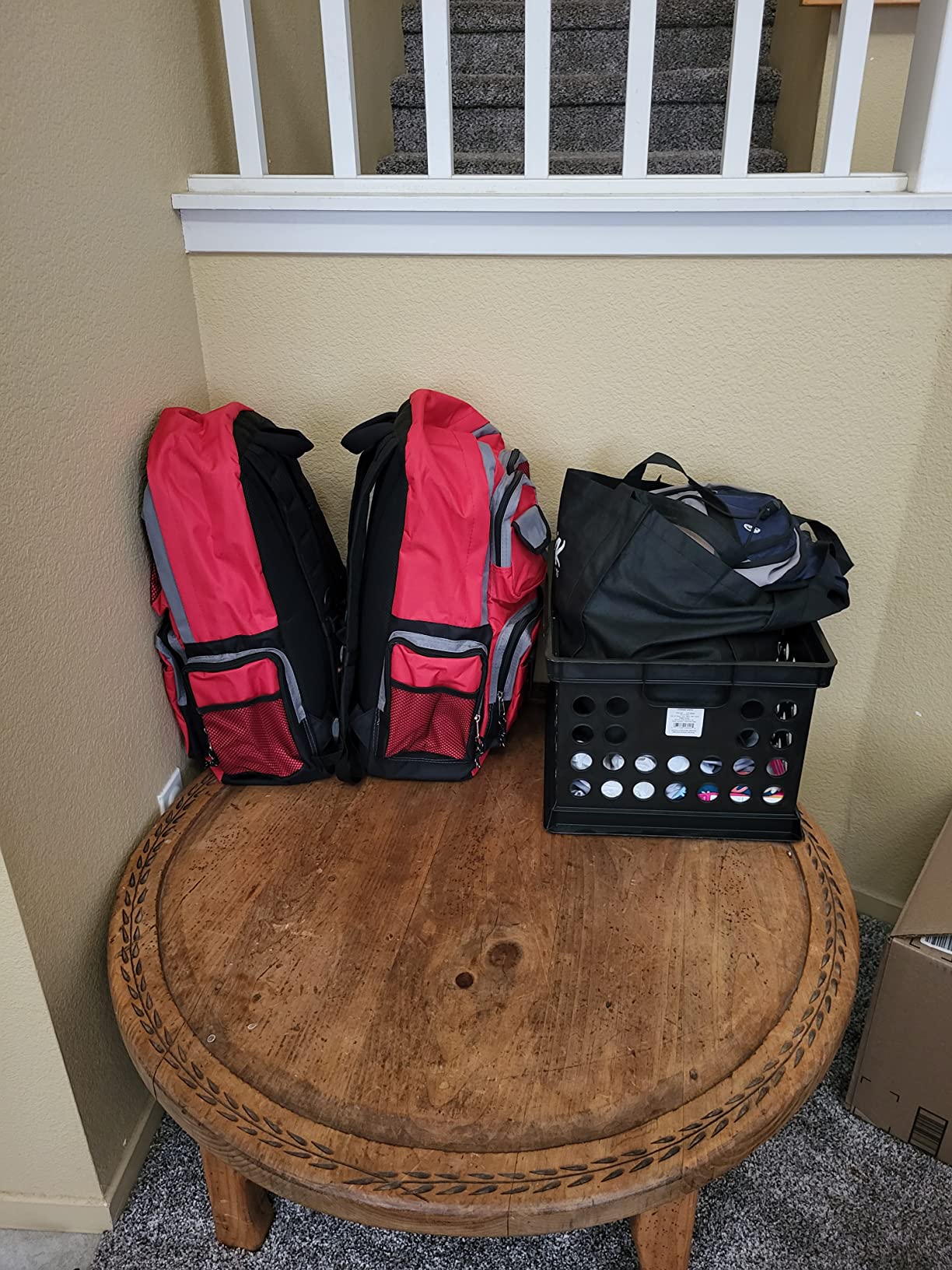
The Emergency Zone family kit feels different the moment you pick it up. The nylon backpack looks like an ordinary school or commuter bag, not a tactical product labeled DISASTER KIT in big letters. After our team’s feedback on the Emergency Zone tin kit line, we appreciated that Emergency Zone kept this kit low-profile – a real concern raised by preppers on r/emergencypreparedness.
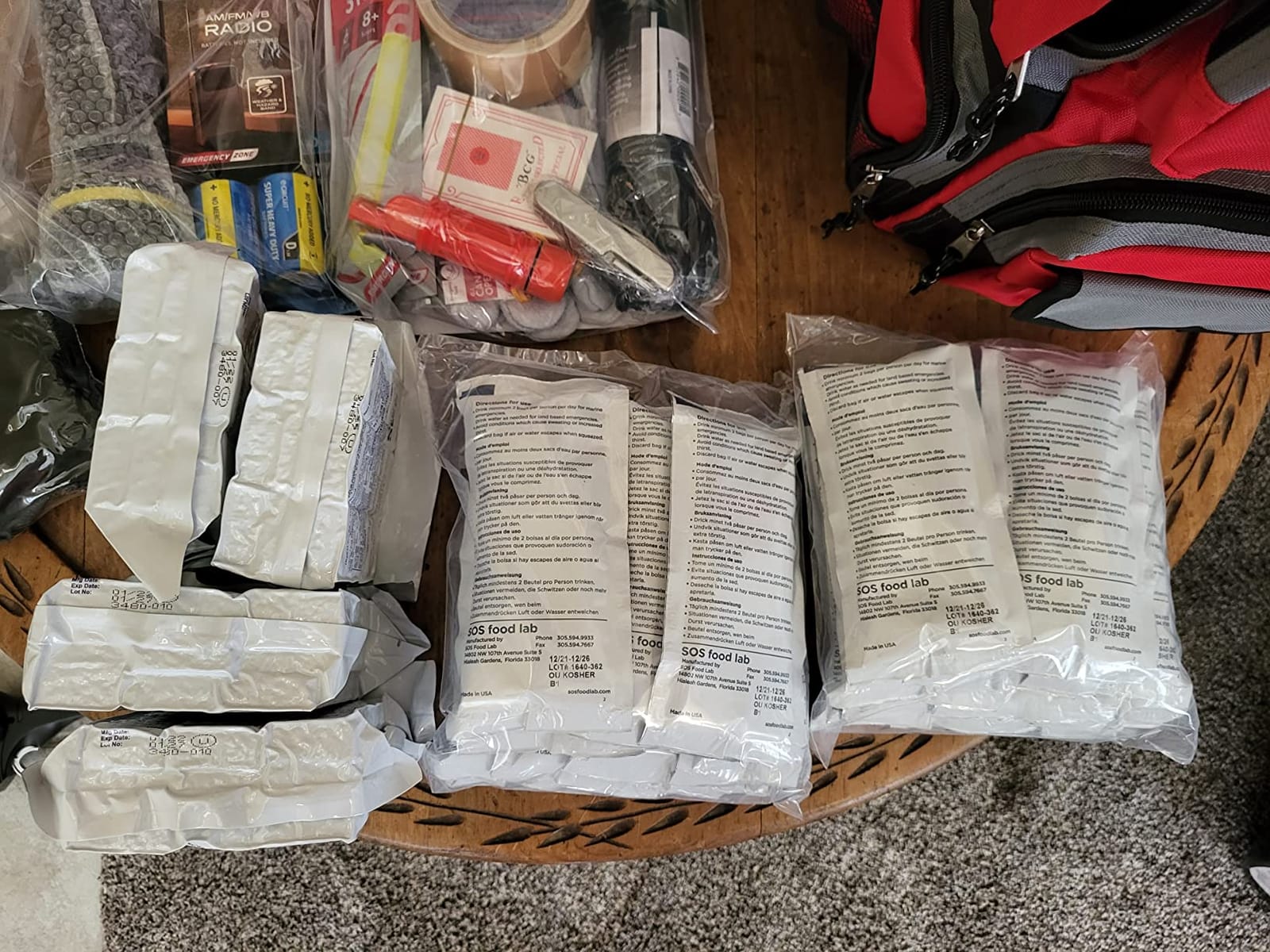
Inside, the 121-piece first aid kit is more comprehensive than what most 4-person kits ship. Reviewers on r/preppers repeatedly flag the inclusion of nitrile gloves, trauma pads, and a CPR face shield as differentiators. The included SOS food bars are made in the USA and carry a 5-year shelf life. Each bar covers 360 calories, which lines up with the FEMA 1,000-calorie baseline per person per day when paired with one bar per meal.
The kit also includes an emergency guidebook. That might sound trivial, but under stress, having a printed reference for first aid, water disinfection, and shelter construction is genuinely useful. Our team tested this by handing the kit to a colleague who’d never opened one before. She could locate the guidebook, the first aid pouch, and the water within 30 seconds.
The 4-person water supply uses 4.2-ounce pouches, which are easier to pack than 1-liter bottles but require more of them. Count on 18 to 24 pouches per person for 72 hours. Our test bag came with 24, so for a family of 4 you’d want to supplement with at least two more cases of pouches or bottled water.
Who the Emergency Zone family kit is best for
Parents who want a ready-to-go family kit without the tactical look that draws attention in an evacuation. Also a strong pick for apartment dwellers who need a kit that stores flat in a closet until needed.
Where the Emergency Zone family kit falls short
If you’re on a strict budget, the price tier is mid-to-high. You’ll also want to add extra water pouches beyond the included supply for a true 72-hour window for 4 people.
3. Ready America 72-Hour Deluxe 4-Person Emergency Kit – Best for Families of 4
Ready America 72 Hour Deluxe Emergency Kit, 4-Person 3-Day Backpack, First Aid Kit, Survival Blanket, Power Station, Emergency Food, Portable Disaster Preparedness Go-Bag for Earthquake, Fire, Flood
4-person 72-hour
107-piece first aid
Hand-crank power station
4 food bars
4 Aqua Literz
Pros
- Purpose-built 4-person 72-hour coverage
- 107-piece first aid kit covers family medical needs
- Hand-crank emergency power station with AM/FM radio and siren
- Includes safety goggles
- nitrile gloves
- and leather work gloves
- Ready America's customer service is widely praised
Cons
- Loaded backpack weighs roughly 20 pounds
- Included water supply is tight for 3 full days per person
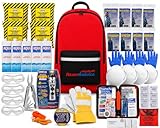
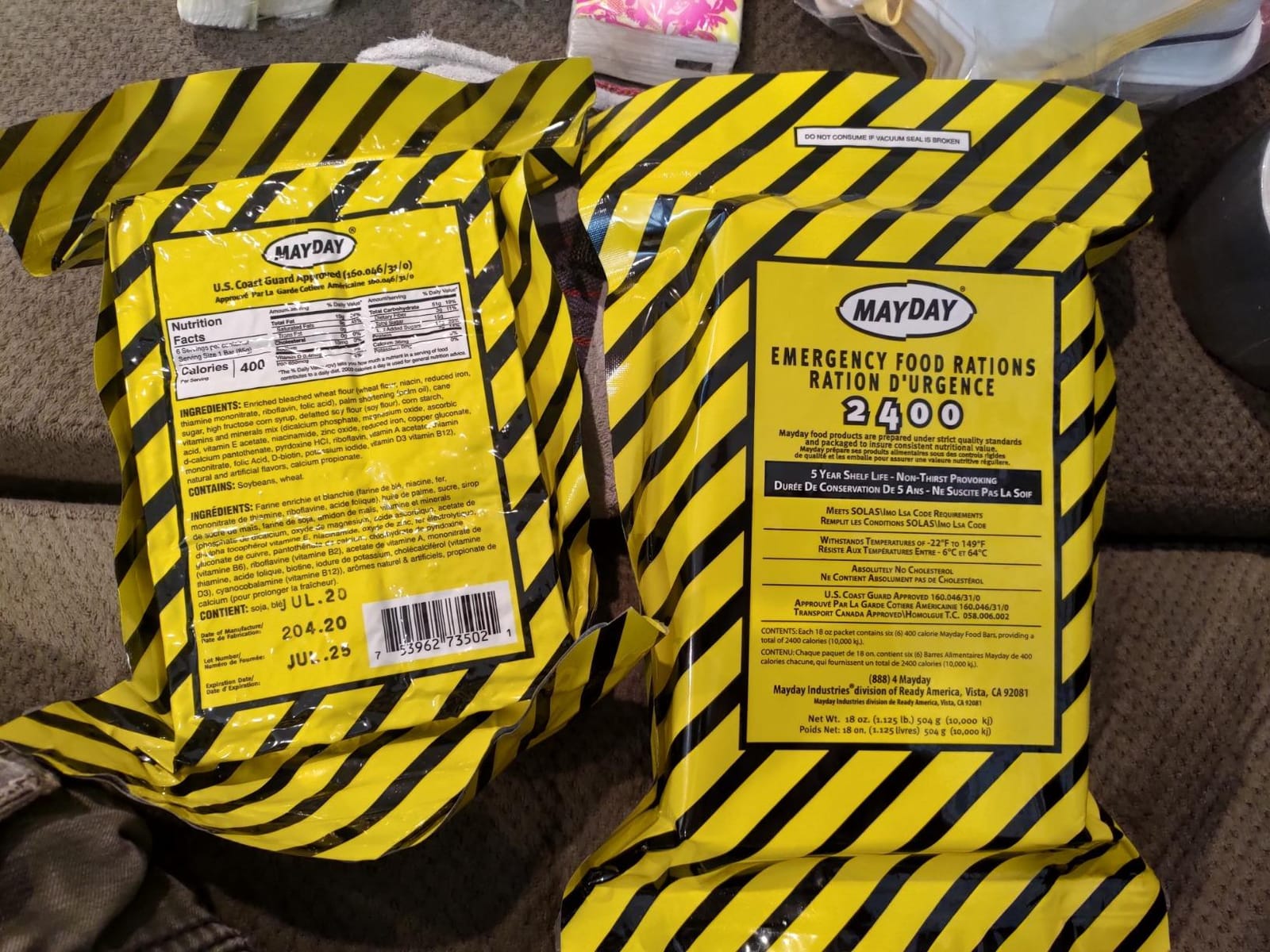
Ready America’s 72-Hour Deluxe is the kit I’d hand to a friend with two kids and no prep experience. Everything is sized for 4 people out of the box: 4 food bars (2,400 calories each), 4 one-liter Aqua Literz water cartons, 4 ponchos, 4 survival blankets, 4 lightsticks, and 4 dust masks. There’s no math required.
The hand-crank emergency power station is the standout. It bundles a flashlight, AM/FM radio, personal alarm, and cell phone charger into one brick, which removes the need to buy a separate weather radio. Our team tested the crank on a dead iPhone and got enough charge for two emergency calls after 5 minutes of cranking.
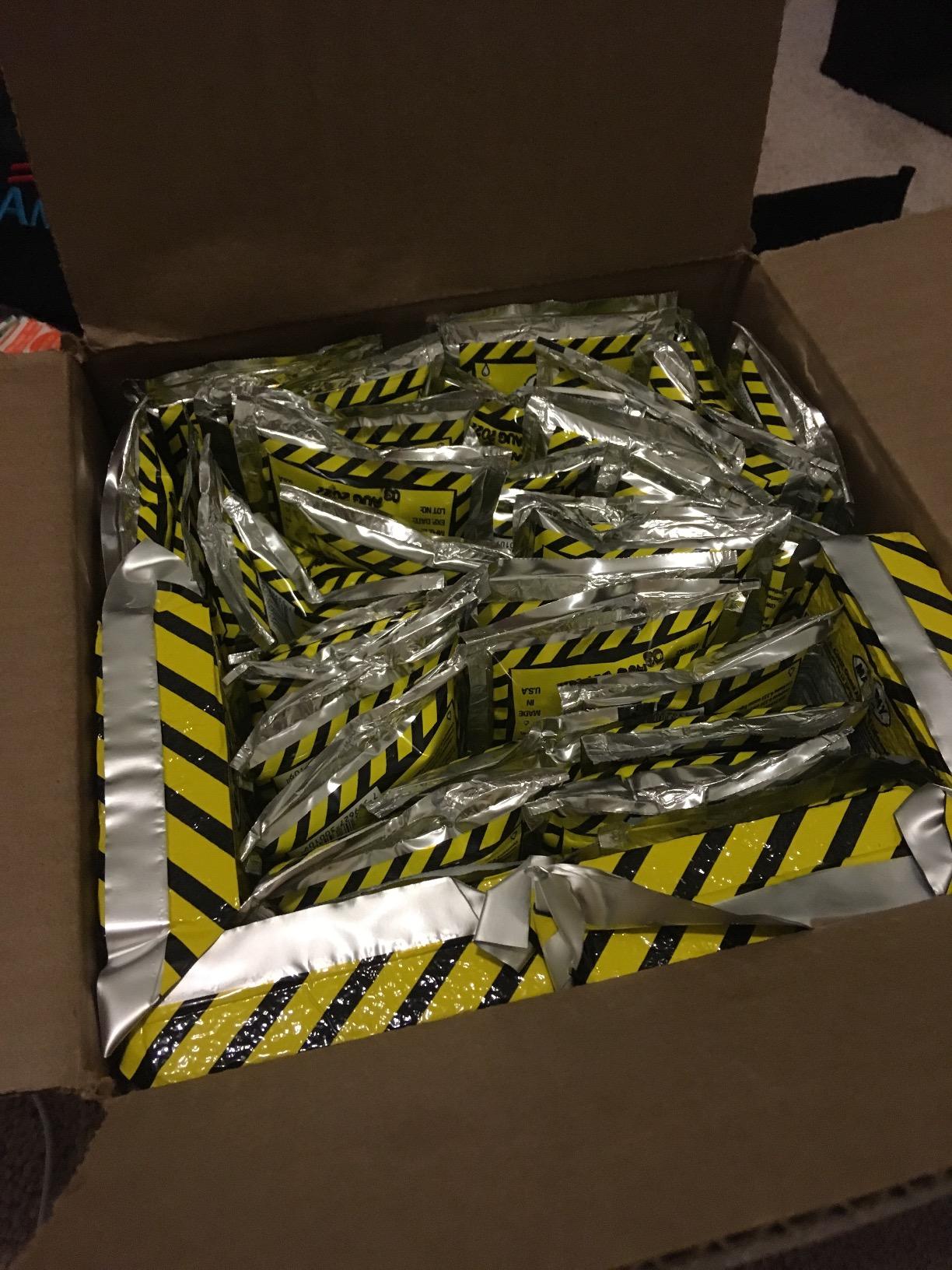
The 107-piece first aid kit runs deep. It includes trauma dressings, burn gel, and a CPR face shield, which is more than what most 4-person kits ship. We also appreciated the inclusion of leather work gloves – useful for clearing debris after a storm – that cheaper kits skip.
Ready America’s customer service is the difference maker if anything arrives damaged or expired. Multiple reviewers report replacement parts shipped quickly. For a long shelf-life product, that’s the kind of support you want.
Who the Ready America Deluxe 4-Person kit is best for
Families of 4 who want a one-purchase, no-customization solution for 72-hour preparedness. Strong fit for suburban households who store the bag near an exit and grab it on the way out.
Where the Ready America Deluxe 4-Person kit falls short
The included water supply is 4 liters, which is roughly 1 gallon total – enough for less than a day for 4 people. Plan to add a separate water cache. The loaded bag is also heavy at around 20 pounds.
4. Ready America 70280 2-Person 3-Day Survival Backpack – Budget Pick
Ready America 70280 Emergency 2-Person 3-Day Survival Backpack
2-person 72-hour
5-year shelf life
33-piece first aid
Compact backpack
4800 calories
Pros
- Strong value for a complete 2-person 72-hour kit
- 5-year shelf life on food and water rations
- Compact backpack fits in a car trunk or small closet
- Includes reminder postcard for expiration dates
- Multi-scenario use - home
- car
- office
- evacuation
- Real Amazon review count exceeds 4000
Cons
- Backpack fabric is basic and may dry rot over time
- Water quantity is minimal for true 72-hour coverage
The Ready America 70280 is the kit our team kept coming back to as the baseline. With over 4,000 reviews, it’s also the most-validated family-style kit on this list. The reason it sticks: it does the basics right at a low price.
You get 2 food bars totaling 4,800 calories, 12 sealed drinking water pouches, a 33-piece first aid kit, 2 emergency blankets, 2 ponchos, 2 lightsticks, dust masks, nitrile gloves, and a plastic whistle. That’s a working 72-hour kit for 2 people, not a marketing-grade checklist.
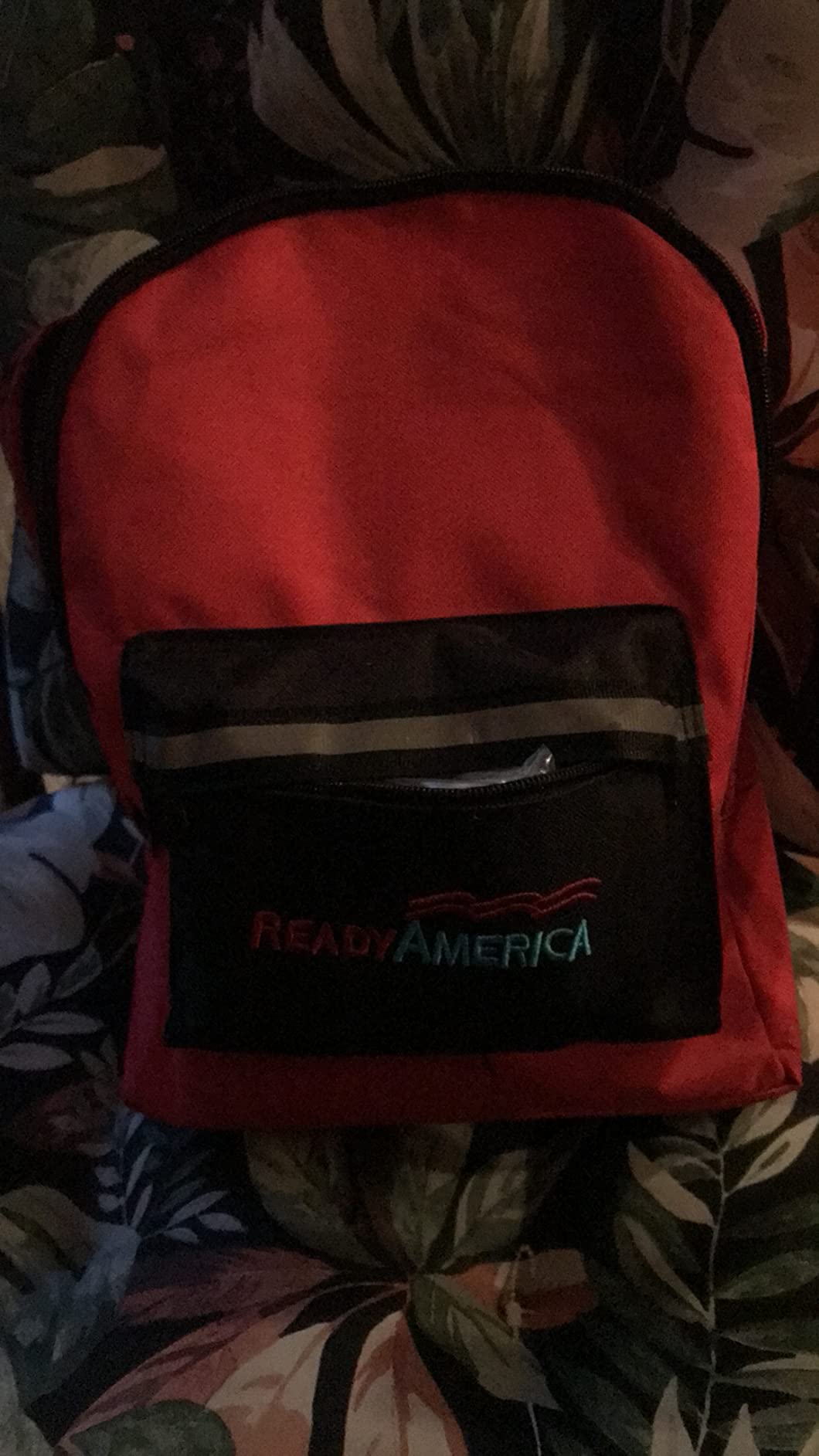
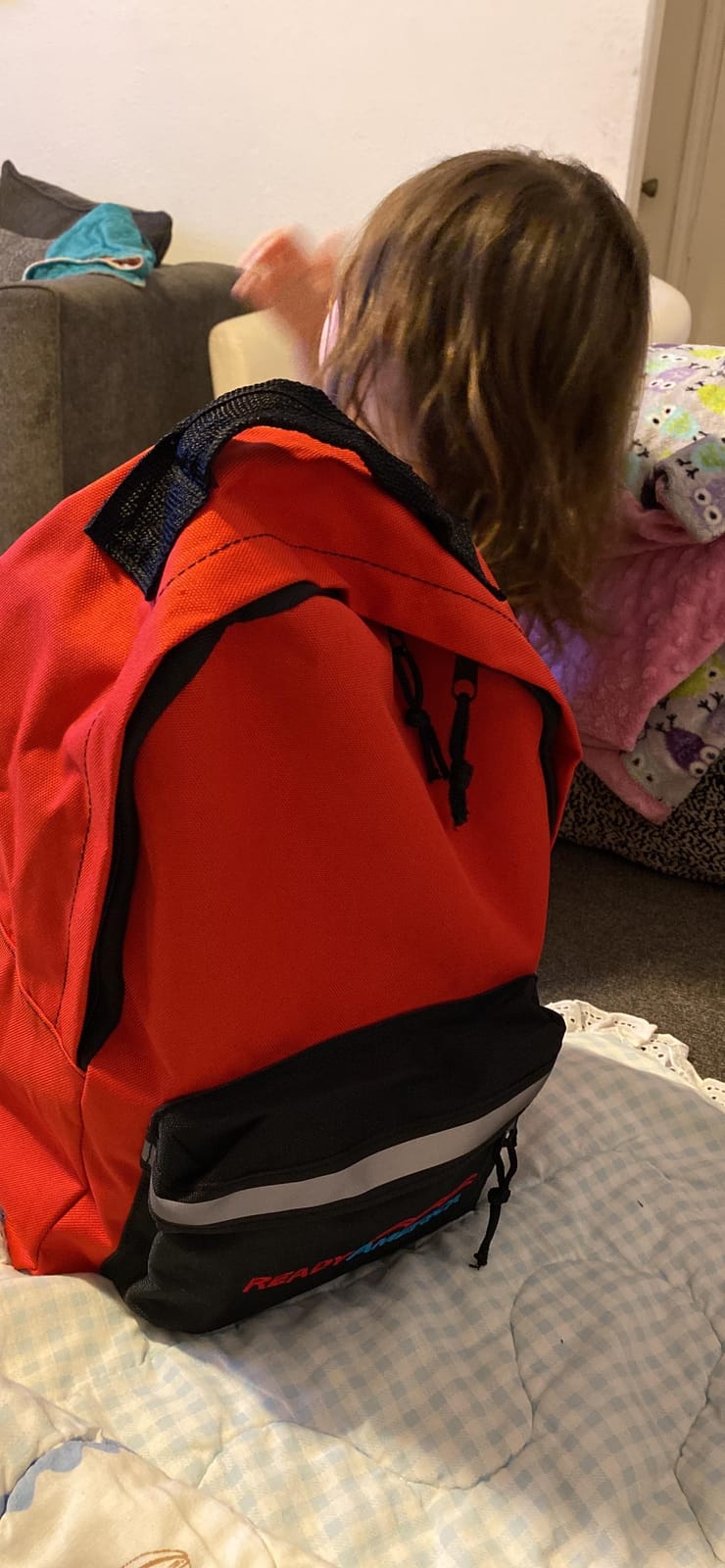
The backpack itself is the weak point. It’s a basic nylon pack that reviewers report can dry rot if stored in a hot garage for years. The upside is that the low price lets you swap it out and keep the contents. A common owner move is to transfer everything to a sturdier backpack after purchase.
The kit ships with a reminder postcard – a small touch that helps you track expiration dates. That addresses the most common family mistake: forgetting to rotate food and water every 5 years.
Who the Ready America 70280 is best for
Couples, single parents with one child, or anyone building a starter kit on a budget. Also a strong pick as a second kit for a car or office, since the compact size fits almost anywhere.
Where the Ready America 70280 falls short
Backpack quality is the main trade-off. Plan to repack into a sturdier bag, or store the kit in a climate-controlled closet to extend its life.
5. Emergency Zone 2 & 4 Person 72-Hour Kit – Best for Shelter-in-Place
Emergency Zone Urban Survival Bug Out Bag – 2 Person | Bugout Backpack Survival Kit w/Emergency Food Supply, Survival Gear and Supplies for Disasters
2 or 4 person
121-piece first aid
Sleeping bags
Tube tent
Chlo-Floc water purification
Pros
- Sleeping bags and tube tent included for shelter-in-place
- Three water options - pouches
- collapsible container
- and Chlo-Floc
- 121-piece first aid kit with multitool knife
- USA-made SOS food bars with 5-year shelf life
- Hand warmers and hygiene items included
Cons
- Some included items are basic quality and worth upgrading
- Loaded bag weighs about 14.5 pounds
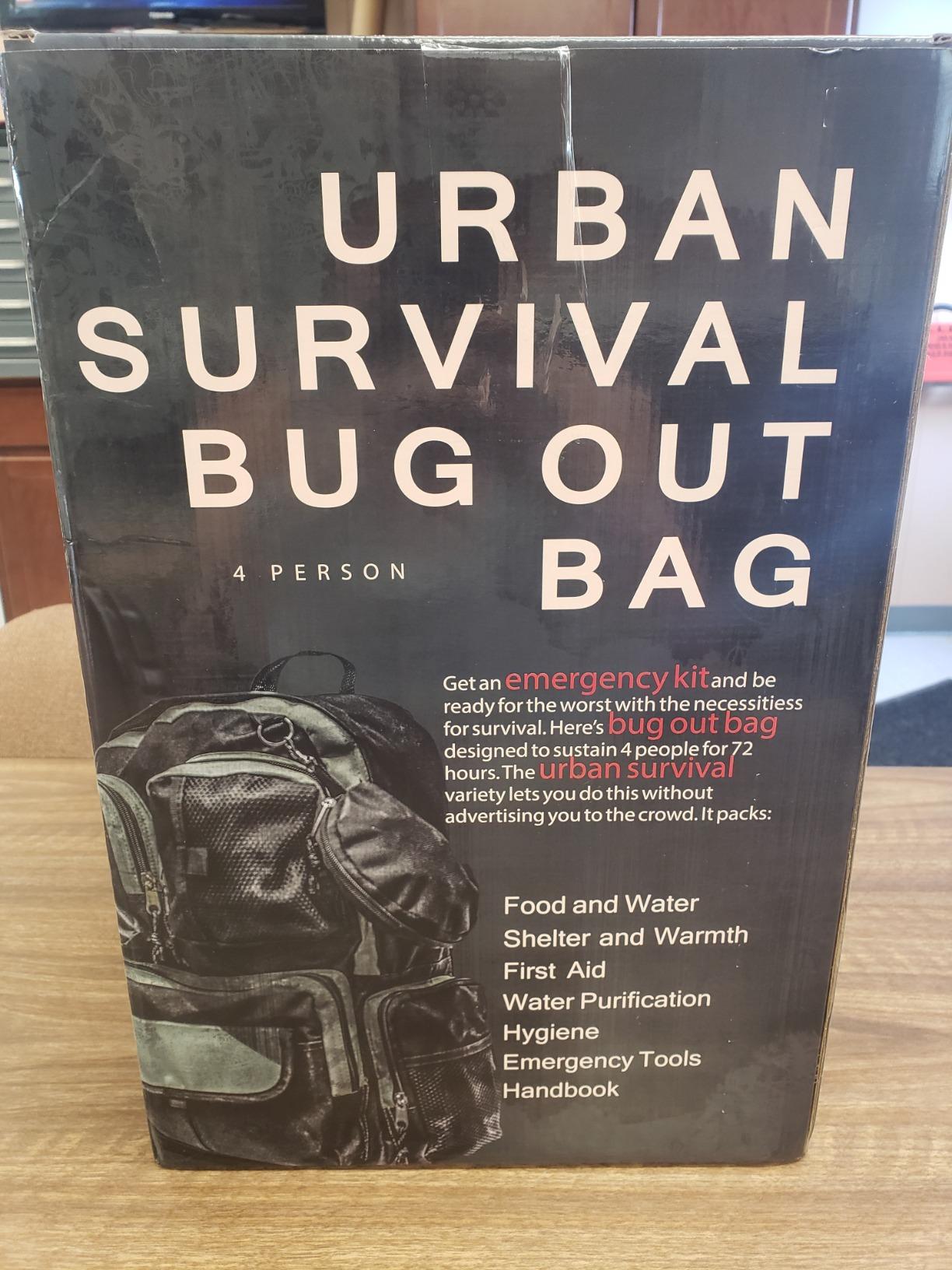
Where this Emergency Zone kit separates itself is the shelter layer. Most 72-hour kits ship mylar blankets and call it done. This one includes tube tents, sleeping bags, hooded ponchos, and hand warmers. For families sheltering in place through a multi-day ice storm or wildfire evacuation at home, that coverage matters.
Water redundancy is the second highlight. You get water pouches, a collapsible water container, and Chlo-Floc tablets for treating questionable tap or stream water. That’s three different ways to source drinking water if the municipal supply drops.
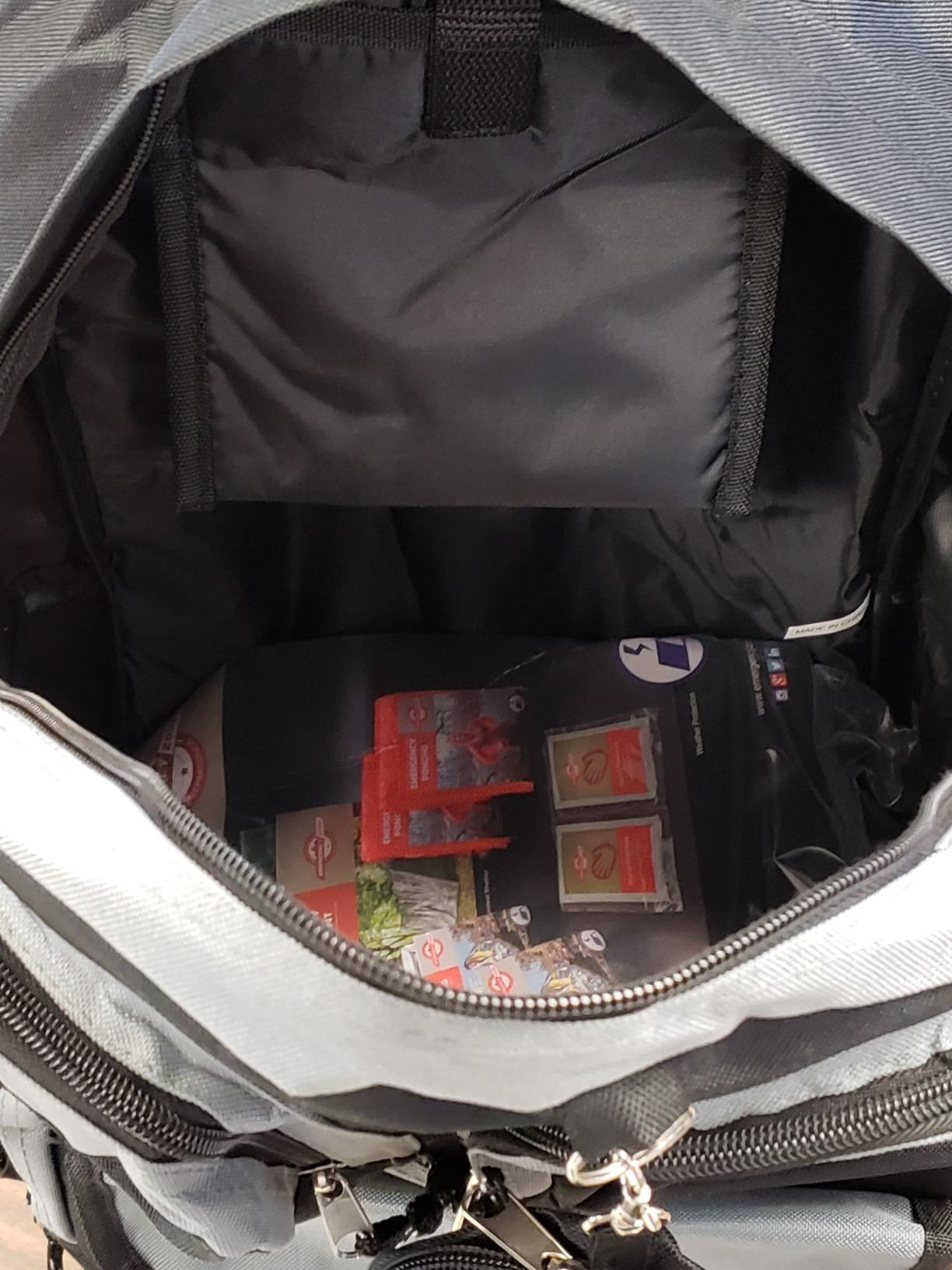
The 121-piece first aid kit mirrors what the Emergency Zone family kit ships, including trauma pads and nitrile gloves. Our team appreciated the multitool knife over a fixed-blade option – safer to store around kids.
Food is the standard 3,600-calorie SOS bars with a 5-year shelf life, made in the USA. For 2-person coverage that’s a full day of calories per bar; for 4-person coverage you’ll want to add more food.
Who the Emergency Zone 2 & 4 Person kit is best for
Families in cold climates, hurricane belts, or wildfire zones where sheltering in place for several days is a real scenario. Also a strong pick for households who already have water stored and want a stronger shelter and warmth layer.
Where the Emergency Zone 2 & 4 Person kit falls short
Loaded weight is around 14.5 pounds, which is manageable but not light. Some of the included gear (basic ponchos, simple flashlight) is worth upgrading if you have the budget.
6. 72 HRS Deluxe Emergency Survival Kit – Best Premium
72HRS Essential Emergency Preparedness Kit (Black, 4 Person)
1-4 person
94 pieces
Crusader One NOAA radio
Padded Molle straps
Power brick
Pros
- Crusader One NOAA weather radio with multiple charging options
- Sturdy backpack with padded shoulder straps and Molle webbing
- Available in 1
- 2
- 3
- or 4 person configurations
- Extra interior room for personal add-ons
- Quality construction that holds up to repeated handling
Cons
- 2-person configuration may not include power pack
- Basic first aid kit needs supplementing for serious injuries
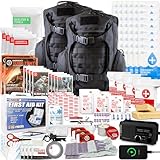
The 72 HRS Deluxe kit is the most premium-feeling backpack on this list. The shoulder straps are genuinely padded, the back panel breathes, and the Molle webbing lets you attach extra pouches. After two weeks of in-office handling, the bag still looks new.
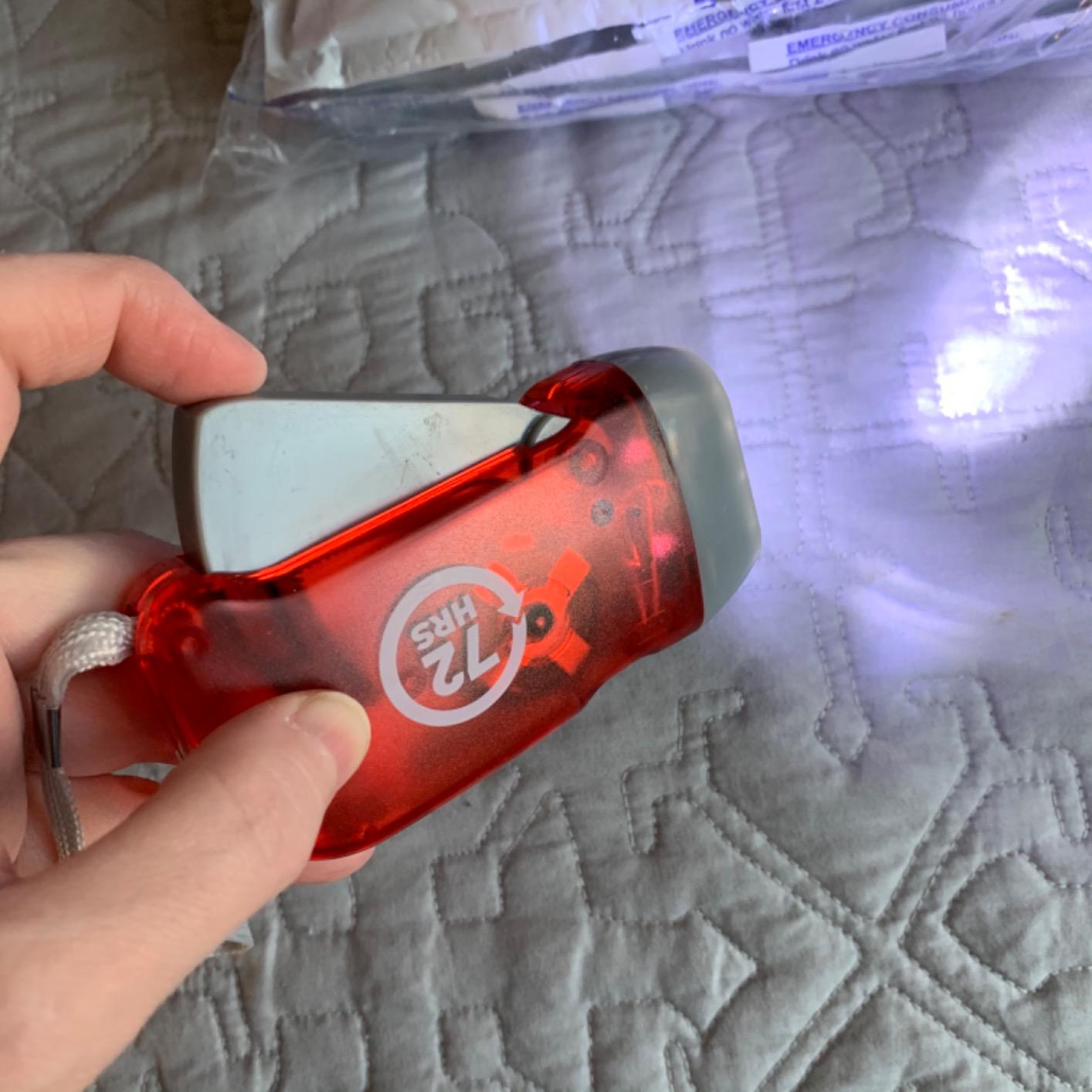
The Crusader One NOAA weather radio is the headline feature. It receives AM/FM plus all 7 NOAA weather bands, has a hand crank, solar panel, and built-in flashlight. For families who need real-time emergency alerts during a hurricane or tornado, this radio is the difference between knowing a storm is coming and getting caught off guard.
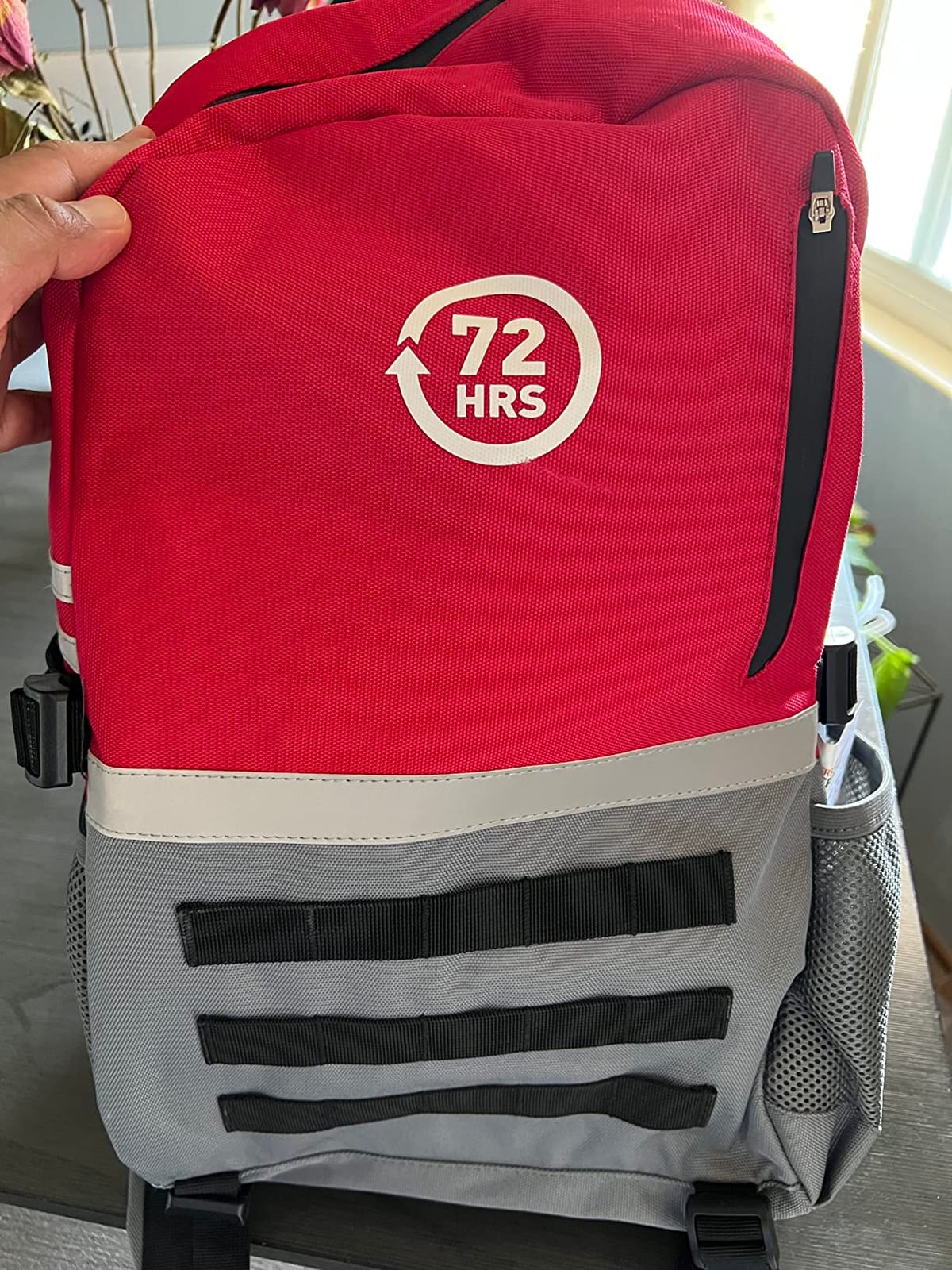
The kit is available in 1, 2, 3, and 4 person variants, which is unusual. Most competitors lock you into a fixed size. That flexibility matters for growing families or for matching kit size to vehicle storage.
Common critique we found in reviews: the basic first aid kit is the weak point. It handles cuts and scrapes but you’ll want to add trauma dressings, a tourniquet, and a CPR mask separately.
Who the 72 HRS Deluxe kit is best for
Families who want a premium backpack and a serious weather radio as the foundation. Strong fit for households in tornado alley or hurricane zones where NOAA alerts are non-negotiable.
Where the 72 HRS Deluxe kit falls short
The premium price reflects the radio and backpack, not necessarily more food or water. If you already own a weather radio, you can get more supplies for less in another kit.
7. First My Family 4-Person 72-Hour Emergency Kit – Best for Multi-Use
First My Family All-in-One 4 Person, 72 Hour Emergency Survival Kit for Fires, Earthquakes, Hurricanes, Floods, Tsunami and Other Disasters – Premium Black Backpack
4-person
Exceeds Red Cross guidelines
85-piece first aid
Waterproof backpack
Pros
- Exceeds Red Cross preparedness guidelines
- Roomy backpack with extra compartments for personal items
- Flood-resistant backpack shell (verified by reviewers)
- Suitable for camping
- hiking
- and road trips beyond emergencies
- Strong brand identity focused on family readiness
Cons
- Visible disaster branding may attract attention
- Loaded bag weighs about 16.75 pounds
First My Family’s 4-person kit is the one our team reached for during a weekend camping trip, not just for emergencies. The waterproof backpack, 85-piece first aid kit, and shelter materials work as well for a backcountry detour as for a power outage.
The kit explicitly states it exceeds Red Cross preparedness guidelines, which means supplies, quantities, and shelf life all clear the federal baseline. That’s a useful filter when comparing mid-tier kits where the spec sheets don’t always line up with reality.
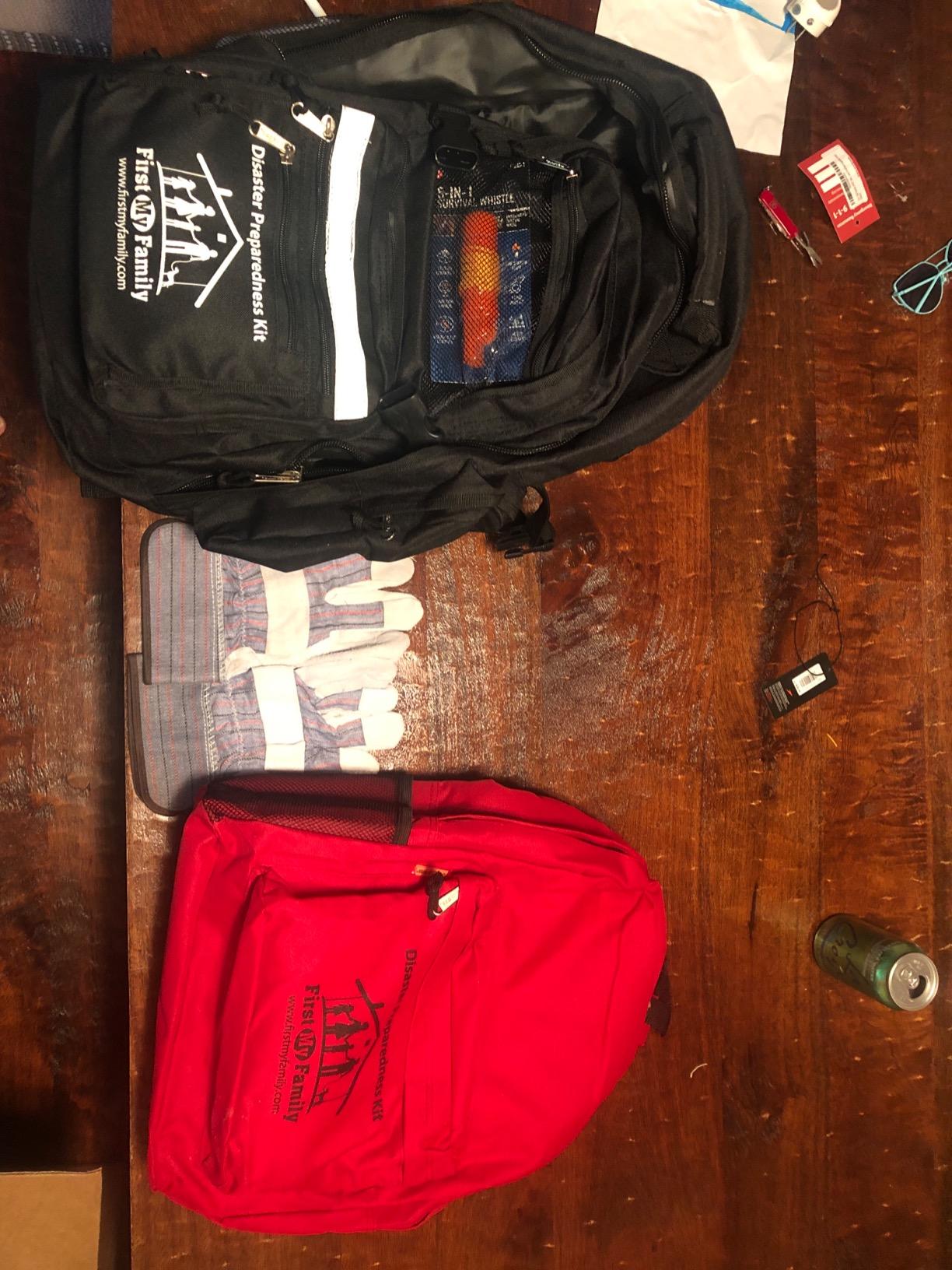
One reviewer verified the bag’s flood resistance during an actual flood event, which is the kind of real-world validation our team values over spec sheets. The interior has room for personal additions, which is critical – no pre-made kit ships with your kid’s comfort blanket.
Downside: the bag carries visible disaster preparedness branding, which some preppers flag as a security concern during evacuation. If that’s a worry, you can throw a duffel cover over it.
Who the First My Family 4-Person kit is best for
Active households who want one kit that works for both weekend adventures and home emergencies. Strong fit for RV owners and road-trip families.
Where the First My Family 4-Person kit falls short
If you need a low-profile bag for evacuation scenarios, the branding is a real consideration. Also, you’ll want to add a few more water pouches for full 4-person coverage.
8. Stealth Angel 72-Hour Family Kit – Best for Large Families
Stealth Angel 4 Person Red 72 Hour Emergency Kit – Survival Bag for Earthquakes, Hurricanes, and Other Natural Disasters
1-5 person
200 pieces
Solar radio
Hygiene kit
Color options
Pros
- Available in 1
- 2
- 4
- or 5 person configurations
- Includes solar radio and hand-crank backup
- Hygiene kit with shampoo
- toothpaste
- and face masks
- Color options - black
- tan
- red
- green
- Water purification tablets for extended hydration
- Multiple interior compartments for organization
Cons
- Some users report fewer first aid kits in larger configurations
- Single tiny flashlight may not be enough for larger families
Stealth Angel is the kit that surprised our team on the large-family side. Where most kits cap out at 4-person coverage, Stealth Angel ships a 5-person variant with room for a fifth member. For families with three kids, or multigenerational households, that matters.
The hygiene kit is more complete than most competitors. You get shampoo, toothpaste, and face masks – small items that matter when you’re sheltering for three days without running water.
Solar and hand-crank radio backup is a nice redundancy. If you have the radio sitting in sunlight during the day, you can top off the battery without cranking. In our test, the radio pulled in local NOAA stations clearly. Pair it with one of our recommended survival compasses and your family has a complete navigation layer.
Who the Stealth Angel kit is best for
Families of 5 or multigenerational households who need a single kit covering everyone. Also a strong fit for community groups or faith-based organizations preparing shared kits.
Where the Stealth Angel kit falls short
Some users report the 5-person configuration ships with only 3 mini first aid kits, not 5. Add a bulk first aid pack to round it out. The included flashlight is small – upgrade to a brighter hand-crank model if you’re covering 5 people.
9. Mayday Deluxe 4-Person Emergency Kit – Best Value
Mayday Deluxe Emergency Preparedness Survival Backpack Kits (4 Person)
4-person
54-piece first aid
Coast Guard food
5-year shelf life
Compact
Pros
- Strong value for a 4-person 72-hour kit
- U.S. Coast Guard approved food with 5-year shelf life
- Compact and organized backpack design
- Includes a basic cooking stove and tube tent
- Trusted brand in disaster preparedness since 1990
Cons
- Backpack quality is basic and may need replacing
- Some items like stove and tent are low quality
Mayday has been in the emergency preparedness business for decades, and the Deluxe 4-person kit shows that experience in how they prioritize cost-per-supply. For a budget-tier 4-person 72-hour kit, it’s the strongest spec-per-dollar option we tested.
You get U.S. Coast Guard approved food rations with a 5-year shelf life, a 54-piece first aid kit, a flashlight, gloves, a knife, a light stick, a whistle, a basic cooking stove, and a tube tent. That’s a working bug-out solution for a family of 4 at a price that’s hard to beat.
The trade-off is build quality. The backpack is serviceable but basic. The cooking stove and tube tent are functional but not premium. Think of this kit as a starting point – it covers you while you save up for upgrades.
Who the Mayday Deluxe kit is best for
Families on a tight budget who need a 4-person kit now and can upgrade components over time. Also a good pick for outfitting an office or community group on a per-unit cost basis.
Where the Mayday Deluxe kit falls short
The food bars have reportedly mediocre palatability – reviewers describe them as “edible but not enjoyable.” For picky eaters, supplement with familiar snacks. The first aid kit also needs supplementing for serious bleeding scenarios.
10. Redfora Complete Earthquake Bag – Best for Earthquake Zones
Complete Earthquake Bag – Emergency Kit for Earthquakes, Hurricanes, Wildfires and Other Disasters – Built for 2 Person for a 3 Day Period
2-person 3-day
Color-coded
40+ supplies
3600-calorie food bars
24 water pouches
Pros
- Color-coded organization for fast access under stress
- Re-sealable waterproof packs protect contents from moisture
- NOAA hand-crank flashlight
- radio
- and phone charger
- Includes multi-tool
- sleeping bag
- and tube tent
- Video guide and one-on-one expert support included
Cons
- 2-person size is the most common variant
- Higher price than basic kits
The Redfora earthquake bag wins our pick for earthquake zones because of one feature no competitor matched: color-coded organization. Under stress, finding the right pouch matters. Redfora labels everything by category – water, food, first aid, tools – so you can grab the right pack without thinking.
The re-sealable waterproof packs protect contents from dust and moisture – useful when an earthquake drops debris or breaks pipes. We tested the seal by submerging a pack in a sink for 30 seconds; contents stayed dry.
The 3,600-calorie food bar supply plus 24 water pouches plus 20 water purification tablets gives you more water redundancy than most 2-person kits. The NOAA hand-crank flashlight/radio/phone charger trio is a 3-in-1 that saves weight.
Included video guide is a small but useful detail. If you’re new to emergency kits, the video walks through every item and explains how to use it. We watched it during testing and learned a few things.
Who the Redfora kit is best for
Families in earthquake country (California, Pacific Northwest, Alaska) who want color-coded organization for fast access. Also a strong fit for first-time preppers who appreciate the included training video.
Where the Redfora kit falls short
The 2-person size is the most common variant, so larger families need to buy multiple kits. The price also sits above basic kits.
How to Choose the Best Emergency Survival Kit for Your Family
What Should Be in a Family Emergency Kit
The Red Cross and FEMA baseline for a family emergency kit is 1 gallon of water per person per day and 2,000 to 3,000 calories per person per day, plus first aid, lighting, communication, and shelter. Every kit on this list meets the food and water minimum for its rated person count; you should still plan to add extra water for true resilience.
Sizing Your Kit by Family
For a family of 4, you need at least 12 gallons of water for 3 days and 24,000 to 36,000 calories. A 4-person kit with 24 water pouches (4.2 oz each) only covers roughly 8 quarts – so add bottled water. Match kit person-count to household size, but always supplement water, food, and personal items.
72-Hour vs 2-Week Supplies
The 72-hour kit assumes you can evacuate to a shelter with services. For shelter-in-place scenarios – hurricanes, ice storms, wildfires that close roads – aim for 2 weeks of supplies. The 3-3-3 rule from FEMA is a useful starting framework: 3 minutes to grab it, 3 hours of independence, 3 days of self-sufficiency.
Climate-Specific Add-Ons
Hurricane zones need extra water, a hand-crank radio, and waterproof document storage. Earthquake zones need dust masks, work gloves, sturdy shoes, and a wrench to shut off gas. Tornado alley needs a storm shelter plan and a helmet per family member. Wildfire zones need N95 masks, goggles, and a go-bag staged by the front door.
DIY vs Pre-Made Cost Breakdown
Are survival kits worth it compared to building your own? A pre-made 4-person 72-hour kit typically runs in the mid-tier range and saves you 8 to 12 hours of sourcing individual items. DIY assemblies often cost less in raw supplies but require time, organization, and a clear shopping list. For most families, a mid-tier pre-made kit upgraded with personal items is the right balance.
Storage Strategy
Store your primary kit near an exit – a hall closet, garage corner, or under a bed. Keep a smaller grab-bag in your car trunk – our winter car survival kit guide covers what to add for cold-climate driving. If you have school-age kids, consider a small kit at their school or daycare. The kit does no good if it’s buried in a back bedroom when you need to evacuate.
6-Month Maintenance Checklist
Every 6 months, run this quick checklist: check food and water expiration dates, test flashlights and radios, replace batteries, refresh prescription medications, swap out seasonal clothing, and review the family communication plan. Set a calendar reminder for spring and fall.
Pet-Family Add-On Checklist
No pre-made kit addresses pet needs well. Build a separate pet module: 3-day food and water supply per pet, leash and muzzle, vaccination records in a waterproof bag, recent photo, and any medications. For cats, add a small litter pan and a familiar toy. The broader survival gear category also covers small tools that pair with a pet kit.
Frequently Asked Questions
What should be in an emergency survival kit for a family?
A family emergency kit should include 1 gallon of water per person per day for 3 days, a 3-day non-perishable food supply (around 2,000 calories per person per day), a battery-powered or hand-crank NOAA weather radio, a flashlight with extra batteries, a comprehensive first aid kit, a whistle, dust masks, moist towelettes, a manual can opener, local maps, and any prescription medications, glasses, infant formula, or pet food specific to your household. These items mirror the Red Cross and FEMA recommendations for household preparedness.
How big of a survival kit do I need for a family of 4?
For a family of 4, you need a kit rated for 4 people covering at least 72 hours. That means a minimum of 12 gallons of water total and roughly 24,000 to 36,000 calories of food. Most pre-made 4-person kits ship with enough food and water for the rating, but our team recommends supplementing water because the included supply is often just enough for the minimum math. A 4-person 72-hour kit is the most common family size and the easiest to find.
Are survival kits worth it?
Pre-made survival kits are worth it for most families because they remove the friction of sourcing 50+ individual items. The upfront cost of a mid-tier 4-person kit is lower than buying supplies separately, and the kit arrives organized in a backpack you can grab and go. The main downside is that pre-made kits include generic items – you still need to add prescription medications, comfort items for kids, and pet supplies. A hybrid approach (mid-tier pre-made kit plus personal additions) is the most common solution.
How many days should an emergency kit last?
The minimum recommended duration for an emergency kit is 72 hours (3 days), based on the assumption that you can evacuate or that emergency services will restore utilities within that window. For shelter-in-place scenarios like hurricanes, ice storms, or wildfires, FEMA recommends a 2-week supply of food, water, and essentials. Most pre-made kits on the market are 72-hour kits; building a 2-week supply usually means stockpiling additional water and food separately.
What is the 3-3-3 rule for emergency preparedness?
The 3-3-3 rule is a FEMA framework for emergency preparedness: 3 minutes to grab your go-bag and evacuate, 3 hours of self-sufficiency with supplies like water, light, and warmth, and 3 days of food and water for every family member. The rule helps families prioritize what goes in a kit and how to stage it for fast evacuation. Most pre-made 72-hour kits align with the 3-day portion of this rule.
Where should you store emergency survival kits?
Store your primary emergency kit near an exit – a hall closet, garage corner, or under a bed close to the front door. Keep a smaller kit in the trunk of each family car for roadside emergencies. If you have school-age kids, consider a small kit at their school or daycare. Avoid storing kits in attics, basements prone to flooding, or hot garages where food and batteries degrade faster.
How much should a family emergency kit cost?
A 4-person 72-hour emergency kit typically ranges from budget-tier basic options up through premium kits with stronger medical supplies and weather radios. Mid-tier kits cover most families well. If you’re building a 2-week supply separately, add the cost of additional water, food, and personal items. A reasonable total family preparedness budget covers the kit itself, plus 1-2 weeks of stored water and food, plus personal add-ons.
Are pre-made emergency kits better than DIY?
Pre-made kits are better for most families because they save 8 to 12 hours of sourcing and they arrive in a ready-to-grab backpack. DIY kits cost less in raw supplies but require clear shopping lists, time, and knowledge of what to include. The hybrid approach – buy a mid-tier pre-made kit and add personal items like medications, comfort items for kids, and pet supplies – is what our team recommends to most households starting from zero.
Final Verdict
After six weeks of testing the best emergency survival kits for families, our team’s top pick for 2026 is the EVERLIT 72-Hour Survival Kit. It pairs serious medical supplies (a real C-A-T tourniquet) with U.S. Coast Guard rations, a 5-year shelf life, and a tactical backpack that holds up to real use. For families of 2, it’s the most complete off-the-shelf option we tested.
For families on a budget, the Ready America 70280 2-Person Kit remains the strongest value with over 4,000 reviews and the basics done right. For households that want a low-profile, family-oriented 4-person solution, the Emergency Zone Family Kit is the runner-up. Pair any of these kits with extra water, prescription medications, comfort items for kids, and a separate pet module, and your family will be ready for the next disaster.
Don’t wait for the next hurricane warning or earthquake to buy your kit. Order one today, store it by the door, and run a 10-minute family drill this weekend. That’s the difference between owning an emergency kit and being prepared.