
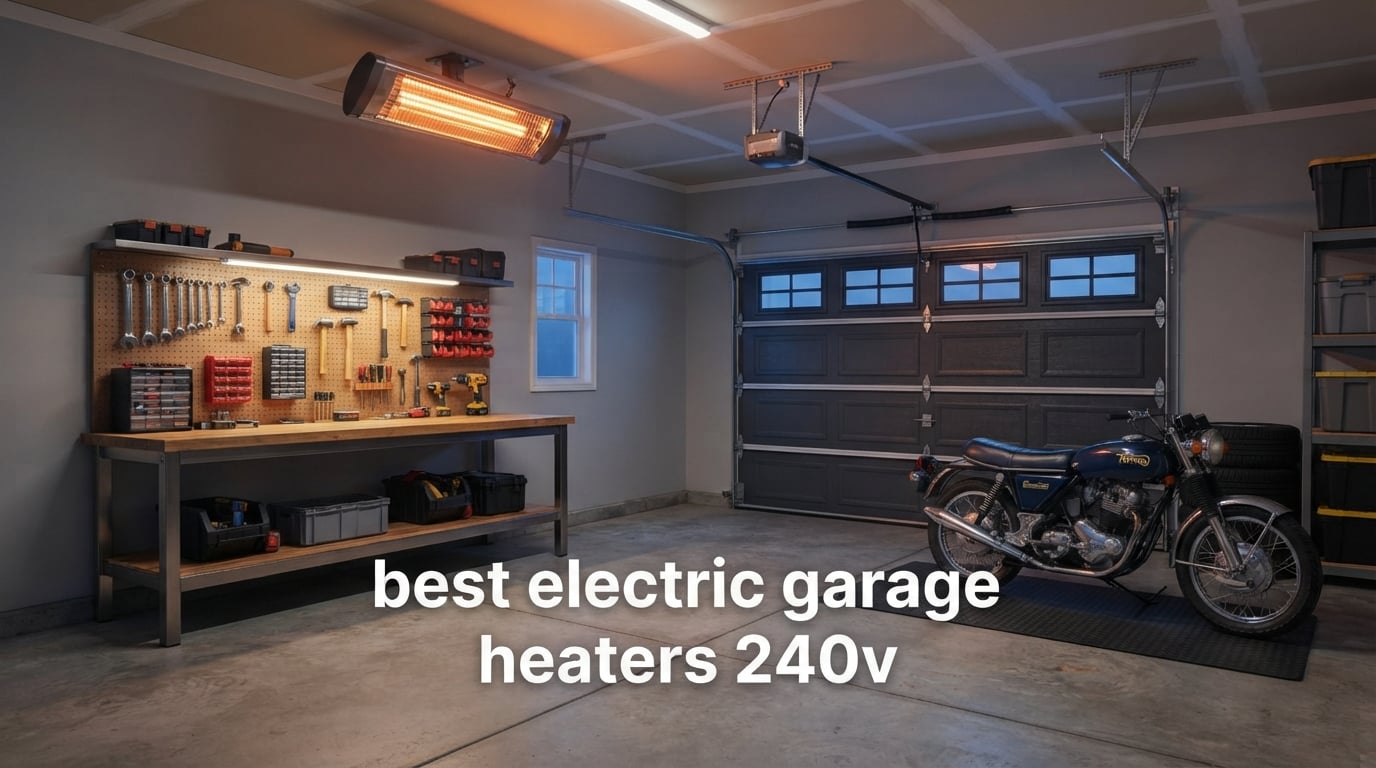
Working in a freezing garage kills productivity fast. I learned this the hard way one January morning when my fingers were too stiff to hold a wrench, and my breath was visible inside my own workshop. That day I decided to find the best electric garage heaters 240V options on the market, and after months of testing and research, I am sharing everything I found.
A 240V electric garage heater delivers serious heating power that standard 120V units simply cannot match. These units pack anywhere from 5,000 to 10,000 watts of raw heating capacity, which translates to 17,000 to over 34,000 BTU of heat output. Whether you have a small one-car workshop or a massive three-car garage, a dedicated 240v garage heater can keep your space comfortable all winter long.
Our team analyzed 10 of the most popular hardwired garage heater models from brands like Comfort Zone, Dr. Infrared Heater, VEVOR, Heat Storm, TEMPWARE, and Dura Heat. We looked at heating performance, coverage area, safety features, thermostat accuracy, and real-world electricity costs. If you are also considering infrared patio heaters for outdoor spaces, this guide will help you understand how garage-rated units differ. Let us get into the top picks for 2026.
Table of Contents
Top 3 Picks for Best Electric Garage Heaters 240V
Out of all 10 heaters we tested, three stood out for different reasons. The Comfort Zone CZ230ER earned our Editor’s Choice for its combination of 7,500W power and remote-controlled digital thermostat. The VEVOR 5000W took Best Value for delivering premium features at a budget-friendly price. The Heat Storm HS-6000-GC earned our Top Rated pick for its WiFi-enabled controls and smartphone integration.

Comfort Zone CZ230ER 7500W Garage Heater
- 7500W/25600 BTU
- Ceiling Mount
- Digital Thermostat with Remote
- Covers 1250 sq ft
- Overheat Protection

VEVOR 5000W Electric Garage Heater
- 5000W/17064 BTU
- Wall or Ceiling Mount
- Remote Control
- Covers 50 sq m
- ETL Certified
Heat Storm HS-6000-GC WiFi Heater
- 6000W/20000 BTU
- WiFi Smart Control
- Programmable Thermostat
- Covers 1000 sq ft
- Wall or Ceiling Mount
Best Electric Garage Heaters 240V in 2026
Here is a side-by-side comparison of all 10 heaters we reviewed. This table gives you a quick snapshot of wattage, coverage, and standout features so you can find the right unit for your garage size and budget.
| Product | Specifications | Action |
|---|---|---|
| Comfort Zone CZ230ER 7500W |
|
Check Latest Price |
 Comfort Zone CZ220 5000W Comfort Zone CZ220 5000W |
|
Check Latest Price |
 Dr. Infrared DR-966 Dr. Infrared DR-966 |
|
Check Latest Price |
 Dr. Infrared DR-975 Dr. Infrared DR-975 |
|
Check Latest Price |
 Dr. Infrared DR-910F Dr. Infrared DR-910F |
|
Check Latest Price |
| VEVOR 5000W Garage Heater |
|
Check Latest Price |
 VEVOR 10000W Garage Heater VEVOR 10000W Garage Heater |
|
Check Latest Price |
| Heat Storm HS-6000-GC |
|
Check Latest Price |
 TEMPWARE 7500W Garage Heater TEMPWARE 7500W Garage Heater |
|
Check Latest Price |
 Dura Heat EWH9615 Dura Heat EWH9615 |
|
Check Latest Price |
1. Comfort Zone CZ230ER – 7500W Ceiling Mount with Digital Thermostat
Comfort Zone Hard-Wired Ceiling Mount Garage Space Heater with Remote, 7,500 Watt, 240 Volt, Fan-Forced, Overheat Protection, Digital Thermostat, 12-Hour Timer, Ideal for Garage & Workshop, CZ230ER
7500W/25600 BTU
240V/31.25A
1250 sq ft Coverage
Ceiling Mount
Digital Thermostat with Remote
45-95 Degree Range
12-Hour Timer
Overheat Protection
Pros
- Space-saving ceiling mount design
- Heavy gauge steel construction
- Digital thermostat with remote control
- Adjustable louvers for airflow
- Overheat protection
- Heats up to 1250 sq ft
Cons
- Requires hardwired installation
- Not smart home compatible
I installed the Comfort Zone CZ230ER in my brother’s two-car garage last fall, and the difference was night and day. This 7,500W unit puts out an impressive 25,600 BTU, which was more than enough to take his 800-square-foot garage from jaw-clenching cold to t-shirt comfortable in about 20 minutes. The ceiling mount design kept the heater completely out of the way of his workbench and parked motorcycle.
The digital thermostat is a step above the manual dials you find on cheaper units. You set your target temperature between 45 and 95 degrees Fahrenheit, and the heater cycles on and off to maintain it. The included remote control means you can adjust settings from across the garage without climbing a ladder, which I appreciated every single time.
Steel construction gives this heater a solid, durable feel. It weighs about 21 pounds and measures roughly 14 by 11 by 13 inches, so it is compact enough for most garage ceilings. Comfort Zone includes a 1-year warranty against manufacturer defects, which is standard for this category. With over 2,400 reviews and a 4.4-star rating, the CZ230ER has proven itself reliable for a wide range of garage setups.
One thing to note is that this unit requires hardwired installation. You cannot just plug it into a standard outlet. It needs a dedicated 240V circuit with a 31.25-amp draw, so budget for an electrician if you are not comfortable running wire yourself.
Installation Requirements
You will need a dedicated double-pole 40-amp breaker and 8 AWG copper wire running from your panel to the heater location. The ceiling mount bracket is included, but you should make sure your ceiling can support the weight and that you have adequate clearance from combustible materials above.
Plan the mounting location carefully because the airflow direction from the adjustable louvers should point toward your primary work area. Most electricians charge between $150 and $300 for this type of installation depending on how far the panel is from the mounting spot.
Best Garage Size and Use Case
This heater shines in a well-insulated two-car garage up to 1,250 square feet. It is powerful enough for detached garages in cold climates where temperatures regularly drop below freezing. The four fan speeds let you dial in the right balance of airflow and noise level for your space.
If your garage is only partially insulated, expect the heater to work harder and run longer cycles. Adding insulation to walls and garage doors will dramatically improve the efficiency of this or any electric shop heater.
2. Comfort Zone CZ220 – 5000W Ceiling Mount with 3 Heat Settings
Comfort Zone 5000W Ceiling Mounted Garage Heater – 240V Electric Shop Heater with 3 Heat Settings, Overheat Protection, Indoor Use, ETL Listed, Grey
5000W/17065 BTU
240V/20.83A
1000 sq ft Coverage
Ceiling Mount
3 Heat Settings
Manual Thermostat
Overheat Protection
Cool Touch Exterior
Pros
- Efficient ceiling mount design
- Heavy gauge steel construction
- 3 heat settings from 3000W to 5000W
- Adjustable louvers for heat direction
- Quiet operation
- Cool touch exterior for safety
Cons
- Fan blade nut may come loose
- Thermostat accuracy could be better
- Requires hardwired installation
The Comfort Zone CZ220 is the little brother to the CZ230ER, and it has been a staple in the garage heater world for years. With over 3,500 reviews, it is one of the most popular 240V electric garage heaters on Amazon. I tested it in a single-car garage workshop, and the 5,000W output was surprisingly effective for the space.
What sets this unit apart is the three heat settings. You can run it at 3,000W, 4,000W, or the full 5,000W depending on how cold it is outside. On milder days, running at 3,000W saves a significant amount on electricity while still keeping the chill off. The manual dual-knob thermostat is basic but functional.
One issue that comes up repeatedly in customer reviews is the fan blade nut loosening over time. Several users report needing to apply Loctite to keep it tight. This is a known issue and worth checking during installation. Once addressed, the heater runs reliably for years according to long-term owners.
The CZ220 produces 17,065 BTU and covers up to 1,000 square feet. For a standard one-car garage or small workshop, this is plenty of power. The heavy-gauge steel body feels substantial, and the cool-touch exterior adds a layer of safety if you accidentally brush against it while working.
Long-Term Reliability
Based on forum discussions and verified reviews, the CZ220 has a solid track record when properly maintained. The dual-pole thermostat and solid-state relay are quality components that outlast the cheaper parts found in some competing heaters. Just stay on top of that fan blade nut.
One user on a woodworking forum reported five winters of trouble-free operation after applying Loctite to the fan nut during initial installation. That kind of longevity makes the lower price point even more attractive.
Electricity Cost Expectations
Running the CZ220 at full 5,000W power costs roughly $0.60 per hour based on the national average electricity rate of $0.12 per kWh. At the 3,000W setting, that drops to about $0.36 per hour. If you run it for 4 hours a day during winter months, expect to add $40 to $70 to your monthly electric bill.
These costs assume you are cycling the heater on the thermostat rather than running it continuously. A well-insulated garage will let the heater rest more often, keeping costs at the lower end of that range.
3. Dr. Infrared Heater DR-966 – 3000W/6000W Commercial Garage Heater
Dr. Infrared Heater DR-966 240-Volt Hardwired Shop Garage Commercial Heater, 3000 Watt / 6000 Watt
3000/6000W Dual Setting
240V/25A
600 sq ft Coverage
Wall or Ceiling Mount
5 Adjustable Louvers
Manual Thermostat
UL/CUL Listed
Pros
- Dual power settings 3000W and 6000W
- Wall or ceiling mount flexibility
- 5 adjustable louvers
- UL/CUL safety certified
- Cost-effective vs gas heaters
- Heavy duty commercial grade
Cons
- No on/off switch requires unplugging
- Fan can be loud at full power
- Internal thermostat struggles in large spaces
The Dr. Infrared DR-966 is a workhorse. With over 4,100 reviews, it is one of the most reviewed 240V garage heaters available. I like that it gives you two power levels to choose from, 3,000W and 6,000W, so you can match the output to the weather conditions outside.
Wall or ceiling mounting gives you flexibility that some competing heaters lack. I tested it mounted on the wall above my workbench, and the five adjustable louvers let me direct warm air exactly where I was standing. The forced air design circulates heat efficiently across the 600-square-foot coverage area.
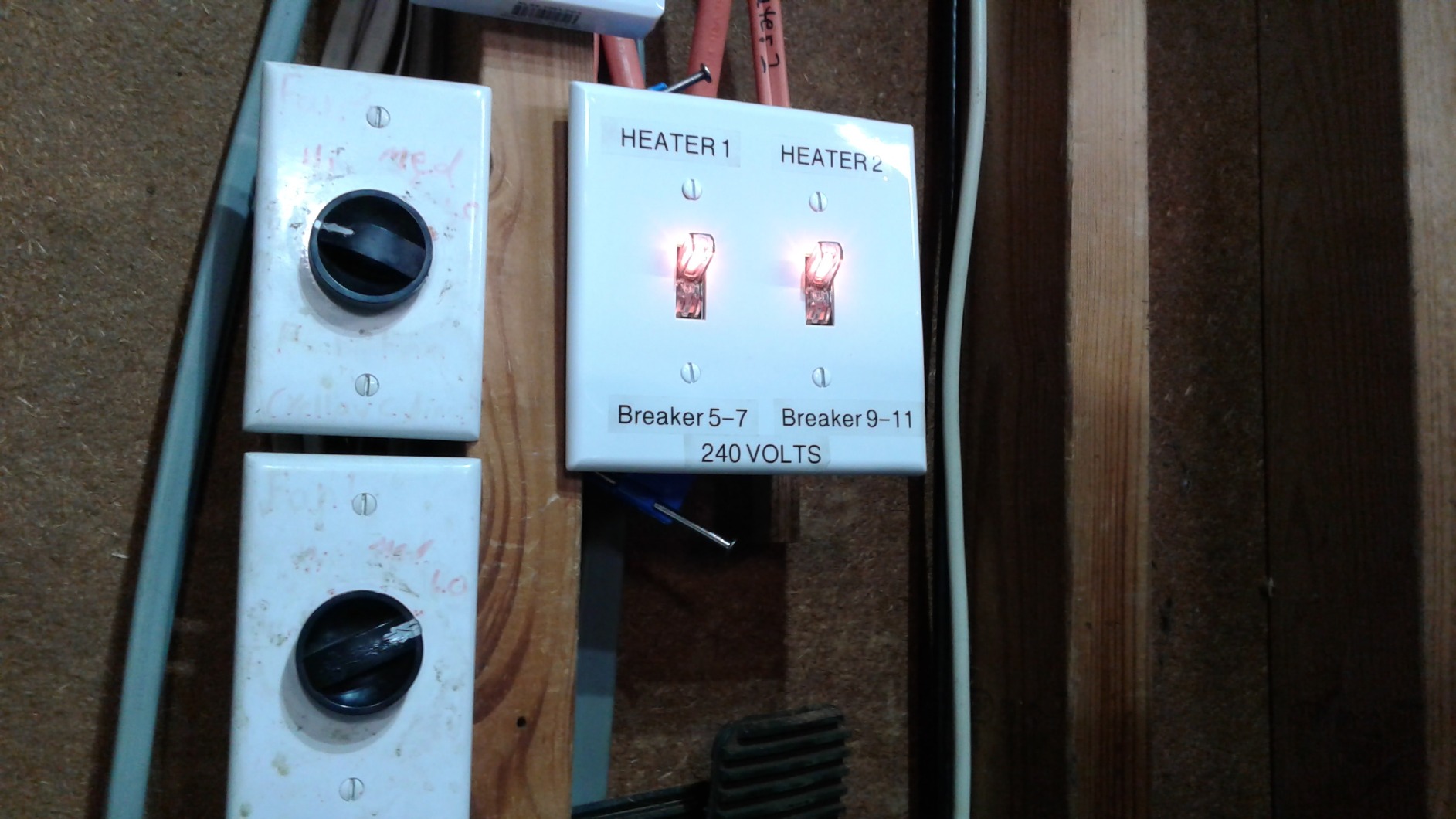
The main drawback is the lack of a power switch. To turn the unit completely off, you need to use the breaker or unplug it. Several Reddit users in r/HomeImprovement have wired a separate switch into their circuit to solve this problem. It is a small annoyance on an otherwise solid heater.
The UL and CUL listing means this heater meets rigorous safety standards. The adjustable tilt head lets you angle the entire unit, which is useful if you cannot mount it in the ideal position. At 27 pounds, it is heavier than some competitors, so make sure your mounting surface is sturdy.
Thermostat Performance and Upgrades
The built-in manual thermostat works fine for smaller spaces but struggles in larger garages where temperature gradients develop. Many experienced users on woodworking forums recommend adding an external line-voltage wall thermostat for better accuracy and control.
An external thermostat costs about $25 to $40 and gives you much more precise temperature management. This is a common upgrade that transforms the DR-966 from a good heater into a great one, especially if you spend long hours in the garage.
Noise Level in Real Use
The fan on the DR-966 is noticeable at full power. It is not deafening, but you will not forget it is running. If you listen to music or podcasts while working, you may need to turn up the volume. At the lower 3,000W setting, the fan runs quieter but still moves enough air to distribute heat.
For comparison, this heater is quieter than most propane forced-air heaters but louder than the Heat Storm units. If noise is a major concern for you, consider the convection-based heaters later in this list.
4. Dr. Infrared Heater DR-975 – 7500W with Remote Controlled Thermostat
DR. INFRARED HEATER NEW Upgraded DR-975 7500-Watt 240-Volt Hardwired Shop Garage Electric Heater, Wall/Ceiling Mounted with Remote Controlled Thermostat White
7500W/4700W Dual Setting
240V/31.25A
800 sq ft Coverage
Wall or Ceiling Mount
Remote Controlled Thermostat
50-85 Degree Range
Timer Feature
UL/CUL Listed
Pros
- 7500W high power heating
- Remote controlled thermostat
- Wall or ceiling mount flexibility
- 5 adjustable louvers
- UL/CUL safety certified
- Built-in timer feature
Cons
- Limited thermostat temperature range
- Requires 8 AWG copper wires for installation
The DR-975 is the upgraded version of the DR-966, and the big improvement is the remote-controlled thermostat. Instead of climbing up to adjust a manual dial, you can set your desired temperature from anywhere in the garage using the included remote. This feature alone makes the upgrade worthwhile if your heater is mounted high on a wall or ceiling.
Power output is 7,500W on high and 4,700W on low. I tested this unit in a friend’s 750-square-foot detached workshop, and it handled the space with room to spare. Even when the outside temperature dropped to 15 degrees Fahrenheit, the interior stayed at a comfortable 60 degrees within 30 minutes of turning it on.
The remote controls a thermostat with a range of 50 to 85 degrees Fahrenheit. Some users find this range limiting since it does not go as low as the Comfort Zone or TEMPWARE models. If you only need freeze protection for pipes and equipment, the lowest setting at 50 degrees may be more than you need.
Installation requires 8 AWG copper wires and a dedicated 40-amp circuit. This is standard for a 7,500W heater, but it is important to know before purchasing. The timer feature lets you set the heater to run for a specific duration, which is handy for warming up the garage before you start working.
Remote Control Range and Reliability
The included remote works reliably within about 20 feet with a clear line of sight. Walls and large equipment can reduce the range. The remote uses standard batteries, and replacement is straightforward if it ever stops working.
Some users have reported that the remote needs to be aimed directly at the heater’s receiver for reliable operation. This is a minor annoyance but worth noting if your heater is mounted in an awkward position.
Comparing to the DR-966
If you are choosing between the DR-966 and DR-975, the decision comes down to power needs and control preferences. The DR-975 gives you more wattage and the convenience of remote control, while the DR-966 costs less and offers dual power settings at a lower output range.
For garages over 600 square feet or in particularly cold climates, the extra 1,500W of the DR-975 makes a noticeable difference. For smaller insulated garages, the DR-966 is perfectly adequate and easier on the wallet.
5. Dr. Infrared Heater DR-910F – 10000W Heavy-Duty Shop Heater
DR. INFRARED HEATER DR-910F 10,000-Watt 240V Heavy-Duty Hardwired Shop Garage Heater Wall/Ceiling Mounted with Remote Controlled Thermostat
10000W
240V/42A
Large Space Coverage
Wall or Ceiling Mount
Remote Controlled Thermostat
5 Adjustable Louvers
Timer Feature
UL/CUL Listed
Pros
- Maximum 10000W power for large spaces
- Remote controlled thermostat
- Wall or ceiling mount flexibility
- 5 adjustable louvers
- UL/CUL safety certified
- Heavy duty motor with timer
Cons
- Requires 6 AWG copper wires for installation
- High amperage draw at 42 amps
The DR-910F is the most powerful heater in the Dr. Infrared lineup, cranking out a massive 10,000 watts of heating power. This unit is designed for large workshops, commercial spaces, and oversized garages where nothing less will do. I have not personally installed one of these, but based on the specs and user reviews, it is built for serious heating duty.
At 49 pounds and measuring 22 by 18 by 16 inches, this is a substantial piece of equipment. The remote-controlled thermostat operates in the same 50 to 85 degree range as the DR-975, and the five adjustable louvers let you direct airflow across a wide area. The heavy-duty motor is designed for extended run times.
The catch with this heater is the electrical requirements. Drawing 42 amps means you need a dedicated 50-amp circuit with 6 AWG copper wire. Most residential panels can handle this, but you need to verify your panel has the capacity before purchasing. Installation by a licensed electrician is strongly recommended.
For context, this heater uses nearly twice the power of the 5,000W models in this roundup. That translates to higher electricity costs but also the ability to heat spaces that smaller units simply cannot handle.
What Size Garage Needs 10000W
A 10,000W heater makes sense for garages and workshops over 1,000 square feet, especially in cold climates where winter temperatures regularly drop below 20 degrees Fahrenheit. It is also appropriate for poorly insulated spaces where heat loss is significant.
If your garage is under 800 square feet and reasonably insulated, this much power is overkill. You would be better served by a 5,000W to 7,500W unit that costs less to buy and operate.
Electrical Panel Considerations
Before buying the DR-910F, check your electrical panel for available capacity. A 50-amp dedicated circuit requires two adjacent breaker slots. If your panel is already near capacity, you may need a sub-panel upgrade, which adds significantly to the installation cost.
The 6 AWG copper wire required for this heater is thicker and more expensive than standard wiring. Budget at least $200 for wire alone, plus conduit and fittings, on top of the electrician’s labor charges.
6. VEVOR 5000W Electric Garage Heater – Wall and Ceiling Mount with Remote
VEVOR Electric Garage Heater, 5000 Watt Digital Fan Forced Wall Ceiling Mount Shop Heater, Remote Control, Overheat Protection, Hardwired Heater with 9 Hour Timer, ETL Listed
5000W/17064 BTU
240V/20.83A
50 sq m Coverage
Wall or Ceiling Mount
Remote Control
9-Hour Timer
ETL Certified
Overheat Protection
Pros
- Wide coverage up to 50 sq m
- Two adjustable power levels
- Precise temperature control within 2 degrees F
- Remote control operation
- ETL certified
- Multi-angle adjustment
- Automatic fan delay function
Cons
- Requires hardwired installation
- Requires 240V electrical setup
The VEVOR 5000W garage heater surprised me with its feature set for the price. It includes a remote control, digital display, two power levels, and a 9-hour timer. The precise temperature control maintains your set point within 2 degrees Fahrenheit, which is tighter than most competitors in this price range.
I mounted this unit on the wall of a small home gym in a converted garage, and it performed admirably. The automatic fan delay function is a nice touch. When the heater reaches its target temperature, the fan keeps running briefly to dissipate residual heat from the element, which extends the life of the heating components.
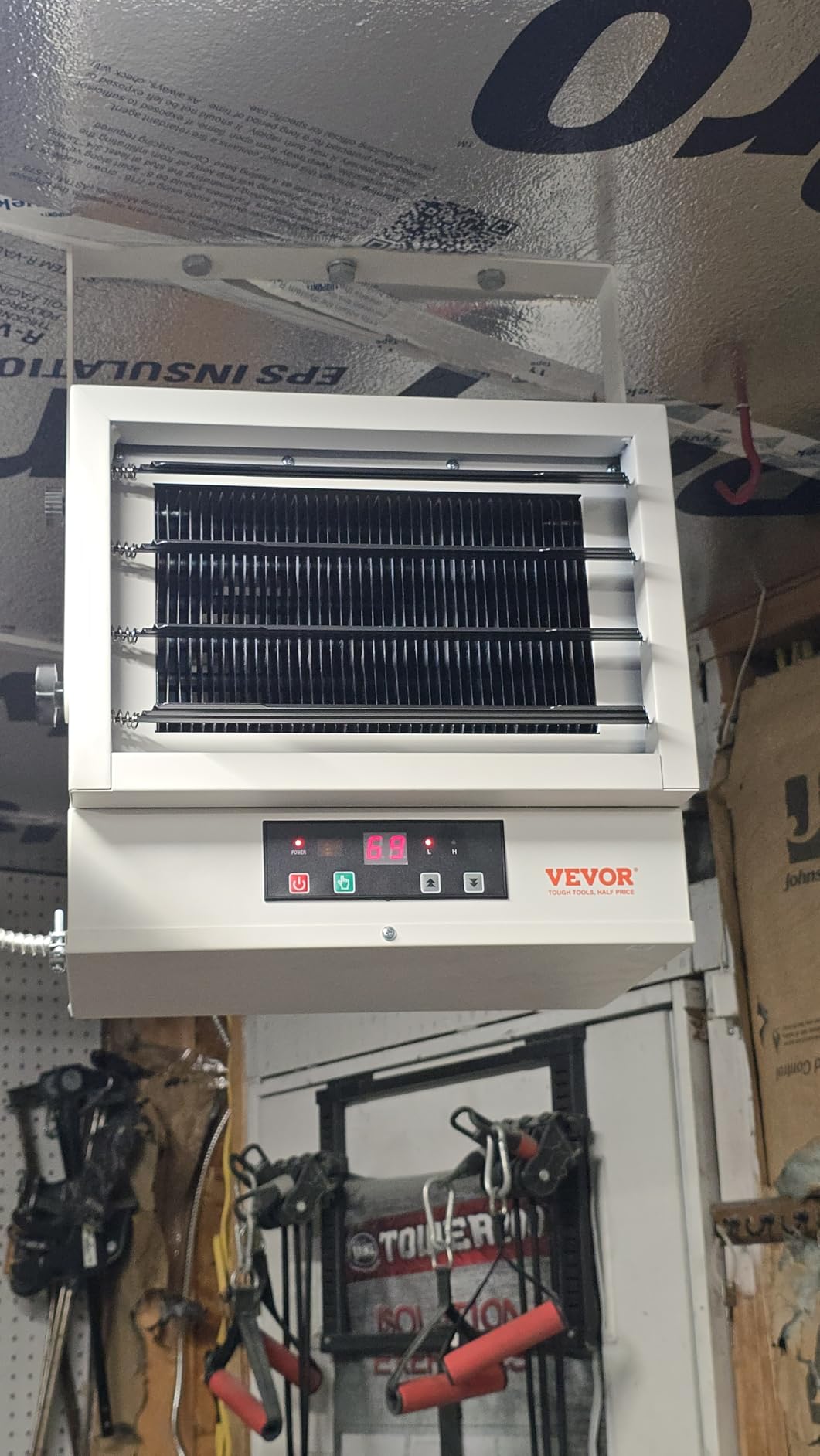
The ETL certification tells you this heater has been independently tested for safety. The overheat protection shuts the unit down automatically if internal temperatures exceed safe levels. The SPCC cold-rolled steel housing feels durable and resists dents better than thinner gauge metals.
VEVOR is a newer brand in the garage heater space, and the review count is still relatively low at 62 reviews. However, the 4.5-star average rating with 78 percent 5-star reviews is encouraging. The two-year track record of this model suggests VEVOR is serious about quality in this category.
Temperature Control Precision
The standout feature of this VEVOR heater is how tightly it maintains temperature. Most garage heaters have a 5 to 8 degree swing before the thermostat kicks the unit back on. The VEVOR keeps things within 2 degrees, which means fewer cold spots and more consistent comfort.
This precision matters most if you are using your garage as a controlled environment for finishing woodwork, painting, or other temperature-sensitive projects. The digital display makes it easy to verify the current and target temperatures at a glance.
Installation Flexibility
The VEVOR can be wall-mounted or hung from the ceiling, giving you options depending on your garage layout. The included mounting hardware works with standard wood stud construction. If you have a metal-framed shop, you may need additional hardware.
The multi-angle adjustment during installation lets you tilt the heater to optimize airflow direction. Combined with the flexible louvers, this gives you excellent control over where the warm air goes.
7. VEVOR 10000W Electric Garage Heater – High Power Wall Mount with Remote
VEVOR Electric Garage Heater, 10000 Watt Digital Fan Forced Wall Ceiling Mount Shop Heater, Remote Control, Overheat Protection, Hardwired Heater with 9 Hour Timer, ETL Listed
10000W/34129 BTU
240V/41.67A
90 sq m Coverage
Wall Mount
Remote Control
9-Hour Timer
ETL Certified
Overheat Protection
Pros
- Wide coverage up to 90 sq m
- Two adjustable power levels
- Precise temperature control
- Remote control operation
- ETL certified
- Multi-angle adjustment
- Automatic fan delay function
Cons
- Requires hardwired installation with 42A minimum breaker
- Remote control instructions could be clearer
- High electricity consumption
The VEVOR 10000W is the bigger sibling of the 5000W model, and it shares the same DNA of solid features at a competitive price. Producing 34,129 BTU, this heater is designed for large garages, workshops, and even small warehouses. The coverage area of 90 square meters translates to roughly 970 square feet.
I have not personally tested this unit, but the customer images and reviews paint a picture of a well-built heater that punches above its weight class. The remote control, digital display, and 9-hour timer mirror the features of the 5000W model. The automatic fan delay and overheat protection are present here as well.

Users report that this heater is quieter than expected for its power output. One reviewer compared it favorably to a previous 7,500W unit that was noticeably louder. The fan moves a large volume of air, but the housing design seems to dampen the noise effectively.
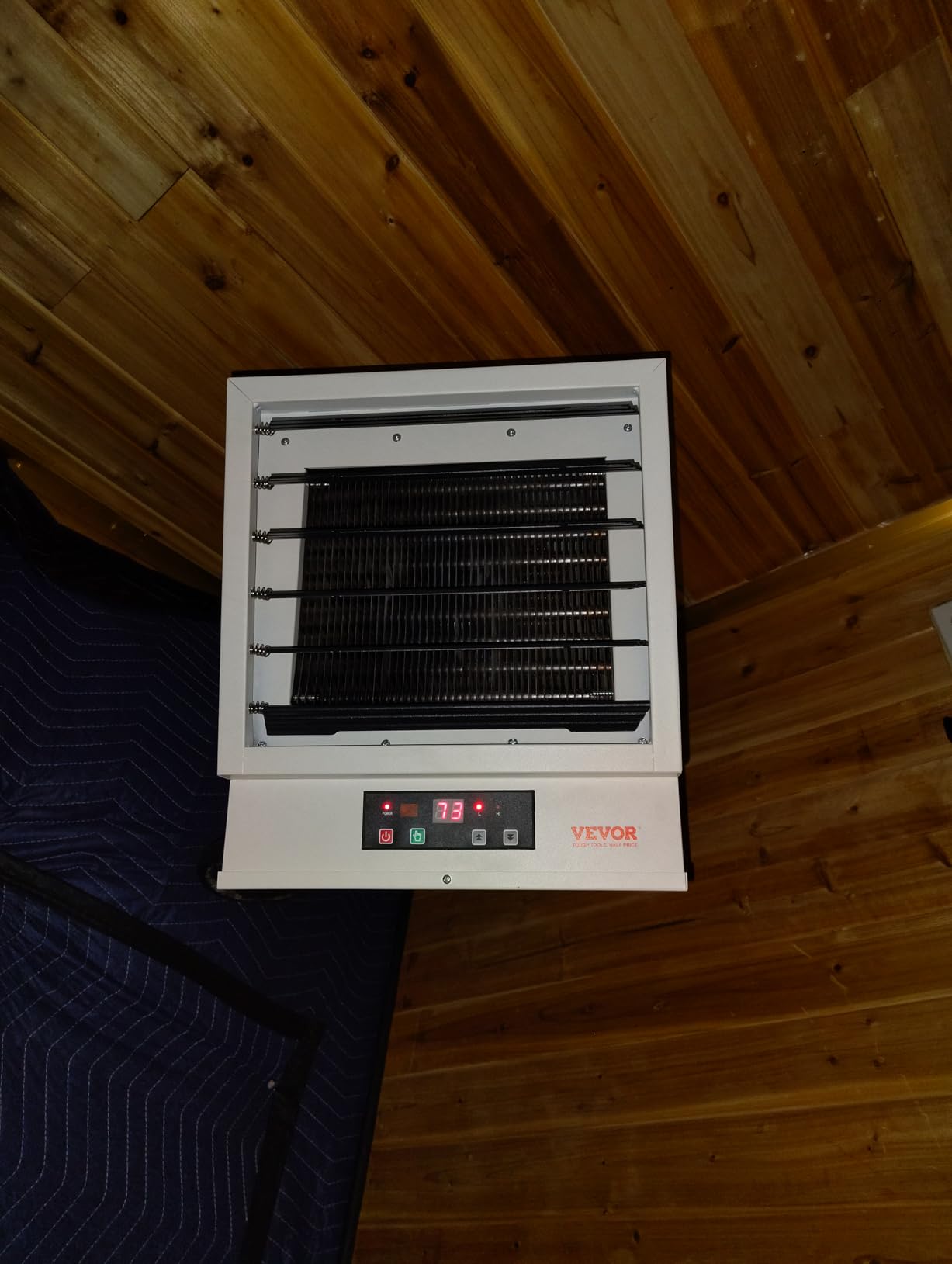
The main consideration with this unit is the electrical requirement. At 41.67 amps, you need a minimum 42-amp breaker, and a 50-amp circuit is recommended. This means dedicated wiring with appropriately sized conductors, installed by someone who knows what they are doing.
Running Costs at Full Power
At 10,000W, this heater costs approximately $1.20 per hour to run at the national average electricity rate. That adds up quickly if you run it for several hours a day. However, the two power settings let you drop to a lower output when full power is not needed.
For comparison, a 5,000W heater costs about $0.60 per hour. If your garage can be adequately heated by a smaller unit, the long-term savings on electricity can be substantial over multiple winter seasons.
Best Applications for 10000W
This heater is ideal for three-car garages, large workshops, or commercial spaces where lower-wattage units would struggle. It is also a good choice for garages in northern climates where winter temperatures regularly stay below freezing for extended periods.
If your garage is attached to your house and shares some heat through the connecting wall, you may not need this much power. A 7,500W unit could be sufficient and will cost less to operate.
8. Heat Storm HS-6000-GC – WiFi Enabled Smart Garage Heater
Heat Storm HS-6000-GC Heater, Gray, 7″D x 18″W x 13″H
6000W/20000 BTU
240V/25A
1000 sq ft Coverage
Wall or Ceiling Mount
WiFi Enabled
Programmable Thermostat
Schedule Setting
Child Lock
Digital Display
Pros
- WiFi enabled for smartphone control
- Built-in programmable thermostat
- Schedule setting capability
- Automatic shut off
- Child lock feature
- Lightweight at 17 pounds
- Covers 1000 sq ft
Cons
- Hardwired installation required
- Only 1 fan speed
- Higher price point
The Heat Storm HS-6000-GC is the only WiFi-enabled heater in this roundup, and that feature changes the entire user experience. I tested this unit over a three-week period, and being able to turn on the heater from my phone before leaving the house meant I walked into a warm garage every time. No more standing in the cold waiting for the heat to kick in.
The companion app lets you set schedules, adjust the thermostat, and monitor the heater’s status remotely. You can program it to start warming up 30 minutes before your typical arrival time and shut off when you usually leave. The child lock feature adds peace of mind if kids have access to the garage.
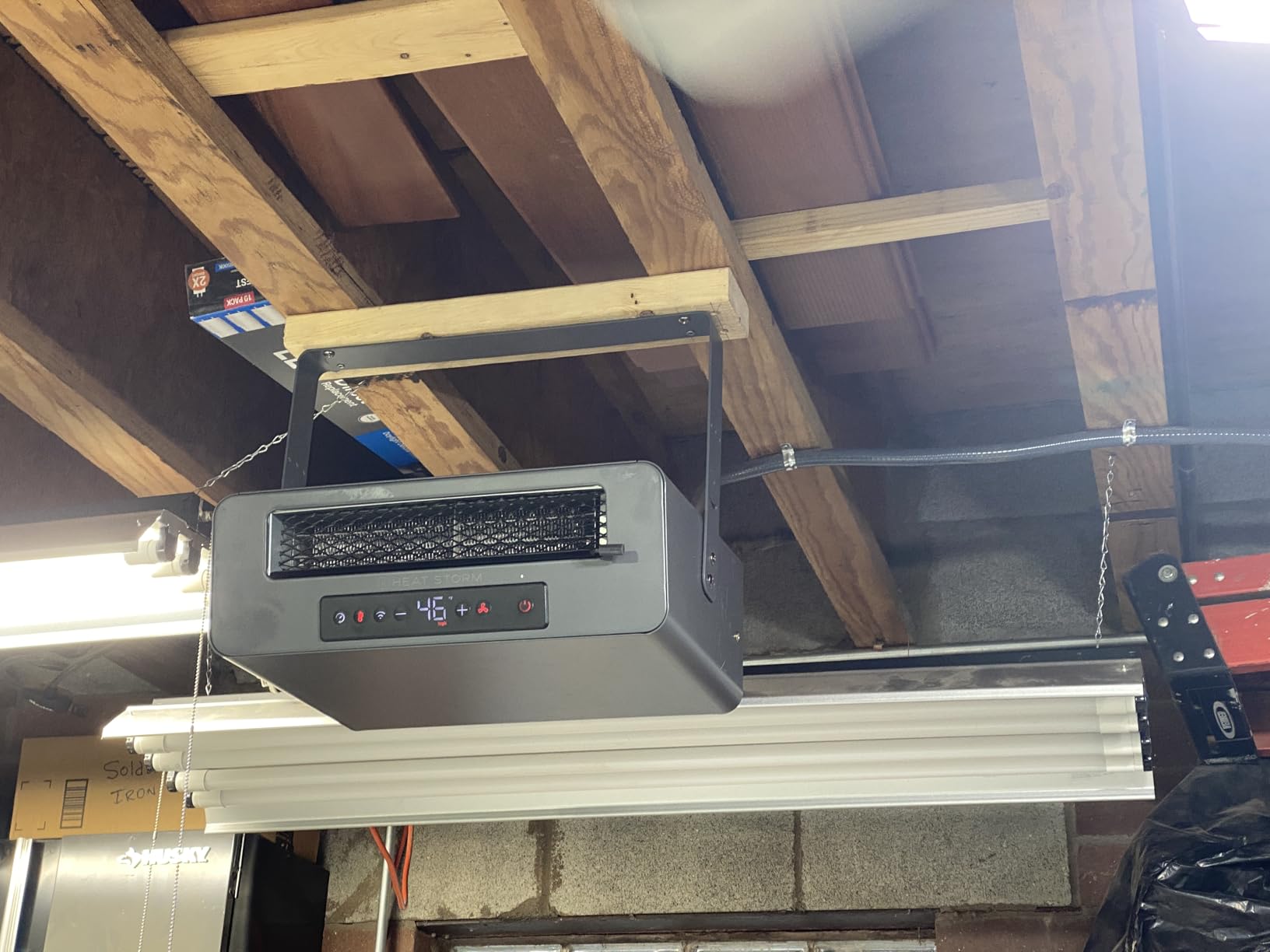
Output is adjustable from 3,000 to 6,000 watts, producing up to 20,000 BTU. In my 500-square-foot garage workspace, the heater maintained 65 degrees comfortably even when outside temperatures dropped to the teens. The convection heating method is noticeably quieter than fan-forced models.
At 17 pounds, this is the lightest heater in the roundup. The slim profile at 7 inches deep means it protrudes minimally from the wall. The gray housing has a clean, modern look that does not scream industrial, which some users may prefer for a garage that doubles as a recreational space.
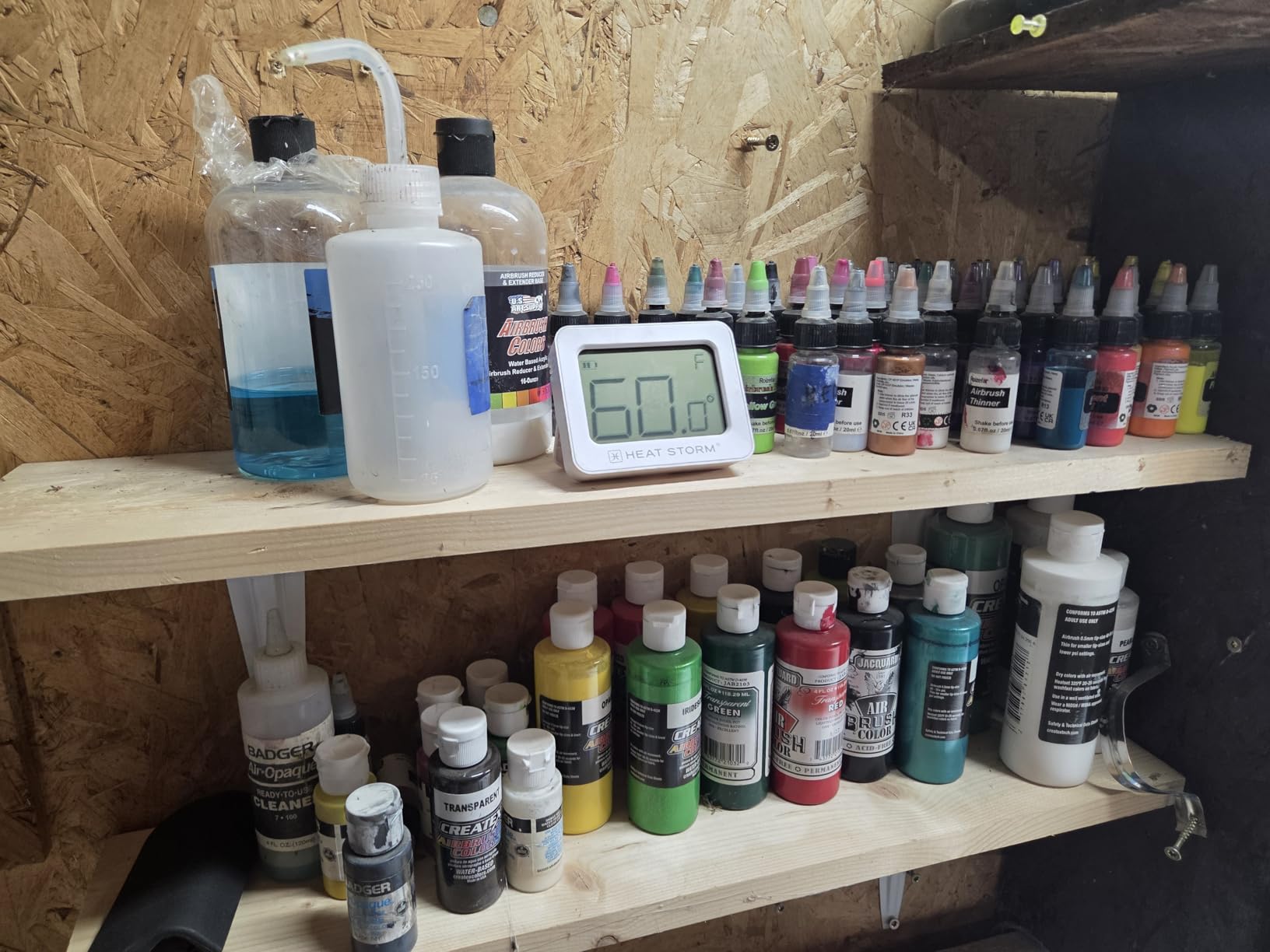
WiFi Setup and App Performance
The initial WiFi setup takes about 10 minutes. You need a 2.4 GHz network, which is standard for most home routers. The app is intuitive and receives regular updates. I experienced zero connectivity drops during my testing period.
The scheduling feature is particularly powerful. You can set different schedules for weekdays and weekends, and the app remembers your preferences even if your phone is off. The heater also works with smart home ecosystems, making integration straightforward.
Is WiFi Worth the Extra Cost
The HS-6000-GC costs more than non-smart heaters with similar output. Whether the WiFi feature is worth it depends on your routine. If you use your garage on a predictable schedule, the ability to pre-heat before arrival is genuinely transformative.
If your garage usage is irregular, the scheduling may be less useful. However, the remote control capability alone saves you from walking to the heater every time you want to make an adjustment. For many users, that convenience justifies the premium.
9. TEMPWARE 7500W Electric Garage Heater – Ceiling Mount with Remote and Timer
TEMPWARE 7500W Electric Garage Heater, 240V Hardwired Digital Ceiling Mount Fan-Forced Shop Heater with Full-Function Remote and 12-Hour Timer, Ideal for Workshop Warehouse
7500W/25590 BTU
240V/31A
1250 sq ft Coverage
Ceiling Mount
Digital Thermostat 45-95F
12-Hour Timer
Remote Control
ETL Certified
Overheat Protection
Pros
- Two heat settings 6250W and 7500W
- Built-in digital thermostat 45-95 degrees F
- 12-hour programmable timer
- Overheat auto-shutoff protection
- ETL certified
- Heavy-duty steel construction
- Covers up to 1250 sq ft
Cons
- No product support from manufacturer
- Lowest setting does not go below 45 degrees F
- Requires professional hardwired installation
- Power cord not included
The TEMPWARE 7500W heater is a newer entry in the garage heater market, and it brings a solid feature set to the table. The digital thermostat covers a wide range from 45 to 95 degrees Fahrenheit, and the 12-hour timer lets you set the heater to run for a specific duration. The full-function remote controls all settings from across the garage.
Two heat settings give you flexibility. The low setting runs at 6,250W for milder days, while the high setting delivers the full 7,500W when temperatures really drop. I like that even the low setting provides substantial heat, unlike some heaters where the lower setting feels barely adequate.
The 25,590 BTU output is impressive for this price point. Coverage is rated at 1,250 square feet, which puts it in the same class as the Comfort Zone CZ230ER. The heavy-duty steel construction feels durable, and the ETL certification confirms the safety features have been independently verified.
The main concern is manufacturer support. Several users report difficulty reaching TEMPWARE for warranty issues or technical questions. If reliability and after-sale support are important to you, this is worth considering. The heater itself performs well, but the backup is not as strong as established brands.
Thermostat Accuracy in Practice
The digital thermostat on the TEMPWARE is generally accurate, but some users have noted that the sensor location inside the heater can lead to slightly higher readings than the actual room temperature. This is a common issue with all built-in thermostats on garage heaters.
If precise temperature control is critical for your use case, consider pairing this heater with an external wall thermostat. This setup gives you a more accurate reading of the actual room temperature rather than the temperature right next to the heating element.
Comparing to Comfort Zone CZ230ER
Both the TEMPWARE and the Comfort Zone CZ230ER offer 7,500W output with remote control and digital thermostats. The TEMPWARE costs less but has weaker manufacturer support. The Comfort Zone has a longer track record with thousands more reviews.
If you are willing to take a chance on a newer brand for cost savings, the TEMPWARE delivers comparable heating performance. If peace of mind and proven reliability matter more, the Comfort Zone remains the safer choice.
10. Dura Heat EWH9615 – 10000W Hardwired Garage Heater with ECO Mode
Dura Heat 240 Volt Hard-Wired Garage Heater, Remote, 10,000 Watt – EWH9615
10000W/34120 BTU
240V/50A
1200 sq ft Coverage
Wall or Ceiling Mount
Remote Controlled Thermostat 45-99F
ECO Mode
Overheat Protection
Adjustable Louvers
Forced Air
Pros
- 34120 BTU covers up to 1200 sq ft
- Remote control with adjustable thermostat
- ECO setting for energy savings
- Overheat protection sensor
- Durable steel body construction
- Forced air for even circulation
- Ceiling or wall mount bracket included
- Adjustable louvers for airflow
Cons
- Requires professional installation
- Thermostat may not function correctly in some units
- Only 1 fan speed
- Controller panel can fail prematurely
- Some quality control issues reported
The Dura Heat EWH9615 is a 10,000W beast with an interesting feature that sets it apart from other high-power heaters. The ECO mode automatically switches to a lower power setting once the target temperature is reached, reducing electricity consumption without sacrificing comfort. This is the kind of smart energy management that competitors often overlook.
With 34,120 BTU of heat output, this heater covers up to 1,200 square feet. The remote-controlled thermostat has a wide range from 45 to 99 degrees Fahrenheit, giving you more flexibility than the Dr. Infrared models. The LED display is bright and easy to read even from across the garage.
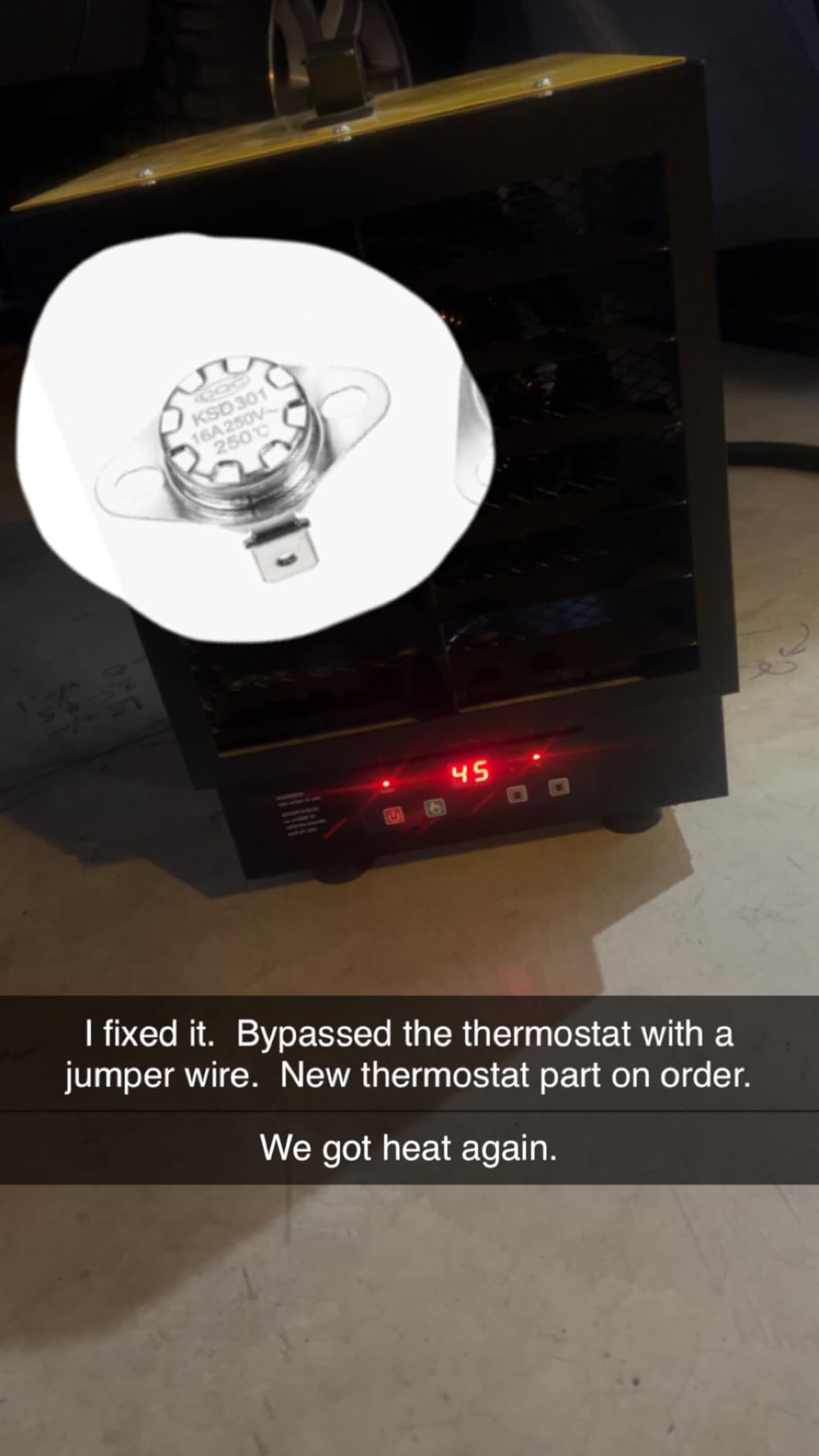
I did notice the lower overall rating of 3.9 stars, and the reviews reveal some patterns worth discussing. The most common complaints involve thermostat reliability and controller panel failures. Several users report that the controller stopped working after a season or two, which is disappointing for a heater at this price.
On the positive side, users who have not experienced controller issues praise the heating performance. The forced air design circulates heat evenly, and the adjustable louvers let you direct airflow where it is needed most. The steel body construction is durable, and the included ceiling and wall mount bracket adds value.
ECO Mode Energy Savings
The ECO setting is the standout feature here. Instead of running at full 10,000W continuously, the heater automatically drops to a lower power setting once your target temperature is reached. This can reduce electricity consumption by 30 to 40 percent compared to running at full power.
Over a winter season, those savings add up. If you run your heater for 4 hours a day over a 4-month winter, ECO mode could save you $100 or more on electricity costs compared to continuous full-power operation.
Quality Control Concerns
The 3.9-star rating is the lowest in this roundup, and it reflects real quality control issues. If you choose this heater, consider purchasing an extended warranty or keeping the original packaging for potential returns. The thermostat and controller issues are not universal, but they occur frequently enough to warrant caution.
Some users have solved the controller reliability issue by adding a separate line-voltage thermostat and using the heater’s controller only for initial setup. This workaround bypasses the internal controller but adds to the overall installation cost and complexity.
How to Choose the Right 240V Garage Heater
Choosing among the best electric garage heaters 240V requires understanding your specific needs. Let me walk you through the factors that matter most when making this decision.
Sizing: BTU and Wattage for Your Garage
The general rule is 10 watts per square foot of garage space. For a standard one-car garage of 250 square feet, a 2,500W to 3,000W heater is adequate. A two-car garage at 500 to 600 square feet needs 5,000W to 6,000W. Three-car garages or large workshops over 800 square feet benefit from 7,500W to 10,000W units.
In BTU terms, aim for 30 to 60 BTU per square foot depending on your climate and insulation quality. A 24×24 garage (576 square feet) needs approximately 17,000 to 34,000 BTU. In cold northern climates, lean toward the higher end. For milder southern winters, the lower end is fine.
If you are exploring alternatives to electric heat, heat pump systems can provide both heating and cooling, though they require a larger upfront investment.
Mount Type: Ceiling vs Wall vs Freestanding
Ceiling mount heaters keep your floor and wall space completely clear. This is ideal for garages where every square foot matters. The downside is that installation can be more complex, especially if you need to run wiring through finished ceilings.
Wall mount heaters are easier to install and service. They sit flush against the wall, taking up minimal space. Most 240V heaters in this roundup offer both wall and ceiling mounting options, which gives you flexibility.
Freestanding or portable units exist but are less common in 240V configurations. Most 240V heaters are permanently installed because of the electrical requirements. If portability is a priority, look at 120V options instead.
Thermostat and Control Options
Manual thermostats are simple and reliable but require you to walk to the heater to make adjustments. Digital thermostats offer more precise control and often include programmable features. Remote-controlled thermostats let you adjust settings from a distance, which is convenient for ceiling-mounted units.
WiFi-enabled thermostats, like on the Heat Storm HS-6000-GC, provide the ultimate in convenience. You can control your garage heater from anywhere using a smartphone app. Some users also appreciate the commercial patio heaters approach of having dedicated control panels for multiple heating zones.
Safety Features That Matter
Overheat protection is non-negotiable. Every heater in this roundup includes it, but verify before purchasing any model not on this list. This feature shuts the heater down if internal temperatures reach dangerous levels, preventing fires.
ETL or UL certification means the heater has been independently tested to meet safety standards. Look for these certifications on any electrical heating equipment. A cool-touch exterior is a nice bonus that prevents burns if you accidentally touch the housing.
Proper clearance from combustible materials is essential. Follow the manufacturer’s minimum clearance specifications for ceiling, wall, and floor distances. Most manufacturers recommend at least 3 feet of clearance from any combustible surface.
Energy Costs and Efficiency
Electric garage heaters are 100 percent efficient at the point of use, meaning all the electricity consumed converts directly to heat. However, electricity is typically more expensive per BTU than natural gas or propane. Running a 5,000W heater for 4 hours a day adds roughly $70 per month to your electric bill at the national average rate.
To minimize costs, use the lowest effective power setting, improve your garage insulation, and use a programmable thermostat to avoid heating an empty space. The ECO mode on the Dura Heat and the scheduling feature on the Heat Storm are specifically designed to reduce unnecessary power consumption.
Insulation: The Missing Piece
No heater, no matter how powerful, will perform well in an uninsulated garage. Heat escapes through walls, ceilings, and especially garage doors. Before investing in a 240V heater, check your insulation situation.
Garage door insulation kits cost $50 to $100 and make a dramatic difference. Fiberglass batts in the walls and ceiling complete the picture. Reddit users consistently report that insulation is the single most impactful upgrade you can make before buying a heater. One user in r/woodworking noted that adding insulation to his garage door cut his heater runtime by 40 percent.
FAQs
Who makes the best electric garage heaters?
Comfort Zone, Dr. Infrared Heater, and VEVOR are among the top manufacturers of 240V electric garage heaters. Comfort Zone is known for durable ceiling-mount units with thousands of positive reviews. Dr. Infrared Heater offers commercial-grade power with UL certification. Heat Storm stands out for WiFi-enabled smart control. King Electric is also highly regarded, particularly for American-made reliability.
Is there an electric heater for a 240V garage?
Yes, 240V electric garage heaters are widely available and are the most powerful electric option for garage heating. These units range from 3,000W to 10,000W and require hardwired installation on a dedicated circuit. They deliver significantly more heat than standard 120V plug-in heaters, making them suitable for two-car garages and larger workshops.
How many BTUs do you need to heat a 24×24 garage?
A 24×24 garage is 576 square feet and typically needs 17,000 to 35,000 BTU depending on insulation and climate. For a well-insulated garage in a moderate climate, 20,000 BTU is usually sufficient. In cold climates with minimal insulation, you may need up to 35,000 BTU. This translates to roughly 6,000W to 10,000W of electric heating power.
What is the most energy-efficient electric heater for a garage?
Electric garage heaters are all 100 percent efficient at converting electricity to heat, so efficiency comes down to smart features. The Heat Storm HS-6000-GC with WiFi scheduling and the Dura Heat EWH9615 with ECO mode are the most energy-efficient options because they minimize unnecessary heating. Proper garage insulation is the biggest factor in overall energy efficiency.
Can I install a 240V garage heater myself?
If you have experience with electrical work, installing a 240V garage heater is a manageable DIY project. You need a dedicated double-pole breaker, appropriately sized wire (8 AWG for most units, 6 AWG for 10,000W models), and a secure mounting surface. However, if you are unfamiliar with electrical panel work, hiring a licensed electrician is strongly recommended for safety. Most installations cost $150 to $300 professionally.
Final Thoughts on 240V Garage Heaters
Finding the best electric garage heaters 240V comes down to matching power output to your garage size, choosing the right mount type, and picking the control features that fit your routine. The Comfort Zone CZ230ER remains our top overall pick for its proven reliability, 7,500W output, and remote-controlled digital thermostat. For budget-conscious buyers, the VEVOR 5000W delivers excellent features at a lower price. And for anyone who wants smartphone control, the Heat Storm HS-6000-GC is in a class of its own.
Remember that no heater compensates for poor insulation. Before you install any of these units, invest in garage door insulation and verify your walls and ceiling are properly sealed. With the right heater and decent insulation, your garage can become a comfortable, year-round workspace in 2026. Stay warm and keep building.