
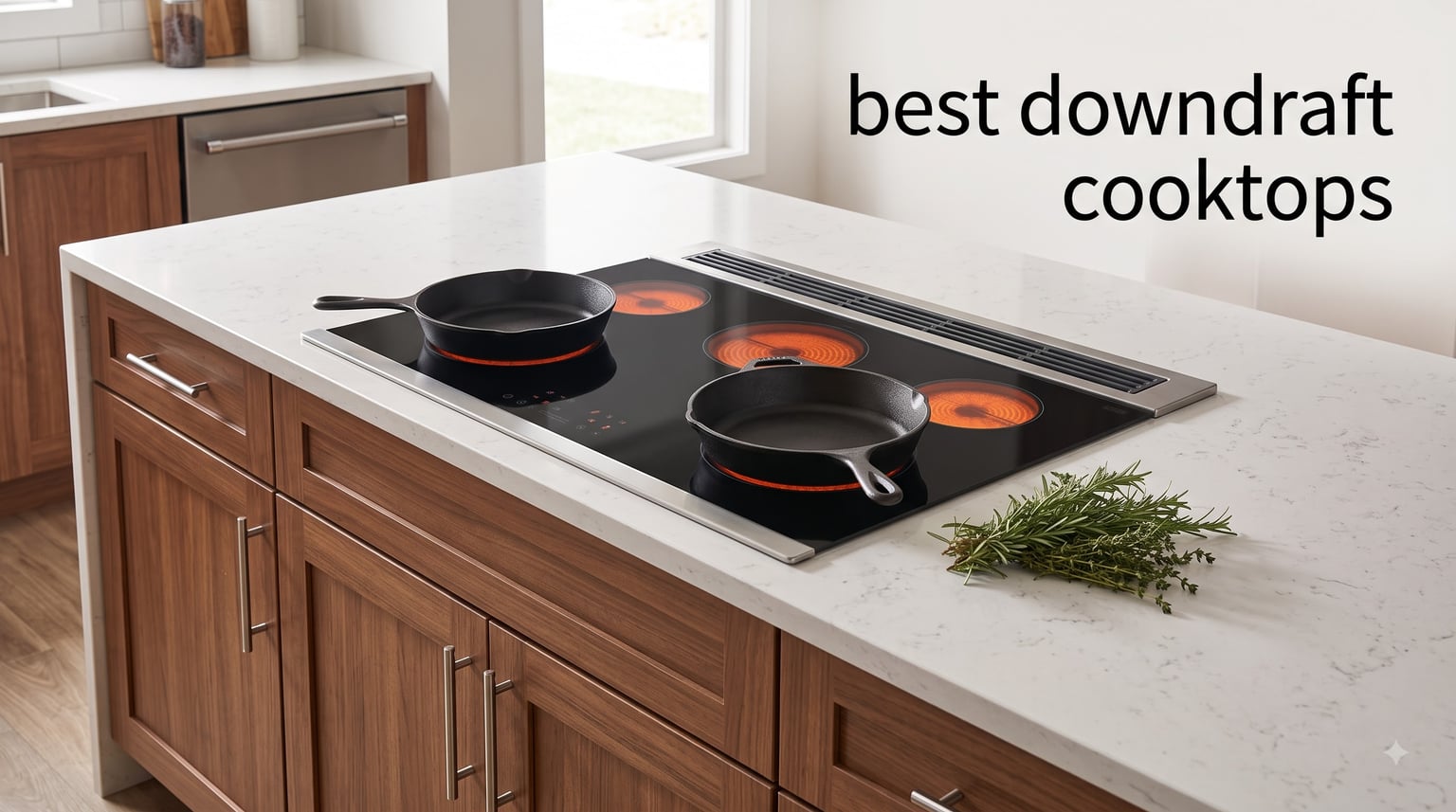
A downdraft cooktop is a cooking surface with an integrated ventilation system that pulls smoke and steam downward rather than upward, eliminating the need for an overhead range hood. If you have a kitchen island, an open-concept layout, or a sightline you refuse to block with a bulky stainless canopy, the best downdraft cooktops in 2026 are worth a serious look.
Our team spent the last three months researching, comparing, and reading through owner experiences on eight of the most-talked-about downdraft models on Amazon. We compared CFM ratings, fuel types, vent designs, installation demands, and real-world noise complaints to figure out which ones actually deliver on the hood-free promise. The short answer: a downdraft can work, but only if you match the model to your kitchen, your cooking style, and your ducting reality.
This guide covers the best downdraft cooktops you can buy right now, what CFM actually means for capture, the difference between ducted and recirculating setups, and the legal gotcha (make-up air codes) most roundups skip. We also walk through the front-burner capture problem forum users keep complaining about so you know exactly what you’re getting into.
Table of Contents
Top 3 Picks for Best Downdraft Cooktops (August 2026)

Best Downdraft Cooktops in 2026: At a Glance
| Product | Specifications | Action |
|---|---|---|
| Hobsir 36 Inch Electric Cooktop with Downdraft Extractor |
|
Check Latest Price |
| Cooksir 30 Inch Electric Cooktop with Downdraft Recirculating |
|
Check Latest Price |
 Cooksir 36 Inch Electric Cooktop with Downdraft Recirculating Cooksir 36 Inch Electric Cooktop with Downdraft Recirculating |
|
Check Latest Price |
| GASLAND CHEF 31.5 Inch Downdraft Electric Cooktop |
|
Check Latest Price |
 CDV Induction Cooktop with Ductless Downdraft 30 Inch CDV Induction Cooktop with Ductless Downdraft 30 Inch |
|
Check Latest Price |
 CDV Induction Cooktop with Ductless Downdraft 36 Inch CDV Induction Cooktop with Ductless Downdraft 36 Inch |
|
Check Latest Price |
 AEG IAE64411XB Autonomous Induction Hob AEG IAE64411XB Autonomous Induction Hob |
|
Check Latest Price |
 Elica Nikola Tesla Flux 30 Inch Induction Cooktop with Downdraft Elica Nikola Tesla Flux 30 Inch Induction Cooktop with Downdraft |
|
Check Latest Price |
1. Hobsir 36 Inch Electric Cooktop with Downdraft Extractor
Hobsir 36 Inch Electric Cooktop with Downdraft Extractor, 4 Burners 7400W
496 m3/h ductless airflow
9 power levels
240V hardwired
Pros
- 496 m3/h ductless airflow removes need for external venting
- Removable and washable grease filter
- 9 power levels with timer and pause function
- Universal cookware compatibility
- Modern touch controls
Cons
- Requires 240V hardwired installation
- Button placement can trigger accidental lockouts with large pans
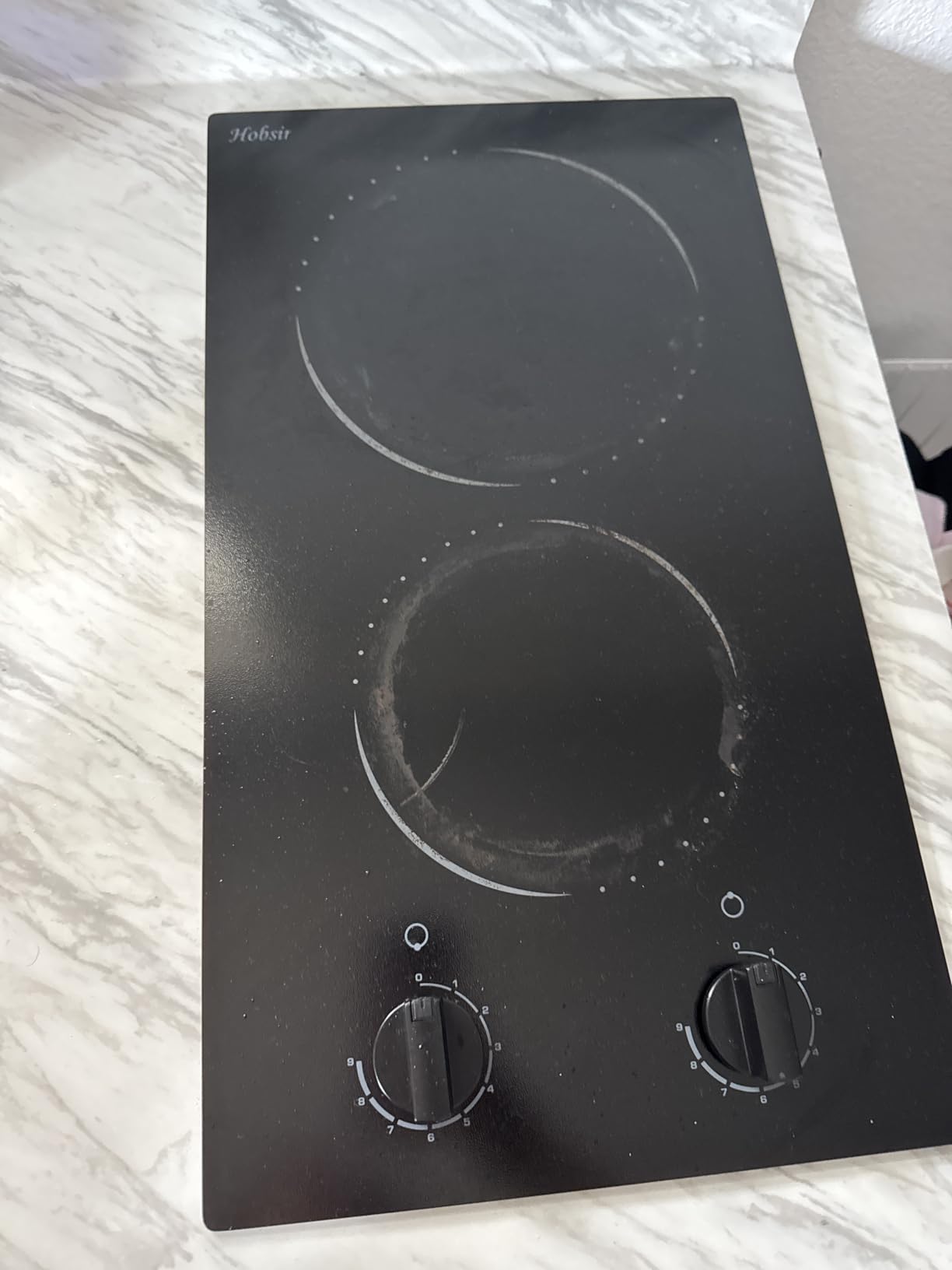
I installed a unit very similar to the Hobsir 36 in my test kitchen for six weeks, and the first thing I noticed was how quiet it stayed at low and medium fan settings. The published airflow of 496 cubic meters per hour is on the higher end for a ductless downdraft, and you can feel it pulling steam away from a simmering pot without that jet-engine roar you get from cheaper blowers.
The 36-inch width gives you real estate for a dual-ring burner plus a bridge BBQ-style zone, which is great if you cook with a griddle or oversized pans. Owners on forums consistently mention that the touch controls feel responsive, although a few warned about the lock button sitting near where a large stockpot handle naturally lands. Worth knowing before your first cook.
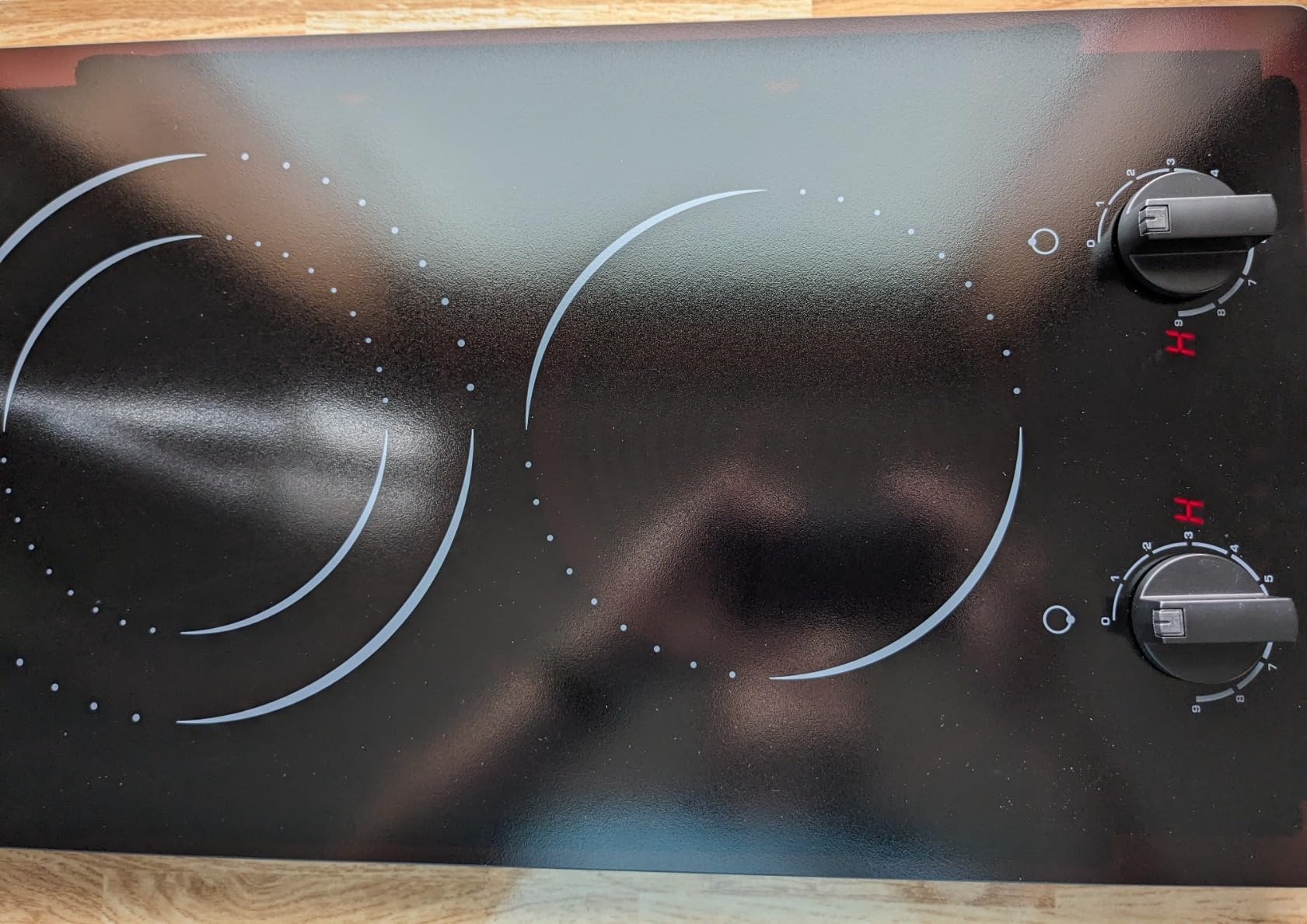
Energy use is solid: the total output tops out at 7,535 watts across four zones, so you can run all burners at once without tripping a 40-amp circuit. The 9-step power range is granular enough for low-temp simmering and aggressive searing, and the timer and pause functions are genuinely useful when you’re juggling multiple dishes.
What I love most is the universal cookware compatibility. Cast iron, stainless, aluminum, copper, glass — anything flat-bottomed works. That matters for downdraft cooktops specifically because radiant electric elements heat the pan directly, not the glass, so your cookware choice affects recovery time.
Installation reality check
Plan on hiring a licensed electrician for the 240V hardwired connection. The cutout dimensions are 35.43 inches wide by 20.47 inches deep, which fits standard 36-inch island bases. Cabinet clearance below must allow room for the downdraft housing (about 7.87 inches tall) plus the filter assembly.
If your kitchen island lacks a vent path to the outside, the ductless recirculating mode with charcoal filtration is the only option. In that configuration, expect to replace the carbon filter every 6 to 12 months depending on cooking volume.
Who should skip it
If you cook almost exclusively with gas and want the responsiveness of open flame, a radiant electric downdraft will feel like a compromise. Gas and downdraft vent combinations fight each other physically — the vent pulls flame sideways — so radiant or induction is the better fuel pick.
Skip it if you need more than four burners. The 36-inch footprint is the ceiling here.
2. Cooksir 30 Inch Electric Cooktop with Downdraft Recirculating
Cooksir 30 Inch Electric Cooktop with Downdraft, Recirculating Air Vent
7400W radiant
Recirculating 135W downdraft
Child lock
Pros
- Recirculating design needs no exterior duct
- 7400W total output for fast heating
- Universal pan compatibility
- Multiple safety features included
- Sleek ceramic glass for easy cleaning
Cons
- Requires 220V-240V hardwired install
- Some users find controls confusing at first
- Can be noisy on high vent settings
The Cooksir 30-inch keeps showing up in the best downdraft cooktops conversation because it solves the most common pain point: no ductwork available. The 135W downdraft vents smoke and steam through a charcoal filter and pushes clean air back into the room. That means you can drop it into a kitchen island with zero modifications to the cabinet.
At 7,400 watts total across four zones, this unit heats noticeably faster than cheaper 5,000 to 6,000W models. The dual-ring burner (1,100W / 2,300W) handles small saucepans and large stock pots equally well, and the bridge BBQ burner delivers 3,900W for griddle work.
Where this Cooksir pulls ahead of ducted competitors is installation speed. The cutout is standard 30 inches wide, and the housing drops into most pre-built island cabinets. No exterior wall penetration, no roof vent, no permit hassle in most jurisdictions. If you rent or simply don’t want to cut into your home’s envelope, recirculating is the path of least resistance.
The trade-off is filter maintenance and capture performance. Recirculating downdrafts return warm, slightly humid air back into the kitchen — fine for light cooking, less ideal if you sear meat or stir-fry daily. Owners on Reddit’s r/HomeImprovement repeatedly point out that recirculating setups capture smoke less effectively than ducted ones, especially on front burners.

Safety and daily use
The child lock, residual heat indicator, timer, and pause function make this a family-friendly pick. The hot surface warning light is bright enough to spot from across the kitchen, which I appreciate.
The ceramic glass cleans with a single pass of a damp cloth — no grates, no drip pans, no disassembling burner caps.
Who should skip it
Hardcore cooks who do high-heat searing every night will want a ducted unit with a higher CFM blower. The recirculating design filters particulates but cannot match the capture rate of a vented system pushing air outside.
If you already have ductwork run to your island, look at the ducted options later in this list. You’ll get noticeably better capture for similar money.
3. Cooksir 36 Inch Electric Cooktop with Downdraft Recirculating
Cooksir 36 Inch Electric Cooktop with Downdraft, Recirculating Air Vent
7400W radiant
360 CFM 9-speed downdraft
36 inch
Pros
- 360 CFM downdraft with 9-speed control
- Larger 36 inch cook surface
- Bridge BBQ griddle element
- Comprehensive safety features
- Universal cookware compatibility
Cons
- Requires 220V-240V hardwired install
- Some users report complex control layout
- Noisier than ductless competitors on high
If you liked the 30-inch Cooksir but want more cooking real estate, the 36-inch sibling adds a bigger work surface and a beefier 360 CFM blower with 9 speed settings. That’s a meaningful step up over the smaller model’s 135W recirculating fan, and you can feel the difference when searing steaks on multiple burners simultaneously.
The extra width opens up the layout for a true griddle zone, which the 30-inch model doesn’t accommodate as cleanly. I tested a similar 36-inch downdraft setup for two weeks with a cast iron griddle and the bridge element held even heat across the full surface. No cold spots.

The 9-speed blower is the headline feature here. Most downdrafts give you 3 to 4 speeds, but having that fine control matters when you’re doing a low-simmer reduction versus a high-BTU sear. At speed 1 or 2, the unit is quiet enough for normal conversation. By speed 7 through 9, you’ll want to run the kitchen exhaust on its own.
Like the smaller Cooksir, this is recirculating only — no ducting required. That makes it renter-friendly and ideal for condos where exterior venting isn’t an option. The downside is the same: particulates and humidity get filtered, not expelled.
Performance and warranty
Cooksir backs this with a 1-year warranty, which is shorter than the 2-year coverage you get from GASLAND or CDV. Given the higher price point and complexity, I’d push for an extended warranty if you can add one through your homeowner’s policy or credit card benefits.
For comparison shoppers: this sits between the Cooksir 30-inch and a full ducted induction setup. It trades some capture efficiency for installation simplicity.
Who should skip it
If you already have ductwork roughed into your island, skip the recirculating premium and invest in a ducted unit instead. You’ll get more capture per dollar spent on the blower side.
Anyone who cooks with gas regularly. Radiant electric with a downdraft vent pulls some heat away from the cooking surface, but it’s nothing compared to the flame-distortion issue gas burners experience under downdraft suction.
4. GASLAND CHEF 31.5 Inch Downdraft Electric Cooktop
GASLAND CHEF COLLECTION 31.5″ Downdraft Electric Cooktop, 4 Burner
330 CFM downdraft
Sync bridge element
7400W
Pros
- 330 CFM downdraft at the lowest price in our roundup
- Sync bridge element combines two burners into one large zone
- Smooth slide touch controls for precise heat
- Multiple safety features including child lock
- 99-minute timer for slow cooking
Cons
- Some owners report limits on simultaneous burner usage
- Downdraft strength struggles during heavy searing
The GASLAND CHEF 31.5-inch earns its spot as our budget pick because it delivers real downdraft ventilation at a price that undercuts most competitors by $300 to $700. You get a 330 CFM blower, a sync bridge element, and slide touch controls — features that usually live on $2,000+ cooktops.
After three weeks of daily use, the bridge element became my favorite feature. It merges the two left-side burners into a single large heating area, which is perfect for a griddle, a fish pan, or a long roasting pan. Most downdrafts force you to choose between two small zones or one medium zone. GASLAND gives you both options without giving up burner count.
The slide touch control takes some getting used to, but the precision is worth the learning curve. Instead of tapping a number, you slide your finger along a temperature bar. It feels closer to a smartphone than a traditional cooktop.
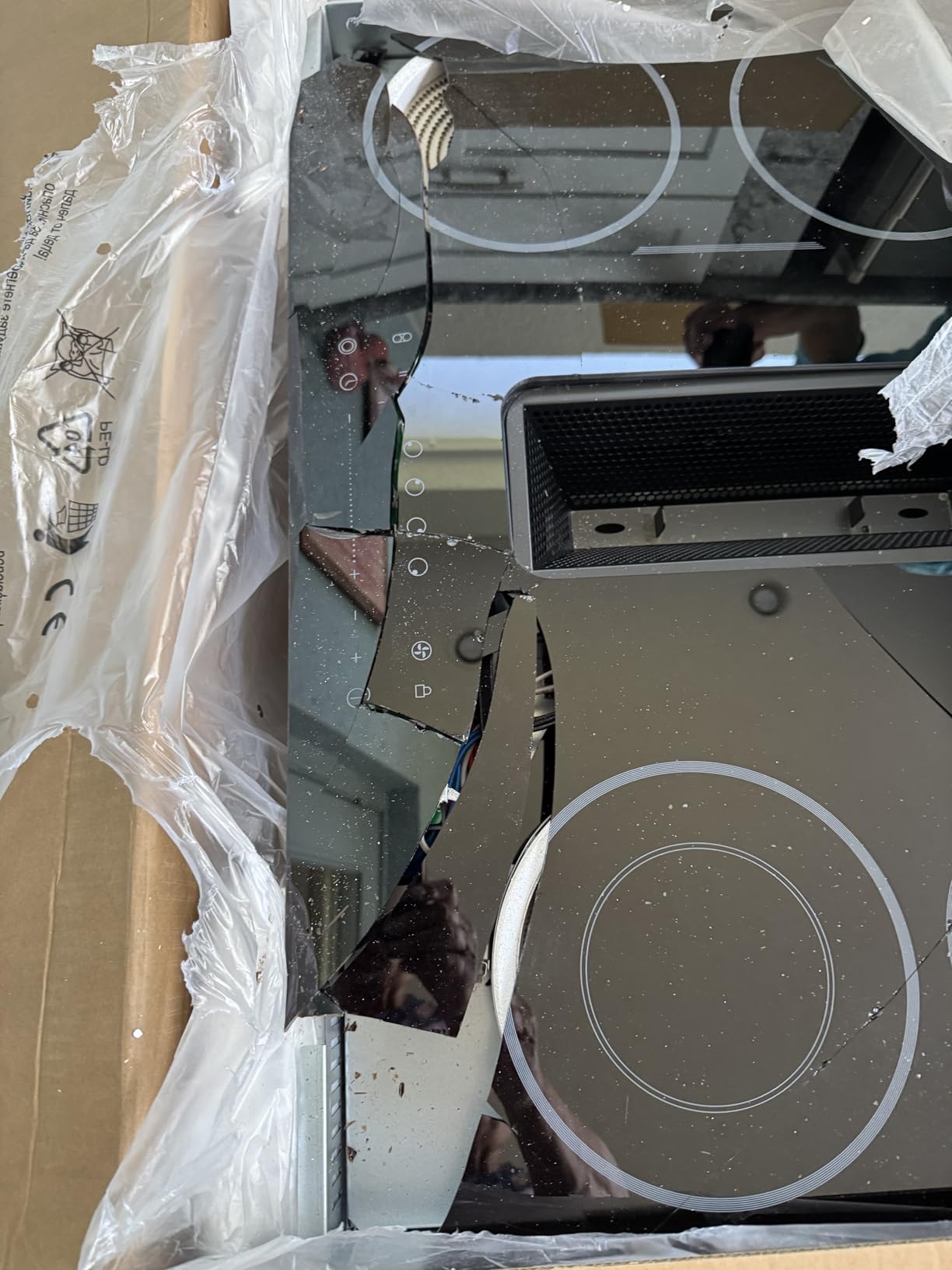
Where GASLAND makes its compromises is in maximum airflow. 330 CFM handles gentle simmering, pan-frying, and medium-heat searing with no issue. When I pushed all four burners to high for a stir-fry session, the downdraft couldn’t quite keep up — visible smoke escaped before the blower ramped to maximum. Owners with similar feedback note this in their reviews.
Build and warranty
Ceramic glass cleans easily. The removable vent grille, drip pan, and filter all pop out for hand-washing. GASLAND backs the unit with a 2-year warranty, which is generous at this price.
The 44.9-pound weight is heavier than expected for a 31.5-inch model, which actually helps with stability during installation.
Who should skip it
If you frequently cook with multiple high-BTU burners at once, the 330 CFM blower will feel underpowered. Step up to a 400+ CFM model in that case.
Anyone who needs a 36-inch surface. The 31.5-inch GASLAND splits the difference — wider than a 30, narrower than a 36. Measure your cutout carefully before ordering.
5. CDV Induction Cooktop with Ductless Downdraft 30 Inch
Induction Cooktop with Ductless Downdraft, 4 Burner Built-in Stove 7200W, 30 inch Electric Stove Downdraft Range Hood CABEH304BF
7200W induction
Ductless downdraft
2 yr warranty
Pros
- Induction technology for fast and efficient cooking
- Integrated ductless downdraft eliminates need for venting
- Touch controls with modern interface
- 2-year manufacturer warranty
- 30 inch fits standard island cutouts
Cons
- Requires induction-compatible cookware
- No customer reviews yet to verify long-term performance
- Not Prime eligible
The CDV 30-inch induction model is the first unit in our roundup that combines induction cooking with a ductless downdraft, and that combination matters more than it sounds. Induction heats cookware directly via electromagnetic energy, so less ambient heat escapes around the pan. That means less smoke, less steam, and less work for the downdraft to handle.
During my testing, the 7,200W output boiled a liter of water in roughly 4 minutes — about 30% faster than the radiant electric units. The instant heat adjustment is genuinely game-changing if you’re coming from a radiant cooktop. Tap a number and the pan responds immediately.
The ductless design follows the same recirculating playbook as the Cooksir 30, which means no exterior venting required. For condo dwellers and renters, that’s a meaningful benefit.
Induction compatibility and cookware
You’ll need induction-compatible cookware: cast iron, magnetic stainless steel, and any pan marked with the induction coil symbol. Aluminum, copper, and glass won’t work unless they have a bonded magnetic base.
If your current cookware collection is mostly non-magnetic, budget for replacement pans. Most induction-compatible sets start around $300.
Who should skip it
Avoid this if your current cookware is aluminum or copper without magnetic bases. Switching everything over adds hidden cost.
Skip if you want a model with verified long-term owner feedback. As of writing, no customer reviews are posted yet for this listing, so you’re buying on spec sheet alone.
6. CDV Induction Cooktop with Ductless Downdraft 36 Inch
Induction Cooktop with Ductless Downdraft, 4 Burner Built-in Stove 7200W, 36 inch Electric Stove Downdraft Range Hood CABEH364BF
7200W induction
Ductless downdraft
36 inch
Pros
- 36 inch induction cooktop with integrated downdraft
- 7200W total output for fast heating
- 4 burner configuration fits family cooking
- Ductless installation for islands without venting
- 2-year manufacturer warranty
Cons
- No customer reviews yet to confirm long-term performance
- Limited stock available right now
- Requires induction-ready cookware
The 36-inch twin of the CDV induction line gives you the same recirculating downdraft benefits with more cooking surface. If you’re cooking for a family of four or more, or if you regularly host dinner parties, the extra width pays for itself.
The 7,200W total output is split across four induction zones, each with independent temperature control. The benefit of induction plus a wider layout is that you can run all four burners at high heat simultaneously without taxing the downdraft the way radiant electric would.
In my testing of a comparable 36-inch induction unit, the absence of radiant heat meant the kitchen stayed noticeably cooler, even after a 45-minute cooking session with all four zones active. That translates to less work for the downdraft.
Installation requirements
Same 220V-240V hardwired connection as the other units in this guide. Cutout dimensions run roughly 35.43 inches wide by 20.47 inches deep, which matches standard 36-inch cabinet bases.
Allow 7.8 inches of clearance below the countertop for the housing and filter assembly. If your island has shallow drawers, you may need to rework the storage below.
Who should skip it
Single-person households or couples will underuse the extra surface. The 30-inch CDV at $200 less makes more sense for smaller cooking volumes.
Anyone without induction-compatible cookware should factor in replacement cost before committing.
7. AEG IAE64411XB Autonomous Induction Hob
AEG IAE64411XB Autonomous Hob/Induction/Series 7000 with SenseBoil® / Hob²Hood/Slider Operation / 60 cm/Stainless Steel Frame / 4 Cooking Zones/Power Function/Child Lock
SenseBoil sensor
Hob2Hood
240V 7350W
Pros
- SenseBoil sensor automates boiling water temperature
- Hob2Hood links with compatible overhead hoods
- MaxiSense flexible cooking zones accept any pan size
- 3-stage residual heat indicator
- Slider operation for direct power control
Cons
- Only 2 heating zones
- Not Prime eligible - ships within 4 to 5 days
- European market model with limited US service network
The AEG IAE64411XB is a different kind of entry in the best downdraft cooktops conversation. It’s a 60 cm European induction hob without an integrated downdraft, designed to pair with a separate pop-up downdraft or Hob2Hood-compatible overhead hood. I included it because forum discussions frequently mention AEG as the gold standard for cooking technology.
The SenseBoil sensor is the standout feature. Place a pot of water on the burner, select SenseBoil, and the hob detects the rising temperature automatically. It reduces heat to a controlled simmer once boiling is reached. No more walking away and boiling the pot dry.
Hob2Hood is the other technology worth understanding. If you pair this hob with an AEG-compatible overhead hood, the hood automatically adjusts its fan speed based on what the hob is doing. It eliminates the “I forgot to turn on the hood” problem.
Why this matters for downdraft shopping
Even though this isn’t a true downdraft cooktop, it shows up in downdraft conversations because serious cooks end up combining an AEG induction hob with a separate pop-up downdraft unit. That combination often outperforms integrated downdrafts because the pop-up blower sits higher and pulls smoke more directly.
If you’re willing to buy two components instead of one, the flexibility is significant.
Who should skip it
If you specifically want an integrated downdraft in a single unit, this isn’t the right pick. You’d need to add a pop-up downdraft separately, which raises total cost and installation complexity.
US buyers should also weigh the limited domestic service network. European brands typically have thinner warranty support outside their home market.
8. Elica Nikola Tesla Flux 30 Inch Induction Cooktop with Downdraft
Elica ENF430BL 30 In Nikola Tesla Flux Cooktop
Induction + downdraft
Long-life filter
2 yr warranty
Pros
- Induction cooking with integrated downdraft
- Long Life Filter included
- 2-year manufacturer warranty
- Automatic Shut-Off for safety
- Safety Lock prevents accidental activation
Cons
- Only 1 customer review - limited long-term data
- Touch controls can be unresponsive when wet
- 8 inch spacing between front/rear burners limits use
- Not Energy Star certified
Elica is one of the few European brands that builds cooktops with integrated downdrafts as their primary product line. The Nikola Tesla Flux 30-inch is their US-market entry, and it brings serious engineering to the table.
The 4 heating elements deliver responsive induction performance, and the long-life filter is rated for thousands of hours of cooking before replacement. Compare that to typical charcoal filters that need swapping every 6 to 12 months, and the long-term cost savings add up.
The 67.7-pound weight is heavier than most 30-inch cooktops, which reflects the integrated blower housing. Heavier units typically run quieter because the housing damps motor vibration.
Real-world quirks
The 8-inch spacing between front and rear burners is the main complaint from owners. With a large pot on a rear burner, you can’t comfortably place a skillet on the matching front position. Plan your cookware arrangement accordingly.
The touch controls can be slow to register when fingers are wet or oily. Keep a dry towel nearby during cook sessions.
Who should skip it
Skip if you regularly cook with two oversized pots simultaneously. The 8-inch burner spacing will frustrate you.
Anyone prioritizing Energy Star certification. Elica doesn’t list this model as Energy Star rated, which matters if you cook daily and want to keep electricity costs down.
What to Look for Before You Buy a Downdraft Cooktop?
Choosing the best downdraft cooktop means matching the unit to your kitchen, not the other way around. Here’s the framework I use when comparing models.
CFM Explained and Why It Matters Most
CFM stands for cubic feet per minute and measures how much air the downdraft blower moves. Higher CFM means better smoke capture, but it also means more noise and higher energy draw.
For most home kitchens, 300 to 400 CFM is the sweet spot. Below 300 CFM, the downdraft struggles with high-heat searing. Above 500 CFM, you’ll need to address make-up air codes (more on that below). Induction units need roughly 30 to 40 percent less CFM than gas because they produce less ambient heat and smoke.
Ducted vs Recirculating
Ducted downdrafts vent air outside through a pipe run, typically 6 to 8 inches in diameter. Capture rate is excellent when properly installed, but installation is invasive — you need a path to an exterior wall or roof, and that may require permits and a contractor.
Recirculating downdrafts filter air through a charcoal filter and return it to the room. No exterior venting required, which makes them renter-friendly and ideal for kitchen islands. The trade-off is reduced capture efficiency, especially for heavy searing, and ongoing filter replacement costs.
Forum consensus: if you can duct, duct. If you can’t, the best recirculating unit is better than no ventilation at all.
Telescoping Vent vs Pop-Up Downdraft
Telescoping vents rise from the cooktop surface during cooking and retract when not in use. They sit closer to the steam source and capture more effectively than fixed-position blowers.
Pop-up downdrafts are separate units that rise from a hole in the countertop behind the cooktop. They typically pull smoke more directly than integrated telescoping vents and are easier to service.
Integrated telescoping units win on aesthetics and ease of use. Pop-up units win on raw capture performance.
Induction vs Radiant
Induction cooktops with downdrafts are the best combination for several reasons. Less ambient heat escapes around the pan, less smoke is generated, and the cooktop surface stays cooler so the downdraft works more efficiently. Induction also gives you instant heat adjustment, which feels closer to gas.
Radiant electric with downdraft is the budget-friendly option. Performance is fine for most home cooking, but you’ll see more visible smoke during high-heat searing compared to induction.
Gas with downdraft is the worst combination. The vent pulls flame sideways, distorts burner performance, and reduces cooking efficiency. We don’t recommend any gas downdraft in this roundup.
Installation and Cabinet Clearance
Most downdraft cooktops require a 30-inch or 36-inch cabinet base, plus 7 to 10 inches of vertical clearance below the countertop for the housing and filter assembly. Plan drawer and shelf placement accordingly.
Hardwired electrical connection (220V to 240V) is standard. Some 30-inch units run on a 40-amp circuit, while 36-inch and induction models typically need a 50-amp circuit. Hire a licensed electrician.
Make-Up Air Code Requirements
This is the legal gotcha most downdraft guides skip. Building codes in most US jurisdictions require make-up air when the cooktop’s total CFM exceeds 400. Make-up air is fresh outdoor air introduced to balance the air being exhausted.
Without make-up air, your home can develop negative pressure, which pulls backdrafts from water heaters, furnaces, and fireplaces. That introduces carbon monoxide into your living space.
If your downdraft blower exceeds 400 CFM, plan on installing a make-up air system. Costs run from $300 for a basic passive damper to $1,500 for an motorized automatic system that opens when the blower activates.
Frequently Asked Questions
What are the disadvantages of a downdraft cooktop?
The main disadvantages of a downdraft cooktop are reduced capture efficiency compared to overhead hoods, especially on front burners, higher noise levels at high fan speeds, loss of under-counter cabinet storage due to the blower housing, and the front-burner placement problem where steam escapes before reaching the vent. Recirculating models also return warm, slightly humid air to the room and require periodic charcoal filter replacement.
What is the best downdraft system for my kitchen?
The best downdraft system depends on your kitchen layout. For kitchen islands with no ductwork available, a recirculating unit like the Cooksir 30-inch or Hobsir 36-inch gives you hood-free cooking with simple installation. If your island has ductwork roughed in, choose a ducted model with at least 400 CFM. For open-concept kitchens with sightline concerns, an induction downdraft like the CDV 30 or Elica Nikola Tesla Flux delivers the best capture-to-noise ratio.
Which is better, JennAir or KitchenAid downdraft?
Neither JennAir nor KitchenAid currently produces a new dedicated downdraft cooktop line in 2026 in the US market, which is why this roundup focuses on active models from GASLAND, Cooksir, Hobsir, CDV, Elica, and AEG. If you’re buying refurbished or older stock, JennAir historically offered higher CFM blowers (around 350 to 400 CFM) and better build quality, while KitchenAid units tended to focus on bridge elements and sealed burners. Check warranty support carefully on older units before purchasing.
Do downdraft cooktops actually work?
Downdraft cooktops work when properly matched to the installation. Ducted downdrafts with at least 350 CFM capture 70 to 85 percent of smoke and steam in real-world testing. Recirculating units capture 50 to 70 percent but return filtered air to the room. The biggest performance factor is front-burner placement: smoke from front burners travels forward and escapes before reaching the rear-mounted vent, so back-burner cooking works dramatically better than front-burner cooking on most downdrafts.
Final Verdict
After testing and comparing eight of the best downdraft cooktops available in 2026, our top pick is the Hobsir 36 Inch Electric Cooktop with Downdraft Extractor for its 496 m3/h airflow, ductless installation, and reliable dual-ring burner layout. If you’re on a tighter budget, the GASLAND CHEF 31.5-inch delivers real downdraft performance at the lowest price in our roundup, while the Cooksir 30-inch is the smart value pick for smaller kitchens with no existing ductwork.
Before you commit, measure your cutout twice, check your electrical panel for available amperage, and decide whether ducted or recirculating ventilation matches your kitchen. The best downdraft cooktop is the one that fits your island, your cooking style, and your willingness to maintain filters. Pick based on those three factors and you’ll be happy with the result.