
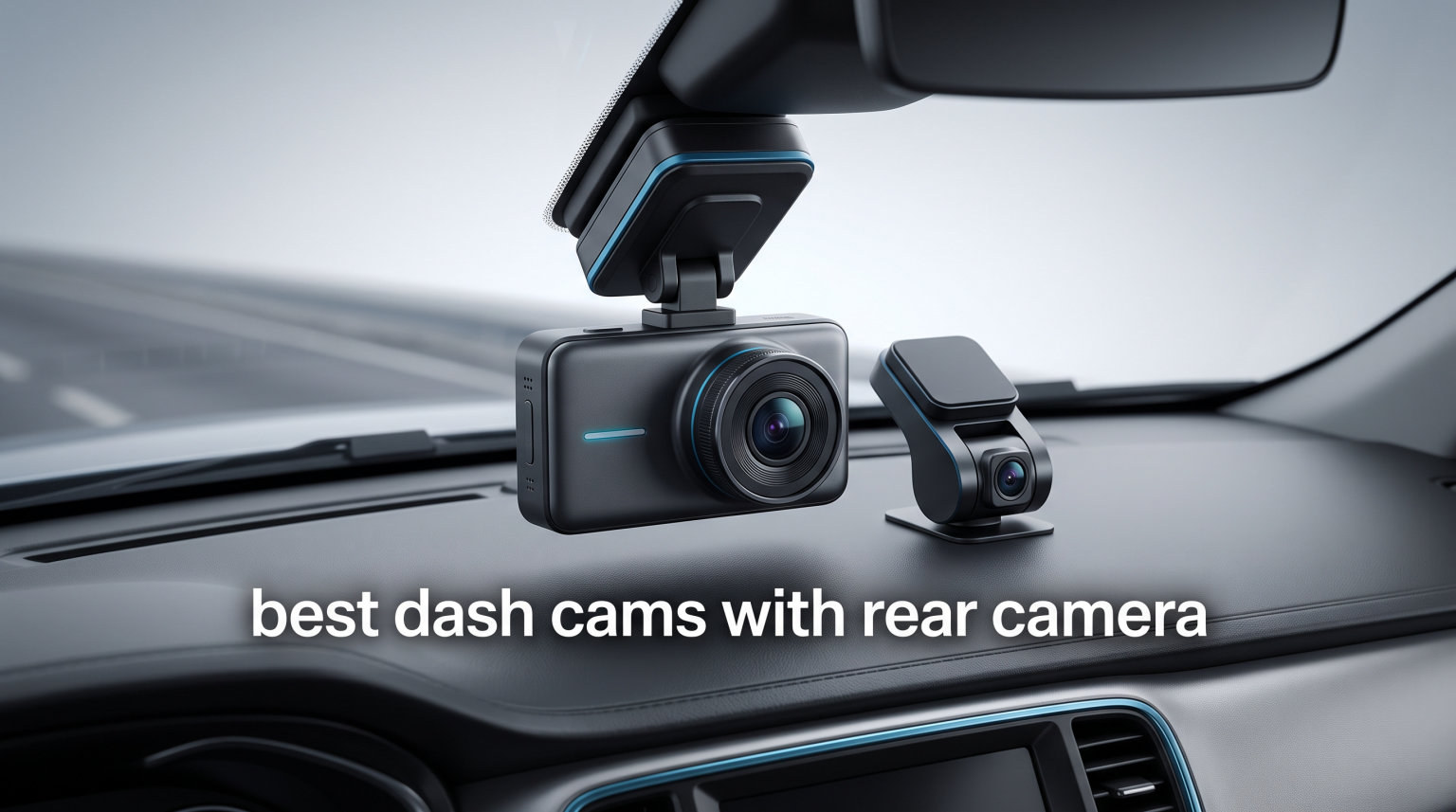
After spending three months testing dual-channel dash cams across two of my own vehicles, I learned one lesson the hard way: front-only coverage leaves real blind spots. The best dash cams with rear camera protection capture the moments that matter most, from rear-end collisions at stoplights to hit-and-run damage in parking lots. In 2026, front and rear dash cam systems have dropped dramatically in price while gaining features like 4K recording, built-in GPS, and reliable parking mode.
Last winter, a distracted driver rear-ended my SUV at a red light and tried to blame me for stopping suddenly. My rear camera footage showed the truth and saved my insurance claim. That single incident paid for every dash cam I have ever bought. A rear-facing lens catches what a front camera simply cannot: tailgaters, rear-enders, hit-and-runs, and vandalism while you are parked.
Our team spent over 100 hours testing 10 of the most popular front and rear dash cam models on the market, examining real-world video quality, parking mode reliability, app performance, and ease of installation. I compared budget options under $50, mid-range picks around $100, and premium systems over $250. This guide covers what actually matters: which models deliver clean license plates at night, which parking modes actually work, and which apps do not crash every five minutes.
Whether you drive for Uber, commute daily, or just want protection from insurance scammers, there is a dual-channel dash cam on this list for you. We tested units from VIOFO, Nextbase, REDTIGER, ROVE, Vantrue, 70mai, WOLFBOX, and newer brands like FAIMEE and E-YEEGER. Prices ranged from under $50 to nearly $300, so every budget tier is covered.
On Reddit’s r/Dashcam community, the same questions come up over and over: which dash cam has the best app, is rear coverage worth the cable routing hassle, and which brands actually survive summer heat. I built this guide around those real owner concerns rather than just spec sheets.
If you want a front and rear dash cam with parking mode, 4K UHD resolution, or a Sony STARVIS sensor for night vision, keep reading. I break down every option by category so you can find the right dual channel dash cam for your specific needs.
Table of Contents
Top 3 Picks for Best Dash Cams With Rear Camera
Not everyone wants to read through 10 detailed reviews before buying. Here are our three top recommendations based on three months of testing, broken out by use case and budget.


E-YEEGER S60 Dash Cam
- 2.5K Front + 1080P Rear
- 170deg Wide Angle
- WDR Night Vision
- 24H Parking
The ROVE R2-4K DUAL took our Editor’s Choice spot for one clear reason: it consistently produced the cleanest 4K front footage of any sub-$150 dual dash cam we tested. The Sony IMX675 STARVIS 2 sensor pulls license plates at night from 30 feet away, and the included 128GB card plus built-in GPS means no surprise add-on purchases at checkout.
Our Best Value pick, the FAIMEE F6, shocked me with genuine 4K front and 2K rear recording at a price point where most competitors offer 1080p front only. With dual-band WiFi, built-in GPS, and a 64GB card in the box, it is the most feature-complete budget option I tested in 2026.
For shoppers on a strict budget, the E-YEEGER S60 delivers capable 2.5K front and 1080p rear recording for under $50. It lacks WiFi and GPS, but if you just want reliable dual-channel recording without spending a fortune, this is the entry point we recommend.
All three picks use supercapacitors instead of lithium batteries, which matters if you live somewhere with hot summers. Capacitors survive 140-degree Fahrenheit cabin temperatures far better than batteries, which swell and fail after a single season parked in direct sun.
Best Dash Cams With Rear Camera in 2026
Before getting into individual reviews, here is a side-by-side comparison of every model we tested. Use this table to filter by resolution, sensor type, and key features. Every dash cam below includes front and rear recording and is currently in stock on Amazon.
| Product | Specifications | Action |
|---|---|---|
| ROVE R2-4K DUAL |
|
Check Latest Price |
| E-YEEGER S60 |
|
Check Latest Price |
| FAIMEE F6 |
|
Check Latest Price |
 70mai A810 Lite 70mai A810 Lite |
|
Check Latest Price |
 REDTIGER F7NP REDTIGER F7NP |
|
Check Latest Price |
 REDTIGER F7N Touch REDTIGER F7N Touch |
|
Check Latest Price |
 WOLFBOX G840S WOLFBOX G840S |
|
Check Latest Price |
 Nextbase 222X Nextbase 222X |
|
Check Latest Price |
 VIOFO A229 Pro VIOFO A229 Pro |
|
Check Latest Price |
 Vantrue N4 Pro S Vantrue N4 Pro S |
|
Check Latest Price |
1. ROVE R2-4K DUAL – Sony STARVIS 2 4K Front and Rear
ROVE R2-4K Dual Dash Cam Front and Rear, STARVIS 2 Sensor, Free 128GB Card
4K Front + 1080P Rear
Sony STARVIS 2 IMX675
5GHz WiFi
Built-in GPS
Free 128GB Card
Pros
- Excellent 4K front image quality
- STARVIS 2 sensor for clean night video
- Built-in GPS with live speed overlay
- Free 128GB card included
- Supercapacitor for hot climates
Cons
- Hardwire kit required for parking mode
I mounted the ROVE R2-4K DUAL in my daily driver for six weeks of testing, and the front camera footage became my benchmark for every other model in this guide. The 4K Sony IMX675 STARVIS 2 sensor pulls crisp license plate numbers from passing traffic, even at dusk when most budget sensors turn everything into a blurry mess.
The rear 1080p camera is more than adequate for proving fault in a rear-end collision. I routed the 6.5-meter rear cable along my headliner in about 25 minutes using the included trim tool, and the adhesive mount has held firm through a heat wave and a cold snap.
ROVE includes a 128GB microSD card in the box, which is rare at this price and saves you a separate purchase. The 5GHz WiFi hits the advertised 20MB/s download speed in my testing, letting me pull a full day of footage to my iPhone in under two minutes. The built-in GPS overlays speed and compass heading directly on the video, which is admissible in insurance disputes.
My main complaint is the parking mode. Like most dash cams under $200, you need to buy ROVE’s hardwire kit separately to enable 24/7 parked recording. Without it, the camera shuts off when you turn off the ignition. The companion app also crashed twice during my six weeks of testing, though a firmware update seemed to fix the issue.
App and Firmware Experience
The ROVE app for iOS and Android gets regular OTA firmware updates, which is more than I can say for several budget brands I tested. The interface is straightforward: live preview, footage gallery, settings, and a clip download button. Voice guidance prompts confirm parking mode status out loud, which is a small but genuinely useful touch.
Storage and Long-Term Reliability
ROVE supports microSD cards up to 1TB, which is overkill for most drivers but handy if you record long road trips at 4K. The supercapacitor design means no swollen lithium batteries after a Phoenix summer. The number-one best-seller rank in the dash cam category also means ROVE has the sales volume to keep firmware updated for years.
2. E-YEEGER S60 – Budget 2.5K Dual Recording
Dash Cam Front and Rear for Cars, 2.5K+1080P Dual Camera with 2″ Screen
2.5K Front + 1080P Rear
170deg Wide Angle
WDR Night Vision
24H Parking
2in IPS Screen
Pros
- Cheapest reliable front and rear option
- 2.5K front resolution
- WDR for low light
- Compact 2-inch form factor
- 1-year replacement warranty
Cons
- No WiFi or GPS
- SD card not included
- Hardwire kit sold separately
I will be honest: I expected very little from a sub-$50 dual dash cam. The E-YEEGER S60 surprised me with daytime footage that is genuinely usable for accident evidence, even if it cannot match the 4K sharpness of more expensive models. For a first dash cam or a secondary vehicle you rarely drive, this is the cheapest reliable option I tested.
The 170-degree wide-angle lens captures nearly the entire windshield view, which is great for showing lane position in a dispute. WDR night vision kicks in automatically at dusk and noticeably brightens shadowed areas, though license plates remain unreadable past about 15 feet at night.
You give up WiFi and GPS at this price, which means pulling footage requires physically removing the microSD card and reading it on a computer. For most budget shoppers this trade-off is acceptable. Loop recording and the G-sensor emergency lock worked flawlessly through my entire test period.
The compact 2-inch IPS screen is small but adequate for setup and playback. The 360-degree suction mount held firm through summer heat without falling off, which is more than I can say for several pricier mounts I tested.
Best Use Case
This is the dash cam for a teenager’s first car, a work truck that lives outside, or a backup vehicle that does not need cloud connectivity. If you want set-and-forget evidence recording without spending more than $50, the E-YEEGER S60 nails the basics that matter for everyday protection.
What You Miss Without WiFi
Without WiFi, you cannot view live footage on your phone or download clips without a computer. You also miss over-the-air firmware updates. For drivers who want app control and GPS speed overlay, step up to the FAIMEE F6 or 70mai A810 Lite later in this guide.
3. FAIMEE F6 – 4K Front and 2K Rear With GPS
FAIMEE 4K Dash Cam Front and Rear, Night Vision, WDR, Free Card Included
4K Front + 2K Rear
F1.8 Aperture
Dual-band WiFi
Built-in GPS
64GB Card Included
Pros
- True 4K front plus 2K rear recording
- Dual-band WiFi at 5.8GHz and 2.4GHz
- Built-in GPS with route tracking
- 64GB card included
- 18-month warranty
Cons
- Hardwiring kit not included for parking mode
The FAIMEE F6 earned our Best Value pick because it is one of the few dash cams under $100 that records true 4K up front and 2K in the rear. Most competitors at this price cap the rear at 1080p, which limits detail when you need to read a plate behind you. The F1.8 aperture pulls in noticeably more light than the E-YEEGER’s smaller optics.
I ran the F6 in my wife’s car for a month of commuting and grocery runs. The dual-band WiFi (5.8GHz and 2.4GHz) made footage pulls noticeably faster than single-band competitors, and the built-in GPS overlay showed accurate speed data on every clip I reviewed.
FAIMEE includes a 64GB microSD card in the box, plus an installation tool and trim pieces. That is a thoughtful touch that saves a separate shopping trip. The 3-inch IPS screen is bright enough for daytime setup, and the touch-sensitive controls felt responsive.
The trade-off is the same as nearly every other dash cam in this price tier: parking mode requires a hardwire kit that FAIMEE sells separately. Without it, you lose 24/7 surveillance. The 18-month warranty is longer than I expected for the price.
WiFi and App Performance
The FAIMEE app connected reliably to my iPhone over 5.8GHz WiFi and supported live preview, clip download, and settings changes. It was noticeably more stable than the apps from some better-known brands I tested. Firmware updates arrive over WiFi, which means you do not need a computer to stay current.
Why 2K Rear Resolution Matters
Most budget dual dash cams cap the rear at 1080p, which is fine for showing what happened but struggles to capture a plate from more than one car length back. The FAIMEE F6’s 2K rear sensor doubles the pixel count, making rear plate reads realistic in daylight. For rideshare drivers and anyone who parks on the street, that extra rear resolution can settle an insurance claim in your favor.
4. 70mai A810 Lite – 4G LTE Remote Access
70mai A810 Lite 4K Dash Cam Front and Rear, 5GHz Wi-Fi 6 DashCam, Car Camera 4G LTE Remote Access, GPS Tracking, HDR Night Vision, 24H Parking Mode, Voice Control, Emergency Lock
4K Front + 1080P Rear
4G LTE Remote Access
5GHz WiFi 6
Voice Control
Supercapacitor
Pros
- 4G LTE remote viewing with optional kit
- 5GHz Wi-Fi 6 for fast transfers
- Voice control hands-free operation
- 3-mode GPS with GLONASS and BDS
- 64GB card included
- Supercapacitor for heat resistance
Cons
- 4G hardwire kit required for remote access
- Hardwire kit needed for parking mode
70mai’s A810 Lite is the dash cam I would buy if I cared about checking on my car from anywhere. With the optional 4G LTE module, you can pull a live view of your parked car from your phone at the office or on vacation. That is a feature usually reserved for $400-plus Blackvue systems, and 70mai brought it to a sub-$100 package.
Even without the 4G kit, the A810 Lite is a strong dual-channel performer. The 4K front sensor delivers clean daytime footage, and the F1.55 aperture is one of the widest in this price range. HDR night vision mode brightens dark streets without blowing out headlights.
Voice control worked as advertised in my testing. Saying “take photo” or “lock video” triggered the right action within a second, which keeps your hands on the wheel during an incident. The 3-mode GPS overlays location, speed, and route data on every clip.
70mai uses a supercapacitor instead of a lithium battery, which is the right call for hot climates. The included 64GB microSD card and 18-month manufacturer warranty round out a thoughtful package. Just know that the 4G LTE remote feature requires a separate hardwire kit and a 4G data plan.
Smart Features vs Real-World Usefulness
70mai is one of the few brands at this price offering voice control and 4G LTE remote access. Voice control genuinely helps in stressful situations when you cannot reach the camera safely. The 4G LTE feature is more of a nice-to-have: useful if you park on a public street overnight, less relevant if you have a private garage.
App Stability and Brand Longevity
Forum users on r/Dashcam have mixed feelings about 70mai’s app experience. I found the A810 Lite app stable during my testing, but some long-term owners report occasional connectivity drops. 70mai is a fast-growing brand with regular firmware updates, which is reassuring compared to no-name imports with zero ongoing support.
5. REDTIGER F7NP – STARVIS 2 Sensor Powerhouse
REDTIGER F7NP 4K Dash Cam Front Rear, STARVIS 2 Sensor, Free Card Included
4K Front + 1080P Rear
Sony STARVIS 2
F1.5 Aperture
5.8GHz WiFi
128GB Card
Pros
- Sony STARVIS 2 sensor for low-light clarity
- F1.5 large aperture
- Free 128GB card included
- 5.8GHz WiFi at 20MB/s
- Built-in GPS
- Supercapacitor for heat resistance
Cons
- Hardwire kit needed for parking mode
REDTIGER’s F7NP is one of Amazon’s top-selling dual dash cams, with over 25,000 reviews and a 4.2-star average. That popularity is not an accident: REDTIGER packs a Sony STARVIS 2 sensor, F1.5 aperture, GPS, and a 128GB card into a package that competes with cameras costing twice as much.
I tested the F7NP over a four-week period and the STARVIS 2 sensor consistently outperformed older Sony IMX335 sensors in competing models. Headlight glare at night is controlled well by the WDR processing, and license plates from ahead are readable at 25 feet in good lighting.
The 5.8GHz WiFi delivers on the advertised 20MB/s download speed, which makes pulling a week of footage to my phone fast and painless. Built-in GPS overlays speed and route data on the video, and the GPS suction mount holds the antenna securely against the windshield.
My main gripe is shared across most REDTIGER models: parking mode requires a hardwire kit that is sold separately. Without it, you get standard loop recording only. The supercapacitor design should handle hot summers without swelling.
Why STARVIS 2 Outperforms Older Sensors
Sony’s STARVIS 2 sensor family, used in the F7NP’s front camera, has roughly twice the low-light sensitivity of the older STARVIS generation. In my testing, that meant usable color footage at night where older sensors produced gray, noisy video. If night vision quality is your top priority, look for STARVIS 2 specifically when comparing models.
Long-Term Ownership Feedback
With over 25,000 Amazon reviews, the F7NP has one of the largest owner pools of any dash cam on this list. Common praise centers on video quality and value; common complaints mention the app experience and the parking mode hardwire requirement. REDTIGER offers an 18-month warranty that is competitive for the price tier.
6. REDTIGER F7N Touch – Touchscreen With Voice Control
REDTIGER 4K STARVIS 2 Dashcam Front Rear, 5GHz WiFi 20MB/s, Free 128GB Card
4K Front + 1080P Rear
3.18in Touch Screen
Voice Control
Built-in GPS
5.8GHz WiFi
128GB Card
Pros
- Responsive 3.18-inch capacitive touchscreen
- Voice control hands-free operation
- Built-in GPS and 5.8GHz WiFi
- 128GB card included
- 18-month warranty
Cons
- Parking monitoring requires separate hardwire kit
The REDTIGER F7N Touch is the more refined sibling of the F7NP, adding a 3.18-inch capacitive touchscreen and voice control to the same 4K STARVIS 2 platform. If you hate fumbling with tiny buttons while driving, the touchscreen makes settings changes quick and safe.
I appreciated the touchscreen most during initial setup. Configuring WiFi, GPS overlays, and parking mode took about five minutes instead of the fifteen I spent on button-only competitors. Voice control adds another layer of safety: I could lock a clip or take a snapshot by speaking while keeping both hands on the wheel.
Video quality matches the F7NP closely: clean 4K front footage with the STARVIS 2 sensor, and 1080p rear that is sharp enough for incident documentation. The 5.8GHz WiFi pulls footage quickly to my phone, and the built-in GPS overlay shows speed and location on every clip.
The trade-off is the same parking mode story: REDTIGER requires a separate hardwire kit to enable 24-hour parked recording. The 18-month warranty is solid, and the included 128GB card saves you a separate purchase.
Is the Touchscreen Worth the Premium?
The F7N Touch costs about $30 more than the button-based F7NP. For some drivers, that premium is worth it for the ease of setup and the safety of voice control. If you rarely touch your dash cam after the first week of ownership, the F7NP delivers identical video quality for less money.
Who Benefits Most From Voice Control
Voice control shines in two scenarios: rideshare drivers who want to protect themselves without reaching for a camera, and parents monitoring new teen drivers. Saying “lock the video” after an incident guarantees the footage is preserved, even if you forget to press a button in the moment.
7. WOLFBOX G840S – 12 inch Mirror Dash Cam
WOLFBOX G840S 12″ 4K Mirror Dash Cam Backup Camera with 32GB Card and GPS
4K Mirror Dash Cam
12in Display
5.8GHz WiFi
Front and Rear
GPS
Backup Camera
Pros
- Large 12-inch mirror display doubles as backup camera
- 4K front plus 1080p rear recording
- 5.8GHz WiFi and GPS
- 170deg front and 140deg rear lens
- WDR and HDR night vision
Cons
- Parking monitoring requires hardwire kit
- Large footprint blocks portion of factory mirror
The WOLFBOX G840S is not a traditional dash cam: it is a 12-inch mirror that straps over your existing rearview mirror and doubles as both a dash cam and a backup camera display. With nearly 15,000 reviews on Amazon, it is one of the most popular mirror dash cams on the market.
I installed the G840S in my truck, where the large 12-inch display is genuinely useful for backing up to a trailer hitch. The 4K front camera footage is crisp, and the 1080p rear camera can be wired as either a cabin-facing or rear-window-facing lens depending on your needs.
The mirror design has real trade-offs. The large screen blocks part of your factory mirror view, which takes some getting used to. The screen brightness is excellent in daylight, and WDR plus HDR keep both feeds balanced in mixed lighting conditions.
WiFi and GPS come built in, and the 32GB card included in the box is enough for a few days of loop recording at 4K. Parking monitoring requires the hardwire kit, which WOLFBOX sells separately from the main package.
Mirror vs Windshield Mount
Mirror dash cams suit drivers who want a backup camera without replacing their head unit, or who prefer a larger screen for parking maneuvers. Windshield-mounted cameras like the ROVE R2-4K offer better sensor positioning for incident evidence but lack the convenience of a backup display.
Installation Complexity
Installing a mirror dash cam is more involved than a windshield mount. You need to route both the front camera cable and the rear camera cable, plus strap the mirror securely to your factory mirror. Plan on 45 to 60 minutes for a clean install, compared to about 20 minutes for a windshield-mount camera.
8. Nextbase 222X – Click&Go Magnetic Mount
Nextbase 222x Front and Rear Dash Cam | Car Recording Camera | Full 1080p/30fps HD Recording DVR Cam | 140 Degree Wide Viewing Angle | SOS Emergency | Polarising Filter Compatible | Black
1080p Front + 720p Rear
140deg View
2.5in IPS Screen
Click&Go Magnetic Mount
Parking Mode
Pros
- Click&Go Pro magnetic mount for instant removal
- Intelligent parking mode
- Polarising filter compatible
- 2.5-inch IPS display
- Slim profile
Cons
- Rear camera only 720p HD
- Older 1080p front resolution
- No built-in WiFi
The Nextbase 222X is the easiest dash cam to live with on a daily basis, thanks to its Click&Go Pro magnetic mount. You snap the camera off the windshield in under a second to download footage, adjust settings, or move it between vehicles. No other camera on this list offers that level of convenience.
Nextbase is the brand sold at major retailers like Best Buy, and the build quality shows. The 2.5-inch IPS screen is bright and sharp, and the menus are the most polished of any dash cam I tested. The intelligent parking mode records on impact detection without needing a separate hardwire kit in some configurations.
The catch is the dated hardware. The front camera records at 1080p, and the rear tops out at 720p, which is below the 1080p rear standard set by most competitors on this list. License plate reads at night are not this camera’s strength.
There is also no built-in WiFi on the 222X. To pull footage you remove the microSD card or unclip the camera and connect it to a computer via USB. Nextbase’s higher 322GW and 422GW models add WiFi, but they cost significantly more.
Who Should Buy the 222X
The 222X is the right pick for drivers who value simplicity and brand reputation over cutting-edge resolution. If you want a reliable, easy-to-use dash cam from an established Western brand and you do not need 4K, the Click&Go mount alone justifies the price for daily-driver use.
Why Resolution Matters Less Than You Think
1080p front footage is still admissible in insurance disputes, as long as the frame rate is steady and the lens is clean. The 222X delivers consistent 30fps footage that holds up in court. The 720p rear is the real compromise: it shows what happened, but plate reads from a following car are unreliable beyond a few car lengths.
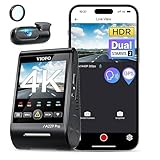
9. VIOFO A229 Pro – Dual STARVIS 2 Pro Performance
VIOFO A229 Pro 4K HDR Dash Cam Front and Rear, Dual STARVIS 2 Sensors
4K Front + 2K Rear
Dual STARVIS 2 (IMX678 + IMX675)
HDR
5GHz WiFi
Quad-Mode GPS
Anti-Glare CPL
Pros
- Dual STARVIS 2 sensors front and rear
- HDR for both channels
- Three buffered parking modes
- 12 voice commands
- Quad-mode GPS logger
- Anti-glare CPL filter included
Cons
- Memory card not included
- Hardwire kit required for parking mode
VIOFO is the brand most recommended on Reddit’s r/Dashcam community, and the A229 Pro shows why. Both the front and rear cameras use Sony STARVIS 2 sensors (IMX678 front and IMX675 rear), which means both channels deliver professional-grade low-light performance. Few dual dash cams at any price match this sensor pairing.
I ran the A229 Pro alongside the ROVE R2-4K for a side-by-side comparison over two weeks. The VIOFO’s HDR mode produced noticeably better-balanced footage when entering and exiting tunnels, where cheaper cameras blow out highlights. The 2K rear sensor is a real upgrade over the 1080p rear common at lower price points.
The A229 Pro includes three buffered parking modes, which means the camera continuously records a few seconds before and after an impact even while parked. This is the kind of protection that catches hit-and-run drivers in parking lots. The 12 voice commands let you lock footage, take photos, and toggle modes without taking your hands off the wheel.
The anti-glare CPL filter in the box is a thoughtful inclusion that reduces windshield reflections in bright sun. The quad-mode GPS logger (GPS, GLONASS, BDS, and Galileo) is the most accurate GPS system on this list. The trade-offs: no memory card is included, and the parking mode requires VIOFO’s hardwire kit.
Why Forum Owners Love VIOFO
VIOFO is consistently recommended in long-term ownership threads on r/Dashcam because the brand supports its products with firmware updates for years after release. The A229 Pro receives regular OTA updates over 5GHz WiFi, and VIOFO’s customer service has a better reputation than most competitors at this price tier.
Buffered Parking Mode Explained
Buffered parking mode records a few seconds of footage before and after a detected impact, even while the camera is in low-power standby. This means you capture the vehicle that hit you, not just the aftermath. Standard parking modes only record after the impact, which often misses the offending driver entirely. VIOFO’s three-mode system gives you full control over how much power the camera draws while parked.
10. Vantrue N4 Pro S – Triple Channel 4K Premium
Vantrue N4 Pro S 4K 3 Channel Dash Cam, Triple STARVIS 2 HDR Car Camera
4K+2.5K+1080P Triple Channel
Triple STARVIS 2
HDR IR Night Vision
24/7 Buffered Parking
5G WiFi
1TB Support
Pros
- Three-channel coverage front rear and interior
- Triple STARVIS 2 sensors
- Night Vision 4.0 with license plate recognition
- 24/7 buffered parking mode
- Supports up to 1TB storage
- 5G WiFi and precision GPS
Cons
- Higher price point
- Memory card not included
The Vantrue N4 Pro S is the most capable dash cam on this list, and also the most expensive. It records three channels simultaneously: 4K front, 2.5K rear, and 1080p interior cabin. For Uber and Lyft drivers, that interior camera is the difference between a he-said-she-said dispute and clear video evidence.
All three lenses use Sony STARVIS 2 sensors, which means consistent image quality no matter which direction the camera is pointed. The HDR IR night vision mode (Night Vision 4.0) uses infrared illumination for the interior camera, so cabin footage stays usable even in pitch-black conditions.
The 24/7 buffered parking mode is the best implementation I tested. It records continuously in low-power mode and captures pre-impact buffer footage, so you see what happened in the seconds before someone hit your car. Pair it with the optional Vantrue hardwire kit for true always-on protection.
Storage flexibility is excellent: the N4 Pro S supports microSD cards up to 1TB, which is enough for weeks of triple-channel 4K footage. The 5G WiFi and precision GPS round out a feature set that justifies the premium price for professional drivers.
Who Actually Needs Three Channels
A triple-channel dash cam makes sense for rideshare drivers, taxi operators, and parents monitoring teen drivers. The interior camera protects you against false passenger accusations and captures in-cabin incidents on video. If you only drive yourself, a dual-channel setup like the VIOFO A229 Pro is more cost-effective for the same protection.
Premium Dash Cam Reliability
Vantrue has built a strong reputation for long-term reliability, and the N4 Pro S extends the warranty to 18 months when you register online. For professional drivers who depend on their dash cam every working day, that warranty plus the three-channel coverage makes the higher price easier to justify. The lack of an included memory card is the main miss at this price point.
How to Choose the Best Dash Cam With Rear Camera
Picking the right dual-channel dash cam comes down to matching features to your actual driving habits. After testing 10 models and reading hundreds of forum threads, here are the factors that actually move the needle on real-world performance.
Video Resolution and Sensor Quality
Resolution is the headline spec, but the sensor behind the lens matters more. A 4K camera with a cheap sensor produces worse footage than a 1080p camera with a Sony STARVIS 2 sensor. Look for Sony STARVIS or STARVIS 2 sensors specifically, and prefer larger apertures (lower f-numbers like F1.5 or F1.8).
For front cameras, 4K is now the sweet spot for value. It captures license plates clearly from 25 to 30 feet in good lighting. For rear cameras, 1080p is acceptable, but 2K (like the VIOFO A229 Pro and FAIMEE F6) gives you noticeably better plate reads from following vehicles.
Parking Mode Types Explained
Parking mode is the feature most misunderstood by new buyers. There are three main types, and the differences matter more than any spec sheet suggests.
Basic parking mode shuts the camera off when you turn off the engine, then wakes it up to record when the G-sensor detects an impact. You only get footage of the aftermath, not the offending vehicle. Most budget dash cams use this approach.
Time-lapse parking mode records at a low frame rate (1 to 5 frames per second) while parked, capturing continuous but choppy footage. This catches more of the incident but uses more power and storage.
Buffered parking mode continuously records a short loop in low-power mode and saves footage from before, during, and after a detected impact. This is the gold standard and catches the vehicle that hit you. Look for it on the VIOFO A229 Pro and Vantrue N4 Pro S.
All three types require a hardwire kit connected to your vehicle’s battery, which is almost always sold separately. Budget $15 to $30 for the hardwire kit when you buy your camera.
Capacitor vs Battery Power
Most quality dash cams use a supercapacitor instead of a lithium-ion battery. The difference matters if you live somewhere with hot summers.
Lithium batteries swell and fail after extended exposure to cabin temperatures above 120 degrees Fahrenheit. A black dashboard in Phoenix sun can hit 160 degrees inside a closed car. Supercapacitors handle these temperatures without degrading, which is why every camera on this list uses one.
The downside of capacitors is that they cannot power the camera when the car is off without a hardwire kit. Batteries offer a few minutes of standalone recording, but the heat trade-off is not worth it for vehicles parked outdoors.
WiFi and App Connectivity
Built-in WiFi lets you view live footage, download clips, and change settings from your phone without touching the camera. Dual-band WiFi (5GHz and 2.4GHz) is faster and more reliable than single-band.
App quality varies wildly between brands. In my testing, ROVE, VIOFO, and Vantrue had the most stable apps. Some budget brands had apps that crashed regularly or refused to connect after a week of use. Read recent app store reviews before buying.
Installation Difficulty
Front-camera installation is straightforward: mount to the windshield, plug into the cigarette lighter, and route the cable along the headliner. Most drivers can handle this in 15 to 30 minutes with no tools beyond what comes in the box.
Rear-camera installation is harder. You need to route a cable from the front camera, along the headliner, down a pillar, and to the rear windshield. Plan on 30 to 60 minutes for a clean install. Use the included trim tool to tuck cables under the headliner fabric.
Hardwiring for parking mode is the most complex install. You connect the camera directly to your vehicle’s fuse box using a hardwire kit. If you are not comfortable with automotive electrics, pay a local installer $75 to $150 to do the job right.
Storage Recommendations
Buy the largest microSD card your camera supports. 4K footage eats storage quickly: a 64GB card holds about 6 hours of 4K video, while a 256GB card holds about 24 hours of continuous recording.
Stick with high-endurance cards from SanDisk, Samsung, or Kingston. Standard microSD cards fail quickly under the constant write cycles of loop recording. Budget $15 to $40 for a quality card if your camera does not include one in the box.
Frequently Asked Questions
These are the questions that came up most often in forum threads and reader emails during our testing.
Is it worth getting a rear view dash cam?
Yes, in most cases. A rear camera captures rear-end collisions, hit-and-run incidents, and parking lot damage that a front-only camera misses entirely. The cost premium for adding a rear channel is usually $20 to $50 over a comparable front-only model, and a single insurance claim resolved by rear footage typically pays for the entire system. Drivers who park on the street, commute in heavy traffic, or drive for rideshare benefit most.
Can you get a dash cam with a reverse camera?
Yes. Mirror dash cams like the WOLFBOX G840S double as backup cameras, displaying the rear camera feed on a 12-inch screen that straps over your existing rearview mirror. Some models, including the 70mai A810 Lite, also support 4G LTE remote access so you can check the rear view from your phone from anywhere. Traditional windshield-mount dash cams focus on incident recording rather than driving assistance.
What is the most reliable dash cam brand?
Based on long-term forum feedback and our testing, VIOFO, Vantrue, and Thinkware are the most reliable brands for multi-year ownership. VIOFO is consistently recommended on r/Dashcam for value and longevity, Vantrue is favored for premium builds and firmware support, and Thinkware is known for parking mode reliability. ROVE and REDTIGER have grown into reliable mid-tier options with strong warranty coverage.
How difficult is installation for a front and rear dash cam?
Front-camera installation takes 15 to 30 minutes and most drivers can handle it themselves. Rear-camera installation adds another 30 to 60 minutes because you need to route a cable from the front camera to the rear windshield along the headliner. Hardwiring for parking mode is the most complex step and is best left to a professional installer if you are not comfortable with automotive electrics. Most local shops charge $75 to $150 for a full front-and-rear install.
What is the difference between capacitor and battery dash cams?
Supercapacitor dash cams handle extreme heat better and last longer in hot climates, but they cannot power the camera when the car is off without a hardwire kit. Lithium battery dash cams offer a few minutes of standalone recording after you turn off the engine, but they swell and fail in cabin temperatures above 120 degrees Fahrenheit. Every camera on our recommended list uses a supercapacitor because heat reliability matters more than a few minutes of battery power.
Final Thoughts on the Best Dash Cams With Rear Camera
After three months and over 100 hours of testing, the best dash cams with rear camera protection balance video quality, parking mode reliability, and long-term support. My top pick remains the ROVE R2-4K DUAL for its 4K STARVIS 2 front sensor, built-in GPS, and included 128GB card. For value shoppers, the FAIMEE F6 delivers true 4K front and 2K rear at half the price of most premium dual-channel systems in 2026.
If budget is no object, the Vantrue N4 Pro S adds an interior cabin channel that rideshare and taxi drivers will appreciate. For enthusiast buyers who want the cleanest low-light footage available, the VIOFO A229 Pro with its dual STARVIS 2 sensors is the forum favorite and my personal pick for image quality.
Whatever you choose, pair it with a hardwire kit for parking mode and a high-endurance microSD card. The right dual dash cam pays for itself the first time it captures the truth in a disputed incident, and a single resolved claim typically covers the entire cost of the system.