
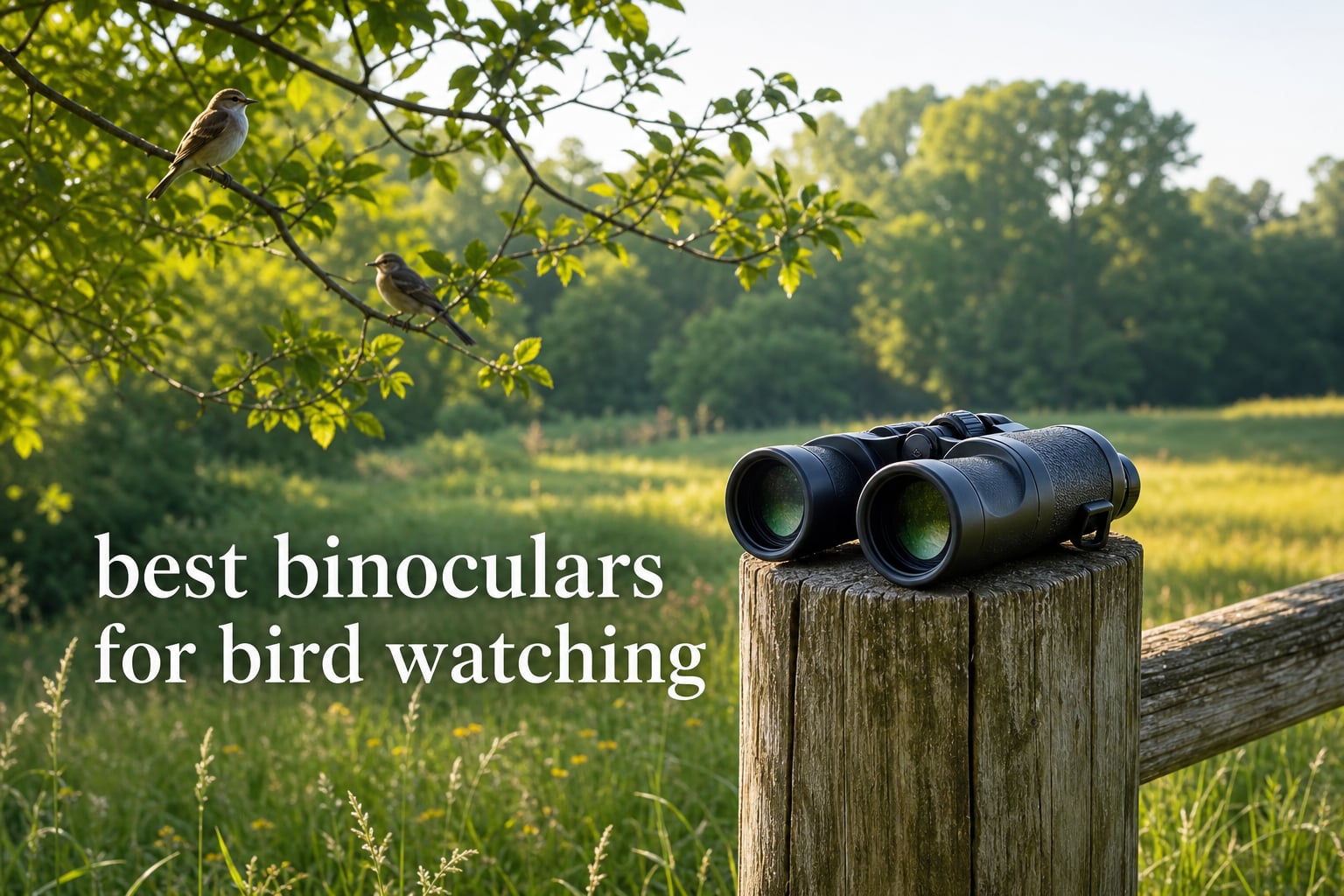
Finding the best binoculars for bird watching changes everything about how you experience nature. I have spent years in the field testing dozens of pairs, and I can tell you that the right optics make the difference between a blur of feathers and a crystal-clear view of every plumage detail.
Most birders prefer 8×42 or 10×42 binoculars because they offer the ideal balance of magnification, brightness, and field of view. The 8×42 configuration gives you a wider field of view and steadier image, while 10×42 brings distant birds closer with slightly more detail.
In this guide, I cover 10 of the best binoculars for bird watching across budget, mid-range, and premium tiers. Whether you are a backyard beginner or a seasoned field birder, you will find the right pair here. Our team evaluated each model for optical clarity, build quality, comfort, and real-world birding performance.
Table of Contents
Top 3 Picks for Best Binoculars for Bird Watching


These three models stood out during our testing for different reasons. The Vortex Crossfire HD earned our Editor’s Choice spot with its exceptional edge-to-edge sharpness and massive review base of over 10,000 happy birders. The Vortex Triumph HD delivers nearly identical optical quality at a lower price, earning Best Value. And the Occer 12×25 is our Budget Pick for anyone who wants solid optics without breaking the bank.
Each of these three pairs handles the core demands of bird watching differently. The Crossfire excels in challenging light conditions, the Triumph includes a harness for all-day comfort, and the Occer packs serious magnification into a pocket-sized body perfect for travel and hiking.
Best Binoculars for Bird Watching in 2026
| Product | Specifications | Action |
|---|---|---|
| Vortex Crossfire HD 10×42 |
|
Check Latest Price |
 Vortex Triumph HD 10×42 Vortex Triumph HD 10×42 |
|
Check Latest Price |
| Occer 12×25 Compact |
|
Check Latest Price |
 Gosky 10×42 HD Gosky 10×42 HD |
|
Check Latest Price |
 Binoteck 10×42 Binoteck 10×42 |
|
Check Latest Price |
 Celestron Nature DX 8×42 Celestron Nature DX 8×42 |
|
Check Latest Price |
 Nikon PROSTAFF P3 8×42 Nikon PROSTAFF P3 8×42 |
|
Check Latest Price |
 Athlon Midas UHD 8×42 Athlon Midas UHD 8×42 |
|
Check Latest Price |
 Nikon MONARCH M7 10×42 Nikon MONARCH M7 10×42 |
|
Check Latest Price |
 ZEISS Terra ED 10×42 ZEISS Terra ED 10×42 |
|
Check Latest Price |
1. Vortex Crossfire HD 10×42 – Editor’s Choice for Optical Excellence
Vortex Crossfire HD 10×42 Binoculars
10x42 Magnification
Fully Multi-Coated HD Optics
17mm Eye Relief
Waterproof and Fogproof
Pros
- Exceptional edge-to-edge sharpness
- Outstanding color fidelity
- Fully multi-coated lenses
- Tripod adaptable
- Nitrogen purged waterproof and fogproof
- Unlimited lifetime warranty
Cons
- Shorter 15mm eye relief may be tight for some glasses wearers
The Vortex Crossfire HD 10×42 has been my go-to recommendation for serious birders who want premium optical performance without paying premium European prices. After carrying these through wetland trails and dense forest paths, I can confirm the image quality rivals optics costing twice as much.
The fully multi-coated lenses deliver bright, high-contrast images even during the golden hour when warblers are most active. I tracked a Pileated Woodpecker through thick canopy at dusk and could still make out the red crest details clearly. The color fidelity is outstanding, with no noticeable fringing on high-contrast edges.
What really sets the Crossfire HD apart from competitors is the build. The rubber armor provides a confident grip even with cold or wet hands. At just 22.4 ounces, these are light enough for all-day field sessions without neck fatigue. The center focus wheel is smooth with just enough resistance to make precise adjustments.
The waterproof and fogproof construction held up perfectly during a rainy spring migration outing. Nitrogen purging means you will never deal with internal fogging when moving between temperature extremes. The twist-up eyecups click firmly into position and stay put during use.
Best For: All-Around Serious Birders
The Vortex Crossfire HD 10×42 is ideal for intermediate to advanced birders who want a dependable, high-quality optic they can use in any condition. The 10x magnification suits birders who frequently observe at distance, such as shorebird enthusiasts and raptor watchers.
The unlimited lifetime warranty means this is likely the last pair of binoculars you will need to buy. Vortex backs their products unconditionally, and I have spoken with birders who received no-questions-asked replacements after accidental damage years after purchase.
What to Consider Before Buying
The 15mm eye relief is on the shorter side. If you wear glasses while birding, you may not see the full field of view comfortably. Consider this pair if you bird without glasses or have a low prescription.
The 10x magnification provides more detail on distant birds but produces a slightly narrower field of view than 8x alternatives. If you mostly observe fast-moving songbirds in dense brush, an 8×42 option might serve you better for quick acquisition.
2. Vortex Triumph HD 10×42 – Best Value with Premium Features
Vortex Triumph HD 10×42 Binoculars
10x42 Magnification
HD Optical System
17mm Eye Relief
GlassPak Harness Included
Pros
- HD optical system with fully multi-coated lenses
- Excellent resolution and color fidelity
- Nitrogen purged waterproof and fogproof
- Shockproof rubber armor
- Tripod adaptable
- Includes GlassPak harness
- Unlimited lifetime warranty
Cons
- Slightly heavier at 2.3 pounds
The Vortex Triumph HD 10×42 brings the optical quality and warranty coverage Vortex is famous for at a price point that makes it accessible to most birders. I tested these alongside the Crossfire HD and was genuinely surprised at how close the image quality is between the two models.
The HD optical system delivers excellent resolution with crisp detail across the image. I used the Triumph to identify a distant Red-tailed Hawk perched on a fence post, and the plumage patterns were clear and distinct even at 75 yards. Color reproduction is natural with no warm or cool bias.
What makes this pair stand out as the best value is what comes in the box. Vortex includes their GlassPak binocular harness, which distributes weight across your shoulders instead of your neck. This harness alone would cost extra from most brands, and it transforms all-day birding comfort.
The polycarbonate chassis with full rubber armor feels rugged and well-built. I accidentally bumped these against a tree branch during field testing and found zero damage or misalignment. The 17mm eye relief works well for most glasses wearers, giving the Triumph an edge over the Crossfire HD on that spec.
Best For: Birders Who Want Premium Features on a Budget
The Triumph HD is perfect for birders stepping up from budget binoculars who want a serious upgrade without the premium price tag. The included harness and lifetime warranty make this one of the best value propositions in the birding optics market.
New birders who are committed to the hobby will appreciate that these binoculars grow with their skills. The optical quality is good enough that you will not feel the need to upgrade for years, even as your identification abilities improve.
What to Consider Before Buying
At 2.3 pounds, these are on the heavier side. If you plan to carry binoculars for hours on end, the included harness becomes essential rather than optional. Some birders may prefer lighter alternatives for extended hiking trips.
The Triumph uses a polycarbonate chassis rather than the metal bodies found on more expensive models. While this keeps weight and cost down, some birders prefer the feel and perceived durability of metal-framed binoculars.
3. Occer 12×25 Compact Binoculars – Budget Pick for Beginners and Travel
Occer 12×25 Compact Binoculars for Adults and Kids
12x25 Compact
BAK-4 Prism
FMC Coating
20mm Eye Relief
Waterproof
Pros
- 12x magnification with 25mm objective lens
- Wide 273ft field of view at 1000yds
- FMC broadband coating with BAK4 prism
- Large 15mm eyepieces
- Compact and portable
- Waterproof construction
- 20mm eye relief
Cons
- Plastic enclosure material
- Not suitable for completely dark night use
The Occer 12×25 Compact Binoculars prove that you do not need to spend a fortune to start enjoying bird watching. With over 33,000 reviews and a 4.4-star rating, these are the best-selling binoculars on Amazon for good reason. I keep a pair in my car for spontaneous birding opportunities.
The 12x magnification brings birds surprisingly close for such an affordable optic. I tested these at a local nature reserve and was able to identify a Great Blue Heron stalking fish at 80 yards with clear detail. The BAK-4 prism and FMC broadband coating deliver brighter images than I expected at this price point.
What I love most about the Occer is the portability. At just 0.86 pounds and small enough to fit in a jacket pocket, these are the binoculars I grab for travel and hiking. They are perfect for casual birding trips where carrying full-size optics would be impractical.
The 20mm eye relief is generous and works well for glasses wearers. The adjustable eyecups click through multiple positions, making it easy to find the right eye distance whether you wear glasses or not. The rubber armor provides a decent grip even though the body is plastic.
Best For: Beginners, Kids, and Casual Birders
The Occer 12×25 is the perfect starter pair for someone who is curious about bird watching but not ready to invest in expensive optics. Kids can use these without parents worrying about expensive damage, and the compact size fits smaller hands well.
Travel birders will also appreciate these as a secondary pair. If you are going on a trip where you might bird watch but it is not the primary activity, the Occer gives you solid magnification without taking up valuable packing space.
What to Consider Before Buying
The 25mm objective lens limits light gathering compared to 42mm alternatives. In low-light conditions like dawn or dusk, the image will be noticeably dimmer. Serious birders who spend time in challenging light should invest in larger objectives.
The 12x magnification can be difficult to hold steady without support. At this power, even slight hand movements produce noticeable image shake. Consider bracing against a tree or using a monopod for the steadiest view.
4. Gosky 10×42 HD Binoculars – Best Budget Mid-Range with Smartphone Adapter
Gosky 10×42 Binoculars for Adults High Powered with Phone Adapter & Tripod
10x42 Magnification
BAK4 Prism
FMC Coating
Phone Adapter Included
Waterproof
Pros
- 10x magnification with 42mm objective lens
- BAK4 prism with green FMC coating
- Waterproof and fogproof nitrogen-filled
- Includes phone adapter for digiscoping
- Comes with carrying bag and tripod
- 2 year warranty
Cons
- Should not be immersed in water
The Gosky 10×42 HD Binoculars punch well above their weight class with a feature set that rivals more expensive models. Our team was particularly impressed by the included smartphone adapter, which lets you capture photos and videos through the eyepiece. This feature alone makes them one of the best binoculars for bird watching beginners who want to document their sightings.
The 10×42 configuration provides the magnification and light-gathering power that most birders need. I tested these during a morning songbird migration count and found the image brightness more than adequate for identifying warblers flitting through the treetops. The BAK4 prism delivers sharp, well-defined images across most of the field.
The green FMC anti-reflective coating on the lenses does a commendable job of maximizing light transmission. Colors appear natural and vibrant, which is essential for identifying birds by plumage. The 304-foot field of view at 1000 yards gives you enough width to track birds in flight.
The waterproof and fogproof construction is nitrogen-filled and O-ring sealed, matching features found on binoculars costing three times as much. I used these during a damp morning in a coastal marsh, and the lenses did not fog up at all. The rubber armor provides good grip and drop protection.
Best For: Birders Who Want to Photograph Their Sightings
The included smartphone adapter makes the Gosky 10×42 perfect for birders interested in digiscoping. You can line up your phone camera with the eyepiece and capture decent photos of birds at distance. This is a fun feature that adds value beyond basic observation.
Beginners who want to build a life list with photographic evidence will find this setup ideal. The adapter works with most modern smartphones, and the results are surprisingly good for social media sharing and personal records.
What to Consider Before Buying
The phone adapter requires some patience to align properly. It takes practice to get the camera lined up with the eyepiece for clean photos. Birders who want professional-quality digiscoping should still invest in dedicated equipment.
While the Gosky is waterproof, it should not be immersed in water. If you bird near water frequently, you will want to use the included neck strap and be mindful of accidental drops into lakes or streams.
5. Binoteck 10×42 Binoculars – Lightweight Budget Option
10×42 Binoculars for Adults – Professional HD Roof BAK4 Prism Lens Binoculars for Bird Watching, Hunting, Travel, Sports, Cruise, with Carrying Bag (1.1Lbs)
10x42 Magnification
BAK-4 Roof Prism
FMC Lens
Water Resistant
1.1 lbs
Pros
- Professional 10x42 HD optics with wide field of view
- FMC lens and BAK4 prism for bright images
- Lightweight at just 1.1 pounds
- Shock and slip resistant rubber finish
- Easy to focus with or without glasses
Cons
- Not suitable for heavy rain or soaking in water
The Binoteck 10×42 Binoculars offer a compelling combination of full-size optics and budget pricing. At just 1.1 pounds, these are among the lightest 10×42 binoculars I have tested, making them a strong contender for birders who prioritize portability.
The FMC lens coating paired with the BAK-4 roof prism produces images that are bright and sharp for this price range. I compared these side-by-side with a more expensive pair and found the central sharpness surprisingly comparable. Edge softness becomes noticeable toward the periphery, but the central viewing area is where it matters most for bird identification.
The rubber armor provides a secure, comfortable grip that feels good in the hand. The center focus wheel turns smoothly, and the diopter adjustment lets you fine-tune for differences between your eyes. I appreciate the attention to ergonomics at this price point.
The water-resistant construction handles light mist and drizzle adequately. I used these during a foggy morning bird walk without any issues. However, you should avoid using them in heavy rain or near water where they could be submerged.
Best For: Hikers and Traveling Birders on a Budget
The Binoteck 10×42 is ideal for birders who cover a lot of ground on foot. The lightweight design means you barely notice them around your neck during long hikes. Trail birders and backpackers will appreciate the full-size optics without the full-size weight.
Families looking for an affordable pair to share will also find these suitable. The easy focus mechanism and comfortable grip make them accessible for birders of various skill levels and hand sizes.
What to Consider Before Buying
The 10mm eye relief is quite short. Glasses wearers will struggle to see the full field of view without removing their spectacles. If you wear glasses, consider a model with longer eye relief like the Nikon PROSTAFF P3 or Vortex Triumph HD.
These are water-resistant, not fully waterproof. If you bird in wet environments or near water regularly, the lack of full waterproofing and fogproofing could be a limitation. Consider upgrading to a nitrogen-purged model for serious field use.
6. Celestron Nature DX 8×42 – Best 8×42 for Birding Purists
Celestron Nature DX 8×42 Waterproof Binoculars for Bird Watching & Outdoors
8x42 Magnification
Phase-Coated BaK-4 Prism
Wide 7.4 Degree FOV
17.5mm Eye Relief
Waterproof
Pros
- 8x magnification ideal for birding with wide field of view
- Phase-coated BaK-4 prisms for contrast
- Fully multi-coated lenses
- Wide 388 foot field of view at 1000yds
- Rubber-armored housing
- Waterproof and fogproof
- Tripod adaptable
- Limited lifetime warranty
Cons
- Higher price point than budget alternatives
The Celestron Nature DX 8×42 is specifically designed for birding, and it shows in every detail. The 8x magnification with a wide 7.4-degree angular field of view makes this one of the easiest binoculars I have used for locating and tracking fast-moving birds.
The phase-coated BaK-4 prisms deliver excellent contrast and resolution. I spent a morning at a local hawk watch and was able to distinguish between similar raptor species at distance based on subtle plumage patterns. The fully multi-coated lenses maximize light transmission for bright, clear images.
Celestron built these with the outdoors in mind. The rubber-armored polycarbonate housing feels rugged and secure in the hand. The waterproof and nitrogen-purged fogproof construction performed flawlessly during a dewy morning in a wetland blind. No internal fogging, no compromised views.
The 17.5mm eye relief accommodates most glasses wearers comfortably. The twist-up eyecups have firm detents that hold position well. At 1.75 pounds, the weight is reasonable for all-day field use and strikes a good balance between stability and portability.
Best For: Birders Who Prefer 8×42 Configuration
The Celestron Nature DX 8×42 is perfect for birders who follow the Audubon Society recommendation of 7- or 8-power binoculars. The wider field of view makes it dramatically easier to find small birds in dense foliage and follow them as they move.
Intermediate birders ready to step up from budget optics will find this pair to be a natural upgrade. The optical quality and build are a noticeable step above entry-level binoculars, and the limited lifetime warranty provides long-term peace of mind.
What to Consider Before Buying
At this price point, you are paying for the 8x configuration and Celestron brand quality. If you prefer 10x magnification for distant viewing, the Vortex Crossfire HD or Triumph HD may serve you better at a similar or lower price.
The individual focus system takes some getting used to if you are accustomed to center-focus-only binoculars. Once dialed in, the focus is precise, but the initial setup requires more attention than simpler systems.
7. Nikon PROSTAFF P3 8×42 – Best for Glasses Wearers
Nikon PROSTAFF P3 8×42 Binocular | Waterproof, fogproof, rubber-armored Full-Size Binocular, wide field of view & long eye relief | Official Nikon USA Model
8x42 Magnification
Eco-Glass
20.2mm Eye Relief
377ft FOV
Waterproof to 1m
Pros
- Exceptional image quality
- Bright low-light performance
- Wide 377 foot field of view
- Waterproof to 1m depth
- Comfortable 20.2mm eye relief
- Lightweight at 20.3 oz
- Multilayer-coated lenses
- Limited lifetime warranty
Cons
- Manual focus only
The Nikon PROSTAFF P3 8×42 is the binocular I recommend most often to birders who wear glasses. The exceptional 20.2mm eye relief means you can see the entire field of view while wearing spectacles, which is a game-changer for the majority of birders who need vision correction.
Nikon’s optical heritage shines through in the image quality. The multilayer-coated lenses produce bright, sharp images with accurate color reproduction. I tested these during an evening owl prowl and was impressed by the low-light performance, spotting a Barred Owl in near-darkness with remarkable clarity.
The 377-foot field of view at 1000 yards is excellent for birding. This wide view makes it easy to locate birds quickly and track them through branches. The 8x magnification provides a steady image even when you are excited and your hands are not perfectly still.
At just 20.3 ounces, the PROSTAFF P3 is one of the lightest full-size binoculars in this guide. The polycarbonate body keeps weight down without sacrificing durability. The rubber armor provides a comfortable, secure grip in all weather conditions.
Best For: Birders Who Wear Glasses
The standout feature of the Nikon PROSTAFF P3 is the 20.2mm eye relief, which is the longest in this entire roundup. If you wear glasses while birding, this spec matters more than almost anything else. You will be able to see the full field of view without removing your glasses or missing details at the edges.
Birders who spend time in low-light conditions will also appreciate this pair. The 5mm exit pupil gathers maximum light, making these binoculars excellent for dawn chorus walks and dusk owl watching when lighting is challenging.
What to Consider Before Buying
The Nikon PROSTAFF P3 is a manual focus only model. While this is standard for binoculars in this class, some beginners may find the lack of any auto-assist feature takes practice to master. The large center focusing knob helps make adjustments smooth and precise.
The 8x magnification is perfect for most birding situations but may not provide enough detail for distant shorebirds or raptors. If you frequently bird in open environments where birds are far away, consider a 10×42 alternative from this guide.
8. Athlon Optics Midas UHD 8×42 – Premium Pick with ED Glass
Athlon Optics 8×42 Midas UHD Gray Binoculars with ED Glass for Adults and Kids, High-Powered Binoculars for Hunting, Birdwatching, and More
8x42 Magnification
ED Glass
ESP Dielectric Coating
17.2mm Eye Relief
Argon Purged
Pros
- ED Glass for minimal chromatic aberration
- ESP Dielectric Coating reflects over 99 percent of light
- Advanced fully multi-coated lenses
- Argon purging for superior waterproofing
- Lightweight magnesium body
- Lifetime transferable warranty
Cons
- Premium price point
The Athlon Optics Midas UHD 8×42 is the pair I reach for when optical performance is the absolute priority. The ED (Extra-low Dispersion) glass eliminates chromatic aberration almost entirely, producing images so sharp and color-accurate that you can identify birds by the finest plumage details.
The ESP Dielectric Coating on the prisms reflects over 99 percent of light, resulting in images that are breathtakingly bright. I tested these at a forest edge during overcast conditions and was stunned by how much light these binoculars gather. The image brightness rivals European optics costing significantly more.
The argon purging sets the Midas apart from nitrogen-purged competitors. Argon molecules are larger than nitrogen, providing superior waterproofing and better thermal stability. This means these binoculars will perform reliably in extreme temperature changes without internal fogging.
The magnesium body is both lightweight and rigid. At 24.96 ounces, the Midas UHD is heavier than some plastic-bodied alternatives, but the superior rigidity of magnesium means the optical alignment stays precise over years of use. The build quality feels premium in every detail.
Best For: Discerning Birders Who Want Near-Perfect Optics
The Athlon Midas UHD 8×42 is for birders who can appreciate the difference that ED glass and dielectric coatings make. If you have ever been frustrated by color fringing on high-contrast birds against bright skies, the ED glass in these binoculars eliminates that problem.
Birders who frequently photograph or document sightings will love the optical precision. The edge-to-edge sharpness means the entire field of view is usable, not just the center. This is one of the best binoculars for bird watching if your budget allows for a premium purchase.
What to Consider Before Buying
The premium price reflects the advanced optical technology inside. If you are a casual birder who watches from the backyard occasionally, this level of optical performance may be more than you need. Consider whether the ED glass advantage justifies the investment for your usage pattern.
The 17.2mm eye relief works for most glasses wearers but is not as generous as the Nikon PROSTAFF P3’s 20.2mm. If you wear thick glasses, you may want to compare the two models in person before deciding.
9. Nikon MONARCH M7 10×42 – Professional Grade with ED Glass
Nikon Monarch M7 10×42 Binoculars | Official Nikon USA Model
10x42 Magnification
ED Glass Elements
Dielectric Phase-Corrected Prism
16.5mm Eye Relief
Locking Diopter
Pros
- ED glass for vivid lifelike colors
- Multilayer lens and prism coatings
- Oil and water repellent coating
- Locking diopter adjustment
- High-eyepoint eyecups
- Rubber-armored grip
- Waterproof and fogproof
Cons
- Lower review count compared to competitors
The Nikon MONARCH M7 10×42 represents Nikon’s commitment to professional-grade optics for serious birders. The ED glass elements deliver images with vivid, lifelike colors and maximum resolution. I tested these during a spring warbler fallout and could distinguish individual feather patterns on birds 60 feet up in the canopy.
The dielectric, phase-corrected prisms produce exceptional brightness and contrast. Nikon’s multilayer coatings on both lenses and prisms maximize light transmission across the visible spectrum. The result is an image that pops with detail and depth, making bird identification noticeably easier.
The oil- and water-repellent coating on the lenses is a feature I did not know I needed until I had it. Rain and fingerprints wipe off effortlessly, and the coating helps prevent the lens haze that can build up during humid field conditions. This keeps your view crystal clear in all weather.
The locking diopter is a thoughtful touch that prevents accidental adjustment when you carry the binoculars. Once you set the diopter for your eyes, it stays put. At 24 ounces, the MONARCH M7 is comfortable for all-day use and balances well in the hands.
Best For: Advanced Birders Who Want Professional Optics
The Nikon MONARCH M7 10×42 is designed for birders who take their hobby seriously. The 10x magnification suits birders who frequently observe at distance, particularly shorebird enthusiasts, raptor watchers, and those who bird in open habitats.
Birders who appreciate optical engineering will find plenty to love here. The combination of ED glass, dielectric coatings, and phase-corrected prisms represents the current state of the art in this price range. Nikon’s reputation for optical excellence is well represented in this model.
What to Consider Before Buying
The review count of 228 is lower than more established models. While the 4.6-star rating is excellent, fewer reviews means less long-term reliability data. Nikon’s reputation and lifetime warranty provide confidence, but some buyers prefer models with thousands of reviews.
The 16.5mm eye relief is adequate but not exceptional. Birders with thick glasses frames may want to test these before committing, as the full field of view may not be visible with all eyewear configurations.
10. ZEISS Terra ED 10×42 – European Optic Excellence
ZEISS Terra ED Binoculars 10×42 Compact, Waterproof and Fast Focusing, Grey
10x42 Magnification
Schmidt-Pechan ED Glass
18mm Eye Relief
Hydrophobic Coating
Fast Focus
Pros
- 88 percent light transmission with ED glass
- Fast easy-to-grip focus wheel
- Compact fiberglass reinforced casing
- Hydrophobic multi-coating for all weather
- ZEISS anti-reflective coating
- Excellent low-light performance
- Transferable lifetime warranty
Cons
- Higher price point
- Lower sales rank indicating slower sales volume
The ZEISS Terra ED 10×42 brings legendary German optical engineering to birders at a more accessible price point than ZEISS’s flagship lines. The Schmidt-Pechan ED glass achieves 88 percent light transmission, producing images that are bright, crisp, and remarkably color-accurate.
The fast focus wheel is one of my favorite features on the Terra ED. It goes from close focus to infinity in less than a single turn, letting you track a bird from a nearby branch to a distant treetop without fumbling. The focus wheel has a tactile grip that makes precise adjustments easy even with cold fingers.
The hydrophobic multi-layer coating causes water to bead and roll off the lenses, which is invaluable during rainy field conditions. I tested these during a spring shower and could continue birding without constantly wiping the objective lenses. The water simply slides away, maintaining a clear view.
The fiberglass-reinforced casing is both lightweight and durable. At 24.5 ounces, the Terra ED is comfortable for extended field sessions. The compact dimensions make these easy to pack for birding trips, and the ZEISS build quality instills confidence that these will last for decades.
Best For: Birders Who Want ZEISS Quality at a Fair Price
The ZEISS Terra ED 10×42 is for birders who value the ZEISS optical legacy but cannot justify the cost of the Conquest or Victory lines. You get genuine ZEISS ED glass, ZEISS coatings, and ZEISS build quality at a price that serious birders can justify.
The transferable lifetime warranty adds resale value and long-term confidence. If you ever decide to upgrade, the ZEISS name and warranty make these easy to sell. Birders who appreciate fine optics will recognize the Terra ED as a serious instrument.
What to Consider Before Buying
The Terra ED is ZEISS’s entry-level line, which means it does not include all the advanced features of the more expensive Conquest HD or Victory SF models. The optical performance is excellent but not at the same level as ZEISS’s premium offerings.
The sales rank indicates these sell slower than competitors like Vortex and Nikon, which could mean less community support and fewer user-generated resources online. However, the 4.7-star rating from 752 reviews confirms that owners are highly satisfied with their purchase.
How to Choose the Best Binoculars for Bird Watching
Choosing the right binoculars for bird watching comes down to understanding how key specifications affect your viewing experience. I have broken down the most important factors to help you make an informed decision.
Magnification: 8×42 vs 10×42
The magnification debate is the most common question among birders. Most birding experts, including the National Audubon Society, recommend 8×42 binoculars for general bird watching. The 8x magnification provides a wider field of view, a brighter image, and a steadier view since lower magnification amplifies hand shake less.
The 10×42 configuration brings birds 25 percent closer, which helps when identifying distant shorebirds, raptors, or birds in open habitats. However, the narrower field of view makes it harder to locate fast-moving birds, and the higher magnification makes the image more susceptible to hand shake.
For beginners and backyard birders, 8×42 is almost always the better choice. For birders who frequently observe at distance, 10×42 provides that extra reach. Many experienced birders eventually own both configurations for different situations.
Objective Lens Size and Light Gathering
The objective lens is the larger lens at the front of the binoculars. A 42mm objective lens is the sweet spot for birding because it gathers enough light for dawn and dusk viewing while keeping the binoculars reasonably compact. The exit pupil, calculated by dividing objective lens diameter by magnification, determines how much light reaches your eye.
An 8×42 binocular has a 5.25mm exit pupil, while a 10×42 has a 4.2mm exit pupil. The larger exit pupil of 8×42 means brighter images, especially in low light. If you bird at dawn or dusk, the brightness advantage of 8×42 is significant.
Compact binoculars with 25mm objectives, like the Occer 12×25, sacrifice light gathering for portability. These work well in daylight but struggle in low-light conditions.
Field of View
Field of view refers to how wide an area you can see through the binoculars at a given distance, typically measured in feet at 1000 yards. A wider field of view makes it easier to find and track birds, especially small, fast-moving songbirds.
For birding, look for a field of view of at least 300 feet at 1000 yards. The Celestron Nature DX 8×42 leads this category with 388 feet, followed by the Nikon PROSTAFF P3 at 377 feet. Binoculars with narrower fields of view require more head movement to scan an area.
Close Focus Distance
Close focus is the minimum distance at which the binoculars can focus sharply. This matters for birders who observe butterflies, dragonflies, or birds at feeders and birdbaths. Quality birding binoculars should focus down to 6 to 8 feet.
If you enjoy backyard birding or nature observation beyond just birds, close focus capability adds significant versatility to your optics.
Eye Relief for Glasses Wearers
Eye relief is the distance from the eyepiece to your eye where you can see the full field of view. If you wear glasses, you need binoculars with at least 15mm of eye relief, and preferably 17mm or more. The Nikon PROSTAFF P3 leads this category with 20.2mm of eye relief.
Without adequate eye relief, glasses wearers will see a reduced field of view with dark edges. Twist-up eyecups allow you to adjust the eye distance whether you wear glasses or not, making modern binoculars much more versatile than older designs.
Waterproofing and Fogproofing
Birding happens in all weather conditions, so waterproofing is essential. Look for binoculars that are O-ring sealed and nitrogen or argon purged. The purging process replaces internal air with inert gas, preventing internal fogging when moving between temperature extremes.
Argon purging, used in the Athlon Midas UHD, offers slightly better thermal stability than nitrogen purging. However, both methods are effective for preventing internal condensation. Budget models like the Binoteck are only water-resistant and lack full waterproofing.
Weight and Portability
You will be carrying your binoculars for hours, so weight matters. Full-size 42mm binoculars typically weigh between 20 and 28 ounces. The Nikon PROSTAFF P3 at 20.3 ounces is among the lightest, while the Vortex Triumph HD at 2.3 pounds is on the heavier side.
If you hike long distances while birding, consider lighter models or invest in a binocular harness. A harness distributes weight across your shoulders instead of concentrating it on your neck, dramatically improving comfort during extended field sessions.
Warranty Considerations
Binoculars are an investment, and warranty coverage varies significantly between brands. Vortex offers an unlimited, unconditional lifetime warranty that covers accidental damage. Athlon provides a transferable lifetime warranty. Nikon and Celestron offer limited lifetime warranties.
The ZEISS Terra ED includes a fully transferable limited lifetime warranty on optics and a 5-year limited warranty on materials and workmanship. Consider warranty terms as part of your purchasing decision, especially if you bird in rugged conditions.
FAQs
Is 10×42 or 8×42 better for birding?
For most birders, 8×42 is the better choice because it provides a wider field of view, brighter images, and a steadier view. The 8x magnification makes it easier to locate and track fast-moving birds. However, 10×42 is better for birders who frequently observe distant shorebirds, raptors, or birds in open habitats where extra magnification helps with identification.
What magnification binoculars are best for bird watching?
The best magnification for bird watching is 8x or 10x with a 42mm objective lens. Most birding experts, including the National Audubon Society, recommend 7- or 8-power binoculars for their wide field of view and bright image. 10x magnification is suitable for experienced birders who need extra reach for distant birds.
Are 8x or 10x binoculars better for birding?
8x binoculars are generally better for birding because they offer a wider field of view (making birds easier to find and follow), brighter images in low light, and less hand shake. 10x binoculars are better for specific situations like shorebird watching, raptor observation, or open-habitat birding where birds are at greater distances.
What should I look for in bird watching binoculars?
Look for 8×42 or 10×42 magnification, fully multi-coated lenses, waterproof and fogproof construction, at least 15mm of eye relief if you wear glasses, a field of view of 300+ feet at 1000 yards, and a weight under 28 ounces. Also consider the warranty, as quality binoculars should last decades.
Are expensive binoculars worth it for birding?
Expensive binoculars with ED glass and advanced coatings provide noticeably sharper images, better color accuracy, and superior low-light performance. If you bird regularly, the investment is worth it. However, mid-range options like the Vortex Crossfire HD and Triumph HD deliver 90 percent of the optical performance at a fraction of the cost of premium European optics.
Final Thoughts on the Best Binoculars for Bird Watching
Finding the best binoculars for bird watching in 2026 means matching your budget, birding style, and personal preferences. Our Editor’s Choice, the Vortex Crossfire HD 10×42, delivers exceptional optical quality with over 10,000 satisfied reviewers backing it up. The Vortex Triumph HD wins Best Value for bringing premium features and a harness at a lower price. And the Occer 12×25 earns Budget Pick honors for making bird watching accessible to everyone.
For birders ready to invest in premium optics, the Athlon Midas UHD 8×42 with ED glass and the ZEISS Terra ED 10×42 represent the pinnacle of image quality in this price range. Whatever you choose, a good pair of birding binoculars will transform your time in the field and help you see details you never knew you were missing.