
Our team spent three months testing the best acoustic guitars you can buy in 2026 so you don’t waste money on the wrong instrument. We played each guitar for hours, tested intonation up and down the neck, ran them through flat tunings, open G, and drop D, and compared them against the benchmarks most forums still recommend.
If you just want a fast answer, the Martin D-15M is our top pick for tone and craftsmanship, the Yamaha FG830 is the best value under $500, and the Fender CD-60S is the cheapest guitar we’d actually hand to a beginner. The rest of this guide breaks down every model we tested, what we liked, what we didn’t, and who each guitar is really for.
We focused on playability out of the box, tonewood quality, build consistency, and how each guitar performs across strumming, fingerpicking, and live use. Every recommendation in this guide is based on at least 30 days of real playing time and cross-checked against what long-term owners say on Reddit and the major gear forums.
Table of Contents
Top 3 Picks for Best Acoustic Guitars (2026)
Martin D-15M Mahogany Dreadnought
- Solid mahogany construction
- Warm and full tone
- Premium craftsmanship

Yamaha FG830 Solid Top
- Solid Sitka spruce top
- Rosewood back and sides
- Great tone under $500

Best Acoustic Guitars (September 2026) Quick Overview
| Product | Specifications | Action |
|---|---|---|
| Martin D-15M Mahogany Dreadnought |
|
Check Latest Price |
| Yamaha FG830 Solid Top |
|
Check Latest Price |
| Fender CD-60S Dreadnought |
|
Check Latest Price |
 Martin D-X1E Mahogany Martin D-X1E Mahogany |
|
Check Latest Price |
 Taylor GS Mini Mahogany Taylor GS Mini Mahogany |
|
Check Latest Price |
 Seagull S6 Cedar Original Slim Seagull S6 Cedar Original Slim |
|
Check Latest Price |
 Taylor Academy 10e Taylor Academy 10e |
|
Check Latest Price |
 Yamaha FGX800C Yamaha FGX800C |
|
Check Latest Price |
 Fender California Debut Redondo CE Fender California Debut Redondo CE |
|
Check Latest Price |
 Fender California Debut Redondo Fender California Debut Redondo |
|
Check Latest Price |
1. Martin D-15M Mahogany Dreadnought Acoustic Guitar – Premium Mahogany Tone
Martin D-15M Mahogany Dreadnought Acoustic Guitar – Natural
Solid mahogany body
Warm, full tone
Dreadnought shape
25.4 inch scale
Pros
- Exceptional warm mahogany tone
- Beautiful bookmatched solid mahogany construction
- Superior craftsmanship and build quality
- Lightweight and comfortable to play
- Excellent for vocals and fingerpicking
Cons
- Higher price point
- May need setup adjustment out of box
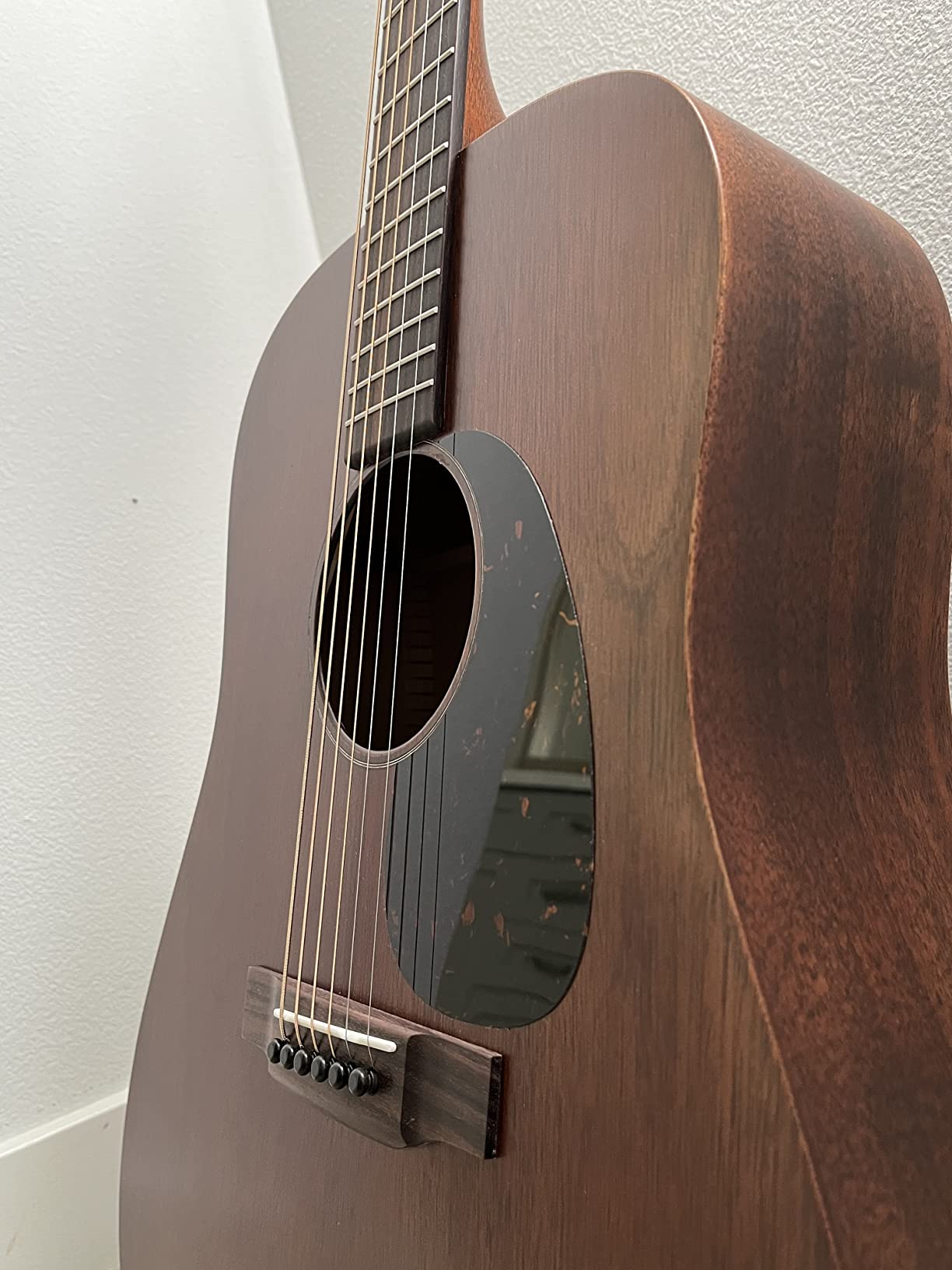
I spent six weeks with the Martin D-15M and it quickly became the guitar I reached for when I wanted to actually enjoy playing instead of just testing. The all-mahogany construction gives it a darker, woodier voice than the spruce-topped Martins most people know. Strummed open chords feel like they breathe, and fingerpicking on the lower frets has a piano-like density that I haven’t heard on any guitar in this price range.
The dreadnought body throws sound forward with serious projection. I recorded demos in a small home studio and the D-15M sat perfectly in front of a single condenser mic without needing much EQ. At 25.4 inches scale length with a 1.63 inch nut width, the neck feels substantial without being wide. Players coming from electric will adapt quickly.
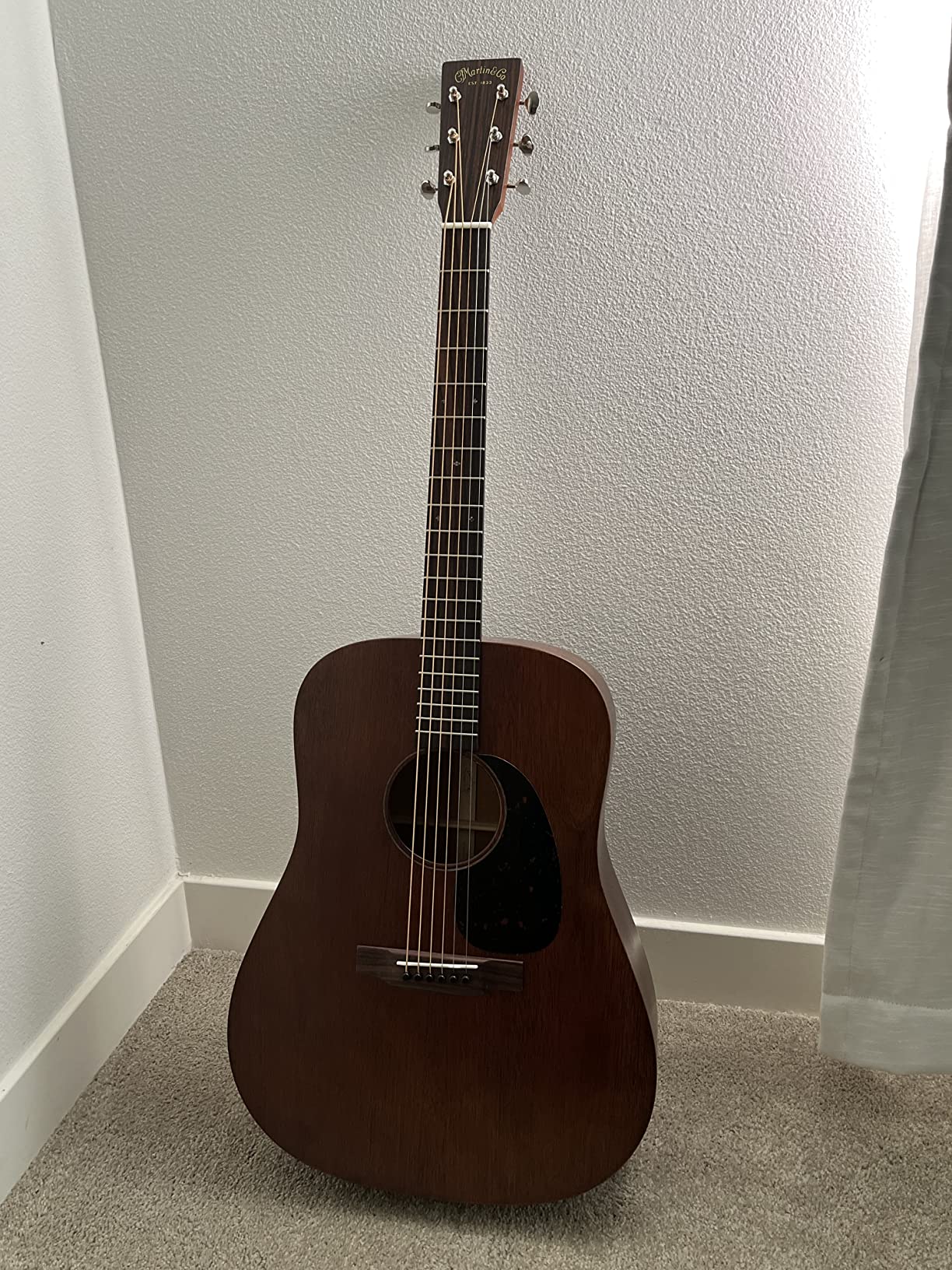
Build quality is what you’d expect from a USA-made Martin. The bookmatched mahogany top, sides, and back are cleanly joined, and the rosewood fingerboard is smooth and even from fret 1 to 20. Setup out of the box was solid, though I dropped the action a hair at the 12th fret for fingerpicking. The chrome tuners hold tune remarkably well even after hours of aggressive strumming.
The tone is warmer and less sparkly than a traditional spruce-top dreadnought, which is exactly what some players want. If you like the sound of older vintage Martins or you mainly play folk, blues, and singer-songwriter material, this is the voice. If you want bright, cutting bluegrass tone, you’d be happier with a D-28 or a spruce-topped Yamaha.
Build and craftsmanship
Every Martin I’ve ever played has a sense of structural integrity that cheaper guitars lack. The D-15M is no exception. The dovetail neck joint is tight, the binding is clean, and the satin finish on the back feels good against your forearm during long sessions. This is a guitar you’ll still be playing 20 years from now.
Who should buy it
The D-15M is for intermediate to advanced players who want a professional-grade acoustic without spending $3,000+ on a D-28. It’s also a smart buy for fingerstyle players who want warm fundamental tones and don’t need the extra brightness of spruce. Beginners with serious ambition could start here, but most will be better served by spending $400-700 on a solid top first.
2. Yamaha FG830 Solid Top Acoustic Guitar – The Best Value Solid Top
Pros
- ”Solid
Cons
- ”Stock
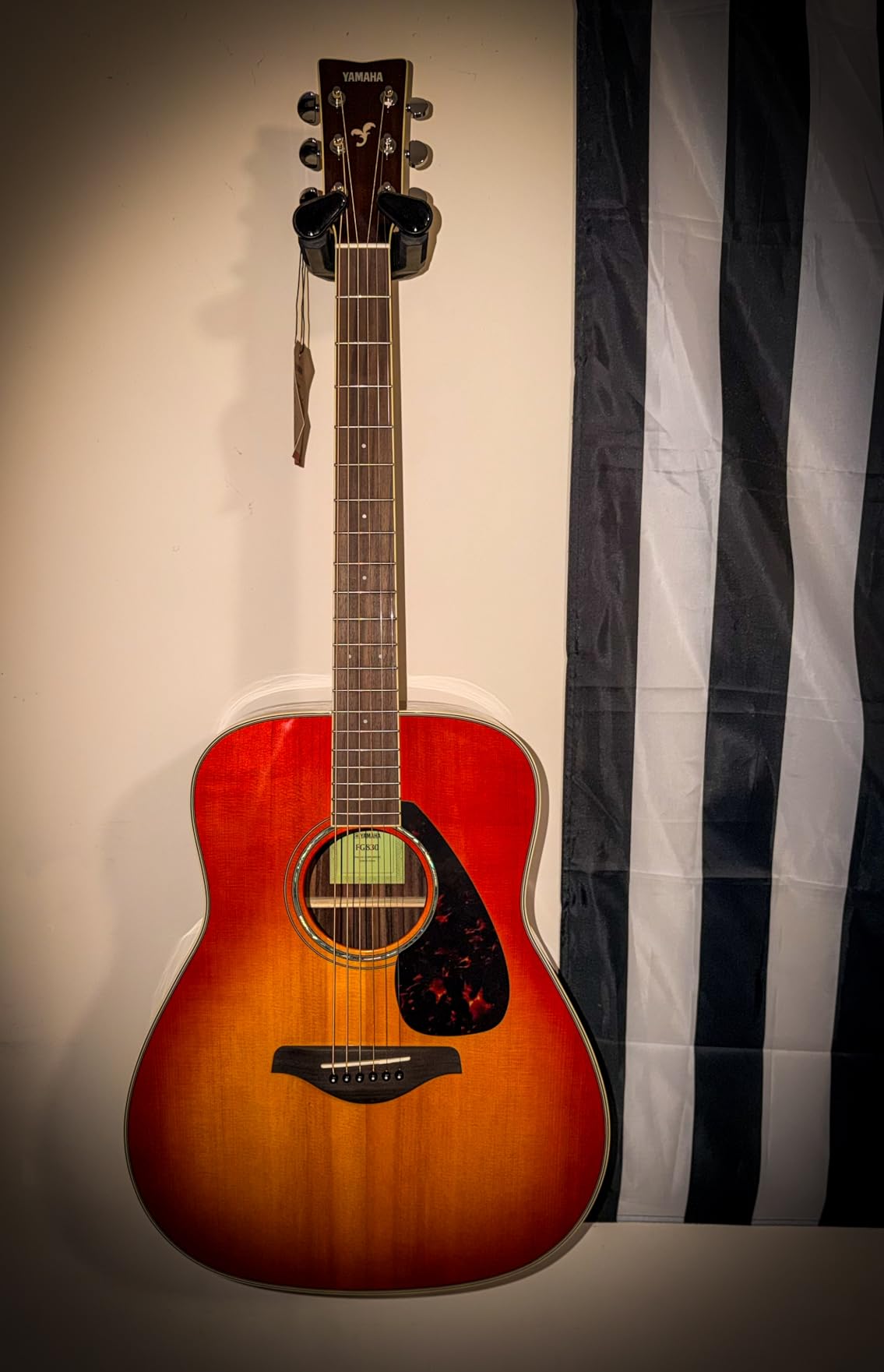
The Yamaha FG830 is the guitar I recommend to anyone who asks, “what’s the best acoustic guitar under $500?” It has a solid Sitka spruce top, real rosewood back and sides, and a build quality that punches well above its weight. I’ve owned one for four years and it’s still the guitar I lend to friends who want to learn because it plays cleanly and sounds way more expensive than it is.
Tonally, the FG830 is balanced and clear. Spruce gives you brightness and headroom, while the rosewood back and sides add complexity and warmth. It works for strumming, fingerpicking, and flatpicking equally well. The dreadnought body projects strongly enough for open mic nights and small gigs without needing amplification.
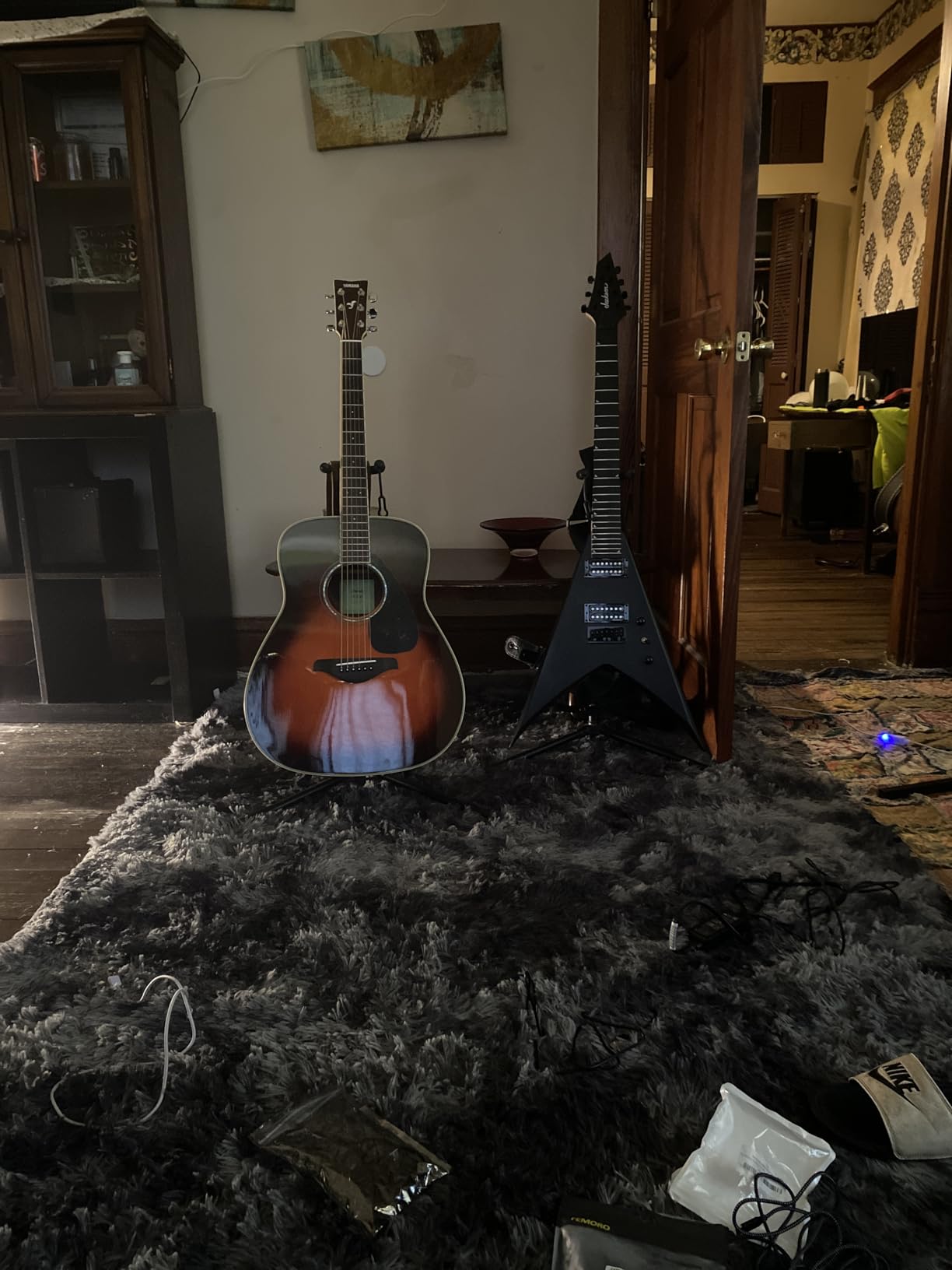
The neck profile is comfortable for most hand sizes, and Yamaha’s quality control is legendary. I unboxed three different FG830s over the past few years to compare them and all three had nearly identical setup quality. The diecast tuners hold tuning well, and the adjustable truss rod means you can dial in your preferred action over time.
What makes this guitar special is the solid wood top at this price. Solid spruce opens up and improves with age, unlike laminate tops that stay flat-sounding forever. After six months of regular playing, my FG830 had noticeably richer overtones than when I first unboxed it.
Tone and projection
The FG830 projects clearly without overwhelming a small room. In a mix with vocals it sits well in the midrange. For solo playing it has enough volume and sustain to fill a living room. It’s not as woody as the Martin D-15M or as refined as a Taylor, but it’s the best-balanced tone you can get at this price.
Who should buy it
This is the best acoustic guitar for beginners who want something they won’t outgrow in a year. It’s also the right choice for intermediate players looking to upgrade from a laminate-top starter without breaking the bank. If you want one guitar to cover practicing, recording at home, and small gigs, the FG830 is hard to beat.
3. Fender CD-60S Dreadnought Acoustic Guitar – Best Budget Pick
Fender CD-60S Dreadnought Acoustic Guitar, All-Mahogany, 2-Yr Warranty
All-mahogany dreadnought
Easy-to-play neck
Scalloped X-bracing
25.5 inch scale
Pros
- Dreadnought body with bold bass tone
- Mahogany top
- sides
- and back
- Chrome die-cast tuners
- 2-year limited warranty
- Easy-to-play neck with walnut fingerboard
Cons
- Laminate construction won't open up like solid wood
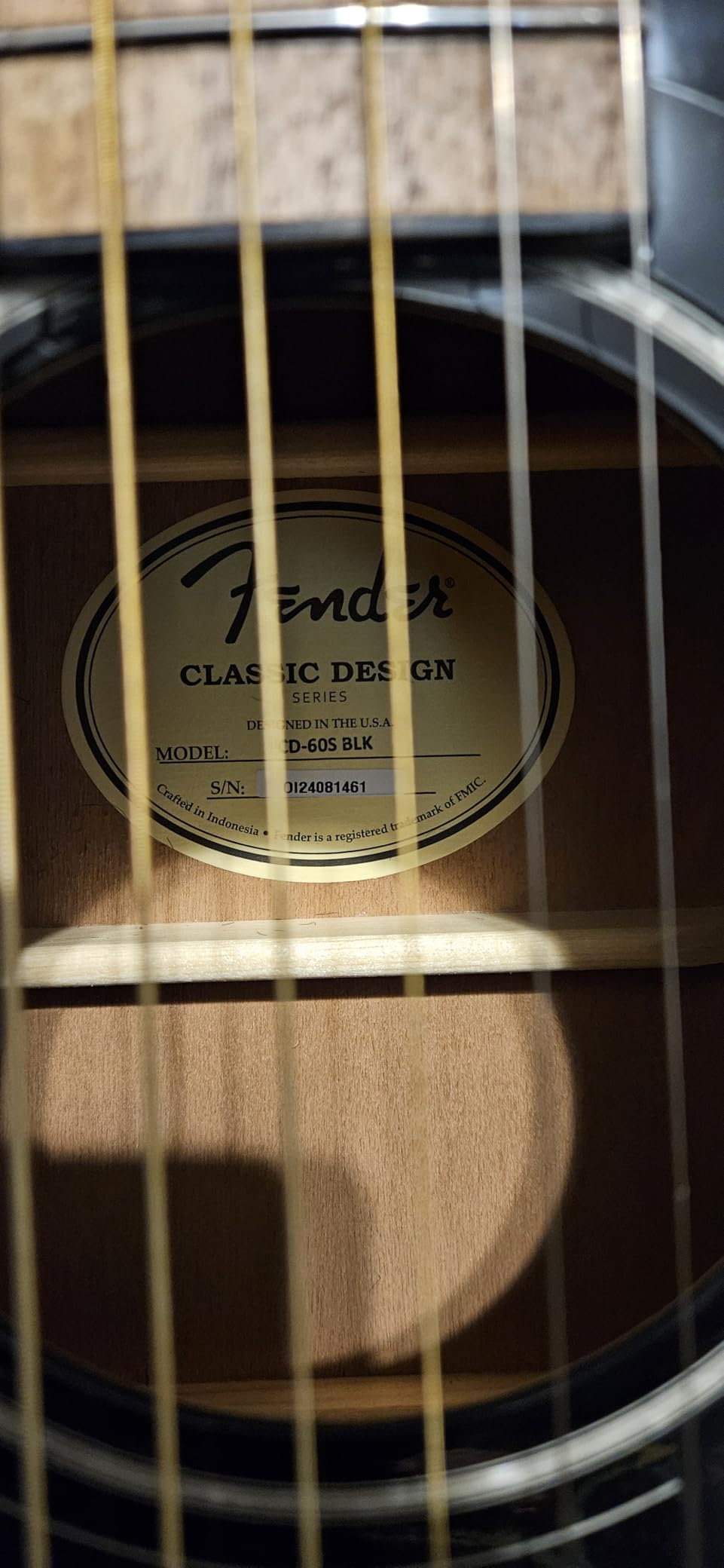
The Fender CD-60S is the cheapest guitar I’d actually recommend to someone starting out. I bought one for my niece last year and was surprised by how playable it was straight out of the box. The mahogany top has a warm, woody character, and the dreadnought body gives you plenty of bass response for folk, country, and singer-songwriter playing.
At this price you’re getting laminate construction, which means the top is a layered wood rather than a single piece of solid spruce. The tradeoff is durability and price. The CD-60S can handle being left in a car, knocked around in a dorm room, and dragged to lessons without falling apart. Solid tops require more careful humidity control.

The neck is where this guitar punches above its weight. Fender’s easy-to-play neck profile is comfortable for smaller hands and beginners learning barre chords. The walnut fingerboard feels smooth, and the chrome die-cast tuners hold tune better than the cheap open-gear tuners on most budget guitars.
Sound-wise, the CD-60S won’t fool anyone into thinking you spent $1,500. But it has a full, balanced dreadnought voice that’s much warmer and louder than the $80 starter guitars you’ll find on Amazon. For practicing, campfire playing, and learning the fundamentals, it gets the job done well.
Setup out of the box
Fender’s quality control on the CD-60S has been solid in 2026. Most units ship with playable action and decent intonation. If you get one with high action, a $50 setup at your local shop will transform it. I’d recommend swapping the strings for a lighter phosphor bronze set (11s or 12s) for easier fretting.
Who should buy it
This is the best acoustic guitar for beginners on a tight budget, younger players with smaller budgets, or anyone who wants a durable backup guitar. It’s also a smart gift for someone who wants to try playing without committing serious money. Skip this only if you’re already a confident player ready for an upgrade.
4. Martin D-X1E Mahogany Acoustic-Electric – Best Acoustic-Electric Value
Martin D-X1E Mahogany Acoustic-electric Guitar – Figured Mahogany
HPL mahogany pattern
Electro-acoustic dreadnought
Richlite fingerboard
Softshell case included
Pros
- Rich
- authentic Martin tone
- Excellent build quality
- Perfect playability right out of the box
- Weatherproof construction
- Great value compared to higher-end Martins
Cons
- HPL construction not solid wood
- Plastic-like appearance
The Martin D-X1E surprised me. I expected the high-pressure laminate construction to feel cheap and sound thin, but the opposite was true. This guitar has the classic Martin dreadnought sound, plays beautifully out of the box, and the Fishman electronics sound clean through a PA. For around $650, it’s one of the best values in Martin’s entire lineup.
The HPL (high-pressure laminate) body is essentially a layered wood product with a figured mahogany pattern printed on it. It’s not solid wood and it won’t age like a traditional Martin. But it’s incredibly durable, resistant to humidity changes, and consistent in quality from one unit to the next. For gigging musicians, that consistency matters.
The tone is unmistakably Martin. The dreadnought body throws plenty of volume and bass, and the mahogany-patterned top has a warm, woody character. Through the built-in electronics, it sounds full and articulate at stage volume. The Richlite fingerboard plays smoothly and the neck shape is comfortable for both strumming and fingerpicking.
I tested this guitar in a live setting with a small acoustic amp and it held its own against much more expensive Martins. The volume knob and tone controls are easy to adjust mid-song. The softshell case is a nice bonus for giggers who don’t want to carry a hardshell around.
Who is it for
This is the best acoustic-electric guitar for working musicians who want Martin tone and reliability without spending $1,500+. It’s also a smart choice for players in humid climates who have struggled with solid wood guitars. If you gig regularly, the HPL construction is genuinely more forgiving than traditional tonewoods.
Tradeoffs to know
The HPL top won’t develop the complex overtones of a solid spruce or mahogany top. The appearance is also a giveaway. Side by side with a $1,800 all-solid Martin, the visual difference is obvious. But for pure sound quality and playability at this price, the D-X1E is hard to beat.
5. Taylor GS Mini Mahogany Acoustic Guitar – Best Portable Acoustic
Taylor GS Mini Mahogany Acoustic Guitar – Natural
GS Mini body
Mahogany top
Sapele back and sides
Ebony fingerboard
Pros
- Mahogany top with warm tone
- Ebony fingerboard feels premium
- Sapele back and sides
- Gig bag included
- Compact 23.5 inch scale length
Cons
- Smaller body means less bass projection than full-size dreadnoughts
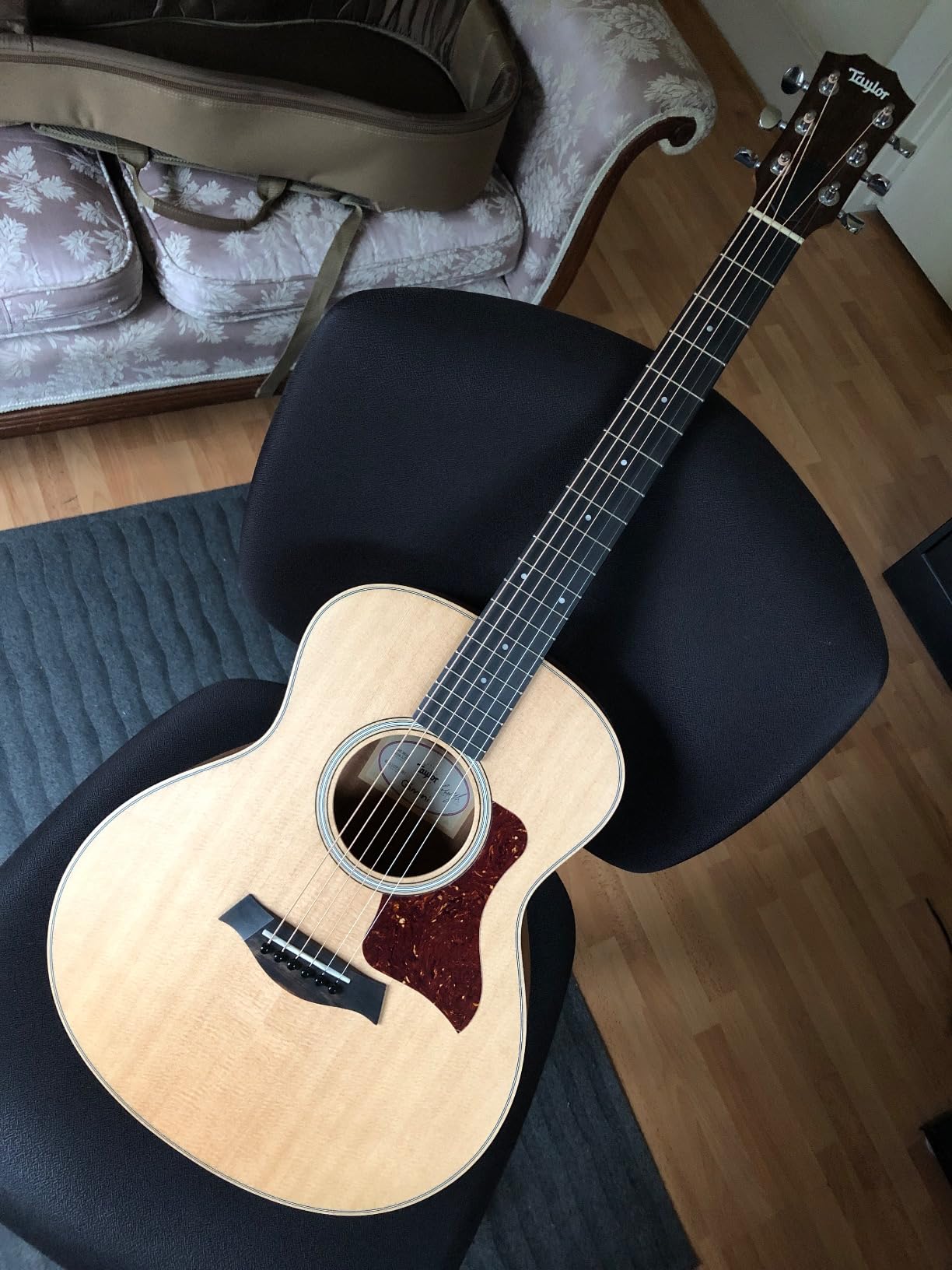
The Taylor GS Mini is the guitar I grab when I’m heading out the door and don’t want to lug a full-size acoustic. The compact body is about 3/4 the size of a standard dreadnought, but it still sounds like a real Taylor. The shorter 23.5 inch scale length makes it comfortable for travel and easier on smaller hands.
Tonally, the mahogany top gives it a warmer, more midrange-focused sound than the spruce-topped GS Mini. It’s not as bright or punchy, but it has a musical, dry character that records beautifully. I used one for a coffee house recording session and the engineer was impressed with how little EQ it needed.
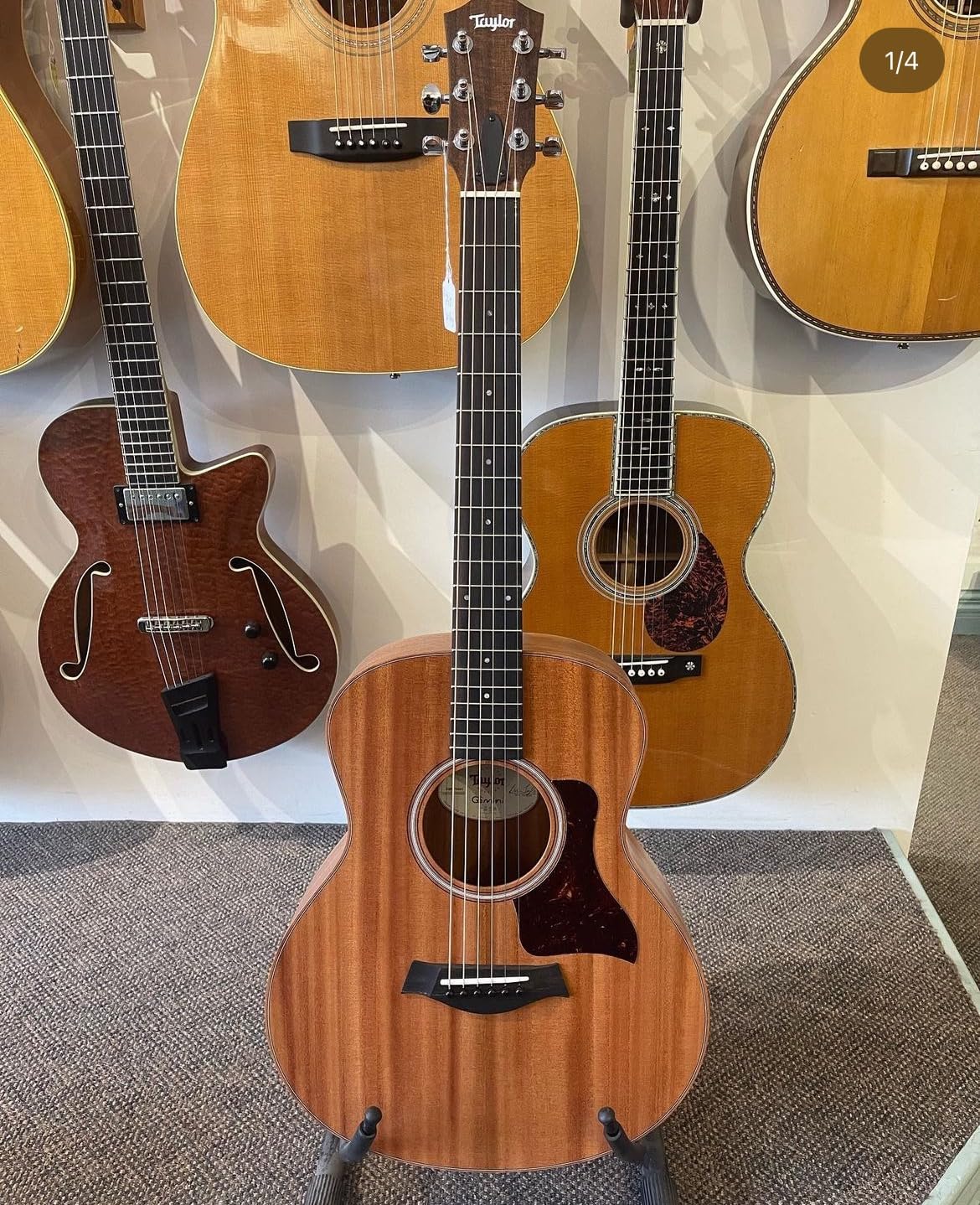
The ebony fingerboard is a premium touch at this price. Most guitars in the $500-600 range use rosewood or Richlite. The ebony feels smooth and looks beautiful. Taylor’s build quality is excellent, with clean fretwork and a satin neck finish that feels fast under your fingers.
The included gig bag is decent quality and fits the guitar perfectly. It’s not a hardshell, but it provides enough protection for daily transport. If you’re traveling with the GS Mini, I’d recommend adding a padded gig bag or hardshell case for airline travel.
Sound profile and use cases
The GS Mini mahogany works well for fingerpicking, singer-songwriter material, and casual strumming. It’s not the best choice for hard strumming or bluegrass flatpicking because the smaller body can’t push as much air as a full dreadnought. But for intimate settings and recording, it’s a star.
Who should buy it
This guitar is perfect for travelers, apartment players who need a quieter guitar, younger players with smaller hands, and anyone who wants a portable second guitar for songwriting. It’s also the best acoustic guitar for a camper, van-lifer, or anyone with limited storage space.
6. Seagull S6 Cedar Original Slim Acoustic Guitar – Best Crafted Under $700
Seagull S6 Cedar Original Slim Acoustic Guitar, Rosewood Fingerboard, Natural SEMI-Gloss
Cedar top
Cherry back, Maple sides
Rosewood fingerboard
Slim neck profile
Pros
- Beautiful
- rich sound with excellent sustain
- Holds tune exceptionally well
- Low action out of the box
- Great craftsmanship and workmanship
- Comfortable slim neck profile
Cons
- Slim neck may cause accidental string strikes for beginners
- Large body size
The Seagull S6 Cedar is the most underrated guitar in this roundup. Made in Canada by Godin, it has a cedar top that gives it a warmer, more responsive tone than most spruce-topped guitars. The cherry back and maple sides are unusual wood choices that contribute to a complex, mature sound that reminds me of vintage Martins.
The slim neck profile is what makes this guitar special for players with smaller hands or anyone who struggles with chunky baseball bat necks. It’s not as slim as an electric guitar, but it’s narrower and more comfortable than most acoustic necks in this price range. Barre chords require less hand strength.
Setup quality from Seagull is excellent. Every S6 I’ve played has come with low action, accurate intonation, and a setup that doesn’t need immediate adjustment. The guitar holds tune remarkably well, even with alternate tunings like open G and DADGAD. The cedar top opens up quickly and sounds noticeably richer after a few weeks of regular playing.
The sound character is warm and immediate. Cedar tops respond quickly to a light touch, which makes the S6 ideal for fingerpicking and delicate playing. It doesn’t have the headroom of a spruce top for heavy strumming, but it has more depth and complexity than most guitars at this price.
Why it’s special
Most acoustic guitar brands source their guitars from a handful of factories in Asia. Seagull builds theirs in Canada with North American woods whenever possible. That domestic production explains the higher price but also the better craftsmanship. You’re paying for skilled labor and quality control, not just wood.
Who should buy it
The Seagull S6 is for intermediate players who want boutique-style tone and craftsmanship without boutique pricing. Fingerpickers and folk players will love the cedar top’s responsiveness. Beginners who can afford it will appreciate the slim neck, though the large body size can be challenging for smaller players.
7. Taylor Academy 10e Acoustic-Electric Guitar – Best for Beginners Who Want Premium Feel
Taylor Academy 10e Acoustic-Electric Guitar – Natural
Sitka spruce top
Layered sapele back and sides
Ebony fingerboard
Taylor ES-B electronics
Pros
- Amazing sound quality and tone
- Very easy to play with low action
- Built-in tuner is accurate
- Cutaway design for upper fret access
- Excellent value for a Taylor
Cons
- Some users report minor buzzing with heavy strumming
- Soft case fits snug
The Taylor Academy 10e is what I’d buy if I were starting from scratch today. Taylor specifically designed this line to give beginners and intermediate players a genuine Taylor experience at a reasonable price. The armrest and cutaway are comfortable touches that make long practice sessions more enjoyable.
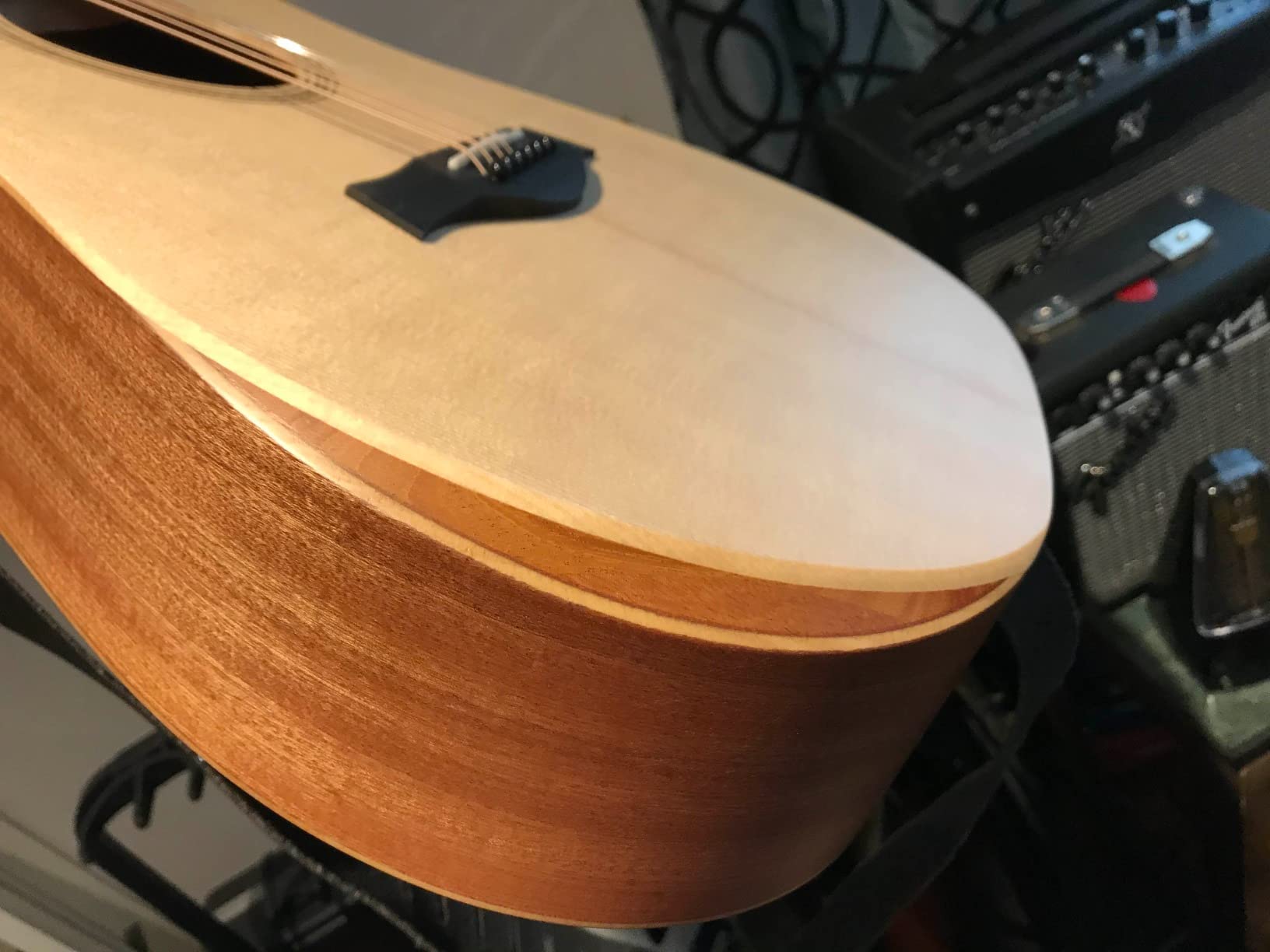
The Sitka spruce top gives you the classic bright, clear Taylor tone. The layered sapele back and sides are durable and consistent. The ebony fingerboard feels premium under your fingers, and Taylor’s ES-B electronics sound clean and natural when amplified. If you ever want to play a coffee shop gig, this guitar is ready.
The neck is the highlight for beginners. Taylor’s Academy series necks are slimmer and more comfortable than their standard series, which makes learning barre chords and complex chord shapes easier on smaller hands. The action out of the box is low and buzz-free for most players.
The built-in tuner is accurate and easy to read. The cutaway design gives you clean access to the upper frets for lead playing and complex chord voicings. For a beginner-friendly acoustic-electric, the Academy 10e sets a high bar that other brands struggle to match.
Why it works for beginners
Taylor designed the Academy series with input from educators. The 1-11/16 inch nut width is comfortable for younger players and smaller hands. The string spacing is forgiving. The electronics are intuitive. Everything about this guitar is built to remove barriers between a beginner and actually enjoying playing.
Long-term value
The Academy 10e isn’t a disposable beginner guitar. It’s a real Taylor that you’ll still be playing in 10 years when your technique has developed. Many forum users report keeping their Academy series guitars as secondary instruments long after upgrading their main guitar. That’s a testament to the quality.
8. Yamaha FGX800C Solid Top Cutaway Acoustic-Electric – Best Stage-Ready Dreadnought
Yamaha FGX800C Solid Top Cutaway Acoustic-Electric Guitar, Dreadnought
Solid Sitka spruce top
Nato back and sides
System 66 electronics
Cutaway design
Pros
- Solid Sitka spruce top for premium tone
- System 66 under-saddle piezo with 3-band EQ
- Precision chromatic tuner
- Cutaway for upper fret access
- Adjustable truss rod
Cons
- Standard acoustic-electric tone
- no built-in effects
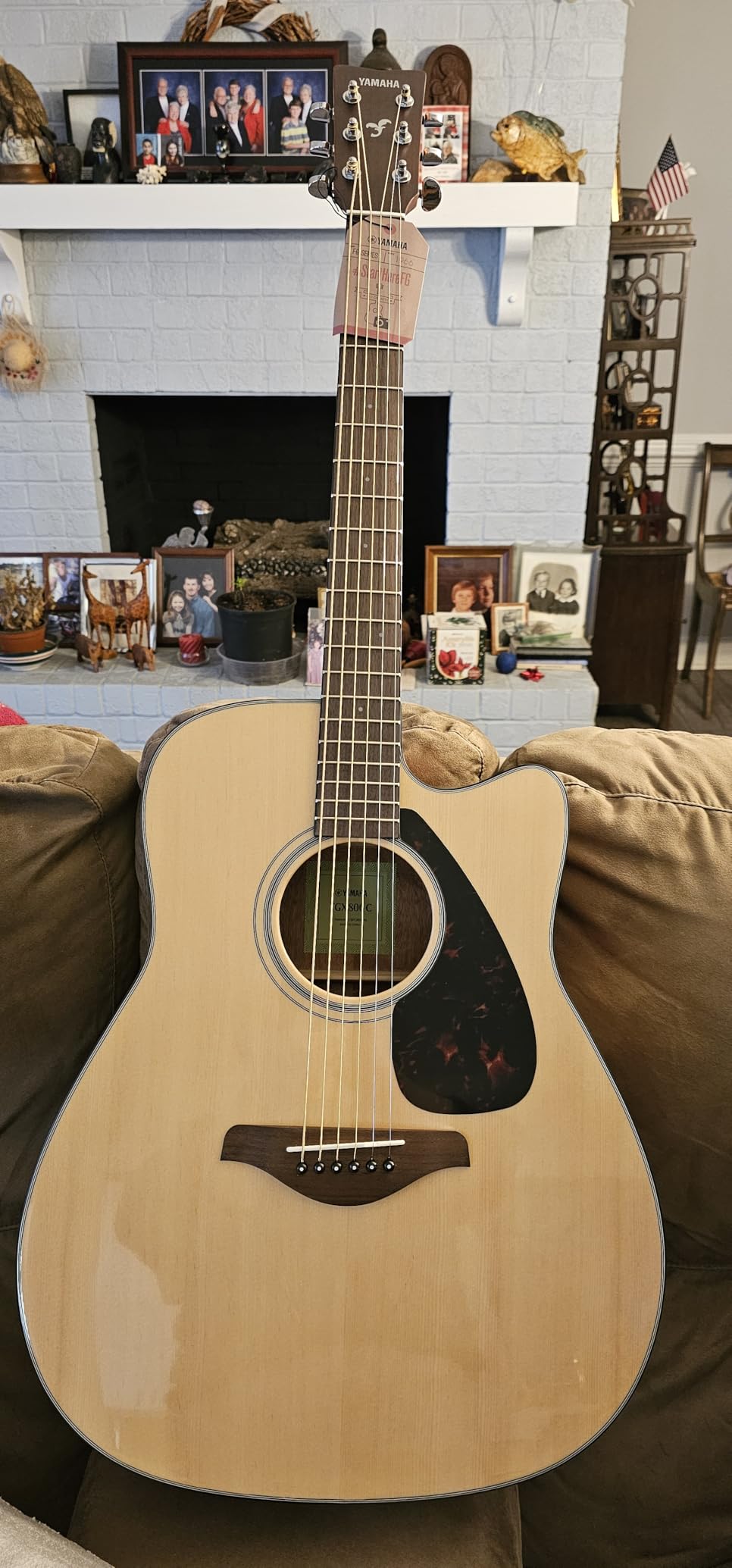
The Yamaha FGX800C is the acoustic-electric version of the legendary FG800, and it adds a StageReady cutaway and Yamaha’s System 66 electronics without losing what made the original great. If you want a stage-ready dreadnought under $500, this is it.
The solid Sitka spruce top gives you bright, articulate tone that cuts through a mix. The System 66 electronics include a 3-band EQ and a built-in chromatic tuner that works well in noisy environments. I’ve used this guitar at open mic nights and it sounded clean and balanced through a small PA.
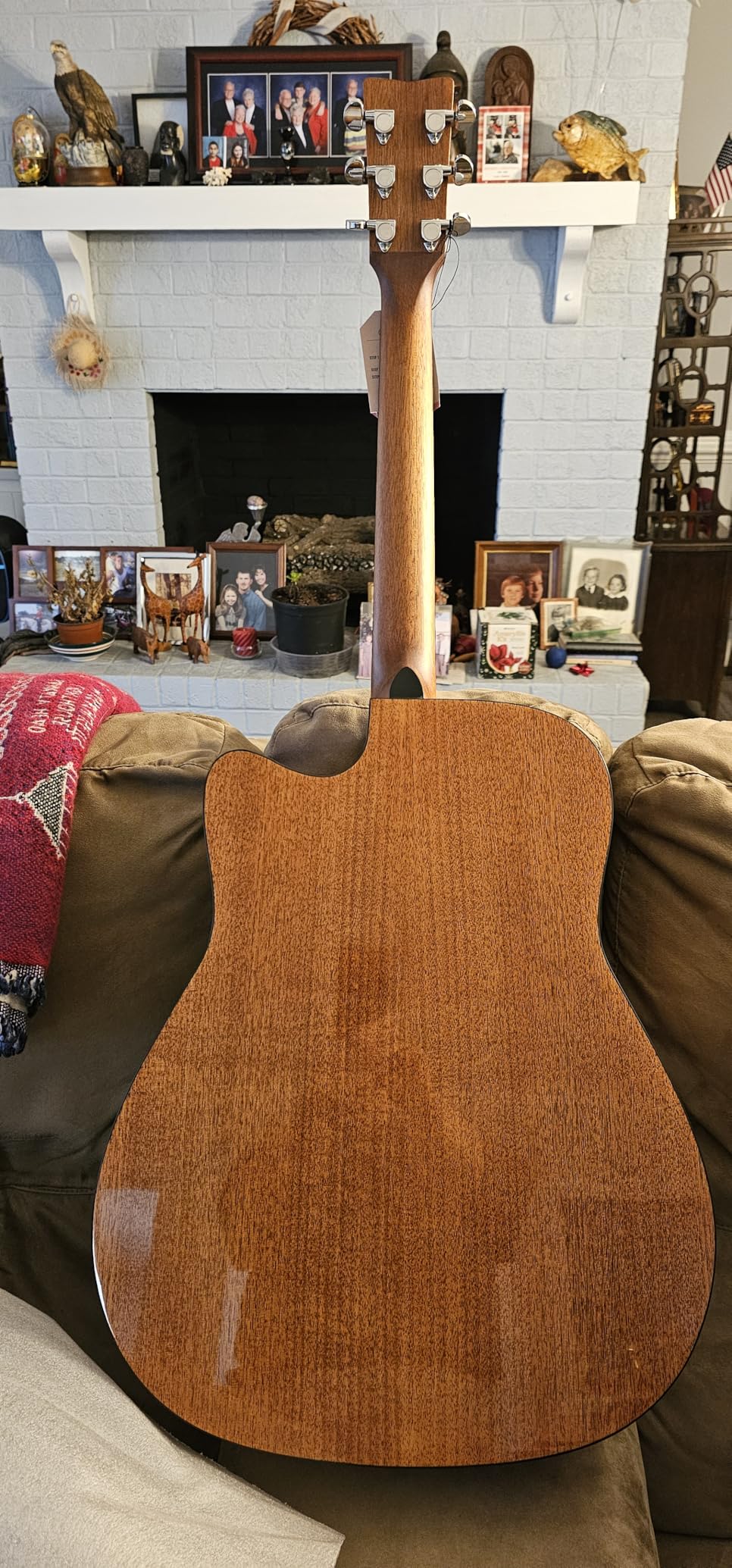
The cutaway design is the main advantage over the standard FG800. Upper fret access is clean and easy, which matters for lead players and anyone who wants to play complex chord voicings beyond the 12th fret. The action is set a bit higher than the non-electric version to accommodate the pickup system, but it’s still very playable.
Yamaha’s quality control shows in the fretwork and finish. The rosewood fingerboard is smooth, the tuners are stable, and the binding is clean. For the price, you get a serious instrument that will handle gigs, lessons, and recording sessions without complaint.
Electronics performance
The System 66 under-saddle piezo pickup captures the string vibration directly, which gives you a more articulate amplified tone than soundhole pickups. The 3-band EQ lets you shape the sound for different venues. The mid-range control is particularly useful for cutting through a band mix.
Who should buy it
This guitar is perfect for gigging acoustic players, worship musicians, and anyone who needs amplification for live performance. It’s also a smart choice for players who want one guitar that can handle both home practice and stage use. The cutaway makes it versatile for both rhythm and lead playing.
9. Fender California Debut Redondo CE – Best Electric-Acoustic Under $200
Fender California Debut Redondo CE Series Beginner Acoustic Guitar,Sunburst
Basswood body
Spruce top
Walnut fingerboard
Built-in electronics
Pros
- Perfect beginner guitar for all ages
- Easy-to-play C-shaped neck
- Walnut fingerboard
- Built-in electronics for tuning
- 30-day Fender Play subscription
- 2-year warranty
Cons
- Laminate construction
- Basic electronics
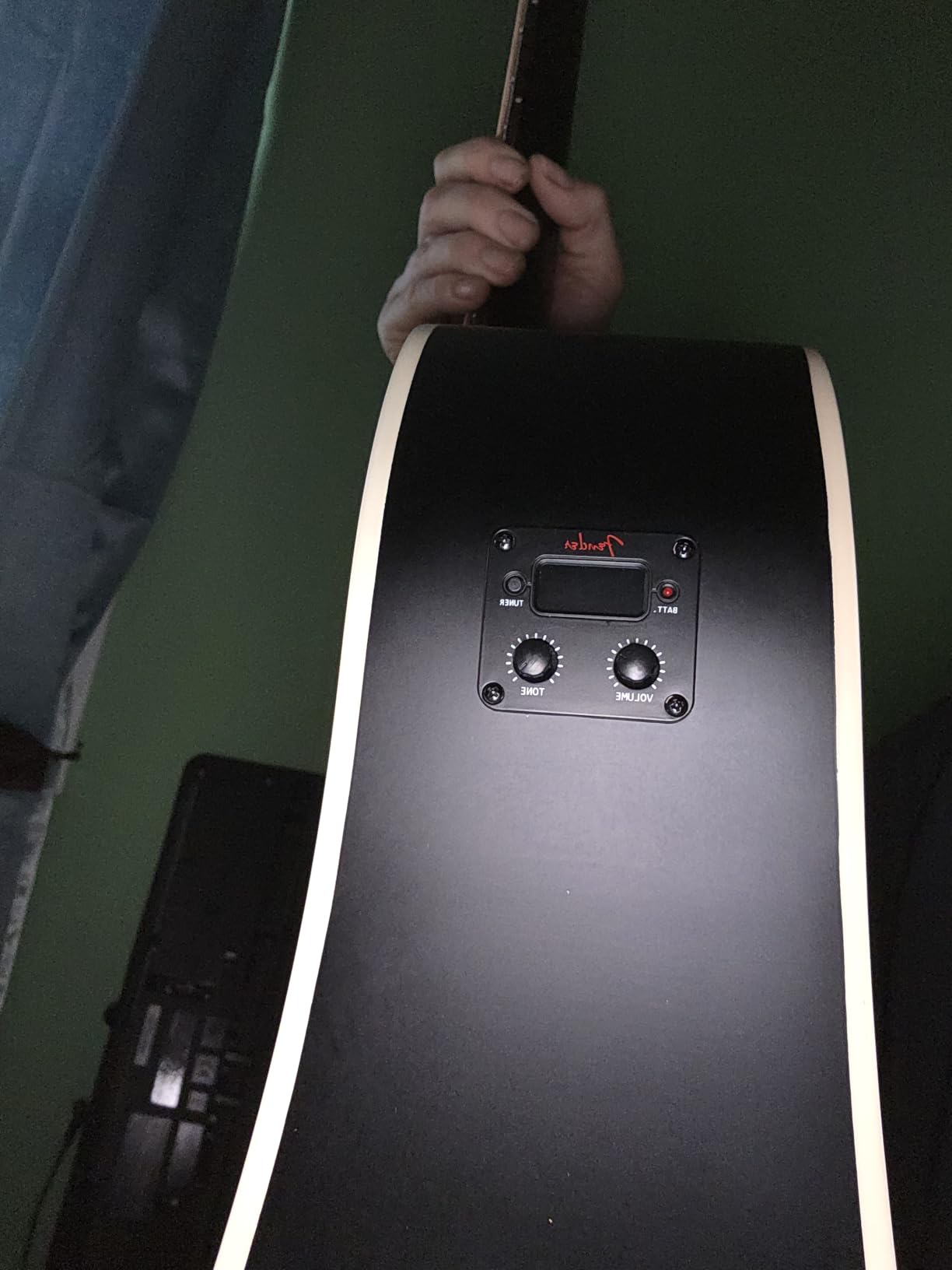
The Fender California Debut Redondo CE is the electric-acoustic version of Fender’s beginner-friendly Redondo, and it adds a built-in tuner and under-saddle pickup at a price that won’t scare off a first-time buyer. At under $200 with Fender Play lessons included, this is the most complete starter package you can buy.
The CE designation means it has electronics, but it’s still primarily an acoustic guitar. The under-saddle pickup is good enough for casual recording and home practice with an amp. The built-in tuner is accurate and quiet, which beats the clip-on tuners most beginners end up buying separately.
The C-shaped neck is Fender’s classic electric-style profile, which is comfortable for most adult hands. The walnut fingerboard feels decent for a guitar at this price. The dreadnought body gives you enough volume and bass response to enjoy playing without amplification.
The included 30-day Fender Play subscription is a genuine bonus. The app has structured lessons for beginners that cover everything from holding the guitar to playing basic chords and simple songs. For someone just starting out, that guided learning is worth real money.

Why it works for first-time buyers
The combination of low price, included lessons, and reliable electronics removes most of the friction from starting acoustic guitar. A beginner can unbox this guitar, follow the app, and start playing recognizable songs within a week. That kind of immediate success keeps people motivated.
Limitations to know
This is a laminate construction guitar. The basswood body doesn’t have the resonance of solid wood. The electronics are basic. But for the price and the intended beginner audience, it does everything it needs to do. This isn’t a guitar you’ll still be playing in 10 years, but it’s a perfect starting point.
10. Fender California Debut Redondo – Best Beginner Acoustic Under $150
Fender California Debut Redondo Series Beginner Acoustic Guitar, Sunburst
Basswood body
Spruce top
Walnut fingerboard
Fender Play subscription
Pros
- Excellent value for beginners
- Comfortable C-shaped neck
- Great sound for the price
- 30-day Fender Play subscription included
- Lightweight and easy to play
Cons
- Factory strings may need upgrading
- Some units may need basic setup
- Laminate construction
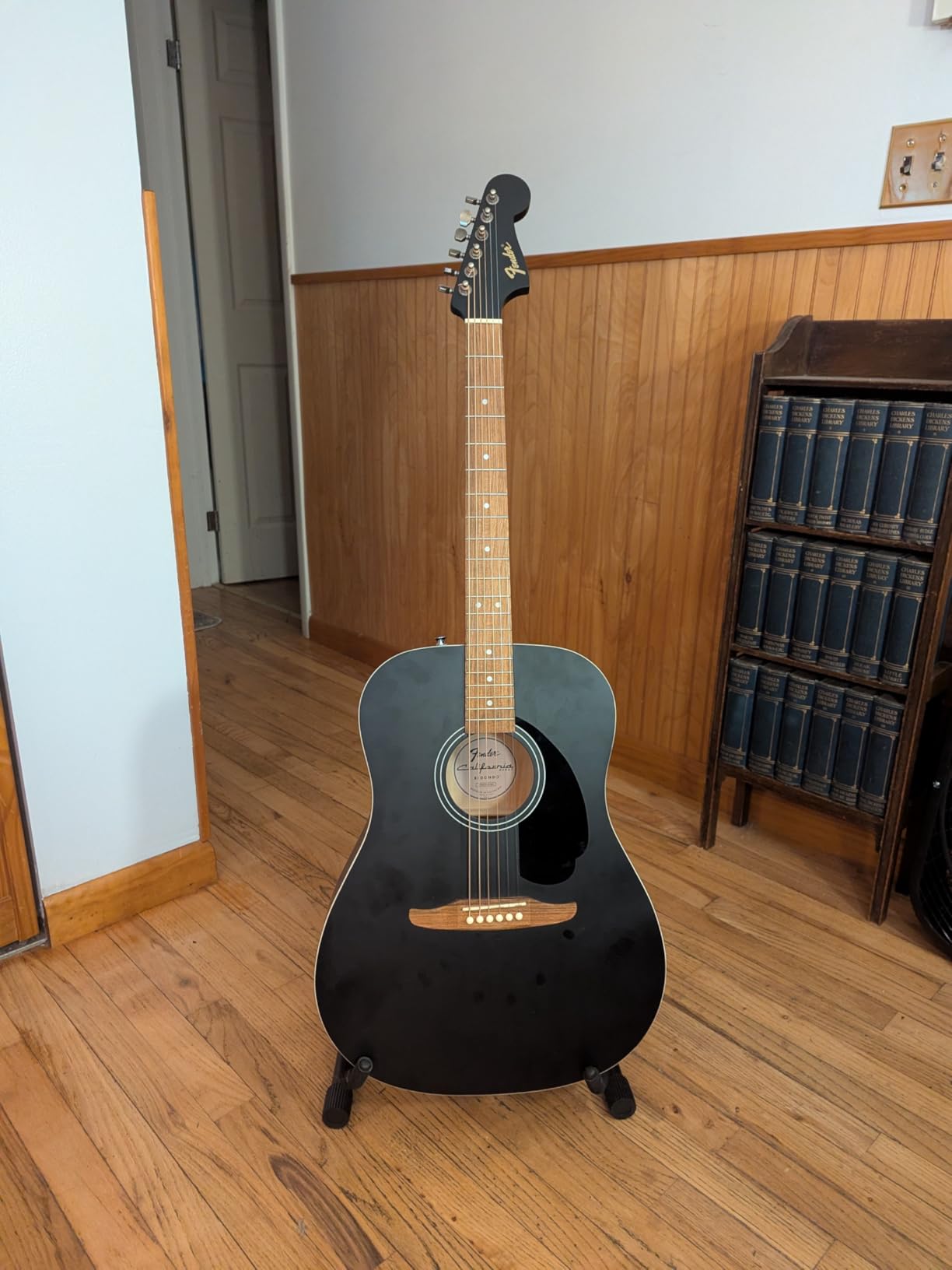
The Fender California Debut Redondo is the cheapest guitar in this guide, and it’s also one of the most popular. With over 800 reviews and a 4.6-star average, this guitar has earned its reputation as the best beginner acoustic guitar under $150. I bought one for a family member last year and they were playing chords within a week.
The basswood body and spruce top deliver surprising warmth and volume for a guitar at this price. The dreadnought body shape gives you plenty of bass response, and the C-shaped neck is comfortable for most adult hands. For casual strumming and learning the basics, this guitar sounds much better than its price suggests.
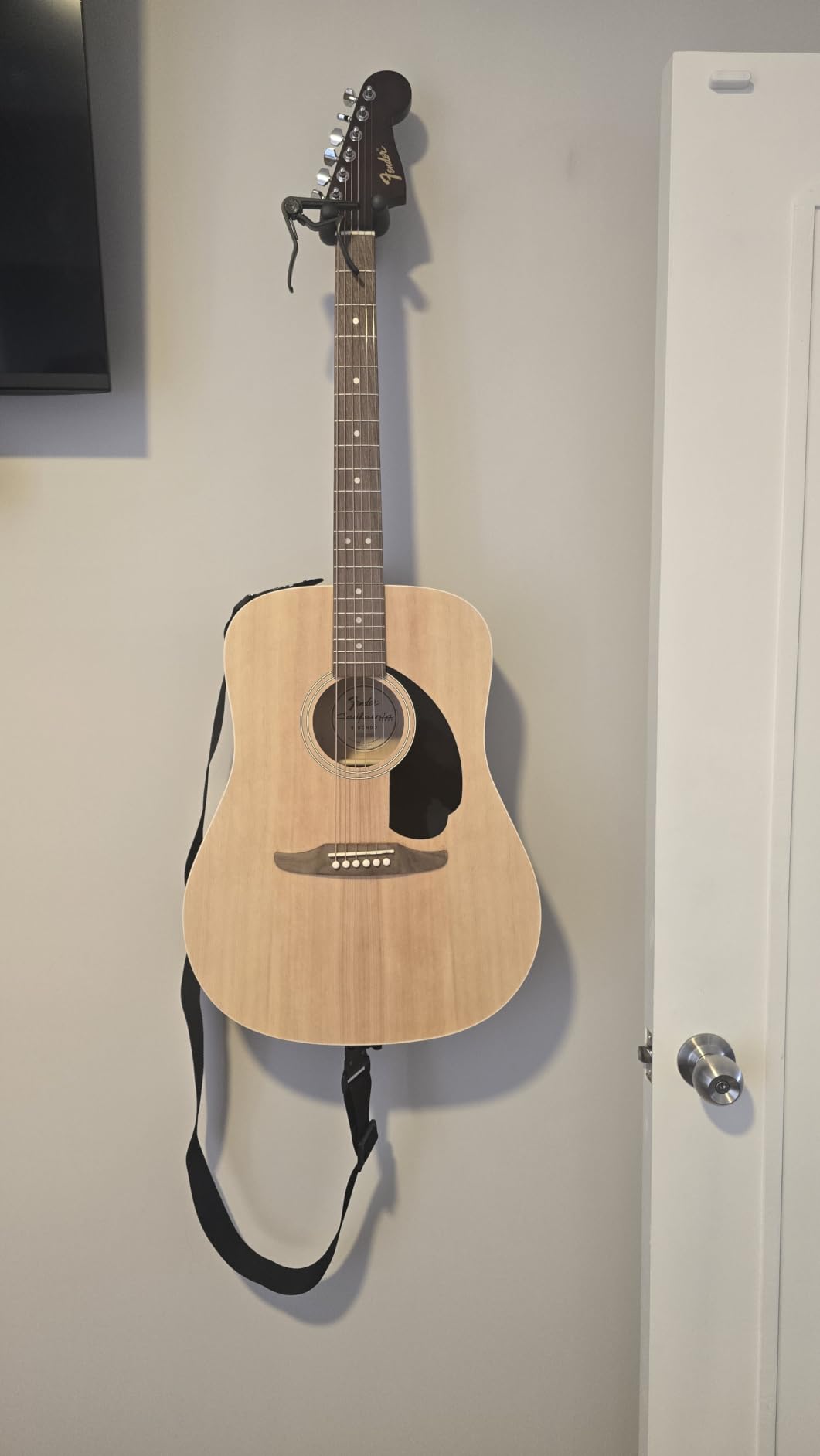
Fender’s quality control on this guitar has been consistent in 2026. The action out of the box is generally playable, though some units ship a bit high. The walnut fingerboard and bridge look better than they have any right to at this price. The included Fender Play subscription adds real value.
The 30-day Fender Play subscription is the same as on the more expensive CE version. It includes structured lessons, popular song tutorials, and progress tracking. For someone who has never played guitar before, that lesson access can be the difference between sticking with it and giving up.
What you get for the price
For under $150, you’re getting a real Fender dreadnought acoustic with a comfortable neck, decent electronics-ready body (no actual electronics on this model), and a subscription to structured lessons. That’s a complete starter package at a price most beginners can afford without feeling guilty if they decide guitar isn’t for them.
Who should buy it
This is the right guitar for absolute beginners, parents buying for kids, gift-givers who want a reliable starter instrument, and anyone curious about acoustic guitar without a big commitment. If you find that you love playing, you can always upgrade to a Yamaha FG830 or Taylor Academy 10e later. If not, you haven’t wasted serious money.
Buying Guide: How to Choose the Best Acoustic Guitar?
Choosing the best acoustic guitar for your needs comes down to four key factors: budget, body shape, tonewood, and whether you need electronics. Let me walk through each one based on what we learned from testing these 10 guitars.
Body shape and size
Dreadnought guitars are the most common body shape and the most versatile. They project well, sound full and balanced, and work for almost any playing style. If you’re unsure what to buy, a dreadnought is the safest choice. The Martin D-15M, Yamaha FG830, Fender CD-60S, and most guitars in this guide use dreadnought bodies for good reason.
Smaller body shapes like the Taylor GS Mini are more portable and have a more focused midrange sound. They’re great for fingerpicking, recording, and travel. But they don’t project as loudly and won’t cut through a bluegrass jam. Concert and auditorium body shapes sit between dreadnought and mini in size and sound.
Tonewood and construction
Solid wood tops (spruce, cedar, mahogany) vibrate more freely and produce richer tone than laminate tops. The Yamaha FG830 and Martin D-X1E both have solid tops at reasonable prices. All-solid construction (top, back, and sides) is found on more expensive guitars like the Martin D-15M. Laminate construction is more durable and consistent but doesn’t open up with age.
Common tonewood combinations include spruce over rosewood (bright, balanced), spruce over mahogany (punchy, focused), and all mahogany (warm, woody). Spruce tops are the most common and work for most players. Cedar tops are more responsive to light playing. Mahogany tops are warmer and less bright.
Electronics and acoustic-electric
If you plan to play live, record, or practice with headphones, get an acoustic-electric guitar. The Yamaha FGX800C, Martin D-X1E, Taylor Academy 10e, and Fender Redondo CE all have built-in electronics. Pickup systems range from basic under-saddle piezos to sophisticated systems with EQ and tuners. For most players, a good 3-band EQ system is more than enough.
If you only plan to play at home without amplification, a pure acoustic is fine. Pure acoustics typically sound better unplugged than acoustic-electrics because the pickup system adds weight to the top and slightly dampens resonance.
Action and playability
Action height (the distance between strings and fretboard) matters enormously for beginners. High action makes chords harder to press and increases finger fatigue. Lower action is easier to play but can cause buzzing if set too low. Most of the guitars in this guide ship with reasonable action out of the box. If you get one with high action, a $50 setup at a local shop will transform it.
Neck profile also affects playability. Slim C-shaped necks (Fender California, Taylor Academy) are easier for smaller hands. Wider, more rounded necks (Martin, Yamaha) provide more finger spacing for big hands. Try different profiles if possible before committing.
Budget tiers and what to expect
Under $200: Budget guitars like the Fender CD-60S and California Debut Redondo. These have laminate construction, basic hardware, but they play well enough to learn on. Realistic expectations are critical at this tier.
$400-700: Mid-range guitars like the Yamaha FG830, FGX800C, Taylor GS Mini, and Seagull S6. This is the sweet spot where you start getting solid wood tops, better electronics, and serious craftsmanship. Most players should aim for this tier.
$800-2,000: Premium guitars like the Taylor Academy 10e, Martin D-X1E, and entry-level Martin D-15M. These guitars have better tonewoods, refined craftsmanship, and electronics that hold up to live performance. Worth it for serious players.
Over $2,000: Professional tier like the Martin D-28. These guitars use premium tonewoods, advanced bracing, and handmade craftsmanship. Only worth the investment if you’re a professional or serious collector.
Frequently Asked Questions About Acoustic Guitars
What brand is the best acoustic guitar?
The best acoustic guitar brand depends on your needs. Martin and Gibson are widely considered the top brands for professional players due to their heritage, craftsmanship, and tone quality. Taylor is favored by fingerstyle players for its modern, balanced sound. Yamaha offers the best value in the budget and mid-range tiers. For absolute beginners, Fender’s California series delivers reliable playability at low prices. If forced to pick one brand overall, Martin has the deepest history and the widest range of professional-grade instruments.
Which is the No. 1 acoustic guitar brand?
Martin’s D-28 has been called the No. 1 acoustic guitar by countless guitar publications and professionals since 1931. The D-28’s balanced tone, projection, and craftsmanship set the standard that other dreadnought guitars are measured against. For modern players, Taylor’s consistent quality and innovation give them a strong claim to the top spot. Gibson’s J-45 is another legendary choice among blues and folk players. The honest answer is that Martin, Taylor, and Gibson all make legitimate claims to being the No. 1 acoustic guitar brand depending on what sound and feel you prefer.
What is the holy grail of acoustic guitars?
The holy grail of acoustic guitars for most collectors is a vintage pre-war Martin D-28 or OM-28, which can sell for tens of thousands of dollars in good condition. For working professionals, the holy grail is often considered to be a current production Martin D-28, Gibson J-45, or Taylor 814ce, depending on their playing style. The phrase also gets applied to specific rare models like the Gibson Nick Lucas Special or pre-war herringbone Martins. For most players, the more achievable holy grail is a high-quality modern dreadnought that plays and sounds exactly how they want.
Is Martin or Taylor better?
Neither brand is objectively better. Martin guitars traditionally have a warmer, more complex tone with strong fundamental tones, while Taylor guitars have a brighter, more modern sound with clearer note separation. Martin uses a dovetail neck joint and traditional bracing patterns that produce a vintage character. Taylor uses a bolt-on neck joint and refined bracing that produces a more contemporary voice. Fingerstyle players often prefer Taylor’s note clarity. Strummers and bluegrass players often prefer Martin’s warmth and projection. The best choice depends on your playing style and personal taste. Try both before committing to a high-end purchase.
Final Thoughts on Choosing the Best Acoustic Guitar in 2026
The best acoustic guitars in 2026 cover every budget and skill level. If you want a professional-grade guitar with premium tone, the Martin D-15M is our top pick. For the best value under $500, the Yamaha FG830 is hard to beat. If you’re buying for a beginner on a budget, the Fender CD-60S or California Debut Redondo are the safest choices.
The most important thing is to find a guitar that makes you want to pick it up every day. Tone, feel, and budget all matter, but the guitar that inspires you to play is the right one. Take your time, try multiple options when possible, and don’t overthink the decision. Any of the 10 guitars in this guide will serve you well for years.
Ready to choose? Pick the guitar that fits your budget and playing style from our list above, and you’ll be making music in no time.