
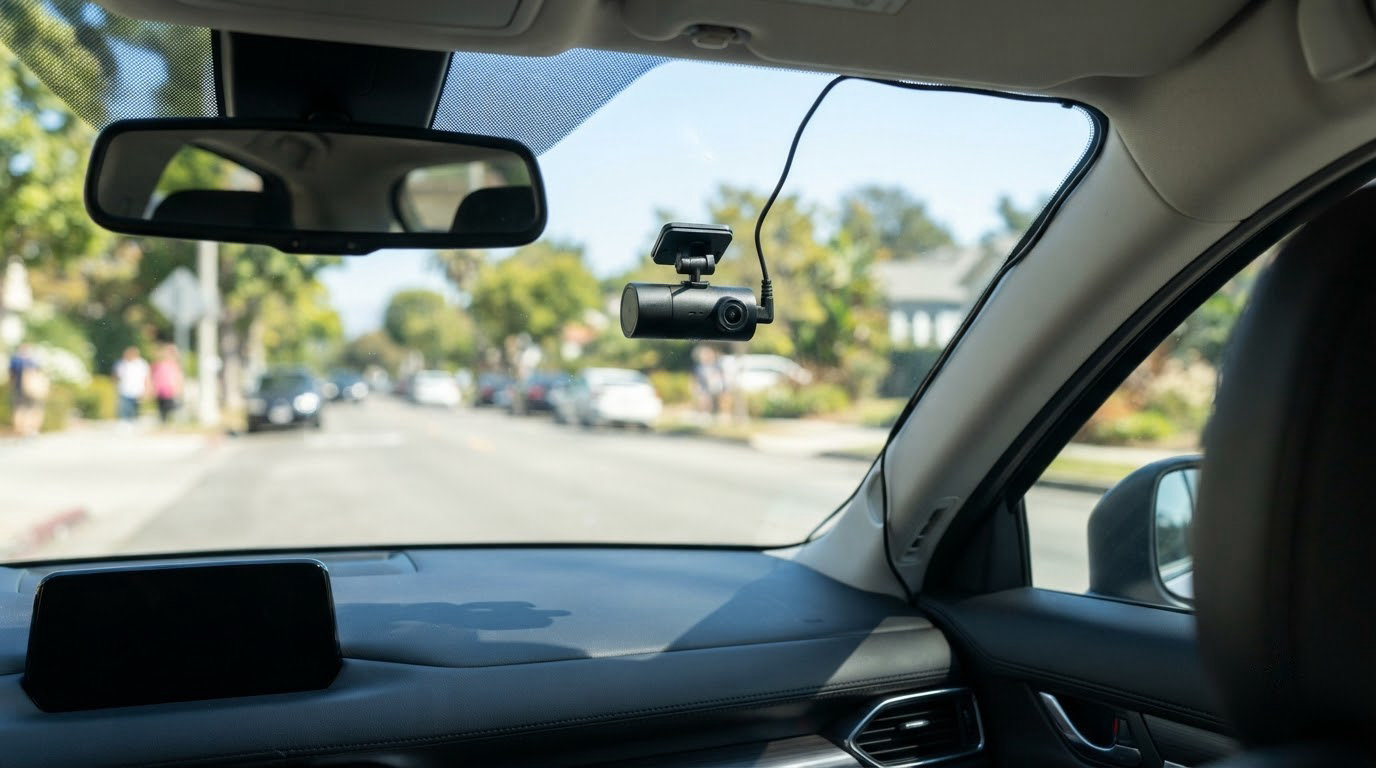
If you want one dash cam to watch during Amazon’s Prime Big Deal Days sale, the ROVE R2-4K Dual is the pick: it films front and rear at 4K and 1080p from Sony STARVIS 2 sensors, carries built-in GPS, and ships with a 128GB card so there is nothing extra to buy before the first drive. The REDTIGER F7NP suits drivers who want a wider front lens and the largest review base in this group, while the REDTIGER F7N Touch is the one for anyone who would rather set the camera up from a screen than an app.
Prime Big Deal Days runs October 6-7, 2026, with early-bird offers from October 1. Offers shift through the event, so treat this list as the models worth watching rather than confirmed deals.
Table of Contents
Our Top 3 Picks for Best Amazon Prime Big Deal Days Dash Cam Deals in 2026

ROVE R2-4K Dual
- 4K front and 1080p rear
- STARVIS 2 sensor
- Built-in GPS and 3-inch IPS
- 128GB card included
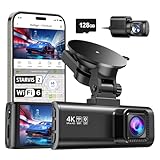
REDTIGER F7NP
- 4K front and 1080p rear
- 170-degree front lens
- 5.8GHz WiFi with GPS
- 128GB card included
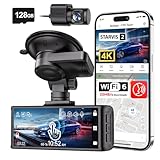
REDTIGER F7N Touch
- 3.18-inch touch display
- Voice control built in
- 4K front with STARVIS 2,128GB card included
Best Amazon Prime Big Deal Days Dash Cam Deals Compared
| Product | Specifications | Action |
|---|---|---|
| ROVE R2-4K Dual |
|
Check Deal Price |
| REDTIGER F7NP |
|
Check Deal Price |
| REDTIGER F7N Touch |
|
Check Deal Price |
 REDTIGER F17 REDTIGER F17 |
|
Check Deal Price |
 Vantrue N5S Vantrue N5S |
|
Check Deal Price |
 Vantrue N4 Pro S Vantrue N4 Pro S |
|
Check Deal Price |
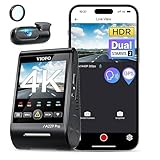 VIOFO A229 Pro VIOFO A229 Pro |
|
Check Deal Price |
 BOOGIIO OK-831 BOOGIIO OK-831 |
|
Check Deal Price |
 E-YEEGER S60 E-YEEGER S60 |
|
Check Deal Price |
 BOTSLAB G300H Plus BOTSLAB G300H Plus |
|
Check Deal Price |
How We Chose
Every camera here was compared on the specifications that decide whether footage survives an insurance claim: front and rear resolution, sensor type, field of view, parking mode, maximum card capacity, and whether a card is in the box. Ratings and owner reviews on Amazon were read for each model, and the data was checked in (October 2026). Products whose bundles hide costs, such as a missing card or a hardwire kit sold separately, were ranked accordingly.
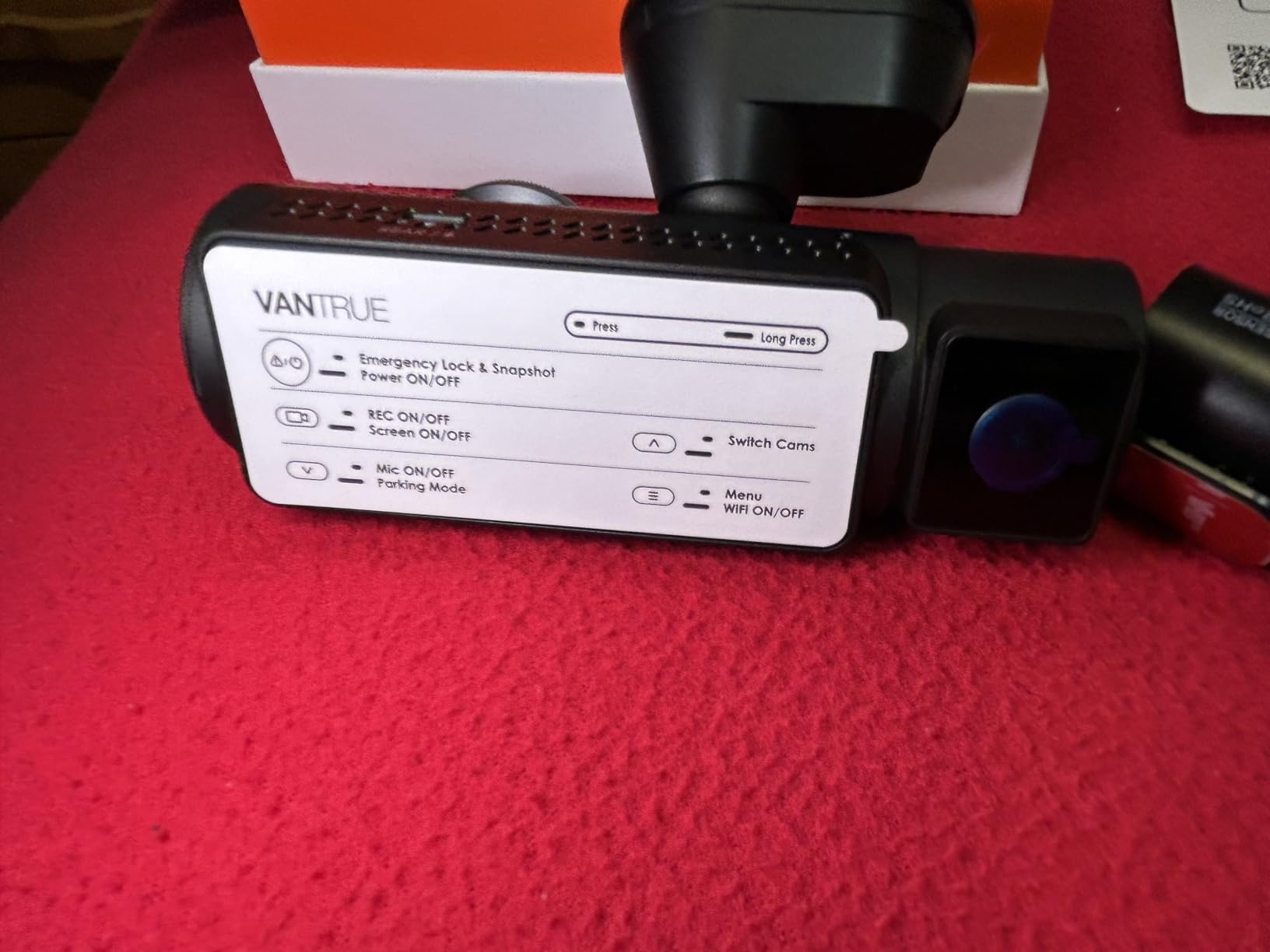
1. ROVE R2-4K Dual: Best for Balanced Front and Rear Coverage
ROVE R2-4K Dual
Channels: front+rear
Front: 4K upscaled
Parking: time-lapse
Card: 128GB included
Pros
- 4K front and 1080p rear from STARVIS 2
- Built-in GPS with speed and compass
- 20MB/s dual-band WiFi for clip downloads
- 128GB card in the box and 1TB supported
- Supercapacitor handles parked-car heat
Cons
- Front 4K is upscaled from 2.5K
- Rear camera is 1080p only
- Parking mode needs a separate hardwire kit
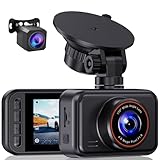
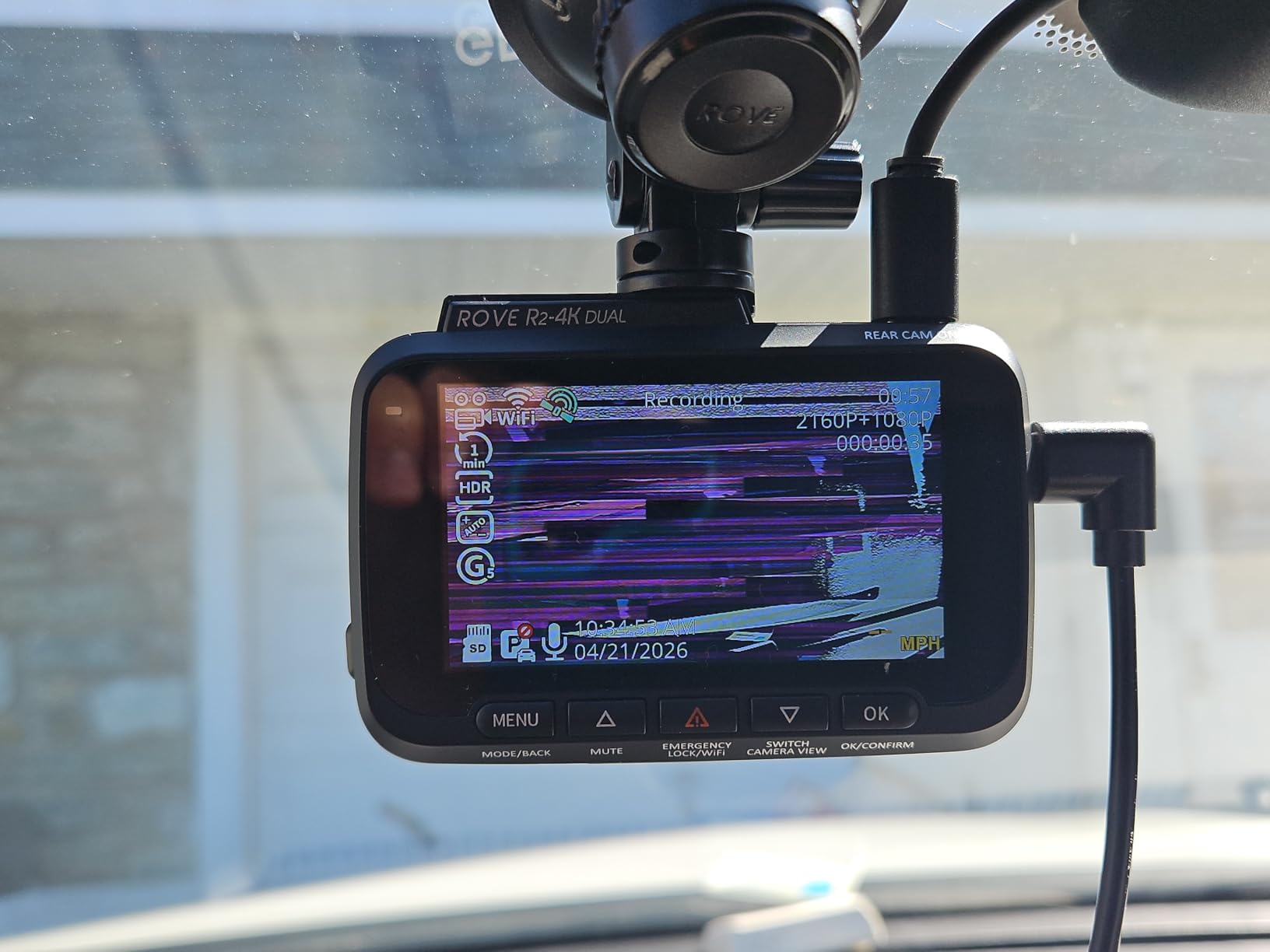
The most complete package here, and the reason it leads. The ROVE R2-4K Dual records a 4K front feed and a 1080p rear feed at 30fps through a Sony STARVIS 2 IMX675 sensor with an F1.5 front aperture, HDR processing, and a 150-degree field of view. Both cameras sit on STARVIS 2 silicon rather than a cheaper sensor with a 4K label on the box.
Owners most often talk about two practical details. The first is the 128GB microSD card that ships in the box, so the camera records something on the way home from the delivery rather than sitting in the glovebox waiting for a card. The second is the built-in GPS, which stamps live speed and compass direction on the footage without a phone app in the loop.
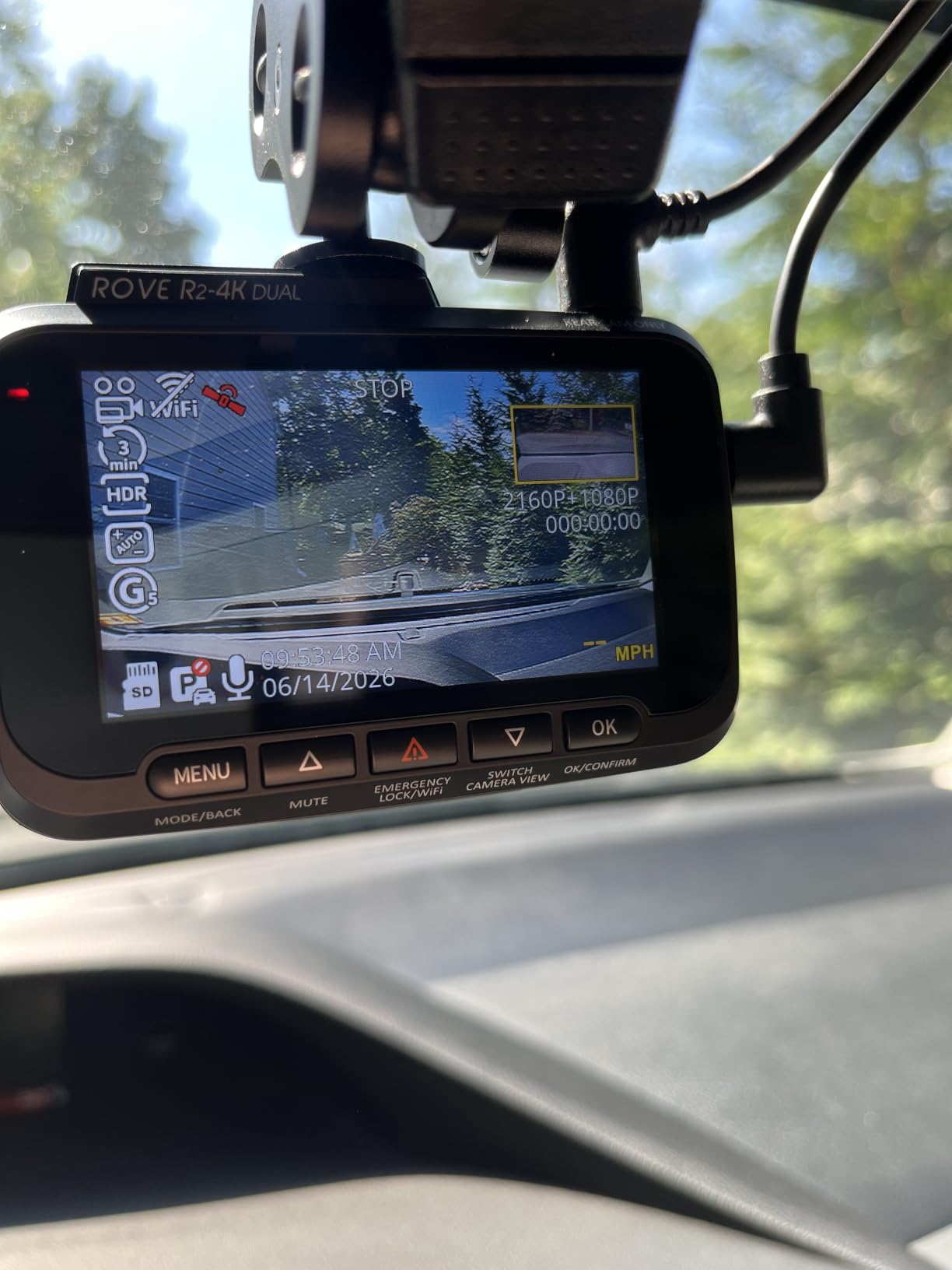
Where it falls short is honest and specific: the front recording is 2.5K native, upscaled to 2160p for output, and the rear camera is 1080p rather than 2K. Parking mode runs as a 1fps time-lapse with motion and collision detection, and the hardwire kit needed to power it that way is not included.
- 4K front plus 1080p rear on one STARVIS 2 IMX675 sensor
- Dual-band 5.8GHz and 2.4GHz WiFi, downloads up to 20MB/s
- 3-inch IPS screen and app control for checking clips
- MicroSD support up to 1TB if you want more than a weekend of footage
Compared with the REDTIGER F7NP, the ROVE covers less angle out of the front, at 150 degrees against 170, but adds a 3-inch IPS panel and a supercapacitor rated for harsher parked-car temperatures. Compared with the VIOFO A229 Pro, it gives up the CPL anti-glare filter and the 2K rear sensor, and it saves you buying a memory card.
2. REDTIGER F7NP: Best for the Widest Front Field of View
REDTIGER F7NP
Channels: front+rear
Front: 4K
Parking: time-lapse
Card: 128GB included
Pros
- 170-degree front lens with 4K recording
- STARVIS 2 sensor with F1.5 aperture
- 5.8GHz WiFi and built-in GPS
- 128GB card plus 512GB maximum
- 18-month warranty
Cons
- Parking mode needs an optional hardwire kit
- Some owners report intermittent power cycling
- Manual lists feature names without explaining settings
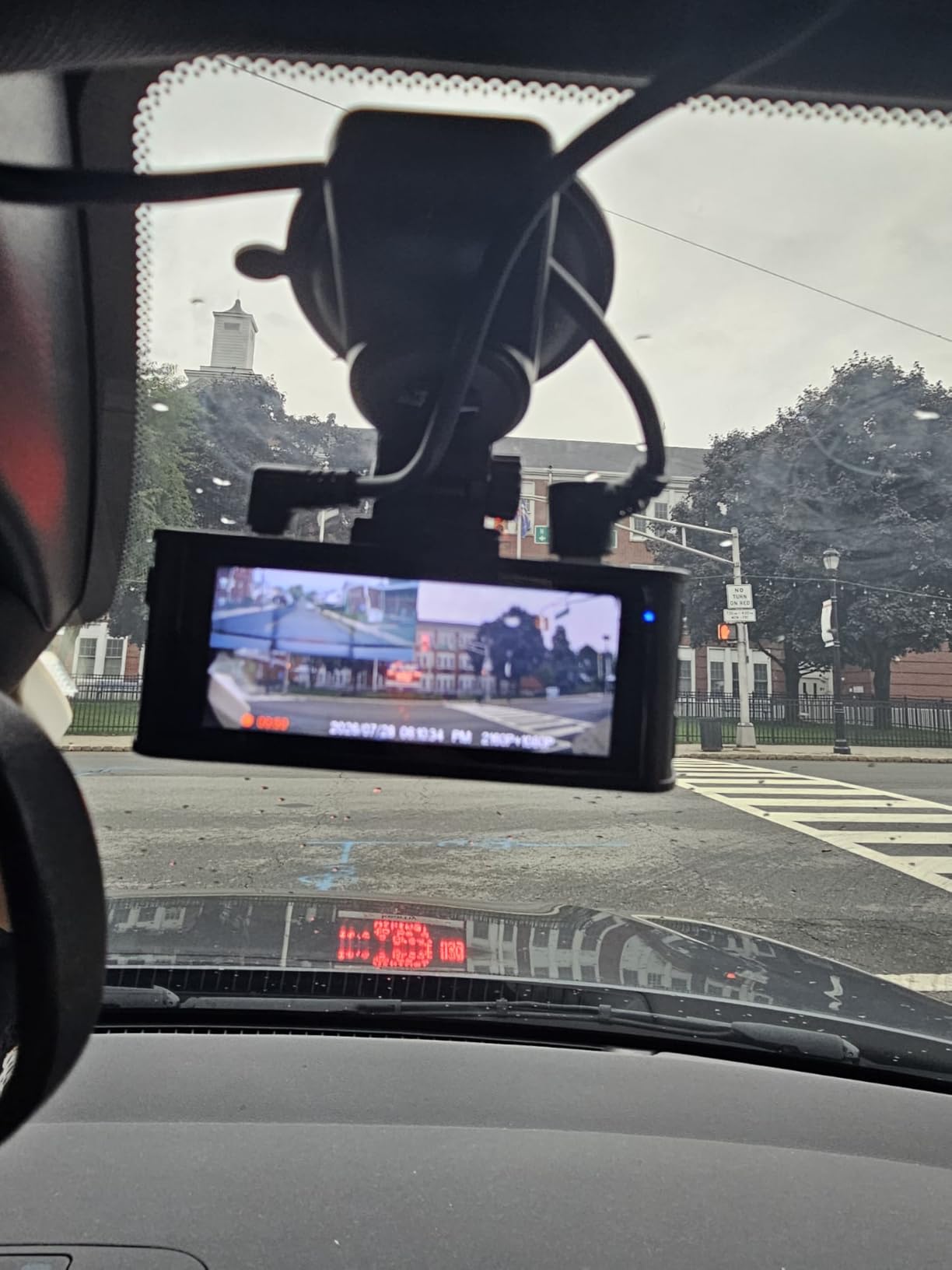
The most-reviewed camera in this list, and the widest view of the road ahead. At 170 degrees on the front lens and 140 degrees on the rear, the REDTIGER F7NP sees more of a junction than anything else here. The sensor is STARVIS 2 behind an F1.5 aperture and a 6-layer optical lens, with WDR and HDR handling for night footage.
What makes this one notable is the volume of owner feedback behind it: more than 25000 reviews, which is roughly double the next-best model in the group. That much history means the recurring complaints are well documented, and the main one is power: a minority of owners describe the camera cycling off intermittently, most often traced back to the 12V socket adapter rather than the unit itself.
Parking mode here offers both time-lapse and G-sensor detection, and loop recording locks the clip automatically when a collision is registered. The 128GB card is included, cards are accepted up to 512GB, and the built-in supercapacitor is a sensible choice for anyone parking on a street through a summer.
- 170-degree front and 140-degree rear lenses
- 5.8GHz WiFi with downloads up to 20MB/s through the Redtiger Cam app
- Built-in GPS logging route and speed on the frame
- 18-month warranty, longer than most cameras at this level
The ROVE R2-4K Dual covers less of the front scene but adds a screen and 1TB card support, so the F7NP is the better pick for a driver who wants maximum coverage and knows which way to run the cable. Owners also point out that the manual lists feature names rather than explaining what the settings do, so budget a few minutes in the app menu.
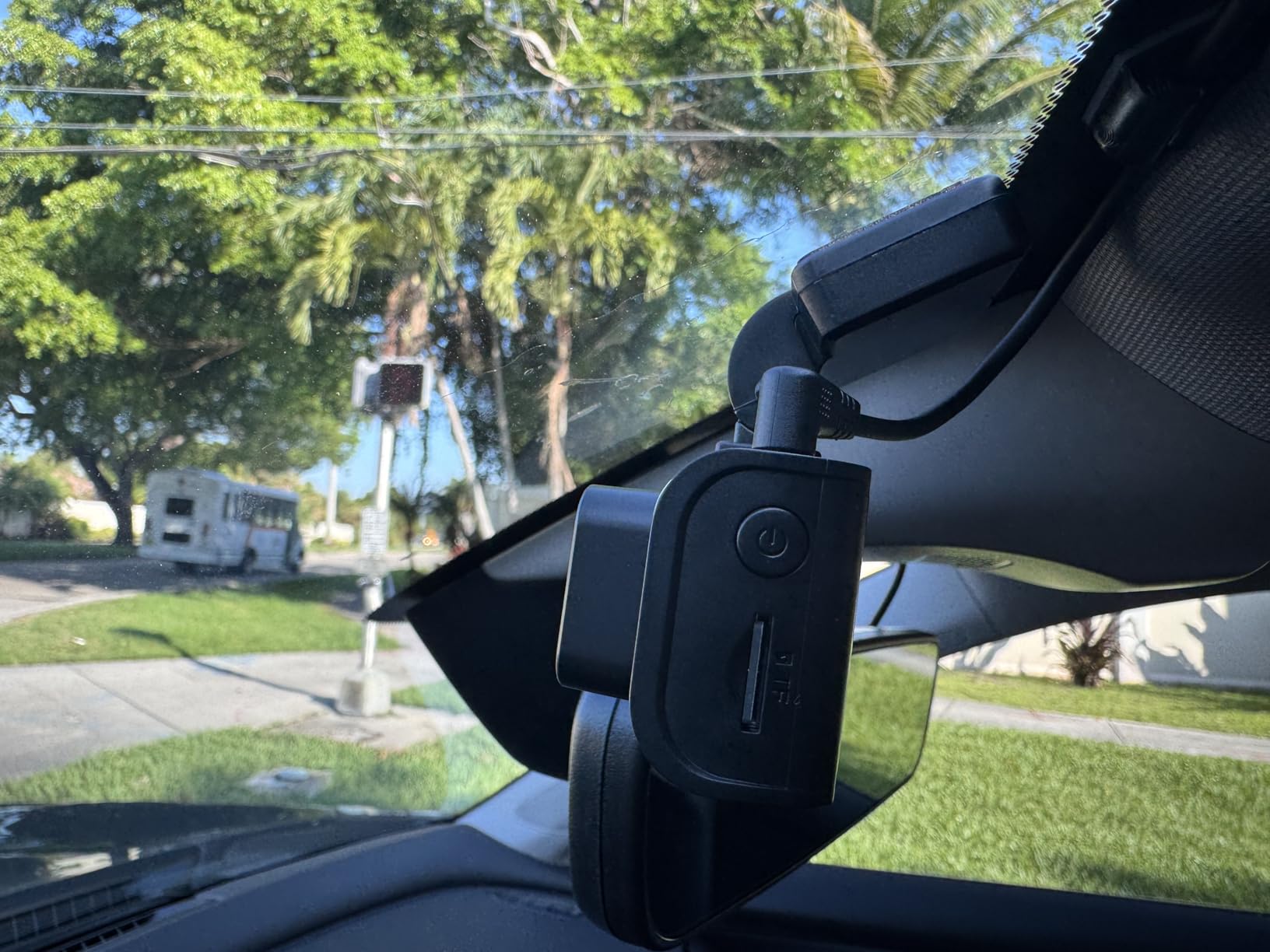
3. REDTIGER F7N Touch: Best for Screen-Based Setup
REDTIGER F7N Touch
Channels: front+rear
Front: 4K
Parking: time-lapse
Card: 128GB included
Pros
- Large responsive 3.18-inch touchscreen
- 4K front with STARVIS 2 and HDR
- Wide 170-degree front lens
- Hands-free voice control
- Extra suction mounts handle heat
Cons
- Some voice commands do not do what they say
- App needs a direct WiFi link each session
- Parking mode can lock every clip and takes time to wake
For anyone who dials in a camera on a screen rather than in a phone app. The REDTIGER F7N Touch carries a 3.18-inch touchscreen, which is the largest display among the dual-camera models here, and owners consistently rate how quick and responsive it feels. The underlying recording is a 4K UHD front at 170 degrees and a 1080p rear at 140 degrees on a STARVIS 2 sensor.
Voice control is the other reason to pick this model over the F7NP. You can lock a clip hands-free, which matters when you would rather keep your eyes on traffic. The catch is that not every command behaves as advertised, and several owners specifically mention that asking it to switch the screen off does not reliably work.
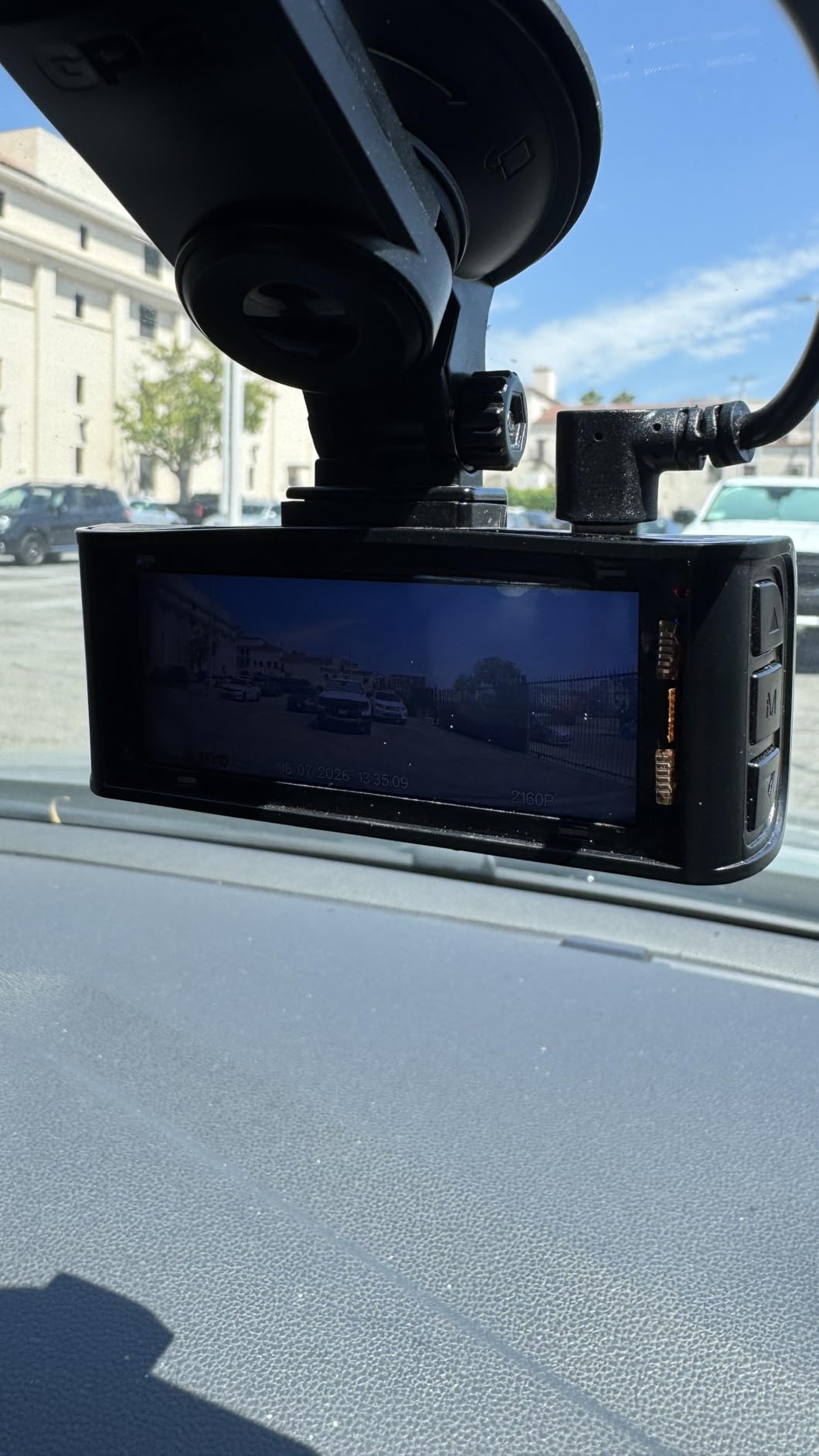
The friction point is the app. Transferring clips means connecting directly to the camera’s 5.8GHz WiFi every session rather than staying connected to your phone network, and the download rate is quoted at up to 20MB/s once that link is up. Parking monitoring is available as time-lapse or G-sensor triggered, but it needs a hardwire kit, and some owners find it locks every clip and takes roughly ten seconds to wake.
- 4K front plus 1080p rear with HDR and WDR processing
- Built-in GPS and dual recording modes
- Supercapacitor instead of a lithium battery, plus spare suction mounts
- 128GB microSD card included
Against the ROVE R2-4K Dual, the screen is bigger and the front lens is wider, while the ROVE is easier to live with day to day because its WiFi pairing is less fiddly. Pick the F7N Touch if you will adjust the camera often or hand it to someone who is not fussy with menus.
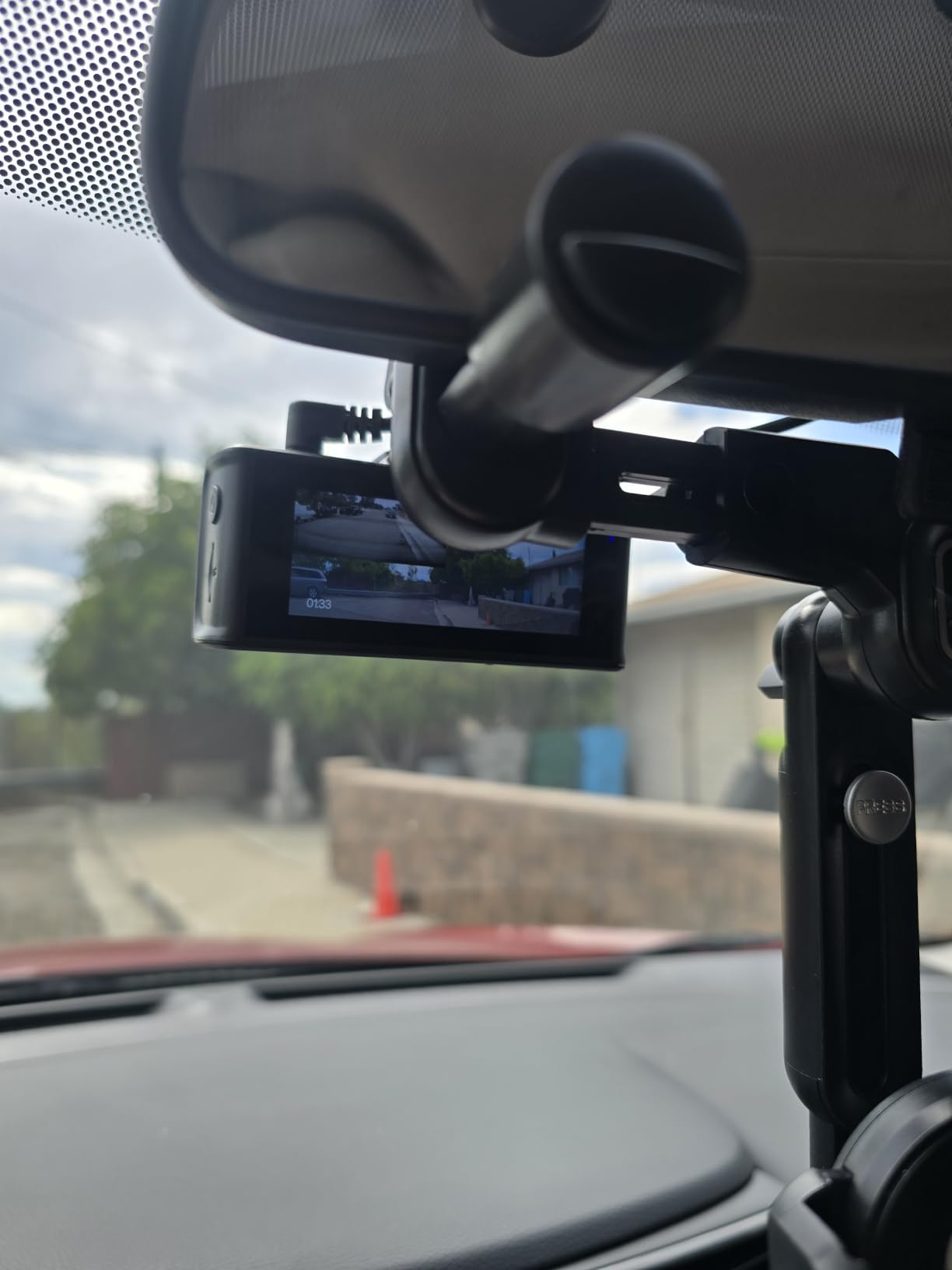
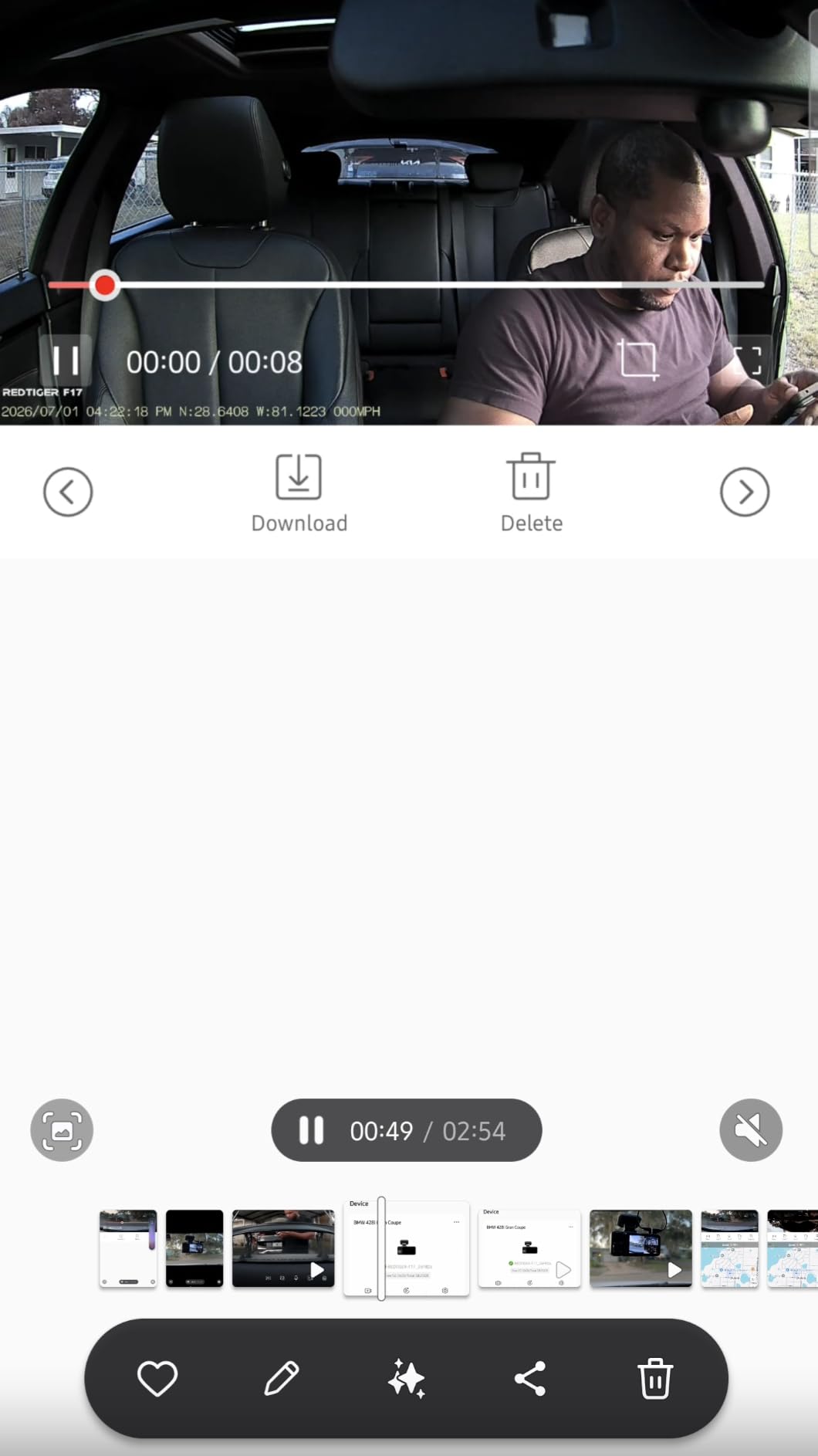
4. REDTIGER F17: Best for Three-Channel Coverage
REDTIGER F17
Channels: 3-channel
Front: 4K
Parking: time-lapse
Card: 64GB included
Pros
- Records front
- cabin and rear at once
- Infrared illumination for the cabin at night
- GPS and speed stamped without clutter
- Adjustable G-sensor sensitivity and screensaver mode
Cons
- App pairing needs camera WiFi each time
- 64GB card fills quickly with three channels
- Rear camera can look dark on sloped glass
Three cameras, one screen, and the only model here that watches the cabin. The REDTIGER F17 records 4K at the front, 1080p inside the cabin and 1080p out of the rear window simultaneously. Field of view runs to 150 degrees at the front, 160 degrees in the cabin and 155 degrees at the back, so a single unit covers the whole car.
The cabin camera has infrared illumination, which is the detail rideshare drivers and anyone with child car seats care about. Owners describe the resulting night footage inside the cabin as clear, and the speed, date, time and GPS data appears on the frame without turning the image into a wall of text.
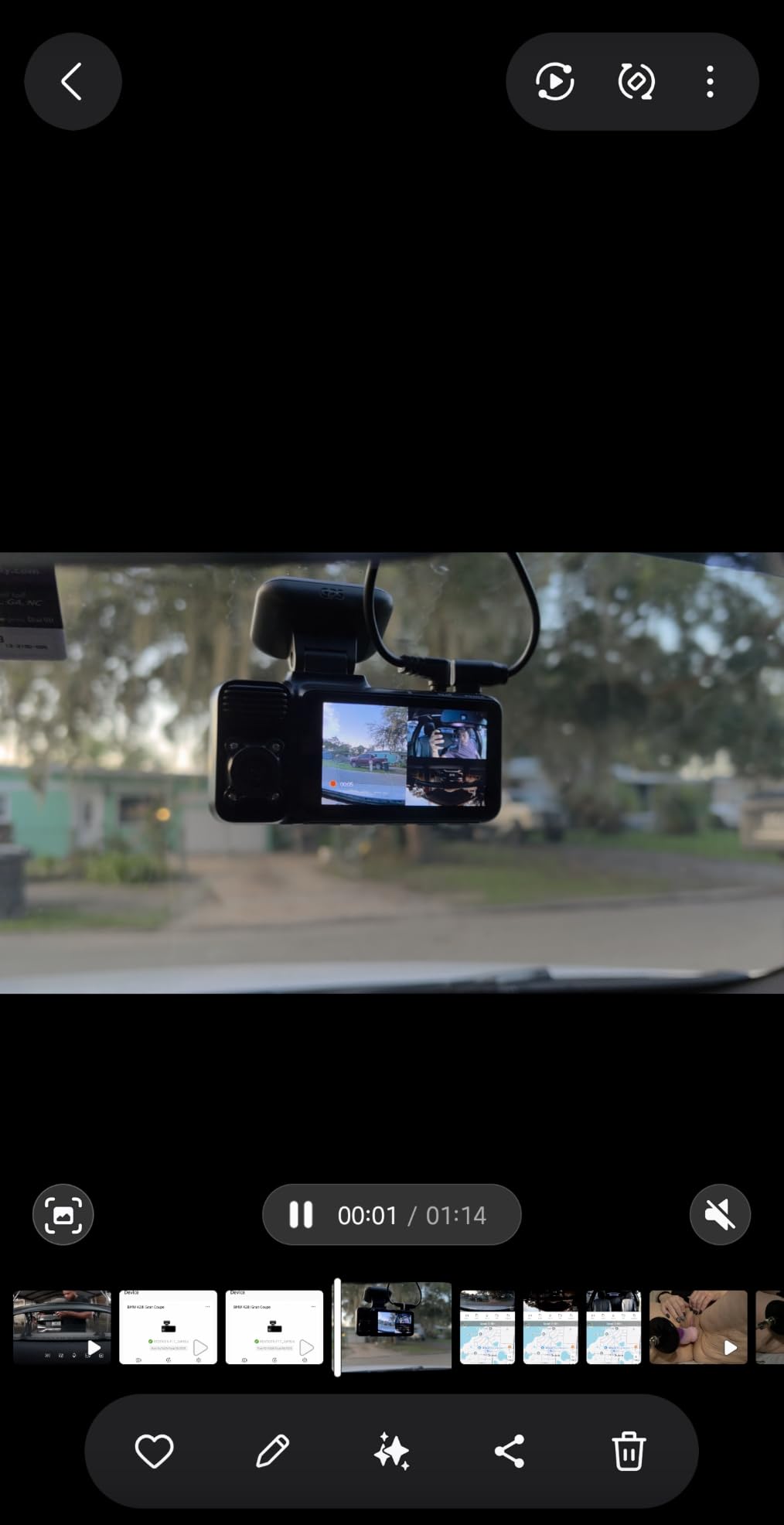
Three channels on one card does mean storage fills faster, and the bundled card is 64GB. Owners who record constantly recommend stepping up to a larger card. There is also a dual mode worth knowing about: set it to 2.5K across all three channels, or hold the front at 4K and drop the rear to 1080p.
- Infrared night illumination inside the cabin
- Dual-band WiFi with the REDTIGER app and built-in GPS
- Screensaver mode and adjustable G-sensor sensitivity
- Time-lapse and collision-detection parking monitors
Compared with the Vantrue N5S, which adds a fourth channel, the F17 is simpler to mount and lighter on the windscreen. Compared with the REDTIGER F7N Touch, it trades the touchscreen experience for a third view, and gives up hands-free voice control. If cabin coverage is not part of your plan, a dual-channel model is the sensible buy.
5. Vantrue N5S: Best for Full Cabin and Cargo Coverage
Vantrue N5S
Channels: 4-channel
Front: 2.7K
Parking: buffered
Card: none included
Pros
- Four synchronised channels with 360-degree coverage
- STARVIS 2 on every camera
- Buffered parking mode keeps 10 seconds before an event
- Supports microSD up to 1TB
- Supercapacitor rated from -4F to 140F
Cons
- Highest cost in this group and the lowest average rating
- 15 percent of reviews are 1-star
- Hardwire kit and suction mount sold separately
- No memory card included
Four cameras and nothing left uncovered, if you are wiring in properly. The Vantrue N5S records 2.7K at the front, 2.5K at the rear, 1080p at a rear-facing cabin camera and 1440p inside the cabin, with STARVIS 2 sensors across all four. You can run one, two, three or four channels, and the IR-illuminated cabin camera handles the dark.
The buffered parking mode is the most capable on this list. It keeps ten seconds of video from before an event, so a bump in a car park captures the approach rather than the moment of contact. There is also dual-system GPS, over-the-air firmware updates and mileage reports, plus a supercapacitor rated down to -4F for anyone recording through a northern winter.
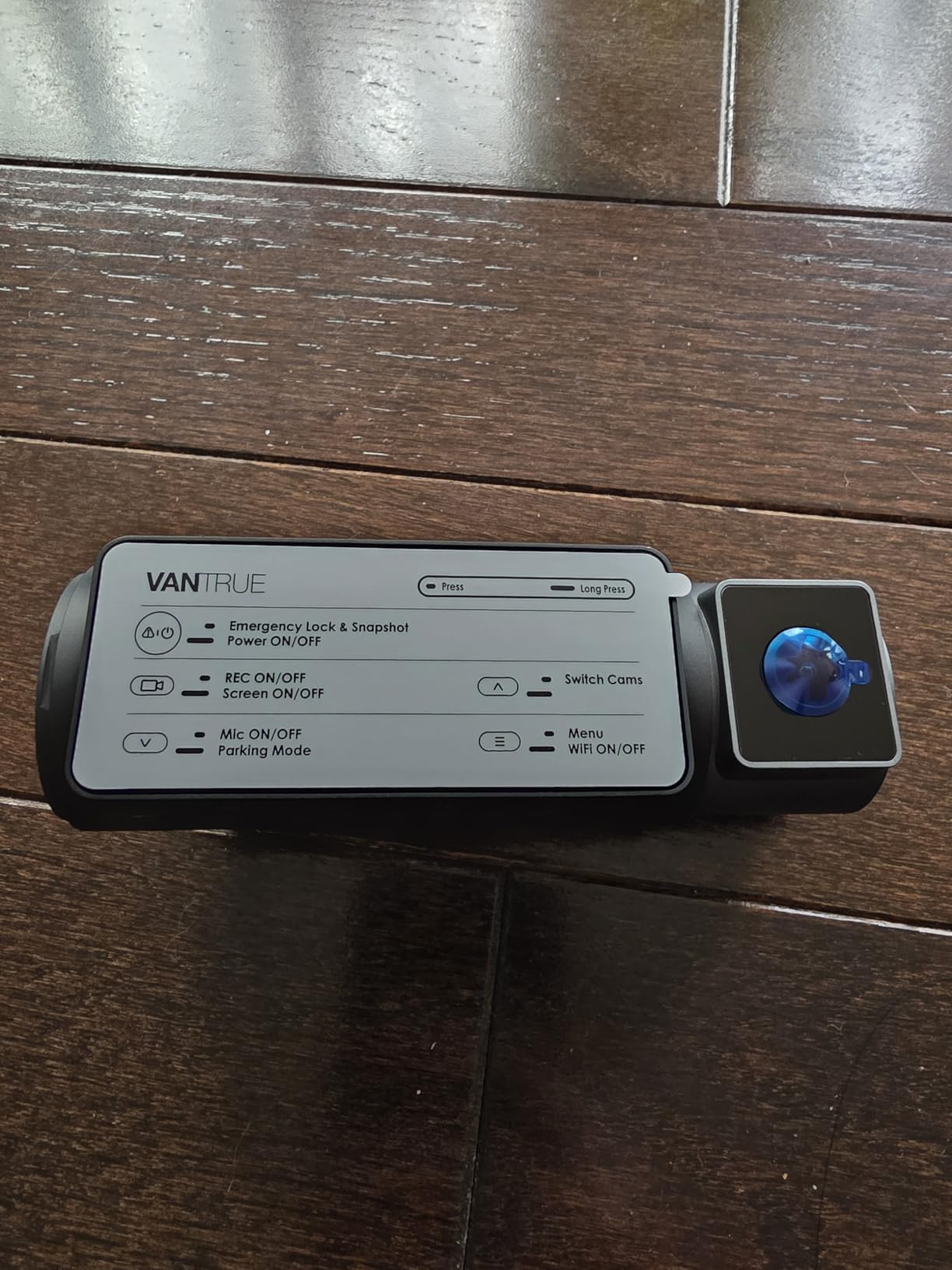
None of that is free of caveats. This is the most expensive camera in the group and carries the lowest average rating, with 15 percent of reviews at one star. Accessory dependence is the bigger issue: the hardwire kit, the suction mount and the extended rear cable are all sold separately, and no memory card is included, so the real cost lands after you click through.
- 1TB microSD support for long recording sessions
- 5GHz WiFi and multi-language voice control
- Plate-readable sensors on every channel
- 18-month warranty after registration
If you run a delivery van, a taxi or a camper, the fourth channel earns its place. For a family car, the REDTIGER F17 covers the same basic need with a card in the box and fewer optional purchases to work out.
6. Vantrue N4 Pro S: Best for Night Plate Readability
Vantrue N4 Pro S
Channels: 3-channel
Front: 4K
Parking: buffered
Card: none included
Pros
- Highest average rating among the premium models
- Triple STARVIS 2 sensors
- PlatePix night processing for plate accuracy
- Front and rear mode reduces heat by 30 percent
- Buffered parking mode with 10-second pre-event clip
Cons
- SD card not included
- Hardwire kit required for parking mode
- Smallest review base of the premium models
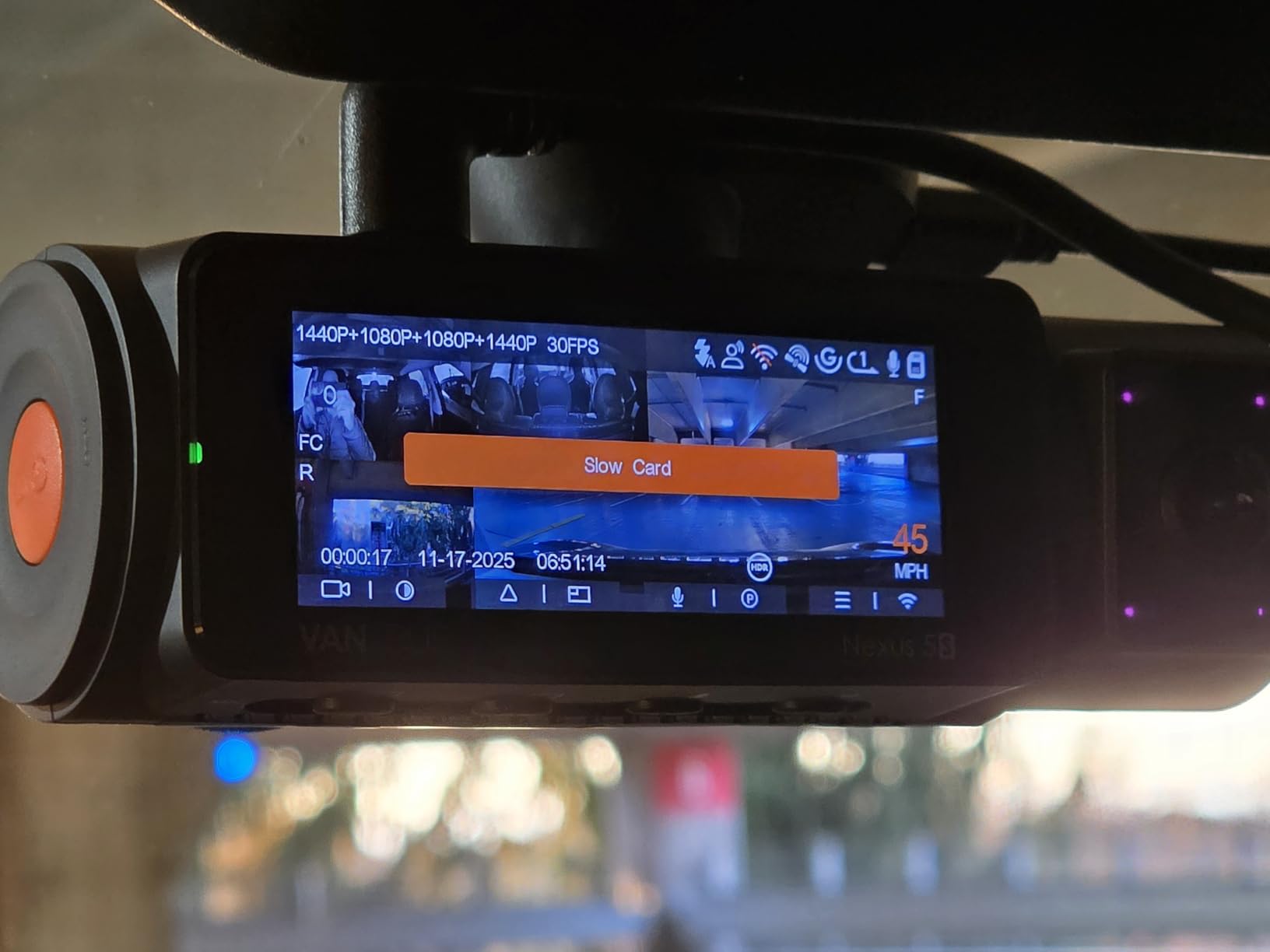
The strongest low-light performance on this list. The Vantrue N4 Pro S pairs 4K, 2.5K and 1080p recording across three channels using three STARVIS 2 IMX678 sensors, with coverage angles of 155, 160 and 165 degrees. Night Vision 4.0 processing and PlatePix technology are the parts that matter at night, where owner reviews say plate capture stays readable rather than turning into a smear of headlights.
There is a thoughtful thermal detail here. Run the camera in front-and-rear mode and Vantrue says heat output drops by 30 percent, which matters for a car parked in direct sun with the recording still going. The rear camera also rotates through 360 degrees, so it can be aimed at the cabin or out of the back window.
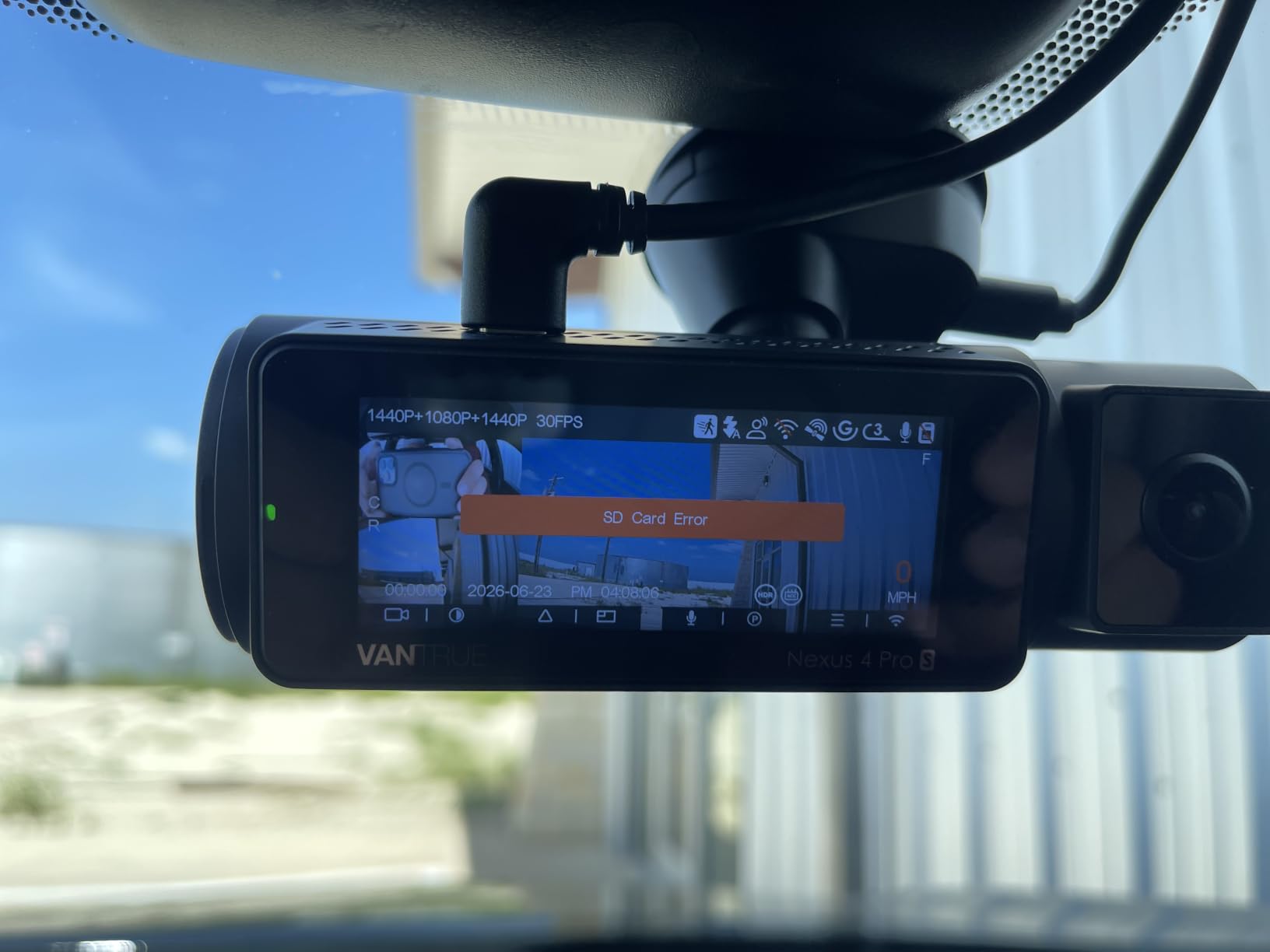
Two up-front purchases are required: a microSD card, since none is included, and a hardwire kit for parking mode. Buffered parking captures ten seconds before an event. It also has the smallest review base of the premium models here, at fewer than 900 ratings, so there is less long-term history on the electronics than the ROVE or REDTIGER models have.
- Triple STARVIS 2 IMX678 sensors across three channels
- 5GHz WiFi, high-precision GPS and voice control
- Supercapacitor power and microSD support up to 1TB
- 18-month warranty that can be extended
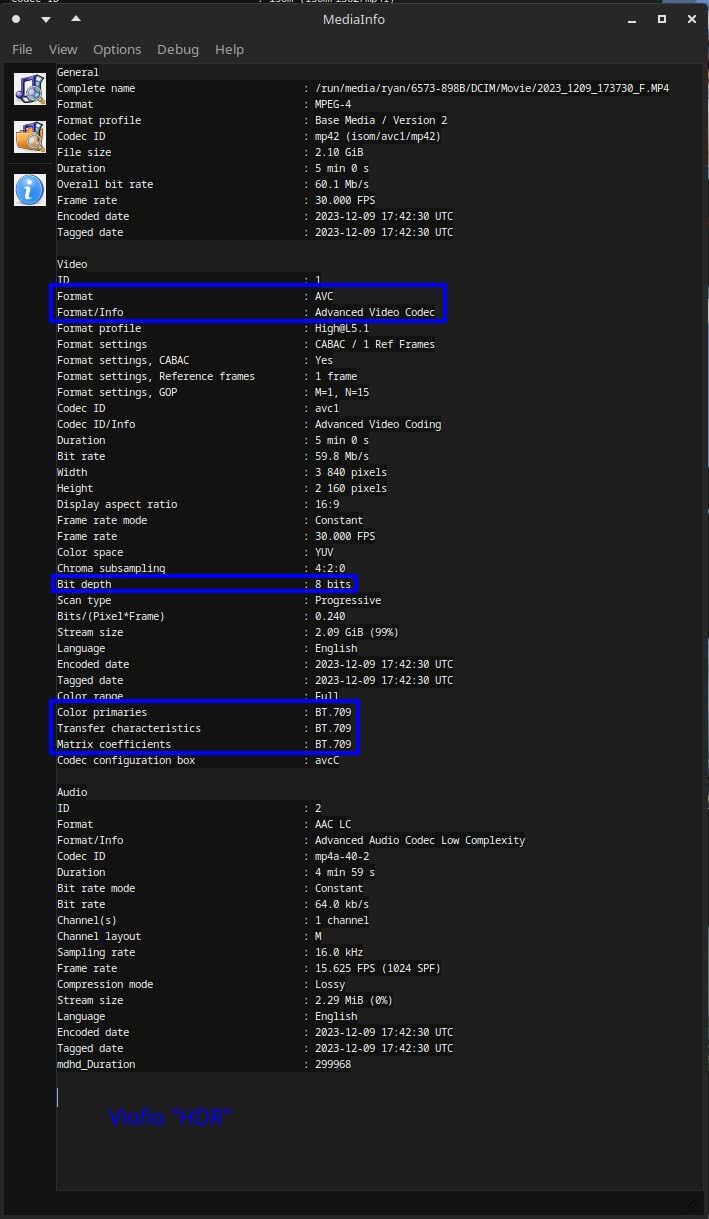
If your driving is mostly after dark, this is the camera to watch. For daytime motorway work in bright sun, the VIOFO A229 Pro below has the anti-glare filter that this one lacks.
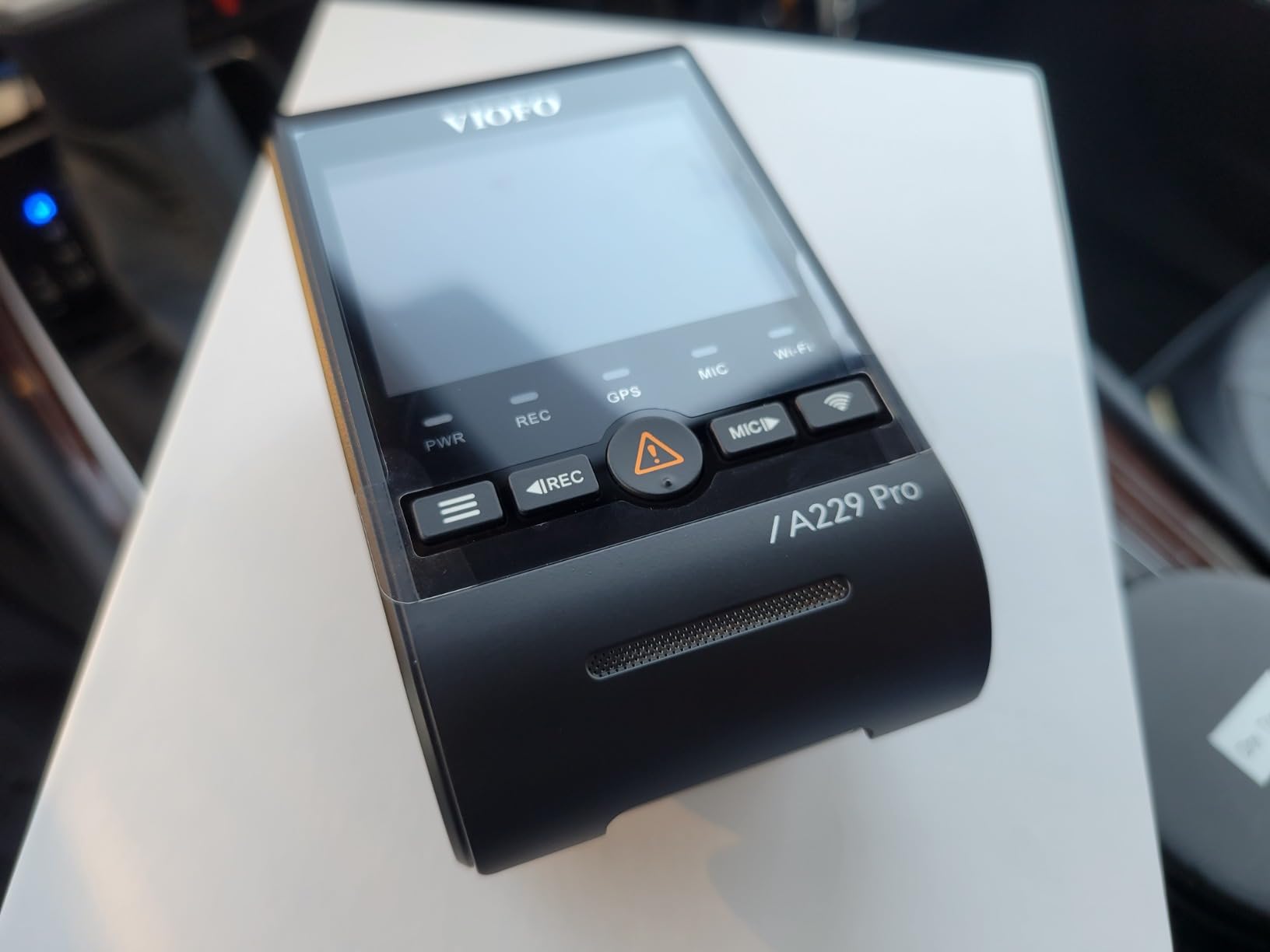
7. VIOFO A229 Pro: Best for Daytime Glare Control
VIOFO A229 Pro
Channels: front+rear
Front: 4K
Parking: buffered
Card: none included
Pros
- Genuine 4K front and 2K rear on dual STARVIS 2 sensors
- CPL anti-glare filter on the front lens
- Buffered parking stores 15 seconds before and 30 after
- Quad-mode GPS with voice commands
- Supercapacitor rated 5F to 149F
Cons
- No SD card included
- Hardwire kit sold separately for parking mode
- 2.4-inch screen and 140-degree view are modest
- 6m rear cable can be short in larger vehicles
The only camera here with a polarising filter on the front lens. The VIOFO A229 Pro uses a genuine STARVIS 2 IMX678 for 4K front recording and an IMX675 for 2K rear, so the back camera is sharper than the 1080p rears on most rivals. HDR runs on both channels, and the CPL filter cuts the washed-out look you get shooting through a sunlit windscreen onto bright road.
Parking mode is buffered longer than most: 15 seconds before an event and 30 seconds after, across three modes including automatic event detection, low bitrate and time-lapse. Twelve voice commands come with spoken notifications, and the quad-mode GPS logger tracks GPS, BEIDOU, GALILEO and GLONASS for a cleaner route trace.
The trade-offs are specific. The screen is 2.4 inches and the front view is 140 degrees, the narrowest of the group after the entry-level models. The included rear cable is 6 meters, which can leave a large SUV or pickup short, and both a memory card and a hardwire kit have to be bought separately. Owners rate the brand support and the 18-month warranty highly.
- 4K front and 2K rear from two STARVIS 2 sensors
- CPL anti-glare filter fixed to the front lens
- 5GHz WiFi with the VIOFO app for clip review
- Supercapacitor rated from 5F to 149F with no battery to swell
Against the ROVE R2-4K Dual, this model records a sharper rear image and handles glare better, but costs more once the card and hardwire kit are counted. Drivers who mostly drive in bright conditions will notice the difference; night drivers should read the Vantrue N4 Pro S section next.
8. BOOGIIO OK-831: Best for the Simplest Possible Setup
BOOGIIO OK-831
Channels: front only
Front: 1080P
Parking: motion detect
Card: 32GB included
Pros
- Records as soon as it receives power
- Physical buttons instead of an app
- Suction mount holds in warm weather
- 32GB card pre-installed with reader included
Cons
- 1080P only with no WiFi or GPS
- Incident sensitivity triggers on speed bumps
- Power cable is short for larger vehicles
- Some report loop recording failures
No app, no account, no card to buy. The BOOGIIO OK-831 is a single front camera that starts recording the moment it gets power, with a 3-inch IPS screen and physical buttons for everything. The 32GB card is already installed, and a USB card reader and car charger are in the box, so it is in the windscreen within a few minutes of opening the parcel.
The image is 1080p at 30fps with a 170-degree real field of view through a 6-glass lens and an F1.8 aperture, with WDR and HDR for low light. G-sensor incident lock, loop recording, motion detection and a parking monitor are all present, and date and licence plate stamps are burned into the frame.
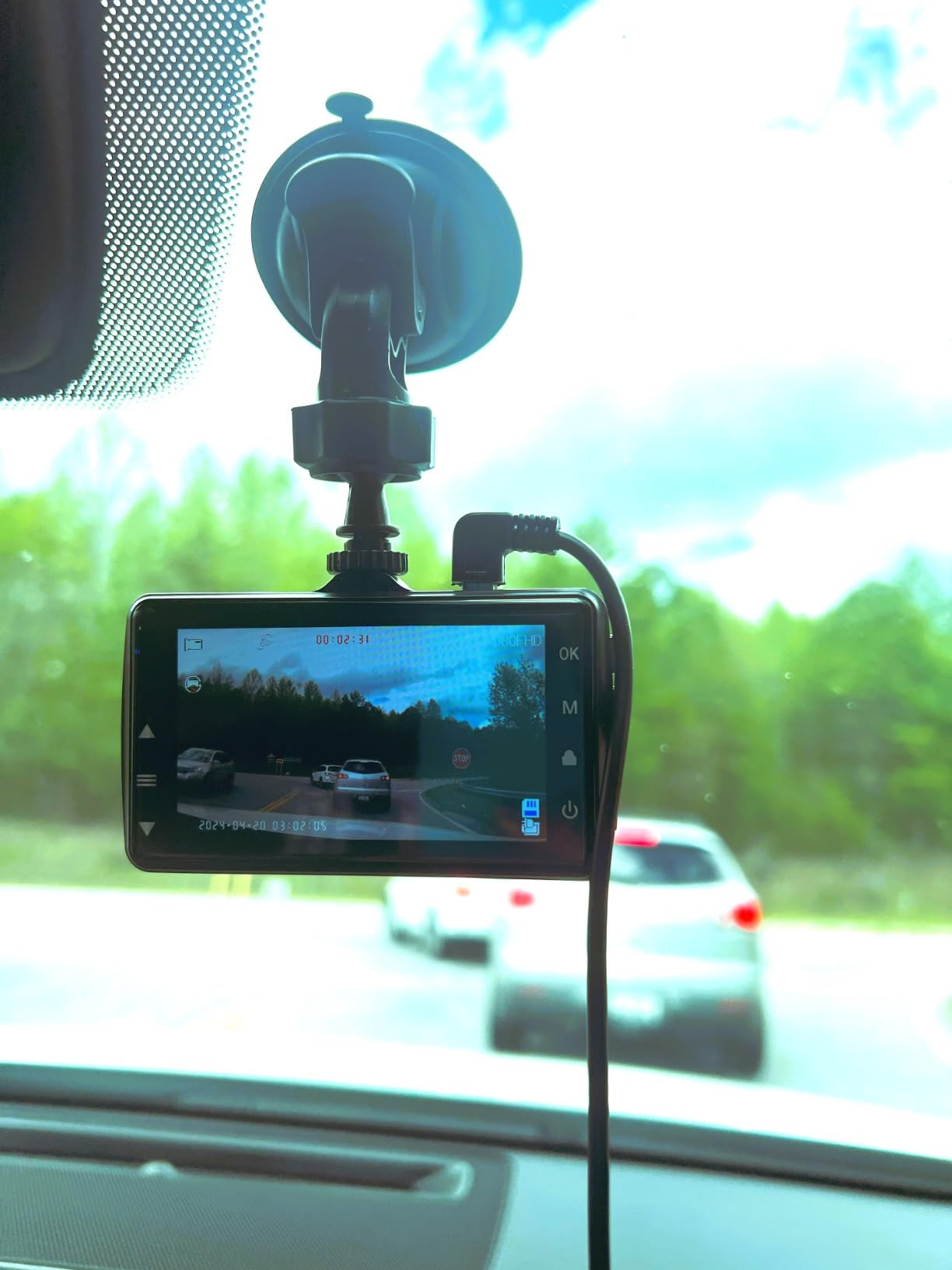
Be clear-eyed about what this is. There is no WiFi, no GPS, no rear camera and no 4K, so footage cannot be pulled off by phone and cannot show where you were. The most common complaint is that incident sensitivity is set high and locks a clip on every speed bump, and it cannot be fully disabled. The power lead is also short, which matters in anything larger than a hatchback.
- Suction mount rather than adhesive, so it survives heat better and comes off cleanly
- Menu and settings handled on the unit, no phone needed
- Aluminium alloy case and a 1-year warranty
- Still photos up to 12MP from the same sensor
If the goal is evidence after a rear-end rather than a full record of the day, this is enough. Anyone wanting to review clips on a phone should skip to the ROVE R2-4K Dual.
9. E-YEEGER S60: Best for the Lowest-Cost Dual Camera
E-YEEGER S60
Channels: front+rear
Front: 2.5K
Parking: time-lapse
Card: none included
Pros
- Front and rear coverage at an entry price
- 2.5K front resolution reads licence plates
- Compact 2-inch body sits low near the mirror
- Suction mount holds in hot conditions
Cons
- SD card not included with the base model
- Rear camera struggles on sloped rear glass
- Footage transfer means removing the card
- One owner reports the suction mount releasing
Front and rear coverage at the bottom of the price range. The E-YEEGER S60 records 2560 by 1440p at the front and 1080p at the rear, on a 170-degree front lens with a starlight sensor, a 6-layer glass lens and WDR and HDR processing. Frame rate runs at 30 or 60fps. For a first dash cam or a second car, that is a usable resolution for reading plates in daylight.
The body is genuinely small at 2.44 by 1.25 by 1.57 inches with a 2-inch IPS screen, which matters because it sits near the rearview mirror without blocking the driver’s view of the road. A 360-degree suction mount holds it in place and, per owner reviews, stays put in hot conditions better than an adhesive pad.
Plan for two extras. No microSD card is included, so buy one before the camera is mounted, and the optional 24-hour time-lapse parking monitor needs a Type-C hardwire kit. Owners also note that the rear camera performs poorly on strongly sloped rear glass, where it can look dark, and that getting footage off the camera means pulling the card rather than using wireless transfer.
- Loop recording with automatic G-sensor incident lock
- microSD support up to 256GB
- 12-month replacement service
- Compact enough for small cars and small trucks
The BOTSLAB G300H Plus covers the same channel layout for slightly more, and adds STARVIS 2 sensors, GPS, WiFi and a bundled card. If the difference fits your plan, that is the better buy; if not, the S60 does the basic job at the lowest entry point.
10. BOTSLAB G300H Plus: Best for STARVIS 2 on a Budget
BOTSLAB G300H Plus
Channels: front+rear
Front: 4K
Parking: 24-hour
Card: 64GB included
Pros
- STARVIS 2 sensor at an entry dual-camera price
- 170-degree front and 150-degree rear lenses
- Supercapacitor rated -20C to 70C
- GPS and WiFi with voice control plus a 64GB card
Cons
- 2-inch screen and no third channel
- 9 percent of reviews are 1-star
- Thin wedge shape is awkward on curved windscreens
The specifications usually reserved for higher-end models, in a budget body. The BOTSLAB G300H Plus records 4K at the front and 1080p at the rear from a STARVIS 2 sensor, with a 170-degree front lens and a 150-degree rear lens. Apertures are f/1.5 at the front and f/2.0 at the back, which is why the low-light footage holds up better than most cameras at this level.
It also includes the features that are usually stripped out further down the range: built-in GPS, 5.8GHz WiFi with app control, hands-free voice control for stills and recording, and a 64GB TF card in the box. Recording is loop-based, and a 24-hour parking mode is supported alongside the automotive-grade supercapacitor rated from -20C to 70C.
Two things give owners pause. The screen is 2 inches and there is no third channel, so this is a two-camera setup no matter how it is mounted. Roughly 9 percent of reviews sit at one star, and a recurring note is that the thin wedge profile is awkward to position on a strongly curved windscreen, so expect to adjust it a few times before it sits right.
- Wide 170-degree front and 150-degree rear coverage
- Voice control for hands-free capture
- microSD support up to 256GB
- 12-month guarantee
Against the REDTIGER F7NP, this model matches the wide front angle at a lower tier but gives up the larger warranty and some of the owner history. It is the pick if you want wide coverage and app control without stretching into the premium bracket.
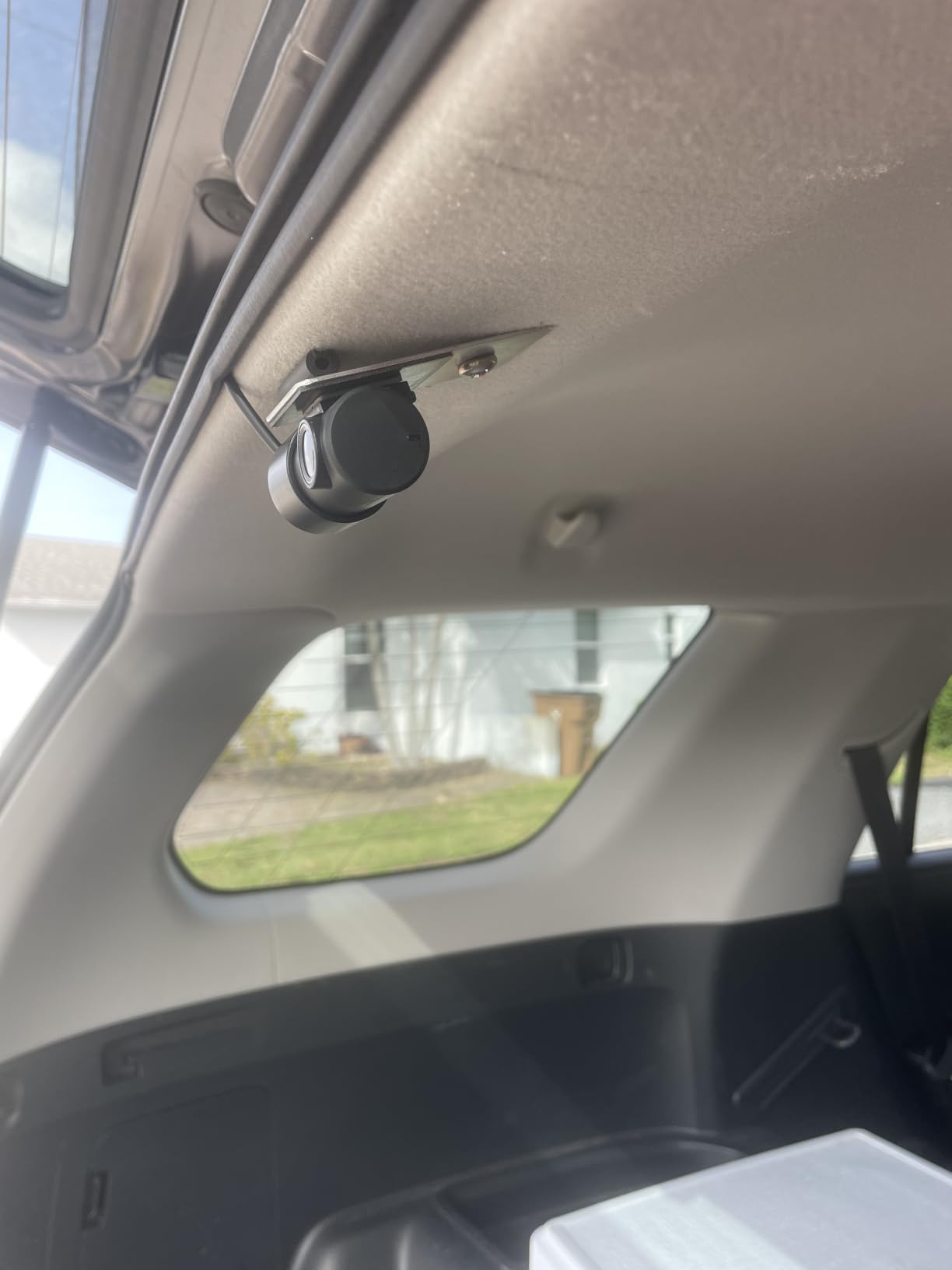
How to Choose Dash Cams During Prime Big Deal Days
Resolution and Sensor Quality
Headline resolution is the least useful number on the listing. A camera that shoots 4K on a small sensor gives you a sharper file than a 1080p camera on a good one, so read the sensor name before the pixel count. In this group, Sony STARVIS 2 appears across the ROVE, REDTIGER, Vantrue and BOTSLAB models, and it is the common thread behind the low-light performance owners praise.
Two more details matter more than the badge. Aperture sets how much light reaches the sensor, so f/1.5 front lenses beat f/2.0 ones in unlit streets. Field of view decides how much of a junction you see, with 170 degrees the widest here and 140 degrees the narrowest. Our guide to dash cams with night vision goes deeper on the sensor and aperture combinations that actually help after dark.
Single-Camera or Front-and-Rear Coverage
A single front camera is enough if your concern is a rear-end on the motorway or a red light you did not see. Add a rear camera the moment you start parking on a street, because a hit from behind is the collision most drivers cannot reconstruct. The dual models here start at the E-YEEGER S60, and the three-channel options, such as the REDTIGER F17, add a cabin view for rideshare work and child car seats.
Watch for bundles that advertise 4K and deliver 1080p at the back. That is the norm here, not a flaw. The exceptions are the VIOFO A229 Pro with a 2K rear sensor and the Vantrue N5S with a 2.5K rear.
Parking Mode and Power Management
Parking mode keeps recording while the car is stationary, usually as a low-frame time-lapse or on motion detection. On most of these models it needs a hardwire kit, sold separately, because the 12V socket cannot supply power indefinitely. On all of them, a supercapacitor rather than a lithium battery is the safer design in a parked car in summer heat, since capacitors do not swell in the way batteries do.
Buffered modes are the better version, because they save several seconds of video from before an impact. The Vantrue N5S and N4 Pro S capture 10 seconds beforehand, and the VIOFO A229 Pro captures 15 seconds before and 30 after.
Storage Capacity and Recording Reliability
Every camera here is loop-recording, so older clips are overwritten once the card fills. Check two things: whether a card is included, and the maximum capacity supported. Six of the ten products here ship with a card, while the Vantrue N5S, Vantrue N4 Pro S, VIOFO A229 Pro and E-YEEGER S60 do not. Maximum supported capacity ranges from 256GB on the E-YEEGER S60 up to 1TB on the ROVE and both Vantrue models.
Three channels on one card fill it fastest, which is why owners of the REDTIGER F17 with its bundled 64GB recommend moving up. Format the card in the camera on first use rather than on your computer, and check that incident clips are actually being locked, because a sensitivity setting that fires on every speed bump will fill a card with clips you do not need.
Installation, Visibility, and Ease of Use
Mount the camera high enough on the windscreen to clear the wipers and out of the driver’s sightline, and keep the body small. The E-YEEGER S60 at 1.57 inches tall and the BOTSLAB G300H Plus at 0.45 inches deep are the least intrusive, while larger bodies can sit lower behind the mirror. Adhesive mounts are permanent and survive heat better; suction mounts come off cleanly and can be repositioned, and the BOOGIIO OK-831 and E-YEEGER S60 both use one.
Route the rear cable along the headliner and down the pillar rather than across the door seal, and check the cable length first, since the 6-meter lead on the VIOFO A229 Pro can fall short in a large SUV. Finally, read the app pairing instructions before you mount anything: several models, including the REDTIGER F7N Touch and F17, need Bluetooth disabled and a direct WiFi connection for every download.
How to Shop Dash Cam Deals During the Sale
Check the model code on the listing before you buy, not just the headline, since several of these cameras are refreshed within the same product family. Confirm whether the front-and-rear kit or the single front camera is in the box, and whether the memory card is included, because that changes the real total more than any offer does. Look at who is selling the item: a marketplace seller can undercut a Prime price even after tax. Read whether the listing is new or renewed, and whether the rear cable and hardwire kit are in the kit or sold as add-ons. Most offers during this event need a Prime membership, with a free trial counting, and they change hour by hour through the run of the sale.
- Match the model number, not just the brand and the resolution
- Confirm front, front-and-rear or 3-channel before checkout
- Check whether the microSD card and hardwire kit are included
- Look for Amazon as the seller rather than a marketplace listing
- Confirm the condition is new and read what the warranty covers
Frequently Asked Questions
When do the Best Amazon Prime Big Deal Days Dash Cam Deals run?
Amazon Prime Big Deal Days runs October 6-7, 2026, with early-bird dash cam offers from October 1. Most of these listings need a Prime membership, and a free trial counts. Prices and deal badges shift through the event, so check the listing again before you buy rather than trusting a number from an earlier page.
Which dash cam is the best on Amazon?
The ROVE R2-4K Dual is the strongest all-round choice in this list, with a 4K front and 1080p rear feed from a Sony STARVIS 2 sensor, built-in GPS, a 3-inch screen and a 128GB card in the box. For cabin and rear coverage the REDTIGER F17 records three channels at once, and for after-dark plate capture the Vantrue N4 Pro S has the strongest night processing.
Is parking mode worth it on a dash cam?
Yes, if you park on a street or in a shared lot, because it records movement while the car is unattended. Most models here use a supercapacitor rather than a lithium battery, which handles parked-car heat better. Parking mode normally needs a hardwire kit bought separately, so budget for that before assuming it is included.
What is the best cheap dash cam with parking mode?
The BOTSLAB G300H Plus is the pick here for parking mode on a budget, with a STARVIS 2 sensor, built-in GPS, WiFi and a bundled 64GB card alongside a 24-hour parking mode. The BOOGIIO OK-831 is cheaper and also records while parked with no hardwire kit needed, but it is 1080p with no WiFi and no GPS. Both suit a first dash cam rather than evidence-grade coverage.
How do I know a dash cam deal is a real discount?
Compare the offer against the recent price history for that exact model, and check whether it is a limited-time deal, a coupon or a Prime member offer, since each cuts the price differently. Confirm the seller is Amazon rather than a marketplace seller, and check that the card and hardwire kit are included, because a cheaper headline can still cost more once those are added.
Do I need a hardwire kit for a dash cam?
Only if you want parking mode. The 12V socket in a parked car cannot deliver power for long, so every model here with continuous parking surveillance expects a hardwire kit connected to the fuse box, and none of the kits are included in the box. Without one you still get loop recording while driving, which covers most day-to-day incidents.
Final Verdict: Best Amazon Prime Big Deal Days Dash Cam Deals
Buy the ROVE R2-4K Dual if you want one camera that handles commuting, parking and road trips without extra purchases. The REDTIGER F7NP is the pick when the widest front view matters more than a screen, and the REDTIGER F7N Touch suits drivers who prefer adjusting settings on a touchscreen. Add the REDTIGER F17 for cabin coverage in a rideshare or family car, or the Vantrue N5S when you need a fourth camera for cargo space.
Go with the Vantrue N4 Pro S if most of your driving is after dark, the VIOFO A229 Pro for glare-prone daytime motorway work, the BOTSLAB G300H Plus for wide dual coverage on a budget, and the BOOGIIO OK-831 as a no-fuss first camera. The E-YEEGER S60 is the lowest-cost way to get front and rear recording. Add a memory card and a hardwire kit to the budget for any model that does not include them, then check the current price through the button, since offers move through the event.