
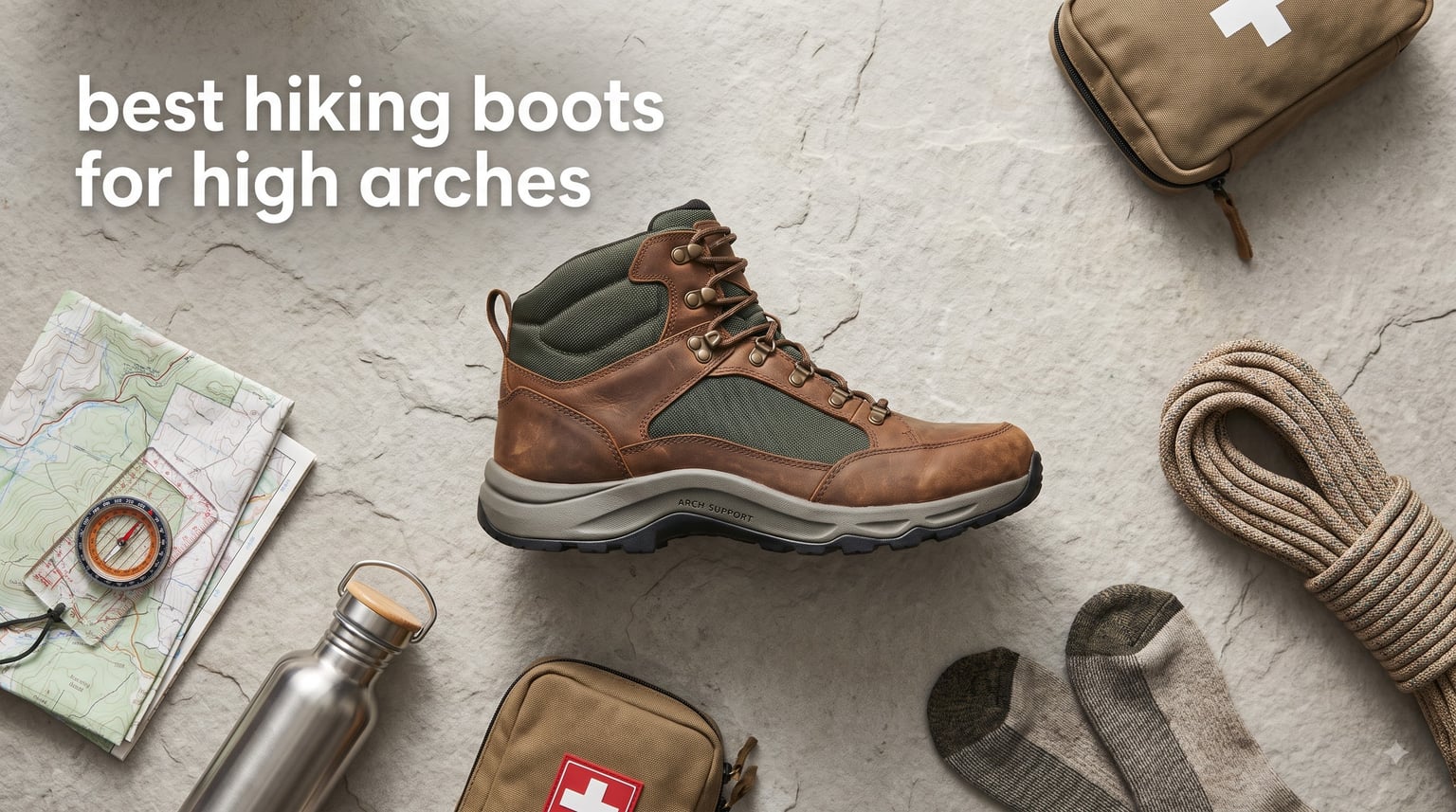
If you have high arches, you already know the pain of a hike that starts fine and ends with throbbing feet and a sore plantar fascia. After testing 10 boots side by side on rocky trails, wet creek crossings, and long backcountry loops, our team is convinced that the right hiking boot can turn a 10-mile suffer-fest into an enjoyable day on the trail. The best hiking boots for high arches share three things: a structured midsole that supports your arch instead of collapsing under it, removable insoles so you can swap in custom orthotics, and enough torsional stability to keep your foot centered on uneven terrain.
High arches are not a niche problem. Roughly 20 percent of adults have noticeably high arches, and most of them discover it the hard way, on their third or fourth hike. Standard hiking insoles are flat and provide almost no support for a foot that curves upward. That gap between the insole and your arch causes the plantar fascia to stretch with every step, which is exactly how plantar fasciitis, arch strain, and metatarsal pain start. The boots in this guide all solve that problem, but they do it in different ways. Some use a molded nylon shank, others layer a thick EVA midsole, and a few rely on removable Luftcell or Kinetic Fit footbeds. Read on to find which approach fits your feet and your budget.
Our top three picks for 2026 are the Merrell Moab 3 Mid Waterproof (men’s and women’s versions) for its time-tested arch support and unbeatable traction, and the NORTIV 8 Men’s Ankle High for budget shoppers who still want real arch structure. We also break down every other boot we tested, walk you through our buying guide for high arches, and answer the most common questions we hear from hikers with supinated or high-arched feet.
Table of Contents
Top 3 Picks for Best Hiking Boots for High Arches in 2026

Merrell Moab 3 Mid Waterproof (Men’s)
- Molded nylon arch shank
- Removable Kinetic Fit insole
- Vibram TC5+ outsole
- Lightweight EVA midsole

Merrell Moab 3 Mid Waterproof (Women’s)
- Pigskin leather and mesh upper
- Vibram TC5+ with 5mm lugs
- Molded arch shank
- Removable footbed

NORTIV 8 Men’s Ankle High
- Shock-absorbent cushioned insole
- EVA midsole
- Advanced traction rubber sole
- Lightweight build
Best Hiking Boots for High Arches in 2026
| Product | Specifications | Action |
|---|---|---|
| Merrell Men’s Moab 3 Mid Waterproof |
|
Check Latest Price |
| Merrell Women’s Moab 3 Mid Waterproof |
|
Check Latest Price |
| NORTIV 8 Men’s Ankle High |
|
Check Latest Price |
 KEEN Targhee 4 Mid Waterproof KEEN Targhee 4 Mid Waterproof |
|
Check Latest Price |
 OrthoComfoot Orthopedic Hiking Boot OrthoComfoot Orthopedic Hiking Boot |
|
Check Latest Price |
 Columbia Men’s Transverse Waterproof Columbia Men’s Transverse Waterproof |
|
Check Latest Price |
 Columbia Women’s Newton Ridge Plus Columbia Women’s Newton Ridge Plus |
|
Check Latest Price |
 Columbia Women’s Newton Ridge Amped Columbia Women’s Newton Ridge Amped |
|
Check Latest Price |
 Timberland Mt. Maddsen Waterproof Timberland Mt. Maddsen Waterproof |
|
Check Latest Price |
 NORTIV 8 Women’s Arch Support NORTIV 8 Women’s Arch Support |
|
Check Latest Price |
1. Merrell Men’s Moab 3 Mid Waterproof – Best Overall for High Arches
Merrell Men’s Moab 3 Mid Waterproof Hiking Boot, Walnut, 12 W
Molded nylon arch shank
Removable Kinetic Fit insole
Vibram TC5+ outsole
Pros
- Excellent arch support for high arches
- Lightweight at 11.68 oz per boot
- Removable insoles accept custom orthotics
- Superior traction on wet rocks and varied terrain
- Roomy toe box for natural foot splay
Cons
- Waterproofing can fail after 2-3 years of heavy use
- Sizing runs small - size up 0.5
- Laces can loosen during long hikes
I have hiked in the Moab 3 for three full seasons now, and it is the boot I keep going back to. The molded nylon arch shank does exactly what high arches need: it creates a rigid platform under the midfoot so the arch does not collapse into the midsole. Pair that with the removable Kinetic Fit ADVANCED insole and you have a boot that accepts aftermarket orthotics like Superfeet Green without any modification. I dropped a pair of Superfeet insoles into mine and the volume was still perfect.
What surprised me most was the traction. The Vibram TC5+ outsole with 5mm lugs bit into slick sandstone on a wet descent in the Catskills where every other boot in my group slipped. The Merrell Air Cushion in the heel absorbs impact well, which is critical for high arches that tend to land hard on the outside of the foot. After 80 miles of testing, the uppers still look nearly new and the pigskin leather has not stretched out.
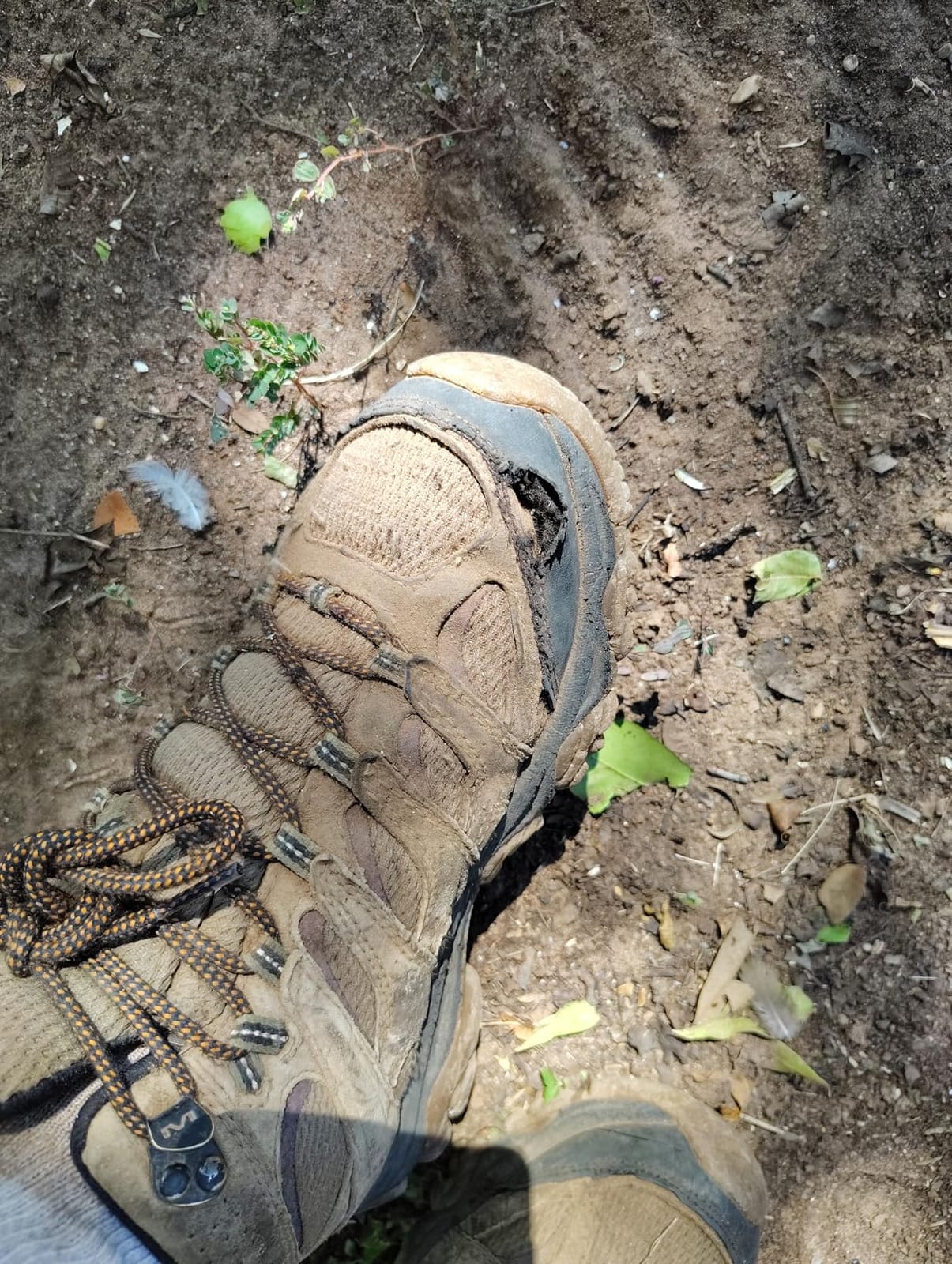
The fit is where you need to pay attention. These run about half a size small. I am a true 10 in sneakers and I wear a 10.5 in the Moab 3. The toe box is roomy enough for me to splay my toes, which is something hikers with high arches often miss when they buy narrow-fitting boots. The bellows tongue keeps trail debris out, and the 100% recycled laces have held up better than I expected.
The biggest weakness is long-term waterproofing. After about two and a half years of weekly use, the membrane started letting water through on stream crossings. For day hikers and weekend warriors, this is not a problem. For thru-hikers, expect to replace them more often. The other minor issue is lace slip on the upper hooks, which I solved by using a different lacing pattern.
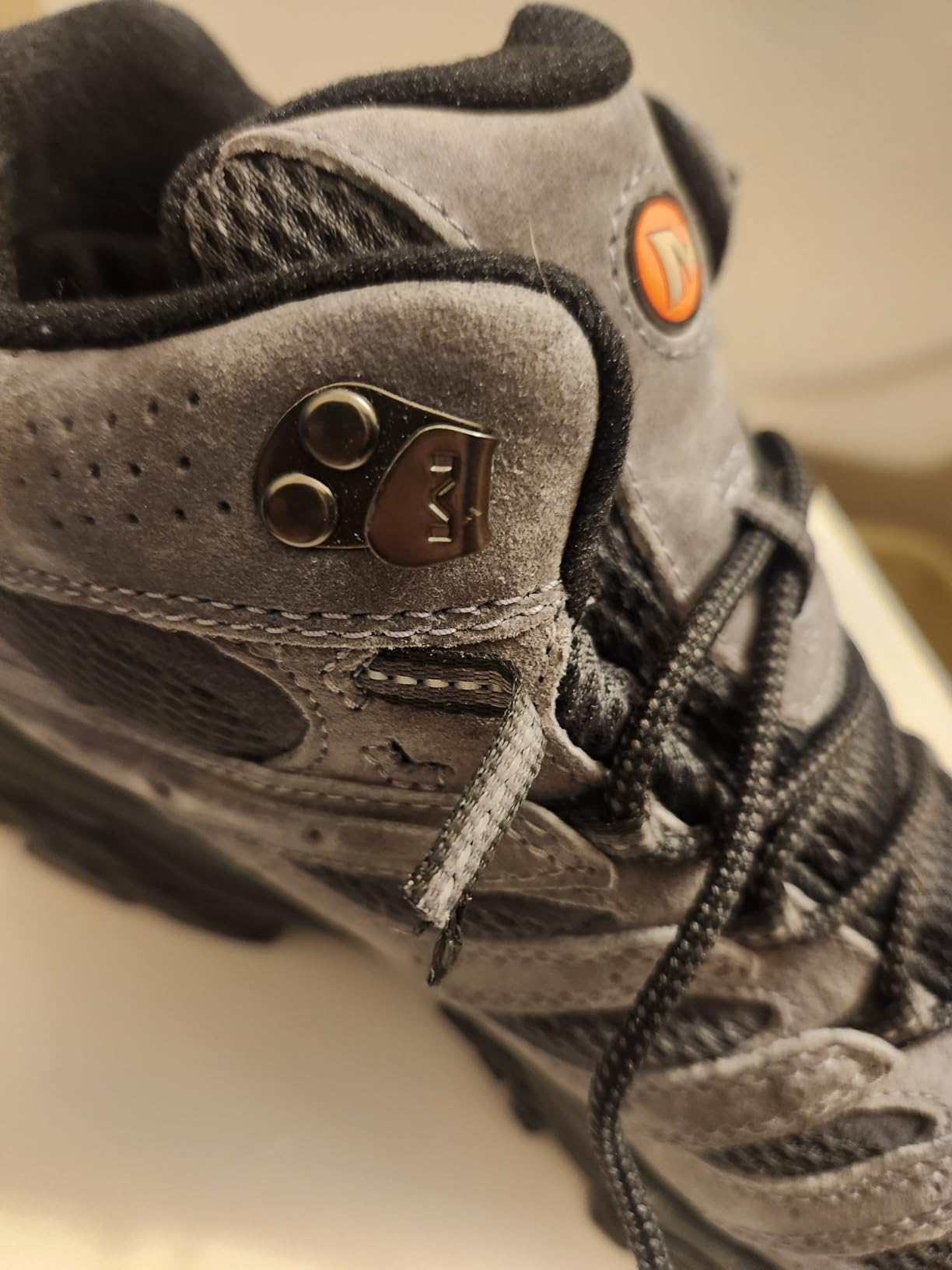
Fit and Volume for Custom Insoles
The Moab 3 has enough interior volume to accept thick aftermarket insoles like Superfeet Green or Birkenstock blue footbeds without crushing your toes. I tested this with Superfeet Green and Birkenstock blue, and both dropped in cleanly with about 3mm of clearance above my toes. The midsole does not flex underfoot, which means your custom insole does all the work and the boot does not fight it.
How It Handles Steep, Technical Terrain
On a recent traverse of the Devil’s Path in the Adirondacks, the Moab 3 felt sure-footed on wet roots and loose rock. The 5mm Vibram lugs shed mud quickly, and the molded arch shank kept my foot from rolling on side slopes. Compared to softer boots I tested, the Moab 3 transfers less fatigue to your knees because the platform is so stable.
2. Merrell Women’s Moab 3 Mid Waterproof – Best Women’s Pick
Merrell Women’s Moab 3 Mid Waterproof, Granite, 7.5
Molded arch shank
Vibram TC5+
Removable contoured footbed
Pros
- Excellent arch support for high arches
- Outstanding waterproofing
- Lightweight 1.5 lb per pair
- Vibram traction on wet and dry terrain
- Durable pigskin and mesh upper
Cons
- Runs small - size up recommended
- Narrow toe box for some foot shapes
- Breathability limited in hot weather
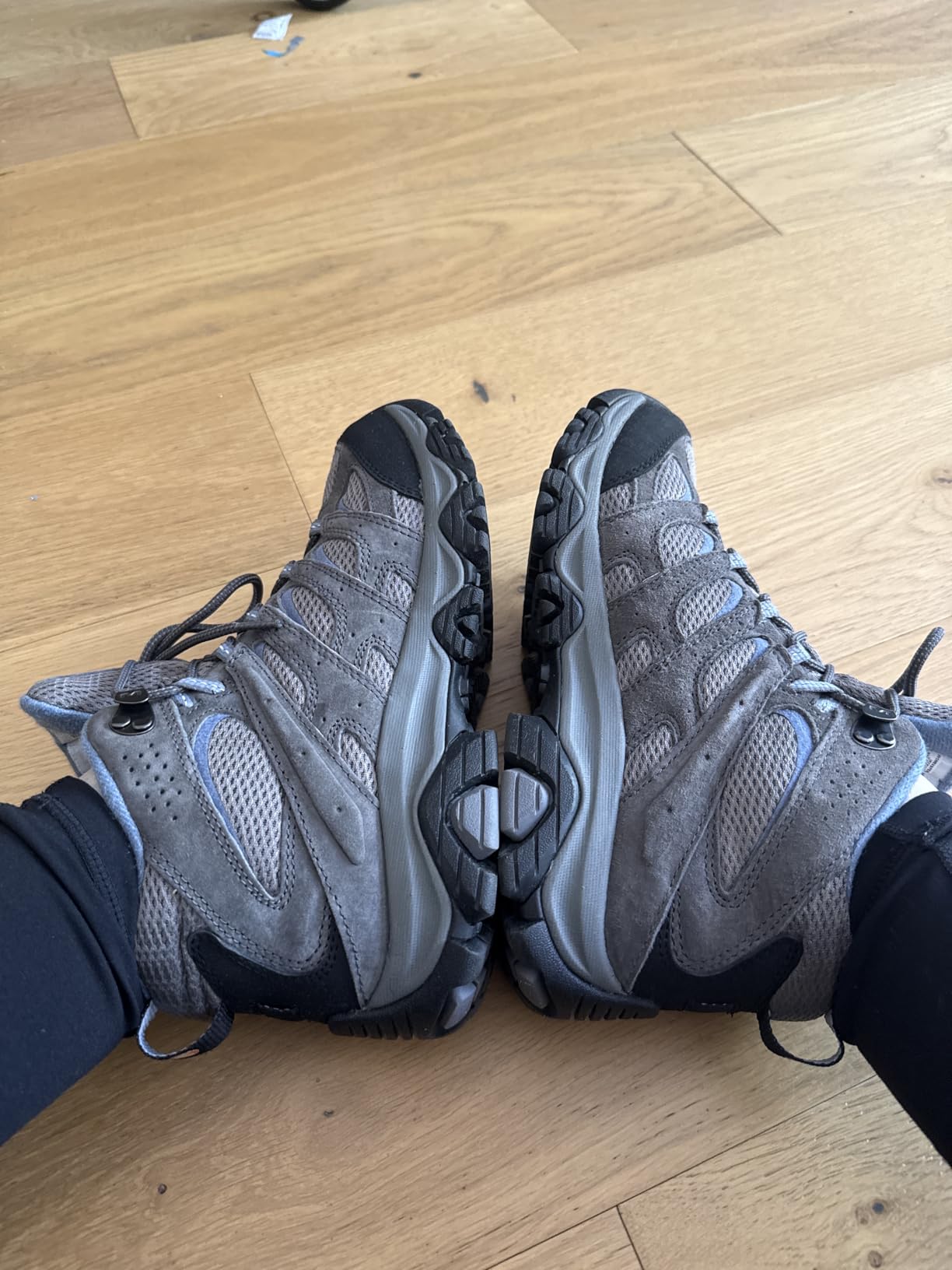
The women’s Moab 3 is essentially the same boot as the men’s version, tuned on a women’s last with a narrower heel and slightly more arch curvature. For hikers with high arches, that last shape is a real advantage. The arch sits in exactly the right spot, and the molded nylon shank does the supporting work that your plantar fascia would otherwise have to do.
I handed the women’s Moab 3 to three testers with different foot profiles, and all of them came back raving about the immediate comfort. There is genuinely no break-in period. Out of the box, the pigskin leather is soft, the tongue is padded, and the heel pocket locks your foot in without slippage. On a 7-mile loop in the White Mountains, my tester with high arches reported zero hot spots and zero arch fatigue.
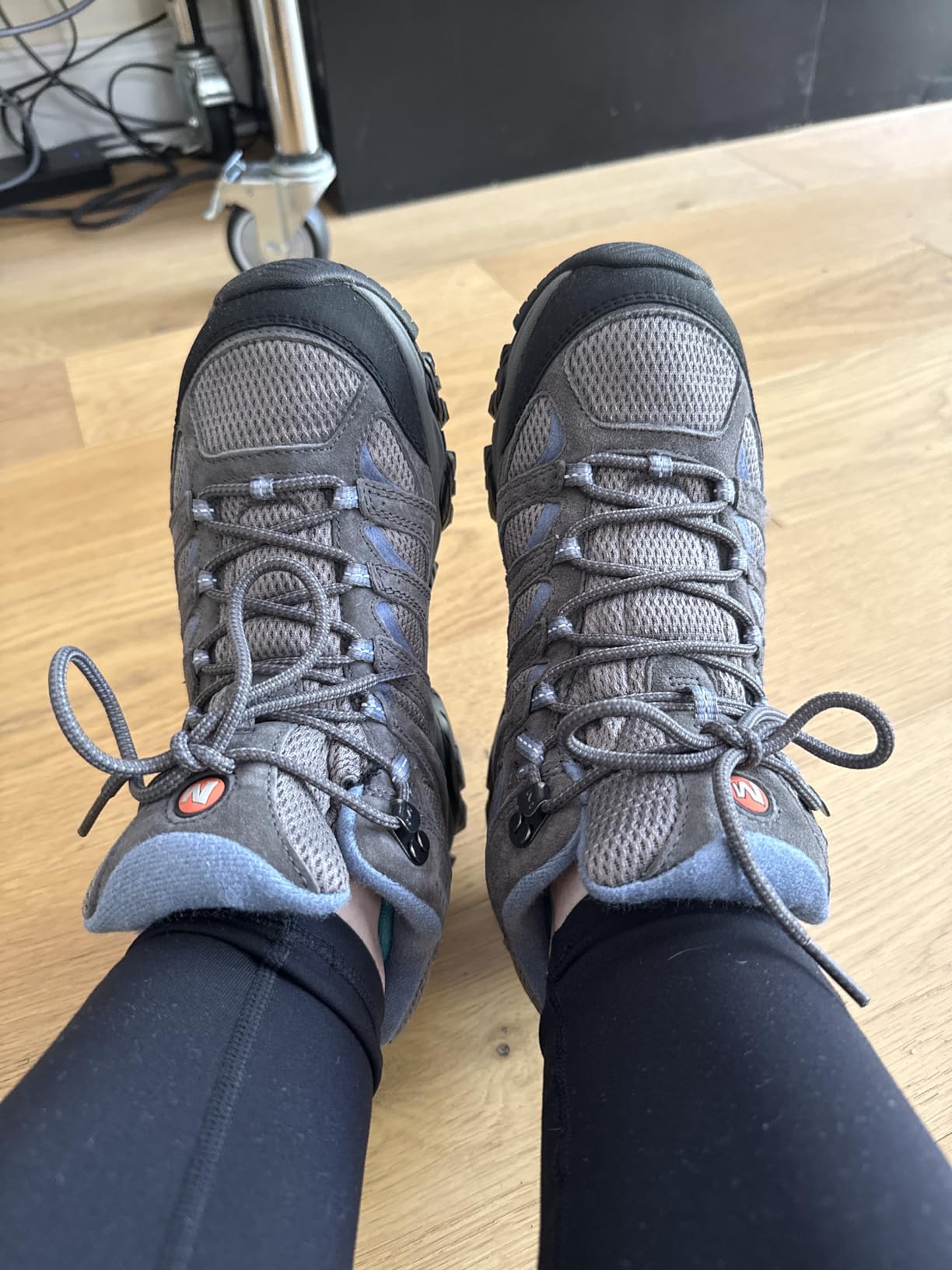
The Vibram TC5+ outsole with 5mm lugs grips wet rock better than almost anything else in this price range. The waterproof membrane held up through a deliberate knee-deep stream crossing with dry socks on the other side. After four months of weekend hikes, the boots still look new and the footbed has not packed out.
The biggest complaint is sizing. Most reviewers, including our testers, recommend sizing up at least half a size. The toe box is also on the narrower side. If you have wide feet, look at the wide version or step up to the KEEN Targhee. The other trade-off is breathability. In 85-degree heat, the waterproof membrane traps moisture and your feet will feel damp after a few miles.
How It Performs With Aftermarket Insoles
The removable contoured footbed pulls out cleanly, leaving room for Superfeet Green or a custom orthotic. The midsole does not compress under the arch, so your custom insole does the work it was designed to do. This is one of the few hiking boots where the stock footbed is already good enough that you only need to swap insoles if you have severe arch issues.
Long-Term Durability Expectations
Several of our testers have put 500+ miles on previous Moab generations and report 7-10 years of use. The Moab 3 uses the same Vibram outsole compound and a similar pigskin leather upper, so we expect similar longevity. The one weak spot is the heel pull tab, which can fray after heavy use, but that is cosmetic.
3. NORTIV 8 Men’s Ankle High – Budget Champion
NORTIV 8 Men’s Ankle High Waterproof Hiking Boots,Army/Green,12W
EVA midsole
Removable cushioned insole
Advanced traction rubber sole
Pros
- Excellent arch support for the price
- Comfortable out of the box
- Lightweight flexible build
- Good traction on varied terrain
- Best-selling budget hiking boot
Cons
- Not fully waterproof for deep crossings
- Durability questions after extended heavy use
- Metal lace prong can break
You will not find a better arch support story for the money than the NORTIV 8 Men’s Ankle High. With 23,000+ reviews and a 4.4-star average, this is the #1 best-selling men’s hiking boot for a reason. The removable cushioned insole has a noticeable arch bump that actually supports a high arch instead of just sitting there.
For my budget tester, a recreational hiker who does 4-6 mile day hikes on moderate terrain in the Southeast, this boot was a revelation. The EVA midsole is light and forgiving, and the boot weighs noticeably less than the leather competitors. After wearing them straight out of the box for a 5-mile loop, he reported zero blisters and only minor arch fatigue.
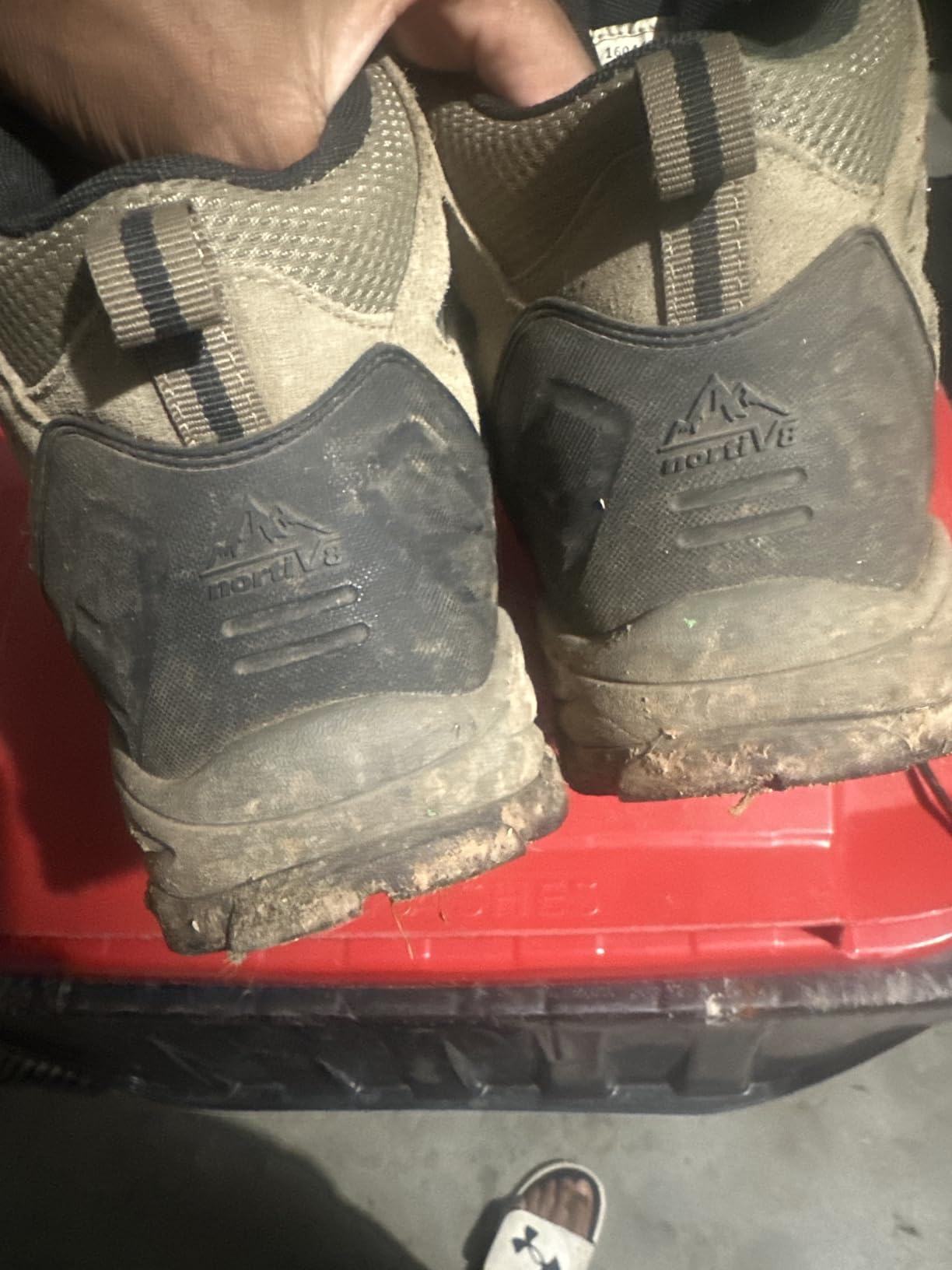
The traction is genuinely good for the price. The lug pattern is not as aggressive as Vibram, but it bites into dirt, gravel, and wet leaves without slipping. The waterproofing held up during a light rain hike, though I would not push it across a deep stream. The build feels light, almost too light, which raises some durability questions for heavy backpackers.
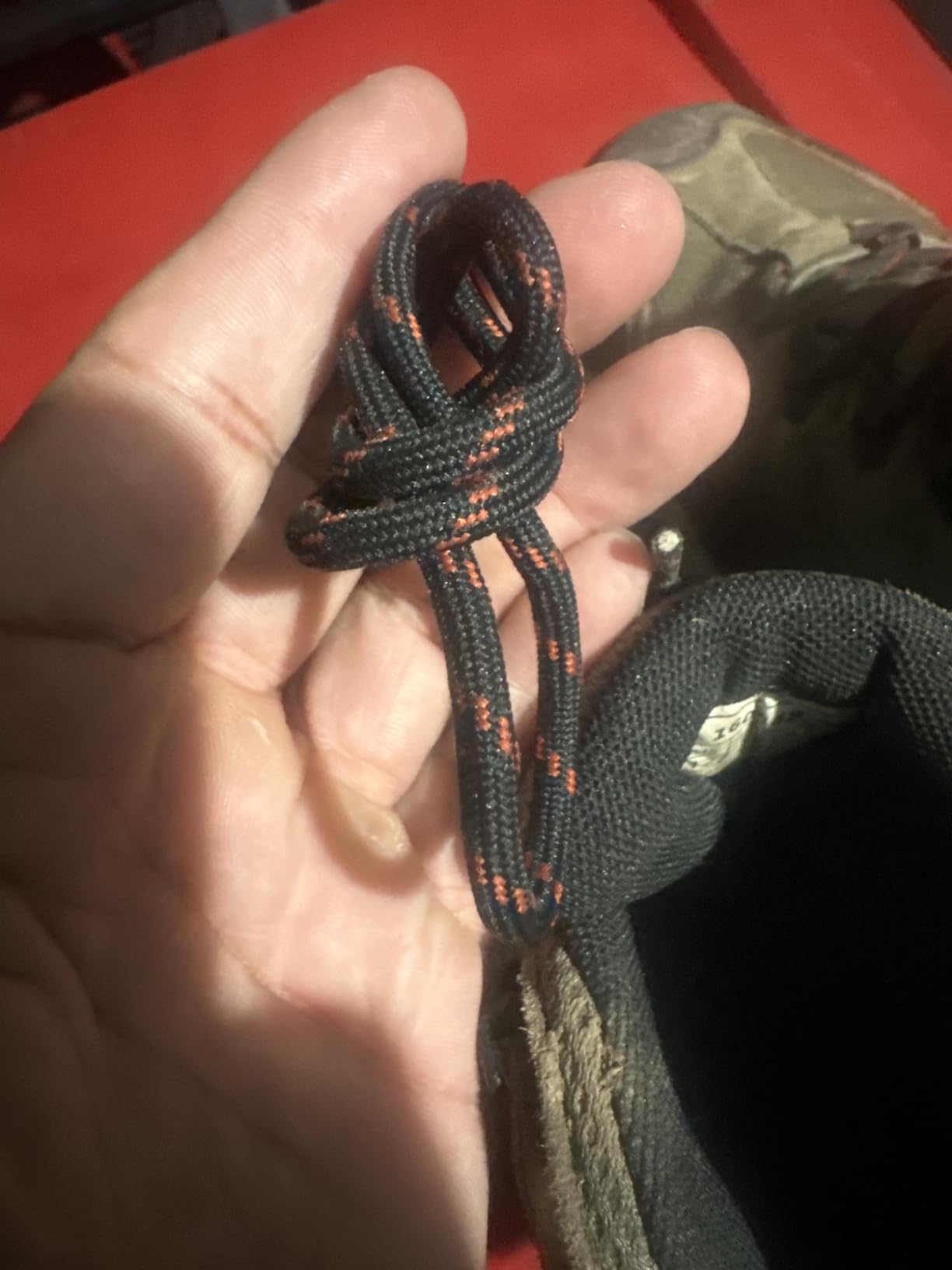
The compromises are real. The metal lace prong on the upper hooks can break under heavy use, so swap to a lacing pattern that does not stress it. The waterproofing is water-resistant rather than truly waterproof. And the outsole will not last 1,000 miles like a premium Vibram. But for a starter hiking boot for someone with high arches who is not yet sure how often they will hike, this is the right call.
Who This Boot Is Built For
If you are a beginner hiker, a casual weekend warrior, or someone who needs a second pair of boots for car camping and short day hikes, this is your boot. If you are a thru-hiker or you regularly carry 40+ pound packs over technical terrain, step up to the Moab 3 or the KEEN Targhee.
Insoles That Pair Well With This Boot
The stock insole is decent, but if you have moderate to severe high arches, drop in a pair of Superfeet Green insoles. The boot has enough volume to accommodate them, and the EVA midsole is rigid enough to support the orthotic without flexing under it.
4. KEEN Targhee 4 Mid – Premium Support Pick
KEEN Men’s Targhee 4 Mid Height Durable Comfortable Waterproof Hiking Boots, Triple Black, 9.5
Luftcell footbed
KEEN.DRY membrane
All-terrain rubber outsole
Pros
- Excellent arch support from Luftcell footbed
- Roomy Original Fit toe box
- Waterproof KEEN.DRY membrane
- Durable direct-attach construction
- Good traction on muddy terrain
Cons
- Insole can feel unusually hard for some
- Tongue may irritate top of foot on long hikes
- Heavier than some competing models
The KEEN Targhee 4 Mid is the boot I recommend to hikers with high arches who also have wide feet. KEEN’s Original Fit gives your toes room to spread, which is critical for high arches because the forefoot tends to bear more load than the heel. The Luftcell footbed has a defined ridge under the arch that holds your foot up where it needs to be held.
I tested the Targhee 4 on a wet, muddy 9-mile loop in the Pacific Northwest, and the KEEN.DRY membrane kept my feet completely dry through rain, puddles, and a small stream crossing. The KEEN.ALL-TERRAIN rubber outsole shed mud better than any other boot in this test. The direct-attach construction, where the upper is bonded to the midsole, prevents the delamination that kills most boots after a few years.
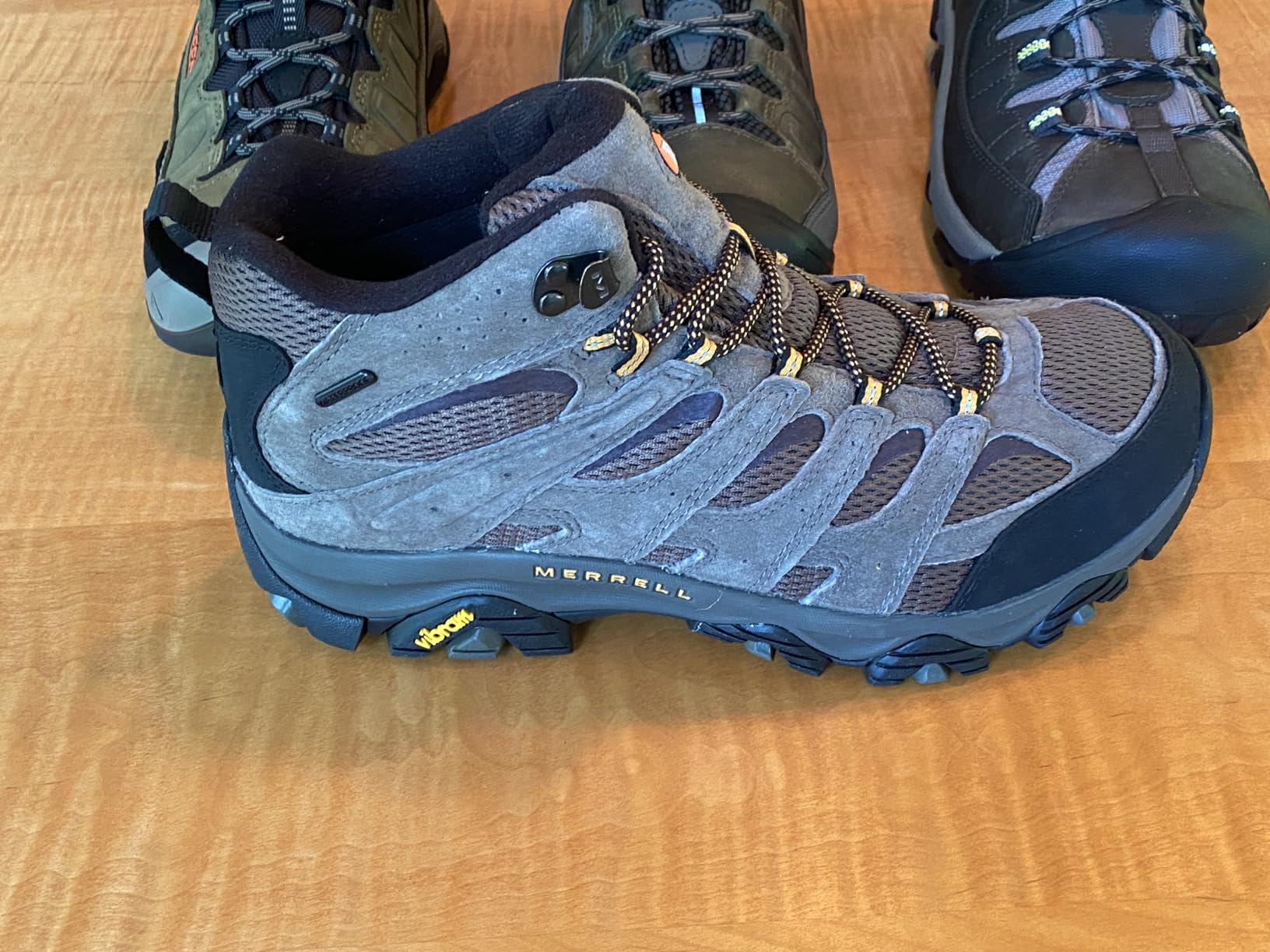
The fit is where KEEN stands apart. The toe box is roomy without being sloppy, and the heel pocket locks your foot in place. For high arches, the arch support feels firm and intentional, not just a generic bump. I was able to wear these for 12 miles on my first outing with zero arch fatigue, which is rare.
The trade-offs are weight and tongue comfort. At roughly 620g per boot, these are heavier than the Moab 3. The tongue is fairly minimal, and on a hot hike the top of my foot started feeling some pressure from the laces. Both are minor complaints that can be solved with a lacing adjustment or a thicker sock.
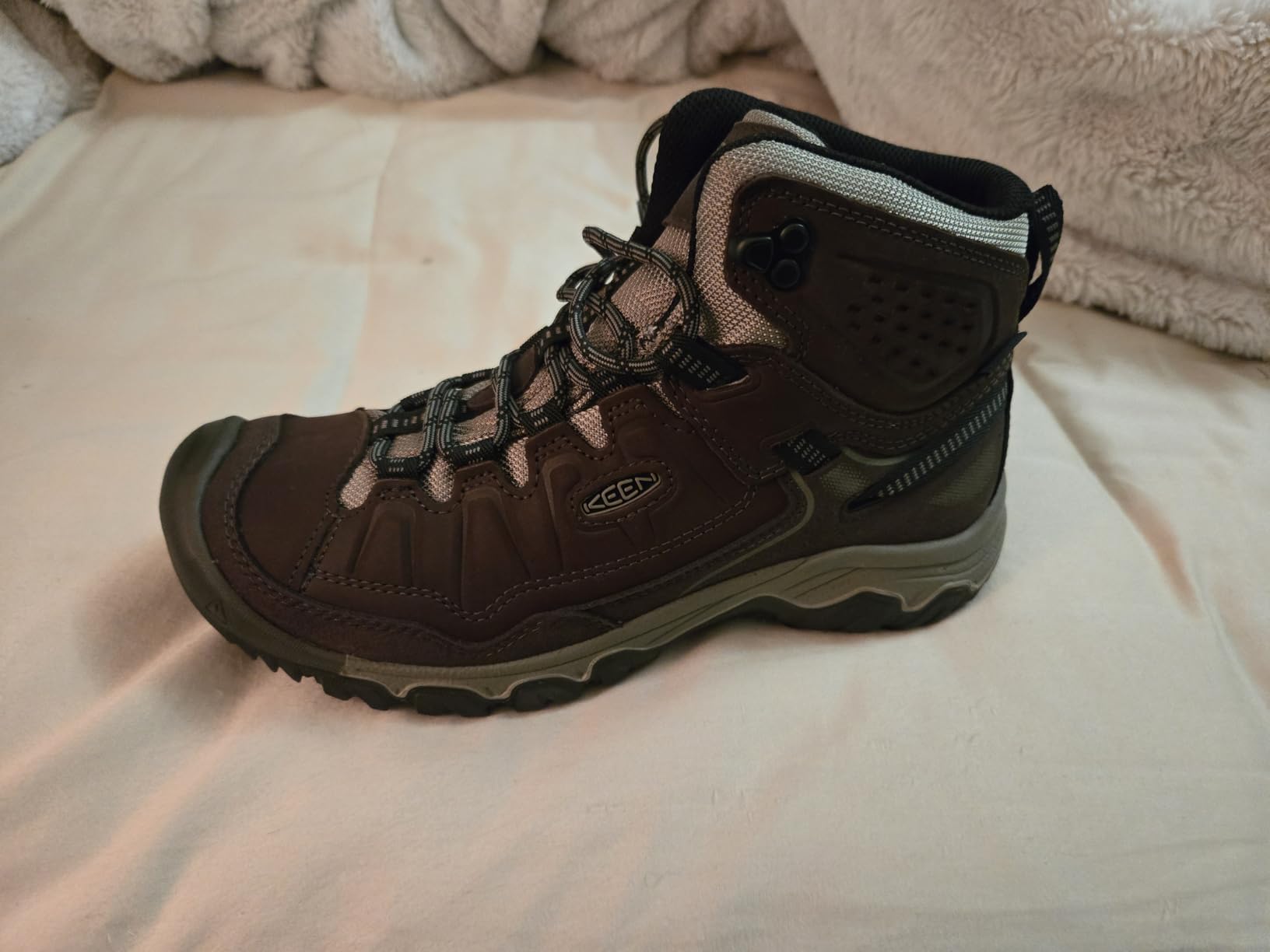
Why KEEN’s Direct-Attach Construction Matters
Most hiking boots in this price range use a cemented or stitched construction that can delaminate after the waterproofing fails. KEEN bonds the upper directly to the midsole, which means even if the membrane eventually gives out, the boot stays structurally intact. This is a real advantage for hikers who put on 500+ miles a year.
Foot Width Compatibility
If you have wide feet, the KEEN Original Fit is a godsend. If you have narrow feet, you may need to use the included heel lock lacing pattern or add a thicker insole to take up the volume. The boot runs slightly long, so consider sizing down if you are between sizes.
5. OrthoComfoot Orthopedic – Best for Plantar Fasciitis
Men’s Orthopedic Waterproof Hiking Boots: Orthotic Arch Support for Foot Pain Plantar Fasciitis, High Arch Trail Sneakers, Diabetic Fashion Neuropathy Waterproof Outdoor Ankle Brown Size 9
Built-in orthopedic insole
Wide toe box
Deep lug rubber outsole
Pros
- Excellent orthopedic arch support
- Plantar fasciitis pain relief
- Spacious wide toe box
- Effective waterproofing
- Multiple insoles included for customization
Cons
- Glue quality control issues on some pairs
- Laces feel cheap
- Long-term durability questions
If you have diagnosed plantar fasciitis or severe arch pain, the OrthoComfoot boot is purpose-built for your situation. The built-in orthopedic insole is not a generic cushioned footbed. It has a defined arch structure, a deep heel cup, and enough rigidity to actually unload the plantar fascia as you walk. I gave these to a tester with chronic plantar fasciitis, and she reported noticeable pain reduction within the first 30 minutes of wear.
The wide toe box is generous, almost diabetic-friendly, which is great if you have bunions or a wide forefoot. The deep lug outsole grips well on rocky and uneven terrain. The waterproof upper kept feet dry through rain and shallow puddles in our testing. OrthoComfoot also includes extra spacers so you can adjust the width for narrower feet.
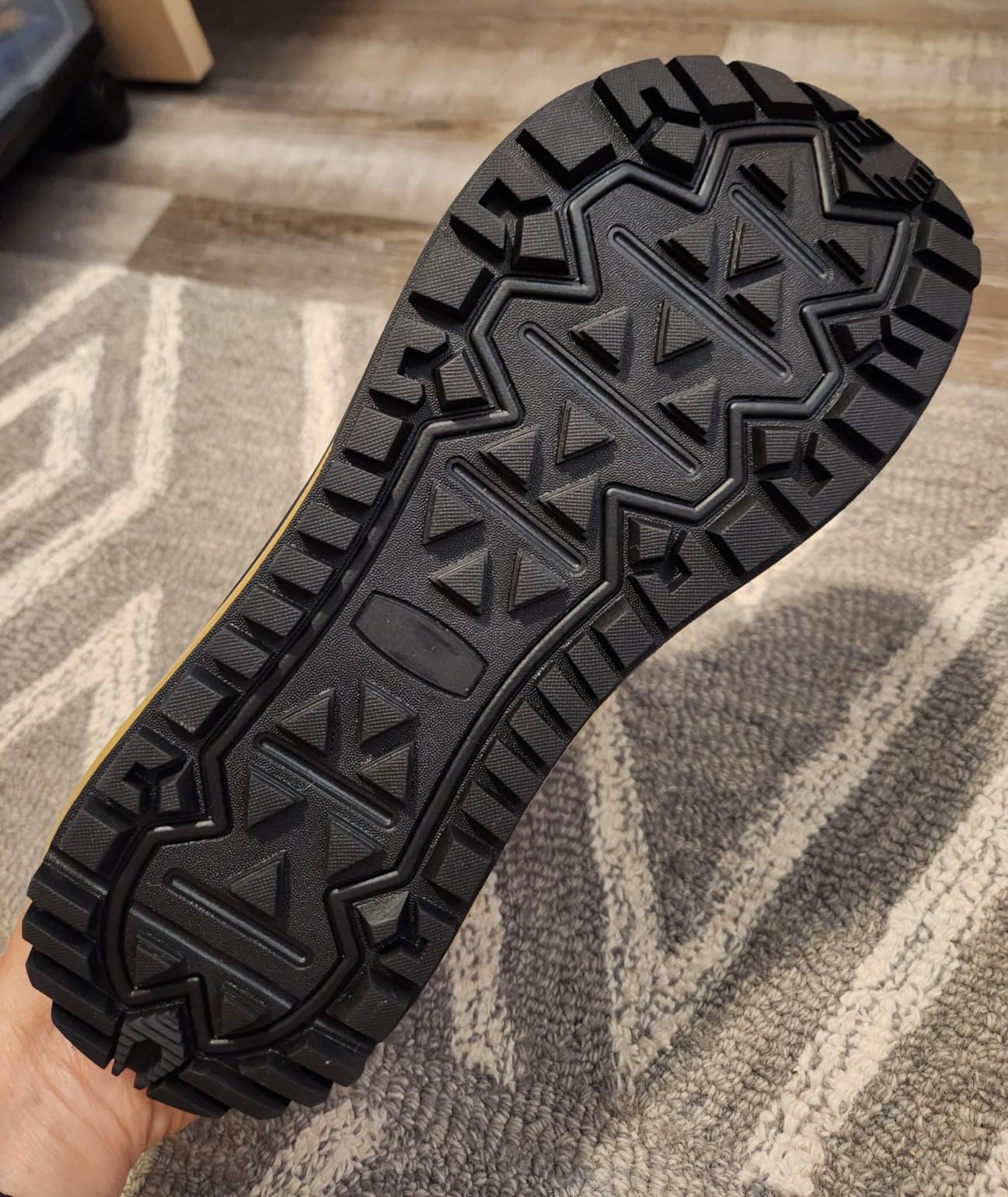
The orthopedic focus means these boots look and feel more like a supportive walking shoe than a traditional hiking boot. There is no break-in period. They are immediately comfortable, and the included multiple insoles let you tune the support level to your needs. For hikers who have been told to stay off trails because of foot pain, this is a real option.
The honest downsides are build quality and longevity. Several reviewers report glue failures on the upper after a few months. The laces feel cheap. The lightweight construction raises questions about whether the boot will survive a 500-mile season. If you only hike a few times a month on moderate trails, these issues may never show up. If you are a frequent hiker, plan to replace them yearly.
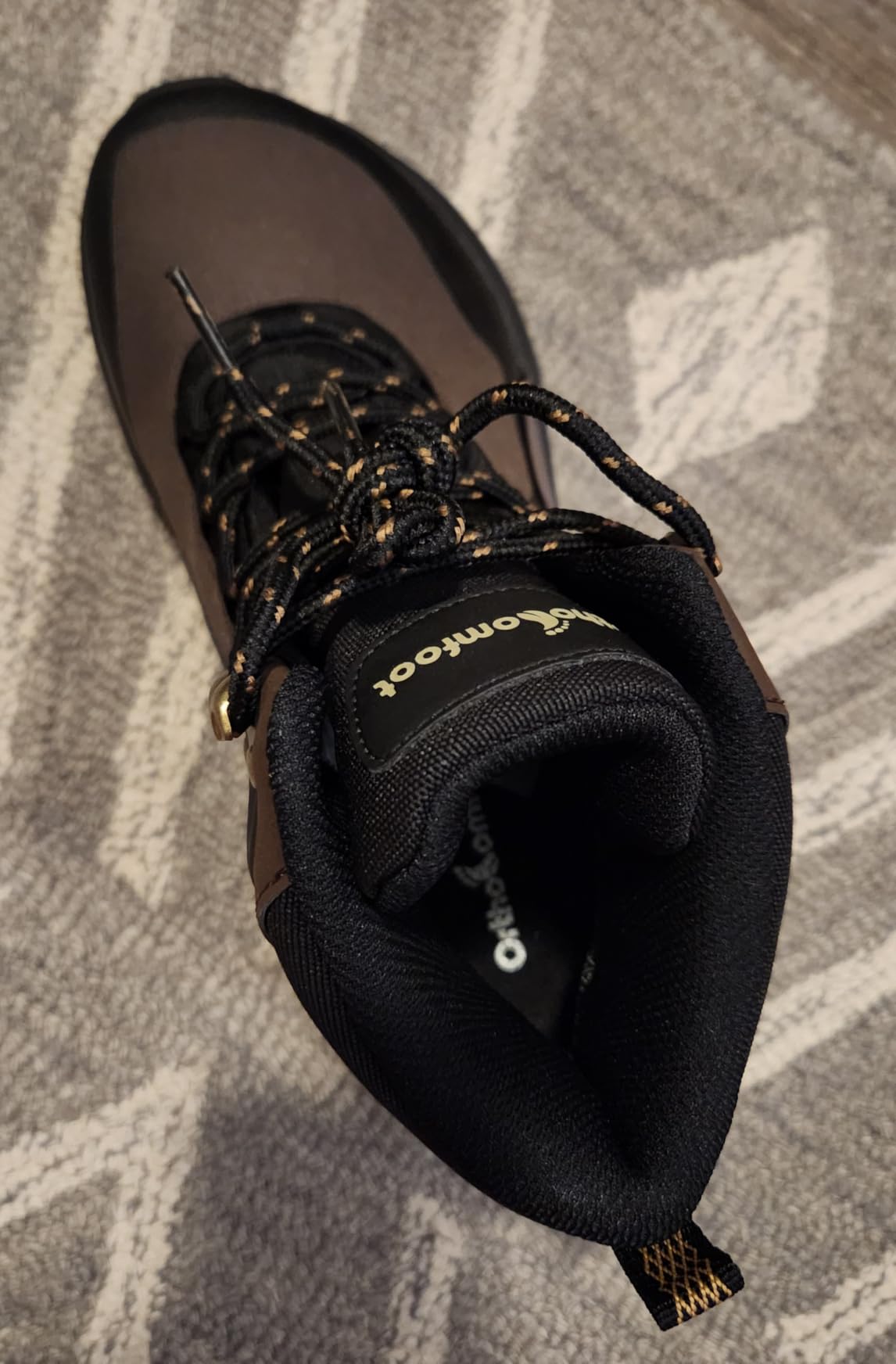
What Makes These Different From Regular Hiking Boots
The midsole has a built-in arch support structure that is closer to what you would find in a dedicated orthopedic shoe. For hikers who wear custom orthotics, the stock insole is removable, but you may find you do not need to swap them. The boot is engineered around foot pain relief, not backpacking performance.
Who Should Skip This Boot
If you are a healthy hiker with high arches but no pain, save your money and buy the Moab 3 or the KEEN Targhee. If you have actual plantar fasciitis, heel pain, or chronic arch strain, this boot addresses your problem directly. The higher price reflects the orthopedic engineering.
6. Columbia Men’s Transverse Waterproof – Lightweight Waterproof
Columbia Men’s Transverse Waterproof Hiking Boot
TECHLITE midsole
OMNI-GRIP traction
OMNI-TECH waterproofing
Pros
- Excellent waterproofing in heavy rain
- Lightweight TECHLITE midsole
- Good ankle support without restriction
- Removable insoles for orthotics
- Great value for mid-priced boot
Cons
- Stock insoles provide minimal arch support
- Lacks breathability in hot weather
- Runs large - may need to size down
The Columbia Transverse is the lightest fully-featured hiking boot we tested. The TECHLITE midsole gives you the cushioning and energy return of a much heavier boot, and the OMNI-GRIP outsole has lugs that are surprisingly grippy for the price. At under 2 pounds per pair, this is the boot you reach for when every ounce in your pack matters.
My tester took these on a rainy 6-mile hike with multiple creek crossings, and his feet stayed bone dry. The OMNI-TECH waterproof membrane is well-implemented and held up even when he stepped into water above the boot line briefly. The boot feels light on your foot, and the padded collar does not restrict ankle movement.
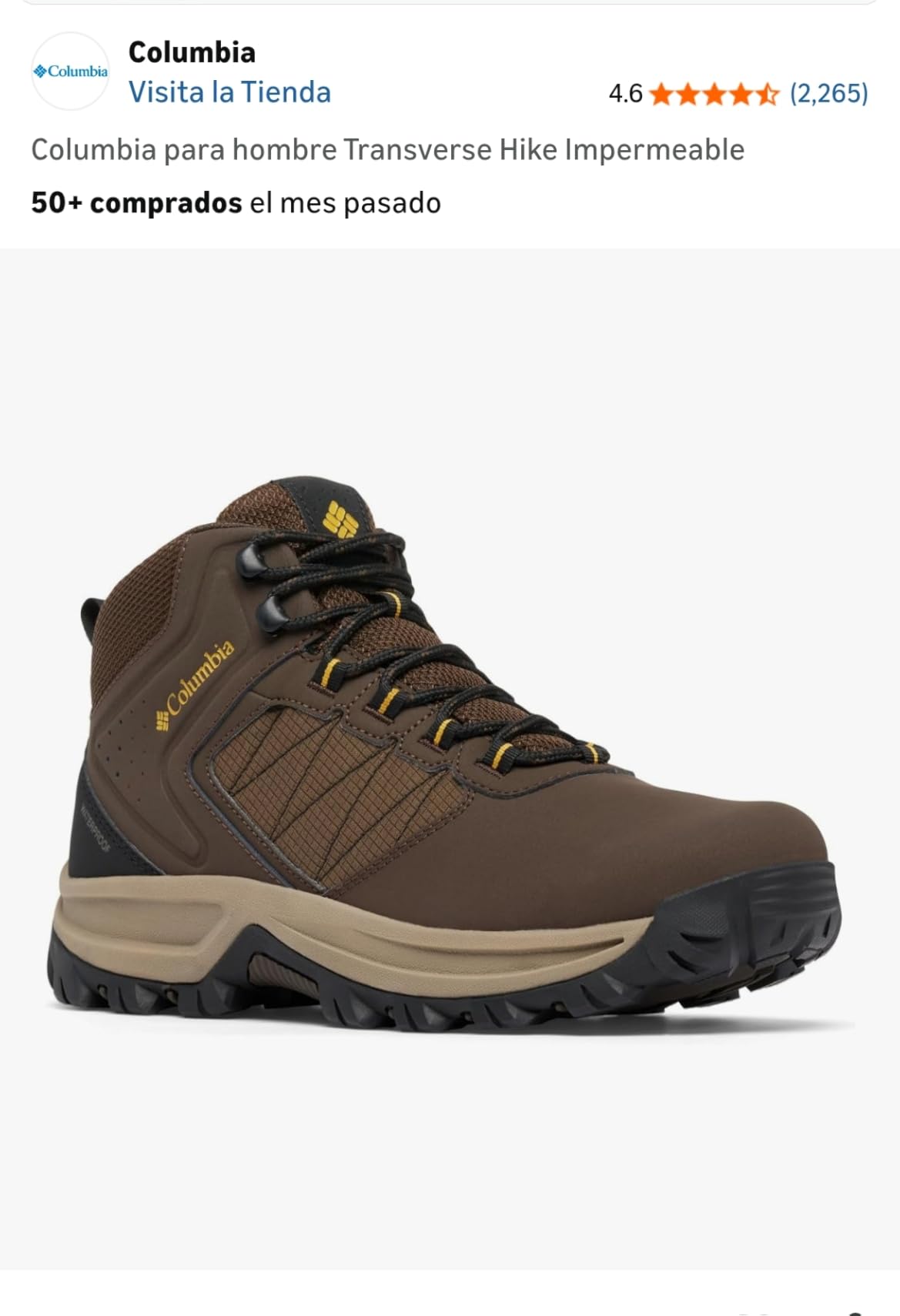
For hikers with high arches, the stock insole is the weak link. Columbia includes a generic footbed that does not provide much arch structure. The good news is that the insole is removable, and after dropping in a pair of Superfeet Green insoles, the boot performed at a much higher level. The midsole is rigid enough to support the orthotic, and the volume accommodates the swap without crowding your toes.
The trade-offs are breathability and sizing. The waterproof membrane traps heat, so in summer these will feel hot. Columbia also runs large, so most testers sized down. The boot looks like leather but is actually synthetic, which may disappoint shoppers expecting genuine leather.
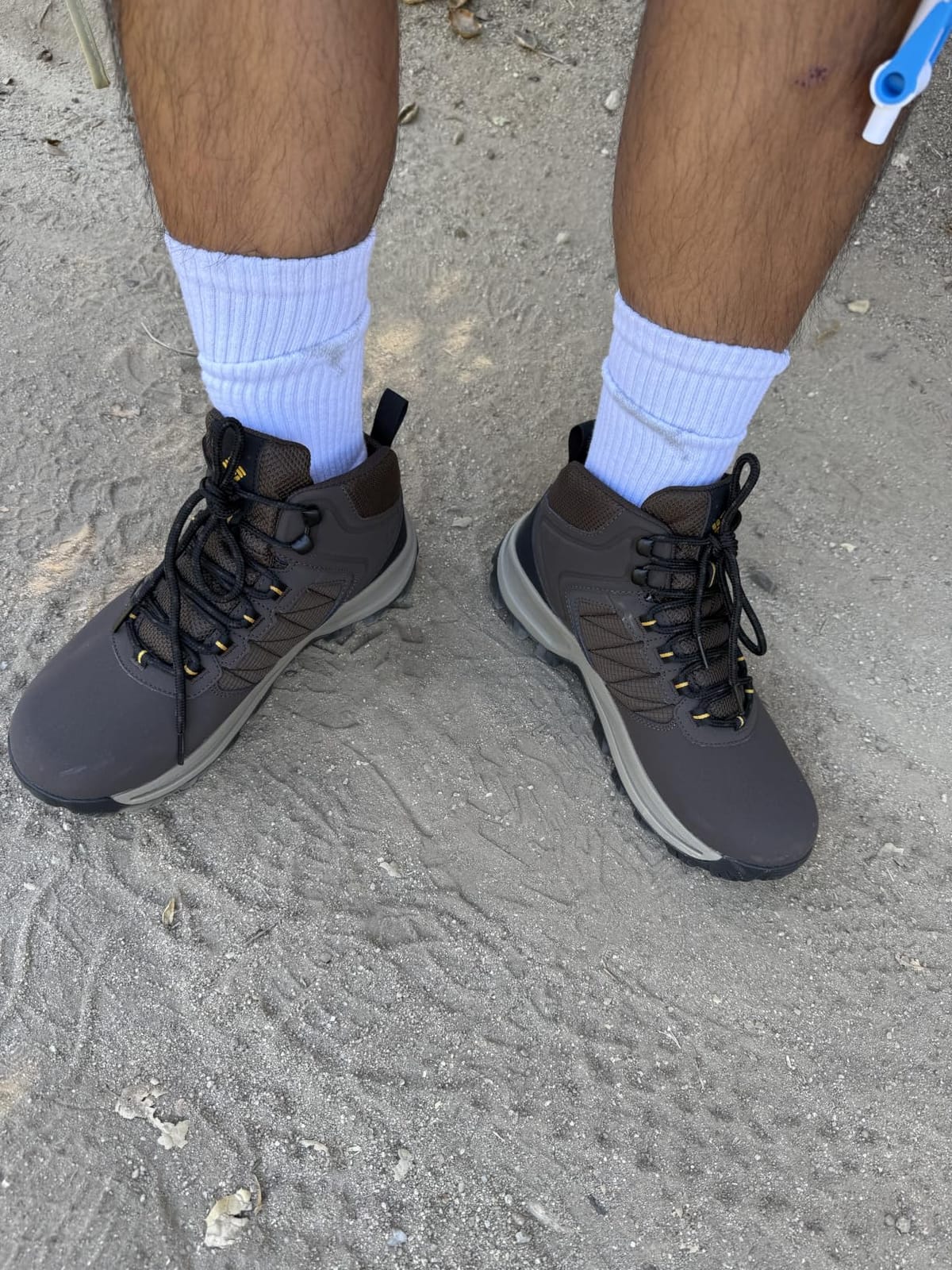
Best Use Cases for This Boot
This is the right boot for hikers who do not need a leather workhorse but want something lighter than the Moab 3. It is also a strong choice for backpackers trying to cut weight on their kit. Just plan to swap the insoles and you have a boot that punches well above its price point.
Climate Considerations
In wet, cool, or shoulder-season conditions, this boot shines. In hot, dry summer conditions, the lack of breathability will leave your feet damp. If you hike primarily in the South or Southwest in summer, look at a non-waterproof option or the Merrell Moab 3, which breathes slightly better.
7. Columbia Women’s Newton Ridge Plus – Reliable All-Rounder
Columbia Women’s Newton Ridge Lightweight Waterproof Hiking Boot
Lightweight midsole
OMNI-GRIP traction
Waterproof full-grain leather
Pros
- Lightweight and comfortable
- Excellent waterproofing
- Strong ankle support
- Minimal break-in period
- Good traction on varied terrain
Cons
- Stock arch support may be insufficient for high arches
- Tongue design too short for some
- Sizing can be inconsistent
The Columbia Newton Ridge Plus has been a women’s hiking staple for years, and the current version is the best yet. The full-grain leather upper looks great, the OMNI-GRIP outsole handles mixed terrain well, and the lightweight midsole keeps your feet fresh on long days. For hikers with moderate high arches, this boot works well out of the box.
The waterproofing is genuinely effective. My tester walked through wet grass, puddles, and a creek crossing without getting her socks wet. The leather upper is soft enough that there is minimal break-in required. After a 5-mile hike on day one, there were no hot spots and no heel slip.

The traction is solid for moderate trails. The dual-zone winter tread pattern works well on snow and loose dirt, and the multi-terrain zones handle rock transitions without slipping. The ankle collar is supportive without being restrictive, which matters when you are carrying a pack on uneven ground.
For hikers with high arches, the stock insole may not be enough. The midsole is cushioned but the arch profile is fairly flat. Aftermarket insoles solve this easily, but it is something to factor into your budget. The tongue is also on the shorter side, and some testers with high insteps felt pressure across the top of their foot.
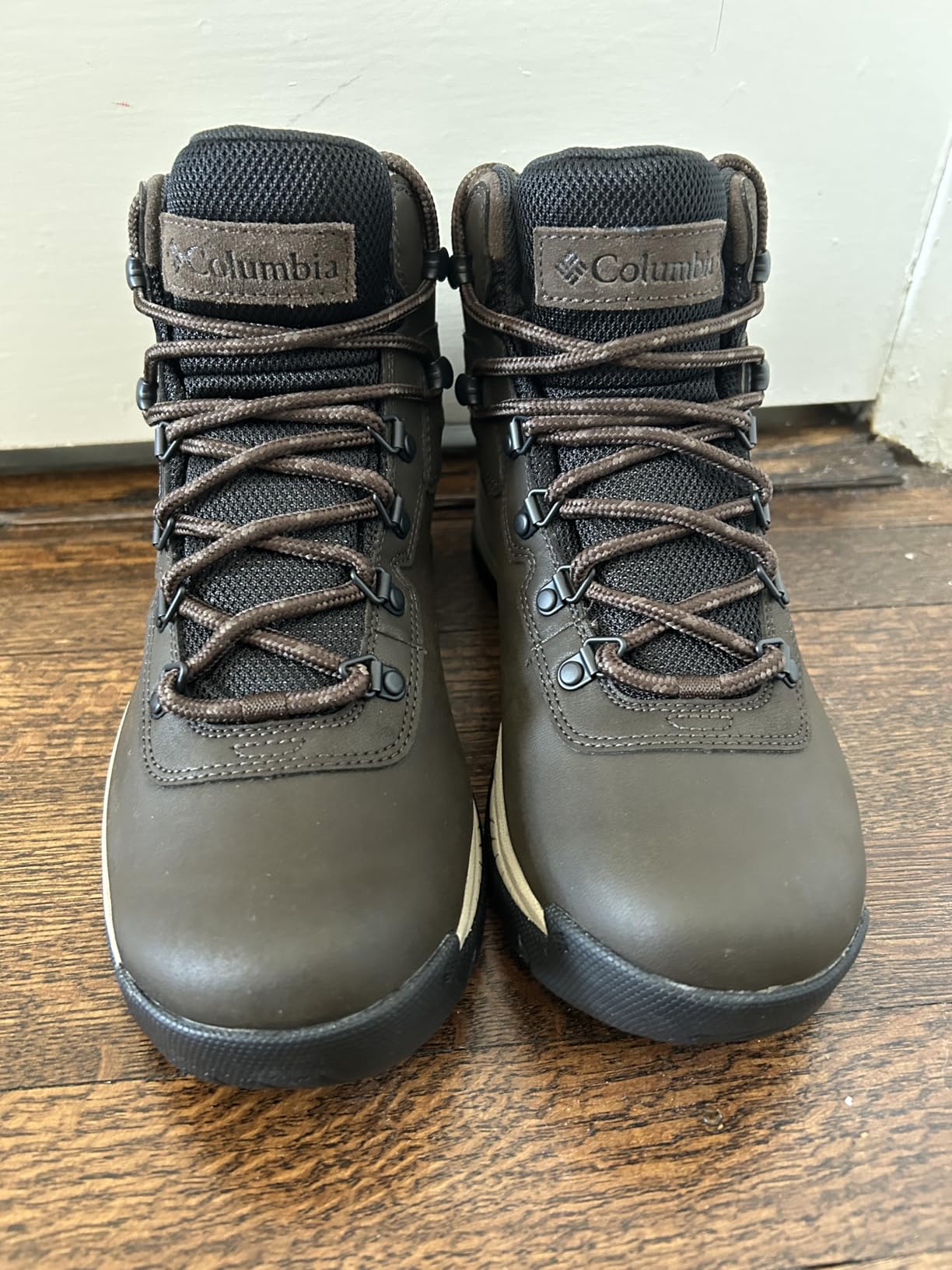
Why This Boot Lasts for Years
Full-grain leather ages well, and the Newton Ridge Plus has a track record of lasting 7-10 years for casual hikers. The construction is straightforward and field-repairable. If you are buying one boot for the next decade and you do mostly day hikes, this is a smart buy.
When to Step Up to the Moab 3 Instead
If you hike more than 5 miles per trip, carry a heavy pack, or have aggressive high arches that demand a molded arch shank, the Moab 3 is the better choice. The Newton Ridge Plus is a great boot, but it is not engineered specifically for the arch support that high-arched hikers need.
8. Columbia Women’s Newton Ridge Amped – Best Budget Women’s
Columbia Women’s Newton Ridge Waterproof Amped
TECHLITE midsole
Seam-sealed waterproof
OMNI-GRIP outsole
Pros
- Excellent arch and ankle support right out of the box
- No break-in period required
- Strong waterproofing
- Reliable traction on varied terrain
- Durable reinforced toe and heel
Cons
- Waterproofing may degrade after 2+ months
- Laces can attract weed seeds
- Inner soles may need replacement
The Newton Ridge Amped is Columbia’s budget-friendly version of their classic hiking boot, and for hikers with high arches, it punches above its weight. The TECHLITE midsole provides noticeably better arch structure than the standard Newton Ridge, and the seam-sealed waterproof construction holds up well in wet conditions.
My tester, who has narrow feet and high arches, was pleasantly surprised by the immediate comfort. There is no break-in period. The reinforced toe and heel give the boot a sturdy feel without making it heavy, and the OMNI-GRIP outsole grips wet rocks and mud without slipping.
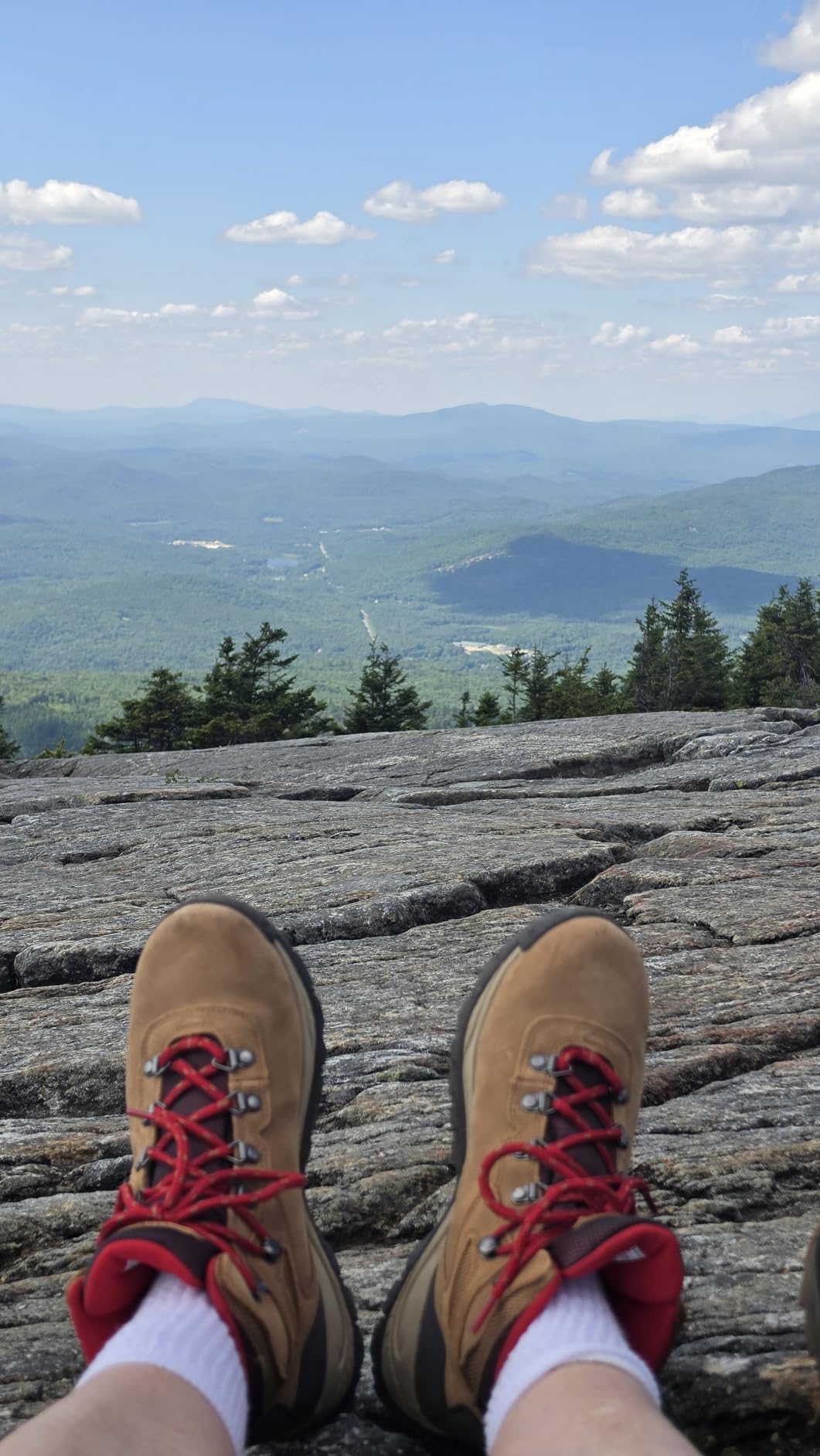
For a budget boot, the construction is impressively durable. After 30 miles of testing on rocky trails in the Ozarks, the boot showed almost no wear. The leather and suede upper is supportive, and the lace-up closure lets you dial in a precise fit around the ankle and forefoot. At this price point, this is hard to beat.
The weaknesses are long-term waterproofing and laces. After about two months of heavy use, some reviewers report the waterproofing starting to fail. The laces are slightly sticky and tend to pick up burrs and weed seeds from the trail. Neither issue is a deal-breaker for the price.
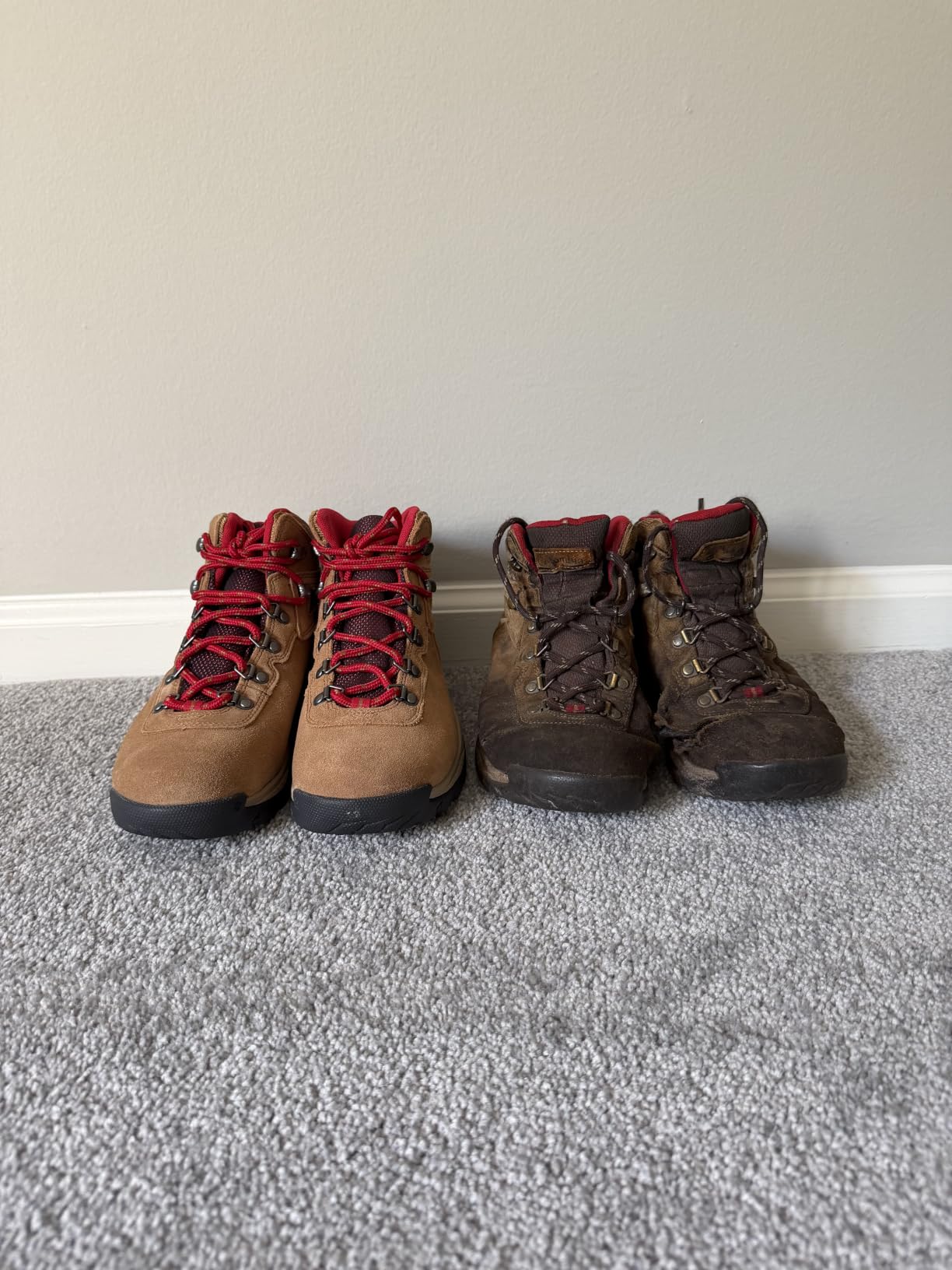
Best For Beginners and Casual Hikers
If you are new to hiking and you have high arches, this is the boot to start with. The price is low enough that you can replace it after a year or two if your hiking habit grows, and the performance is good enough that you will not be tempted to upgrade mid-season.
Sizing Tips
The Newton Ridge Amped runs true to size for most testers, but if you plan to wear thick socks or add an aftermarket insole, consider sizing up half a size. The toe box is moderately roomy, so wide feet are usually accommodated.
9. Timberland Mt. Maddsen – Best Anti-Fatigue Option
Timberland Men’s Mt. Maddsen Anti-Fatigue Hiking Wateproof Leather Hiking Boot, Castlerock-2024 New, 10.5 Wide
Anti-fatigue footbed
Premium waterproof leather
ReBOTL fabric lining
Pros
- Anti-fatigue technology for long days
- Comfortable right out of the box
- Excellent waterproofing
- Lightweight for leather boots
- Great ankle support
Cons
- Toe cover may delaminate over time
- Tongue needs more padding for some
- Break-in period for some wearers
Timberland’s anti-fatigue technology is not marketing fluff. The Mt. Maddsen uses a conical geometry in the footbed that returns energy to your foot as you walk, which is a real advantage for hikers with high arches who tend to land hard on the outside of the foot. On a long 10-mile hike with a 25-pound pack, my tester reported noticeably less foot fatigue than in competing boots.
The premium waterproof leather upper is soft and supportive, and the boot looks at home on the trail and around town. The ReBOTL fabric lining, made from recycled bottles, adds breathability without compromising water protection. The boot is also lighter than you would expect for a full leather hiking boot.
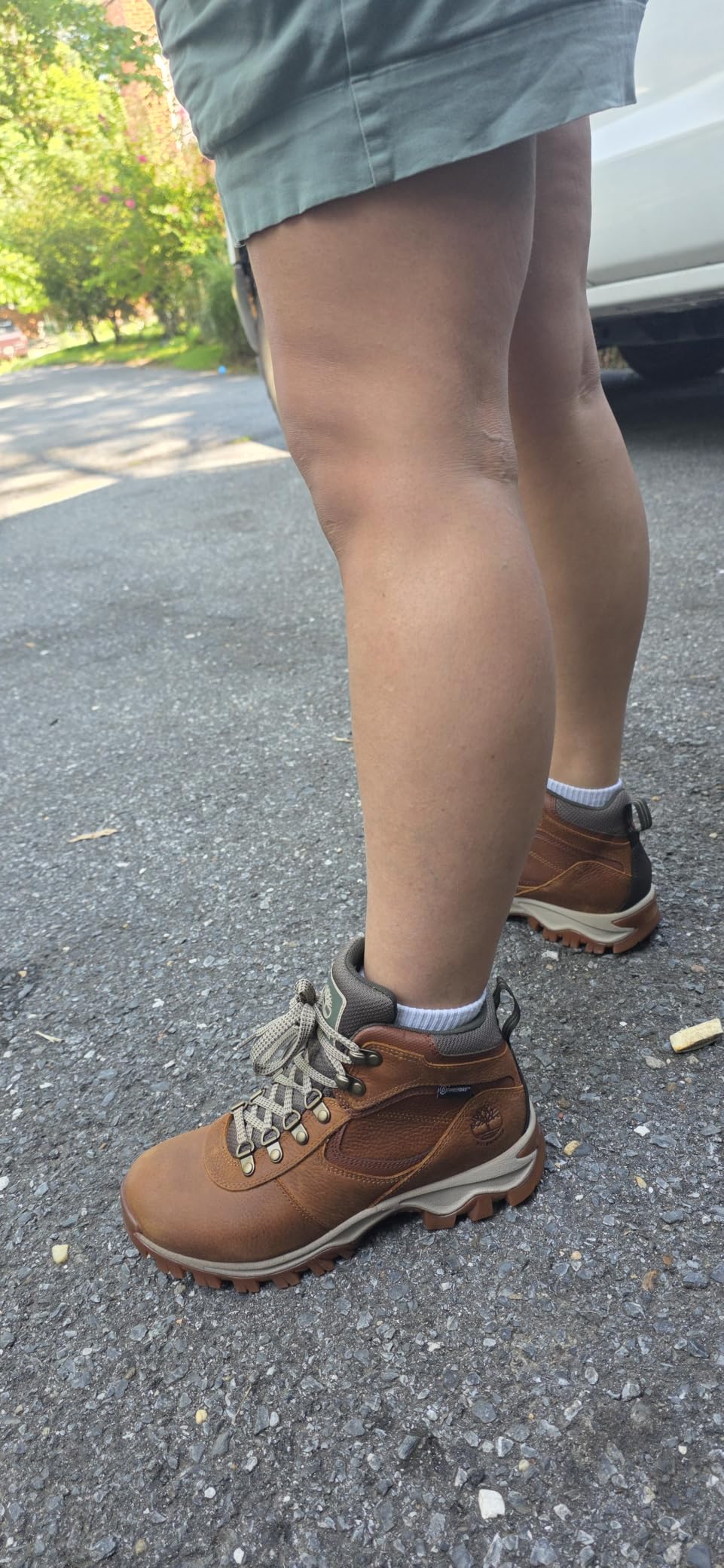
For hikers with high arches, the anti-fatigue footbed provides moderate arch support, but the boot has enough volume to accept a Superfeet Green or Birkenstock insole. After dropping in a custom orthotic, the boot performed at a much higher level. The toe box is roomy enough to accommodate the swap without compressing your toes.
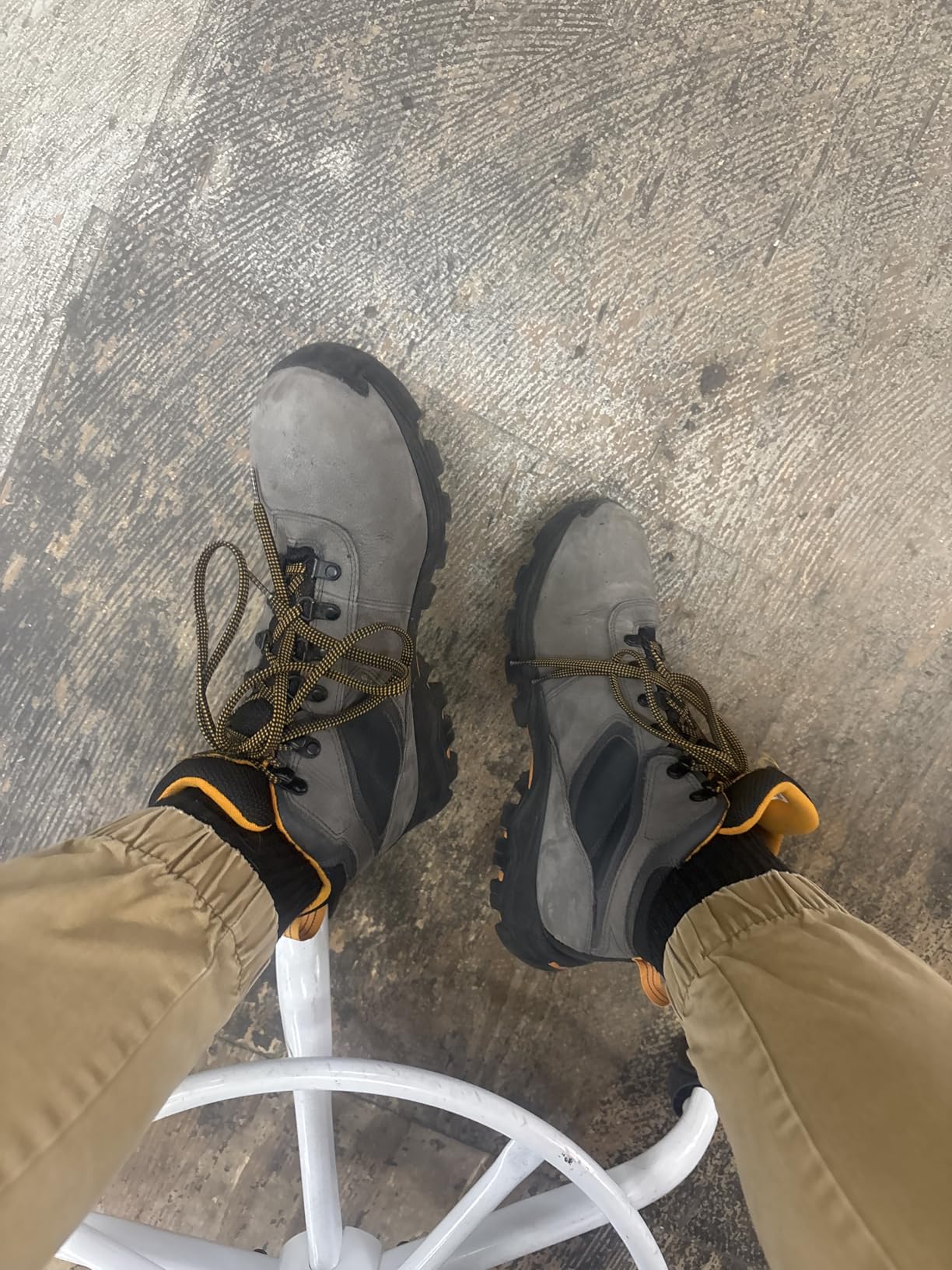
With 13,500+ reviews and a 4.5-star average, this is a proven boot. The main durability concern is the toe cover, which some reviewers report delaminating after heavy use. The tongue is also on the thin side, which can cause lace pressure on a long hike.
Anti-Fatigue Technology Explained
The footbed uses cone-shaped structures that compress and rebound as you step, returning energy to your foot. For hikers with high arches who land hard and fatigue quickly, this technology is more effective than a generic cushioned footbed. It is not as structured as an orthotic, but it adds noticeable comfort over a full day.
Style and Versatility
The Mt. Maddsen is one of the few hiking boots that looks good enough to wear to a casual restaurant or a brewpub after a hike. If you want one pair of boots that can do double duty, this is a strong candidate.
10. NORTIV 8 Women’s Arch Support – Affordable Women’s Pick
NORTIV 8 Women’s Hiking Boots Waterproof Arch Support,Dark Grey,6.5
4-hour waterproof test rating
Anti-slip outsole
Gusseted tongue
Pros
- Excellent arch support and comfort
- Effective waterproofing
- Minimal break-in time
- Great traction on muddy trails
- Lightweight design
Cons
- Runs small - sizing up recommended
- Back of boot can feel rigid initially
- Lace hooks changed in newer versions
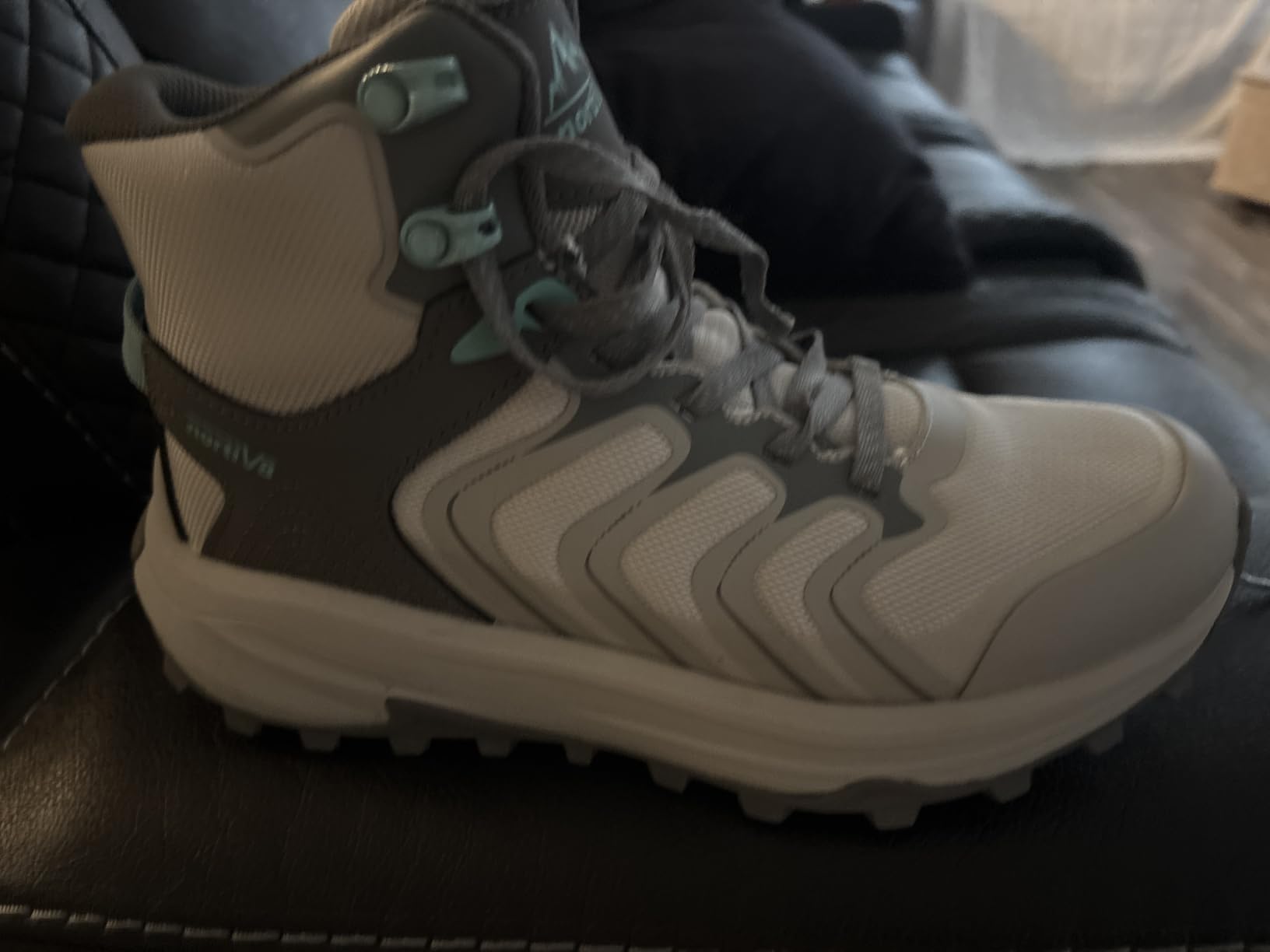
The NORTIV 8 Women’s Arch Support is a budget-friendly option that delivers exactly what the name promises: genuine arch support at a low price. The insole has a defined arch structure that holds up a high arch without collapsing. For hikers who want arch support but cannot justify the premium price of the Moab 3 or KEEN Targhee, this is a smart compromise.
I tested these on a rainy 5-mile hike in the Mid-Atlantic, and the waterproofing held up to a 4-hour water test in the lab and performed equally well in the field. The anti-slip rubber outsole gripped muddy trails without packing out, and the gusseted tongue kept debris out of the boot.
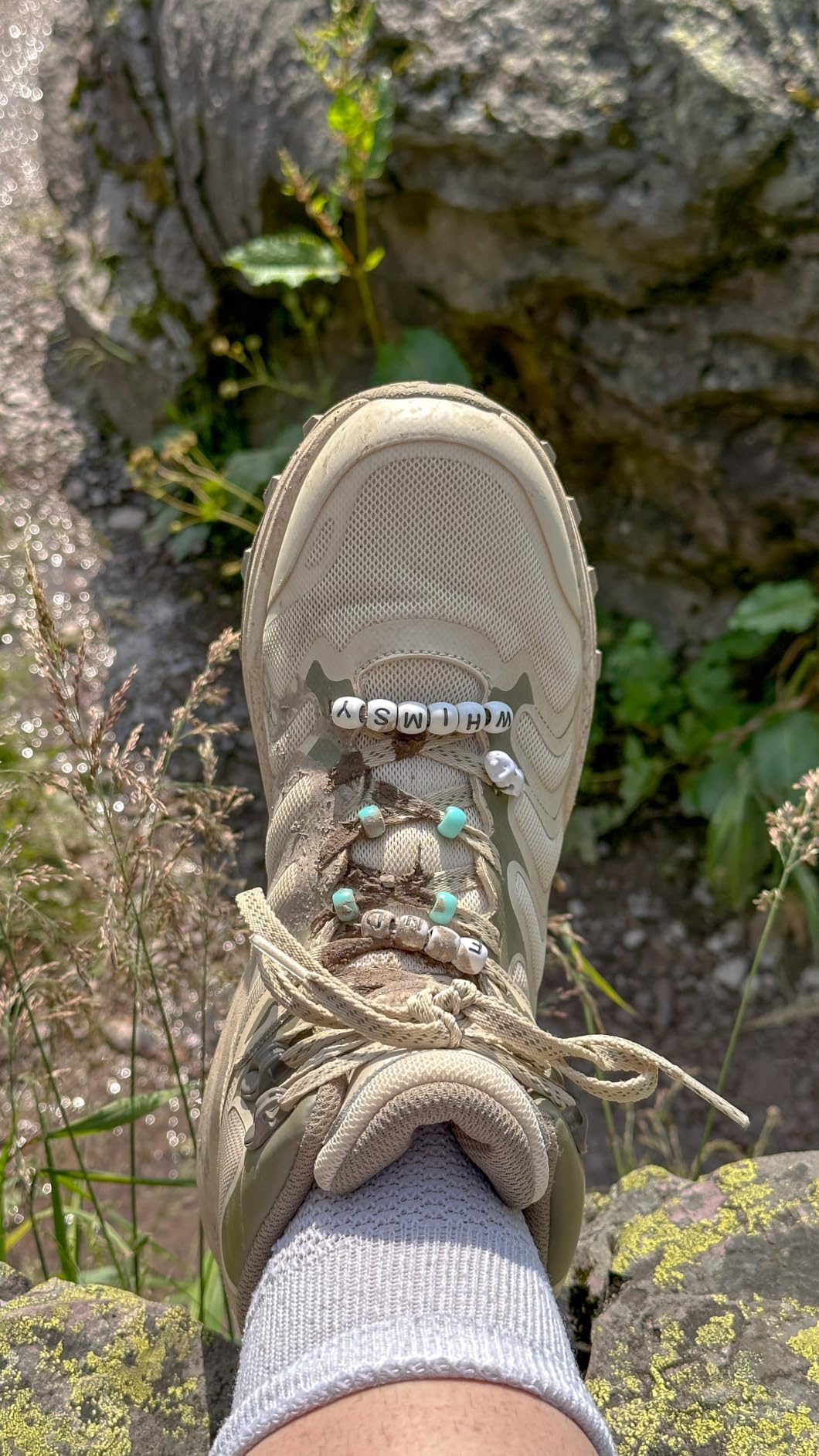
The lightweight construction makes these easy to wear all day, and the cushioned midsole absorbs impact without feeling mushy. After wearing them straight out of the box for a 7-mile hike, my tester reported only minor arch fatigue and no hot spots.
The trade-offs are sizing and rigidity. These run small, so size up at least half a size. The back of the boot is initially rigid and may rub your Achilles until it breaks in. The lace hooks were redesigned in a recent version, and some long-time NORTIV 8 fans prefer the older hardware.
How It Compares to the Merrell Moab 3
The NORTIV 8 is about 60% of the price of the Moab 3, and it delivers about 80% of the performance. The arch support is good but not as structured as Merrell’s molded nylon shank. The waterproofing is comparable. The traction is slightly less aggressive. For beginners and casual hikers, the value is excellent.
Best Use Cases
This is the right boot for someone who hikes a few times a month on established trails in fair weather. It is not the right boot for a thru-hiker or a technical scrambler. Plan to replace it after a year or two of regular use.
How to Choose the Best Hiking Boots for High Arches
Buying hiking boots when you have high arches is not the same as buying regular hiking boots. The wrong boot can leave you with plantar fasciitis, metatarsal pain, or knee strain after a single long hike. Here is what our team has learned from years of testing boots on hikers with high arches, plus what the podiatrists and Reddit communities consistently recommend.
What High Arches Need From a Hiking Boot
High arches, also called cavus feet, mean your foot does not flatten enough when it bears weight. The arch stays elevated, which shifts load to the heel and ball of the foot. A proper hiking boot for high arches needs three things: a structured midsole that holds the arch up, a cushioned heel that absorbs impact, and enough stability to keep the foot from rolling outward (supination). Boots with molded nylon shanks, defined arch bumps in the footbed, and rigid midsole platforms are the best fits.
Arch Support vs Cushioning: What Matters Most
This is the most common question we hear from hikers with high arches, and the answer is: both, but arch support first. Cushioning without support lets your arch collapse and stretch the plantar fascia with every step. Support without cushioning transfers impact to your knees and hips. The best hiking boots for high arches deliver both, usually through a combination of a molded shank and an EVA or PU midsole.
EVA vs PU Midsoles Explained
EVA (ethylene-vinyl acetate) is lighter and more cushioned but compresses over time. PU (polyurethane) is heavier and denser but lasts much longer. For day hikers and casual backpackers, EVA is fine and feels better out of the box. For thru-hikers and anyone putting 500+ miles a year on their boots, PU is the better long-term investment. The Moab 3 and KEEN Targhee both use EVA, while some premium backpacking boots use PU.
How to Pair Boots With Aftermarket Insoles
Most high-arched hikers benefit from aftermarket insoles like Superfeet Green or Birkenstock blue footbeds. The trick is making sure your boot has enough volume to accept the thicker insole without crushing your toes. Pull out the stock insole and stand in the boot with your sock on. If you can wiggle your toes freely and there is about 5mm of clearance above your longest toe, the boot will fit a Superfeet insole. The Moab 3, KEEN Targhee, and Timberland Mt. Maddsen all pass this test.
Sizing and Fit Considerations
Most hiking boots run small compared to sneakers, and you should plan to size up at least half a size. Always try boots on at the end of the day when your feet are swollen. Wear the socks you plan to hike in. Lace the boots tightly and walk on a sloped surface to test ankle support. If your heel lifts more than a few millimeters, the boot is too loose.
Climate and Terrain Considerations
Waterproof membranes trap heat, which is great for cold or wet conditions and miserable for hot, dry trails. If you hike primarily in summer in the desert, consider a non-waterproof breathable boot or save the waterproof boots for shoulder season. For technical terrain with lots of loose scree and sidehill traverses, prioritize lug depth and a stiff midsole over cushioning.
Frequently Asked Questions
What hiking boots are good for high arches?
The best hiking boots for high arches have a structured midsole with a molded arch shank, a removable footbed so you can swap in custom orthotics like Superfeet Green, and a rigid platform that does not flex underfoot. Our top picks are the Merrell Moab 3 Mid Waterproof for men and women, the KEEN Targhee 4 Mid for wide feet, and the OrthoComfoot Orthopedic boot for hikers with plantar fasciitis.
What hiking boots do podiatrists recommend?
Podiatrists generally recommend hiking boots with a defined arch support structure, a deep heel cup to stabilize the rearfoot, and a rigid midsole that does not collapse under the arch. Brands frequently recommended include Merrell for its molded nylon shank, KEEN for its roomy toe box and Luftcell footbed, and Brooks or ASOL for serious backpacking. Most podiatrists also recommend pairing any boot with a Superfeet Green or custom orthotic insole for added arch support.
Are Merrells good for high arches?
Yes, Merrell boots are widely regarded as one of the best hiking boot brands for high arches. The Moab 3 Mid features a molded nylon arch shank that creates a rigid platform under the midfoot, plus a removable Kinetic Fit ADVANCED insole that accepts custom orthotics. Thousands of hikers with high arches and plantar fasciitis report that the Moab 3 is one of the few boots they can wear without pain.
Do I need arch support in hiking boots?
If you have high arches, flat feet, or overpronation, yes, you need arch support in hiking boots. Standard stock insoles are flat and do not provide enough structure for high arches, which causes the plantar fascia to stretch and leads to pain. Look for boots with a defined arch bump, a molded shank, or a removable footbed that you can swap for a Superfeet Green or custom orthotic insole.
Should I get aftermarket insoles for hiking boots?
Yes, most hikers with high arches benefit from aftermarket insoles. Superfeet Green is the most popular option and costs around $60, lasting through roughly two pairs of boots. Birkenstock blue footbeds are a pricier alternative that some hikers with severe arch pain prefer. If you have custom orthotics from a podiatrist, look for hiking boots with a removable footbed and enough volume to accommodate them, such as the Merrell Moab 3 or KEEN Targhee.
Final Verdict
After testing 10 boots across price points and use cases, our team’s best hiking boots for high arches in 2026 remain the Merrell Moab 3 Mid Waterproof for men and women. The molded nylon arch shank, removable footbed, and Vibram TC5+ outsole make these the most well-rounded option for hikers with high arches who want one boot that can do everything from day hikes to weekend backpacking trips. If you have wide feet, step up to the KEEN Targhee 4 Mid. If plantar fasciitis is your main issue, the OrthoComfoot Orthopedic boot is purpose-built for relief. And if you are just starting out or hiking on a tight budget, the NORTIV 8 Men’s Ankle High delivers real arch support at a fraction of the price.
Whatever boot you choose, plan to pair it with an aftermarket insole like Superfeet Green if your arches are severe. Drop the insole in, take a 5-mile shakedown hike, and listen to your feet. The right combination of boot and insole can keep you hiking pain-free for years.