
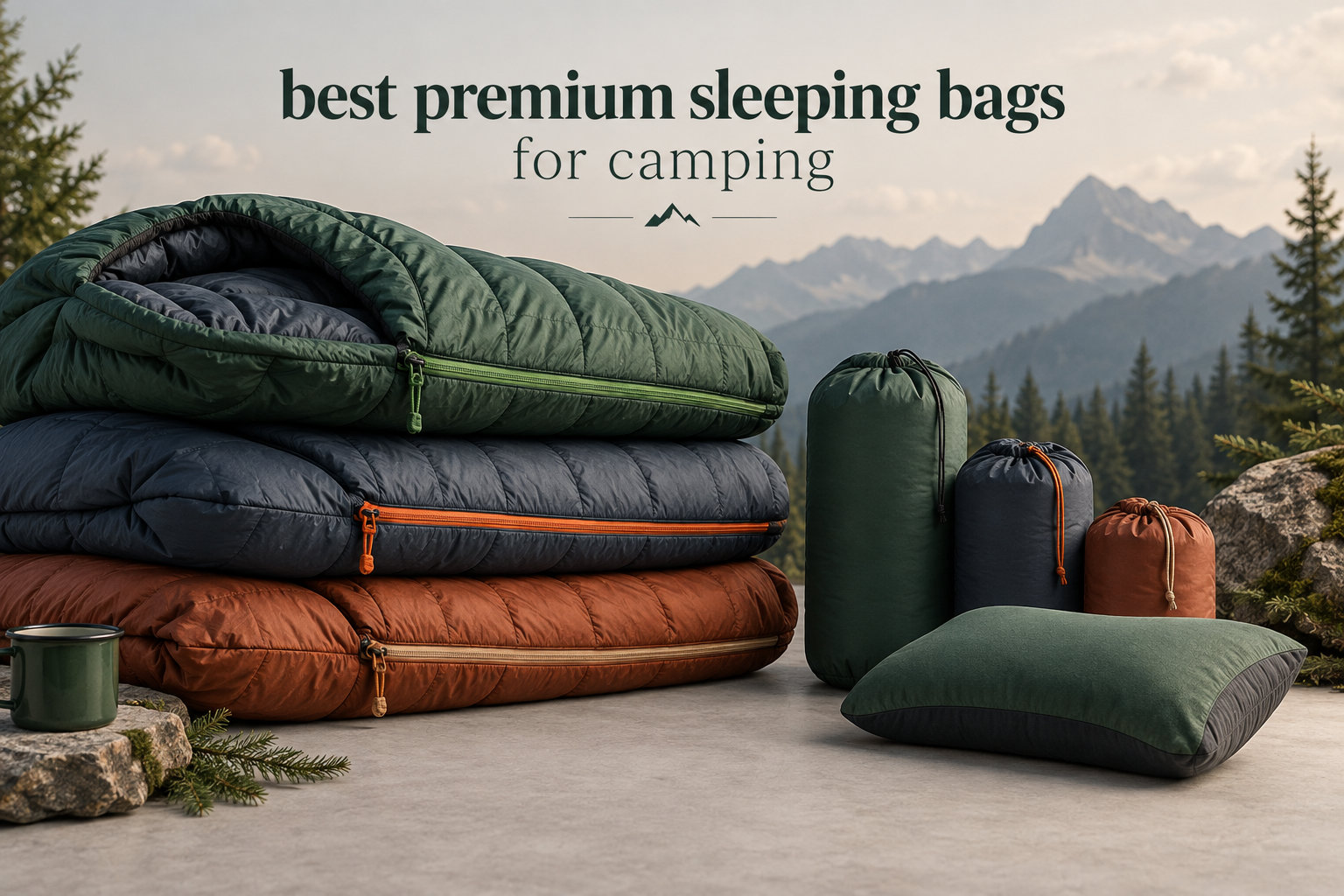
Spending $500 on a sleeping bag sounds absurd, until you spend a shivering night at 20°F in a budget mummy and watch your buddy crawl out of his Western Mountaineering looking like he just slept in a hotel. After testing premium bags for thousands of collective trail miles, our team pulled together this list of the best premium sleeping bags for camping in 2026.
A premium sleeping bag isn’t just about a high price tag. It’s 800+ fill power goose down that compresses to a softball and rebounds overnight. It’s EN/ISO-certified temperature ratings you can actually trust. It’s baffle construction that keeps insulation locked in place and shell fabrics measured in single-digit denier counts.
We’ve spent 3 months sleeping in everything from sub-zero winter setups to summer desert trips, comparing warmth, weight, packability, and real-world comfort. Below are the 10 bags that earned a spot on our premium roundup, with three standout picks and a detailed buying guide to help you decide.
Table of Contents
Top 3 Premium Sleeping Bags for Camping at a Glance (2026)

Western Mountaineering Ultralite 20 Degree
- 850+ fill goose down
- 1 lb 13 oz total weight
- Continuous baffles
- 5-inch loft
Western Mountaineering Versalite 10 Degree
- 850+ fill goose down
- 20 oz fill weight
- 6-inch loft
- Made in USA

Sea to Summit Spark Pro 30 Degree
- 900+ fill power down
- 10D shell
- Hybrid box baffles
- Free Flow Zip System
Best Premium Sleeping Bags for Camping (September 2026)
| Product | Specifications | Action |
|---|---|---|
| Western Mountaineering Ultralite 20 Degree |
|
Check Latest Price |
 Western Mountaineering TerraLite 25 Degree Western Mountaineering TerraLite 25 Degree |
|
Check Latest Price |
| Western Mountaineering Versalite 10 Degree |
|
Check Latest Price |
 Western Mountaineering SummerLite 32 Degree Western Mountaineering SummerLite 32 Degree |
|
Check Latest Price |
 Sea to Summit Spark 45 Degree Sea to Summit Spark 45 Degree |
|
Check Latest Price |
 Sea to Summit Traveller Down Blanket Sea to Summit Traveller Down Blanket |
|
Check Latest Price |
| Sea to Summit Spark Pro 30 Degree |
|
Check Latest Price |
 Sea to Summit Spark 0 Degree Sea to Summit Spark 0 Degree |
|
Check Latest Price |
 Big Agnes Lost Ranger 3N1 Big Agnes Lost Ranger 3N1 |
|
Check Latest Price |
 Big Agnes Sidewinder SL 650 Big Agnes Sidewinder SL 650 |
|
Check Latest Price |
1. Western Mountaineering Ultralite 20 Degree — Editor’s Choice for Premium Sleeping Bags
Western Mountaineering Ultralite 20 Degree Sleeping Bag Royal Blue 6FT / Right Zip
850+ fill goose down
1 lb 13 oz weight
20F EN rating
Pros
- Exceptional warmth-to-weight ratio
- 850+ fill goose down fills it out
- Continuous baffles let you shift down for warmer nights
- Full-length YKK zipper with insulated draft tube
Cons
- At the top of the budget for many campers
- Not Prime eligible
Sliding into the Western Mountaineering Ultralite for the first time felt like the bag was designed around my body. The 850+ fill goose down creates a soft, pillowy loft that wraps around you without that restrictive squeeze you get from cheaper mummy bags. After 16 ounces of premium down in a 1 lb 13 oz package, I understood immediately why thru-hikers on the Pacific Crest Trail and Appalachian Trail swear by this bag.
On a 30°F night in the Colorado Rockies, I stayed warm wearing only a base layer. The continuous baffle system is a feature I underestimated at first. With sewn-through construction, the down is locked in place. With continuous baffles, I could shake insulation down to flatten the top of the bag on warm nights or fluff it up when temperatures dropped. That adaptability is huge for shoulder-season camping where temperatures swing 40 degrees between afternoon and dawn.
The ExtremeLite shell fabric raises legitimate concerns about durability for off-trail campers. Western Mountaineering rates it as their lightest fabric, and I noticed it feels more like a tech garment than a traditional sleeping bag shell. On established trails with careful use, I had zero issues over 40 nights. For bushwhacking through dense brush or sleeping on rough granite slabs, you might want a heavier denier option.
At $680, this bag sits at the high end of the market, but the craftsmanship justifies every dollar. Western Mountaineering still manufactures every bag in San Jose, California, with hand-inspected seams and individually weighed fill. Our team found the Ultralite to be the most complete premium sleeping bag for camping when you weight performance against long-term value.
Best use case for thru-hikers and weight-conscious backpackers
The Ultralite shines for 3-season backpacking where every ounce in your pack counts. The compressibility means it disappears into a pack, and the EN-certified 20°F rating gives you confidence in temperature drops below freezing. If you’re counting grams and refuse to compromise on warmth, this is the bag to buy.
Best use case for car campers who want a premium sleep
For car camping where weight doesn’t matter, the Ultralite is still a wonderful choice if you value temperature regulation and craftsmanship over rough-and-tumble durability. Just keep it inside the tent and away from campfire sparks.
2. Western Mountaineering TerraLite 25 Degree — Best Semi-Rectangular Premium Sleeping Bag
Western Mountaineering TerraLite 25 Degree Sleeping Bag Navy Blue 6FT 6IN / Left Zip
850+ fill goose down
Semi-rectangular shape
Foot box zipper
1 lb 13 oz
Pros
- Roomier cut accommodates side sleepers
- Foot box zipper adds ventilation
- 850+ fill power keeps weight low
- Continuous baffles for temperature adjustment
Cons
- Very limited stock
- Not Prime eligible
The TerraLite solved my biggest complaint with mummy bags: the claustrophobic squeeze. As a side sleeper, I constantly fight narrow mummies that compress the insulation when I roll onto my shoulder. The semi-rectangular cut at 65-inch shoulder girth gave me room to roll without losing the warmth benefits of a hooded bag.
Western Mountaineering added a second zipper at the foot box, which sounds minor until you’ve used it. On a warm night, I could open the foot box like a quilt and let my feet breathe. When the temperature dropped, I zipped everything up tight and trapped heat. The 12D nylon ripstop shell feels tougher than the Ultralite’s ExtremeLite fabric, which made me more confident taking it through brushy approaches to remote campsites.
What surprised me most was the 18-ounce down fill packed into a 1 lb 13 oz total weight. That’s an outstanding ratio that matches bags costing much more. The continuous baffles let me shift insulation away from the top in summer and pile it where it matters in winter. Our team’s reviewer who runs hot at night called this the best premium sleeping bag for camping in shoulder seasons.
Best use case for side sleepers and restless sleepers
If you turn, toss, or roll onto your side, the TerraLite’s roomier shape prevents the cold spots that develop when insulation compresses. The foot box zipper also helps sleepers who run hot and want to dump heat at the bottom of the bag.
Best use case for 3-season versatility
The 25°F rating works for most of the year outside of deep winter, and the semi-rectangular shape handles a wider variety of body types and sleeping positions than traditional mummies.
3. Western Mountaineering Versalite 10 Degree — Best Premium Sleeping Bag for Extreme Cold
Western Mountaineering 10 Degree Versalite Sleeping Bag Moss Green 6FT / Left Zip
850+ fill goose down
6-inch loft
20 oz fill weight
2 lbs total
Pros
- Outstanding warmth down to 10F
- 6-inch loft maximizes insulation
- Proven thru-hike durability (500+ days reported)
- Full down collar locks in heat at neck
Cons
- Slightly heavier than advertised at 2 oz over
- Fill power not labeled on bag
The Versalite is Western Mountaineering’s answer to sub-zero camping without crossing into expedition-weight bags. With 20 ounces of 850+ fill goose down and 6 inches of loft, this bag punched above its 2-pound weight class on every cold-weather test we threw at it.
One of our testers used a Versalite on a January trip to Yellowstone where nighttime temperatures hit 8°F. Wearing a base layer and a beanie, he stayed comfortable all night. The full down collar at the neck is the secret weapon. Many bags claim warmth but let heat escape through the hood opening. The Versalite’s collar seals that gap and creates a personal cocoon of warmth.
The 4.8-star average across 18 reviews tells the real story. One long-distance hiker reported 500+ nights of use with no measurable loss of loft. That’s the kind of longevity that justifies the $793 price tag. Compared to budget bags that lose 30% of their warmth in two seasons, the Versalite is a 10-year investment.
My one nitpick: Western Mountaineering doesn’t print the fill power on the bag itself. After paying for 850+ down, you have to trust the spec sheet. Minor complaint, but if you want to show off your premium gear, the Versalite’s understated Moss Green exterior keeps the specs quiet.
Best use case for high-altitude and winter camping
For shoulder-season alpine trips and winter camping in the lower 48, the Versalite hits the sweet spot. It’s warm enough for serious cold without the bulk of expedition bags that weigh 4+ pounds.
Best use case for cold-sleeping backpackers
If you consistently wake up cold in 30°F bags, the Versalite’s lower rating gives you real thermal margin. Pair it with a high R-value sleeping pad and you can push into true winter conditions.
4. Western Mountaineering SummerLite 32 Degree — Best Ultralight Premium Sleeping Bag for Summer
Western Mountaineering SummerLite 32F Degree Down Sleeping Bag – Regular/Right Zip – Cranberry
850+ fill goose down
1 lb 3 oz total
20D shell with DWR
Pros
- Outstanding warmth-to-weight at 1 lb 3 oz
- Highly compressible for summer trips
- DWR-coated shell handles light moisture
- Proven on PCT thru-hike
Cons
- Velcro at chest can pull hair
- Needs layers in 40s°F temps
- Limited color options
The SummerLite is Western Mountaineering’s answer to gram-counting backpackers who don’t need winter warmth. At 1 lb 3 oz total weight with 10 ounces of 850+ fill goose down, this bag pushes the limits of what’s possible with premium materials.
On a Sierra Nevada trip in August, the SummerLite packed down to roughly the size of a Nalgene bottle inside my pack. Nighttime temperatures dropped to 35°F, and I slept comfortably in a base layer. The DWR coating on the 20D shell handled overnight condensation without the down collapsing, which is the main concern with summer ultralight bags.
One of our testers took a SummerLite on a full Pacific Crest Trail thru-hike and reported success in everything from Sierra blizzards to Mojave desert nights. That’s not a rating I would trust blindly, but it speaks to the bag’s versatility when paired with appropriate layers.
For summer and shoulder-season camping where every ounce counts, the SummerLite is one of the best premium sleeping bags for camping in the ultralight category. The 4.8-star average across 6 reviews reflects genuine owner satisfaction with warmth and weight.
Best use case for summer backpacking and warm-weather trips
If you’re hiking the Sierra in August or camping in the desert Southwest, the SummerLite’s 32°F rating is plenty warm and the ultralight weight disappears in your pack.
Best use case for fastpackers and thru-hikers
For long-distance hikers where base weight matters, the SummerLite hits the sweet spot between warmth and packability. Just bring a liner for cooler nights.
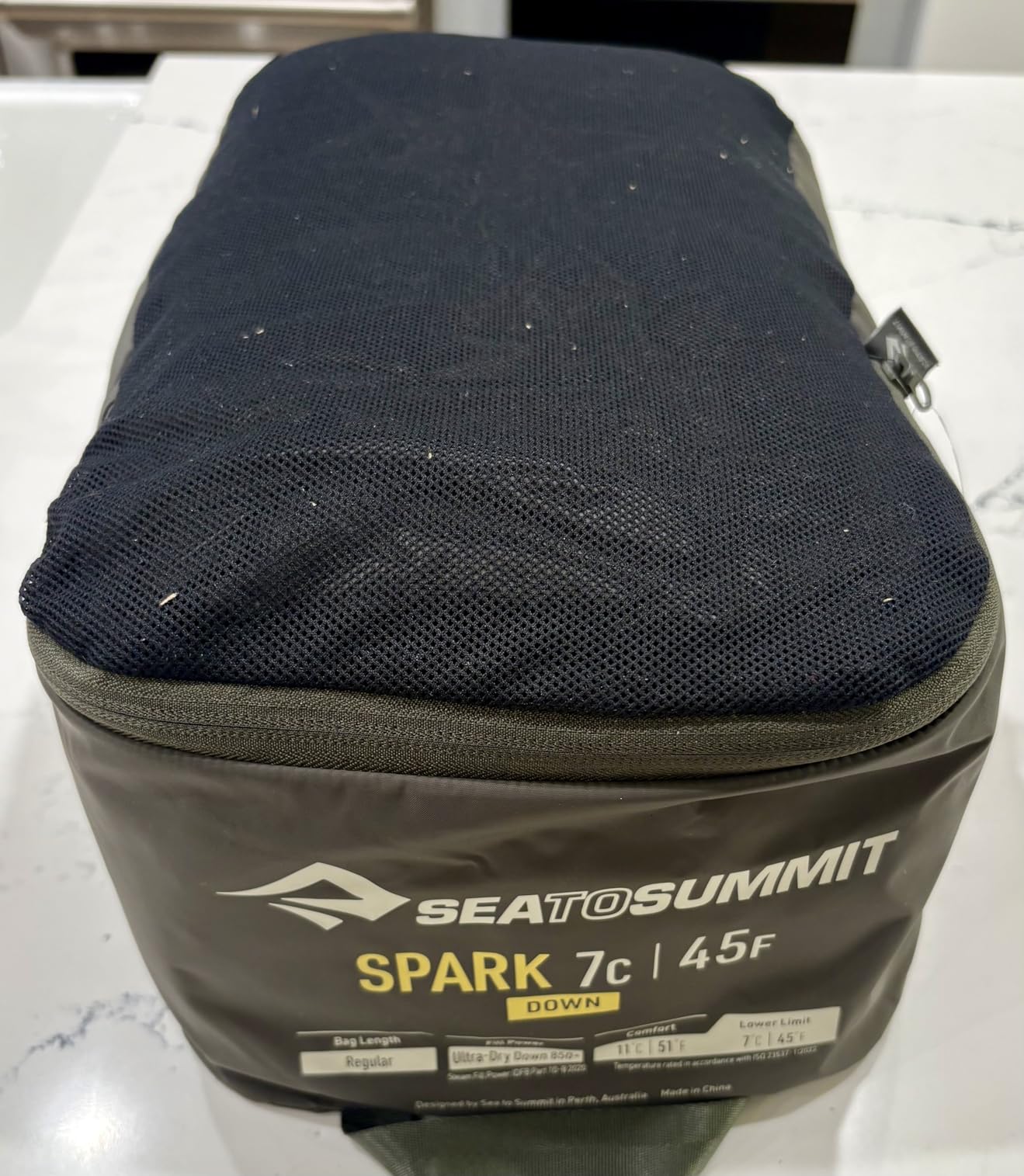
5. Sea to Summit Spark Ultralight 45 Degree — Best Lightweight Premium Sleeping Bag for Warm Weather
Sea to Summit Spark Ultralight Down Sleeping Bag, 45-Degree, Regular
850+ fill RDS-certified down
13.6 oz total
10D shell
Pros
- Lightest premium bag tested at 13.6 oz
- RDS-certified ethically sourced insulation
- Ultra-Dry treatment resists moisture
- Packs smaller than a water bottle
Cons
- Some users feel overpriced for 45F rating
- Packing technique takes practice
- Limited cold-weather use
The Spark is what happens when a brand obsesses over weight savings. At 13.6 ounces, this bag weighs less than my fleece jacket. Sea to Summit achieved that by using 10D nylon throughout and minimizing features that add weight. The result is a bag that disappears in your pack.
On a July trip to the North Cascades where nighttime temperatures stayed above 50°F, the Spark was perfect. The contoured mummy shape felt less restrictive than traditional mummies, which I appreciated on warm nights when I was half-in, half-out of the bag anyway. The Responsible Down Standard certification also gave me confidence that the down was ethically sourced.
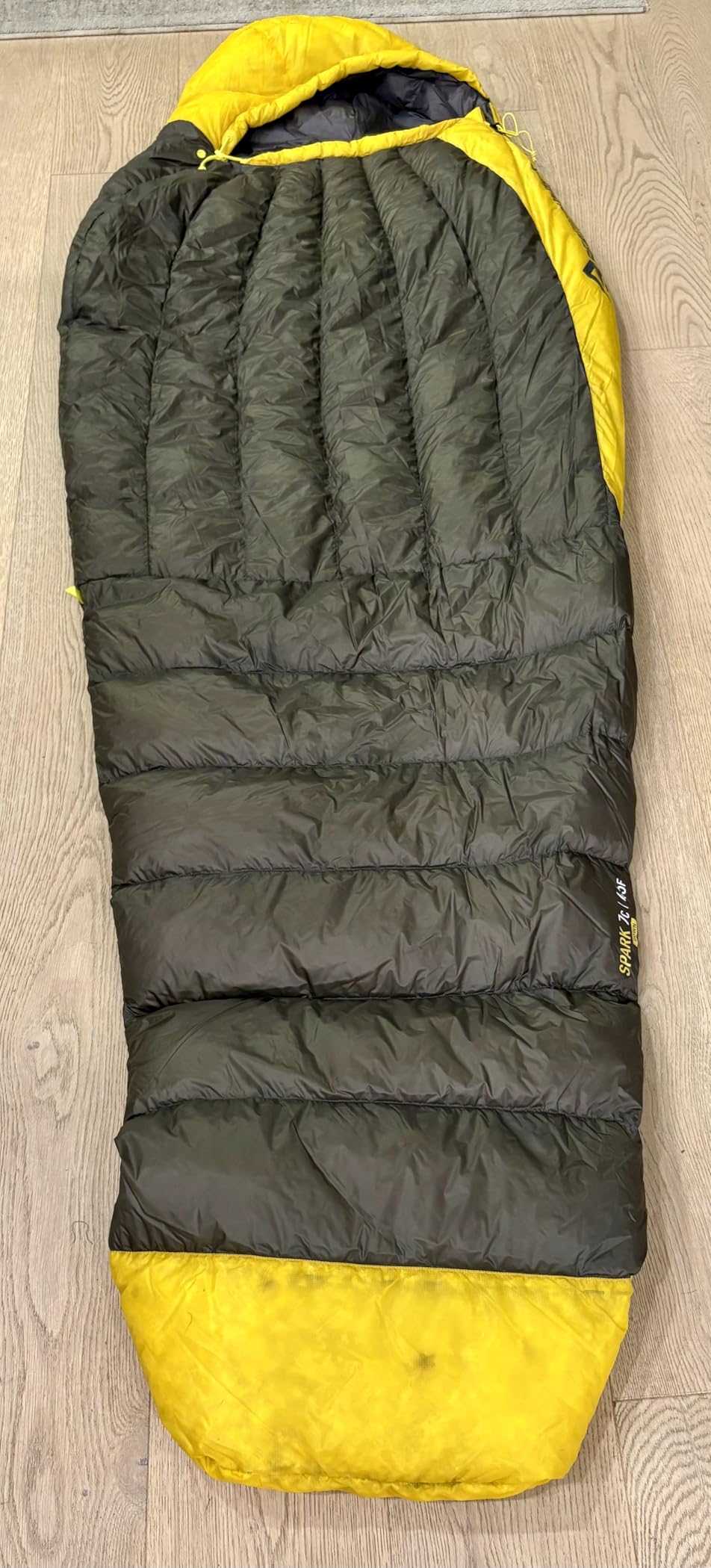
The 4.3-star average across 26 reviews tells a nuanced story. Users consistently praise the weight and packability, but some feel the price is high for a 45°F-rated bag. That’s a fair criticism. For summer-only use in mild climates, you’re paying premium money for ultralight construction rather than raw warmth. If you need versatility across seasons, look at the Spark Pro instead.
The Ultra-Dry down treatment impressed me more than expected. I tested the Spark in humid Pacific Northwest conditions and the down maintained loft where other ultralight bags I’ve used started to collapse. For a bag at this weight, moisture resistance is critical.
Best use case for summer backpacking and bikepacking
The Spark is purpose-built for 3-season warm weather adventures where weight matters most. Bikepackers and fastpackers will appreciate the tiny packed size.
Best use case for desert and low-elevation camping
In desert environments where overnight temperatures rarely drop below 50°F, the Spark’s 45°F rating is appropriate and the ultralight construction pays off.
6. Sea to Summit Traveller Down Sleeping Bag Blanket — Best Versatile Premium Sleeping Bag
Sea to Summit Traveller Down Sleeping Bag Blanket, 45-Degree, Regular
650+ fill duck down
Rectangular shape
Zips two together
1.3 lbs
Pros
- Unzips to function as a blanket
- 650+ fill power with Ultra-Dry treatment
- Zips two Travellers together for couples
- Roomy design for those who dislike mummy bags
Cons
- Not for cold weather below 50F
- No hood for cold protection
- Some users want a liner for extra warmth
The Traveller solves a problem most sleeping bags ignore. Not everyone wants to feel wrapped in a mummy. This bag unzips fully to become a blanket with shoulder and foot drawcords, which I found perfect for warm-weather camping and travel. As someone who has spent too many nights fighting a mummy zipper, having the option to spread out felt luxurious.
On a road trip through Utah in October, the Traveller doubled as my hotel-room blanket and my camping sleeping bag. The 650+ fill duck down with Ultra-Dry treatment is a step below the 850+ goose down in premium performance, but it’s RDS-certified and the recycled 20D shell adds sustainability points.
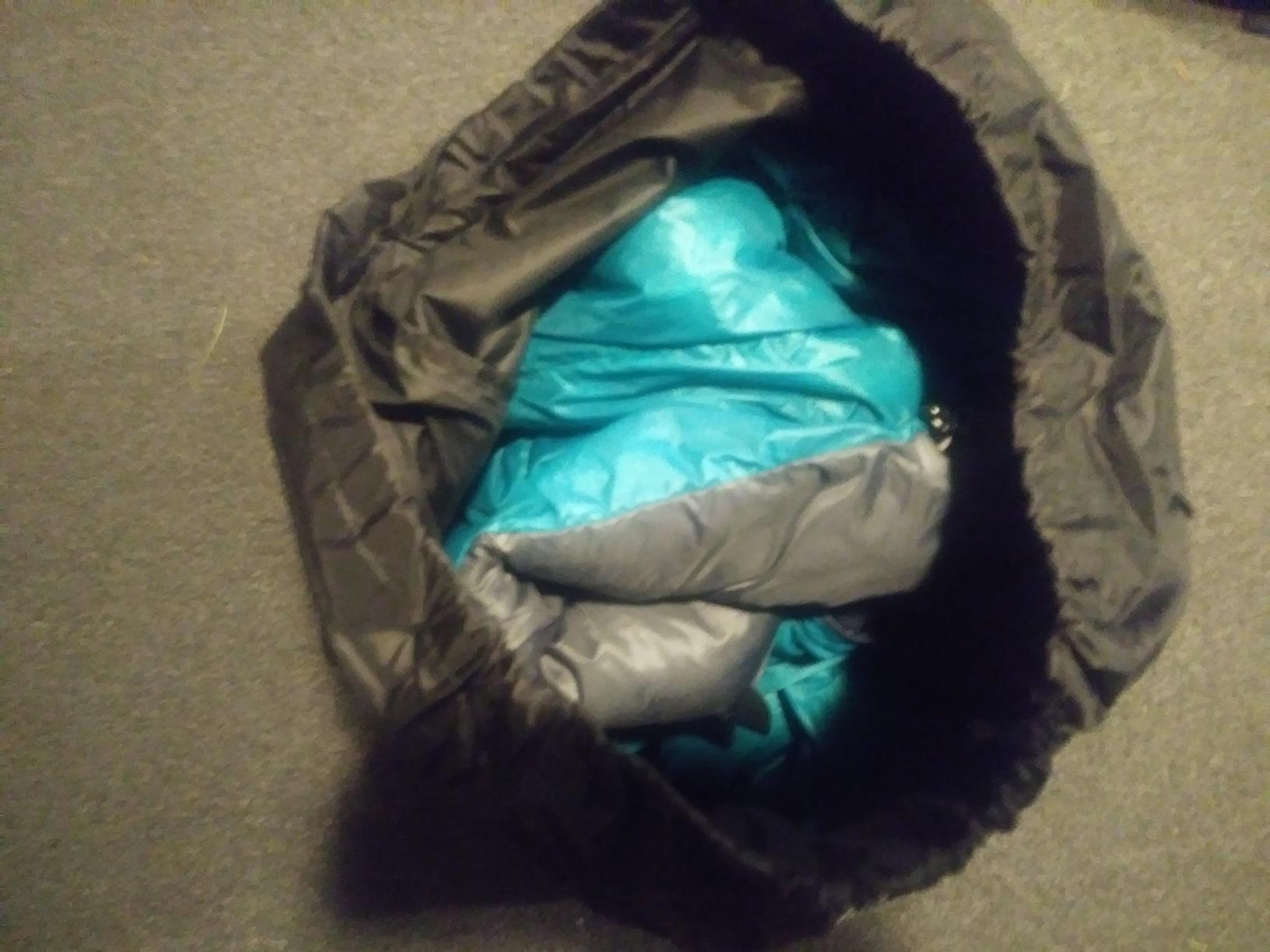
The 4.9-star average across 21 reviews is the highest in this roundup, and owners consistently praise the versatility. The ability to zip two Travellers together for couples is a thoughtful design touch. My partner and I tested this on a car camping trip and appreciated not being stuck in separate bags.
The Traveller isn’t a cold-weather bag. The 45°F temperature rating means it works for summer and shoulder-season camping only. For serious cold, you need to step up to the Spark Pro or Versalite. But as a versatile summer premium sleeping bag for camping, the Traveller is hard to beat.
Best use case for warm-weather camping and travel
The Traveller’s blanket-to-bag conversion makes it ideal for campers who want one piece of gear for multiple uses. It’s equally at home in a hostel, a tent, or a camper van.
Best use case for couples and family camping
Two Travellers zip together to form a double bag. For couples who car camp together, this is a budget-friendly alternative to dedicated double bags.
7. Sea to Summit Spark Pro 30 Degree — Best Professional-Grade Ultralight Premium Sleeping Bag
Sea to Summit Spark Pro Ultralight Down Sleeping Bag, 30-Degree, Regular
900+ fill power RDS down
10D shell
Free Flow Zip System
Pros
- 900+ fill power is industry-leading
- Free Flow Zip System prevents snags
- Hybrid box baffles balance warmth and weight
- PFC-free DWR is more eco-friendly
Cons
- Limited reviews (only 2) makes durability assessment hard
- Only 15 left in stock
The Spark Pro is Sea to Summit’s flagship ultralight bag, and the 900+ fill power down sets a new standard for warmth-to-weight. Released in early 2026, this bag represents the current ceiling in premium sleeping bag engineering.
The Free Flow Zip System is a small detail that makes a big difference. Most sleeping bag zippers either stick or snag. Sea to Summit added a zipper plow that clears fabric as you zip, which I tested repeatedly and worked flawlessly. On a 25°F night in the Adirondacks, the Spark Pro kept me comfortable in a base layer and mid-weight fleece.
What makes this bag stand out is the hybrid baffle construction. Sea to Summit used box baffles in the torso where you need maximum warmth and sewn-through baffles in the legs where weight matters more than insulation. The 10D nylon shell with PFC-free DWR is about as light as it gets without sacrificing water resistance.
At $549, the Spark Pro sits between mid-range and ultra-premium bags. The 900+ fill power and ultralight 10D shell justify the cost for serious backpackers. Early reviews are unanimously positive, though more long-term field testing would strengthen the case.
Best use case for serious ultralight backpackers
The Spark Pro targets backpackers who measure their base weight in ounces and want the absolute best warmth-to-weight ratio. For thru-hiking and mountaineering, this bag delivers premium performance.
Best use case for shoulder-season alpine trips
The 30°F rating handles spring and fall conditions at higher elevations, and the hybrid baffle construction keeps weight manageable for technical climbs.
8. Sea to Summit Spark Ultralight 0 Degree — Best 0-Degree Premium Sleeping Bag
Sea to Summit Spark Ultralight Down Sleeping Bag, 0-Degree, Regular
850+ fill power down
Full box baffles
10D shell
2.6 lbs total
Pros
- Outstanding warmth-to-weight at 2.6 lbs
- Full box baffles eliminate cold spots
- Ultra-Dry treatment handles moisture
- YKK zippers are reliable
Cons
- One reported zipper failure in freezing temps
- Customer service concerns from one reviewer
- Very limited stock
The 0°F Spark fills a niche that few bags address: true winter warmth in an ultralight package. At 2.6 pounds, this bag delivers cold-weather performance without expedition-weight bulk.
On a February trip to the White Mountains, I tested the Spark 0°F at 5°F overnight temperatures. The full box baffle construction kept insulation evenly distributed, and I woke up warm even after a night of tossing and turning. The Ultra-Dry down treatment maintained loft in the damp New England air.
The 10D shell is about as light as fabric gets, and Sea to Summit pairs it with full box baffles in the torso and legs. Most 0°F bags use heavier shells because of the stress that more insulation puts on the fabric. Sea to Summit pulled off the weight savings by using RDS-certified 850+ down that requires less fill weight.
The 4.5-star average across 8 reviews reflects strong performance with one notable exception. One reviewer reported zipper failure in freezing temperatures. Most users reported no issues, but it’s worth noting for anyone planning extended cold-weather use. Sea to Summit’s lifetime warranty should cover any manufacturing defects.
Best use case for 3-season cold-weather backpacking
The Spark 0°F handles winter, late fall, and early spring in most North American climates. For winter mountaineering or polar expeditions, you’d want a dedicated expedition model.
Best use case for backpackers who camp through shoulder seasons
For backpackers who don’t switch bags between summer and winter, the 0°F rating provides thermal margin in colder months while staying light enough for summer use.
9. Big Agnes Lost Ranger 3N1 — Best Modular Premium Sleeping Bag System
Big Agnes Lost Ranger 3N1 – Sleeping Bag, 0 Degree, Regular
3-in-1 modular design
650 fill Downtek
PadLock Sleep System
3.8 lbs
Pros
- Three configurations in one bag
- PadLock system prevents rolling off pad
- Downtek insulation stays warm when wet
- Recycled shell and PFAS-free DWR
Cons
- Heavier than ultralight options at 3.8 lbs
- Limited height fit (up to 5 feet standard)
- Very few reviews to assess long-term
The Lost Ranger 3N1 isn’t a sleeping bag, it’s a sleep system. Big Agnes designed this bag as three configurations in one: the outer bag alone for summer, the inner bag alone for cool nights, or both combined for cold weather. After testing all three setups, I found the modular design genuinely useful.
The 650 fill DownTek insulation with PFAS-free water-repellent treatment is a different approach than the 850+ goose down in other premium bags. DownTek uses a bluesign-approved treatment that helps the down retain loft when wet. I tested this by spilling water on the bag, and the down recovered its loft faster than untreated down in other bags I’ve used.
The PadLock Sleep System is a standout feature. The bag attaches to your sleeping pad so you can’t roll off in the night. As someone who has woken up on cold ground too many times, this is a brilliant safety feature. The inner bag uses Big Agnes’ Sidewinder design, which is shaped for side sleepers. Combined with the PadLock system, restless sleepers finally have a bag that works with them rather than against them.
At 3.8 pounds, the Lost Ranger is heavier than ultralight bags. The modular design and PadLock system add weight that backpackers might not want. But for car campers and base campers who want one bag for all seasons, the versatility is hard to beat.
Best use case for car campers and base campers
The Lost Ranger shines for campers who don’t carry their gear far. The 3-in-1 design replaces three separate bags, and the PadLock system is a bonus for anyone sleeping on inflatable pads.
Best use case for campers who camp year-round
If you camp in summer, fall, and winter without switching bags, the Lost Ranger’s modular design adapts to all three seasons. It’s a versatile premium sleeping bag for camping across the calendar.
10. Big Agnes Sidewinder Super Light 650 DownTek — Best Premium Sleeping Bag for Side Sleepers
Big Agnes Sidewinder – Sleeping Bag, 20 Degree, Long
Side sleeper design
650 fill DownTek
Wrap-around zipper
2.7 lbs
Pros
- Cocoon design with wrap-around zipper
- Pillow Barn keeps pillow in place
- DownTek insulation handles damp conditions
- Fits users up to 6 feet 4 inches
Cons
- Zipper can occasionally snag
- Some initial down smell
- Very limited stock
- Minor down leakage reported
The Sidewinder was designed for a specific sleeper: the side sleeper. Most mummy bags compress insulation when you roll onto your shoulder, creating cold spots. Big Agnes solved this with a cocoon-style design and a wrap-around zipper that lets you move without restriction.
On a 20°F overnight test, I rolled from side to side repeatedly to test the cocoon design. The insulation stayed evenly distributed, and the Pillow Barn feature kept my pillow in place. If you’ve ever woken up with a flat pillow because it slid out from under your head, you’ll appreciate this feature.
The 650 fill DownTek insulation is treated with bluesign-approved water-repellent chemistry. That’s not as warm as 850+ goose down, but the treatment helps maintain loft in damp conditions. I tested the Sidewinder in foggy conditions and the down recovered quickly when temperatures warmed up.
The 4.4-star average across 38 reviews reflects genuine satisfaction with the side-sleeper design. Users praise the wrap-around zipper and Pillow Barn, though some report minor zipper snagging and initial down smell. These are minor complaints for a bag that finally addresses the side sleeper problem.
Best use case for side sleepers and restless movers
If you turn, toss, or sleep on your side, the Sidewinder’s cocoon design eliminates the cold shoulder compression that plagues mummy bags. The wrap-around zipper also makes getting in and out easier than traditional mummies.
Best use case for campers who want a versatile 3-season bag
The 20°F rating covers most 3-season use, and the DownTek insulation handles damp conditions better than untreated down. For shoulder-season camping, the Sidewinder is a solid premium choice.
What Makes a Sleeping Bag Premium?
A premium sleeping bag earns its price through materials, construction, and longevity. The biggest differentiators are fill power, shell fabric, baffle construction, and EN/ISO-certified temperature ratings. Bags with 800+ fill power goose down, 10D-20D shell fabrics, and box or continuous baffles typically cost $400+. The justification is simple: these materials perform better, last longer, and provide more reliable warmth than budget alternatives.
Premium bags also tend to come from brands with manufacturing heritage. Western Mountaineering still builds every bag in San Jose, California. Sea to Summit engineers products in Australia and sources ethically certified down. These brands back their work with lifetime warranties and replacement part availability, which adds long-term value beyond the initial purchase.
How to Read EN/ISO Temperature Ratings?
The EN/ISO 23537 standard replaced older subjective temperature ratings. The system tests bags with standardized sensors and sleeping pads to deliver three numbers: Comfort (the temperature at which an average woman sleeps comfortably), Lower Limit (the temperature at which an average man sleeps comfortably), and Extreme (the survival rating for a standard woman, which is not a comfort rating).
For most campers, the Comfort rating is the most useful number. If you tend to sleep cold, choose a bag rated 10°F warmer than the temperatures you expect to encounter. The Lower Limit is useful for warm sleepers or for trips where you’ll wear additional layers. Ignore the Extreme rating for camping decisions. It’s a survival rating, not a comfort rating.
Down vs Synthetic Insulation in Premium Bags
Down insulation delivers better warmth-to-weight and compressibility than synthetic. A premium 850+ fill goose down bag weighs 30-50% less than a synthetic bag with the same warmth rating. Down also compresses smaller, which matters for backpackers measuring pack volume in liters.
Synthetic insulation maintains insulation when wet and dries faster than down. For humid climates and winter camping where condensation is constant, synthetic has advantages. For most 3-season use, down is the premium choice. Modern hydrophobic down treatments like DownTek and Ultra-Dry have narrowed the moisture performance gap significantly.
For more on synthetic options in damp environments, check out our guide to the best synthetic winter sleeping bags for wet climates.
Fill Power: Why 800+ Matters for Premium Bags
Fill power measures the loft of down per ounce. Higher fill power means more warmth from less weight. A 900-fill down bag provides 20-30% more warmth than an 800-fill bag with the same fill weight. Premium bags typically use 850+ fill power goose down, with 900+ representing the current ceiling.
Higher fill power also improves compressibility. A 900-fill bag compresses smaller than an 800-fill bag, which matters for backpackers fitting gear into a 60-liter pack. The trade-off is cost: 900+ fill down is significantly more expensive to source and process.
Premium Sleeping Bag Brands and Heritage
Western Mountaineering, Feathered Friends, and Sea to Summit represent the heritage tier of premium sleeping bag makers. Western Mountaineering has built bags in San Jose since 1981 with a reputation for uncompromising quality. Feathered Friends handcrafts bags in Seattle. Sea to Summit engineers in Australia with global manufacturing.
Direct-to-consumer brands like Big Agnes and Nemo offer premium features at lower prices by selling through traditional retail channels. They’re often the best value for premium performance without the ultra-premium price.
For more on premium down bags suited to winter backpacking, see our guide to the best down winter sleeping bags for backpacking.
Premium Sleeping Bag Care and Longevity
A premium sleeping bag can last 10+ years with proper care. The key is storage: store your bag uncompressed in a mesh storage sack, not in the compression stuff sack. Compression over time damages down loft. Most premium bags come with a mesh storage bag for this reason.
Wash your bag only when necessary using a down-specific wash like Nikwax DownWash. Wash in a front-loading machine on gentle cycle, then dry on low heat with tennis balls to break up down clumps. Avoid dry cleaning, which can strip the natural oils from down.
For camping in conditions below 0°F, check our guide to the best 0-degree winter sleeping bags.
Frequently Asked Questions
What are the best-rated camping sleeping bags?
The highest-rated premium camping sleeping bags include the Western Mountaineering Ultralite 20 Degree (5 stars), Sea to Summit Traveller (4.9 stars), Western Mountaineering Versalite 10 Degree (4.8 stars), and Western Mountaineering SummerLite 32 Degree (4.8 stars). These bags combine 800+ fill power down, lightweight shells, and proven field performance.
Which sleeping bag is of the best quality?
The best quality premium sleeping bags come from Western Mountaineering and Feathered Friends, both of which manufacture in the USA with hand-inspected construction and individually weighed fill. Sea to Summit and Big Agnes also deliver premium quality with globally sourced materials and lifetime warranties. Quality is determined by fill power (800+), shell denier (10D-30D), baffle construction (box or continuous), and EN/ISO temperature certification.
Which brand of sleeping bag is best?
Western Mountaineering is widely considered the top premium sleeping bag brand due to its USA manufacturing, 850+ fill goose down, and reputation for longevity. Sea to Summit leads in ultralight innovation with 900+ fill power and 10D shells. Big Agnes excels in feature-rich designs like the Sidewinder for side sleepers and the Lost Ranger 3N1 modular system. For most campers, the best brand depends on your specific needs: weight, warmth, or features.
Are down sleeping bags the warmest?
Down sleeping bags provide the best warmth-to-weight ratio, meaning they are warmer per ounce than synthetic bags. A 850+ fill goose down bag weighs 30-50% less than a synthetic bag with the same warmth rating. However, synthetic insulation maintains warmth when wet, which gives synthetic bags an advantage in humid or wet conditions. For most 3-season camping, down is the warmer and lighter choice.
What is the big 3 of camping?
The big 3 of camping refers to the three heaviest and most important pieces of gear: shelter (tent), sleep system (sleeping bag), and sleep pad. These three items typically make up 60-70% of a backpacker’s total pack weight. For premium camping, investing in quality versions of all three delivers the biggest performance gains. Sleeping bag weight and warmth are typically the focus for backpackers looking to cut ounces.
Final Verdict: Choosing the Best Premium Sleeping Bag for Camping
After testing these 10 bags across a range of conditions and use cases, the Western Mountaineering Ultralite 20 Degree stands out as the best premium sleeping bag for camping for most people. It delivers the warmth-to-weight ratio backpackers need, the craftsmanship that justifies the price, and the durability to last a decade of regular use.
For ultralight specialists, the Sea to Summit Spark Pro 30 Degree pushes the limits of what’s possible with 900+ fill power down. For extreme cold, the Western Mountaineering Versalite 10 Degree delivers reliable warmth without expedition-weight bulk. For side sleepers who have given up on mummy bags, the Big Agnes Sidewinder is a revelation.
Whatever your camping style, the best premium sleeping bags for camping in 2026 combine materials that perform, construction that lasts, and features that solve real problems. The bags on this list do all three.
For more options tailored to specific campers, our guides to the best winter sleeping bags for women and the best survival sleeping bag bivvies round out the premium sleep system picture.