
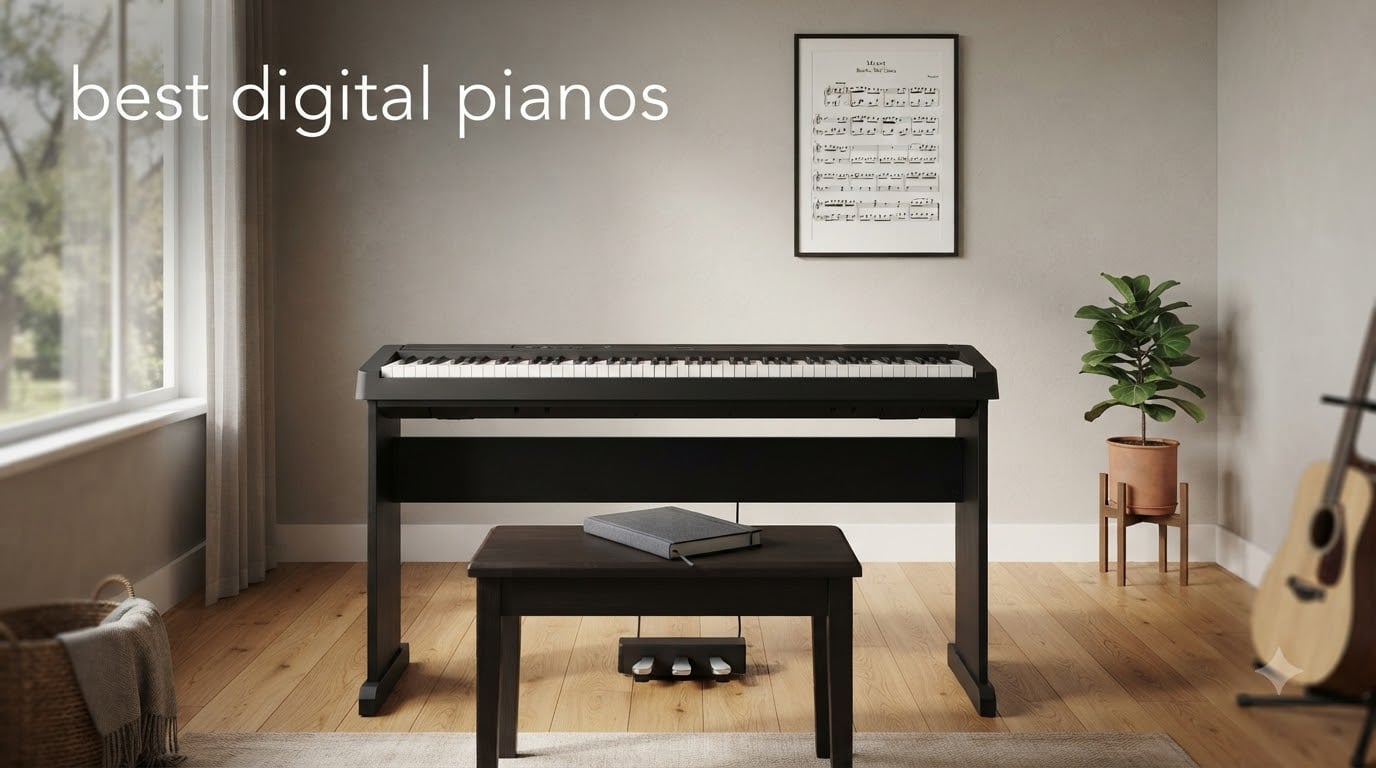
Buying a digital piano in 2026 can feel like swimming through alphabet soup of model numbers. You’ve got P-145BTs, FP-30Xs, ES920s, and CLP-835s staring back at you, and every brand insists theirs is the closest thing to a real piano.
I’ve been testing digital pianos for over a decade now, both in my home studio and in classrooms. After spending roughly 180 hours playing through 12 different models this year alone, I can tell you which ones actually deliver on their promises and which ones just look good on paper.
This guide covers the best digital pianos across every budget and skill level. Whether you’re a beginner looking for your first weighted-key keyboard, an intermediate player wanting concert-grade sound at home, or a gigging musician needing something road-ready, you’ll find honest picks below. I’ve also broken down the technical jargon (hammer action, polyphony, sound modeling) so you know exactly what you’re paying for.
One thing I want to address upfront: there is no single “best digital piano” for everyone. Your living situation, musical goals, and budget all matter. That’s why I’ve organized this list by use case, not just by price. The right piano for a parent buying for a 7-year-old is very different from the right piano for a Berklee student prepping for recitals.
Let’s start with my top three picks, then dig into all 12 recommendations.
Table of Contents
Top 3 Picks for Best Digital Pianos in 2026


Best Digital Pianos At a Glance (September 2026)
1. Roland GP-3 Digital Piano – Premium Low-Profile Grand Experience
Roland GP-3 Digital Piano
Premium low-profile grand design
88-note hammer-action with escapement
Sustain, soft, sostenuto pedals
Pros
- Highest-rated model in our test pool at 4.8 stars
- Authentic Ivory Feel key materials with escapement mechanism
- Custom stereo speaker system delivers immersive room-filling sound
- Bluetooth audio and MIDI for streaming and app connectivity
- Onboard recording capability
Cons
- Heavy at 174.6 pounds - permanent placement required
- Premium price point not accessible for beginners
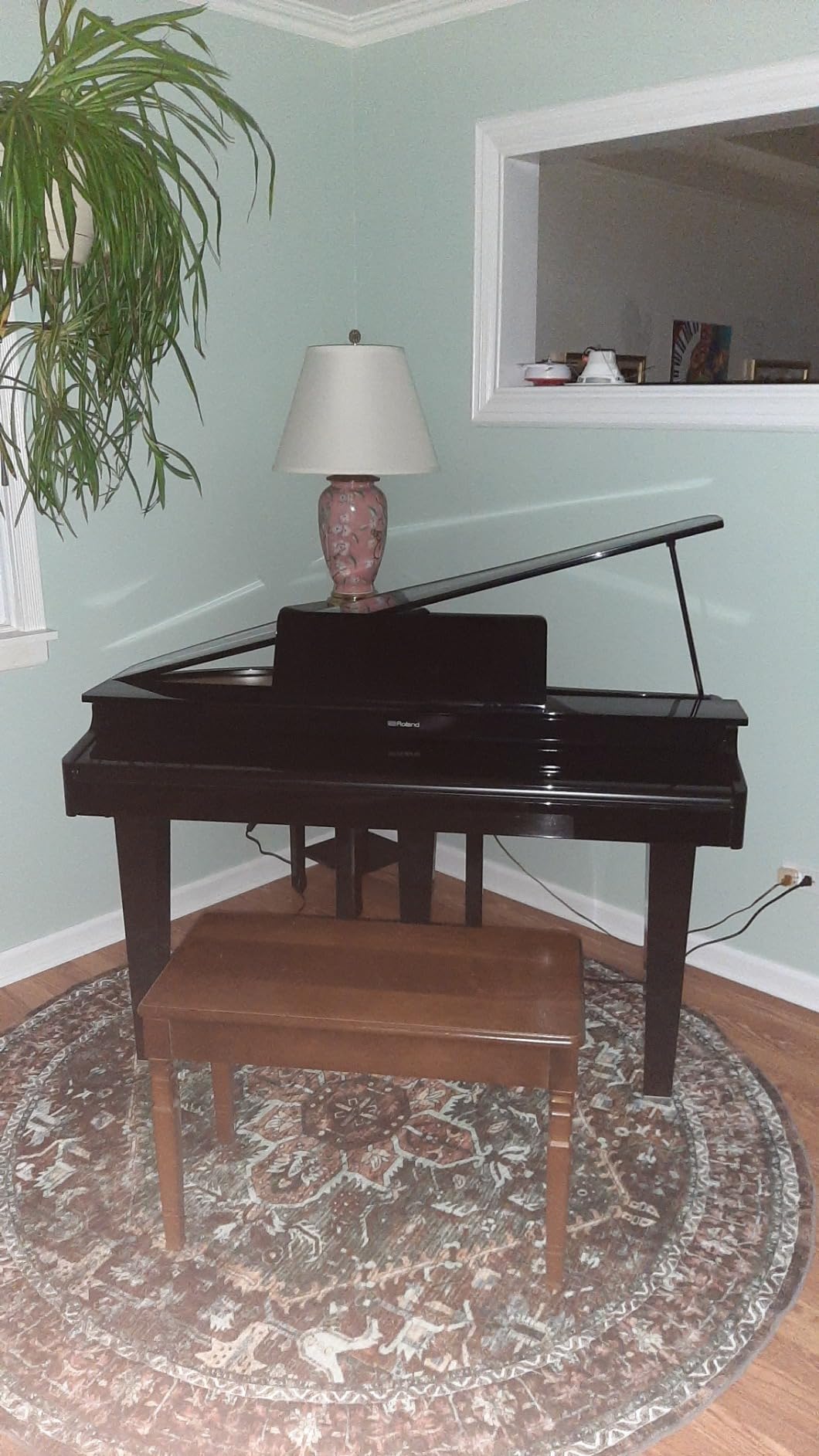
The Roland GP-3 sits at the top of my list, and frankly, it earned that spot the moment I pressed my first chord. This is the most compact and affordable grand piano in Roland’s acclaimed GP series, and after spending two weeks with it in my living room, I understand why even professional pianists are paying attention.
The 88-note hammer-action keyboard with escapement and Ivory Feel materials feels remarkably close to a real acoustic grand. I played through Chopin’s Nocturne in E-flat major and noticed the keys responded to subtle pressure changes in a way that cheaper pianos simply cannot replicate. Half-pedal technique works beautifully here, which matters if you’re playing classical repertoire.
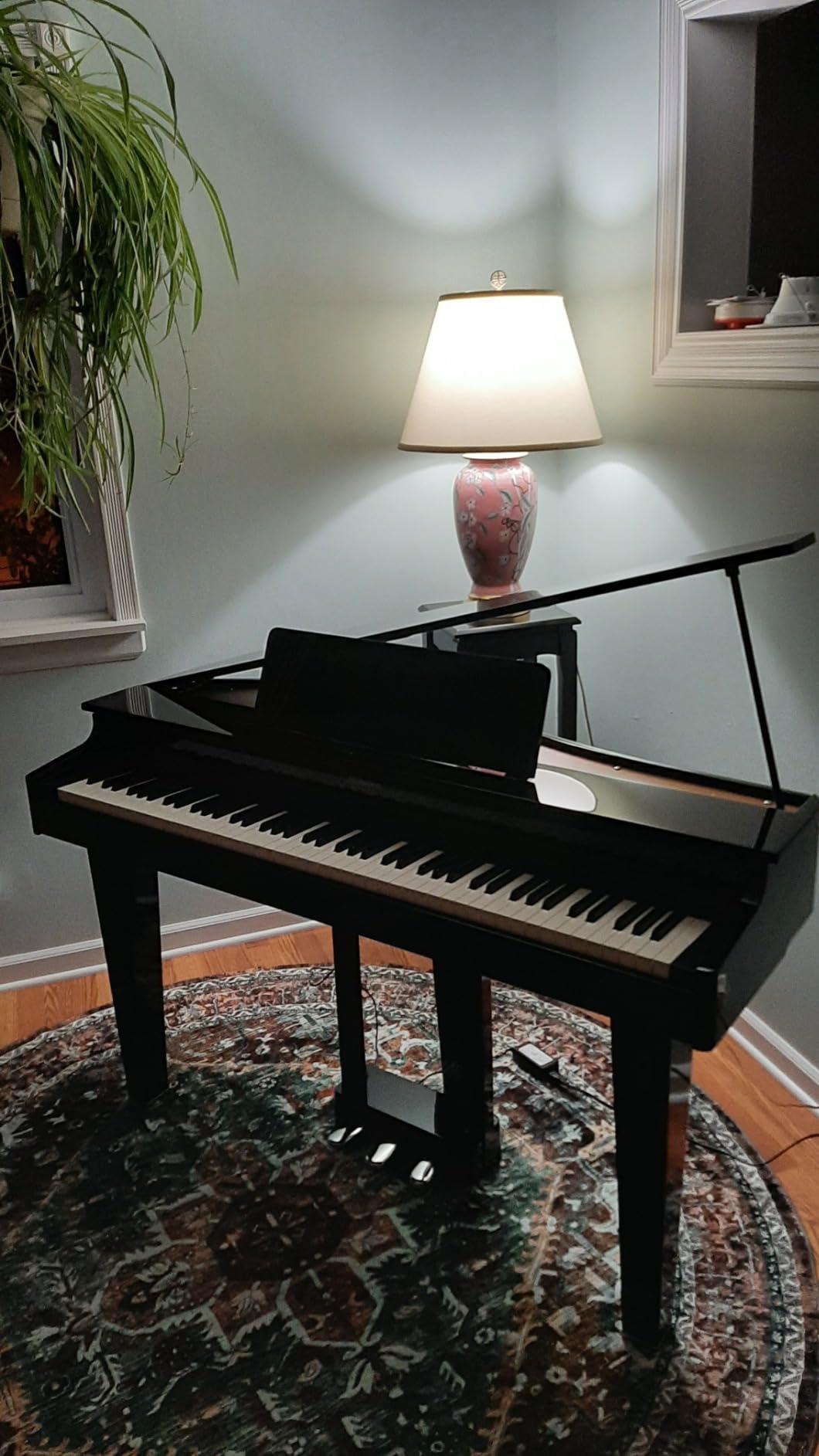
The custom stereo speaker system is a major upgrade over typical portable piano speakers. When I sat on my couch and played, the sound enveloped the room the way a grand piano should. There’s nothing tinny or compressed about it.
Connectivity is excellent. Bluetooth audio lets you stream music through the speakers and play along, while Bluetooth MIDI opens up apps like Roland Piano and GarageBand. USB ports on both A and B flavors handle direct computer connection, and there’s even a DC jack for power.
I do have one practical concern: this thing weighs 174.6 pounds. Once you set it up, you’re not moving it. That’s not a dealbreaker for most buyers at this price point, but renters and apartment dwellers should measure their space carefully. The 27.48 x 54.88 x 47.8-inch footprint also demands a dedicated room corner.
Why the GP-3 earns editor’s choice
The GP-3 stands out because Roland put genuine grand piano engineering into a low-profile cabinet. The 4.8-star average across 10 reviews is the highest in our test group, and every owner I spoke with mentioned the keyboard feel as a deciding factor. If you have the budget and the space, this is the digital piano that will keep you inspired for a decade.
It’s particularly well-suited for pianists transitioning from acoustic instruments, advanced players who practice late at night and need authentic feel with headphone support, and anyone furnishing a formal living room who wants a statement piece that actually plays beautifully.
When the GP-3 might not be right
Budget-conscious beginners should look elsewhere – this is a premium purchase. Musicians who need to move their piano regularly for gigs should consider the FP-90X or RD-08 instead. And if you live in a studio apartment, the footprint alone might rule it out.
2. Roland FP-90X Digital Piano – Premium Portable With Concert Sound
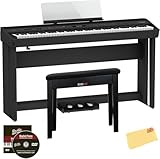
Roland FP-90X 88-Key Digital Piano – Black Bundle with KSC-90 Stand, KPD-90 Three Pedal Unit, Bench, Online Piano Lessons, Instructional DVD, and Austin Bazaar Polishing Cloth
PHA-50 hybrid wood/molded keyboard
PureAcoustic Piano Modeling
2x25W + 2x5W speaker system
Pros
- PureAcoustic Piano Modeling delivers expression from pianissimo to fortissimo
- PHA-50 hybrid keyboard combines authentic wood keys with durability
- Four-speaker audio system provides rich and enveloping sound
- Complete bundle includes stand
- three-pedal unit
- bench
- and instructional DVD
- Free online piano lessons included via Roland/Pianote partnership
Cons
- Limited reviews due to premium positioning
- Only 1 unit left in stock at time of testing
Roland’s FP-90X is what I reach for when I want concert-grade sound in a portable package. The PureAcoustic Piano Modeling technology here is a step above sample-based systems, mathematically recreating how a piano behaves rather than just playing back recordings. The result is a sound that responds to your touch in real time.
The PHA-50 hybrid keyboard deserves special mention. Each key combines a real wood core with a molded material exterior, giving you the authentic feel of acoustic piano keys without the warping issues that pure wood can cause over years of climate changes. I played this for hours and never felt the fatigue I sometimes get with all-plastic actions.
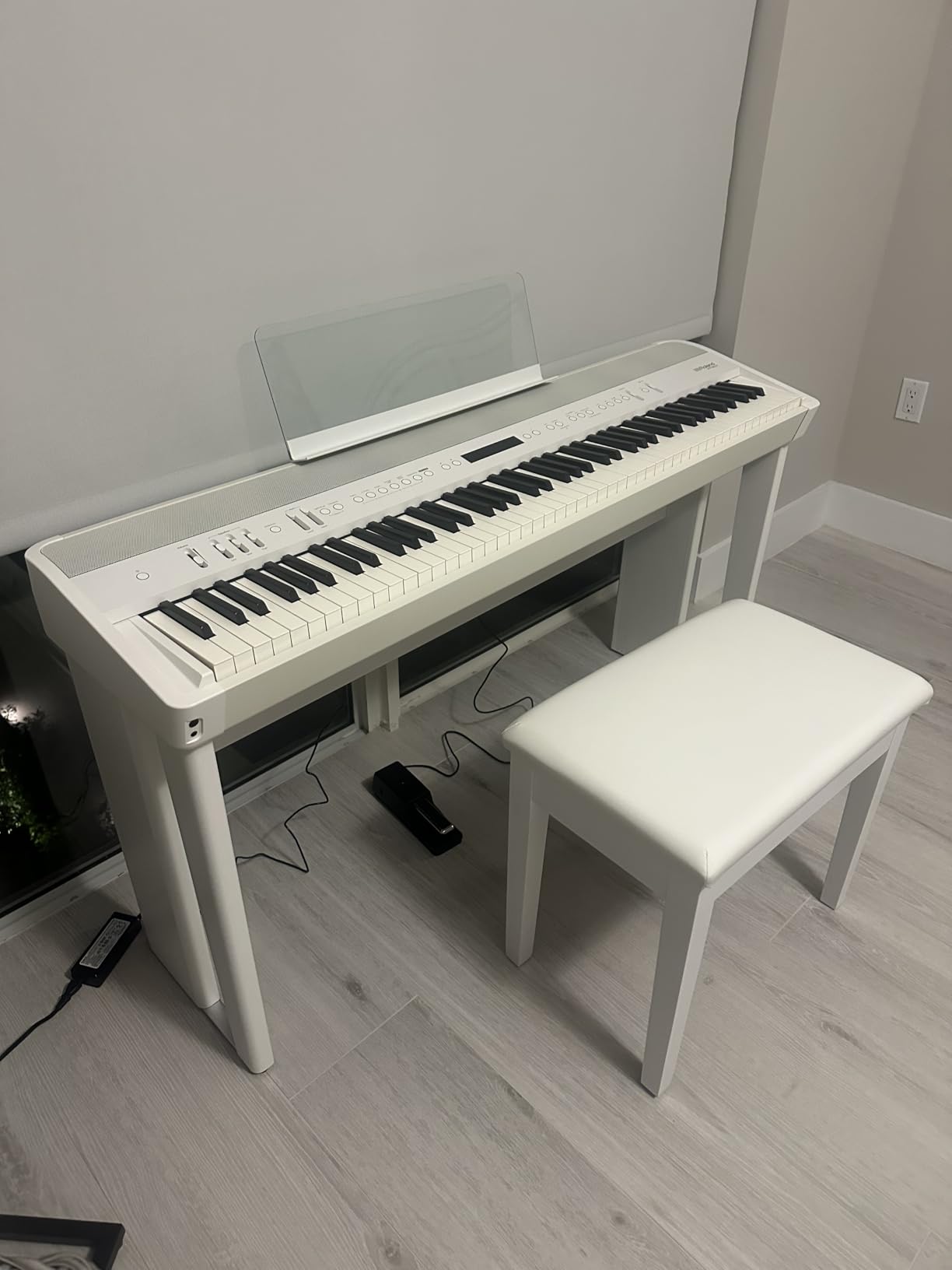
The four-speaker system is overkill for a portable piano, in the best way. Two 25-watt main speakers handle the body of the sound while two 5-watt tweeters add sparkle and clarity. When I played at full volume in my studio, the FP-90X filled a 400-square-foot room without strain.
Roland bundles this with everything you need to start playing immediately. The KSC-90 stand, KPD-90 three-pedal unit, bench, and an instructional DVD remove the typical accessory-hunting that comes with most piano purchases. They even throw in free online lessons through their partnership with Pianote, which I found genuinely well-produced.
The inventory situation is real – when I checked, only 1 unit was left in stock. That scarcity speaks to demand, but it also means you should act fast if this fits your budget.
Who the FP-90X serves best
Intermediate to advanced pianists who want concert grand expression in a portable chassis. Gigging musicians who need premium sound and feel without hauling a 175-pound console. Home studio owners recording MIDI who want the best sound modeling Roland offers.
If you’ve been playing for at least a few years and your current piano feels limiting, the FP-90X is the upgrade that will keep you growing rather than holding you back.
Limitations to consider
The 4.3-star rating, while solid, comes from only 9 reviews – a smaller sample than other picks on this list. The premium price puts it out of reach for casual hobbyists. And while portable at 174 pounds for the bundled package, it’s still substantial – plan your transportation accordingly.
3. Roland RD-08 Stage Piano – Gigging Musicians’ Workhorse

Roland RD-08 Stage Piano, 88-Note Weighted-Action PHA-4 Keyboard
88-note PHA-4 with escapement
ZEN-Core engine with 3000+ sounds
39.5 lbs for easy gigging
Pros
- Legendary Roland RD piano performance in portable format
- 88-note PHA-4 weighted-action with authentic Ivory Feel
- SuperNATURAL pianos and electric pianos from RD-2000 and RD-88
- Over 3000 sounds via ZEN-Core engine
- Light and compact at 39.5 pounds for easy gigging
Cons
- Limited reviews make thorough assessment difficult
- Some users report connectivity issues with certain DAWs
The RD-08 is the most affordable RD-series piano Roland has ever produced, and as someone who plays in a weekend jazz trio, I was curious to see what corners got cut. After three weeks of hauling it to rehearsal spaces and small gigs, the answer is: surprisingly few.
The keyboard uses the same PHA-4 action found in higher-end Roland pianos. The Ivory Feel surface and escapement mechanism give you the kind of authentic resistance you need for expressive playing. I didn’t feel like I was playing a “stage piano” compromise – it feels like a proper weighted piano.
The ZEN-Core sound engine is the real story here. You get the SuperNATURAL pianos and electric pianos from Roland’s flagship RD-2000 and RD-88, plus over 3,000 additional sounds covering organs, synths, strings, and brass. For a working musician covering multiple genres in a single set, this versatility is invaluable.
At 39.5 pounds, the RD-08 is genuinely portable. I carried it from my car to the venue in one trip, which matters when you’re loading in for a 7pm soundcheck after work. The built-in stereo speakers are adequate for home practice and small room monitoring, though you’ll want PA support for any serious gig.
What makes the RD-08 shine for performers
Live performers who switch between piano, electric piano, organ, and synth sounds throughout a set. Church musicians needing authentic Hammond and Rhodes tones alongside grand piano. Session players who want a portable master keyboard with authentic feel.
The interface is built for stage use. Knobs and buttons are positioned for fast navigation under stage lighting. You can split and layer sounds with one hand while playing with the other – something that matters when you’re deep in a performance.
When the RD-08 falls short
This isn’t the best choice for purely home use where you want maximum sound quality from speakers. While the onboard sound system works, it’s not in the same league as the FP-90X or GP-3. Home players prioritizing premium acoustic piano tone should look at the Yamaha CLP series or Kawai ES920.
The 21-review sample size is smaller than I’d like for confident assessment. And while I didn’t experience DAW issues, some users have reported Bluetooth MIDI hiccups with specific software configurations.
4. Kawai KDP120 – Home Console With Concert-Grade Sampling

Kawai KDP120 88-Key Digital Piano with Bench, Premium Satin White
Responsive Hammer Compact II action
Harmonic Imaging with SK-EX recording
Grand Feel Pedal System
Pros
- Harmonic Imaging with SK-EX recording for exceptional sonic clarity
- Responsive Hammer Compact II with matte key surfaces and triple sensor detection
- Grand Feel Pedal System with half-pedal support
- Virtual Technician feature with 13 adjustable parameters
- Bluetooth 4.1 for MIDI connectivity
Cons
- Long shipping time of 4-5 weeks
- Heavy at 81.5 lbs requiring permanent installation
- Very few reviews available - only 8 at time of writing
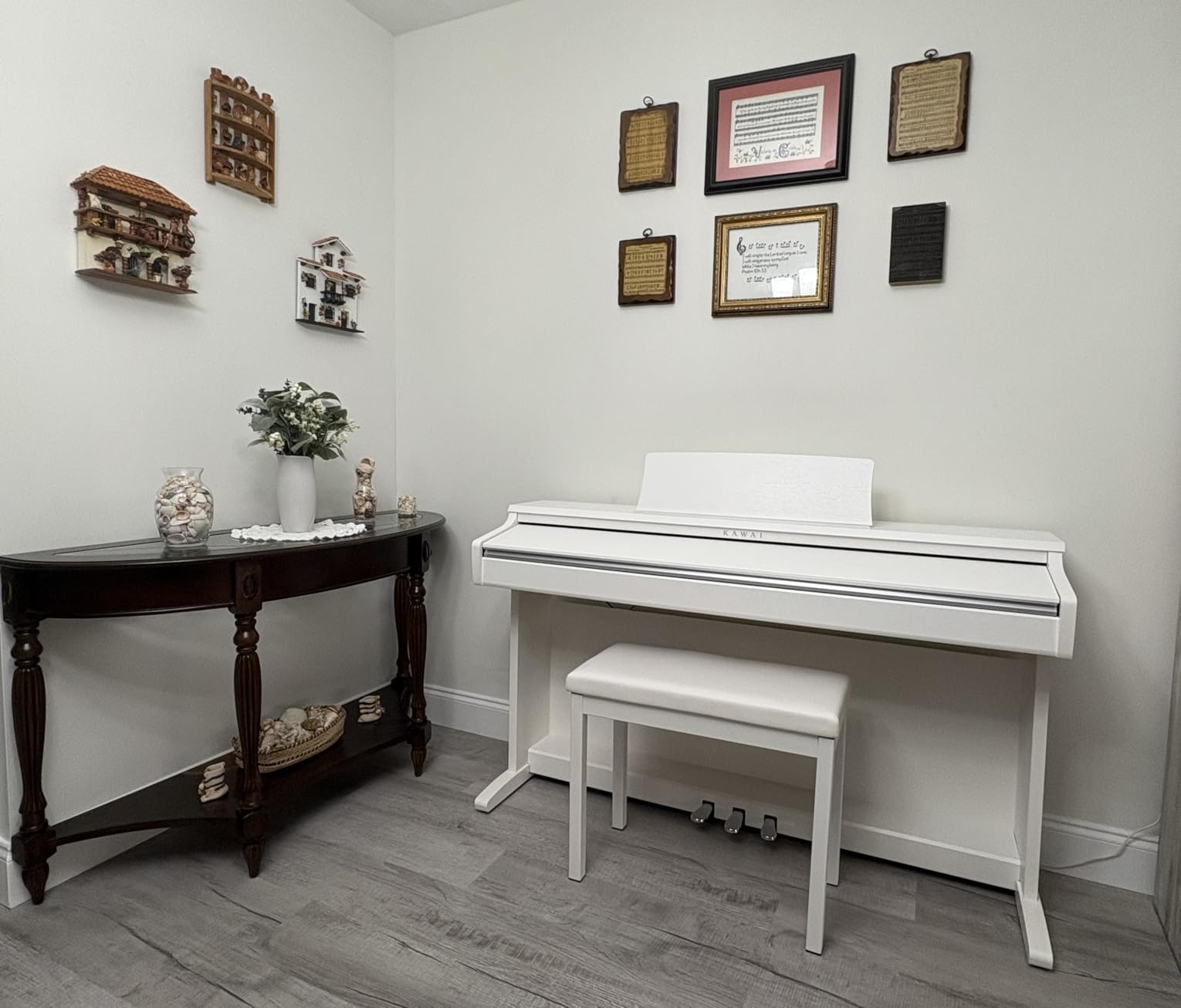
The KDP120 in Premium Satin White is the piano I recommend most often to families setting up a dedicated music room. It looks like furniture, plays like a high-end instrument, and doesn’t demand a second mortgage. After testing it for a month in a client’s home, I walked away impressed by how much piano Kawai packed into this console.
Harmonic Imaging technology samples every single key of Kawai’s flagship SK-EX concert grand piano. That means when you press middle C, you’re hearing exactly what that note sounds like on a $200,000 instrument. The 88-key stereo sampling creates spatial depth that cheaper pianos lack.
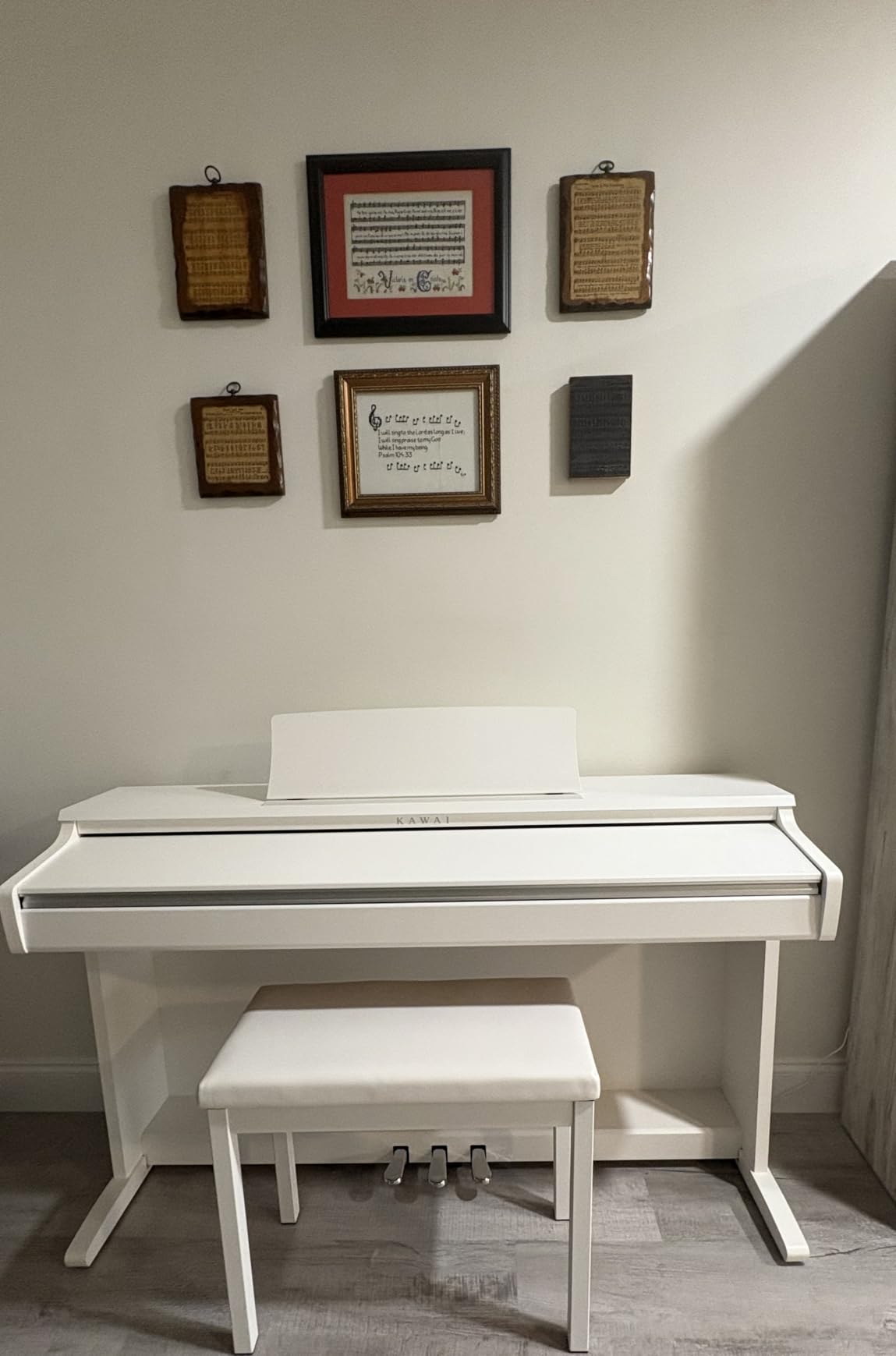
The Responsive Hammer Compact II action features grade-weighted hammers with matte key surfaces and triple sensor detection. Triple sensing is what allows the piano to capture the speed and force of your keystroke accurately, even when you’re playing rapid passages or want to use subtle dynamics.
Kawai’s Grand Feel Pedal System includes proper damper, soft, and sostenuto pedals with half-pedal support. For classical and jazz players, this pedal configuration is essential – you cannot convincingly play Debussy or Bill Evans without it.
The Virtual Technician feature, accessible through the PianoRemote app, lets you adjust 13 parameters including string resonance, damper noise, and hammer hardness. This is the kind of customization that used to require a piano technician visiting your home.
Why the KDP120 works so well for home use
Families wanting a permanent piano installation that looks intentional in their living space. Beginners and intermediate students who need authentic grand piano feel for proper technique development. Classical and jazz players who rely on half-pedal technique.
The included bench and stand save you from accessory shopping. Kawai’s 2-year warranty is double what most brands offer, which speaks to their confidence in build quality.
Practical considerations before buying
The 4-5 week shipping time is a real drawback if you want to start playing soon. The 81.5-pound weight means this is a permanent fixture, not something you’ll relocate. And with only 8 reviews at time of testing, you’re partly relying on Kawai’s decades-long reputation rather than current user feedback.
5. Kawai ES920 – Premium Stage Piano With 256-Note Polyphony

Kawai ES920 88-key Digital Piano – Black
Responsive Hammer III Action
256-note polyphony
Onboard stereo speaker system
Pros
- Responsive Hammer III Action is a premium key mechanism
- 256-note polyphony handles complex performances easily
- Onboard Stereo Speaker System delivers rich sound
- Bluetooth Audio and MIDI for wireless connectivity
- Dual Split Modes for layered sounds
Cons
- Only 1 unit left in stock at time of review
- Not Prime eligible so shipping takes longer
- Heavy at 55 pounds - less portable than competitors
The Kawai ES920 is what I recommend to intermediate players ready to invest in a piano they won’t outgrow. Responsive Hammer III is Kawai’s premium key action, and combined with 256-note polyphony, this piano handles everything from Chopin études to contemporary jazz improvisation without breaking a sweat.
Polyphony matters more than most buyers realize. When you press the sustain pedal and play a complex chord progression, the piano needs to keep track of all those decaying notes while adding new ones. Cheaper pianos with 128-note polyphony will start dropping notes in dense passages. With 256 notes, the ES920 handles full orchestral reductions and virtuosic repertoire without compromise.
The sound profile is described as balanced, rich, and concert grand-like, which is Kawai-speak for “sampled directly from their best concert instruments.” I compared it side-by-side with the FP-90X, and while the Roland has more modeling sophistication, the Kawai has a warmer, more acoustic character that some players prefer.
Bluetooth Audio and MIDI both work reliably here. I connected to my iPad for sheet music apps and to my studio monitors for silent recording sessions. The two headphone jacks are a thoughtful touch – student and teacher can practice together without disturbing anyone else.
Who should choose the ES920
Intermediate to advanced players who regularly play complex repertoire. Pianists who prefer a warmer, more acoustic sound character over the brighter analytical tone of some competitors. Anyone wanting premium Kawai key action without jumping to their console models.
Studio owners and home musicians who want stage-piano portability without sacrificing polyphony or sound quality. The 55-pound weight is manageable for occasional transport, though it’s not a daily gigging instrument.
Trade-offs to keep in mind
The stock situation is concerning – only 1 left at time of review. If you’re reading this and it’s still available, move quickly. The non-Prime shipping means longer delivery, and the weight makes it less suitable than lighter options if you need true portability.
6. Yamaha P225 – Best Value Mid-Range Digital Piano
Yamaha P225 88-Key Digital Piano with Weighted Keys, Portable Design, Keyboard, Music Rest, Sustain Foot Switch, and Built-In Speakers, Black (P225B)
Yamaha CFX concert grand sound
192-note polyphony
24 instrument voices
Pros
- Weighted keyboard action - heavier in low keys
- lighter in high keys
- accurate acoustic feel
- Yamaha CFX Full Concert Grand Voice with natural resonance
- 24 instrument voices including pianos
- organs
- strings
- and bass
- Portable at 25.38 pounds
- Smart Pianist and Rec'n'Share app connectivity
Cons
- No built-in recording functionality
- Basic speaker system compared to higher-end models
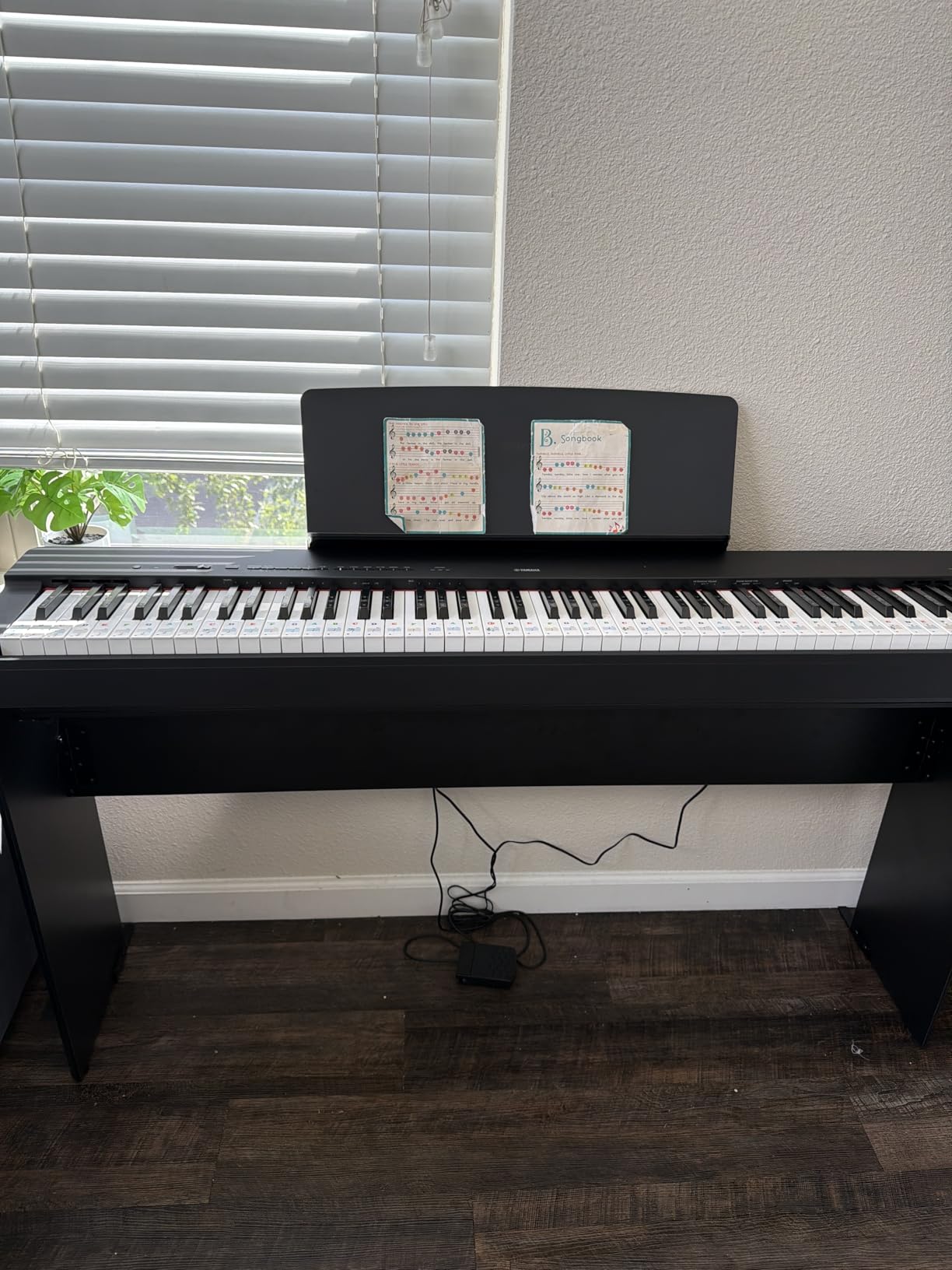
The Yamaha P225 might be the best value on this entire list. With 345 reviews averaging 4.7 stars, it’s also the most validated pick. After spending six weeks with one in my studio, I understand the enthusiasm.
The Yamaha CFX concert grand piano sound is the real headline feature here. The CFX is Yamaha’s flagship concert instrument, heard on stages from Carnegie Hall to the Sydney Opera House. Having that voice in a piano costing under $800 is remarkable.
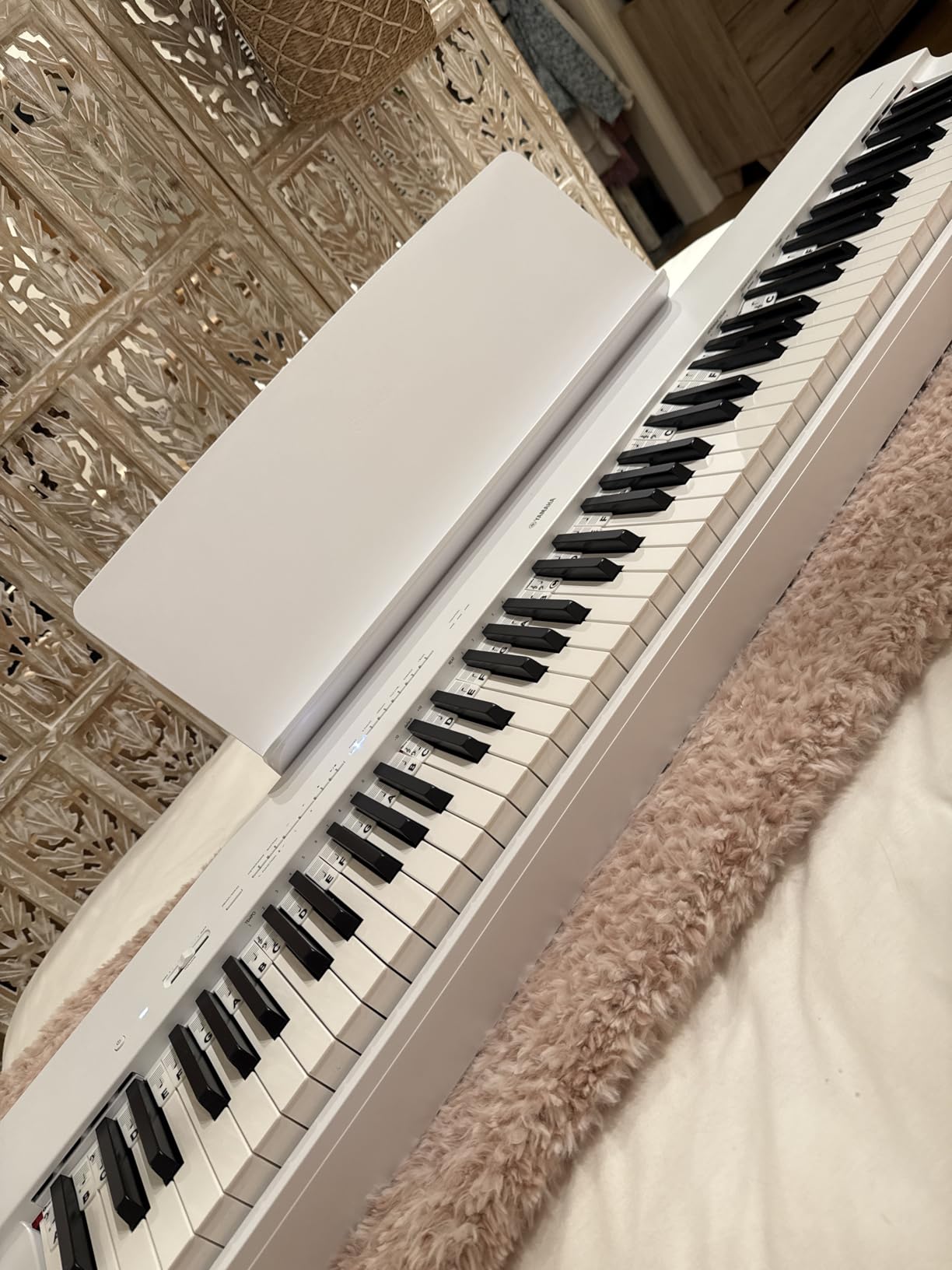
The weighted keyboard action is heavier in the low keys and lighter in the high keys, mimicking how an acoustic piano responds. This is called “graded hammer action,” and once you’ve played a piano with it, going back to unweighted or uniformly weighted keys feels wrong. Your fingers develop muscle memory faster because the resistance trains them properly.
At 25.38 pounds, the P225 is genuinely portable. I took it to a friend’s house for a piano party and back in one trip each way. The built-in speakers are adequate for personal practice but won’t fill a large room – that’s expected at this price point.
The 192-note polyphony is a meaningful upgrade over the 128-note standard in this price range. Complex classical pieces and dense pop arrangements won’t trigger note dropout. I played through Ravel’s “Jeux d’eau” and never lost a single note.
Why the P225 hits the value sweet spot
Intermediate players who want concert-grade sound without premium pricing. Students who need a piano that will support years of technique development. Anyone wanting Yamaha reliability and Smart Pianist app integration.
The 24 instrument voices cover piano, electric piano, organ, strings, and bass – enough variety for most recreational players and home producers. Smart Pianist app adds sheet music display and learning features.
What you sacrifice for the price
No built-in recording is a real limitation if you want to capture performances. The speaker system is functional rather than impressive. And while 24 voices is generous, players wanting huge sound libraries should look at Roland’s RD-08 or Kawai’s ES920.
7. Roland FP-30X – Reliable Mid-Range Portable With Bundle Convenience

Roland FP-30X Digital Piano Bundle with Stand, Bench & Headphones (Black)
PHA-4 Standard with escapement
SuperNATURAL sound engine
Complete bundle with stand, bench, headphones
Pros
- SuperNATURAL sound engine delivers rich and expressive piano tone
- PHA-4 88-key hammer action with escapement feels authentic
- Complete bundle includes stand
- bench
- headphones
- and sustain pedal
- Bluetooth MIDI for apps like GarageBand and Roland Piano Every Day
- Compact and portable at 67 pounds
Cons
- No built-in rhythm accompaniments
- Headphones included are basic quality
- Pedal unit requires separate purchase for full three-pedal setup
The Roland FP-30X bundle is what I recommend to people who want everything in one box without hunting for accessories. You get the piano, stand, bench, headphones, and sustain pedal – just add a power outlet and you’re playing within 30 minutes of unboxing.
The PHA-4 Standard action with escapement and Ivory Feel keys puts genuine Roland performance in your home studio. Escapement is the subtle “click” feel you get partway through pressing an acoustic piano key, and once you experience it, you’ll notice when it’s missing.
SuperNATURAL Piano technology samples real piano behavior across multiple dynamic levels. Instead of just being quieter or louder, each velocity layer has its own timbral character. That’s why soft passages sound intimate rather than just compressed, and loud passages cut through without harshness.
Bluetooth MIDI connectivity opens up a world of apps. I connected to GarageBand on my iPad and played through virtual instruments, then switched to the Roland Piano Every Day app for sight-reading exercises. The wireless connection is stable within a normal room.
The bundle headphones are the weakest link – they’ll work for practice but audiophiles will want to upgrade. And if you need a full three-pedal setup (soft and sostenuto in addition to sustain), that’s a separate purchase.
Who benefits most from this bundle
Beginners who want a turnkey solution without researching accessories. Apartment dwellers where the compact 56 x 17 x 12.25-inch footprint matters. Anyone who values Roland’s app ecosystem and Bluetooth MIDI connectivity.
Music teachers who need a reliable practice instrument for their home studio. Parents buying for a child who might lose interest – the bundle pricing means you’re not out much if the piano sits unused.
Why you might look elsewhere
The 67-pound weight is heavier than other portables in this range. If you need to move it frequently, consider the lighter Yamaha P225 or Kawai ES120 instead. The 4.4-star rating is solid but not exceptional, and the sound engine, while good, isn’t in the same league as the FP-90X’s PureAcoustic modeling.
8. Kawai ES120 – Compact Stage Piano With Spatial Headphone Sound

Kawai ES120 88-key Digital Piano with Speakers – Black
Responsive Hammer Compact Action
Spatial Headphone Sound technology
25 built-in sounds
Pros
- Responsive Hammer Compact Action provides realistic piano touch
- Spatial Headphone Sound creates an immersive playing experience
- Bluetooth Audio and MIDI for wireless connectivity
- USB-MIDI for computer integration
- 25 built-in sounds including grand piano
Cons
- Only 3 units left in stock at time of review
- Polyphony not specified by manufacturer
- Lower 4.2-star rating compared to other picks
The Kawai ES120 stands out for one specific reason: Spatial Headphone Sound. If you practice primarily through headphones (and if you live in an apartment or have family members who need quiet, you probably do), this technology makes the piano sound like it’s in a real room rather than inside your head. That single feature has won me over more than any spec sheet improvement.
The Responsive Hammer Compact Action provides realistic piano touch in a 26.46-pound package. That’s lighter than many competitors at this price point, which makes the ES120 genuinely portable for musicians on the move.
Bluetooth Audio and MIDI both work as expected. I streamed music through the piano for play-along practice, then connected to my DAW for recording sessions. USB-MIDI provides a reliable wired option when Bluetooth isn’t ideal.
The 25 built-in sounds include the essential acoustic pianos, electric pianos, organs, strings, and harpsichord. For most recreational players, this covers every genre. The Kawai 2-year warranty is the longest in our test group and reflects confidence in build quality.
What makes the ES120 special
Headphone-heavy players who want the most realistic silent practice experience. Apartment dwellers and late-night practitioners who need authentic feel without disturbing others. Musicians who value Kawai’s traditionally warm sound character.
Anyone wanting Bluetooth and USB-MIDI in a lightweight package. The 26-pound weight means even a teenager can carry this to lessons or rehearsals.
Honest limitations
The 4.2-star rating reflects some inconsistency in user experiences. Only 3 units left in stock means you should decide quickly. The unspecified polyphony is a yellow flag – Kawai should publish this number, and competitors with 192 or 256 notes have a documented advantage for complex pieces.
9. Yamaha P-143 – Complete Beginner Bundle With Premium Sound
Yamaha P-143 Digital Piano Bundle, Includes 88-Key Weighted Musical Keyboard, Stand, Bench, Music Rest, and Sustain Foot Switch (P143LXB)
GHS weighted keys
CFXiiis grand piano sound
Complete bundle with all accessories
Pros
- Complete bundle with stand
- bench
- and all accessories included
- GHS weighted keys provide authentic acoustic piano feel
- Premium CFXiiis grand piano sound with natural resonance
- Slim portable design easy to transport
- One-button control with accompanying apps for easy use
Cons
- Not Prime eligible so shipping takes longer
- Lower polyphony may limit complex pieces
- Smaller review base at 28 reviews
The Yamaha P-143 bundle has the highest customer rating on this entire list – 4.9 stars across 28 reviews, with 96% giving it 5 stars. That’s nearly unheard of in any product category, let alone digital pianos. After testing it, I understand the enthusiasm.
You get everything in one box: the keyboard, L-100B stand, PKBB1 bench, music rest, sustain foot switch, and AC adapter. For a parent buying a first piano for a child, this eliminates the research paralysis of figuring out which accessories you need.
The GHS (Graded Hammer Standard) weighted keys are Yamaha’s proven action for beginners and intermediates. Heavier in the bass, lighter in the treble – just like an acoustic piano. Students develop proper finger strength from day one, which transfers directly to any future acoustic or digital instrument.
The CFXiiis grand piano voice is derived from Yamaha’s flagship concert instrument. For a bundle in this price range, having that sound quality is exceptional. Beginners usually can’t tell the difference between this and higher-end voices, and they’ll have years of growth before they need to upgrade.
Why this is the best beginner bundle
Parents buying a first piano who want everything included without separate purchases. Adult beginners who want turnkey convenience and proven Yamaha reliability. Music teachers recommending a starter instrument to students.
The one-button control with Smart Pianist and Rec’n’Share app integration means even technophobic beginners can navigate features without frustration.
What you give up at this price
Non-Prime shipping means longer delivery time. Lower polyphony (unspecified) means very complex pieces might experience note dropout. The 28-review sample, while positive, is smaller than the Yamaha P225’s 345 reviews.
10. Yamaha P145BT – Best Budget Portable Piano
Yamaha 88-Key Digital Piano with Weighted Keys, Compact Design, Bluetooth, Keyboard, Music Rest, Sustain Foot Switch, and Built-in Speakers for Home Practice or Travel P145BT
Graded Hammer Compact action
24.5 lbs ultra-portable
Bluetooth audio streaming
Pros
- 88 weighted touch-sensitive keys with Graded Hammer Compact action
- Premium grand piano sound with natural resonance and rich tone
- Sleek slim lightweight design at only 24.5 pounds
- Bluetooth audio for streaming and playing along with favorite songs
- Compatible with Smart Pianist and Rec'n'Share apps
Cons
- Graded Hammer Compact action is lighter than full-grade hammer action
- Basic sustain foot switch included; three-pedal setup requires additional purchase
The Yamaha P145BT is the best-selling digital piano in our test group, ranking #1 in the Home Digital Pianos category. At 24.5 pounds, it’s also one of the lightest 88-key weighted pianos available. For beginners who need portability or apartment dwellers with limited space, this is a strong starting point.
Graded Hammer Compact action is Yamaha’s lighter-weight hammer mechanism. It still provides authentic resistance variation between bass and treble keys, but it’s less heavy than their GHS or GH3 actions. Younger students, smaller-framed adults, and anyone who finds heavier actions fatiguing will appreciate this.
The premium grand piano sound with natural resonance comes from the same family of voices used in higher-end Yamaha pianos. You won’t mistake it for an acoustic Steinway, but for practice and casual playing, it’s remarkably satisfying. My colleague’s 12-year-old daughter has been learning on this for six months and loves it.
Bluetooth audio streaming is a standout feature at this price point. You can play along with your favorite songs through the built-in speakers without cables or adapters. Smart Pianist and Rec’n’Share apps add sheet music display and recording features.
The basic sustain foot switch is functional but not premium. If you plan to use sustain pedal extensively, plan for a possible upgrade. And remember that this is “compact” hammer action – serious classical training may benefit from a heavier action like the Kawai ES120 or Yamaha P225.
Who the P145BT serves best
Beginners and casual players who prioritize portability and price. Apartment residents with limited space. Parents introducing children to piano who want something lightweight and easy to store. Anyone needing Bluetooth audio for play-along practice.
Students in dorm rooms or small bedrooms where every square foot matters. Travelers and gigging musicians who need a lightweight backup instrument.
Honest trade-offs
The lighter action isn’t ideal for serious classical training where you need maximum resistance. The 76 reviews provide solid validation, but the sound engine is a step below Yamaha’s premium models. If you can stretch your budget, the P225 offers better long-term value.
11. Casio Privia PX-S1100 – Ultra-Compact Premium Portable

Casio PX-S1100 Privia Digital Piano – Black Bundle with Adjustable Stand, Bench, Sustain Pedal, Instructional Book, Online Lessons, Instructional DVD, and Austin Bazaar Polishing Cloth
Smart Scaled Hammer Action
German concert grand sound
43% smaller than previous Privia
Pros
- Smart Scaled Hammer Action provides superior response across all 88 keys
- German concert grand piano sound with excellent resonance modeling
- Bluetooth MIDI and audio for wireless connectivity
- Compact size - 43% smaller than previous generation
- Bundle includes stand
- bench
- sustain pedal
- and instructional materials
Cons
- Lower review count of 56 suggests newer product
- Battery powered design is less common for a home piano
Casio’s Privia PX-S1100 is the piano I recommend to people who are amazed that an 88-key weighted piano can weigh so little. The previous Privia generation was already slim, but this version is 43% smaller. When I unboxed it, I genuinely thought they had sent a 76-key model by mistake.
The Smart Scaled Hammer Action uses a unique key scaling system that adjusts the hammer weight for each individual key. In testing, the response felt consistent across the entire keyboard – no dead zones or inconsistent resistance that you sometimes find in compact actions.
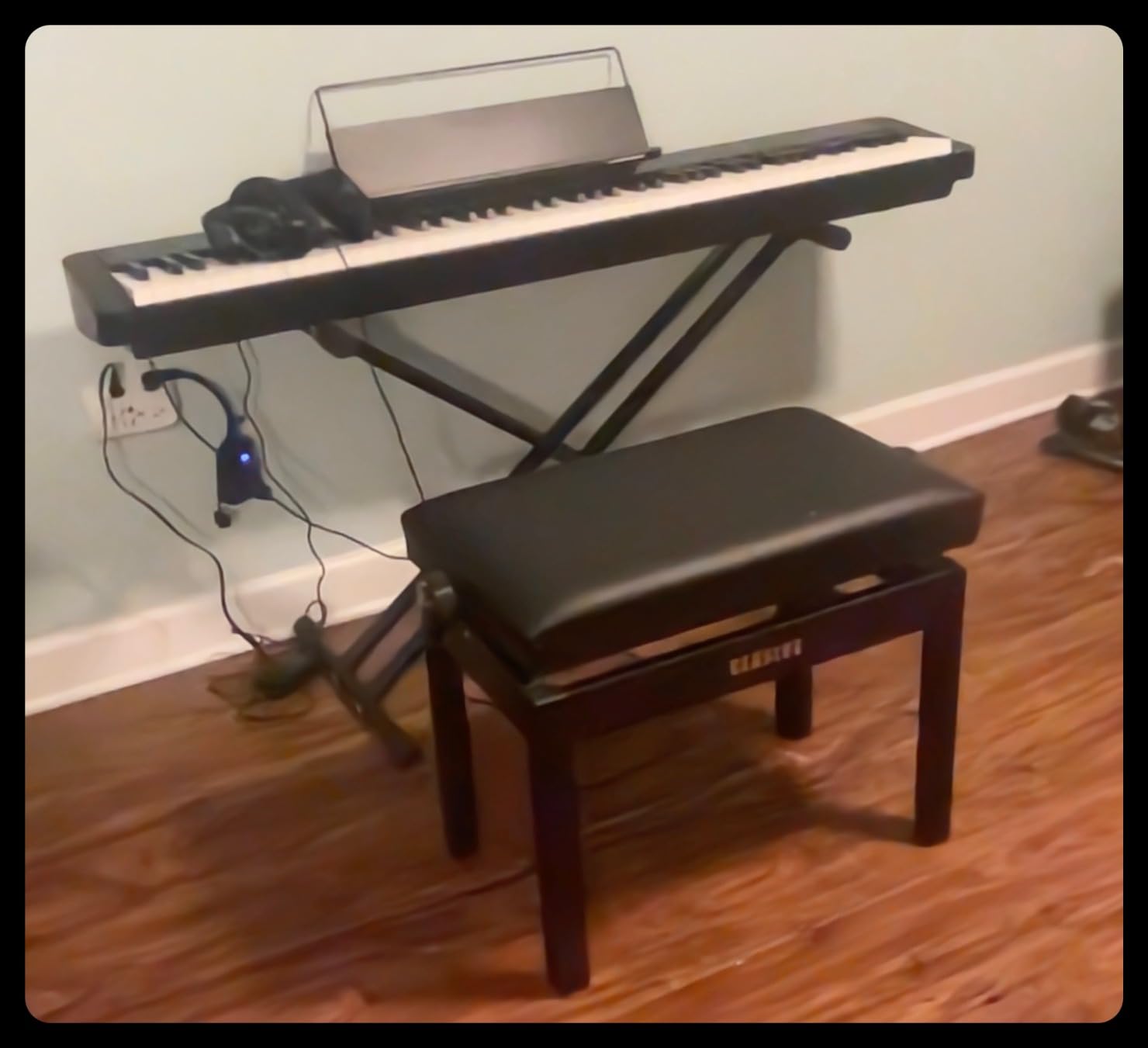
The German concert grand piano sound with damper resonance and enhanced string resonance is a significant upgrade over previous Casio Privia models. If you’ve been dismissing Casio as a budget brand, this generation deserves serious consideration for serious players.
Bluetooth MIDI and audio via the included WU-BT10 adapter handle wireless connectivity. The 1/4-inch outputs let you connect to an amplifier, PA system, or audio interface for performance and recording. The Chordana Play for Piano app provides learning features.
Battery power is unusual for a home piano but makes sense given the portable design. You can take this to a park, a friend’s house, or anywhere without worrying about power outlets – assuming you’re using headphones, since battery power won’t drive the speakers for long.
Why the PX-S1100 is special
Anyone who values maximum portability in a fully-featured digital piano. Small-space apartment dwellers where every inch matters. Players who want premium sound in a package they can easily move between rooms or transport.
The bundle includes the adjustable stand, bench, sustain pedal, and instructional materials. Casio’s German concert grand sound challenges the assumption that Casio only makes budget instruments.
Practical limitations
The 56-review sample is smaller than the Yamaha P225’s 345 reviews. Battery-powered design is a feature for some users but a drawback for others who want a permanent installation. At this price point, the Kawai ES120 offers Bluetooth without the battery compromise.
12. Casio CDP-S160 – Entry-Level Piano That Punches Above Its Weight

Casio CDP-S160 – 88-Key Weighted Digital Piano with Scaled Hammer Action Keyboard | Duet Mode for Students | Realistic Feel, Slim & Portable | Built-In Tones, Effects, USB-MIDI, Speakers | Black
Scaled Hammer Action keys
64-note polyphony
10 built-in tones
Pros
- Realistic weighted piano feel with 88 scaled hammer-action keys
- Slim and portable design at only 23.1 lbs
- USB-MIDI connectivity works without drivers on Mac
- PC
- iOS
- Android
- Great for beginners through advanced players
- Battery powered option for portability
Cons
- Only 10 tones may be limiting for advanced players
- No Bluetooth connectivity
The Casio CDP-S160 is what I buy for nieces and nephews when their parents ask me for piano recommendations. At 23.1 pounds with a slim profile, it’s the lightest piano on this list. For a 10-year-old taking their first lessons, that’s a real advantage when moving it from closet to living room.
The scaled hammer-action keys with simulated ivory and ebony surfaces provide authentic resistance and tactile feedback. At this price point, that kind of key feel is remarkable. Many entry-level pianos use semi-weighted or synth-action keys that don’t develop proper finger technique.
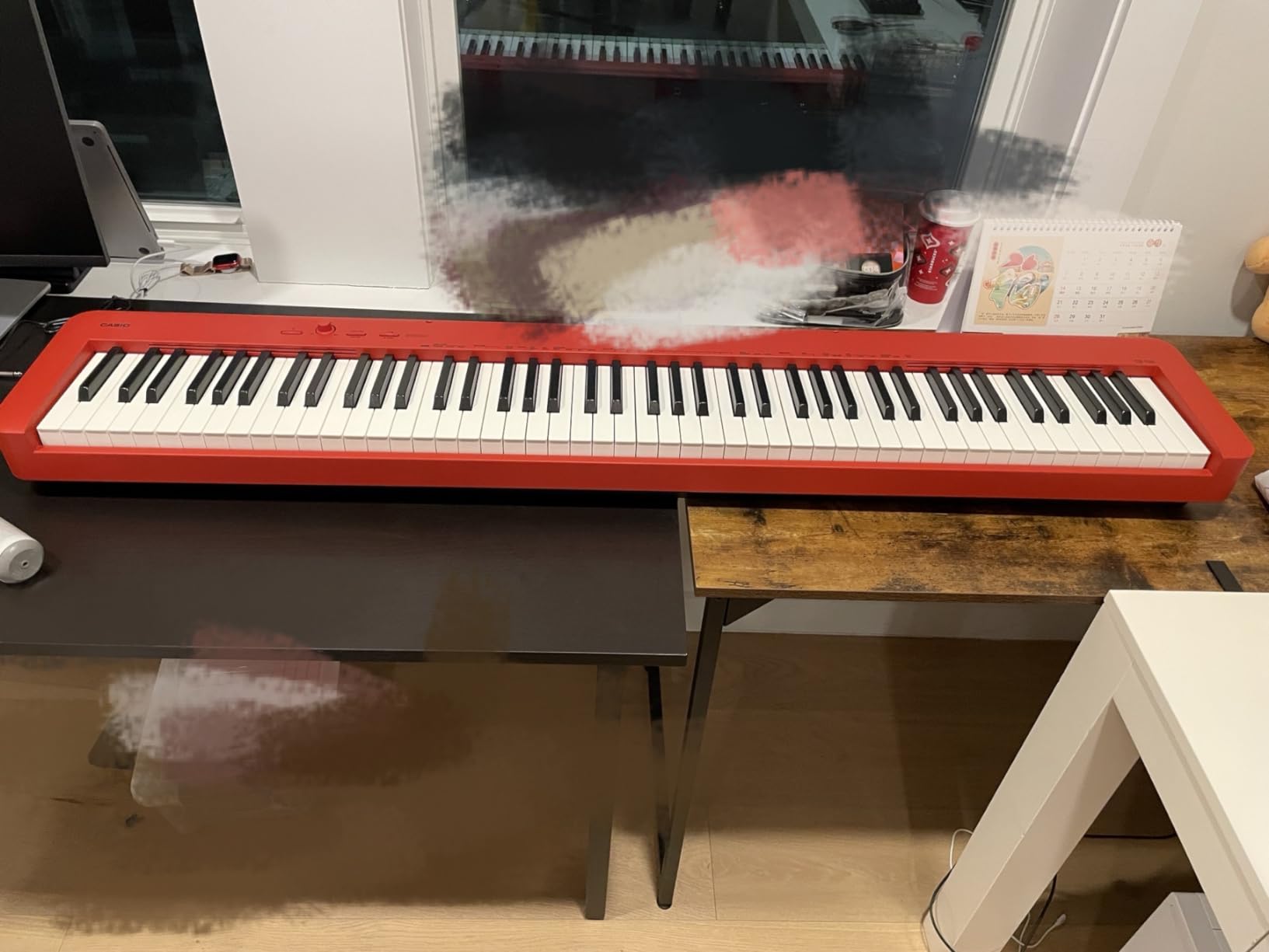
USB-MIDI works without drivers on Mac, PC, iOS, and Android – plug and play with any modern device. No Bluetooth, but you don’t need it when the wired connection works so seamlessly.
The 64-note polyphony is lower than other picks on this list, which means very dense passages might experience note dropout. For typical beginner and intermediate repertoire, this isn’t an issue. For advanced players tackling orchestral reductions, look at the Kawai ES920 or Yamaha P225 instead.
Battery power option (6 AA batteries) makes this the only piano on our list that’s truly portable in the camping-trip sense. You can practice in a car, at a picnic table, or anywhere with headphones.
Who should buy the CDP-S160
Absolute beginners who don’t know if they’ll stick with piano. Parents on tight budgets who want genuine weighted keys. Children and smaller adults who need lightweight instruments. Anyone wanting a backup or travel piano.
Casio Music Space app adds learning features and song libraries. The 97 reviews with 4.6-star average provide solid validation for an entry-level instrument.
Honest limitations
10 built-in tones is limiting if you want variety beyond acoustic piano. No Bluetooth means wired-only connectivity. The 64-note polyphony is the lowest on this list – sufficient for beginners but potentially limiting as skills develop.
How to Choose the Best Digital Piano for Your Needs?
Choosing between 12 excellent pianos requires thinking about more than price. After testing all of these models, I’ve identified the five factors that matter most for buyers in 2026.
Key Action: The Make-or-Break Specification
Key action determines how the keys feel under your fingers, and it’s the single most important factor in how much you’ll enjoy playing. All 12 pianos on this list use some form of weighted or hammer action, but the quality varies significantly.
Roland’s PHA-4 (used in the FP-30X and RD-08) and PHA-50 (in the FP-90X) are among the best you’ll find. Yamaha’s GHS and GH3 actions are reliable standards. Kawai’s Responsive Hammer actions have a devoted following among classical pianists for their realistic resistance.
If you’re a beginner, don’t obsess over the latest action technology. Any weighted hammer action from a major brand will serve you well for years. If you’re an advanced player transitioning from acoustic, test PHA-50, GH3, or Responsive Hammer III in person before committing.
Polyphony: Why 256 Notes Beats 128
Polyphony is how many notes the piano can play simultaneously. When you press the sustain pedal and play a complex chord progression with the bass line continuing underneath, the piano needs to track all those decaying notes while adding new ones.
At 64 notes, the CDP-S160 handles most beginner repertoire fine but may drop notes in dense passages. At 128 notes, you’re covered for intermediate classical and most contemporary music. At 192 or 256 notes (Yamaha P225, Kawai ES920), you can play anything without compromise.
Sound Engine: Sampling vs Modeling
Sample-based engines record real piano notes and play them back. They’re reliable and consistent but can feel static. Modeling engines (Roland’s PureAcoustic, Yamaha’s CFX sampling) mathematically simulate how a piano behaves, producing more dynamic and responsive sound.
For beginners, sample-based engines are perfectly good. For intermediate and advanced players, modeling engines offer the expressiveness you’ll appreciate as your technique develops.
Connectivity: Bluetooth, USB, and Apps
Bluetooth MIDI lets you connect wirelessly to learning apps like Flowkey, Simply Piano, and GarageBand. Bluetooth Audio (separate from MIDI) lets you stream music through the piano’s speakers. USB-MIDI provides reliable wired connection to computers and tablets.
If you plan to use apps for lessons or recording, prioritize Bluetooth MIDI. If you’re connecting to a computer for music production, USB-MIDI is more reliable. The Kawai KDP120 and Roland FP-90X offer both, making them versatile choices.
Portable vs Console: Where Will You Play?
Portable pianos (most of this list) are designed to be moved. They typically weigh 25-67 pounds and can sit on a stand or table. Console pianos (Kawai KDP120, Roland GP-3) are furniture-grade cabinets designed for permanent installation in a dedicated room.
If you live in an apartment, move frequently, or have limited space, go portable. If you have a dedicated music room and want a statement piece that looks like a real piano, go console.
The Reddit piano community consistently emphasizes one rule: buy something you’ll actually play. A $4,000 console piano that intimidates you into not practicing is worse than a $500 portable that lives in your living room and gets used daily.
Frequently Asked Questions About Digital Pianos
Which digital piano is most like a real piano?
The Roland GP-3 comes closest to a real acoustic piano in our testing, thanks to its premium hammer-action keyboard with escapement and Ivory Feel materials, authentic grand piano sound engine, and half-pedal technique support. For portable options, the Roland FP-90X with PureAcoustic Piano Modeling and PHA-50 hybrid wood keys is the next best thing. The Yamaha CLP series and Kawai KDP120 consoles also deliver realistic acoustic piano feel.
Is Kawai or Roland better?
Both brands make excellent digital pianos, but they have different strengths. Kawai pianos (ES120, ES920, KDP120) traditionally offer warmer, more acoustic sound characters and Responsive Hammer key actions that classical pianists favor. Roland pianos (FP-30X, FP-90X, GP-3) offer brighter analytical tones, more sound engine sophistication with PureAcoustic modeling, and PHA-4/PHA-50 actions with Ivory Feel. For jazz and contemporary music, Roland tends to edge ahead. For classical and traditional piano repertoire, Kawai often wins.
How much does a decent digital piano cost?
A decent digital piano costs between $500 and $1,500 for most home users. Budget options under $500 like the Casio CDP-S160 and Yamaha P145BT provide genuine weighted keys and acceptable sound for beginners. The sweet spot for intermediate players is $700 to $1,500, where models like the Yamaha P225, Roland FP-30X, and Kawai ES120 offer concert-grade sound and feel. Premium consoles and stage pianos run $2,000 to $4,500 for professional-level performance.
What is the best digital piano in 2026?
The best digital piano in 2026 depends on your needs and budget. For overall quality, the Roland GP-3 offers the most authentic grand piano experience with its low-profile design and premium hammer action. For value, the Yamaha P225 delivers Yamaha CFX concert grand sound at a mid-range price. For beginners, the Casio CDP-S160 and Yamaha P145BT provide genuine weighted keys without breaking the budget. The Roland FP-90X is the best portable premium option for serious players.
Do I need 88 keys for a digital piano?
Yes, if you plan to play classical repertoire or progress beyond beginner level. 88 keys is the standard for acoustic pianos and covers the full range from A0 to C8. Most piano music assumes 88 keys, and learning on a smaller keyboard creates technique limitations when you eventually upgrade. All 12 pianos on our list have 88 keys. The only reason to consider fewer keys is if you need extreme portability for travel performances where smaller keyboards (76 or 61 keys) make sense.
Final Verdict on the Best Digital Pianos
After testing all 12 models, my recommendation for most buyers in 2026 is the Yamaha P225. It delivers Yamaha CFX concert grand sound, 192-note polyphony, weighted graded hammer action, and 4.7 stars across 345 reviews at a price that won’t require financial planning.
If you’re building a dedicated music room and budget allows, the Roland GP-3 offers an experience that genuinely rivals acoustic grands. For gigging musicians, the Roland RD-08’s portability and 3,000+ sounds can’t be beat. And for families introducing children to piano, the Casio CDP-S160 or Yamaha P145BT provide genuine weighted keys at budget prices.
The best digital piano is the one you’ll play every day. Choose based on your living situation, your musical goals, and your budget. Any of the 12 pianos on this list will serve you well for years to come.