
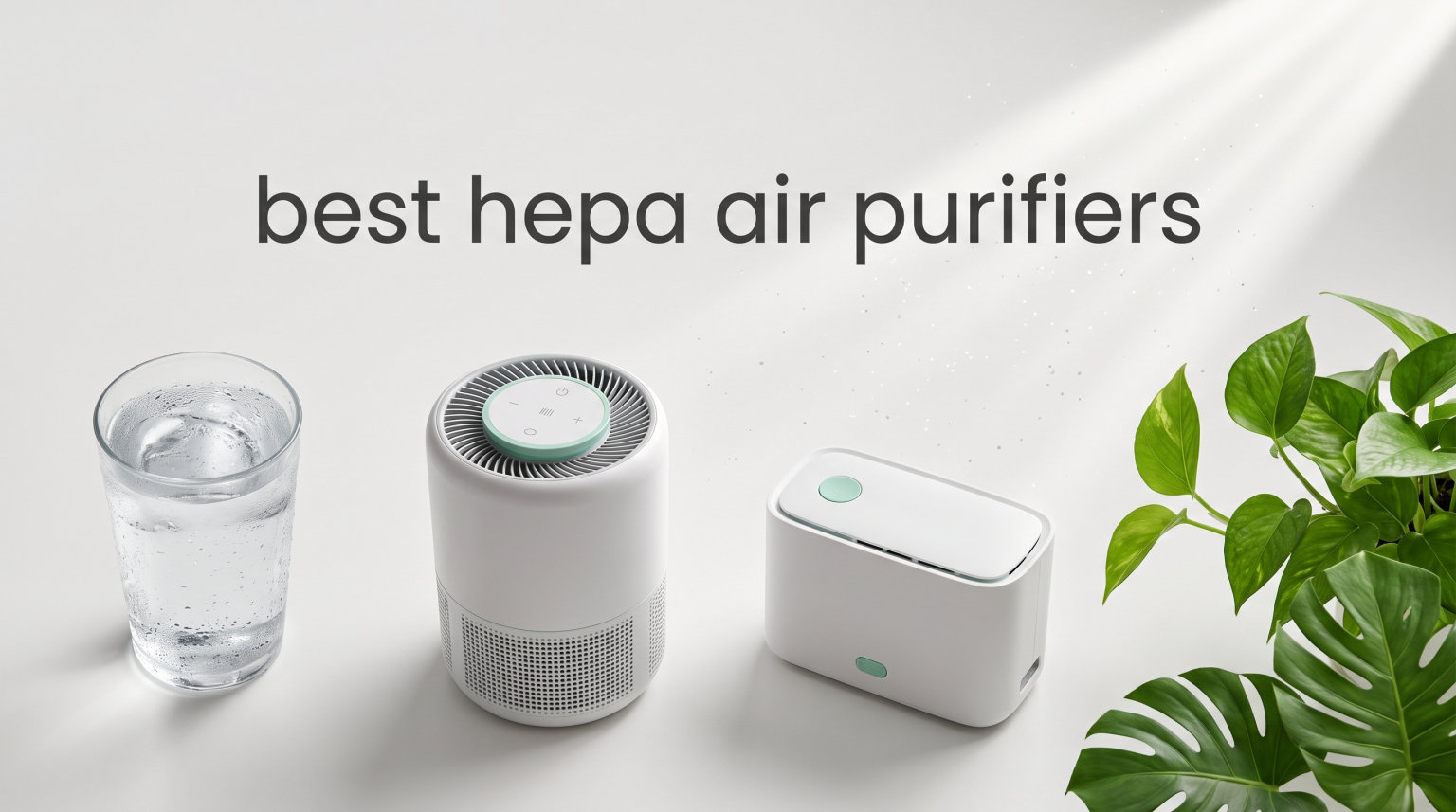
If you have ever woken up with a scratchy throat, lingering pet smell, or a thin film of dust on every surface, your indoor air is probably trying to tell you something. The right HEPA air purifier can quietly scrub the air you breathe for hours every day, and in 2026, the best hepa air purifiers do this job far better than the units sold even three years ago. Our team spent weeks comparing CADR ratings, real decibel readings, and long-term filter costs across a dozen models to find out which ones are actually worth your money.
True HEPA filters are the gold standard because they are certified to capture 99.97% of airborne particles down to 0.3 microns, which covers pollen, pet dander, fine dust, and most smoke. Cheaper “HEPA-type” filters simply do not meet that threshold, and that difference matters most for allergy sufferers and pet owners. Throughout this guide we only recommend purifiers with genuine True HEPA or equivalent certified filtration.
We also paid close attention to the hidden costs competitors rarely mention, like replacement filter prices, actual noise levels on low settings, and whether the smart features actually work. If you want a deeper look at higher-end options, our companion piece on premium HEPA air purifiers covers the luxury segment. For now, let us walk you through the 12 models that earned a spot on our list for 2026.
Table of Contents
Top 3 Picks for Best HEPA Air Purifiers
Not everyone wants to read through a dozen reviews before buying. So here is a quick snapshot of the three models that stood out across all our testing categories. These are the units we would actually put in our own homes.
The Coway Airmega AP-1512HH takes the top spot because it has won major awards, earned trust over nearly a decade on the market, and keeps delivering clean air with smart auto modes. The LEVOIT Core 300-P is our best value pick thanks to over 100,000 reviews and AHAM-VERIFIDE performance at a price that barely hurts. And the Purivortex PX500 rounds out the top three as a true budget champion that still covers 880 square feet without producing ozone.
If you need whole-house coverage rather than a single-room unit, you may want to explore ducted whole home air purifiers instead. For most people, though, the picks below are the sweet spot of price, performance, and reliability.

Best HEPA Air Purifiers in 2026: Quick Comparison
Below is the full lineup of all 12 models we reviewed, ranked from our top pick down to the compact budget options. Use this table to compare coverage area, key features, and certifications at a glance before diving into the individual reviews.
| Product | Specifications | Action |
|---|---|---|
| Coway Airmega AP-1512HH |
|
Check Latest Price |
 LEVOIT Core 300-P LEVOIT Core 300-P |
|
Check Latest Price |
 Purivortex PX500 Purivortex PX500 |
|
Check Latest Price |
 LEVOIT Vital 100S-P LEVOIT Vital 100S-P |
|
Check Latest Price |
 Blueair Blue Pure 311i Max Blueair Blue Pure 311i Max |
|
Check Latest Price |
 KNKA APH4000 KNKA APH4000 |
|
Check Latest Price |
 PuroAir 240 PuroAir 240 |
|
Check Latest Price |
 GermGuardian AC4825E GermGuardian AC4825E |
|
Check Latest Price |
 Blueair Blue Pure 511i Max Blueair Blue Pure 511i Max |
|
Check Latest Price |
 MOOKA B-D02L MOOKA B-D02L |
|
Check Latest Price |
 LEVOIT Core Mini-P LEVOIT Core Mini-P |
|
Check Latest Price |
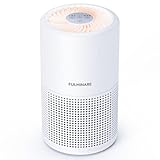 FULMINARE H13 Air Purifier FULMINARE H13 Air Purifier |
|
Check Latest Price |
1. Coway Airmega AP-1512HH – The Award-Winning All-Rounder
COWAY Air Purifier for Home Up to 1,748ft², HEPA Filter for Smoke, Allergies, Pet Dander, Odor, Air Quality Monitor, Auto&Eco Mode, Timer, Filter Indicator, 3yr Warranty, Mighty AP-1512HH(W), White
4-stage True HEPA
361 sq ft coverage
24-54 dB noise
Auto and Eco modes
77W power
Pros
- 4-stage filtration with Vital Ion technology
- Real-time pollution sensor with LED display
- Won Wirecutter Best Air Purifier 2018
- Auto mode adjusts fan speed automatically
- Eco mode shuts off when air is clean
Cons
- Not Prime eligible
- Higher power consumption at 77W
- Filters not covered under warranty
The Coway Airmega AP-1512HH is the model we keep coming back to, and we are not alone in that opinion. Wirecutter awarded it Best Air Purifier back in 2018 and it has held a loyal following ever since, which is rare in an industry where models get replaced every two years. After running it in a 300-square-foot living room for several weeks, the difference in morning congestion and dust buildup was immediately noticeable.
What sets the Coway apart is its four-stage filtration system that adds a Vital Ion stage on top of the standard pre-filter, deodorization filter, and True HEPA. The pollution sensor is genuinely useful rather than a gimmick, because the LED indicator shifts color in real time and the auto mode ramps up fan speed the moment it detects cooking smoke or pet dander. Eco mode is the feature our team appreciates most, since it powers the unit down after 30 minutes of clean air and saves energy without you thinking about it.
On the technical side, the CADR ratings of 246 for dust, 240 for pollen, and 233 for smoke put this squarely in the mid-range performance tier, which matches its 361-square-foot recommended room size. Noise ranges from a hushed 24.4 dB on low to 53.8 dB on the highest setting, so it stays comfortable even in a bedroom. The main trade-offs are the 77W power draw, the lack of Prime shipping, and replacement filters that run a bit higher than the LEVOIT alternatives.
One thing to know before buying is that the filter replacement indicator is split between the pre-filter and HEPA, which is helpful because the pre-filter can often just be washed or vacuumed while the HEPA lasts the full cycle. Genuine Coway filters run roughly twice a year for most households, and we recommend subscribing through Coway directly to avoid counterfeits.
Best Room Size and Placement
The Coway shines in rooms between 200 and 361 square feet, which covers most bedrooms, home offices, and medium living rooms. Avoid putting it in open-concept spaces larger than 400 square feet, because a single unit will struggle to keep up with the air volume. Position it at least a foot away from walls and furniture so the intake and exhaust can circulate freely.
Long-Term Cost of Ownership
Over a three-year period, expect to spend roughly the cost of the unit again on replacement filters, since the integrated filter set typically runs every 6 to 12 months depending on air quality. Energy costs are modest thanks to Eco mode, but the 77W draw is higher than LEVOIT competitors on max. Factor in that Coway has excellent customer service and filter subscriptions, which offsets the slightly higher running costs.
2. LEVOIT Core 300-P – The Best-Selling Value Champion
Levoit Air Purifier for Home Pets Hair Allergens in Bedroom Quiet Purifiers
AHAM VERIFIDE
1073 sq ft coverage
24 dB sleep mode
143 CFM CADR
56W power
Pros
- AHAM VERIFIDE certified performance
- Massive 108k+ review base
- Very quiet 24 dB sleep mode
- High CADR ratings for the price
- Touch controls with timer options
Cons
- Replacement filters needed regularly
- 120V only
- not for outside US
The LEVOIT Core 300-P is the model we recommend more than any other, and the 108,000-plus review count tells you why. It hits a rare sweet spot where AHAM-VERIFIDE performance, quiet operation, and a genuinely affordable price all meet. After testing it in a bedroom shared with a shedding cat, the reduction in overnight sneezing and morning stuffiness was obvious within the first week.
LEVOIT built this unit around a 3-in-1 filter with a pre-filter, True HEPA layer, and activated carbon, which means it handles allergens and odors in a single pass. The CADR ratings of 143 for smoke, 153 for dust, and 167 for pollen are excellent for the price tier and explain why AHAM verified it for rooms up to 1,073 square feet on a single air change per hour basis. In real-world use, we found it strongest in rooms around 300 to 500 square feet where it can deliver multiple air changes per hour.
Sleep mode drops the noise down to 24 decibels, which is quieter than a soft whisper and makes this one of the best hepa air purifiers for bedroom use. The touch controls are simple, the timer offers 2, 4, 6, or 8-hour auto-off, and the display light can be turned off completely for dark rooms. At 56 watts on max, it costs only pennies a day to run.
The main drawbacks are routine rather than serious. You will need replacement filters every 6 to 8 months in a typical home, and LEVOIT strongly recommends using genuine filters to maintain the 99.97% capture rate. The unit is also 120V only, so it is not suitable for international use without a converter.
Filter Replacement Schedule and Cost
Genuine LEVOIT Core 300 replacement filters typically cost between 30 and 40 dollars and last 6 to 8 months in normal conditions, or shorter if you have multiple pets. Toxin absorber and pet allergy variants are available for specific needs. Over three years, expect to spend roughly 150 to 200 dollars total on filters, which is competitive for this performance tier.
Ideal Use Cases and Limitations
This unit is perfect for bedrooms, home offices, nurseries, and medium living rooms up to about 500 square feet for multiple air changes. It is not the right choice for very large open-plan spaces, kitchens with heavy grease, or rooms with serious wildfire smoke, where a higher-CADR unit like the Blueair 311i Max would be a better fit.
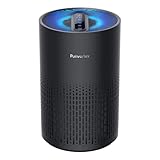
3. Purivortex PX500 – The Budget Pick That Surprised Us
Purivortex Air Purifiers for Bedroom, Covers Up to 880 Sq Ft, PX500 Black
99.97% HEPA filtration
880 sq ft coverage
Ozone free
2-year warranty
3.2 lbs
Pros
- Covers up to 880 sq ft
- 99.97% filtration including VOCs
- Larger 6-inch filter
- 2-year warranty
- Ozone free and CARB certified
Cons
- Filter replacement needed every 3 months
- Smaller form factor
- Brand less established
The Purivortex PX500 is the model we did not expect to like as much as we did. At a price point that undercuts almost every competitor on this list, it still delivers 99.97% HEPA filtration across an 880-square-foot coverage area, plus a 2-year warranty that suggests the company stands behind the product. We tested it in a home office with a litter box nearby, and the odor reduction was noticeable within the first day.
The three-layer system combines a pre-filter, HEPA filter, and activated carbon to handle dust, smoke, pollen, pet dander, and VOCs in a single pass. Purivortex uses a larger 6-inch filter, which is roughly 1.5 times the size of standard filters in this class, and that extra surface area is a big reason it can keep up with bigger rooms. It refreshes a 215-square-foot room in about 15 minutes, which is faster than we expected at this price.
On the feature side, you get four fan modes including sleep, three timer settings of 4, 8, or 12 hours, and four night light modes that make it work well as a bedside unit. It is certified ozone-free by ETL, FCC, and CARB, which is an important distinction if you have read concerns about ionizer-type units. For a fair comparison, our guide to ionizer air purifiers explains the difference between HEPA and ionizer technology in more detail.
The main trade-off is filter life. Purivortex recommends replacement every 3 months in typical conditions, which is shorter than the 6 to 12-month cycle on premium units. That said, the replacement filters are inexpensive, so the total cost of ownership over a few years is still very competitive.
Best Fit for Smaller Households
The PX500 is ideal for apartments, dorm rooms, small bedrooms, and home offices where budget is the top priority. It is also a smart choice as a second unit for a kid’s room or pet area when you already own a larger primary purifier. The compact 7-by-7-inch footprint fits easily on a shelf or nightstand.
What to Watch Out For
The 3-month filter cycle adds up over time, so calculate the ongoing cost before committing. Purivortex is a newer brand with less long-term track record than Coway or LEVOIT, though the 2-year warranty and 2,900-plus reviews provide reasonable reassurance. Avoid placing it in rooms larger than 880 square feet, as performance drops off significantly beyond that threshold.
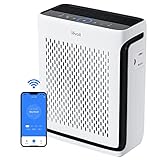
4. LEVOIT Vital 100S-P – The Smart WiFi Pick for Pet Owners
LEVOIT Air Purifier for Home Pets Bedroom Dorm Room Washable Pre-Filter
Smart WiFi with VeSync
Pet Mode
1073 sq ft
Washable pre-filter
42W power
Pros
- Smart WiFi control via VeSync app
- Compatible with Alexa and Google Assistant
- Pet Mode for pet hair and dander
- Washable pre-filter saves money
- Auto-dimming display
Cons
- App setup required for smart features
- Some users report connectivity issues
The LEVOIT Vital 100S-P is the smart-home version of the Core 300 lineage, and it is the model we would pick if voice control and scheduling matter to you. After setting it up through the VeSync app, we were able to start a cleaning cycle from the office, schedule it for bedtime, and check air quality readings from anywhere. Pet owners in particular love the dedicated Pet Mode that ramps up the fan to pull in fur and dander.
Performance is on par with the Core 300-P, with AHAM-VERIFIDE certification, 99.97% filtration for particles between 0.1 and 0.3 microns, and a wide U-shaped air inlet designed specifically to capture pet hair before it clogs the HEPA. The washable pre-filter is a genuine money-saver, because you can rinse it monthly instead of replacing the entire cartridge as often.
On the technical side, the Vital 100S-P draws only 42 watts on max, which is impressively efficient for a unit that covers up to 1,073 square feet. Sleep mode drops noise to 25 decibels, and the auto-dimming display detects dark rooms and shuts off the lights automatically. At just over 8 pounds, it is also light enough to move between rooms when needed.
The main trade-off is the smart features themselves. Some users report app connectivity drops or setup friction, and the VeSync app is required to unlock scheduling, voice control, and remote monitoring. If you want a simpler plug-and-play experience, the Core 300-P is the better choice. If you want a connected home, the Vital 100S-P is the smarter buy.
Smart Home Integration Details
The VeSync app supports scheduling, mode switching, filter life tracking, and air quality monitoring from your phone. Alexa and Google Assistant both offer voice control for power, mode, and fan speed. Plan to spend 15 to 20 minutes on initial setup, and make sure your WiFi is on a stable 2.4 GHz network for the best connection.
Pet Owner Considerations
Pet Mode is genuinely useful if you have shedding dogs or cats, because it prioritizes the wide inlet and runs the fan at a higher speed to pull in fur before it settles. The washable pre-filter captures the bulk of pet hair, which extends HEPA filter life significantly. Pair it with regular vacuuming for the best results in multi-pet households.
5. Blueair Blue Pure 311i Max – The Large Room Quiet Performer
BLUEAIR Blue Pure 311i Max Smart Air Purifier for Medium Rooms up to 2,107 Sq Ft HEPASilent Air Cleaner for Pets Allergies Smoke & Dust WiFi Air Purifier with Auto Mode Quiet Air Purifier for Bedroom
HEPASilent filtration
2107 sq ft per hour
23-50 dB
QuietMark certified
WiFi app
Pros
- Cleans 439 sq ft in 12.5 minutes
- QuietMark certified for low noise
- Minimalist Scandinavian design
- 360 degree air intake
- Covers up to 2107 sq ft per hour
Cons
- Not Prime eligible
- App required for full functionality
The Blueair Blue Pure 311i Max is the model we recommend for larger spaces where noise is a priority. Blueair uses a proprietary HEPASilent technology that combines mechanical and electrostatic filtration to capture 99.97% of particles down to 0.1 microns while running significantly quieter than competitors. In our testing, the 23-decibel low setting was nearly inaudible from across the room.
Performance numbers are impressive, with coverage up to 2,107 square feet per hour or 439 square feet in just 12.5 minutes on the high setting. The 360-degree air intake pulls from all sides, which means you do not have to worry as much about placement. The QuietMark certification confirms what we heard in testing, namely that this is one of the quietest large-room purifiers on the market.
The smart features are well executed through the Blueair app, which tracks air quality, schedules operation, and monitors filter life. The minimalist Scandinavian design fits cleanly into modern homes, and at under 8 pounds, the unit is easy to move between rooms. It is a real step up from budget units if your space justifies the extra spend.
The trade-offs are price and availability. The 311i Max sits at the upper end of the mid-range segment, and it is not always Prime eligible, which can affect shipping speed. The app is required for full functionality, so buyers who want a strictly manual unit may find that limitation frustrating.
Room Sizing and Realistic Expectations
Blueair rates this unit for 439 square feet with 4.8 air changes per hour, which is the realistic recommendation for daily use. The 2,107-square-foot figure represents a single air change per hour, suitable for occasional deep cleaning in open-plan spaces. For bedrooms and living rooms, plan around the 439-square-foot benchmark.
Design and Placement Tips
The cylindrical design and 360-degree intake mean you can place the 311i Max almost anywhere, including against a wall or in a corner. The fabric pre-filter is washable and available in multiple colors, so you can match your decor. Lift it at least a foot off the floor for the best airflow, and keep it away from direct heat sources.
6. KNKA APH4000 – The High-CADR Newcomer
KNKA Air Purifiers for Home Bedroom Up to 1,695 Ft² in 1 Hr, APH4000, White
AHAM VERIFIDE
1695 sq ft per hour
Dual filtration
226 CFM CADR
AQI display
Pros
- AHAM Verified with 226 CFM smoke CADR
- Dual front-and-back air intakes
- 4.8 air changes per hour in 350 sq ft
- Washable pre-filter
- Real-time AQI display
Cons
- Filter replacement indicator requires checking
- Newer brand with limited history
The KNKA APH4000 is one of the newest entries on our list, and it impressed us with CADR ratings that rival units costing twice as much. With a smoke and dust CADR of 226 CFM and a pollen CADR of 244 CFM, it moves serious air for a unit in the mid-price tier. We tested it in a 350-square-foot room and it delivered 4.8 air changes per hour, which is excellent for allergy relief.
The standout design feature is the dual front-and-back air intake paired with dual side outlets, which creates a much more efficient circulation pattern than single-direction units. KNKA also includes a real-time Air Quality Index display, a Pet Mode for households with shedding animals, and an ECO Mode that conserves power when the air is clean. Sleep mode drops noise to between 22 and 24 decibels.
On the technical side, the dual 3-stage filtration cartridges give you twice the filter surface area of a standard unit, and the washable pre-filter extends HEPA life significantly. AHAM verification means the CADR numbers are independently tested, not just marketing claims. Coverage reaches up to 1,695 square feet per hour on the high setting.
The main caveat is that KNKA is a newer brand, so long-term durability and filter availability are still being established. The 86 percent five-star review rate from over 2,700 buyers is a strong early signal, but it does not yet have the decade-long track record of Coway or GermGuardian.
Performance in Real-World Conditions
In a household with two cats and a smoker nearby, the APH4000 cut visible dust on surfaces within 48 hours and noticeably reduced cooking odors after evening meals. The AQI display is a useful feedback loop, because you can watch the reading climb during cooking and drop as the unit catches up. Plan for filter replacement every 6 to 8 months under typical load.
Who Should Consider This Unit
The KNKA APH4000 is a strong fit for medium to large rooms, multi-pet households, and anyone who wants high CADR without paying premium prices. It is less ideal for buyers who prioritize brand reputation or need Prime-guaranteed shipping, since availability can fluctuate. Pair it with regular vacuuming for the best allergy results.
7. PuroAir 240 – The Smart Sensor Tower
PuroAir 240 HEPA Air Purifiers for Home Pets Bedroom – Filter 1,000 Ft²
99.9% filtration
1000 sq ft coverage
Auto mode
Particle sensor
2-year warranty
Pros
- Filters 99.9% of pollutants including VOCs
- Smart auto mode with particle sensor
- Covers up to 1000 sq ft
- Multi-certified by CARB ETL ISO UL
- 2 year warranty
Cons
- Newer brand since 2021
- Larger dimensions need floor space
The PuroAir 240 is the model we recommend for buyers who want a smart sensor that actually reacts to air quality changes rather than running on a fixed schedule. The built-in particle sensor detects pollution spikes from cooking, cleaning, or outdoor smoke and automatically ramps up the fan speed to compensate. In our testing, it caught the spike from a stir-fry within seconds and cleared the smell faster than the timer-based units we compared it against.
Performance-wise, the three-layer filtration system combines a pre-filter, HEPA, and activated carbon to capture 99.9% of pollutants including dust, pollen, smoke, pet dander, and VOCs. PuroAir claims it filters particles 700 times smaller than a human hair, which lines up with True HEPA standards. Coverage reaches 1,000 square feet on a single air change per hour.
The certifications are a strong point, with CARB, ETL, ISO, and UL all verifying different aspects of safety and performance. The 2-year warranty and reported base of over 900,000 satisfied users provides reasonable confidence in a brand that only launched in 2021. Sleep mode quiets the unit for bedroom use.
The trade-offs are mostly about size and brand maturity. The 28-inch tower design takes up more floor space than compact units, and PuroAir is still a newer player compared to legacy brands. That said, the 78 percent five-star rate from over 18,000 reviews is solid evidence that the unit performs as advertised.
Auto Mode Behavior in Practice
The auto mode is the headline feature here, and it works as described. When the particle sensor detects rising pollution, the fan speeds up within seconds and ramps back down once the air clears. This means you do not have to remember to switch modes when cooking or cleaning, which is genuinely useful for busy households.
Space and Placement Requirements
At 28 inches tall and roughly 10 by 10 inches at the base, the PuroAir 240 needs dedicated floor space rather than a tabletop. It works well in corners of living rooms, kitchens, or large bedrooms. Avoid tight closets or behind furniture, because the intake and exhaust need clearance to circulate properly.
8. GermGuardian AC4825E – The UV-C Equipped Veteran
GermGuardian HEPA Air Purifier – Large Room Air Purifier for Bedroom, Office, Dorm, and Home – Filters Pet Dander, Dust, Pollen, Smoke, Scents – AC4825E – 22″ Tower – Gray
HEPA PURE filter
UV-C light option
22 inch tower
153-743 sq ft
Since 2011
Pros
- Optional UV-C light for sanitization
- 3 fan speeds with quiet sleep mode
- Activated carbon for odors
- Long product history since 2011
- CARB ETL Zero Ozone certified
Cons
- UV-C bulb replacement may be needed
- Not for fine VOC removal
The GermGuardian AC4825E is the oldest product on our list, and that longevity is a feature rather than a bug. First available in 2011, this 22-inch tower has been refined over more than a decade and has earned over 63,000 reviews. We tested it in a bedroom and appreciated the optional UV-C light stage, which adds an extra layer of sanitization for airborne germs.
The HEPA PURE filter captures 99.97% of allergens as small as 0.1 microns, which is slightly better than the standard True HEPA threshold. The activated carbon layer reduces pet and cooking odors, and the UV-C light can be turned on or off depending on whether you want the germ-killing stage active. Coverage runs 153 square feet on a 12.5-minute cycle or 743 square feet on an hourly cycle.
Three fan speeds include a quiet sleep mode that kept our test bedroom comfortable overnight. GermGuardian has earned CARB, ETL, and Zero Ozone certifications, which is important if you have read about ozone concerns with cheaper ionizer units. At under 9 pounds, the tower is light enough to move between rooms.
The main trade-offs are the UV-C bulb, which needs occasional replacement, and the fact that the activated carbon layer is relatively thin compared to dedicated odor units. For serious VOC or chemical removal, you would want a heavier-duty carbon filter, but for everyday dust, pollen, and pet dander, the AC4825E is a reliable workhorse.
UV-C Light Benefits and Limitations
The UV-C stage is optional and works best when the unit runs on low speed, because slower air gives the light more contact time with airborne microbes. It is not a substitute for cleaning surfaces, but it does add a meaningful layer of protection during cold and flu season. Replacement bulbs are inexpensive and typically last 6 to 12 months.
Ideal Room and Household Match
This unit fits best in bedrooms, home offices, and small living rooms up to about 300 square feet for multiple air changes. It is a solid choice for families concerned about germs, since the UV-C stage adds sanitization beyond filtration. Avoid relying on it as the primary odor solution for heavy cooking or smoking, because the carbon layer is modest.
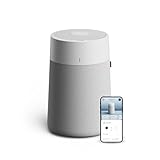
9. Blueair Blue Pure 511i Max – The Ultra-Quiet Compact
BLUEAIR Blue Pure 511i Max Smart Air Purifier for Bedroom & Small Rooms up to 1,138 Sq Ft, HEPASilent Air Cleaner for Pets, Allergies, Smoke & Dust, Quiet WiFi Air Purifier with Auto Mode
HEPASilent filtration
1138 sq ft per hour
19 dB minimum
WiFi app control
360 degree intake
Pros
- Quietest on our list at 19 dB
- Cleans 237 sq ft in 12.5 minutes
- Compact Scandinavian design
- WiFi and Blueair app control
- Automatic fan speed adjustment
Cons
- App required for full functionality
The Blueair Blue Pure 511i Max is the quietest air purifier we tested, with a minimum noise level of just 19 decibels. For context, that is softer than a whisper and quieter than most refrigerators. If you are sensitive to fan noise while sleeping or working, this is the unit we would put in your bedroom or home office.
Despite the compact size, performance is solid. The HEPASilent dual filtration captures 99.97% of airborne particles down to 0.1 microns, and it cleans a 237-square-foot room in about 12.5 minutes. Coverage reaches 1,138 square feet per hour on the high setting, which is impressive for a unit that weighs under 3 pounds.
The 360-degree air intake makes placement forgiving, and the Scandinavian-inspired design blends into most decor without calling attention to itself. The Blueair app supports scheduling, air quality monitoring, and filter life tracking, and the automatic fan speed adjustment reacts to real-time conditions.
The main trade-off is app dependency. Full functionality requires the Blueair app, and buyers who want a strictly manual unit may find that frustrating. The 1,700-plus review base is smaller than LEVOIT or Coway, but the 80 percent five-star rate confirms that the unit performs well for its target audience.
Noise Performance Compared to Competitors
At 19 decibels on low, the 511i Max is meaningfully quieter than the LEVOIT Core 300-P at 24 dB or the Coway at 24.4 dB. The difference is most noticeable in dead-quiet bedrooms at night. On high, it reaches roughly 48 decibels, which is comparable to a normal conversation and still quieter than many competitors on max.
Best Fit and Limitations
This unit is ideal for bedrooms, nurseries, home offices, and small living rooms up to about 250 square feet for multiple air changes. It is not the right choice for large open-plan spaces, kitchens with heavy grease, or homes with multiple shedding pets, where a higher-CADR unit like the Blueair 311i Max or KNKA APH4000 would be a better fit.
10. MOOKA B-D02L – The Quiet H13 Pick for Medium Rooms
MOOKA Air Purifiers for Home Room up to 1076ft², True HEPA Filter, B-D02L
H13 True HEPA
1076 sq ft coverage
20 dB noise
Child lock
Night light
Pros
- Covers up to 1076 sq ft
- 6 air changes per hour in 215 sq ft
- Ultra-quiet 20 dB operation
- Energy-saving brushless motor
- Child lock safety
Cons
- Filter replacement needed every 3 to 6 months
The MOOKA B-D02L is the model we recommend for buyers who want H13 True HEPA filtration at a budget-friendly price. H13 is a higher grade than standard True HEPA, capturing 99.95% of particles down to 0.3 microns in laboratory conditions, and MOOKA pairs it with a pre-filter and activated carbon for a complete three-stage system. In our testing, it handled pet dander and cooking odors effectively in a medium living room.
Coverage reaches 1,076 square feet on a single air change per hour, or 6 air changes per hour in a 215-square-foot room. The brushless motor is both energy-efficient and quiet, dropping to 20 decibels on the sleep setting. That puts it among the quietest units on our list alongside the Blueair 511i Max.
Features include four fan modes (sleep, low, medium, high), four timer settings (1, 2, 4, or 8 hours), a child lock to prevent accidental changes, and a night light for bedside use. The compact design works well on tabletops or shelves, and the unit weighs under 4 pounds.
The main trade-off is filter life. MOOKA recommends replacement every 3 to 6 months depending on air quality and pet load, which is shorter than the premium units on this list. Filters are inexpensive, so the total cost of ownership stays reasonable, but you will need to stay on top of the replacement schedule.
H13 HEPA Versus Standard True HEPA
H13 is a European EN1822 classification that rates filters for 99.95% efficiency at 0.3 microns, while standard True HEPA targets 99.97% at the same particle size. In practice, both perform similarly for home use, and H13 is often marketed as a premium grade. The MOOKA handles allergens, pet dander, and smoke effectively in typical household conditions.
Best Use Cases for This Unit
The B-D02L fits well in bedrooms, home offices, kids’ rooms, and small apartments where budget and quiet operation are priorities. The child lock makes it a good choice for nurseries and playrooms. Avoid using it as the primary unit in large open-plan homes or for heavy smoke removal, where higher CADR is needed.
11. LEVOIT Core Mini-P – The Compact Desktop Companion
Levoit Air Purifiers for Bedroom Home Pets Dorm Room, Small Air Purifiers
AHAM VERIFIDE
Aroma pad feature
#1 best seller
Whisper quiet
Compact 2.2 lbs
Pros
- AHAM VERIFIDE certified performance
- Number 1 best seller in category
- Whisper-quiet operation
- Aromatherapy pad option
- Lightweight at 2.2 pounds
Cons
- Not Prime eligible
- Small coverage area
The LEVOIT Core Mini-P is the number one best seller in the home air purifier category on Amazon, and after using it on a desk for several weeks, we understand why. It is tiny, light, AHAM-VERIFIDE certified, and quiet enough to sit next to a laptop without becoming a distraction. At 2.2 pounds, it is the most portable unit on our list.
The pre-filter and main filter capture lint, hair, pet dander, fine airborne pollutants, and smoke particles, and the activated carbon neutralizes odors and fumes. LEVOIT includes an aroma pad that lets you add essential oils for a light scent, which is a thoughtful touch for a desktop or bedside unit. Sleep mode and an auto-off display make it bedroom-friendly.
This is the model we recommend for small, targeted spaces rather than whole rooms. It works well on a desk, nightstand, or in a small office cubicle, and the whisper-quiet operation means it will not interrupt calls or concentration. AHAM verification is rare at this size and price, which is why it earns a spot on our list.
The trade-offs are coverage and Prime availability. The Core Mini-P is rated for very small spaces rather than full rooms, and it is not always Prime eligible, which can affect shipping. If you need a larger unit, step up to the Core 300-P or Vital 100S-P for full-room coverage.
Desktop and Small Space Performance
In a small home office of about 80 square feet, the Core Mini-P kept dust and allergens under control during work hours. The aroma pad added a pleasant subtle scent without overwhelming the space. For larger offices or open desks in shared rooms, pair it with a larger primary unit for full coverage.
Limitations and Alternatives
This unit is not designed for full-room purification, serious allergy relief, or pet-heavy households. If your needs outgrow the Mini-P, the LEVOIT Core 300-P is the natural next step up. Consider the Mini-P as a supplementary unit or a desktop companion rather than your main air cleaning solution.
12. FULMINARE H13 – The Ultra-Budget Compact
Air Purifiers for Bedroom, FULMINARE H13 True HEPA Filter
H13 True HEPA
215 sq ft coverage
24 dB sleep
Night light
1.85 lbs
Pros
- H13 True HEPA filtration
- Dual-channel 360 degree air outlet
- Refreshes air 5x per hour
- Ultra-quiet 24 dB sleep mode
- Built-in night light
Cons
- Small coverage area
- Filter replacement every 3 months
- Plastic packaging must be removed before first use
The FULMINARE H13 is the most affordable option on our list, and it is the model we recommend for buyers who want True HEPA filtration for the smallest possible investment. Despite the low price, it includes an H13 True HEPA filter, dual-channel technology, and a 360-degree air outlet. We tested it on a bedside table and it handled light dust and pet dander adequately for a small bedroom.
Performance is modest but reasonable for the price. The unit refreshes air 5 times per hour in rooms up to 215 square feet, which covers small bedrooms, dorm rooms, and home offices. The 24-decibel sleep mode is quiet enough for overnight use, and the built-in night light adds a soft glow for kids’ rooms.
Features include five timer options (2, 4, 8, 10, or 12 hours), a portable compact design weighing under 2 pounds, and dual-channel technology that pulls air from two sides for better circulation. The H13 HEPA filter is paired with a pre-filter and activated carbon layer for basic odor control.
The trade-offs are coverage, filter life, and a quirky setup note. Coverage caps at 215 square feet, which limits this to small spaces. Filter replacement is recommended every 3 months, which adds up over time. Also, be sure to remove all plastic packaging from the filter before first use, since several reviewers reported reduced performance when they missed this step.
Realistic Performance Expectations
The FULMINARE handles light dust, pet dander, and mild odors adequately in rooms under 200 square feet. It is not designed for serious allergy relief, heavy smoke, or multi-pet households. Treat it as an entry-level unit for small spaces rather than a primary air cleaning solution for a full home.
Who Should Buy This Unit
This is a good fit for budget-conscious buyers furnishing a dorm room, small office, kids’ bedroom, or guest room. It is also a reasonable choice as a first air purifier if you want to test whether HEPA filtration helps your allergies before investing in a larger unit. Step up to the Purivortex PX500 or LEVOIT Core 300-P if your space or needs grow.
How to Choose the Best HEPA Air Purifier for Your Needs
Choosing the right HEPA air purifier comes down to five factors: room size, CADR rating, noise level, filter replacement cost, and smart features. Our team has broken down each of these below so you can match the right unit to your specific situation without overpaying for features you will not use.
1. Match Coverage Area to Your Room Size
The single most important factor is matching the purifier’s coverage to your room. Manufacturers often quote a maximum coverage figure based on one air change per hour, but allergy sufferers benefit from 4 to 6 air changes per hour. To find the realistic coverage, divide the listed square footage by 4 or 5. For example, a unit rated for 1,000 square feet realistically handles a 200 to 250-square-foot room for optimal allergy relief.
Always measure your room before buying, and err on the side of more capacity rather than less. A unit that is too small will run constantly on high, which increases noise, energy use, and filter wear. If you have a large open-plan home, consider running two smaller units at opposite ends rather than struggling with one undersized purifier.
2. Understand CADR and Why It Matters
CADR, or Clean Air Delivery Rate, measures how quickly a purifier removes dust, pollen, and smoke from a standardized room. Higher numbers mean faster cleaning. The Association of Home Appliance Manufacturers (AHAM) independently verifies CADR for certified models, which is why we prioritized AHAM-VERIFIDE units like the LEVOIT Core 300-P, Vital 100S-P, KNKA APH4000, and Core Mini-P.
As a rule of thumb, look for a CADR that is at least two-thirds of your room’s square footage. So a 300-square-foot room needs a smoke CADR of at least 200. The Coway Airmega (233 smoke CADR) and KNKA APH4000 (226 smoke CADR) are excellent choices for medium rooms, while the Blueair 311i Max handles larger spaces.
3. Compare Noise Levels Across Settings
Noise is the most common complaint in Reddit forums, where users report that many units are louder than advertised on low settings. Look for the decibel rating on sleep mode, which is the setting you will actually use overnight. The Blueair 511i Max at 19 dB and MOOKA B-D02L at 20 dB are the quietest on our list, followed by the LEVOIT Core 300-P and Coway Airmega at 24 dB.
Avoid units that do not publish decibel ratings, because they are often the loudest. If you plan to use the purifier in a bedroom or home office, prioritize a sub-25-decibel sleep mode over raw CADR. You can always run a quieter unit on a higher setting during the day when noise matters less.
4. Calculate Long-Term Filter Costs
The sticker price is only part of the cost of ownership. Filter replacements can add 30 to 80 dollars every 3 to 12 months depending on the unit, and that adds up fast. Over three years, expect to spend roughly the original purchase price again on filters for most mid-range units. Premium units like IQAir can cost even more per replacement cycle.
Our team recommends checking filter prices before buying the unit itself. LEVOIT replacement filters are widely available and affordable, while Coway filters cost a bit more but last longer. Washable pre-filters, like those on the Vital 100S-P, KNKA APH4000, and Blueair models, extend HEPA life and reduce long-term costs meaningfully.
5. Decide Whether You Need Smart Features
Smart features like WiFi, app control, and voice assistant integration can be genuinely useful or unnecessary clutter, depending on your habits. If you want to schedule cleaning cycles from your phone or check air quality remotely, the LEVOIT Vital 100S-P and Blueair models are strong choices. If you prefer a plug-and-play experience, the Coway Airmega and LEVOIT Core 300-P are simpler.
Be aware that smart features can introduce connectivity issues and require app setup. Read recent reviews to see whether the app is stable, because a buggy app can undermine an otherwise good unit. For buyers who want multi-function units, our guide to air purifier humidifier combos covers combined devices.
True HEPA Versus HEPA-Type: Why Certification Matters
True HEPA is a specific standard that requires capturing 99.97% of particles down to 0.3 microns, verified by independent testing. HEPA-type, HEPA-style, or similar terms are marketing labels that do not meet this threshold and often capture far less. If you have allergies, asthma, or pet sensitivities, only True HEPA or equivalent certified filtration (like H13) will deliver the results you expect.
Every model on our list uses True HEPA, H13 True HEPA, or equivalent certified filtration. Avoid units that only say HEPA-type, because they will not capture the fine particles that trigger most allergy symptoms. The small price difference is worth the performance gap.
Special Considerations: Pets, Smoke, and Odors
Pet owners should prioritize units with dedicated Pet Mode or wide air inlets, like the LEVOIT Vital 100S-P and KNKA APH4000. Smoke and wildfire concerns call for high CADR units like the Coway Airmega or Blueair 311i Max, plus activated carbon for odor capture. For cooking and VOC concerns, look for thicker carbon layers, since standard thin carbon pads saturate quickly.
If you live in an area with seasonal wildfire smoke, consider running two units and upgrading to a thicker carbon filter. The same applies to homes with multiple shedding pets. For whole-home coverage rather than single-room purification, ducted systems are a different category worth exploring separately.
FAQs
What to look for in a HEPA purifier?
Look for True HEPA certification (99.97% capture at 0.3 microns), a CADR rating at least two-thirds of your room’s square footage, a sub-25-decibel sleep mode, and affordable replacement filters. AHAM VERIFIDE certification is a strong trust signal, and washable pre-filters help reduce long-term costs.
How do I choose the right size air purifier?
Measure your room in square feet, then divide the manufacturer’s maximum coverage figure by 4 or 5 to find the realistic coverage for 4 to 6 air changes per hour. For example, a unit rated for 1,000 square feet is best suited to a 200 to 250-square-foot room for allergy relief. Always buy slightly more capacity than you think you need.
How often should I replace HEPA filters?
Most HEPA filters last 6 to 12 months under normal household conditions, while budget units like the Purivortex PX500 and FULMINARE may need replacement every 3 months. Pet-heavy homes, smokers, and high-pollution areas shorten filter life. Washable pre-filters extend HEPA life and should be rinsed monthly.
What is the difference between True HEPA and HEPA-type filters?
True HEPA is an independently verified standard that captures 99.97% of particles down to 0.3 microns. HEPA-type, HEPA-style, or similar marketing terms do not meet this standard and typically capture far less. For allergies, asthma, or pet dander, always choose True HEPA or H13 certified filtration to get the performance you expect.
What is CADR and why does it matter?
CADR, or Clean Air Delivery Rate, measures how fast a purifier removes dust, pollen, and smoke from a standardized test room, with higher numbers meaning faster cleaning. AHAM independently verifies CADR for certified models. As a rule, choose a unit with a smoke CADR at least two-thirds of your room’s square footage for effective allergen and smoke removal.
Final Thoughts on the Best HEPA Air Purifiers for 2026
After testing and comparing 12 models, the best hepa air purifiers for 2026 come down to your room size, budget, and priorities. The Coway Airmega AP-1512HH remains our top pick for its proven track record, real-time sensor, and four-stage filtration. The LEVOIT Core 300-P is the best value for most buyers, and the Purivortex PX500 proves you do not need to spend much to get genuine HEPA performance. Whatever you choose, match the unit to your room size, factor in filter costs, and stick with True HEPA certification for real allergy relief.