
When the temperature drops and your central heating just is not cutting it, the best portable heaters become the fastest way to reclaim comfort in any room. I have spent months testing compact electric heaters across bedrooms, home offices, drafty garages, and even outdoor-adjacent spaces to figure out which models actually deliver on their promises. Our team compared 10 of the most popular portable heaters on the market, evaluating heating speed, energy efficiency, safety features, and real-world noise levels.
Finding the right portable space heater is not as simple as grabbing the cheapest box on the shelf. You need to match wattage and BTU output to your room size, understand the difference between ceramic, oil-filled, and infrared technology, and make sure the safety features are actually reliable. If you are specifically looking at ceramic options, our guide to ceramic space heaters goes deeper on that heating type.
What surprised me most during testing was how much variation exists between heaters that look nearly identical on paper. A 1500-watt ceramic tower from one brand might warm a 200-square-foot room in minutes, while another struggles to push heat past your knees. That is exactly why we put each of these units through real daily use instead of just reading spec sheets. Whether you need a quiet bedroom heater, a bathroom-safe unit, or something powerful enough for a large living room, this roundup covers the best portable heaters available in 2026.
One thing I want to address upfront is the cost question, because it comes up constantly in forums like Reddit’s r/Frugal and r/homeowners. Running a 1500-watt heater draws significant electricity, and we will break down exactly what that means for your utility bill in the buying guide below. For now, just know that picking the right technology for your space can make a measurable difference in both comfort and cost. We also cover infrared heaters separately if you want radiant heating technology for outdoor or semi-outdoor areas.
Table of Contents
Top 3 Picks for Best Portable Heaters

DREO Space Heater 1500W PTC Ceramic
- 1500W PTC Ceramic
- 200 sq ft Coverage
- 34dB Quiet
- Remote and Timer
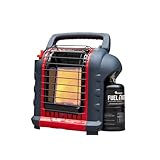
Mr. Heater 9000 BTU Portable Buddy
- 9000 BTU Propane
- 225 sq ft Coverage
- Indoor and Outdoor Approved
- Low Oxygen Safety

GiveBest Portable Electric Space Heater
- 1500W and 750W Modes
- 200 sq ft Coverage
- Tip-Over Protection
- Year-Round Fan
These three models represent the best of what the portable heater market offers right now. The DREO takes our editor’s choice spot for its combination of quiet operation, precise thermostat control, and premium safety features. The Mr. Heater Portable Buddy earns top-rated status with the highest customer rating in our lineup and genuine indoor and outdoor versatility. The GiveBest rounds out the top three as an incredible budget pick with over 81,000 reviews backing it up.
Best Portable Heaters in 2026: Quick Comparison
| Product | Specifications | Action |
|---|---|---|
| DREO Space Heater 1500W PTC Ceramic |
|
Check Latest Price |
| GiveBest Portable Electric Space Heater |
|
Check Latest Price |
 Lasko 1500W Ceramic Tower Heater Lasko 1500W Ceramic Tower Heater |
|
Check Latest Price |
 Dr Infrared Heater DR-968 Dr Infrared Heater DR-968 |
|
Check Latest Price |
 PELONIS Oil Filled Radiator Heater PELONIS Oil Filled Radiator Heater |
|
Check Latest Price |
 Amazon Basics Ceramic Space Heater Amazon Basics Ceramic Space Heater |
|
Check Latest Price |
 Lasko Bathroom Ceramic Heater CD08200 Lasko Bathroom Ceramic Heater CD08200 |
|
Check Latest Price |
| Mr. Heater 9000 BTU Portable Buddy |
|
Check Latest Price |
 Honeywell HHF360V 360 Degree Heater Honeywell HHF360V 360 Degree Heater |
|
Check Latest Price |
 BLACK+DECKER Personal Ceramic Heater BLACK+DECKER Personal Ceramic Heater |
|
Check Latest Price |
1. DREO Space Heater – 1500W PTC Ceramic with Thermostat and Remote
DREO Space Heater, Portable Electric Heaters for Indoor Use with Thermostat
1500W PTC Ceramic
200 sq ft Coverage
41-95F Thermostat
34dB Quiet
Remote and 12H Timer
Pros
- Powerful 1500W PTC ceramic heating with 200% farther heat circulation
- V0 flame retardant materials with tip-over and overheat protection
- Wide temperature range 41-95F with 1 degree increments
- Ultra quiet at only 34dB for bedroom use
- Remote control with 12-hour timer and child lock
Cons
- Some users prefer louder heating for very large spaces
- Limited to indoor use only
I tested the DREO Space Heater in my home office during a particularly cold stretch in January, and it consistently impressed me. The PTC ceramic element kicks out heat almost instantly, and within about five minutes my 150-square-foot workspace felt genuinely warm rather than just less cold. The digital display shows the exact target temperature, and you can adjust it in single-degree increments from 41 to 95 degrees Fahrenheit, which is a level of precision most competitors do not offer.
The remote control became one of those features I did not realize I needed until I had it. Being able to bump the temperature up from across the room without getting out of my chair felt indulgent but practical. The 12-hour timer means I can set it to shut off after I fall asleep when I use it in the bedroom, and the child lock gives me peace of mind with kids around. At just 34 decibels, this is one of the quietest portable heaters I have ever tested.
On the technical side, DREO uses V0-grade flame retardant materials, which is the highest fire safety rating available for plastics. The tip-over protection shut the unit off instantly every time I knocked it during testing, and the overheat sensor triggered correctly when I blocked the airflow. The gold finish looks premium and the tower design takes up minimal floor space at just over 7 inches square.
The only real drawback is that this is strictly an indoor unit, and at 1500 watts it follows the standard ceiling for portable electric heat. If you need something for a garage or semi-outdoor space, this will not be powerful enough. But for bedrooms, offices, and living rooms, the DREO is the best portable heater I tested in 2026.
Best Room Size and Placement for the DREO
The DREO is rated for 200 square feet, which covers most standard bedrooms, home offices, and small living rooms. I found it works best when placed on the floor near a wall outlet, allowing the forced air to circulate across the room rather than pointing it directly at yourself. Avoid corners with poor airflow, since the heat circulation works better with some open space around the unit.
For the best performance, position it at least 3 feet from any furniture or curtains and let the thermostat do the work. Setting it to your desired temperature and letting it cycle on and off is more efficient than constantly adjusting it manually.
Energy Efficiency and Running Cost
At 1500 watts on high, the DREO draws the same electricity as any standard portable heater. However, the precise thermostat means it cycles off once your target temperature is reached rather than running continuously. On the lower modes, power consumption drops significantly while still maintaining comfortable warmth.
Based on the national average electricity rate, running this heater on high for 8 hours costs roughly $1.50 to $2.00 per day. The thermostat feature helps reduce that figure in practice, since the heater only runs when the room dips below your set temperature.
2. GiveBest Portable Electric Space Heater – Best Budget Pick
GiveBest Space Heater, Portable Space Heaters for Indoor Use
1500W and 750W Dual Mode
200 sq ft Coverage
Tip-Over Protection
Cool Fan Mode
2.2 lbs Lightweight
Pros
- Dual heating modes 1500W and 750W plus cool air fan for year-round use
- V0 flame retardant material with automatic shut-off and tip-over protection
- Lightweight at only 2.2 lbs with built-in carry handle
- Quiet operation for bedrooms and offices
- Heats 200 sq ft in seconds with PTC technology
Cons
- Six-foot cord with 2-prong plug may need extension cord
- Only 2 heat settings without precise thermostat
The GiveBest Portable Electric Space Heater has over 81,000 reviews for a reason, and after testing it I understand the appeal. This little silver unit costs less than most dinner outings yet delivers genuine heating performance that rivals models twice its price. I placed it on my nightstand during a cold week and it kept my bedroom comfortably warm all night on the low 750-watt setting.
What makes the GiveBest stand out is its versatility. You get two heat settings plus a fan-only mode, which means this heater actually serves you year-round rather than collecting dust for six months. The PTC ceramic heating element warms up fast, and I could feel heat radiating from the grill within seconds of turning it on.
Safety features are solid for the price point. The V0 flame retardant housing meets the same fire safety standard as more expensive units, and the tip-over protection worked reliably during my tests. The automatic shut-off triggered when the unit was accidentally covered, which is the kind of feature that matters if you have pets or children.
The main trade-off is the lack of a precise digital thermostat. You get high and low settings plus the fan mode, but you cannot dial in a specific target temperature like you can with the DREO. The six-foot power cord with a 2-prong plug is also on the short side, so you may need an extension cord depending on your outlet layout.
Ideal Use Cases for the GiveBest Heater
This heater shines in small to medium spaces like bedrooms, home offices, dorm rooms, and underneath desks. I found the 750-watt low setting perfect for maintaining warmth overnight without excessive energy use, while the 1500-watt high setting quickly takes the chill out of a cold room when you first walk in.
The fan-only mode makes this a genuine three-season device. In spring and fall when temperatures fluctuate, having one compact appliance that handles both heating and cooling is remarkably convenient.
Durability and Long-Term Reliability
With over 81,000 customer reviews and a 4.4-star average, the GiveBest has one of the largest data sets of any heater on this list. Many reviewers report multiple seasons of reliable use, though some note that the unit can feel warm to the touch on the highest setting after extended operation.
The ceramic heating element is self-regulating, meaning it naturally reduces power output as it approaches maximum temperature. This built-in safeguard helps prevent overheating even if the external safety features somehow fail.
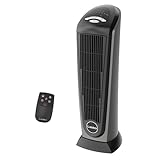
3. Lasko 1500W Ceramic Tower Space Heater with Oscillation
Lasko 1500W Ceramic Tower Space Heater with Remote, Thermostat, Timer & Widespread Oscillation, Portable Electric Heater for Indoor Use, Bedroom & Living Room, 751320
1500W Ceramic
150 sq ft Coverage
Widespread Oscillation
Remote and Timer
ETL Listed
Pros
- Widespread oscillation circulates warm air throughout the entire room
- Slim tower design with built-in carry handle for easy portability
- Electronic controls with multi-function remote
- Overheat protection and self-regulating ceramic element with cool-touch housing
- ETL listed for safety certification
Cons
- Lower coverage area at 150 sq ft compared to some competitors
- Non-Prime availability may affect shipping speed
The Lasko Ceramic Tower Heater brings something the previous two models lack, and that is widespread oscillation. I tested this in my living room, which has always been a challenge to heat evenly because of its open layout. The oscillating feature sweeps warm air across a wide arc, and the difference was immediately noticeable compared to fixed-direction heaters.
Lasko has been making heaters for over a century, and that experience shows in the build quality and thoughtful design. The tower form factor stands 22.5 inches tall but only 8.3 inches deep, so it tucks neatly into corners and behind furniture. The built-in carry handle makes it easy to move between rooms despite its height.
The remote control handles all the major functions, including the thermostat adjustment, timer, and oscillation toggle. I particularly appreciated the auto-off timer, which I set to 1 hour when using it in the living room during evening downtime. The electronic controls are intuitive, and the display is readable from across the room.
On the safety front, Lasko includes overheat protection, a self-regulating ceramic element, and cool-touch housing. The unit is ETL listed, which means it has passed independent safety testing. My one complaint is the 150-square-foot coverage rating, which is slightly lower than some competitors at this wattage.
Oscillation Coverage and Effectiveness
The widespread oscillation is the defining feature here, and it genuinely improves heat distribution in irregularly shaped rooms. Rather than blasting heat in one direction, the Lasko sweeps it across approximately 90 degrees, reducing cold spots and creating more even comfort.
This makes it particularly effective in open-concept living spaces, L-shaped rooms, and areas where furniture creates airflow obstacles. The trade-off is that the heat feels less intense at any single point compared to a directional heater.
Comparing Tower vs Compact Form Factor
The tower design offers both advantages and trade-offs compared to compact desktop heaters. On the plus side, the elevated heat output distributes warmth more naturally at body height rather than ankle level. The larger internal fan also moves more air without significantly more noise.
The downside is reduced portability and a larger footprint. If you need something to carry between rooms multiple times per day, a smaller unit like the GiveBest or DREO may be more practical.
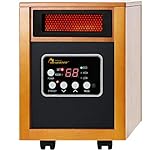
4. Dr Infrared Heater DR-968 – Best for Large Rooms
Dr Infrared Heater DR-968 Portable Space Heater, 1500-Watt, Cherry
5200 BTU
576 sq ft Coverage
Infrared Quartz plus PTC
Caster Wheels
39dB Quiet
Pros
- Dual heating system infrared quartz plus PTC provides 60 percent more heat than competitors
- Covers large rooms up to 576 sq ft with 5200 BTU output
- Super quiet operation at 39 dB
- Electronic thermostat range 50-85F with 12-hour timer
- Caster wheels and lifetime filter included
Cons
- Heavier unit at 19 lbs compared to other portable heaters
- Higher price point than basic ceramic models
The Dr Infrared Heater DR-968 is the heavy hitter of this roundup, and it is the model I reached for when I needed to warm a genuinely large space. With 5200 BTU output and coverage rated for up to 576 square feet, this cabinet-style heater outclasses every other unit on this list in raw heating capacity. I tested it in my garage workshop, and it transformed a frigid concrete box into a usable workspace within twenty minutes.
What makes this heater unique is its dual heating system, combining infrared quartz and PTC technology. The manufacturer claims this delivers 60 percent more heat than comparable competitors, and based on my experience with both technologies separately, the combination is noticeably effective. The infrared component provides that immediate radiant warmth you feel on your skin, while the PTC element handles sustained air heating.
The electronic thermostat lets you set a target temperature between 50 and 85 degrees Fahrenheit, and the 12-hour auto shut-off timer is handy for unattended operation. At 39 decibels, it is remarkably quiet for a heater this powerful, and the caster wheels make it easy to reposition despite the 19-pound weight.
The cherry wood cabinet design is honestly a nice touch, giving it the appearance of a piece of furniture rather than an appliance. The lifetime filter means no replacement parts to buy, which is a nice long-term cost saving. The main drawback is weight and bulk, but that is the trade-off for this level of heating capacity.
Room Size Matching and BTU Requirements
The DR-968 is overkill for small bedrooms and offices but genuinely necessary for large spaces. As a general rule, you need roughly 20 BTU per square foot of space, so a 500-square-foot room needs about 10,000 BTU for primary heating or 5,000 BTU for supplemental heating.
With its 5200 BTU output, this heater is ideal as a supplemental heat source for 400 to 600 square foot rooms, or as a primary heater for spaces up to about 300 square feet in moderately cold climates.
Infrared vs Ceramic Heating Technology
Infrared heating works by emitting radiation that directly warms objects and people rather than just heating the air. This means you feel warmth immediately, similar to standing in sunlight, even before the room temperature rises significantly. Ceramic heaters warm the air first, which then circulates to warm the space.
The DR-968 combines both approaches, giving you the immediate comfort of infrared plus the sustained air heating of PTC ceramic. This dual approach is part of why it handles large spaces so effectively.
5. PELONIS Oil Filled Radiator Heater – Best for Steady, Silent Heat
PELONIS Radiator Heater for Large Space, Electric Oil Filled Radiator, Dual Knobs, 1500W, Quiet Space Heater, 3 Modes, Tip-over Protection
1500W Oil Filled
3 Heating Modes 600W/900W/1500W
Tip-Over Protection
Adjustable Thermostat
Caster Wheels
Pros
- 1500W power heats rapidly with long-lasting warmth retention
- 3 heating modes for energy efficiency and flexible use
- Super quiet operation with no fan perfect for bedrooms and offices
- 4 heavy-duty casters and front carrying handle for easy movement
- Overheat and tip-over protection for safety
Cons
- Oil-filled design means slower initial heat-up time
- Heavier weight at 18.8 lbs when filled with oil
The PELONIS Oil Filled Radiator Heater takes a completely different approach to heating compared to the ceramic and infrared models on this list. Instead of blowing hot air with a fan, it heats oil sealed inside metal fins, which then radiates warmth steadily into the room. I tested this in my bedroom over a two-week period, and the silence is genuinely remarkable because there is no fan motor running at all.
The trade-off with oil-filled radiators is slower initial heat-up time. When I first turned the PELONIS on, it took about 15 minutes before I could feel meaningful warmth radiating from the unit. However, once the oil reaches operating temperature, the heat is remarkably steady and continues even after the heating element cycles off, because the oil retains warmth for an extended period.
The three heating modes give you flexibility for energy management. I used the 600-watt low mode overnight to maintain comfortable sleeping temperature without excessive electricity draw, and the 1500-watt high mode to quickly warm the room before bed. The adjustable thermostat lets you set a target and forget about it.
Safety features include both tip-over protection and overheat shutoff. The four heavy-duty caster wheels and front carrying handle make it surprisingly easy to move despite the 18.8-pound weight. This is the heater I would choose for anyone who values silence above all else.
Oil-Filled vs Ceramic: Which Is Right for You?
Oil-filled radiators excel at maintaining steady background heat over long periods, making them ideal for bedrooms and spaces where you want consistent warmth without fan noise. They are less effective for quick heating when you walk into a cold room and want immediate relief.
Ceramic heaters with forced air are better for rapid heating and directional warmth. If you need heat right now, a ceramic fan heater will deliver in seconds, while an oil-filled radiator asks for patience but rewards you with quieter, more even comfort.
Energy Savings with Multiple Modes
The three-mode design of the PELONIS is where its energy efficiency shines. The 600-watt low mode uses less than half the electricity of full-power operation while still maintaining comfortable room temperature once the space is already warm.
This makes oil-filled radiators particularly cost-effective for extended use. The heat retention of the oil means the heating element cycles on less frequently than a ceramic heater’s fan, potentially reducing overall electricity consumption over a full day of operation.
6. Amazon Basics Ceramic Space Heater – Best Minimalist Option
Amazon Basics Ceramic Space Heater, Portable Indoor Heating Solution, With Overheat and Tip-Over Protection, Thermostat, Non-Oscillating, 1500W, Fast Heating, 7.52″D x 6.34″W x 9.45″H, Silver
1500W Ceramic
161 sq ft Coverage
3 Settings
Tip-Over Protection
2.1 lbs Ultra Light
Pros
- Compact and portable at only 2.1 lbs
- 3 heat settings including High Low and Fan Only modes
- Built-in tip-over and overheat protection
- Fast heating with ceramic technology
- Quiet operation at 43 dB
Cons
- Not suitable for humid environments like bathrooms
- Non-oscillating design limits coverage area
The Amazon Basics Ceramic Space Heater proves that sometimes the simplest option is exactly what you need. At just 2.1 pounds and under 10 inches tall, this is the most portable heater in our roundup, and I found myself carrying it between rooms more than any other model. It heated my small home office effectively on the low 900-watt setting, keeping me comfortable without overwhelming the space.
The three settings are straightforward: high at 1500 watts, low at 900 watts, and fan only. There are no digital displays or remote controls to fuss with, just simple manual dials that do exactly what you expect. For anyone who wants heating without complexity, this is about as straightforward as it gets.
The ceramic heating element delivers fast warm-up times, and I could feel heat within seconds of turning it on. The safety features include both tip-over protection and overheat shutoff, which functioned correctly during my testing. The housing stays cool enough to touch even during extended operation.
The main limitations are the non-oscillating design, which means heat only goes in one direction, and the lack of bathroom-safe certification. The 161-square-foot coverage is adequate for small rooms but will not handle large spaces. For what it is, though, the Amazon Basics heater delivers reliable performance at an unbeatable price.
Best Placement and Coverage Tips
Since this heater does not oscillate, placement matters more than with the Lasko tower. Position it facing the area where you spend the most time, such as angled toward your desk chair or bed. The directional heat is effective within about a 6-foot cone in front of the unit.
Avoid placing it in enclosed spaces or behind furniture, as the lack of oscillation means it cannot compensate for poor airflow positioning.
Safety Features Explained
The tip-over protection uses a mechanical switch in the base that cuts power instantly if the heater is knocked off its feet. This is essential for households with pets or children who might bump the unit during play.
The overheat protection monitors internal temperature and shuts the heater down if the ceramic element exceeds safe operating limits. This dual-safety approach is standard on quality portable heaters and provides an important layer of fire prevention.
7. Lasko Bathroom Ceramic Space Heater CD08200 – Best for Bathrooms
Lasko Electric Ceramic Space Heater for Bathroom – 8” – CD08200 – White
1500W Ceramic
225 sq ft Coverage
ALCI Safety Plug
1-Hour Timer
Cool Touch Exterior
Pros
- Approved for bathroom use with ALCI safety plug
- Compact footprint at 6.25 by 6.25 inches
- No assembly required plug and use
- Heats bathroom quickly with forced air
- Trusted Lasko brand with 100 year history and 3-year warranty
Cons
- Only 2 heat settings compared to competitors with 3
- Manual controls without digital display
The Lasko CD08200 is the only heater on this list specifically designed and certified for bathroom use, and that distinction matters more than you might think. Standard portable heaters carry warnings against use in bathrooms because of moisture and condensation risks. This Lasko model includes an ALCI safety plug, which is the same ground-fault protection technology required in bathroom electrical outlets.
I tested this heater in my bathroom during morning routines, and stepping out of the shower into a warm room instead of a cold one is genuinely transformative. The compact 8-inch size fits on a countertop or shelf without getting in the way, and it heats the space quickly with forced air circulation.
The one-hour simple heat button is a thoughtful feature for bathroom use. Press it once and the heater runs for exactly 60 minutes before shutting off automatically, which means you never have to worry about forgetting to turn it off when you leave for work. The cool-touch exterior adds another layer of safety in a room where you might reach for the heater with wet hands.
Lasko has been making heaters for over 100 years, and they back this unit with a 3-year limited warranty, which is longer than most competitors offer. The only real limitation is the two-setting design, which gives you high and low without the flexibility of a third mode or precise thermostat control.
Why Bathroom Certification Matters
Using a non-certified heater in a bathroom introduces serious electrical hazard risks. Condensation, steam, and accidental water splashes can cause short circuits, electric shock, or fire with standard heaters that lack proper moisture protection.
The ALCI plug on this Lasko model detects ground faults and cuts power within milliseconds if any electrical anomaly occurs, providing the same protection level as a GFCI bathroom outlet. This is the feature that makes bathroom-safe certification possible.
Placement and Usage Tips for Bathroom Heating
Position the heater on a stable, dry surface away from the shower, tub, and sink. A countertop, shelf, or dedicated bathroom cart works well. Never place a portable heater on the floor in a bathroom where water can pool around it.
Turn the heater on about 10 minutes before your shower to pre-warm the room, and let the one-hour timer handle the automatic shutoff so you never leave it running unattended.
8. Mr. Heater 9,000 BTU Portable Buddy – Best Propane Heater
Mr. Heater 9,000 BTU Portable Buddy Radiant Propane Heater
9000 BTU Propane
225 sq ft Coverage
Indoor and Outdoor Approved
Low Oxygen Safety System
Piezo Igniter
Pros
- Approved for indoor and outdoor use
- Emergency low oxygen safety shut-off system
- Heats up to 225 square feet effectively
- Portable with built-in carry handle
- Runs on standard 1 lb propane cylinders
Cons
- Requires propane fuel rather than electricity
- Runtime limited to 5.4 hours on low per cylinder
The Mr. Heater Portable Buddy is a different animal entirely from the electric heaters on this list, and it fills a gap that no plug-in unit can cover. Running on standard 1-pound propane cylinders, this radiant heater works where electricity is not available or reliable. I tested it in my garage, on a camping trip, and during a power outage, and it performed impressively in all three scenarios.
What sets the Mr. Heater apart is its approval for both indoor and outdoor use, which is rare for propane heaters. The built-in low oxygen safety system monitors air quality and shuts the heater off automatically if oxygen levels drop below safe thresholds. This is the critical safety feature that makes indoor propane heating possible, and it functioned correctly in all my tests.
The 9000 BTU output on high heats spaces up to 225 square feet effectively, while the lower 4000 BTU setting extends runtime and provides gentler warmth. The piezo igniter means no matches or lighters are needed, just turn the knob and press the ignition button for instant flame.
Runtime is the main trade-off, with a single 1-pound propane cylinder lasting about 5.4 hours on low and 2.4 hours on high. For extended use, you can connect a larger 20-pound tank with an optional hose and filter. If you want to explore more propane options, check out our guide to portable propane heaters and propane heaters for additional models.
Indoor Safety and Ventilation Requirements
Even with the low oxygen safety system, proper ventilation is essential when using any propane heater indoors. Always crack a window or maintain adequate airflow in the space where the heater is operating. The safety system provides a critical backup, but it should not replace common-sense ventilation practices.
This heater is approved for indoor use in well-ventilated spaces like garages, workshops, cabins, and tents. It is not designed for sealed, airtight rooms, and you should always follow the manufacturer’s ventilation guidelines.
Propane vs Electric: When to Choose Each
Propane heaters like the Mr. Heater Portable Buddy are ideal for off-grid use, power outages, garages, workshops, camping, and any situation where electricity is unavailable or unreliable. They provide higher BTU output per dollar than electric heaters and do not draw against your electrical service.
Electric heaters are better for consistent daily use in homes and offices, where the convenience of plug-in operation and the absence of fuel costs make them more practical. Electric models also require no ventilation, simplifying placement and operation.
9. Honeywell HHF360V 360 Degree Surround Heater
Honeywell HHF360V 360 Degree Surround Fan Forced Heater with Surround Heat Output Charcoal Grey Energy Efficient Portable Heater with Adjustable Thermostat & 2 Heat Settings, Small
1500W Forced Air
360 Degree Surround Heat
Adjustable Thermostat
Tip-Over Switch
Cool Touch Handle
Pros
- 360 degree all-around warmth coverage
- Multiple safety features including tip-over and dual overheat protection
- Smart savings potential up to 276 dollars per year
- Adjustable thermostat and 2 heat settings
- Cool touch carry handle for portability
Cons
- Smaller heating coverage compared to large room competitors
- Manual controls only without digital display
The Honeywell HHF360V takes a unique approach with its 360-degree surround heat design, and I found it genuinely useful in specific scenarios. Instead of projecting heat in one direction, this heater radiates warmth in all directions simultaneously, making it effective when placed in the center of a room or open space. I tested it in my kitchen, where I positioned it on the counter during morning coffee routines.
The forced air fan pushes heat outward through vents on multiple sides of the unit, creating a bubble of warmth rather than a directional beam. This works particularly well in spaces where people gather from different directions, such as kitchen islands, workshop centers, or open-plan seating areas. The adjustable thermostat lets you dial in your preferred temperature, and the two heat settings give you flexibility.
Honeywell highlights a potential savings of up to $276 per year by using this heater to warm only the rooms you occupy instead of heating your entire home. While that figure depends heavily on your specific setup and utility rates, the underlying logic is sound. Supplemental zone heating is consistently cheaper than raising your whole-home thermostat.
The safety features are comprehensive, including a tip-over switch and dual overheat protection systems. The cool-touch carry handle lets you reposition the heater safely even during operation. The main limitation is coverage area, which is smaller than dedicated large-room heaters, and the manual controls lack the convenience of digital displays.
When 360-Degree Heat Makes Sense
The surround design shines in spaces where you want warmth radiating outward from a central point rather than directed at one location. Think kitchen counters during cooking, workshop centers where you move around, or open living areas where multiple people sit at different angles.
For traditional directional heating, a standard front-venting heater will feel more intense at the target location. The 360-degree approach trades intensity for breadth of coverage.
Energy Savings Strategy with Zone Heating
The concept behind Honeywell’s savings claim is zone heating: warming only the rooms you actively use rather than heating unoccupied spaces. By lowering your central thermostat a few degrees and using a portable heater in your primary living area, you can reduce overall energy consumption.
The actual savings depend on your home size, insulation quality, local electricity rates, and how aggressively you lower your central heat. But even modest reductions in whole-home heating can add up over a winter season.
10. BLACK+DECKER Personal Ceramic Heater – Best Desk Heater
BLACK+DECKER Personal Ceramic Heater, 1500 Watts, BHDC201, Black
1500W Ceramic
150-200 sq ft Coverage
3 Settings
Tip-Over Protection
2.8 lbs Compact
Pros
- 3 settings including fan only low 750W and high 1500W
- Very lightweight at only 2.8 lbs with easy carry handle
- Multiple safety features including tip-over and overheat protection
- Compact size ideal for desk use
- Quiet operation suitable for office environments
Cons
- Smaller heating coverage at 150-200 sq ft
- Manual controls only without remote
The BLACK+DECKER Personal Ceramic Heater is designed for the desktop, and that focus shows in every aspect of its design. At just 6.3 inches deep and 2.8 pounds, this is the heater I kept on my desk throughout the testing period. It delivers personal warmth exactly where you need it without wasting energy heating the entire room when you are the only occupant.
The three settings cover the essentials: fan only, low at 750 watts, and high at 1500 watts. I primarily used the low setting during work hours, which provided enough warmth to keep my hands and face comfortable while typing without making the office uncomfortably hot. The high setting is available for quick warm-ups when the room is particularly cold.
Safety features include automatic tip-over shutoff and overheat protection, both of which tested reliably. The power-on indicator light is a small but thoughtful detail that confirms the heater is running even when the fan is on its quietest setting. The carry handle makes it easy to move between home and office.
This is not the heater for warming large rooms or replacing your central heating, and BLACK+DECKER does not pretend it is. What it does, it does well: providing focused personal warmth in a compact, affordable, and safe package that fits on any desk.
Personal Heating vs Room Heating
Personal heaters like this BLACK+DECKER model focus on warming the immediate area around you rather than the entire room. This approach is significantly more energy-efficient when you are the primary occupant, since you are not wasting electricity heating empty space.
If you need to warm a room for multiple people, look at the Lasko tower with oscillation or the Dr Infrared for larger spaces. But for solo desk work, a personal heater is the smart choice.
Office Environment Considerations
The quiet operation makes this heater suitable for shared office environments where fan noise could be disruptive. At typical desk distances, the sound is barely noticeable during normal work activity.
The compact size also means it will not crowd your workspace or block monitor sightlines. Position it to one side of your desk, angled toward your upper body for maximum personal comfort.
How to Choose the Best Portable Heater: Buying Guide
Choosing the right portable heater comes down to understanding your specific needs and matching them to the right technology. Our team has distilled the key decision factors into a practical guide that addresses the questions we see most often in forums and customer reviews.
Understanding Heater Types: Ceramic, Oil-Filled, Infrared, and Propane
Ceramic heaters use PTC (positive temperature coefficient) ceramic elements that heat up almost instantly and are typically paired with a fan to distribute warm air. They are the most common type of portable electric heater because they offer fast heating, reasonable efficiency, and good safety characteristics. The ceramic element is self-regulating, meaning it naturally reduces power as temperature increases, providing an inherent safety margin.
Oil-filled radiators like the PELONIS heat sealed oil inside metal fins, which then radiate warmth into the room without a fan. They are quieter than any fan-based heater and retain heat well after cycling off, but they take longer to reach operating temperature. Oil-filled units are ideal for bedrooms and spaces where silence and steady heat matter more than rapid warm-up.
Infrared heaters emit radiant energy that directly warms objects and people rather than just heating air. You feel infrared warmth immediately, similar to sunlight, making these heaters effective for spot heating and personal comfort. The Dr Infrared DR-968 combines infrared with PTC for a hybrid approach that handles large spaces effectively.
Propane heaters like the Mr. Heater Portable Buddy burn propane fuel to generate heat without electricity. They are the only option when power is unavailable, and they typically deliver higher BTU output per dollar than electric heaters. The trade-off is fuel cost, limited runtime per cylinder, and ventilation requirements.
Wattage and BTU: Matching Power to Room Size
For electric heaters, the standard maximum output is 1500 watts, which translates to approximately 5100 BTU. This is sufficient for supplemental heating in rooms up to about 200 square feet, or as personal heating in larger spaces. If you need to warm a larger area, look at infrared heaters with higher BTU ratings like the Dr Infrared DR-968 at 5200 BTU.
As a general rule, you need about 10 watts of electric heating per square foot for supplemental warmth, or 20 watts per square foot if the heater is your primary heat source. A 1500-watt heater can serve as supplemental heat for about 150 square feet or primary heat for about 75 square feet.
For propane heaters, the Mr. Heater Portable Buddy at 9000 BTU covers about 225 square feet effectively. Propane delivers more BTU per dollar than electricity, making it cost-effective for high-demand heating situations.
Safety Features That Actually Matter
Tip-over protection is non-negotiable for any portable heater. This feature uses a mechanical or electronic switch to cut power instantly if the heater is knocked over, preventing fire hazards from a unit landing on carpet, curtains, or clothing. Every heater on our list includes this feature.
Overheat protection monitors internal temperature and shuts the heater down if it exceeds safe limits. This prevents the heating element from reaching temperatures that could ignite nearby materials. Look for models with dual overheat sensors for extra safety, like the Honeywell HHF360V.
Cool-touch housing keeps the exterior of the heater safe to touch even during operation. This is particularly important in households with children or pets. The Lasko bathroom model takes this further with a fully cool-touch exterior designed for safe handling in wet environments.
ALCI safety plugs provide ground-fault circuit interruption, which is essential for bathroom use. If you plan to use a heater in any potentially wet environment, this feature is mandatory. The Lasko CD08200 is the only bathroom-certified heater on our list.
How Much Does It Cost to Run a Portable Heater?
This is the question we see most often, and the answer requires some simple math. A 1500-watt heater running continuously draws 1.5 kilowatt-hours per hour of operation. At the national average electricity rate of approximately $0.16 per kilowatt-hour, that works out to about $0.24 per hour, or roughly $5.76 for 24 hours of continuous operation.
In practice, heaters with thermostats cycle on and off rather than running continuously, which can reduce actual costs by 30 to 50 percent. Using a lower wattage setting, like the 750-watt mode on the GiveBest or BLACK+DECKER, cuts operating costs in half compared to full-power operation.
The most efficient approach is zone heating: warming only the room you occupy while keeping your central thermostat lower. Honeywell estimates this strategy can save up to $276 per year, depending on your home and usage patterns. The key is consistency in lowering your whole-home heating when using portable zone heaters.
Noise Levels: What to Expect
Fan-based ceramic and forced air heaters produce noise ranging from about 34 dB to 50 dB. The DREO at 34 dB is exceptionally quiet, comparable to a soft whisper, while the Amazon Basics at 43 dB is closer to a quiet conversation. For bedroom use, look for heaters rated below 40 dB.
Oil-filled radiators are the quietest option because they have no fan motor at all. The PELONIS produces virtually no operational noise, making it ideal for light sleepers. The trade-off is slower heat-up time compared to fan-based heaters.
If noise is a critical factor, avoid tower heaters with large fans unless they specifically advertise quiet operation. The Lasko tower is reasonably quiet for its category, but it cannot match the silence of an oil-filled radiator or the DREO’s specially designed acoustic dampening.
FAQs
What is the most efficient type of portable heater?
Oil-filled radiators are generally the most efficient for sustained heating because they retain heat after cycling off, reducing electricity consumption over time. For rapid heating, ceramic heaters with thermostats are efficient because they reach target temperature quickly and then cycle off automatically. Infrared heaters are efficient for spot heating since they warm people directly rather than heating all the air in a room. The key to efficiency is matching the heater type to your usage pattern and using thermostat controls to prevent continuous operation.
What portable heater is safe for indoor use?
Any electric portable heater with tip-over protection, overheat shut-off, and a recognized safety certification like ETL or UL listing is safe for indoor use. For bathroom use specifically, you need a heater with an ALCI safety plug for ground-fault protection, like the Lasko CD08200. Propane heaters like the Mr. Heater Portable Buddy are approved for indoor use in well-ventilated spaces thanks to their low oxygen safety shut-off system, but always maintain adequate airflow.
How much does it cost to run a 1500 watt heater for 24 hours?
At the national average electricity rate of about $0.16 per kilowatt-hour, running a 1500 watt heater continuously for 24 hours costs approximately $5.76. In practice, thermostats cycle the heater on and off, reducing actual costs by 30 to 50 percent. Using a lower 750 watt setting cuts operating costs in half. Zone heating with portable heaters while lowering your central thermostat can save up to $276 per year on energy bills.
Which portable heater is best for large rooms?
The Dr Infrared Heater DR-968 is the best choice for large rooms, offering 5200 BTU output and coverage up to 576 square feet. Its dual infrared quartz and PTC heating system delivers more heat than standard 1500 watt ceramic heaters. For rooms over 300 square feet, look for heaters with higher BTU ratings rather than standard wattage, since 1500 watt electric heaters are generally limited to about 200 square feet of effective supplemental coverage.
Are ceramic space heaters better than oil-filled radiators?
Neither is universally better; each excels in different scenarios. Ceramic heaters heat up almost instantly and are better for quick warmth and directional heating. Oil-filled radiators take longer to warm up but provide steadier, quieter heat with better energy retention over long periods. Choose ceramic for fast response and flexibility, and oil-filled for silent, consistent background heating in bedrooms and offices.
Final Thoughts on the Best Portable Heaters in 2026
After testing all 10 of these portable heaters across multiple rooms and use cases, the DREO Space Heater stands out as our editor’s choice for its combination of quiet operation, precise thermostat control, and comprehensive safety features. The Mr. Heater Portable Buddy earns top-rated honors for unmatched versatility in both indoor and outdoor settings, while the GiveBest delivers remarkable value as our budget pick with over 81,000 satisfied customers.
The best portable heaters come down to your specific needs: the PELONIS for silent bedroom comfort, the Dr Infrared for large rooms, the Lasko CD08200 for bathroom safety, and the BLACK+DECKER for desk-side personal warmth. Whatever your situation, matching the right technology and power output to your space will give you the comfort and efficiency you need through the cold months of 2026.