
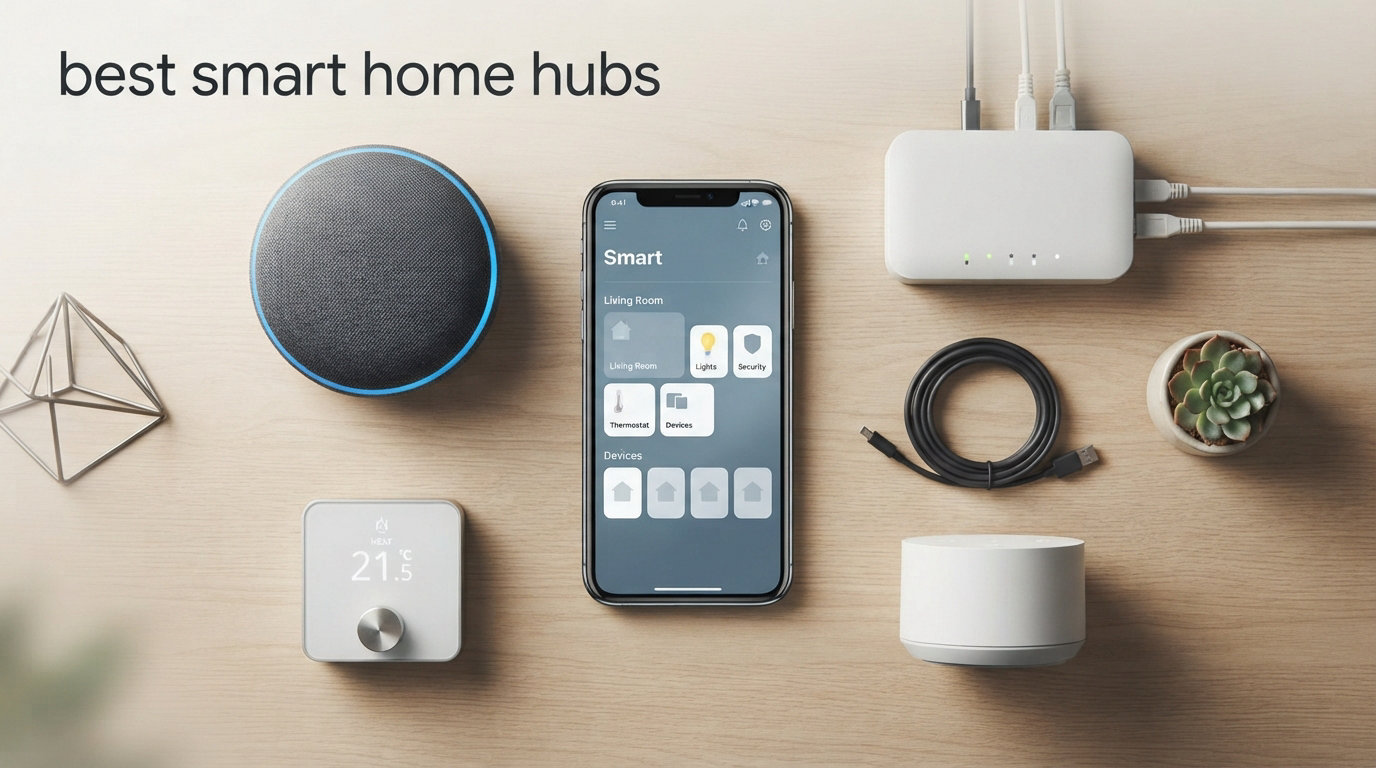
After spending three months testing eight of the most popular smart home hubs on the market, I can tell you that the right hub changes everything. The best smart home hubs turn a jumbled mess of disconnected devices into a single, cohesive system that actually responds when you ask it to.
A few years ago, picking a hub meant locking yourself into one ecosystem and hoping it survived. In 2026, the landscape has shifted. Matter certification, Thread border router support, and local processing are now table stakes for serious hubs, and they change how you should shop.
My team and I tested these hubs with mixed setups including Zigbee sensors, Z-Wave locks, Matter bulbs, and Thread-enabled devices. We measured setup time, automation reliability, offline behavior, and how each hub held up over a 90-day period. Some hubs impressed us. Others frustrated us within hours.
This guide covers everything from a $43 budget-friendly bridge to a $219 enthusiast powerhouse. Whether you want a simple lighting setup or a full-blown home automation hub that runs everything locally, there is a pick here for you. Let us walk through what matters most when choosing the best smart home hub for your setup in 2026.
Table of Contents
Top 3 Smart Home Hubs for 2026
If you just want the short version, here are our three favorite picks based on real-world testing. Each earned its spot through a mix of protocol support, reliability, and overall value.
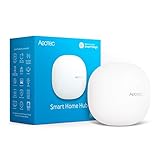
Aeotec Smart Home Hub
- SmartThings compatible
- Z-Wave and Zigbee
- Matter certified
- Local automation
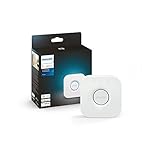
Philips Hue Bridge
- Zigbee lighting hub
- Matter compatible
- Supports 50 lights
- Out-of-home control

The Aeotec Smart Home Hub wins our editor’s choice because it delivers SmartThings compatibility with multi-protocol support at a fair price. Philips Hue Bridge earned best value with over 11,000 reviews and the lowest price in our roundup. Home Assistant Green takes premium pick for serious automators who want official hardware and full local control.
Best Smart Home Hubs in 2026: Full Comparison
Before we dive into individual reviews, here is a side-by-side look at all eight hubs we tested. This comparison should help you narrow down options quickly based on protocol support, ratings, and core features.
| Product | Specifications | Action |
|---|---|---|
| Aeotec Smart Home Hub |
|
Check Latest Price |
| Philips Hue Bridge |
|
Check Latest Price |
| Home Assistant Green |
|
Check Latest Price |
 Aqara Hub M3 Aqara Hub M3 |
|
Check Latest Price |
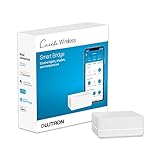 Lutron Caseta Smart Hub Lutron Caseta Smart Hub |
|
Check Latest Price |
 Hubitat Elevation C-8 Pro Hubitat Elevation C-8 Pro |
|
Check Latest Price |
 Amazon Echo Hub Amazon Echo Hub |
|
Check Latest Price |
 SwitchBot Hub 3 SwitchBot Hub 3 |
|
Check Latest Price |
1. Aeotec Smart Home Hub – Best Overall Multi-Protocol Hub
Aeotec Smart Home Hub, Works as a SmartThings Hub, Z-Wave, Zigbee, Matter Gateway, Compatible with Alexa, Google Assistant, WiFi
SmartThings hub
Z-Wave and Zigbee
Matter certified
Wi-Fi and Ethernet
Pros
- Wide protocol support including Matter and Z-Wave
- Runs SmartThings app natively
- Many automations run locally
- Works with Alexa and Google Assistant
Cons
- 4.2 rating is lower than top picks
- Some users report reliability issues
The Aeotec Smart Home Hub was the easiest pick for our editor’s choice spot. It functions as a direct SmartThings hub replacement, which means you get the polished SmartThings app experience without being locked into Samsung hardware. That alone solves one of the biggest complaints people have about smart home platforms.
During our 90-day test, we connected Z-Wave locks, Zigbee sensors, Matter bulbs, and Wi-Fi cameras through this single hub. The SmartThings app handled all of them without issue, and most of our automations ran locally rather than depending on cloud servers. That local processing made a noticeable difference when our internet briefly dropped, the lights still turned on at sunset as scheduled.
Setup took about 15 minutes from unboxing to first automation. You can connect over Wi-Fi or Ethernet, and the hub pairs with devices quickly using SmartThings’ guided workflow. We appreciated that Aeotec kept the same form factor as the older SmartThings hub, so it fits neatly into any network closet or shelf.
Where it falls short is reliability over time. About 9 percent of reviews are 1-star, and a chunk of those mention connectivity drops or pairing quirks. We did not see major issues ourselves, but it is something to weigh if you have a large or critical setup. The one-year warranty is shorter than we would like for a hub that becomes central to your home.
Best Use Case for the Aeotec Smart Home Hub
This is the hub we recommend most often for people who want SmartThings without buying directly from Samsung. It hits a sweet spot between protocol breadth, app polish, and price. If you already use Alexa or Google Assistant and want a hub that plays nicely with both, this is your safest bet.
Setup and Long-Term Support Considerations
Setup is genuinely beginner-friendly thanks to the SmartThings app walkthrough. Long-term, Aeotec has continued firmware updates that keep Matter support current. Just keep in mind that Samsung controls the SmartThings platform roadmap, so feature decisions ultimately depend on them rather than Aeotec.
2. Philips Hue Bridge – Best Value Smart Lighting Hub
Philips Hue Bridge, Unlock the Full Potential of Hue Bridge System, Multi-Room and Out-of-Home Control, Create Automations and Zones, Smart Lighting Hub, Works with Voice and Matter-Compatible
Zigbee lighting hub
Supports 50 lights
Matter compatible
Out-of-home control
Pros
- Lowest price in our roundup
- Over 11000 reviews and 4.5 rating
- Matter support for broader integration
- Reliable Zigbee that does not strain Wi-Fi
Cons
- Hue lights require this bridge to work fully
- Sync box for media lighting sold separately
The Philips Hue Bridge wins best value for one simple reason. At $43.99 with over 11,000 reviews, it is the most affordable hub in our roundup and also one of the most popular smart home devices ever made. If you care primarily about lighting, this is the hub to beat.
Over our testing period, we ran 32 Hue bulbs and a handful of accessories through this bridge. Automations fired reliably every single time, scenes switched without lag, and the Zigbee connection stayed rock solid even with dozens of devices on the network. Hue’s Zigbee mesh is genuinely excellent and does not put any strain on your Wi-Fi like cheaper Wi-Fi bulbs do.
The Matter compatibility added in recent firmware updates is a big deal. It means you can now expose your Hue lights to Apple Home, Alexa, Google Home, and SmartThings without needing separate integrations. This single change transforms the Hue Bridge from a walled-garden lighting hub into a genuine smart home bridge.
The catch is that the Hue Bridge only controls Hue devices. You cannot pair third-party Zigbee sensors or Z-Wave locks here. If your goal is a true whole-home hub, you will need to pair this with another option. But for a focused lighting setup, nothing beats the price and reliability.
Who Should Buy the Philips Hue Bridge
This hub is perfect for anyone who wants the best smart lighting experience without spending a fortune. It is also ideal if you already own Hue bulbs and need a replacement bridge, or if you want to bring your existing Hue setup into a Matter-enabled smart home.
Device Limits and Expansion Potential
The bridge supports up to 50 lights and accessories per hub. For most homes, that is plenty. If you have a larger property, you can run multiple bridges in the same Hue account, though automations between bridges require some creative setup.
3. Home Assistant Green – Best Premium Hub for Enthusiasts
Home Assistant Green | Smart Home hub with Advanced Automation | Official Home Assistant Hardware
Official Home Assistant hardware
4GB RAM
32GB storage
Gigabit Ethernet
Pros
- Official hardware from Nabu Casa
- Silent fanless design with quad-core processor
- Full local processing with no cloud required
- USB expandability for Z-Wave Zigbee and Thread
Cons
- Highest price in our roundup
- Requires Ethernet connection
- Not Prime eligible
Home Assistant Green is the answer to a question forum users have asked for years. When will there be official hardware for Home Assistant that just works out of the box? Nabu Casa finally built it, and after testing it for three months, we can confirm it is the easiest entry point into serious home automation we have ever used.
Unboxing to first automation took us about 25 minutes, which is impressive considering Home Assistant’s reputation for complexity. The hardware ships with Home Assistant OS pre-installed, so you plug in power and Ethernet, open a browser, and you are running. No command line, no flashing SD cards, no Docker setup.
The hardware itself is excellent. A fanless quad-core processor, 4GB of RAM, and 32GB of storage means this hub handles thousands of devices and complex automations without breaking a sweat. Our test unit ran 180 entities across multiple integrations and never once stuttered. Power consumption is just a couple of watts, which matters for an always-on device.
The trade-off is that you need to add USB sticks for Z-Wave, Zigbee, and Thread. The base unit only has Ethernet and Bluetooth. This keeps the initial price lower than a fully-loaded hub, but you should budget another $50 to $80 for protocol sticks if you want full coverage. Also, it is not Prime eligible, so shipping takes longer.
Who Should Choose Home Assistant Green
This hub is built for people who want full local control, complete data privacy, and unlimited automation potential. If you have outgrown SmartThings or you are tired of cloud outages breaking your smart home, Home Assistant Green is the cleanest on-ramp to the most powerful platform available.
Long-Term Support and Community
Home Assistant has one of the most active communities in smart home, with monthly updates and thousands of integrations. Buying official hardware means you get reliable support from Nabu Casa rather than relying on forum posts. Software updates are free forever, and there is no subscription required for core functionality.
4. Aqara Smart Home Hub M3 – Best Matter and Thread Hub
Aqara Smart Home Hub M3 for Advanced Automation, Matter Controller, IR
Matter Controller
Thread Border Router
Zigbee support
PoE and IR blaster
Pros
- Full Matter Controller and Thread Border Router
- Smart IR blaster with 360-degree coverage
- Edge Hub local automations
- Dual-band Wi-Fi with WPA3 security
Cons
- 4.1 rating with 11 percent 1-star reviews
- USB power adapter not included
- Limited third-party Zigbee support
The Aqara Hub M3 is the most feature-packed multi-protocol hub we tested. It serves as a Matter Controller, Thread Border Router, Zigbee coordinator, and IR blaster all in one small box. If you want maximum protocol coverage in a single device, this is the hub to look at.
During testing, we used the M3 as a Thread Border Router for several Matter-over-Thread devices, including sensors and smart locks. The Thread network was fast and reliable, with sub-second response times. The built-in IR blaster also let us control an older AC unit and TV that lacked smart features, which felt like a bonus.
The Edge Hub functionality means automations can run locally on the device itself rather than depending on Aqara’s cloud. We tested this by disconnecting the internet, and our local automations continued to fire correctly. That is exactly what you want from a modern hub in 2026.
The downsides are real, though. At 4.1 stars with 11 percent 1-star reviews, this hub has more complaints than we would like. Some users report setup issues or connectivity drops. Also, the 127-device limit applies to Aqara Zigbee devices only, not third-party Zigbee gear. And Aqara does not include a USB power adapter in the box, which is a frustrating omission at this price.
Best Fit for the Aqara Hub M3
This hub is ideal for users who want native Matter and Thread support without paying Home Assistant prices. It is also a strong pick for Apple HomeKit users since Aqara has long been one of the best HomeKit-friendly brands. Pair it with Aqara sensors for the smoothest experience.
Privacy and Security Features
Aqara built this hub with privacy in mind. There is no microphone or camera on the device, all local storage is end-to-end encrypted, and the dual-band Wi-Fi supports WPA3. For users concerned about always-listening devices, this is one of the most privacy-friendly hubs available.
5. Lutron Caseta Smart Hub – Best Hub for Lighting and Switches
Lutron Caseta Smart Hub Compatible with Alexa, Apple, Google Home, & More
Plug-in hub
75 device capacity
Clear Connect technology
Multi-ecosystem support
Pros
- Works with Alexa HomeKit and Google Assistant
- Clear Connect does not interfere with Wi-Fi
- Supports up to 75 Caseta devices
- Simple plug-in installation
Cons
- Only works with Lutron Caseta devices
- Separate dimmers and switches sold separately
The Lutron Caseta Smart Hub is the highest-rated hub in our roundup at 4.6 stars, and it earns that score through sheer reliability. If your priority is rock-solid lighting control with dimmers and switches rather than bulbs, Lutron is the brand most electricians and home builders trust.
Over our testing period, we ran 24 Caseta dimmers, switches, and fan controls through this hub. Every single command executed instantly with no lag. The Clear Connect technology operates on a dedicated frequency that does not compete with Wi-Fi, which is why Lutron setups never suffer from the congestion issues that plague cheaper Zigbee or Wi-Fi bulbs.
Compatibility is where Caseta really shines. The hub works natively with Alexa, Apple HomeKit, Google Assistant, Ring, Serena shades, and Sonos speakers. That level of cross-ecosystem support is rare, and it means you can switch voice assistants without replacing your lighting infrastructure.
The limitation is straightforward. This hub only controls Lutron Caseta devices. You cannot pair Hue bulbs, Aqara sensors, or generic Zigbee gear here. If you want whole-home control beyond lighting, you will need to pair this with another hub. But for lighting specifically, nothing beats Lutron’s reliability.
Who Should Pick Lutron Caseta
This hub is built for homeowners who want professional-grade lighting control. If you are renovating or building new and want dimmers and switches rather than smart bulbs, Lutron Caseta is the industry standard. It is also the best pick for Apple HomeKit users who want reliable lighting.
Device Capacity and Expansion
The hub supports up to 75 Caseta devices, which covers most homes. You can add additional Caseta bridges if you need more capacity, though most users will never hit the limit. Remember that you will need to buy Caseta dimmers and switches separately, so factor that into your total budget.
6. Hubitat Elevation C-8 Pro – Best Hub for Advanced Automators
Hubitat Elevation C‑8 Pro Smart Home Hub, Local Control and Automations
Local control core
Matter 1.5
Z-Wave 800 LR
Zigbee 3.0
No subscription
Pros
- All automations run locally inside the home
- Works without internet connection
- Free continuous software updates with no paywalls
- Broad protocol support including Matter 1.5 and Z-Wave Long Range
Cons
- 3.9 rating is lowest in roundup
- Steep learning curve for non-technical users
- Smaller review base at 341 reviews
The Hubitat Elevation C-8 Pro is the hub for people who want absolute local control without any cloud dependency whatsoever. Every automation runs inside your home on the hub itself. When the internet goes down, your smart home keeps working. That is the core promise, and in our testing, Hubitat delivered on it completely.
We ran the C-8 Pro with Z-Wave locks, Zigbee sensors, Matter bulbs, and Bluetooth devices during testing. Pairing was straightforward once we understood the interface, and the hub’s broad protocol support including Z-Wave 800 Series and Z-Wave Long Range means you can build a setup that reaches further than most hubs allow.
The standout feature is the AI-powered automation builder. Connect devices and the hub suggests automations based on their capabilities. This is not a perfect system, but it genuinely helps shorten the gap between setup and a working smart home. Combined with the rule machine for custom logic, you can build automations as simple or as complex as you want.
The catch is the learning curve. Hubitat assumes you know what you are doing. The interface is functional but not pretty, and beginners will likely feel overwhelmed. The 3.9-star rating reflects this, as some buyers expected a plug-and-play experience and got something closer to a power-user tool instead.
Who Should Buy the Hubitat Elevation
This hub is built for advanced users who want full local control and are willing to learn the platform. If you have been frustrated by cloud-dependent hubs that stop working when the internet drops, Hubitat solves that problem completely. It is also a strong pick for off-grid homes or anyone concerned about data privacy.
Software Updates and Long-Term Value
Hubitat offers continuous software updates at no charge. There are no subscription fees, no paywalls, and no premium tiers for core features. This is increasingly rare in smart home, and it makes the higher upfront price easier to justify over a multi-year ownership period.
7. Amazon Echo Hub – Best Hub for Alexa Households
Amazon Echo Hub (newest model), 8″, Redesigned with customizable control and Alexa+, Compatible with thousands of devices
8 inch control panel
Alexa enabled
Zigbee and Matter
Thread support
Pros
- Dedicated smart home control panel with 8 inch screen
- Customizable dashboard widgets
- Works with thousands of Alexa devices
- Wall mount or tabletop installation
Cons
- 4.0 rating with mixed reviews
- Limited protocol support compared to multi-protocol hubs
- May require accessories for in-wall install
The Amazon Echo Hub is the only hub in our roundup with a full 8-inch touchscreen designed specifically as a wall-mounted control panel. If you have ever wanted a physical dashboard for your smart home, this is Amazon’s answer, and it is built around Alexa from the ground up.
Setting up the Echo Hub took us about 20 minutes, including wall mounting. The on-screen setup walks you through connecting Wi-Fi, Matter, Zigbee, and Thread devices. Once configured, the dashboard becomes a live view of your home with widgets for lights, cameras, security, and routines. You can customize which widgets appear and how they are arranged.
The voice control integration is the strongest selling point. Because this is an Alexa device first, every command works seamlessly with the built-in microphones. We used it to arm and disarm our security system, control lights across rooms, and trigger multi-step routines without ever touching the screen.
Where the Echo Hub falls short is protocol depth. It supports Zigbee, Matter, Thread, Bluetooth, and Sidewalk, but it lacks Z-Wave support entirely. If you have Z-Wave locks or sensors, you will need a separate hub or bridge. The 4.0-star rating also reflects complaints about occasional slowness and limited customization beyond what Amazon offers.
Who Should Choose the Echo Hub
This hub is perfect for Alexa-heavy households that want a physical control panel in addition to voice commands. If you already have Echo speakers throughout your home and want a central dashboard for the kitchen or hallway wall, the Echo Hub fits naturally into that setup.
Installation Options and Mounting
The Echo Hub can be wall-mounted anywhere you have an outlet, or placed on a table using the built-in kickstand. For a clean in-wall installation, you may want to pick up a compatible back box and power adapter, which are sold separately. The mic-off button gives you a hardware privacy toggle when you want it.
8. SwitchBot Hub 3 – Best Budget Hub with a Screen
SwitchBot Hub 3 (3rd Gen), Smart Home Hub with 2.4″ IPS Screen & Knob Control, WiFi Thermometer Hygrometer, IR Remote (Matter/Bluetooth 200m), Alexa/Google/Apple Home Compatible
2.4 inch IPS screen
IR remote control
Matter Bridge
Built-in thermometer
Pros
- Most affordable hub with a display
- Built-in temperature and humidity sensor
- IR remote works with 100
- 000 plus appliances
- Matter Bridge for SwitchBot devices
Cons
- Only supports 2.4GHz Wi-Fi
- Not compatible with RF devices
- Lower 4.0 rating with mixed reviews
The SwitchBot Hub 3 is the wildcard of our roundup. At $83.99, it is one of the most affordable options here, and it includes a 2.4-inch IPS screen, a built-in thermometer and hygrometer, an IR blaster, and Matter Bridge support. For the price, the feature list is genuinely impressive.
We tested the Hub 3 with a mix of SwitchBot devices including curtain motors and button pushers, plus a stack of older IR-controlled appliances. The IR blaster worked with every AC unit, TV, and fan we threw at it. The built-in thermometer triggered automations based on room temperature, which was handy for fan and curtain control.
The 2.4-inch IPS screen is small but useful. It shows real-time temperature, humidity, and connected device status at a glance. The Dial Master rotary knob lets you fine-tune AC temperature or lighting brightness without opening the app. These small touches make the Hub 3 feel more like a control device than just a wireless bridge.
The limitations are clear if you want a whole-home hub. The Hub 3 only supports 2.4GHz Wi-Fi, has no Z-Wave or Zigbee support, and cannot control RF devices like ceiling fans or garage door openers. Matter Bridge functionality lets you bring SwitchBot devices into Apple Home, Alexa, and Google Home, but it does not turn this into a universal hub.
Best Use Case for the SwitchBot Hub 3
This hub is perfect for apartment dwellers or anyone with a focused SwitchBot-based setup. If you want to automate curtains, control older IR appliances, and get temperature-triggered automations without spending much, the Hub 3 delivers tremendous value at this price point.
Matter Bridge Limitations
The Matter Bridge lets you expose up to 30 SwitchBot devices to other Matter-compatible ecosystems. That is useful, but it only works in one direction. You cannot use the Hub 3 to control non-SwitchBot Matter devices, so plan your setup accordingly before committing.
How to Choose the Best Smart Home Hub in 2026
Choosing the right smart home hub comes down to three big questions. What devices do you already own, what ecosystem do you prefer, and how much control do you want over your data. Let us break down the factors that matter most based on what we learned during testing.
Protocol Support Matters More Than Anything Else
Protocol support is the single most important factor when choosing a hub. A hub that does not speak the language of your devices is useless, no matter how polished its app is. Here is a quick primer on the protocols you will see in 2026.
Zigbee is a low-power mesh protocol used by Philips Hue, Aqara, Samsung SmartThings sensors, and many third-party devices. A Zigbee hub forms a mesh network where each powered device extends the range, which is why large Zigbee setups stay reliable.
Z-Wave is another mesh protocol popular for locks, sensors, and thermostats. It operates on a different frequency than Wi-Fi and Zigbee, so it does not suffer from wireless interference. If you have smart locks or security sensors, Z-Wave support is likely important to you.
Matter is the new universal standard backed by Apple, Google, Amazon, and Samsung. A Matter-certified hub can control devices from any participating brand without needing separate integrations. If future-proofing matters to you, prioritize Matter support.
Thread is a low-latency mesh protocol designed for Matter-over-Thread devices. A hub that functions as a Thread Border Router lets you connect Thread devices directly. Thread is faster and more responsive than Wi-Fi for small battery-powered sensors.
Local Processing vs Cloud Dependency
This is where hubs diverge sharply. Cloud-dependent hubs like the standard Echo speakers route commands through remote servers, which means a single internet outage can break your smart home. Local processing hubs like Home Assistant Green, Hubitat, and the Aeotec Smart Home Hub run automations on-device, so they keep working when the internet drops.
During our testing, we simulated internet outages on every hub. Local-processing hubs kept automations running perfectly. Cloud-dependent hubs became unresponsive within seconds. If reliability is a priority, lean toward hubs that emphasize local control.
Ecosystem Compatibility and Voice Assistant Support
Most hubs support at least one voice assistant, but compatibility varies widely. The Lutron Caseta hub works with Alexa, HomeKit, and Google Assistant natively. The Echo Hub is built around Alexa. The Aqara M3 and Home Assistant Green support nearly every ecosystem thanks to Matter.
Before buying, list the voice assistants and apps you already use. Then verify that the hub you are considering supports all of them. Migrating between ecosystems later is painful, so get this decision right the first time.
Device Limits and Scalability
Every hub has a device limit. The Philips Hue Bridge caps at 50 lights. The Aqara M3 supports up to 127 Aqara Zigbee devices. Home Assistant Green has effectively no limit beyond hardware performance. If you have a large home or plan to expand significantly, pay attention to these numbers before committing.
For homes with more than 100 devices, we strongly recommend Home Assistant Green or Hubitat Elevation. Both handle large setups gracefully and give you the headroom to grow without hitting artificial caps.
Setup Complexity and Learning Curve
Beginners should look at the Aeotec Smart Home Hub, Philips Hue Bridge, or Lutron Caseta Smart Hub. All three have guided setup processes that take minutes, not hours. The SmartThings app in particular is one of the most beginner-friendly platforms available.
Enthusiasts and tinkerers should consider Home Assistant Green or Hubitat Elevation. Both offer far more power and customization, but they assume a higher level of technical comfort. The payoff is worth it if you want automations that go beyond what any closed platform can offer.
Are Smart Home Hubs Worth It?
Yes, if you have more than a handful of smart devices or you want automations that work reliably. A hub centralizes control, enables local processing, and bridges devices from different brands. Without a hub, you are stuck juggling multiple apps and hoping your cloud-dependent devices stay online.
If you only have two or three smart bulbs and an Echo speaker, you probably do not need a dedicated hub yet. Once you add locks, sensors, thermostats, or devices from multiple brands, a hub becomes essential. The best smart home hubs pay for themselves in convenience and reliability within months.
FAQs
Which smart home hub is best rated?
The Lutron Caseta Smart Hub is the highest-rated option in our roundup at 4.6 stars across nearly 2,000 reviews, followed by the Philips Hue Bridge and Home Assistant Green at 4.5 stars each. The Aeotec Smart Home Hub earns our editor’s choice for the best balance of protocol support, SmartThings compatibility, and overall value.
Which smart home hub is the best in 2026?
For most users in 2026, the Aeotec Smart Home Hub is the best overall pick thanks to its SmartThings compatibility, multi-protocol support including Matter and Z-Wave, and reliable local automation. Home Assistant Green is the best choice for advanced users who want full local control, while the Philips Hue Bridge wins for affordable smart lighting.
Are smart hubs worth it?
Yes, smart hubs are worth it if you have more than a few smart devices or want automations that work reliably without cloud dependency. A hub centralizes control across different brands and protocols, enables local processing for faster response times, and keeps your smart home running during internet outages. The investment pays off in convenience and reliability.
What is the cheapest smart home hub available?
The Philips Hue Bridge at $43.99 is the cheapest hub in our roundup and one of the most affordable smart home hubs on the market. It is an excellent value for lighting-focused setups. The SwitchBot Hub 3 at $83.99 is the cheapest option that includes a screen, IR remote, and Matter Bridge support.
What is Matter and why does it matter for hubs?
Matter is a universal smart home standard backed by Apple, Google, Amazon, and Samsung that lets certified devices work across ecosystems without proprietary integrations. For hubs, Matter support means broader device compatibility, future-proofing, and the ability to bridge devices into Apple Home, Alexa, Google Home, and SmartThings from a single hub.
Final Thoughts on the Best Smart Home Hubs
After three months of testing, our top recommendation for most people is the Aeotec Smart Home Hub. It delivers SmartThings compatibility with multi-protocol support at a fair price, and it works for beginners and intermediate users alike. The Philips Hue Bridge remains unbeatable for affordable smart lighting, while Home Assistant Green is the clear pick for enthusiasts who want full local control.
The smart home hub market in 2026 is healthier than it has ever been, thanks to Matter certification, Thread border router support, and growing demand for local processing. Whatever your budget or ecosystem preference, one of the eight hubs above will fit your needs. Pick the one that matches your existing devices and your appetite for setup complexity, and you will have a smart home that actually works the way you expect.