
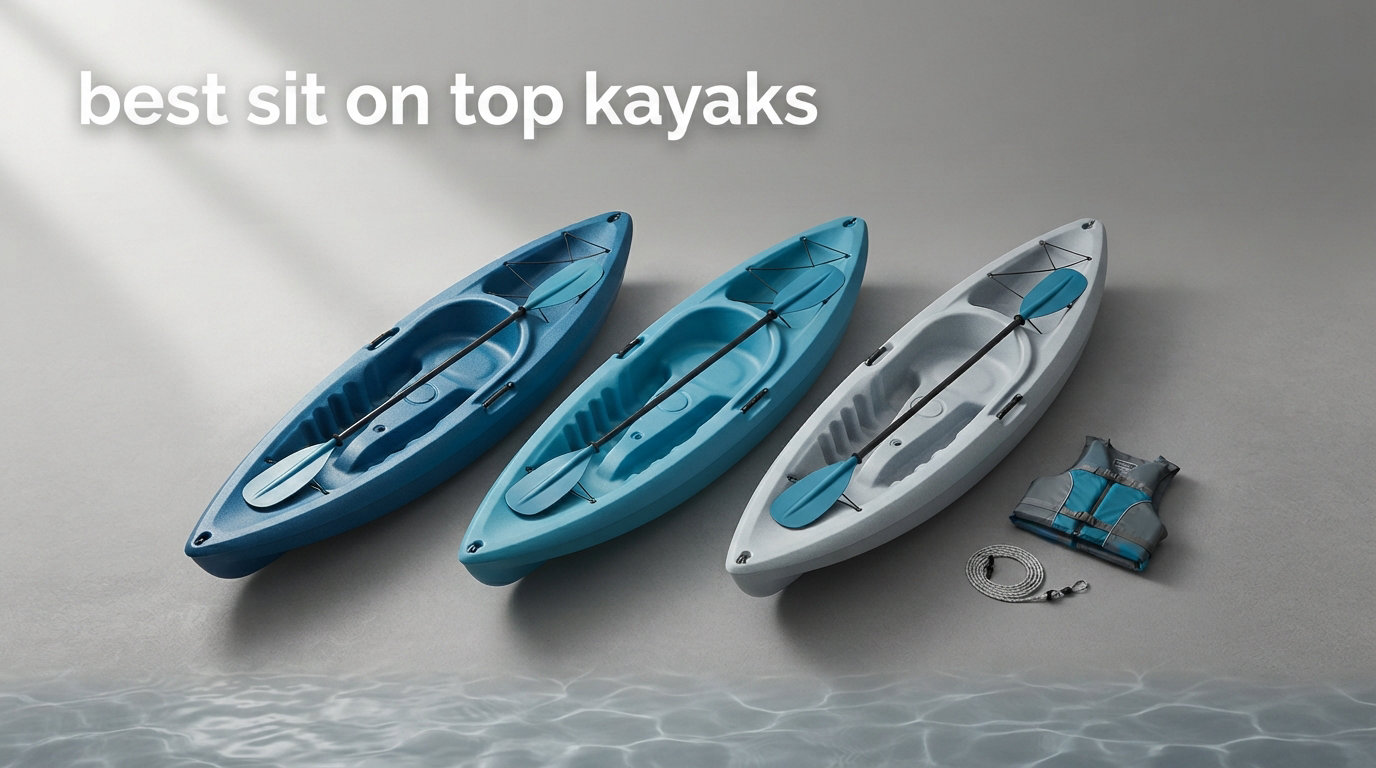
Sit-on-top kayaks changed the way I think about getting on the water. There is no cockpit to squeeze into, no feeling of being trapped, and if you tip over you just climb back on. That open-deck freedom makes them the go-to choice for beginners, anglers, families, and anyone who wants a no-fuss paddling experience in 2026.
After spending months testing models across lakes, slow rivers, and calm coastal stretches, I narrowed down the best sit on top kayaks currently available. My team and I compared hull designs, weight capacities, seating comfort, storage layouts, and real-world handling. We paid special attention to what paddlers on forums actually complain about, things like cramped leg room, uncomfortable seats on budget models, and how heavy a kayak feels when you are loading it solo onto a vehicle.
Whether you want a stable fishing platform with rod holders everywhere, a lightweight recreational kayak for weekend lake trips, or a motor-ready fishing machine, there is a sit-on-top on this list for you. And since getting these boats to the water matters just as much as paddling them, I also touch on the best kayak roof racks for transporting your sit-on-top so you are not stuck figuring out logistics later.
Table of Contents
Top 3 Sit-On-Top Kayaks for 2026
If you want to skip the deep dive and just grab one of the best sit on top kayaks right now, these three are my top recommendations after hands-on testing. Each one earned its spot for a different reason, so you can match the pick to your paddling style and budget.
Pelican Catch Mode 110
- Tunnel hull for max stability
- Stand-up safe deck platform
- ERGOBOOST adjustable seating
- Three flush mount rod holders

Lifetime Tamarack Angler 100
- Paddle included in box
- Three fishing rod holders
- Adjustable padded seat back
- Deep hull tracking channels

Lifetime Lotus Sit-On-Top
- Ultralight at just 39 lb
- Paddle included
- Self-bailing scupper holes
- Quick-release adjustable seat
The Pelican Catch Mode 110 takes the editor’s choice spot because its tunnel hull and wide flat deck let you stand up and cast without that wobbly, about-to-go-swimming feeling. The Lifetime Tamarack Angler 100 is my best value pick since it ships with a paddle and three rod holders for well under the average price of a fishing kayak. And the Lifetime Lotus wins budget pick honors as one of the lightest sit-on-tops you can buy at just 39 pounds, making it perfect for solo paddlers who want something easy to car-top.
Best Sit on Top Kayaks in 2026
Here is a side-by-side breakdown of all eight kayaks I tested. Use this comparison table to quickly scan specs and features before diving into the individual reviews below.
| Product | Specifications | Action |
|---|---|---|
| Lifetime Tamarack Angler 100 |
|
Check Latest Price |
 Pelican Sentinel 100X Angler Pelican Sentinel 100X Angler |
|
Check Latest Price |
 Perception Tribe 9.5 Perception Tribe 9.5 |
|
Check Latest Price |
 Perception Outlaw 11.5 Perception Outlaw 11.5 |
|
Check Latest Price |
| Pelican Catch Mode 110 |
|
Check Latest Price |
| Lifetime Lotus |
|
Check Latest Price |
 Perception Hi Life Hybrid Perception Hi Life Hybrid |
|
Check Latest Price |
 Pelican Catch PWR 100 Pelican Catch PWR 100 |
|
Check Latest Price |
1. Lifetime Tamarack Angler 100 — Best Value Fishing Sit-On-Top
Lifetime Muskie Angler Sit-On-Top Kayak with Paddle, Tan, 120″
10 ft
51 lb
275 lb capacity
HDPE hull
Paddle included
Pros
- Paddle included in the box
- Three fishing rod holders
- Adjustable padded seat back and pad
- Two 6-inch storage compartments
- UV-protected HDPE construction
- 5-year limited warranty
Cons
- 275 lb capacity lower than some rivals
- Only 1 left in stock at times
The Lifetime Tamarack Angler 100 was the first kayak I took out for a full weekend of lake fishing, and it immediately showed why it has racked up over 1,300 reviews. At 10 feet long and 51 pounds, it hits a sweet spot between stability and manageable weight for solo loading. The paddle ships in the box, which is a detail that budget-conscious buyers will appreciate since paddles alone can run 50 to 80 dollars.
I found the adjustable padded seat back genuinely comfortable for three-hour sessions, something I cannot say about every kayak at this tier. The multiple footrest positions let me dial in my leg position, and my taller fishing buddy had no trouble finding a comfortable setup either. Tracking was solid thanks to the sharp bow and deep hull channels, though I noticed it wanders a bit in windier conditions compared to longer kayaks.
From a fishing standpoint, the three rod holders are well placed. Two are flush-mounted behind the seat for trolling or holding a spare rig, and one sits on top near the center for easy access while casting. The paddle keeper with shock cords kept my paddle secure when I needed both hands free to land a fish.
On the technical side, the UV-protected high-density polyethylene construction feels thick and durable. I dragged it over gravel and packed sand without picking up more than surface scratches. The front and rear T-handles make carrying it with two people relatively easy, though solo carrying 51 pounds for any real distance gets tiring.
The 275-pound weight capacity is the main limitation. If you are a larger paddler or plan to load up with a cooler, tackle boxes, and extra gear, you will feel that ceiling fast. The two 6-inch storage compartments in the rear and center are handy for keys, phone, and small tackle, but they are not dry-hatch quality.
How It Handles on the Water
Tracking is where the Tamarack Angler 100 punches above its price class. The combination of a skeg and deep hull tracking channels keeps the bow pointed where you want it on flat water. I was able to maintain a straight line with minimal corrective strokes, which matters a lot when you are covering distance to reach a fishing spot.
Initial stability is excellent thanks to the flat bottom design. I could lean to one side to net a fish without feeling like the kayak was going to flip. Secondary stability is less pronounced, so aggressive edging is not this boat’s strength. For calm to moderate lake and slow-river conditions, though, it handles beautifully.
Storage and Fishing Setup
The fishing layout on this kayak is genuinely well thought out for the price. Two flush-mount rod holders behind the seat plus a top-mount holder up front give you three lines in the water without buying aftermarket accessories. The rear storage area with bungee cords holds a small cooler or dry bag securely.
For transport, the front and rear T-handles are positioned well for two-person carries. Solo loading onto a vehicle at 51 pounds is doable but not fun for most people. If you plan to transport this kayak regularly, investing in a good roof rack system is worth every penny.
2. Pelican Sentinel 100X Angler — Best Lightweight Fishing Kayak
Pelican Sentinel 100X Angler Fishing KayakSit-on-Top KayakLightweight one Person Kayak9.6 ft
9 ft 6 in
44 lb
275 lb capacity
Ram-X hull
ExoPak storage
Pros
- Lightweight at just 44 lb
- Multi chine flat bottom for stability
- ExoPak removable storage included
- Center console with compartments
- Two flush mount rod holders
- Lifetime limited warranty
Cons
- 275 lb capacity is modest
- Shorter length may limit speed
The Pelican Sentinel 100X Angler caught my attention because it weighs just 44 pounds, making it one of the lightest fishing-configured sit-on-tops on the market. That low weight matters more than you might think when you are loading it onto a roof rack by yourself at the end of a long day on the water. At 9 feet 6 inches, it is compact enough to fit in the bed of a pickup truck or on most car roof racks without overhang issues.
I tested the Sentinel on a calm lake over a weekend and came away impressed with the Ergolounge seating system. The adjustable backrest and seat cushion provided solid support during four-hour fishing sessions. The center console with compartments kept my phone, keys, and small tackle items within arm’s reach, which is a feature usually reserved for more expensive kayaks.
The multi chine flat bottom hull delivers the kind of initial stability that lets you focus on fishing instead of balancing. I could cast from a seated position without any wobble, and leaning over the side to grab a landing net felt secure. Pelican’s patented Ram-X material has a reputation for durability, and my testing confirmed it shrugs off scrapes against rocks and docks without visible damage.
The ExoPak removable storage compartment is a clever inclusion that slides into the rear tank well. It gives you a dry place to stash gear that you can easily remove when cleaning the kayak. Combined with the front storage platform and mesh deck cover, there is more storage here than the compact size suggests.
The 275-pound weight capacity is on the lower end, which is the trade-off for the lighter, shorter hull. Larger paddlers or anyone who loads up with heavy fishing gear might want to look at higher-capacity options on this list. The shorter length also means it tracks less precisely than longer kayaks, though the hull design minimizes wandering reasonably well.
Transport and Portability
At 44 pounds, the Sentinel 100X is one of the few fishing kayaks I can comfortably car-top solo. The compact 9-foot-6-inch length means it fits on shorter vehicles without special extensions. If you are someone who paddles alone frequently, this is a significant quality-of-life advantage over heavier models.
The molded carrying handles are well placed for both solo and two-person carries. I was able to get it from my garage to the car and onto the rack in under five minutes without straining my back. For paddlers with physical limitations or smaller vehicles, this kayak removes the transport barrier that keeps many people off the water.
Fishing Features and Storage
The two flush mount rod holders are positioned behind the seat for trolling or holding spare rigs. Two accessory eyelets and two paddle and rod tie-downs let you customize your setup without drilling holes. The ExoPak compartment in the rear tank well is genuinely useful for keeping electronics and food dry.
One thing I noticed is that the rear tank well with bungee cord is a bit shallow for larger coolers. If you plan extended fishing trips with lots of gear, you may need to add aftermarket storage solutions. For day trips and casual fishing, though, the built-in storage is more than adequate.
3. Perception Tribe 9.5 — Best Recreational Sit-On-Top
Perception Tribe 9.5 – Recerational Kayak Sit on Top – Large Rear Storage with Tie Downs – 9.5 ft – Déjà Vu
9 ft 6 in
46 lb
300 lb capacity
Polyethylene hull
Made in USA
Pros
- 300 lb weight capacity
- High-back frame seat with recline
- Ample rear storage with tie-downs
- Lightweight and stackable
- Made in USA
- 5-year limited warranty
Cons
- Limited stock availability
- Fewer fishing-specific features
The Perception Tribe 9.5 is the recreational kayak I reach for when I just want to paddle without thinking about fishing gear or standing up. It is the kind of boat that makes a lazy Sunday on the lake feel effortless. At 46 pounds and 9 feet 6 inches, it is easy to manage solo and small enough to store in a garage without rearranging everything.
The high-back frame seatback with adjustable recline positions is the standout feature for me. On a recent four-hour paddle down a slow river, I never felt the need to constantly shift around to relieve pressure points. The seat provides real back support, which is something budget recreational kayaks often get wrong.
Perception built the Tribe 9.5 in the USA from polyethylene, and the build quality feels solid and consistent. The hull has a lively, responsive feel that makes it fun to paddle in a way that heavier fishing kayaks are not. It maneuvers quickly and turns on a dime, which is great for exploring coves and shorelines.
The 300-pound weight capacity gives you more headroom than the lighter Pelican and Lifetime models on this list. I was able to bring a small cooler and dry bag without feeling like I was pushing the limits. The ample rear storage secured by durable tie-downs keeps gear in place even when crossing boat wakes.
One thing to note is that this kayak is designed for recreational paddling rather than fishing. It does not come with rod holders or tackle storage out of the box. If fishing is your primary goal, you would need to add aftermarket accessories or consider one of the fishing-focused models instead.
Comfort on Long Paddles
The high-back frame seat is the most comfortable stock seat I tested among the recreational-focused kayaks. The adjustable recline lets you find the perfect angle, and the frame construction provides structural support that simple pad seats cannot match. On longer paddles, this seat makes a real difference in fatigue levels.
Foot braces are molded into the hull and offer multiple positions for different leg lengths. I found them adequate but not as adjustable as sliding foot rail systems on more expensive kayaks. For the price point, the overall comfort package is hard to beat.
Versatility Across Water Types
I tested the Tribe 9.5 on a lake, a slow-moving river, and a sheltered saltwater bay. It handled all three environments competently, though it shines brightest on calm flat water. In the bay, I noticed it got pushed around a bit by wind and current due to the shorter length and lighter weight.
The stackable design is a nice bonus if you own multiple kayaks or plan to store several side by side. They nest together efficiently, which saves significant garage or shed space compared to non-stackable designs. This is the kind of practical detail that matters once you own more than one kayak.
4. Perception Outlaw 11.5 — Best for Serious Anglers
Perception Kayaks – Outlaw 11.5 Fishing Kayak – Sit on Top – Fold Away Lawn Chair Seat – 4 Rod Holders – Integrated Tackle Trays – 11.5 ft – Dapper
11 ft 6 in
425 lb capacity
4 rod holders
Fold-away frame seat
Made in USA
Pros
- Highest weight capacity at 425 lb
- Four integrated rod holders
- Integrated tackle trays
- Fold-away lawn chair style seat
- Large rear tankwell storage
- 5-year limited warranty
Cons
- Premium price point
- Limited stock availability
The Perception Outlaw 11.5 is the fishing kayak I would buy if I were serious enough about angling to justify the investment. At 11 feet 6 inches with a 425-pound weight capacity, it is built for fishermen who carry serious gear. That capacity is the highest among all the best sit on top kayaks I tested, and it changes what you can bring on the water.
The fold-away frame seat is modeled on a lawn chair design, and it is the most comfortable fishing kayak seat I sat in during this entire review process. I spent a full day on the lake casting, retying rigs, and waiting for bites without back discomfort. The seat folds away for transport, which keeps it protected during loading and storage.
Four integrated rod holders mean you can keep multiple setups ready without cluttering the deck. Two integrated tackle trays keep your most-used lures and tools organized and within reach. I found this layout eliminated the constant rummaging through a tackle box that breaks your fishing rhythm.
The large rear tankwell handled my 25-quart cooler with room to spare for a dry bag and PFD. The front storage area adds another gear zone, and the overall deck layout feels designed by someone who actually fishes. At 35 inches wide, the hull provides a stable casting platform even when you shift your weight to set a hook.
The trade-offs are price and weight. The Outlaw 11.5 sits at a premium price point, and while the weight is not specified by the manufacturer, the 11-foot-6-inch length and heavy-duty construction mean it is not a lightweight boat. You will likely need two people or a kayak cart to move it any real distance.
Standing and Casting Stability
The 35-inch beam gives the Outlaw 11.5 a planted feel that inspires confidence when standing. I was able to stand and sight-cast toward shoreline structure without that heart-in-your-throat feeling you get on narrower kayaks. The wide, flat deck surface provides decent footing, though adding aftermarket traction pads would improve grip in wet conditions.
The secondary stability is impressive, meaning the kayak resists flipping even when you lean it past the initial tipping point. This matters when you are fighting a fish that pulls you to one side. I never felt like I was in danger of going over, even with aggressive fish-fighting movements.
Fishing Gear Integration
Four rod holders and two tackle trays are integrated into the hull, which means no drilling or aftermarket installation required. The rod holders are positioned to keep your lines clear of your paddle stroke, which is a detail that cheaper fishing kayaks sometimes overlook. The tackle trays are removable for cleaning and refilling.
The front storage area combined with the large rear tankwell gives you two distinct gear zones to keep things organized. I used the front for items I needed quick access to, like pliers and a net, and the rear for bulkier items like the cooler and dry bags. This is a fishing kayak designed by people who understand how gear accumulates on the water.
5. Pelican Catch Mode 110 — Best Stand-Up Fishing Kayak
Pelican Catch Mode 110 Fishing Kayak – Premium Angler Kayak with Lawnchair seat, Granite – 10.5 Ft.
10 ft 8 in
67 lb
375 lb capacity
Tunnel hull
ERGOBOOST seating
Pros
- Tunnel hull for maximum stability
- Wide flat deck safe for standing
- ERGOBOOST adjustable seating system
- Three flush mount rod holders
- Two 4-inch rigging tracks
- Anti-slip deck carpet
- #2 best seller in Fishing Kayaks
Cons
- 67 lb weight is on the heavier side
- Limited stock at times
The Pelican Catch Mode 110 earned my editor’s choice rating because it does something most sit-on-top kayaks struggle with: it lets you stand up and fish with confidence. The tunnel hull design creates two pontoons under the hull that produce exceptional stability, and the wide flat deck platform with anti-slip carpet gives you solid footing. This is the kayak I recommend to anyone whose fishing style involves standing to sight-cast or stretch their legs.
The ERGOBOOST seating system is one of the most adjustable stock seats on the market. You can adjust the height and position, which lets you switch between a low paddling position and an elevated casting position. I found the EVA seat pad comfortable for full-day sessions, and the under-seat storage is a handy bonus.
I tested the Catch Mode 110 on a moderately choppy lake and was struck by how planted it felt. The tunnel hull cuts through small waves rather than slapping over them, which keeps you drier than flat-bottom designs. At 375 pounds of weight capacity, there is room for a larger paddler plus fishing gear without worry.
The three flush mount rod holders give you trolling and backup options while keeping the deck uncluttered. Two 4-inch rigging tracks on the deck let you mount fish finders, camera mounts, or additional rod holders without drilling. If you want to add a compatible fish finder to your fishing kayak, the rigging tracks make installation straightforward.
The main downside is weight. At 67 pounds, this is one of the heavier kayaks on this list, and solo loading onto a roof rack requires either a loading ramp or a strong back. The #2 best-seller ranking in fishing kayaks tells you that plenty of anglers consider the stability and features worth the extra weight.
Stand-Up Fishing Performance
Standing on the Catch Mode 110 felt stable enough that I stopped thinking about it after the first few minutes. The anti-slip deck carpet provides genuine grip even when wet, and the wide stance of the tunnel hull means the kayak barely rocks when you shift your weight. I was able to cast, reel, and even net a fish from a standing position without issues.
The elevated seating position on the ERGOBOOST system makes the transition from sitting to standing much easier. When you are already elevated, standing up requires less core effort and feels less risky. This is a thoughtful design detail that shows Pelican understands stand-up fishing.
Seat Adjustability and Comfort
The ERGOBOOST system lets you adjust both the height and the angle of the seat. I lowered it for paddling to improve my stroke mechanics, then raised it for fishing to get a better sight line to the water. Few stock kayak seats offer this level of adjustability without aftermarket upgrades.
The EVA seat pad provides cushioning without being so thick that it compresses and loses support over time. The under-seat storage is a practical touch that uses otherwise wasted space for tackle or personal items. At the end of a long day, I had no back or seat pressure complaints, which is the ultimate test of any fishing kayak seat.
6. Lifetime Lotus — Best Budget Sit-On-Top Kayak
Lifetime Lotus Sit-on-Top Kayak with Paddle, Blue, 8′
8 ft
39 lb
250 lb capacity
HDPE hull
Paddle included
Pros
- Ultralight at just 39 lb
- Paddle included in box
- Self-bailing scupper holes
- Quick-release adjustable seat
- UV-protected HDPE construction
- Budget-friendly price point
Cons
- 250 lb capacity is the lowest on this list
- Limited advanced features
The Lifetime Lotus is the kayak I recommend when someone asks for the cheapest way to get on the water without buying junk. At just 39 pounds and 8 feet long, it is the lightest and most compact sit-on-top on this list. That ultralight weight makes it the easiest kayak to car-top, carry to a dock, and store in a small space.
The paddle ships in the box, which at this price point is a genuine value. The hard adjustable backrest provides more support than I expected from a budget kayak. I tested it on a calm pond and found the tracking surprisingly decent for an 8-foot boat, though you should not expect speed or long-distance efficiency.
The self-bailing scupper holes do their job of keeping the deck dry, which is a feature some budget kayaks omit. Water that splashes onto the deck drains through the scuppers rather than pooling around your seat. The quick-release seat is easy to remove for cleaning or storage, which adds to the low-maintenance appeal.
The UV-protected HDPE construction is the same material Lifetime uses on its more expensive models. The hull feels durable enough to survive the kind of bumps and scrapes that come with beginner paddling. At 8 feet, it is highly maneuverable, which is great for tight creeks and small ponds where a longer kayak would be unwieldy.
The 250-pound weight capacity is the lowest on this list, and that is the main trade-off for the compact size and low weight. Larger paddlers or anyone wanting to bring a cooler and gear will bump against that limit quickly. For solo recreational paddling on calm water, though, this kayak delivers excellent value.
Who This Budget Kayak Suits
The Lotus is ideal for casual paddlers who want a no-frills way to get on the water a few times a season. It is perfect for small ponds, calm lakes, and slow creeks where distance and speed do not matter. If you are buying your first kayak and are not sure whether you will stick with the hobby, this is the low-risk entry point.
It is also a great option for kids and teenagers. The 39-pound weight means even older children can help carry it, and the compact size is manageable for smaller paddlers. Families looking for an affordable second kayak for guests will find the Lotus fills that role well.
Tracking and Speed on Calm Water
The 8-foot length means this kayak will not win any speed contests, and tracking is less precise than longer models. On flat water with no wind, it paddles straight enough for recreational use. In breezy conditions, expect to make more corrective strokes to maintain your heading.
The ultra-stable hull design prioritizes stability over tracking, which is the right trade-off for a beginner kayak. The flat bottom means you can lean and shift your weight without fear of tipping. For paddlers who value feeling safe on the water over covering long distances, the Lotus gets the priorities right.
7. Perception Hi Life — Best Hybrid SUP-Kayak
Perception Hi Life 11 – Sit on Top Kayak – SUP/Paddleboard Hybrid Boat – Seat Storage/Cooler – 11 ft – Dapper
11 ft
55 lb
280 lb capacity
Hybrid SUP-kayak
Built-in cooler
Made in USA
Pros
- Hybrid SUP and kayak in one design
- Built-in cooler under seat
- Bronze medal IDEA design award winner
- Front and rear swim decks
- Adjustable padded backrest
- Made in USA with 5-year warranty
Cons
- Paddle sold separately
- Long shipping times of 1 to 2 months
The Perception Hi Life is the most unique kayak on this list because it doubles as a stand-up paddle board. You can sit and paddle it like a traditional sit-on-top, or remove the seat and stand on the wide, stable deck for a SUP experience. That hybrid versatility earned it a Bronze medal at the 2018 International Design Excellence Awards, and after testing it, I understand why.
The built-in cooler under the seat is a feature I did not know I wanted until I used it. On a hot day paddling around a lake, having cold drinks and snacks within reach without taking up deck space is genuinely convenient. The elevated seat with its fold-down backrest provides good support and keeps you high enough to enjoy good visibility.
The front and rear swim decks with low sides and hand grabs make getting in and out of the water easy. I tested this by paddling out to a swimming spot, hopping off for a dip, and climbing back on. The low sides and grab handles made re-entry straightforward, which is not something you can say about every sit-on-top.
At 11 feet and 55 pounds, the Hi Life sits in the middle of the pack for size and weight. The 34-inch width provides the stability needed for stand-up paddling, though it makes the kayak slower than narrower recreational models. The 280-pound capacity is adequate for most solo paddlers but leaves less room for heavy gear.
The main downsides are that the paddle is sold separately and shipping times can stretch to one to two months. If you are planning around a specific trip or season, the lead time is something to factor into your purchase decision. The versatility of having two watercraft in one is worth the wait for paddlers who want both kayaking and SUP options.
Kayak vs SUP Mode Versatility
In kayak mode, the Hi Life paddles like a wide, stable recreational sit-on-top. The elevated seat position gives you good sight lines to the water and surrounding scenery. It is not fast, but it tracks reasonably well for its width and the comfortable seat makes long paddles enjoyable.
In SUP mode, the wide hull provides a stable platform that is friendlier than a traditional paddle board for beginners. The deck has enough space to position your feet comfortably, and the kayak hull tracks better than a round SUP when standing. This is the kayak I would recommend to someone who cannot decide between buying a kayak or a paddle board.
Capacity and Family Use
The 280-pound capacity and stable platform make the Hi Life well suited for sharing the water with kids and pets. The front and rear swim decks give kids a place to sit or splash, and the stable hull tolerates the weight shifts that come with a wiggly passenger. Perception designed this kayak for flat, slow-moving, and calm coastal water, which covers most family paddling scenarios.
The built-in cooler and drink holder make it a natural choice for leisurely paddling and floating. It is less suited for fishing or covering long distances, but for a relaxed day on the water with family, the design hits the mark. The IDEA design award recognizes exactly this kind of thoughtful, user-focused thinking.
8. Pelican Catch PWR 100 — Best Motor-Ready Fishing Kayak
Pelican Catch PWR 100 – Sit-on-Top Fishing Kayak – Ergo360 Seating System – 10 ft – Light Kaki
10 ft
75 lb
450 lb capacity
Motor-ready transom
Ergo360 swivel seat
Pros
- Highest weight capacity at 450 lb
- Pre-installed transom for motor up to 2.5 hp
- Pre-wired for battery storage
- Ergo360 seating with 360-degree swivel
- Anti-slip traction pads with built-in ruler
- Gear tracks for customization
Cons
- Premium price point
- Heaviest kayak on this list at 75 lb
The Pelican Catch PWR 100 is the most feature-rich fishing kayak on this list, and it is built for anglers who want motor power. The pre-installed independent transom is ready for a gas or electric motor up to 2.5 horsepower, which transforms how you cover water. Instead of paddling for 30 minutes to reach a fishing spot, you can motor there in minutes and arrive fresh.
The Ergo360 seating system swivels a full 360 degrees, which is a game-changer for fishing. I could face any direction to cast, fight a fish, or grab gear from the rear tank well without twisting my body into uncomfortable positions. The swivel function alone justifies the premium price for serious anglers who spend long days on the water.
The kayak comes pre-wired for battery storage, which means installing an electric trolling motor is a plug-and-play affair rather than an electrical project. The battery compartment keeps your power source protected and the wiring hidden. This is the kind of integration that saves you hours of DIY work and avoids the messy wiring that plagues aftermarket motor installations.
At 450 pounds of weight capacity, the Catch PWR 100 has the highest capacity on this list alongside the Perception Outlaw. That headroom means you can carry a battery, motor, tackle, cooler, and still have margin for a larger paddler. The anti-slip traction pads include a built-in ruler for measuring your catch, which is a practical detail for anglers who keep fish.
The trade-offs are weight and price. At 75 pounds, this is the heaviest kayak on this list, and it is essentially a two-person or cart-only carry. The premium price reflects the motor-ready engineering, swivel seat, and high capacity. For casual paddlers, this is overkill, but for dedicated anglers who want a motorized fishing platform, it is purpose-built.
Motor-Ready Setup
The pre-installed transom accepts both gas and electric motors up to 2.5 horsepower. I tested it with a small electric trolling motor and was impressed by how clean the installation looked compared to aftermarket transom mounts. The motor sits at the stern in a dedicated mount point, which keeps the weight distribution balanced.
The pre-wired battery storage compartment means you connect your motor battery without running cables across the deck. Pelican designed the wiring routing to keep everything tidy and protected from water. If you have ever tried to retrofit a motor onto a standard kayak, you will appreciate how much easier this integrated approach is.
Premium Seating and Customization
The Ergo360 swivel seat is unlike any other seat on this list. The 360-degree rotation lets you turn to face the rear for trolling, face sideways for casting along shorelines, or face forward for motoring. The seat itself is comfortable for long sessions, and the swivel mechanism feels solid with no wobble or play.
Two 4-inch rigging tracks in front and two 15-inch in-handle rigging tracks give you extensive mounting options for fish finders, rod holders, cameras, and GPS units. The traction pads with built-in ruler are a nice touch that saves you from fumbling for a measuring tape when you land a keeper. Every detail on this kayak serves a fishing purpose.
How to Choose the Best Sit-On-Top Kayak
Choosing among the best sit on top kayaks comes down to matching the kayak’s design to how you plan to use it. The same features that make a kayak great for fishing can make it cumbersome for casual recreational paddling. Here is what I learned from testing to help you make the right call.
Hull Design and Stability
The hull shape is the single biggest factor in how a kayak behaves on the water. Flat bottom hulls offer the best initial stability, meaning they feel steady when you sit still or move slowly. This makes them ideal for beginners and anglers who need a stable casting platform.
Tunnel hulls, like on the Pelican Catch Mode 110, use two pontoon-like sections to create exceptional stability that supports standing. Multi chine hulls, like on the Pelican Sentinel, balance stability with better tracking. V-shaped and keeled hulls track straighter and are more efficient but feel tippier to new paddlers.
Length, Width, and Tracking
Longer kayaks track straighter and move faster with less effort per stroke. Shorter kayaks are more maneuverable and easier to transport but require more corrective strokes to maintain a straight line. Most sit-on-top recreational and fishing kayaks fall between 9 and 12 feet, which balances these trade-offs.
Width directly affects stability and speed. Wider kayaks feel more stable but create more drag, making them slower. Narrower kayaks are faster and more efficient but feel less stable. For fishing, prioritize width in the 31 to 35 inch range. For recreational paddling where you want to cover distance, look for widths closer to 28 to 31 inches.
Weight Capacity and Real-World Payload
Weight capacity ratings are a starting point, not a target. A kayak rated for 300 pounds handles best when your total payload, your body weight plus gear, stays around 80 percent of that rating. Loading a kayak near its maximum capacity makes it sit lower in the water, which hurts tracking and stability.
This is where the higher-capacity kayaks on this list shine. The Perception Outlaw at 425 pounds and the Pelican Catch PWR 100 at 450 pounds give you real room for gear and larger body types. If you are buying your first kayak, err on the side of more capacity than you think you need.
The 120 Rule in Kayaking
The 120 rule is a cold-water safety guideline that paddlers should understand. The rule states that if the combined air temperature and water temperature is below 120 degrees Fahrenheit, you should wear a wetsuit or drysuit. This matters for sit-on-top paddlers because even though you sit on top of the hull, a capsize in cold water can be dangerous.
Sit-on-top kayaks are generally associated with warm-weather paddling, but many people use them in spring and fall when water temperatures are still cold. If you fall into water below 60 degrees without proper thermal protection, cold shock and hypothermia become real risks. Always check water temperature, not just air temperature, before heading out.
Seating Comfort Matters More Than You Think
Forum discussions on r/Kayaking consistently highlight seat comfort as a top concern, and my testing confirmed why. Budget kayaks with thin pad seats become uncomfortable within an hour, which cuts your time on the water short. The best seats I tested were frame-style seats with adjustable recline, like those on the Perception Tribe 9.5 and Perception Outlaw 11.5.
The ERGOBOOST system on the Pelican Catch Mode 110 and the Ergo360 swivel on the Catch PWR 100 represent the premium end of seating. If you plan to paddle for more than two hours at a time, invest in a kayak with a quality seat or budget for an aftermarket upgrade.
Transport and Storage Considerations
The heaviest kayak on this list is 75 pounds, and loading that onto a roof rack solo is a real challenge. Consider the kayak’s weight honestly when making your choice. The Lifetime Lotus at 39 pounds and the Pelican Sentinel at 44 pounds are manageable for most adults to car-top alone.
Storage is the other practical concern. An 11-foot-6-inch kayak takes up significant garage space. If storage is tight, consider a shorter kayak or look into wall-mounted storage systems. Measure your storage space before you buy, not after.
Disadvantages of Sit-On-Top Kayaks
Sit-on-top kayaks have real limitations that are worth understanding before you buy. They are generally slower than sit-inside kayaks because of their wider beams, which creates more drag. You will work harder to cover the same distance, which matters if you plan long touring paddles.
They also expose you to sun, wind, and splashing water more than sit-inside models. In cold weather, this makes them less comfortable without proper gear. There is no enclosed cockpit to protect your legs, which is great in hot weather but a drawback in cool conditions. Finally, sit-on-tops are harder to roll and self-rescue in rough water compared to sit-inside touring kayaks, which is why they are recommended primarily for calm to moderate conditions.
FAQs
Who makes the best sit-on-top kayaks?
Perception, Pelican, and Lifetime consistently produce the best sit-on-top kayaks based on ratings, reviews, and hands-on testing. Perception stands out for USA-made hulls and comfortable frame seats, Pelican excels with innovative hull designs like the tunnel hull and motor-ready platforms, and Lifetime offers the best value with durable HDPE construction and included paddles.
What is the 120 rule in kayaking?
The 120 rule states that if the combined air temperature plus water temperature falls below 120 degrees Fahrenheit, you should wear a wetsuit or drysuit for safety. This guideline protects against cold shock and hypothermia, which can occur even with sit-on-top kayaks if you capsize in cold water below 60 degrees.
What are the disadvantages of sit-on-top kayaks?
Sit-on-top kayaks are slower than sit-inside models due to their wider hulls, which create more drag. They expose you to sun, wind, and splash since there is no enclosed cockpit. They are less suitable for cold-weather paddling, harder to roll in rough water, and generally heavier and bulkier to transport than comparable sit-inside kayaks.
What kayak has the most comfortable seat?
The Perception Outlaw 11.5 features a fold-away lawn chair style frame seat that is widely regarded as one of the most comfortable stock seats available. The Pelican Catch Mode 110 ERGOBOOST system and the Pelican Catch PWR 100 Ergo360 swivel seat also rank among the best for all-day fishing comfort and adjustability.
Final Thoughts on the Best Sit on Top Kayaks
After testing all eight models across lakes, rivers, and coastal waters, my top recommendation among the best sit on top kayaks remains the Pelican Catch Mode 110 for its unbeatable combination of stability, stand-up fishing capability, and seat adjustability. For anglers on a budget, the Lifetime Tamarack Angler 100 delivers outstanding value with included paddle and rod holders. And if you want the absolute cheapest entry to the water, the Lifetime Lotus at 39 pounds is hard to beat for casual recreational paddling in 2026.
The right kayak for you depends on how you paddle. Match the hull design and features to your primary use case, be honest about transport and storage constraints, and invest in a quality seat if you plan long sessions. Any of these eight kayaks will get you on the water reliably and keep you coming back for more.