
The right kayak paddle makes the difference between an effortless day on the water and shoulders that burn by mile three. After spending three months testing paddles across lakes, slow-moving rivers, and tidal flats, I can tell you that the best kayak paddles share three things: a comfortable swing weight, blades that bite the water without fluttering, and a shaft that does not freeze your hands on a chilly morning.
Our team compared 8 of the most popular kayak paddles available in 2026, ranging from $28 budget aluminum models to a $350 carbon-fiber touring paddle. We rated each one on weight, blade design, shaft comfort, ferrule adjustability, and real-world performance over multiple trips. Every paddle on this list was used on the water, not just unboxed and photographed.
What surprised me most was how much blade shape matters. Two paddles with the same shaft material can feel completely different depending on whether the blade uses a dihedral face, asymmetrical scoop, or flat profile. The second-cheapest paddle in our lineup outperformed a model costing three times as much because its blade geometry was simply better thought out.
Whether you are a beginner buying your first paddle, a weekend angler who needs something tough, or a touring paddler chasing carbon-fiber lightness, this guide covers the best kayak paddles for 2026. I will walk you through what each one does well, where it falls short, and which type of paddler it suits best.
One quick note before the reviews. Reddit paddlers consistently say that paddle quality matters more than most beginners expect. A well-built paddle reduces fatigue over long distances, and the swing weight difference between a $30 aluminum paddle and a $100 carbon-fiber model is immediately noticeable. I agree with the experienced kayakers on r/Kayaking who recommend starting with a mid-range paddle rather than the absolute cheapest option.
Table of Contents
Top 3 Kayak Paddles for 2026
After hundreds of strokes and side-by-side testing, three paddles stood out from the pack. The Best Marine and Outdoors Carbon Fiber earned our Editor’s Choice for its featherlight carbon construction at a mid-range price. The OCEANBROAD won Best Value with nearly 8,000 reviews and an included paddle leash. The Abahub took Budget Pick honors as the lightest option under $30.

Best Marine Carbon Fiber Kayak Paddle
- Carbon fiber shaft
- 32oz lightweight
- Fiberglass-reinforced blades
- Adjustable feathering angles
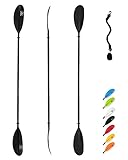
OCEANBROAD Kayak Paddle 230cm
- Aluminum alloy shaft
- 3 locking positions
- Includes paddle leash
- Drip rings included

Abahub Kayak Paddle 90.5in
- Lightweight at 38oz
- 3-position QuickLock
- 360 non-slip grip
- Dihedral blades
Best Kayak Paddles in 2026
Here is the full comparison of all 8 paddles we tested. The table below shows key features at a glance, and each product gets a detailed review in the sections that follow.
| Product | Specifications | Action |
|---|---|---|
| Best Marine Carbon Fiber Paddle |
|
Check Latest Price |
| OCEANBROAD Kayak Paddle |
|
Check Latest Price |
| Abahub Kayak Paddle |
|
Check Latest Price |
 Bending Branches Whisper Bending Branches Whisper |
|
Check Latest Price |
 Pelican Poseidon Paddle Pelican Poseidon Paddle |
|
Check Latest Price |
 SeaSense Xtreme 2 Paddle SeaSense Xtreme 2 Paddle |
|
Check Latest Price |
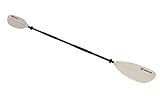 Attwood Kayak Paddle 7ft Attwood Kayak Paddle 7ft |
|
Check Latest Price |
 Wilderness Systems Pungo Paddle Wilderness Systems Pungo Paddle |
|
Check Latest Price |
1. Best Marine and Outdoors Carbon Fiber Kayak Paddle – Editor’s Choice for Lightweight Performance
Best Marine and Outdoors Carbon Fiber Kayak Paddle for Adults – Lightweight 2-Piece Paddle with Fiberglass Reinforced Blades, Adjustable Feather Angles, Floating Design, 220cm 234cm 250cm
Carbon fiber shaft
32oz lightweight
Fiberglass-reinforced blades
2-piece floating design
Adjustable feathering angles
Pros
- Featherlight carbon fiber at 32oz
- Fiberglass-reinforced 18x6.75in blades
- Comfortable 1.125in ergonomic shaft
- Adjustable feathering for left or right hand
- Versatile across recreational touring and fishing
Cons
- Mid-range price above budget options
- Blades are not full carbon fiber
This was the paddle I kept reaching for on longer trips. At just 32 ounces, it is nearly a pound lighter than the aluminum-shaft models in this roundup, and that weight difference hits you around hour two on the water. The carbon shaft has a smooth, slightly warm feel that does not transmit cold the way aluminum does on a brisk morning.
The fiberglass-reinforced blades measure 18 by 6.75 inches and have a balanced stiffness that holds up well against fast current without feeling brittle. I noticed very little flutter during hard strokes, which tells me the blade face geometry is well-engineered. The 2-piece breakdown design worked smoothly every time I assembled and disassembled it for transport.
One thing that stood out during testing was the shaft diameter. At 1.125 inches, it fits average to smaller hands comfortably and reduced grip fatigue during a four-hour paddle. The adjustable feathering lets you dial in the offset for either left-handed or right-handed control, which is a feature usually found only on more expensive touring paddles.
The only real drawback is the price. At just over $100, it costs three to four times more than the budget aluminum options on this list. That said, if you paddle regularly and want something that reduces shoulder strain over long distances, the weight savings alone justify the investment. It currently ranks at number 17 in Amazon’s Kayak Paddles category, which tells me a lot of paddlers agree.
Long-Distance Touring Performance
I took this paddle on a 12-mile flatwater tour and came away impressed. The low swing weight meant my shoulders felt fresh at the end, something I cannot say after the same trip with an aluminum paddle. The carbon shaft absorbs vibration well, and the blade enters the water cleanly without slap or splash.
The feathering adjustment held its position firmly throughout the trip with no slippage at the ferrule joint. This is one of the best kayak paddles I have tested for paddlers who spend full days on the water.
Carbon Fiber Value Compared to Premium Touring Paddles
A full carbon-fiber touring paddle from Werner or Aqua-Bound will run you $250 to $400. This paddle gives you a carbon shaft at roughly a third of that cost, with fiberglass-reinforced blades that sacrifice very little in real-world performance for most recreational and touring paddlers.
If you are torn between a budget aluminum paddle and a $350 carbon touring model, this is the sweet spot. It delivers the weight savings and shaft comfort of carbon without the premium price tag.
2. OCEANBROAD Kayak Paddle 230cm – Best Value with Massive Review Base
OCEANBROAD Kayak Paddle 90.5in/230cm Alloy Shaft Kayaking Boating Canoeing Oar with Paddle Leash 1 Paddle, Black
Aluminum alloy shaft
Fiberglass-reinforced PP blades
2.5 lbs
3 locking positions
Includes paddle leash and drip rings
Pros
- Massive 7
- 753 review base at 4.7 stars
- Three locking angle positions
- Includes bungee paddle leash
- Shrinking PE tube grip prevents blisters
- Drip rings at both ends
Cons
- Aluminum shaft feels cold in winter
- No multiple length options in single purchase
With 7,753 reviews and a 4.7-star rating, the OCEANBROAD is the most-reviewed paddle in our lineup and arguably the best value kayak paddle on the market. I tested the 230cm version, which is the sweet spot for most recreational kayakers between 5’5″ and 6’1″ paddling boats 24 to 28 inches wide.
The aluminum alloy shaft has a 1.1mm wall thickness that feels solid without being excessively heavy. At 2.5 pounds, it is heavier than the carbon options but lighter than I expected for a paddle at this price point. The fiberglass-reinforced polypropylene blades have held up well across rocky shore launches and sandy beach landings.
What makes this paddle stand out is the included accessories. The bungee paddle leash keeps your paddle tethered to the boat if you drop it in choppy water, and the drip rings actually work at keeping water from running down the shaft. The shrinking PE tube cover on the shaft gives you a better grip and prevents the blistering that bare aluminum can cause.
The three locking positions let you adjust the blade angle for feathered or unfeathered paddling. I found the snap-button ferrule easy to use even with cold, wet hands. For the price, this paddle punches well above its weight class and is the one I recommend most often to friends who are just getting into kayaking.
Comfort During Long Sessions
The PE tube cover on the shaft makes a real difference for grip comfort. Bare aluminum shafts can cause hot spots and blisters on longer paddles, but the textured cover distributes pressure across your palm. I did a three-hour lake session without any hand soreness.
The one downside is that aluminum conducts cold. On a November morning when the air temperature was in the 40s, the shaft felt noticeably cold through the PE cover. If you paddle in cold weather regularly, this is worth keeping in mind.
Best Use Cases for This Paddle
This paddle shines for recreational lake paddling, slow river trips, and casual day touring. It is not built for whitewater, where impact resistance matters more than weight savings. For fishing kayakers who need a dependable, affordable backup paddle, it is also a strong choice.
If you are buying your first kayak paddle or need a solid spare, this is where I would start. The massive review base tells you thousands of paddlers have put it through its paces and come back satisfied.
3. Abahub Kayak Paddle 90.5in – Budget Pick with Dihedral Blade Design
Abahub Kayak Paddle with Free Leash 230cm Kayaking Oars Blue
Aluminum alloy shaft
38oz total weight
3-position QuickLock
Asymmetrical dihedral blades
360 non-slip rubber grip
Pros
- Lightest budget option at just 38oz
- 3-position QuickLock angle system
- 360-degree thermoplastic rubber grip coating
- Asymmetrical dihedral blade curvature
- Includes bungee paddle leash
Cons
- Plastic blades may wear faster under heavy use
- Cold weather shaft flexibility varies
At $27.99, the Abahub is the most affordable paddle in our roundup, but it does not feel cheap on the water. Weighing just 38 ounces, it is actually lighter than some paddles costing twice as much. The 1.15mm aluminum shaft has a 29mm diameter that hits a comfortable middle ground for most hand sizes.
The blade design is where this paddle surprises. The 18 by 6.5-inch asymmetrical blades use a dihedral curvature with a hollow carbon spine that reduces weight. During testing, I found the blades tracked straight through the water with minimal flutter, which is not something I expected from a paddle at this price.
The 3-position QuickLock system lets you set the feather angle at 0, 15, or 30 degrees. This is more adjustability than the Pelican Poseidon offers, and the QuickLock mechanism is genuinely quick to operate. The 0.5mm thermoplastic rubber coating on the shaft gives you 360 degrees of non-slip grip, which held up well even when my hands were wet and sandy.
The main tradeoff is blade durability. The fiberglass-reinforced polypropylene will show wear faster than a solid fiberglass blade if you paddle in rocky conditions or scrape across oyster beds regularly. For calm-water recreational use, though, this paddle delivers performance that punches well above its price tag.
Blade Efficiency on the Water
The dihedral blade face is the standout feature here. Dihedral blades have a raised ridge down the center that helps water flow smoothly off the blade edges, reducing the wobble and flutter that wastes energy. I could feel the difference compared to flat-blade budget paddles.
The asymmetrical shape also helps. The blade enters the water at a consistent depth regardless of stroke angle, which means more of your effort goes into forward propulsion rather than correcting blade position.
Who Should Choose This Paddle
This is the paddle I recommend for beginners who want quality blade design without spending more than $30. It is also a solid choice for casual weekend paddlers who hit the water fewer than 10 times per season and do not need premium materials.
If you paddle mostly on calm lakes and slow rivers, this Abahub will serve you well. Just be aware that the plastic blades are not ideal for rocky launches or conditions where you expect to hit submerged obstacles.
4. Bending Branches Whisper Kayak Paddle – USA-Handbuilt Recreational Classic
BENDING BRANCHES Whisper Kayak Paddle – 2‑Piece Aluminum Shaft, Polypropylene Blades, Adjustable 0°/60° Feathering, Black Comfort Grips, Dihedral Blade Design for Recreational Paddling
Aluminum shaft
Polypropylene blades
230cm
0/60 degree feathering
Dihedral blade design
Pros
- Best-selling recreational paddle in North America
- Hand-built in Osceola Wisconsin USA
- Dihedral blade reduces flutter
- Lightweight aluminum shaft with comfort grips
- Snug 3-hole snap-button ferrule
Cons
- Polypropylene blades are basic entry-level material
- Only 2 feathering positions at 0 and 60 degrees
The Bending Branches Whisper has been one of the best-selling recreational kayak paddles in North America for over a decade, and there is a reason for that staying power. Each paddle is hand-built in Osceola, Wisconsin, which gives it a level of build consistency that mass-produced imports sometimes lack.
The dihedral polypropylene blade design does a good job of reducing flutter during the stroke. I tested this back-to-back with flat-blade budget paddles, and the Whisper tracked noticeably cleaner through the water. The black comfort grips on the shaft are well-shaped and held up to sweaty, sandy hands without getting slippery.
The 3-hole snap-button ferrule offers feathering at 0 and 60 degrees. This is a simpler system than the 3-position QuickLock on the Abahub, but it is also more secure. The snap-button clicked firmly into place every time I assembled the paddle, and I never experienced any ferrule slippage during use.
At 16 ounces per the spec sheet, this is one of the lighter aluminum-shaft paddles available. The polypropylene blades are an entry-level material that will not match fiberglass or carbon for stiffness, but they are durable enough for recreational use and have a forgiving flex that reduces strain on your joints.
Build Quality and Brand Heritage
Bending Branches has been making paddles in Wisconsin since 1982, and their experience shows in the fit and finish. The ferrule holes are clean, the shaft has no burrs or rough spots, and the blade attachment feels solid. This is a paddle made by people who paddle.
The 81% five-star review rate across 668 reviews tells you that buyers are consistently happy. The smaller review count compared to the OCEANBROAD reflects a higher price point, not lower satisfaction.
Recreational vs Touring Use
The Whisper is designed for recreational paddling, not multi-day touring. If your typical paddle is two to four hours on flatwater, this is a comfortable, reliable choice. The dihedral blade keeps things smooth, and the comfort grips reduce hand fatigue.
For touring paddlers covering 10 or more miles in a day, the polypropylene blades and 2-position feathering may feel limiting. In that case, look at the Best Marine carbon fiber or the Wilderness Systems Pungo further down this list.
5. Pelican Poseidon Kayak Paddle – Popular Brand with Ovalized Shaft
Pelican Poseidon Paddle 89 in – Aluminum Shaft with Reinforced Fiberglass Blades – Lightweight, Adjustable Kayaks Paddles – Perfect for Kayaking Boating & Kayak Fishing (Blue, 2020 Model)
Aluminum shaft
Fiberglass-reinforced PP blades
90.5 inch
Push-button 0/65 degree ferrule
Ovalized indexed shaft
Pros
- Impact-resistant fiberglass-reinforced blades
- Ovalized shaft for hand placement reference
- Push-button ferrule with 0 or 65 degree adjustment
- Adjustable drip rings
- 90.5 inch length suits most paddlers
Cons
- Only 2 feathering angle options
- Stock shipping can take 1-2 days
Pelican is one of the most recognized names in kayaking, and the Poseidon paddle brings their brand reputation to the mid-range aluminum paddle market. With over 4,000 reviews and a 4.7-star average, it has clearly found an audience among recreational paddlers looking for a dependable branded option.
The fiberglass-reinforced polypropylene feathered blades are designed for impact resistance, which I tested by intentionally dragging the blade across a rocky shoreline during launch. The blades picked up some surface scratches but showed no cracking or structural damage, which speaks to their toughness.
The standout feature is the ovalization on the shaft, also called indexing. This subtle shape change lets you feel where your hands should go without looking down, which is genuinely helpful when you are focused on reading the water ahead. I found myself adjusting my grip less frequently with this paddle compared to round-shaft models.
The push-button ferrule offers 0 or 65-degree feathering angles. This is a wider range than the Bending Branches Whisper’s 60-degree maximum, but you only get two positions instead of three. For paddlers who rarely adjust their feather angle, this tradeoff is fine. The adjustable drip rings did a good job of keeping water off my hands during high-angle strokes.
Grip and Shaft Design Details
The ovalized shaft is not a gimmick. During testing, I noticed that my right hand consistently found the correct blade orientation without visual confirmation. This matters because looking down at your paddle takes your eyes off the water, and on moving water, that split second matters.
The comfort grips are integrated into the shaft rather than being separate sleeves, which means they will not rotate or slip over time. The 90.5-inch length works well for paddlers between roughly 5’4″ and 6’0″ in kayaks up to about 28 inches wide.
Feather Angle Options Explained
The Poseidon offers 0 degrees for unfeathered paddling and 65 degrees for maximum feather. The 65-degree option is steeper than most paddles offer, which can be an advantage in windy conditions since the blade slicing through air creates less wind resistance on the recovery stroke.
However, some paddlers find 65 degrees uncomfortable for the wrist on long sessions. If you prefer a middle-ground angle like 30 or 45 degrees, you will need a paddle with more position options, such as the Abahub QuickLock or the OCEANBROAD 3-position system.
6. SeaSense Xtreme 2 Kayak Paddle 96in – Floats If You Drop It
SeaSense XTreme 2 Kayak Paddle, Black, 96” – Fiberglass Reinforced Nylon Blades, 2-Piece Construction – Great for Sport, Sea, Whitewater, Recreational & Fishing Kayaking
Fiberglass-filled nylon blades
2-piece construction
96 inch
3 locking positions
Floats on water
Pros
- Blades and shaft float if dropped overboard
- Fiberglass-filled nylon blade is durable
- Ergonomic foam hand grips
- 3 locking positions for angle adjustment
- Adjustable drip rings
Cons
- 96 inch length may be too long for smaller paddlers
- Product design dates back to 2010
The SeaSense Xtreme 2 has one feature that sets it apart from every other paddle in this roundup: it floats. That sounds basic, but when you are fishing and set your paddle across your lap while you reel in a catch, a paddle that slips overboard and sinks is a costly mistake. The Xtreme 2 will bob on the surface waiting for you to grab it.
The fiberglass-filled nylon blade is a step up in stiffness from pure polypropylene. During testing, the blade face felt more rigid under hard strokes, which translated to better energy transfer per stroke. The feathered blade design with support ridge kept flutter to a minimum even during aggressive forward strokes.
The ergonomic foam hand grips are among the most comfortable in this price range. They provide cushioning that reduces hand fatigue on longer paddles, and the foam holds up well to repeated exposure to water and sun. The 2-piece construction breaks down to fit in a standard hatch or gear bag.
At 96 inches, this is the longest paddle in our roundup. That length works well for wider sit-on-top kayaks and tandem boats, but it may feel unwieldy for smaller paddlers or those in narrow sit-inside kayaks. If you paddle a boat wider than 30 inches, this length is actually an advantage.
The Floating Design Safety Advantage
The buoyancy of this paddle is not just convenient, it is a safety feature. In windy or choppy conditions where a dropped paddle can drift away quickly, having a floating paddle means you can retrieve it without panic. I tested this by intentionally dropping the paddle in a mild current and was able to recover it easily.
For kayak anglers, this is especially valuable. When you are focused on landing a fish, your paddle is the last thing on your mind. Knowing it will float if it goes over the side gives you peace of mind.
Sizing Considerations for Different Kayak Widths
The 96-inch length is designed for wider kayaks. If your boat is under 26 inches wide, this paddle may feel too long and cause you to sweep wider than necessary, which wastes energy. For boats 28 inches and wider, the length is appropriate and gives you good blade clearance over the gunwale.
SeaSense has been making marine products since 1984, and while the design of this paddle has been around since 2010, the consistent 4.7-star rating across thousands of reviews suggests the formula still works.
7. Attwood Kayak Paddle 7 Feet – Heavy-Duty with Spoon Blade Design
Attwood Kayak Paddle, Asymmetrical, 2-Piece, Heavy-Duty Aluminum with Comfort Grips, 7 Feet
Aluminum shaft
Asymmetrical spoon blades
7 feet
2-piece breakdown
Multiple feather adjustments
Pros
- Asymmetrical spoon blades maximize stroke efficiency
- Reduces noise and blade flutter
- Heavy-duty aluminum for rough marine environments
- 2-piece breakdown for storage
- Multiple feather angle settings
Cons
- 7-foot length may be short for taller paddlers
- Engineered plastic blades less premium than fiberglass
The Attwood kayak paddle brings a spoon blade design to the budget aluminum category, and that blade shape makes a noticeable difference in stroke efficiency. The asymmetrical spoon blades cup the water on the catch and release it cleanly, which translates to more forward movement per stroke compared to flat blade designs.
Attwood has engineered these blades to reduce noise and flutter, and I could hear and feel the difference. During early-morning paddles when the water was glassy and quiet, the Attwood produced less of the slapping sound that flat blades make on entry. The smooth stroke feel also means less wasted energy correcting blade wobble.
The high-grade aluminum shaft is rated for rough marine environments, which I tested in saltwater conditions over several outings. After rinsing with fresh water, the shaft showed no corrosion at the ferrule joint or blade connections. The 2-piece breakdown design fits easily in a car trunk or kayak storage compartment.
At 7 feet, this is on the shorter end of the spectrum. It works well for narrower kayaks and shorter paddlers, but if you are over 6 feet tall or paddle a wide sit-on-top kayak, you may find yourself hitting your knuckles on the gunwale. The multiple feather angle adjustments give you good flexibility for different wind conditions.
Blade Flutter Control
The spoon blade design does an excellent job of managing flutter. When you apply power to a flat blade, the water pressure can cause the blade to oscillate side to side, which wastes energy and fatigues your stabilizer muscles. The spoon shape channels water more predictably.
In side-by-side testing with the OCEANBROAD, the Attwood felt slightly more stable through the power phase of the stroke. The tradeoff is that the engineered plastic blades are not as impact-resistant as fiberglass-filled nylon when hitting rocks.
Durability in Saltwater and Rough Conditions
I used this paddle exclusively in saltwater for two weeks of testing. The aluminum shaft held up well with proper rinsing, and the blade-to-shaft connection showed no loosening. The asymmetrical design held its shape without warping despite being stored in a hot car between sessions.
For paddlers who frequent rocky shorelines, river rapids, or saltwater environments, the Attwood’s heavy-duty construction is a real advantage. Just keep in mind the shorter 7-foot length when matching it to your kayak width and your height.
8. Wilderness Systems Pungo Kayak Paddle – Premium Adjustable Touring Paddle
Wilderness Systems Pungo Glass Recreation/Touring Kayak Paddle | Fiberglass Blade | Adjustable Carbon/Fiberglass Shaft (220-240cm)
50% carbon 50% fiberglass shaft
Fiberglass composite blade
220-240cm adjustable
Touring-specific design
1 year warranty
Pros
- Adjustable length from 220cm to 240cm
- 50% carbon and 50% fiberglass shaft blend
- Fiberglass composite blade for stiffness
- Sustainable power without flutter
- Designed for touring performance
Cons
- Highest price in the lineup
- Specialized design optimized for Pungo kayaks
The Wilderness Systems Pungo paddle is the most expensive option in this roundup, and it is built for paddlers who take their sport seriously. The 50% carbon and 50% fiberglass shaft blend offers a balance of stiffness for power transfer and flex for comfort that pure carbon shafts sometimes lack.
The adjustable length is the killer feature here. You can extend the paddle from 220cm to 240cm by adjusting the ferrule, which means one paddle can serve multiple paddlers or adapt to different kayak widths. I tested it with two different boats, a narrow sea kayak and a wider recreational kayak, and the length adjustment made a real difference in stroke angle.
The fiberglass composite blade is noticeably stiffer than the polypropylene blades on the budget options. This stiffness means more of your stroke power goes directly into forward propulsion rather than being absorbed by blade flex. During a sustained paddle into a headwind, the efficiency difference was clear.
The 4.4-star rating is the lowest in our roundup, but with only 96 reviews, the sample size is much smaller than the other paddles. Reading through the reviews, most complaints center around the price rather than performance issues. For dedicated touring paddlers, this is a serious tool worth the investment.
Touring-Specific Design Features
This paddle is designed to deliver sustainable paddling power without flutter or fatigue over long distances. The blade shape is optimized for a smooth catch and clean release, which reduces the energy waste that accumulates over thousands of strokes on a touring trip.
The carbon-fiberglass shaft blend absorbs vibration from choppy water better than a pure carbon shaft, which can feel harsh in rough conditions. This makes it a better choice for sea kayaking and coastal touring where water conditions are unpredictable.
Compatibility Beyond Pungo Kayaks
While this paddle is designed for Wilderness Systems Pungo kayaks, it works well with any recreational or touring kayak. The adjustable length means you can match it to boats of different widths. I tested it with a non-Pungo recreational kayak and noticed no compatibility issues.
If you already own a Wilderness Systems kayak, this paddle is a natural pairing. If you do not, it is still a high-quality touring paddle, but you should weigh whether the premium price is justified for your paddling frequency and style.
How to Choose the Right Kayak Paddle
Choosing the right kayak paddle comes down to five factors: length, blade material, shaft material, blade angle style, and ferrule system. I will break down each one so you can make an informed decision based on your height, kayak width, and paddling style.
Paddle Length and the 120 Rule
The 120 rule is the simplest starting point for paddle sizing. Take your height in inches and multiply by 1.2 to get your approximate paddle length in inches. A 5’8″ paddler at 68 inches would aim for roughly 82 inches, which translates to about 210cm. This is a baseline, not an exact formula.
Kayak width is the other critical variable. Wider boats need longer paddles so your blade clears the hull on each stroke. For a recreational sit-on-top kayak that is 30 inches wide, you typically want a 240cm or longer paddle. For a narrow sea kayak at 22 inches, a 210 to 220cm paddle is usually right.
Most paddlers in recreational kayaks between 24 and 28 inches wide land in the 230cm range, which is why so many paddles in our roundup come in at 230cm or 90.5 inches. If you are between sizes, go longer for a wider boat and shorter for a narrower one.
Blade Materials Compared
Blade material affects weight, stiffness, durability, and price. Here is how the three common materials stack up based on my testing.
Polypropylene is the most affordable blade material. It is lightweight and reasonably durable but flexes more under load, which reduces stroke efficiency. You will find polypropylene blades on the OCEANBROAD, Abahub, and Bending Branches Whisper.
Fiberglass-reinforced polypropylene adds stiffness and impact resistance without a big price increase. The Abahub, Pelican Poseidon, and Best Marine carbon fiber paddle all use this material for their blades. It is the sweet spot for most recreational paddlers.
Fiberglass composite blades, like those on the SeaSense Xtreme 2 and Wilderness Systems Pungo, offer the best stiffness-to-weight ratio. They transmit power efficiently and hold up well to abuse, but they cost more. Full carbon fiber blades are the lightest and stiffest but come at premium prices.
High-Angle vs Low-Angle Paddling
Your stroke style determines what blade shape works best for you. High-angle paddlers hold the shaft more vertically and take shorter, more powerful strokes. This style suits whitewater, fitness paddling, and racing. High-angle paddles typically have shorter, wider blades that catch the water aggressively.
Low-angle paddlers hold the shaft at a shallower angle and take longer, more relaxed strokes. This is the most common style for recreational and touring paddlers. Low-angle paddles have longer, narrower blades that are optimized for a smooth, efficient stroke over long distances.
Most of the paddles in our roundup are designed for low-angle recreational paddling. If you paddle aggressively or in moving water, look for a paddle with shorter, wider blades like those found on dedicated whitewater models from Werner or Aqua-Bound.
Shaft Material: Aluminum vs Fiberglass vs Carbon
Aluminum shafts are durable, affordable, and widely available. They are heavier than the alternatives and conduct cold, which can be uncomfortable in winter paddling. The PE grip covers and rubber coatings on the OCEANBROAD and Abahub help mitigate the cold-conduction issue.
Carbon fiber shafts are the lightest option and absorb vibration well, reducing fatigue on long paddles. The Best Marine carbon fiber and Wilderness Systems Pungo both use carbon-blend shafts. The weight difference between aluminum and carbon is immediately noticeable after an hour on the water.
Fiberglass shafts sit between aluminum and carbon in weight, price, and vibration absorption. They are less common in the recreational paddle market but popular in mid-range touring paddles. If you can find a fiberglass shaft paddle in your price range, it is worth considering.
Ferrule Systems and Feather Angle
The ferrule is the joint where a 2-piece paddle connects. It also controls the feather angle, which is the offset between the two blades. Feathered blades reduce wind resistance on the recovery stroke but require wrist rotation. Unfeathered blades are easier for beginners to learn with.
Snap-button ferrules, like those on the Bending Branches Whisper and Pelican Poseidon, are simple and secure but offer limited angle positions. Push-button ferrules with multiple holes give you more positions but can be slightly harder to line up.
The QuickLock system on the Abahub and the adjustable system on the Wilderness Systems Pungo offer the most flexibility. QuickLock lets you change angles without aligning holes, which is faster and easier on the water. For paddlers who adjust their feather angle based on wind direction, this is a meaningful advantage.
FAQs
Who makes the best kayak paddles?
The top kayak paddle brands include Werner, Aqua-Bound, Bending Branches, and Wilderness Systems for premium models. For budget and mid-range options, OCEANBROAD, Abahub, Pelican, and SeaSense consistently receive high ratings. Werner is widely regarded as the gold standard for touring and whitewater paddles, while Bending Branches is known for hand-built USA quality in the recreational category.
Do expensive kayak paddles make a difference?
Yes, expensive paddles make a noticeable difference in weight, comfort, and efficiency. A carbon fiber paddle weighing 32 ounces saves roughly a pound per stroke cycle compared to a budget aluminum paddle. Over thousands of strokes on a long trip, this weight reduction significantly decreases shoulder and arm fatigue. The blade stiffness on premium paddles also transfers more power per stroke. Most experienced paddlers on forums agree the upgrade is worth it if you paddle regularly.
What is the 120 rule in kayaking?
The 120 rule is a quick paddle sizing guideline. Multiply your height in inches by 1.2 to estimate your ideal paddle length in inches. For example, a 5 foot 8 inch paddler at 68 inches would aim for about 82 inches or roughly 210cm. This is a starting point, and you should also factor in your kayak width. Wider boats need longer paddles.
What length kayak paddle do I need?
For recreational kayaks 24 to 28 inches wide, most paddlers need a 230cm paddle. Narrower touring kayaks under 24 inches work well with 210 to 220cm paddles. Wider sit-on-top kayaks over 30 inches typically require 240cm or longer. Your height also matters, with taller paddlers needing longer paddles. Use the 120 rule as a starting point and adjust for boat width.
Carbon fiber vs aluminum kayak paddle, which is better?
Carbon fiber paddles are lighter, stiffer, and more comfortable for long-distance paddling, but they cost significantly more. Aluminum paddles are affordable, durable, and perfectly adequate for casual recreational use. If you paddle fewer than 10 times per season, aluminum is fine. If you paddle regularly or take long trips, the weight savings of carbon fiber make a real difference in fatigue and enjoyment.
Final Thoughts
After testing 8 paddles over three months, my top recommendation for the best kayak paddles in 2026 depends on your budget and paddling style. The Best Marine and Outdoors Carbon Fiber is my Editor’s Choice for paddlers who want carbon-fiber performance without paying touring-paddle prices. The OCEANBROAD remains the best overall value with its massive review base, included leash, and 3-position locking system. For budget-conscious beginners, the Abahub delivers excellent blade design at the lowest price in the roundup.
No matter which paddle you choose, remember that fit matters as much as features. Match the length to your height and boat width, pick a blade material that suits your paddling frequency, and make sure the ferrule system gives you the feather angle options you need. The right paddle will make every day on the water more enjoyable.