
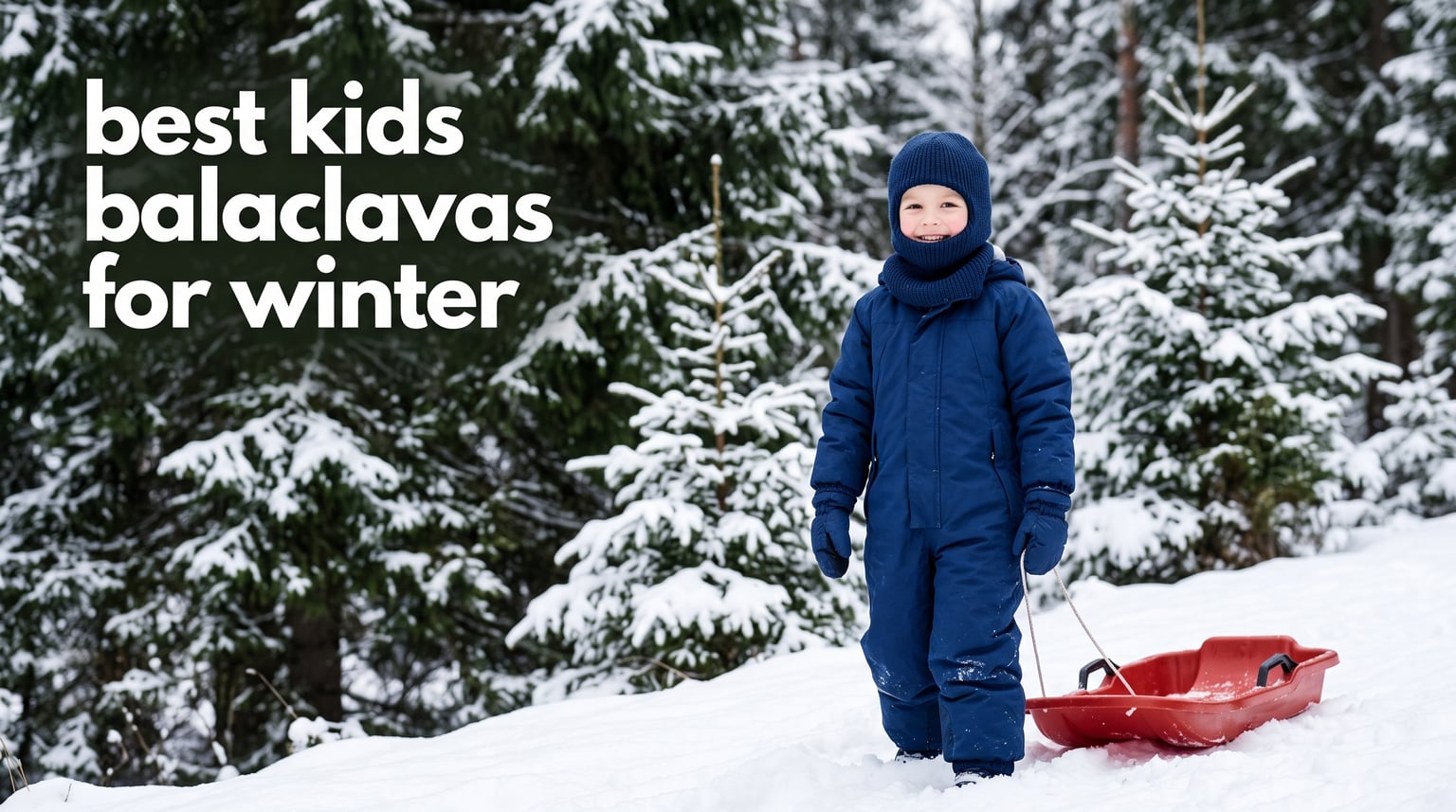
The best kids balaclavas for winter protect the ears, neck, and face without making a child feel boxed in. A balaclava is a close-fitting head covering for cold wind and snow, and the right one can make skiing, sledding, walks to school, and long playground sessions far more comfortable.
Balaclavas can be safe for kids when the fit allows comfortable breathing, matches the stated size range, and an adult checks it before an outing. I would not treat any face covering as a substitute for supervision, and I would take it off if it becomes wet, shifts into the eyes, or feels too warm during active play.
I selected the eight options below from the supplied product information, including stated materials, fit ranges, activity claims, ratings, and customer-review signals. If your family also needs a broader adult-and-youth overview, see our complete ski balaclava guide; a lighter face-and-neck alternative appears in our guide to the best neck gaiters for cold weather.
Table of Contents
The top 3 picks are the Venswell, Beehow, and Outrip balaclavas
My first choice is Venswell for its one-piece construction, fleece warmth, nose mesh, and stated five-to-ten fit. Beehow has the largest review count in this group and a stated six-to-twelve range, while Outrip is worth a look when a child wants one fleece piece that can act as a cap, face mask, and scarf.
These picks serve different children rather than one imaginary “average” kid. Measure head circumference, account for helmet space, and let the child try the face opening at home before the first cold outing.
These eight kids balaclavas cover the main winter needs in 2026
The quick comparison below keeps the decision focused on stated coverage, fabric, fit, and notable design details rather than guessing from a photo. A thin, stretchy youth balaclava may make more sense under a helmet, while a fuller fleece design can suit low-output snow play.
| Product | Specifications | Action |
|---|---|---|
 Venswell Kids Fleece Balaclava Venswell Kids Fleece Balaclava |
|
View on Amazon |
 Leamekor Kids Stretch Balaclava Leamekor Kids Stretch Balaclava |
|
View on Amazon |
 Beehow Kids Fleece Balaclava Beehow Kids Fleece Balaclava |
|
View on Amazon |
 AOPREL Kids Fleece Balaclava AOPREL Kids Fleece Balaclava |
|
View on Amazon |
 KNITAS Merino Cashmere Balaclava KNITAS Merino Cashmere Balaclava |
|
View on Amazon |
 Vanolu Kids Full Face Cover Vanolu Kids Full Face Cover |
|
View on Amazon |
 Outrip Kids 3-in-1 Balaclava Outrip Kids 3-in-1 Balaclava |
|
View on Amazon |
 WAWSAM Dinosaur Balaclava WAWSAM Dinosaur Balaclava |
|
View on Amazon |
1. Venswell is the best overall choice for simple on-and-off wear
Venswell Kids Balaclava Ski Mask Fleece Winter Face Mask Warm Full Head Cover for Boys Girls for Cold Weather Ski
One-piece fleece
Nose mesh
Fits ages 5-10
Pros
- One-piece design
- Nose mesh
- Fleece warmth
- Windproof outer
- Helmet-friendly fit
Cons
- One size only
- Black color listed
I would start with the Venswell for a school-age child who dislikes fiddly winter layers. Its stated one-piece design is the practical detail here: a child can pull on one item instead of arranging a hat, neck gaiter, and face cover separately.
The listing says the elastic fit suits most children ages five through ten with a head circumference of about 19.6 to 21.6 inches. That clear range matters because forum discussions repeatedly point to face coverings that slip over the eyes when a child runs or plays.
The Venswell uses fleece for thermal warmth and a windproof outer, with coverage for the face, ears, and neck. A nose mesh panel is intended to make breathing more comfortable and can be useful for children wearing glasses or goggles, where breath direction matters.
Its review signal is strong for this small group: 4.8 out of 5 from 93 reviews, with 86% reported as five-star ratings. I would still do a helmet trial at home, since the product says it fits snugly with helmets or hats but does not give helmet-specific thickness measurements.
The fit works best for children within the stated five-to-ten range
This is the pick I would put at the top for a child ready to dress independently. Pull the opening below the chin first, then bring the crown into place and check that the nose mesh sits where the child can breathe easily.
A child outside the listed range may still be able to wear it, but that is not a fit claim I can make from the product data. Use the stated circumference as the starting point, not age alone.
The face panel matters most for goggle and glasses users
The nose mesh is Venswell’s standout detail for a kids ski mask setup. It creates a designated breathable area rather than relying on dense fleece directly across the nose.
For skiing or snowboarding, I would have the child put on the balaclava before goggles and helmet, then move around for a few minutes. If the fabric presses upward into the lower goggle frame, choose a slimmer face layer instead.
2. Leamekor is the most flexible under-helmet option
Kids Balaclava Face Mask, Winter Hat Face Warmer for Cold Weather Ski Mask for Boys Girls (US, Age, 4 Years, 13 Years, Black)
Thermal fleece
Four-way stretch
Fits ages 4-13
Pros
- Soft thermal fleece
- Moisture-wicking fabric
- Four-way stretch
- Six wear styles
- Flatlock stitching
Cons
- One size fit
- Black variant listed
I would choose Leamekor when fit flexibility and multiple wearing styles matter more than a fixed full-face setup. The product is described as a six-in-one piece that can become a full balaclava, beanie, neck gaiter, face mask, head cover, or half mask.
That flexibility can help when a child starts chilly but works up heat on a sled hill or during a walk. It also makes the item easier to keep in a school bag because the same piece can cover the neck when full face coverage is not wanted.
Leamekor lists premium thermal fleece with breathability, anti-static properties, and moisture wicking, plus 360-degree four-way stretch. The stated fit range is broad at ages four through thirteen and head circumferences from 45 to 57 centimeters, so a measurement is especially useful at either end of that span.
Its reinforced flatlock stitching is the durability detail I like for repeated pulling on and off. The available review signal is 4.8 out of 5 from 30 reviews, with 87% five-star ratings; that is encouraging, though it is a smaller pool than Beehow’s.
The slim profile is the key detail for helmet wear
The listing specifically describes a slim profile that fits under helmets for skiing, snowboarding, and biking. That answers a common parent concern: bulky fleece under a helmet can feel tight and cause a child to reject the whole setup.
I would use the balaclava in its thinnest comfortable arrangement before adding the helmet. The helmet should still sit level and feel secure; do not force extra fabric into a helmet that already fits snugly.
The adjustable coverage helps children who dislike face coverings
A child who resists fabric across the mouth may accept this as a neck gaiter or half mask first. The product’s six stated styles give families a way to change coverage as the wind and activity level change.
That does not remove the need for a fit check. Watch for the upper edge creeping toward the eyes and for a neck section that bunches under a jacket collar.
3. Beehow is the strongest established fleece pick for ages six to twelve
Beehow Kids Balaclava Winter Fleece Ski Mask for Boys Girls Cold Weather Outdoor Sports (White)
Windproof fleece
Elastic fit
Ages 6-12
Pros
- Warm fleece
- Windproof build
- Breathable face design
- Elastic fit
- 394 reviews
Cons
- One-size design
- No product weight listed
Beehow stands out because it pairs a simple fleece concept with the largest review count among these eight products. Its reported 4.7 rating comes from 394 reviews, and 83% are reported as five-star ratings, giving it a deeper customer signal than the newer listings here.
I would consider it for an active six-to-twelve-year-old who needs one warm layer for snowboarding, cycling, skiing, or ordinary snow play. The product lists high elasticity for a snug, secure fit and calls out breathable face wear for longer sessions.
The stated material is warm, windproof fleece, and the one-size fit is aimed at ages six through twelve. The product data also identifies multiple listed color variants, which can help when a child has strong opinions about winter gear.
No product weight or exact helmet-layer thickness is listed, so I would not assume it will feel the same under every helmet. The sensible check is to put it on, fasten the helmet, and ask the child to turn their head and look up and down.
The review depth makes this a reassuring everyday choice
For parents who prefer a longer trail of customer feedback, Beehow has the clearest advantage in this set. A high review count does not promise a perfect fit, but it gives more context than a rating based on a few dozen reviews.
I would still prioritize the published six-to-twelve age range over popularity. A loose face opening will not block wind well, while an overly tight opening can make a child pull it down repeatedly.
The elastic fleece suits varied winter activities
This is a straightforward kids windproof balaclava rather than a highly technical ski layer. Its elastic construction and listed activities make it a good match for families moving between the playground, bike rides, sledding, and snow sports.
If goggles fog, first check the placement at the nose and lower goggle edge. The product describes breathability, but individual goggle fit and activity level still affect moisture buildup.
4. AOPREL is the best pick for visible walks and evening play
Kids Balaclava Ski Mask with Breathable Holes, Windproof Fleece Full Face Mask for Cold Weather Boys Girls Black
Soft fleece
Mesh panel
Reflective logo
Pros
- Hypoallergenic fleece
- Breathable mesh
- Reflective logo
- Helmet-friendly
- Machine washable
Cons
- One-size design
- Ages 4-12 range
AOPREL is the option I would inspect first for a child who walks near roads, waits for transport in low light, or plays outside late in the day. Its reflective logo is a distinct listed feature that adds a visibility detail the other products do not mention.
The product is described as ultra-soft, hypoallergenic fleece for sensitive skin, which could suit children who find rough winter fabrics irritating. It also has a breathable mesh panel designed for easier breathing and heat release during play.
AOPREL lists a stretchy one-size fit for ages four through twelve and head circumferences of 19.3 to 21.7 inches. That range overlaps Venswell’s but extends farther in both age directions, so measurements remain more helpful than a simple age match.
The 4.7 rating is based on 175 reviews, with 84% reported as five-star ratings. The listing also says it is machine washable and holds its shape and softness after washing, an important claim for a piece likely to meet snow, snacks, and a crowded coat hook.
The reflective logo adds a useful low-light detail
Visibility is not the main job of a children balaclava, but it matters during dark winter mornings and after-school play. The reflective logo is intended to show in headlights or streetlights, giving AOPREL a specific edge for those routines.
I would still use the rest of a child’s normal outdoor visibility gear. A small reflective element does not replace a bright outer layer or close adult attention near traffic.
The mesh panel helps with warm, high-motion play
The product pairs plush fleece with a mesh panel so the child has a defined breathing zone. That makes sense for running, sledding climbs, and bike rides, when a full fleece face panel may feel stuffy.
Its listed extended neck and full coverage also make it a candidate for windier days. Check that the neck fabric lies flat beneath a coat rather than forming a bulky fold at the collar.
5. KNITAS is the soft merino-and-cashmere choice for younger children
KNITAS Single-Layer Knit Balaclava Hat for Kids | Merino and Cashmere Wool Winter Hood | Gray Pullover Hat – Size 19.7–21.25″ for Ages 3+
Merino cashmere blend
Single layer
Ages 1-3+
Pros
- Cashmere merino blend
- Natural warmth
- Breathable feel
- Single-layer flexibility
- Made in Europe
Cons
- Single-layer design
- Age-specific size choice
KNITAS is materially different from the fleece-heavy group because it uses a merino and cashmere wool blend. I would look at it for a younger child who needs a soft toddler balaclava winter layer with flexibility instead of a dense, full-face fleece mask.
The listing offers age-specific variants for ages one to three and ages three and up, with a stated size range of 18.1 to 21.25 inches. That is more deliberate sizing than a one-size design, though it still calls for a real head measurement before ordering.
Its single-layer knit construction is presented as a way to support movement and all-day comfort. The listing also describes the fibers as naturally insulating and breathable, a useful combination when a child alternates between a chilly stroller ride and active outdoor play.
KNITAS has a 4.7 rating from 60 reviews, with 81% reported as five-star ratings. It is made in Europe according to the product data, but I would choose it for the specific material and size approach, not for that origin detail alone.
The softer fiber blend suits children who object to bulky fleece
Merino wool versus fleece for kids is not a universal contest; each child responds differently to texture and activity. KNITAS is the distinct choice here because the listed cashmere-and-merino blend is meant to feel gentle against delicate skin.
The single-layer profile can also make layering simpler under a hood. For exposed, windy conditions, check whether the face and neck coverage feels sufficient for your child’s actual activity before relying on it for a long session.
The age-specific options are useful for toddler sizing
Parents often struggle most with putting headwear on a wiggly toddler. A size designed around the one-to-three or three-plus grouping offers a more focused starting point than an extremely wide youth range.
I would introduce the balaclava indoors for a minute or two, then let the child move and talk in it. If the opening shifts near the mouth or eyes, stop and reassess the size rather than trying to make the fabric work.
6. Vanolu is the best full-coverage fleece option for cold days
Vanolu Kids Winter Balaclava Ski Mask Face Mask, Cold Weather Fleece Neck Warmer Full Face Cover for Boys Girls Ages 4–10 Pink
360-degree coverage
Soft fleece
Ages 4-12
Pros
- Full face coverage
- Soft fleece
- Elastic fit
- Multi-wear design
- Lightweight listed weight
Cons
- Limited colors listed
- Four percent one-star reviews
Vanolu puts coverage first, with a stated 360-degree design for the face, nose, ears, and neck. I would shortlist it for children who complain about cold gaps between a hat, scarf, and jacket rather than for those who want the lightest possible helmet liner.
The soft fleece is described as windproof and gentle on kids’ skin, while the elastic one-size fit targets ages four through twelve. It can also be worn as a neck gaiter, scarf hat, ski mask, or helmet hood according to the listing.
The listed weight is 2.29 ounces, which gives at least one concrete clue about its physical presence. That is helpful, but the data does not provide fabric thickness or helmet clearance, so the home fit check still decides whether it works as a helmet hood.
Vanolu’s rating is 4.6 from 70 reviews, with 79% five-star ratings. The rating distribution also includes 4% one-star reviews, and the listing identifies limited color options; I would keep those boundaries in mind beside the coverage benefits.
The continuous coverage reduces exposed gaps
Children lose comfort quickly when wind gets through at the ears or collar. Vanolu’s stated full coverage is its reason to buy: it is built to combine several exposed areas into one fleece layer.
For a cold-weather commute or long snow play, tuck the neck section flat under the jacket before closing the zipper. That prevents the lower edge from being pushed upward as the child moves.
The multi-wear format adds flexibility across activities
The ability to switch among a gaiter, scarf hat, ski mask, and helmet hood can extend the useful situations for one item. I would use the fuller setup in wind and reduce coverage when the child is working hard and needs more airflow.
Because it is a broad four-to-twelve fit, recheck the face opening during the season. Growing kids and different hairstyles can change how a one-size fleece piece sits.
7. Outrip is the most practical 3-in-1 option for everyday use
Kids Balaclava Ski Mask, Winter Windproof Fleece Full Face Mask for Boys Girls, Neck Warmers Ear Muffs Hats for Cold Weather (US, Age, 4 Years, 12 Years, Black)
Cap mask scarf
Fleece
Ages 5-10
Pros
- Three-in-one design
- Fleece fabric
- Elastic fit
- Unisex use
- Activity versatility
Cons
- One universal size
- Twelve percent three-star reviews
Outrip is a sensible everyday candidate when a child wants one simple piece rather than several accessories. The listing combines a cap, face mask, and scarf in a 3-in-1 design, with premium fleece described as comfortable, durable, and colorfast.
I would see it as a flexible school-run and casual-play option for children ages five through ten. Its ultra-elastic fabric is stated to fit that range, and the listed uses include skiing, biking, camping, hiking, and running.
The 4.5 rating comes from 111 reviews, with 74% reported as five-star ratings. That is a respectable signal, but the distribution also shows 12% three-star and 3% one-star reviews, so I would pay closer attention to the fit as soon as it arrives.
The product does not list a nose mesh, reflective detail, or a stated helmet-specific profile. That does not rule it out for snow sports, but it means Venswell, Leamekor, or AOPREL provide more directly stated help for those particular needs.
The three-in-one format keeps daily gear simple
This is the kids thermal balaclava I would consider for a child who regularly loses separate hats and scarves. One piece can reduce the number of items that need to be matched, packed, and retrieved after recess.
The cap, mask, and scarf concept also lets a child change coverage without carrying extra accessories. Practice the transition at home so it does not become a source of frustration outside.
The review distribution calls for an early fit check
Outrip’s reported rating distribution is more mixed than the top picks. That is not a reason to dismiss it, but it is a reason to check the fabric position around the forehead, eyes, and chin before the return period ends.
Ask the child to speak, turn their head, and pull a coat hood over it. If the mask rises or the scarf section twists, a more structured one-piece design may be the better answer.
8. WAWSAM is the kid-appeal pick for children who want a pattern
2 Pack Kids Balaclava Windproof Kids Ski Face Mask Fleece Face Winter Warmer Neck Warmer for Boys Cold Weather Toddler Balaclava Hat with Hood for Outdoor Snowboarding Cycling Skiing
Dinosaur patterns
Thin fleece lining
Ages 3-10
Pros
- Dinosaur and space patterns
- Thin fleece lining
- Windproof material
- Long neck coverage
- Multiple activities
Cons
- One-size range
- Eight percent one-star reviews
WAWSAM earns its place because willingness to wear winter headgear matters. The product offers dinosaur and space patterns that may persuade a child who rejects plain gear, while still providing a polyester outer with thin fleece lining.
I would consider it for a child ages three through ten who wants coverage for the face and neck during skiing, snowboarding, hiking, or riding. The stated head-circumference range is 21 to 23 inches, so check that figure against the child rather than assuming the age bracket will fit.
The listing describes the material as windproof and dust-proof, with a long cut meant to cover the face and neck. The thin fleece lining could suit moderate cold and active play, but parents seeking the fullest thermal coverage may prefer the deeper fleece focus of Vanolu or Venswell.
WAWSAM has a 4.4 rating from 322 reviews, with 74% five-star ratings. Its reported distribution includes 8% one-star reviews and some stated sizing or durability concerns, which makes an early inspection especially sensible.
The patterns can solve the willingness-to-wear problem
A technically capable balaclava does little good if it stays in the cubby. WAWSAM’s space and dinosaur designs give children a reason to choose their own winter headgear, and that small sense of ownership can help with the morning routine.
I would let the child pick the pattern and then check the practical details together. The eyes must remain clear, the nose and mouth should not feel cramped, and the neck section needs to reach the coat collar.
The thin fleece lining suits less severe cold better
The listed thin fleece lining is the feature that separates this from a heavier full-fleece mask. It may be easier for an active child to tolerate, but it is not the option I would put first for a long, exposed day in strong wind.
Use the condition, not the calendar, to set coverage. When snow, wind, and low activity combine, choose the piece that gives the child the most comfortable continuous protection.
A good kids balaclava starts with fit, fabric, and activity level
The best purchase is the one a child keeps on comfortably. The forum research behind this guide surfaces the same problems again and again: fabric sliding over the eyes, foggy goggles, difficult toddler dressing, and too much bulk under a helmet.
I use a simple decision order: measure first, match the coverage to the outing, then test it with the jacket, goggles, and helmet that the child actually wears. A highly rated item cannot compensate for a face opening that rides up or a neck section that bunches.
A secure fit covers the ears and neck without blocking comfortable breathing
Start with the maker’s stated age and head-circumference range. Venswell specifies about 19.6 to 21.6 inches for ages five to ten, AOPREL lists 19.3 to 21.7 inches for ages four to twelve, and WAWSAM lists 21 to 23 inches for ages three to ten; the ranges are not interchangeable.
Have the child look left, right, up, and down. The opening should stay clear of the eyes and allow ordinary talking and breathing, while the lower section stays below the chin and reaches the coat collar.
A helmet-compatible layer stays smooth beneath the helmet
Parents in the research strongly favor a thin head section under a ski helmet. Leamekor explicitly describes a slim helmet-friendly profile, while Venswell says its one-piece design fits snugly with helmets or hats and AOPREL says it fits under bike or ski helmets.
Put the balaclava on before the helmet, then fit goggles last. If the helmet becomes tight, shifts upward, or the goggles lift away from the face, the combination is too bulky for that child and helmet.
A breathable face area can reduce goggle-fog hassles
Warm breath moving toward goggles is a recurring family complaint. Venswell has a listed nose mesh, and AOPREL has a listed mesh panel; those details give breath a designated area rather than placing thick fleece directly across the nose.
Fit still has a role. Keep the upper edge below the goggle seal, and pause if the child says the fabric feels damp or air feels restricted during high-energy play.
Fleece and wool blends suit different comfort preferences
Most options here use fleece, with products such as Venswell, Leamekor, Beehow, AOPREL, Vanolu, and Outrip describing warm fleece construction. Fleece is the common route for wind-focused full coverage and stretchy, easy-care winter headgear for kids.
KNITAS takes a different route with a merino-and-cashmere blend and a single-layer knit. That option is for families who specifically want the listed natural insulating and breathable qualities of those fibers, provided its coverage and size suit the activity.
A toddler-friendly routine makes on-and-off wear less stressful
For a young child, I would favor predictable steps over forcing a tight opening into place. Introduce the balaclava indoors, use a mirror if that helps, and let the child practice pulling it down to the neck and back up with help.
KNITAS is the age-specific option for ages one to three and three plus, while Leamekor and Vanolu include broad age spans starting at four. A one-piece design such as Venswell can also simplify the routine for an independently dressing child within its five-to-ten range.
Care and early inspection support a longer service life
Rough play is normal, so look at the product’s construction and review feedback rather than assuming any fabric will last the same way. Leamekor lists reinforced flatlock stitching, AOPREL says it is machine washable and holds its shape and softness, and Outrip describes colorfast fleece.
Before a major winter trip, inspect seams, stretch recovery, and the face opening after washing. When packing a family ski day, organizing outerwear alongside ski roof racks for family vehicles can make the travel side easier, but the child’s fit test remains the part that matters most at the trailhead.
The answers below cover kids balaclava safety, fit, fabric, and skiing
Are balaclavas safe for kids?
Balaclavas can be safe for kids when the stated size fits, the child can breathe and see comfortably, and an adult checks the fit before outdoor activity. Remove the balaclava if it becomes wet, shifts toward the eyes, or makes the child uncomfortable.
How should a balaclava fit?
A kids balaclava should cover the ears, neck, and intended part of the face without creeping into the eyes or restricting comfortable breathing. Start with the maker’s age and head-circumference range, then test it with the child’s coat, goggles, and helmet.
What fabrics are balaclavas made from?
The products in this guide are mostly fleece, including windproof or thermal fleece options. KNITAS uses a merino-and-cashmere wool blend, while WAWSAM lists polyester with a thin fleece lining.
What is the best ski mask balaclava for kids?
Venswell is the best all-around ski-mask-style choice in this group because its listing combines one-piece fleece coverage, a nose mesh panel, and a stated five-to-ten fit. Leamekor and AOPREL are stronger alternatives when a slim under-helmet profile is the main priority.
What is the best balaclava brand for kids?
There is no single best brand for every child. Venswell is my overall pick from these supplied listings, Beehow has the largest customer-review count, and KNITAS is the material-focused choice for merino and cashmere.
The Venswell is my best overall recommendation for most school-age children
Venswell is my first pick because its listed one-piece fleece design, nose mesh, and five-to-ten fit address the everyday problems families mention most: fiddly layers, wind at the neck, and fog-prone face coverage. For a broader age span and multiple wearing styles, I would turn to Leamekor; for a younger child and a wool blend, I would look at KNITAS.
The best kids balaclavas for winter are not chosen by rating alone. Measure the child, test the complete helmet-and-goggle setup at home, and choose the coverage that fits the weather and activity; for adjacent gear research, browse more winter buying guides before your next cold-weather outing in 2026.