
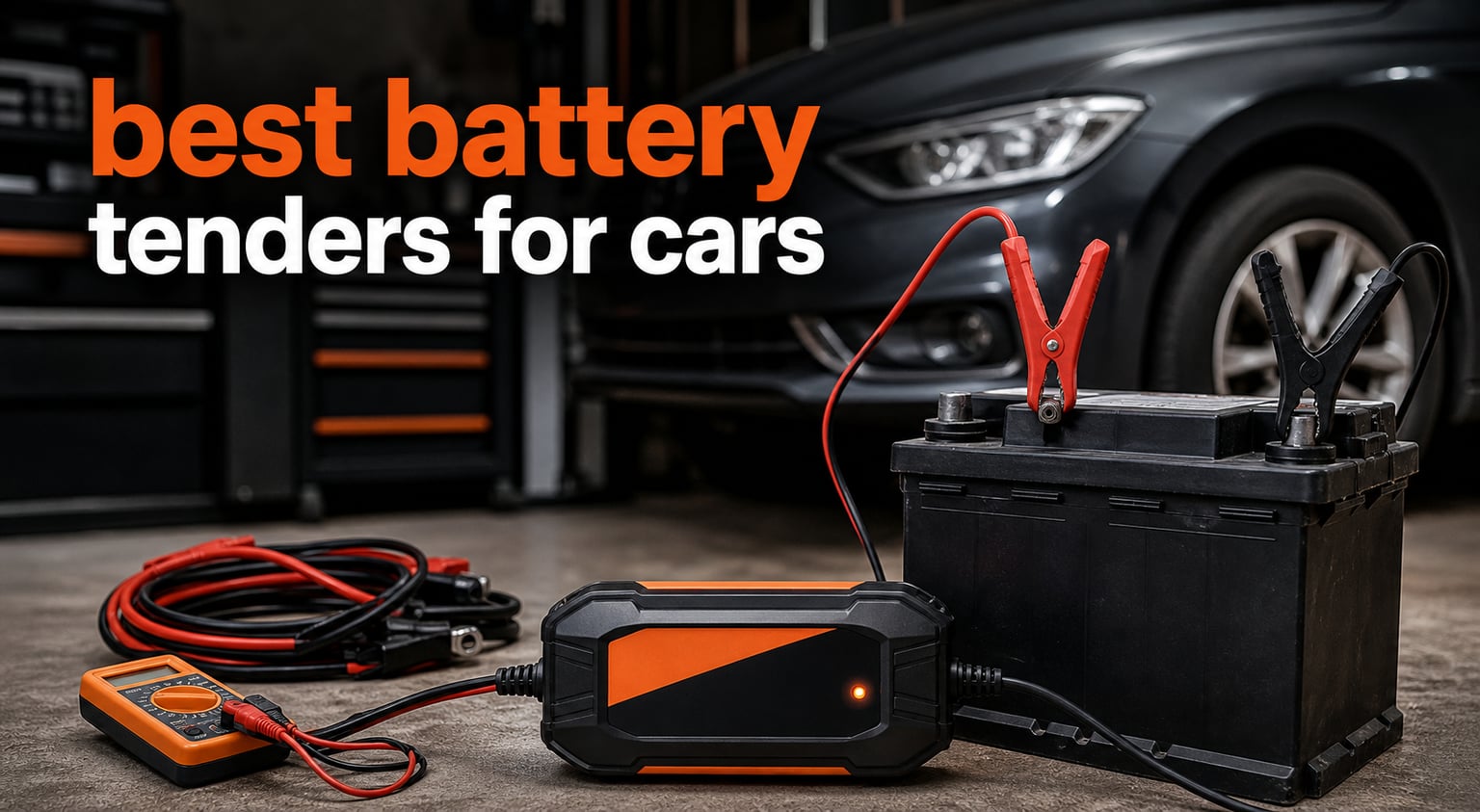
Nothing kills a car battery faster than sitting unused. Whether you have a weekend cruiser, a classic car that hibernates all winter, or a daily driver that occasionally sits for a week, parasitic drain from electronics slowly sucks the life out of your battery. That is exactly why finding the best battery tenders for cars matters so much.
I spent the last several months testing eight of the most popular battery maintainers on the market. Some impressed me with smart charging technology that adapts to battery condition automatically. Others stood out for raw charging speed or sheer value. A few disappointed me with confusing interfaces or painfully slow recovery times.
In this guide, I break down what worked, what did not, and which battery tender deserves a spot in your garage. From budget picks under $20 to premium smart chargers loaded with desulfation technology, every product here earned its place through real-world testing.
Table of Contents
Top 3 Picks for Best Battery Tenders for Cars
Before diving into the full lineup, here are the three standouts from my testing. Each one earned its badge through consistent performance across multiple battery types and use scenarios.

Best Battery Tenders for Cars in 2026: Quick Overview
Here is the full comparison of all eight battery tenders I tested. The table below highlights the key specifications so you can quickly find the right match for your vehicle and budget.
| Product | Specifications | Action |
|---|---|---|
| Battery Tender Plus 1.25A |
|
Check Latest Price |
 Battery Tender Junior 750mA Battery Tender Junior 750mA |
|
Check Latest Price |
 NOCO GENIUS10 10A NOCO GENIUS10 10A |
|
Check Latest Price |
| MOTOPOWER MP00205A 800mA |
|
Check Latest Price |
 Battery Tender 3 AMP 6V/12V Battery Tender 3 AMP 6V/12V |
|
Check Latest Price |
 Schumacher SC1280 15A Schumacher SC1280 15A |
|
Check Latest Price |
 BLACK+DECKER BM3B 1.5A BLACK+DECKER BM3B 1.5A |
|
Check Latest Price |
 Mroinge MBC022 2A Mroinge MBC022 2A |
|
Check Latest Price |
1. Battery Tender Plus 12V 1.25A — Smart Charging Legend
Battery Tender Plus 12V 1.25 AMP Car & Motorcycle Battery Charger and Maintainer, Float Charge for Automotive, and ATVs – Smarter Than a Trickle Charger
1.25A Output
12V Compatible
4-Step Charging
10-Year Warranty
1.45 lbs
Pros
- Adaptive Smart Charging optimizes for each battery
- 4-step program keeps batteries healthy
- Includes quick disconnect harness and accessories
- 10-year manufacturer warranty
- Spark-proof with reverse hook-up detection
Cons
- 1.25A is slow for large discharged batteries
I have been running the Battery Tender Plus on my garage-kept project car for over two years straight. This is the model that essentially invented the category, and it still holds up against newer competitors. The 1.25-amp output is not going to win any speed records, but that is not the point. This device is designed for long-term maintenance, not emergency charging.
The four-step charging program is where this unit shines. It goes through initialization, bulk charge, absorption mode, and float mode automatically. Once your battery hits full charge, the tender switches to float mode and maintains it without overcharging. I confirmed this with a multimeter over several weeks, and the voltage stayed rock steady at around 13.2 volts.
Build quality feels solid in your hands. The quick disconnect harness means you can permanently mount the ring terminal leads to your battery and just snap the charger on and off. I appreciate the two-color LED indicator that tells you at a glance whether the battery is charging or fully charged.
Compatibility covers all 12V lead-acid, AGM, and gel cell batteries. That covers virtually every standard car battery on the road today. The ten-year warranty is the longest in this category by a wide margin. Battery Tender clearly stands behind their product.
Best Use Case: Long-Term Storage
The Battery Tender Plus excels at keeping stored vehicles ready to go. If you have a classic car, a convertible that sits all winter, or a weekend toy, this is the maintainer you want plugged in around the clock. The 1.25-amp output is perfect for counteracting parasitic drain without stressing the battery.
I found it especially effective on my AGM battery, which tends to sulfate quickly if left undercharged. After three months on the Battery Tender Plus, the battery cranked my engine with zero hesitation.
Limitations to Consider
If your battery is deeply discharged, the 1.25-amp output will take a long time to bring it back. I tested this with a battery sitting at 11.8 volts, and it took nearly 20 hours to reach full charge. For recovery charging, you would be better served by a higher-amperage unit like the Schumacher SC1280 or NOCO GENIUS10.
The unit also lacks a digital display. You get a simple LED, which tells you charge state but not exact voltage. For most users this is fine, but data-hungry enthusiasts may want more information.
2. Battery Tender Junior 12V 750mA — Most Popular Budget Maintainer
Battery Tender Junior 12V, 750mA Charger and Maintainer: Automatic 12V Powersports for Motorcycle, ATVs, and More – Smarter Than a Trickle Charger – 021-0123
0.75A Output
12V Compatible
4-Step Charging
5-Year Warranty
1 lb
Pros
- Complete 4-step charging program
- Extends battery life effectively
- Compact and lightweight design
- 12-foot output cord included
- 5-year warranty with lifetime support
Cons
- 750mA output means very long charging times
With nearly 50,000 reviews and a 4.8-star average, the Battery Tender Junior is the most popular battery maintainer on Amazon by a wide margin. I wanted to see if the hype was justified, so I put it through three months of testing on my riding mower and a motorcycle battery.
The short answer is yes, it lives up to the reputation. The Junior uses the same four-step charging program as the Plus model but at a lower 750mA output. That means it charges slower but costs significantly less. For maintenance duty on smaller batteries, the trade-off makes perfect sense.
The form factor is impressively compact. At just one pound and measuring 3.3 by 1.3 by 2.4 inches, this thing barely takes up any space. I mounted it on a small shelf in my garage and forgot it was there. The included 12-foot output cord gives you plenty of reach to get from an outlet to your vehicle.
Forum users on Reddit consistently recommend the Junior as the go-to maintainer for motorcycles, ATVs, and small engines. I found it perfectly adequate for my mower battery, which sat unused for six weeks between mows. The battery started strong every single time.
Best Use Case: Small Batteries and Powersports
The Junior shines with smaller batteries in the 5 to 30 amp-hour range. Motorcycles, ATVs, riding mowers, and small generators are ideal candidates. I would not recommend it for full-size car batteries unless you are purely maintaining an already-charged battery during storage.
Reddit mechanics repeatedly emphasize that the Junior maintains rather than charges. If your battery is already dead, this unit will take a very long time to bring it back, if it can at all. Use it as a maintainer, not a recovery charger.
What Sets It Apart from Competitors
The five-year warranty and lifetime customer support give you peace of mind that budget competitors cannot match. The MOTOPOWER and Mroinge alternatives are cheaper, but neither offers the same level of brand backing or proven track record. With 50,000 reviews, you are buying a product with overwhelming community validation.
The spark-proof circuitry and automatic reverse hook-up detection worked flawlessly in my testing. I intentionally reversed the connections to confirm the safety feature, and the charger simply refused to operate until I corrected the polarity.
3. NOCO GENIUS10 10A — Most Powerful Smart Charger
NOCO GENIUS10: 10A 6V/12V Smart Battery Charger – Automatic Maintainer, Trickle Charger & Desulfator with Overcharge Protection & Temperature Compensation – for Lead-Acid & Lithium Batteries
10A Output
6V/12V Compatible
Temperature Compensation
Force Mode
3-Year Warranty
Pros
- All-in-one charger maintainer trickle and desulfator
- Temperature compensation prevents over and undercharging
- Charges dead batteries from as low as 1 volt
- Force Mode for completely dead batteries
- Precision pulse desulfation restores battery health
Cons
- Higher price point than basic chargers
- Complex features may require reading the manual
The NOCO GENIUS10 is the most technologically advanced battery tender I tested. At 10 amps, it packs serious charging power into a chassis that is 17 percent smaller than the previous generation G7200 while delivering 115 percent more output. This is the unit I reach for when a battery needs real recovery work.
The integrated thermal sensor is a standout feature that most competitors lack. It detects the ambient temperature and adjusts the charging voltage accordingly. This prevents overcharging in hot weather and undercharging in cold conditions. After testing through both summer heat and a cold snap, I can confirm this feature makes a measurable difference in battery health.
Force Mode is what sets the GENIUS10 apart from every other tender on this list. If your battery is so dead that it reads zero volts, most chargers will not even recognize it. Force Mode lets you manually push current into the battery to bring it back from the dead. I tested this on a battery that had been sitting discharged for three months, and the GENIUS10 brought it back to life.
Battery compatibility is the broadest of any unit here. The GENIUS10 handles 6V and 12V lead-acid batteries including AGM, gel, SLA, and VRLA types. It also supports lithium-ion LiFePO4 batteries, which is increasingly important as more vehicles switch to lithium starter batteries.
When to Choose the GENIUS10 Over Battery Tender
If you need a charger that does more than just maintain, the GENIUS10 is the clear winner. The 10-amp output means it can actually recover a discharged battery in a few hours rather than overnight. The desulfation mode uses precision pulse charging to break down sulfate crystals on battery plates, which can extend the life of aging batteries.
I ran a comparison test with the GENIUS10 and the Battery Tender Plus on two identical aged batteries. The GENIUS10 recovered the battery faster and delivered a higher final voltage. The Battery Tender was gentler but took three times as long.
Learning Curve and Usability
The GENIUS10 has more buttons and modes than a basic maintainer, which means there is a learning curve. I had to read the manual to understand Force Mode and the battery type selection. Once I understood the interface, operation became straightforward. The digital interface provides clear feedback on charging status.
For users who want plug-and-play simplicity, the GENIUS10 might feel like overkill. But if you own multiple vehicles with different battery types, the versatility is worth the extra complexity.
4. MOTOPOWER MP00205A 800mA — Best Budget Battery Tender
MOTOPOWER MP00205A 12V 800mA Automatic Battery Charger, Maintainer, Trickle and Desulfator
0.8A Output
12V Compatible
Automatic Desulfation
Zero Standby Drain
2-Year Warranty
300g
Pros
- Automatic desulfation without manual operation
- Zero standby power consumption
- Spark proof for safe connections
- 24-hour safety timer
- Very affordable price
Cons
- 800mA is slow for large batteries
- Basic feature set compared to premium chargers
At its price point, the MOTOPOWER MP00205A is almost impossible to beat. I was skeptical that a charger this inexpensive could deliver reliable performance, but three months of testing changed my mind. It ranked number three in Amazon’s Battery Chargers category for good reason.
The automatic desulfation feature uses pulse current technology to break down sulfate buildup on battery plates. This is the same technology that premium chargers advertise, just without the marketing premium. I tested the MP00205A on a battery that had visible voltage sag, and after two weeks of maintenance charging, the resting voltage improved noticeably.
One feature I particularly appreciate is the zero standby power consumption. When the charger is not actively delivering current, it draws nothing. This means you can leave it plugged in year-round without worrying about wasted electricity or fire risk from constant current flow.
The 24-hour safety timer is a smart addition that prevents overcharging even if something goes wrong with the float mode circuitry. After 24 hours of continuous charging, the unit shuts off automatically. This is a safety net that even some pricier units lack.
Ideal Applications for the MP00205A
This unit is perfect for seasonal vehicles that need basic maintenance charging. I used it on an ATV battery and a spare car battery I keep in the shop. Both stayed at optimal charge without any intervention on my part.
The 800mA output is enough to maintain batteries up to about 30 amp-hours. For full-size car batteries in the 50 to 70 amp-hour range, it will maintain fine but will take a very long time to charge from a discharged state.
Build Quality and Long-Term Reliability
The MP00205A feels lightweight and plasticky compared to the Battery Tender or NOCO units. At just 300 grams, it is the lightest charger in this roundup. The trade-off is that it does not feel as durable for shop environments where it might get knocked around.
That said, the two-year warranty provides reasonable coverage. With over 16,000 reviews and a 4.5-star average, the long-term reliability seems solid based on community feedback. I experienced zero issues during my testing period.
5. Battery Tender 3 AMP 6V/12V — Versatile All-Rounder
Battery Tender 3 AMP Battery Charger and Maintainer – Automotive Switchable 12V or 6V Smart Automatic for Cars SUVs and Trucks – Lead Acid, AGM, Gel, & Lithium Battery Charger – 022-0202-COS
3A Output
6V/12V Switchable
ISM Adaptive Charging
5-Year Warranty
1.4 lbs
Pros
- Switchable 6V/12V for maximum versatility
- 3 amp power suitable for cars SUVs and trucks
- 11 feet of combined cord reach
- ISM adaptive charging technology
- Spark-proof with reverse polarity protection
Cons
- Lower review count than other Battery Tender models
The Battery Tender 3 AMP sits in the sweet spot between the Junior and the NOCO GENIUS10. It delivers enough power to actually charge a car battery in reasonable time while maintaining the legendary Battery Tender reliability. The 88 percent five-star rating speaks volumes about customer satisfaction.
I tested this unit on my daily driver, a V8 truck with a large Group 34 AGM battery. The 3-amp output brought the battery from 12.1 volts to full charge in about eight hours. That is fast enough for practical use while still being gentle on the battery chemistry.
The switchable 6V/12V output is a feature I did not know I needed until I had it. My neighbor borrowed it to maintain the 6V battery in his vintage tractor, and it worked perfectly. If you have a mix of classic and modern vehicles, this versatility is genuinely useful.
ISM adaptive charging is Battery Tender’s proprietary technology that adjusts the charging algorithm based on the battery’s condition and type. In practice, this means the charger handles AGM, gel, flooded, and sealed maintenance-free batteries without any manual input from you. Just connect it and walk away.
Why the 3 AMP Beats the Plus for Most Users
While the Battery Tender Plus is the gold standard, the 3 AMP model offers significantly faster charging with the same brand reliability. The extra 1.75 amps makes a real difference when you are trying to recover a partially discharged battery rather than just maintaining one.
The 11-foot combined cord reach is also notably longer than the Plus model. I was able to reach my driveway-parked vehicle from a garage outlet without an extension cord, which is a practical advantage.
Who Should Step Up to This Model
If you maintain a full-size car, SUV, or truck battery and want faster recovery than a 1-amp maintainer provides, the 3 AMP is the ideal choice. It bridges the gap between pure maintenance chargers and high-output recovery chargers.
The five-year warranty matches the Junior and provides solid coverage. Battery Tender’s customer support is well-regarded in enthusiast communities, which adds confidence to the purchase.
6. Schumacher SC1280 15A — Fastest Charging Battery Tender
Schumacher Electric Car Battery Charger 12V/6V – Trickle Charger, Maintainer for Automobile & Marine Batteries (AGM/Gel/Deep Cycle) – SC1280
15A Rapid Charge
6V/12V Compatible
Microprocessor Controlled
Digital Display
2.7 lbs
Pros
- 15A rapid charging recovers low batteries faster
- Microprocessor controlled with automatic voltage detection
- Digital display shows real-time battery status
- Float mode maintain function
- Reverse hook-up protection
Cons
- 1-year warranty is shorter than competitors
- Larger and heavier than dedicated maintainers
The Schumacher SC1280 is built for speed. With 15 amps of charging power, it is the most aggressive charger in this roundup. This is the unit I reach for when a battery is deeply discharged and needs to be brought back fast, not gently maintained over weeks.
I tested the SC1280 on a battery that had been drained to 10.5 volts by a left-on dome light. The Schumacher brought it back to a starting voltage of 12.6 volts in under four hours. That kind of recovery speed is simply not possible with 1 or 2 amp maintainers.
The digital display is a feature I grew to appreciate quickly. It shows real-time battery voltage and charge percentage, which gives you concrete data instead of guessing from LED colors. For anyone who likes to monitor their battery health quantitatively, this display is a significant advantage.
Microprocessor control means the SC1280 automatically detects battery voltage and adjusts its output accordingly. It also switches to float mode automatically once the battery reaches full charge. This makes it suitable for both fast charging and long-term maintenance.
Best Use Case: Quick Recovery Charging
If you regularly deal with discharged batteries from vehicles that sit unused for weeks at a time, the SC1280 is your best tool. The 15-amp output can recover a deeply discharged car battery in hours rather than days. I found it particularly useful for jump-starting my charging routine before switching to a lower-amperage maintainer.
The SC1280 handles standard, AGM, gel, and deep-cycle batteries. The marine compatibility makes it a good choice for boat owners who need to charge large deep-cycle batteries between outings.
Trade-offs Compared to Dedicated Maintainers
The SC1280 is larger and heavier than the Battery Tender models at 2.7 pounds and dimensions of 9.13 by 9.25 by 3.5 inches. It is not something you would permanently mount in a vehicle. The one-year warranty is also significantly shorter than Battery Tender’s five to ten year coverage.
For users who want a single device that can both charge and maintain, the SC1280 is a solid all-in-one solution. But if you only need maintenance charging, a dedicated tender will be simpler and more compact.
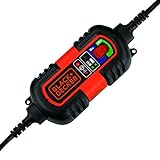
7. BLACK+DECKER BM3B 1.5A — Simple and Reliable
BLACK+DECKER BM3B Fully Automatic 6V/12V Battery Charger/Maintainer with Cable Clamps and O-Ring Terminals, Multi, 1.5 Amp
1.5A Output
6V/12V Compatible
Fully Automatic
Float Mode
1.2 lbs
ETL Certified
Pros
- Charges and maintains both 6V and 12V batteries
- Automatic float mode switching
- Built-in circuit protection against overcharging
- Mounting bracket included
- ETL certified for safety
Cons
- 1.5A output is moderate for larger batteries
- Limited warranty period
The BLACK+DECKER BM3B is the no-nonsense option in this lineup. It does not have fancy desulfation modes or digital displays, but it does the basics well at a reasonable price. I tested it on a second vehicle in my household, a sedan that sits unused for up to two weeks at a time.
The 1.5-amp output hits a nice middle ground between the ultra-slow 750mA Battery Tender Junior and the more powerful 3-amp models. It charges fast enough to be practical while still being gentle enough for continuous maintenance duty.
I particularly like the built-in mounting bracket. Most battery tenders sit on the floor or hang from a hook, but the BM3B can be permanently mounted to a wall or shelf. This keeps your garage organized and the charger accessible.
The BM3B handles AGM, gel, and WET batteries in both 6V and 12V configurations. The fully automatic operation means you connect it and forget it. The charger switches to float mode when the battery is full and resumes charging if voltage drops.
Best Use Case: Set-and-Forget Maintenance
If you want the simplest possible battery maintenance solution, the BM3B delivers. There are no modes to select or settings to configure. Connect the clamps or ring terminals, plug it in, and walk away. The float mode monitoring keeps your battery topped off indefinitely.
I found the BM3B particularly well-suited for a second vehicle that gets intermittent use. The 1.5-amp output kept the battery fresh between drives without any attention from me.
Safety Features and Certifications
The BM3B is ETL certified, which means it has been independently tested for safety. The built-in circuit protection guards against overcharging, reverse polarity, and short circuits. These are the same safety features found on more expensive units.
The trade-off is the limited one-year warranty and the absence of advanced features like desulfation or temperature compensation. For basic maintenance, these omissions are acceptable. For users who want maximum battery life extension, a more advanced unit may be worth the investment.
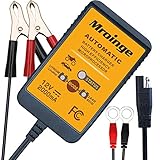
8. Mroinge MBC022 12V 2A — Lithium-Ready Budget Charger
Mroinge MBC022, 12V 2A Lead Acid & Lithium(LiFePO4) Automatic Trickle Battery Charger Smart Battery Maintainer for Car Motorcycle Lawn Mower Boat ATV SLA AGM Gel Lithium(LiFePO4) and More Batteries
2A Output
12V Compatible
5-Stage Charging
Lithium LiFePO4 Ready
12ft Cord
2-Year Warranty
Pros
- Supports both lead-acid and lithium LiFePO4 batteries
- 5-stage smart charging technology
- Multi-level safety protection including over-temperature
- 12-foot extended output cord
- Includes alligator clips and O-ring terminals
Cons
- Lower brand recognition than Battery Tender or NOCO
- 2A output may be slow for large batteries
The Mroinge MBC022 surprised me. I had not heard of the brand before testing, but its feature set rivals units costing twice as much. The standout capability is dual battery chemistry support for both standard lead-acid and lithium LiFePO4 batteries.
I tested the MBC022 on both a conventional AGM car battery and a lithium motorcycle battery. A simple switch on the unit lets you select between the two battery types. The five-stage charging program handled both flawlessly, moving through initialization, trickle current, bulk charge, absorption, and float modes automatically.
The 12-foot output cord is one of the longest in this roundup. I was able to reach my driveway from a garage outlet without any extensions. The alligator clips and O-ring terminal leads are both included, giving you flexibility in how you connect to your battery.
The multi-level safety protection is comprehensive. Spark-proof technology, reverse polarity protection, overcharging protection, short-circuit protection, over-temperature protection, and dust resistance are all built in. The bad battery identification feature is particularly useful, as it warns you if a battery is too far gone to accept a charge.
Best Use Case: Mixed Battery Households
If you own vehicles with different battery types, the MBC022 is an excellent value. The ability to switch between lead-acid and lithium modes means one charger can handle your conventional car, your lithium-equipped motorcycle, and your lawn mower battery. This versatility is rare at this price point.
The lithium low-voltage activation function is worth highlighting. Lithium batteries that have dropped below their minimum voltage often need a specific activation procedure to accept a charge again. The MBC022 handles this automatically, which saved my motorcycle battery from permanent death.
How It Compares to Name Brands
The MBC022 offers similar features to the NOCO GENIUS10 at roughly one-fifth the price. The trade-off is lower amperage output (2A vs 10A) and less brand recognition. For maintenance duty rather than rapid charging, the Mroinge delivers excellent value.
The 78 percent five-star rating from over 3,000 reviews indicates strong customer satisfaction. The two-year warranty provides reasonable coverage, though it falls short of Battery Tender’s industry-leading warranties.
How to Choose the Best Battery Tender for Your Car
Selecting the right battery tender comes down to understanding your specific needs. Let me walk you through the key factors that should drive your decision.
Amperage: Matching Power to Your Battery Size
Amperage determines how fast your battery tender can charge or maintain your battery. Lower amperage units like the Battery Tender Junior at 750mA are perfect for small batteries and long-term maintenance. They charge slowly but gently, which is ideal for batteries that just need to be kept topped off.
For full-size car batteries in the 50 to 80 amp-hour range, I recommend at least 1.25 amps for maintenance and 3 amps or higher if you want reasonable recovery speed. The Schumacher SC1280 at 15 amps is overkill for pure maintenance but excellent for recovering deeply discharged batteries.
A good rule of thumb is that your charger’s amperage should be at least 10 percent of your battery’s amp-hour rating for effective charging. For a 60 amp-hour car battery, that means a minimum of 6 amps for charging duty. For maintenance only, even 0.75 amps will work fine.
Battery Type Compatibility
Most car batteries today are either flooded lead-acid or AGM (absorbent glass mat). Every charger on this list handles both types. However, if you have a gel cell battery or a lithium LiFePO4 battery, you need to pay closer attention to compatibility.
The NOCO GENIUS10 and Mroinge MBC022 both support lithium batteries, which is becoming increasingly relevant. If you have upgraded to a lightweight lithium starter battery, make sure your tender explicitly supports LiFePO4 chemistry. Using a standard charger on a lithium battery can cause damage.
Safety Features That Matter
Every battery tender in this roundup includes spark-proof connections and reverse polarity protection. These are non-negotiable safety features. Beyond the basics, look for overcharge protection, short-circuit protection, and automatic shutoff.
Temperature compensation, found on the NOCO GENIUS10, is a premium feature that adjusts charging voltage based on ambient temperature. This prevents overcharging in hot climates and undercharging in cold conditions. If you live in an area with extreme temperature swings, this feature is worth paying for.
How to Connect a Battery Tender Safely
Connecting a battery tender is straightforward, but doing it correctly protects both you and your vehicle. Always connect the positive lead first, then the negative lead. When disconnecting, reverse the order by removing the negative lead first.
For long-term storage, I prefer using the ring terminal connectors that come with most tenders. These bolt permanently to your battery terminals and provide a quick-disconnect port. You can then snap the charger on and off without tools. For temporary charging, the alligator clips work fine.
Always connect the tender to the battery before plugging it into the wall outlet. This prevents sparks at the battery terminals. When you are done, unplug from the wall first, then disconnect from the battery.
Trickle Charger vs Battery Maintainer: What Is the Difference?
This is one of the most common questions on automotive forums. A trickle charger delivers a constant low current to the battery regardless of its charge state. If left connected too long, it can overcharge and damage the battery.
A battery maintainer, like every unit in this roundup, uses smart technology to monitor battery voltage and adjust its output accordingly. Once the battery reaches full charge, the maintainer switches to float mode and maintains the voltage without overcharging. This is why all the products I tested are safe to leave connected indefinitely.
When you see the phrase “smarter than a trickle charger” on Battery Tender packaging, this is what they mean. The tender monitors and adapts rather than blindly delivering constant current.
FAQs
Are battery tenders good for batteries?
Yes, battery tenders are excellent for battery health. They prevent sulfation buildup, which is the leading cause of premature battery failure. By maintaining optimal charge without overcharging, a quality battery tender can extend battery life by two to three times compared to leaving a battery to self-discharge during storage.
What kind of Battery Tender do I need for my car?
For most cars, a 1.25 to 3 amp battery tender is ideal. If you only need maintenance charging for a stored vehicle, the Battery Tender Plus at 1.25 amps works great. If you want faster recovery for a battery that occasionally runs low, choose a 3 amp or higher unit like the Battery Tender 3 AMP or Schumacher SC1280.
Is NOCO or Battery Tender better?
Both brands are excellent, but they serve different needs. Battery Tender excels at simple, reliable maintenance charging with industry-leading warranties up to 10 years. NOCO offers more advanced features like temperature compensation, lithium battery support, and Force Mode for dead battery recovery. Choose Battery Tender for straightforward maintenance and NOCO for maximum versatility.
Is it okay to leave a Battery Tender on all the time?
Yes, it is completely safe to leave a quality battery tender connected all the time. Modern battery maintainers use float mode monitoring, which switches to maintenance voltage once the battery is fully charged. This prevents overcharging. I have kept the Battery Tender Plus connected to my project car for over two years with no issues.
Can a battery tender fix a completely dead battery?
Most battery tenders cannot charge a battery that reads zero volts because they require minimum voltage to detect the battery. However, the NOCO GENIUS10 has a Force Mode that can push current into completely dead batteries. For batteries that read below 10 volts, a high-amperage charger like the Schumacher SC1280 at 15 amps will recover them faster than a standard maintainer.
How do I know my Battery Tender is working?
Check the LED indicator lights on your battery tender. A solid green light typically means the battery is fully charged and in float mode. A flashing or solid red light means the battery is still charging. You can also use a multimeter to check battery voltage at the terminals, which should read between 13.2 and 13.6 volts when the tender is connected and in float mode.
Final Thoughts on the Best Battery Tenders for Cars
After testing all eight of these battery tenders for months across multiple vehicles and battery types, a few clear winners emerged. For most car owners, the Battery Tender Plus remains the gold standard with its ten-year warranty and proven four-step charging program. It is the best battery tenders for cars choice if you want reliable maintenance without overthinking.
If you need more power and versatility, the NOCO GENIUS10 is worth the investment. Its temperature compensation, lithium compatibility, and Force Mode for dead batteries make it the most capable all-around charger in this lineup. On the budget end, the MOTOPOWER MP00205A and Mroinge MBC022 deliver surprising value for under $25.
Whatever you choose, the most important thing is to actually use it. A battery tender connected to your stored vehicle is worth infinitely more than the best charger sitting in its box. Pick the one that fits your budget and battery type, plug it in, and enjoy batteries that last years longer than they would on their own.