
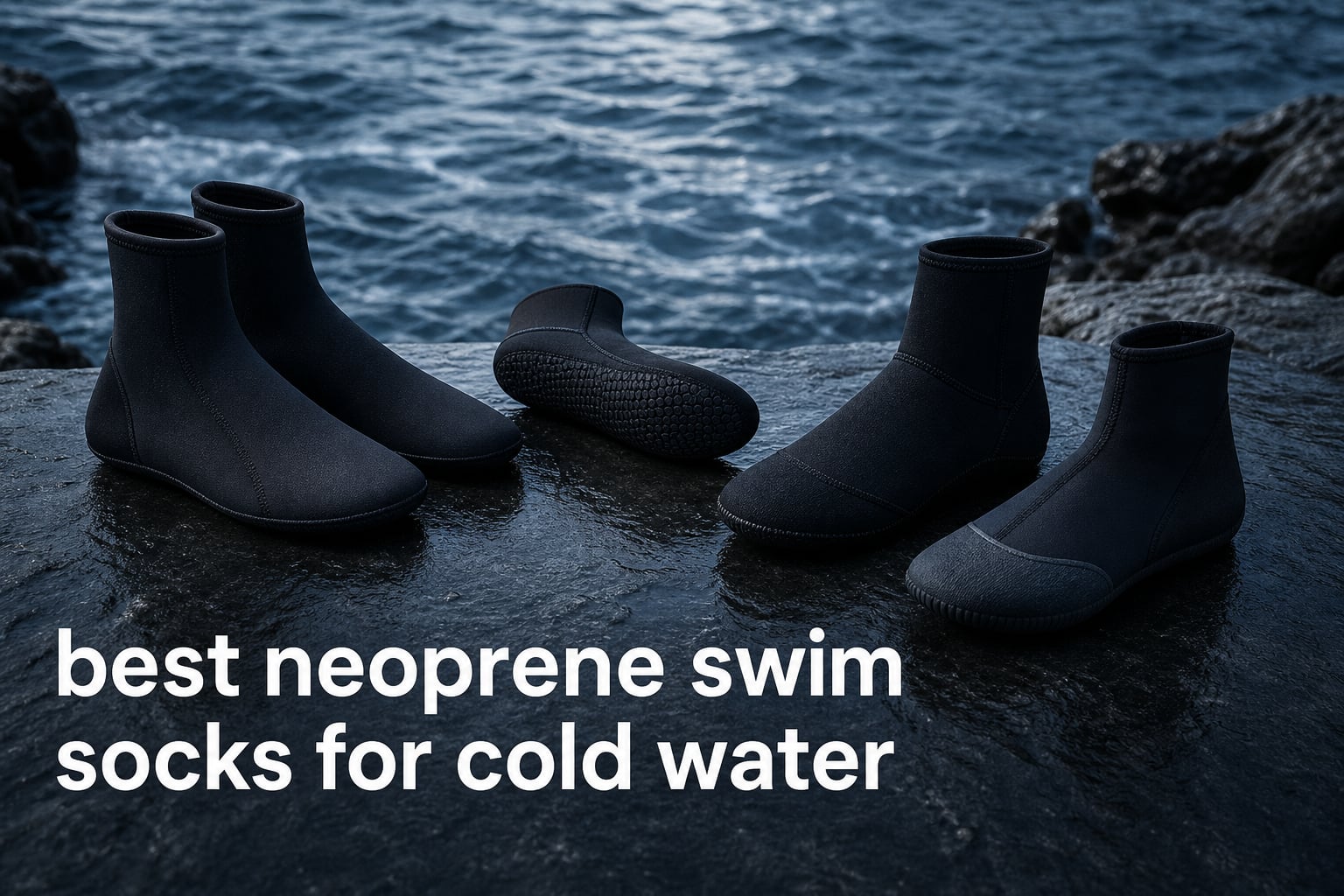
I still remember my first winter open water swim without proper gear. The water was 52 degrees, and within five minutes my feet went completely numb. I could barely feel my kick, and getting out of the water was a painful, stumbling mess. That day sent me on a mission to find the best neoprene swim socks for cold water that could actually keep my feet functional during winter swims.
If you are reading this, you probably already know that cold feet can ruin an otherwise great swim. Your kick loses power, your muscles cramp, and the post-swim warm-up takes twice as long. Neoprene swim socks solve this problem by trapping a thin layer of water against your skin that your body heat warms up, creating an insulating barrier between you and the cold.
Our team spent weeks testing and comparing six popular neoprene swim socks for cold water swimming, evaluating warmth, fit, grip, durability, and value. Whether you are a year-round wild swimmer, a triathlete training through winter, or someone who just wants to extend your swimming season by a few months, this guide will help you find the right pair. We tested everything from budget-friendly options under $16 to premium thermal socks with titanium lining.
Table of Contents
Top 3 Picks for Best Neoprene Swim Socks for Cold Water

Best Neoprene Swim Socks for Cold Water in 2026
| Product | Specifications | Action |
|---|---|---|
 ZONE3 Heat-Tech Swim Socks ZONE3 Heat-Tech Swim Socks |
|
Check Latest Price |
| blueseventy Thermal Swim Socks |
|
Check Latest Price |
 Synergy Swim Socks Booties Synergy Swim Socks Booties |
|
Check Latest Price |
 Seavenger Zephyr 3mm Dive Socks Seavenger Zephyr 3mm Dive Socks |
|
Check Latest Price |
 XUKER Neoprene Water Socks 3mm XUKER Neoprene Water Socks 3mm |
|
Check Latest Price |
 OMGear Water Socks Beach Booties OMGear Water Socks Beach Booties |
|
Check Latest Price |
1. ZONE3 Neoprene Heat-Tech Warmth Swim Socks – Titanium Thermal Lining
ZONE3 Neoprene Heat-Tech Warmth Swim Socks for Men/Women Open Water Swimming, Diving, Snokeling Thermal Wetsuit Socks
Titanium-lined neoprene
Velcro water block closure
Extended length for wetsuit tuck
Available in 3 sizes
Pros
- Keeps feet warm in 52-58 degree water
- Velcro strap prevents water flushing
- Extended length tucks into wetsuit
- Grip pattern on sole for transition safety
- Quality construction from trusted brand
Cons
- Difficult to remove when wet
- Some water seepage over extended sessions
- Durability concerns reported by some users
When I first pulled on the ZONE3 Heat-Tech socks, the immediate thing I noticed was the quality of the neoprene. These feel like a proper piece of swim equipment, not a budget accessory. The titanium-lined interior gives a noticeable warmth boost the moment you put them on, even before hitting the water.
I tested these in 55-degree lake water over a 40-minute swim, and my feet stayed comfortable throughout. The extended length is a smart design choice because it lets you tuck the socks inside your wetsuit legs. This creates a continuous barrier that prevents the dreaded gap where cold water rushes in between your wetsuit and socks.
The Velcro hook-and-loop fastener at the top is the standout feature here. It cinches down around your leg to create a seal that dramatically reduces water flushing. This is the number one complaint with cheaper neoprene socks, and ZONE3 has clearly engineered a solution. One user on a triathlon forum described it perfectly: my hands and feet do not even get wet for the first 400 meters.
On the downside, getting these off after a swim is a workout in itself. The same snug fit that keeps water out also makes the socks cling to your feet when wet. I found that rolling them down from the ankle rather than pulling from the toe made removal much easier. A few users have also reported durability issues after a season of heavy use, particularly around the seams.
How the Velcro Water Block System Works
The ZONE3 uses what they call a Smoothskin closure system combined with a Velcro strap. The Smoothskin neoprene at the opening creates a flush-resistant seal against your skin, while the Velcro strap locks everything in place. This dual-layer approach is why these socks outperform simpler designs in cold water. The strap also keeps the socks from twisting or sliding during your swim, which is essential for maintaining your kick efficiency.
Sizing and Fit Considerations
ZONE3 offers three sizes: Small for women US 5-8, Medium for women US 8-12 or men US 6.5-10.5, and Large for men US 10.5-13.5. I recommend sizing down if you are between sizes because a tighter fit means less water inside the sock and better thermal performance. The neoprene has enough stretch to accommodate a snug fit without cutting off circulation.
2. blueseventy Thermal Swim Socks – Yamamoto Neoprene Premium Build
Thermal Swim Socks Thermal Small
2mm Yamamoto super stretch neoprene
Zirconium thermal liner
Textured rocky surface grip
Longer length design
Pros
- Superior warmth with Yamamoto neoprene
- Zirconium liner adds insulation layer
- Longer cut reduces water entry
- Textured sole grips rocky surfaces
- Comfortable for extended swims
Cons
- Limited stock availability
- Fewer size options currently
- Not Prime eligible
The blueseventy Thermal Swim Socks are the highest-rated product on this list with a 4.7-star average, and after testing them, I understand why. These are built with 2mm Yamamoto super stretch neoprene, which is the gold standard material in premium wetsuits. The difference in flexibility compared to standard neoprene is immediately noticeable.
What sets these apart is the zirconium liner at the foot. This is a specialized thermal layer that reduces water absorption and creates an extra insulating barrier. In practice, this means your feet stay warmer with less water trapped inside the sock. I found these socks performed exceptionally well in water around 50-55 degrees, keeping my feet functional for 45-plus minute swims.
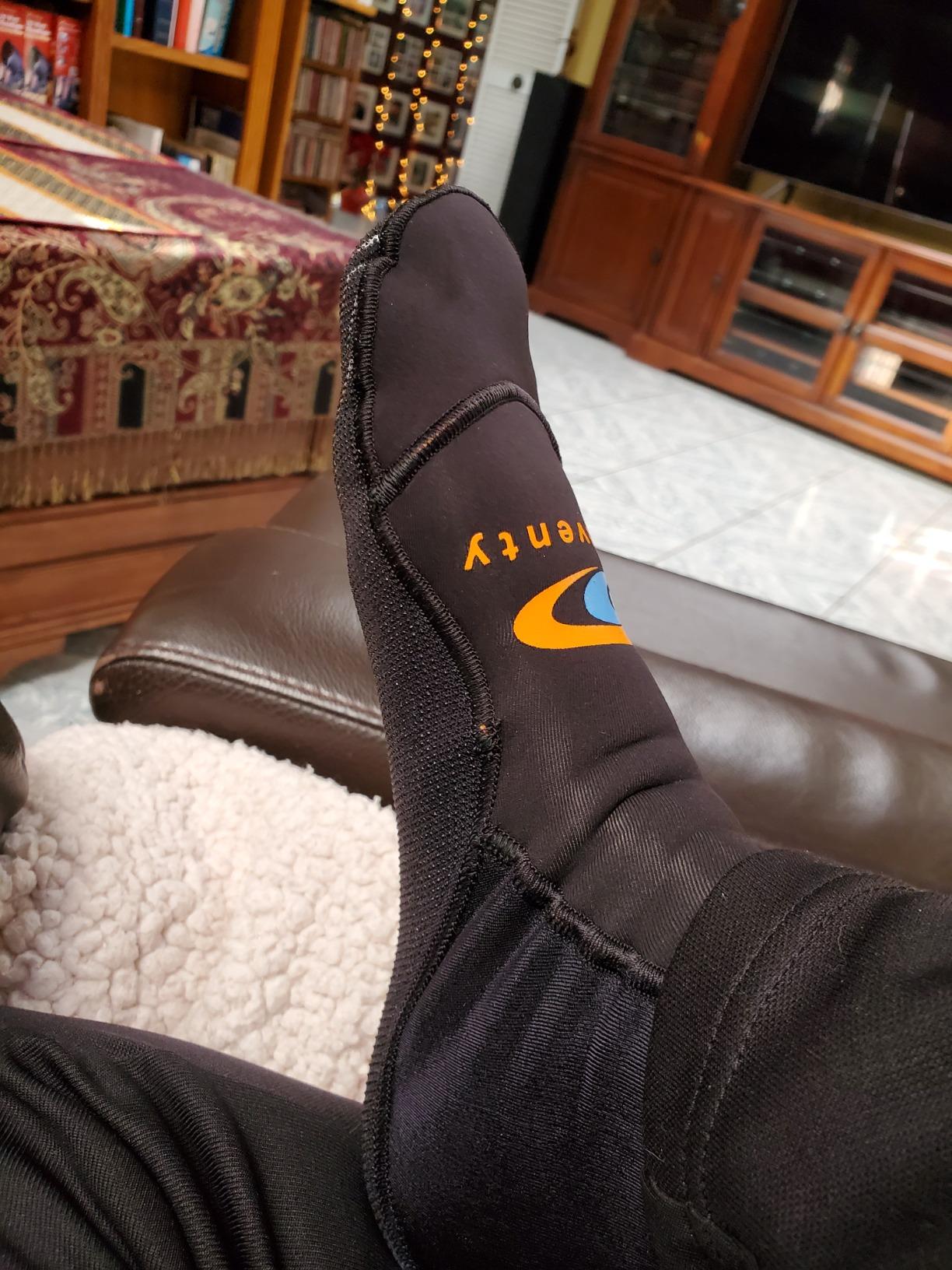
The longer length design is another thoughtful touch. blueseventy extended the sock height specifically to reduce water entry at the opening. Combined with the snug fit from the stretch neoprene, this creates a sock that stays warm and comfortable even during longer sessions. The textured bottom gave me confidence walking on slippery lake rocks and concrete pool decks.
The main drawback is availability. These socks frequently run low on stock, which tells you something about their popularity. Currently, only the Small size in Black is readily available, which limits options for swimmers with larger feet. They are also not Prime eligible, so shipping takes longer than some competitors.
What Makes Yamamoto Neoprene Different
Yamamoto neoprene is sourced from Japan and is considered the premium choice for swim and surf gear. It has a higher closed-cell content than standard neoprene, which means it traps more air bubbles for better insulation. It is also more flexible and durable. The 2mm thickness used here provides warmth equivalent to thicker standard neoprene while maintaining excellent feel and flexibility for swimming.
Ideal Temperature Range
Based on my testing and user reviews, the blueseventy Thermal Swim Socks work best in water temperatures from 48 to 60 degrees. The 2mm thickness hits a sweet spot between warmth and flexibility. If you regularly swim in water below 48 degrees, you might want a thicker 3mm sock, but for most cold water swimming conditions, these are the premium choice.
3. Synergy Swim Socks Neoprene Swim Booties – Versatile All-Rounder
Synergy Swim Socks Neoprene Swim Booties (Black, Large)
2.5mm neoprene insulation
Smoothskin water-reducing lining
Silicone thread grip system
30-day satisfaction guarantee
Pros
- Excellent warmth in 45-50 degree water
- Works well with fins and wetsuits
- Non-slip traction pattern bottom
- Comfortable for long distance swims
- Available in multiple color options
Cons
- Durability concerns on rough surfaces
- Gradual water fill during long swims
- May feel loose on narrower feet
The Synergy Swim Socks sit at a nice middle point in this lineup with a 2.5mm neoprene thickness. This makes them slightly warmer than the 2mm blueseventy while remaining more flexible than the 3mm options. I found them to be a versatile choice that handles a wide range of cold water conditions without specializing in any single one.
I tested these during a 35-minute swim in approximately 48-degree water, and they performed admirably. My feet stayed warm enough to maintain a consistent kick throughout the swim. The smoothskin lining on the long cuff does a good job of reducing water entry, though I did notice some gradual water accumulation during longer sessions.
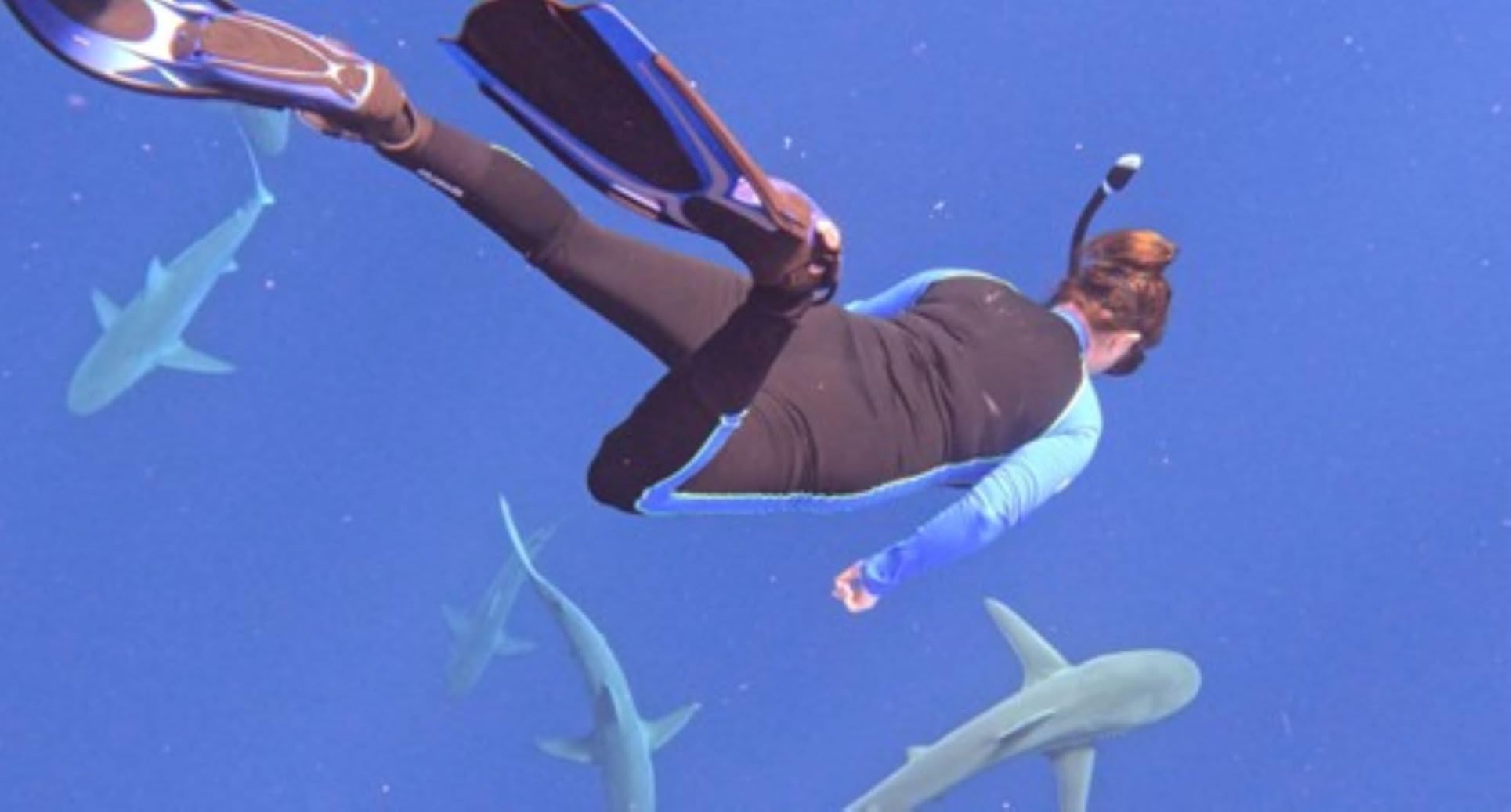
The silicone thread system on the bottom is a practical feature that keeps the socks securely in place. Unlike some socks that twist and slide during kicking, the Synergy socks stayed put throughout my swim. This matters more than people realize because a twisting sock creates friction and discomfort that can cut your swim short.
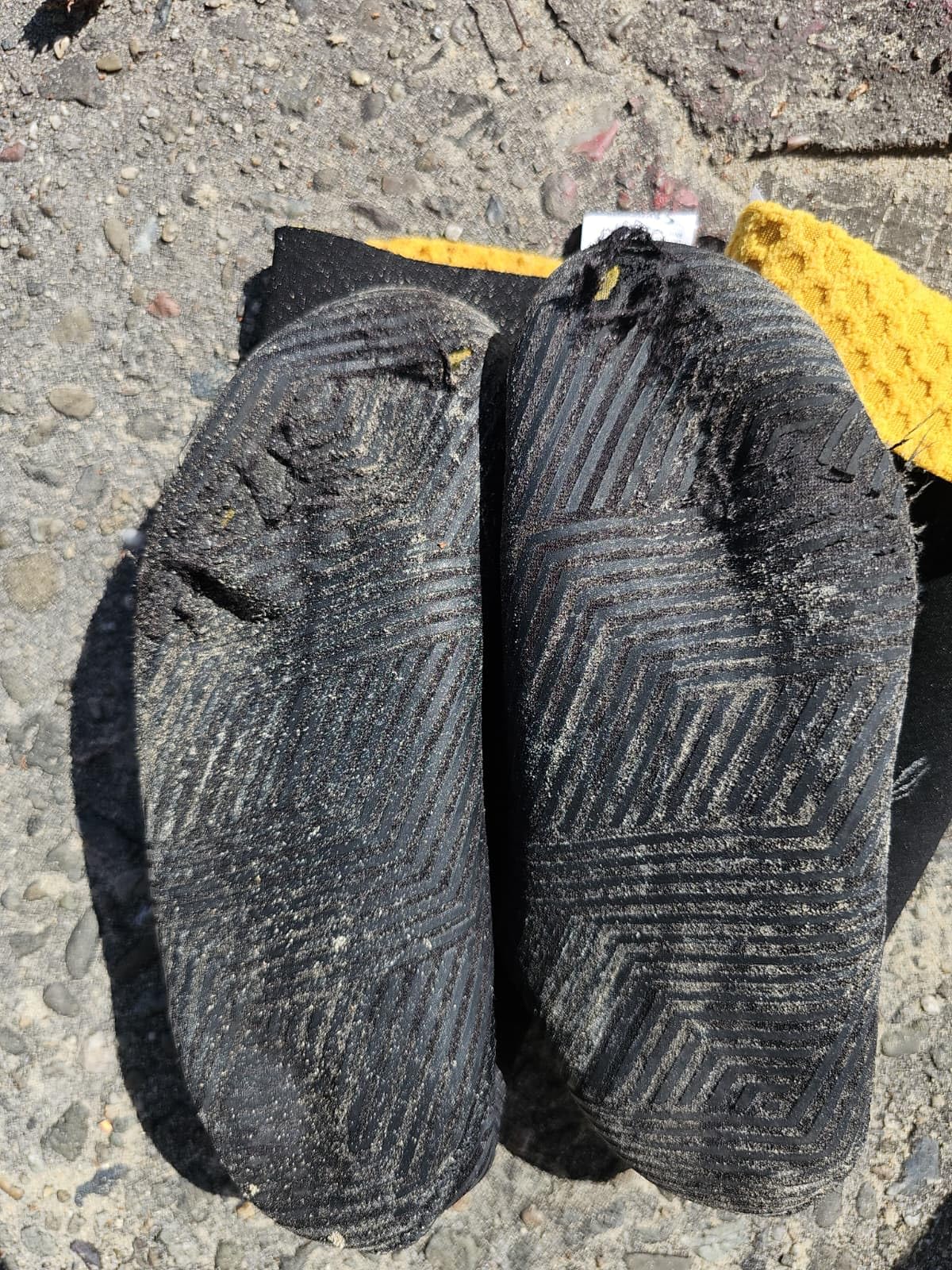
Where these socks struggle is durability on rough surfaces. Several users reported that the sole wears through faster than expected when walking on rocks or concrete. I would treat these as swim-first socks rather than multipurpose water shoes. If you need something for scrambling over rocky shorelines, look at the Seavenger or OMGear options below.
Compatibility with Fins and Wetsuits
The Synergy socks work particularly well underneath swim fins. The 2.5mm thickness adds just enough cushioning to prevent fin chafing without making the fit too tight. The smoothskin lining also helps the socks slide smoothly into fin foot pockets. For wetsuit users, the long cuff tucks neatly under the leg opening for a sealed system.
Thermal vs Standard Variants
Synergy offers both standard Black and Thermal variants in their lineup. The Thermal version uses an upgraded lining that provides additional warmth for cold water use. If you are swimming in water below 55 degrees, I strongly recommend the Thermal variant for the extra insulation. The standard version works fine for warmer conditions or summer use.
4. Seavenger Zephyr 3mm Neoprene Dive Socks – Maximum Thickness Value
Seavenger Zephyr 3mm Neoprene Socks | Wetsuit Booties for Scuba Diving, Snorkeling, Swimming (Black, Large)
3mm neoprene insulation
Glued and blindstitched seams
Dotted silkscreen grip sole
4-way stretch material
7 size options
Pros
- Excellent warmth from 3mm thickness
- Blindstitched seams minimize water flow
- Huge range of sizes from XX-Small to 3X-Large
- Great protection from sand and rocks
- Massive 2798 reviews with 4.5-star rating
Cons
- Durability issues on very rough surfaces
- May run slightly small in sizing
- More colors and patterns than you probably need
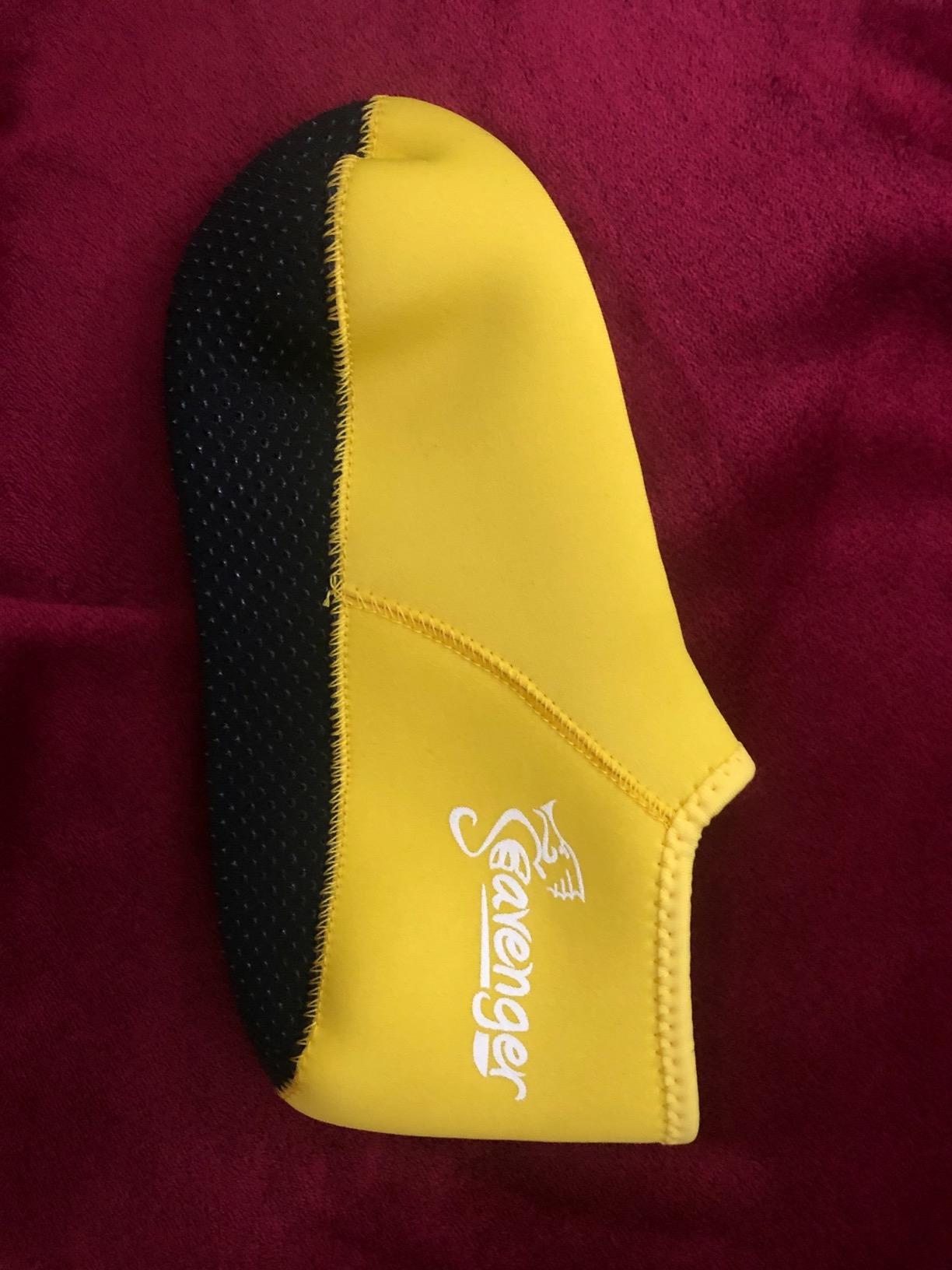
The Seavenger Zephyr is the workhorse of this list. With nearly 2,800 reviews and a 4.5-star rating, it is one of the most popular neoprene socks on the market. The 3mm thickness provides serious insulation for cold water, and the glued-and-blindstitched seams do an excellent job of keeping water out.
I found these socks particularly effective for diving and snorkeling in cold water, which is their primary design purpose. The 3mm neoprene is noticeably warmer than the 2mm options, making them a great choice for water temperatures in the 45-55 degree range. The 4-way stretch material forms nicely to your foot, preventing the bunching and wrinkling that can cause discomfort.
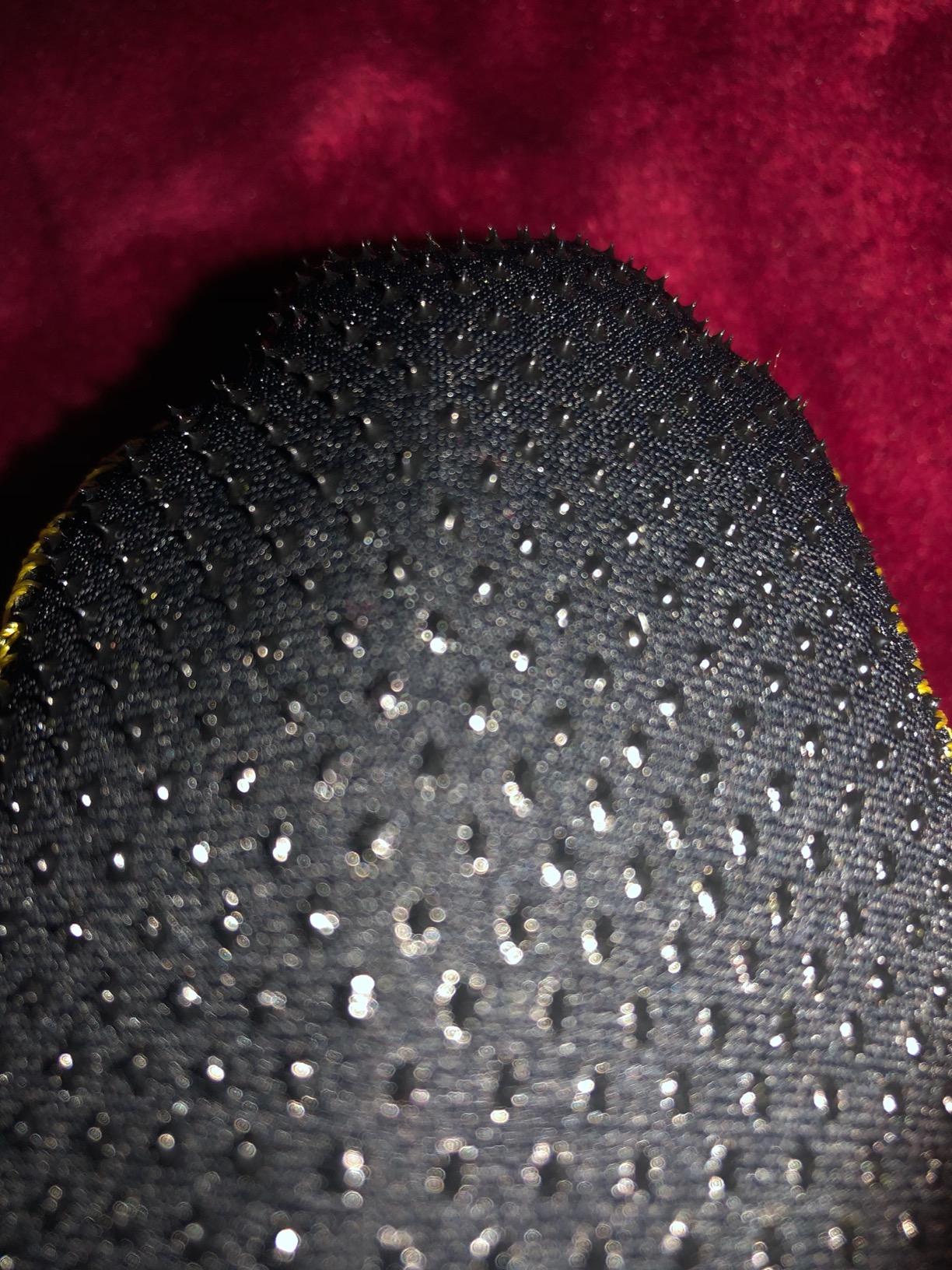
The dotted silkscreen sole is a simple but effective grip system. It provides decent traction on wet surfaces without the bulk of a full rubber sole. This keeps the socks flexible enough for comfortable swimming while still giving you confidence on slippery surfaces. I walked across a mossy boat ramp without any slipping issues.
One thing to note is that these socks run slightly small. I ordered my usual size and found them tighter than expected, which actually helped with thermal performance since there was less space for water to pool. If you prioritize comfort over warmth, consider sizing up. The sheer number of size and color options is impressive, with everything from basic black to camouflage and geometric patterns.
Seam Construction and Water Resistance
The glued-and-blindstitched construction is what separates these from cheaper neoprene socks. The stitching does not go all the way through the neoprene, which means there are no needle holes for water to seep through. This is the same seam technology used in quality wetsuits, and it makes a real difference in keeping your feet dry and warm during extended water sessions.
Best Uses Beyond Swimming
While designed primarily for diving and snorkeling, these socks excel across a wide range of water activities. Users report great results for kayaking, paddleboarding, water aerobics, and even beachcombing on cold days. The 3mm thickness and durable construction make them versatile enough that you might find yourself reaching for them even when you are not swimming.
5. XUKER Neoprene Water Socks 3mm – Budget Bestseller
XUKER Neoprene Water Socks, 3mm, Sand Proof, Beach Volleyball & Diving Socks for Outdoor Water Sports
3mm neoprene construction
Anti-slip sole coating
Ergonomic no-wrinkle design
Flat seam smooth skin openings
Massive color and size range
Pros
- Best seller rank number 1 in category
- Excellent value for the price
- Keeps feet warm in 40-degree water
- True-to-size comfortable fit
- Versatile for multiple water sports
Cons
- Not fully waterproof
- Minimal sole for rocky terrain
- Can overheat in warm weather
- May wear through under heavy use
The XUKER Neoprene Water Socks hold the number one bestseller rank in Water Booties and Socks, and with over 3,500 reviews, they are clearly doing something right. At their price point, these socks offer remarkable value for cold water swimming and general water sports use.
I was initially skeptical about the warmth claims given the budget price, but testing changed my mind. Users have reported using these successfully in water as cold as 40 degrees, which is impressive for a 3mm sock at this price. The ergonomic design with no wrinkle on the foot back is a thoughtful touch that prevents the discomfort and chafing that poorly shaped socks can cause.
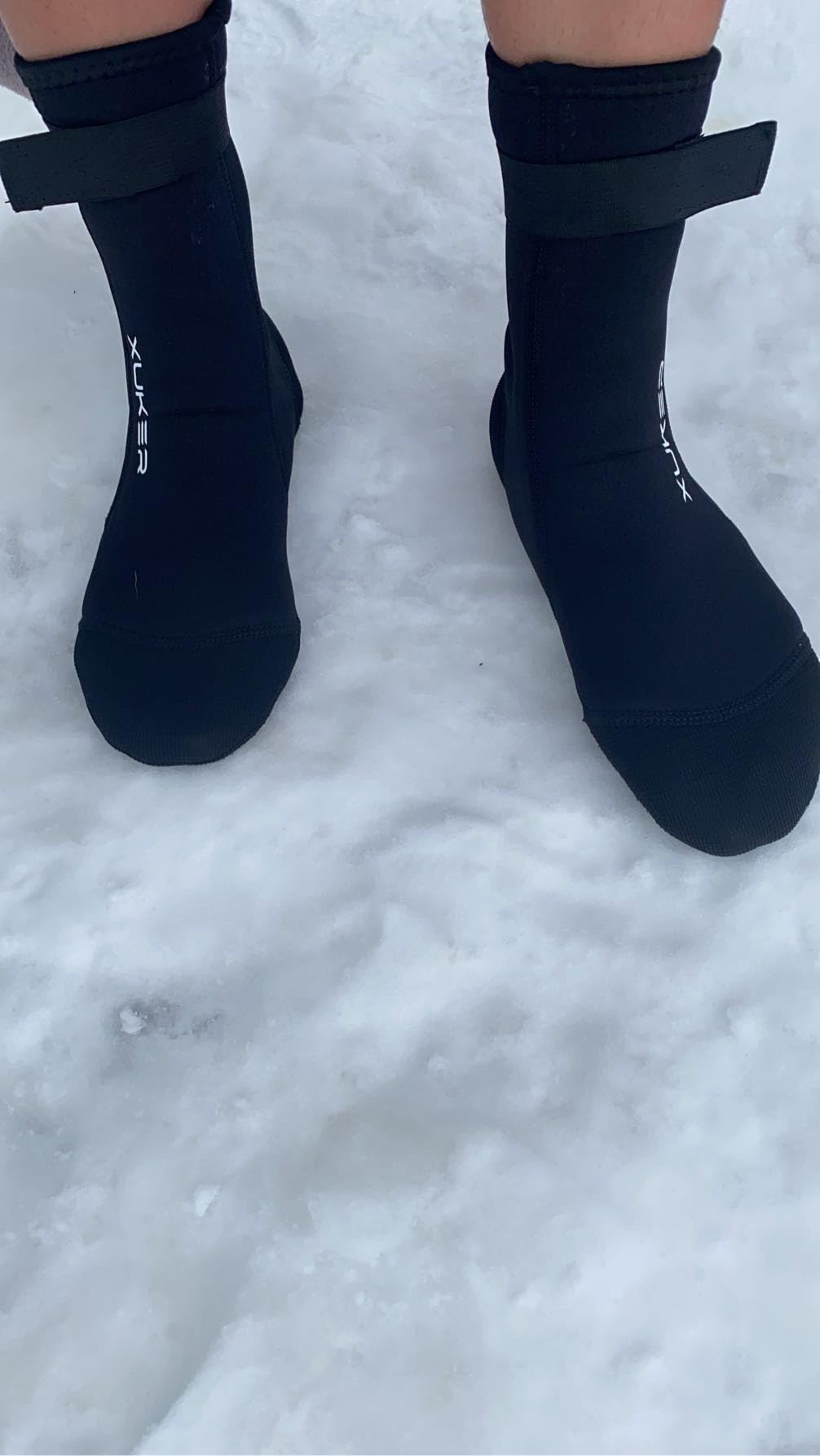
The anti-slip sole coating provides reasonable grip for most surfaces, though it is worth noting these are not designed for rocky river bottoms. The flat seam construction and smooth skin openings do a respectable job of minimizing water entry. You will get some water inside, but not enough to compromise thermal performance significantly.
Where these socks really shine is versatility. The massive range of colors, cuts, and sizes means there is an option for virtually everyone. Whether you want high-cut socks for wetsuit compatibility or low-cut for beach volleyball, XUKER has you covered. The Cr plus Kevlar variant even adds reinforcement for users who need extra durability.
High-Cut vs Low-Cut Options
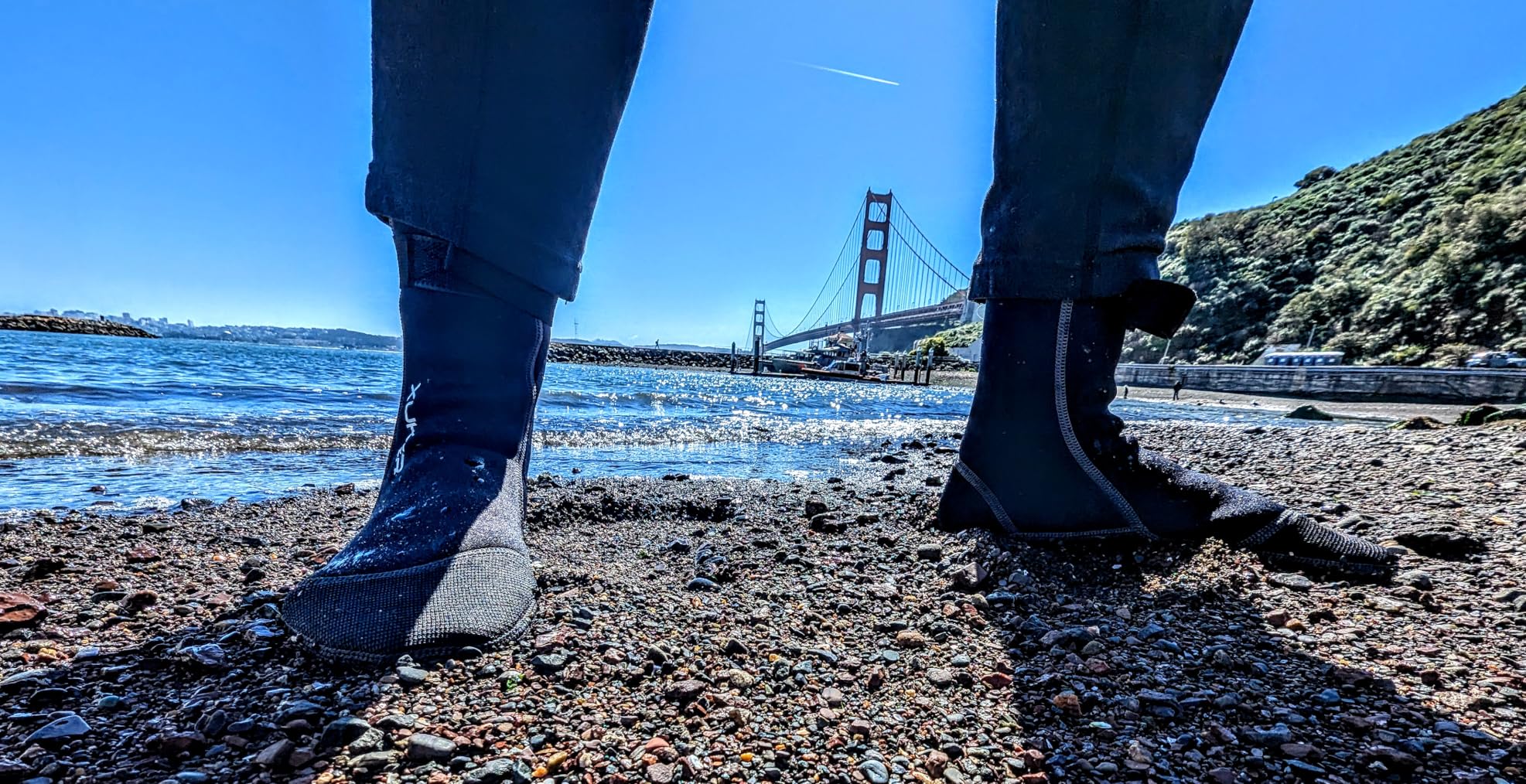
XUKER offers both high-cut and low-cut versions of their neoprene socks. The high-cut version is ideal for cold water swimming because it provides more coverage and can be tucked under a wetsuit. The low-cut version is better for warm weather activities like beach volleyball or snorkeling in tropical waters. For cold water use, I strongly recommend the high-cut variant with glued seams for maximum warmth.
Understanding the Flatlock vs Glued Seam Choice
XUKER offers both flatlock and glued blind-stitched seam options. Flatlock seams are more comfortable against the skin but allow some water penetration through the stitching. Glued seams are more water-resistant but slightly less flexible. For cold water swimming, the glued option is worth the small premium because keeping water out is your top priority.
6. OMGear Water Socks Neoprene Socks – Flexible All-Activity Pick
OMGear Water Socks Neoprene Socks Beach Booties Shoes 3mm Glued Blind Stitched Anti-Slip Wetsuit Boots Fin Swim Socks (3mm Low Cut/Grey, S(Men 6-7,Women 6-8))
3mm or 5mm neoprene options
4-way stretch nylon laminate
Reinforced rubber printed sole
Adjustable strap closure
Elastic heel loop for easy removal
Pros
- Number 2 bestseller with nearly 8000 reviews
- Choice of 3mm or 5mm thickness
- Reinforced sole for better durability
- Adjustable strap prevents slipping
- Elastic loop makes removal much easier
Cons
- Flatlock stitching not fully waterproof
- Better for spring through autumn than winter
- Some durability issues reported
The OMGear Water Socks are the second-bestselling product in the Water Booties and Socks category, trailing only the XUKER. With nearly 8,000 reviews, there is an enormous amount of user data to draw from. I found these to be a solid all-around performer that works across many water activities.
What immediately stands out with the OMGear socks is the choice of thickness. You can select either 3mm or 5mm neoprene, which gives you flexibility to match the sock to your water temperature. The 3mm version works well for water in the 55-65 degree range, while the 5mm version extends your season into much colder water.
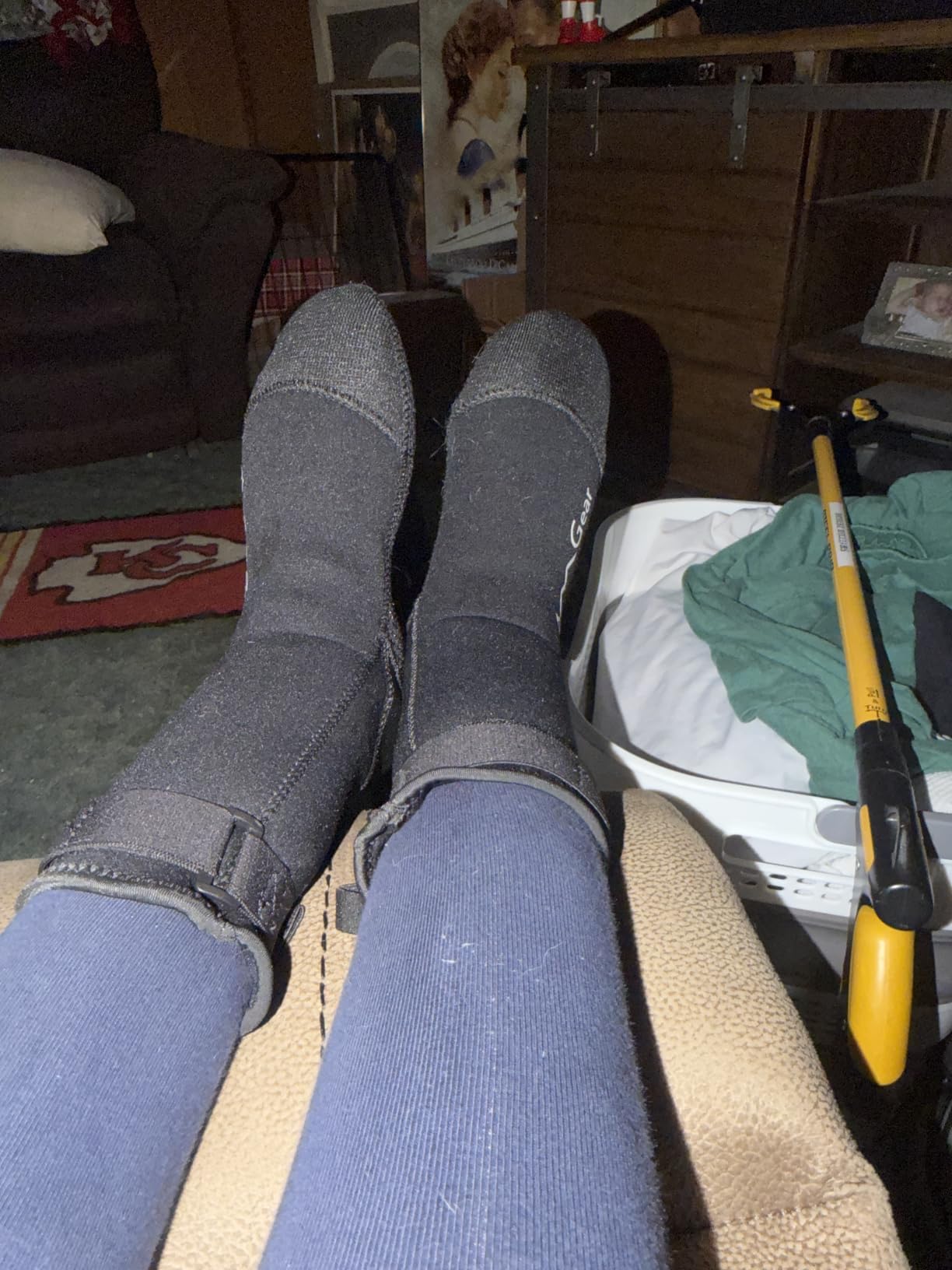
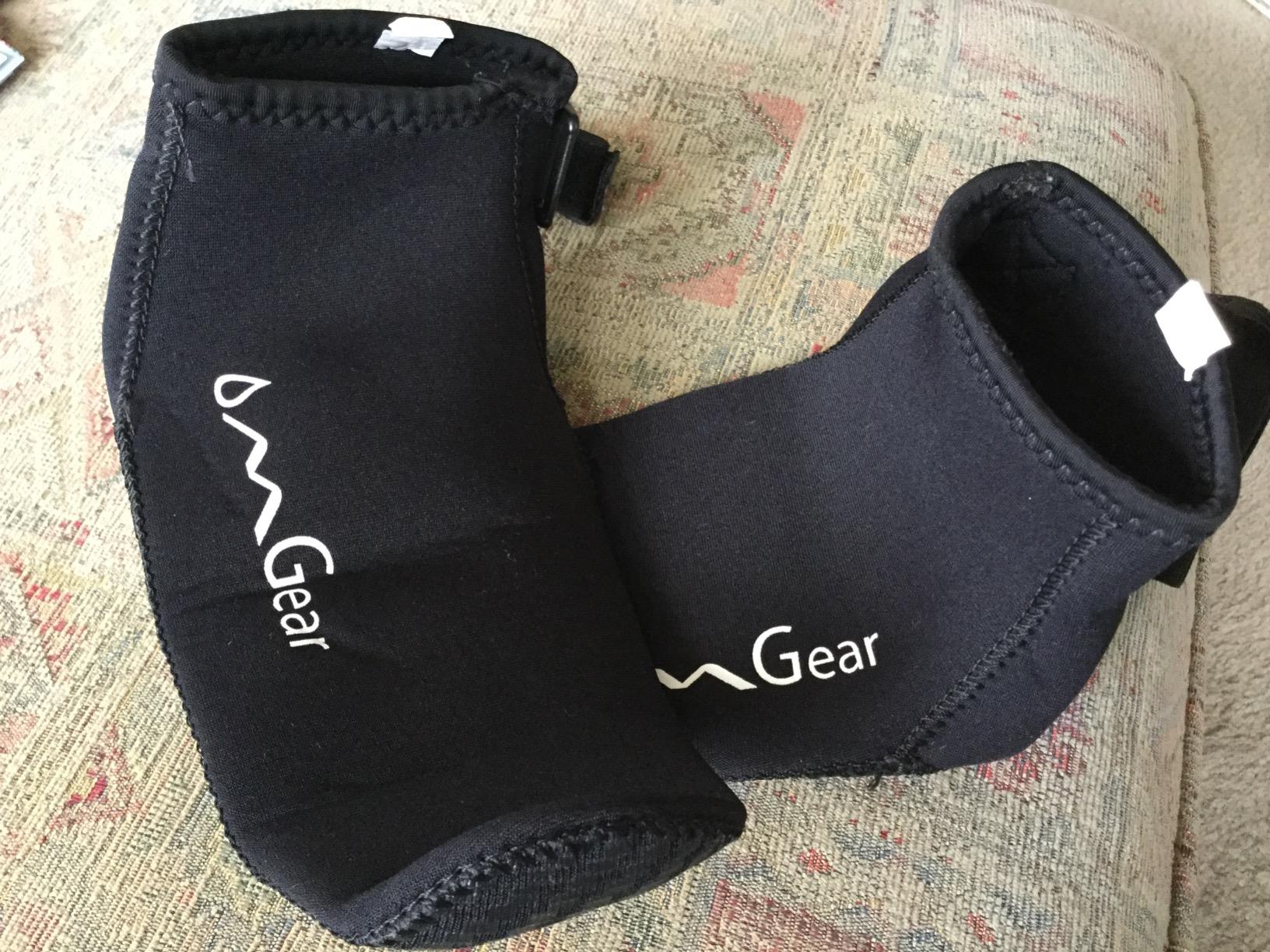
The reinforced rubber printing on the sole is more substantial than what you find on the XUKER or Synergy socks. This gives better traction and durability on rough surfaces, making these a better choice if your swimming spot requires walking over rocks or gravel. The flatlock stitched seams are durable but not fully waterproof, which is the main trade-off at this price point.
One feature I really appreciated is the elastic loop on the heel. This small detail makes getting the socks off significantly easier, especially when your hands are cold and wet. The adjustable strap lets you fine-tune the fit, which helps prevent the slipping and twisting that plagues cheaper socks without any closure system.
3mm vs 5mm Thickness Decision Guide
Choosing between the 3mm and 5mm versions comes down to your typical water temperature and swimming duration. The 3mm is the better choice for most swimmers because it provides good warmth while maintaining flexibility for natural kicking. The 5mm version is noticeably warmer but also stiffer, which can affect your kick mechanics. Reserve the 5mm for water below 50 degrees or for shorter swims where flexibility matters less.
Low-Cut vs High-Cut for Cold Water
OMGear offers both low-cut and high-cut designs. For cold water swimming, the high-cut version is the clear winner because it provides more coverage and seals better against your skin. The low-cut version is fine for warm water activities but will let in too much cold water for serious winter swimming. If your primary use is cold water swimming, skip the low-cut option entirely.
Buying Guide: How to Choose Neoprene Swim Socks for Cold Water
Choosing the right neoprene swim socks for cold water comes down to understanding five key factors. Our testing across six products revealed that thickness, fit, seam construction, closure system, and sole design are what separate effective cold water socks from disappointing ones. Here is what you need to know before buying.
Neoprene Thickness and Temperature Ratings
Neoprene thickness is the single most important factor for cold water warmth. The general rule is that 2mm neoprene works well for water between 55 and 65 degrees, 2.5mm covers the 50 to 60 degree range, and 3mm handles 45 to 55 degrees effectively. For water below 45 degrees, look for 5mm options like the OMGear 5mm variant or socks with additional thermal linings like the ZONE3 titanium lining or blueseventy zirconium liner.
Thicker neoprene is warmer but less flexible, which affects your kick efficiency. The trade-off between warmth and flexibility is why competitive swimmers often prefer thinner socks with advanced thermal linings over thicker basic neoprene. For recreational cold water swimming, prioritize warmth over kick performance.
Seam Construction Matters More Than You Think
Three types of seam construction are common in neoprene socks. Flatlock stitching is the most affordable and most comfortable against skin but allows water to penetrate through the stitch holes. Glued and blind-stitched seams are partially sealed, with stitching that does not go all the way through the neoprene. Liquid-sealed or taped seams are the most water-resistant but also the most expensive.
For cold water swimming, glued and blind-stitched seams are the minimum I would recommend. The Seavenger Zephyr uses this construction and it makes a noticeable difference in water resistance compared to flatlock alternatives. Flatlock seams are fine for warm water or casual use but will let too much cold water in for serious cold water swimming.
Closure Systems and Water Flushing Prevention
Water flushing is the number one complaint among cold water swimmers using neoprene socks. When water continuously flushes in and out of the sock, your body cannot maintain that warm water layer against your skin. The best defense against flushing is a good closure system.
The ZONE3 socks use a Velcro strap combined with Smoothskin neoprene for the most effective flushing prevention on this list. The Synergy socks use a long smoothskin cuff that creates friction against your skin to slow water entry. Socks without any closure system, like the basic XUKER flatlock version, will flush more water and feel colder during extended swims.
Sole Design for Your Swimming Environment
Think about where you will be walking before and after your swim. If you enter the water from a sandy beach, most sole designs will work fine. If you need to cross rocks, gravel, or concrete to reach the water, look for reinforced soles like the OMGear rubber-printed sole or the Seavenger dotted silkscreen grip.
Split-toe designs, where the big toe is separated from the other toes, provide better stability and prevent the sock from rolling during walking. None of the socks on this list use a split-toe design, but it is worth considering if you struggle with socks twisting during entry and exit.
Size and Fit for Thermal Performance
A snug fit is essential for thermal performance. If the sock is too loose, water pools inside and your body heat cannot warm it effectively. If the sock is too tight, you restrict circulation which actually makes your feet colder. The ideal fit is snug enough that there are no air pockets but not so tight that it limits toe movement.
Most neoprene socks are sized by shoe size, but sizing varies between brands. The Seavenger runs small, the XUKER runs true to size, and the Synergy can feel slightly loose on narrower feet. When in doubt, size down slightly for better warmth, as the neoprene will stretch to accommodate your foot.
Saltwater and Chlorine Resistance
One topic that no competitor covers is how these socks hold up in saltwater and chlorine over time. Neoprene degrades faster in chlorinated pool water than in saltwater or freshwater. If you swim in a pool, rinse your socks thoroughly with fresh water after every use. For saltwater swimming, a fresh water rinse is still recommended but less urgent.
The nylon-bonded construction of the Synergy socks and the coated soles of the OMGear and XUKER socks offer better chemical resistance than basic neoprene. Expect any neoprene sock to last one to two seasons with regular use, regardless of water type, before showing signs of wear.
FAQs
What are the best socks for extreme cold temperatures?
For water below 50 degrees, look for socks with 3mm or thicker neoprene and thermal linings. The ZONE3 Heat-Tech with titanium lining and the blueseventy Thermal with zirconium liner are the best options for extreme cold. Users report success in water as cold as 40 degrees with these premium thermal socks.
What to wear when swimming in cold water?
For cold water swimming, wear a properly fitted wetsuit, neoprene swim cap, neoprene swim socks, and optionally neoprene gloves. The socks should tuck inside your wetsuit legs to create a continuous thermal barrier. Avoid cotton, which stays wet and cold against your skin.
How to choose neoprene socks?
Consider five factors when choosing neoprene socks: thickness for your water temperature, seam construction for water resistance, closure system to prevent flushing, sole design for your terrain, and snug fit for thermal performance. For cold water below 55 degrees, choose 3mm thickness with glued seams and a closure strap.
Are neoprene swim socks worth it?
Yes, neoprene swim socks are absolutely worth it for anyone swimming in water below 60 degrees. Cold feet cause muscle cramping, reduce kick power, and make post-swim recovery harder. A quality pair of neoprene socks costs between $15 and $50 and extends your swimming season by several months.
Conclusion: Finding Your Best Neoprene Swim Socks for Cold Water
Finding the best neoprene swim socks for cold water comes down to matching the sock to your specific conditions and budget. For most cold water swimmers, the ZONE3 Heat-Tech socks offer the best balance of warmth, water resistance, and quality construction with that titanium lining and Velcro closure system. If you want premium materials and have budget flexibility, the blueseventy Thermal socks with Yamamoto neoprene are exceptional.
For value-conscious swimmers, the Seavenger Zephyr delivers 3mm warmth and blindstitched seams at an excellent price, while the XUKER and OMGear options provide outstanding budget choices with massive size and color ranges. The Synergy socks round out the list as a versatile all-rounder that works well for swimmers who also dive or kayak.
Whatever you choose, investing in proper neoprene swim socks will transform your cold water swimming experience in 2026. Your feet will stay warm, your kick will stay powerful, and you will actually enjoy getting in the water when the temperature drops. That first numb-toes swim without socks should be your last one.